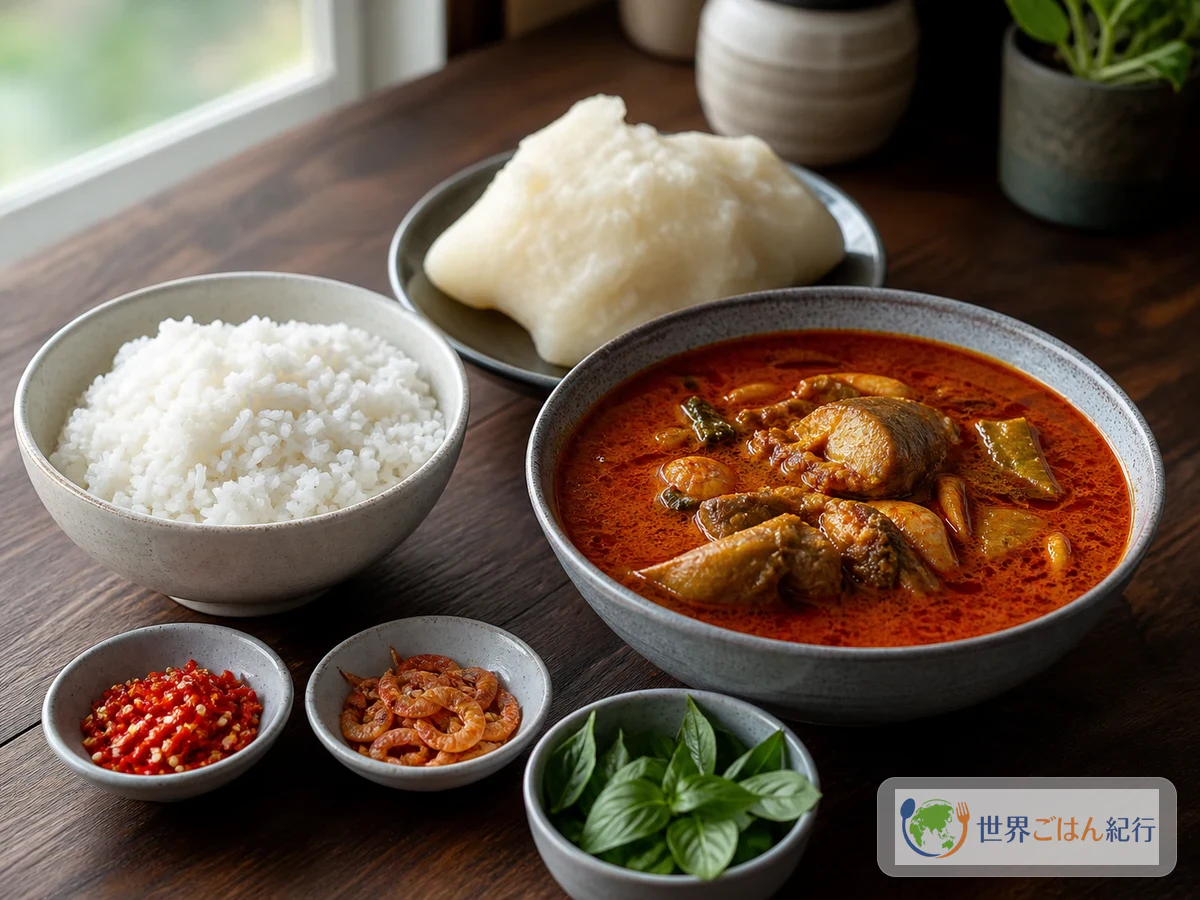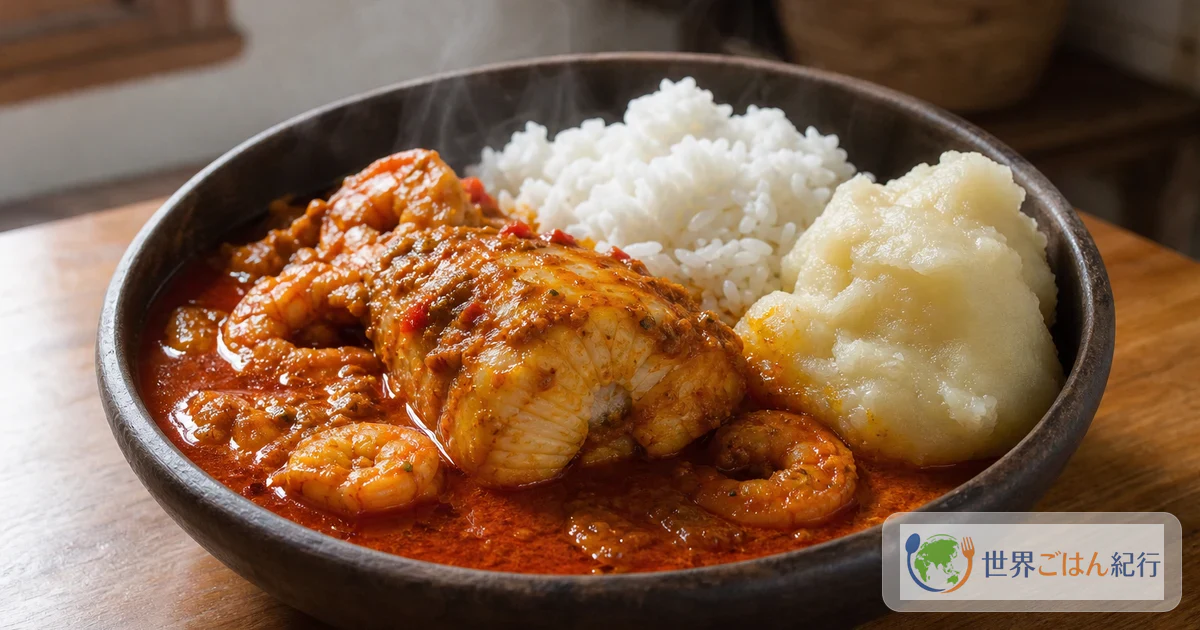
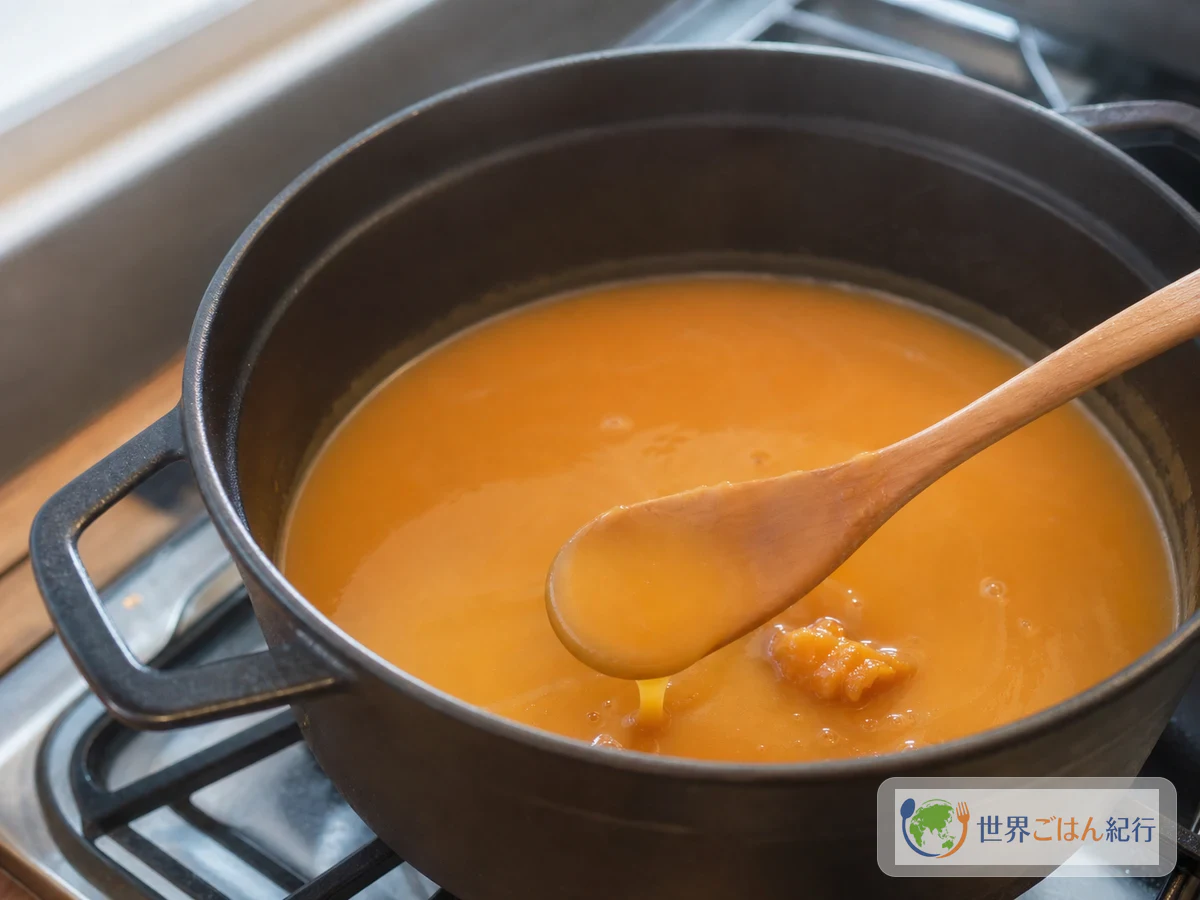
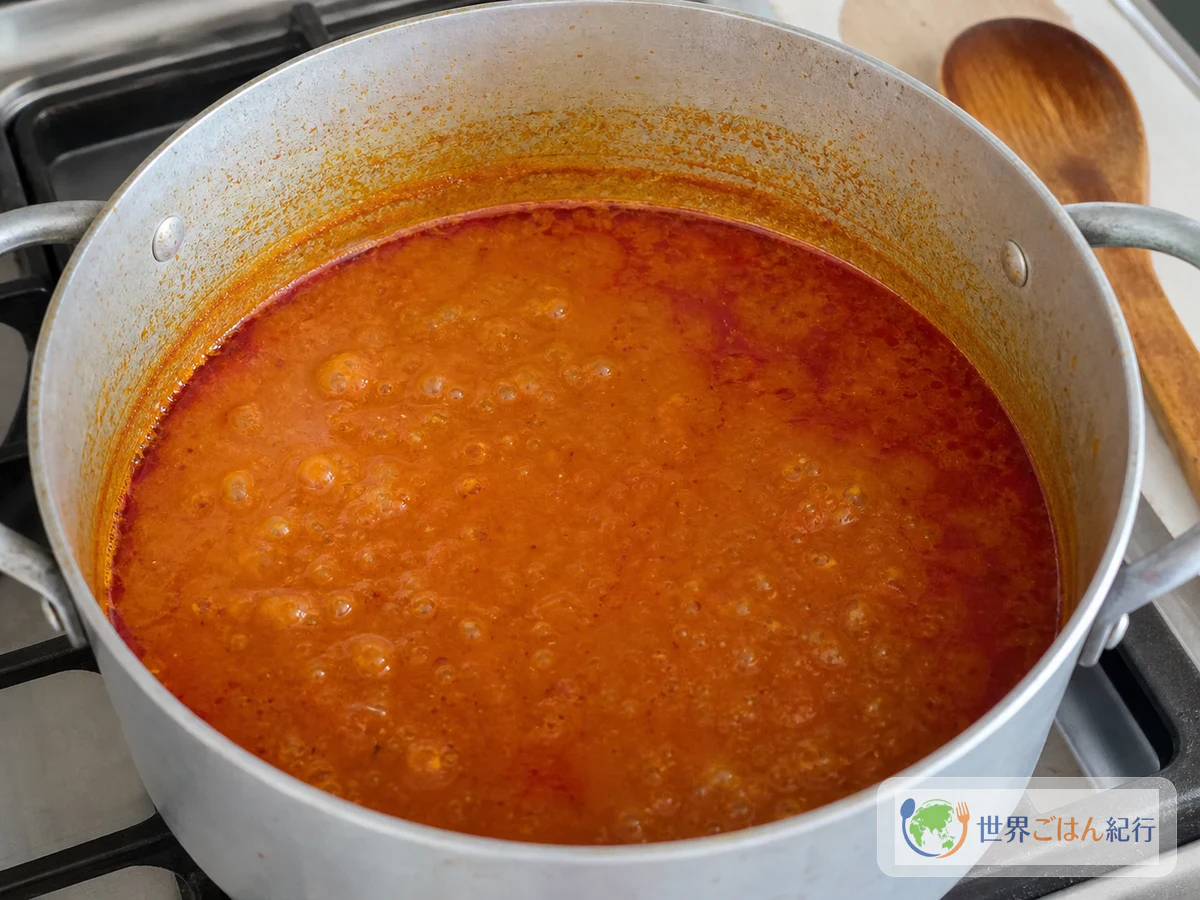
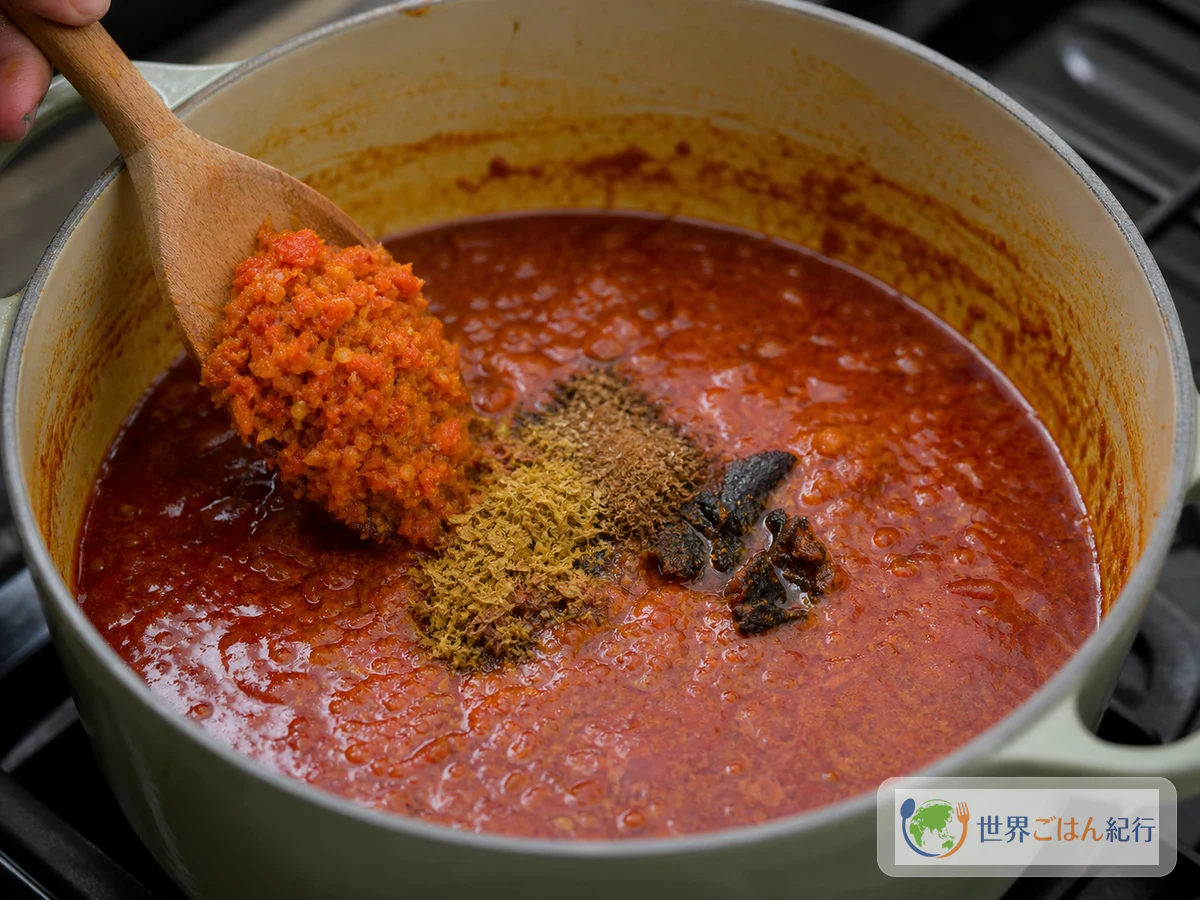
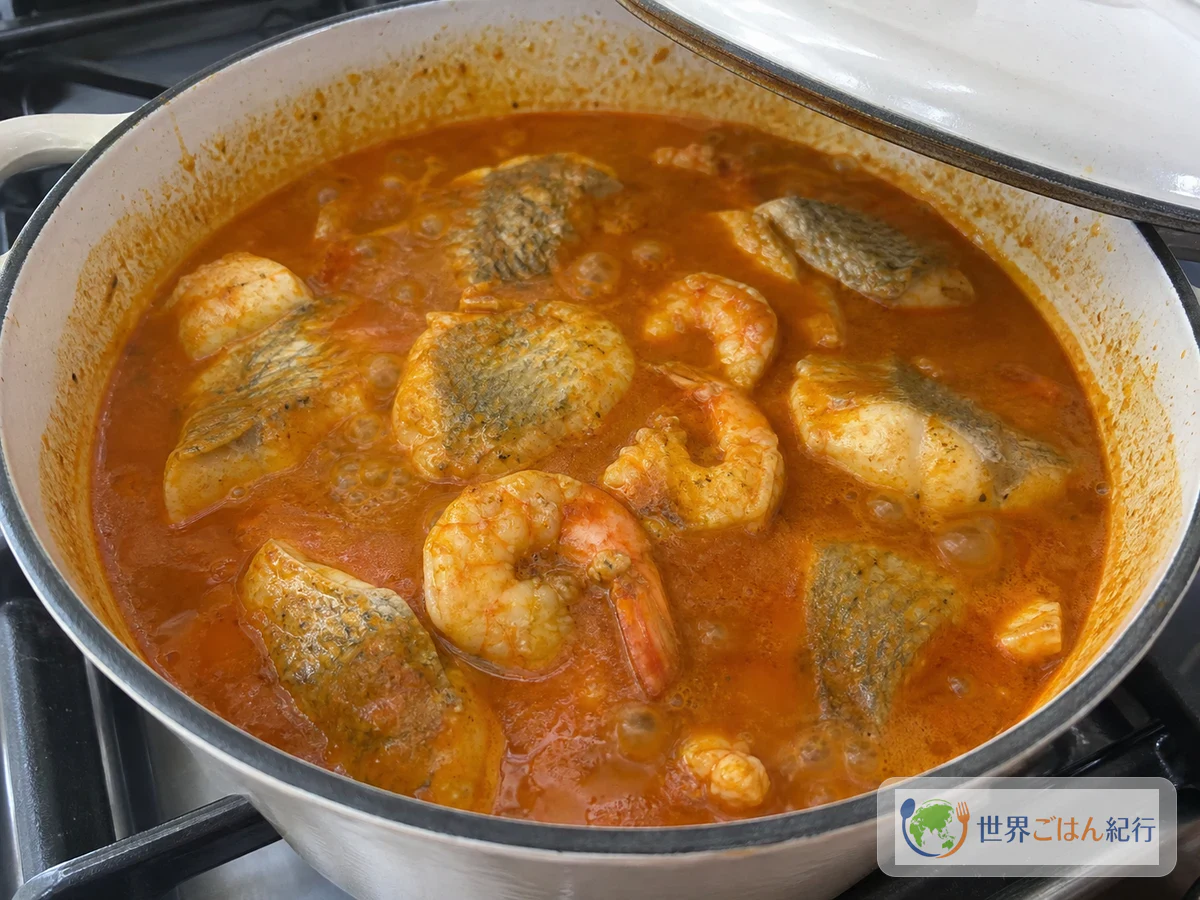
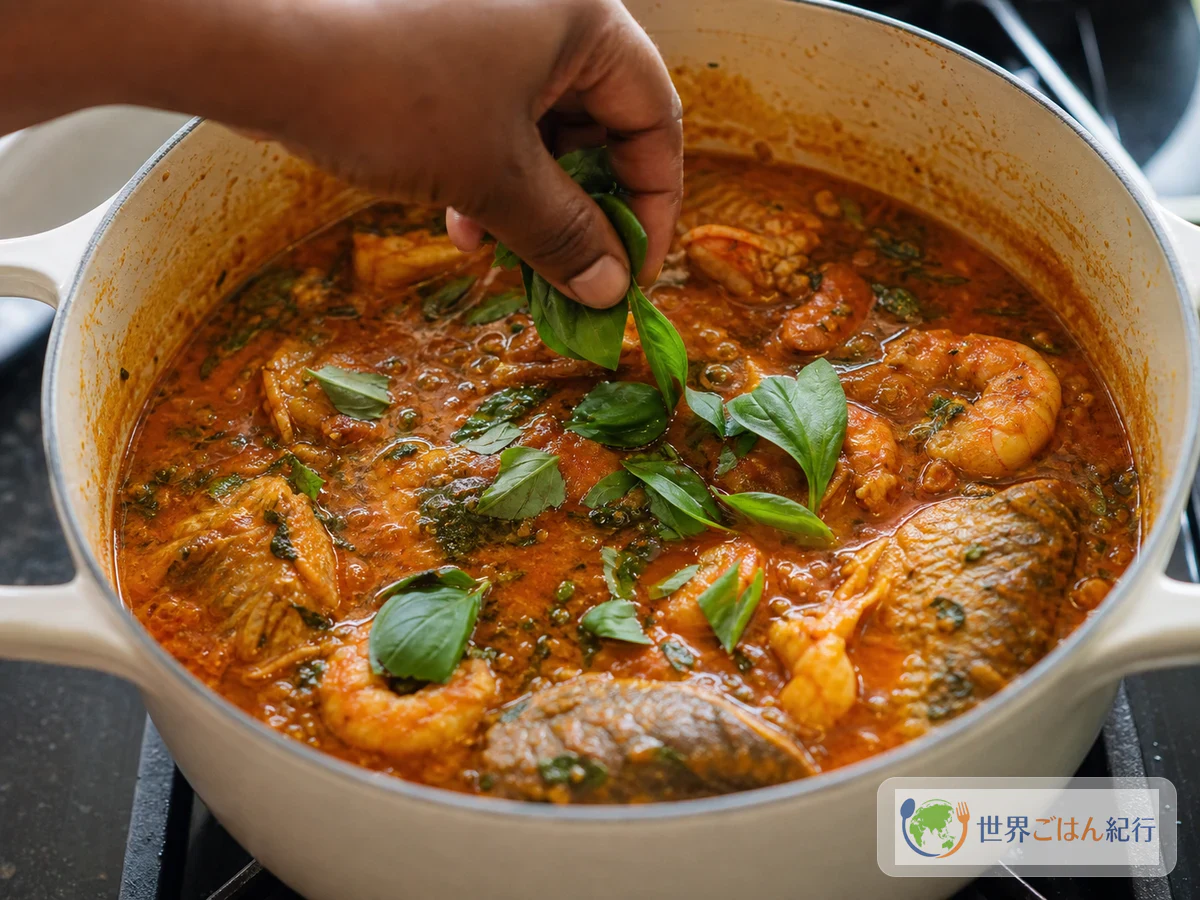
Pour canned palm nut concentrate into a pot and a sweet, nutty aroma rises right away. Thinned with water, the liquid starts out pale orange, but as it simmers over medium heat the water cooks off and a ring of red-orange oil gathers on the surface. That is the moment the pot reaches the thickness banga soup is known for, and the moment it is ready for the fish.
Banga soup comes from the Niger Delta of southern Nigeria. It is a rich soup made from the extract of palm fruit, and many households layer in fish, shrimp, dried fish and dried shrimp, so each spoonful carries the smell of the sea and the roundness of the oil at once. At home, the real hurdles are simple ones: use palm nut concentrate rather than red palm oil, add the fish late so it holds together, and judge thickness by how the oil rises. Keep to these three things and the backbone of the dish survives even without pressing fresh palm fruit as they do back home.
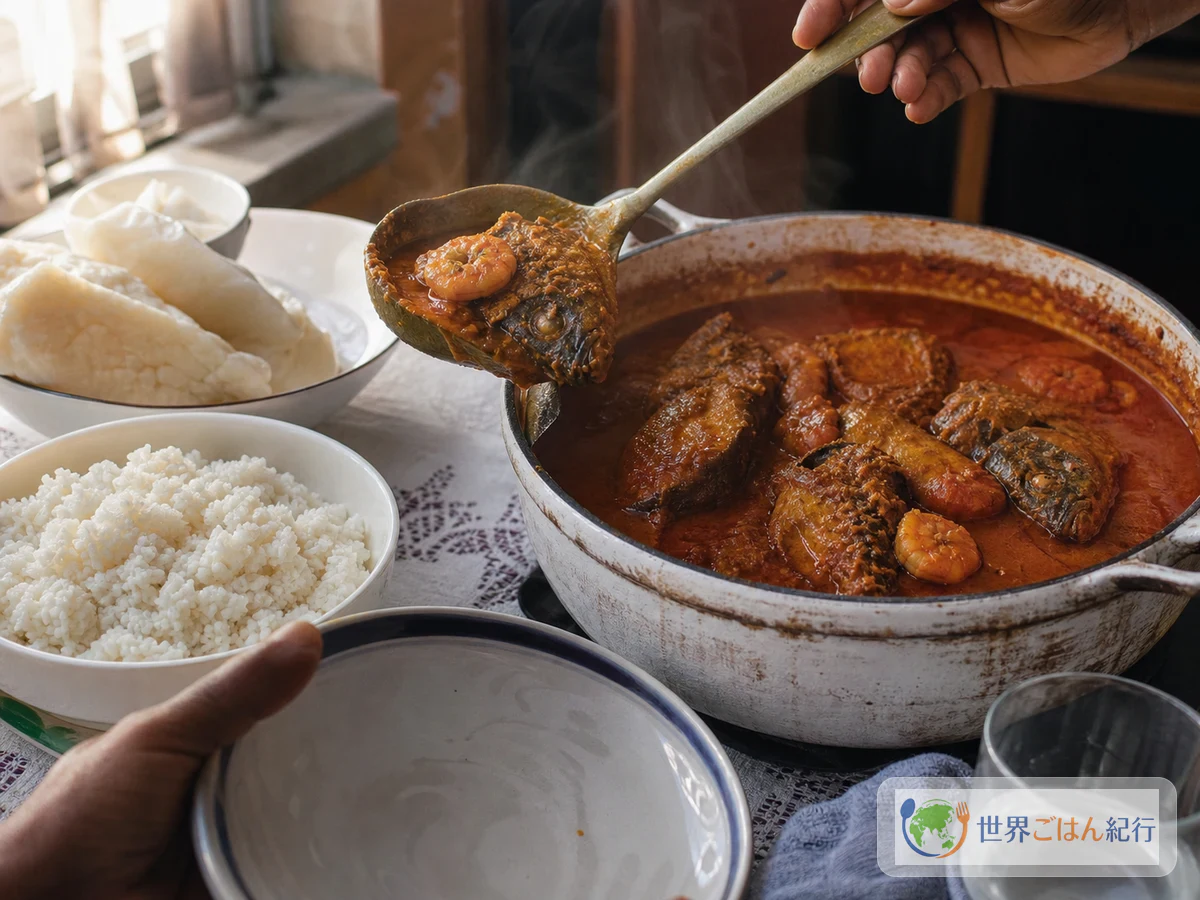
Banga soup and the Niger Delta table
Banga soup belongs to Delta State, and the state's dish list also includes banga rice. Banga works as a flavor that runs through the regional table. The Urhobo call the soup Oghwoamiedi and the Isoko call it Izuwoibiedi, and beletientien leaves, ataiko and obe-rumbebe sticks build its aroma.
Seafood has been part of it from the start. In a region ringed by rivers and wetlands, freshwater fish, shrimp, dried fish and periwinkles are easy to come by, so they became the natural choices for the pot. Across the south, banga is a common dish, served with starch and sometimes white rice. There is more on Nigerian cuisine in the overview.
In the Igbo southeast, the close relative is ofe akwu. Both soups use the extract of palm fruit, but Delta-style banga is paired with a thick yellow cassava starch called usi, while ofe akwu is eaten with white rice or yam. Neither one is the "authentic" version and the other a simplification. Change the fish, the leaves, the spices and the starch of a region, and the same palm fruit soup takes on a different table.
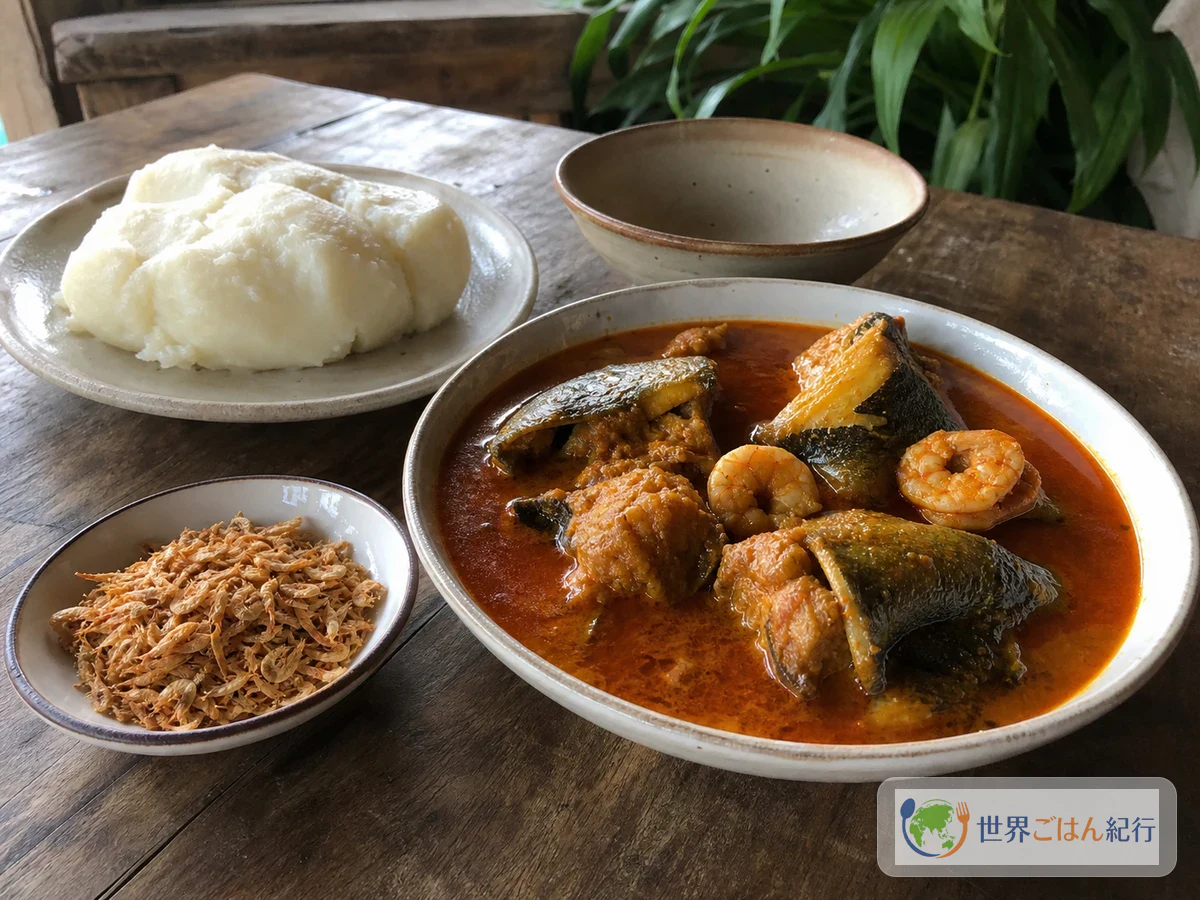
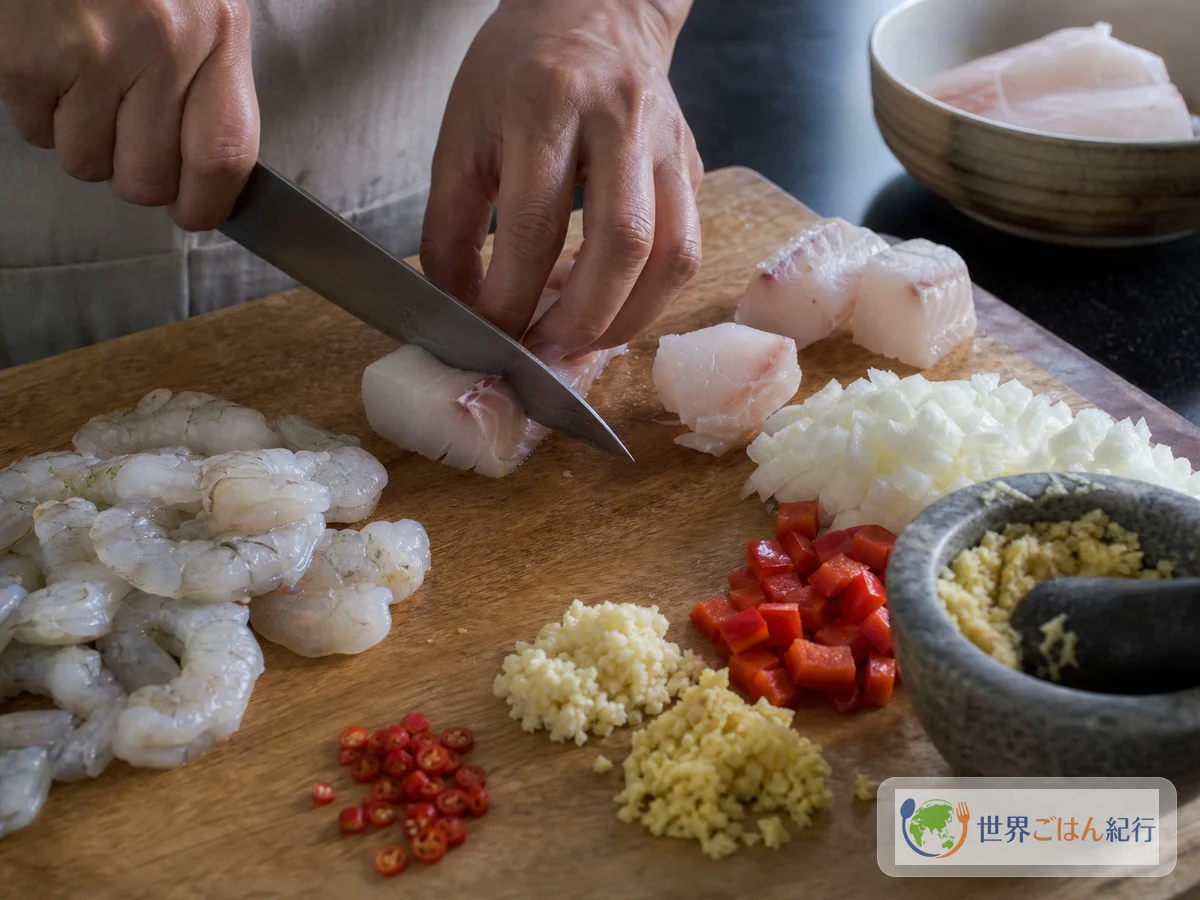
Ingredients (serves 4): gather the concentrate, the fish and the aromatics
This is the basic version for 4 servings.
Instead of fresh palm fruit, use palm nut concentrate, which you can find at African or import grocery stores.
If you can get banga spice, add it, but you do not need every local spice from the start.
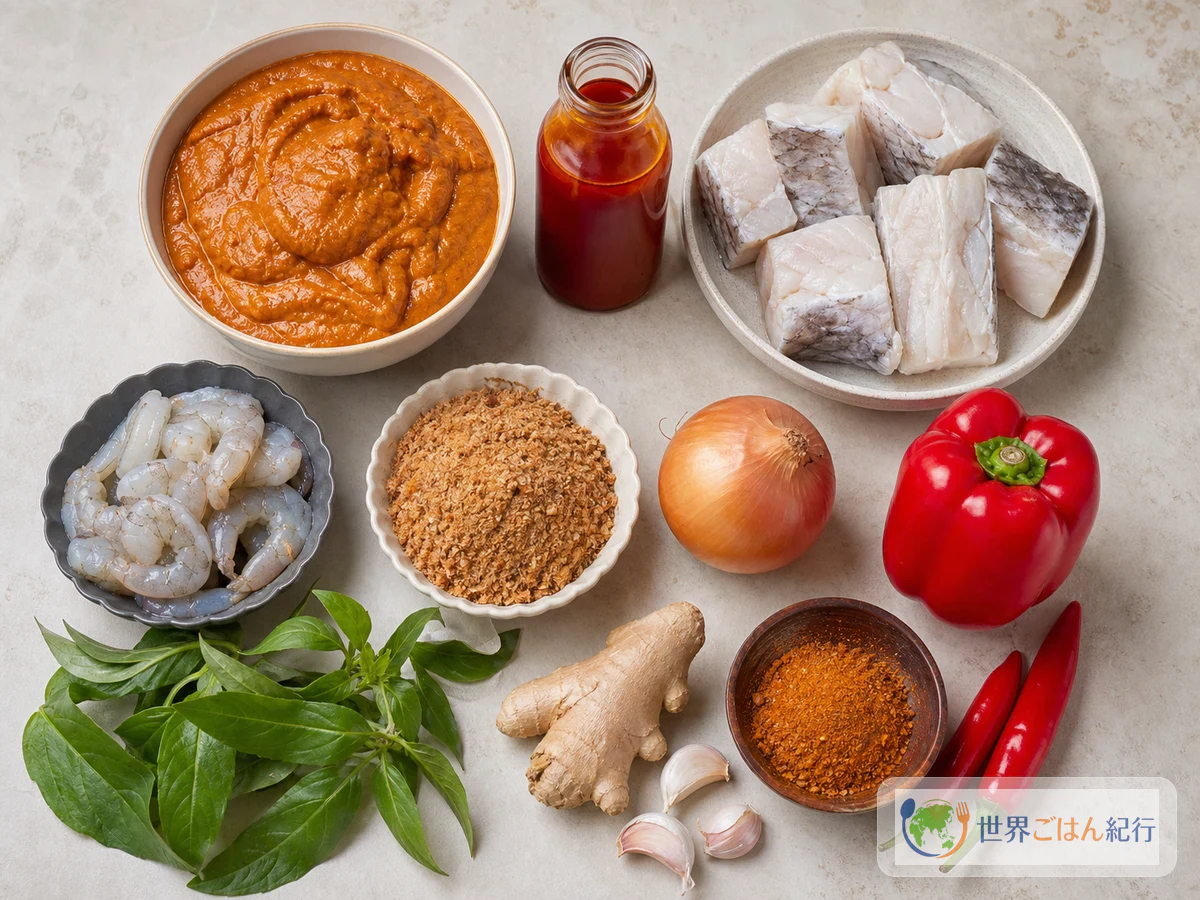
Do not swap palm nut concentrate for red palm oil
Palm nut concentrate is a thick extract made from the fiber and water of the fruit.
Red palm oil is a cooking oil. It can add color and aroma, but it is not the main ingredient that gives the soup body.
Without the concentrate, make a different seafood stew with red palm oil, not banga soup.
Only if you have found the concentrate and want more red color and an earthy aroma, use 2 teaspoons of red palm oil.
If the concentrate already looks oily on the surface, skip the red palm oil. If you won't use the rest as everyday cooking oil, don't buy it for this recipe.
This recipe uses fish, shrimp and dried shrimp. If you avoid crustaceans, leave out the shrimp and dried shrimp and increase the fish to 1.25 lb (520 g). Refrigerate seafood right after buying it, and wash the knife and cutting board that touched raw seafood with detergent and hot water before using them on other food.
Choosing palm nut concentrate and tools for banga soup
Fresh palm fruit or a can
The traditional method boils the palm fruit, gently crushes it in a mortar, adds hot water, strains it and reduces the extract. In a written method, the extract is heated until oil floats on the surface, then onion, chili, dried shrimp and banga spice go in, with the fish and leaves following later. Finding fresh palm fruit and straining out the fiber for a whole potful is hard in most home kitchens, so this recipe uses canned palm nut concentrate, which has the extraction and straining already done.
The catch is that thickness and saltiness vary by brand. Hold back some of the water at the start and add it as you watch the pot.
Mortar or blender
For a one-time try with ground dried shrimp and a store-bought paste, a blender handles the aromatics just fine. If you want to crush whole dried shrimp, chilies or ataiko coarsely, though, a mortar keeps those little grains of aroma better. It also earns its place if you plan to follow up with other dishes that crush dried goods or beans, such as akara (Japanese page) or abacha (Japanese page). Check that the bowl and pestle are a matched set, that the material is food safe, and that you have room to store it.
Method: six steps, with the fish going in last
Cooking time is about 60 minutes.
Reduction time depends on the width of the pot and the heat, so go by the oil on the surface, the trail of the spoon and how the sauce flows, not just the clock.
Getting banga soup thick and fragrant
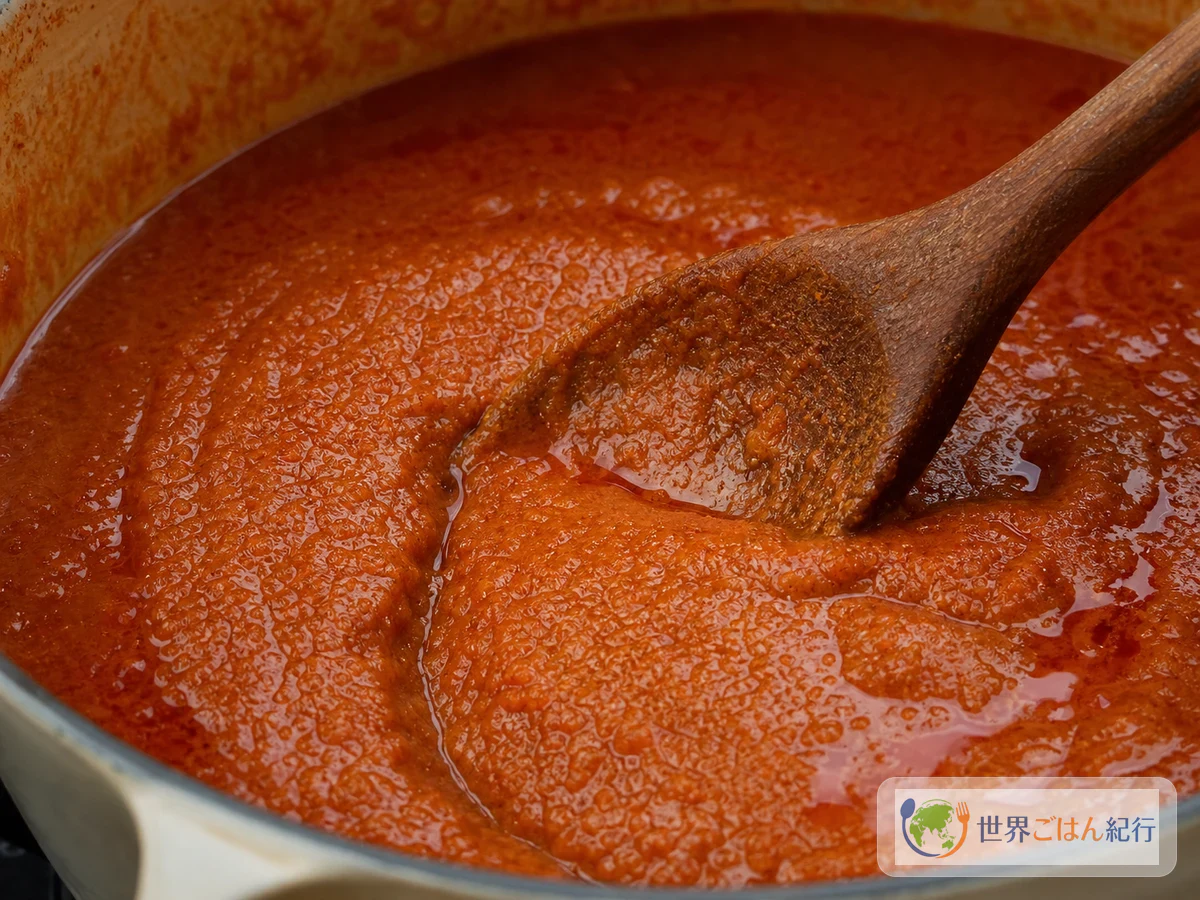
Wait for the oil to rise
The oil rising on the surface is the sign that the water in the concentrate has reduced and the fat of the palm fruit has started to separate from the liquid. Add the fish before that happens and the water from the fish thins the pot further, so you end up overcooking the fish while you wait.
Thicken by reducing, not with starch
Potato starch stirred into a watery soup leaves the oil on top and the fish stock tasting separate. To keep the palm nut aroma, take out the fish and reduce the soup uncovered, 5 minutes at a time. If you take it too far, add water 3.5 tbsp (50 ml) at a time and bring it back over low heat.
Serving, variations and storage
Starches to eat with banga soup
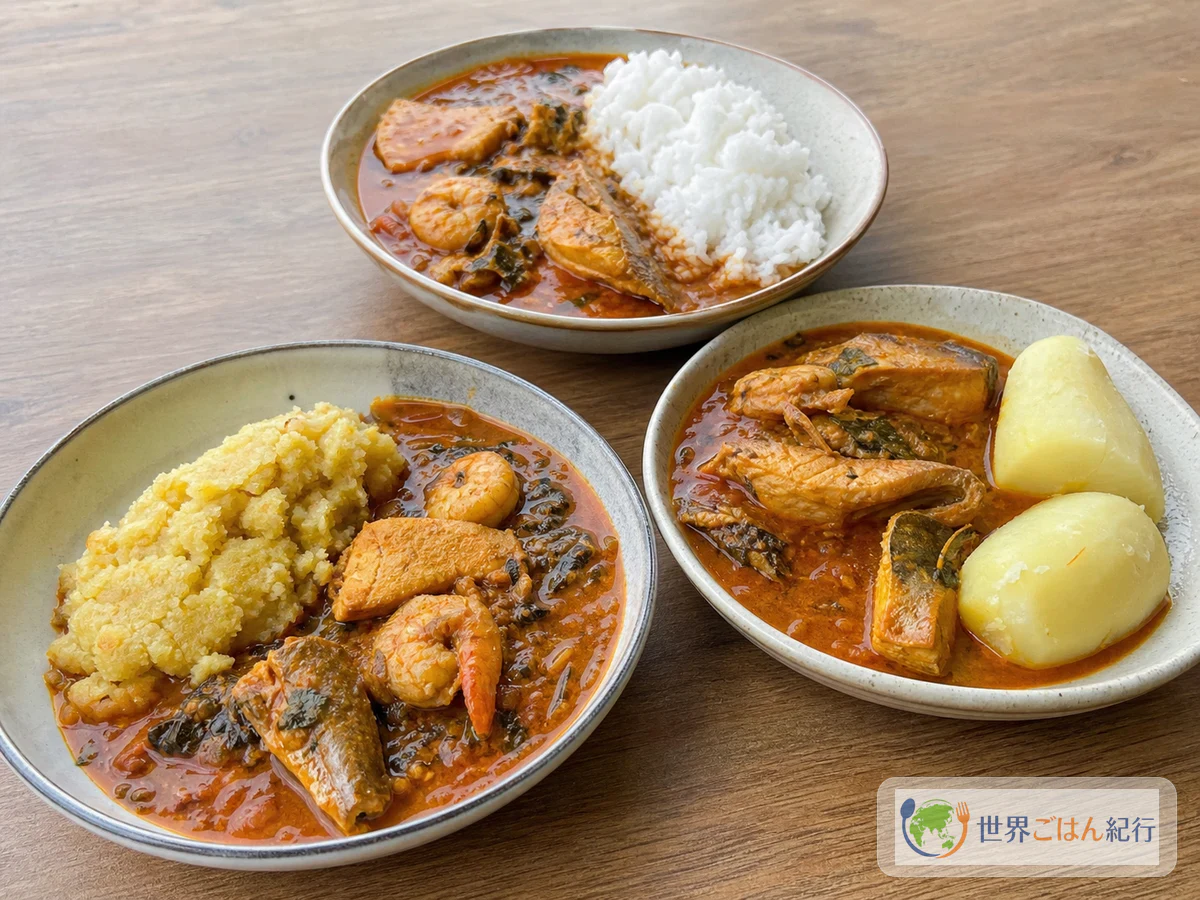
What you scoop banga with changes the whole impression. In the Delta, it comes with usi, a yellow, sticky cassava starch that you coat with a little thick soup at a time, quite a different way of eating from sipping a thin broth. Eba and fufu pair well too, but white rice is fine the first time, and it brings the table close to the southeastern ofe akwu.
| Staple | Texture and role | Judgment for a home kitchen |
|---|---|---|
| Usi, Delta starch | Yellow and sticky, takes a thick soup a little at a time | Try it if you find it at an African grocery |
| Eba | Crumbly cassava staple made by adding hot water to garri | Brings you closer to the local way of eating |
| Fufu | Smooth and elastic, wraps the soup | For store-bought mixes, follow the water amount on the bag |
| White rice | Makes the flavor of the ingredients and sauce easy to read | The standard for the first time; lets you concentrate on the fish |
| Boiled yam or potato | Fluffy texture that takes the weight of the oil | Easy to prepare at home instead of rice |
When shopping for a cassava staple, read the product description to see whether it is meant for fufu or for garri. A bag labeled "cassava flour" can lack usi's stickiness. If you would only use a big bag once, white rice or boiled potato is the easier start.
Five variations
Banga gets better when you bring one feature forward rather than piling more in: the roundness of the concentrate, the umami of the dried ingredients or the aroma of the leaves.
- Replace the white fish with chicken thigh: cut 400 g into bite-size pieces, simmer with the aromatics and cook through to at least 75°C (167°F) at the center. The light fish aroma gives way to a meaty stock.
- Strengthen the seafood: split it into 300 g fish and 220 g shrimp, and add the shrimp only for the last 5 minutes. Shrimp added with the fish turn tough.
- Add a leaf's bitterness: replace half the basil with a bitter leaf, added 1 minute before turning off the heat to keep the aroma.
- Soften the heat: omit the red chili and raise the red bell pepper to 150 g. The color stays, and only the heat that lingers in the throat fades.
- Move toward banga rice the next day: separate the leftover soup from the fish, add 200 g white rice and 50 ml water, and warm over low heat for 5 minutes. Return the fish at the end so it stays whole.
Storing banga soup safely
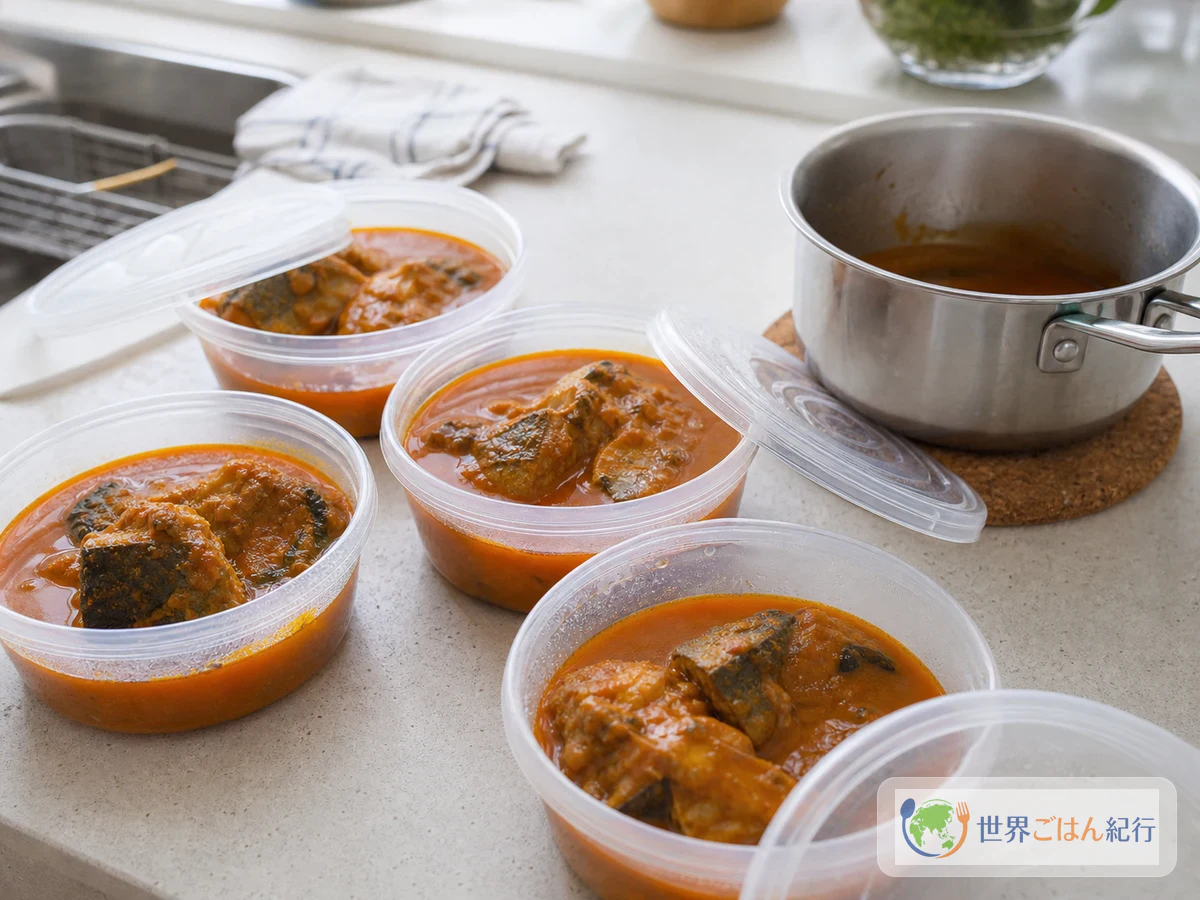
Seafood soup should never sit at room temperature in the pot. Once the heat is off, divide it into shallow airtight containers, one meal each, and refrigerate within 2 hours of cooking. Keep seafood at 4°C (40°F) or below, cook fish to 63°C (145°F) at the center or until the flesh is opaque and flakes with a fork, and finish refrigerated portions within 2 days. For more, see buying, storing and cooking seafood safely.
To freeze, separate the fish from the soup and wrap one meal at a time, so the flesh is less likely to break up on reheating. Reheat in a small pot, bring it to a boil, then lower the heat until it is hot through. Throw out anything with an off smell, a slimy surface or any change in color, and never decide by tasting.
West African dishes to cook alongside
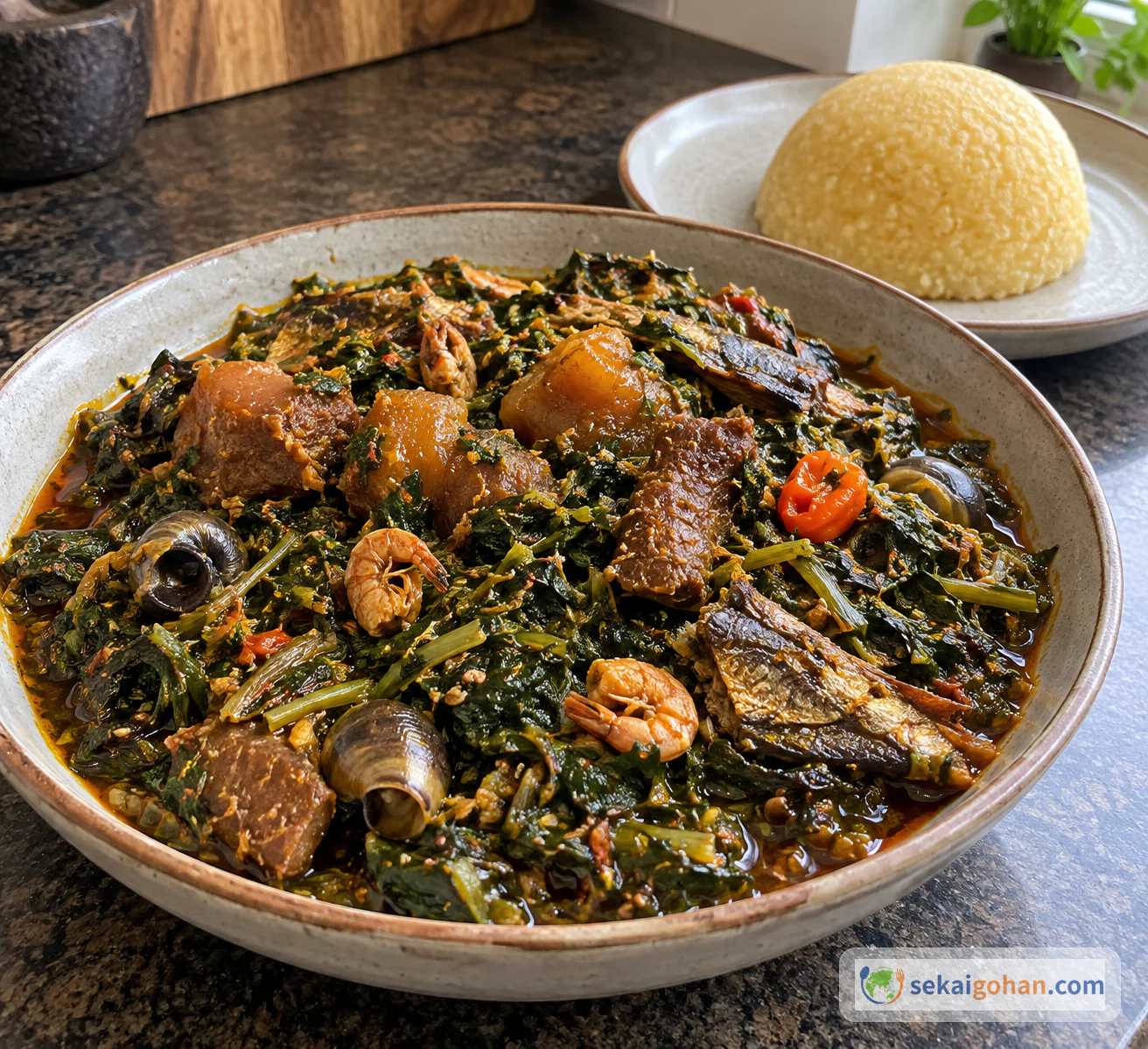
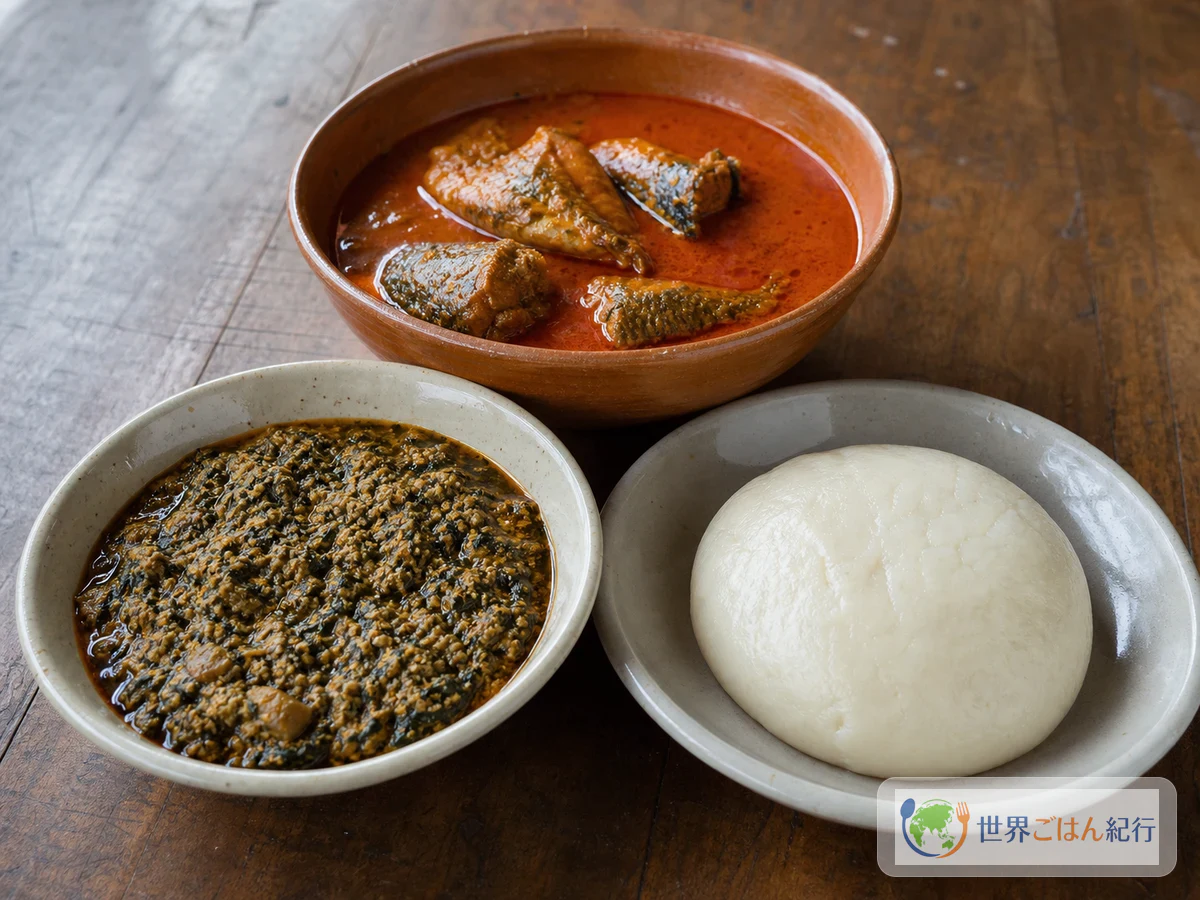
If you like banga's rich sauce, try egusi soup, another Nigerian soup thickened with seeds. Efo riro puts leafy greens and red palm oil up front, a different way to build a pot from banga's seafood. To eat the staple by hand, Ghanaian fufu is an easy match. And if you move on to a rice dish like jollof rice, toss a little rice in leftover banga, thinning it with water while you watch the weight of the oil.
FAQ
Can I make it with red palm oil if I cannot find palm nut concentrate?
Red palm oil alone lacks the thickness and round aroma of palm fruit extract, and adding coconut milk turns the dish into a different seafood stew. Look in import grocery stores for the labels "palm nut concentrate," "palm butter" or "palm fruit concentrate."
Does the flavor fall flat without banga spice?
Local spices add the aroma of ataiko and obe-rumbebe, but you can leave them out the first time. Layering the aroma in the order of dried shrimp, ginger, chili and sweet basil, and reducing the concentrate until the oil rises, is more reliable than a spice that only shares the name.
The fish broke apart. Can I fix it?
Broken fish can't be put back together, but it makes a good sauce to spoon over rice. Next time, keep pieces at least 1.5 inches (4 cm), cook them only for the last 8–10 minutes, and rock the pot instead of stirring with a spatula.
Is it still banga soup if I eat it with white rice?
Yes; the way of eating simply differs by region. In Delta State it is served with starch, while ofe akwu is eaten with white rice or yam. With white rice, finish the soup a little looser so it clings to the grains.
What do I do if I avoid crustaceans?
Leave out the shrimp and dried shrimp and increase the white fish to 1.25 lb (520 g). If you add dried fish or fish sauce in their place, check the allergen label of the product, and skip them if you need to avoid seafood.