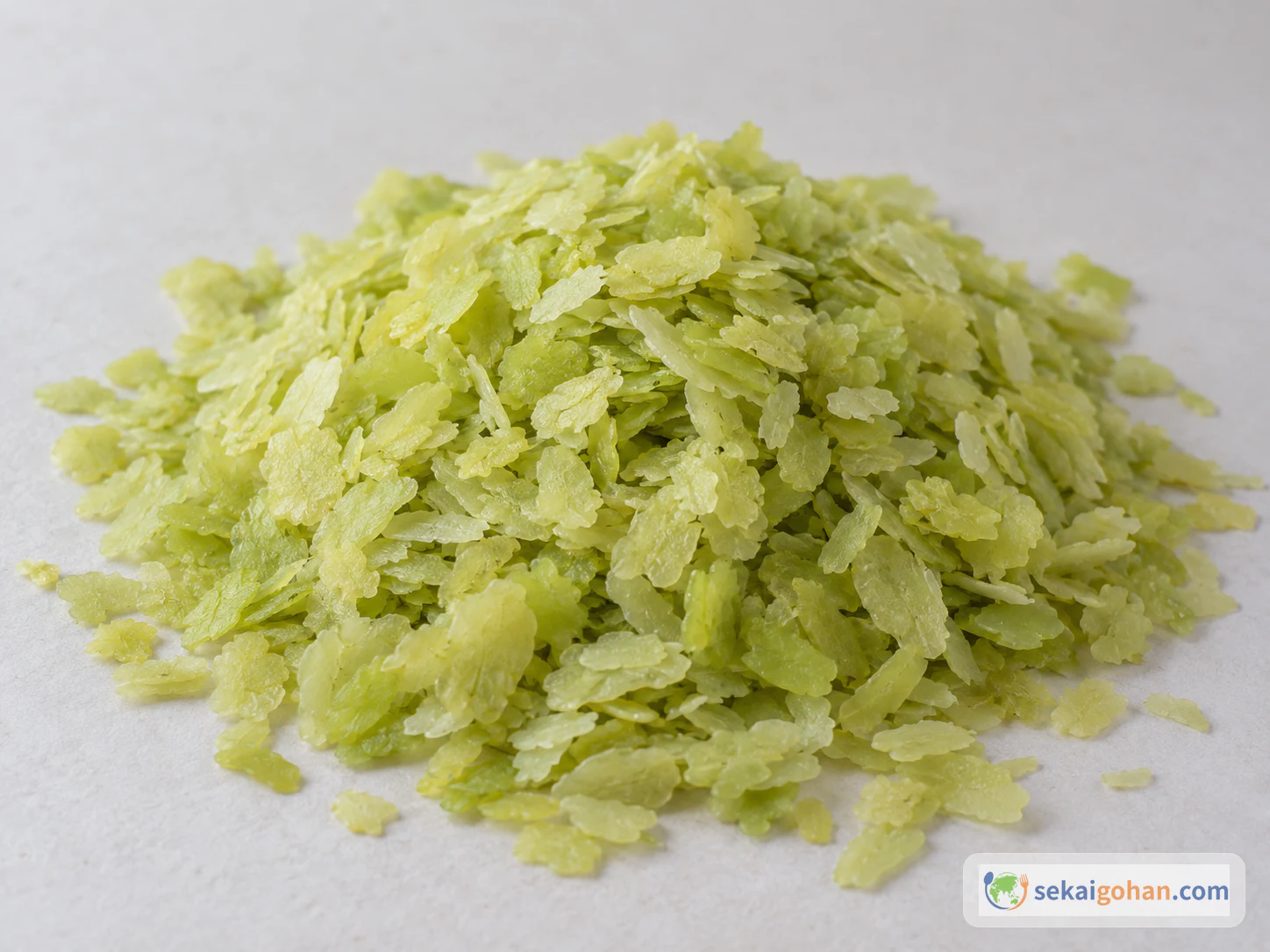
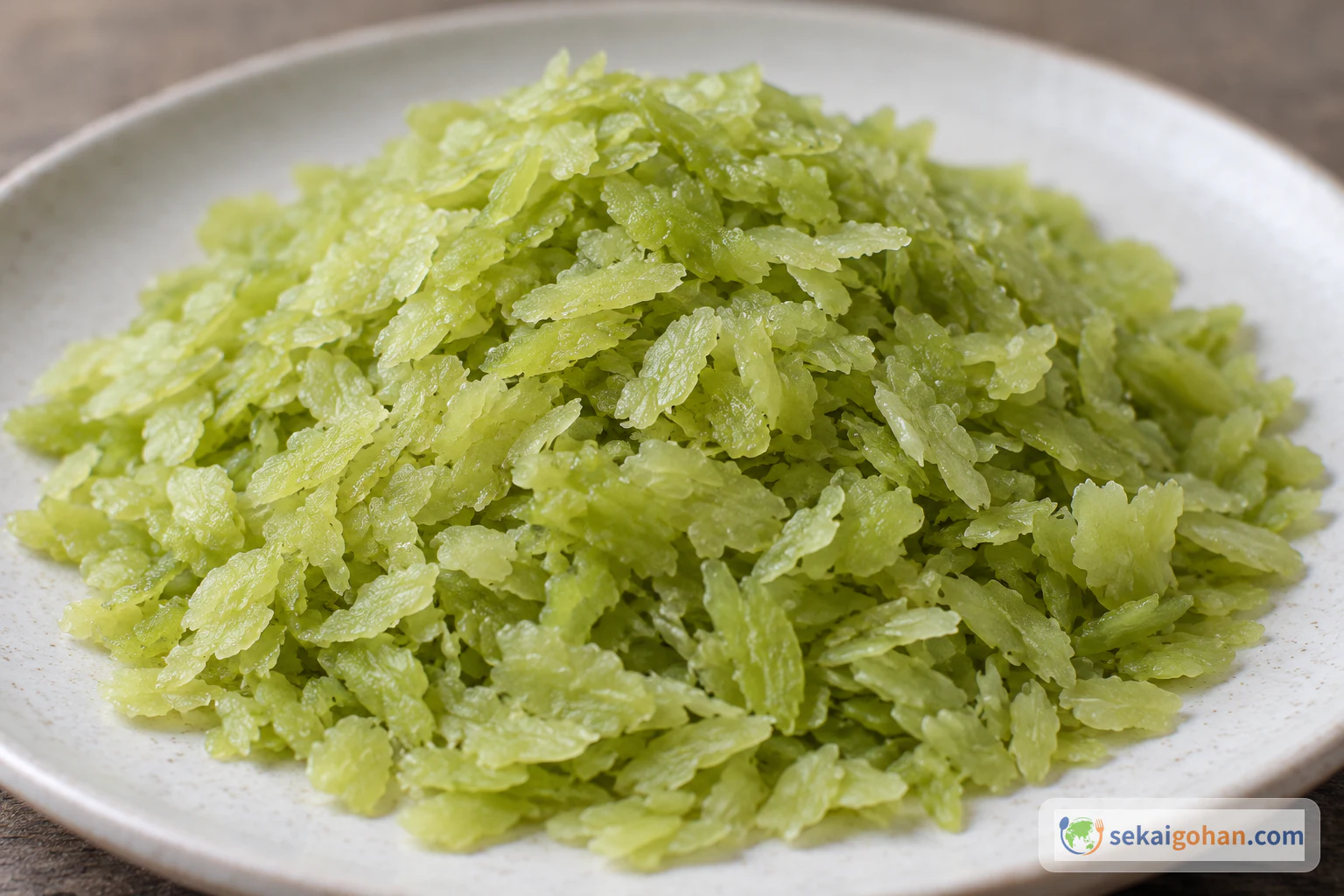
Only the finished thin, soft green flakes of cốm
CuisineVietnamese

Cốm: Vietnam's Soft Green Flakes Made from Young Sticky Rice

What cốm is and how it is made: thin, soft green flakes made from young, milky glutinous rice paddy. Follows a Làng Vòng producer's account through threshing, sorting, washing, roasting over charcoal, husking, pounding, hand sieving and two-layer leaf wrapping, and separates it clearly from Bánh cốm, chả cốm and xôi cốm.

Cooking flow

Cooking steps

STEP 11 / 11

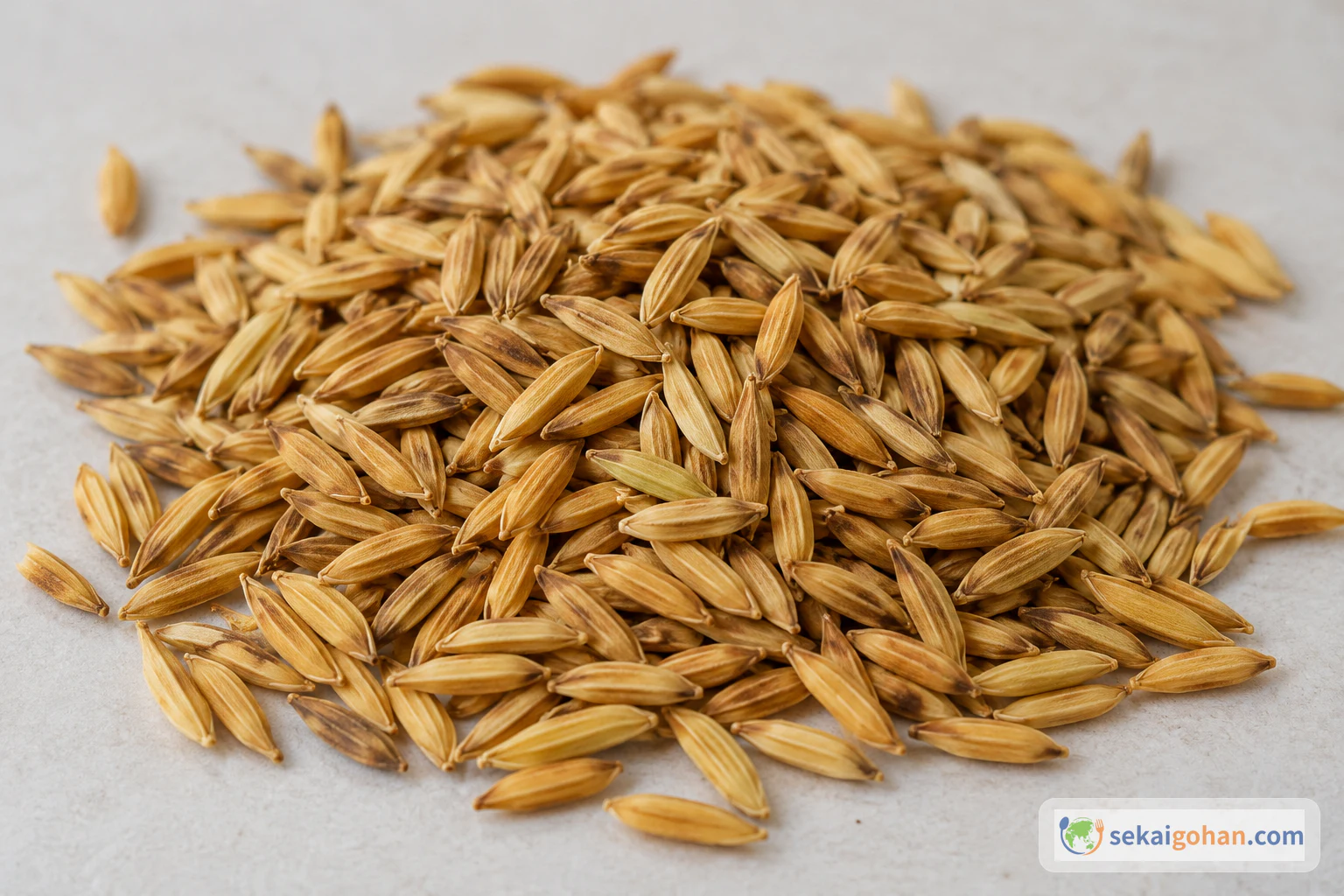
Thresh the young panicles

Young paddy grains separated from the panicles; the threshing method is not shown
Young grains separated from the panicles

The young, milky grains are separated from the panicles.

STEP 22 / 11

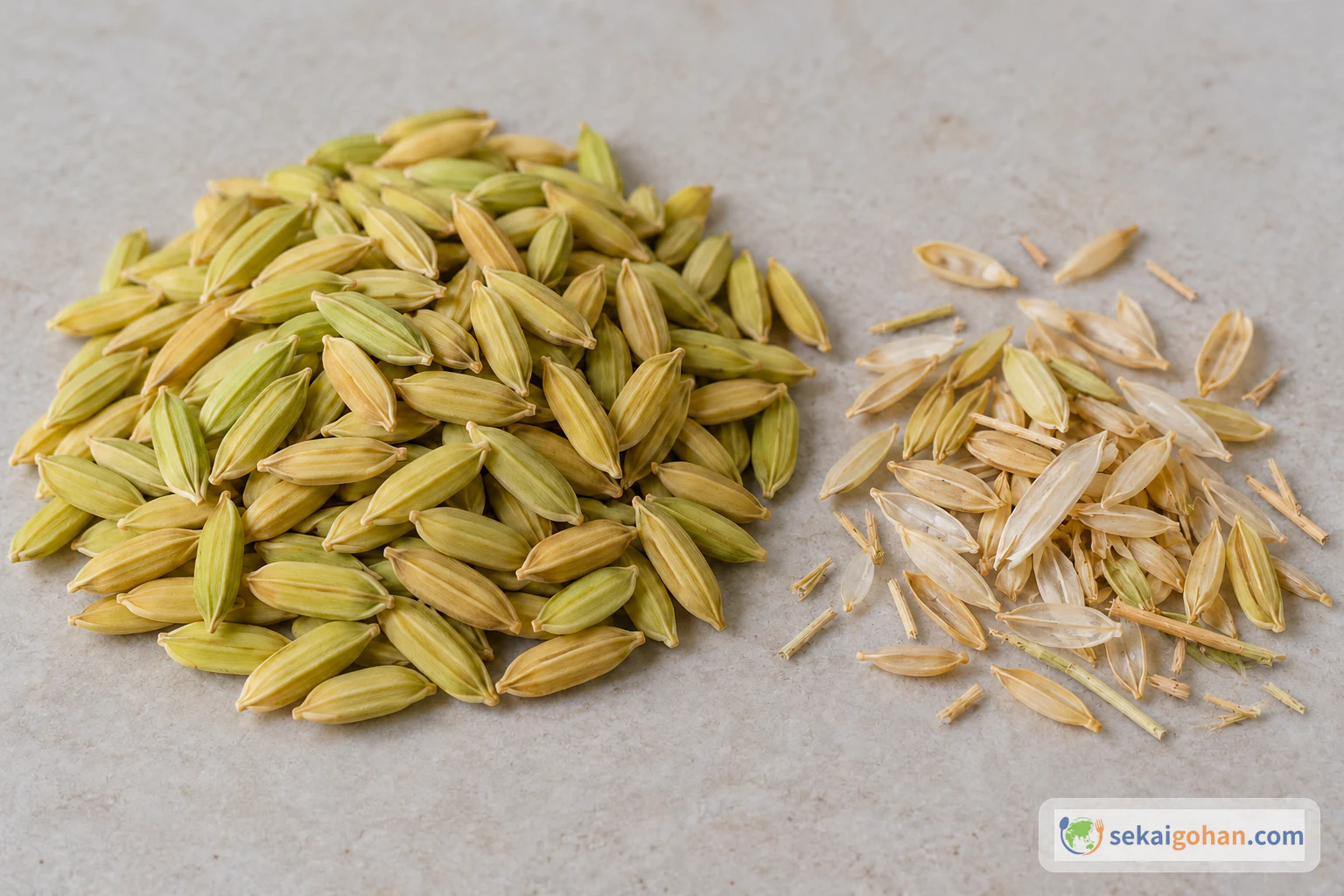
Sort out the straw and empty grains

Young paddy after the straw and empty grains have been sorted out; no sorting tool or direction is shown
Sound young paddy on one side, straw and empty grains set apart

Straw and empty grains are removed, leaving the sound young paddy.

STEP 33 / 11

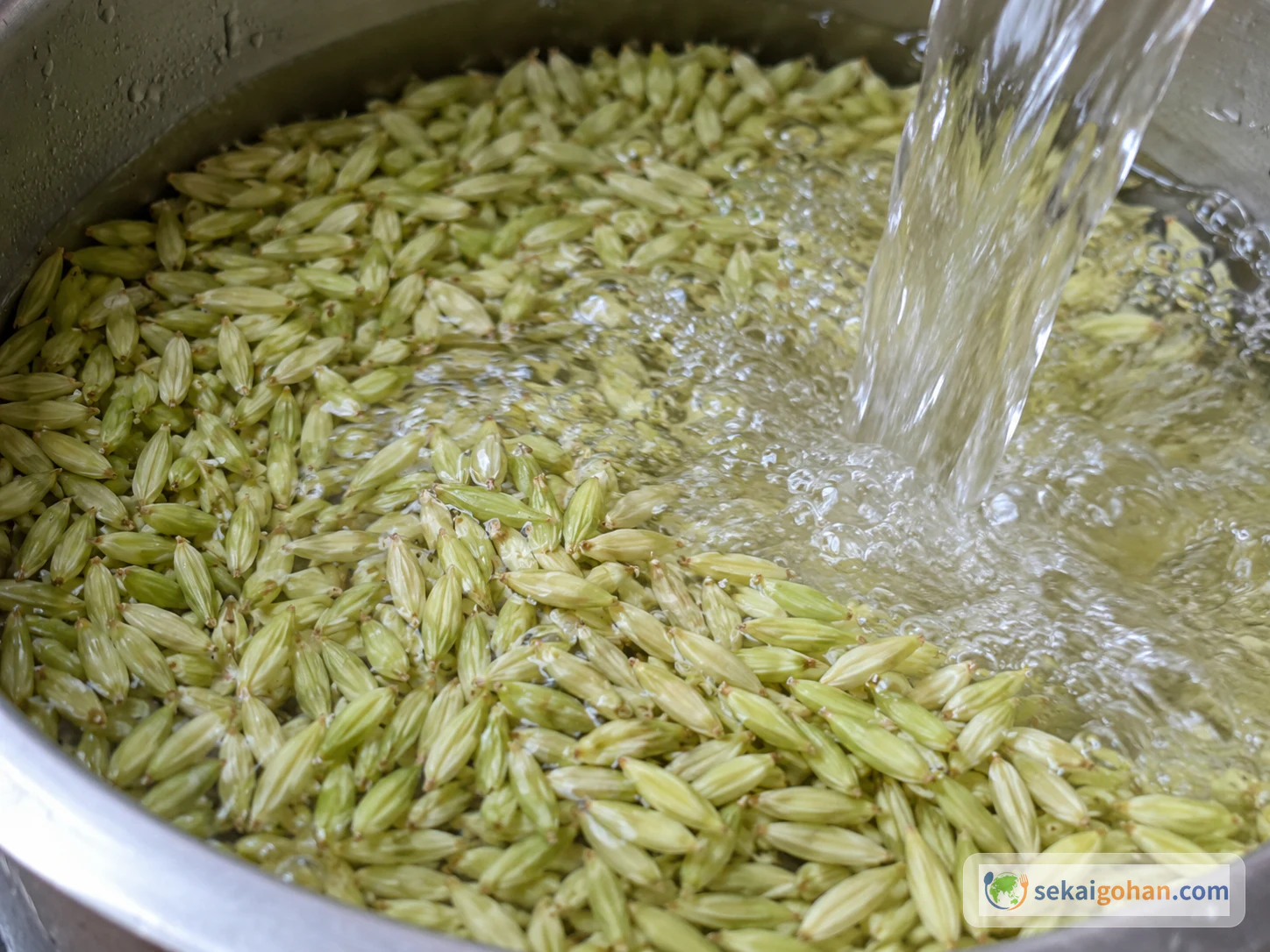
Wash the paddy

Young paddy being washed with water; no water amount is shown
Water is run through the young paddy to wash it

The paddy is washed by running water through it.

STEP 44 / 11

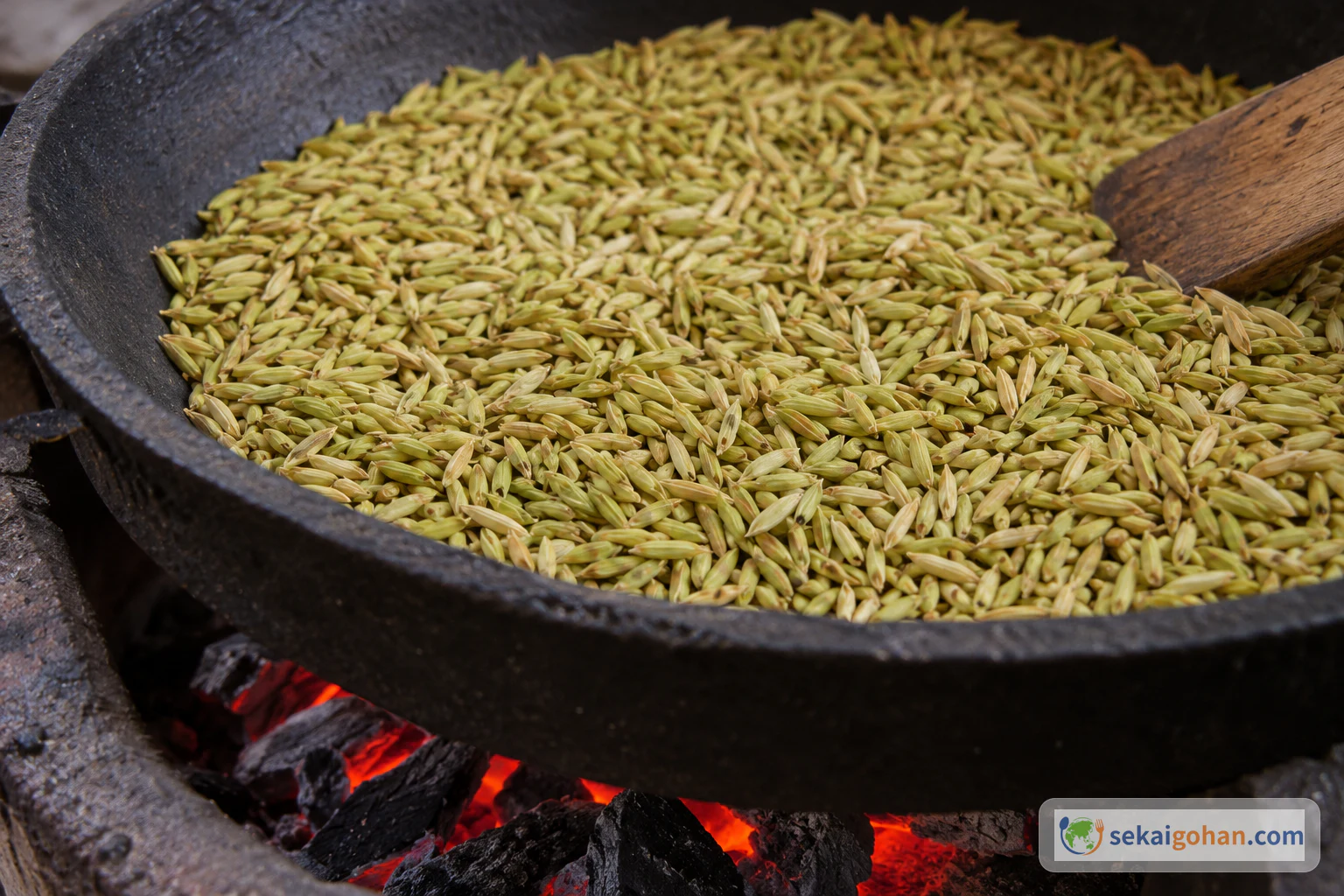
Roast evenly over charcoal

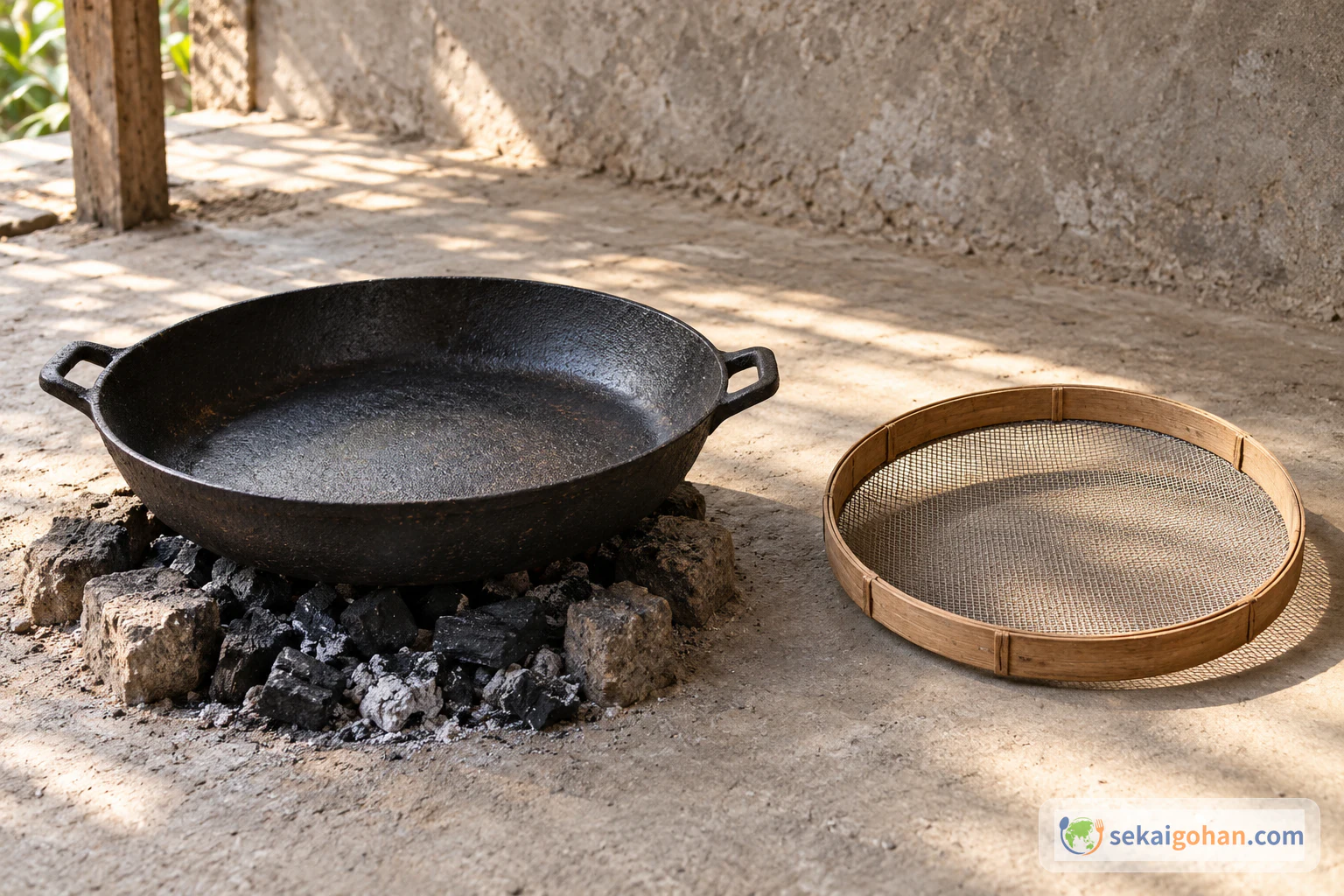
Young paddy roasting evenly in a thick cast-iron pan over charcoal
The paddy is moved in the pan so the roasting stays even

The paddy is roasted using the roasting machine, a thick cast-iron pan and charcoal heat. The grain is kept moving and adjusted so it roasts evenly.

STEP 55 / 11

Cool the roasted paddy

Roasted paddy cooling; cooling time and surface are not specified
The roasted paddy rests away from the heat

After roasting, the paddy is left to cool.

STEP 66 / 11

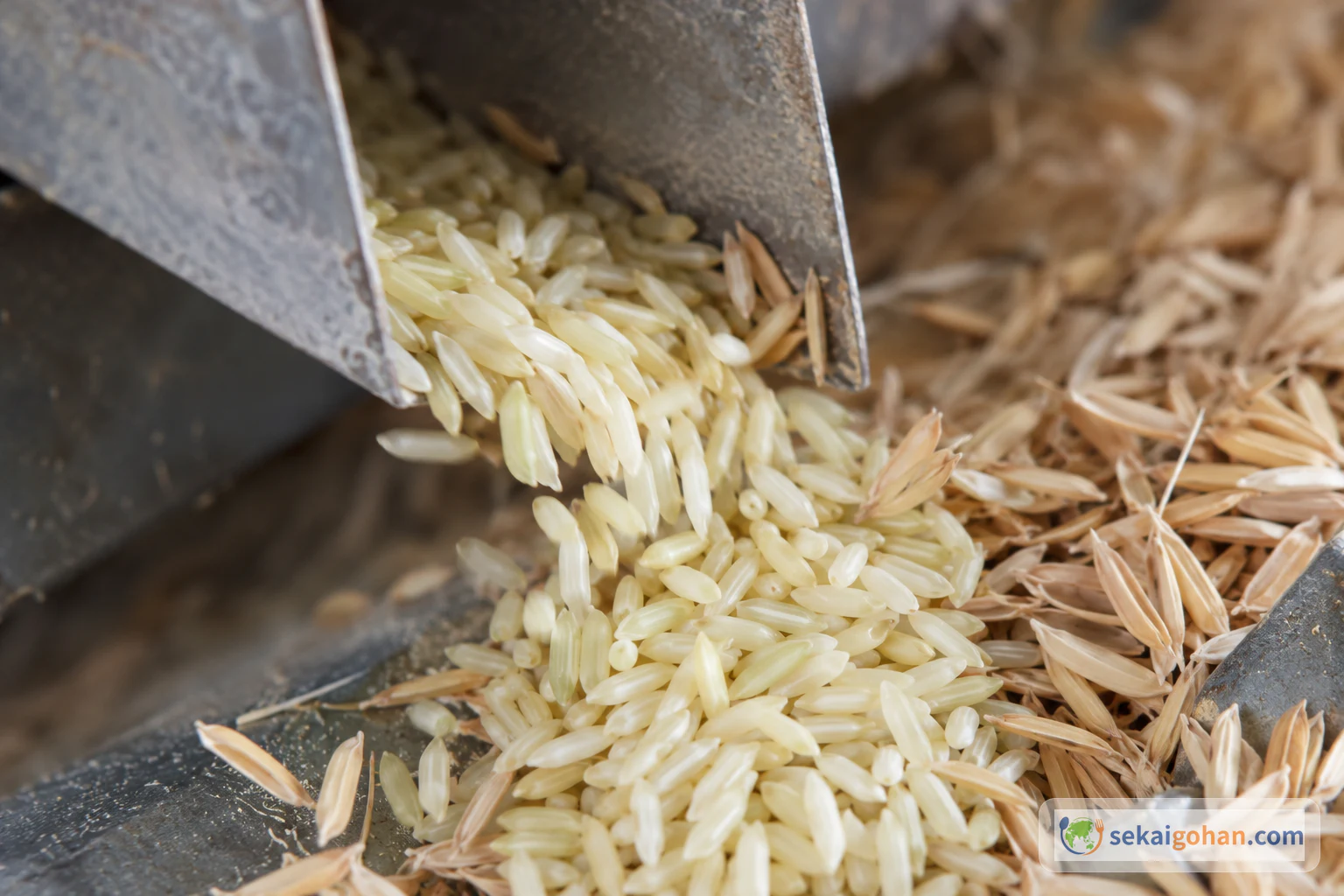
Remove the husks by machine

Husks being removed by machine; the machine's shape is not shown
Husks and grains separate as they leave the machine

The cooled paddy goes through a machine that removes the husks from the grains.

STEP 77 / 11

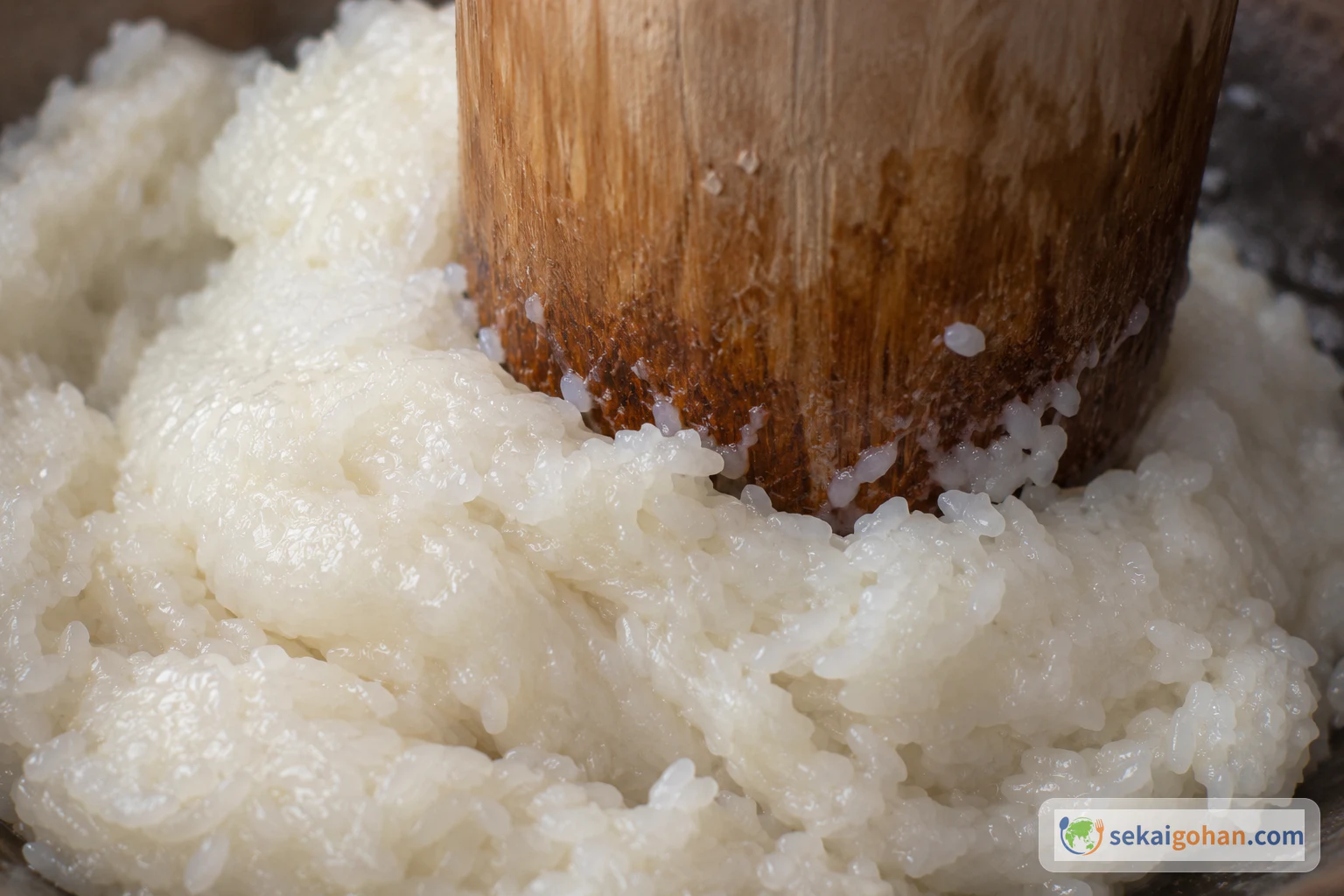
Pound by machine

Young rice being pounded by machine; mortar material and machine design are not shown
Pounding presses the young grains toward flakes

The husked young rice is pounded by machine.

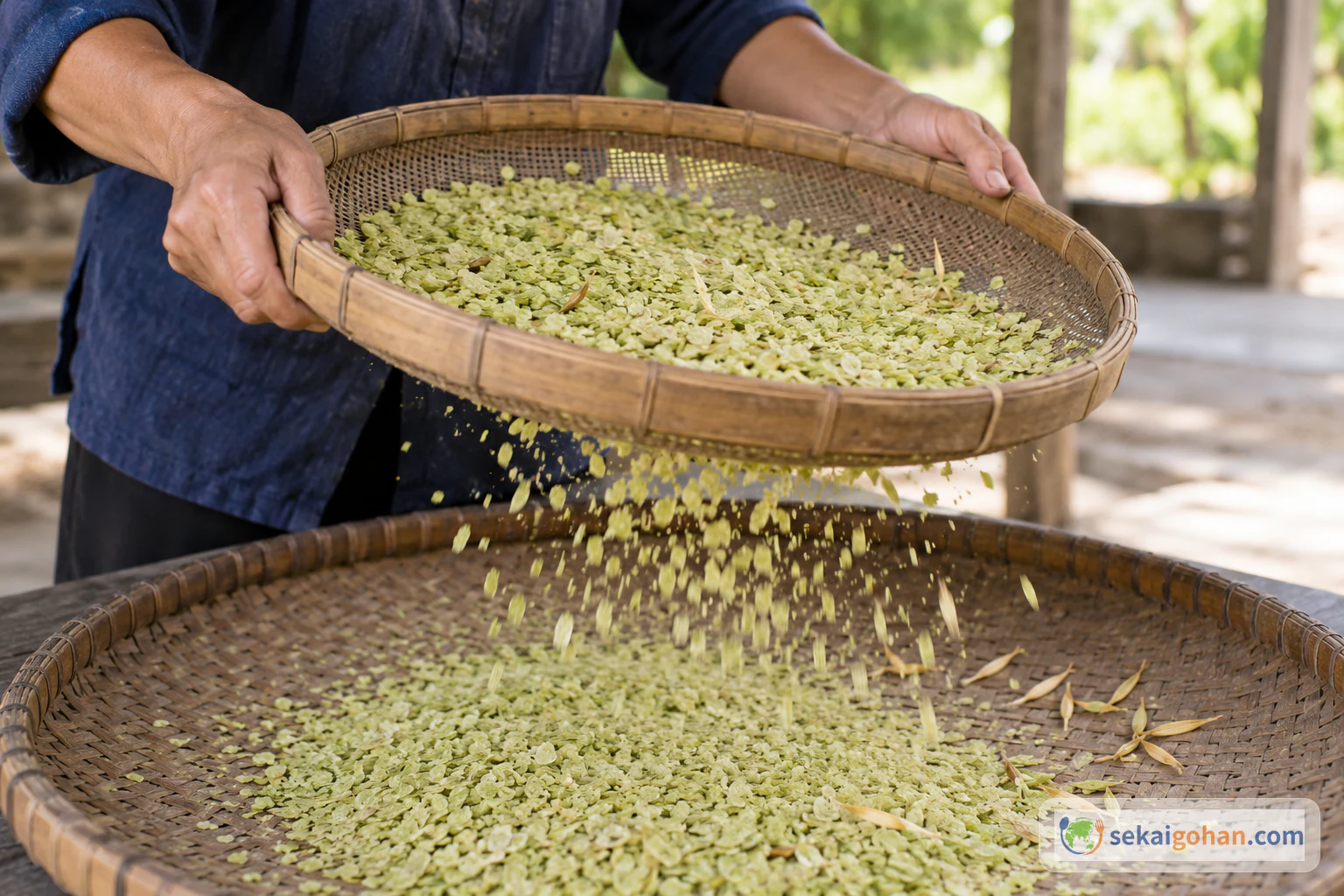
STEP 88 / 11

Sieve by hand, then repeat

Pounded rice being sifted with a hand sieve
Pounding and hand sieving are repeated according to the grain's maturity

The pounded rice is sieved by hand. Pounding and hand sieving are repeated as many times as the maturity of the grain requires, with final rounds of cleaning at the end.

STEP 99 / 11

Finish as thin, soft green flakes

Thin, soft green flakes after sieving is finished
Finished cốm: thin, soft and green, with nothing added

When the pounding and sieving are done, the result is thin, soft, green flakes.

STEP 1010 / 11

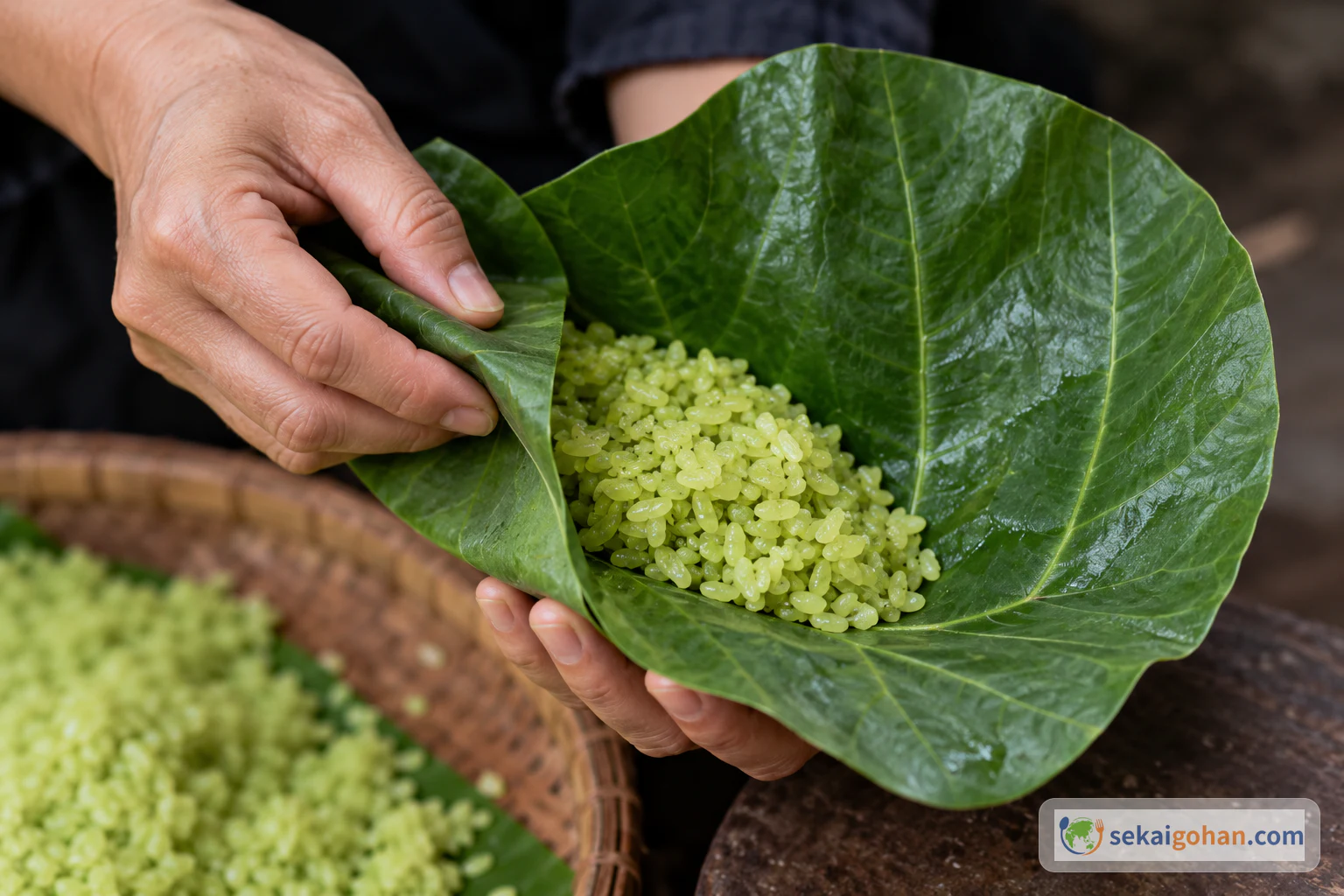
Wrap in lá ráy leaves

The inner wrapping layer, using a leaf that is not botanically identified here
The inner layer of leaf goes around the flakes first

The flakes are first wrapped in lá ráy leaves as the inner layer.

STEP 1111 / 11

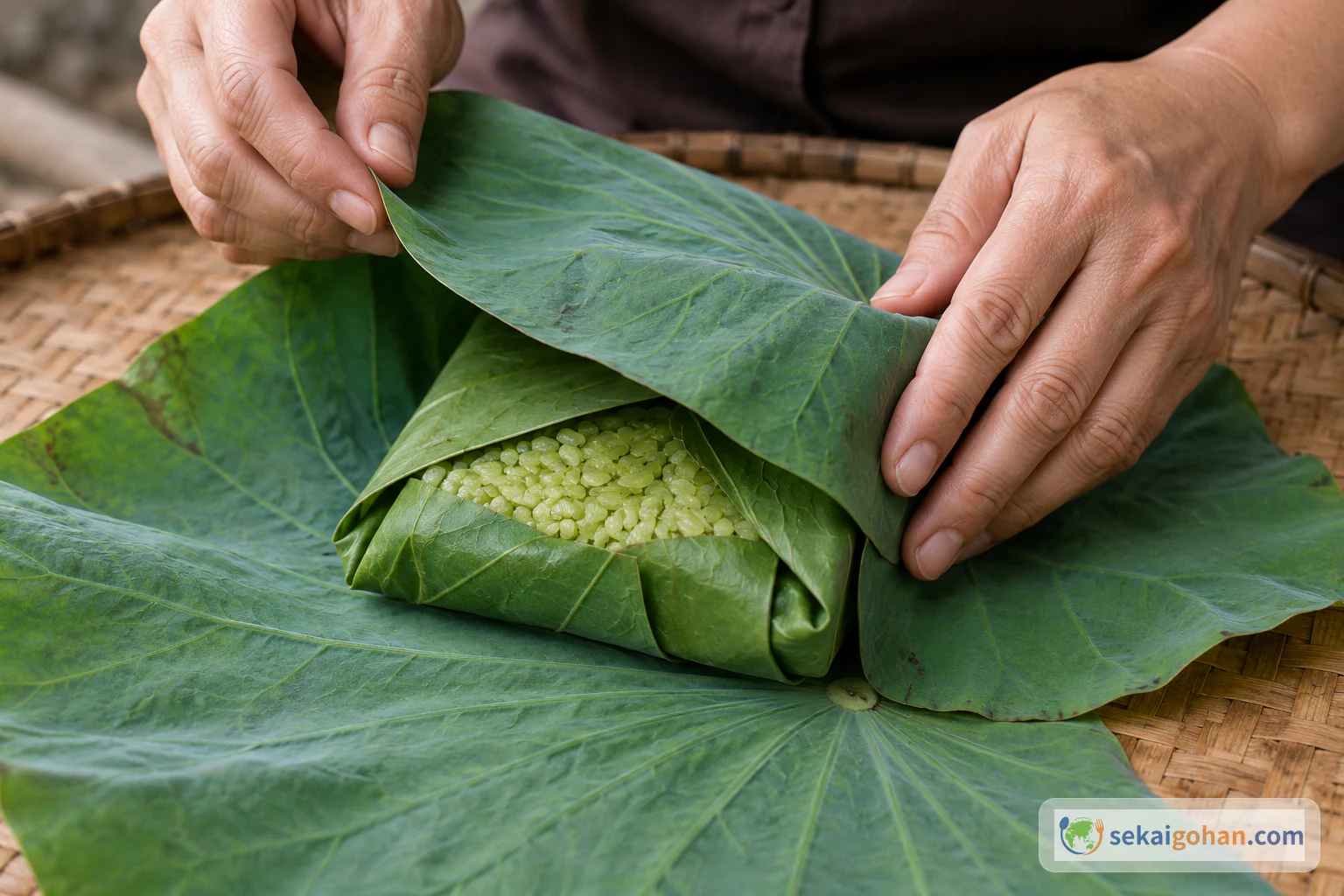
Cover with a lotus leaf

The inner package being covered with a lotus leaf
The lotus leaf forms the outer layer of the package

The inner package is then covered with a lotus leaf as the outer layer.

0 / 0
Ingredients

Ingredients

1 / 1

Ingredients

Ingredient Amount Role
Young, milky glutinous rice paddy (Nếp cái hoa vàng preferred) as needed The only base ingredient; it becomes the flakes
Water as needed For washing the paddy

Nothing else is added. No sugar, oil, pandan juice, lotus juice, coloring, spices, mung beans or pork.

0 / 0

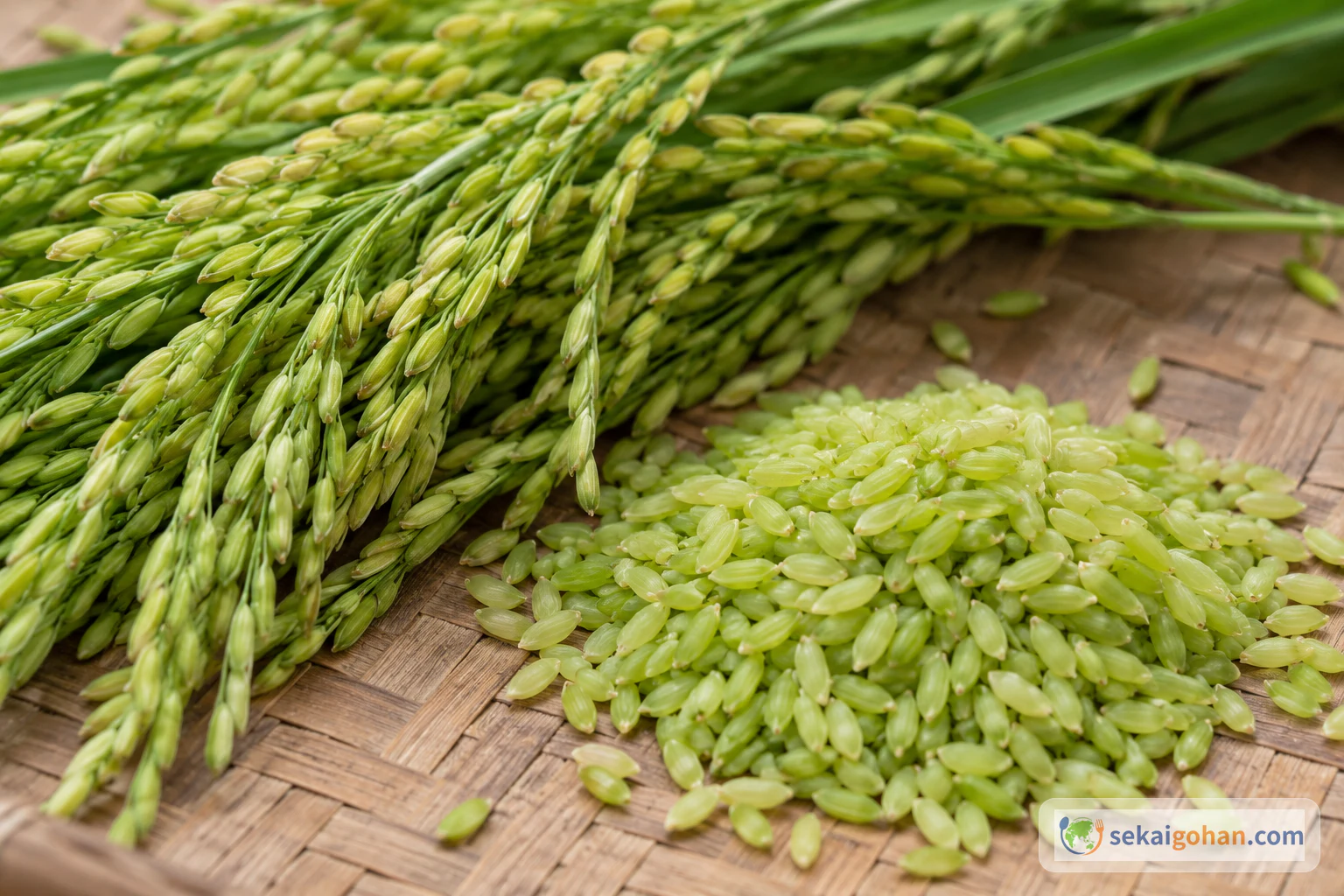
Most rice reaches the kitchen as dry, white, fully ripe grain. Cốm starts earlier, with glutinous rice picked while the inside of the grain is still milky. Roasted, pounded and sieved again and again, that young rice becomes thin, soft green flakes. In Vietnam they belong to autumn, and above all to Làng Vòng (Vong Village), a place "where the essence of autumn lives on."

Cốm and Vong Village

In Vong Village, the young grains are threshed from the panicles, sorted, washed and roasted in a thick cast-iron pan over charcoal. Once cooled, they are husked and pounded by machine, then sieved by hand. That cycle repeats until the grains have flattened into soft green flakes, which are finally wrapped in two layers of leaves. Nothing is fried along the way, and the flakes stay soft rather than crisp.

The word cốm turns up in several other dish names, and those are different foods. Bánh cốm is a cake with a mung bean filling, chả cốm is made with pork, and xôi cốm is steamed sticky rice. Here, cốm means the plain flakes only.

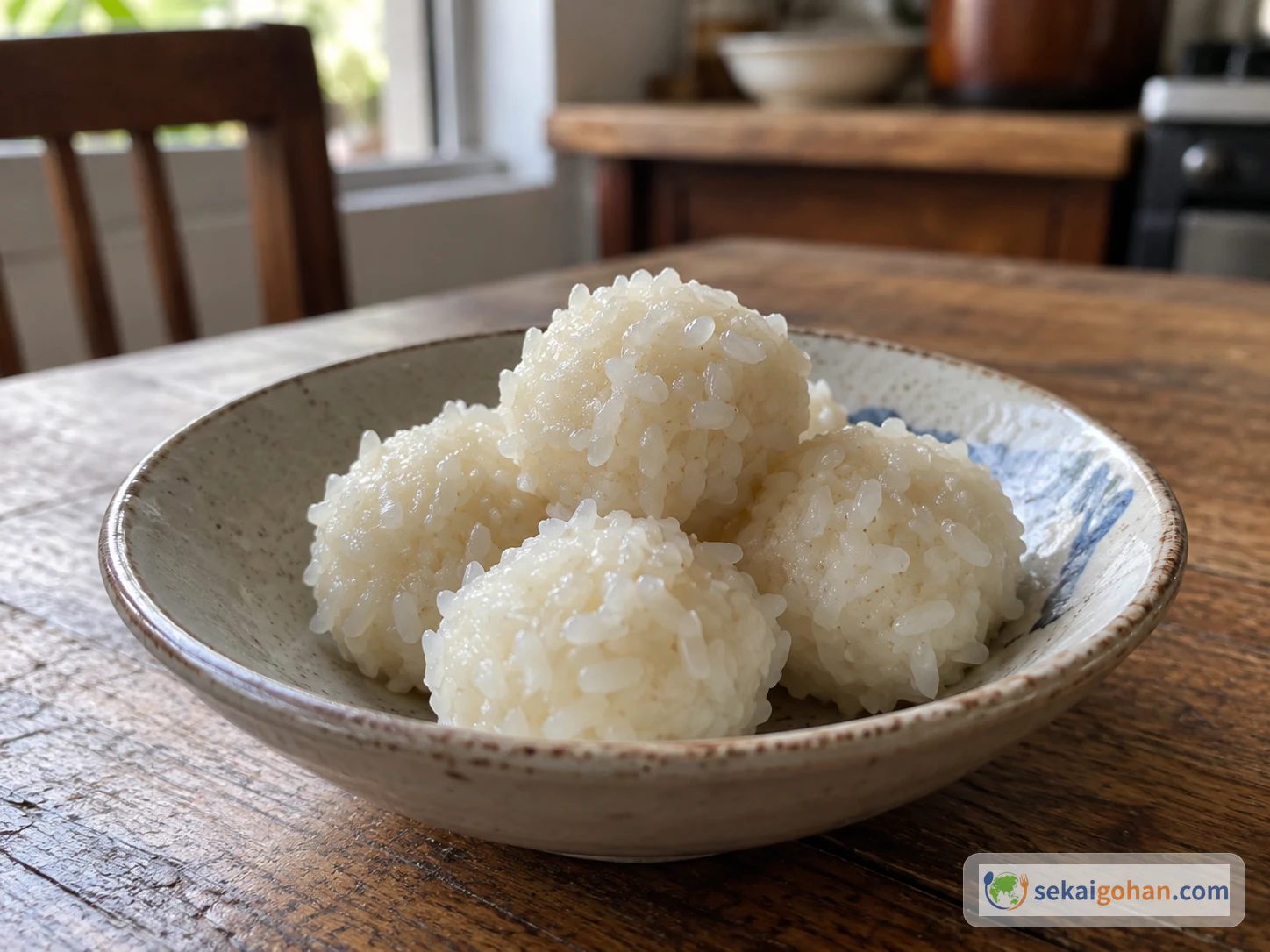
Cốm also has little in common with other sticky rice dishes. Cơm lam is sticky rice cooked in bamboo tubes. Bánh chưng, made for Lunar New Year, is sticky rice wrapped in leaves with mung beans and pork; it shares the leaf wrapping, but its ingredients and process have nothing to do with flakes made from young paddy. For more from the country, see our Vietnam page.

Ingredients: Young Glutinous Paddy and Water
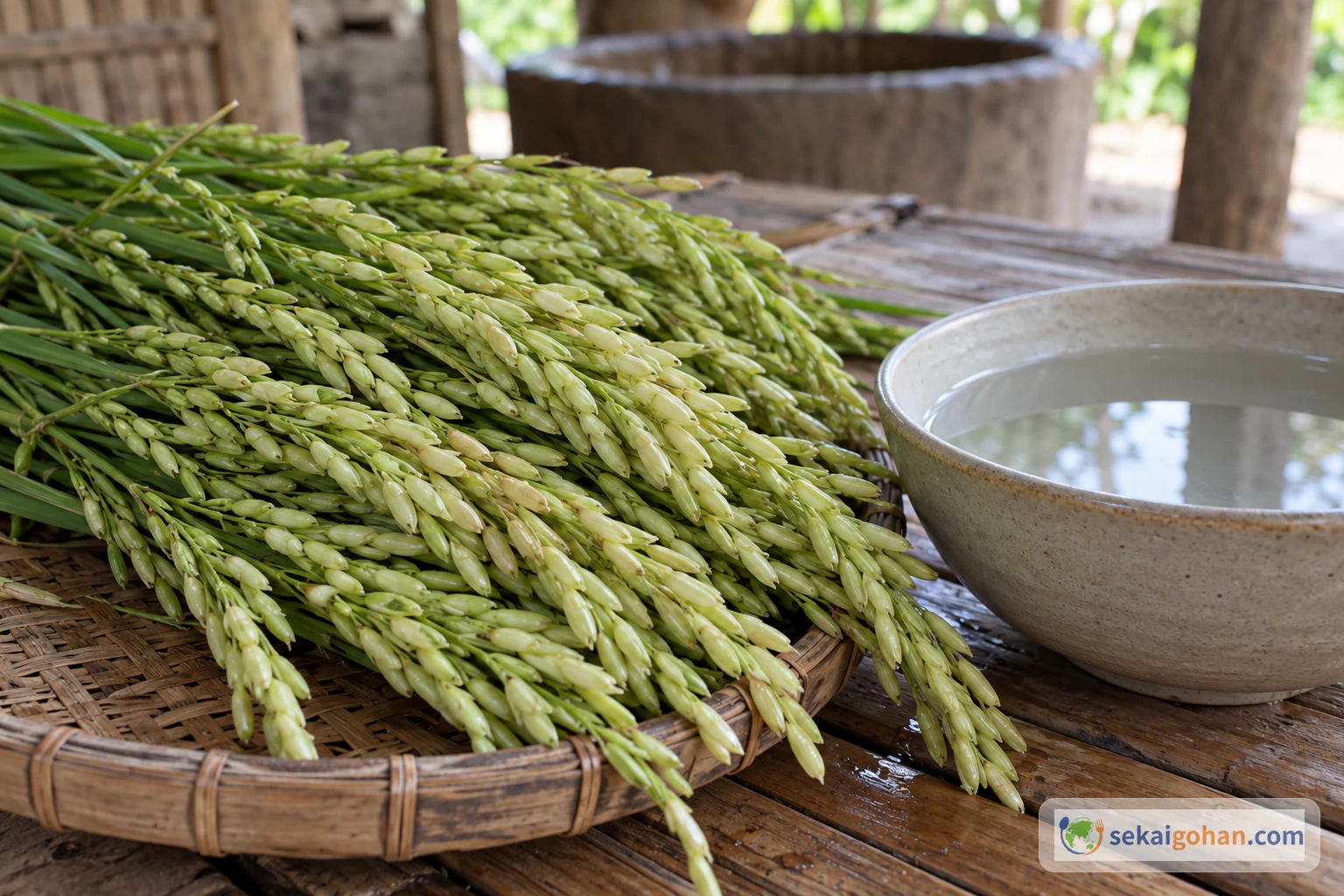
Young glutinous rice paddy and water for washing
Young, milky glutinous rice paddy is the only base ingredient; water is used to wash it

Equipment

Thick cast-iron pan, charcoal and a hand sieve
The roasting pan, charcoal and hand sieve are the tools named; the machines are not shown
  • Equipment for threshing the panicles and sorting out straw and empty grains
  • Roasting machine
  • Thick cast-iron pan
  • Charcoal, as the heat for roasting
  • A surface for cooling the roasted paddy
  • Machine for removing the husks
  • Machine for pounding
  • Hand sieve
  • Lá ráy leaves, for the inner wrapping layer
  • Lotus leaves, for the outer wrapping layer

Choosing Rice for Cốm

The rice is Nếp cái hoa vàng, a glutinous variety, picked while the grain is young and milky. It is grown in two crops a year, but the autumn harvest is preferred. The green color comes from the young rice itself, since the process adds no coloring, pandan or anything else.

There is no home substitute. Ordinary sticky rice, dried flakes or green coloring won't give you cốm, and a kitchen stove, hand pestle and household sieve can't stand in for the roasting, husking and pounding machines.

The Process: From Young Paddy to Green Flakes

Whose process this is

The steps below follow the artisan Do Van Thang's process.

Cốm Yields, Timing and Pounding Rounds

A workshop batch of about 22 lb (10 kg) of young, milky paddy yields about 4.5 lb (2 kg) of finished flakes. That is a production figure, not a home quantity. The work takes at least about 3 to 4 hours, as a rough estimate from the producer.

How many times the rice is pounded and sieved depends on how mature the grain is. Count on 5 to 7 rounds, or 5 to 8 rounds with about 3 final rounds of cleaning.

Wrapping and Eating Cốm

Cốm is wrapped with lá ráy on the inside and lotus leaf on the outside, with no straw ties. Both leaves are packaging only: neither one is eaten, and lá ráy should never be gathered from the wild.

The basic way to eat cốm is as the plain flakes. Banana makes an optional pairing alongside.

Frequently Asked Questions

Is cốm cooked rice?

No. It is young, milky glutinous rice paddy that has been threshed, roasted, husked, pounded and sieved into thin, soft green flakes.

Can I make it at home the same way?

Cốm is a workshop food. It relies on a roasting machine, a husking machine and a pounding machine.
Sources

  • Thăng Quỳnh (cốm producer), article by phuonghx quoting artisan Do Van Thang, "Cốm làng Vòng – tinh hoa ẩm thực của mảnh đất Hà Thành." This is the main source for the process: young, milky glutinous paddy and the preference for Nếp cái hoa vàng; the autumn preference and two crops a year; threshing, sorting, washing, roasting, cooling, machine husking, machine pounding, hand sieving and repetition by maturity; the rough figure of about 10 kg of young paddy to about 2 kg of flakes; the rough time of at least about 3 to 4 hours; the differing repetition counts; the two-layer wrapping in lá ráy and lotus leaf; and the optional banana pairing. It is a producer's own promotional article, not an independent verification. https://dacsancomlangvong.vn/com-lang-vong-tinh-hoa-am-thuc-cua-manh-dat-ha-thanh/
  • Vietnam Tourism Information Technology Center (TITC), "Vong Village: where the essence of autumn lives on." Used for the context of Vong Village and cốm as part of autumn food culture, the distinction between the young rice flakes and dishes such as Bánh cốm, and its brief wrapping summary. It is not used to describe the detailed process. https://nongthon.vietnamtourism.gov.vn/vong-village-where-the-essence-of-autumn-lives-on/?lang=en
  • VTC / CheckinVietnam, "Quy trình làm cốm làng Vòng." Used only as a comparison, showing that another family's process divides the pounding differently. Its details are not merged into the process described in this article. https://checkinvietnam.vtc.vn/o-nha/quy-trinh-lam-com-lang-vong/E30A7B27-DB86-4182-9824-FEFC1F4C87AD