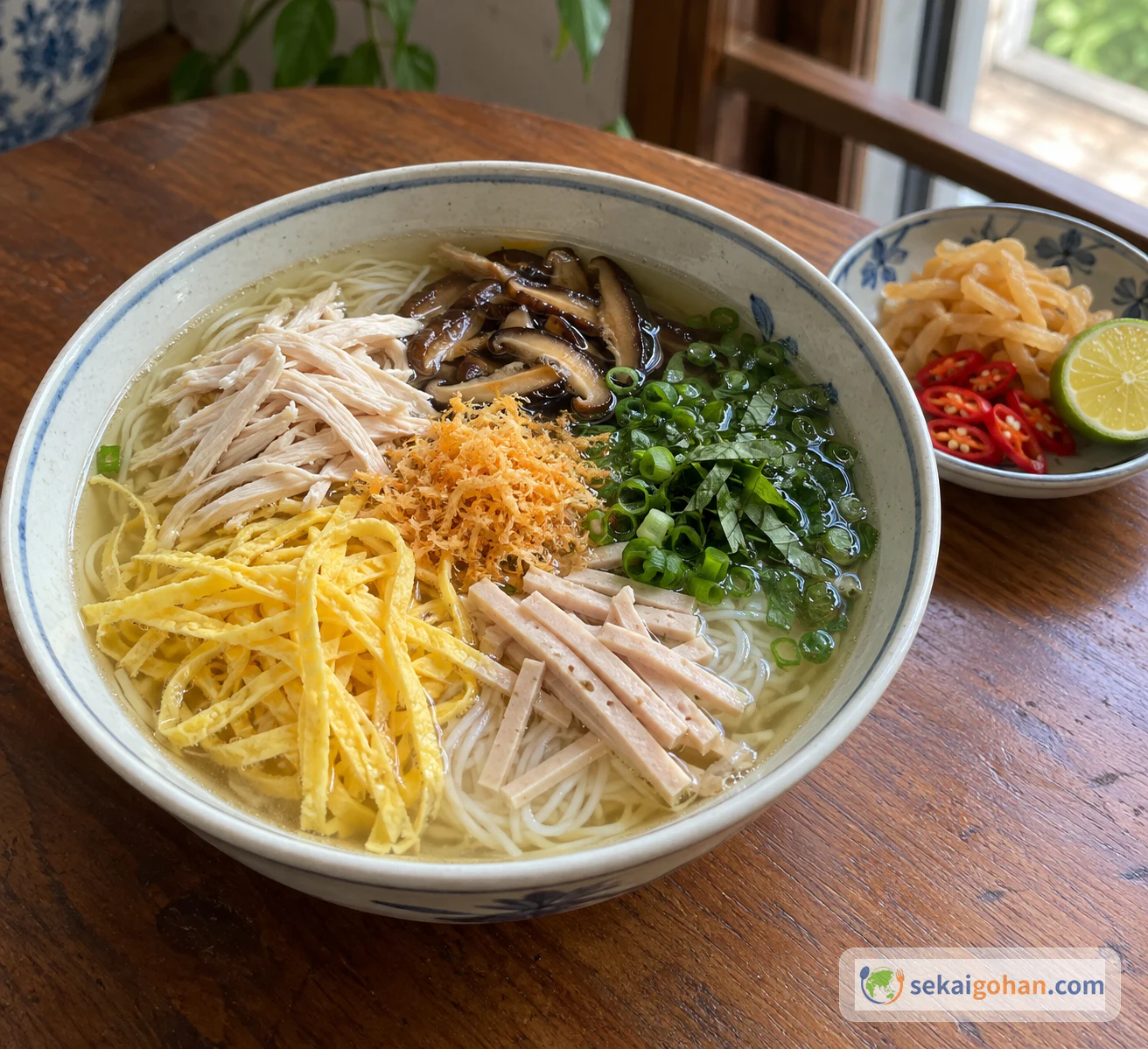
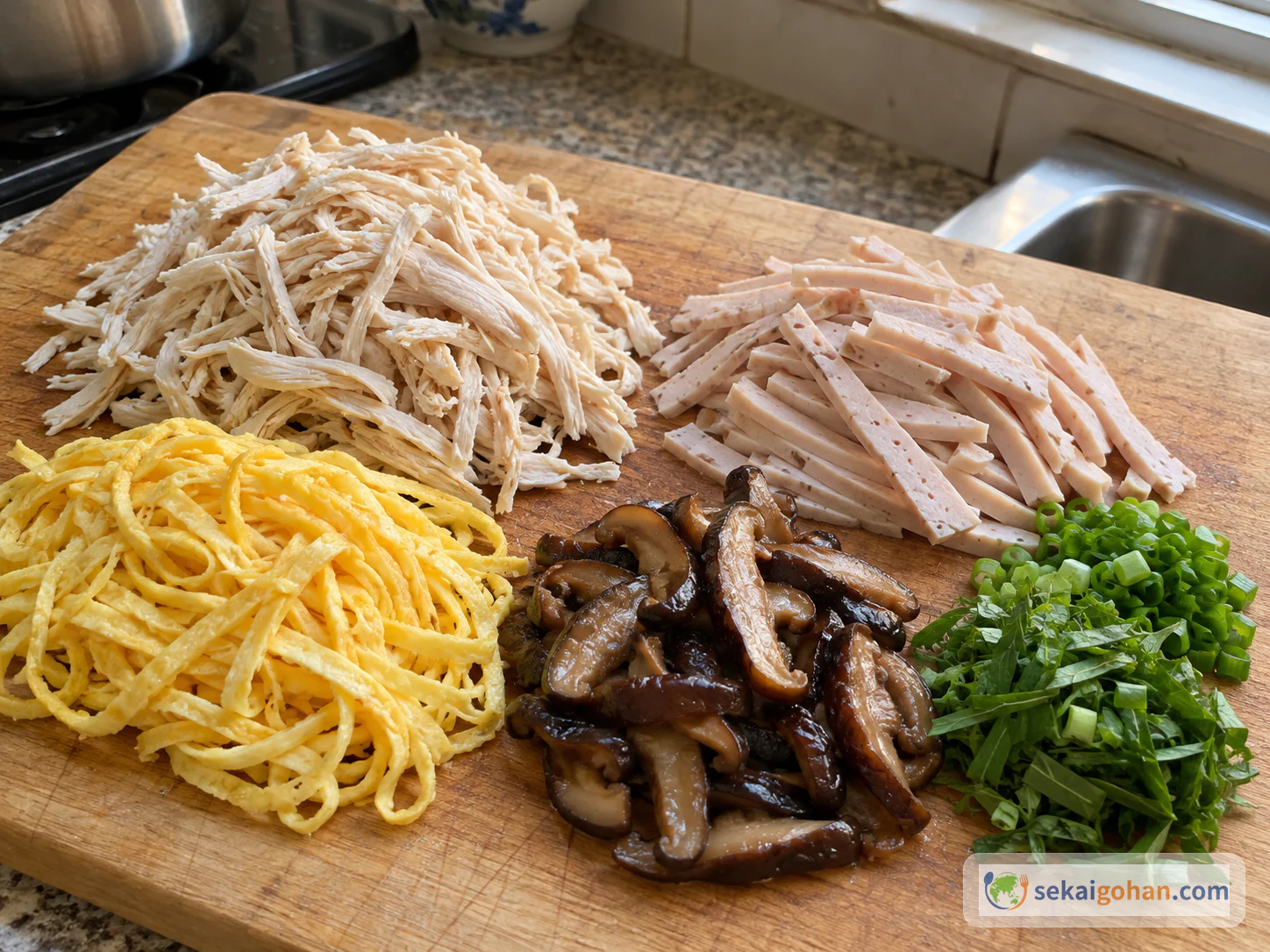
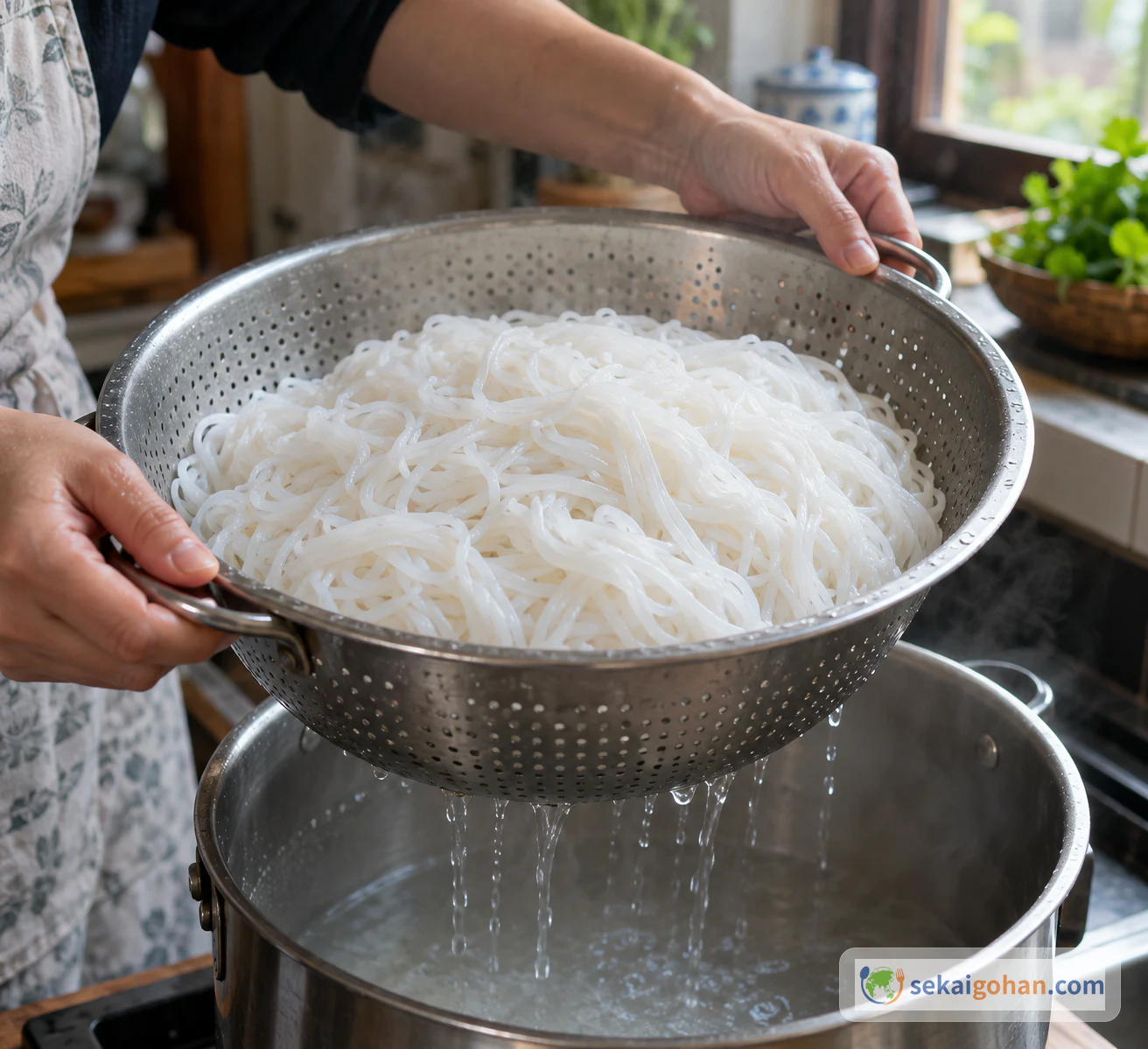
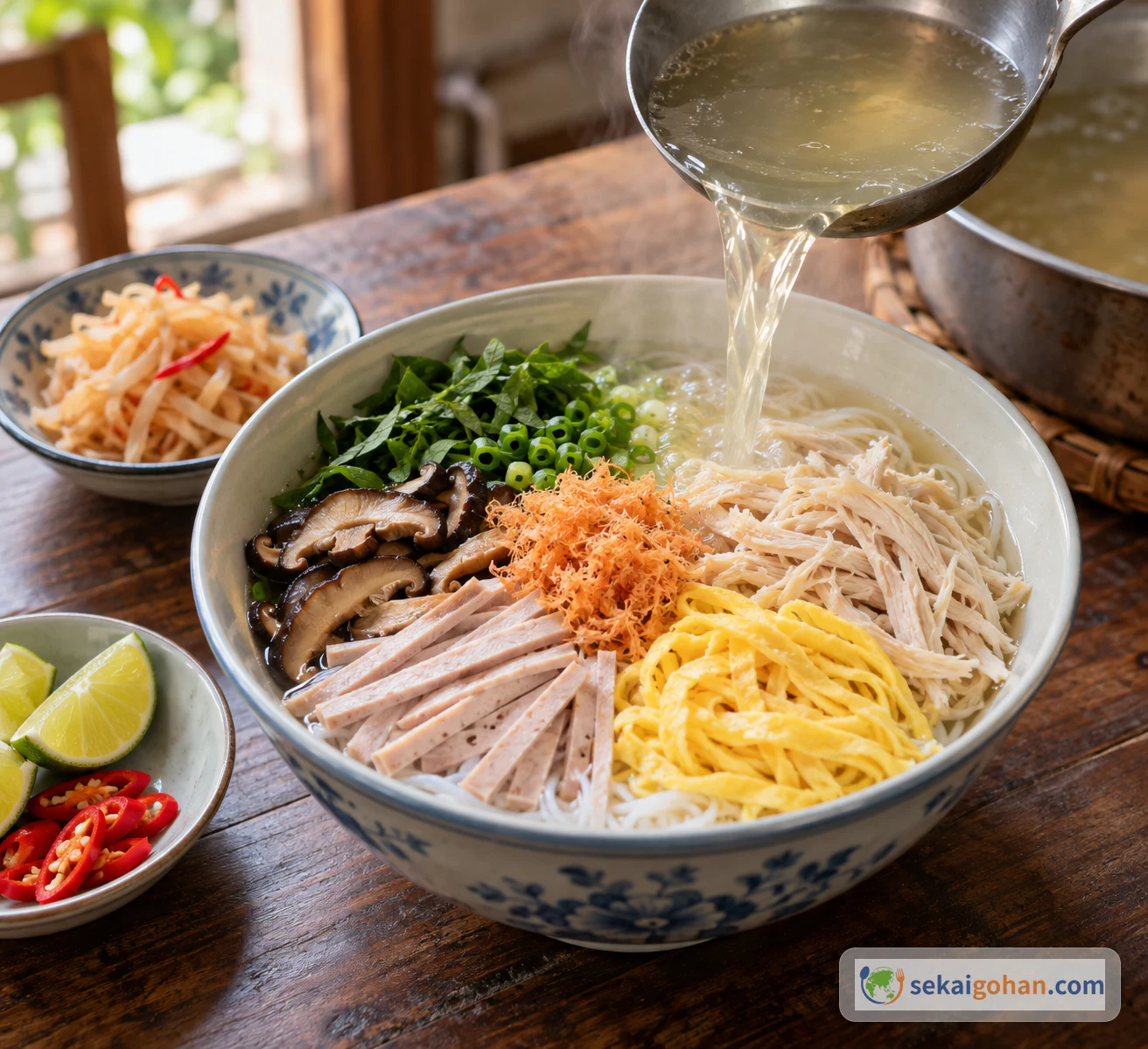
White rice noodles sit under a clear broth made from chicken and dried shrimp. On top, in separate small groups, go thin strands of poached chicken, ribbons of yellow egg crepe, strips of giò lụa (Vietnamese pork sausage), a little mound of shrimp floss, shiitake, and chopped scallion with rau răm. Pickled dried radish, fresh chili and citrus wait on the side. This is bún thang, a Hanoi noodle soup where most of the work happens before the bowl is filled. Each topping is prepared on its own and cut fine, so every spoonful can be a little different.
Bún Thang in Hanoi
Bún thang is a Hanoi dish. Its clear, savory broth comes with Vietnamese ham, shredded chicken and omelette strips. It is also tied to the days after the Lunar New Year (Tết), when leftover holiday ingredients become a breakfast bowl.
One family made bún thang after Tết from ingredients saved across the holiday, such as chicken, dried shrimp, giò lụa and dried radish. The toppings were carefully cut, arranged side by side and served hot. Careful knife work and a clear broth turn festive leftovers into an orderly bowl.
If you know other Vietnamese noodle soups, bún thang sits close to phở gà with its chicken broth. It is a different bowl from the crab-and-tomato bún riêu or Hanoi's grilled-pork bún chả. For more dishes from the country, see Vietnam.
Ingredients for 4–5 People: Chicken, Bones, Dried Seafood and Fine Toppings
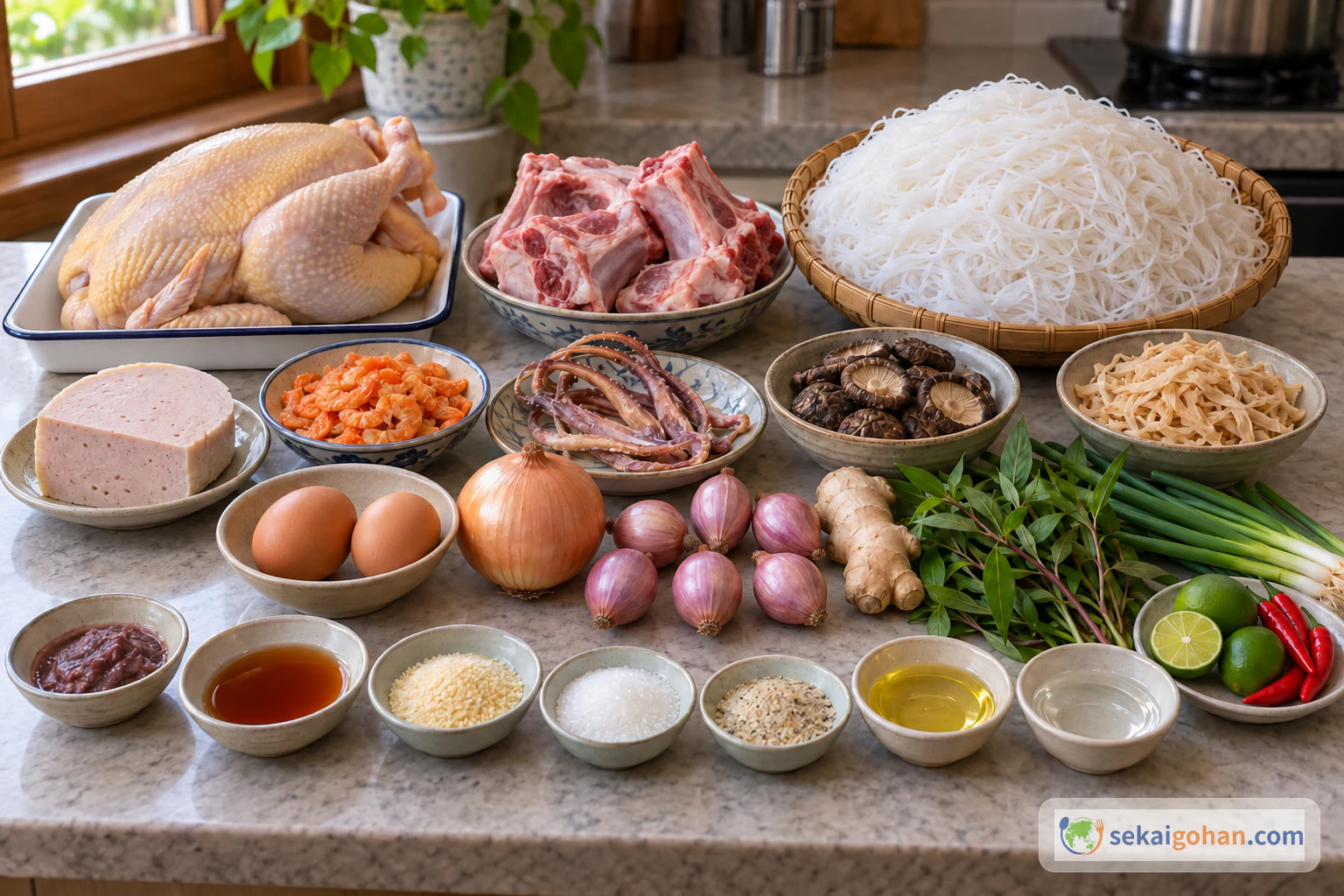
Vietnamese names are given in parentheses so you can search for them at an Asian grocer.
Choosing Ingredients for Bún Thang
Dried squid tentacles or sá sùng, never both. The broth takes either 2–3 dried squid tentacles or 2–3 sá sùng. This recipe uses the squid; if you go with sá sùng, it replaces the squid rather than joining it.
Giò lụa is its own thing. It is a cooked Vietnamese pork sausage, and ordinary ham is no stand-in. Ask for it by name at Vietnamese or Asian grocers.
Fresh bún, not dried noodles. The 3.25 lb (1.5 kg) is fresh rice vermicelli (bún tươi), and it is what gives the bowl its soft, tender noodles.
Cà cuống oil is optional. Use tinh dầu cà cuống only if you can get it. Without it, simply leave it out.
Seasonings stay distinct. Hạt nêm, bột nêm and gia vị are all Vietnamese seasoning products, but each is separate, and none is plain salt. Fish sauce (nước mắm) in the radish dressing and shrimp paste (mắm tôm) at the table are different products too. Many amounts are loose, so season the broth and dressing by taste.
This dish contains egg, shrimp (dried shrimp and mắm tôm), squid, fish sauce, pork and chicken. Check the labels on fish sauce, seasoning products, giò lụa, mắm tôm and any cà cuống oil for allergens and for shared-facility statements, and keep allergen-containing foods from touching others when serving people with allergies.
Equipment
- A large pot for poaching the chicken and simmering the broth
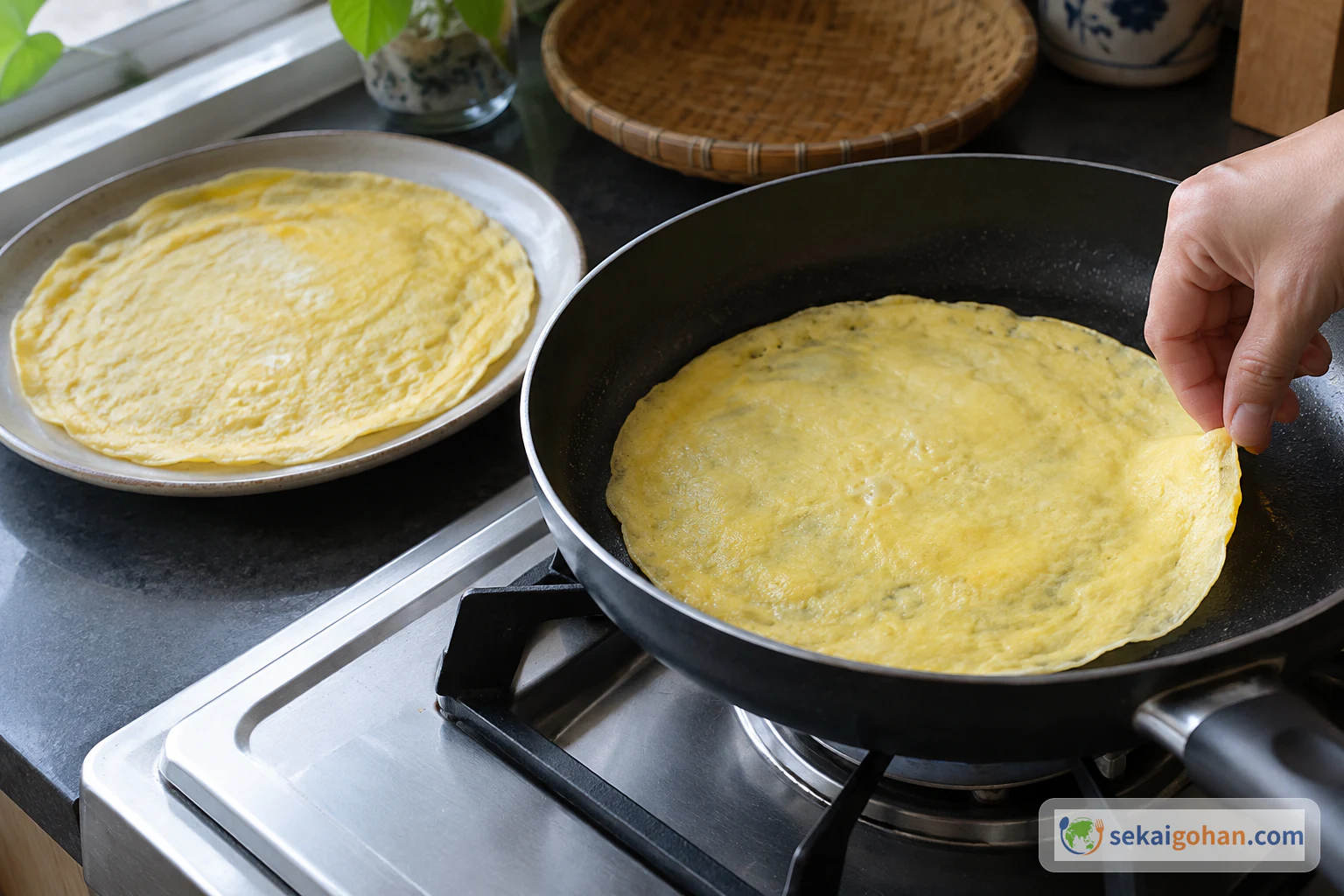
- A nonstick frying pan
- A colander
- A knife and separate cutting boards for raw meat and for ready-to-eat foods
- Several bowls
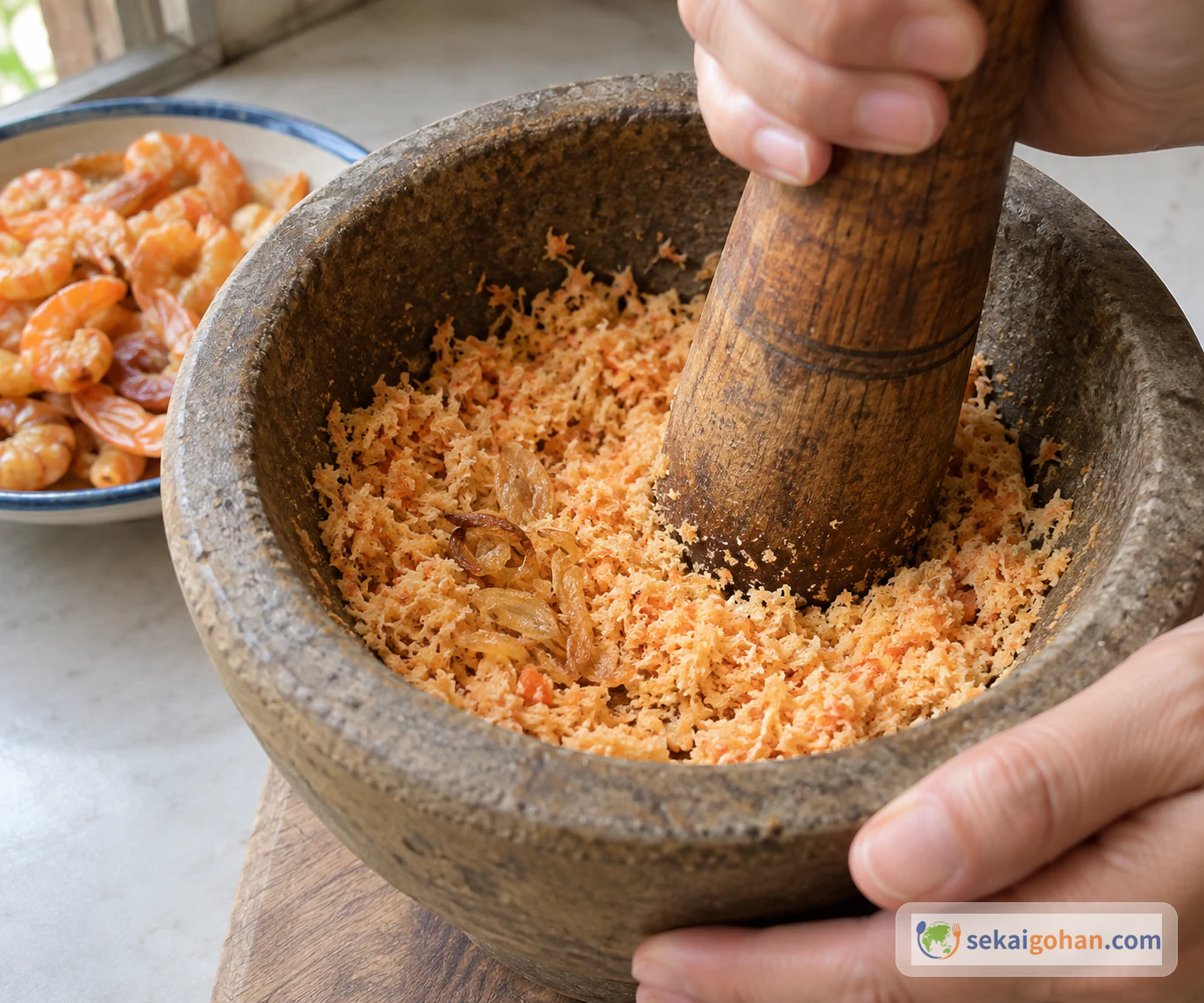
- A mortar and pestle
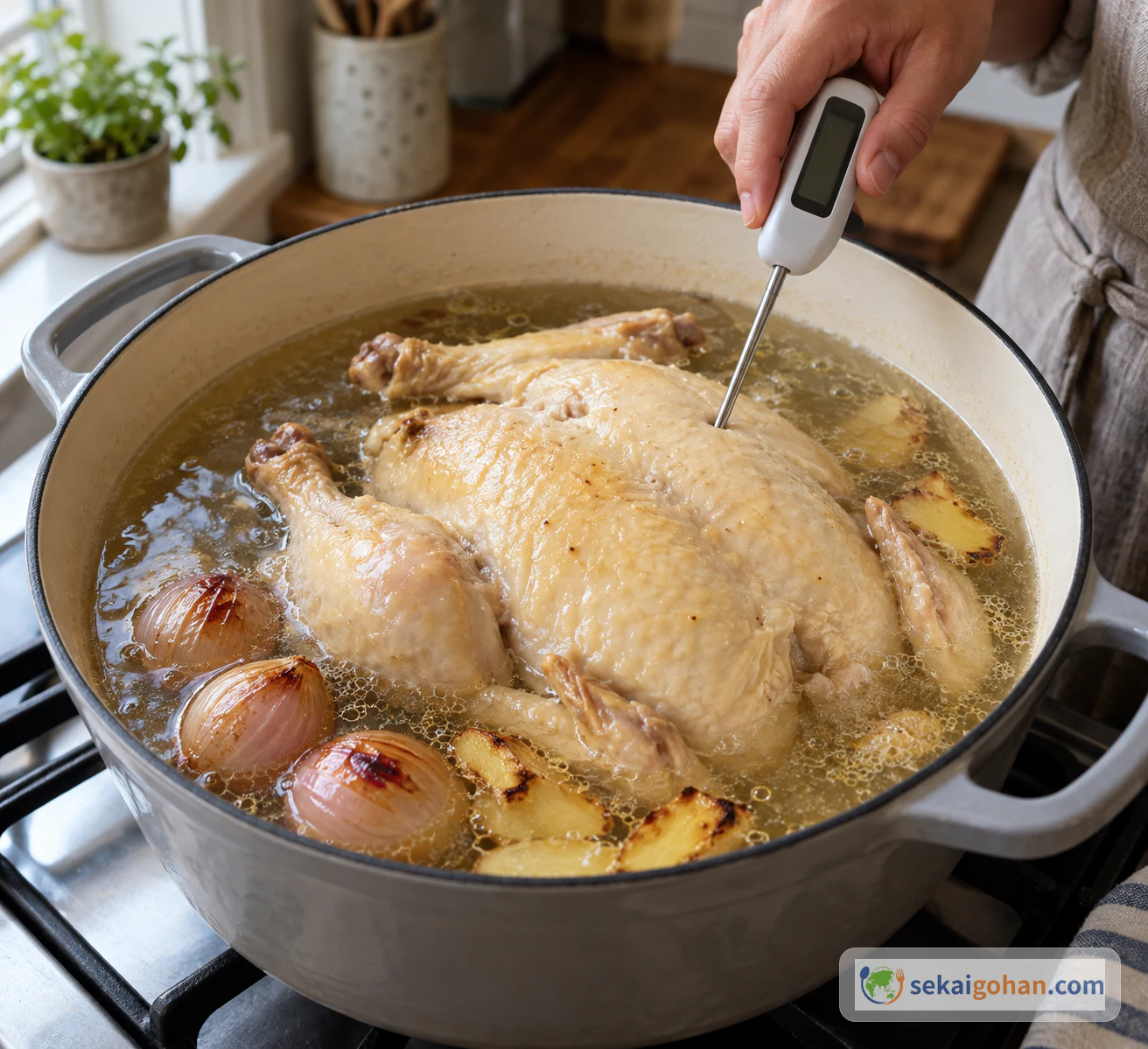
- A food thermometer for checking the chicken's center temperature
Do not rinse raw chicken; washing can spread bacteria around the sink and counter. Keep raw chicken and pork, and their juices, away from herbs, noodles and cooked toppings. Wash your hands before and after handling raw meat, and wash knives, cutting boards and utensils after use. Cook the chicken until its center reaches at least 167°F (75°C) and stays there for at least 1 minute.
Method: Building the Broth, Then Each Fine Topping
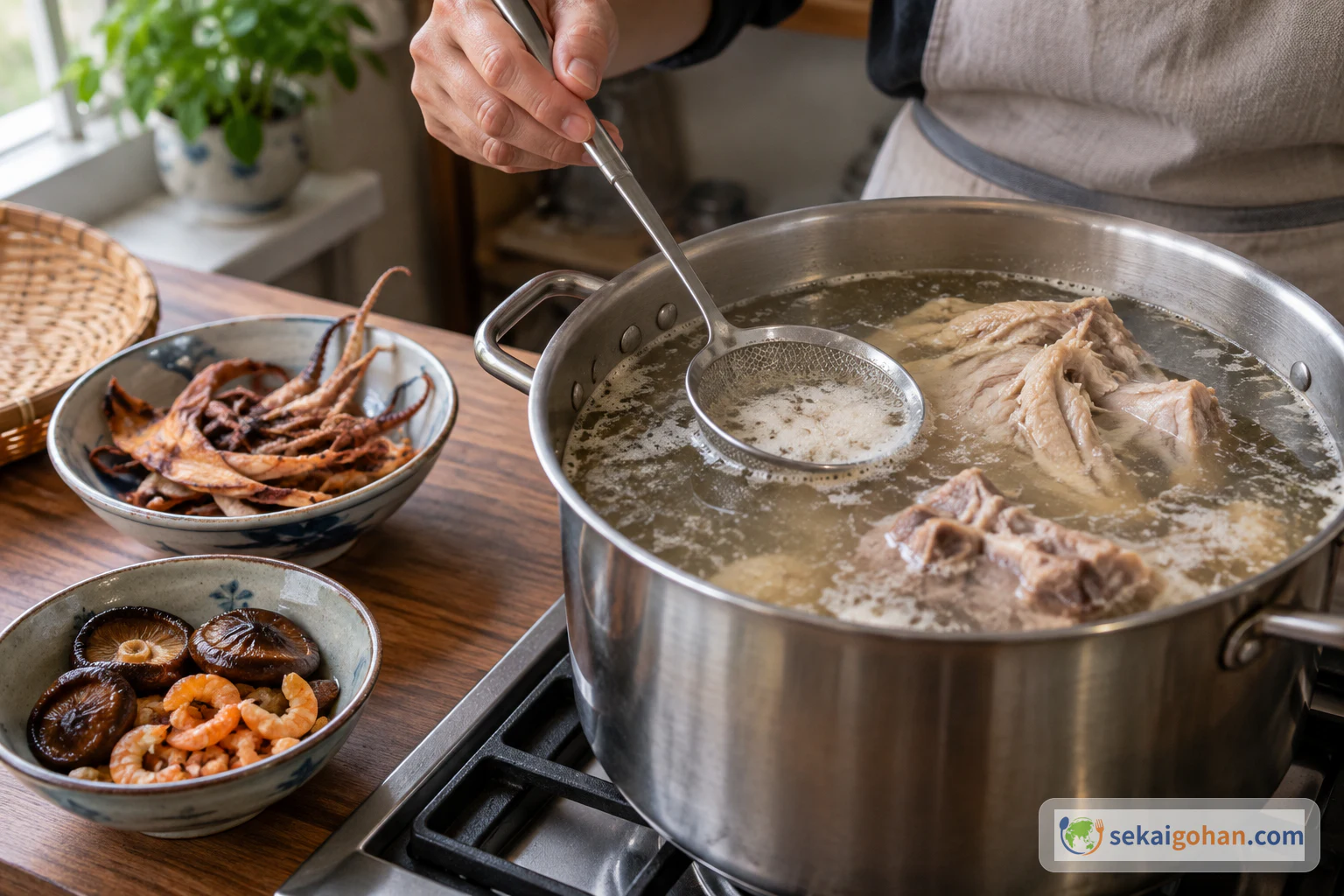
The broth simmers for a long stretch. Use that time to make the shrimp floss and egg crepe and to cut the toppings, so everything is ready when the noodles are blanched.
Common Bún Thang Problems and Fixes
| What you see | What to do |
|---|---|
| The chicken is under 167°F (75°C) at its center after about 15 minutes | Return it to the pot over low heat and check again until it gets there |
| Foam keeps gathering on the broth | Keep skimming throughout the simmer, as in step 4 |
| The broth tastes flat | Add the broth seasonings a little at a time and taste between additions |
| The pickled radish is watery | Squeeze the soaked radish harder before dressing it |
| The shrimp floss is clumpy | Make sure it has cooled fully, then keep pounding |
| Toppings blur together in the bowl | Arrange them in separate groups and pour the broth around, not over, them |
Serving and Storing Bún Thang
Serve the bowls hot, with the toppings in their separate groups and the broth clear around them. Everyone finishes their own bowl at the table, adding as much chili, citrus, herbs and mắm tôm as they like.
Cool leftovers quickly in shallow, clean containers and refrigerate them promptly, at 50°F (10°C) or below. Keep hot food hot until serving, and reheat leftover broth until it boils before eating.
Frequently Asked Questions
Why isn't the raw chicken rinsed?
Washing raw chicken can spread contamination around your sink and kitchen, so it goes straight into the pot. That is also why there is no salt for a rub in the ingredients.
Is 15 minutes enough to cook a whole chicken?
About 15 minutes over low heat is a starting point, not a safety check for a 1.2–1.3 kg bird. Use a food thermometer at the thickest part and keep cooking until the center has been at least 167°F (75°C) for at least 1 minute.
What kind of mắm goes into the broth and the shrimp?
Mắm can mean fish sauce or a fermented shrimp product. It is separate from the nước mắm in the radish dressing and from the mắm tôm added to each bowl. Season with a little, then taste.
How big is a thìa?
Thìa simply means spoon. In the radish dressing, only the vinegar is a teaspoon (thìa cà phê); for the sugar, gia vị, fish sauce and MSG, go by taste.
Which shiitake go on top?
Use the shiitake that have simmered in the broth as the topping. Mushrooms that have only been soaked lack the broth's flavor.