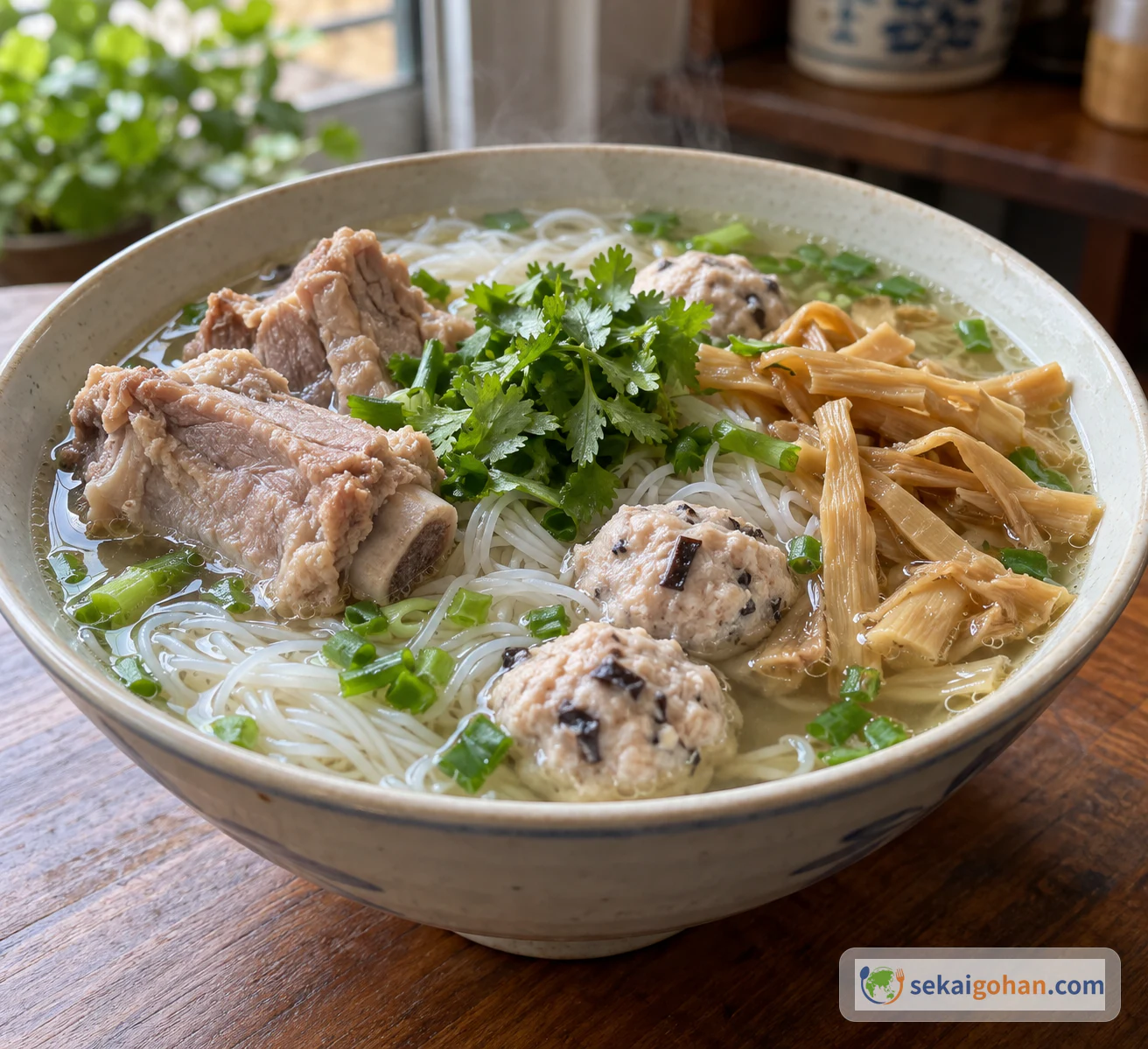
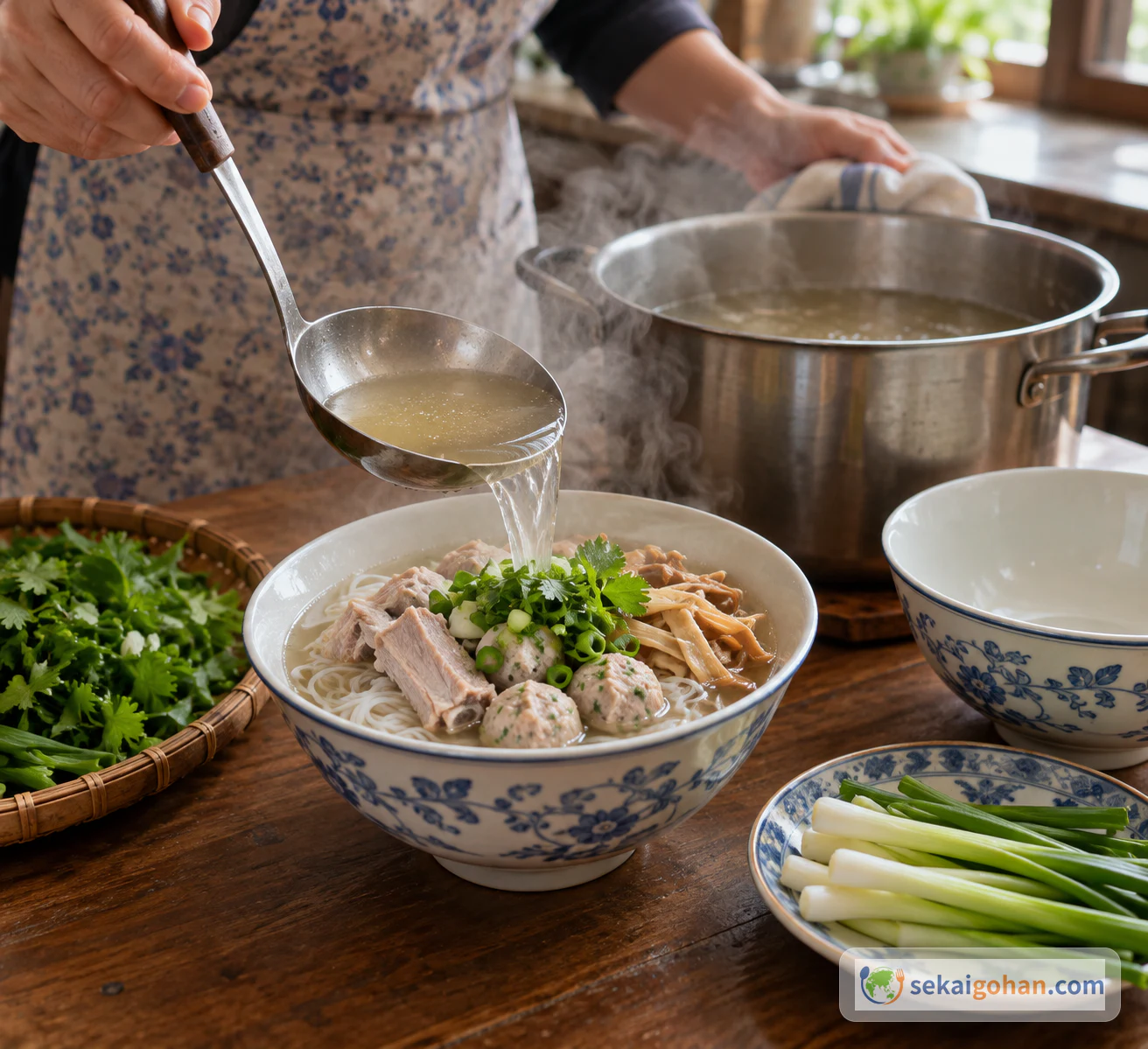
In Hanoi, bún mọc is eaten early in the morning at street-side stalls: a hot, light bowl of thin bún, tender pork ribs and small pork balls called mọc, with mushrooms, bamboo and herbs in a clear pork-bone broth. The broth goes over the noodles very hot. What you want in the bowl are springy, hand-minced pork balls, ribs simmered until tender, and dried bamboo that is soft but still has a little bite.
About Bún Mọc
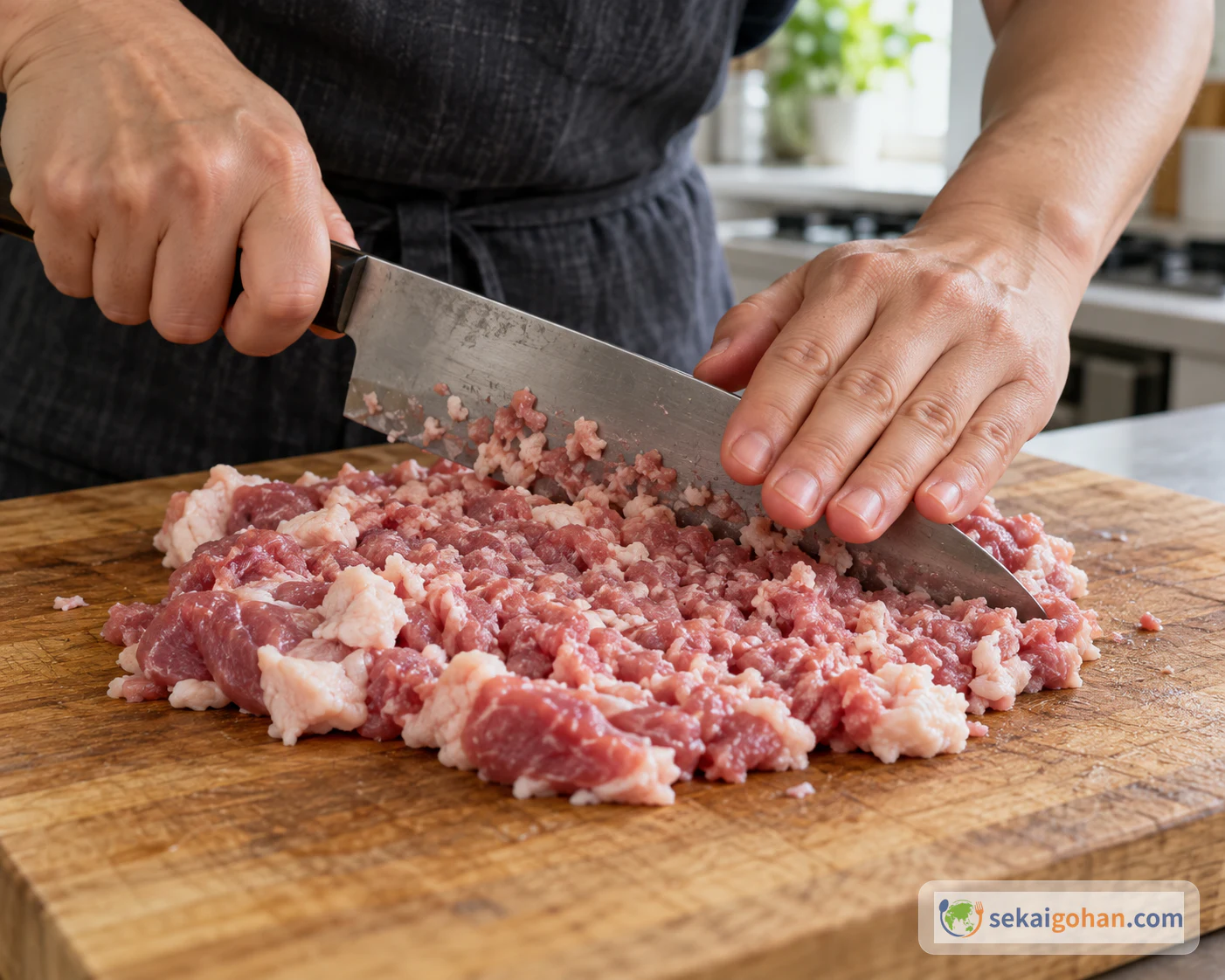
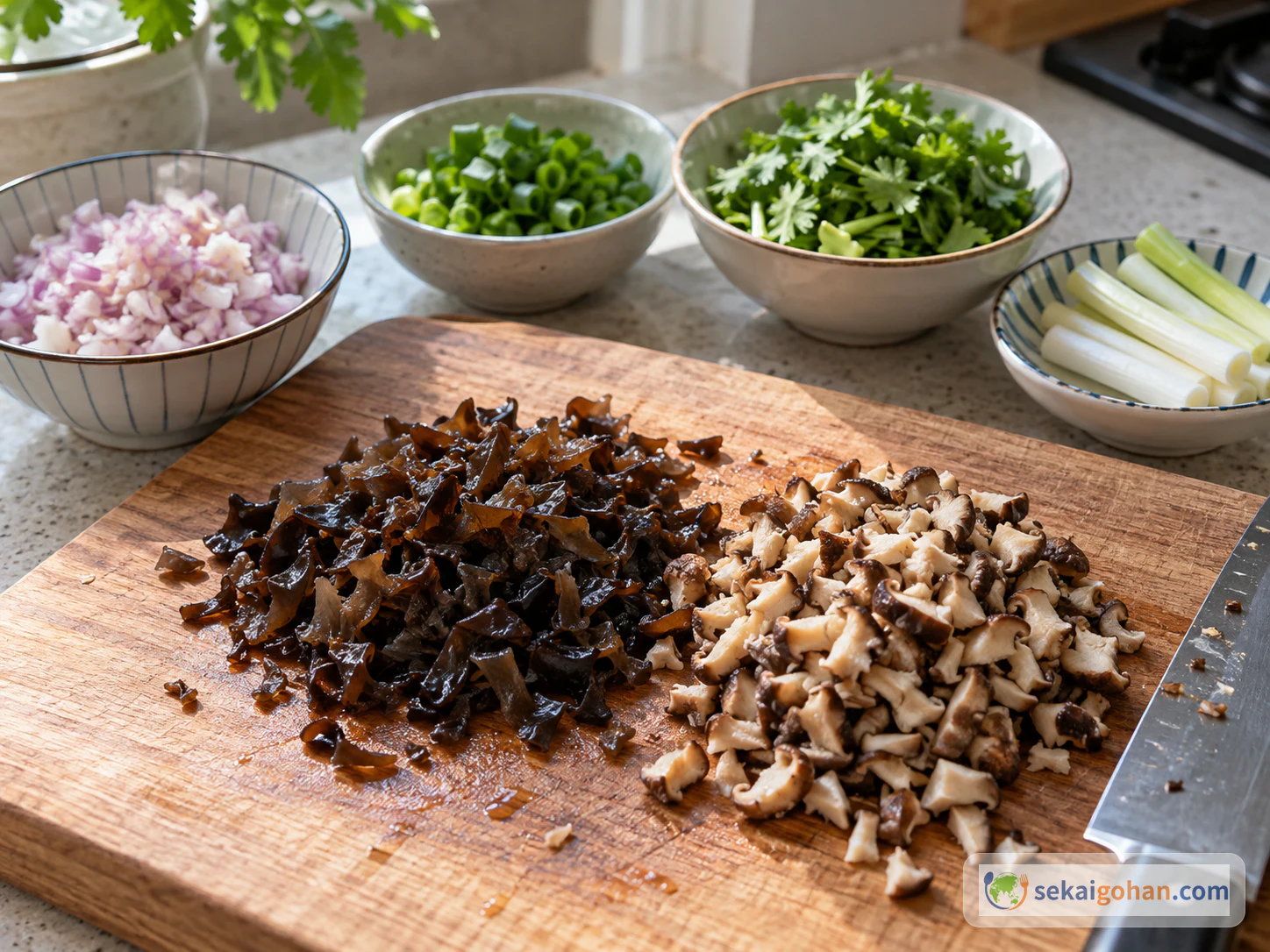
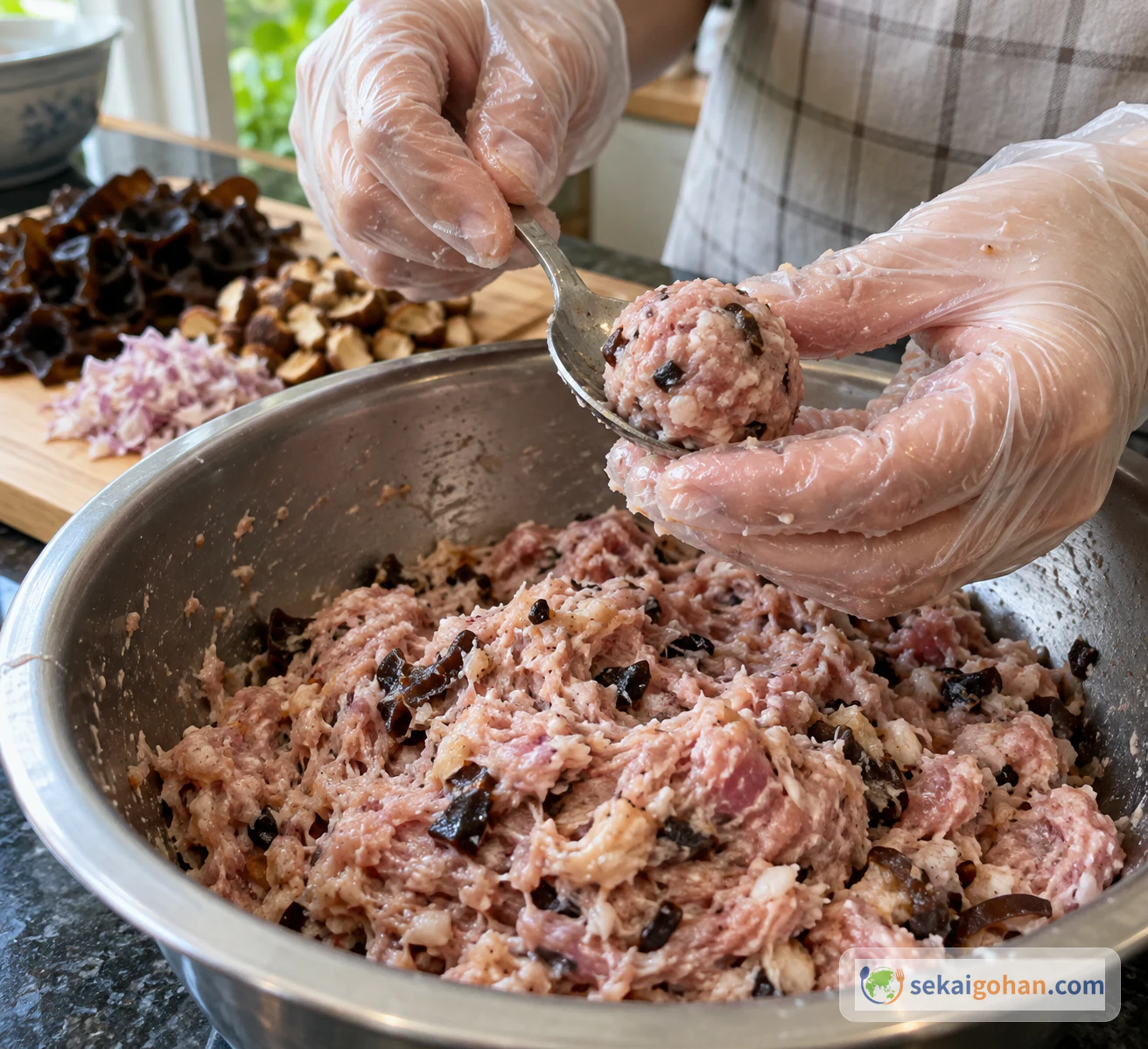
Here, mọc is raw pork shoulder minced by hand, mixed with chopped wood ear and shiitake, dried shallot, a little fish sauce and pepper, then kneaded and shaped into small balls with a spoon. The mushrooms give the balls their dark flecks, but the dish isn't named after them. Where the name comes from is unsettled. One explanation points to Mộc village in Hanoi, another to the pork ball itself, and neither is proven.
Some vendors take a shortcut and mix ready-made giò sống (raw pork paste) with chopped mushrooms. Pork shoulder minced with the back of a knife gives a better texture than paste or ground meat, so it's worth the extra work. Bowls around Hanoi vary, too: some add giò lụa or chả lụa (pork sausage), and there is also a chicken version of bún mọc.
Next to other Vietnamese noodle soups, bún mọc is the gentle one. The crab-and-tomato broth of bún riêu and the central Vietnamese beef broth of bún bò Huế go in very different directions, while Hanoi's bún chả pairs the same city's pork and noodles with grilled meat instead of a hot broth. You'll find more dishes on the Vietnam page.
Ingredients for 5–6 Servings
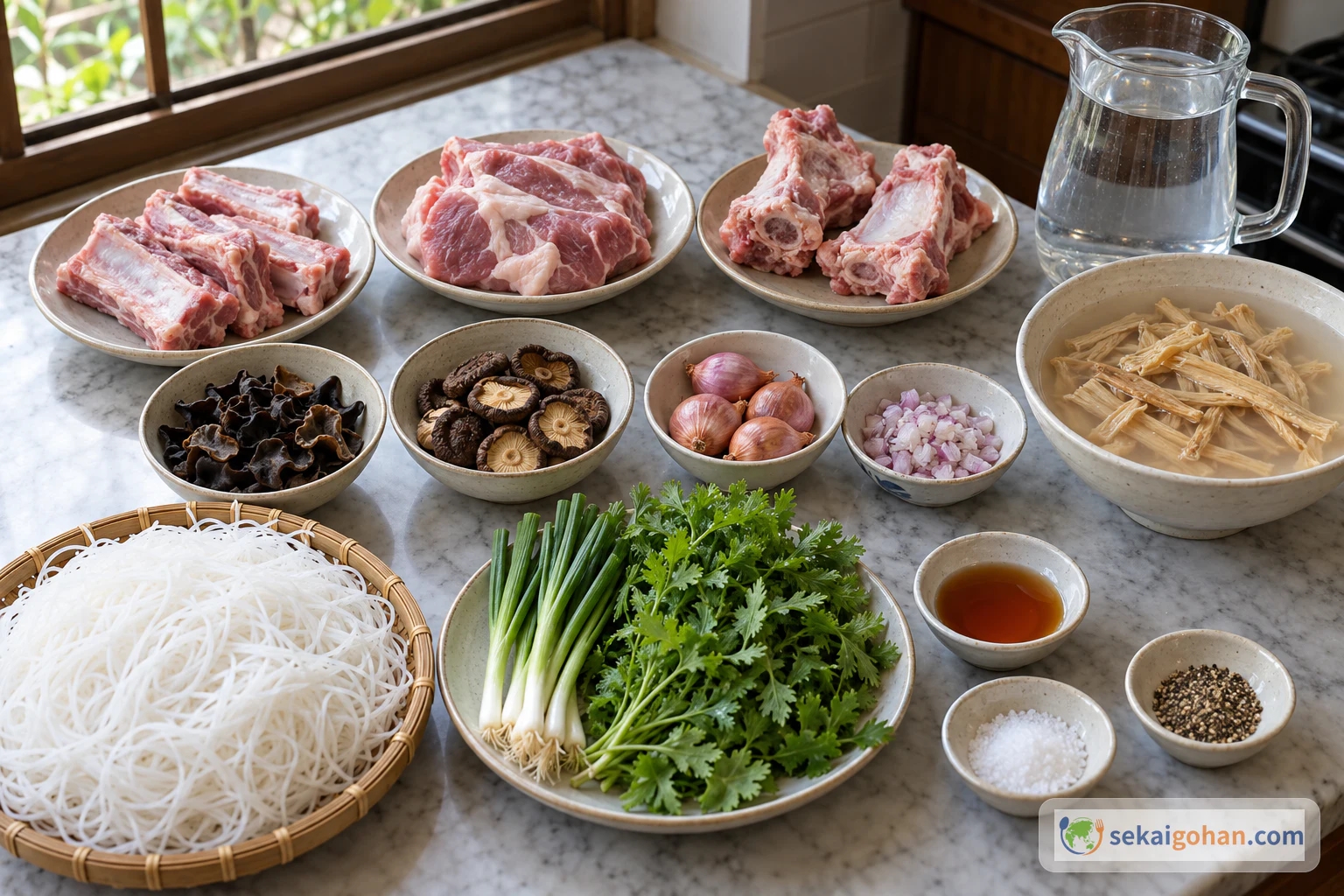
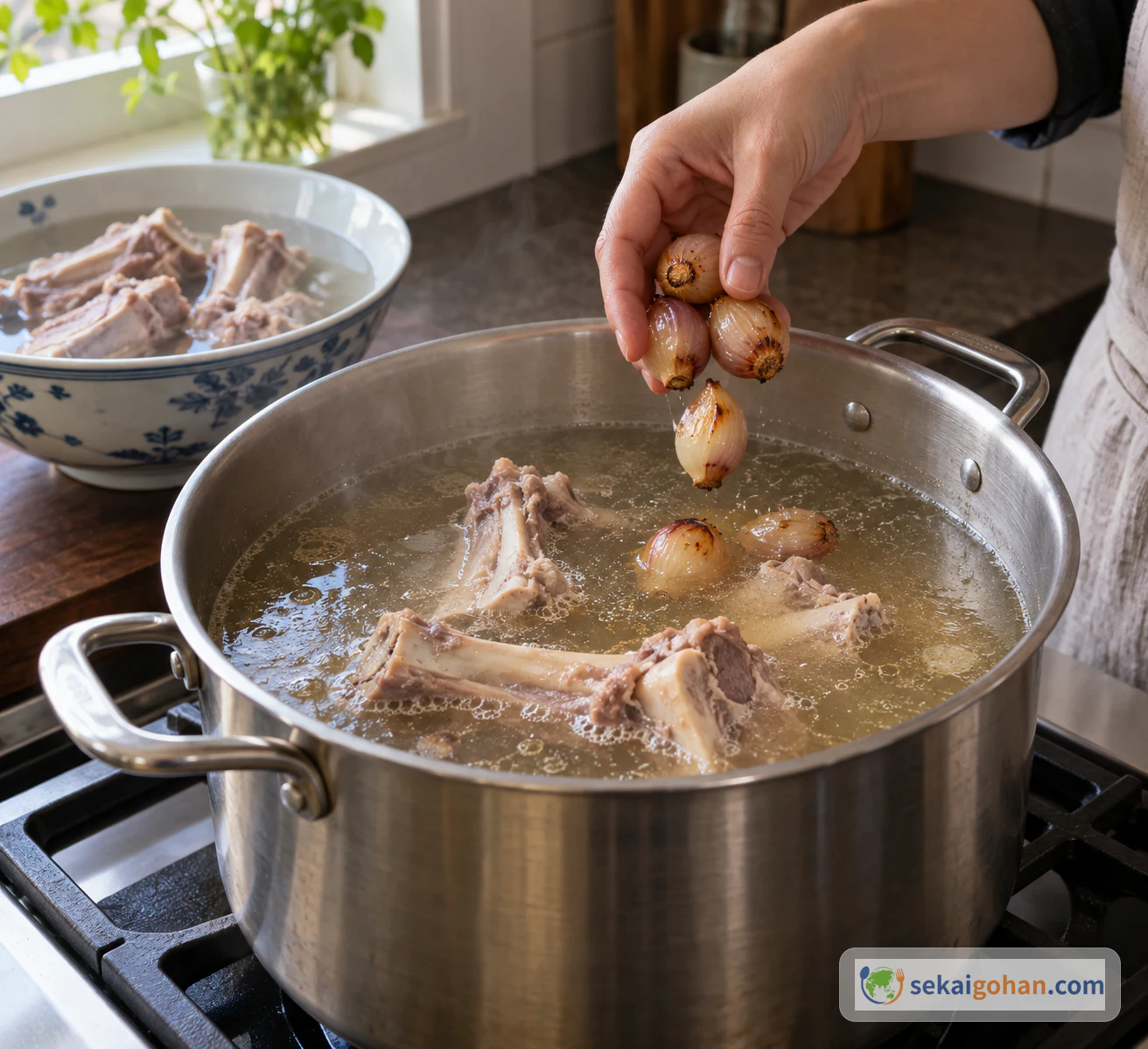
Dried shallots are used in two separate ways: chopped into the raw mọc, and peeled and roasted for the broth. Keep them apart when you prepare them.
Equipment
- A sturdy cleaver or knife and a cutting board for hand-mincing
- A stockpot and a skimmer
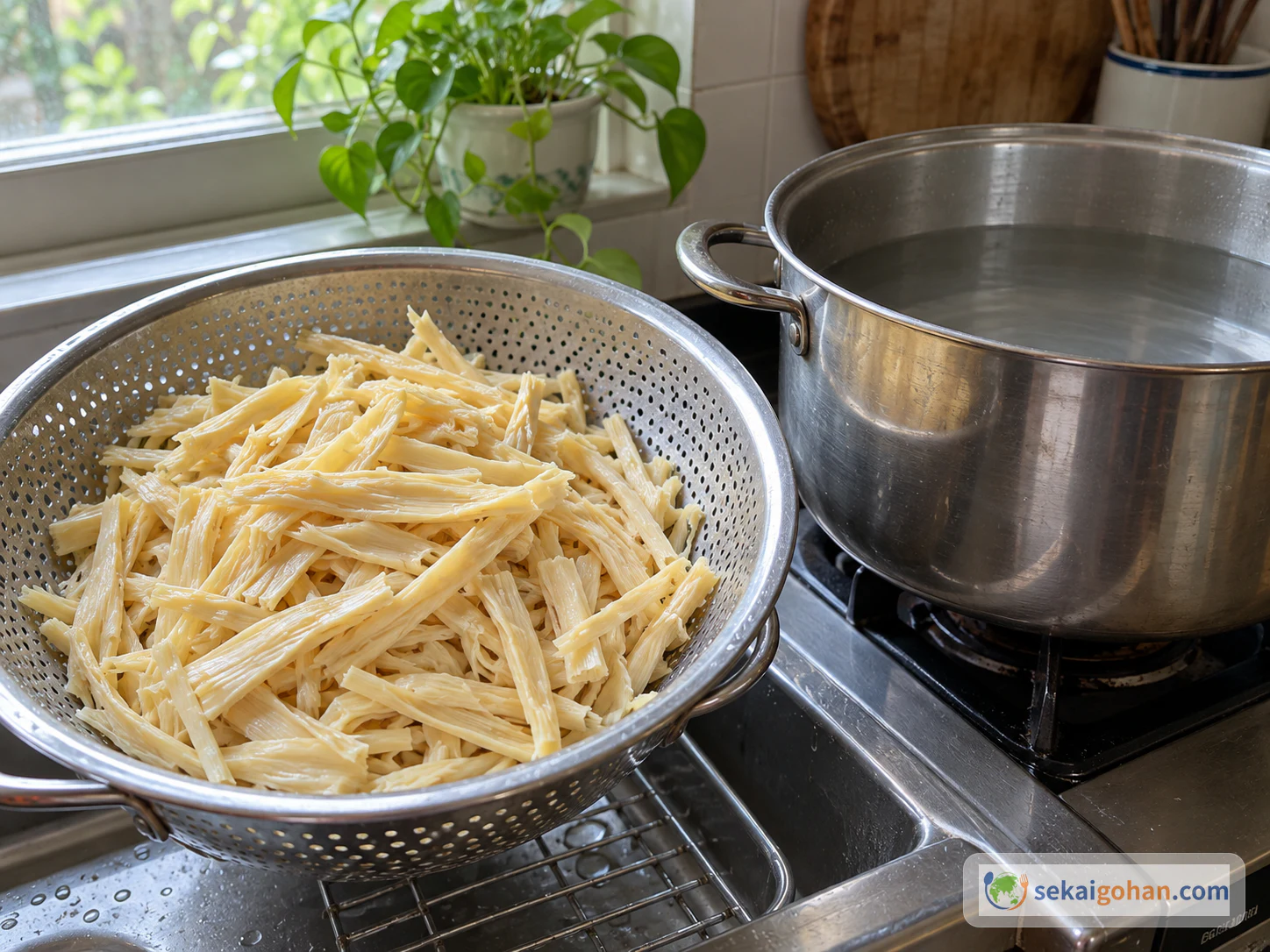
- A separate pot and a colander for the dried bamboo
- A spoon for portioning the mọc
- A fine mesh strainer for the broth bones
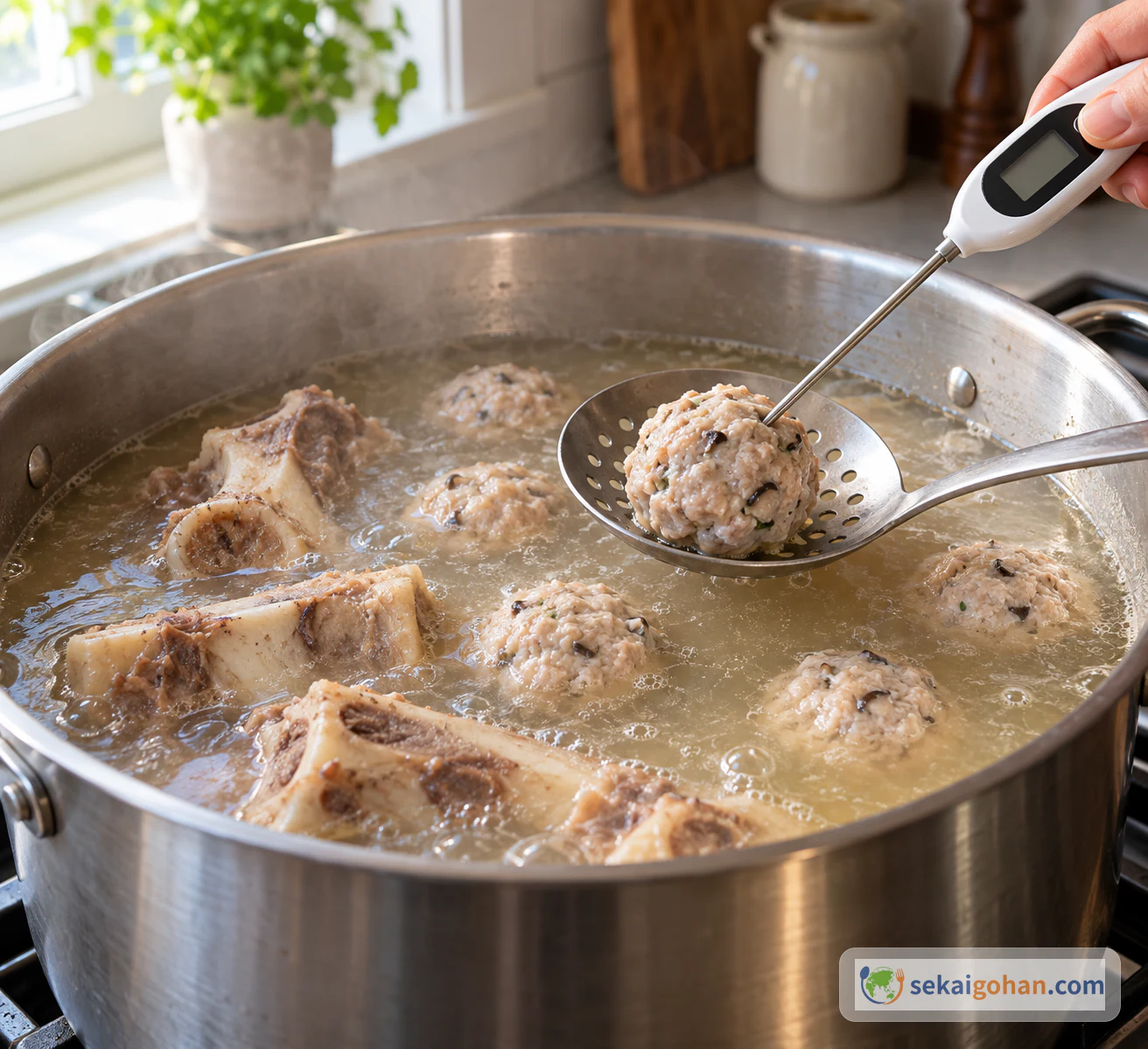
- A probe thermometer for checking the center of the mọc
- Shallow containers for leftovers
Choosing Ingredients for Bún Mọc
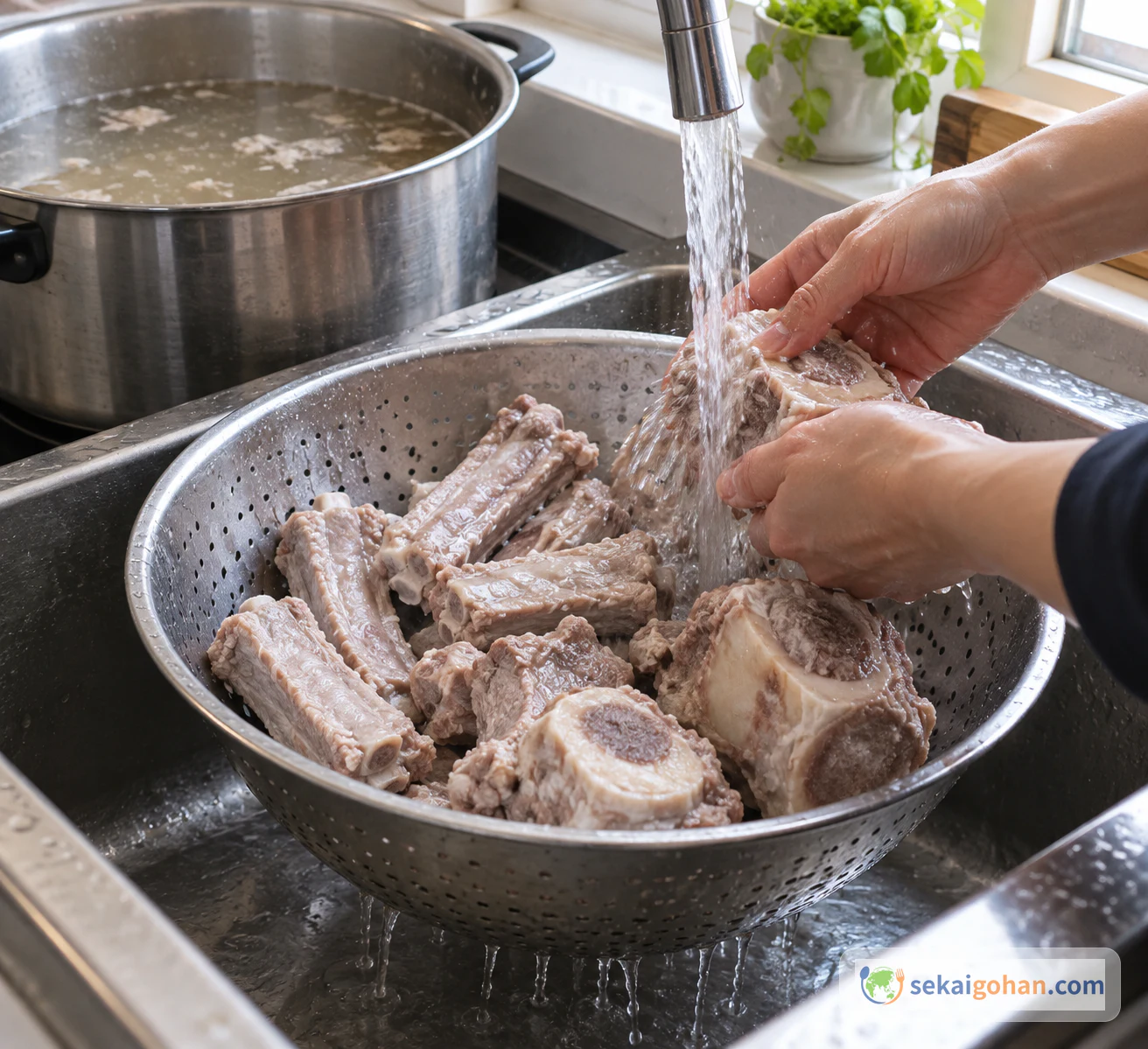
Ask for pork shoulder with some fat on it; fully lean meat makes a drier, less springy ball. For the broth, ask your butcher for pork bones with meat attached. Xương bay, also called xương hom, is a flat pork bone with meat still on it and works well. Dried bamboo shoots, dried shallots, wood ear, saw-leaf coriander and thin bún are all at Vietnamese or Asian grocers. Follow the package directions for whichever bún you buy, fresh or dried.
Buy dried bamboo sold as a commercially prepared, food-grade product, and read its preparation directions before you start. Boiling it repeatedly has not been established as a way to remove toxins from bamboo, so the package directions are what count. In Hanoi, young bamboo also turns up in bowls, and dọc mùng (taro stem) can replace dried bamboo depending on the season or your preference.
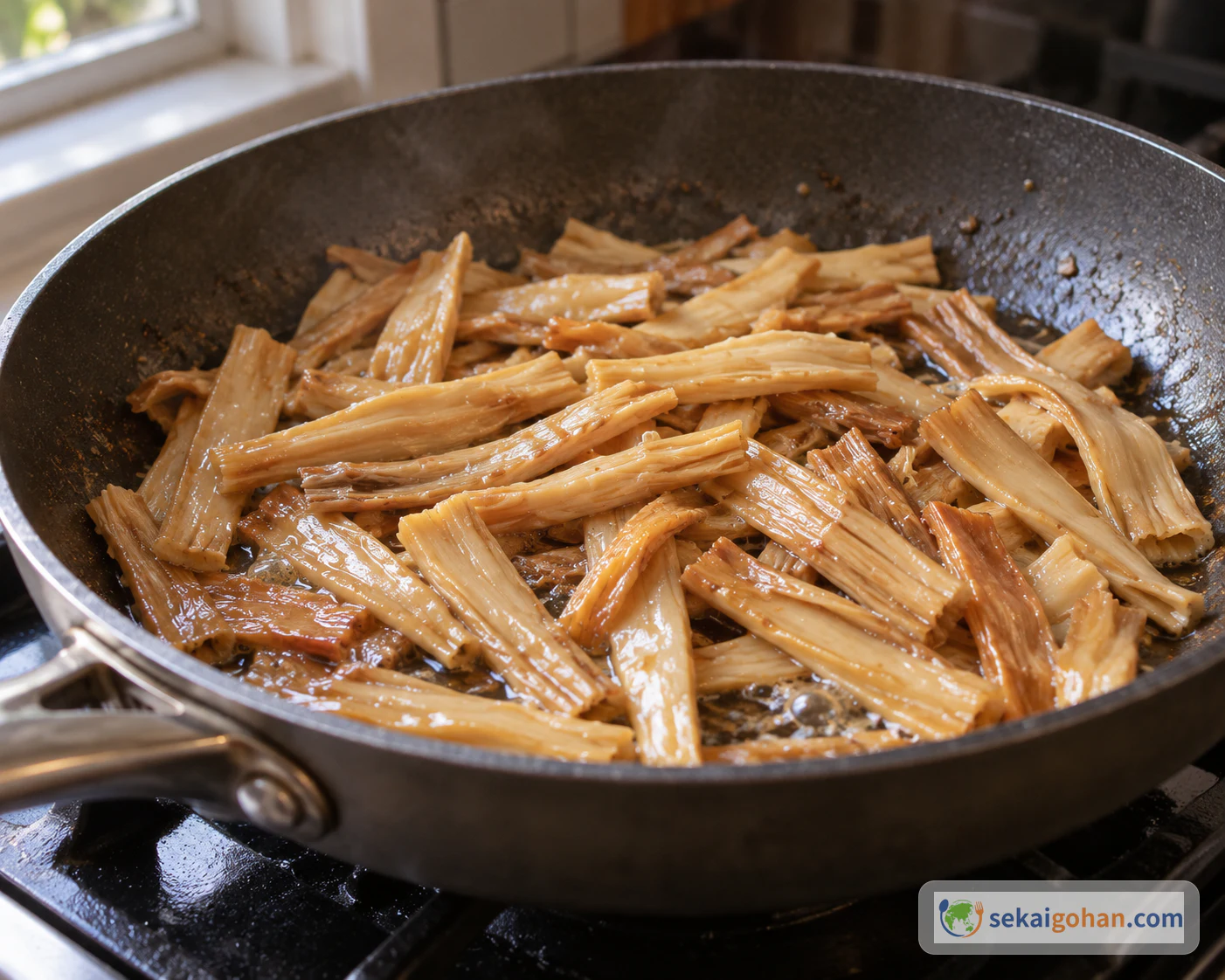
The seasoning is fish sauce, used both in the mọc and for the bamboo. You may see it called mắm in one place and nước mắm in another; both mean fish sauce.
The 45 minutes listed for 5–6 servings don't include soaking and repeatedly boiling the dried bamboo, so plan extra time. Several amounts, including the broth water, shallots, seasonings, noodles and herbs, are left to taste.
This dish contains pork and a fish-derived seasoning. Packaged fish sauce, noodles and dried goods can carry other allergen declarations. Check each label, including any shared-facility statements.
Method: Pork, Broth, Bamboo, Then the Bowl
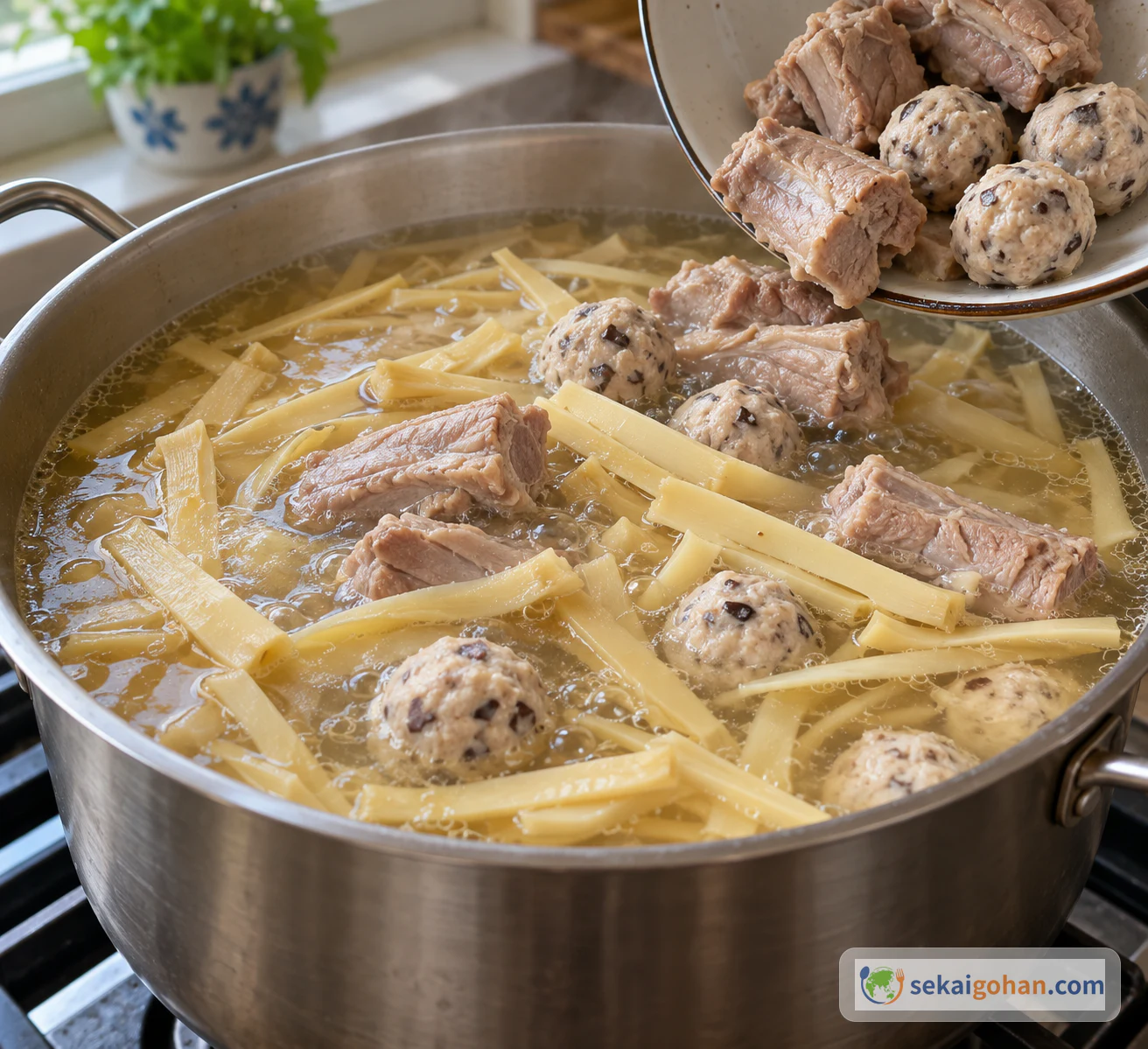
The pork balls are shaped raw first, the ribs and bones make the broth, the balls cook in that broth, and the dried bamboo is prepared in its own pot. Everything comes back together in the strained broth at the end.
Fixing the Pork Balls, Broth and Bamboo
Most problems show up in the texture of the mọc, the clarity of the broth or the bamboo. Here's what to check.
| What you notice | What to check | What to do |
|---|---|---|
| The pork mixture will not hold a round shape | Whether it has been kneaded until cohesive and elastic | Keep kneading before shaping; mince the pork a little longer by hand if it is still loose |
| The balls float but you are unsure about the center | The center temperature, not the float | Use a probe thermometer and make sure the center reaches 167°F (75°C) for at least one minute |
| Foam clouds the broth | Whether the ribs and bones were soaked, blanched and rinsed, and whether the foam was skimmed | Skim the foam and keep the broth at a low, uncovered simmer |
| The bamboo is still hard after simmering | How far it was prepared in step 7 | Keep simmering uncovered until tender with a little bite; follow the package directions for preparation |
| The broth tastes flat | Seasoning | Add salt a little at a time and taste again |
Floating does not prove the center is done, and a clear broth does not either. Heat the center of cooked food to 167°F (75°C) for at least one minute. Keep raw pork and its juices away from the herbs and other ready-to-eat foods, and wash your hands, knife and cutting board after handling raw pork.
Storing and Reheating Bún Mọc
Don't leave the pot at room temperature for long. Cool leftovers quickly in shallow containers, keep them in a refrigerator at 50°F (10°C) or below, and bring the soup to a boil when reheating.
Frequently Asked Questions
Can I use ground pork or a food processor?
Mince the pork shoulder by hand with the back of a knife until it turns sticky. Hand-minced shoulder gives a springier ball than ground pork or shortcuts such as ready-made giò sống.
Is the 1.75 oz (50 g) of wood ear and shiitake dry weight or soaked weight?
The amount isn't marked as dry or soaked. Use 1.75 oz (50 g) of each as written.