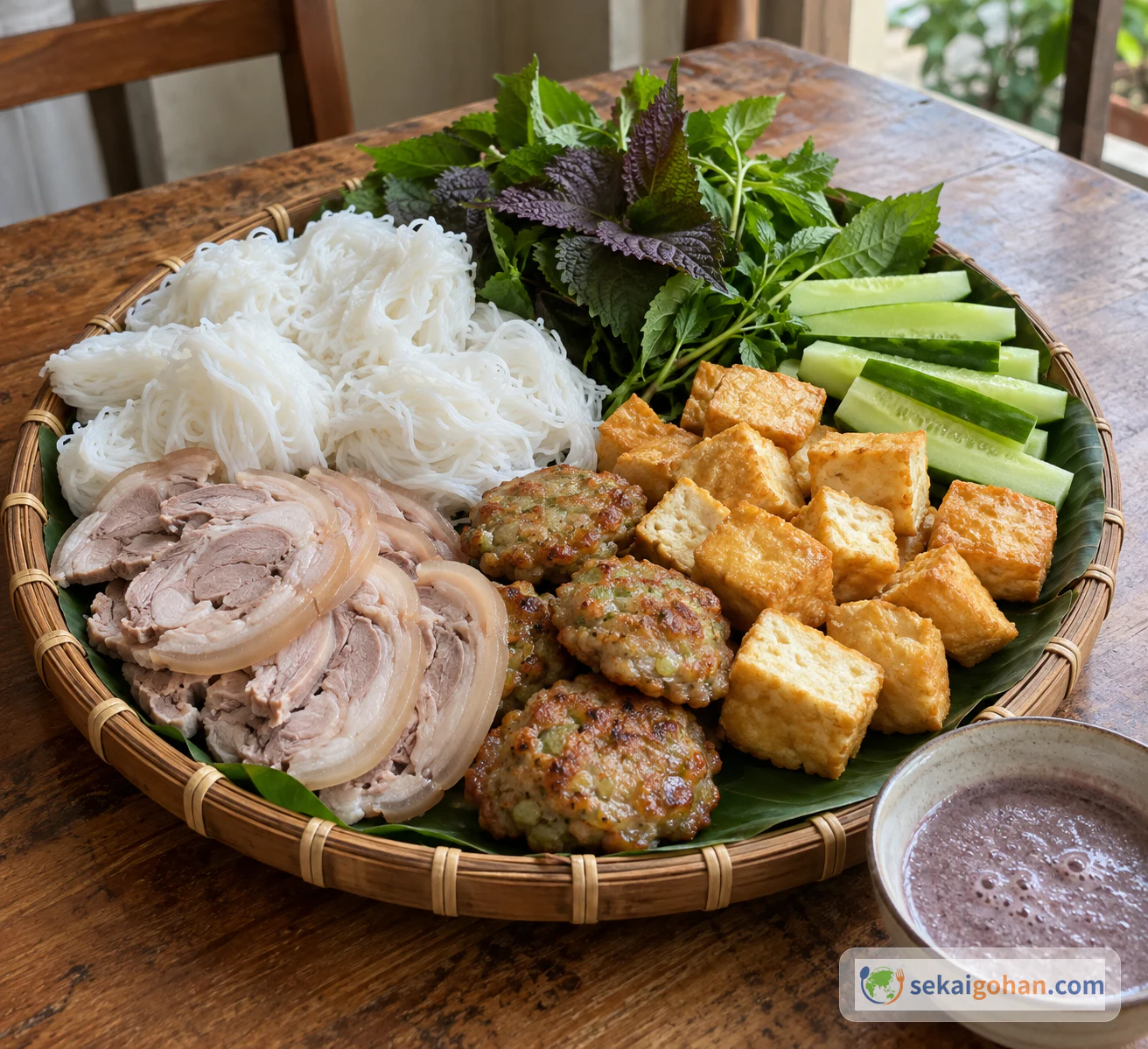
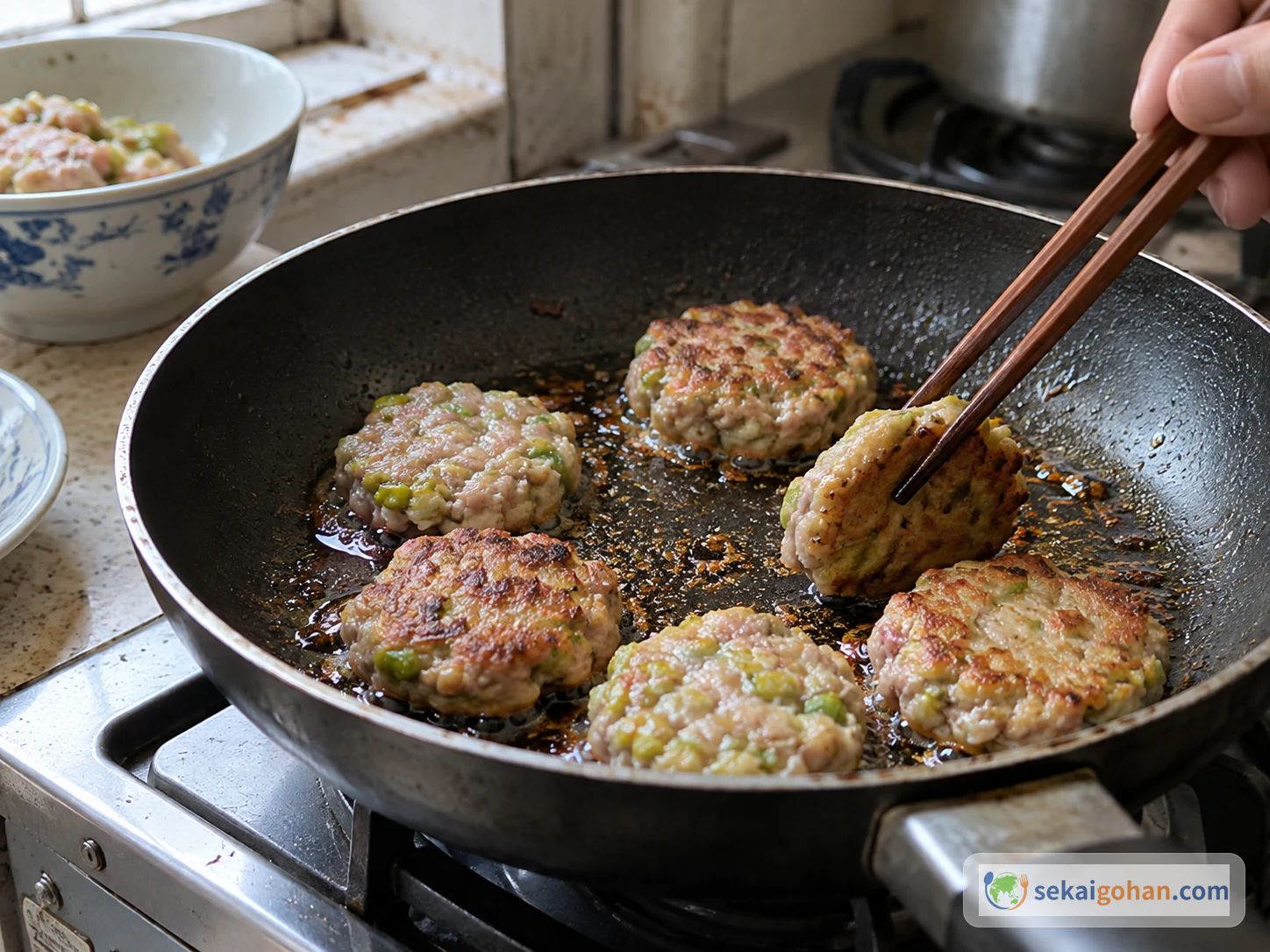
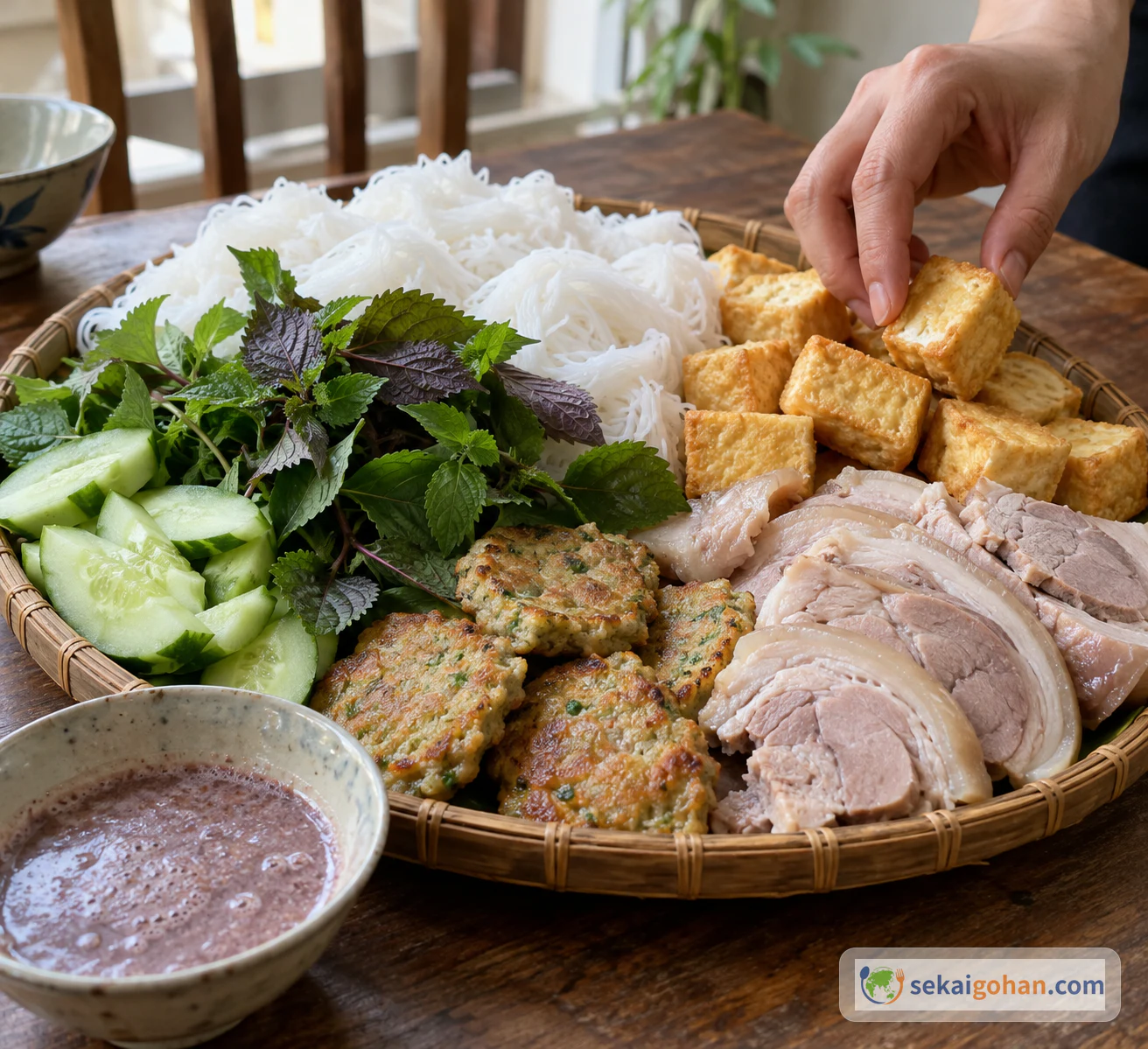
Around lunchtime in Hanoi, a bún đậu stall can draw a crowd: a pan of frying tofu, baskets of white rice vermicelli, bundles of herbs, a pot of shrimp paste, and diners perched on low plastic stools. The tofu comes out of the fat hot and golden and goes onto a tray beside the noodles and herbs, and everyone dips into the same sharply aromatic sauce. Bún đậu mắm tôm is a northern Vietnamese platter built on contrast. Soft fresh noodles and tender tofu meet a crisp fried crust, cool herbs and cucumber, and a whipped, pungent shrimp-paste dip, served in its own bowl, that ties every bite together.
For more dishes from the same country, see our Vietnam page.
Bún Đậu Mắm Tôm in Hanoi
The dish and its name
The name lists the three parts. Bún is rice vermicelli, đậu is tofu, and mắm tôm is fermented shrimp paste. There is no broth. This is a platter, and the dip is what holds it together.
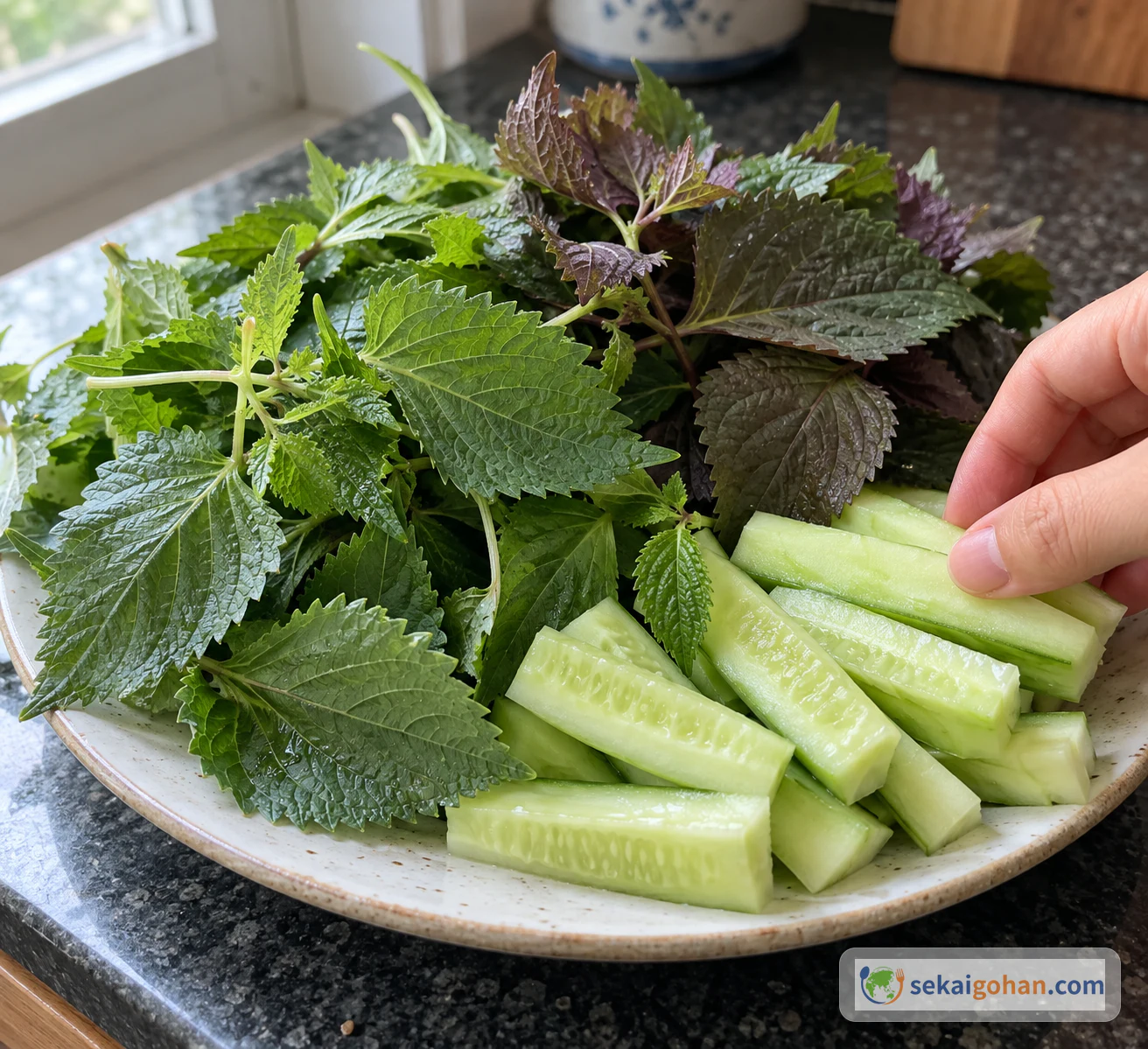
This version is a fuller Hanoi-style platter for 4–6 people, with simmered pork hock and fried chả cốm alongside the tofu. The herbs are kinh giới (Vietnamese balm) and perilla. Hanoi trays also feature mint and Vietnamese coriander.
From hawker tray to full platter
Bún đậu mắm tôm is tied to Hanoi and northern Vietnam. It began as a simple platter sold by mobile vendors: fresh bún lá (rice vermicelli pressed into flat sheets and cut into portions), fried tofu and whipped mắm tôm, with kinh giới as the characteristic herb. Vendors from outside Hanoi carried it to other parts of Vietnam.
Restaurant platters today are more varied than the old hawker trays. They add pork hock, fried chả cốm, offal, nem (fried spring rolls) and other toppings. The simpler bún, tofu and mắm tôm version is still a good way to serve the dish, a lighter meal rather than a lesser one.
How it differs from other bún dishes
Vietnam has plenty of rice-vermicelli meals, and they work differently. Bún chả, also from Hanoi, pairs bún with grilled pork and its own dipping sauce, and bún thịt nướng is a grilled-pork vermicelli bowl. Bún bò Huế, from central Vietnam, is a noodle soup. Bún đậu has no broth and no grill, just fried tofu and a shrimp-paste dip.
Planning around the pork
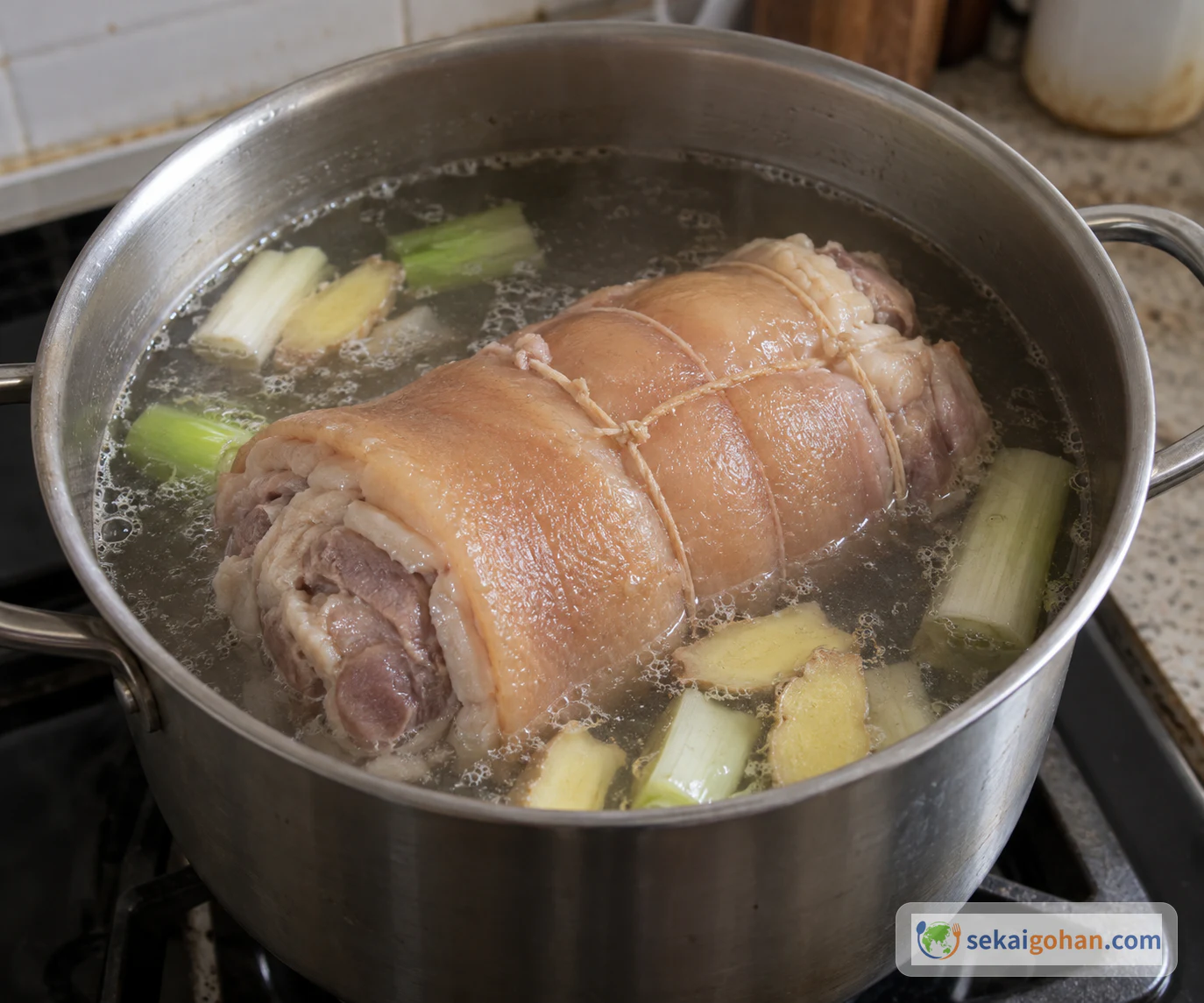
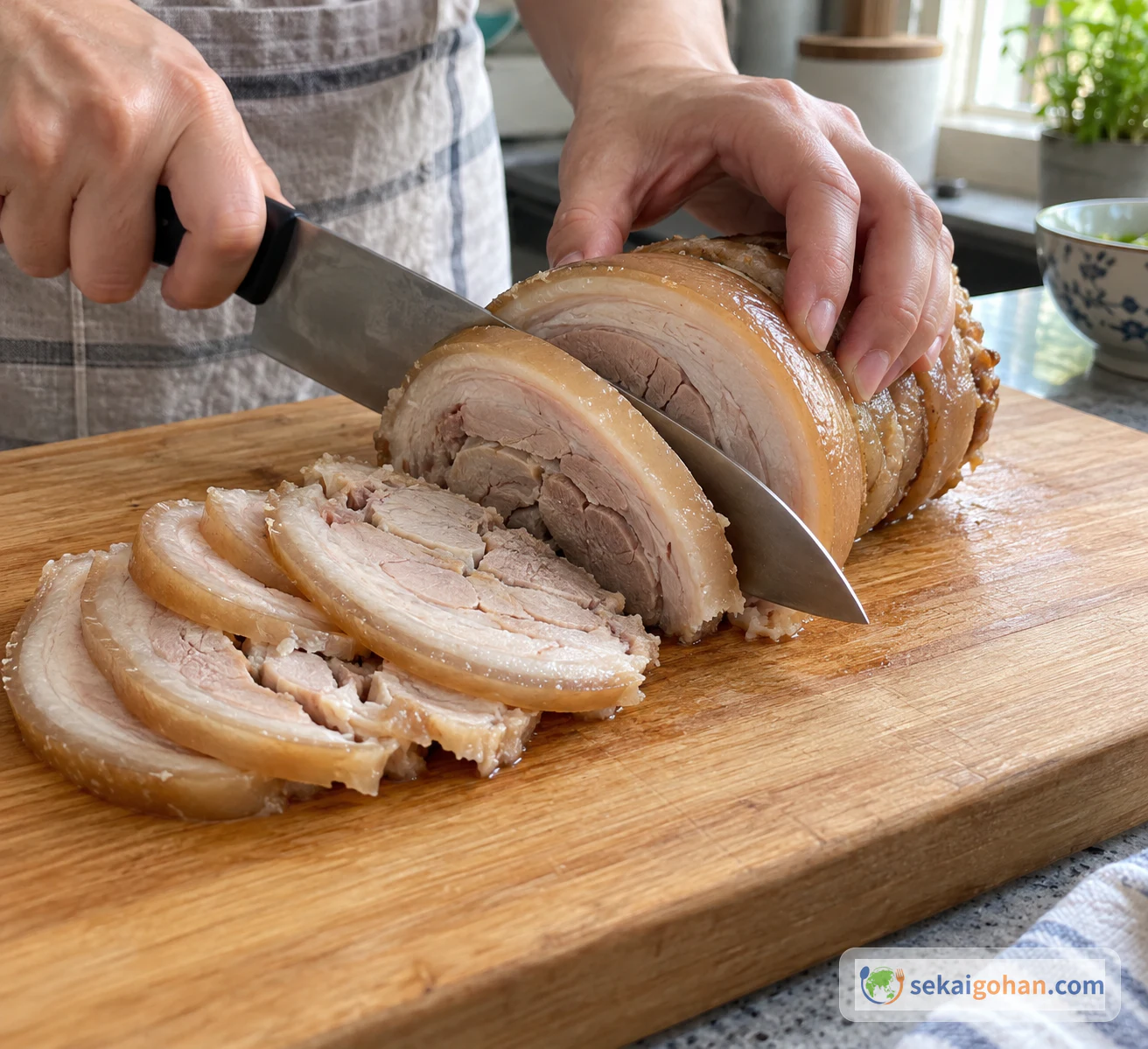
Plan the day around the pork, because the 50-minute figure is not the total time. Hock sizes differ, so cook the pork until its center reaches a safe temperature rather than for a set time. After the ice bath, it needs a few hours in the refrigerator before slicing.
Ingredients for 4–6 Servings
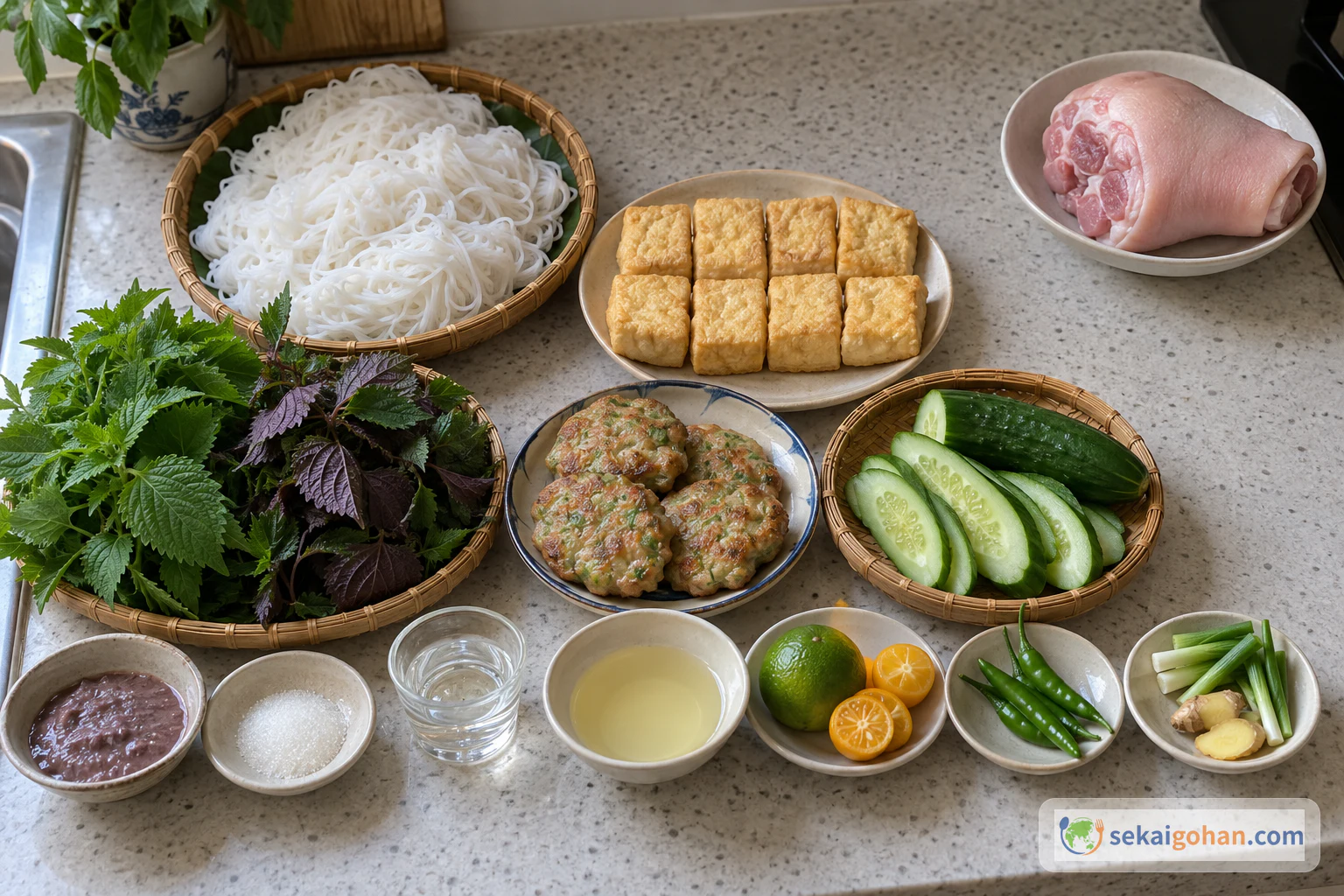
Mắm tôm contains shrimp, and tofu contains soy. Check the labels of the chả cốm and any packaged noodles for their ingredients and allergens. This dish contains pork.
Equipment
- Separate cutting boards: one for raw pork, one for herbs and cooked food
- Sharp knife
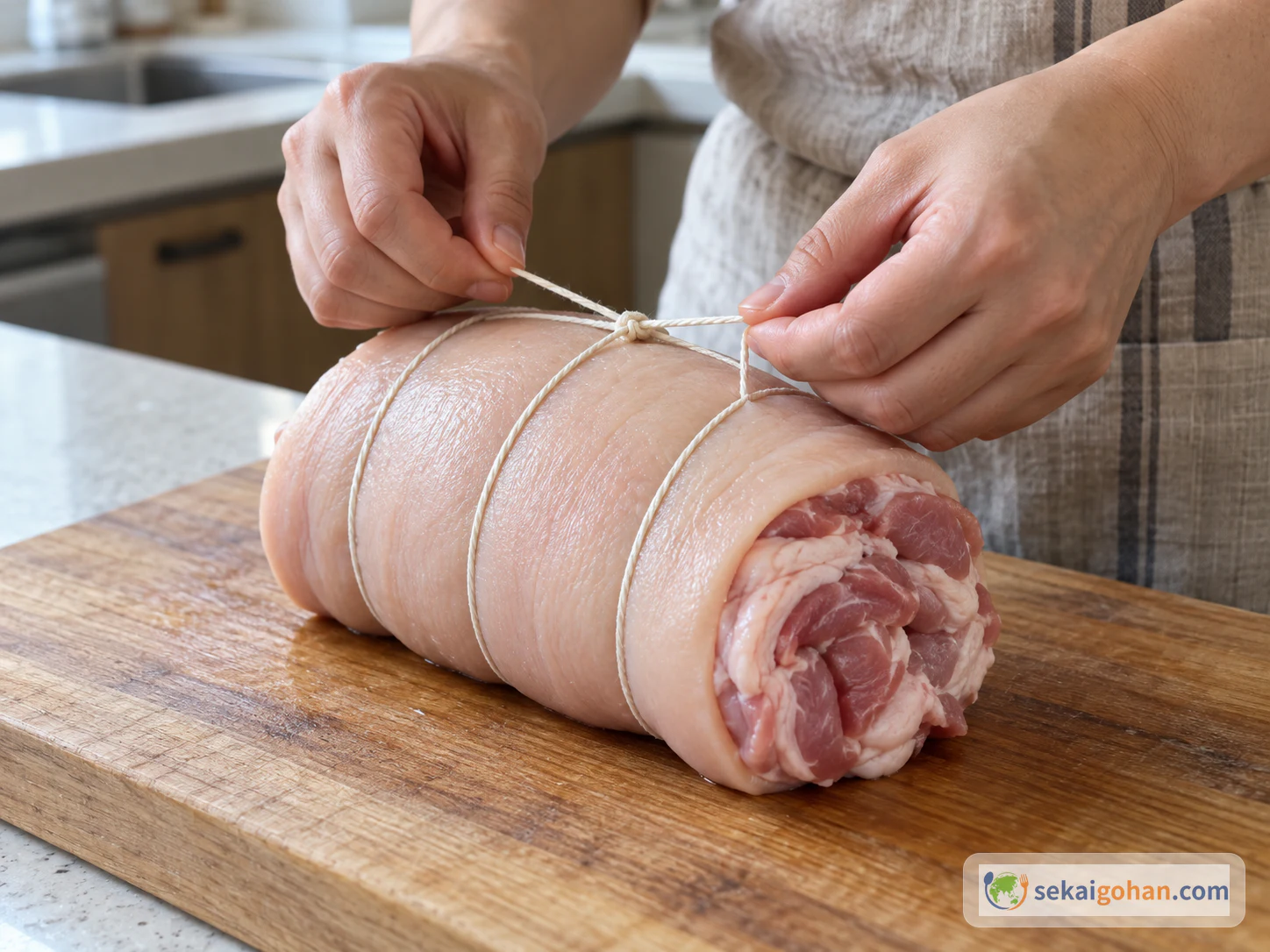
- Food-safe kitchen twine
- Pot large enough for the tied pork hock
- Instant-read food thermometer
- Clean tongs
- Clean bowl for the ice bath
- Clean cloth for blotting tofu
- Frying pan
- Chopsticks or a turner
- Draining rack
- Small bowl and spoon or whisk for the dip
- Measuring spoons
- Kitchen scale
- Serving platter and a separate dip bowl
- Refrigerator
Choosing Ingredients for Bún Đậu
Fresh bún. The 1.75 lb (800 g) here is fresh, ready-to-eat bún, which you'll find at Vietnamese or Asian grocers. Dried rice vermicelli has a different texture, and 1.75 lb (800 g) of it would make far more than the platter needs. If dried noodles are all you can find, cook them by the package directions and judge the amount by the package's cooked yield.
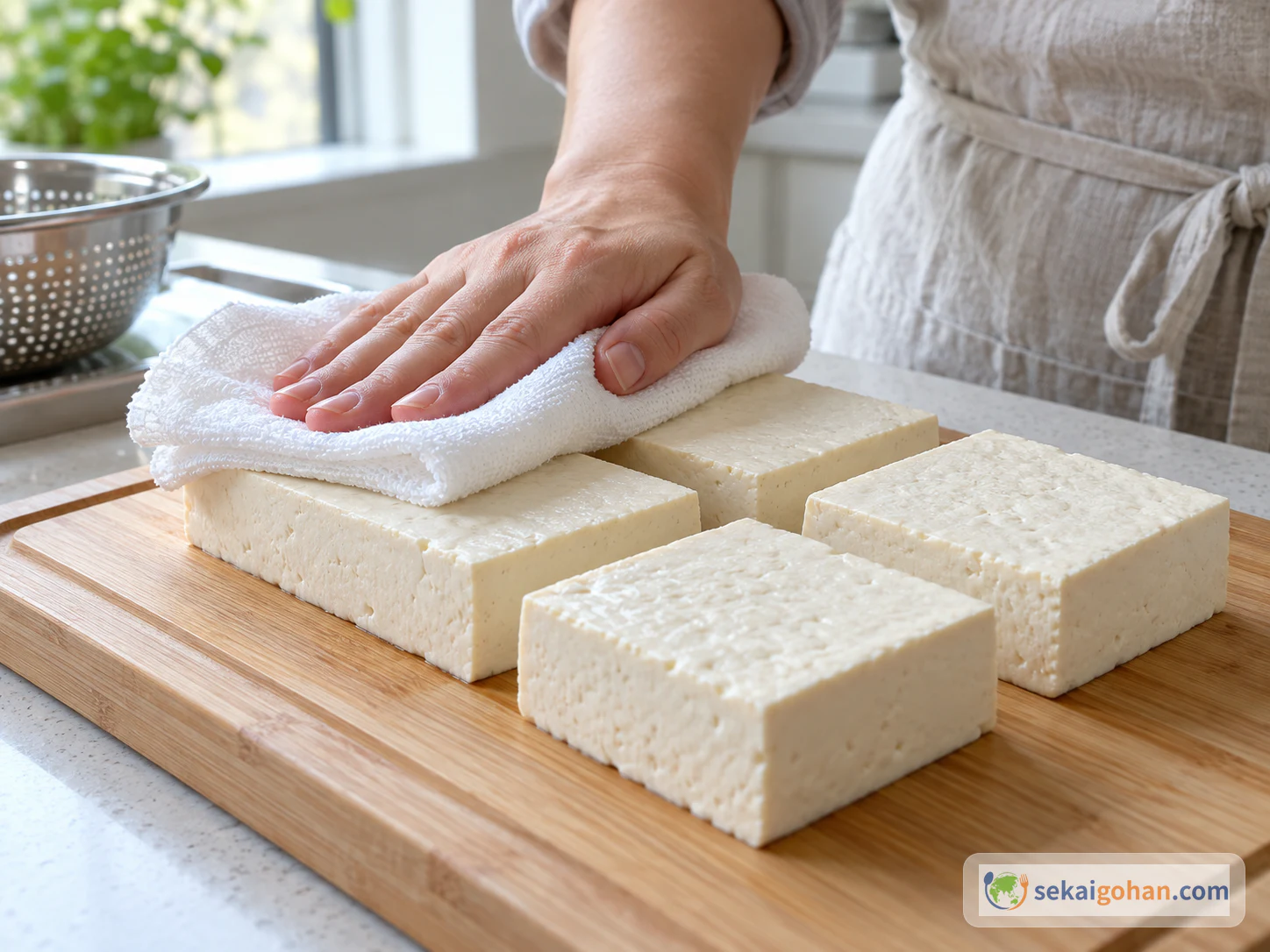
Tofu. Tofu is counted in pieces (bìa) with no set weight or size. Supermarket blocks vary widely, so eight pieces doesn't mean eight retail packs. Aim for eight small slabs.
Pork hock. Ask for skin-on, boneless pork hock or shank (chân giò in Vietnamese). The skin is part of the sliced pork's texture, which is why lean loin won't give the same result.
Chả cốm. These are pork patties studded with green cốm (young rice) grains, a different thing from nem rán, the fried spring rolls some restaurant platters add. If you buy chả cốm packaged or frozen, follow its label for handling and cooking, and check the ingredient list.
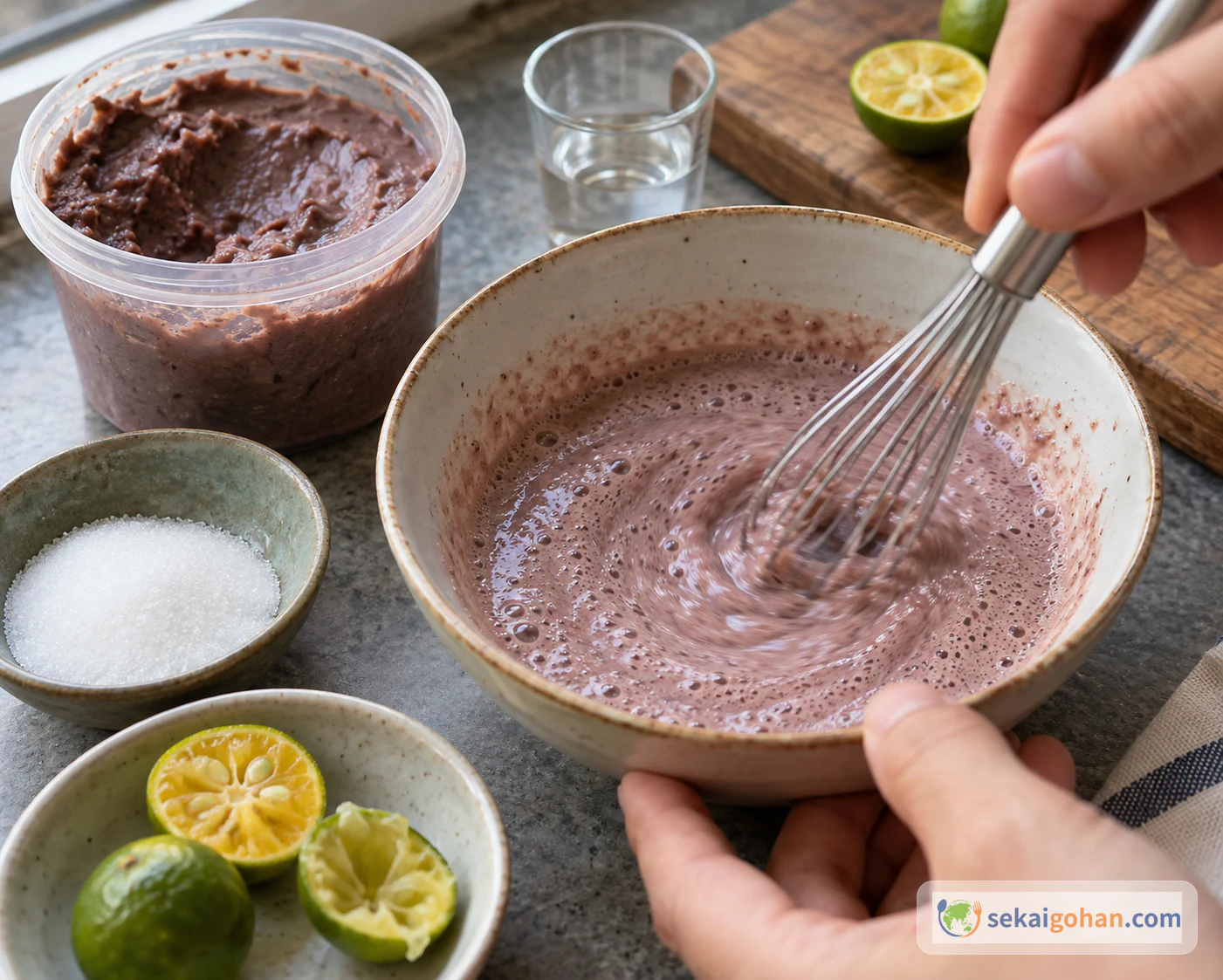
Mắm tôm. Fermented shrimp paste is the heart of the dish. Fish sauce, mắm nêm, dried shrimp and shrimp powder are all different products, and none of them can stand in for it. The dip is mixed and served without cooking, so choose a sealed jar that the manufacturer labels as pasteurized and suitable for eating directly, and follow that product's instructions. If the label doesn't clearly allow direct use, keep that jar out of this dip.
White liquor. Use a clear white liquor rather than Japanese sake.
Herbs. Kinh giới and perilla go on this platter. Without kinh giới, it will taste different.
Method: Pork First, Tofu Last
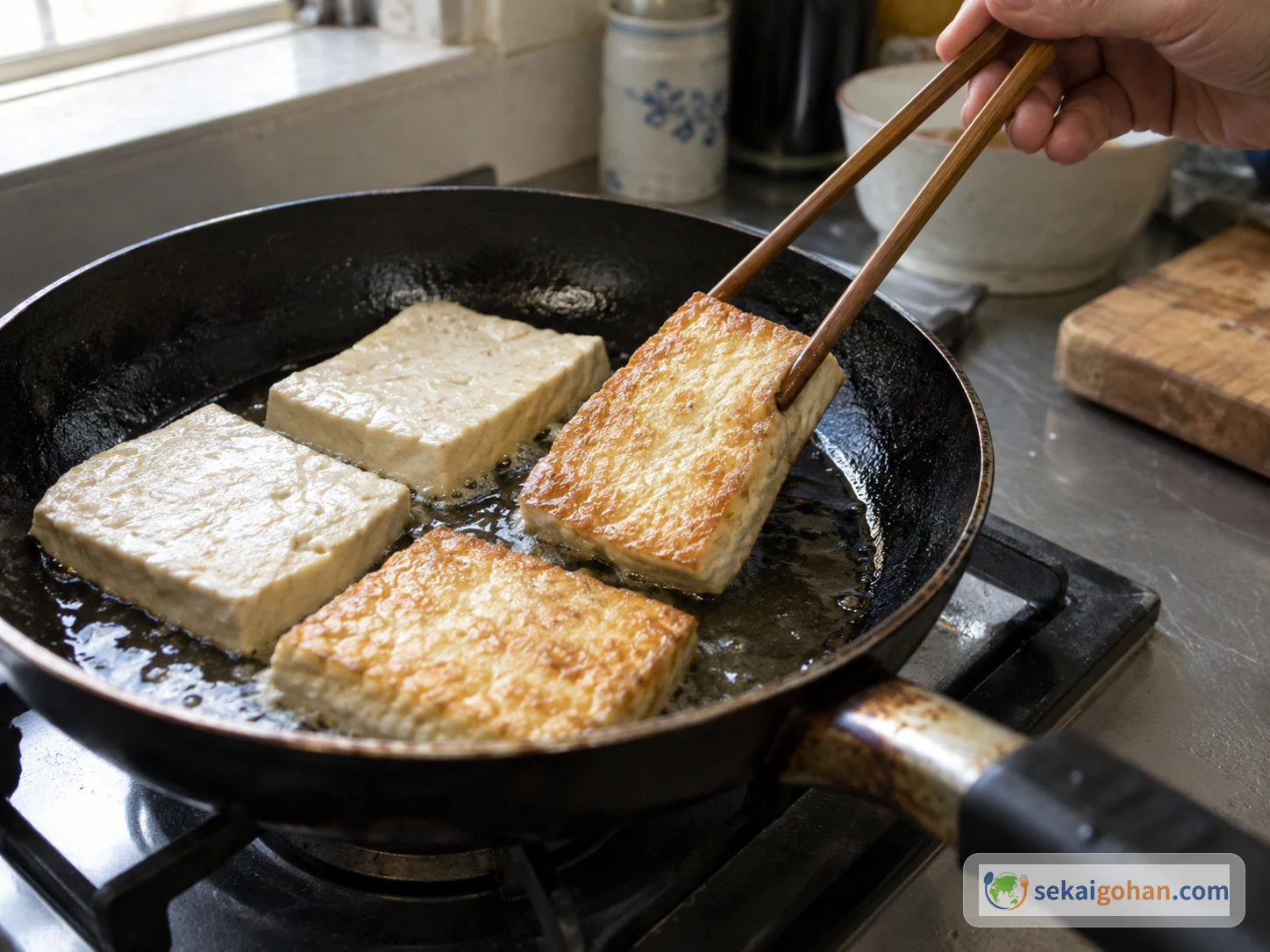
Start with the pork, which needs safe cooking and then hours of chilling. Do all raw-pork work first, then wash your hands and tools before handling herbs, noodles or cooked food. Fry the tofu close to serving so it stays crisp.
Bún Đậu Troubleshooting
| Problem | Likely cause | What to do |
|---|---|---|
| Tofu sticks to the pan or tears | Surface was wet, or it was moved before the first side set | Blot the tofu well, and wait until the underside is golden before turning |
| Tofu has gone soft by the time you eat | Fried too early | Fry it last, close to serving, and drain it on a rack rather than a plate |
| Pork center hasn't reached 167°F (75°C) | Thick roll; simmering time varies | Keep simmering and check the thickest center again until it holds 167°F (75°C) for at least 1 minute |
| Pork crumbles when sliced | Not chilled enough | Return it to the refrigerator until firm, then slice with a sharp knife |
| Fresh bún isn't available | Specialty item | Use dried rice vermicelli cooked by its package directions, judging the amount by the package's cooked yield. The texture will differ |
| The shrimp-paste label doesn't say it can be eaten directly | Product made for cooking | Don't use it in this uncooked dip. Look for a jar labeled pasteurized and ready to eat |
Variations, Food Safety and Leftovers
Variations
- Lard or oil. Either works for frying the tofu and chả cốm.
- Lime or kumquat. Either works as the citrus in the dip.
- The simple Hanoi form. Skip the pork and chả cốm and keep bún, fried tofu and mắm tôm, as the older platters did.
- Restaurant extras. Some platters add nem rán (fried spring rolls) or pork offal.
- A different dip. Some diners who don't eat mắm tôm choose a sweet-sour fish-sauce dip instead. It's a different sauce, and it changes the dish's defining pairing.
Food safety
Six household habits prevent food poisoning. Each one applies to this recipe step by step.
- Buying. Check dates, and get the pork home cold.
- Storing. Refrigerate foods that need it without delay, keeping raw pork and its juices contained. A household refrigerator should be 50°F (10°C) or below.
- Preparing. Wash your hands, and keep raw-pork boards, knives and juices away from herbs, noodles, tofu and cooked food.
- Cooking. Cook pork until the center reaches 167°F (75°C) for at least 1 minute. Apply the same check to chả cốm that contains raw pork, or follow its package directions.
- Serving. Use clean utensils and dishes, and don't leave the food at room temperature for a long time.
- Leftovers. Put leftovers in clean, shallow containers, cool them quickly and refrigerate them. Reheat them thoroughly before eating, and throw away anything you have doubts about.
Storing the shrimp paste
Follow the label of the jar you bought, and keep it away from sunlight and high heat. After opening, close the cap tightly and store it at 20–25°C.
Frequently Asked Questions
How much sugar is "1/2–1 spoon"?
The Vietnamese recipe measures the sugar with a "thìa" (spoon) without saying which size, while the shrimp paste is measured in thìa canh (tablespoons) and the liquor in thìa cà phê (teaspoons). Treat the range as a guide and taste the dip as you go.
Why use a thermometer instead of a cooking time?
Simmering for 15–20 minutes and checking with a skewer for pink liquid is not a reliable safety check. Hock size varies, so cook the pork until its center reaches 167°F (75°C) for at least 1 minute, or use an equivalent heating method.
Do the lime, liquor or hot fat make the shrimp paste safe?
No. Liquor and hot fat are there for flavor only. Because the dip is not cooked, use a jar labeled pasteurized and ready to eat directly, and follow its instructions.
Where does the chili go?
The recipe lists fresh chili without an amount or a place for it. Add it to the dip to taste.
Can I make it without pork?
Yes. Leaving out the pork hock and chả cốm brings you close to the older Hanoi form of bún, fried tofu and mắm tôm. The dip is made from shrimp, though, so the dish is not vegetarian.