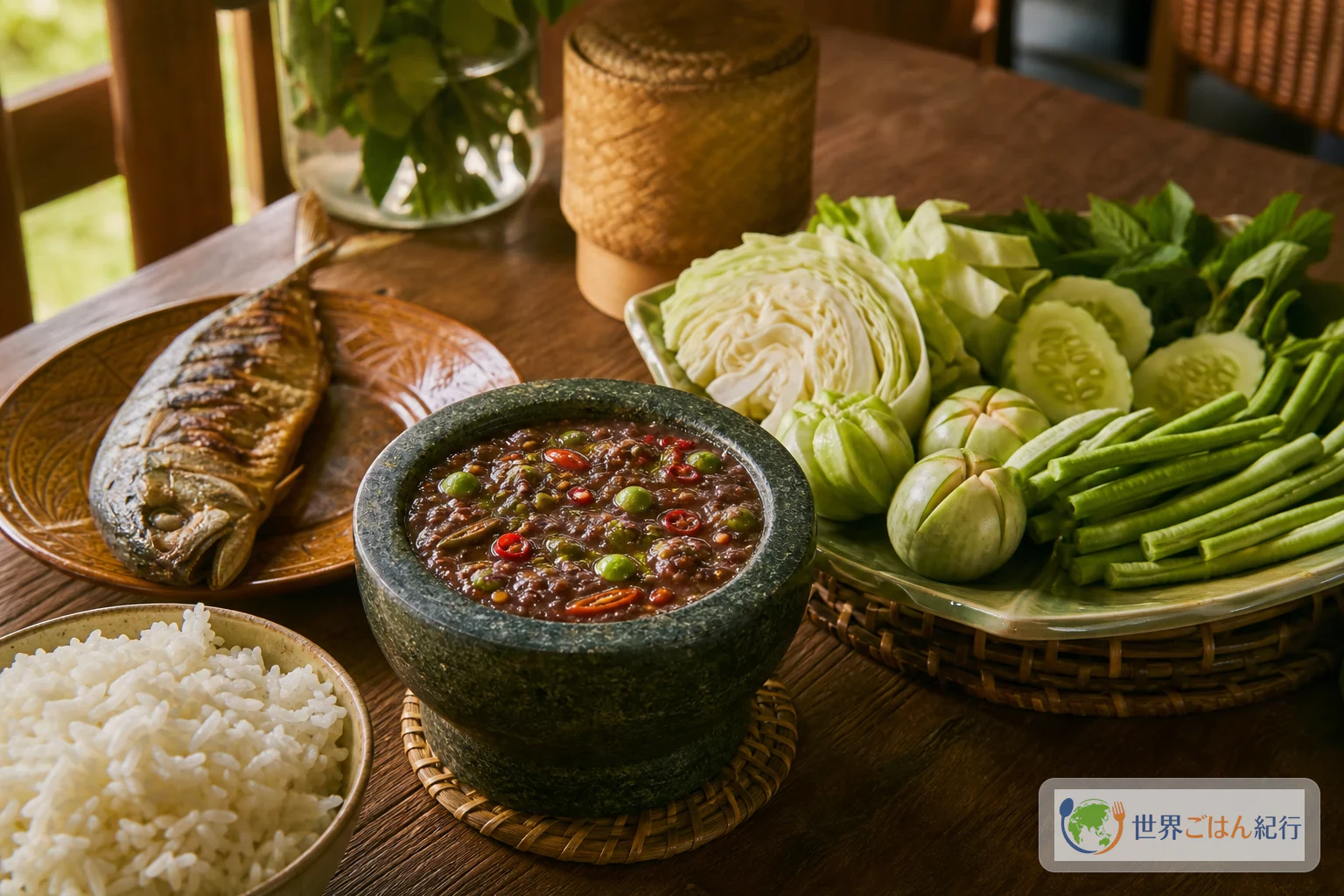
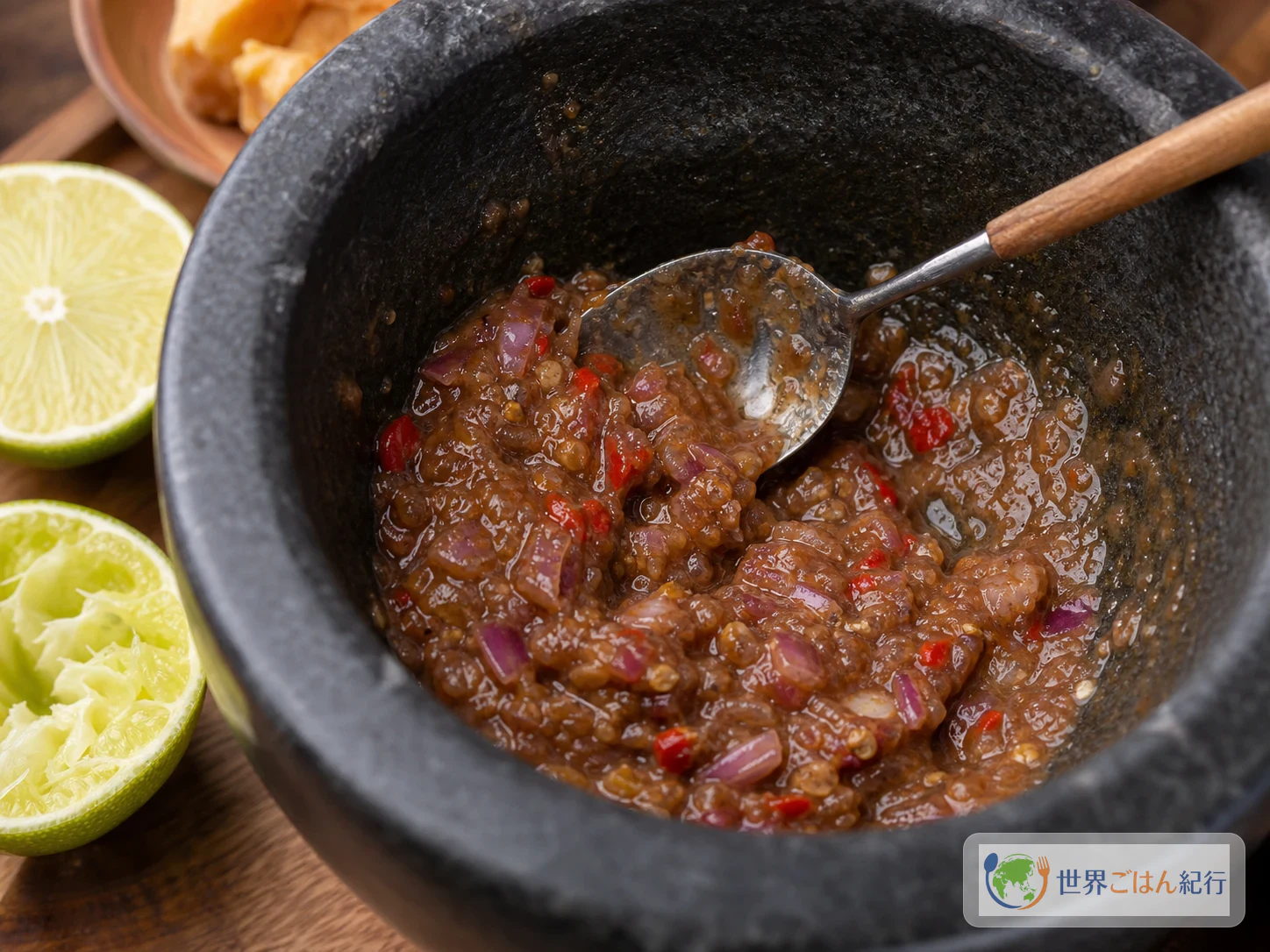
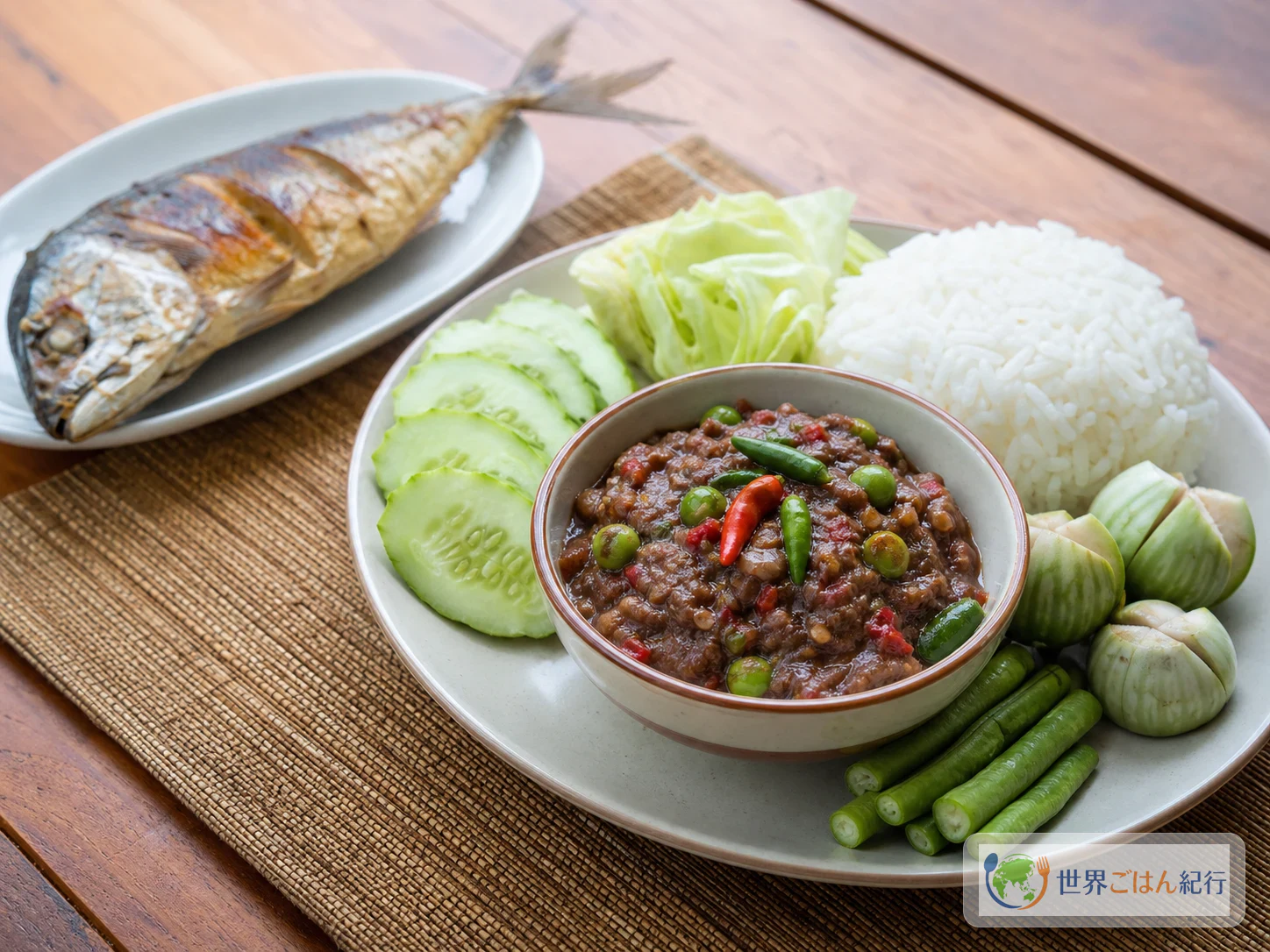
Open the lid and the fermented smell of shrimp reaches you first. Kapi isn't something you'd eat straight from the jar, but pounded with garlic, red chilies, lime, and a little sugar, it becomes a dip that vegetables and rice can carry. Nam prik kapi is the shrimp paste version of central Thailand's chili dips: salty and savory from the kapi, sharp with chili, and lightened by lime. At home, aim for a dip whose saltiness loosens when you bite a vegetable and whose aroma rounds out when it meets rice.
Nam prik kapi on the Thai table
The name tells you how the flavor is built. In Thai, nam prik means a chili-based dip and kapi means fermented shrimp paste, so the name holds both the base of heat and the source of the aroma. Taste it alone and you notice only how strong it is. Put it back on the Thai table and its role changes.
How nam prik kapi is eaten
This isn't a table where each plate is a complete meal for one person. Rice is served on individual plates, and in the center sit the dip, raw and boiled vegetables, and egg or fish dishes, combined a little at a time. Shared dishes are matched to each person's rice, and spicy dishes are balanced with mild ones, so the combination can change with every bite. A dip made strong enough to stand on its own ends up floating apart from everything else.
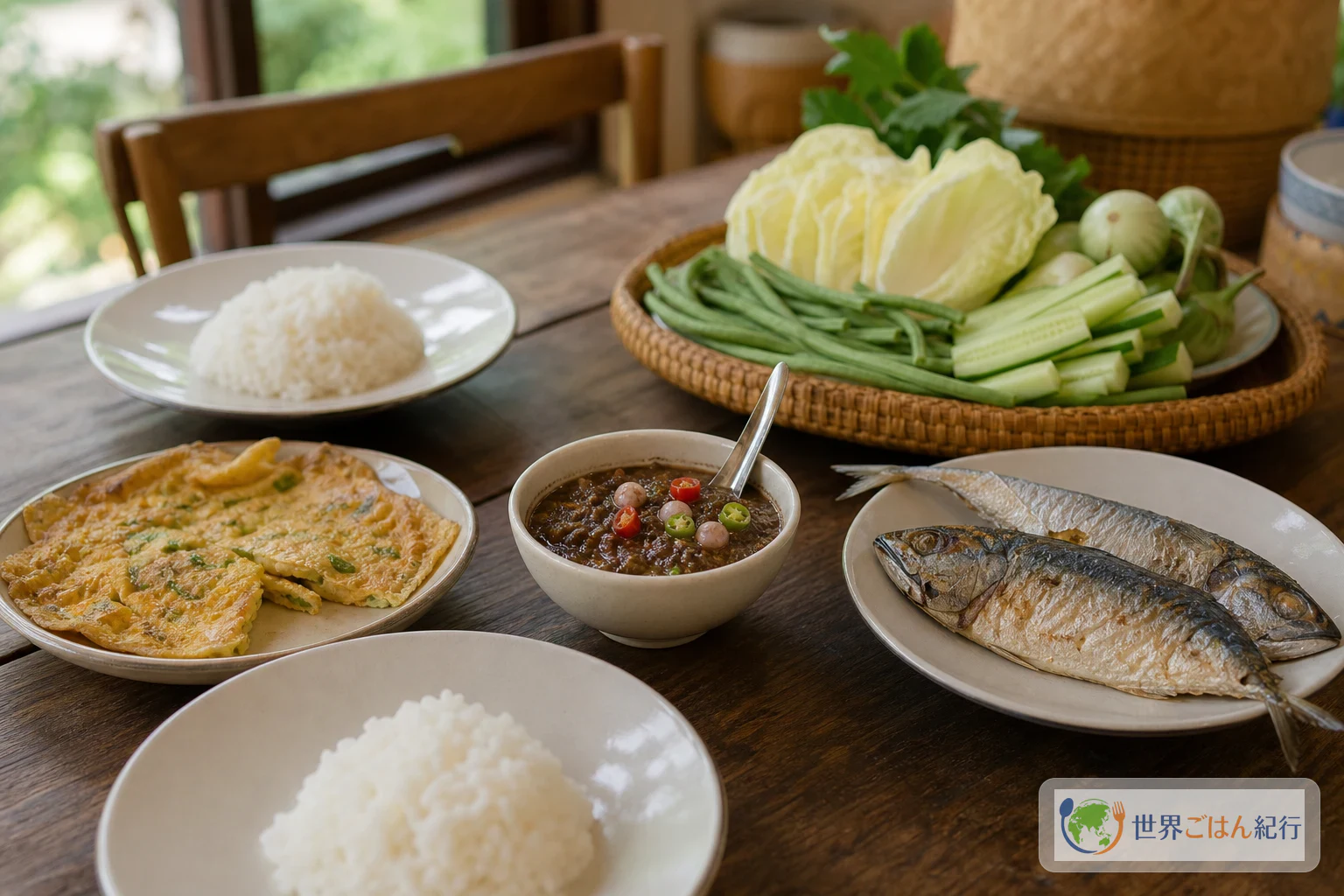
The star is the saltiness and savoriness of the kapi, the outline is chili, the aroma bridge is garlic and red onion, and lime lightens the aftertaste. Rather than adding more kapi for strength, first adjust to a strength you can eat with sourness and vegetables.
Regional differences in nam prik and kapi
Central-region dishes have been refined in presentation and combination, taking influence from several cultures, and the central table brings together jasmine rice, nam prik kapi, and vegetables. Beyond that, the ingredients and heat of nam prik vary from household to household, and some regions use fermented ingredients or meat.
Kapi itself differs in color and flavor by where it comes from. Paste from the sea side and paste from the gulf side look different, so even the same "kapi" can smell different from one jar to the next. There's no need to force that difference away in a home kitchen: keep the toasting time the same, mix in the lime first, and make the first bite a vegetable. A flavor loose enough to shift at the table is what makes this dip interesting.
Nam prik kapi and other Thai dishes
Khao kluk kapi turns the same kapi into fried rice; this dish is for eating vegetables and rice in turn. The pounding is also different from som tam, where green papaya is coarsely broken. And next to gapao, with its stir-fried ground meat as the main dish, nam prik kapi adds ways to eat vegetables and rice rather than adding more meat.
Ingredients: make kapi the star, decide the salt later
Makes dip for 4 and the vegetable and rice combination.
Kapi varies a lot in saltiness and fermented aroma from product to product, so add no extra salt at the start.
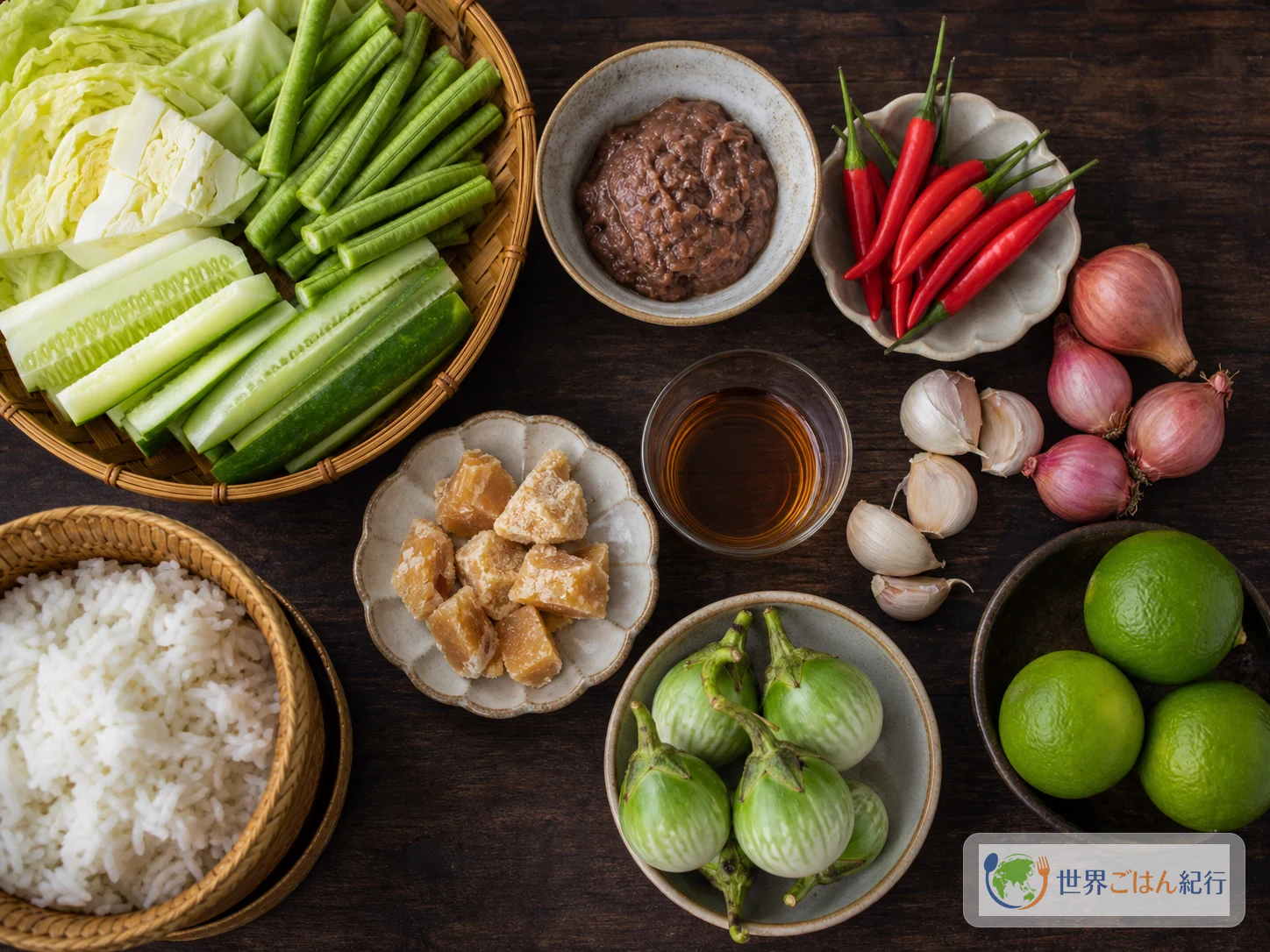
Kapi is easier to find if you search by "shrimp paste," "kapi," or "กะปิ."
Before you look at size, check that the ingredients list shrimp, whether the jar is ambient or refrigerated, and the storage instructions after opening.
Buy a 1 lb (500 g) jar only if you will also use it in khao kluk kapi and stir-fries.
If you only want to try this dish, a small jar leaves less to store in the refrigerator.
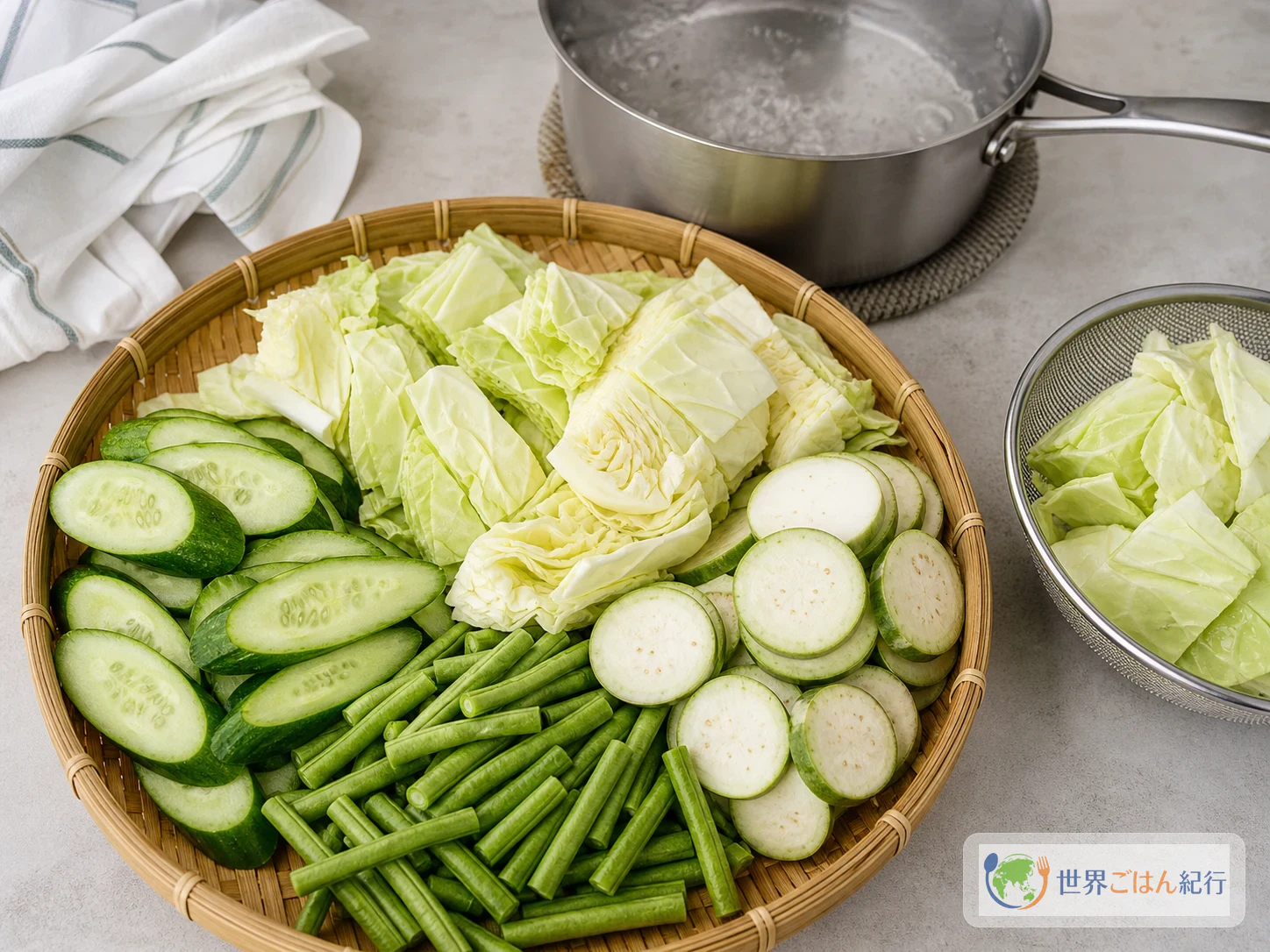
Makua puang adds small green grains and a light bitterness when pounded. With regular eggplant, cut into 0.25 inch (5 mm) cubes and do not mix it in raw; boil thin slices for 1 minute and cool. With cucumber alone, the texture is lighter, and it still takes on the dip's saltiness.
Kapi contains shrimp. Anyone with a shrimp allergy should not use it. Check the ingredient labels of fish sauce and processed seasonings too, and do not share serving spoons or vegetables. For a shrimp-free version, see "Variations."
Choosing tools and ingredients for nam prik kapi
Mortar
Buy a stone mortar only if it suits how you cook. If you crush chilies and garlic coarsely several times a month and like a texture with grains left in, a heavy, stable stone one is easy to use. If you just want to try the dish once, or you live in an apartment and worry about the noise of pounding, start with the mortar you already have. When you do shop, check that a pestle is included, not just the bowl.
Fish sauce
Fish sauce is worth buying if you'll also use it in Thai or Vietnamese cooking and can finish 3 cups (700 ml) within half a year. If it's only for this dish, skip it and use the 0.5 g of salt in the ingredient table instead. When choosing a bottle, check the volume, the ingredients, and the storage instructions after opening.
Vegetables in place of Thai small eggplants
Thin slices of ordinary eggplant come close to the light bitterness of makua puang. If you'd rather skip the bitterness, go for texture, in the order cucumber, boiled broccoli, cabbage. Watery tomatoes dilute the dip, so leave them off the first plate.
If you avoid shrimp
Replacing the kapi and fish sauce with miso or kombu stock gives you a chili dip with no shrimp, but it can't reproduce the aroma and savoriness of fermented shrimp. Treat it as a miso chili dip rather than nam prik kapi. For anyone avoiding shrimp, check labels, and don't share the same mortar or serving spoon.
Method: wake up the aroma, then bring it back to the table with sourness
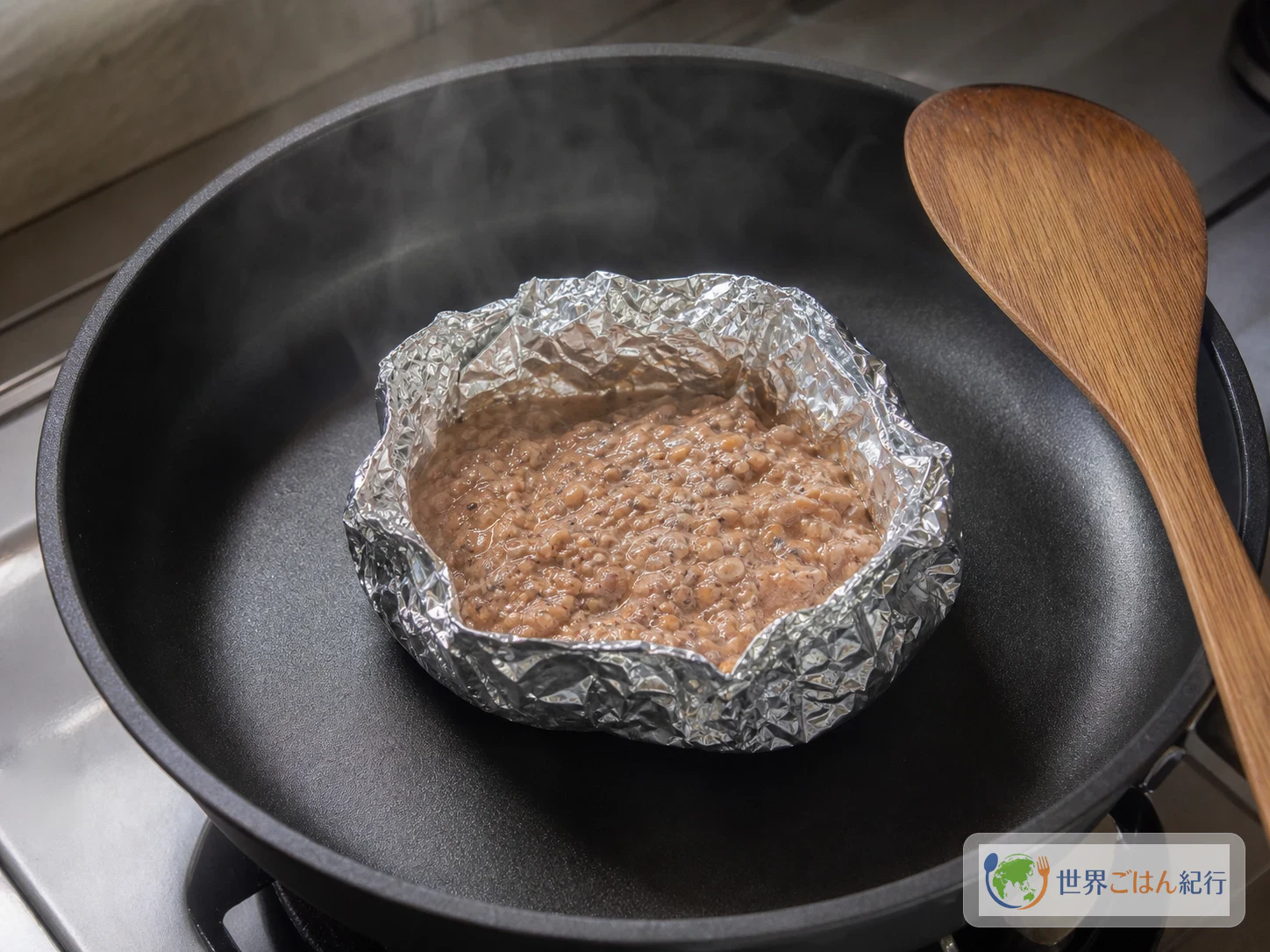
Prep and building the kapi aroma (15 minutes)
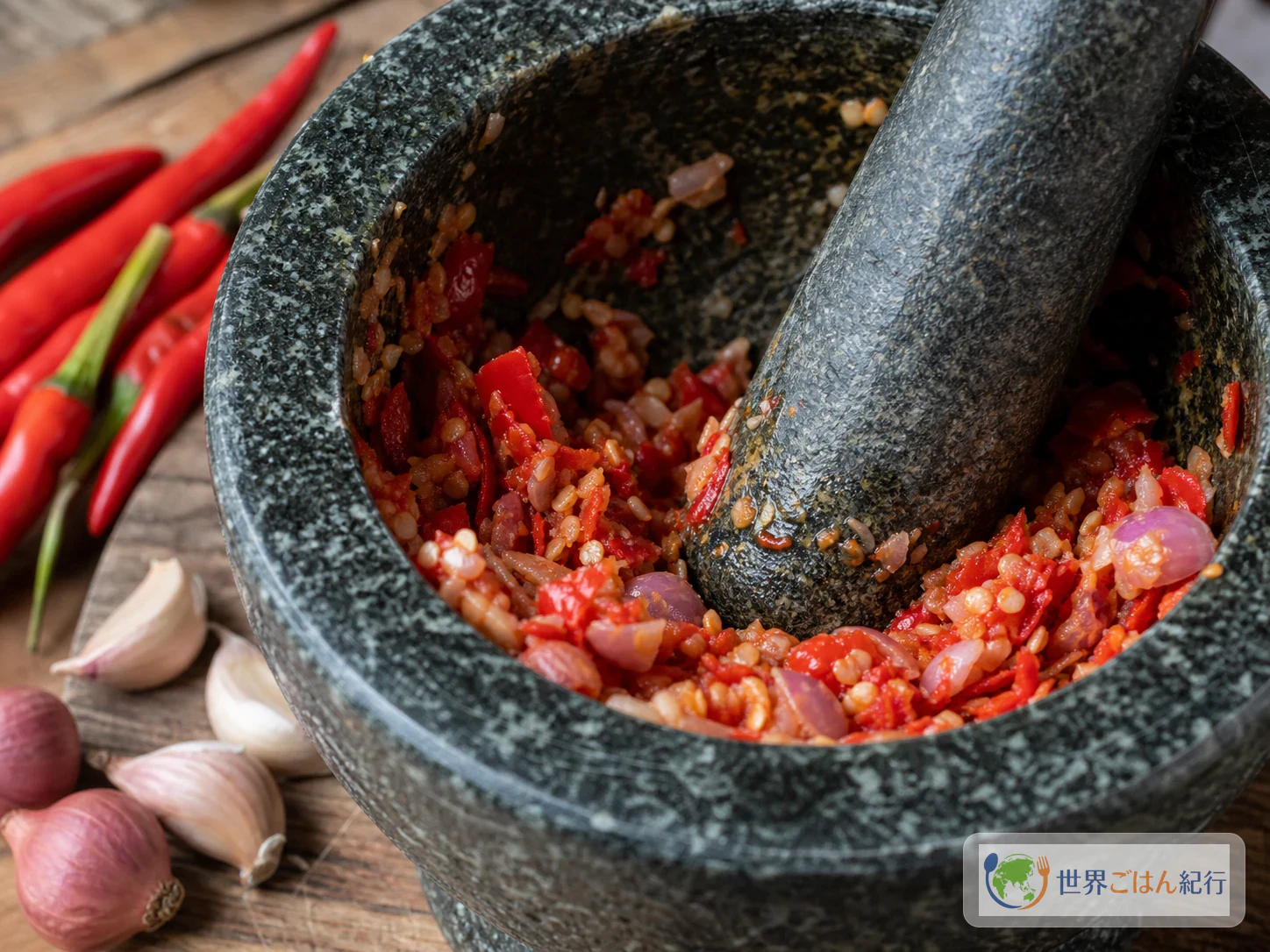
Pound and set the flavor (15 minutes)
Cooking tips and fixes for nam prik kapi
The two things that matter most are warming the kapi over low heat to settle its aroma and stopping before the mortar makes a smooth paste. You want grains of red chili, fibers of garlic, and the sourness of lime still there. The aim is to tame the smell, not erase it: take the aroma away completely and the dish loses its center.
Warming 1 minute per side over low heat rounds off the sharp aroma of a freshly opened jar a little. Toasting until smoke appears produces bitterness that more lime cannot bring back.
A blender makes a uniform paste that erases the difference between chili and onion when you serve it with vegetables. Without a stone mortar, use a heavy mortar and keep it coarse, mainly pressing.
When the lime goes in, the outline of kapi's saltiness and aroma becomes visible. If it lacks sourness, add lime juice 1 tsp (5 ml) at a time; if too sour, add sugar 1 g at a time. Add more kapi last.
Thickness changes with the water in the vegetables and the amount of lime. Add 1 tsp (5 ml) water at a time only when it is stiff. If it turns loose, don't heat it to drive off water; serve it with more unsalted vegetables and rice.
Serving and variations for nam prik kapi
To make it milder, cut the chilies to 2–3 and remove the stems and seeds before crushing. Even with less heat, the kapi and lime still hold the flavor together. To make a separate batch for children, set aside some of the aromatics and kapi before the chilies go in and finish them in a second mortar.
For a home dinner, swap the jasmine rice for white rice and set grilled fish, rolled omelet, and boiled vegetables alongside. It's less a full reproduction of a Thai nam prik spread than a home menu that keeps the Thai way of eating: a little at a time, from a dip in the middle. If vegetables are the focus, a textured side like som tam lines up nicely with the dip's sourness.
Frequently asked questions
Q. Can I make it without a stone mortar?
Yes, a heavy mortar works. Press the pestle down to split the chilies and garlic, add the red onion, and leave coarse grains. If you use a blender, don't run it continuously: pulse a few times for 1 second each and stop before adding liquid.
Q. Can I store the nam prik kapi I made?
Move it to a clean lidded container and use it within 2–3 days in the refrigerator. Don't return leftovers to the container after dipping vegetables or rice into them. Store the vegetables separately and put out only what you'll eat in a small dish.
Q. How hot should I make it?
Start with 2–3 red chilies and put sliced chilies on a separate plate so each person can add more; 6–8 is the amount for when you want heat to be the star. Heat also depends on the kapi's saltiness, the lime's sourness, and the water in the vegetables, so don't judge it by the chilies alone.