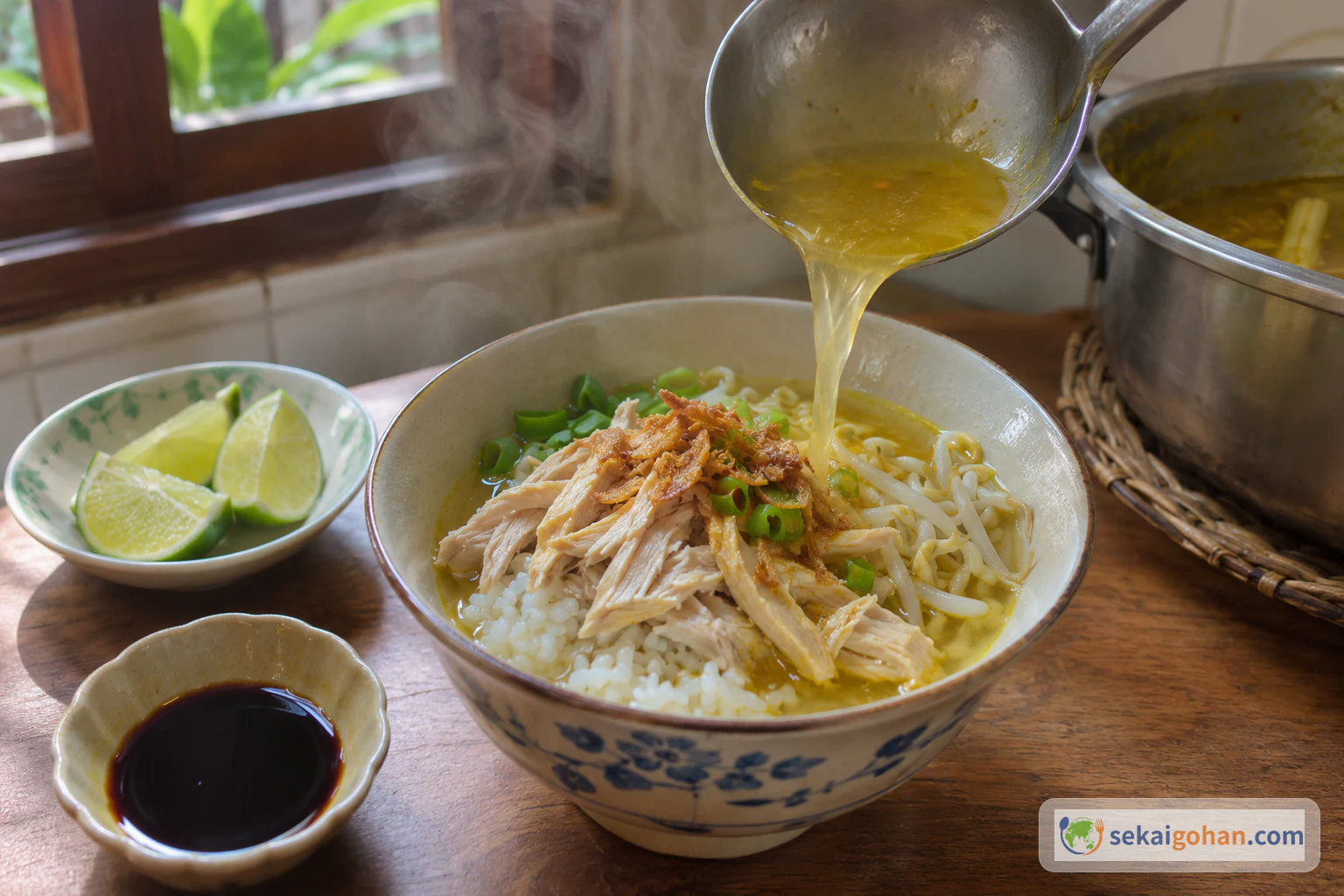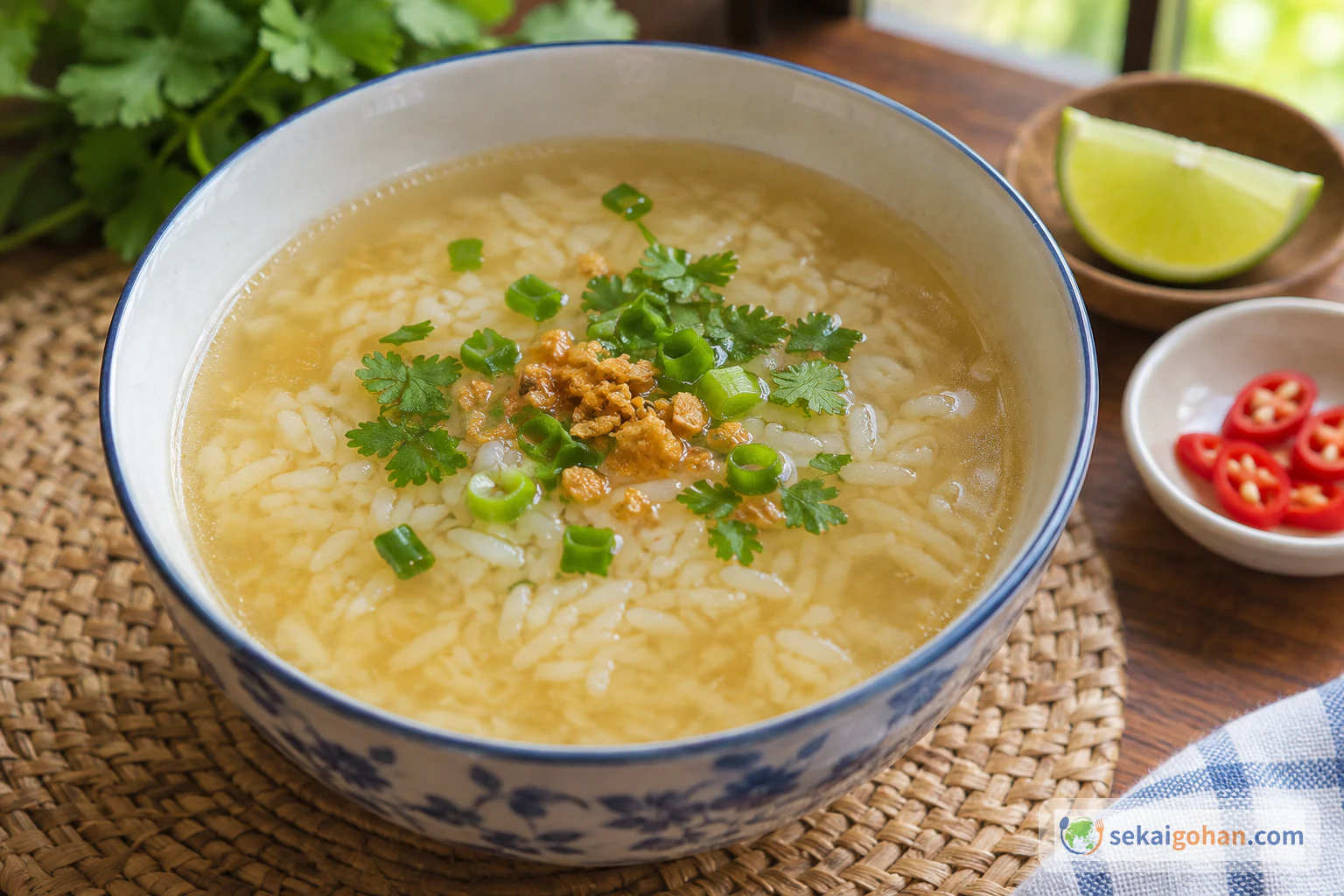
Market sellers keep pots of khao tom (ข้าวต้ม) warm through the morning, ready for anyone who stops by. This Thai rice soup starts with jasmine rice softening in a chicken broth flavored with fish sauce, soy sauce, ginger, lemongrass and garlic. The result is light and fragrant, with the rice grains still visible in the bowl. This version is a home recipe, passed down in one family, where it was the soup made on days you felt unwell. One father would eat it at any hour.
About Khao Tom
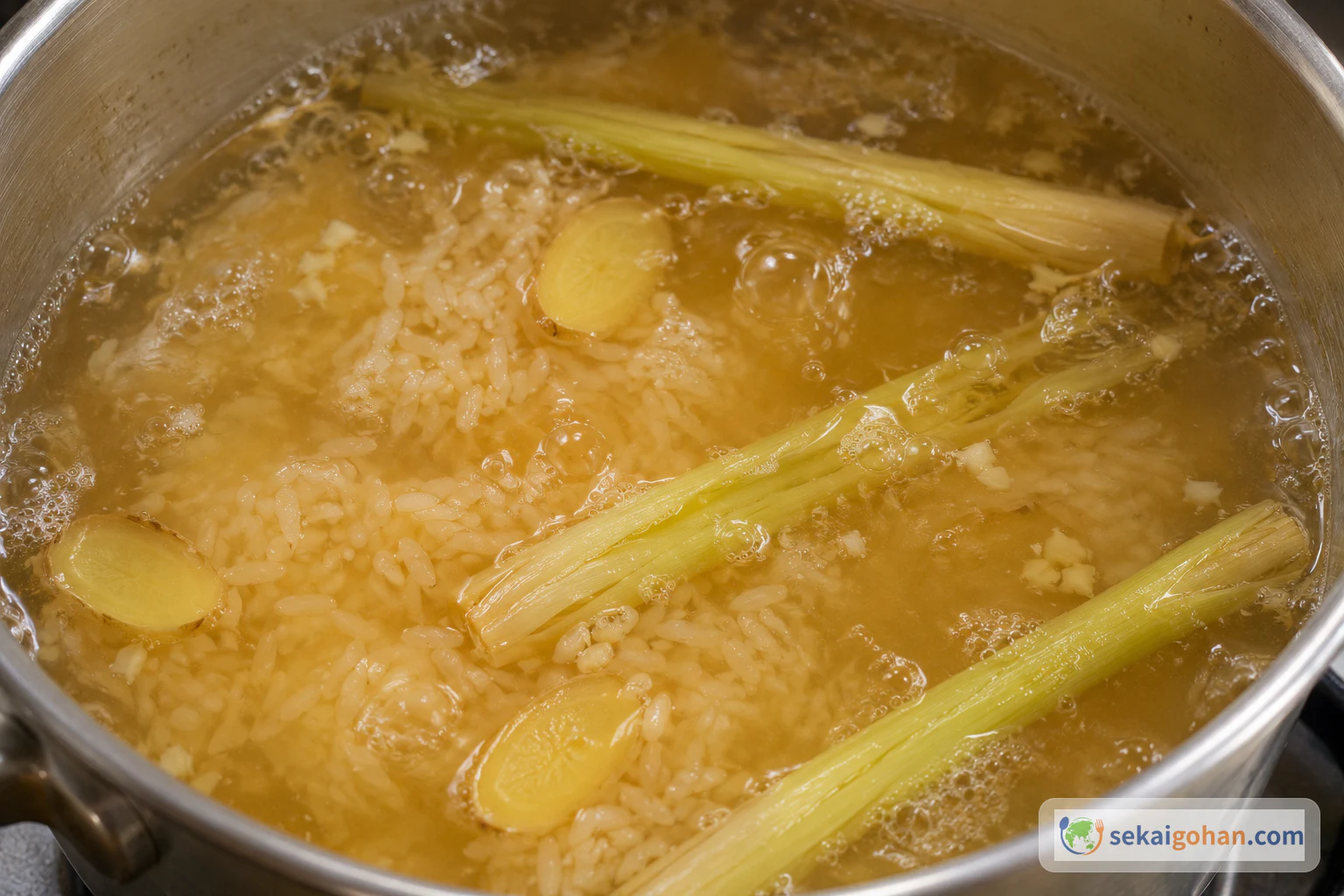
Khao tom looks a little like rice porridge, but it eats differently. The grains stay soft and separate in the soup. Jok, by contrast, is cooked longer, until the rice breaks down into porridge. As the rice keeps cooking, it absorbs liquid and thickens the soup, so the timing decides which dish you end up with.
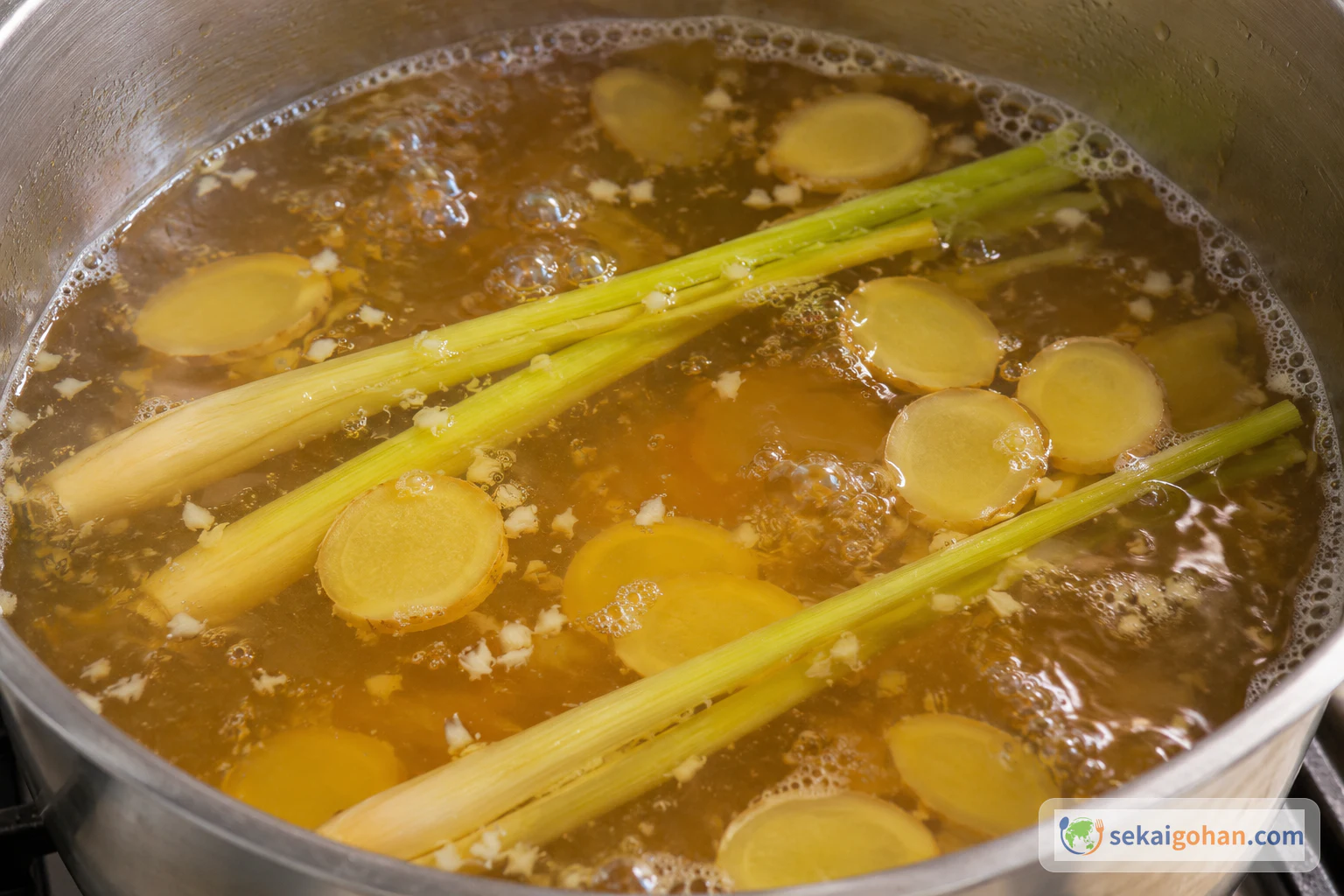
Build the fragrant broth first, then simmer the uncooked rice in it until soft. You should still see rice grains in the liquid, so the bowl stays a soup and doesn't turn into a smooth porridge.
In Thailand, khao tom is a breakfast sold at street stalls, often made with leftovers from the night before. Don't confuse it with khao tom mat (ข้าวต้มมัด), a sweet of sticky rice, coconut and banana wrapped in leaves and steamed. You can explore more dishes from Thailand for other parts of the table.
Ingredients: Serves 4
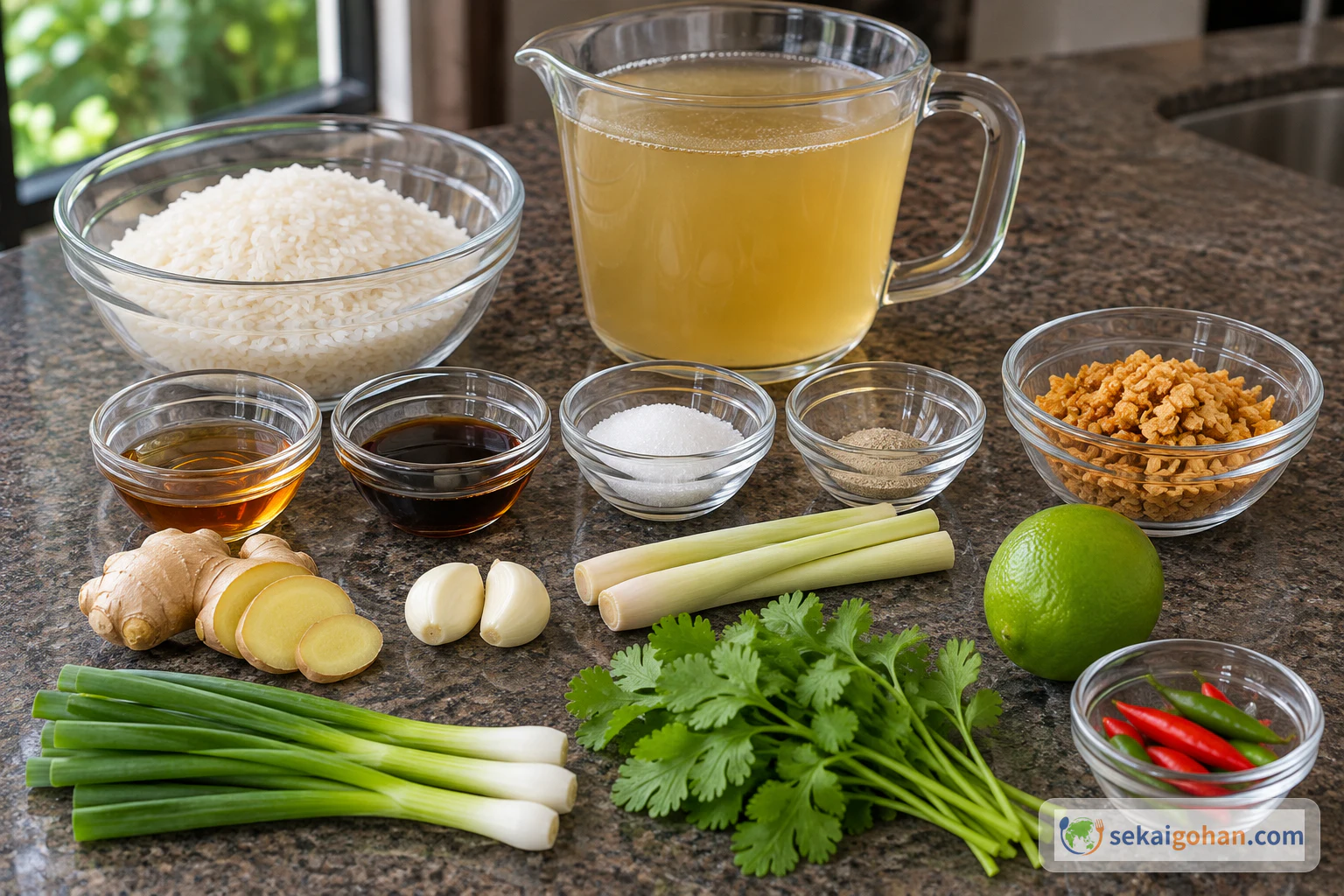
Equipment
- Measuring cups and spoons
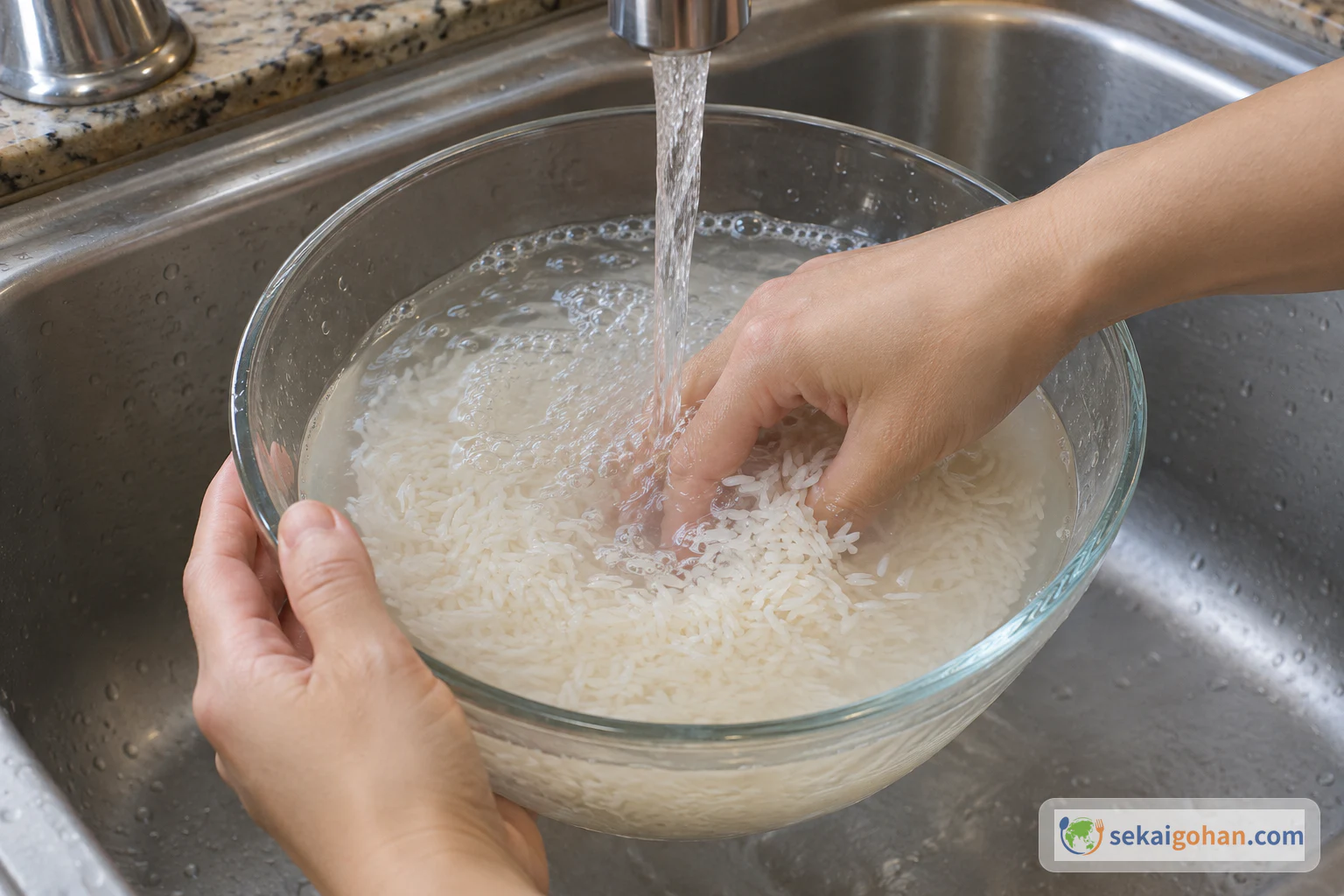
- Bowl for rinsing the rice
- Fine sieve
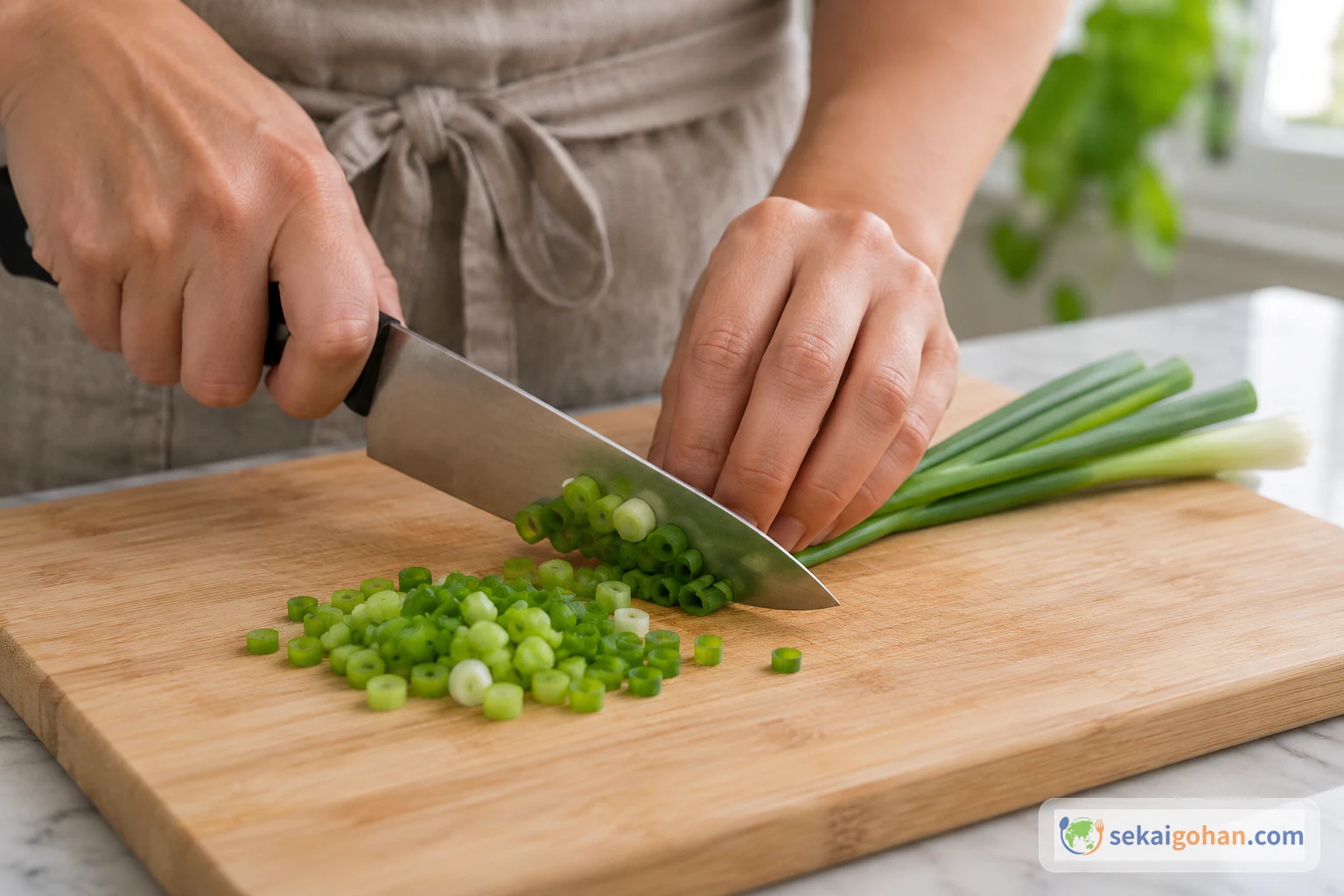
- Cutting board and knife
- Roomy, heavy soup pot, large enough that the broth and rice are unlikely to boil over
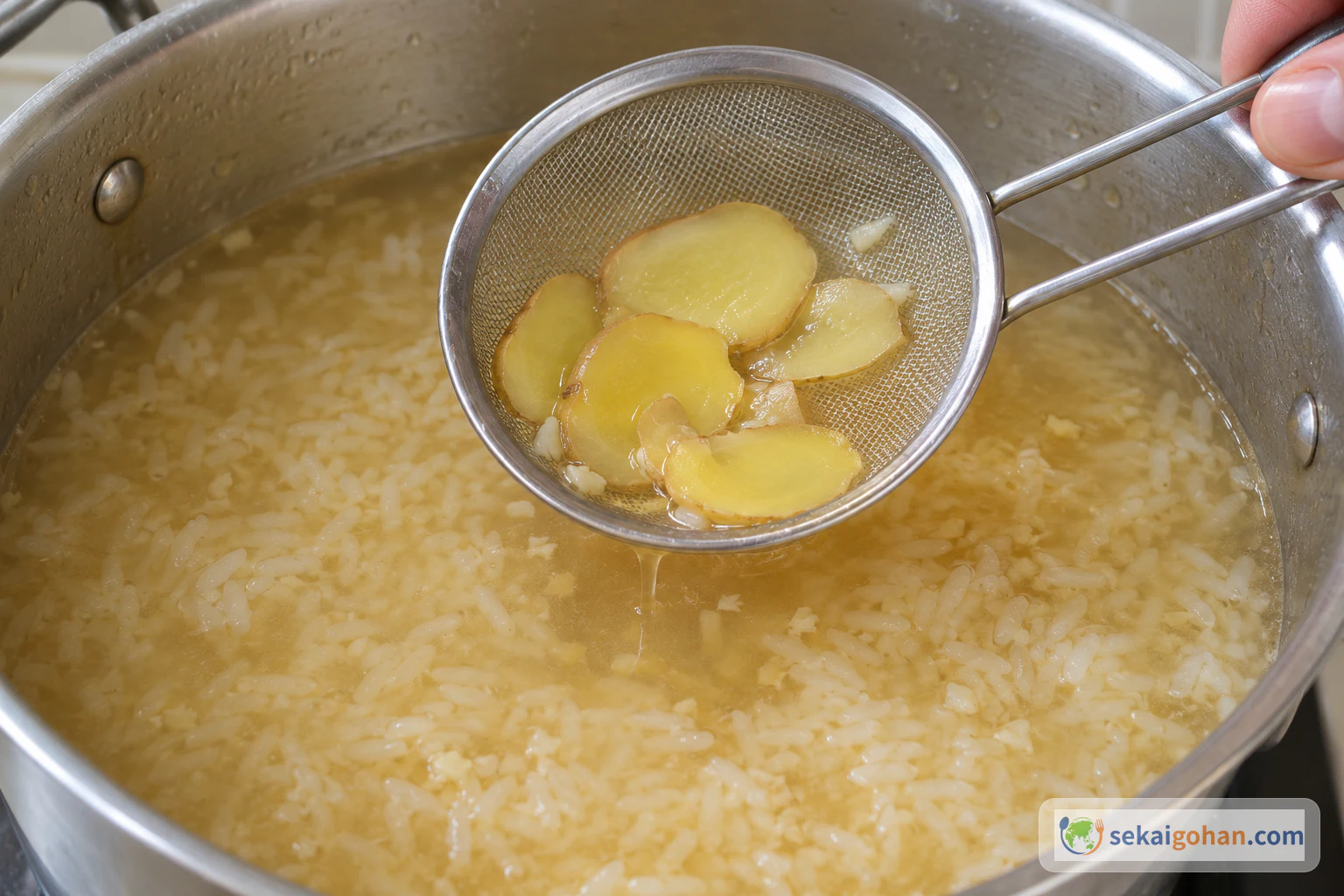
- Tongs and a small strainer for lifting out the aromatics
- Spoon for tasting
- Ladle
- Soup bowls and small dishes for the garnishes
Choosing Ingredients for Khao Tom
The rice, chicken broth, fish sauce, ginger and lemongrass carry this soup, and each swap below changes the flavor or texture a little. The rice and broth are measured 1 cup to 6 cups, so use the same cup for both.
| Ingredient | How to choose | If you swap or leave it out |
|---|---|---|
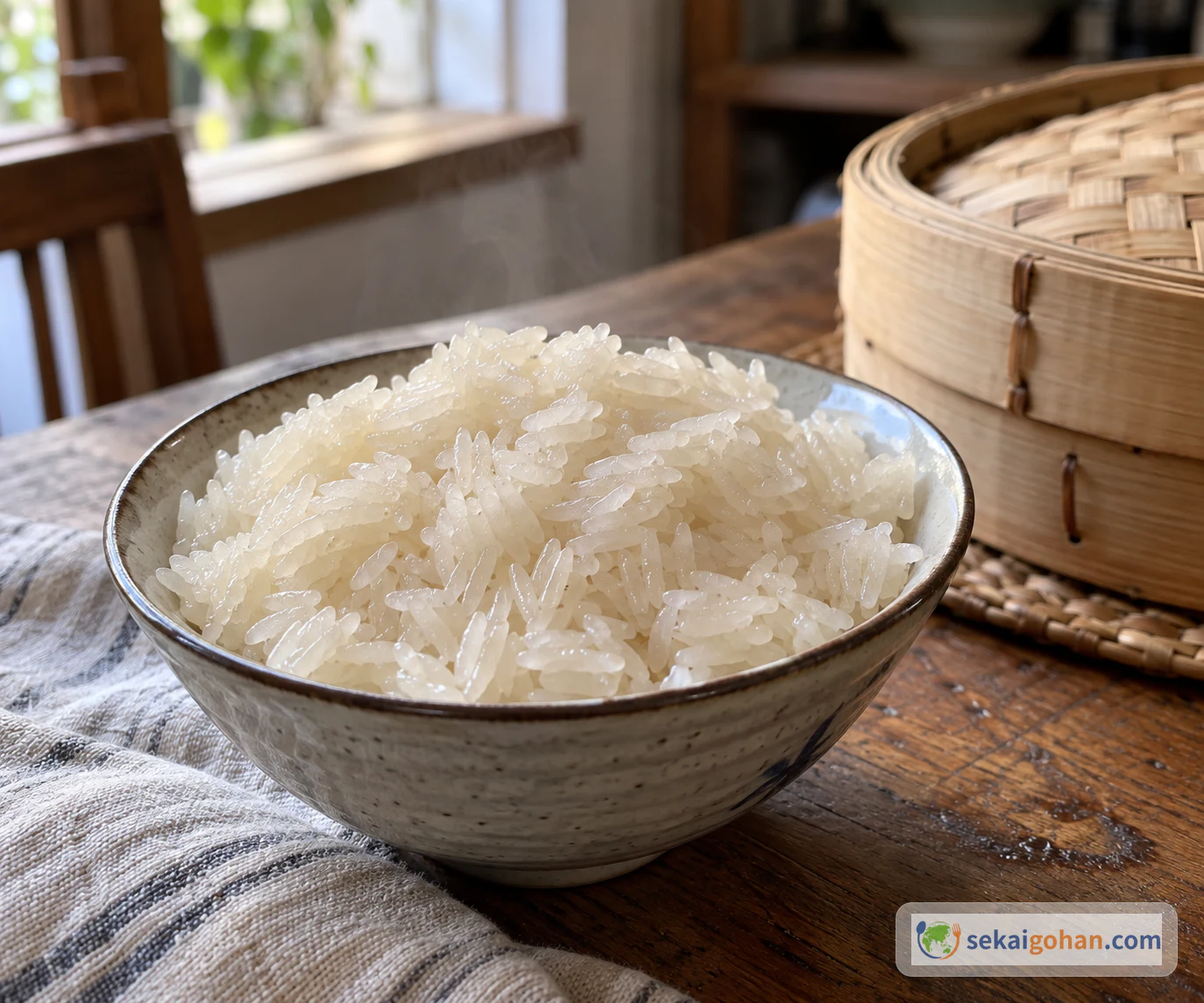
| Jasmine rice | Thai fragrant rice or another jasmine rice | Short-grain rice changes the texture, and the amount of liquid may no longer be right |
| Chicken broth | Unsalted or low-salt broth makes seasoning easier | Japanese dashi changes the flavor |
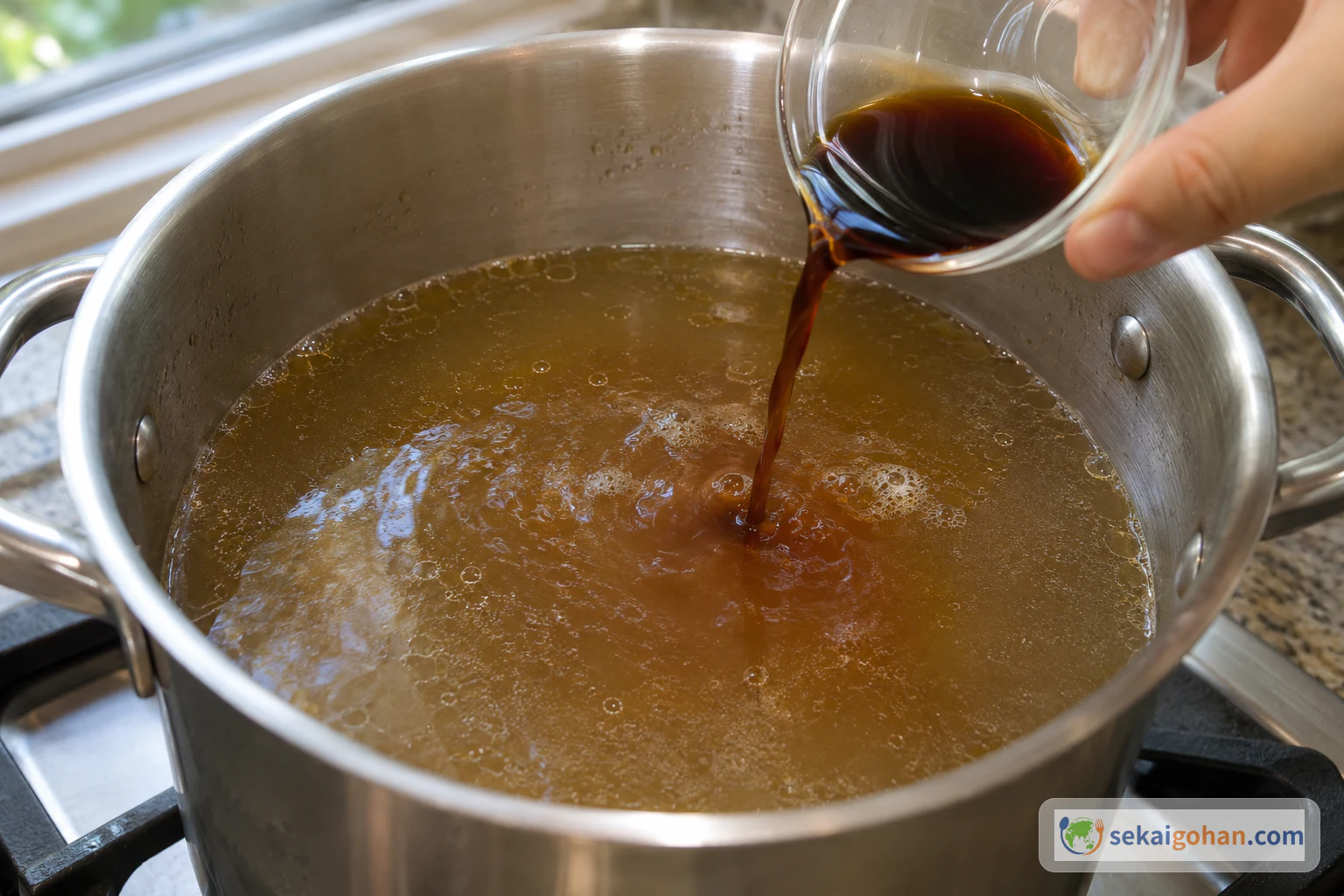
| Fish sauce | Ordinary nam pla | Leaving it out changes the taste, and soy sauce is not an equal replacement |
| White pepper | Ground white pepper | Black pepper smells different |
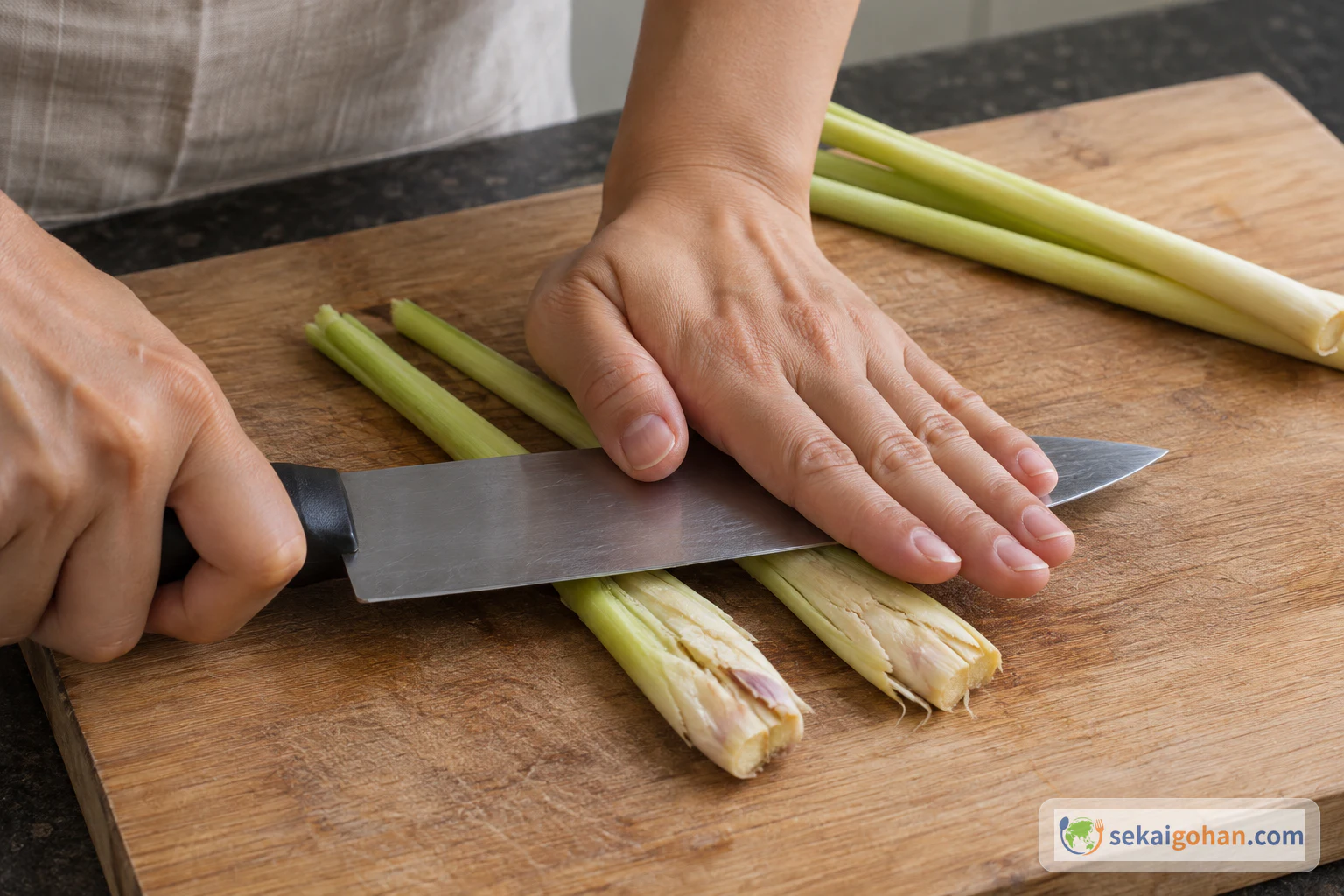
| Lemongrass | Fresh or frozen; look for frozen if you can't find fresh | Leaving it out removes a main aroma. Dried lemongrass smells different and has no equal-amount conversion |
| Green onions | Any slender green onion | A different type changes the finish slightly |
| Cilantro | Fresh | Can be left out if you dislike it, though the aroma changes |
| Fried garlic | Unseasoned, ready-made fried garlic is a good option | Optional; you lose the crisp garnish |
| Lime | Fresh | Lemon gives a different sourness and aroma |
| Thai chilies | Fresh | Optional. Leave them out if you can't find them |
Fish sauce is made from fish, and soy sauce can contain soy and wheat. Store-bought broth can also contain allergens and salt, so check the label on each product.
Method: Fragrant Broth First, Then the Rice
Each seasoning has its own step only to make the order easy to follow, and there is no set pause between them. Once the soup is done, move through the garnishes without delay, because the rice keeps absorbing broth as it stands.
Fixing Common Khao Tom Problems
None of these fixes uses a set amount, so adjust a little at a time and taste as you go.
| What you notice | Likely reason | What to do |
|---|---|---|
| The soup tastes thin | It needs more seasoning | Add a little more fish sauce and taste again |
| The soup tastes too salty | The broth was already salty | Add a little warm broth or water. Choose unsalted or low-salt broth next time |
| The soup has thickened | The rice has kept absorbing liquid | Add warm broth or water a little at a time |
| The rice is still firm | It needs more time | Keep simmering, stirring occasionally, until soft |
| The grains are breaking down | The rice cooked for longer | The soup is moving toward jok. Next time, stop once the rice is soft and the grains are still visible |
| The aroma is weak | The lemongrass wasn't bruised, or was left out | Next time, bruise the stalks and use fresh or frozen lemongrass |
Serving and Variations of Khao Tom
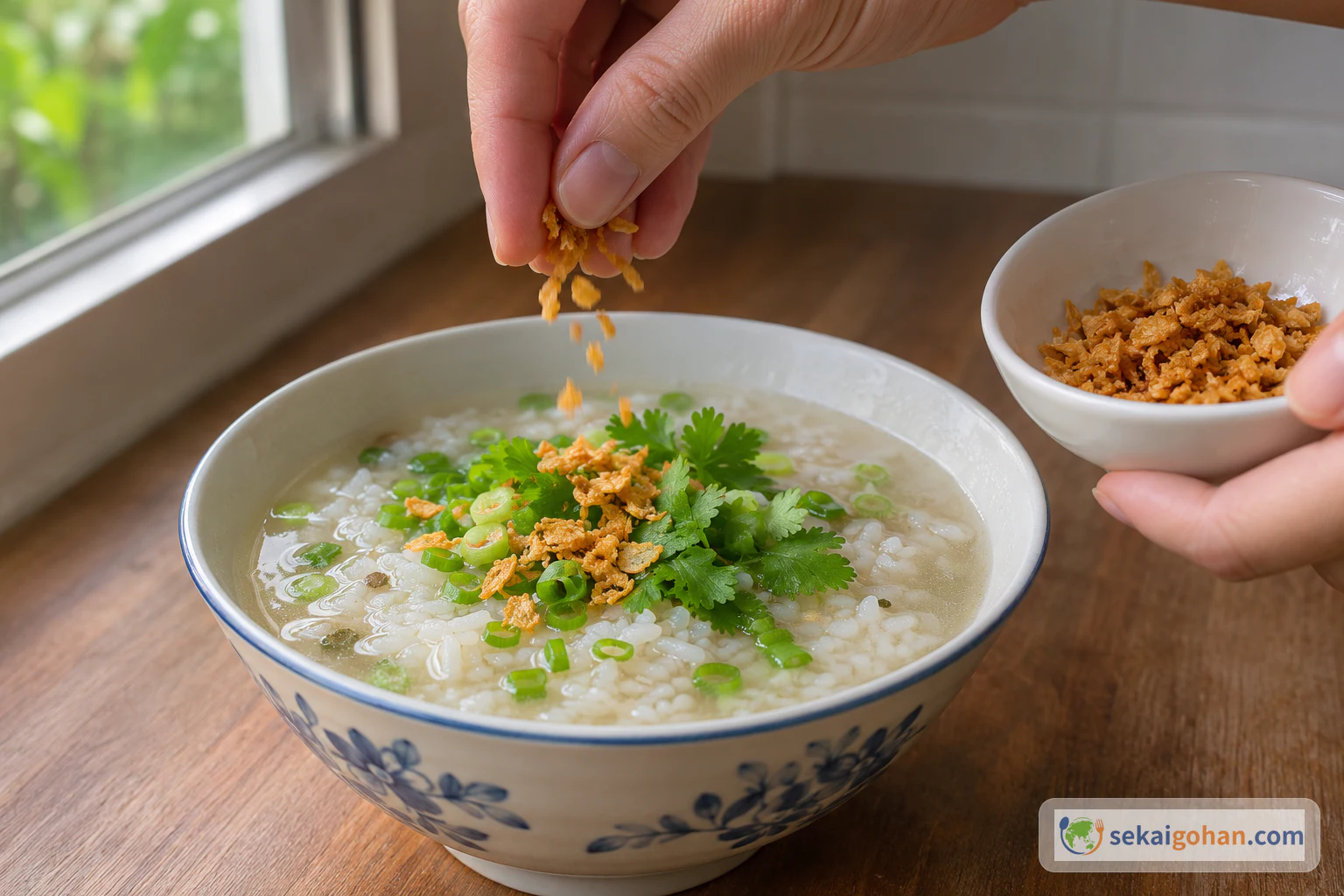
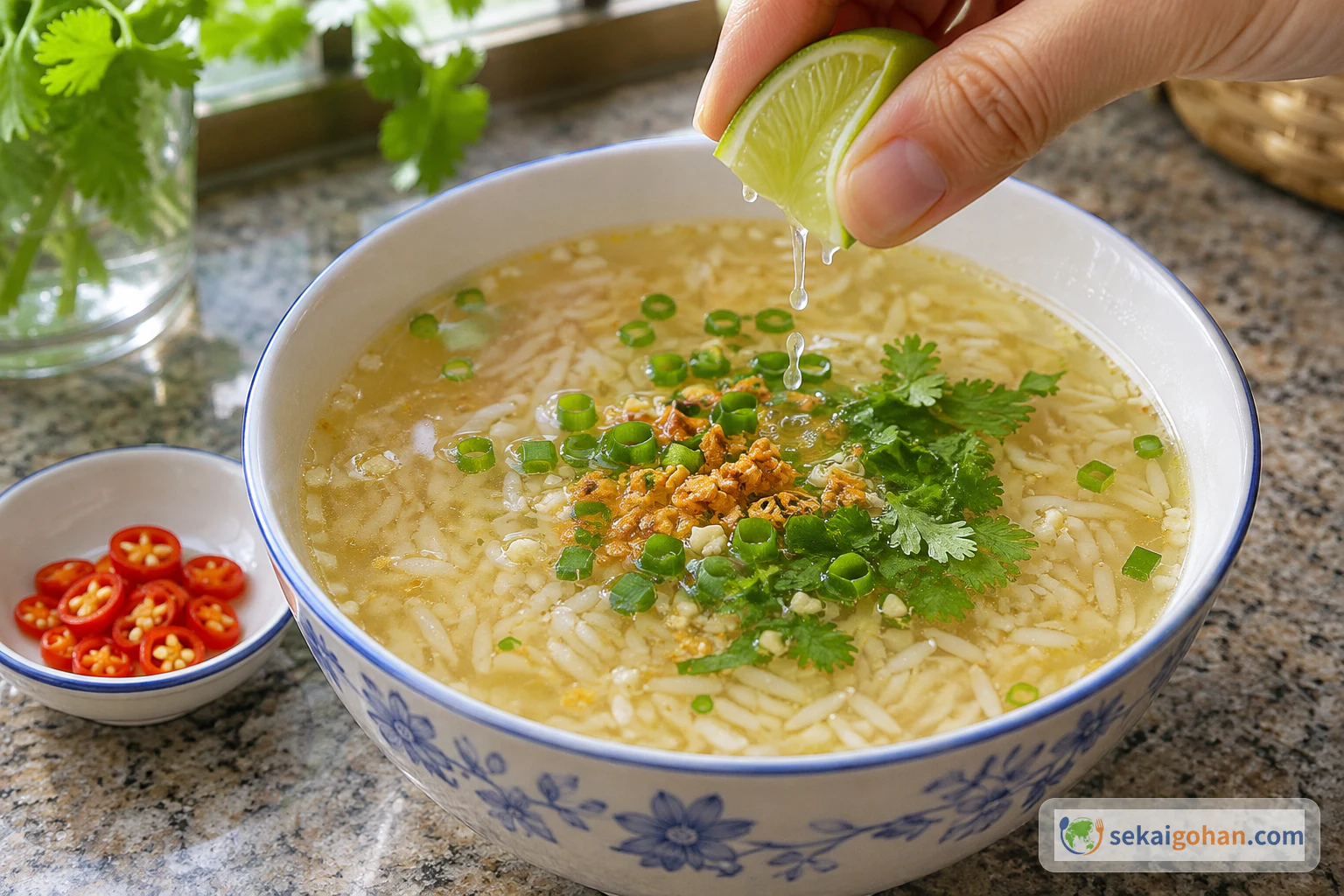
Finish each bowl with green onion, chopped cilantro scattered over the top, crisp fried garlic and a squeeze of lime, with sliced chili alongside for anyone who wants heat. These garnishes go on raw, so wash the green onions, cilantro and chilies under running water, and wash the lime skin before cutting. The heat of the soup won't make them clean or safe.
The name khao tom covers more than one kind of pot. Khao tom moo sap (ข้าวต้มหมูสับ) uses minced pork and rice that has already been cooked, with lemongrass, ginger and other aromatics. A quicker cooked-rice soup simmers aromatics in broth and water, then adds cooked rice and cooked pork or chicken. In this version, with no meat or egg, the broth itself is the only protein-rich base.
Frequently Asked Questions
Can I use cooked rice?
Some versions do, but their timing and liquid differ. The amounts and simmering time here are written for uncooked rice.
Can I add pork or egg?
This recipe gives no amounts for them. If you want pork, follow a recipe written for it, such as khao tom moo sap.
Can I make khao tom ahead?
Serve the soup fresh and hot. If the rice thickens it before you eat, loosen it with a little warm broth or water.