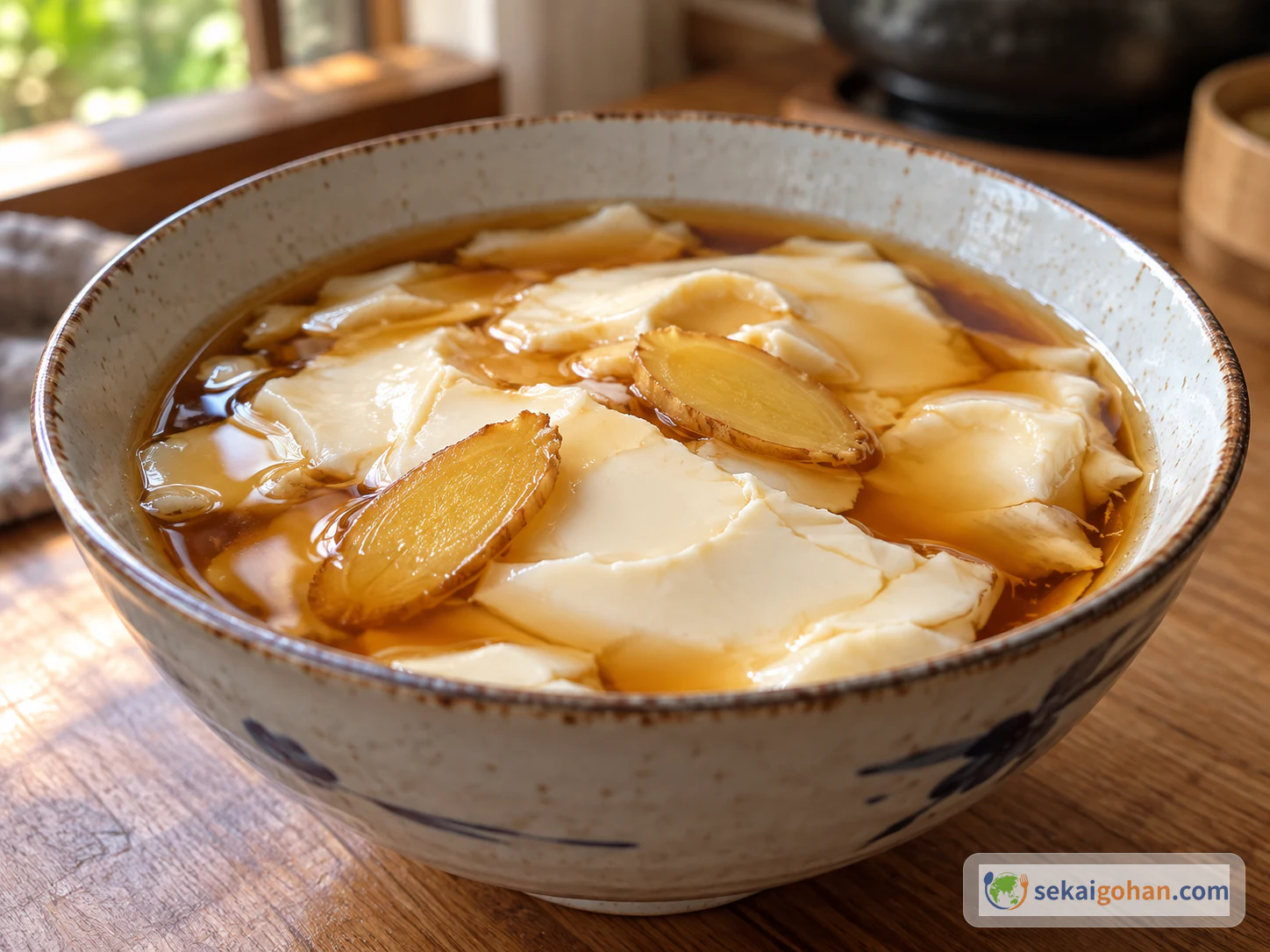
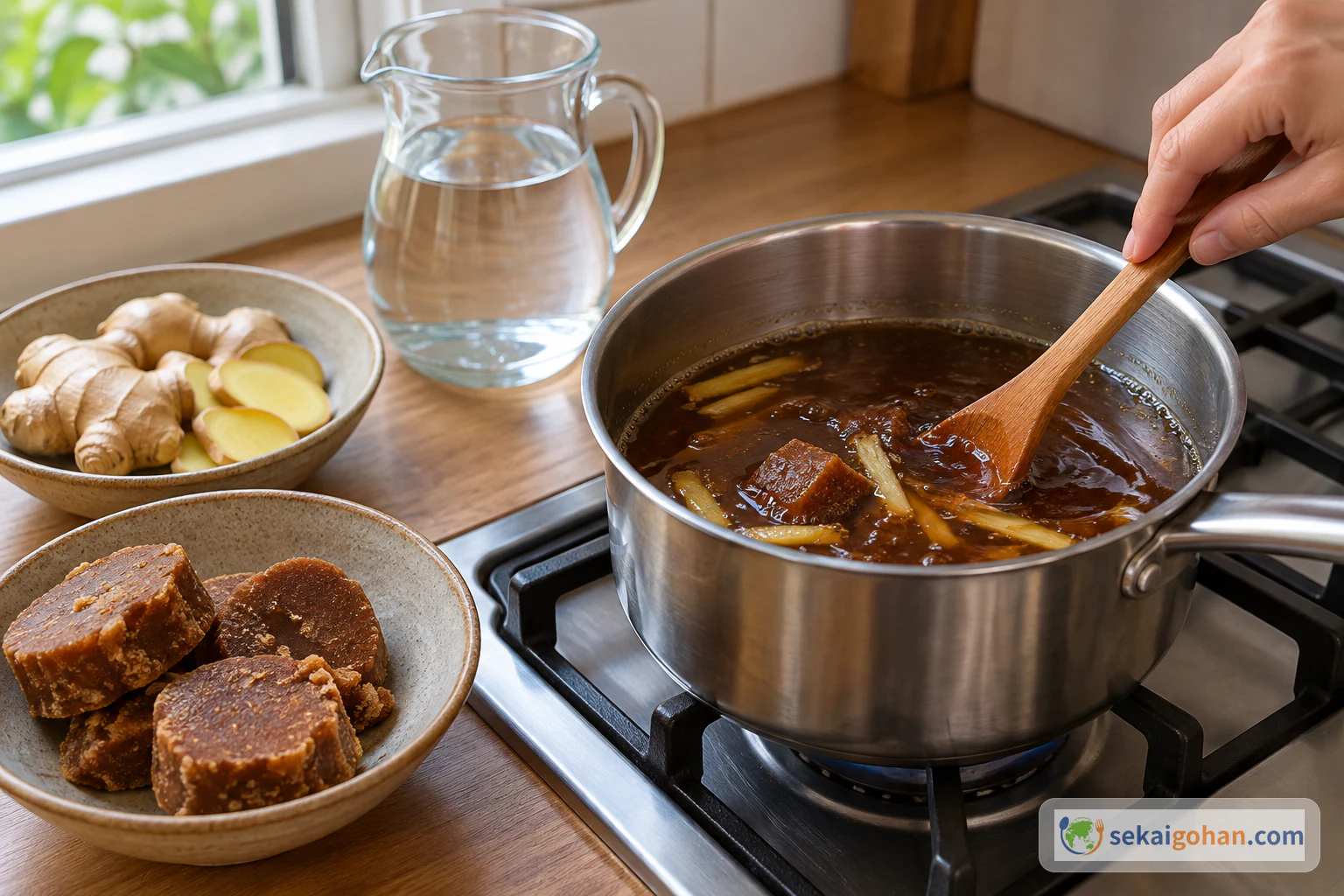
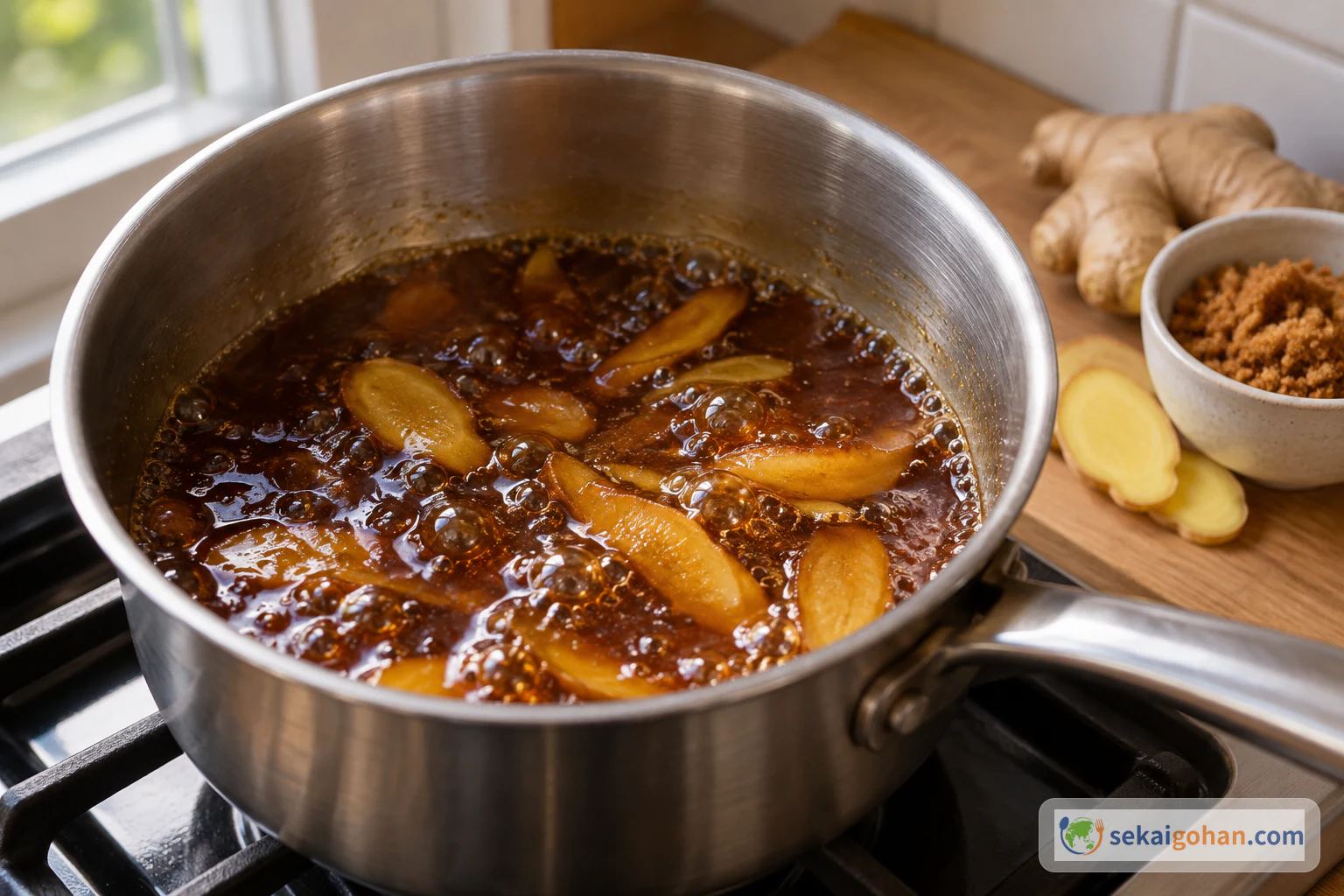
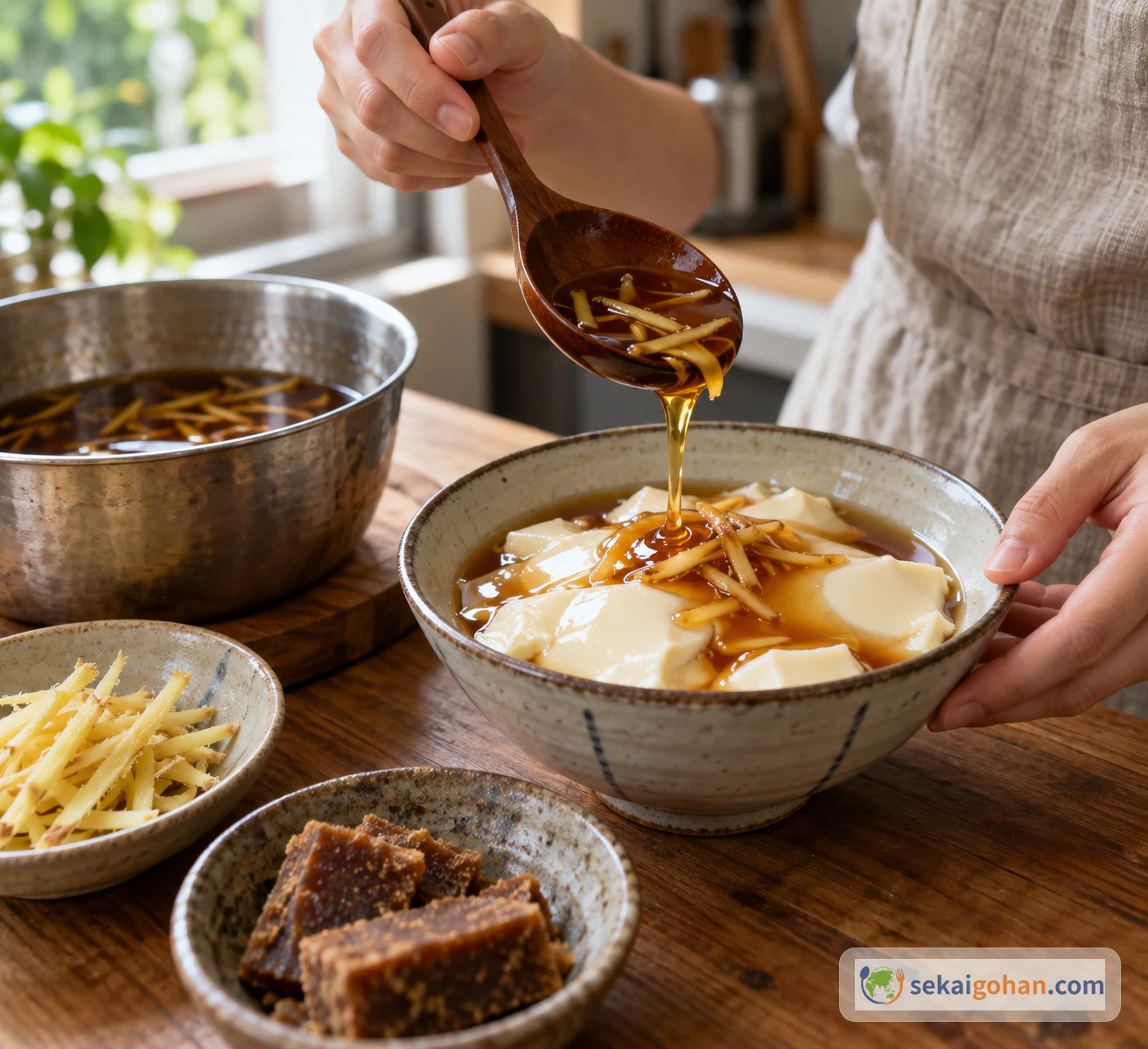
In old Hanoi, vendors called out as they walked the narrow lanes, shaving a thin layer of pudding into each bowl and covering it with syrup scented with jasmine or grapefruit blossom. Tào phớ is that pudding: fresh soy milk set so softly that it is shaved, not cut. This version is served warm under a syrup with the bite of ginger and the deep sweetness of brown slab sugar. Two decisions matter more than anything else: the soy milk you start with, and the moment you add the coagulant.
Tào Phớ Across Vietnam
The dish changes its name as you travel through Vietnam. It is tào phớ in Hanoi, tàu pha in Hải Phòng, đậu hũ in Central Vietnam and tàu hũ in the South. Where the name tào phớ comes from is not clearly known, though one theory links it to tofu. Wherever you buy it, it is a cheap and popular summer treat, sold by street vendors and in shops.
Hanoi keeps it light: thin portions under a jasmine-scented syrup. A craft tradition is associated with An Phú, where a distinct method uses agar and pandan. Central Vietnam pairs the pudding with ginger.
In the South the pudding gets thicker, often with coconut milk and newer toppings. Saigon's tofu pudding sellers carried their pots on shoulder poles through the neighborhoods and sold at the side of the street. There a bowl often comes with hot ginger syrup, coconut milk and handmade tapioca pearls, sometimes over ice.
This recipe sits closest to the ginger-syrup tradition, known as Dau Hu Nuoc Duong / Tao Pho. Fresh soy milk is set with cornstarch and glucono delta lactone (GDL), then served warm under a ginger and brown slab sugar syrup.
Ingredients: Eight Lines, Two Separate Waters (Serves 8)
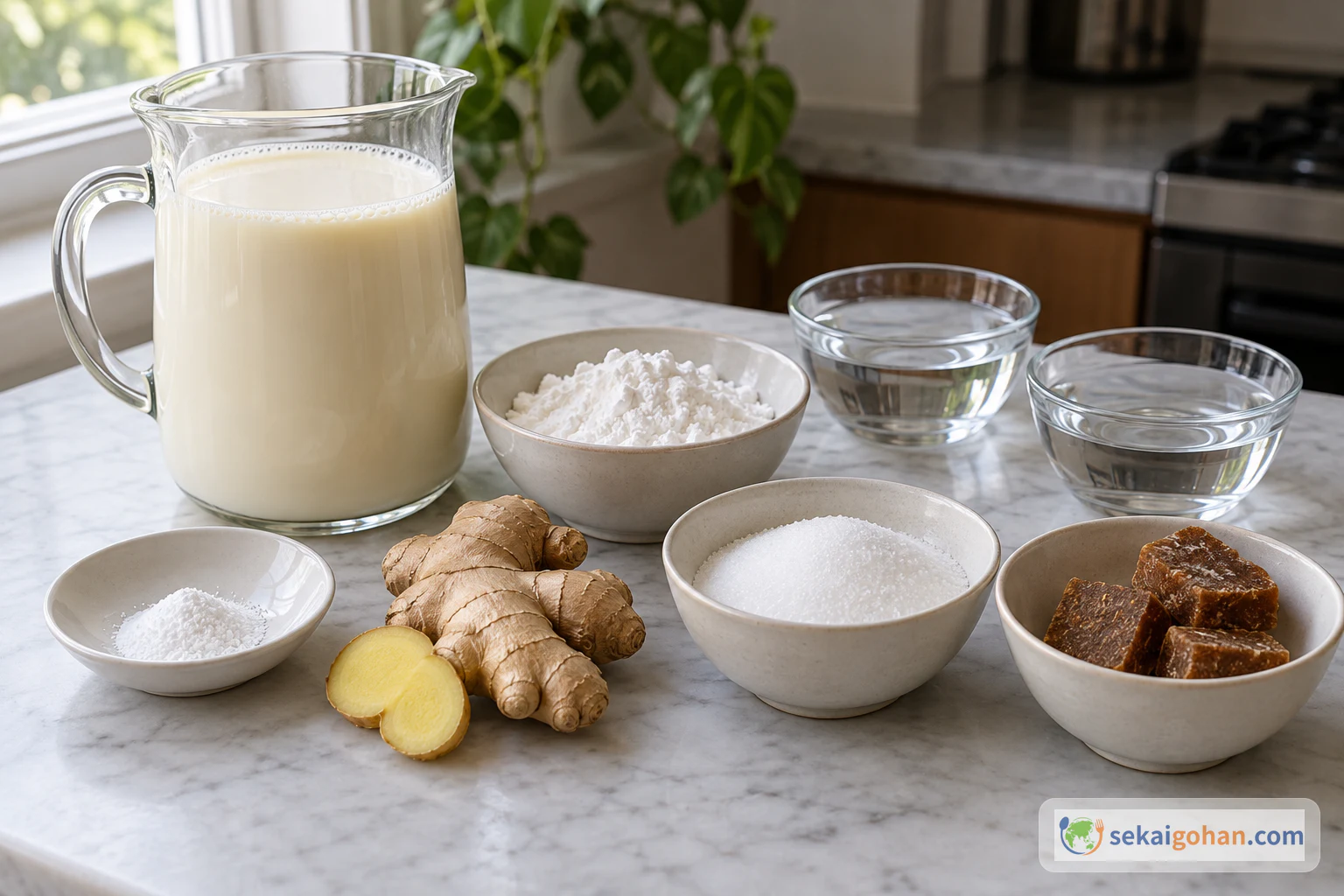
Four ingredients go into the pudding and four into the syrup, with two separate amounts of water. Keep them apart on the counter so neither goes into the wrong bowl. This recipe serves 8.
This dessert is made from soy milk, so it contains soy. When you buy cornstarch, GDL, brown slab sugar and soy milk, check each product's own label for ingredients and allergen information.
Equipment
- Medium saucepan
- Fine sieve
- Two small bowls (one for the slurry, one for the measured GDL), plus a small bowl for the ginger
- 2-quart bowl, for setting the pudding
- Medium bowl, for cooling the syrup
- Clean kitchen towel and a lid
- Wooden pestle, for breaking the slab sugar
- Knife, for peeling and slicing the ginger
- Thin-edged serving spoon
- Serving bowls
This recipe uses ordinary kitchen tools. The one item worth thinking about is the spoon: you want a thin edge so it glides through the soft pudding in thin layers. If you already own a thin-rimmed spoon, you don't need to buy anything. Don't improvise sharp-edged serving tools; an ordinary thin-edged spoon is all this recipe needs.
Choosing Soy Milk, Starch, GDL and Sugar for Tào Phớ
Soy milk decides whether the pudding sets. Use fresh, rich, refrigerated soy milk for a soft set. Asian grocers sell a suitable kind, but some supermarket soy milks don't set at all; two U.S. ones failed outright. Pick plain, unsweetened, unflavored soy milk so it doesn't shift the sweetness the syrup is meant to supply. If a soy milk won't set, change the soy milk, not the amount of GDL.
Cornstarch means corn starch. Potato starch behaves differently, so stick with cornstarch.
GDL is its own coagulant. Glucono delta lactone is called đường nho in Vietnamese, and it is a different thing from gypsum (bột thạch cao). Look for a product clearly labeled as food-grade glucono delta lactone, usually sold by specialty shops or online. Gypsum and nigari can't be swapped in at the same amount; gypsum-based versions use their own formulas and methods.
Brown slab sugar is the sweetener. You'll find it at Asian grocery stores. If you can't, use loose brown sugar at the same 9 oz, or palm sugar. Loose sugar skips the crushing step, and the color and depth of the syrup can come out a little different.
Method: Add the GDL Last, Stir Once, Leave It Alone
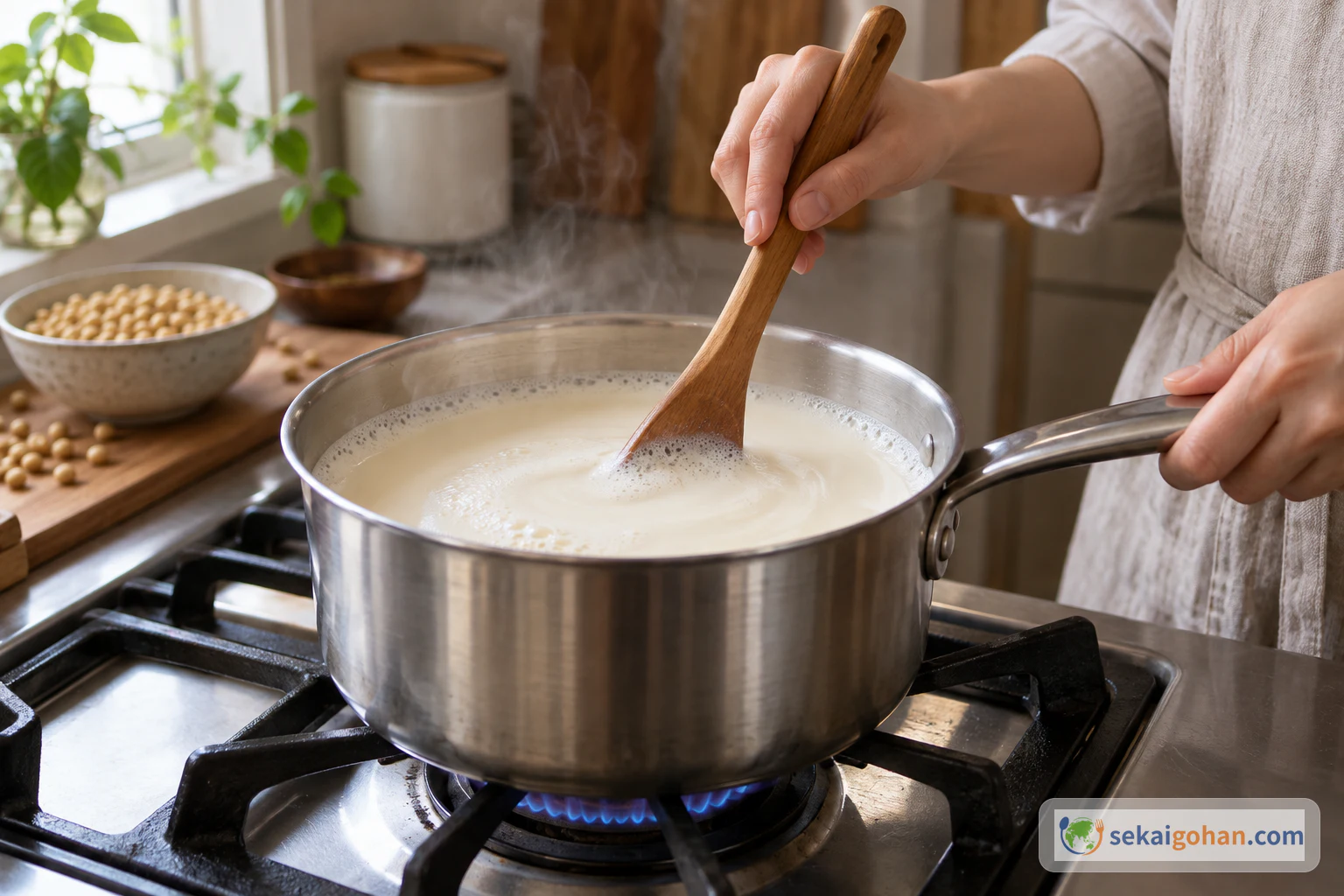
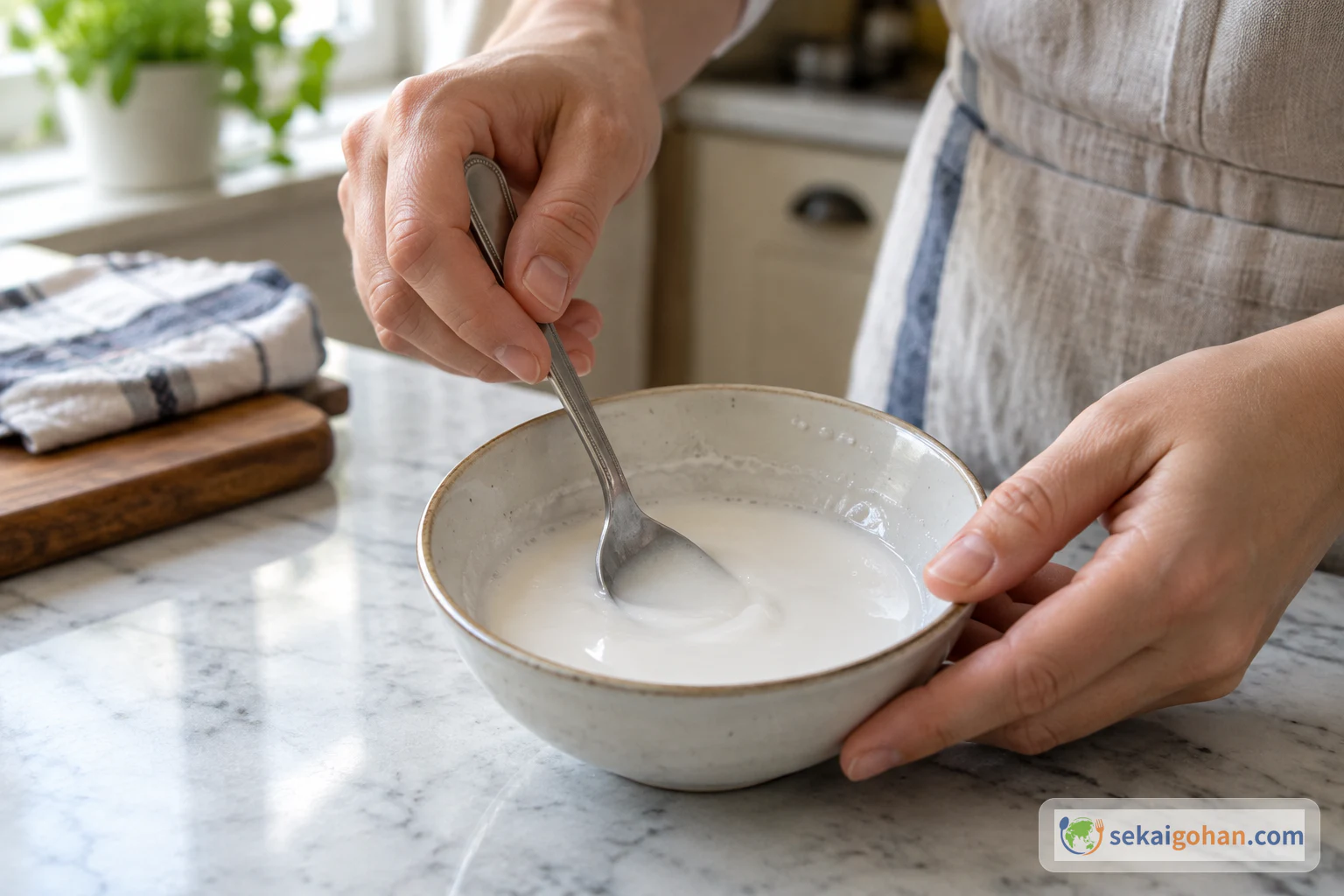
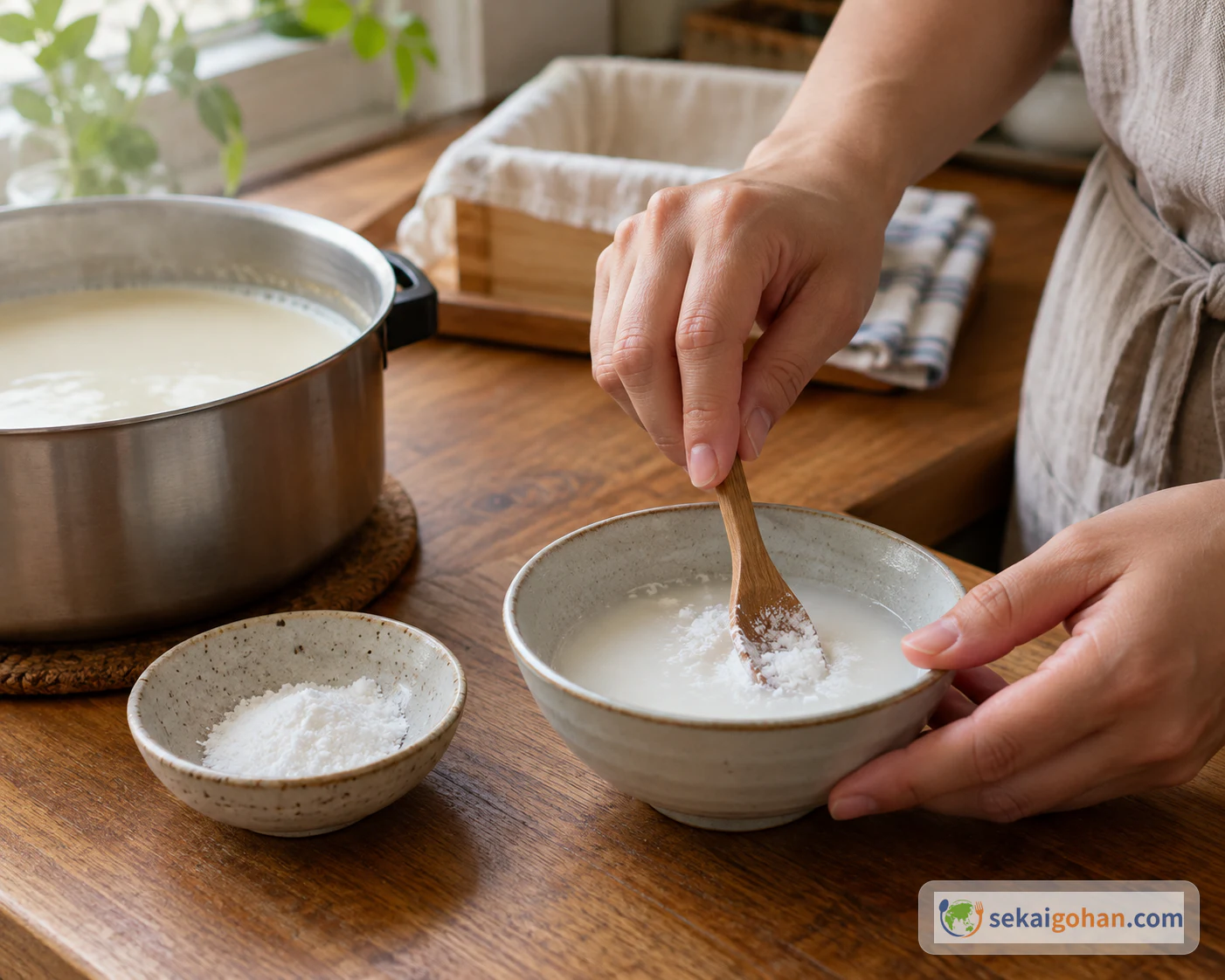
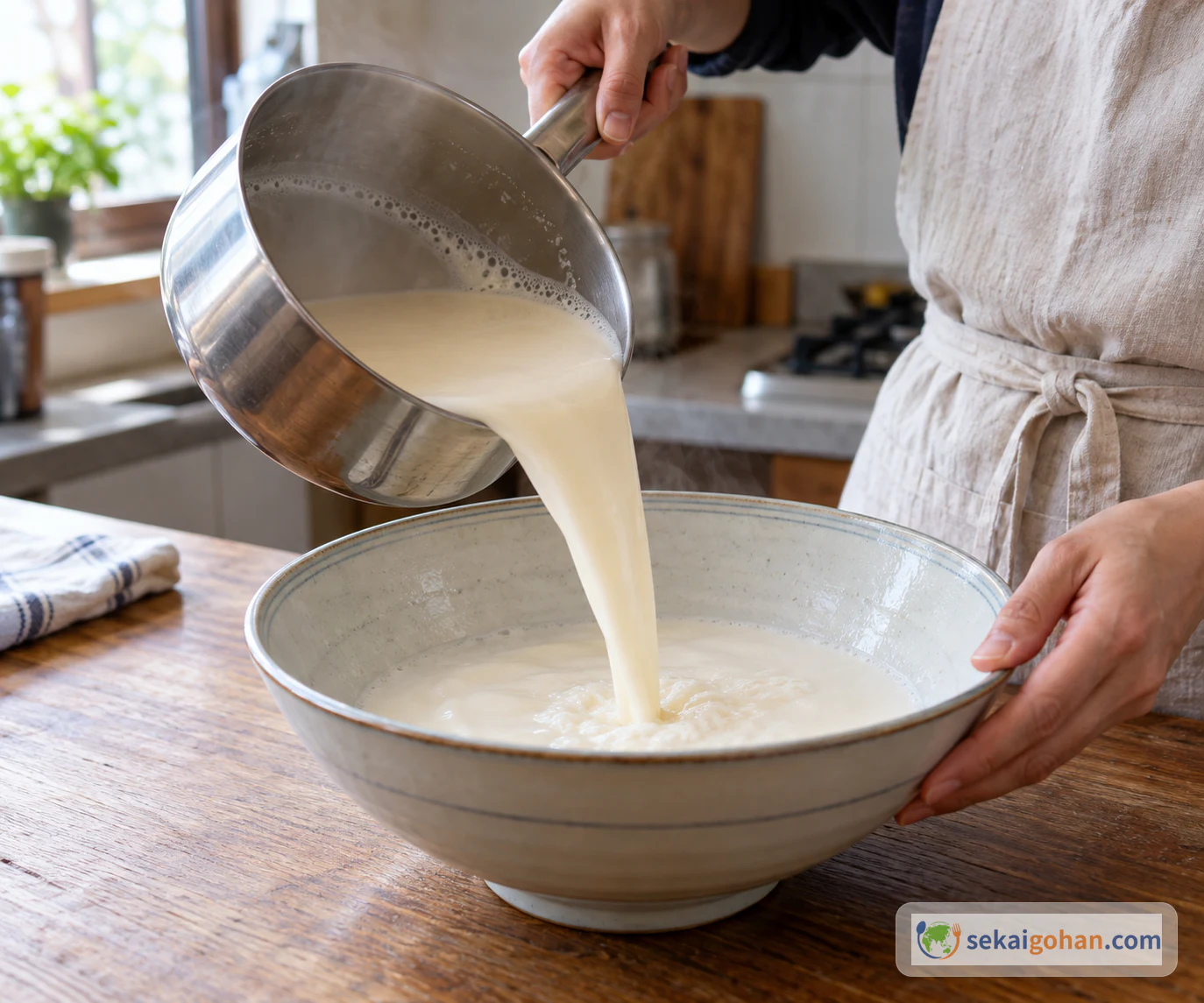
Keep the GDL apart until the soy milk has reached a gentle boil and the heat is off. Then stir it into the slurry, pour in the hot soy milk quickly, and stir only once. Steps 1–13 make the pudding, 14–21 make the syrup, and 22–23 are serving.
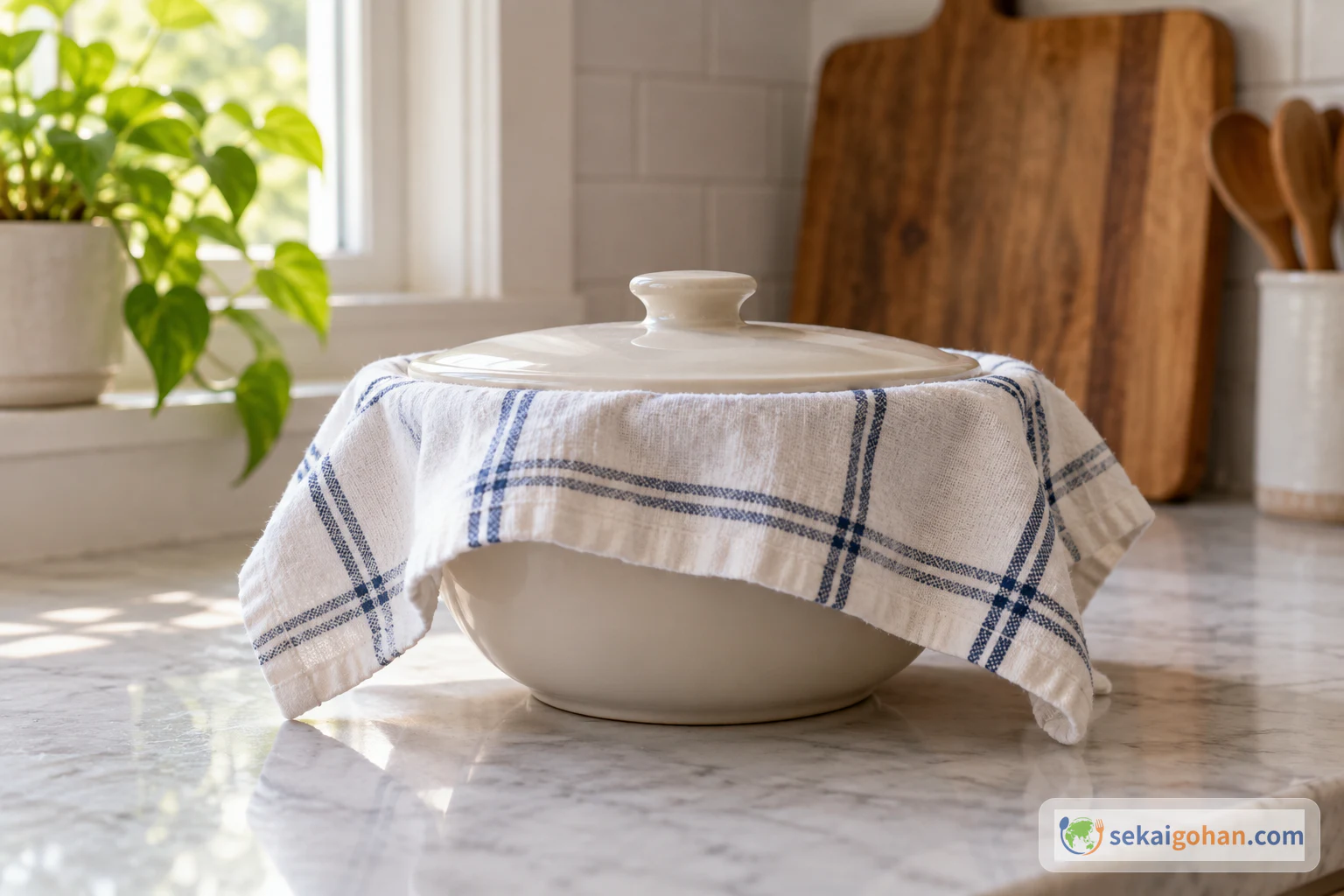
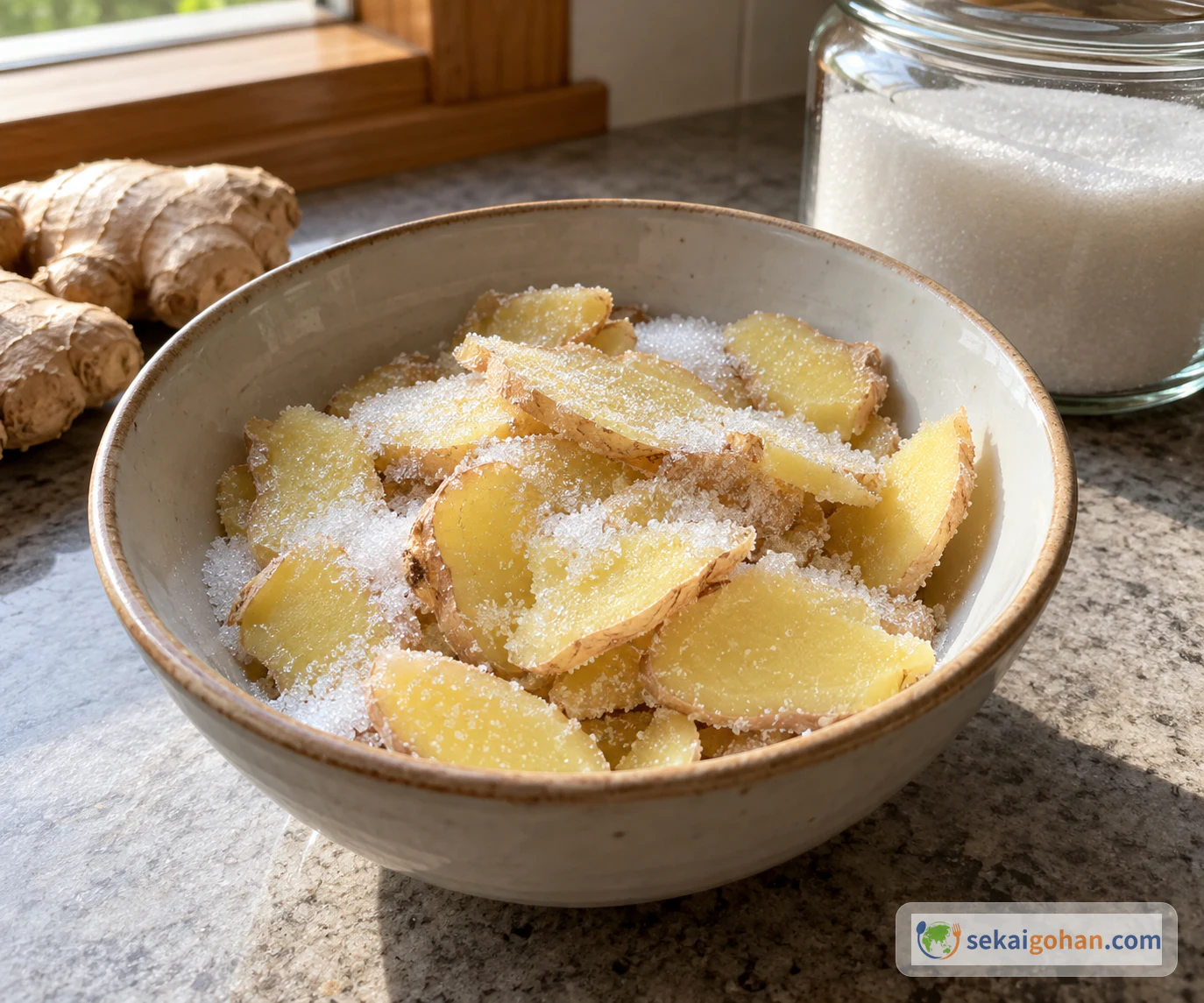
Allow about 10 minutes of prep and 30 minutes of cooking, 40 minutes in total. The method includes a 30-minute set and a 10-minute ginger rest. Syrup cooking is timed. Soy milk heating and syrup cooling have no fixed time, so go by the state described in each step.
Why Tào Phớ Won't Set, Turns Sour or Bubbles
GDL mixed into liquid ahead of time turns sour. Add it to the slurry only after the heat is off, right before pouring.
Skim the foam from the saucepan, and skim the bubbles again after pouring and stirring. Stir only the one time the recipe calls for.
| Condition | What the recipe points to | What to do |
|---|---|---|
| The pudding stays watery | The soy milk | Use fresh, refrigerated soy milk next time, not extra GDL or another coagulant |
| A sour taste | GDL combined with liquid too early | Keep the GDL in its own dish until step 3, right before the hot soy milk |
| Bubbles or foam on the surface | Foam not fully removed | Skim at step 1 and again at step 4. Stir only once |
| The slurry looks uneven | Starch settled while it stood | Re-stir the slurry (step 3) before adding the GDL |
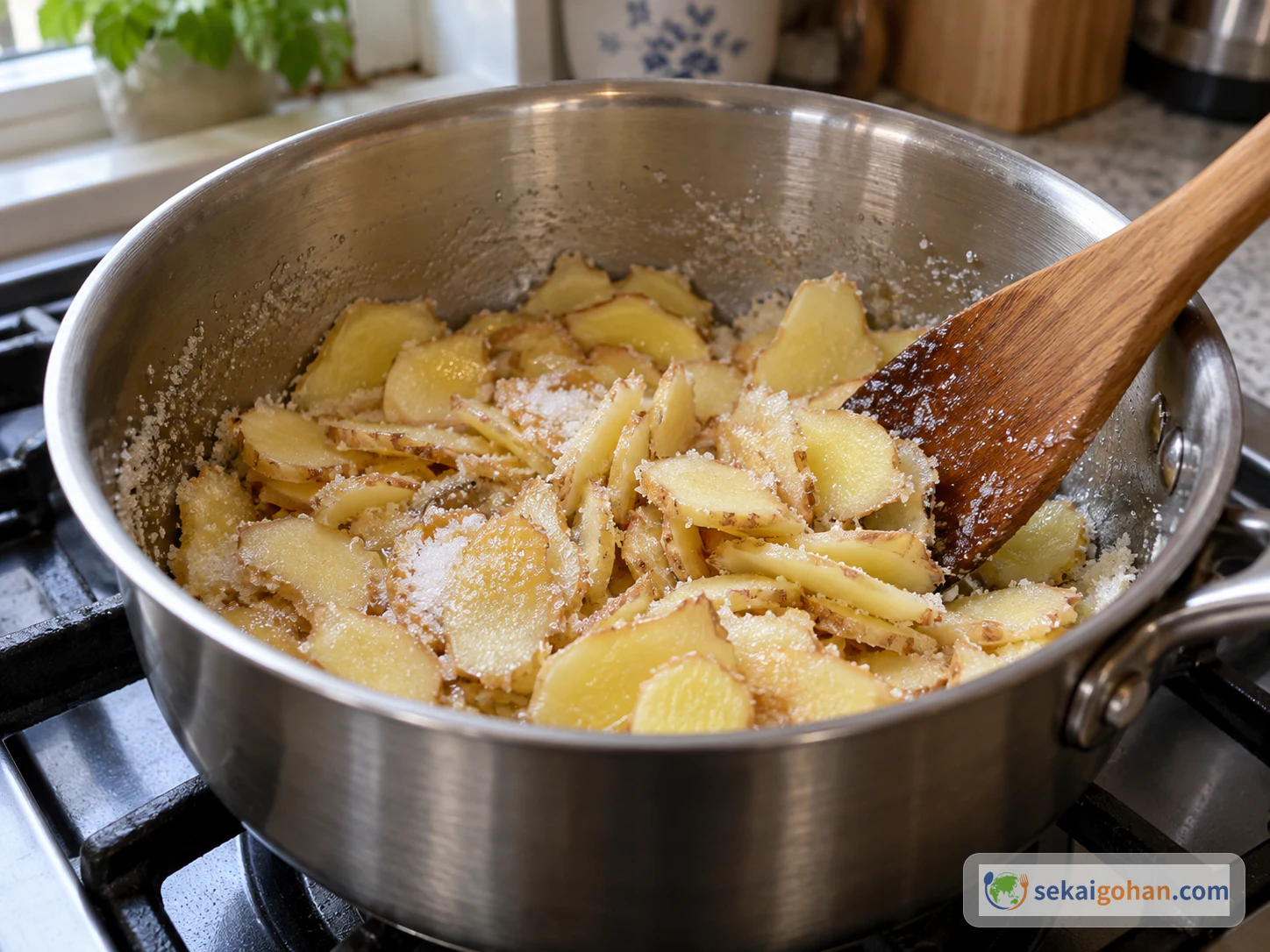
| Sugar lumps in the syrup | Slab sugar pieces too large or not fully melted | Break the slab sugar small, and stir over medium heat until it has dissolved completely |
| The syrup is still thin | It hasn't been reduced long enough | After the sugar dissolves, cook another 5–6 minutes at medium-low |
Serving, Storing and Other Versions of Tào Phớ
Serve the pudding warm, soon after it sets, rather than holding it warm for hours. Pour a generous amount of syrup over each bowl and adjust to taste.
Tào phớ is best on the day it is made. Cool leftovers quickly in clean, shallow containers and refrigerate them at 50°F (10°C) or below; don't leave them at room temperature for long. Use the pudding within 2–3 days, keep the syrup in an airtight container, and reheat leftovers in the microwave.
You may also come across other versions. One uses an 85 g commercial tofu-mix pack with a soy powder sachet and a small coagulant sachet. Another starts with soaked soybeans, sets with gypsum over a longer time, and comes with a syrup of palm sugar, pandan and ginger. Each has its own amounts, so don't mix them into this recipe.
Frequently Asked Questions
Will ordinary store-bought soy milk set?
It depends on the product. Fresh, refrigerated, plain soy milk is the safest bet; shelf-stable supermarket brands may not set at all.
Can I use gypsum or nigari instead of GDL?
Not in this recipe. Gypsum-based versions use their own formulas and methods, and neither gypsum nor nigari can be swapped in at the same amount.