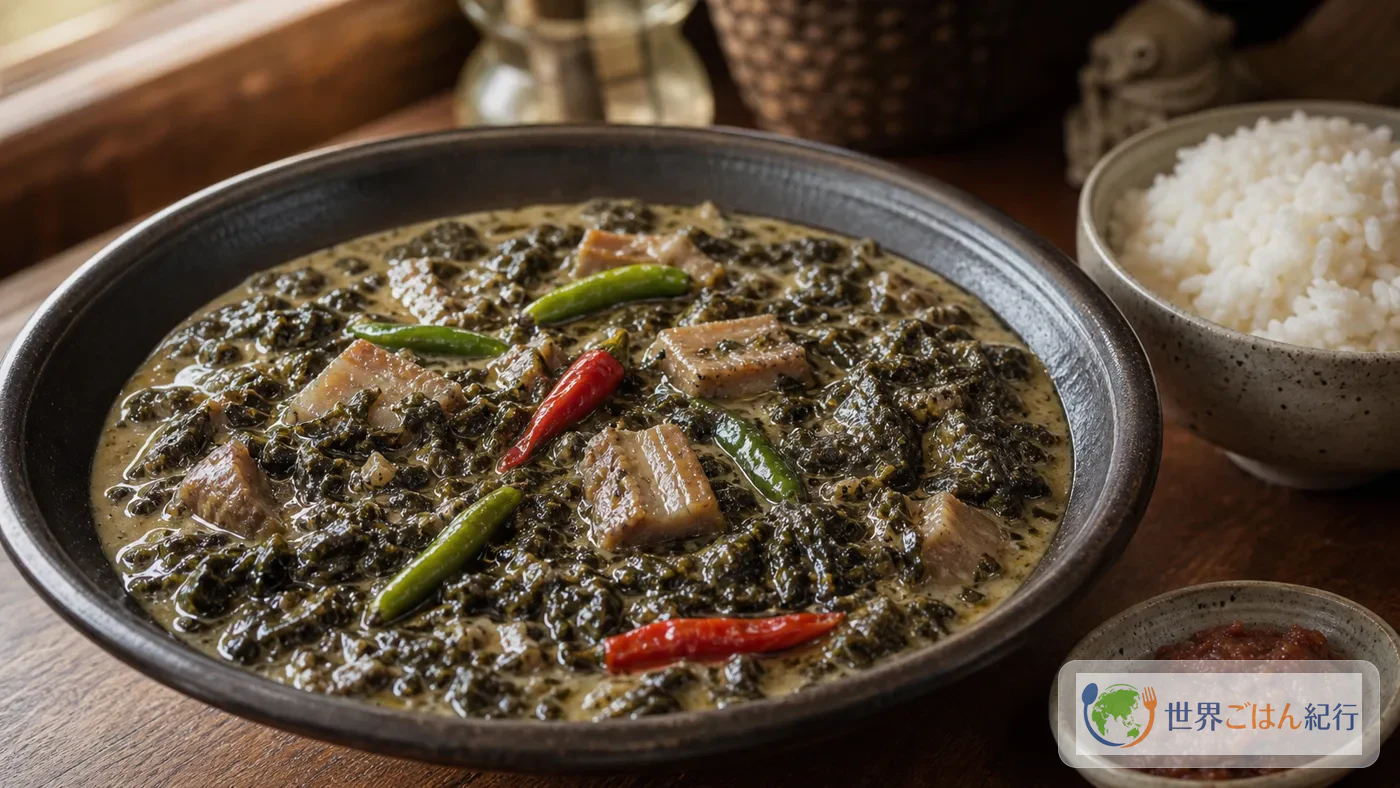
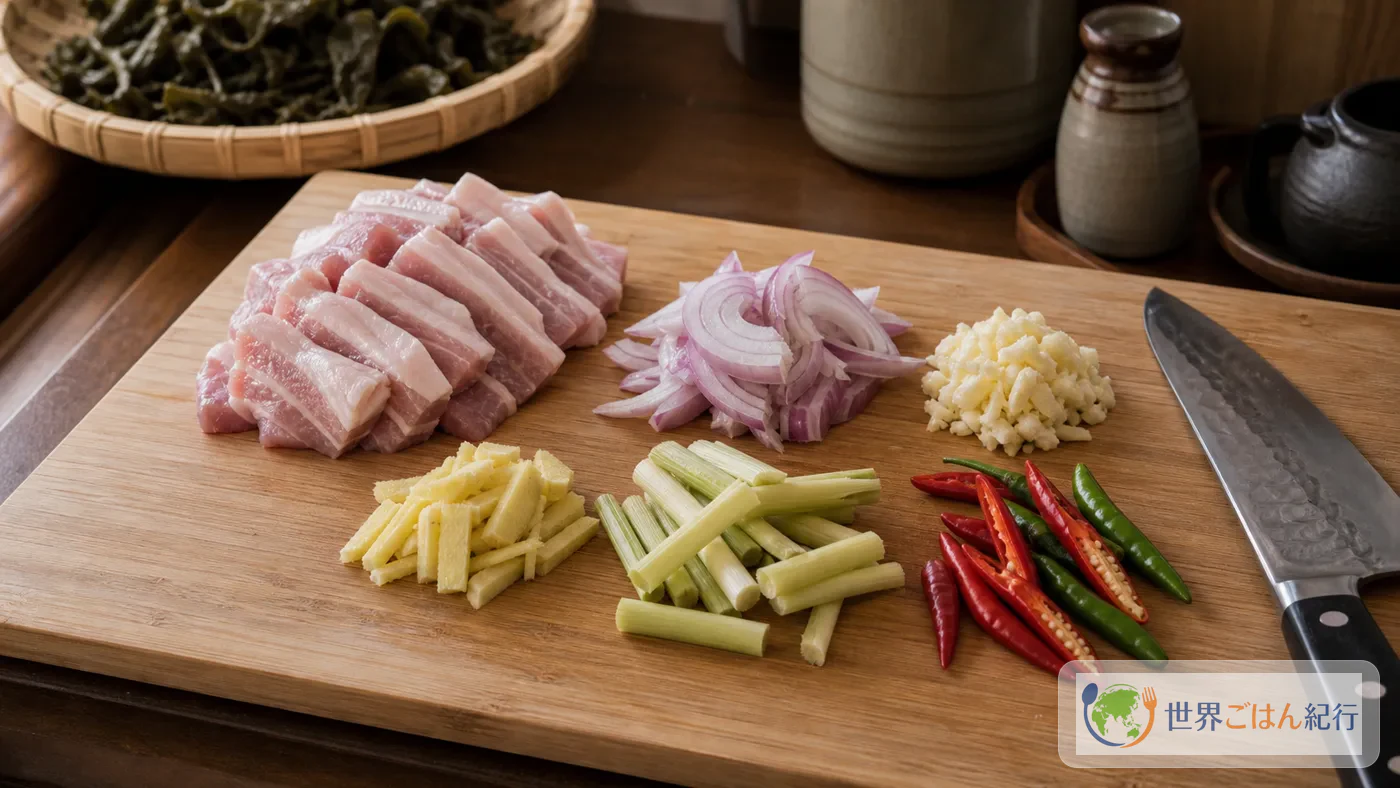
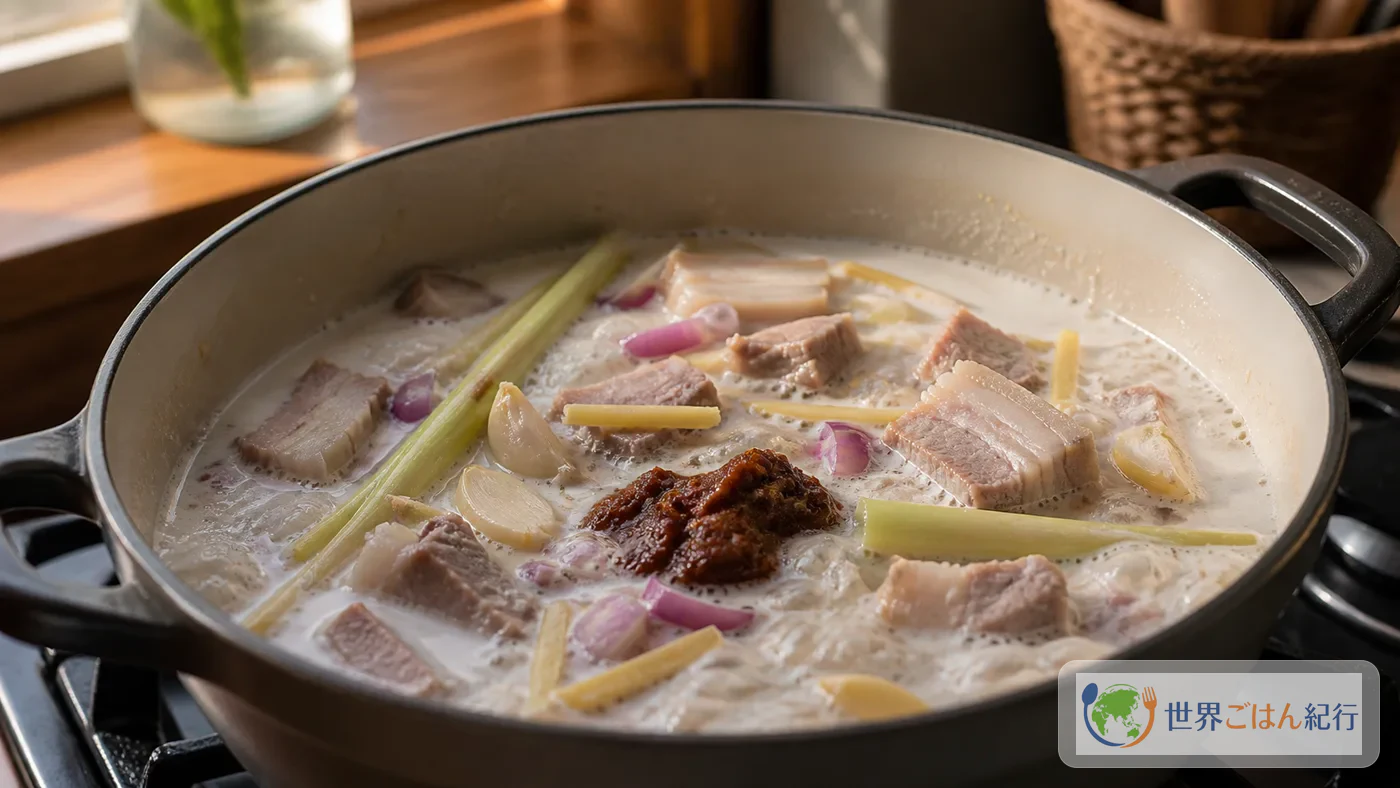
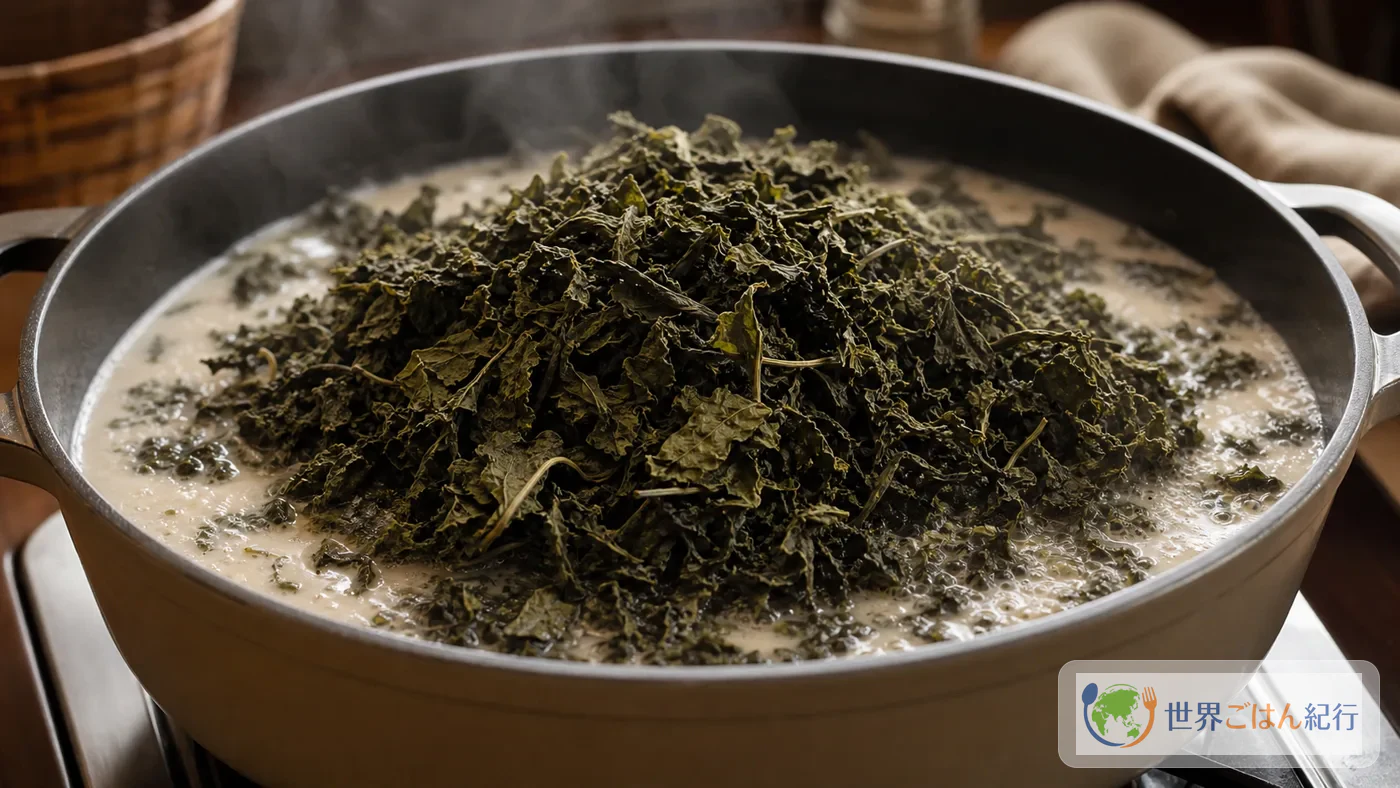
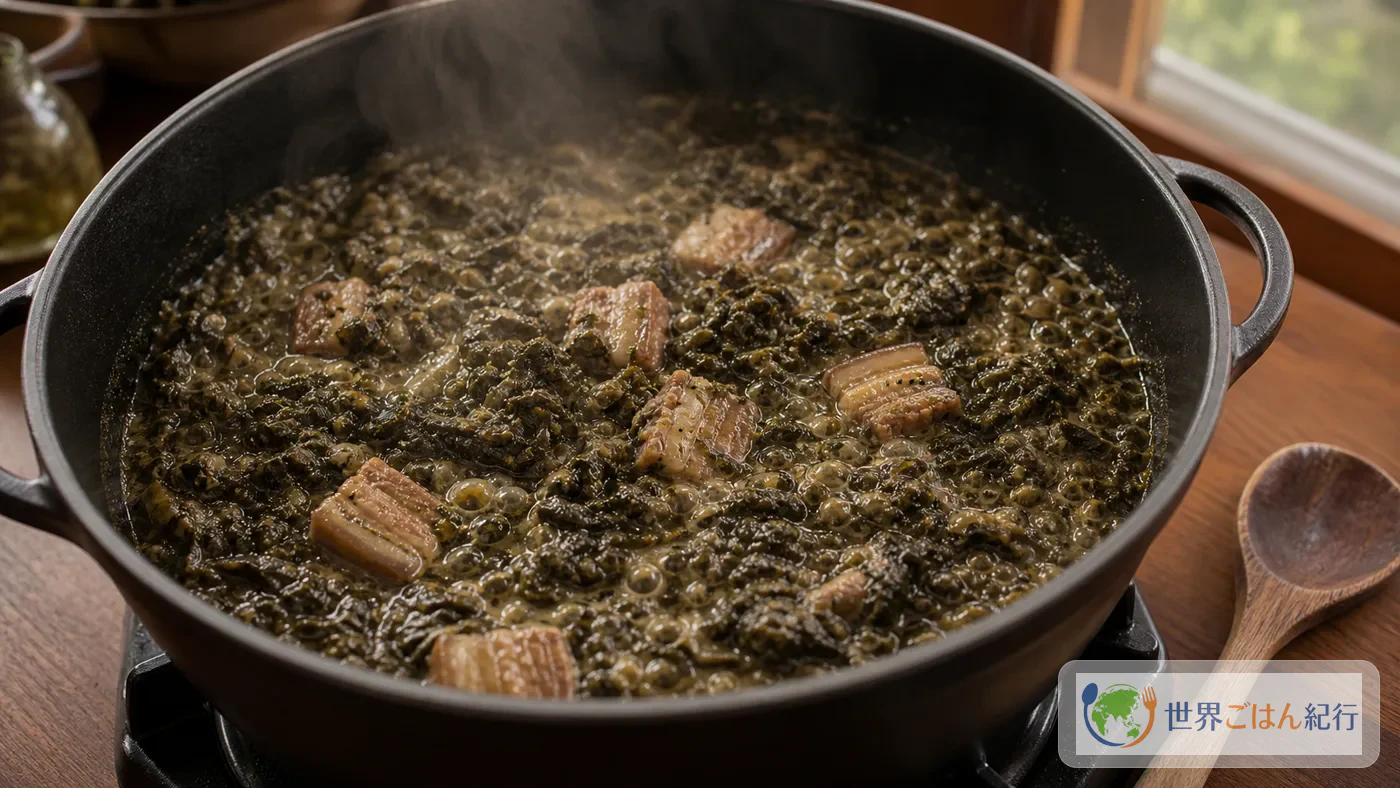
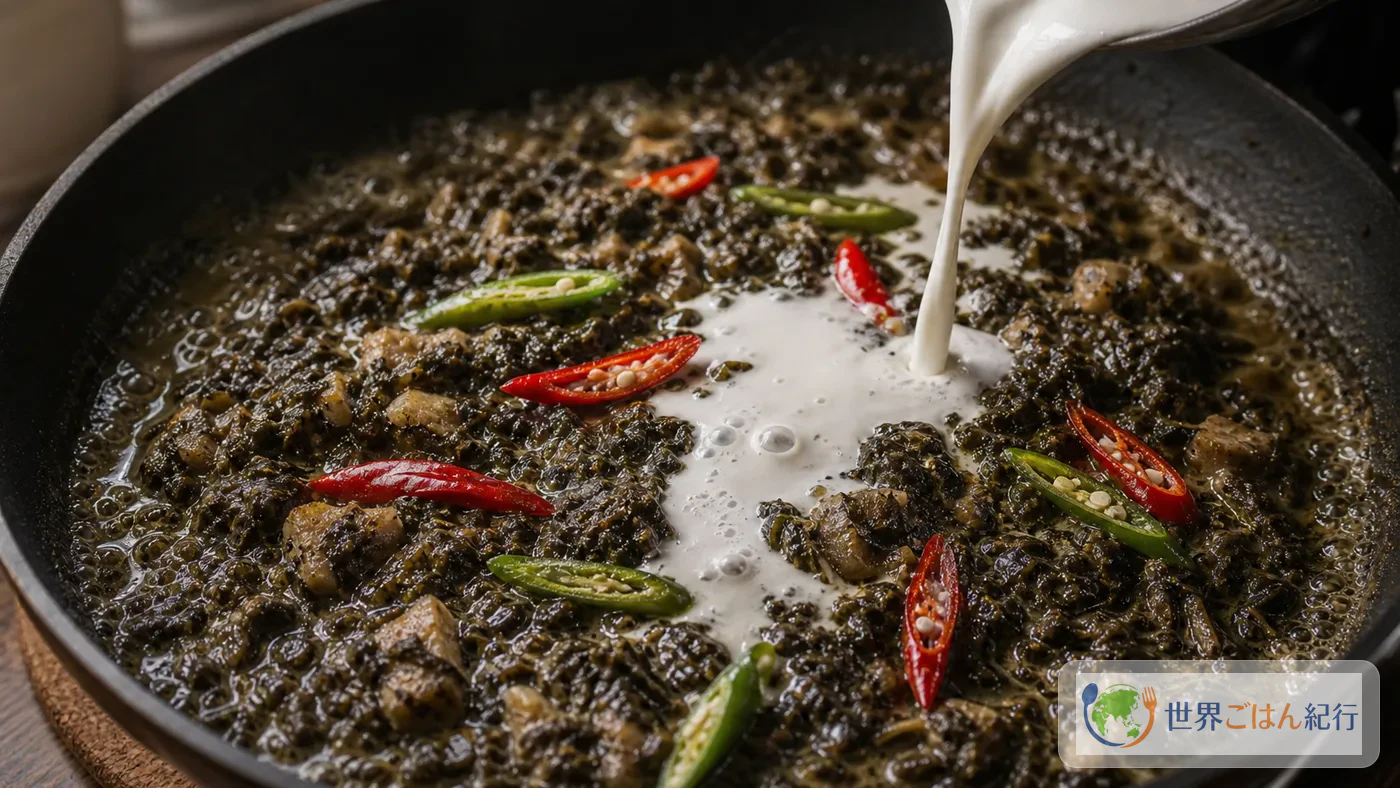
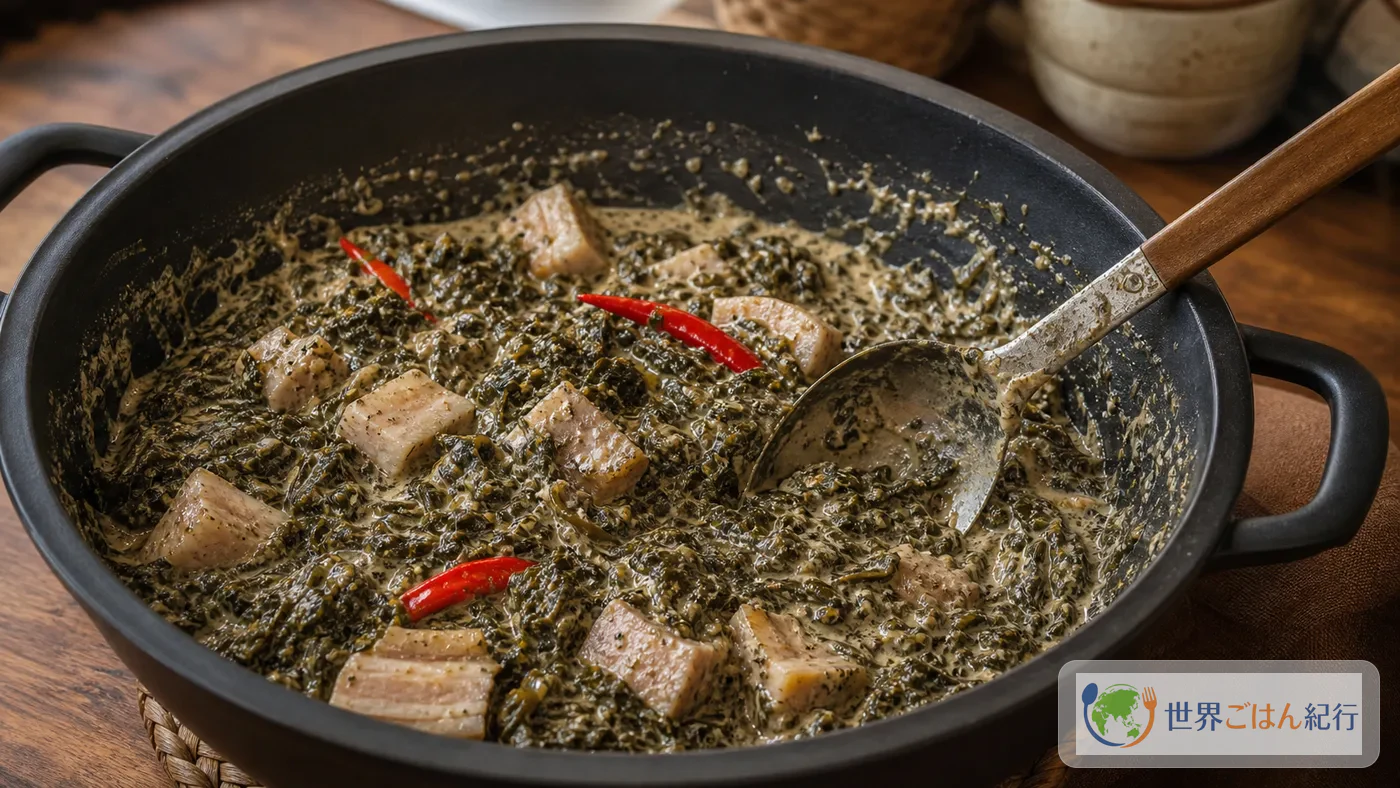
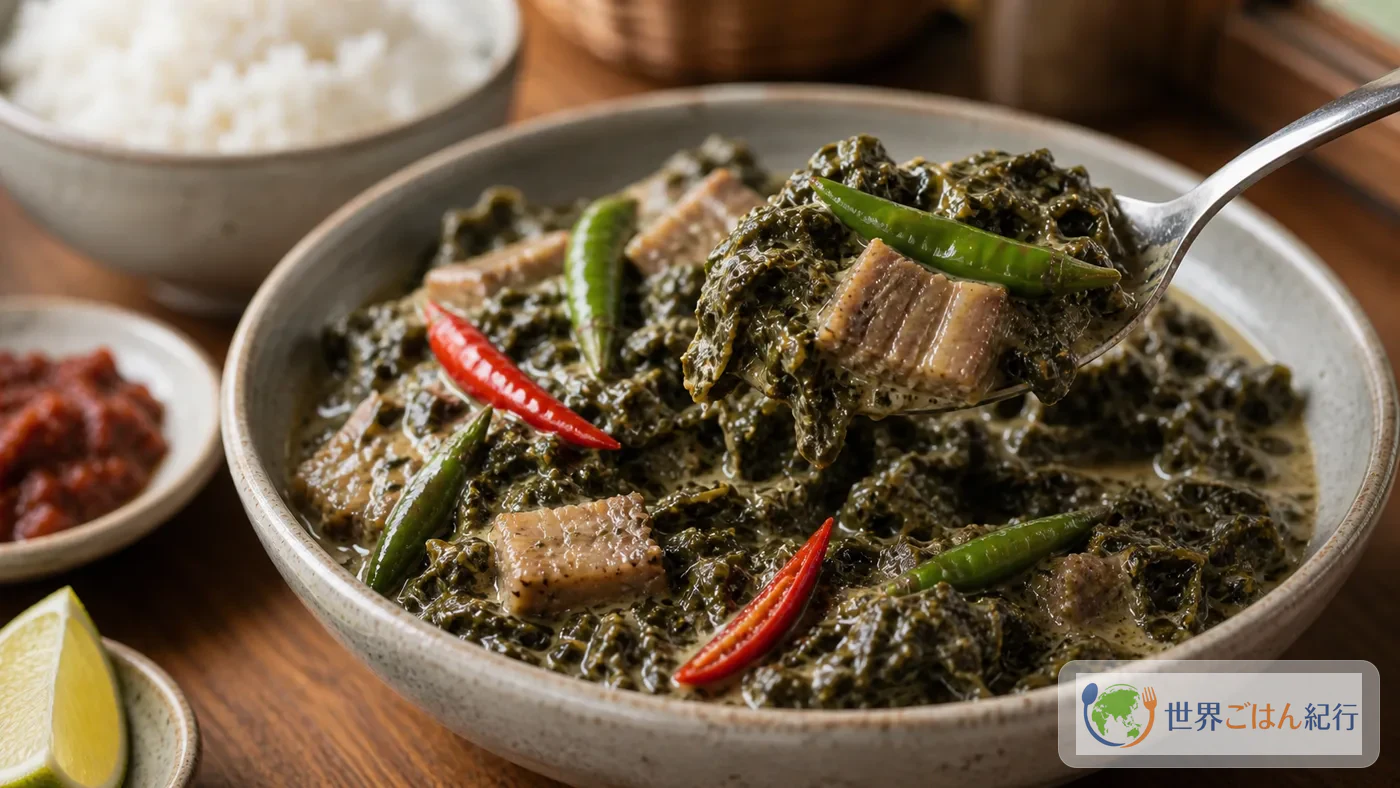
Coconut milk goes into the pot with ginger, garlic, onion, pork and bagoong, and the air in the kitchen softens for a moment. The dried leaves get heaped on top of the white steam, and at first they look doubtful. Over low heat they sink, the color deepens, and beneath the sweet scent of coconut you start to smell fermented shrimp and chili. This is laing, dried taro leaves cooked in coconut milk, from the Bicol region of southern Luzon in the Philippines. It's sweet and round first, then hot, with a deep, salty edge from the shrimp paste.
Taro leaves contain calcium oxalate crystals that irritate the mouth and throat. Even dried leaves need a long cook. After sinking the leaves in coconut milk, simmer them for at least about 45 minutes until completely soft. If your throat feels prickly when you eat it, do not push on; simmer it longer next time.
Laing and Bicol Cooking
Coconut is an important crop in Bicol, and gata, coconut milk, runs through much of the region's cooking. Chili is layered on top of it, and from that pairing came a distinctive stew culture. Locally laing is sometimes called natong: dried gabi leaves cooked with coconut milk, coconut cream, pork or seafood, chili and bagoong alamang. Like Bicol Express (in Japanese), it is built on Bicol's coconut, chili and fermented saltiness.
The leaves are what make it laing. Dried taro leaves aren't the vivid green of fresh greens; they have a slightly earthy, deep aroma that's close to seaweed. As they soak up the coconut milk they loosen and take in the fat of the pork and the salt of the bagoong. Spoon a little over white rice and the rich sauce works its way between the grains, so you end up eating it bit by bit.
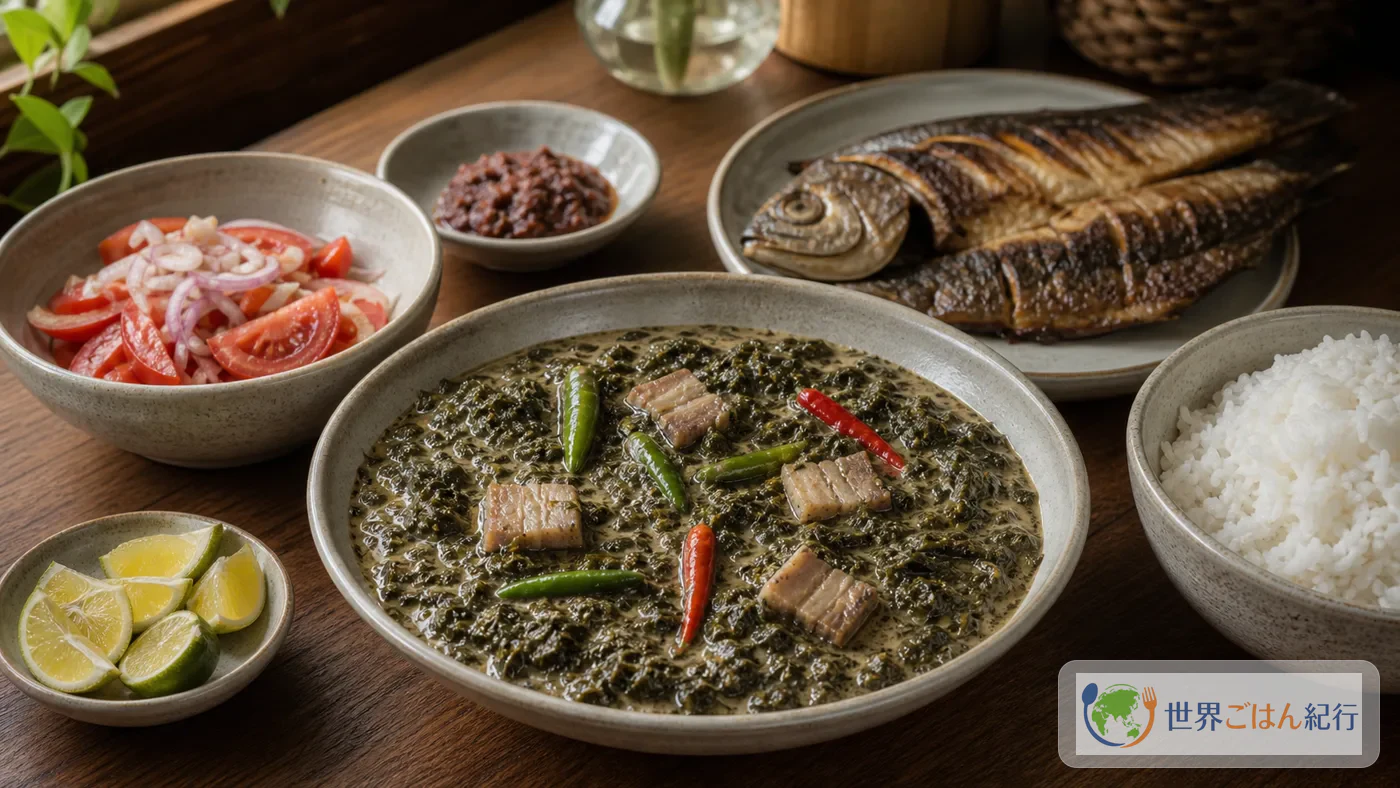
At Bicol tables, laing can be a main dish or a side, eaten with white rice and grilled or fried fish. Even a small amount makes the coconut the center of the meal. Next to chicken inasal with its charcoal aroma, sour sinigang, or a big platter of pancit canton noodles, laing is the quiet, rich one.
Ingredients (serves 4): Dried Leaves Look Small but Expand
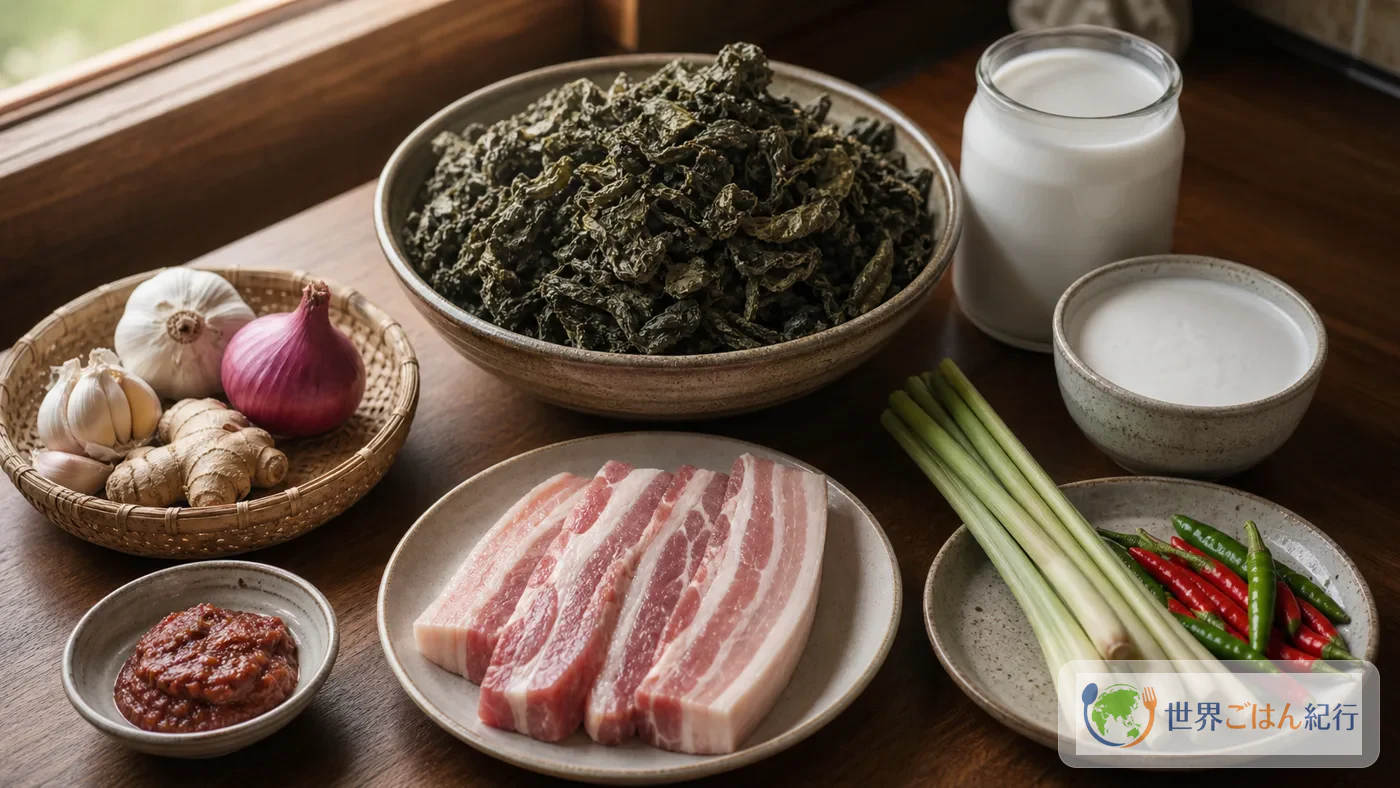
This serves 4. Laing is a dish you put on white rice a little at a time, so it is more filling than it looks. 2.75 oz (80 g) of dried taro leaves is enough. Before cooking, spread them out by hand and check that the bag has no large stems or foreign matter.
Main ingredients
Aromatics and heat
This dish uses pork, seafood (bagoong, fish sauce) and coconut. Bagoong is mostly made from shrimp, so do not use it if you have a shellfish allergy. To avoid seafood, you can approximate with 2 tsp miso and salt, but it becomes something different from the fermented-shrimp aroma that laing properly has.
Ingredients and equipment for this dish
What is most worth buying extra for laing is coconut milk, fish sauce and a deep pan. Dried taro leaves are a specialty ingredient, but coconut milk and fish sauce also carry over to Bicol Express (in Japanese), kare-kare and mie goreng.
Choosing Ingredients for Laing
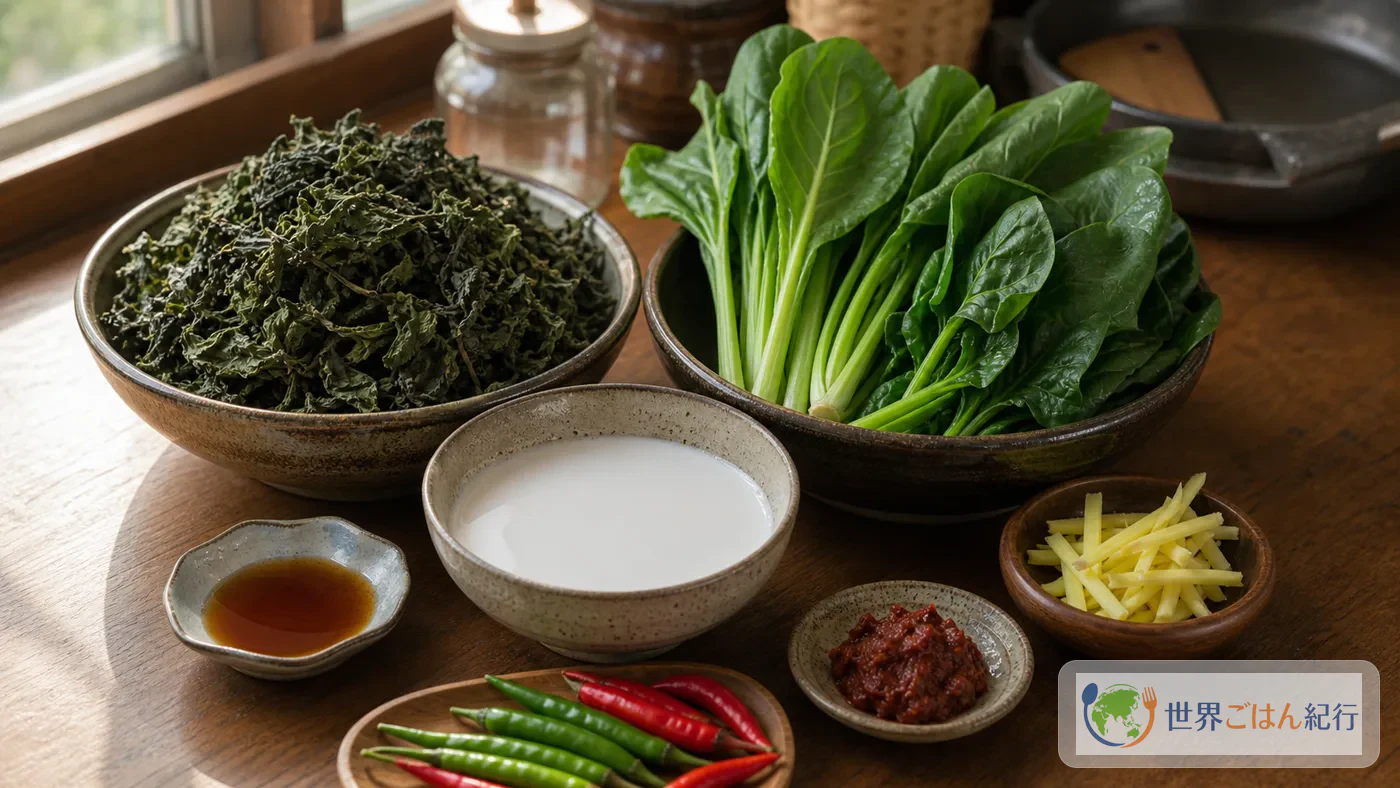
Dried taro leaves carry both the flavor and the texture of laing, and they're the one thing you'll need to hunt for. Ordinary supermarkets don't stock them, so look at Filipino grocery stores or online. Swap out every ingredient for supermarket stand-ins and you'll end up with a different dish, so if you do substitute, think of the result as laing-style greens in coconut milk.
Dried taro leaves crumble easily and lose aroma in water. If you are using an imported product, spread out the contents of the bag and check that no foreign matter or different leaves are mixed in. If dirt bothers you, put them in a colander, pass them briefly through water and drain at once. Soaking them long loses the aroma and makes the leaves break down easily in the pot.
| Ingredient you hesitate over | Local style | If cooking elsewhere | Effect of substituting |
|---|---|---|---|
| Dried taro leaves | dried gabi leaves | Buy at a Filipino grocery or online | Nearly irreplaceable |
| Coconut milk | gata | Use unsweetened canned | Milk or soy milk makes a different dish |
| Coconut cream | kakang gata | Add a little at the end | Without it, the thickness and gloss are weak |
| Bagoong | bagoong alamang | Shrimp paste, or fish sauce plus dried shrimp | The aroma of fermented shrimp cannot be fully replaced |
| Chili | siling labuyo etc. | Green chilies, shishito, red chili | Leaving it out completely weakens the Bicol character |
| Pork | pork belly, pork shoulder | Pork belly, pork shoulder, canned tuna | It can be made without pork, but the richness is lighter |
If you really can't find dried taro leaves, komatsuna, spinach or kale make a good coconut greens dish, but the cooking changes a lot. Parboil the raw greens, squeeze out the water, and toss them in the sauce for only the last 10 minutes. Simmer them 45 minutes like dried taro leaves and they lose their aroma and color.
Choose coconut milk labeled "unsweetened." Sweetened coconut milk, coconut drinks or pastry cream turn the dish into a sweet sauce instead of a savory stew for white rice.
Method: Do Not Hurry the Dried Leaves
Laing is not a dish for boiling hard and fast. At a heat where the coconut milk does not separate, you wait for the dry leaves to absorb the liquid. The more you resist the urge to touch what is in the pot, the smoother it turns out.
Fixing Common Laing Problems
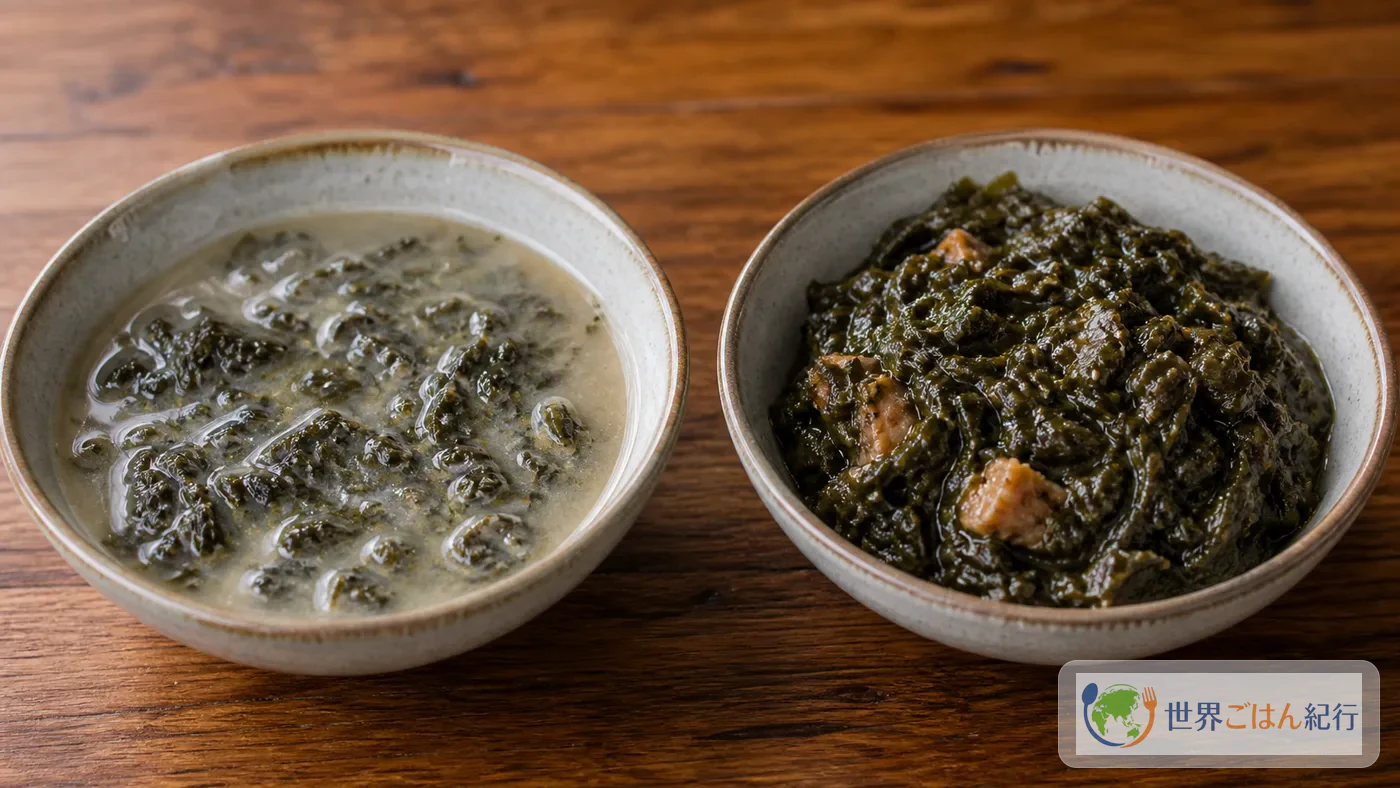
Most laing failures come from heat and consistency rather than seasoning: leaves left hard, coconut that separates and turns grainy, or a watery sauce. Avoid those three and your first pot will be much easier to eat.
| Failure | Cause | How to fix |
|---|---|---|
| Throat feels prickly | Leaves undercooked, or not having absorbed the liquid | Cover and cook another 10 to 15 minutes over low heat |
| Watery | Too much water added, or not reduced with the lid on | Take off the lid and reduce 10 minutes over low heat |
| Coconut separates | Boiled over high heat | Lower the heat and blend in 2 tbsp coconut milk |
| Salty | Bagoong added all at once | Add coconut milk and leaves. Go light on bagoong at the table |
| Sweet | Sweetened coconut was used | Hard to fix. Tighten with fish sauce and chili, and use unsweetened cans next time |
| Leaves fall apart | Stirred hard from the start | Next time wait 15 minutes before turning broadly |
Taro leaves contain oxalates, which can strongly irritate the mouth and throat, so simmer the dried leaves thoroughly. For the first 15 to 20 minutes, let them absorb the liquid and only push them down into the coconut milk. That rehydrates them without breaking them and keeps the texture from turning coarse.
Keep the salt restrained to the end. Bagoong varies by brand, and some are quite strong even at 1 tbsp. Rather than perfecting the seasoning in the pot, leave room at the table: white rice, a little bagoong and citrus keep you from tiring of it.
Serving and Storing Laing
Building a menu
Laing is richer than it looks, with coconut, pork, fermented shrimp and chili all in one pot, so a second stew just as rich makes the table heavy. Build around it in this order: white rice, something grilled, something sour, and a sweet ending.
Grilled fish is an excellent match. Salted grilled mackerel, horse mackerel or salmon all work, and small dried fish like the ones eaten locally bring it even closer. The savory fish and the coconut play off each other, and the rice disappears.
For acidity, slice tomato and onion thin and dress them with 2 tsp vinegar, a pinch of salt and a little lemon. A bit of that red-and-white sourness at the edge of the plate is plenty. If you want a soup, a small bowl of sour sinigang washes away the heaviness of the coconut.
With other Filipino dishes, keep the fried food to a few lumpia Shanghai, and if a big platter of pancit canton is on the table too, serve laing as a side. For dessert, sapin-sapin, made of glutinous rice and coconut, is a natural finish.
Storage and reheating
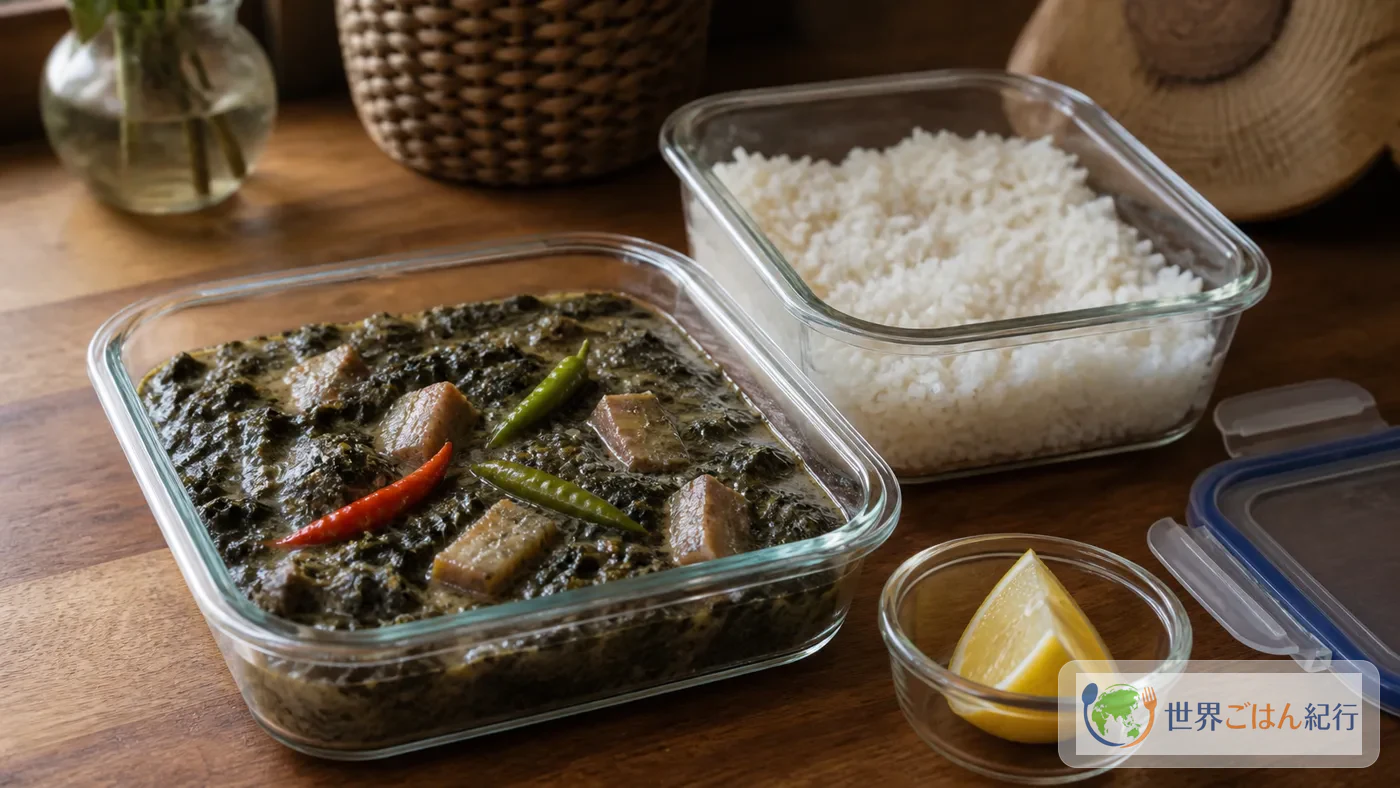
Laing comes together better the next day: the leaves soak up the coconut oil, and the bagoong's saltiness loses its edge. Because it's made with coconut milk, though, don't leave it out at room temperature.
Refrigerate it for 2 to 3 days. Let it cool a little, then move it to a shallow container and get it into the refrigerator early; left in the big pot, the center cools slowly and spoils more easily. To freeze, divide it into single portions and eat within 2 weeks. The leaves come out a little softer after thawing, which suits serving it over white rice.
Reheat in a pot over low heat. If it has firmed up, add 1 to 2 tbsp coconut milk rather than water and warm it until it bubbles. In a microwave, stir once partway and make sure it's hot through the center. If the flavor feels heavy after reheating, a few drops of lemon or calamansi-style citrus lightens it.
Leftovers are easy to use. Serve a small amount beside grilled fish, or mix about 2 tbsp into rice and top it with a fried egg. For a fuller Filipino home-style meal, add a bit of leftover meat from adobo; its acidity and the richness of the coconut go well together.
Frequently Asked Questions
Where can I buy dried taro leaves?
Search for "dried taro leaves," "gabi leaves" or "laing leaves" at Filipino groceries, Asian groceries and online. When you open the bag, check that no different leaves or overly hard stems are mixed in.
Can I make it with fresh taro leaves?
I don't recommend it for home cooking. Raw taro leaves are irritating, and they need the right variety and careful preparation, so use dried leaves. Never cook with leaves from ornamental plants in your garden.
Can I make it without bagoong?
You can, but the laing character is weaker. If you have no shellfish allergy, it's worth getting at least a small amount of bagoong. Without it, approximate with 2 tsp fish sauce, 1 tbsp dried shrimp and 1 tsp miso, but go easy on the miso or it becomes a Japanese-style coconut stew.
Can I make a laing that is not spicy?
Yes. Use only one chili, with the seeds removed. The Bicol-style aroma is weaker, but the coconut and bagoong still carry it as an easy-to-eat home version. For those who like it hot, put chopped chili or chili oil on a separate plate.
Laing is not a flashy dish. Do not rush the leaves, do not over-boil the coconut, and leave a little saltiness to the table. If you keep just that, even in a home kitchen you get close to Bicol's rich green stew. Cook plenty of white rice and set grilled fish and citrus beside it, and the richness in the pot loosens just right at the table.