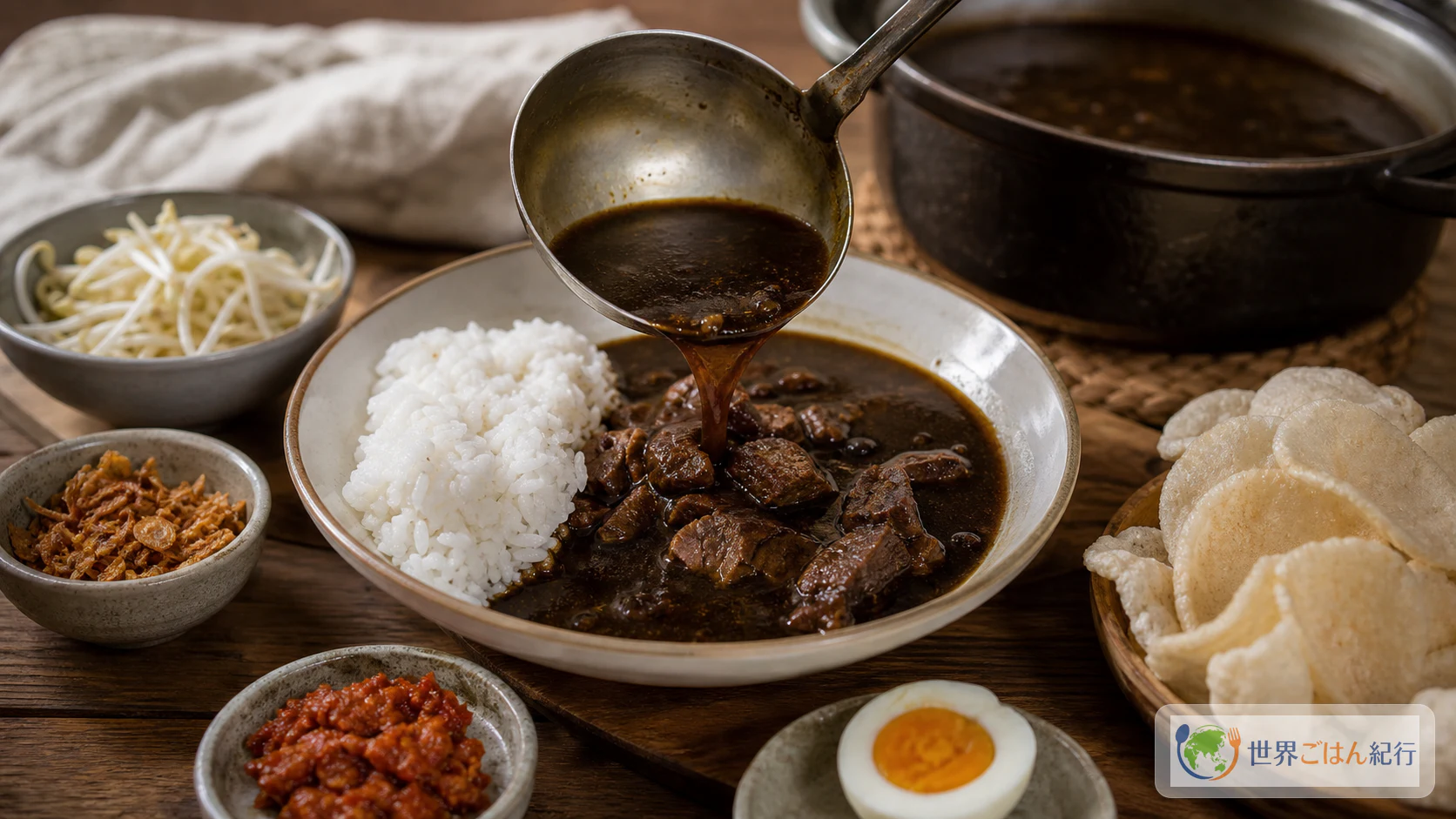
The moment you lift the lid, a deep scent rises behind the sweet steam of the beef. It is neither black sesame nor char. Rawon looks forbidding because it is so black, but it tastes surprisingly round. This black beef soup from East Java, eaten especially around Surabaya, is built from beef shank broth, a fried bumbu of aromatics, and the earthy richness of kluwek.
Rawon, East Java's Black Beef Soup
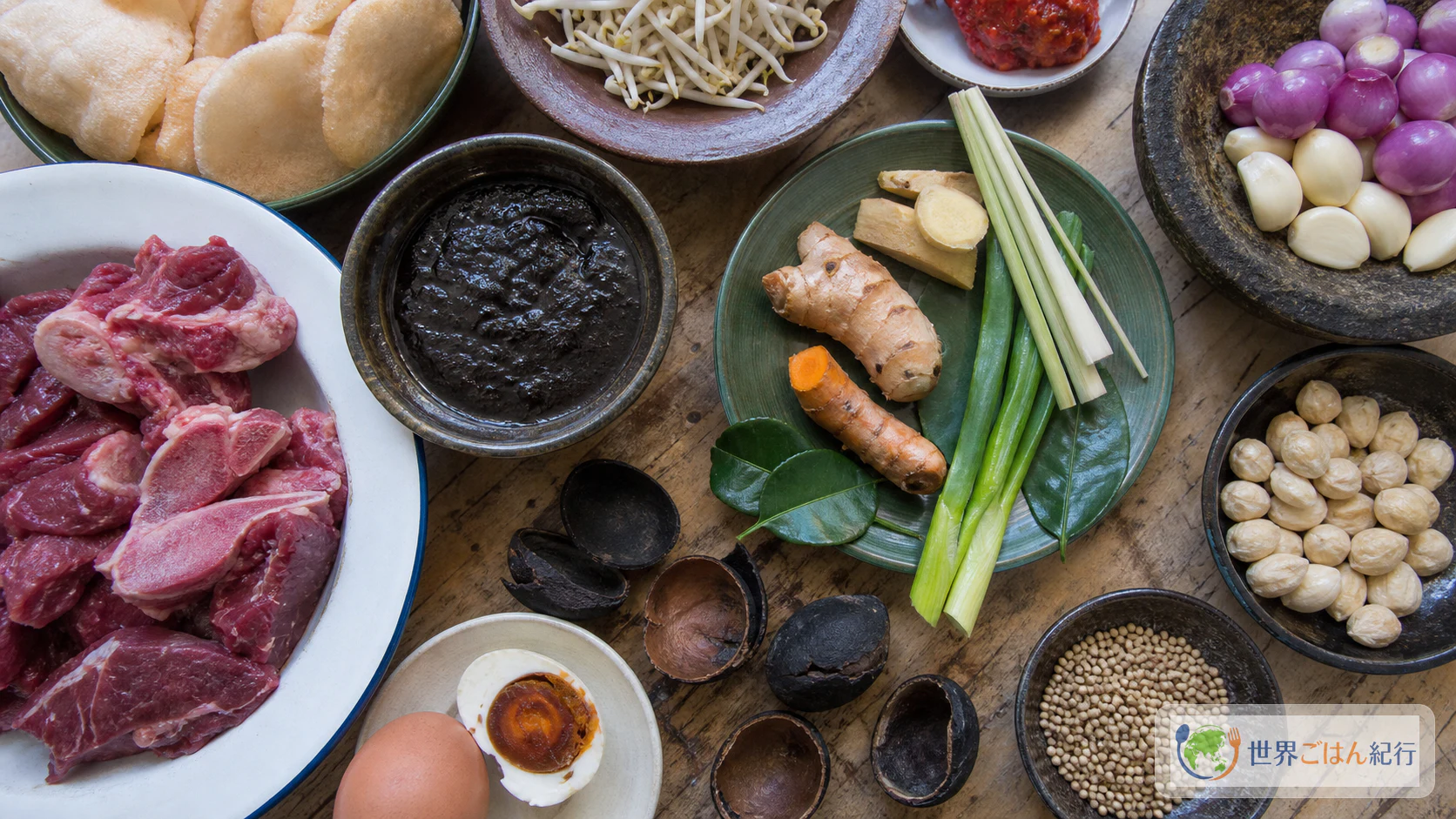
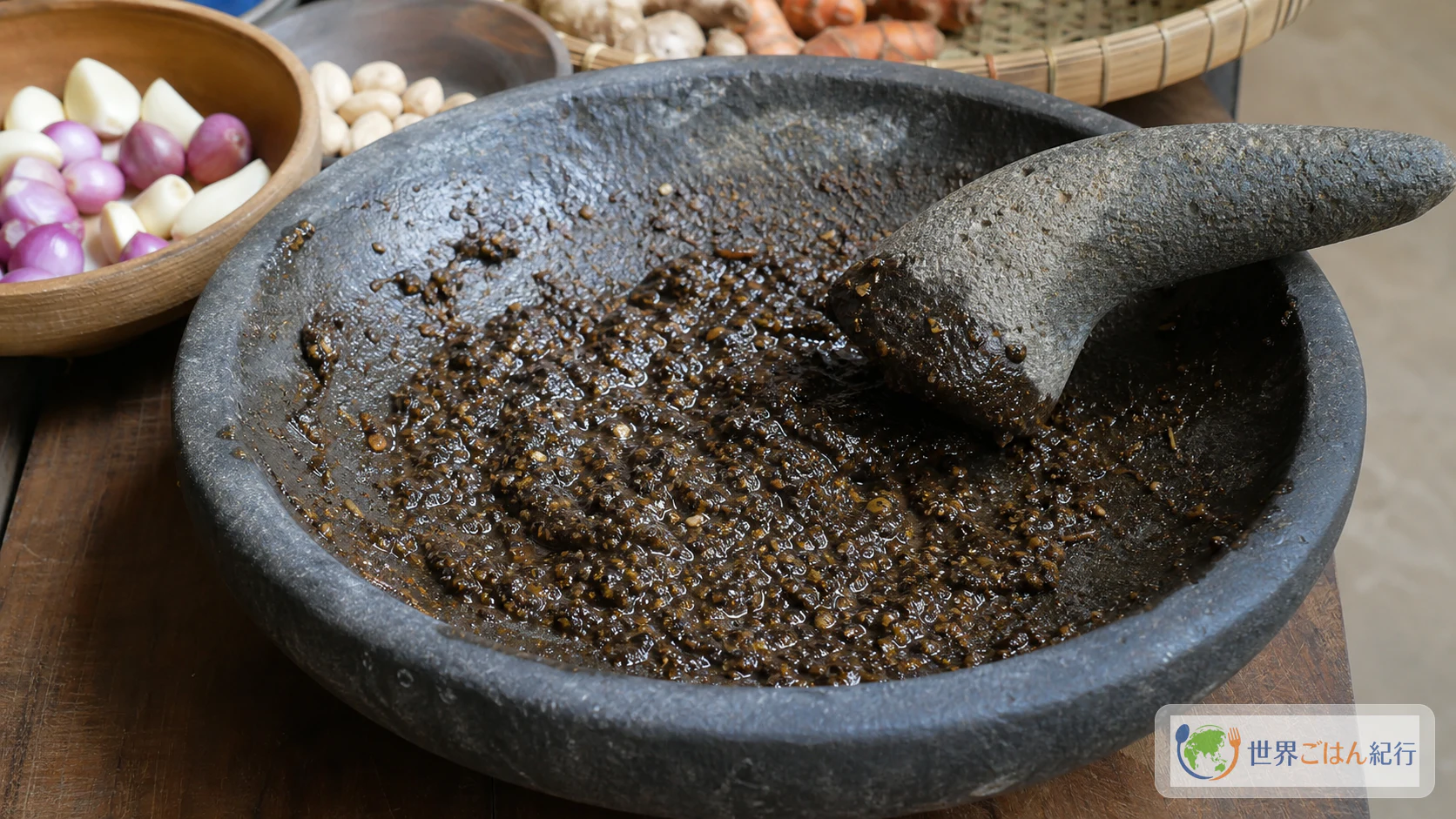
Rawon means "black beef soup." The color and much of the aroma come from kluwek, the fermented and processed seed of Pangium edule (also called keluak or kepayang). Local recipes combine kluwek with shallots, garlic, candlenuts, coriander, turmeric, lemongrass, makrut lime leaves and salam leaves.
The Taste of Kluwek
Kluwek's taste is hard to sum up in a word. It is like a nut, like dried shiitake, with the earthy richness of long-cooked black beans. It brings little heat or sourness and instead darkens the back of the soup. Heat is what opens its aroma: paste dissolved straight into the broth gives the black color, but a raw, muddy smell lingers.
That is why rawon made away from Java depends on the kluwek more than the beef. Black sesame, cocoa or caramel can darken a soup, but none of them reaches rawon's depth.
How Rawon Is Eaten
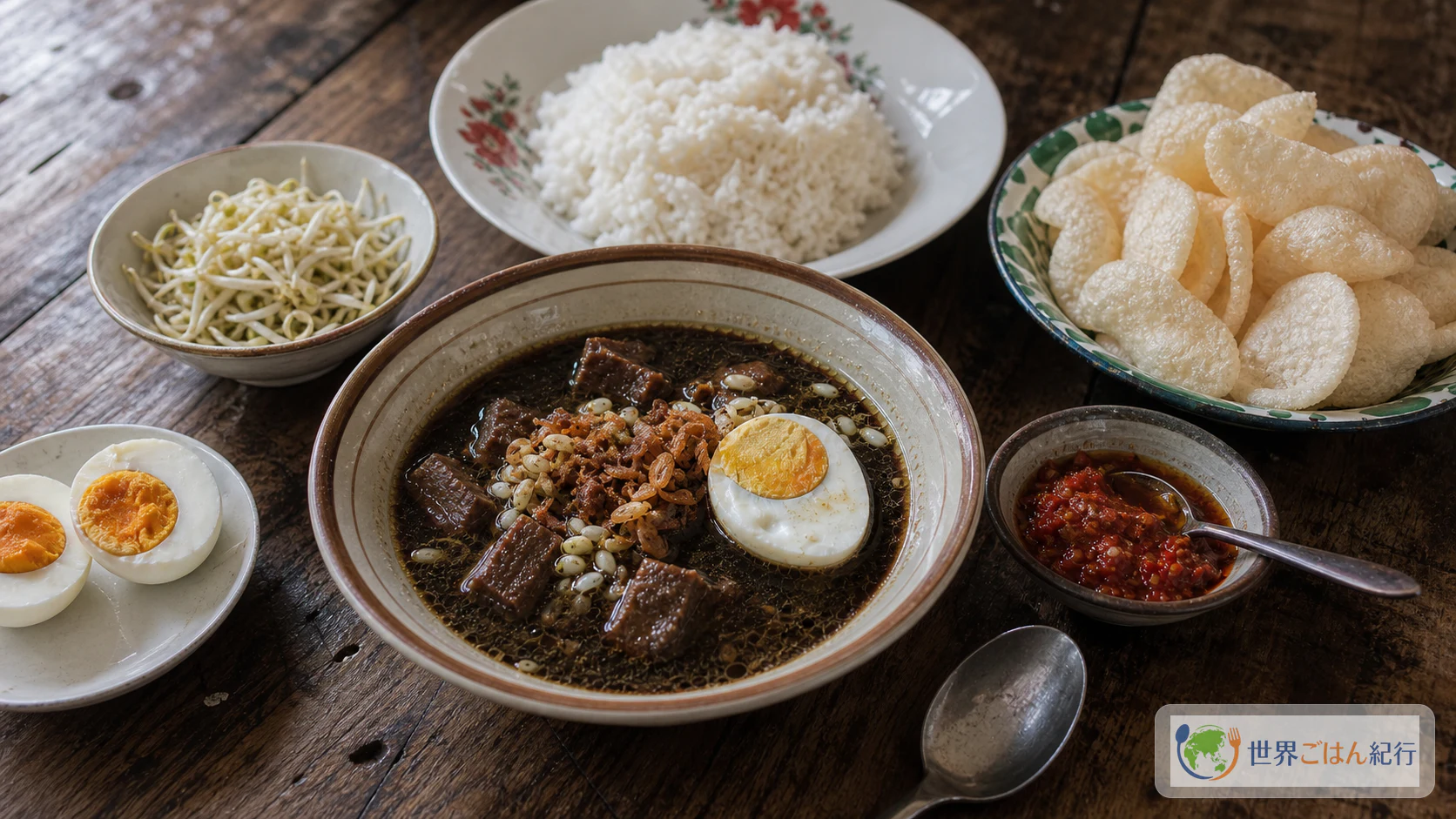
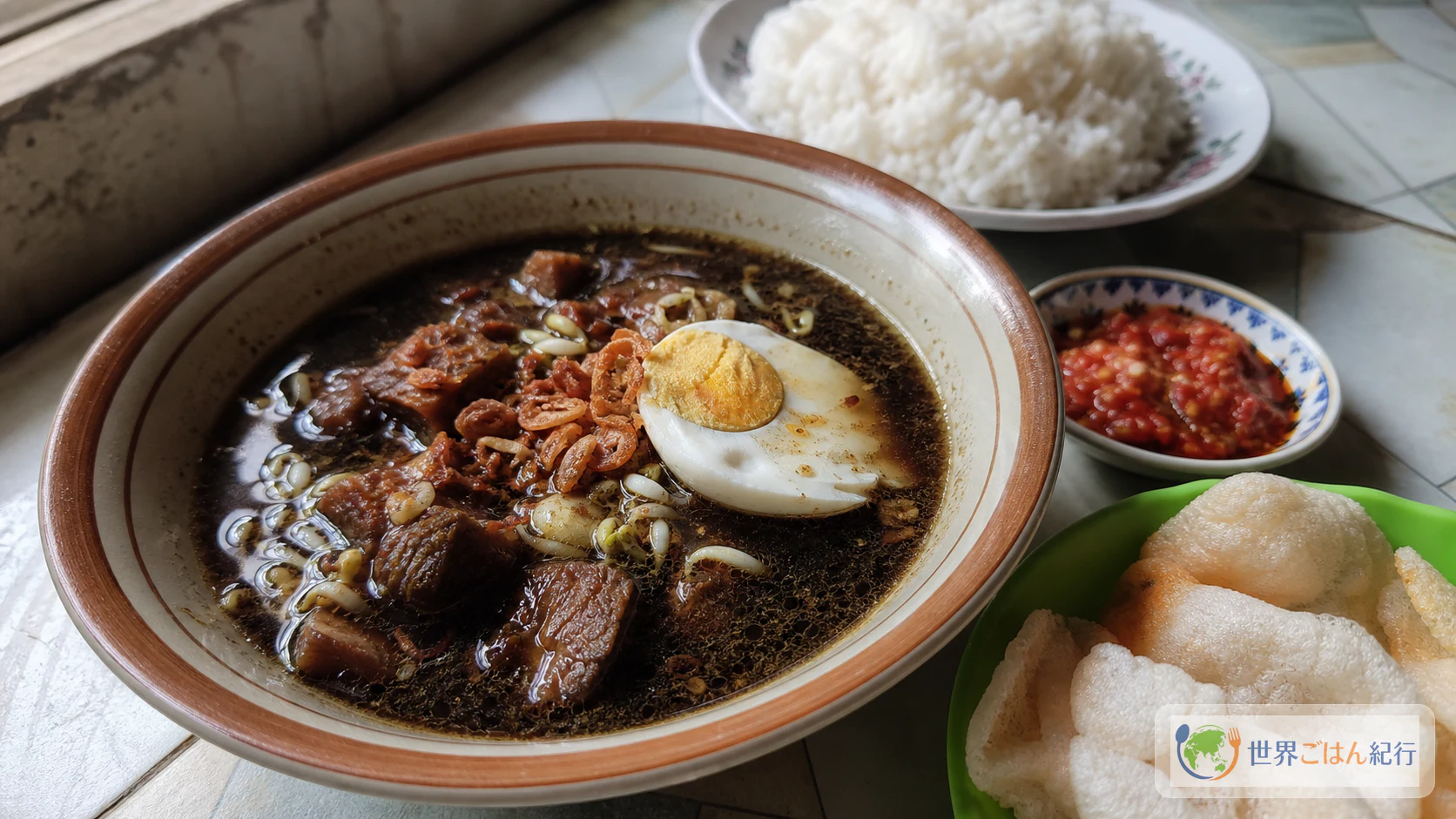
Locally, rawon comes with white rice, short bean sprouts, salted egg, sambal and krupuk, and you ladle the soup over the rice bit by bit. Each light thing beside the black soup has a job. The sprouts are the crisp counterpoint, salted egg adds fat and salt to balance the richness, sambal lets you add heat plate by plate, and krupuk adds texture. Think about the rice and sides, not just the soup, and you get closer to the local table.
| Element of the table | Role | Practical answer at home |
|---|---|---|
| Black soup | The richness of kluwek and beef | Processed kluwek, or bumbu rawon |
| Beef | Broth and satisfaction | Beef shank, chuck, stew-cut cubes |
| Bean sprouts | Lightness and texture | Mung bean sprouts, blanched briefly |
| Salted egg | Saltiness and rounding fat | A boiled egg sprinkled with salt |
| Krupuk | Texture | Shrimp chips or fried crackers |
Among Indonesian dishes, rendang (in Japanese) is the rich meat dish where coconut is cooked down until dry, and soto ayam is a yellow chicken soup. Rawon sits between them: it satisfies like meat yet is light enough to eat as a soup. Set side by side, the three show how each island uses its ingredients.
In Indonesian it is written rawon. Kluwek is also spelled keluak, kluwak, kepayang and so on.
Ingredients (serves 4)
Serves 4. Rawon's flavor settles once it cools, so cook it at midday and reheat it before dinner. Beef shank is the easiest cut, but supermarket stew beef works too. Don't shorten the simmer; wait until the meat breaks apart tenderly.
| Ingredient | Amount | Substitutes & notes |
|---|---|---|
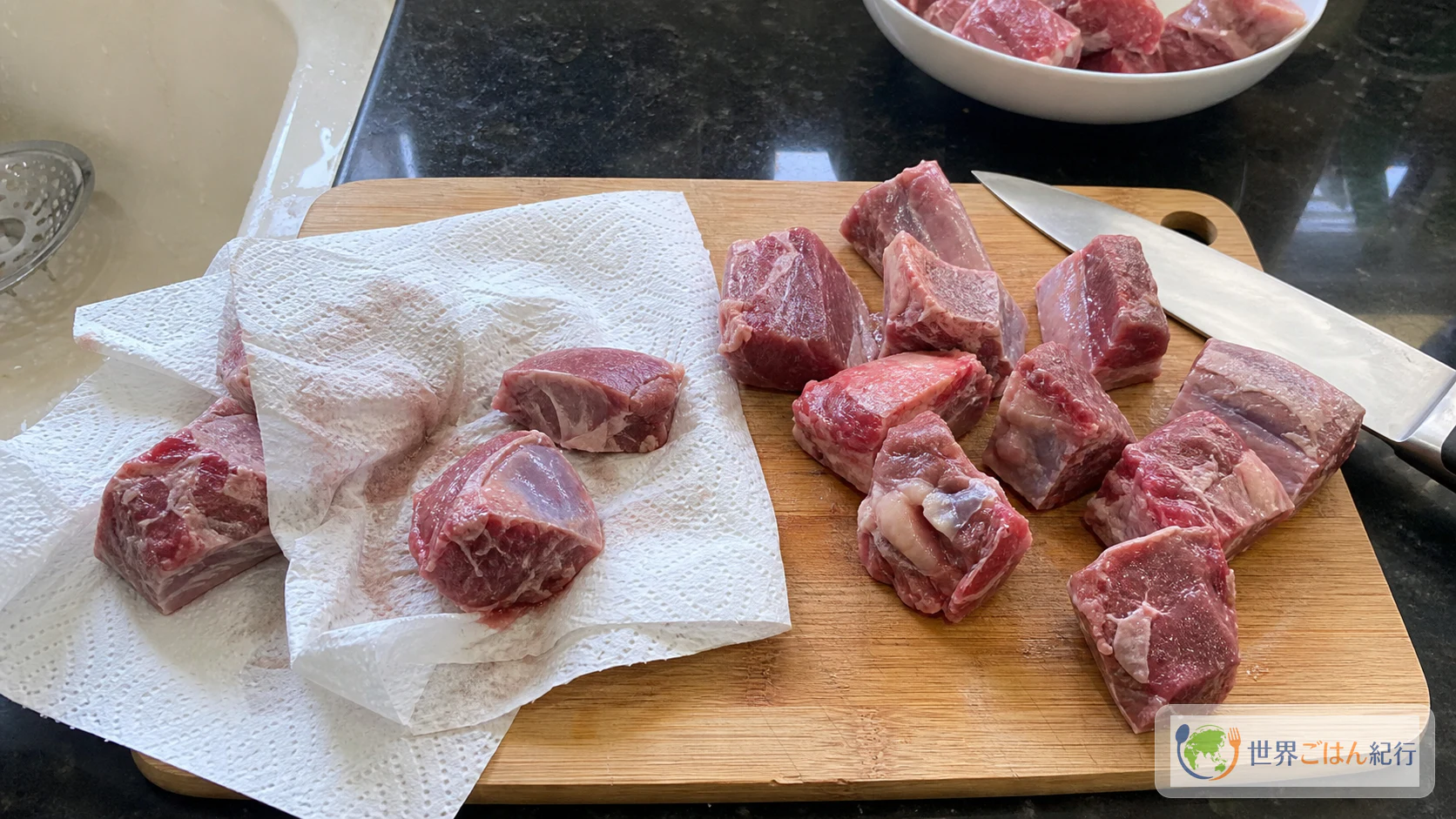
| Beef shank | 1.5 lb (700 g) | Chuck or stew beef also works. Cut in 1 inch (3 cm) cubes |
| Water | 2 quarts (1.8 L) | About 1.25 quarts (1.2 L) left after simmering |
| Salt | 1 1/2 tsp | Adjust at the end |
| Raw cane sugar (or light brown sugar) | 2 tsp | Rounds the edges of the soup |
| Soy sauce | 2 tsp | Kecap manis, 2 tsp, also works |
| Neutral oil | 2 tbsp | For frying the bumbu |
Black bumbu
| Ingredient | Amount | Substitutes & notes |
|---|---|---|
| Processed edible kluwek kernel | 2 oz (60 g) | 2.5 oz (70 g) store-bought bumbu rawon also works. Do not use raw seeds |
| Shallots | 4 oz (120 g) | 2.75 oz (80 g) red onion can substitute |
| Garlic | 25 g | About 5 cloves |
| Candlenuts | 25 g | 25 g cashews can substitute |
| Coriander seeds | 2 tsp | If ground, 1 1/2 tsp |
| White pepper | 1/2 tsp | Black pepper also works |
| Turmeric | 8 g | Fresh, 1 inch (2 cm); ground, 1/2 tsp |
| Ginger | 10 g | Thinly sliced |
| Galangal | 15 g | If you have none, add 5 g more ginger |
| Terasi (shrimp paste) | 1/2 tsp | If you dislike it, 1 tsp fish sauce |
| Water | 3 tbsp | To move the paste along |
Herbs and sides
| Ingredient | Amount | Substitutes & notes |
|---|---|---|
| Lemongrass | 2 stalks | Bruise the bottom 4 inches (10 cm). Dried, 2 tsp |
| Makrut lime leaves | 5 leaves | Frozen is fine. Skip if unavailable |
| Salam leaves | 3 leaves | 1 bay leaf supplies the direction of the aroma only |
| Scallions | 2 | Cut in thin rounds |
| Mung bean sprouts | 5.5 oz (160 g) | Blanch for 30 seconds |
| Boiled eggs | 4 | With salted eggs, 2 salted eggs |
| Fried onions | 4 tbsp | Stands in for bawang goreng |
| Sambal | 2 tbsp | On a separate plate to adjust heat |
| Krupuk | 8 pieces | Shrimp chips or fried crackers also work |
| White rice | 4 bowls | Firmly cooked rice suits it |
This dish may contain beef, shrimp-containing seasoning, nuts, soy and wheat. Terasi, sambal, krupuk and store-bought bumbu vary in ingredients by product, so check the labels. If anyone has a food allergy, read every label first.
Choosing Kluwek, Herbs and Substitutes for Rawon
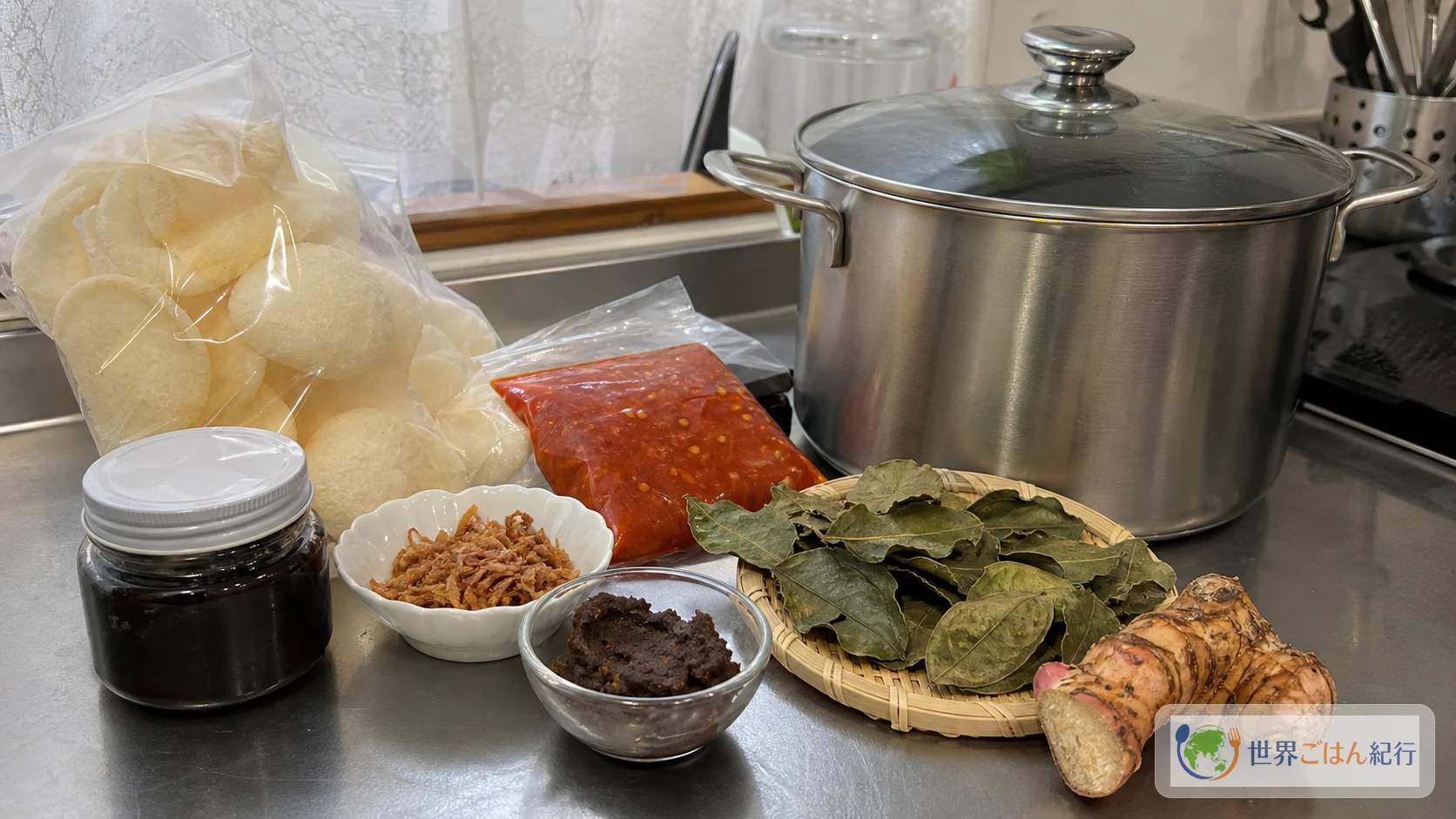
Kluwek is the first thing to look for. Import and Indonesian grocery stores sometimes sell it as processed edible kernels, paste, or bumbu rawon. Always choose something already processed for eating, never an unfamiliar shelled fruit to process yourself. Store-bought bumbu often contains salt and sugar, so adjust the salt at the end.
With the kluwek in hand, gather the herbs. Galangal resembles ginger but has a harder aroma and tightens the outline of the soup, and makrut lime leaves give a Southeast Asian scent even in small amounts. Krupuk and sambal aren't essential, but they set the rhythm that keeps you eating the black soup spoon after spoon.
| What to buy | Priority | Reason |
|---|---|---|
| Processed kluwek, bumbu rawon | Top | The center of blackness and richness; hard to substitute |
| Galangal | High | An aroma that cuts the heaviness of beef |
| Makrut lime leaves | Medium | A bright citrus note |
| Sambal | Medium | Lets heat be divided at the table |
| Krupuk | Medium | The lightness of the local table |
Galangal and lime leaves also go into ayam betutu and tom yum goong (in Japanese), so if you cook Southeast Asian food often, they won't go to waste.
Substitutes
Substitute the wrong thing and rawon turns into a different beef soup. Knowing what to protect and what can change makes failure less likely.
| Ingredient in doubt | Direction to protect | Practical answer | Direction to avoid |
|---|---|---|---|
| Kluwek | Processed black edible kernel | Store-bought paste, bumbu rawon | Processing raw seeds at home, black sesame |
| Beef | A cut that gives broth and can braise | Shank, chuck, stew cubes | Thin-sliced meat simmered briefly |
| Herbs | Lemongrass, lime leaves, salam | Prioritize lemongrass; for salam, 1 bay leaf | More bay leaf, drifting Western |
| Heat | Added at the table | Sambal on a separate plate | Making the whole pot very hot |
| Sides | Sprouts, egg, krupuk | Sprouts, boiled egg, shrimp chips | Serving the soup alone |
Kluwek is the one ingredient to wait for, because its blackness is the core of the flavor. Without it, make rendang (in Japanese), another Indonesian beef dish, and save rawon for when you have the real thing.
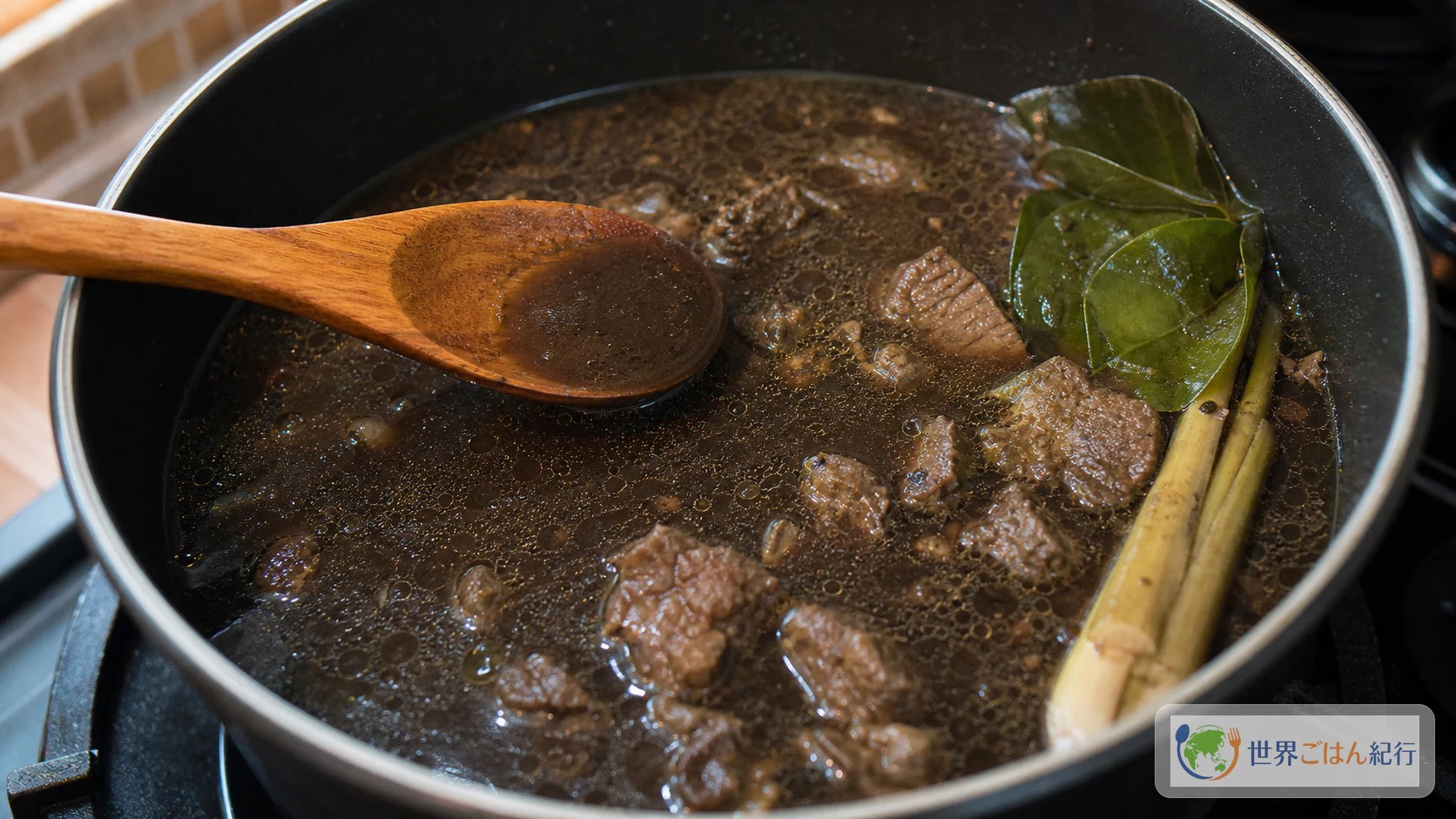
Beef shank is ideal, but stew-cut cubes work fine the first time. Even small stew cubes need more than 45 minutes; simmer until they break apart with chopsticks, top up with hot water if the liquid drops, and season last.
Method: Simmer the Meat, Then Add the Black Bumbu
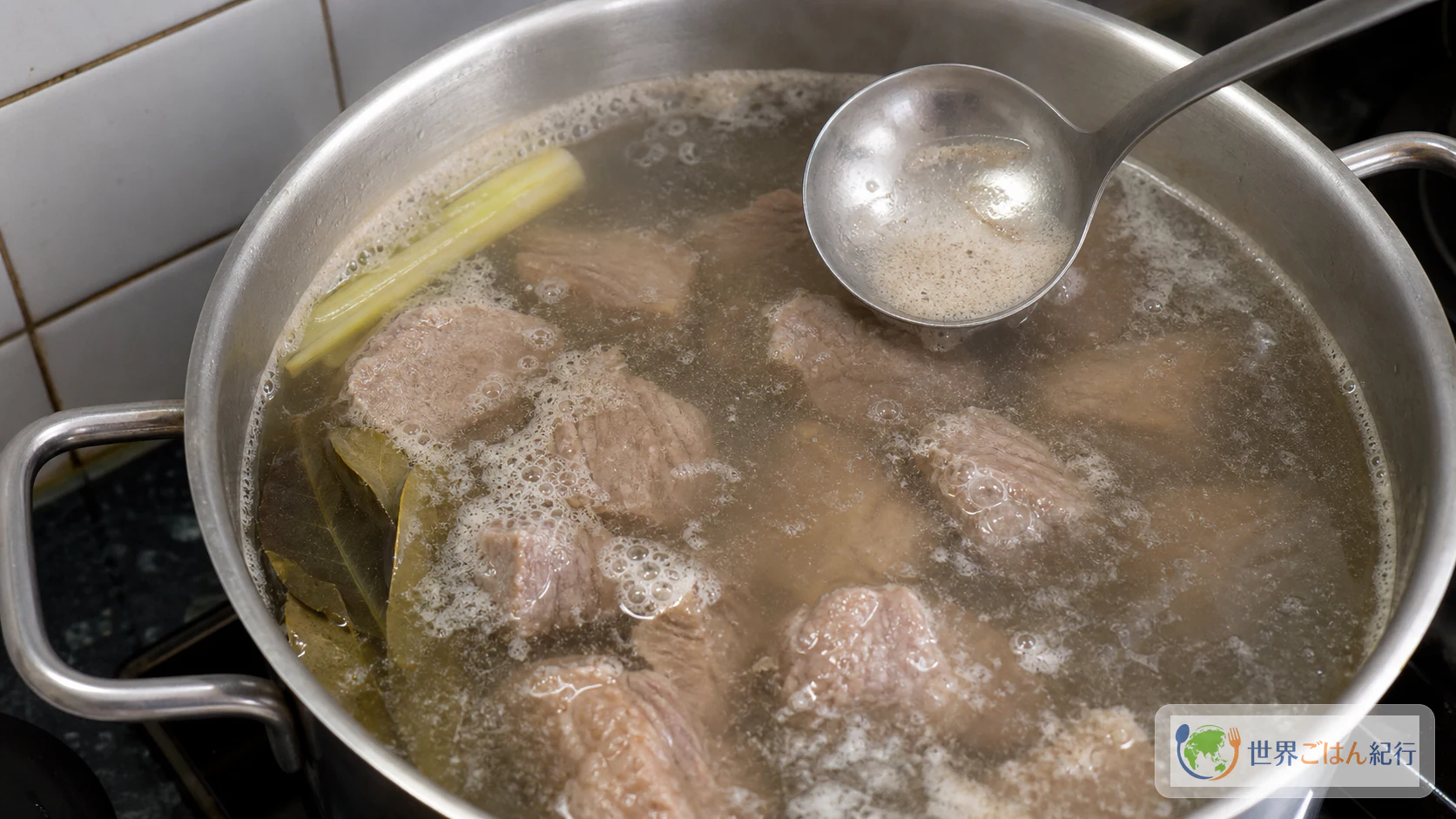
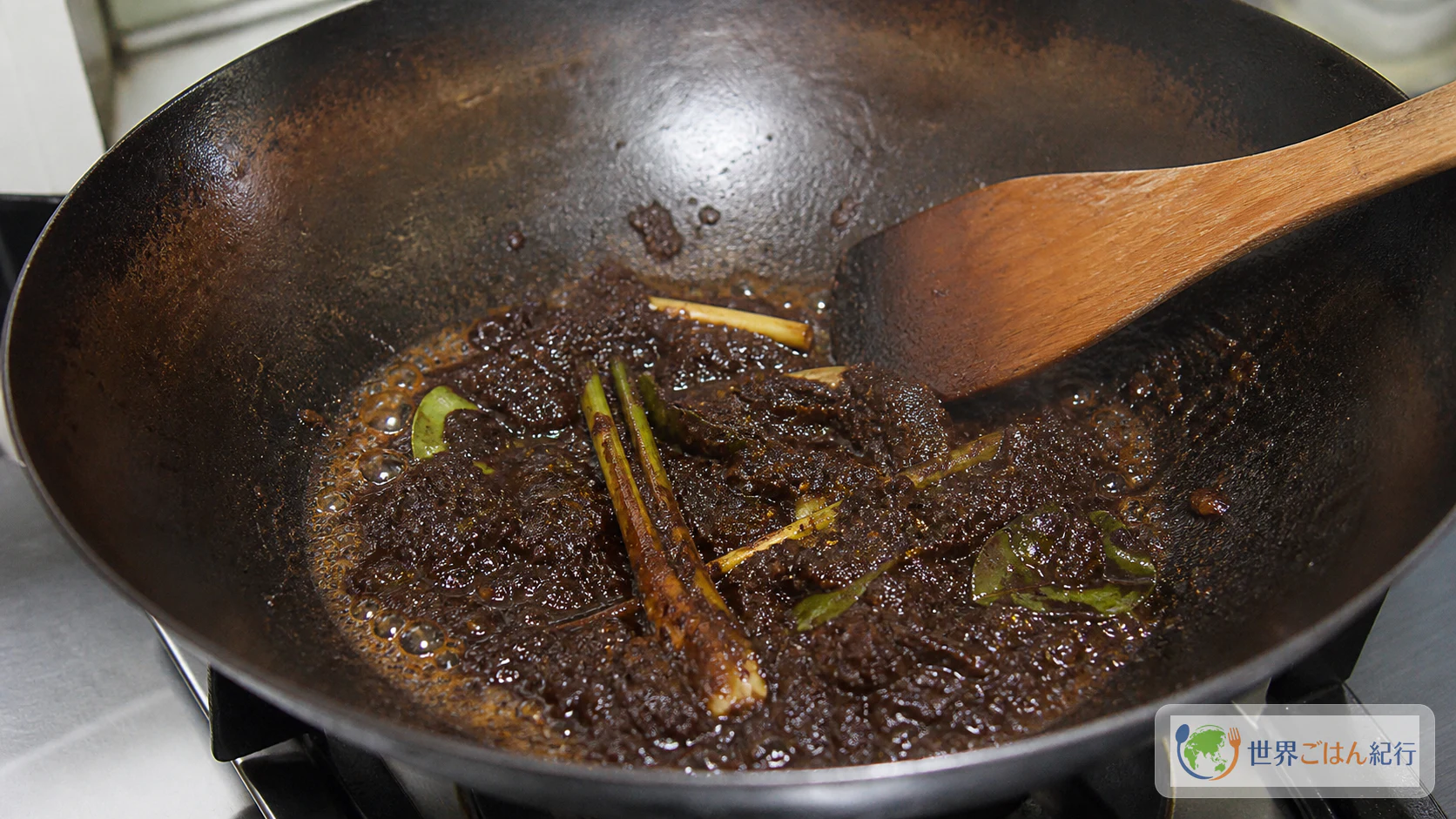
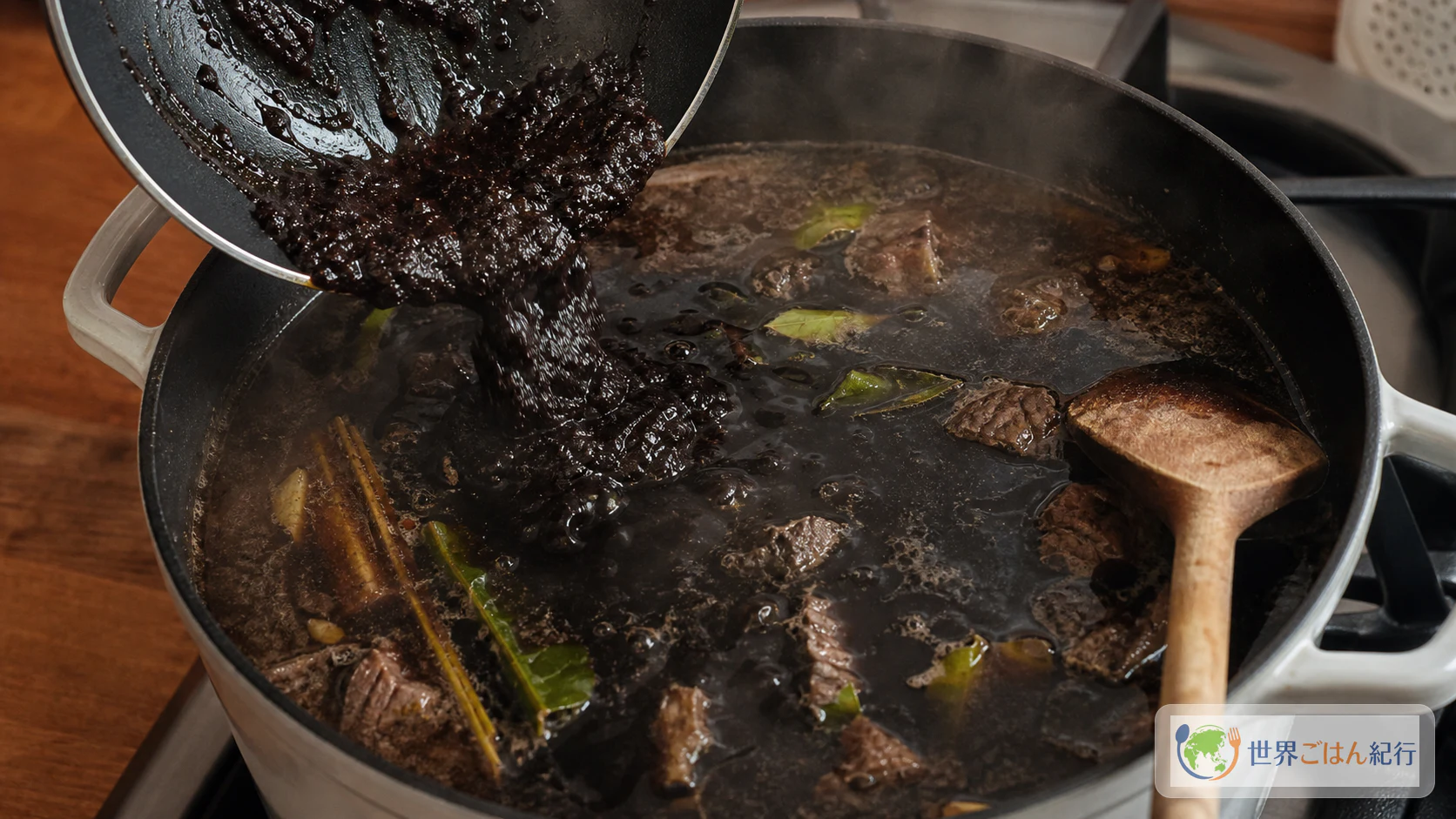
Don't coat the meat in black paste and sear it. Simmer the beef first for a clear broth. Fry the bumbu in a separate pan to open its aroma, then combine the two. Kluwek's aroma is heavy, so work over gentle heat and it comes together neatly.
Freshly made, the kluwek aroma comes forward. If you have time, turn off the heat and rest 30 minutes, then reheat on low for 10 minutes before eating. The black soup gets into the beef and the saltiness rounds out.
Rawon Troubleshooting
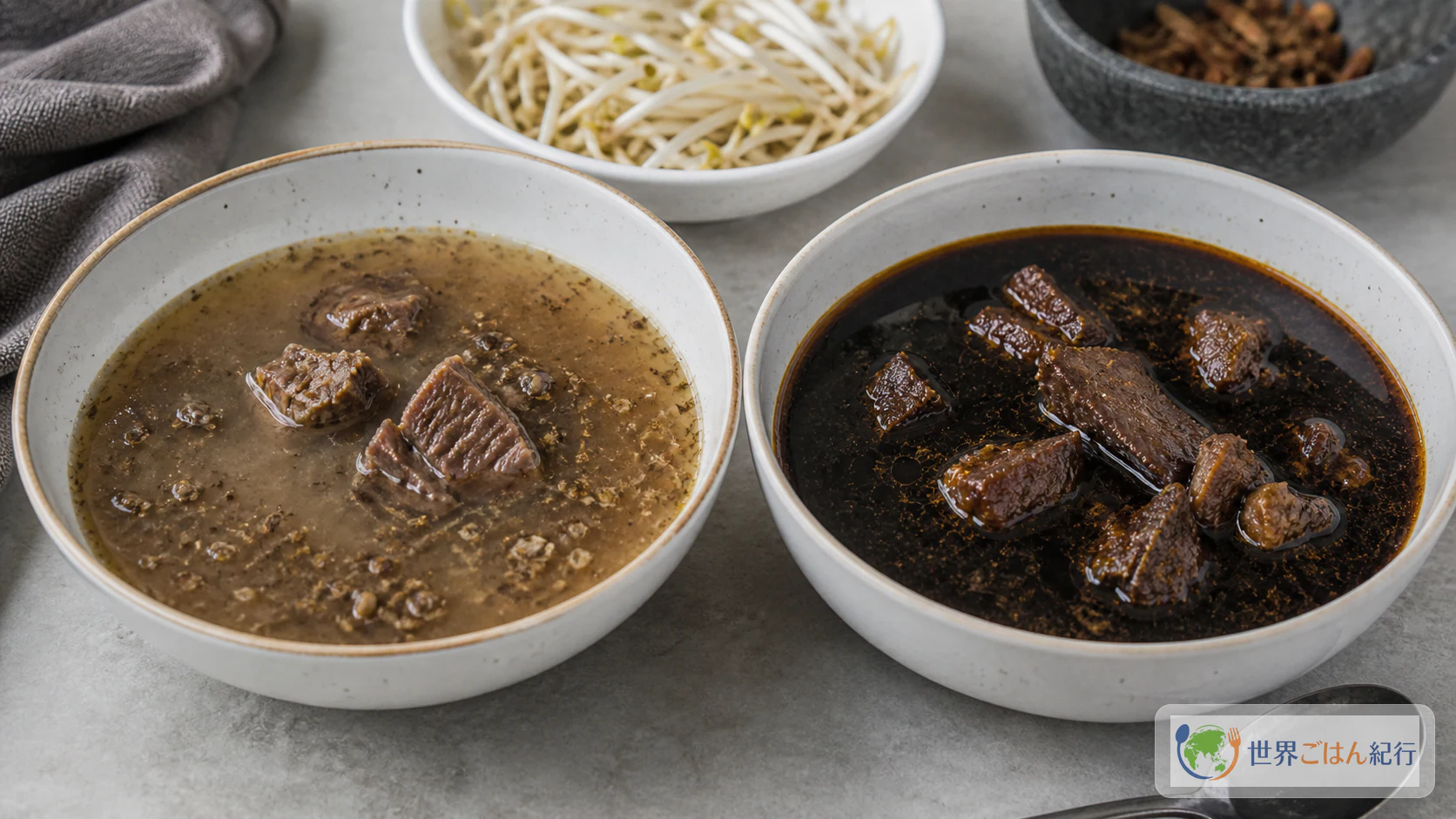
If the soup isn't black, you used too little kluwek or dissolved the bumbu straight into the soup. Fry the bumbu in a separate pan over medium-low for 3 minutes, and when oil seeps out, return it to the soup. Piling in black sesame for color only turns it into a sesame-flavored beef soup.
A lingering muddy smell means the kluwek or aromatics were undercooked, and simmering on low won't fix that on its own. When frying the bumbu, wait until the raw garlic smell is gone and oil floats at the edges. Keep the heat at medium-low; high heat gives a burnt smell.
Tough meat is simply underdone, and beef shank takes longer than it looks. Add ½ cup (100 ml) water and cook 20 minutes more on low. A hard boil tightens only the surface and leaves the sinew hard in the center, so keep simmering until a skewer or chopsticks slide in without resistance.
If the soup is too salty, water alone won't balance it. Add ½ cup (150 ml) hot water and 1/2 tsp sugar, then heat for 5 minutes. Then taste it with rice: rawon on its own is a little strong, and it's just right with rice, the way it's eaten locally.
Serving and Storing Rawon
Dishes to Serve with Rawon
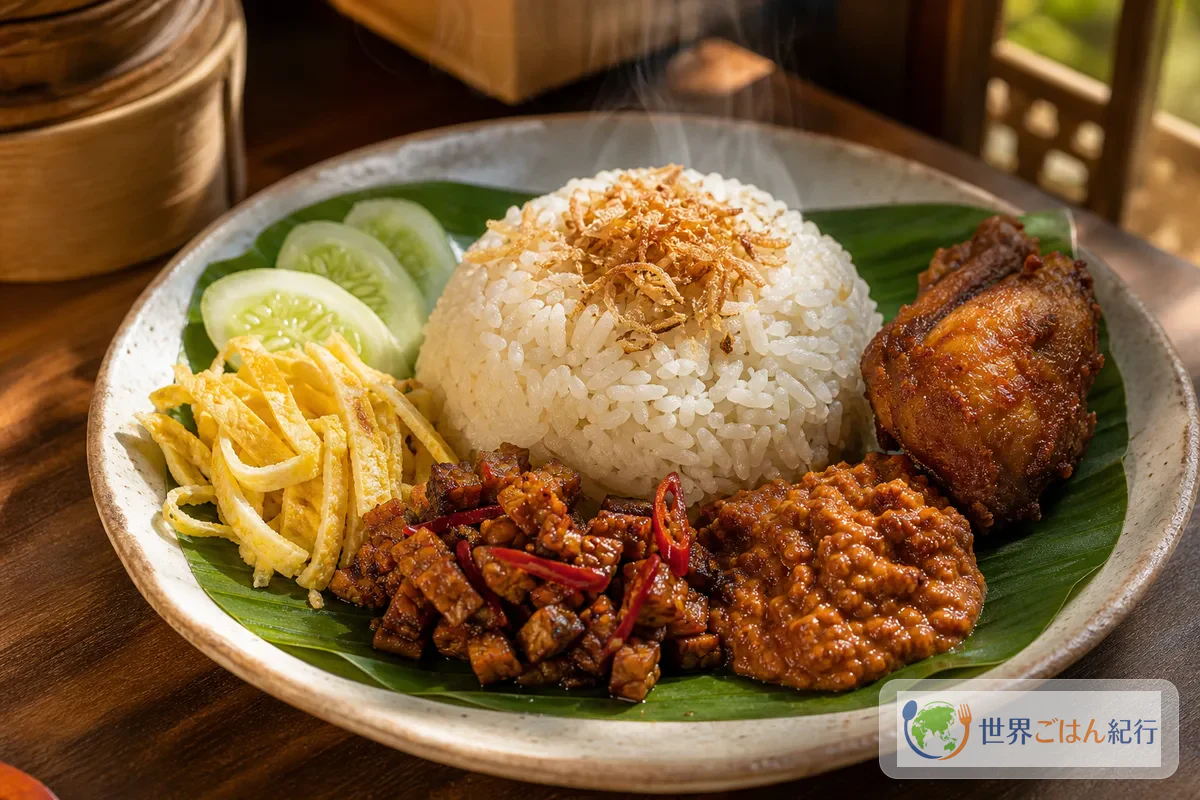
With the black beef soup as the star, add rice and light vegetables. Nasi uduk pairs well: its coconut-and-lemongrass rice meets rawon's black soup, bringing together the tables of East Java and Jakarta.
For heat, have a sambal substitute ready and set it beside the plate rather than mixing it into the pot, so each person can adjust it. For a vegetable dish, try gado-gado; for another meat dish with street-stall aroma, sate ayam.
Storage and Reheating
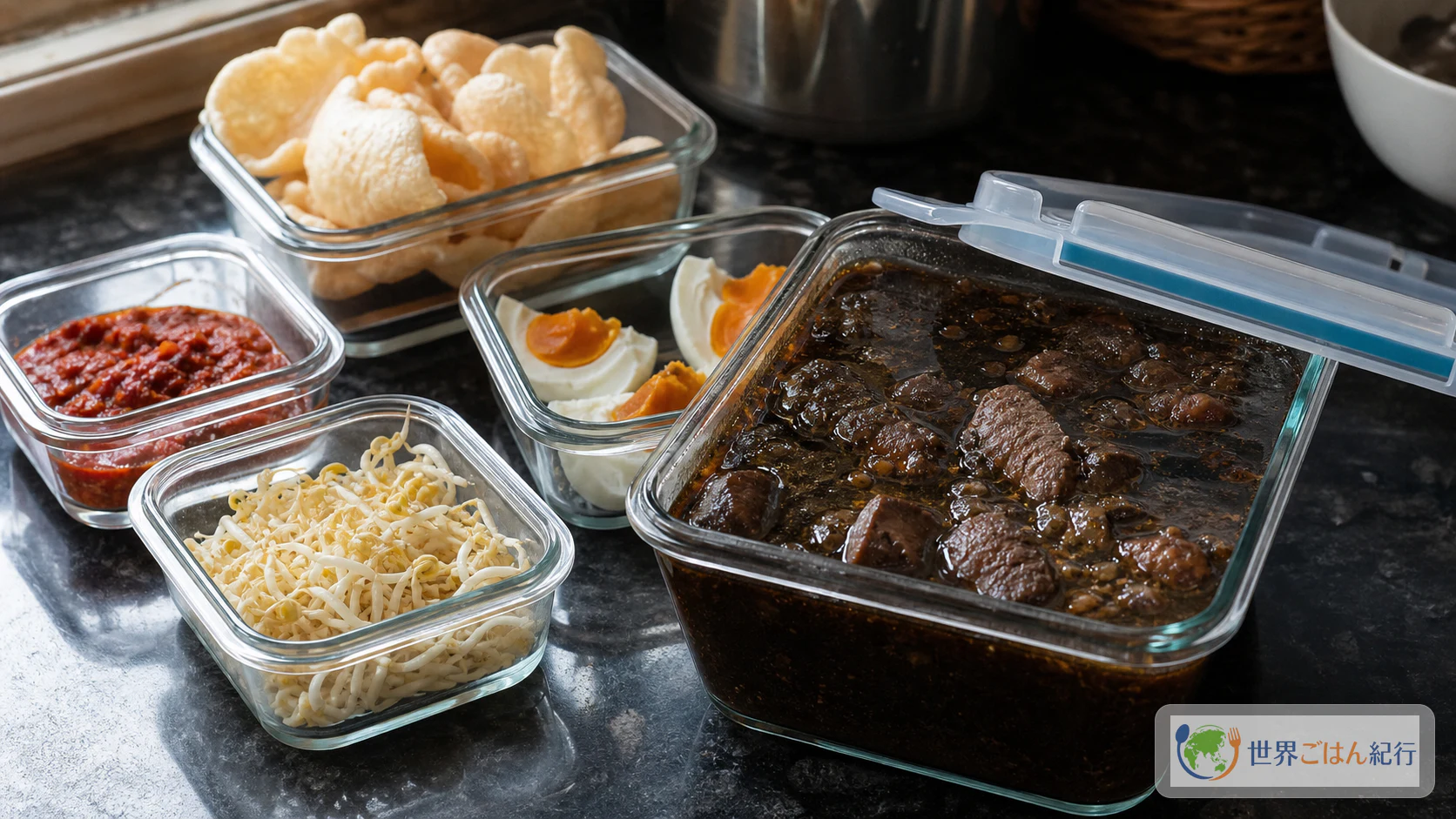
Cool the rawon a little, then move it to a container within 2 hours. It keeps 3 days in the refrigerator or 3 weeks in the freezer. Store bean sprouts, egg, krupuk and sambal separately; in the soup, the sprouts release water and thin it out.
Reheat in a pot with 2 tbsp water or hot water per portion, 8 minutes on low. Turn off the heat when the surface bubbles lightly and the center of the beef is steaming hot. In a microwave, use a deep heatproof container, cover loosely with plastic wrap, heat at 600 W for 2 minutes, stir, then heat 1 more minute.
Freeze only the beef and soup. Thaw half a day in the refrigerator, or partly thaw the bag under running water, then warm it in a pot over low heat. Freezing rounds kluwek's aroma a little, so a little sambal after reheating brings back the outline.
FAQ
Can I make it with only store-bought bumbu rawon?
Yes. Use 2.5 oz (70 g) store-bought bumbu in place of the black bumbu above. Salt and oil content vary by product, so adjust the salt last, in 1/2 tsp steps. If the aroma is weak, add 1 stalk lemongrass and 2 makrut lime leaves for more dimension.
Can I make it quickly with thin-sliced beef?
You can, but it is unlikely to become a proper rawon soup. Simmer only the soup for 45 minutes first and add the meat in the last 5 minutes. The meat is tender to eat, but you lose the broth and gelatin of beef shank.
Can I make it milder?
Yes. Put no chili in the pot and serve sambal on a separate plate; rawon is a dish of aroma and richness more than heat. At a table with people who dislike heat, keep the soup gentle and let those who want it add sambal from 1/2 tsp.
What if I have no salted egg?
An ordinary boiled egg works. Halve it and sprinkle a pinch of salt on the cut surface before serving, which comes a little closer to the salted egg's role. Add it only at the end, since simmering the egg in the soup clouds the yolk and makes it look heavy.