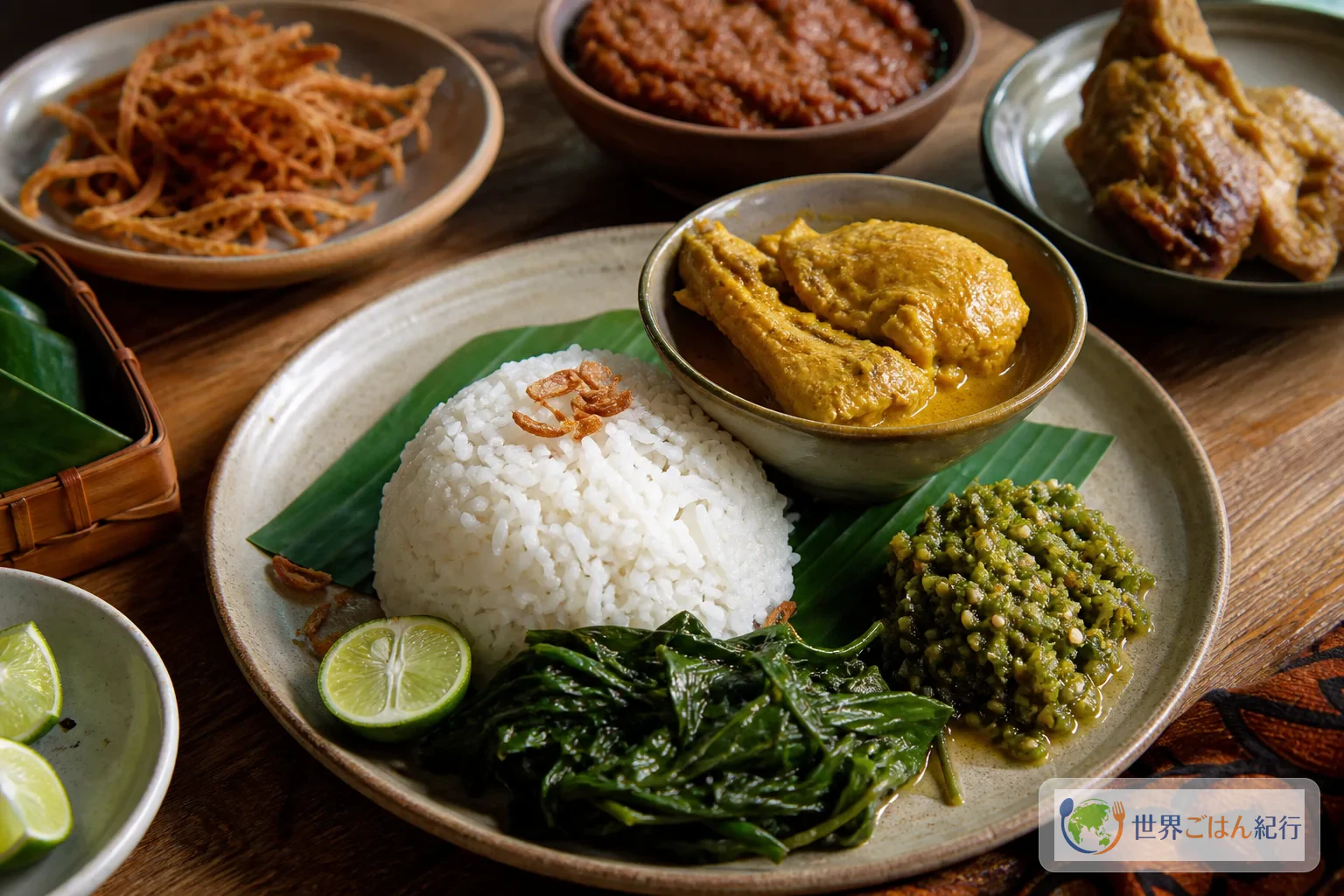
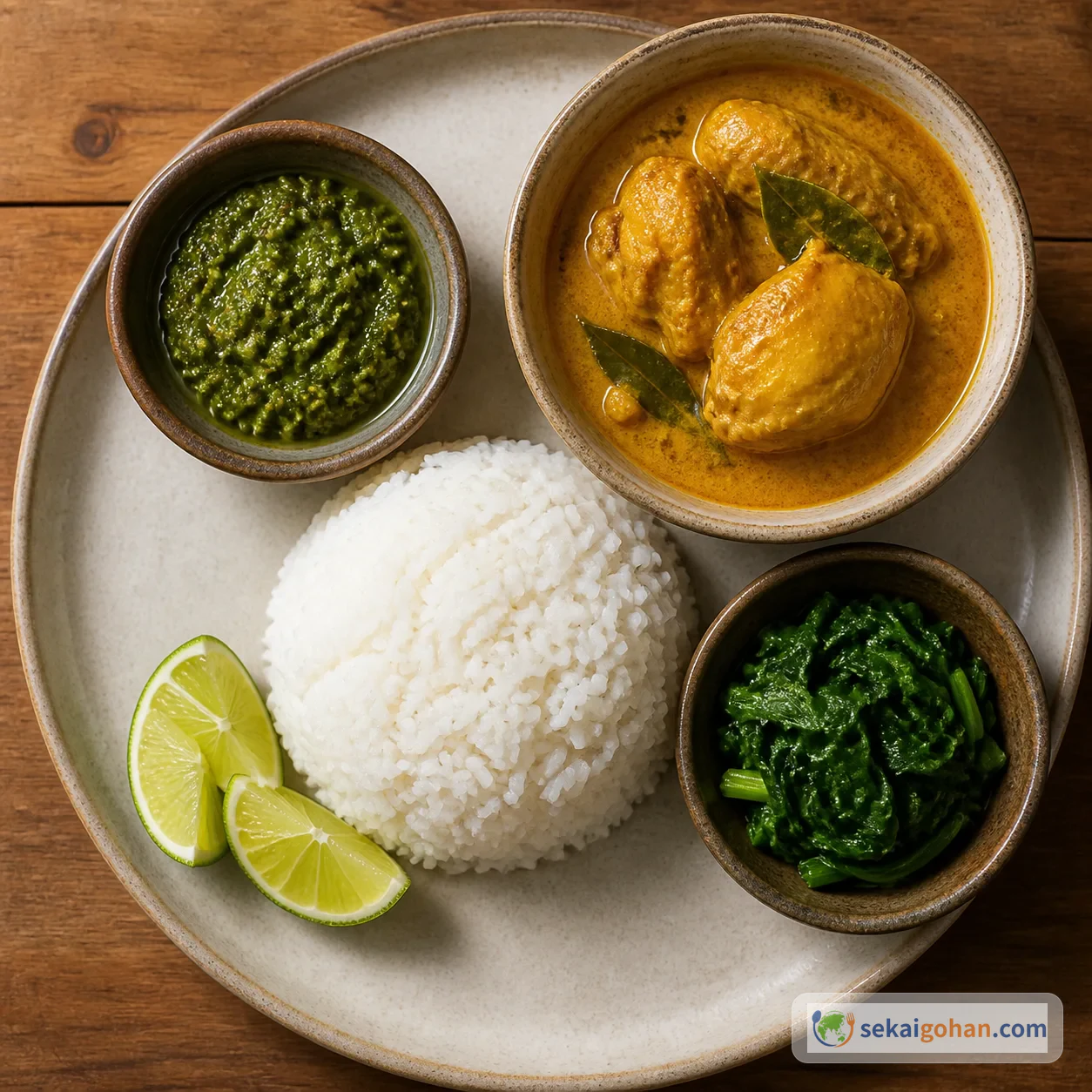
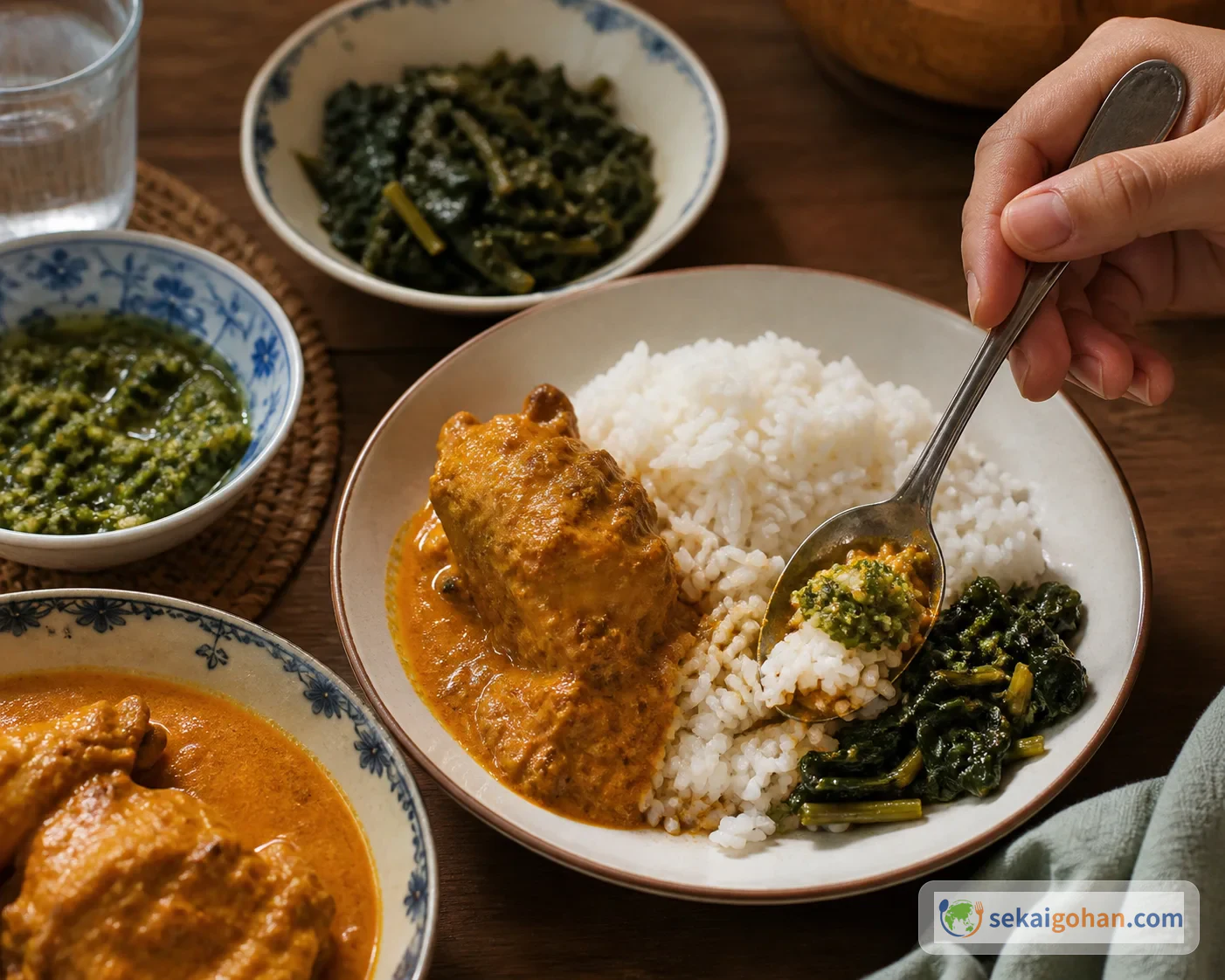
Next to a plate of white rice sit yellow chicken gulai, a green chili sambal and a pile of soft, wilted greens. The first bite tastes of coconut and chicken, the next of bright green chilies, and the one after that of the greens' gentle bitterness. The rice takes in the heat and the richness, so the flavor keeps changing on the same plate. This is nasi padang: white rice served with your choice of Minang dishes from West Sumatra, Indonesia. It's less one recipe than a way of eating, where you build each mouthful the way you like.
Nasi padang and Minang food culture
How nasi padang is served at Padang restaurants
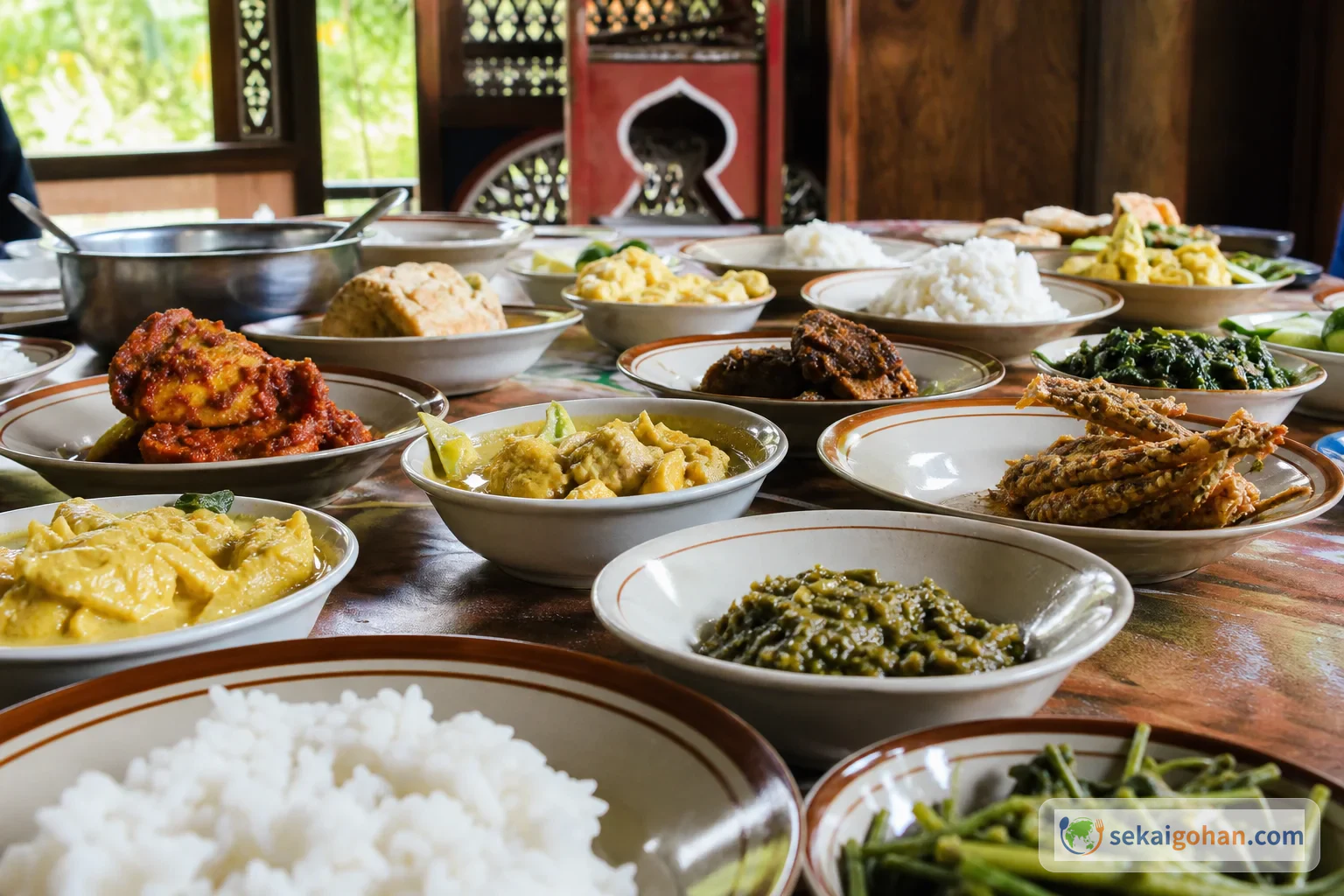
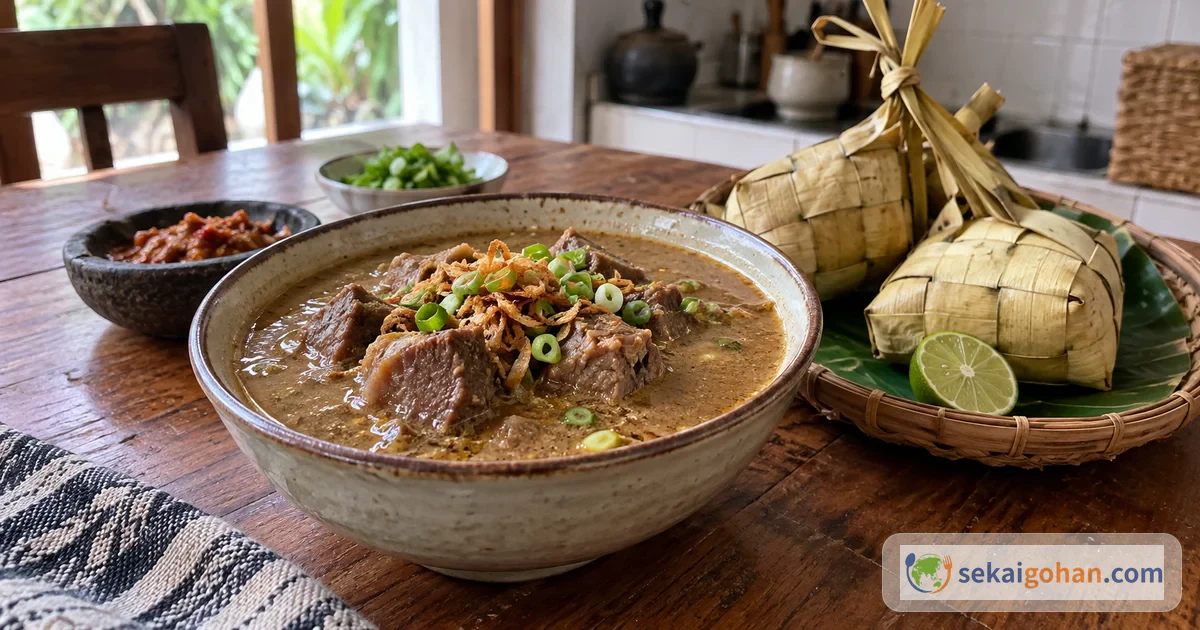
Padang is the capital of West Sumatra, but the food comes out of Minangkabau food culture. Padang restaurants serve it in two well-known ways. At some, you look at the dishes in the window and order one at a time. At others, servers bring plates stacked along their arms and turn the table into a small banquet, and you pay only for what you eat.
Rumah makan means any eatery, small ones included, and a Rumah Makan Minang is one that serves Minang food. Restaurant names and dish names often use local words and family names. The sign over the door and the dishes in the window carry the food of people who moved away from home.
Merantau and the spread of Padang food
The Minangkabau have a tradition called "merantau": leaving home to work somewhere else. Wherever they settled, Minang eateries tied their culture to a way of making a living. Heat is only part of why West Sumatran food became known across Indonesia and abroad as "Padang food." The flavors travel well, the many side dishes suit white rice, and choosing at the counter works for a quick meal. Together, those made it an everyday lunch.
Nasi padang and nasi kapau
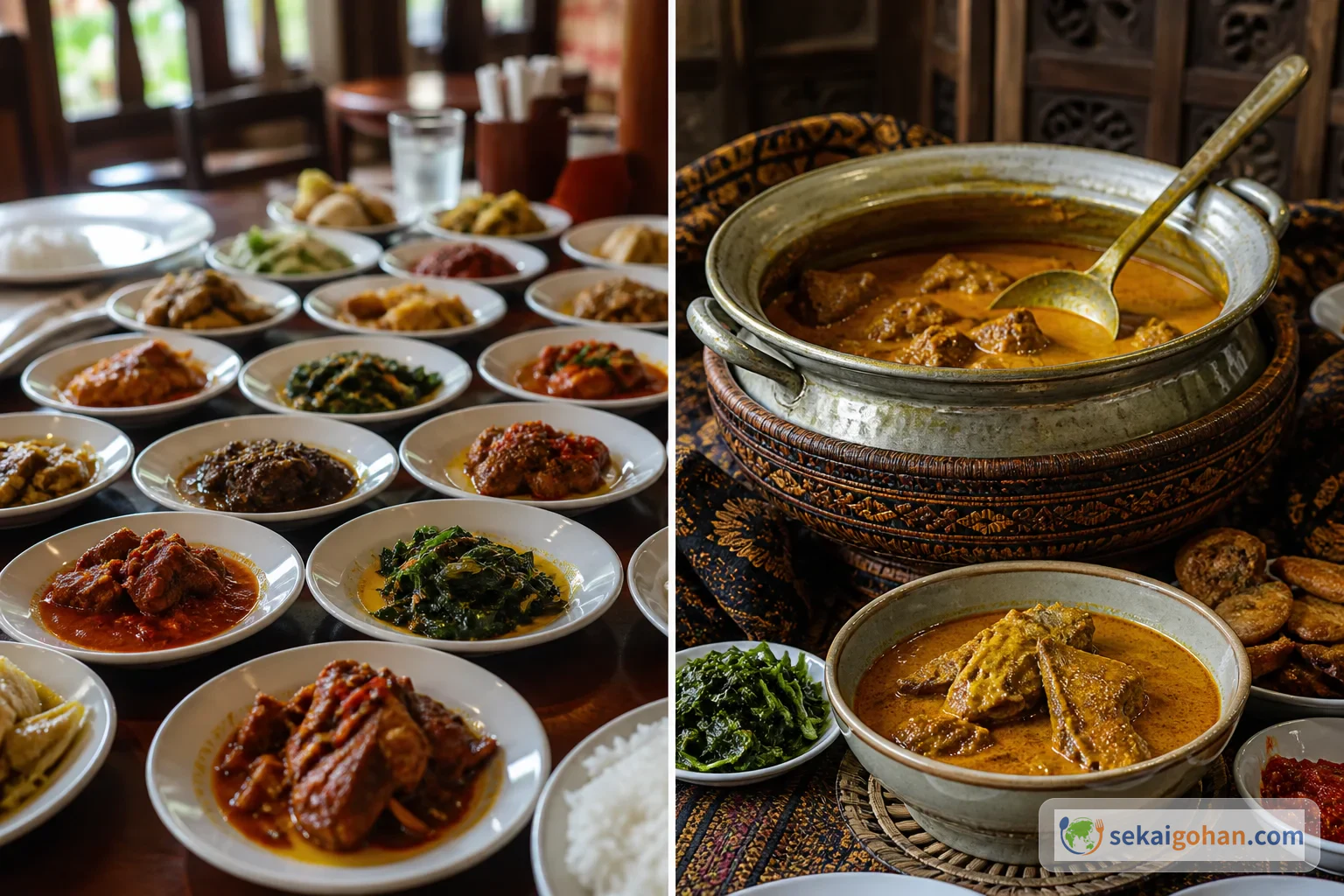
Nasi kapau dishes look a lot like nasi padang. Both pair white rice with Minang dishes such as gulai, stews, sambal and vegetables. Nasi kapau comes from the area around Bukittinggi, and the real difference is how the food is served, not a single ingredient. As a rough picture, Padang means many small dishes laid out for you to choose from. Kapau means similar regional dishes served in a different way.
The range on a local table is wide. Greens might be cassava leaves, the fruit might be young jackfruit, and mains run from chicken and beef to fish and offal. Treating nasi padang as one fixed set loses all of that.
Among Indonesian rice dishes, it also differs from Jakarta's fragrant nasi uduk (in Japanese) and Solo's chicken-broth rice nasi liwet (in Japanese). With those two, the point is how the rice is seasoned. With nasi padang, it's choosing side dishes and layering them. To explore West Sumatran dishes one at a time, try rendang (in Japanese), cooked down in a thick coconut sauce, and sate padang (in Japanese), skewers served with a yellow sauce.
Gulai and the four dishes at home
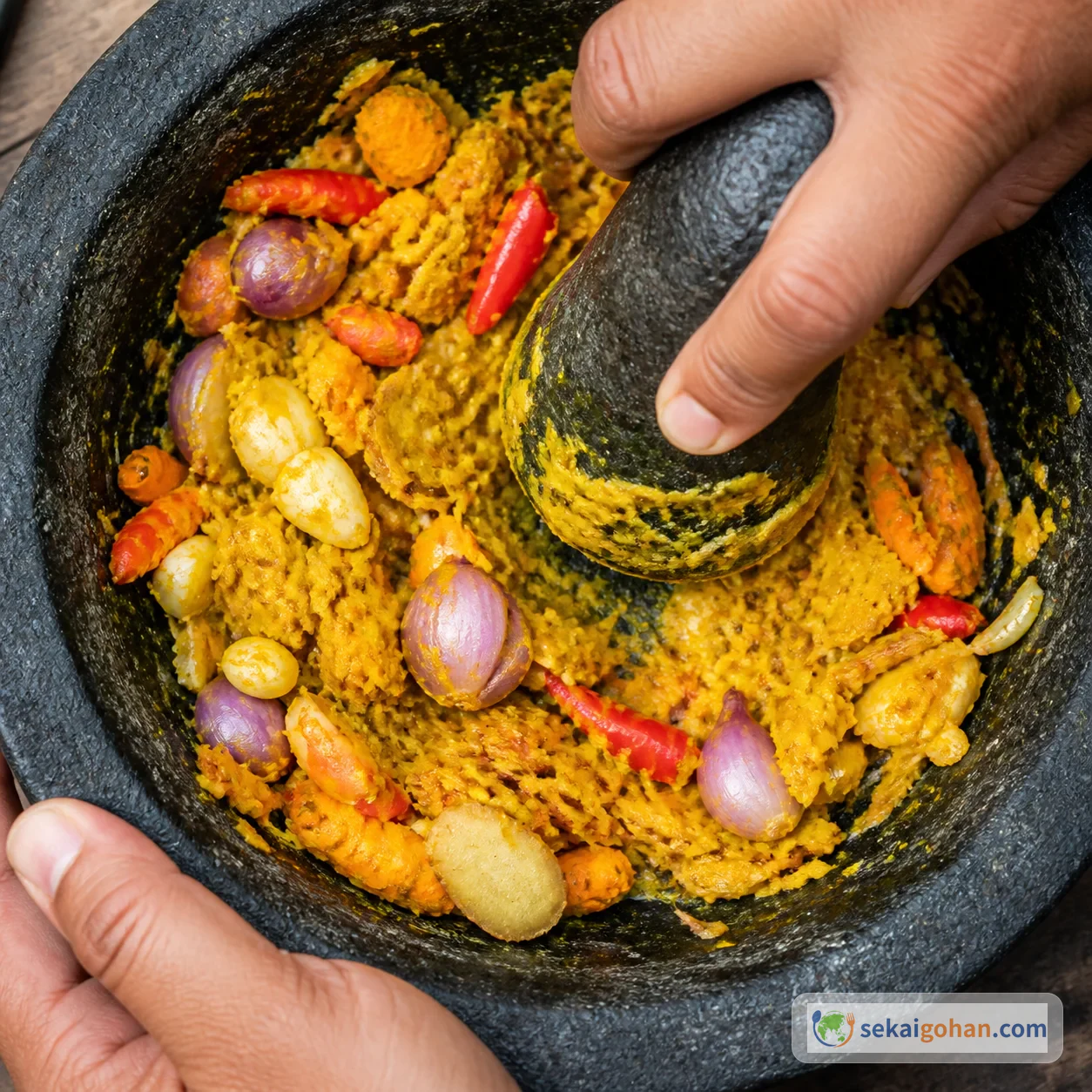
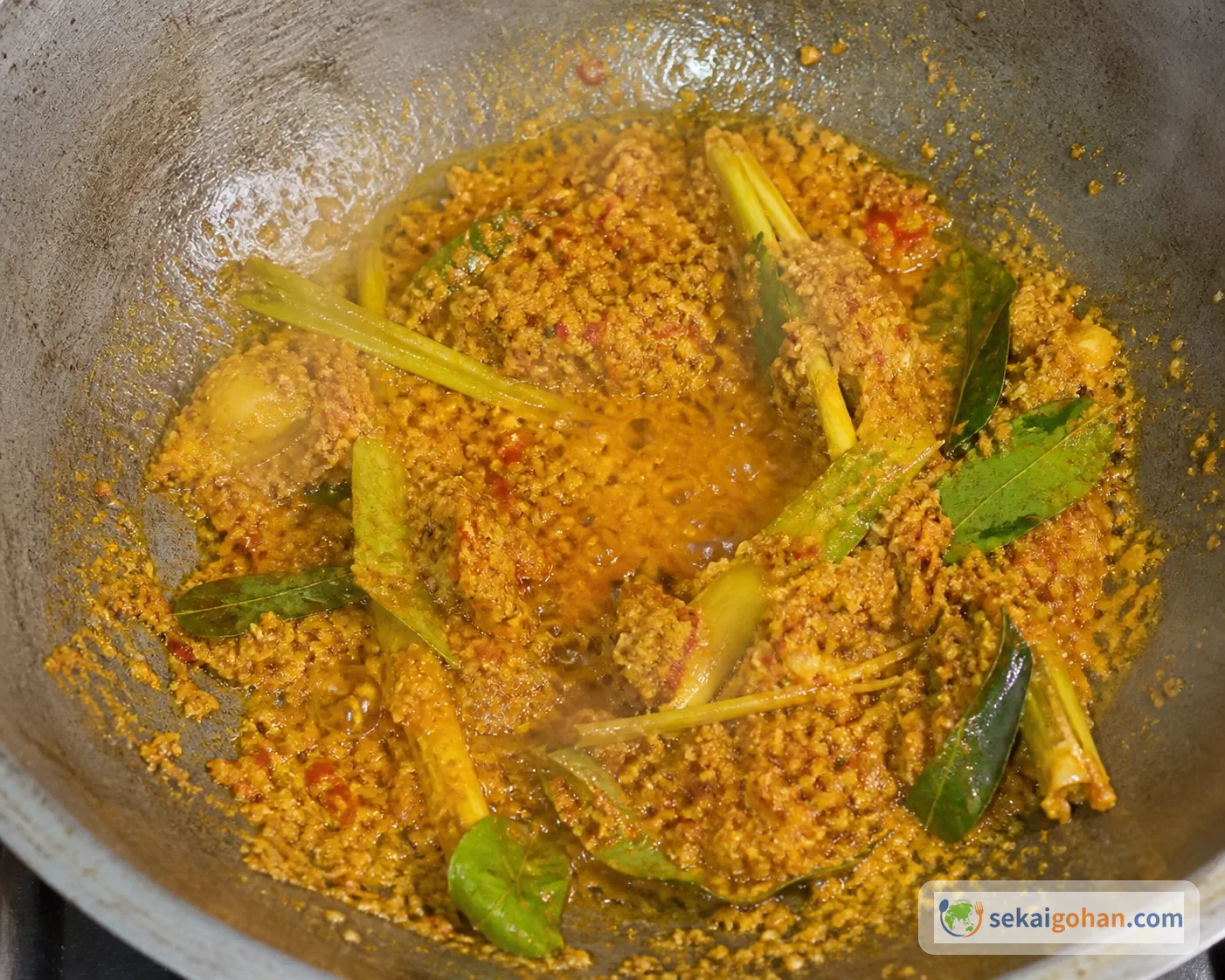
English often calls gulai "curry," but the two aren't the same. The aromatics, the coconut, the meat or vegetables and the thickness of the sauce change from one gulai to the next. Rather than flattening everything with curry powder, let the turmeric, coriander, cumin and lemongrass each come through.
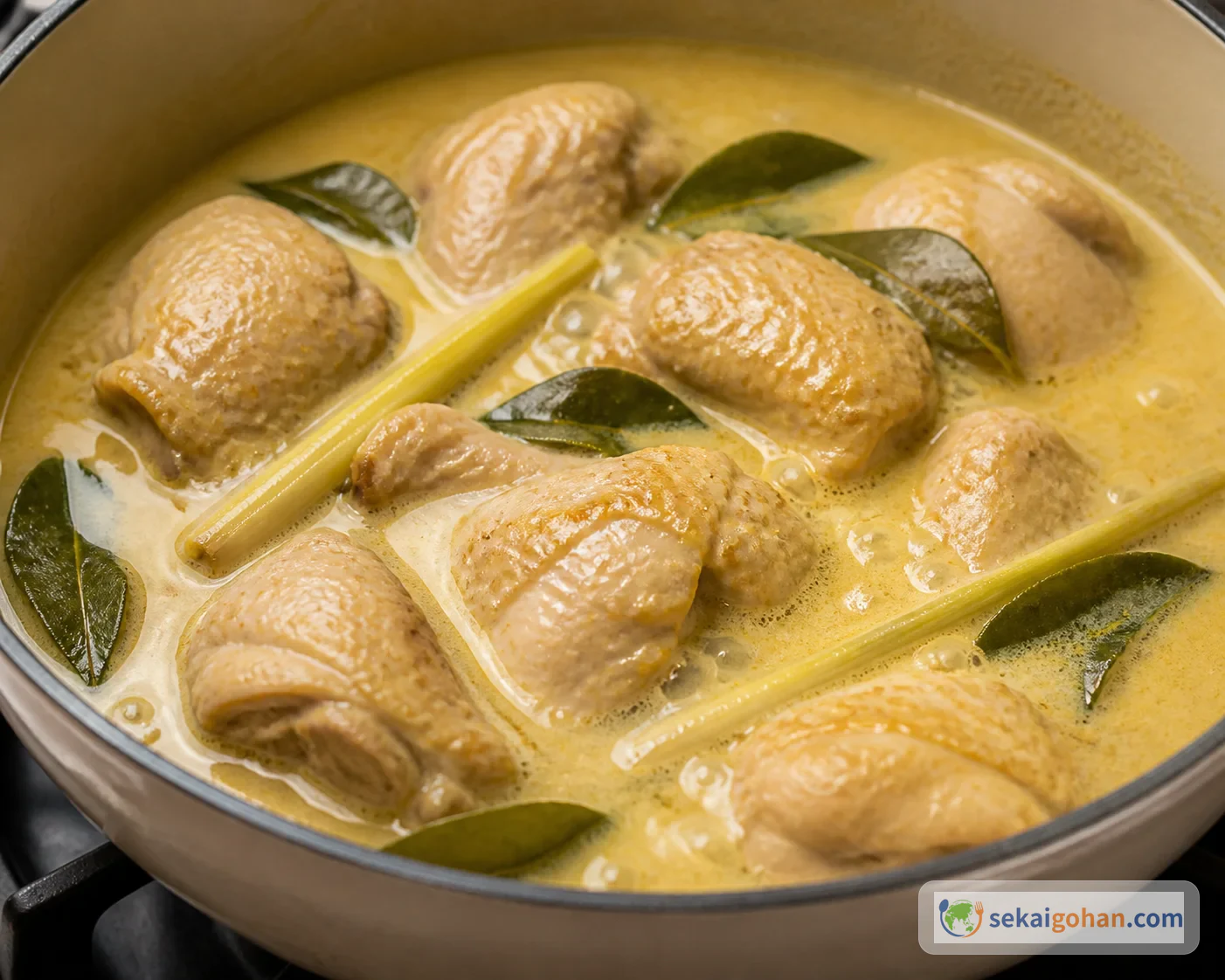
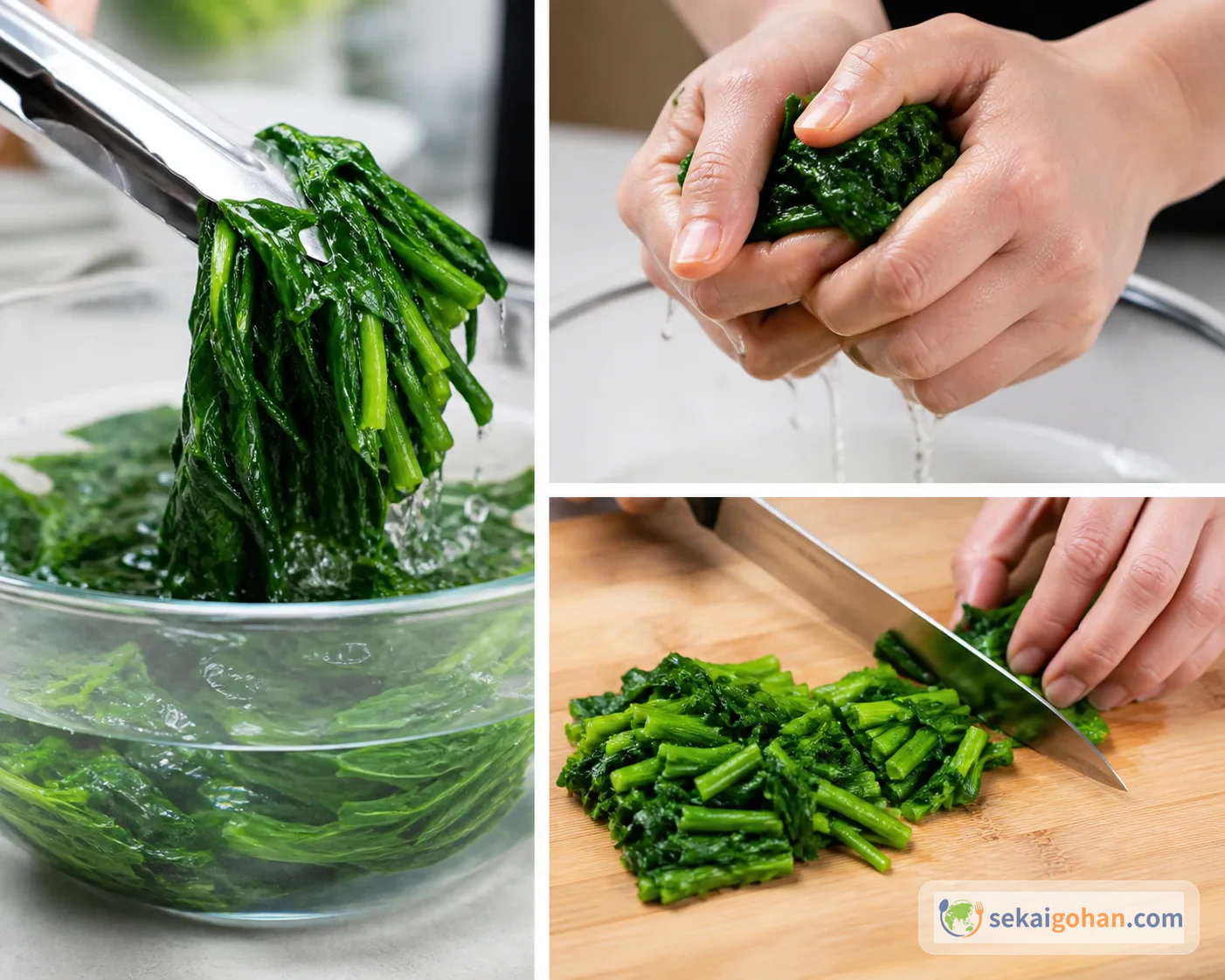
At home you don't need a restaurant's number of plates. Four separate dishes are enough: white rice, a saucy gulai, something spicy and some greens. What matters is keeping them apart, so each person can change the mix with every bite. Chicken gulai is the centerpiece here. Local tables might add beef rendang simmered for hours, offal or fish gulai and fried dishes, but chicken needs little prep. It also lets you taste the rich coconut sauce against the sharp sambal in the same meal. For the greens, easy-to-find komatsuna stands in for the cassava leaves used locally.
Ingredients (serves 4)
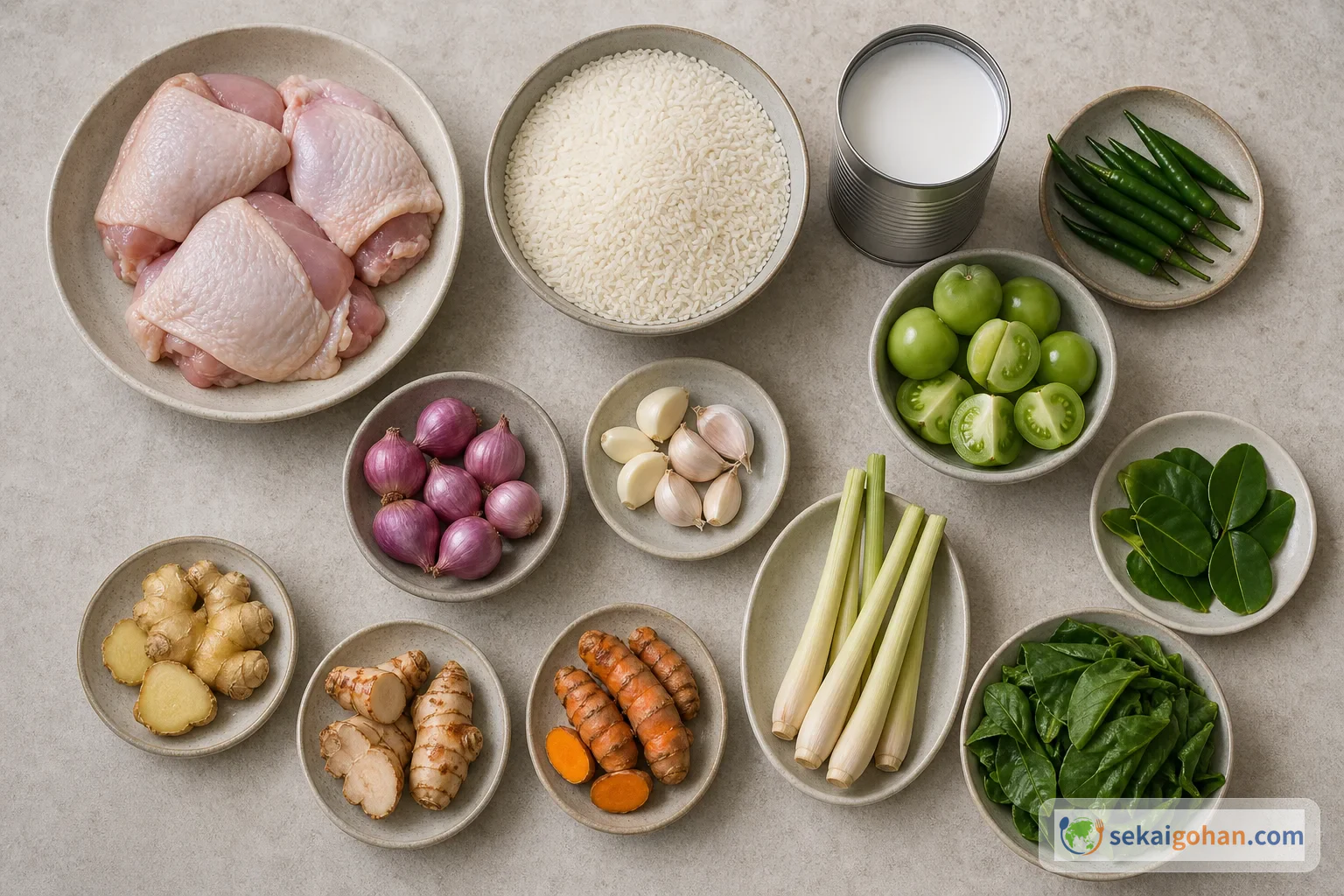
Adding more dishes won't bring you closer to a real restaurant. Starting with lots of ingredients leaves you short of burners and storage containers. For 4 servings, keep it to chicken gulai, sambal lado mudo, greens and white rice. Use boneless chicken thighs for the gulai, and make the sambal with green chilies and green tomatoes, which make it easy to control the heat.
This recipe uses coconut, chicken and nuts. If you have allergies, check the labels on store-bought sambals and spice mixes for shrimp, wheat, soy or nuts, and don't force the candlenuts in.
Choosing ingredients and substitutes for nasi padang
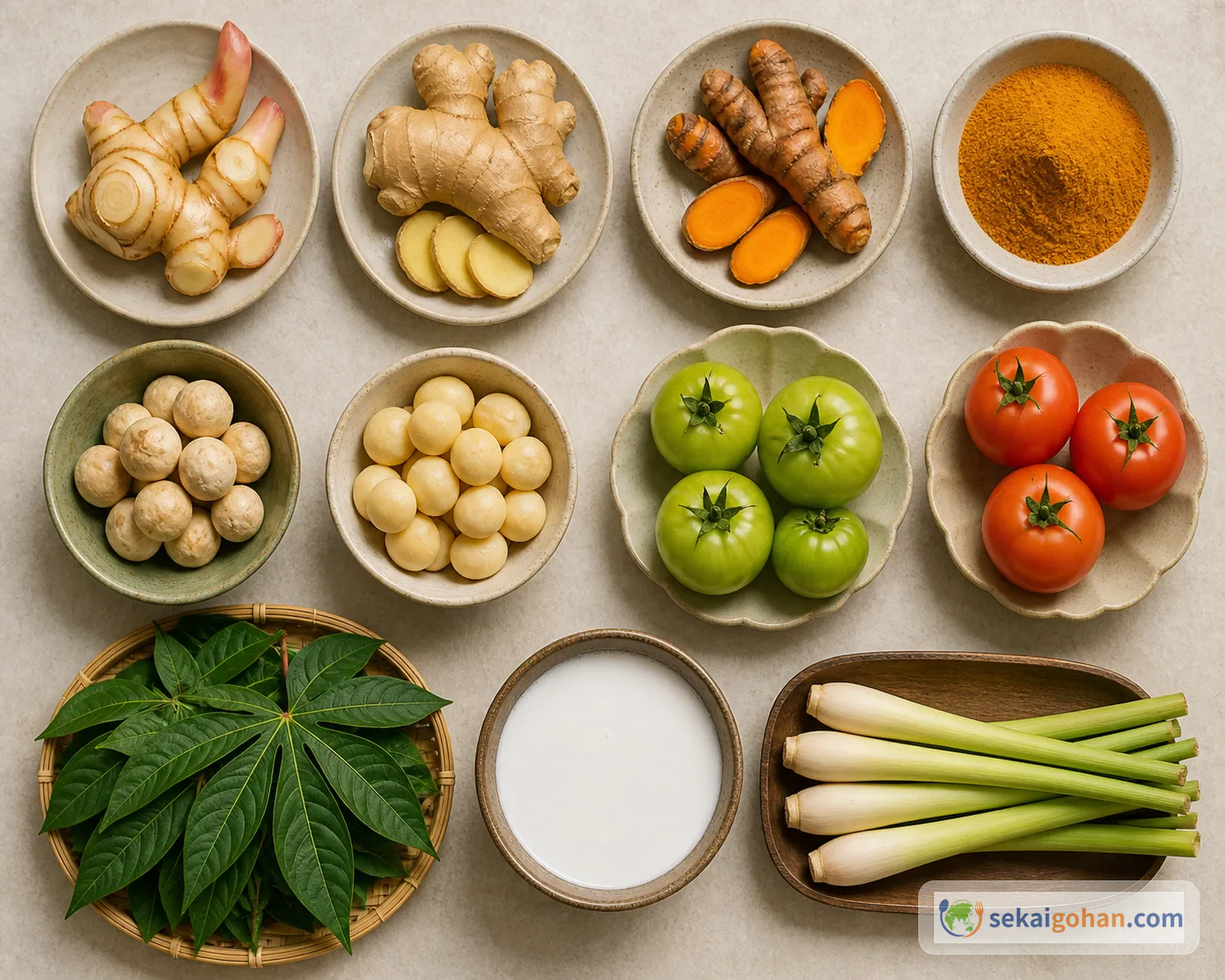
You can find chicken, rice and greens at any supermarket. The two things worth a special trip are cooking-grade coconut milk and a tool for making the spice paste. Buy a 1¾-cup (400 ml) can sold for cooking, not a coconut milk beverage, and check that the label lists little besides coconut and water. Added sweeteners make it hard to balance the salty gulai against the green chilies. If you'll cook two or more coconut dishes, cans are worth buying; if you're improvising a substitute just this once, reduce the liquid rather than reaching for cow's milk.
Specialty and Southeast Asian grocery stores sometimes carry galangal, makrut lime leaves and candlenuts. Galangal matters most, because ginger noticeably softens its aroma. On days when you want the local scent, buy a small bag of frozen galangal and keep it sliced into portions, so there's no fresh root going to waste.
Keep the ingredients that hold the dish together, and swap the rest:
| Ingredient / element | Closer to local | Practical substitute | What changes |
|---|---|---|---|
| Coconut milk | Rich cooking-grade canned | Also canned; adjust with water | Aroma and richness of fat remain |
| Galangal | lengkuas | A little extra ginger | The earthy, citrus-like aroma weakens |
| Candlenuts | kemiri | Unsalted macadamias, or omit | The sauce's round richness weakens |
| Fresh turmeric | kunyit | Ground turmeric | Color holds, but the fresh, earthy aroma fades |
| Makrut lime leaves | daun jeruk | A little lemon zest | The leaf's bitterness and depth of citrus aroma change |
| Green tomatoes | tomat hijau | Firm tomatoes + lime | The green acidity becomes rounder |
| Cassava leaves | daun singkong | Komatsuna, spinach | Texture and gentle bitterness change |
In order of priority, hold on to the coconut milk, the turmeric color, the citrus notes of lemongrass and makrut lime leaves, and the sambal on its own plate. Gulai survives a swap of galangal or candlenuts. Replace the coconut milk with cow's milk and build the aroma from curry powder alone, though, and you end up with a very different dish.
Candlenuts make the sauce rounder, but they're optional. If you use macadamia nuts instead, choose unsalted and unsweetened ones, and leave them out for anyone who can't eat nuts. Thickening with cornstarch or similar gives a texture nothing like gulai.
Pounding the aromatics coarsely in a stone mortar leaves a little fiber, and you can see the aroma moving into the oil. A food processor or any mortar you already own works too. A stone mortar is only worth buying if you'll make this often and want less chopping.
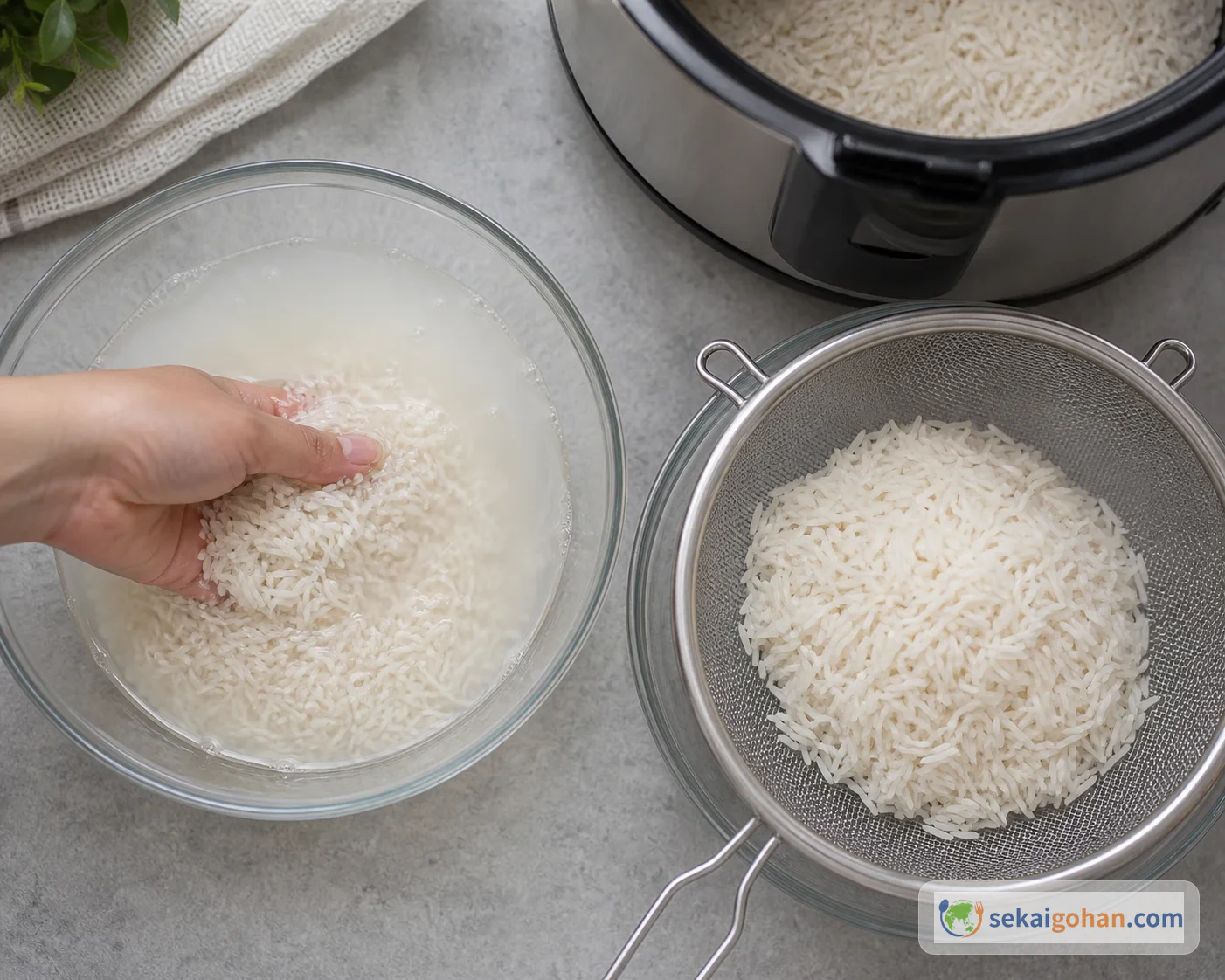
Jasmine rice keeps its grains separate, but Japanese short-grain rice works too. Use less water and think of it as a home version with slightly stickier rice. For other Thai rice or basmati, follow the package directions and go easy when spooning gulai sauce over the rice. Keeping the sauce on its own plate does more for texture than the choice of rice.
Instructions: finish the gulai and sambal while the rice cooks
Chicken gulai spends a long time simmering on low heat, so start the rice first and the meal won't bottleneck before serving. Make the sambal last while tasting for heat, and blanch the greens just before bringing everything to the table. Keep cutting boards and chopsticks that touched raw chicken away from the rice and greens. Don't wash the chicken; if the juices bother you, pat it with paper towels.
Common nasi padang problems and fixes
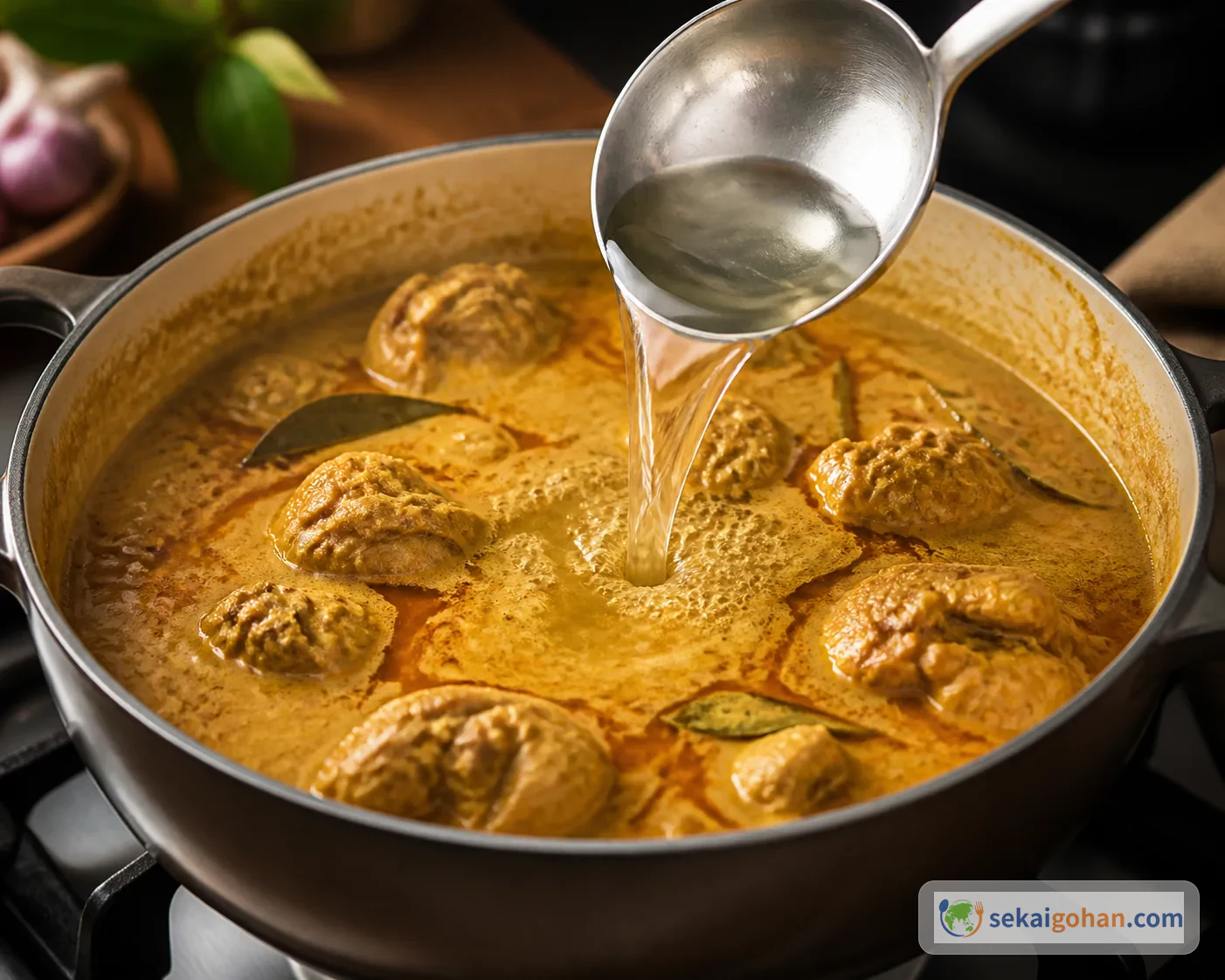
A hard boil after the coconut milk goes in splits the oil from the liquid and makes the surface grainy. Keep the heat low enough that bubbles keep forming at the edges of the pot, and adjust only the thickness of the sauce once the chicken is cooked.
Cook the rice first, keep the gulai on low heat, and make the sambal and greens toward the end, and the greens keep their color and the sambal its aroma. Keep everything warm the whole time, and the greens weep and the sambal tastes more of oil than of heat.
The sauce split
Turn off the heat, add 2 tbsp hot water and stir slowly with a wooden spatula. Put it back on low heat for 3 minutes without letting it boil, and the liquid and oil will partly come back together. Even if some oil stays separate, the sauce is still good with the chicken. Reducing it over high heat only makes it split more.
The gulai is watery
Take out the chicken and simmer the sauce alone, uncovered, over low heat. Cook in 5-minute stretches until a wooden spatula dragged through it leaves a brief trail, then return the chicken. Potato starch would cost you gulai's light, flowing sauce, so give the water time to cook off.
The gulai is too salty
Thin it with hot water, not coconut milk, 3.5 tbsp (50 ml) at a time. Aim for it to taste right with the chicken and rice, even if it seems a little mild on its own. Unsalted white rice and greens on the plate also spread the salt across each bite.
The sambal is too hot
Stir in more green tomatoes, fried onion and a little oil, bit by bit. Sugar alone turns it into a sweet paste, so adjust with acidity and more vegetables. You can also spoon the hottest part into a separate dish and add it back later.
The chicken is tough
Even thighs turn tough over high heat with too little liquid. Add ½ cup (100 ml) hot water, set the lid ajar and simmer on low for another 10 minutes. Stop when the meat starts to come apart, and check that it's cooked through to the center. Skip washing the chicken to make it tender, for both hygiene and texture.
Serving, variations and storage
Serving nasi padang
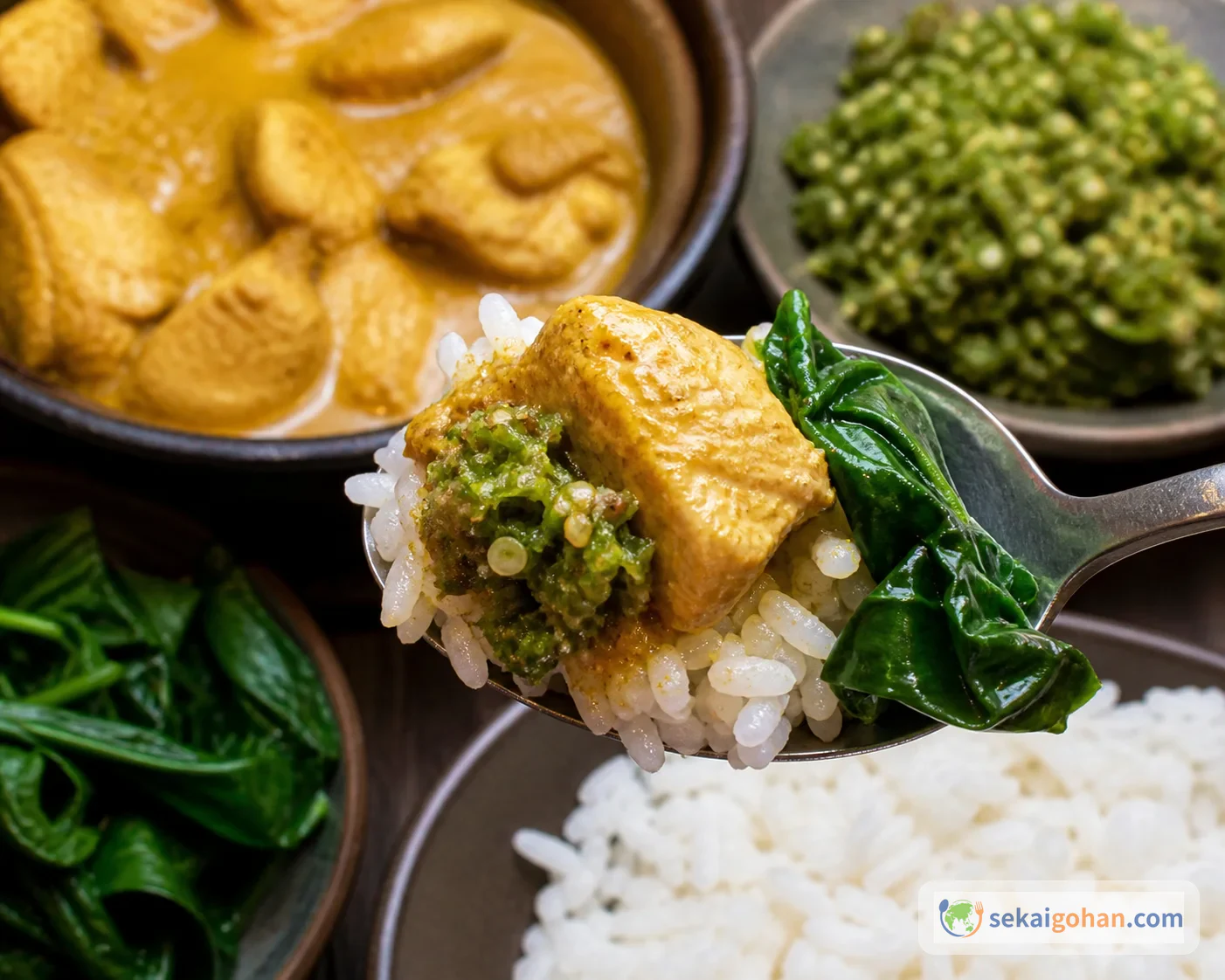
Set the four dishes out side by side and let everyone take a little of each per bite. Leave the gulai loose and saucy, and keep the sambal out of the pot so each person can choose how far to go.
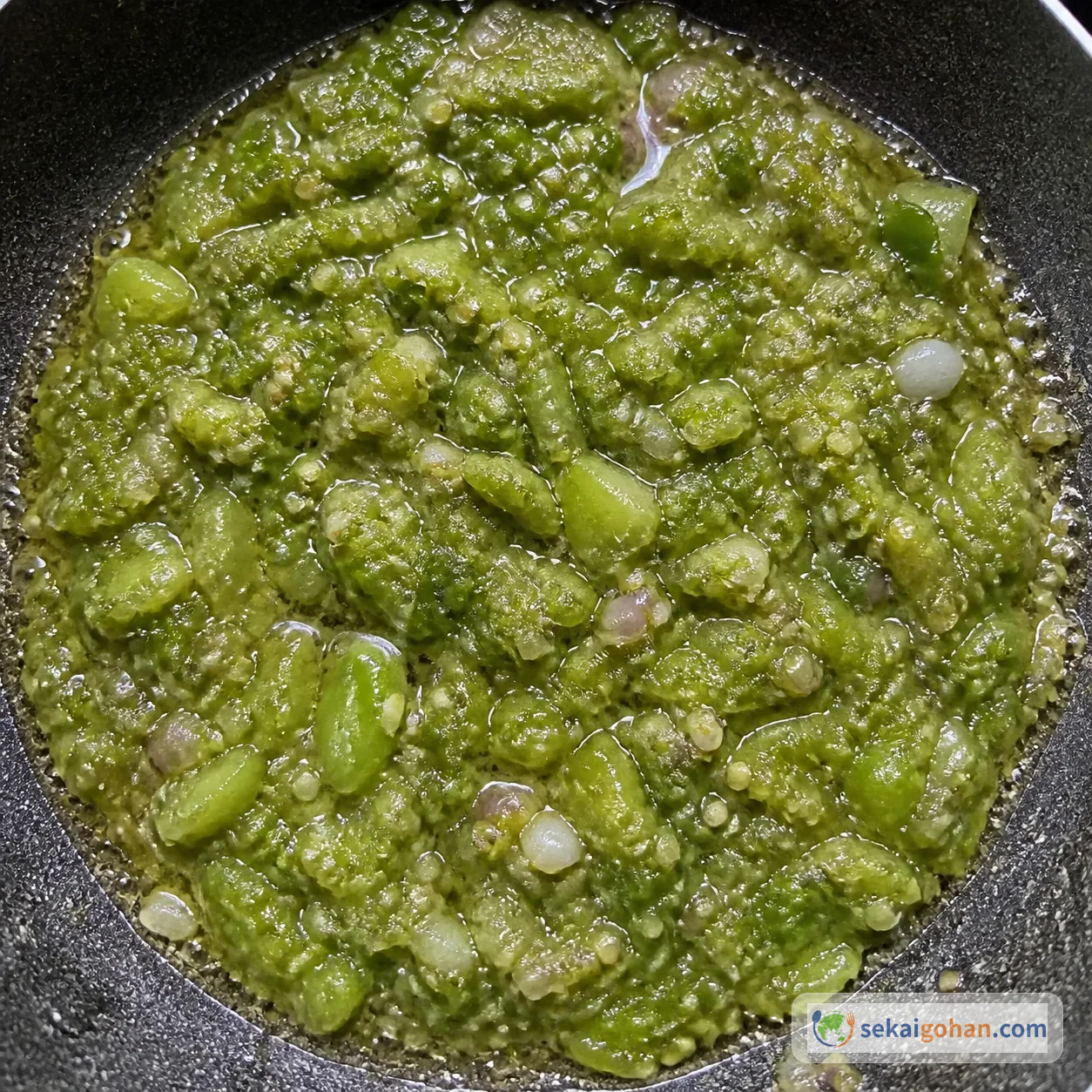
Sambal lado mudo is a small dish for enjoying the aroma and acidity of green chilies. Stir it into the gulai and the heat drowns even the coconut flavor of the chicken. When heat-lovers and heat-avoiders share a meal, serving it on the side is the easiest way.
Variations on the four dishes
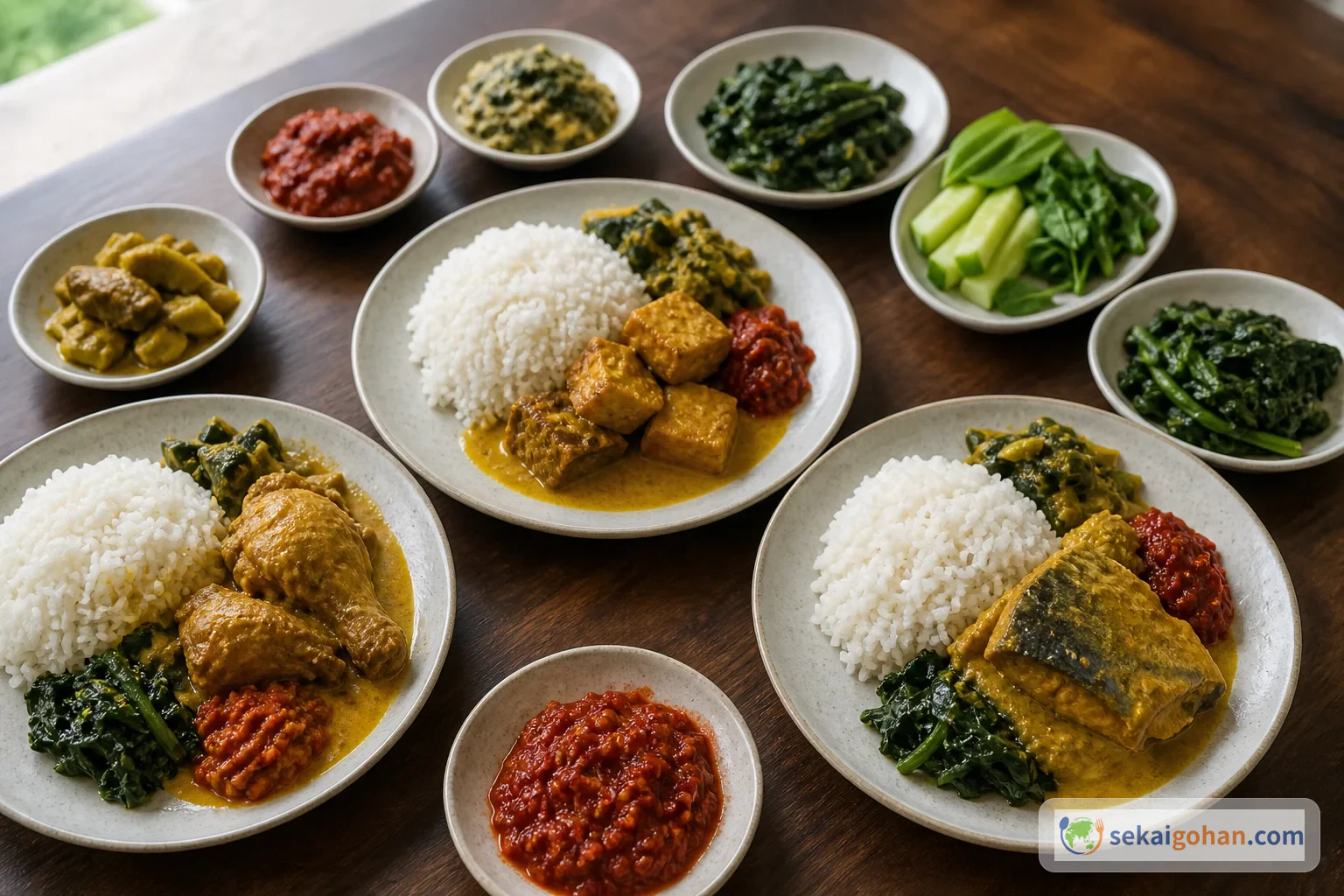
For a tofu gulai, swap the chicken for 14 oz (400 g) thick fried tofu (atsuage), adding the coconut milk after frying the aromatics. Fried tofu holds its shape and soaks up the sauce, so about 10 minutes of simmering is enough. If you're making it plant-based, check whether store-bought sambal contains shrimp.
For a sour fish simmer, use 1.25 lb (600 g) white fish instead of chicken. Simmer the aromatics and coconut milk for 15 minutes before the fish goes in, and add more lime so the acidity plays against the coconut's sweetness. The fish breaks apart easily, so shake the pot instead of stirring.
A red sambal of red chilies, tomatoes and garlic changes the whole meal without touching the gulai or greens. When turning up the heat, set some aside to adjust before adding more chilies.
Young jackfruit, Kapau style, is worth trying if you can find it. Simmer it in stock and coconut milk and serve it in its own small dish next to the chicken. If you use canned, choose jackfruit packed in water, not sweet syrup, and rinse it well. It adds another main, so save it for a weekend once the four basic dishes feel familiar.
Leftover gulai makes a good noodle meal the next day. Thin it with a little hot water and pour it over cooked rice noodles or udon, with the sambal and greens added when you eat. Warm only what you need, because thinning the whole batch loses the concentration you want with rice.
Storing and reheating nasi padang
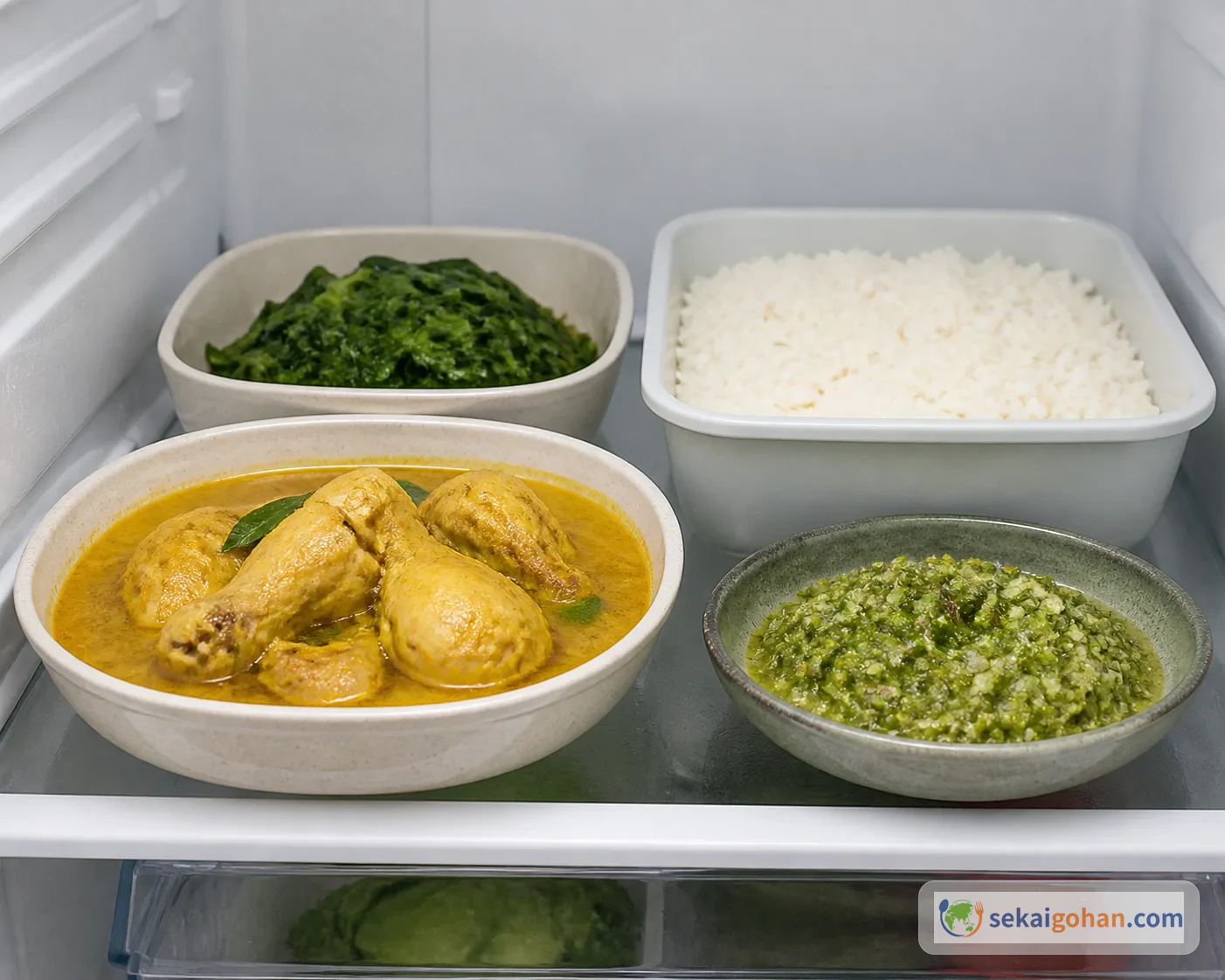
Store the gulai, sambal, greens and rice in separate clean containers. Don't leave them out to cool for long. Divide them into shallow containers, cool, then refrigerate. Reheat the gulai over low heat with a little hot water so it doesn't boil. The sambal can be eaten cold, but if the oil has set, leave it at room temperature for a bit before stirring.
Because this uses chicken, keep storage containers and cooking chopsticks separate from anything that touched raw meat, and keep raw meat away from other foods. Don't push storage times, and throw out anything with an off smell, a slimy surface or a bulging container. To freeze, freeze only the gulai in single portions, and don't refreeze it after thawing.
FAQ
What if I don't like coconut milk?
Coconut milk gives chicken gulai its body, so leaving it out makes a different stew. The safest route is to cut it to 1¼ cups (300 ml) and raise the water to 1½ cups (350 ml), keeping all the aromatics. Cow's milk and cream behave differently, both in aroma and with acidity, so they aren't equal substitutes.
I can't find green chilies.
Combine 2.75 oz (80 g) shishito peppers with however many green chilies you can find. You can make the sambal with red chilies instead, but you lose the green color and fresh aroma. Jarred sambal oelek works as a separate condiment, though it tastes different from green sambal lado mudo.
How do I check that the chicken is cooked?
Cut into the thickest piece and check that the center is white and the juices run clear. To be more certain, check that the center has reached at least 75°C (167°F) for at least 1 minute. Don't wash raw meat, don't cut greens on the same board, and wash any utensils that touched the chicken with detergent before moving on.