In 2011, a reader poll ranked the world's 50 most delicious foods, and first and second place went to the same country. Rendang, the dry beef curry of West Sumatra, came first, and nasi goreng, Indonesian fried rice, came second. That country is Indonesia, an archipelago with the world's fourth-largest population (about 270 million). Its cooking draws on more than 17,000 islands and on centuries of mixing between the food cultures of India, China, the Arab world, the Netherlands and the indigenous peoples. The result is sweet, spicy and deeply layered, and many of its best dishes are easy to cook at home.

The Five National Dishes of Indonesia

In 2018, Indonesia officially recognized five national dishes, partly to spread its food culture abroad and attract tourists.
Rendang
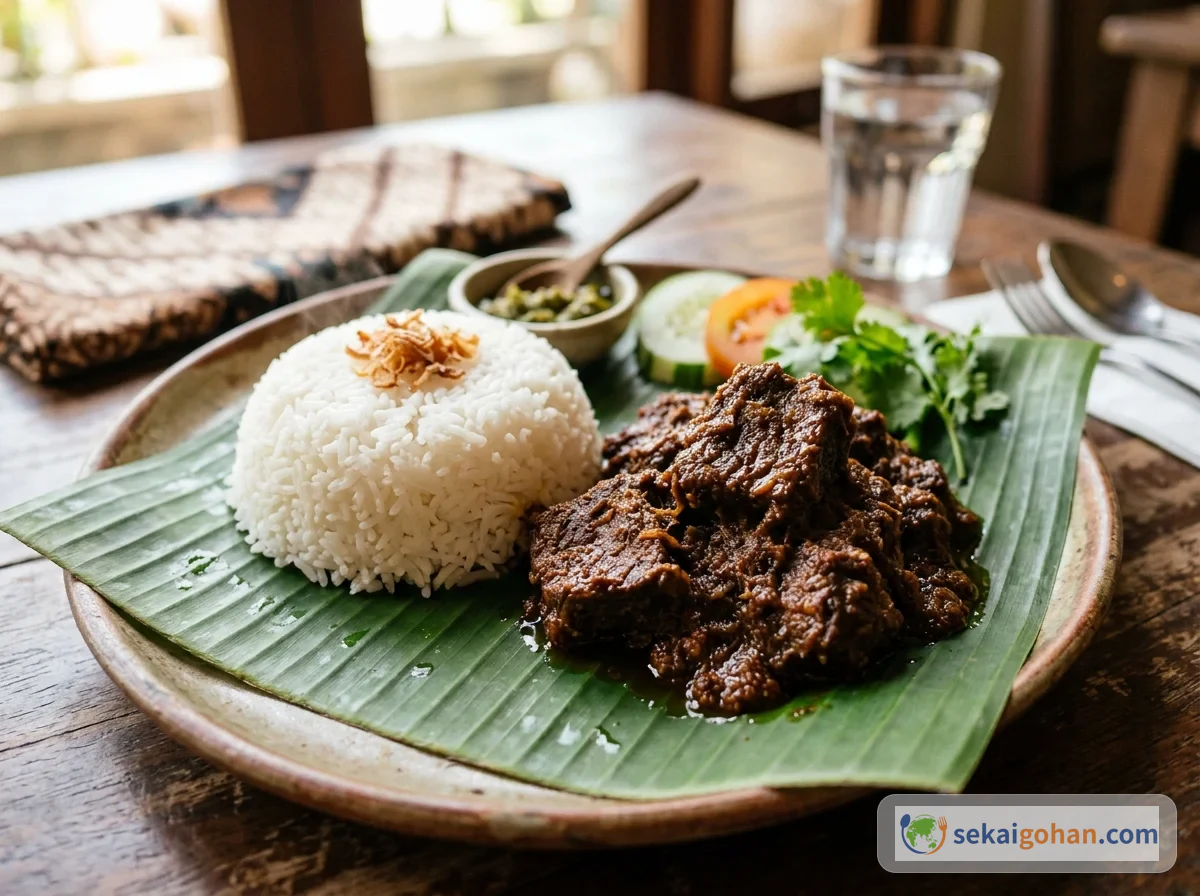
Rendang belongs to the Minangkabau people of West Sumatra. Beef (or water buffalo) is simmered for 4–5 hours in coconut milk and more than 20 spices, then stir-cooked until the liquid is gone, which makes it a "dry curry". The name comes from the Indonesian for "high heat", and it also names the cooking process itself.
Authentic rendang takes 5 hours of cooking, but with a ready-made rendang paste (available at Asian groceries) it comes together in about an hour. Using beef shank or beef short rib gets you closer to the local texture.
Nasi goreng
The name simply means "fried rice" (nasi = rice, goreng = fried). Kecap manis and terasi give it a distinctive sweet-and-salty flavor. Use the previous day's cold rice: it has lost some moisture, so the grains stay loose. For the method, see the nasi goreng recipe.
Sate (satay)

These are Indonesia's signature grilled skewers. Thin slices of beef, chicken, pork (in Bali) or lamb are threaded on bamboo skewers, grilled over charcoal and eaten with peanut sauce.
Satay is now eaten across Southeast Asia, in Thailand, Malaysia, Singapore and elsewhere. Sate Madura from Madura Island is among the best known, served with both a sweet-and-spicy peanut sauce and sweet soy sauce (kecap manis).
Gado-gado

"Gado-gado" is a Jakarta-region word meaning "mix-mix". It is a salad of boiled vegetables (bean sprouts, green beans, cabbage, spinach), tofu, tempeh and boiled egg, topped with peanut sauce, and it is a vegan dish rich in fiber and protein. Locally, the peanut sauce starts with frying lemongrass and galangal, but peanut butter, lime, sugar and soy sauce make a good version too.
Soto

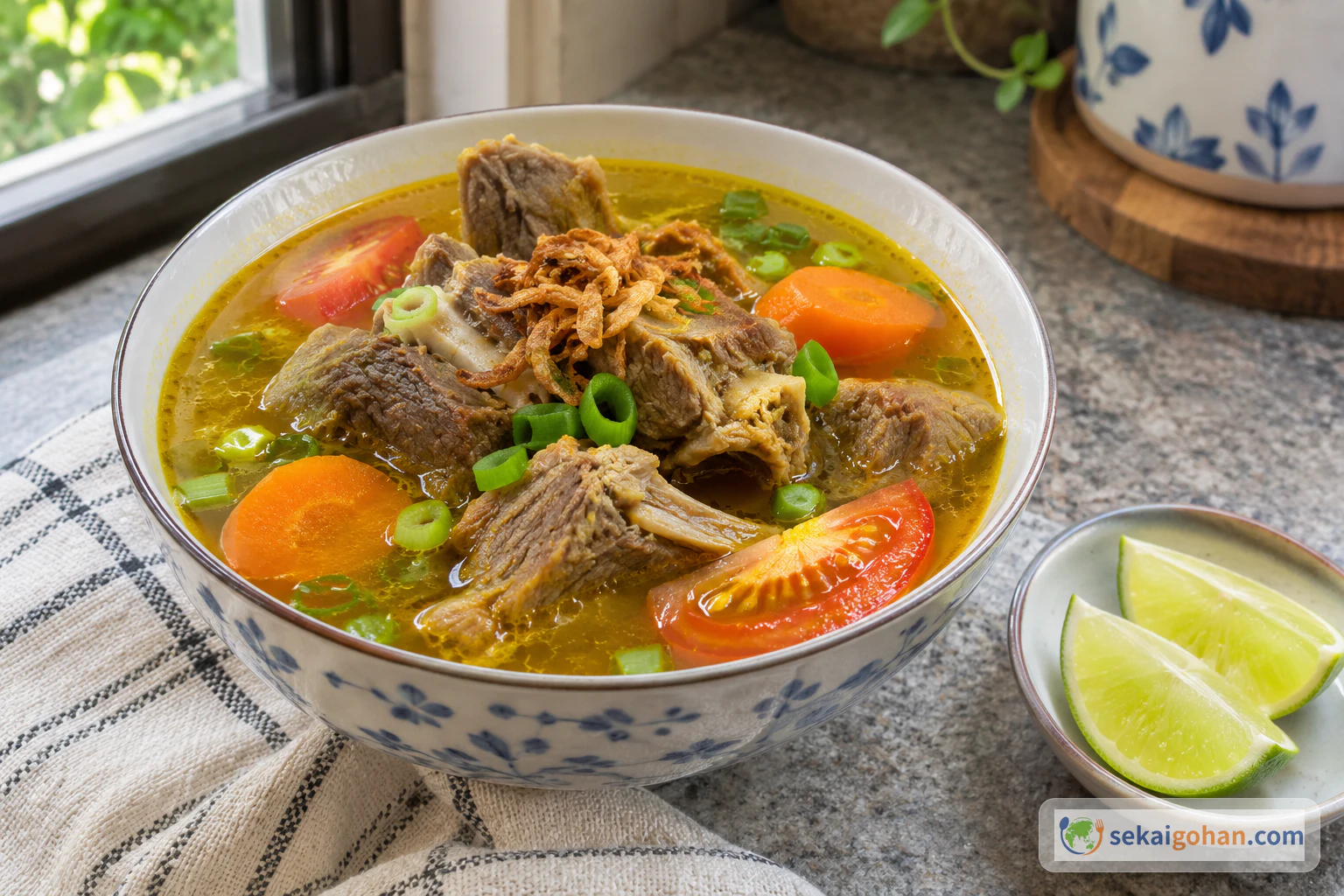
Soto is the general name for the soups most widely eaten in Indonesia, and the closest thing the country has to a "national food". Everyone from Sumatra to Papua eats it, both as home cooking and as stall fast food. There are dozens of regional versions, including soto ayam (clear chicken soup), soto Madura (rich beef soup) and soto Banjar (beef soup from Borneo).
Indonesian Food by Region
Indonesia is a multi-ethnic, multi-religious country, and its regional differences in food are very large.
Java (Jakarta, Yogyakarta)

Java is the largest island and the most populous region, and its food is all about the balance of sweet and spicy, with kecap manis as the base. Representative dishes are nasi goreng, bakso (beef meatball soup) and gudeg. Gudeg, young green jackfruit simmered for hours in palm sugar, is considered "the symbol of Yogyakarta cuisine".
Sumatra (Padang, Medan)
The food of the Minangkabau people of West Sumatra, commonly called "Padang food", is the spiciest, most heavily spiced in Indonesia. Rendang was born here.
Padang restaurants have their own "nasi Padang" style. When you sit down, 15–20 small dishes are set on the table at once, and you pay only for what you eat. Rendang, pedas (chile stir-fry) and gulai (coconut milk curry) are among them.
Padang food is the spiciest even within Indonesia. If you don't like heat, ask for "kurang pedas" (less spicy) or choose a soup such as soto Padang.
Bali
Bali is Indonesia's only mainly Hindu island. Free of the Islamic (halal) ban on pork, it is the one region where pork dishes developed.
Babi guling (whole roast pig) is Bali's signature dish and essential at ceremonies and on special days. The whole animal is marinated in the Balinese spice paste "bumbu Bali" and roasted slowly over charcoal while being turned. To try Balinese aromas at home with chicken, ayam betutu, chicken steamed in banana leaf with bumbu, is a good entry point.
Makassar (South Sulawesi) and the east
Makassar, a city in South Sulawesi, is where Indonesia's beef and offal dishes are most developed. Coto Makassar (beef offal soup) is thick and rich, eaten with rice or ketupat (rice cakes), while sop konro is a gentle clear soup of slowly simmered beef shank bones and cartilage.
Farther east, in Maluku and Papua, sago rather than rice is the staple. Papeda is a good way to see Indonesian cooking beyond rice and stir-fries.
The History Behind Indonesian Food

The richness of Indonesian food comes from several hundred years at the crossroads of cultures.
Indigenous food culture (up to the 15th century)
The oldest food culture belongs to the indigenous peoples of Borneo, Java and Sumatra. Their staples were sago palm, bananas, taro, fish and wild pig, and they developed early on the method of wrapping food in leaves and steaming it.
Tumpeng, a cone of rice, also dates from this era and was designated an "official national dish" in 2014. Its mountain shape symbolizes "prosperity and abundance" and expresses thanks to the gods of agriculture.
Indian and Arab influence (13th to 15th centuries)
Through the spice trade, Indian merchants and Arab Muslim traders brought curries and spices such as turmeric, coriander and cumin. Islam spread at the same time, laying the basis for the halal food culture of today, when about 87% of the population is Muslim. Gulai, the Indonesian coconut milk curry, is a localized version of Indian curry.
Chinese influence (15th to 20th centuries)

Exchange with China, continuing from the Majapahit kingdom, brought stir-frying, noodles, tofu and soybean processing. Tempeh is thought to have developed independently after soybean fermentation came from China.
Mie goreng (fried noodles), bakso (beef meatballs) and lumpia (spring rolls) all grew out of Chinese food culture. Chinese Indonesians make up about 3% of the population, but their influence on the table is immeasurable.
The Dutch colonial period (17th to early 20th century)
The Dutch ruled Indonesia as a colony for about 300 years from 1602. They devised rijsttafel ("rice table"), an adaptation for Europeans of the Indonesian way of eating many small dishes. The explosive spread of sambal culture, built on the chile (native to South America) that the Portuguese brought in the 16th century, also belongs to this era. In the Netherlands, Indonesian food is still a "quasi-national food".
Indonesian Food and Its Southeast Asian Neighbors
Indonesian food has a few features that set it apart within Southeast Asian cooking.
Compared with Thai food: Thai food puts forward fresh herbs (basil, coriander) and the sourness of fish sauce (nam pla), while Indonesian food centers on the depth of spices and the sweetness of coconut milk, so the sweet-and-spicy balance works differently. Like Indonesian food, Thai gapao rice is loved as an everyday rice dish.
Compared with Vietnamese food: Vietnamese food is marked by fermentation, fresh herbs and texture, while Indonesian food mostly builds complex flavor through stir-frying and stewing. Dishes that rely on freshness, like banh mi, are almost nonexistent in Indonesian cooking.
Relation to Malaysian food: Indonesia and Malaysia are very close ethnically and culturally, and rendang, satay and nasi goreng are "shared cultural heritage". Arguments over which country has the original flare up from time to time. Just as pad thai is Thailand's national dish, nasi goreng is a national dish in both countries.
We introduce dishes from across Southeast Asia, including Thai pad kra pao (gapao), pad thai and Vietnamese banh mi, all makeable with everyday ingredients.
Key Ingredients in Indonesian Cooking
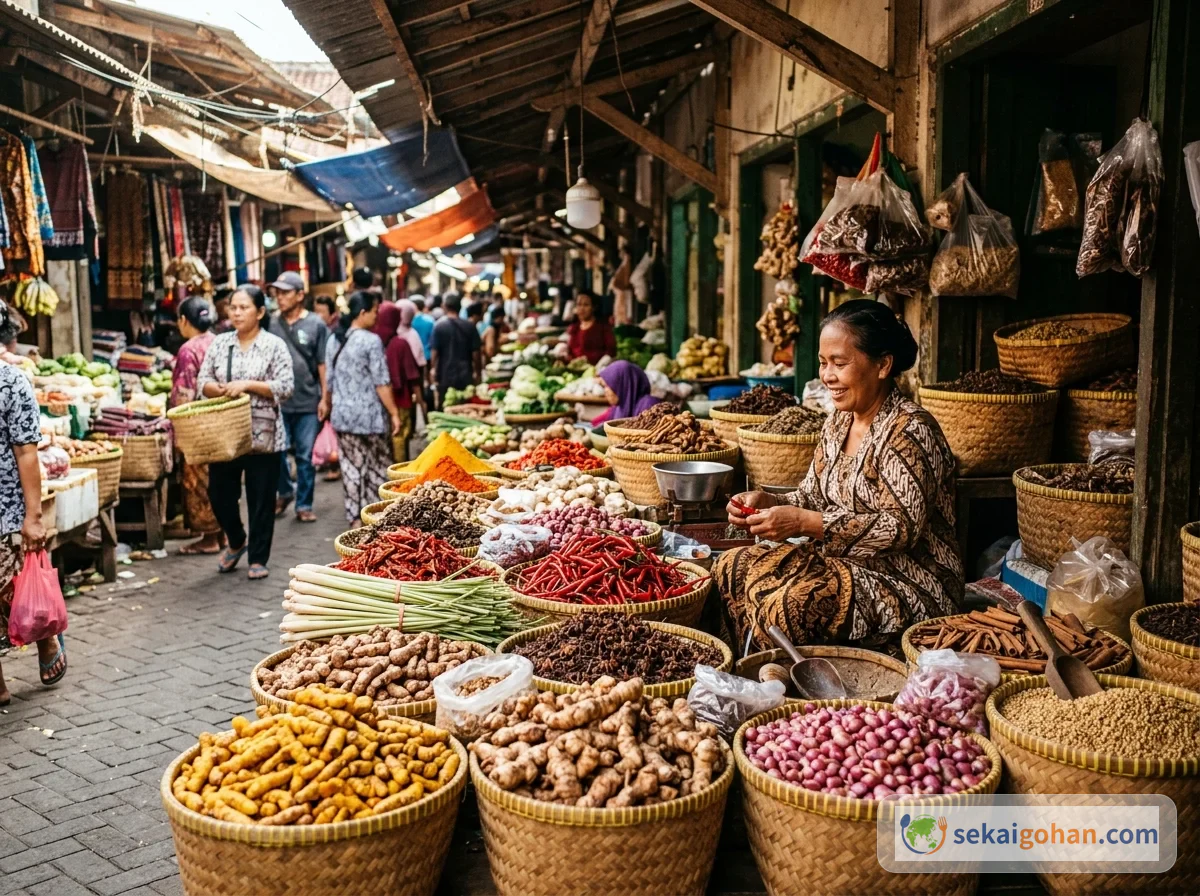
Five ingredients explain most of what you taste in Indonesian food. Once you know them, even a dish you are eating for the first time starts to make sense.
Kecap manis (sweet soy sauce)
Kecap manis is the seasoning most closely tied to Indonesian cooking. It combines the thick sweetness of boiled-down molasses with the savor of soy sauce, and nasi goreng, satay and bakmi (Indonesian stir-fried noodles) depend on it.
The word has a famous family tree. The best-known account says the Hokkien "kê-tsiap" (a fermented fish or soybean liquid) became "kecap" in Malay and Indonesian, traveled to Europe via the Dutch and British, and in the 19th century became linked with tomato sauce to give American ketchup.
Mix 3 tbsp soy sauce, 2 tbsp brown sugar and 1 tbsp water well and warm over low heat for 2–3 minutes until the sugar dissolves, and you have a seasoning with an authentic kecap manis flavor. It is less sweet than the store-bought kind but is good enough for cooking.
Terasi (fermented shrimp paste)
Terasi is a solid paste of salted, fermented and dried shrimp or small fish. The smell is very strong, but in a dish it brings a distinctive savor and depth. Many sambals contain it, and it is essential in nasi goreng. Finely crushed dried shrimp comes closest as a substitute.
Sambal (chili sauces)

Sambal is the general name for seasonings and sauces made mainly from chiles, and there are a great many of them. The type of chile and the other ingredients (terasi, lime, tomato and so on) change by region, and each sambal is paired with particular dishes. Well-known ones include "sambal ulek" (fresh chiles and salt), "sambal bajak" (garlic, terasi and chiles) and "sambal kecap" (a sweet soy-based version).
Tempeh (fermented soybeans)

Tempeh originated on Java. Boiled soybeans are wrapped in the mold Rhizopus oligosporus and fermented overnight into a solid block covered in white mycelium. Like natto it is fermented, but the smell is mild and the flavor nutty.
It has spread worldwide as a vegan, plant-based food. Tempeh has about 19 g of protein per 3.5 oz (100 g), nearly twice as much as tofu, and is rich in fiber and vitamin B12.
Galangal
Galangal belongs to the ginger family and looks like ginger, but has a distinctive cooling aroma. It is the base of almost every stir-fry and stew in Indonesian cooking. Fresh galangal is hard to find in many places; dried powder or a paste containing galangal (such as laksa paste) will stand in.
Where to find Indonesian ingredients
| Ingredient | Where to find it | Notes |
|---|---|---|
| Kecap manis | Asian groceries, online | ABC brand is the standard |
| Terasi (shrimp paste) | Asian groceries, online | Strong flavor even in small amounts |
| Sambal ulek | Asian groceries | Easy to find |
| Tempeh (frozen) | Asian groceries, natural food stores | Thaw and pan-fry for good flavor |
| Galangal powder | Asian groceries, online | Gives flavor even in small amounts |
| Rendang paste | Asian groceries | Well-known brands exist |
| Lemongrass (dried) | Asian groceries, supermarkets | Fresh is also at Asian groceries |
Cooking Indonesian Food at Home
Indonesian food looks complicated, but many dishes are easy to make at home.
| Dish | Difficulty | Special ingredients needed | Substitutes |
|---|---|---|---|
| Nasi goreng | Beginner | Kecap manis, terasi | Soy sauce + sugar / dried shrimp |
| Sate (chicken skewers) | Beginner | Kecap manis | Soy sauce + sugar + peanut butter |
| Gado-gado | Beginner | Terasi, candlenuts | Dried shrimp / macadamia nuts |
| Sweet-and-spicy fried tempeh | Beginner | Tempeh | Sold at many Asian groceries and natural food stores |
| Mie goreng | Beginner to intermediate | Kecap manis, shrimp paste | The substitutes above |
| Soto ayam | Intermediate | Galangal, lemongrass | Dried powder works |
| Rendang | Intermediate to advanced | Rendang paste | Paste available at Asian groceries |
It can be made with only ingredients from an ordinary supermarket, there is little chance of failure, and it looks good. Using "soy sauce + sugar" in place of kecap manis, it comes together without any special ingredients. For the full recipe, see how to make nasi goreng.
More dishes to cook

- Khao soi: Similar ingredients and aromas from the same region.
- Ayam betutu: Go deeper into Balinese spice pastes and wrapped, steamed cooking.
- Bún bò Huế (in Japanese): Similar ingredients and aromas from the same region.
- Mie goreng: Another dish from the Indonesian table.
Frequently Asked Questions
Is Indonesian food spicy?
It depends on the region. West Sumatran (Padang) food is very spicy, Javanese food is relatively mild with its sweet-spicy balance, and Balinese food is spicy but often comes with sambal on the side. Say "kurang pedas", meaning "less spicy", and the kitchen will accommodate you.
What is the difference between nasi goreng and Chinese-style fried rice?
The seasoning. Kecap manis (sweet soy sauce) and terasi (shrimp paste) give nasi goreng a sweet-and-salty flavor with a distinctive fermented note, quite different from the soy sauce in ordinary fried rice. A fried egg and krupuk (shrimp crackers) on top are also typical of nasi goreng.
Is rendang the same as curry?
No. Both are simmered in coconut milk and spices, but rendang is a dried meat dish: the liquid is evaporated completely so the meat and spices become one, and no sauce is left.
Are there allergy cautions in Indonesian food?
Peanut allergy: Peanut sauce (satay, gado-gado) is used in large amounts, so be careful. Shrimp allergy: Terasi (shrimp paste) is a hidden seasoning in almost every dish, so always check. Gluten: Mie goreng (made with wheat noodles) contains gluten.
Sources
- Wikipedia contributors. "Indonesian cuisine." Wikipedia, 2024. https://en.wikipedia.org/wiki/Indonesian_cuisine
- Mark Wiens. "Best Indonesian Food: 50 Dishes to Eat in Indonesia." migrationology.com, 2024. https://migrationology.com/indonesian-food/
- CNN Travel Staff. "World's 50 most delicious foods." CNN, 2011 (updated 2024). https://edition.cnn.com/travel/article/world-best-food-dishes/index.html