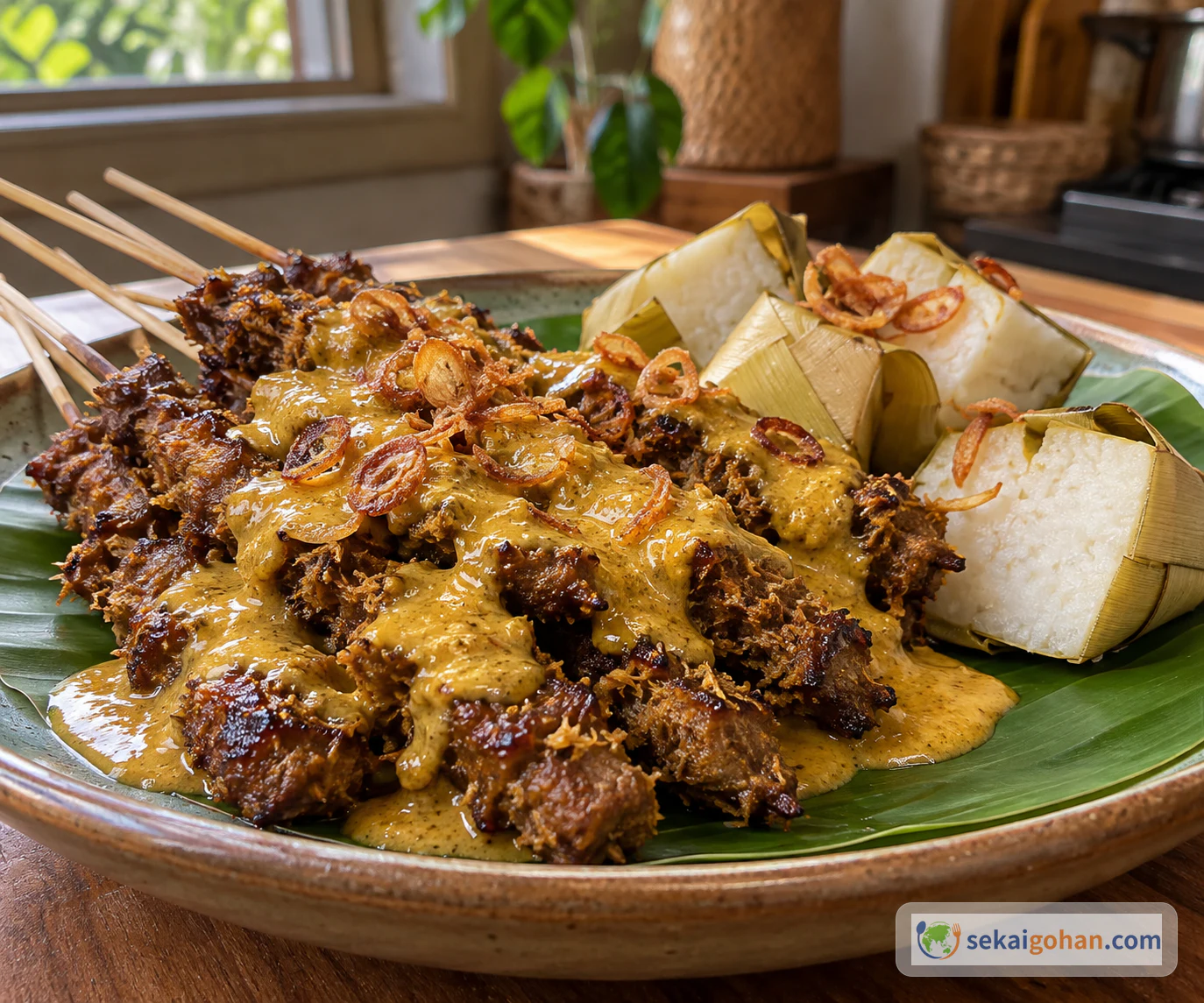
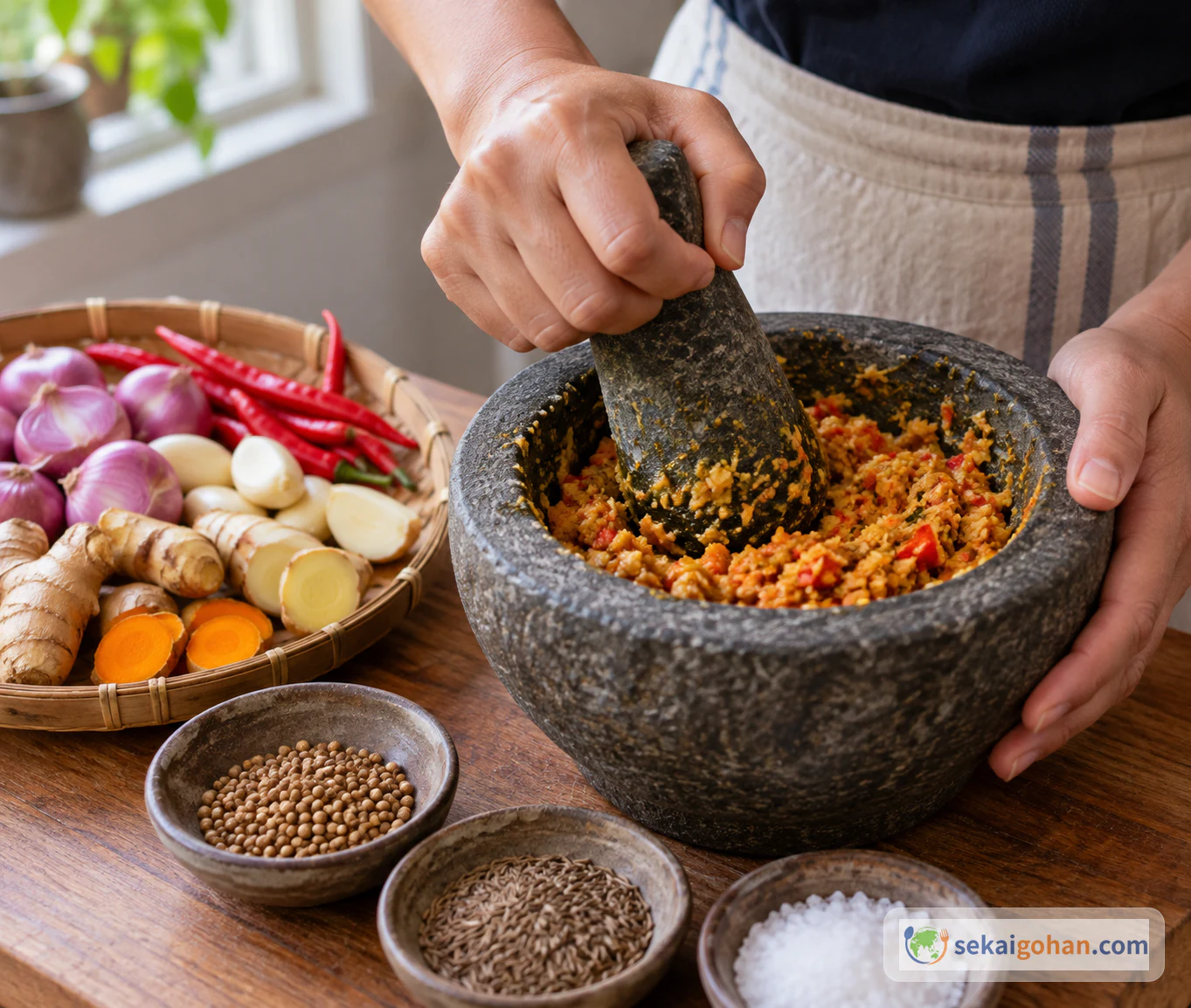

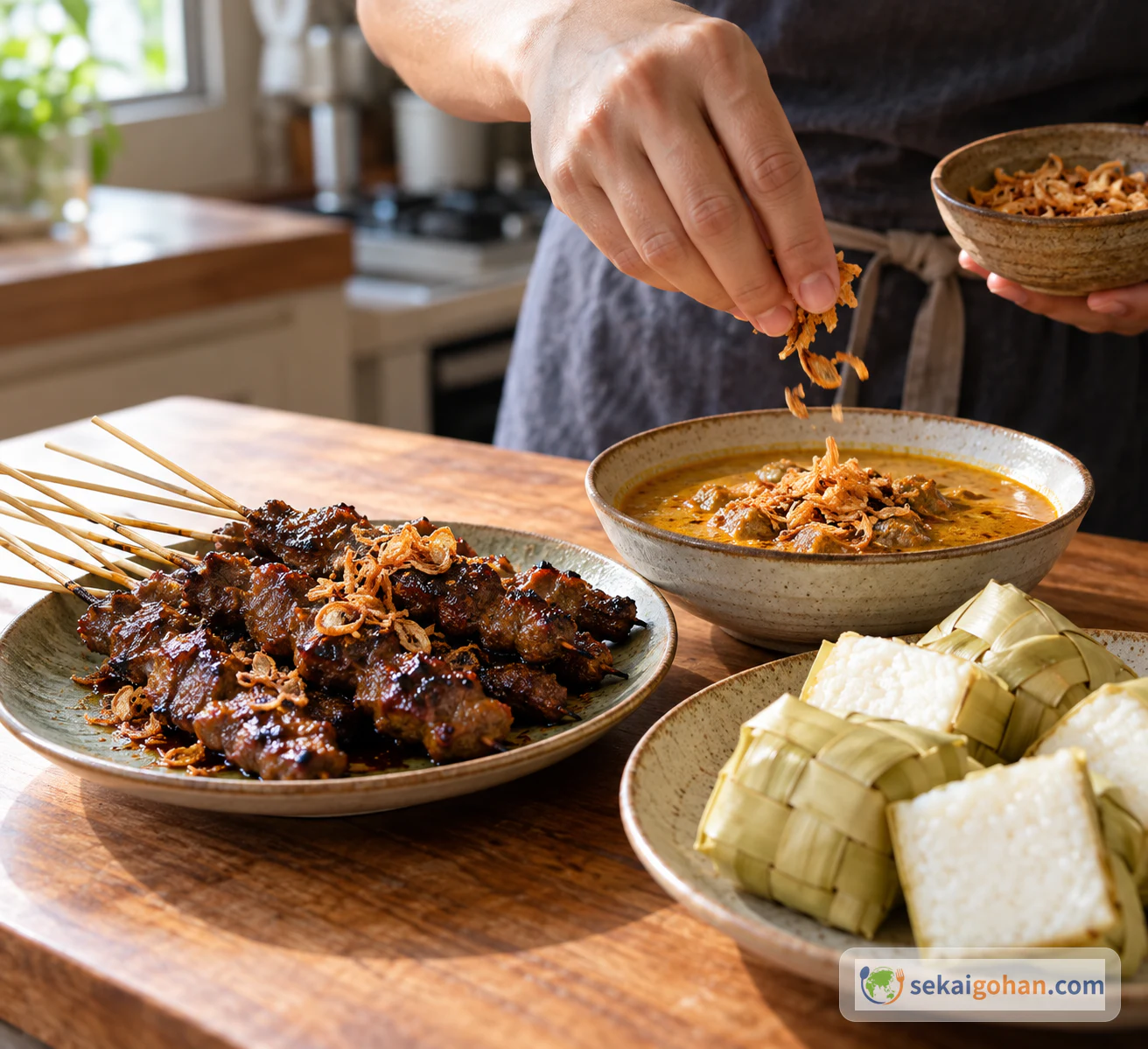
Satay usually means skewers and a dipping sauce. Danguang-Danguang satay is built differently, and the difference is coconut, which does two jobs. Grated coconut cooks with the beef and clings to it. Coconut milk goes into a yellow curry sauce made in its own pan. One spice paste, fried once and split in half, ties the two together. For more dishes from the same country, see our Indonesia page.
Danguang-Danguang Satay from Payakumbuh
At the Rang Kubang stall in Payakumbuh, Danguang-Danguang satay is served as the town's own dish, with a yellow sauce and a coating of coconut serundeng. This recipe skips the serundeng coating. The grated coconut goes into the pot raw and cooks along with the beef.
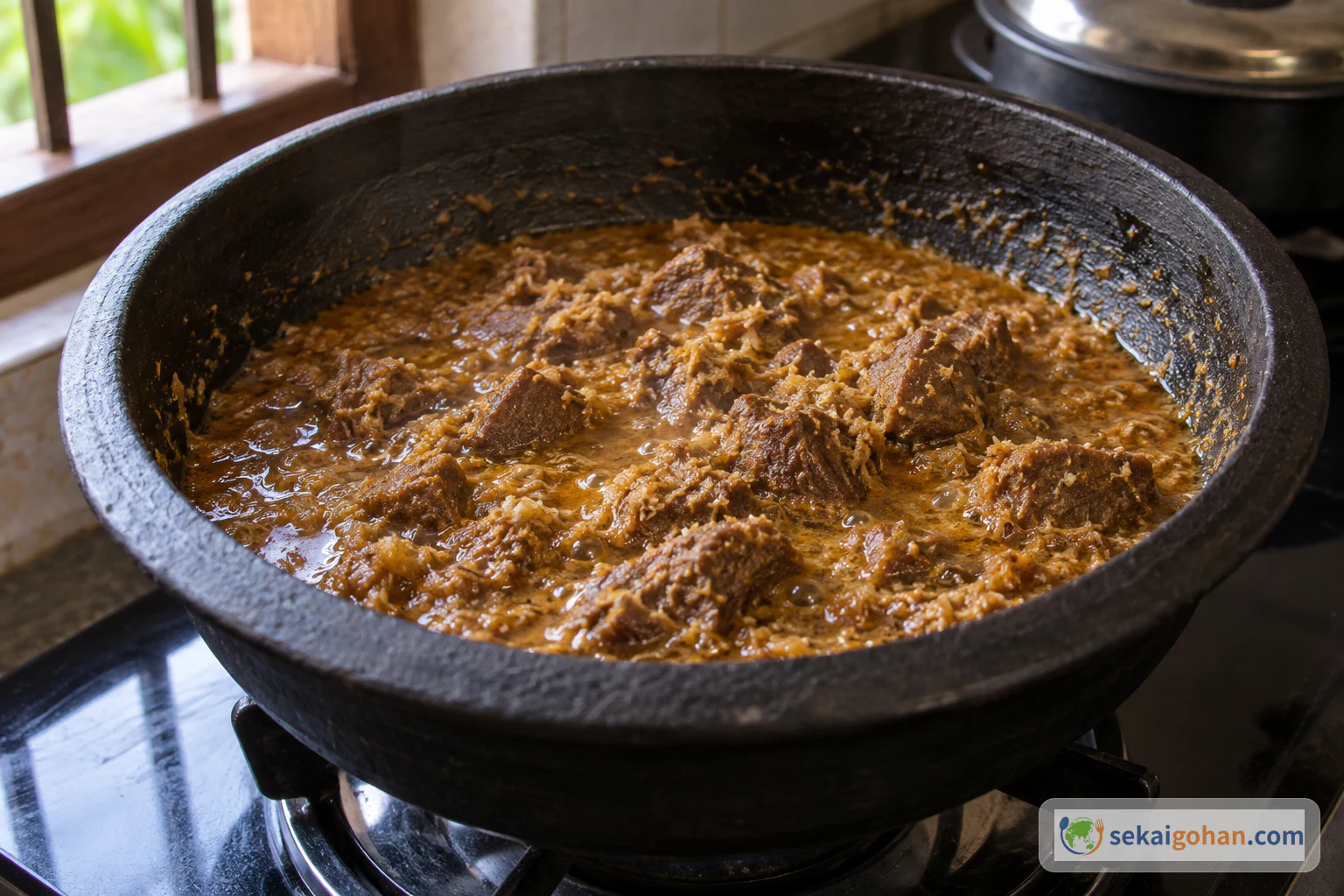
The method has two separate paths. Half the fried paste simmers with beef, grated coconut and beef stock. The other half becomes the sauce, with thick coconut milk, curry powder and rice flour. Keep the two apart from start to finish.
That split is also what sets it apart from Sate Padang. Sate Padang boils the beef in seasoned liquid and makes its sauce from strained broth and rice flour. It has no grated-coconut stage and no separate coconut-milk curry sauce.
Ingredients
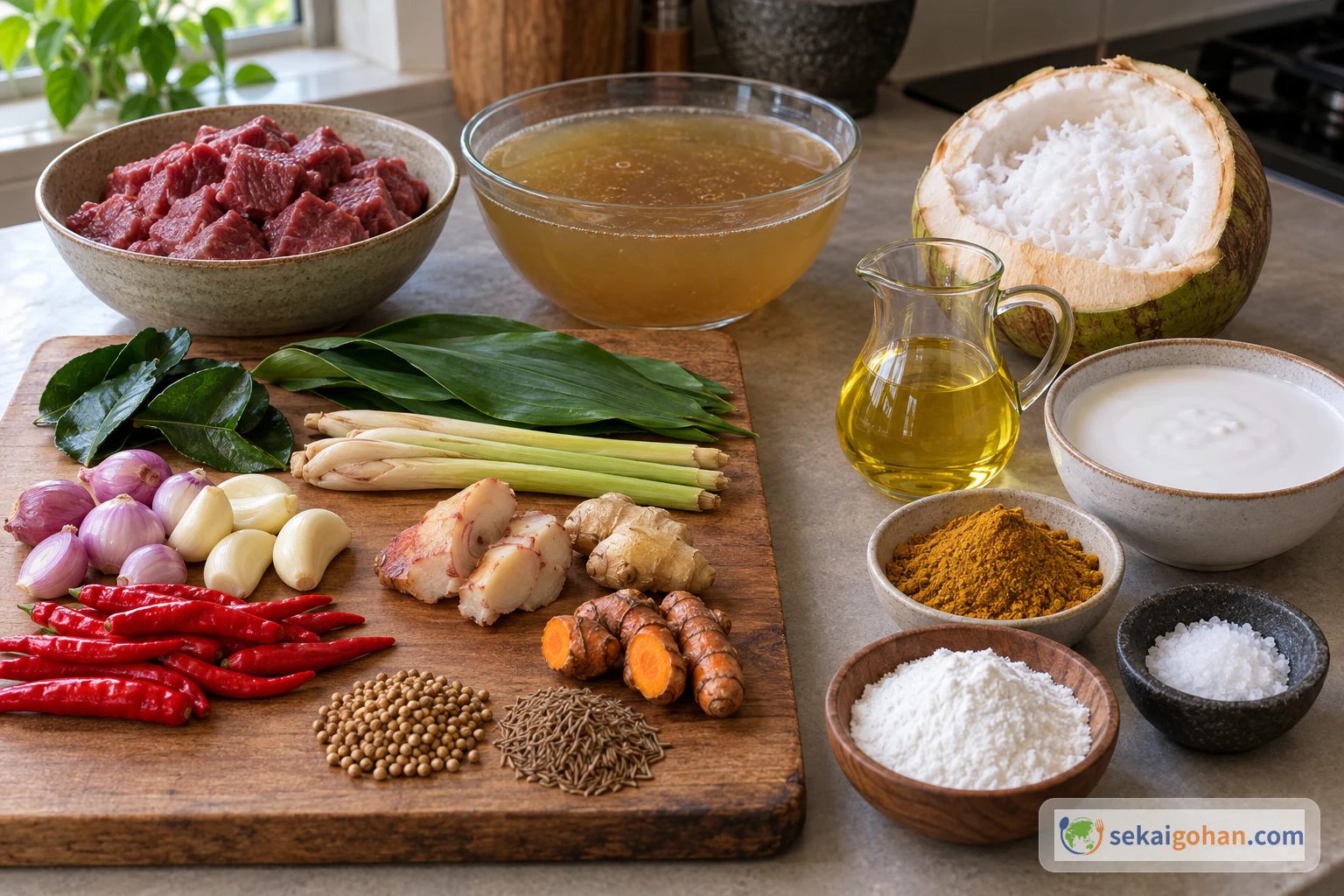
sdm = sendok makan (tablespoon); sdt = sendok teh (teaspoon).
Equipment
- Cutting board and knife
- A mortar and pestle or another way to grind the spice paste finely
- A pan for frying the paste
- Two bowls for dividing the paste
- A pot for the beef stage
- Tongs or a slotted spoon for lifting the beef
- Satay skewers
- A charcoal grill
- A separate saucepan for the sauce
- A serving plate
Choosing Ingredients for Danguang-Danguang Satay
- Grated young coconut: Use half a slightly young coconut, freshly grated. Desiccated or fine dried coconut won't work here.
- Galangal, fresh turmeric root and turmeric leaves: Look for these at Southeast Asian or Asian grocers. The turmeric leaves have no substitute.
- Rice flour: Use plain rice flour. Cornstarch is a different ingredient.
- Red chilies: Pick a variety, size and heat level you're comfortable with.
Method: From One Paste to Skewers and Sauce
The beef path runs through steps 1–10. The sauce is made in steps 11–13, and the plate comes together in steps 14–17. Cook by the description in each step, not by the clock.
This recipe gives no cooking time, end point or temperature for the low-heat stage or the sauce. The grilling step says only to cook until the meat is done. No food-safety temperatures, storage times or reheating guidance are given here. Follow the guidance of your local food-safety authority when handling and cooking beef.
Common Mix-Ups and How to Avoid Them
Most trouble with this dish comes from letting the two paths cross. It's worth a quick check before you start.
| Mix-up | Why it matters | What to do |
|---|---|---|
| Grinding coconut milk, curry powder or rice flour into the paste | They belong to the sauce, which is made later | Grind only the paste ingredients in step 1 and set the sauce ingredients aside |
| Pouring the beef stock into the sauce | The 3 cups (700ml) stock belongs to the beef stage | Make the sauce from the paste, coconut milk, curry powder and rice flour only |
| Roasting the grated coconut first | Roasting turns it into serundeng, a different preparation | Add the grated coconut straight to the beef pot |
| Making a rice-flour slurry or using cornstarch | It changes the sauce method | Add the rice flour directly in step 6 and stir |
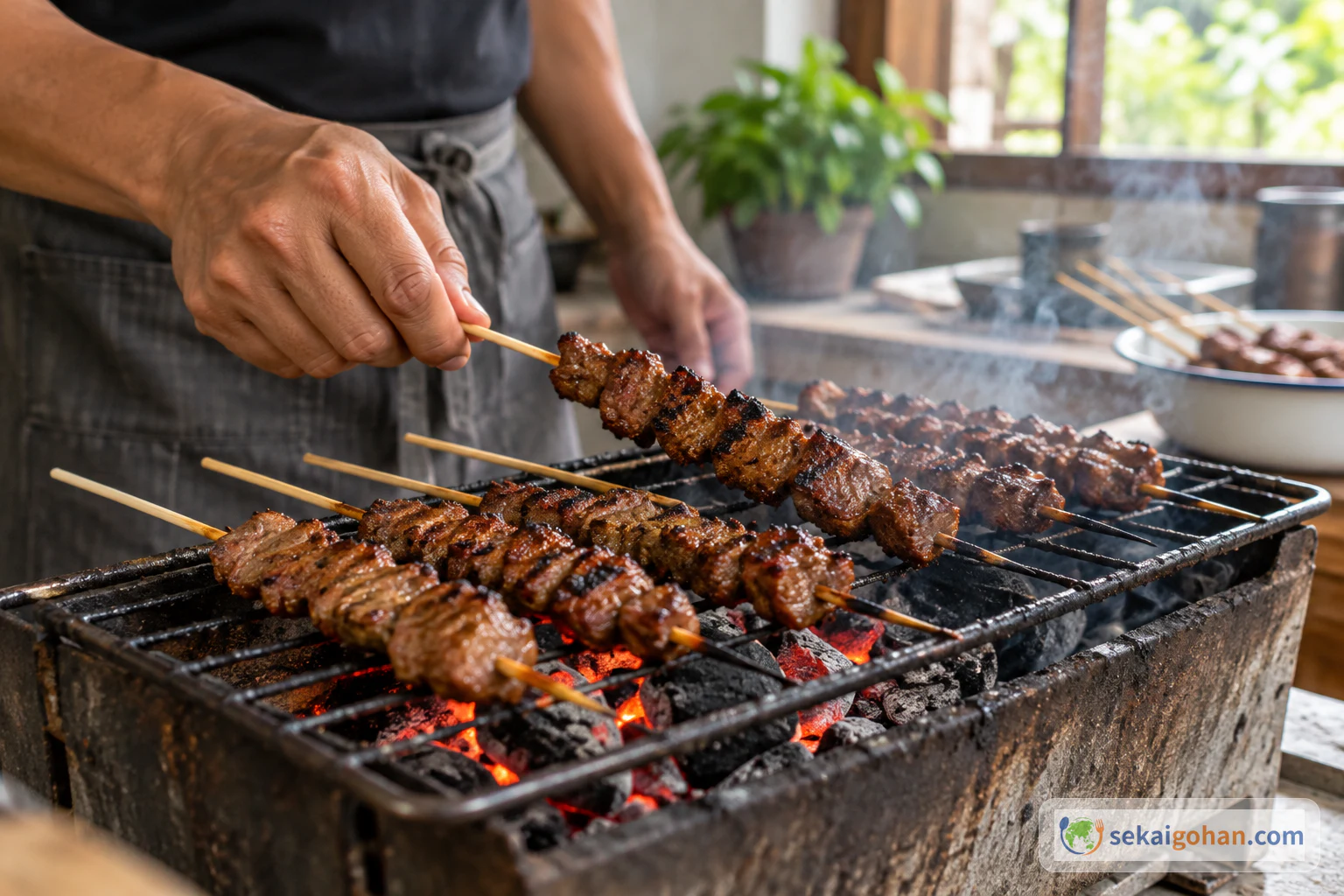
| Using a grill pan | The dish is grilled over charcoal | Grill over charcoal and turn the skewers |
Serving and Variations
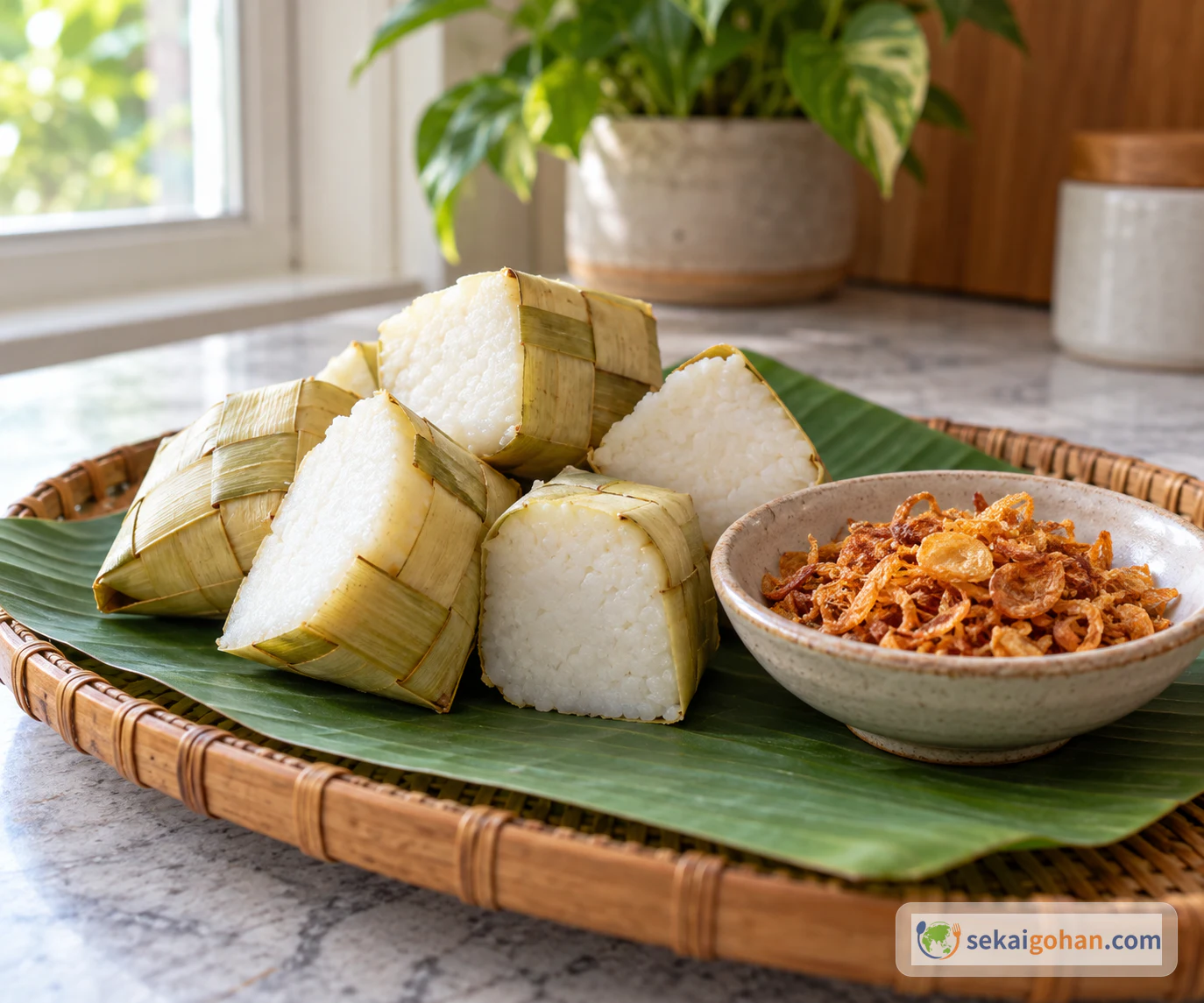
Pile ketupat on the plate, lay the skewers over it, spoon on the sauce and finish with fried shallot. Store-bought ketupat and fried shallot are what the recipe uses.
Recipes under this name vary a lot from cook to cook:
- Dangung-Dangung version. Uses 2.25 lb (1kg) meat, 2 quarts (2L) water, 2 glasses of coconut milk and 25g rice flour. The meat is boiled and roasted coconut is added.
- Padang version with shin or tongue. Uses 1 lb (500g) shin or tongue, marinated overnight in the cold with papaya leaf and pineapple. The meat is steamed for 40–60 minutes, brushed with oil and grilled, then served with a coconut sauce made with bones.
- Brisket version with papaya. Uses 1 lb (500g) brisket with a 60-minute papaya stage and a 30-minute marinade. The sauce includes starch and rice flour, coconut milk, 1 quart (1L) water, and curry and tamarind added in split amounts. The meat is cooked on a grill pan.
Frequently Asked Questions
How many grams is half a grated coconut?
The recipe calls for half a slightly young coconut rather than a weight. The weight depends on the coconut's size and how much moisture the flesh holds.
When do the turmeric leaves go in?
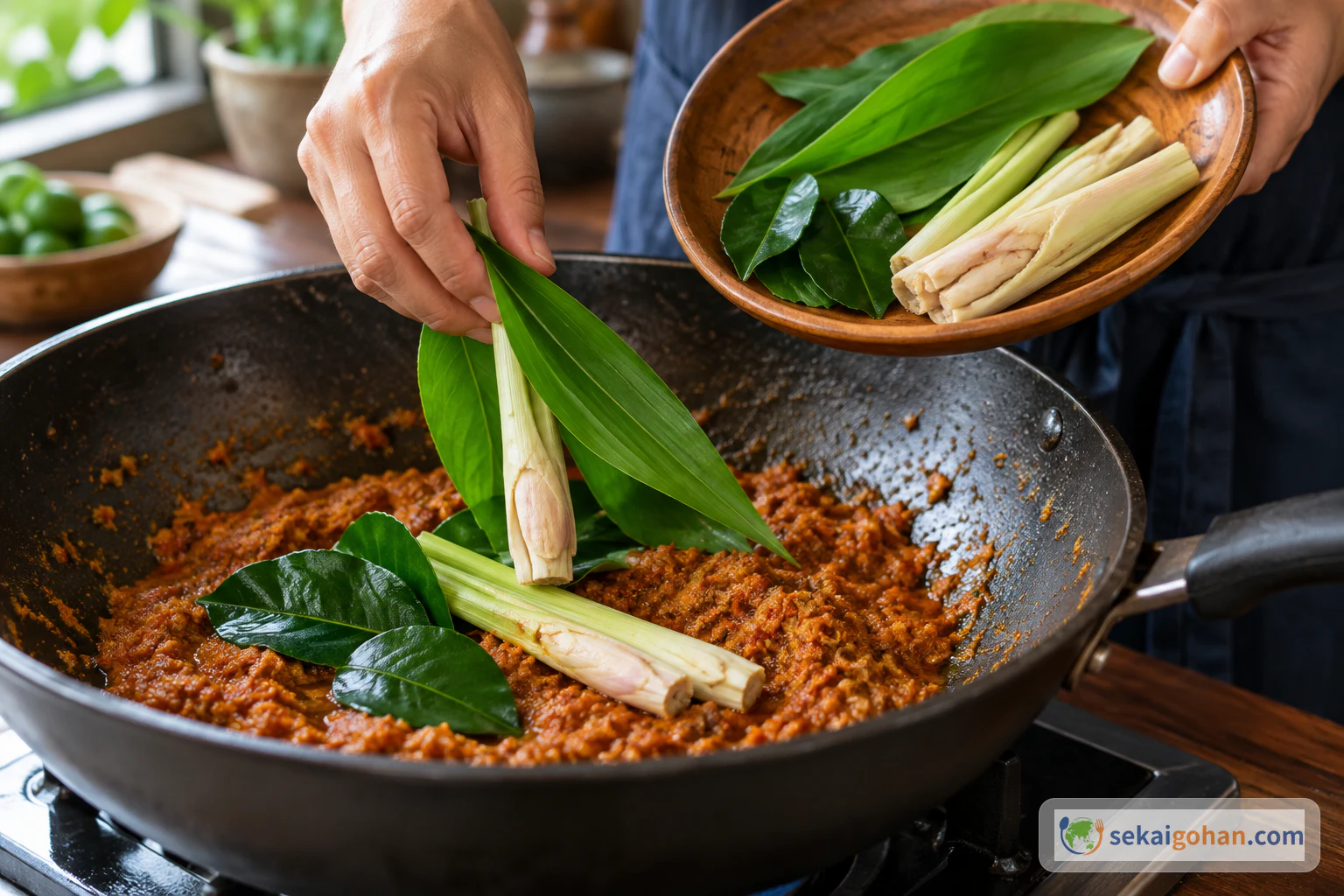
Add both turmeric leaves with the lime leaves and lemongrass in step 2, once only. They go in before the paste is divided.
How long should the beef cook over low heat?
Cook until the beef is done. There's no set time or end point for this stage. The 45–60 minutes covers the whole recipe.
Does "angkat" mean lift the meat or lift the pot?
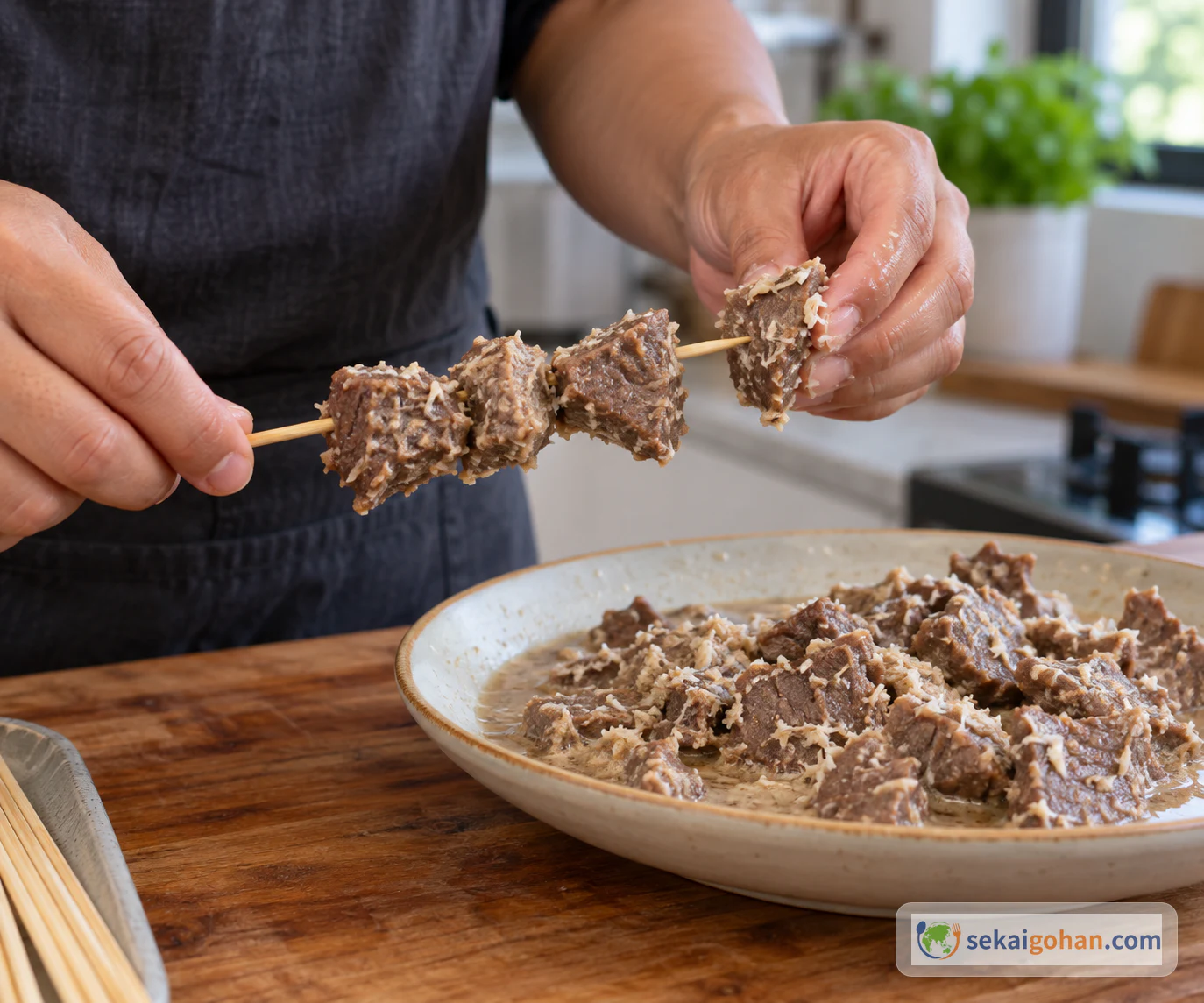
In "Masak di atas api kecil, lalu angkat" ("cook over low heat, then angkat"), it means taking the pot off the heat. Lifting the beef out to skewer it comes afterward, in step 4.
Is the sauce poured over the skewers?
Yes. Spoon on as much as you like, or serve it on the side.