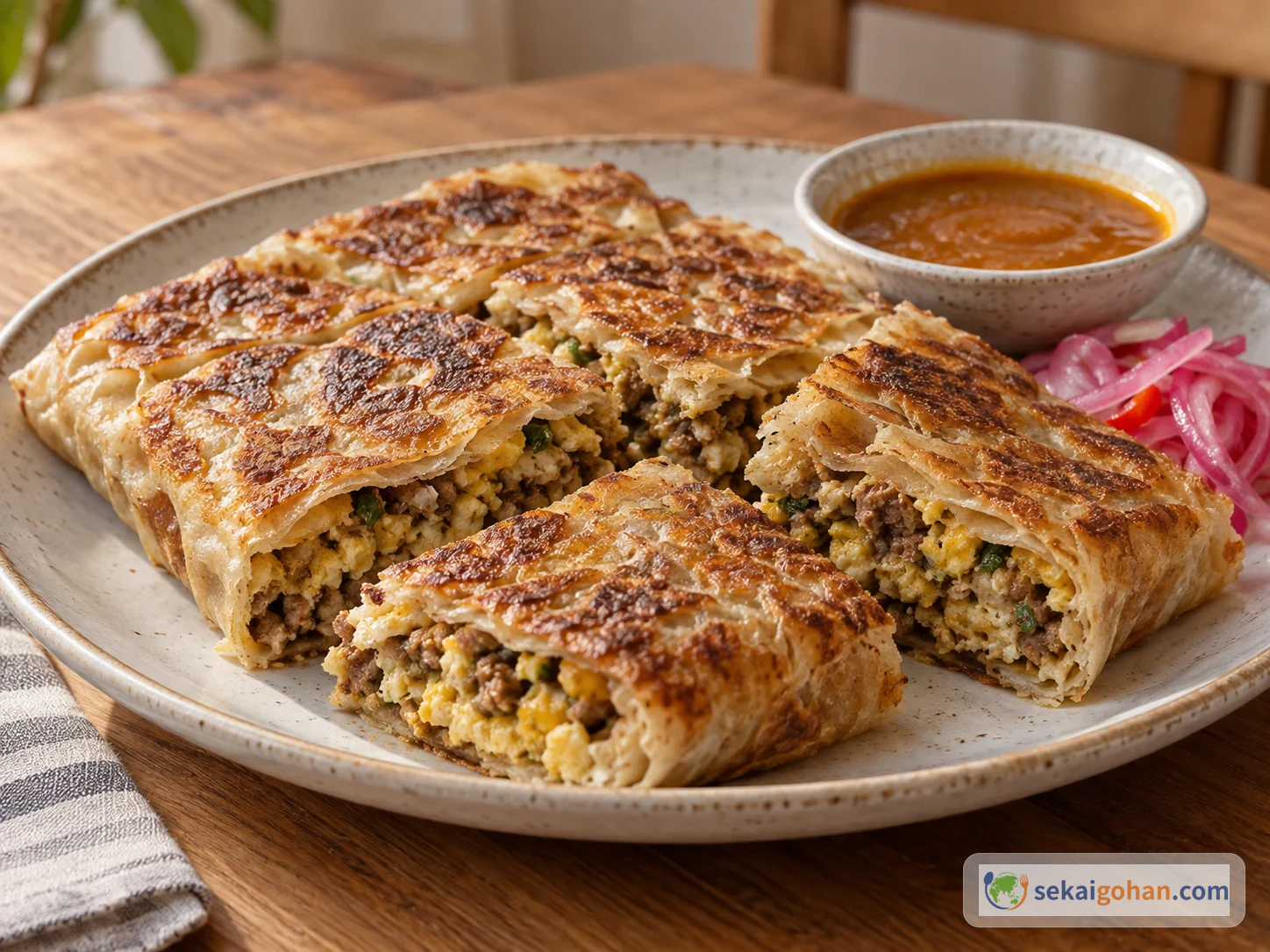
Set a ball of dough on a surface slicked with plenty of oil and press it out with your palm until it's paper-thin. On the hot griddle it gets egg, cheese and cooked meat in the middle, and then you fold the four sides over in turn to wrap the egg and meat into a square. That's murtabak, a stuffed, griddled flatbread loved across Southeast Asia and especially well known in Singapore. When it comes off the heat, the outside should be browned with the layers of dough showing. Cut into it and the meat filling is crisp on the outside and held together inside by egg.
Murtabak and Singapore's Indian Muslim Eateries
The quickest way to describe murtabak to someone who's never had it is by its shape. Egg, leek or chives, scallion-type onions and minced meat are wrapped in dough, cooked, folded and cut into squares, and the square cut is part of what makes it murtabak. Beef is the most popular filling, but mutton, chicken and cheese all turn up. The filling, the wrapper and the side dishes change from shop to shop, so the name doesn't point to one fixed recipe.
The dish grew up in the eateries and hawker culture of Singapore's Indian Muslims. Victory Restaurant, founded in 1910, is one of the early Indian Muslim restaurants that spread murtabak in Singapore. Hawker food there is a multi-ethnic food culture, and the stalls are family businesses passed down from one generation to the next. That makes murtabak a griddle dish that crosses generations, because parents teach their children how to work each sheet of dough.
To find it, follow the map from the Kampong Gelam area to North Bridge Road, where the murtabak shops on North Bridge Road cluster together. Three of them, Zam Zam, Singapura and Victory, are century-old establishments. The fillings and aromas vary from one to the next, and comparing them is half the fun.
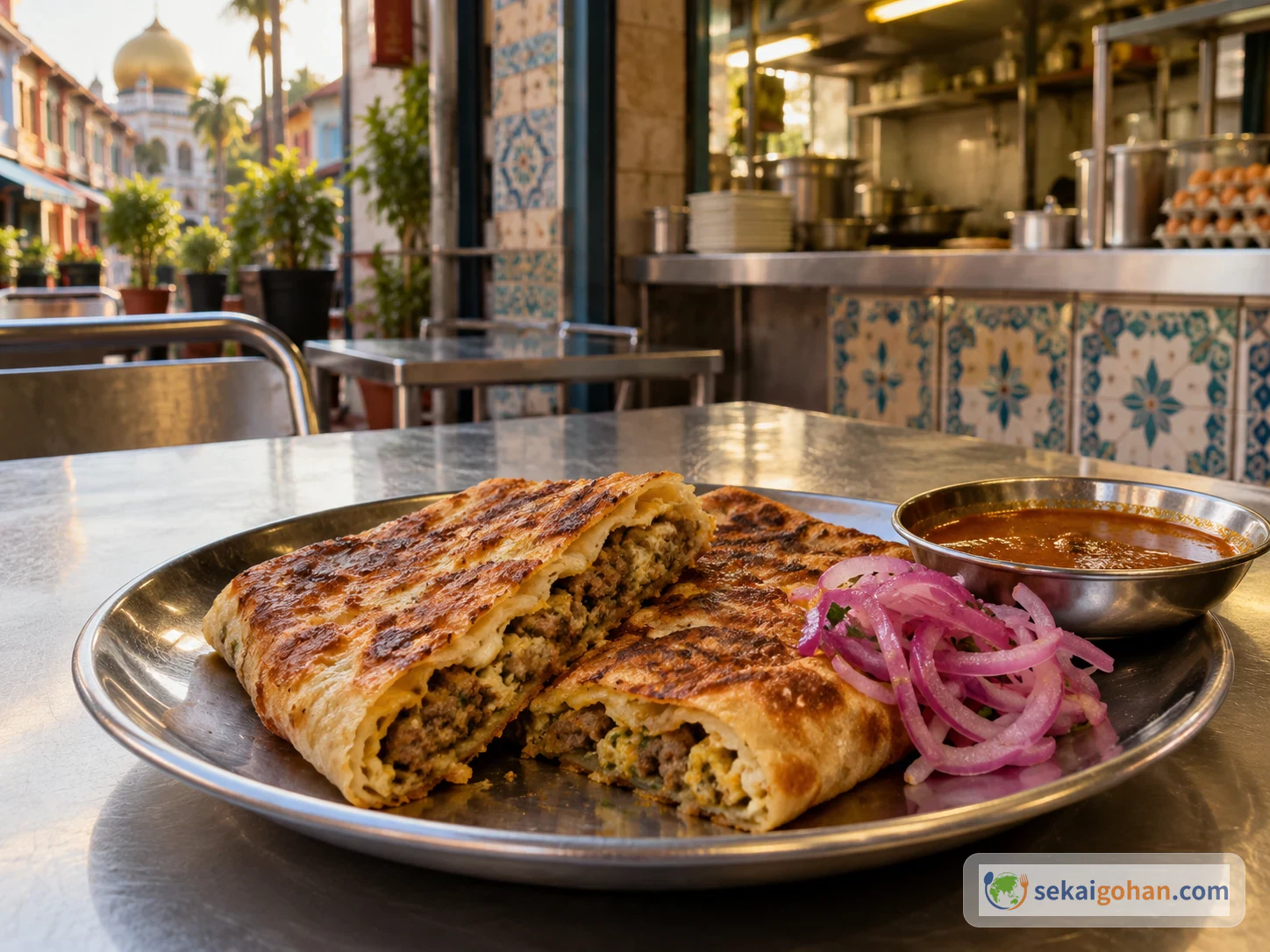
| Region or name | Form | How to recreate it at home |
|---|---|---|
| Singapore murtabak | Egg, scallion-type onions and minced meat wrapped in thin dough, griddled and cut into squares. Beef, mutton, chicken and cheese are also used | Rest handmade dough in oil and use beef mince as the baseline. For mutton or chicken, swap only the meat |
| Malaysian Mini Murtabak | Beef or chicken, egg, curry powder and spring roll wrappers, folded into squares and cooked. Served with sweet-sour pickled red onion | When you don't have time to stretch a big dough, use spring roll wrappers or frozen paratha as a shortcut |
Singapore shops stretch the dough by hand on the griddle, while Malaysia's Mini Murtabak uses spring roll wrappers. A different wrapper changes the texture even under the same name, and you'll notice it right away if you taste them side by side.
Ingredients (serves 4, 4 pieces)
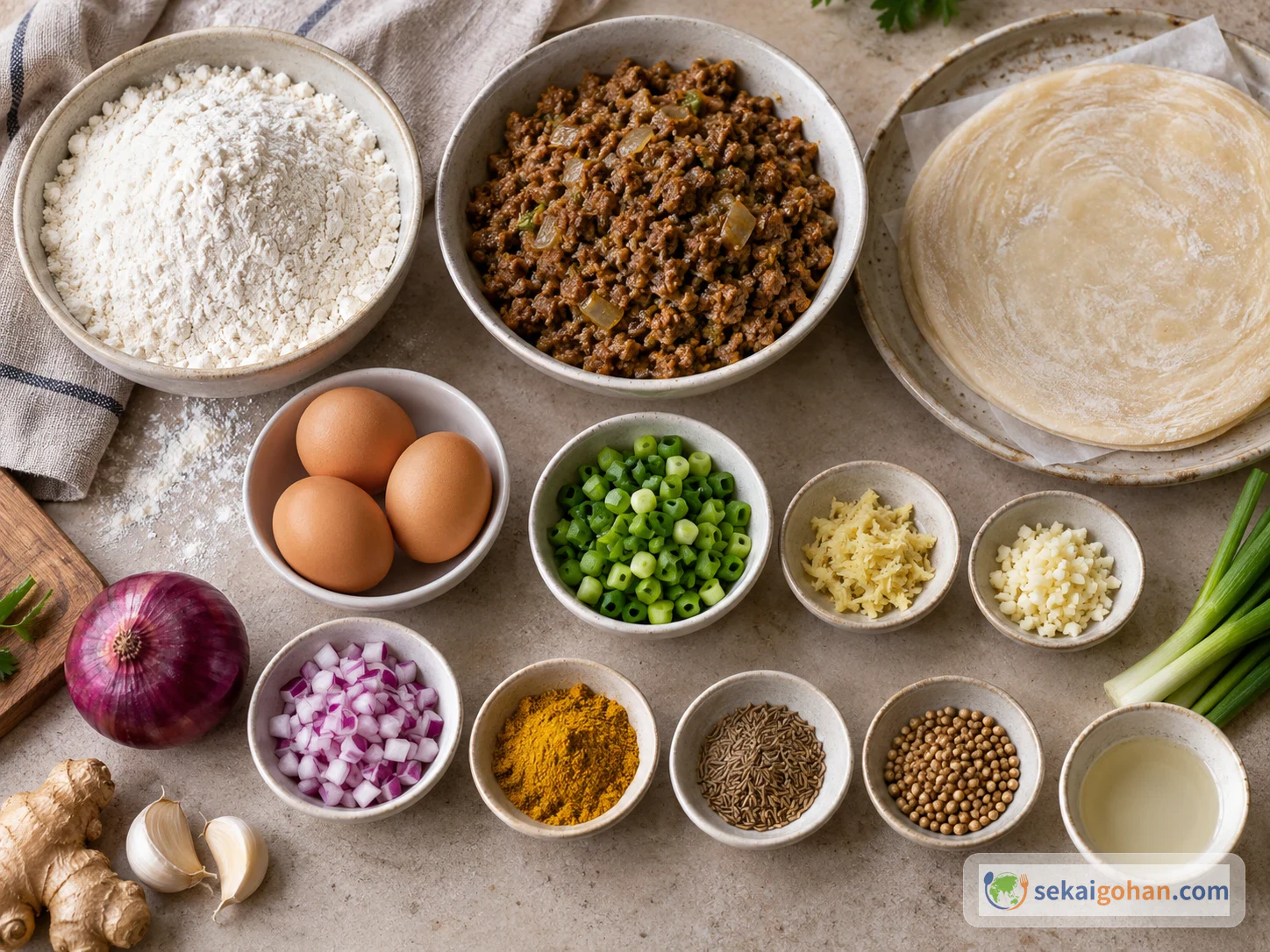
These amounts make 4 pieces for 4 servings. Wrap one egg per piece with about 2.75 oz (80 g) of cooled filling. The dough combines bread flour and cake flour, is made by hand and rested after being coated with oil. That is the main route; frozen paratha is the shortcut that takes its place. Think of it as dough for the main route, frozen paratha for the quick route, and don't use both at once. Ground beef is the baseline. You can also swap just the meat for mutton or chicken.
Oil isn't just for frying. Letting the dough rest coated in oil gives it stretch, so use enough to keep the surface from drying out. Coriander seeds and cumin seeds are a home-cooking helper that brings out the aroma of the meat filling. Paratha replaces only the handmade dough, so don't skip the filling or egg steps.
This uses wheat, egg and beef. Check the labels of breads and seasonings. If you swap in mutton or chicken, take care not to let them contaminate other utensils. If you need halal compliance, check the labels of the meat and seasonings yourself at purchase. Don't share bowls, cooking chopsticks or cutting boards that touched raw meat and egg between cooling the filling and plating the cooked pieces.
Choosing Murtabak Ingredients and Substitutes
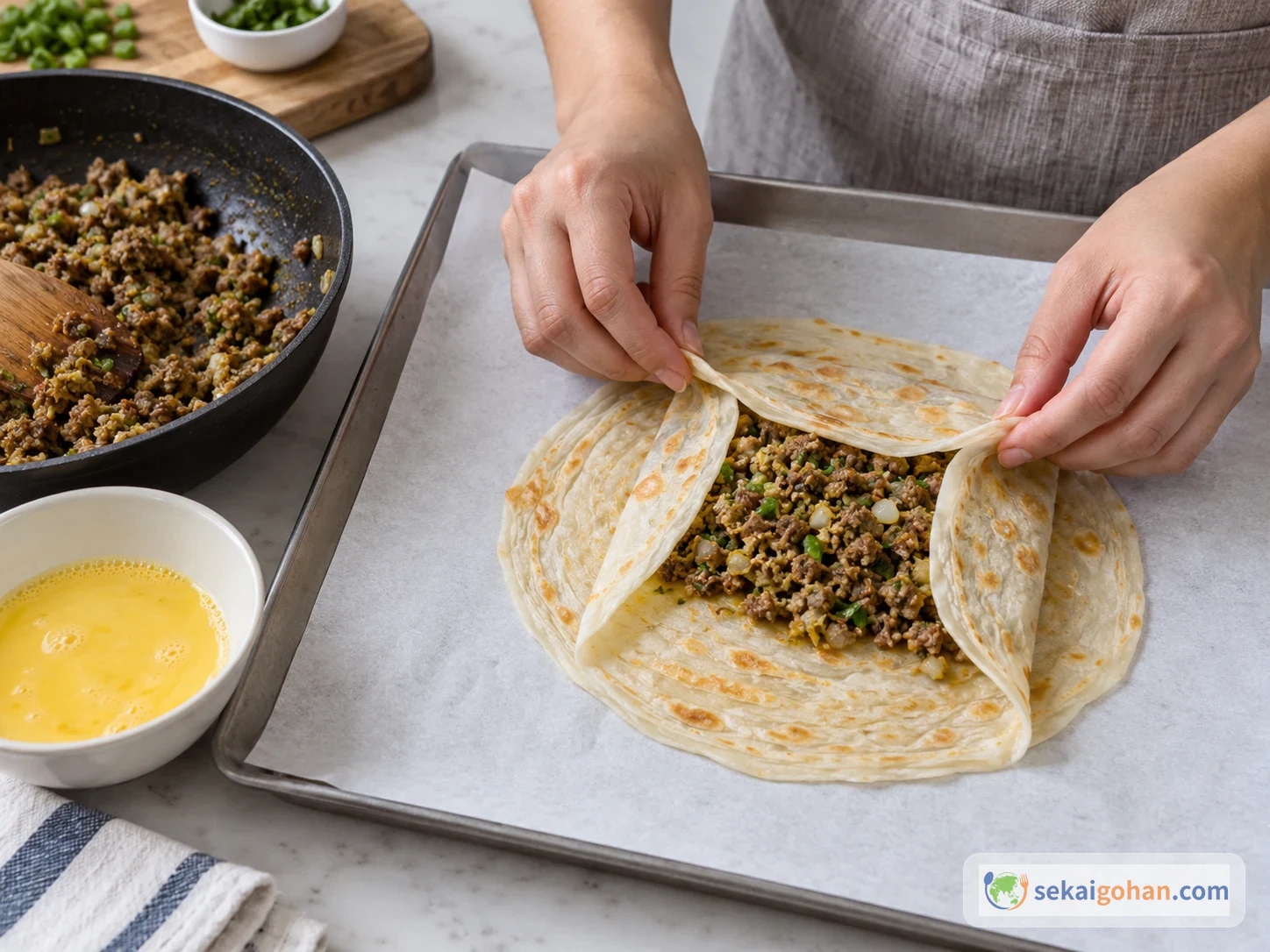
The easiest shortcut is buying the dough-making time in the form of paratha. Frozen paratha stands in for the handmade dough: thaw it as the package directs, then wrap the filling in it as is. Re-stretching it tears the layers. Everything else stays the same, from cooking and cooling the filling to wrapping it with egg.
You can make the filling with ground mutton or ground chicken instead of beef. Mutton has a stronger aroma, and balancing the mutton's smell with the sweet-sour pickle makes it easier to eat. Chicken gives off more moisture, so cook the filling well and let it cool before you add the egg. To stretch the filling, add diced potato and cook off the liquid before cooling.
| Branch | What changes | Result and cautions |
|---|---|---|
| Frozen paratha version | Replace the handmade dough with 4 frozen paratha | Layers form easily and resting time is skipped. Don't reshape after thawing |
| Mutton version | Replace the 11.5 oz (320 g) ground beef with ground mutton | Stronger aroma. Serve with sour sweet-sour pickles and don't over-add spices |
| Chicken version | Replace the 11.5 oz (320 g) ground beef with ground chicken | Releases more moisture, so cook the filling well and cool it |
| Potato version | Add 5.5 oz (150 g) potato | Cut into 0.375 inch (8 mm) cubes, soften them and leave no cooking liquid |
| Cheese version | Wrap a small amount of cheese with the filling in each piece | Don't overdo the cheese, and set it through to the center |
| Mini Murtabak version | Use spring roll wrappers and wrap small | A Malaysian-style variation, separate from the rested, oiled dough |
Method: rest the dough in oil, cook all four sides
1. Knead the dough and rest it in oil
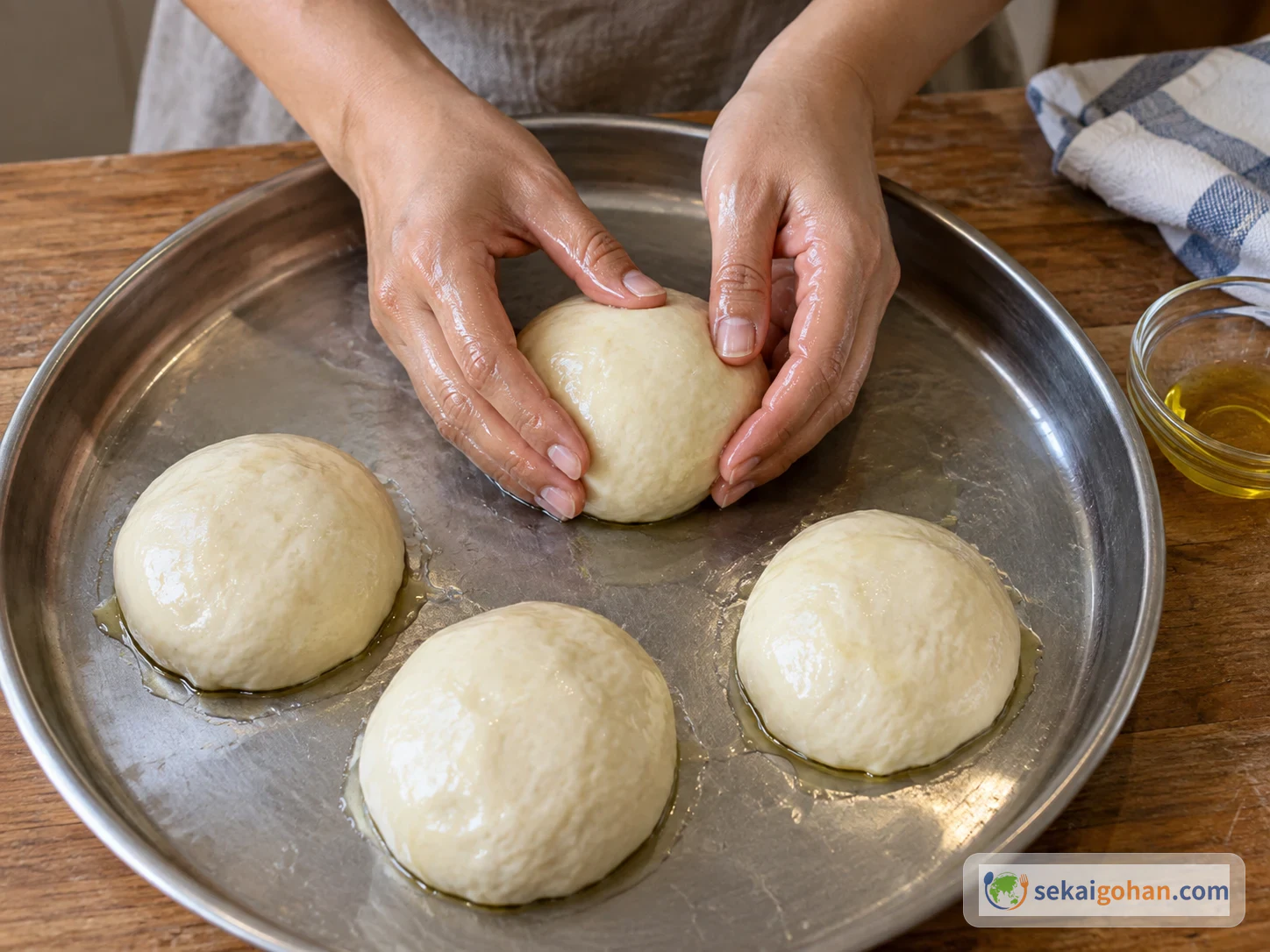
Allow 10 minutes for kneading, 5 minutes for dividing and oiling, then 2 hours of resting at room temperature. Mix 8.5 oz (240 g) bread flour, 2.75 oz (80 g) cake flour, 5 g salt and ¾ cup (170 ml) water, and when no dry flour remains, knead on a work surface for 8–10 minutes. Divide into 4, coat the surfaces thinly with vegetable oil, put them in a container that won't dry them out, and leave for 2 hours. The resting makes the dough easier to spread by hand.
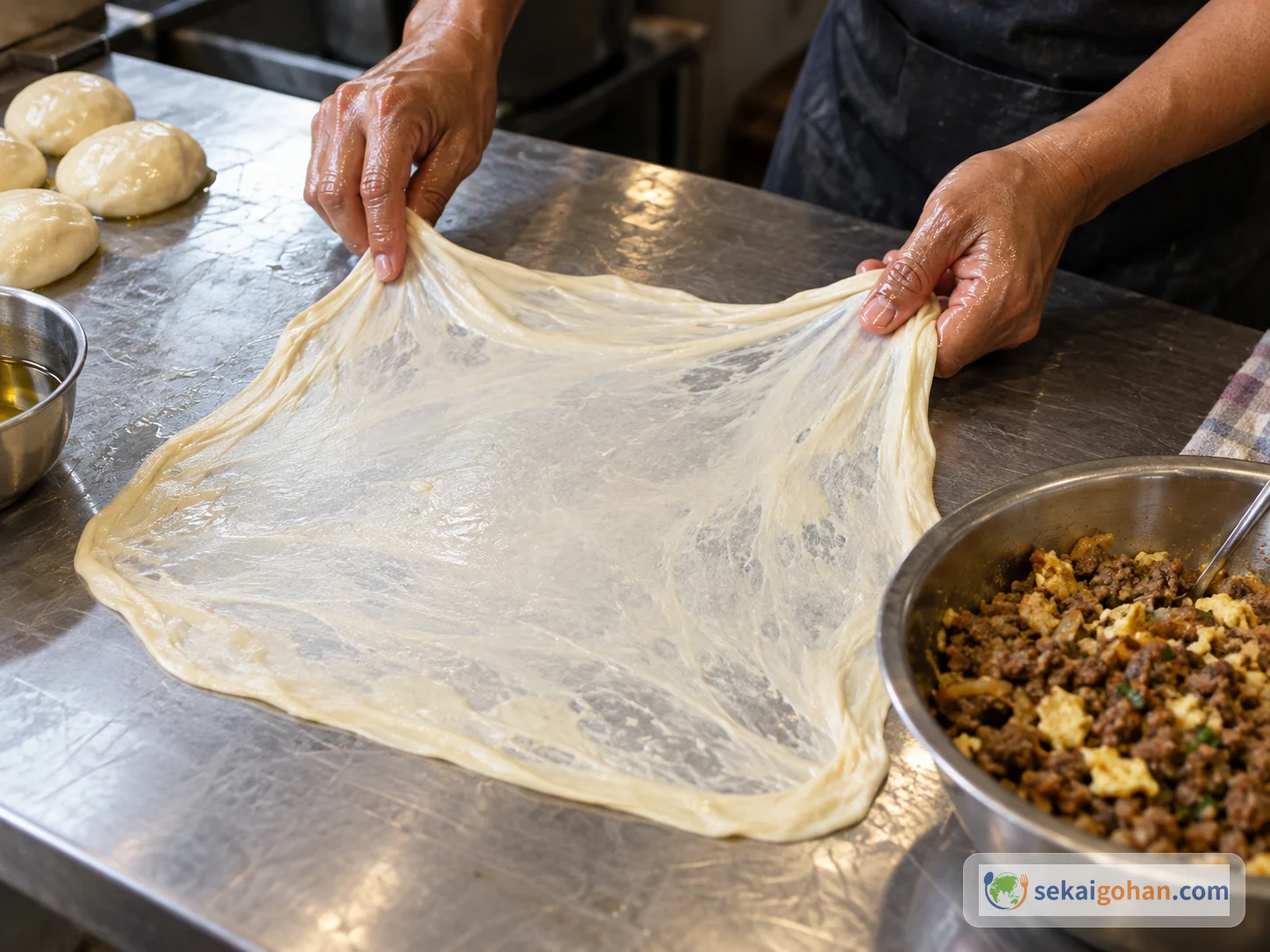
What matters here is not letting the surface dry. Good dough springs back slowly when pressed and doesn't tear right away when pulled. If it shrinks back, rest it another 10–15 minutes, add oil, and don't pull it by force.
2. Cook the meat filling, cook off the liquid, and cool it
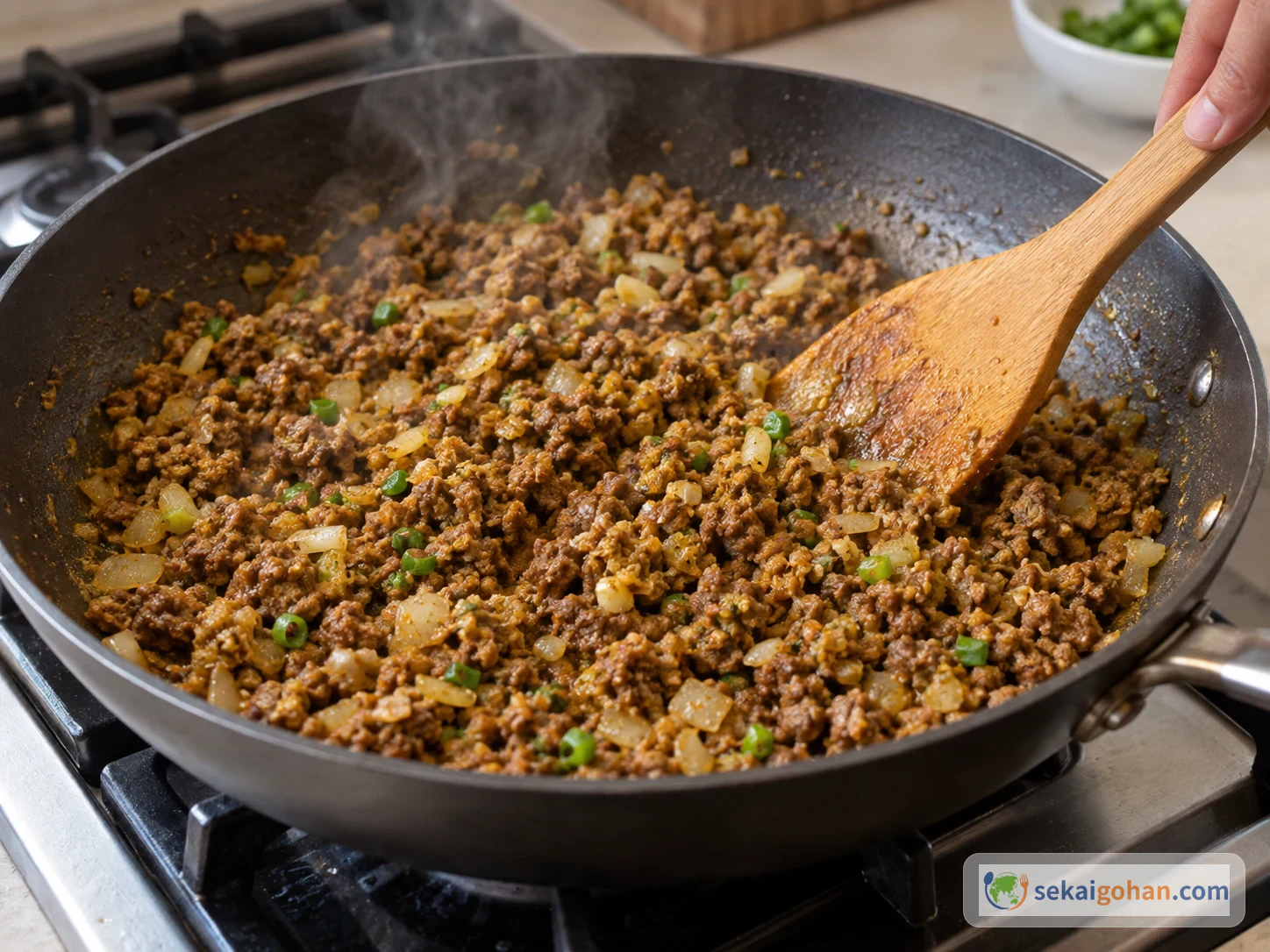
Stir-fry over medium heat for 10–12 minutes, then allow 20 minutes to cool it. Cook the onion for 5 minutes, the garlic and ginger for 1 minute, and the ground beef for 4–5 minutes. When the red of the meat is gone, add the curry powder, cumin seeds, coriander seeds and green chilies. If you use potato, add 0.375 inch (8 mm) cubes with a little water, cook until soft, then cook off the liquid.
Stir in the scallions and cilantro after turning off the heat. When the filling has loosened and is even throughout, spread it on a shallow plate. Cool it until the steam is gone: cool the filling before adding egg. Do this, and the whites won't set first when you mix in the egg. The goal is a pan bottom with no liquid left. If it's watery, cook it a little longer over medium heat to drive off the moisture. Don't wrap it hot; let it cool thoroughly.
3. Stretch the dough thin over oil
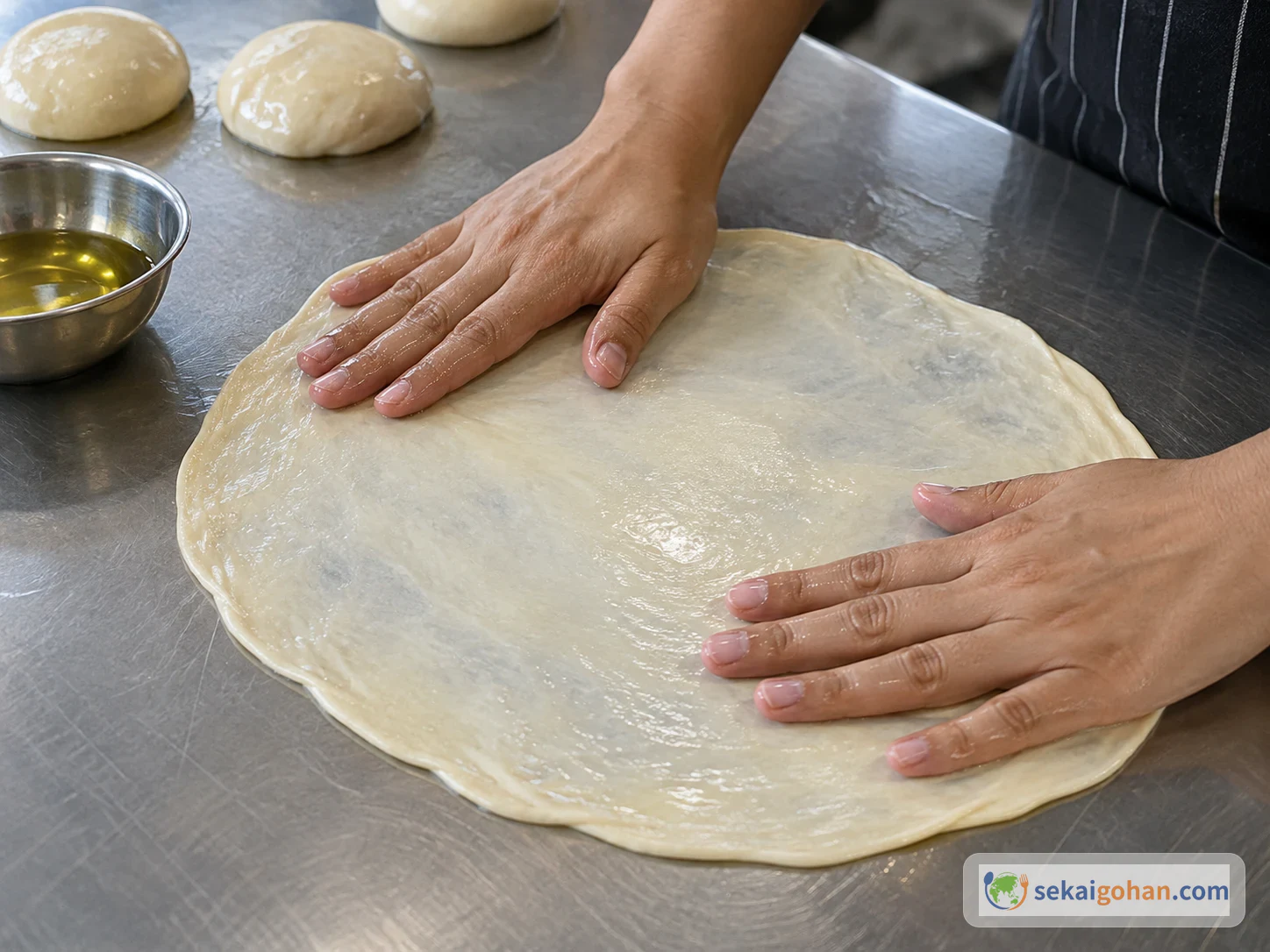
Allow 3–4 minutes per piece. Take out the rested dough one ball at a time and keep the rest from drying. Rub a little oil on the surface and your hands, and push out from the center outward with the pads of your fingers to a diameter of 22 cm–10 inches (25 cm). Finish by thinning it with the pads of your fingers, taking care not to make holes. You don't need to force it thin enough to be transparent; as long as the thickness is even and there is room for the filling in the center, it will wrap well.
If it tears, gather that part inward, rest it 10 minutes and spread it again. If it tears badly, you can switch to the frozen paratha shortcut.
4. Place the egg and meat filling and fold the four sides
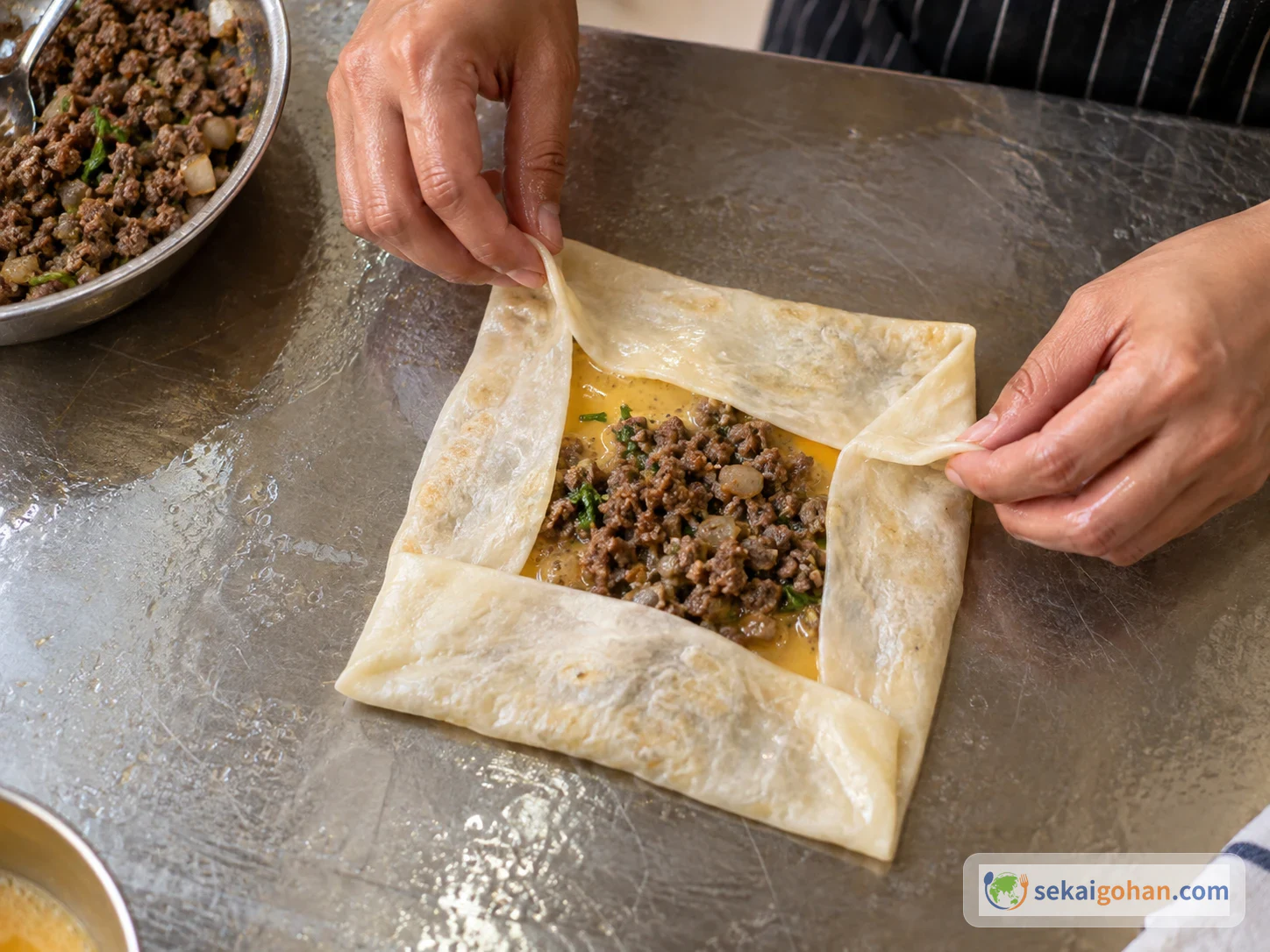
This is about 2 minutes of work per piece. In the center of one sheet of dough, place 1 egg and about 2.75 oz (80 g) of cooled filling. Gather the egg and filling to the center, then fold the four sides inward in the order near, left and right, far, to make a square, pressing the overlaps lightly.
Too much filling means the folds won't close and the egg runs and tears the dough. Set aside leftover filling, without egg, for storage. Once wrapped, set it seam side down and go straight into the cooking step. If using frozen paratha, wrap after thawing with the same amount of filling. Don't re-stretch the dough.
5. Cook over medium-low heat, starting seam side down
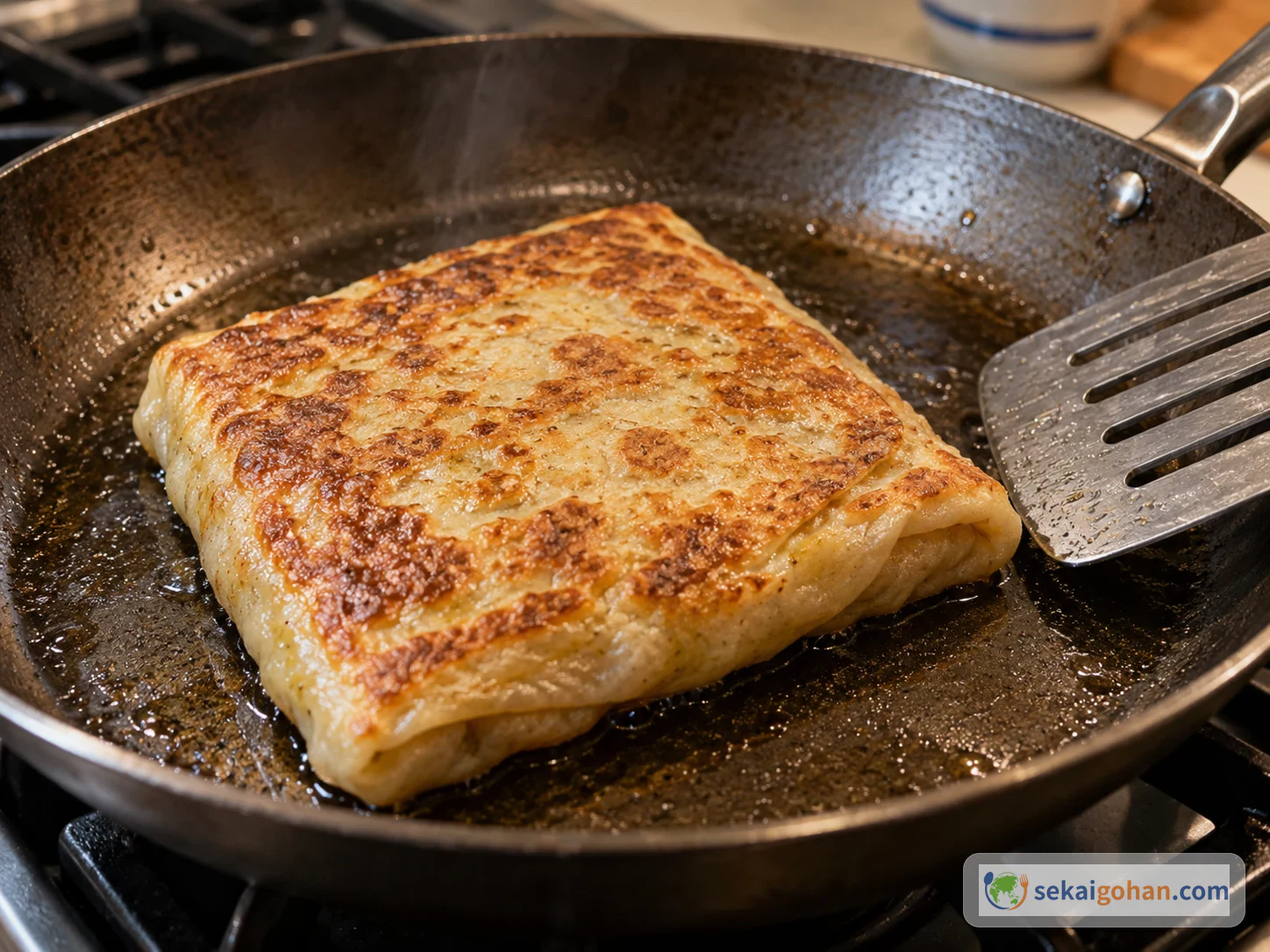
Allow 8–10 minutes per piece. Spread 1 tsp vegetable oil in a skillet and cook seam side down over medium-low heat for 3–4 minutes. When the bottom is golden and the dough on the sides has dried, flip and cook the other side for 3–4 minutes. Lower the heat on thick parts and use a lid for just 1 minute.
The finish is golden on both sides, with the center set. Press the center lightly; if no liquid seeps out and the egg and meat filling are set, it is done. If only the outside is coloring dark, lower the heat. If the center is still runny, don't cut it; cook longer on low heat, and if it's about to burn, take it out once and use residual heat. To avoid oil spatter, cool the filling thoroughly and close the edges of the dough before putting it in the skillet.
6. Rest 2 minutes, cut into squares and serve
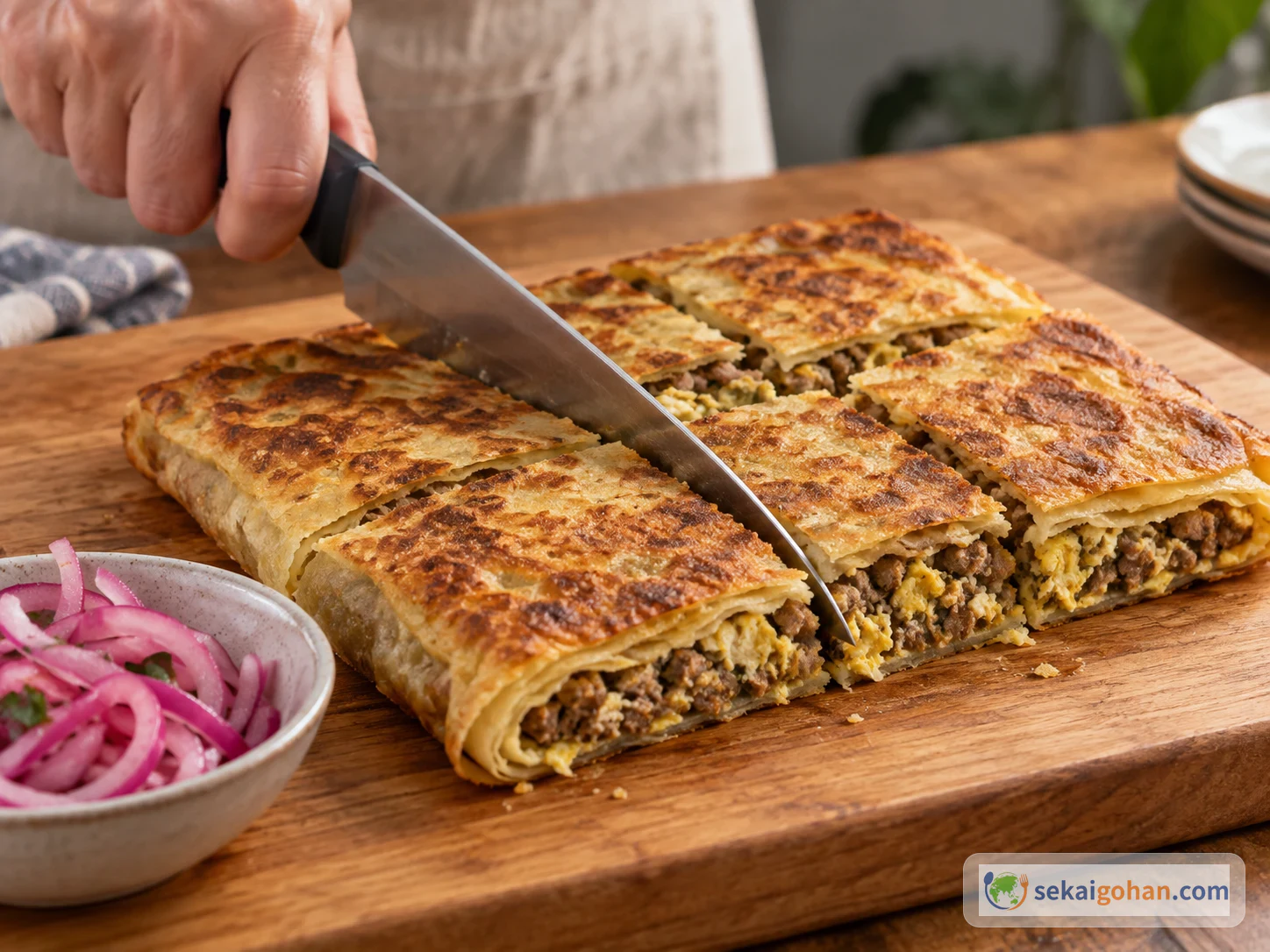
When it's cooked, rest it on a cutting board for 2 minutes. The 2 minutes before cutting lets the egg and meat filling settle. Cutting while hot makes the filling run, so wait until the steam on the surface weakens, then cut into squares or triangles of an easy-to-eat size.
Serve the sweet-sour pickled red onion, the curry sauce or bean sauce, and green chilies on separate dishes. Letting each person adjust the heat and sourness makes it more enjoyable.
Fixing Torn Dough, Leaks and Scorching in Murtabak
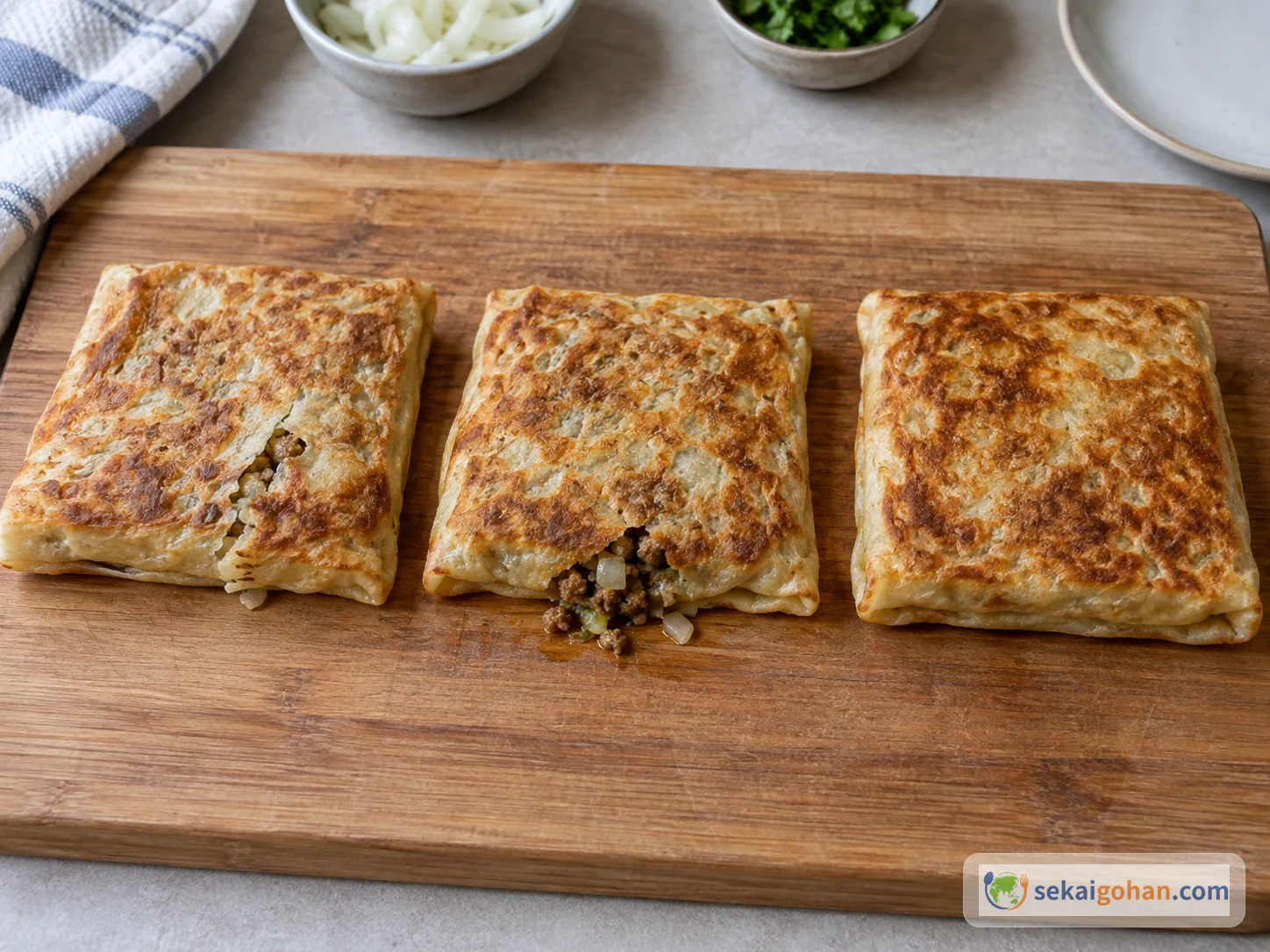
When a murtabak goes wrong, look in four places: tears in the dough, open folds, scorching on the bottom and liquid in the center. Most problems come down to two fixes. Tears go back to resting and wateriness means cooling the filling, and if the filling leaks, use less of it.
| Condition | Why it happened | How to fix it |
|---|---|---|
| The dough shrinks while stretching | Not rested enough, or pulled too hard | Rub on a little oil, rest 10–15 minutes and spread from the center outward |
| Holes in the dough | Edges pulled too much with fingertips, or too much filling | Pinch small holes closed; for large holes, switch to paratha |
| Egg leaks from the folds | Filling is hot, too much filling, or folds not overlapped | Cool the filling completely, cut to about 2.75 oz (80 g) per piece and press the four overlaps |
| Scorched outside, runny center | Heat too high, surface browned before heat reached the thick part | Lower the heat, use the lid for 1 minute and cook longer until the center sets |
| Sticky after cooking | The filling's liquid remained, or it was cut while hot | Reheat the filling to drive off liquid, and rest the cooked piece for 2 minutes |
The center's set matters more than the color. Press the center lightly. If no liquid seeps out, the egg has set. If it's not there yet, keep cooking on low heat instead of turning the heat back up and scorching the outside. At home, a well-cooled filling and the right amount of it matter more than dough without a single tear.
Serving Murtabak
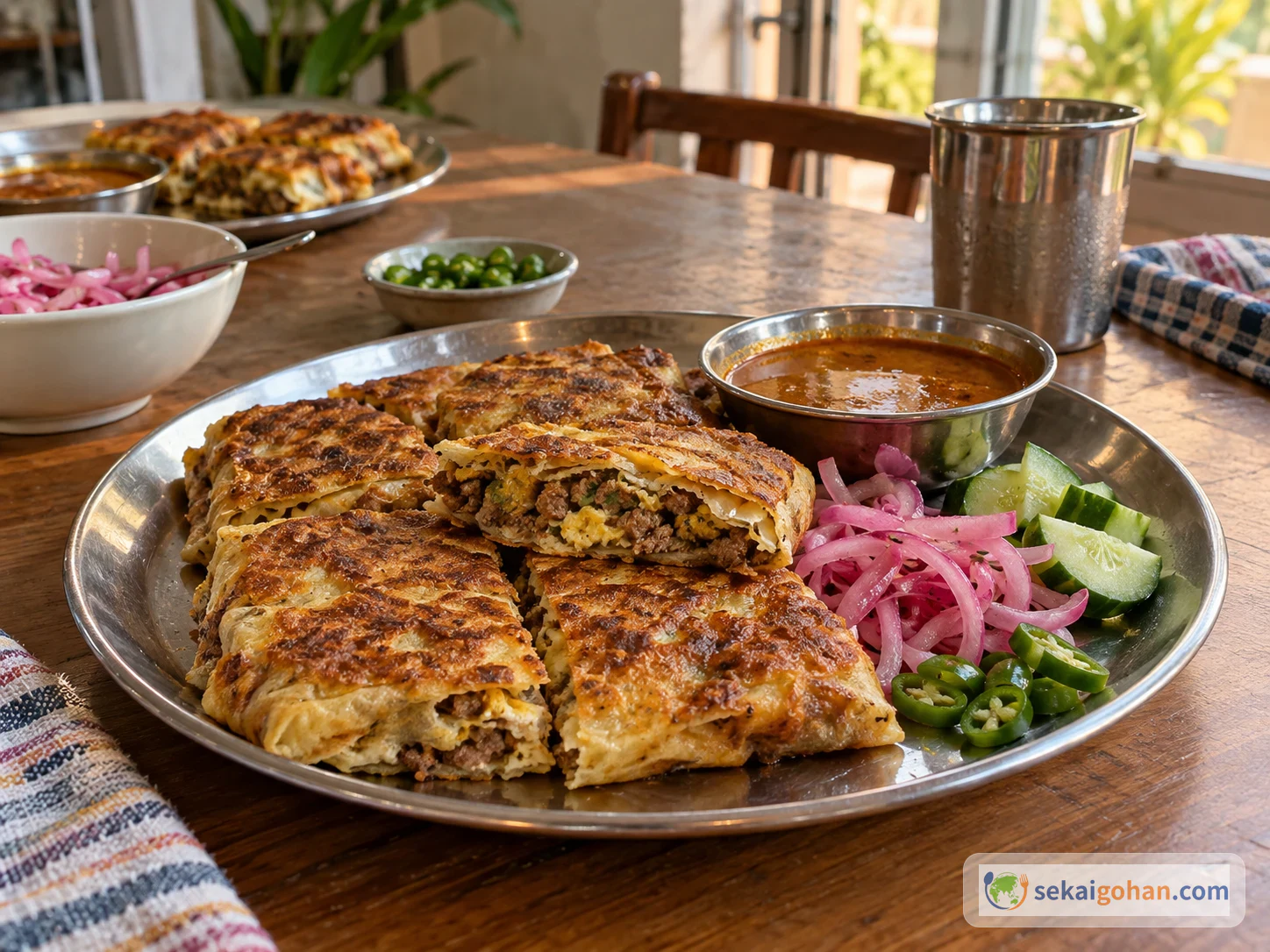
A hot griddle dish this rich with fat and egg needs something sour beside it. Sweet-sour pickled red onion, made with sugar, water and rice vinegar, cuts through the richness with every bite. Add curry sauce or bean sauce, and a plate fresh off the griddle becomes something to gather around.
| Serving branch | What to serve with it | Impression of the dish |
|---|---|---|
| Aiming at a Singapore eatery | Sweet-sour pickled red onion, curry sauce, green chilies | Thin dough, meat and egg, sourness and heat layered on one plate |
| Aiming at Malaysian Mini Murtabak | Small cut pieces of meat-filled wrapper, sweet-sour pickles | The light texture of spring roll wrappers makes it easy to share |
| Making it a lunch at home | Sweet-sour pickles, cucumber, an unsweetened drink | Keeps the aroma of the filling and balances the fat with sourness |
For another Singaporean griddle dish of egg and ground meat, try roti john (in Japanese), where the filling is pressed onto bread instead of wrapped in dough. Hainanese chicken rice (in Japanese) is a classic from the same hawker culture. Then there's kottu, which chops flatbread on the griddle and mixes it with egg and meat. Put it next to murtabak and you'll see the difference between wrapped dishes and chopped dishes.
Storage and FAQ: separate the filling before mixing in the egg
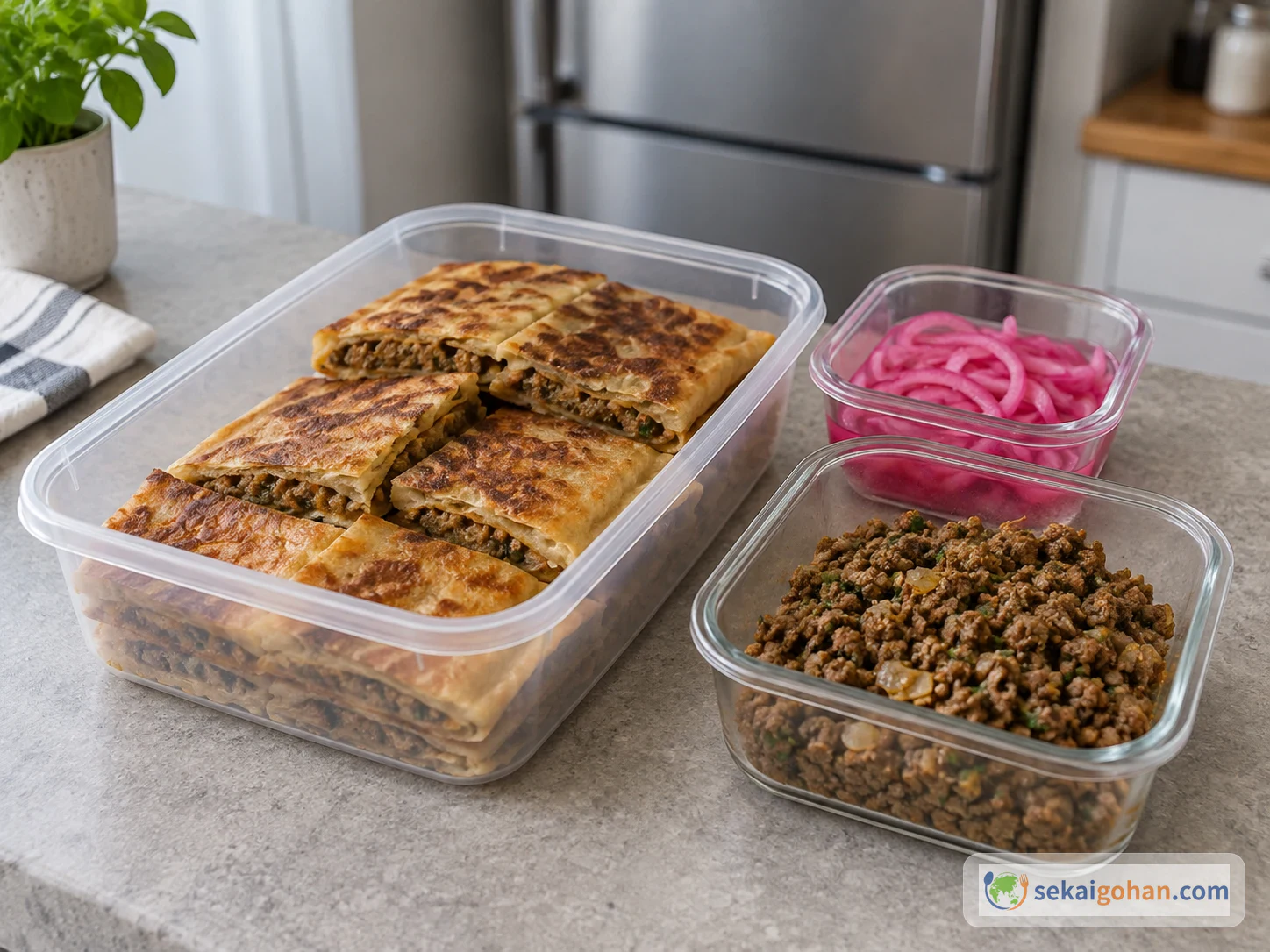
Leftover filling and cooked pieces need different handling. You can freeze the cooked meat filling, but freeze before mixing in the egg. Cool it, portion it, and after thawing, reheat it before you combine it with egg. Keep the dough and filling apart until just before cooking so moisture doesn't tear the dough.
Cooked murtabak keeps until the next day if you cool it and seal it. Reheat it in a skillet over low heat, all the way through. Serve raw vegetables separately the next day, and the sweet-sour pickles too.
Cook the meat filling, then cool it. If there is an off smell, discoloration or abnormal liquid in the container, don't use it. Heat stored murtabak through to the center, and keep the sweet-sour pickles and raw vegetables in separate containers.
How thin should I stretch the dough?
Aim for a diameter of 22 cm–10 inches (25 cm), spreading evenly from the center outward. It doesn't have to be see-through. If it starts to tear, rest it another 10–15 minutes, or switch to frozen paratha.
What if I don't have curry powder?
Curry powder ties the filling's aromas together. Without it the murtabak still works, but it will taste milder. Cumin seeds and coriander seeds (1/2 tsp cumin, 1 tsp coriander) aren't a full replacement, but they do add aroma. Adjust the heat at the table with green chilies or sauce rather than adding a lot to the filling at once.
When do I make the sweet-sour pickled red onion?
You can make it 1–2 days ahead. Drain it just before eating and serve it with the murtabak hot off the griddle.
Sources

- National Heritage Board, Roots, Victory Restaurant — Accessed and checked 2 October 2026 (JST).
- Indian Heritage Centre, National Heritage Board, Sikh Exhibition — Accessed and checked 2 October 2026 (JST).
- Tourism Malaysia / Masters of Malaysian Cuisine, MOMC Ramadan eMag #17: Mini Murtabak — Date shown on the document: March 2022. Accessed and checked 2 October 2026 (JST).
- Ajinomoto FoodBiz Partner Malaysia, Beef Murtabak — Accessed and checked 2 October 2026 (JST).
- National Library Board Singapore, Our Hawkers Through Time — Page update shown: 18 August 2026. Accessed and checked 2 October 2026 (JST).
- BiblioAsia, National Library Board Singapore, Kampong Gelam: A Kitchen of the Malay World — Accessed and checked 2 October 2026 (JST).
- SAVEUR, Spiced Beef Flatbread (Khima Chapati) — Checked for technical similarity in dough and folding. Not used as a basis for murtabak's origin or a standard blend. Accessed and checked 2 October 2026 (JST).