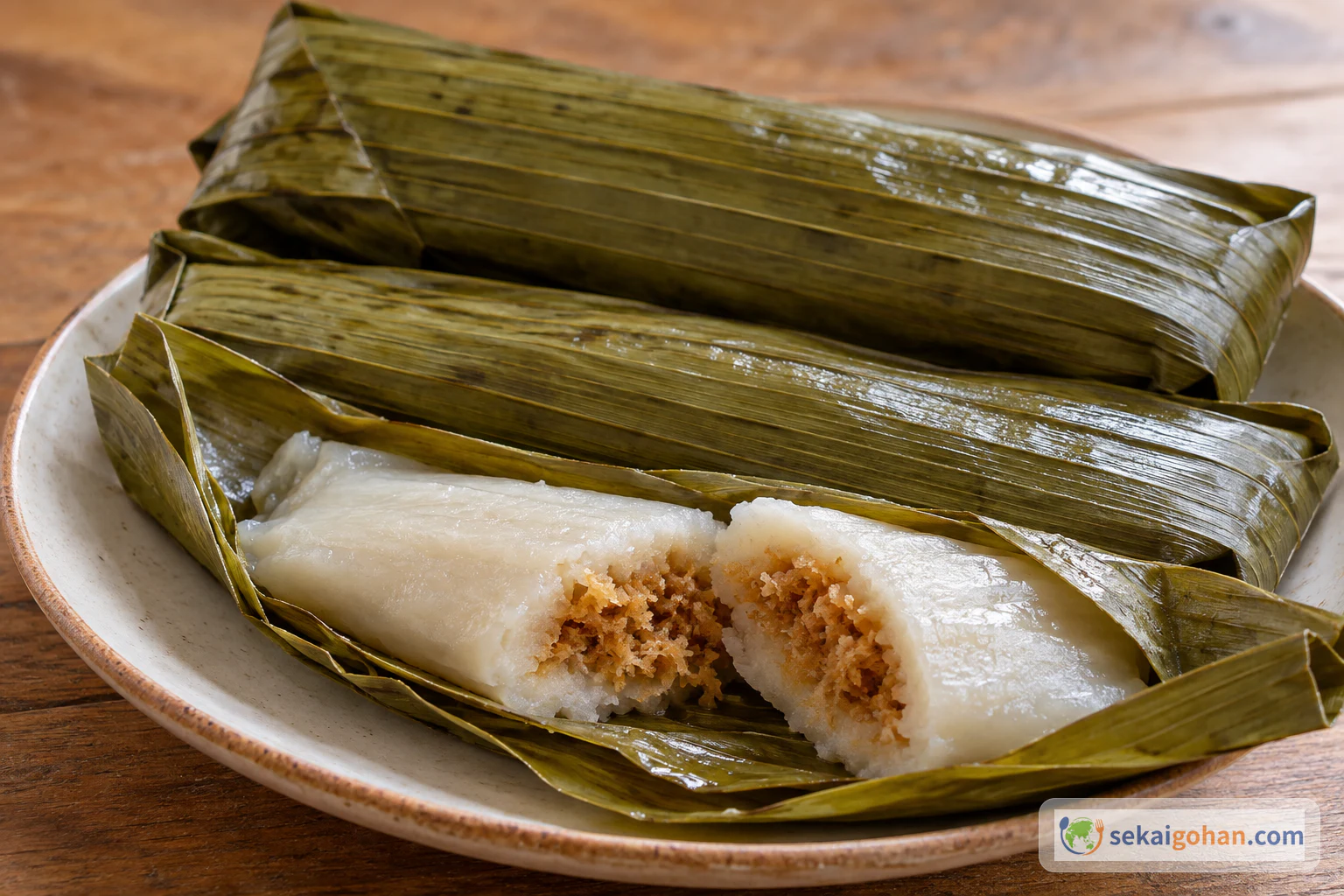
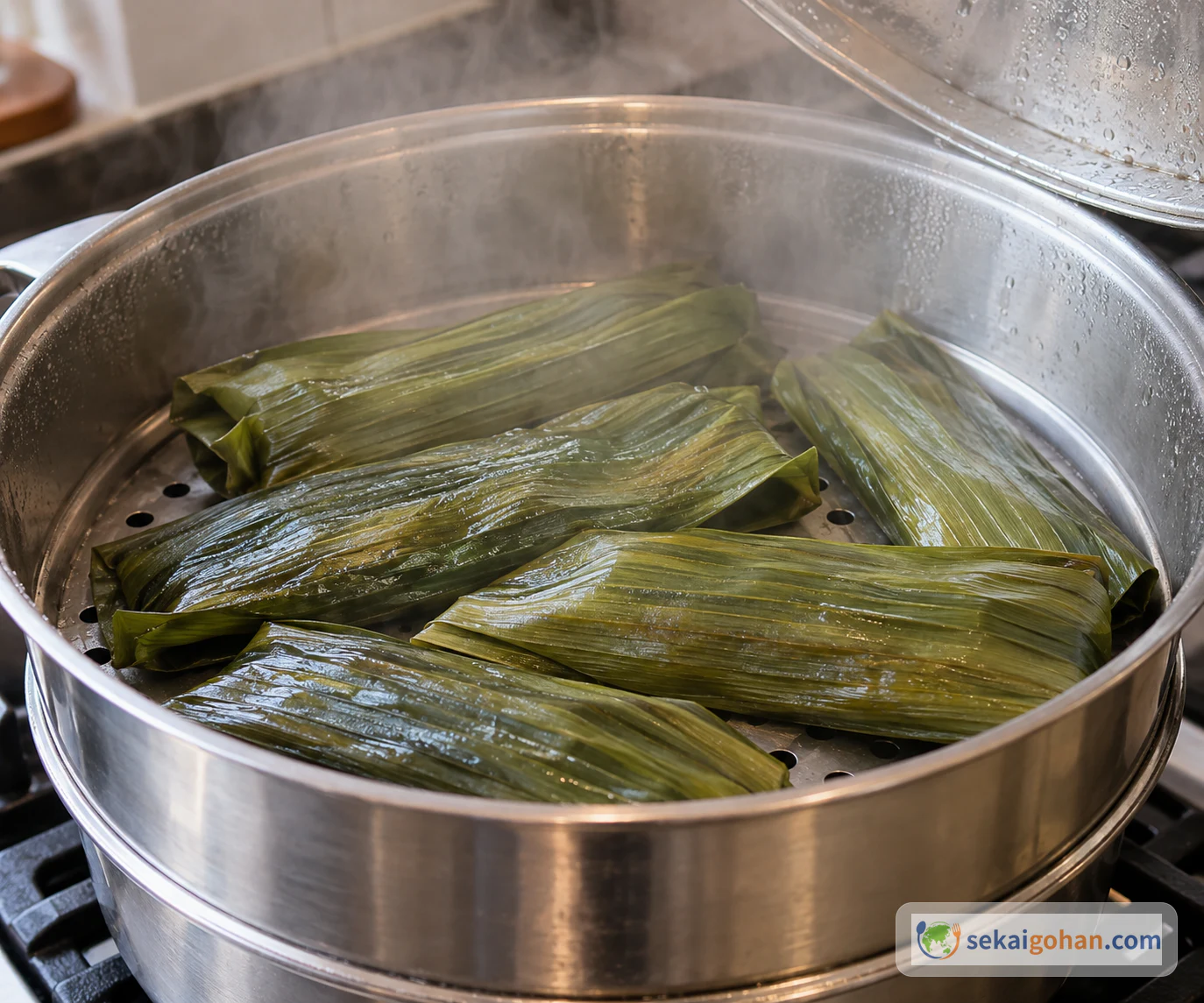
A version of Cimpa Unung-Unung, wrapped in Singkut leaves and steamed
CuisineIndonesian

Cimpa Unung-Unung: Rice-Flour Parcels with Palm Sugar and Coconut, Steamed in Singkut Leaves

How to make one home version of Cimpa Unung-Unung (Khas Karo), shared on Cookpad by Elisabeth Ginting: a dough of glutinous rice flour and rice flour wrapped around a palm-sugar and grated-coconut filling, closed in Singkut leaves and steamed. The amounts follow the post, the dough water is kept separate from the filling water, and numbers the post does not give, such as the dough water and the yield, are not filled in.

Cooking flow

Cooking steps

STEP 11 / 8

Clean the Singkut leaves

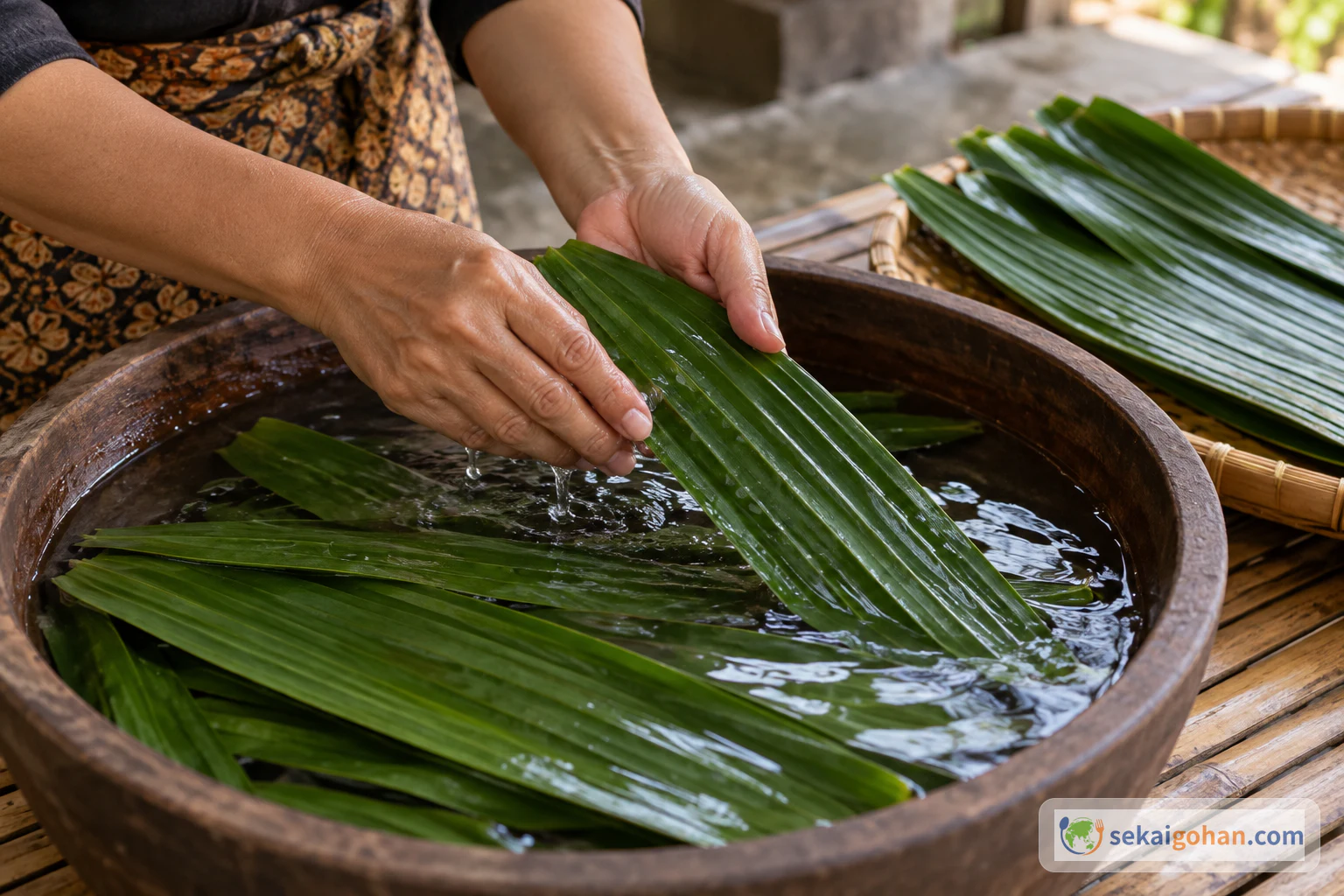
Cleaning Singkut leaves for Cimpa
Clean the leaves before anything else

Clean the Singkut leaves you will use for wrapping.

STEP 22 / 8

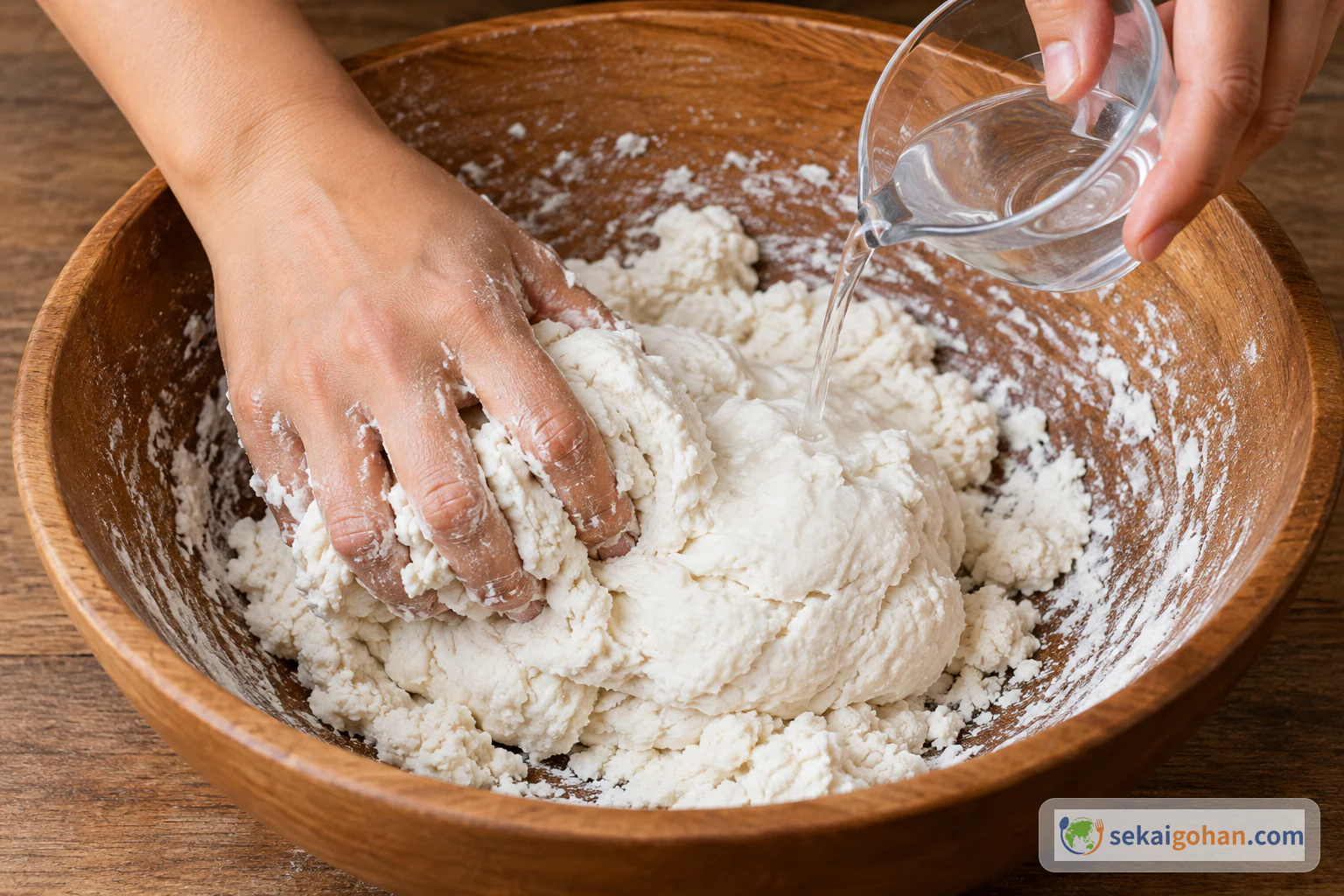
Mix the dough

Adding water little by little to rice flour and glutinous rice flour to bring the dough together
Add water gradually and stop when the dough holds together without running

Combine the glutinous rice flour and rice flour and add a pinch of salt. Add water a little at a time, mixing and kneading, until the dough comes together and is not runny. Keep the 2 cups (500 ml) of filling water separate. It does not go into the dough.

STEP 33 / 8

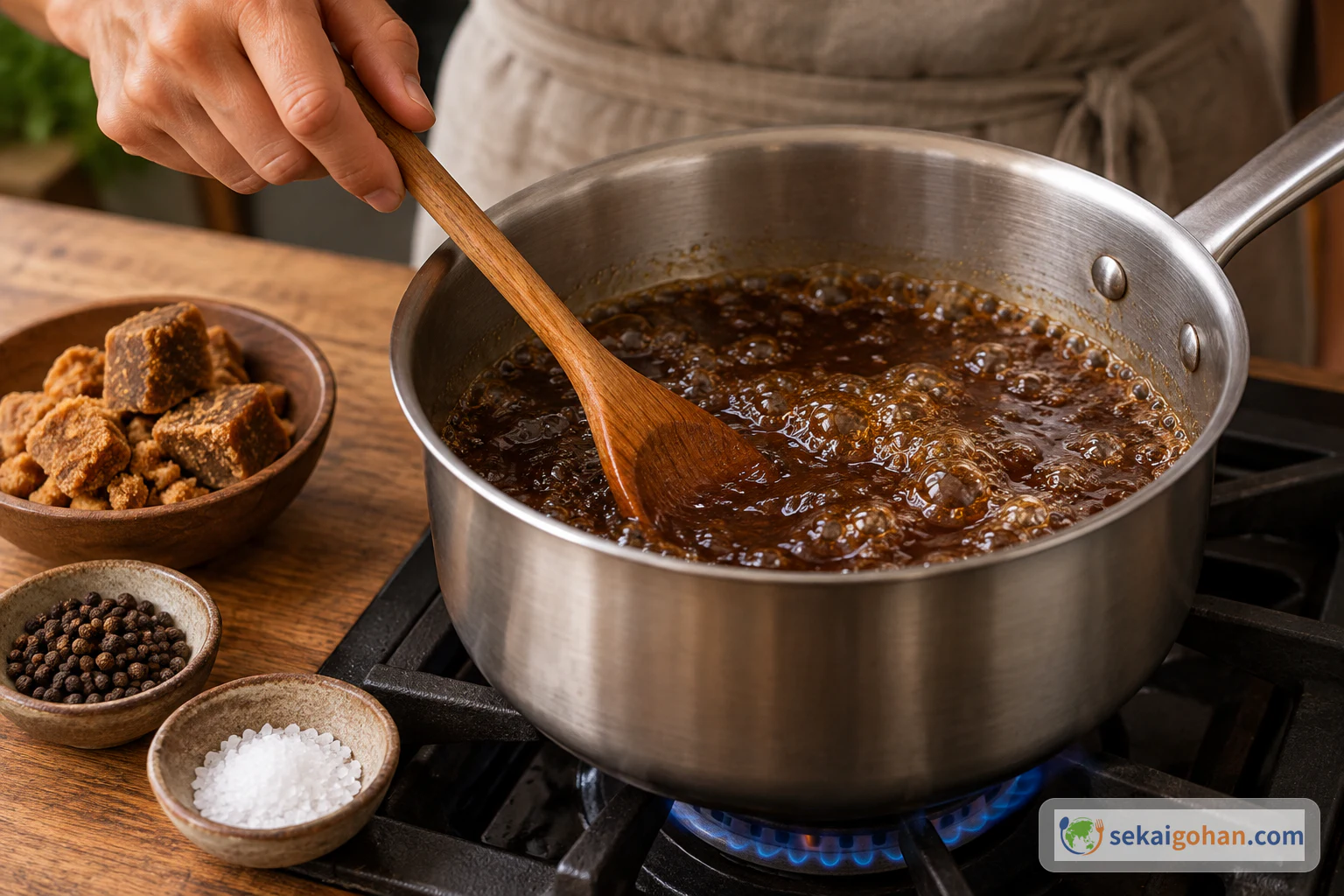
Cook the palm sugar and coconut filling

Cooking palm sugar and seasonings in the filling water
Cook the palm sugar until the bubbles thicken a little, before adding the coconut

Bring 2 cups (500 ml) water to a boil. Add the palm sugar, pepper and a pinch of salt, and cook until the bubbles turn slightly thick.

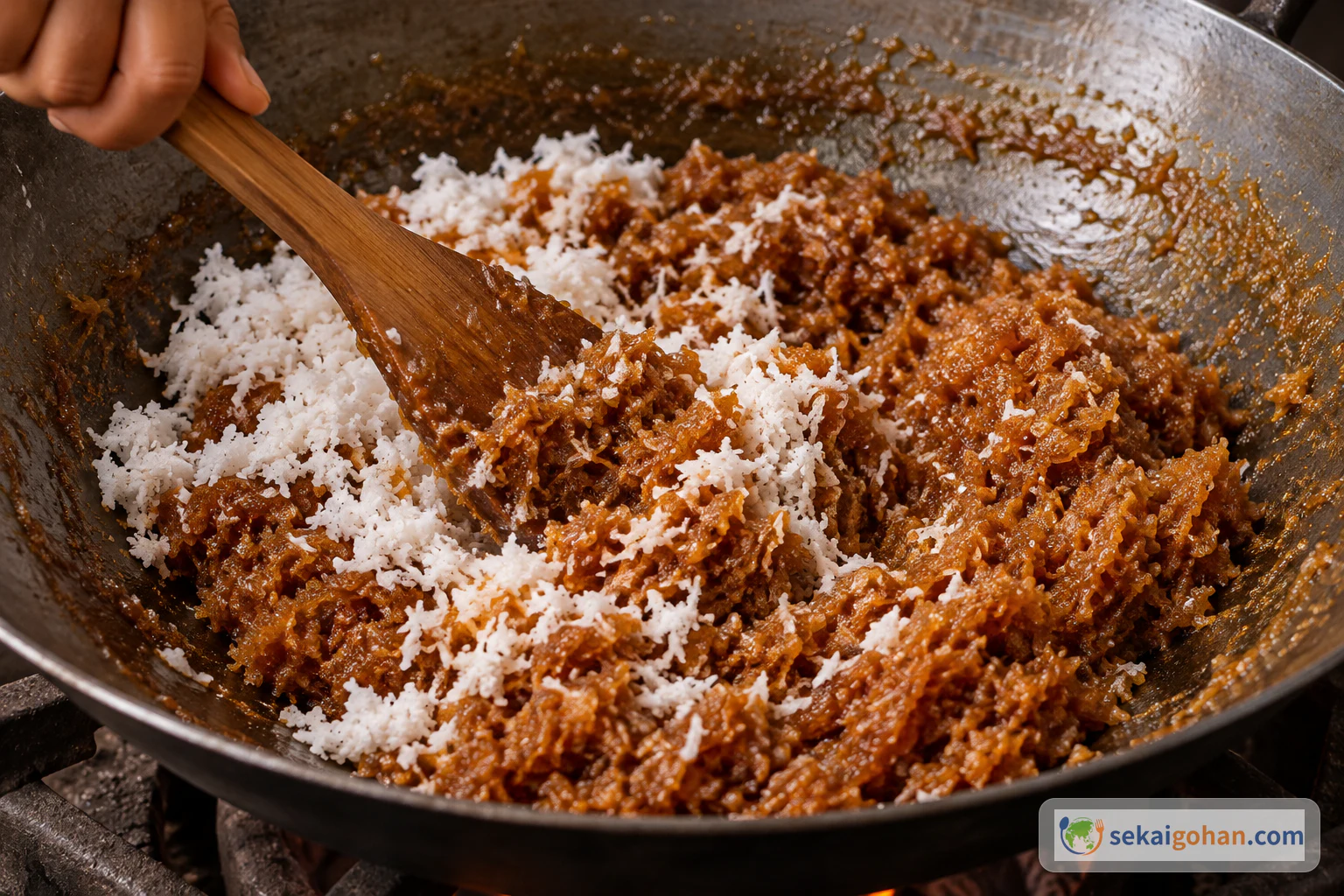
Add the grated coconut and stir until the liquid has reduced and the mixture looks dry.

Adding grated coconut to the filling and stirring
Keep stirring until the liquid reduces and the filling looks dry
STEP 44 / 8

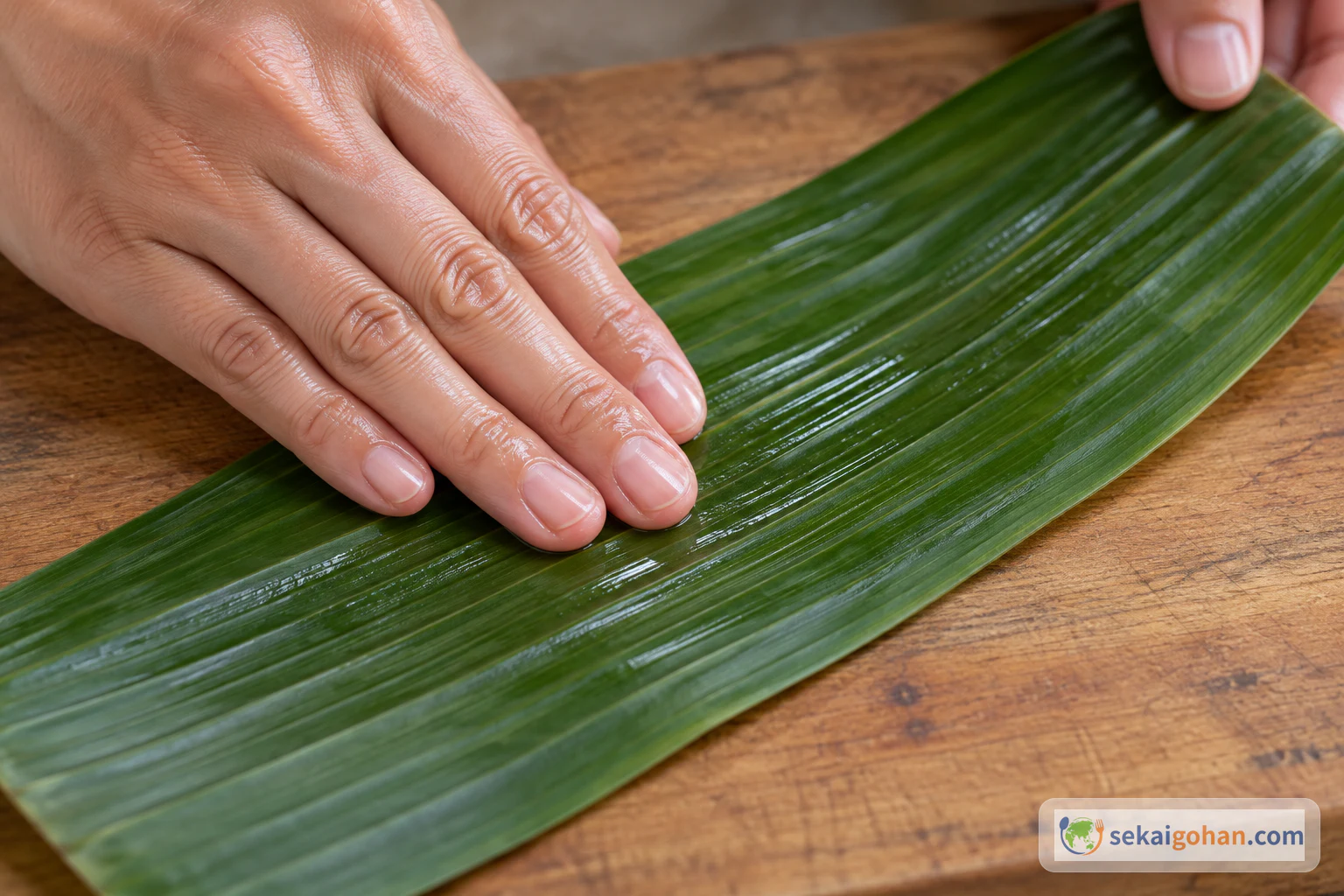
Oil the leaves

Lightly oiling a Singkut leaf
A thin sheen of oil on the leaf is enough

Lightly coat the Singkut leaves with oil.

STEP 55 / 8

Flatten the dough and add the filling

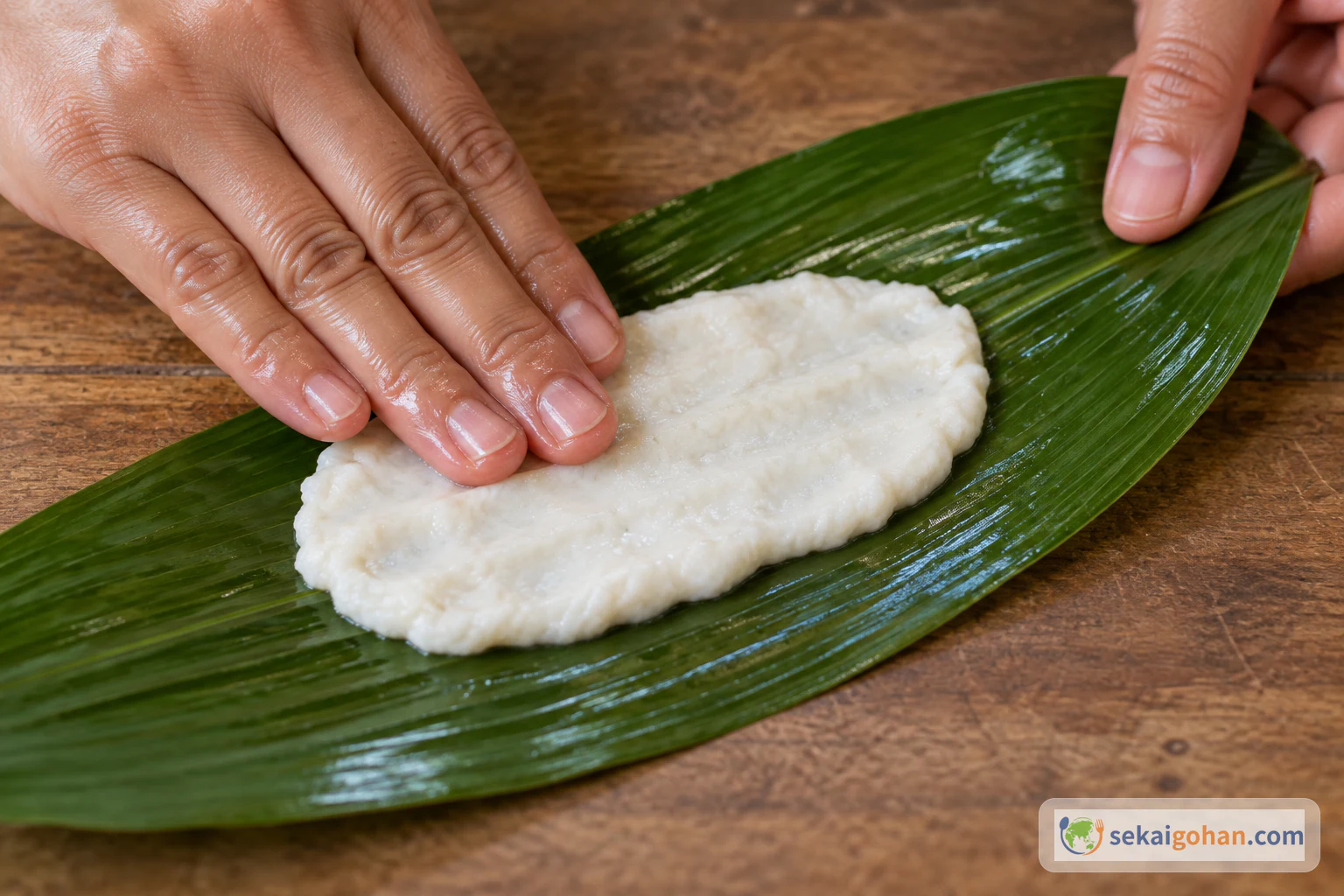
Flattening a portion of dough on an oiled leaf
Press the dough flat directly on the oiled leaf

Take about 1.5 sdm of dough and flatten it on an oiled leaf.

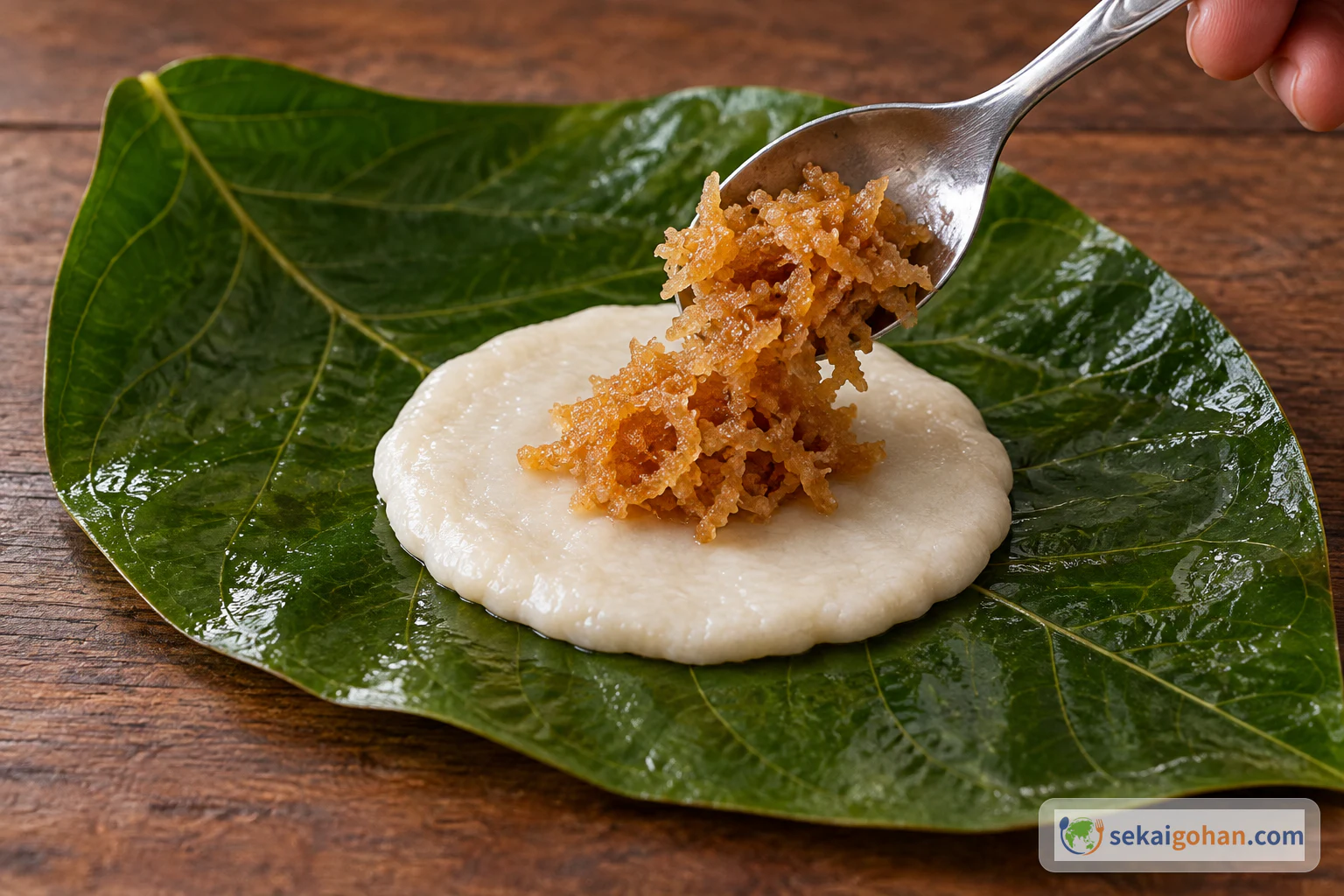
Place some of the filling on the flattened dough.

Placing coconut and palm-sugar filling on the flattened dough
The dough stays open and the leaf stays unwrapped at this stage
STEP 66 / 8

Cover the filling completely with dough

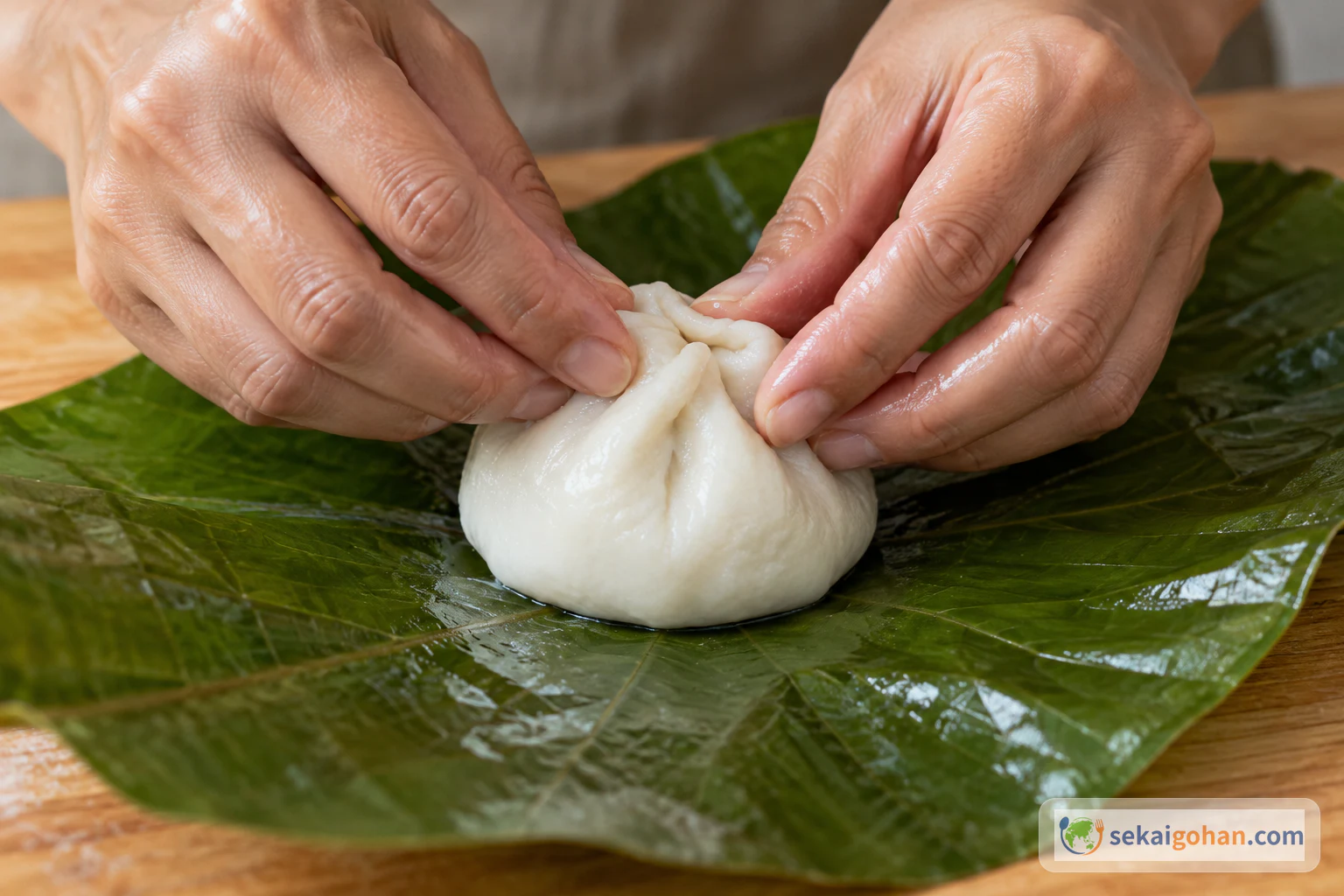
Covering the whole filling with dough and shaping it
Close the dough all the way around before the leaf is folded

Bring the dough over the filling until the filling is completely covered, then shape it.

STEP 77 / 8

Wrap in the leaf

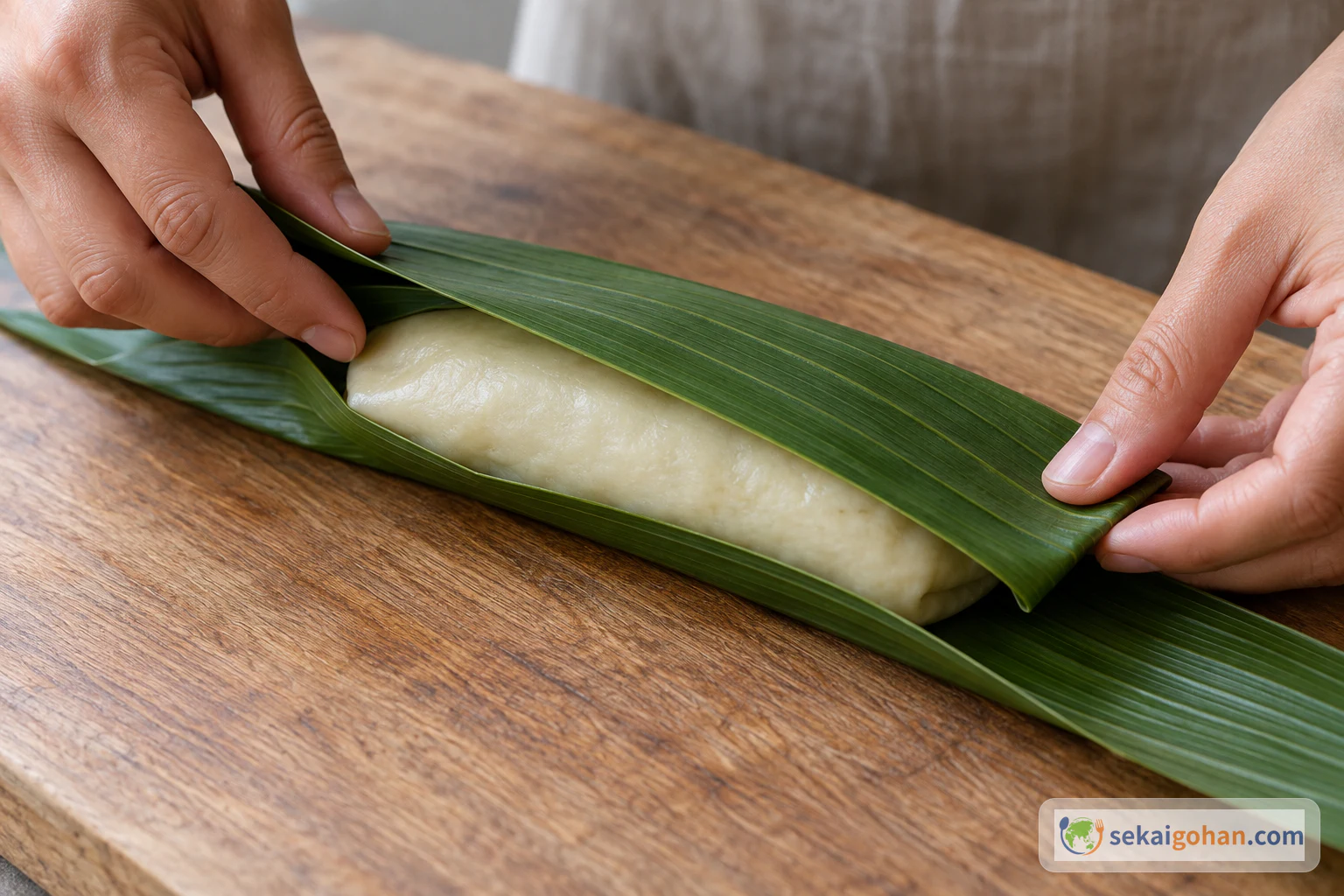
Wrapping the dough-covered Cimpa in a Singkut leaf
The leaf goes around a center that is already fully closed in dough

Wrap the dough-covered cimpa in the Singkut leaf.

STEP 88 / 8

Steam

Steaming Cimpa wrapped in Singkut leaves
Steam about 20 minutes and watch the leaf color shift from green toward brown

Steam for about 20 minutes, until the leaves turn from green to brown.

0 / 0
Ingredients

Ingredients

1 / 1

Ingredients

Ingredient Amount Role
Glutinous rice flour (tepung ketan) 12.5 oz (350 g) Dough
Rice flour (tepung beras) 12.5 oz (350 g) Dough
Salt for the dough (garam) a pinch Seasons the dough
Water for the dough (air) as needed Added a little at a time until the dough holds together and does not run
Palm sugar (gula merah) 1.75 lb (750 g) Sweet base of the filling
Water for the filling (air) 2 cups (500 ml) For boiling the palm sugar; filling only
Pepper (lada) to taste Seasons the filling
Salt for the filling (garam) a pinch Seasons the filling
Grated coconut (kelapa parut) 1/2 coconut Stirred into the filling
Oil for the leaves (minyak untuk olesan) a little A thin coat on the leaves
Singkut leaves (daun singkut / Bulung Singkut) 25 leaves Wrappers
0 / 0

The parcels come out of the steamer long, flat and dark green, with lengthwise ribs running down the leaf. Inside each one, a soft rice-flour shell is wrapped around a dark filling of palm sugar cooked down with grated coconut. Cimpa Unung-Unung is a Karo sweet from North Sumatra. This version is a home recipe a cook learned from their mother, and the cook likes to eat it in the rainy season with sweet tea or coffee. For more dishes from the same country, see Indonesian recipes.

About Cimpa Unung-Unung

The dough is equal parts glutinous rice flour and regular rice flour, mixed with a pinch of salt. For the filling, gula merah is boiled with pepper and salt, and then grated coconut is stirred in until the mixture is dry. A small piece of dough is flattened on an oiled leaf and filled. The dough is closed completely around the filling, and the parcel is wrapped and steamed.

The leaf is Singkut (daun singkut, also written Bulung Singkut). Its botanical name is Molineria latifolia, also called Curculigo latifolia. The Batak Karo people of North Sumatra use Singkut leaves to wrap cimpa, a glutinous-rice dish.

Cimpa recipes vary quite a bit. One variation makes the dough from glutinous rice flour, coconut milk and salt. Its filling is young coconut, sliced palm sugar and pandan leaves. Those parcels are wrapped lengthwise, tied at both ends and steamed for about 30 minutes.

Ingredients: Two Rice Flours, Palm Sugar and Coconut
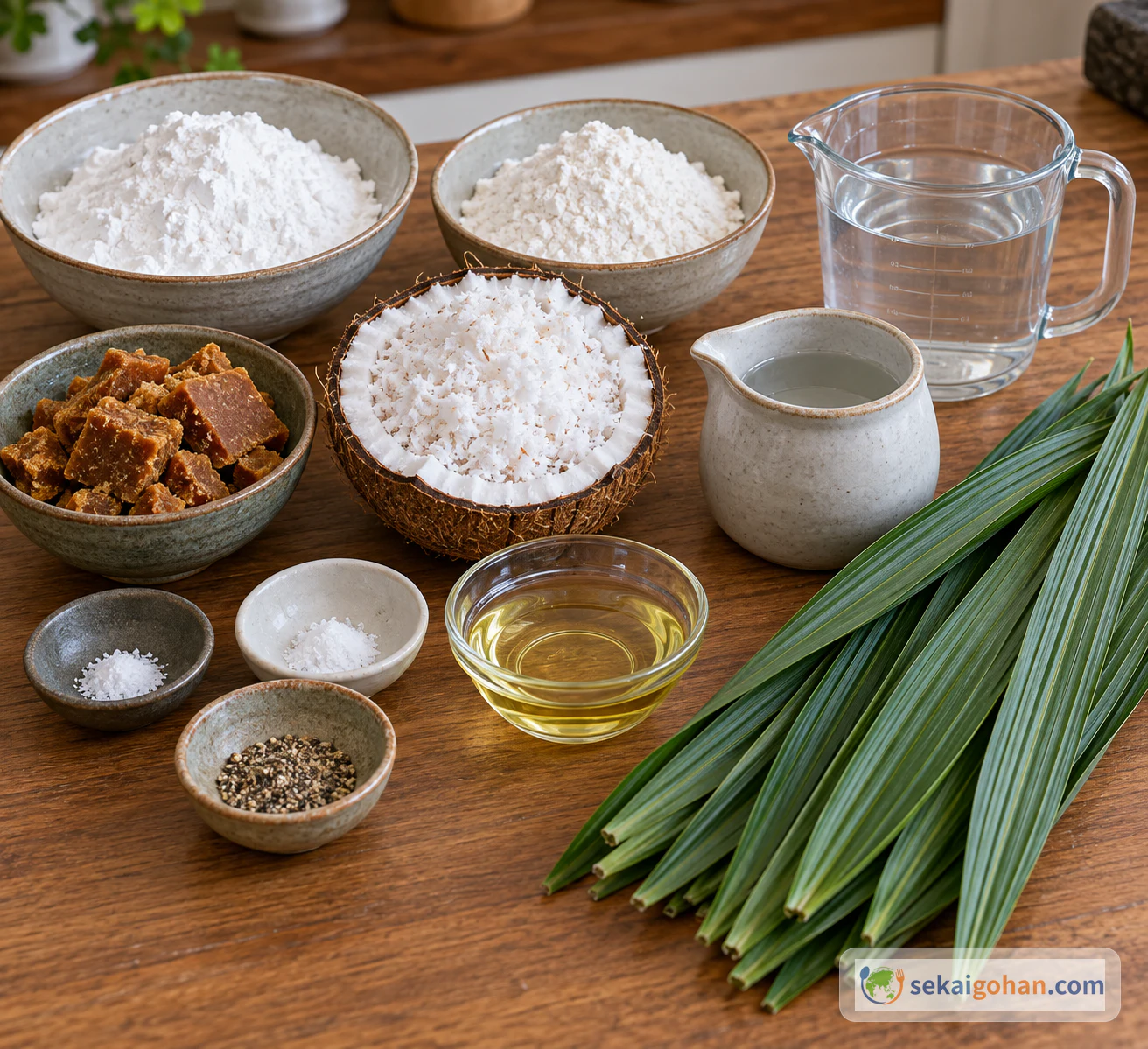
Flours, palm sugar, coconut, seasonings and Singkut leaves for Cimpa Unung-Unung
The filling water and the dough water are measured and used separately

The salt is used twice, as a separate pinch in the dough and in the filling. The 2 cups (500 ml) of water goes only into the filling.

Equipment

  • A bowl for mixing the dough
  • A pot for cooking the filling
  • A spoon for stirring and placing the filling
  • A steamer

Choosing Ingredients for Cimpa Unung-Unung

  • Palm sugar: Use gula merah.
  • Coconut: Grate half a coconut. It goes into the filling and cooks until the liquid has reduced and the mixture looks dry.
  • Pepper: Use lada (pepper) to taste.
  • Oil: A little is enough to coat each leaf lightly.
  • Ginger: The recipe lists 1 ruas of ginger as optional.
  • Leaves: Use Singkut leaves for wrapping. Other cimpa recipes suggest banana leaves when Singkut is not available.

Cimpa Unung-Unung Troubleshooting

This recipe uses water in two separate places. The 2 cups (500 ml) is only for boiling the palm sugar. The dough gets its water a little at a time, unmeasured, until it holds together. Most problems come from mixing up the two.

Water is the first thing to get right

The 2 cups (500 ml) of water belongs to the filling. The dough water has no fixed amount: add it little by little until the dough comes together and does not run. Do not pour the 2 cups (500 ml) into the flour.

After about 20 minutes in the steamer, the leaves look as though they have gone from green to brown. That's the cook's visual cue at the stove, not a precise test of doneness.

What you see Where to look What to do
The dough runs or spreads Too much water went in at once Next time, add water in smaller amounts and stop as soon as the dough holds together
The dough will not come together Not enough water yet Add a little more water and keep mixing
The filling is still wet The liquid has not reduced enough Keep stirring over the heat until the mixture looks dry
Filling shows through the dough The dough was not closed all the way Bring the dough over the filling until none is exposed, then wrap in the leaf
The 2 cups (500 ml) went into the flour Filling water and dough water got mixed up The 2 cups (500 ml) is for the palm sugar. The dough takes only gradual, unmeasured water

Frequently Asked Questions

How much water goes into the dough?

There's no set amount. Add water little by little until the dough comes together and is no longer runny. The 2 cups (500 ml) is for boiling the palm sugar in the filling, so keep it out of the dough.

What does "1.5 sdm" mean?

Sdm is short for sendok makan, or tablespoon. Use roughly 1.5 sdm of dough per piece.

Can I use banana leaves instead of Singkut?

This version calls for Singkut leaves. Other cimpa recipes suggest banana leaves when Singkut is not available.

How do I know when the cimpa are done?

Steam them for about 20 minutes. By then the leaves should look as though they have turned from green to brown. Treat that color change as a visual cue rather than a measured test.
Sources

  • Elisabeth Ginting (@elisabeth31), "Cimpa Unung-Unung (Khas Karo)," Cookpad Indonesia, 2020-04-28. The only recipe followed here: ingredients and amounts, the gradual dough water, the filling, shaping and wrapping, the steaming time of about 20 minutes and the leaf-color cue. Also the poster's own description of learning the recipe from their mother, the Sumatera Utara profile display, and the note about eating it in the rainy season with sweet tea or coffee. https://cookpad.com/id/resep/12313362
  • Amanda Amelia, "Mengenal Cimpa Kue Khas Karo, Resep dan Cara Membuatnya," detikSumut, 2023-09-19. Used only to compare a different cimpa recipe: coconut-milk dough, pandan, wrapping lengthwise with tied ends, about 30 minutes of steaming, and a banana-leaf suggestion for that recipe. Nothing from it is used in the recipe above. https://www.detik.com/sumut/kuliner/d-6936750/mengenal-cimpa-kue-khas-karo-resep-dan-cara-membuatnya
  • Marina Silalahi and Nisyawati, "The ethnobotanical study of edible and medicinal plants in the home garden of Batak Karo sub-ethnic in North Sumatra, Indonesia," Biodiversitas 19(1): 229–238, 2018. Used only for its record of Singkut (Molineria latifolia in the paper) as a wrapper and for the Batak Karo use of Singkut leaves to wrap cimpa. https://www.smujo.id/biodiv/article/download/2355/2145/3038 (DOI: https://doi.org/10.13057/biodiv/d190131)