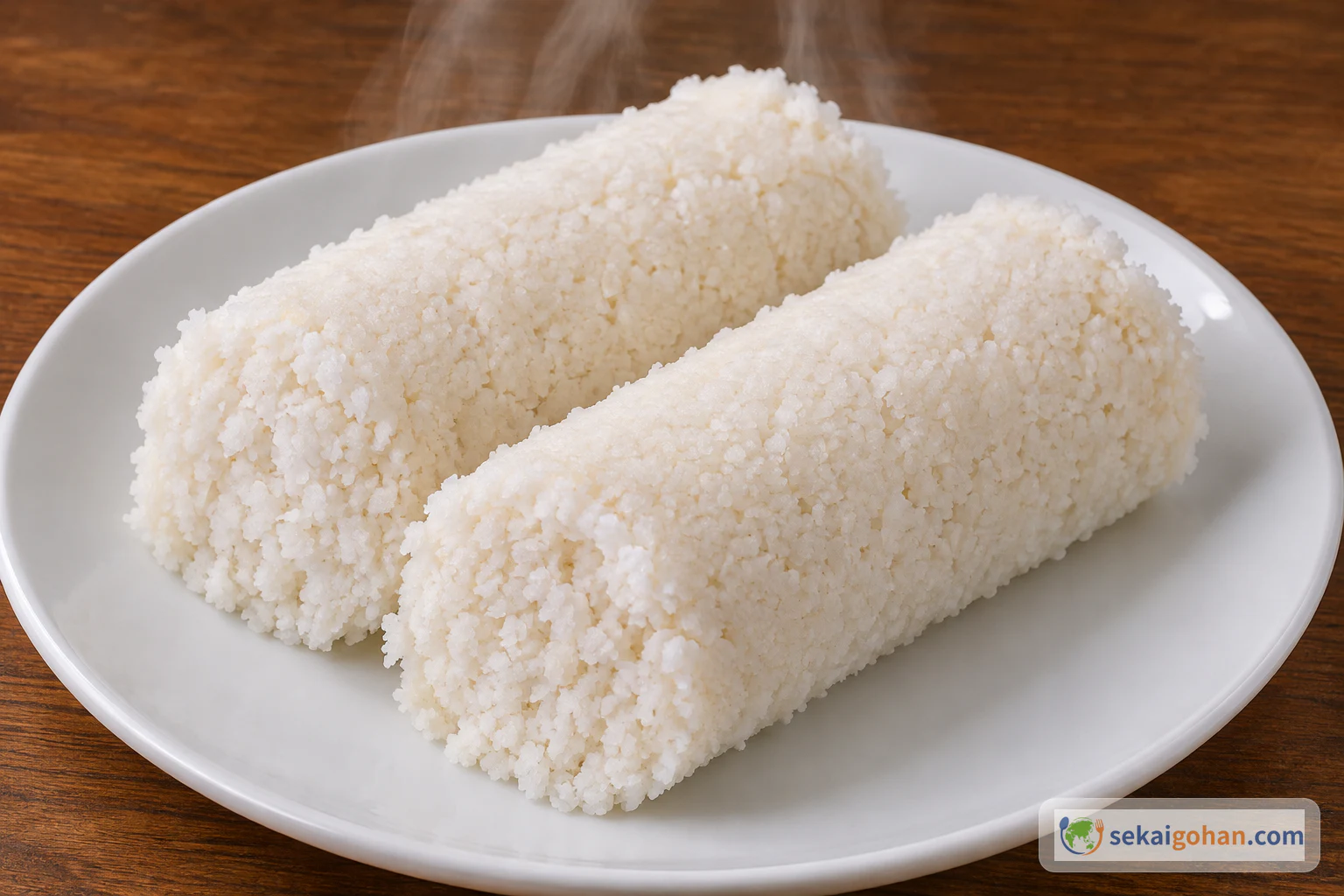
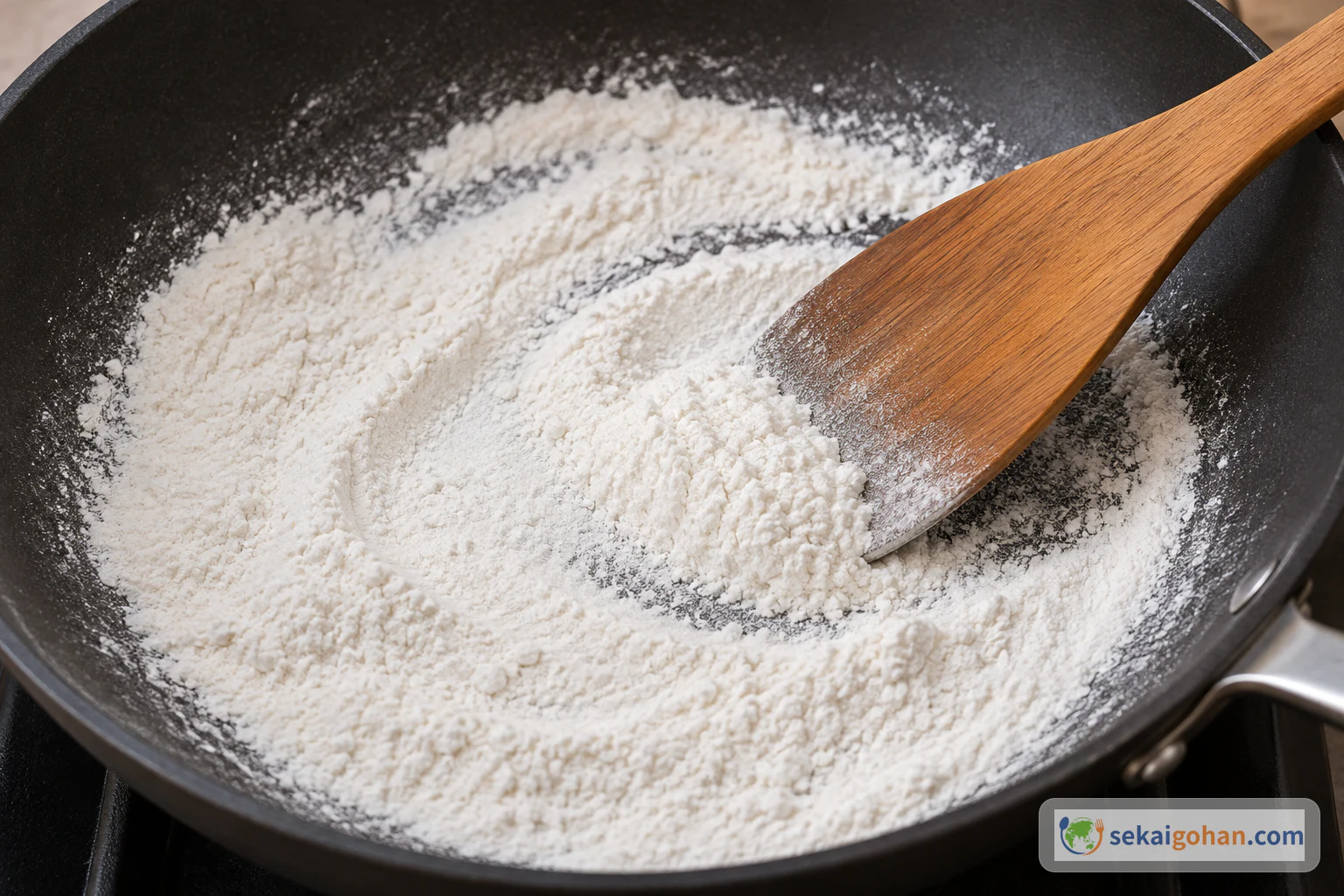
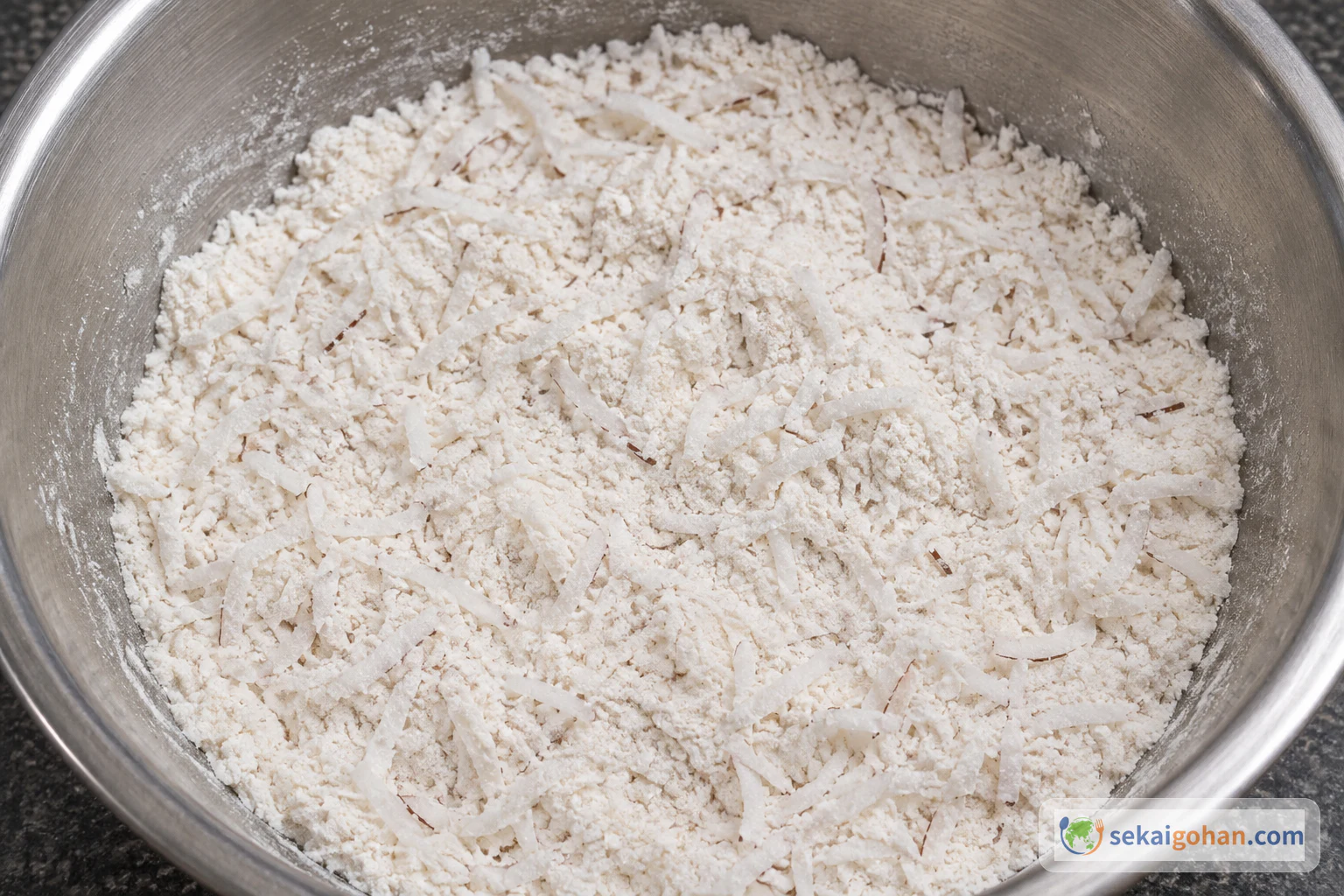
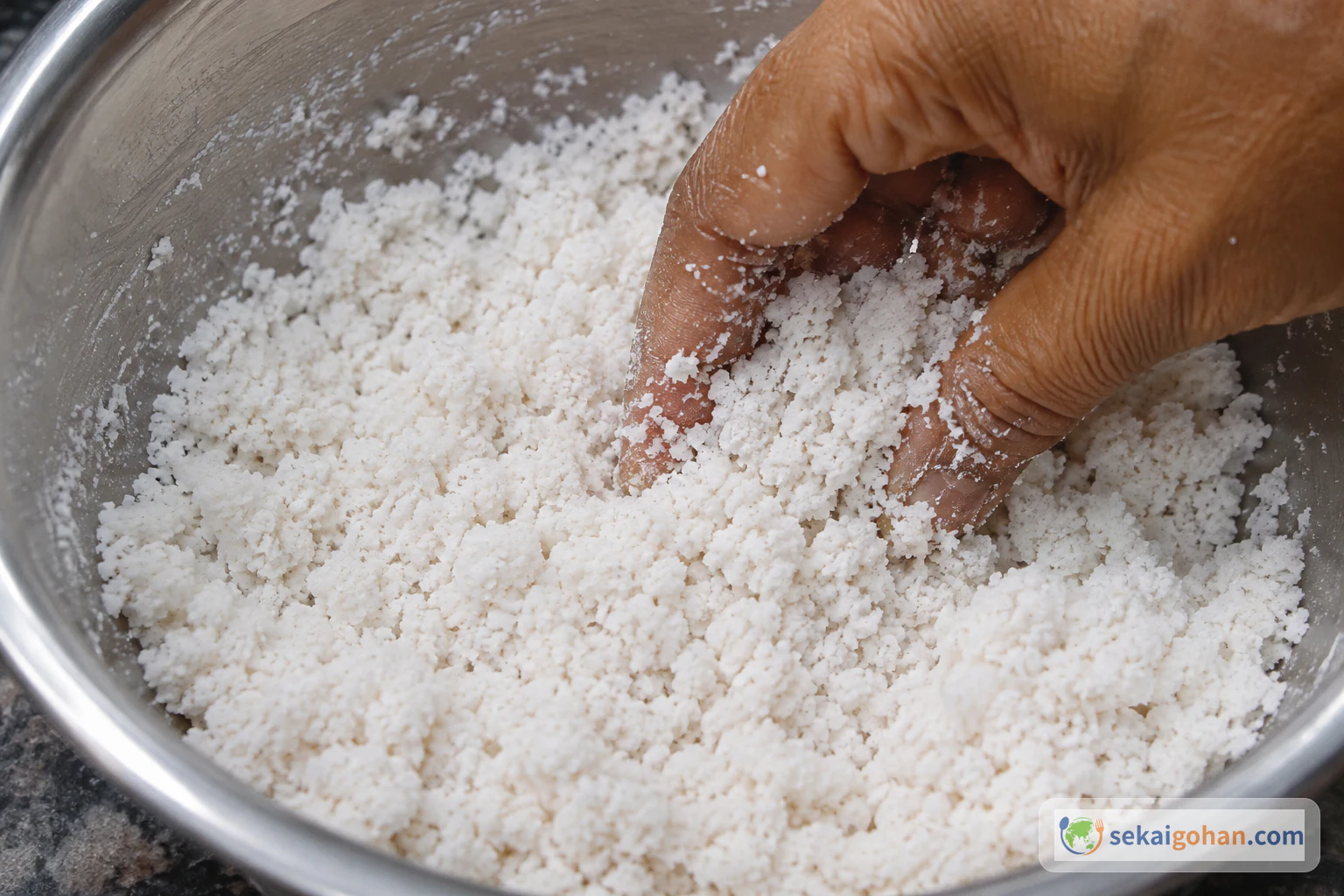
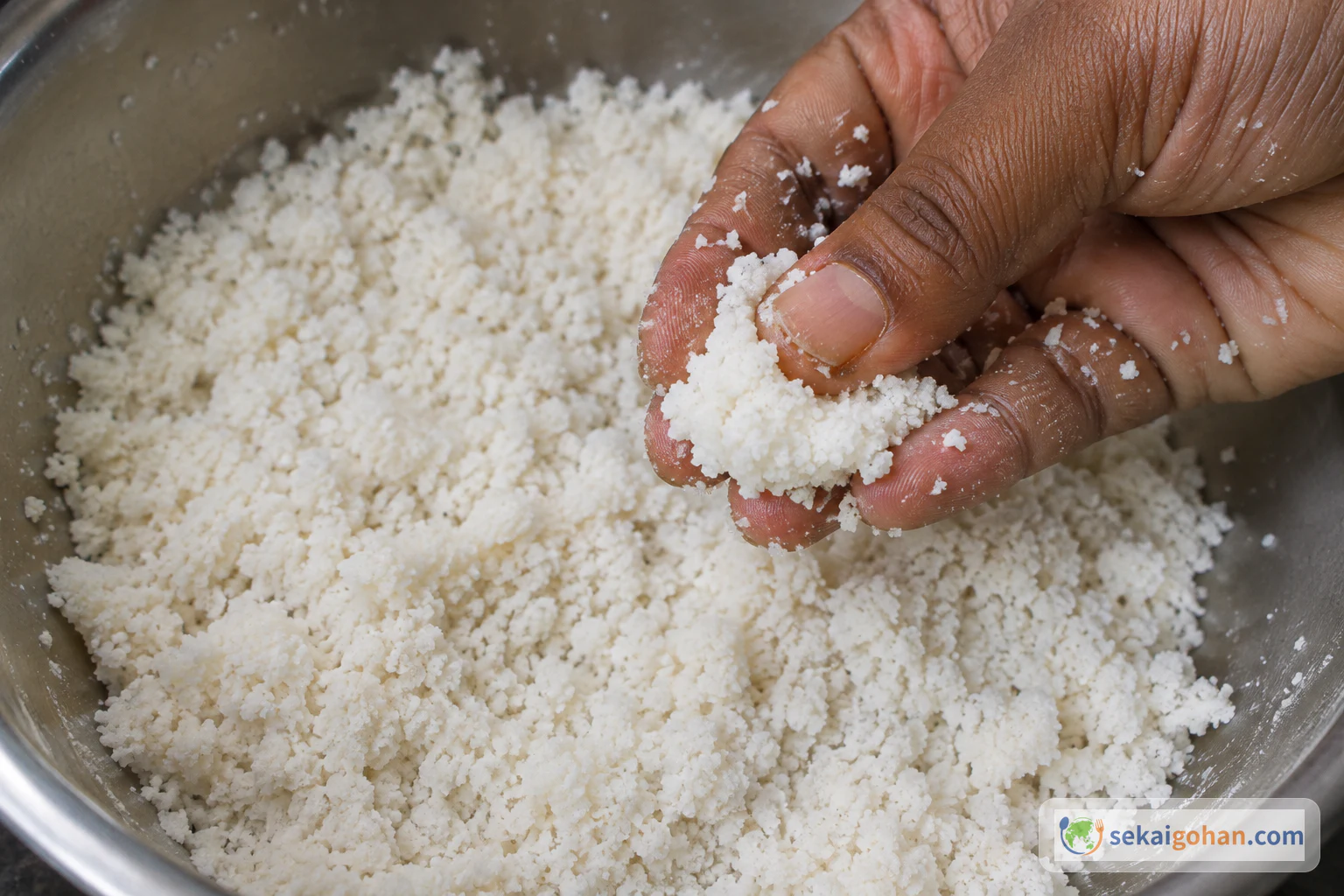

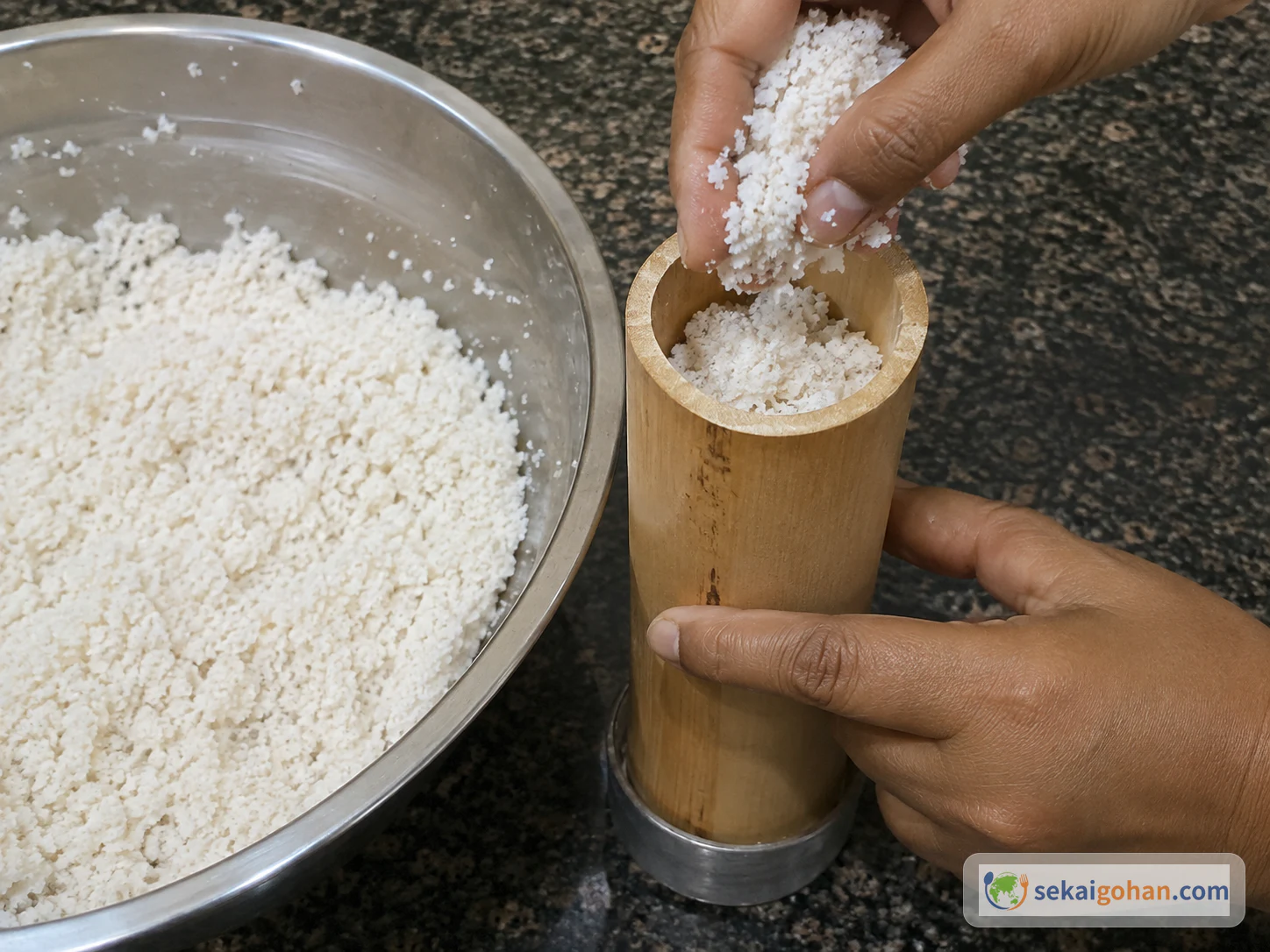
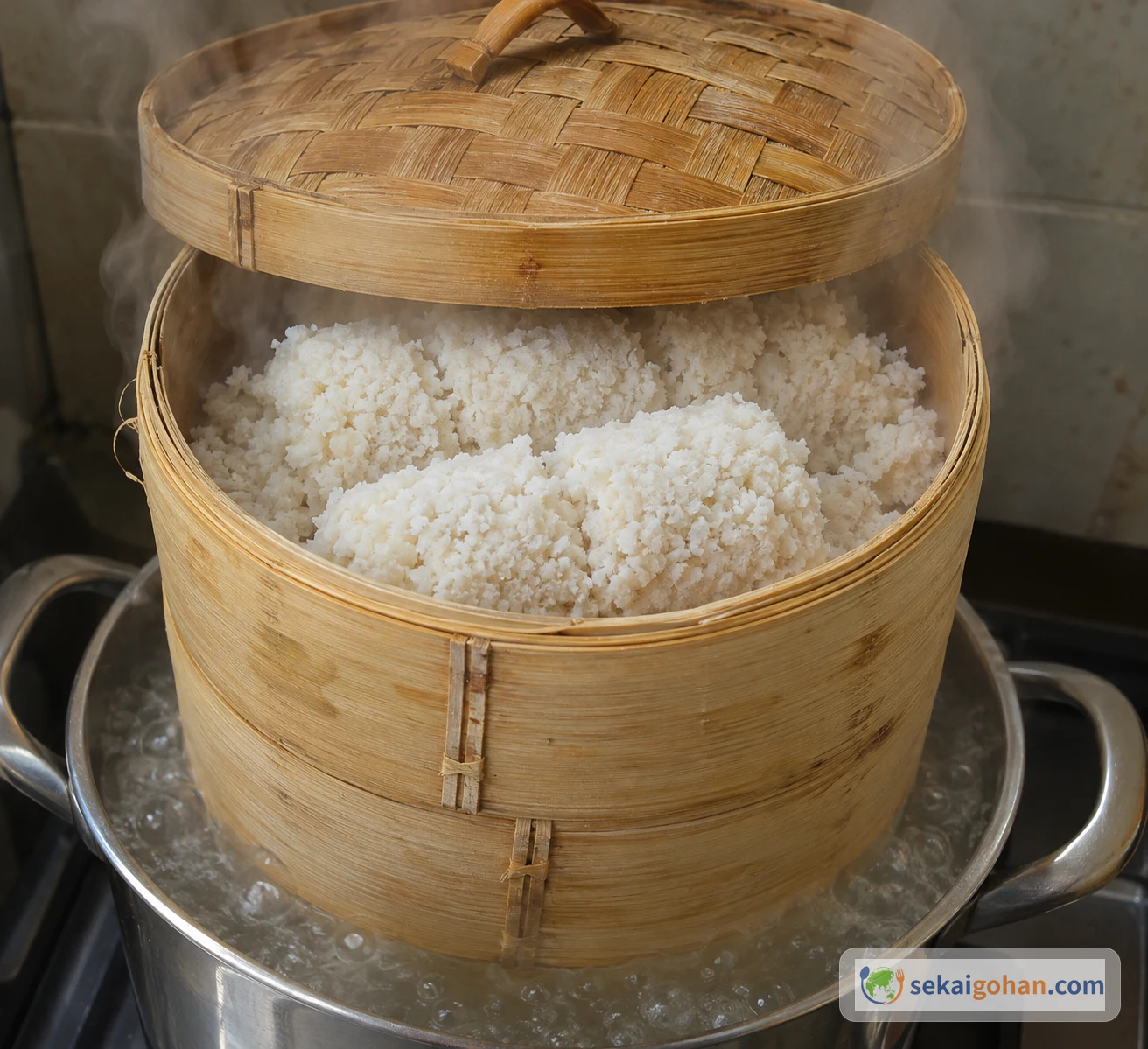
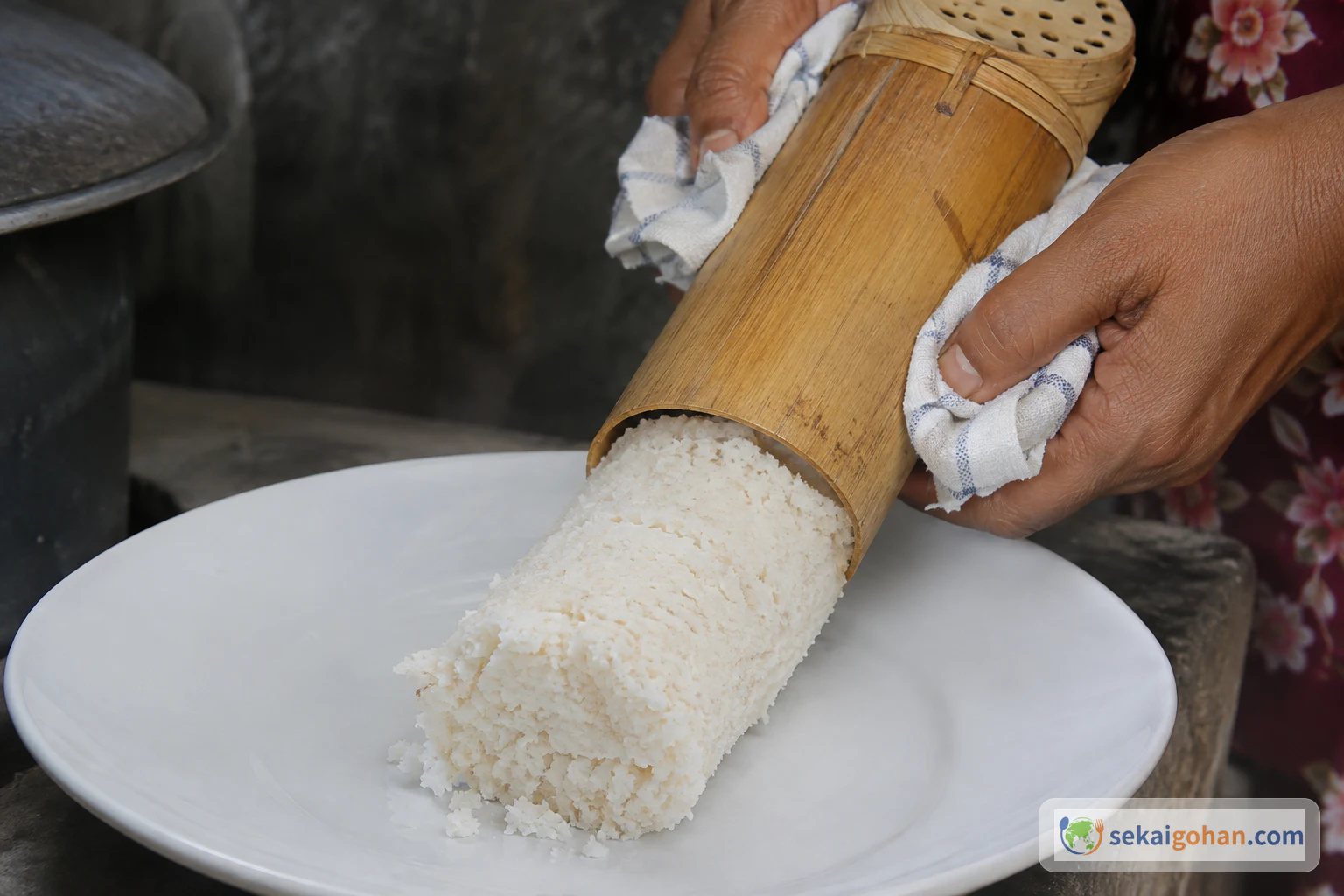
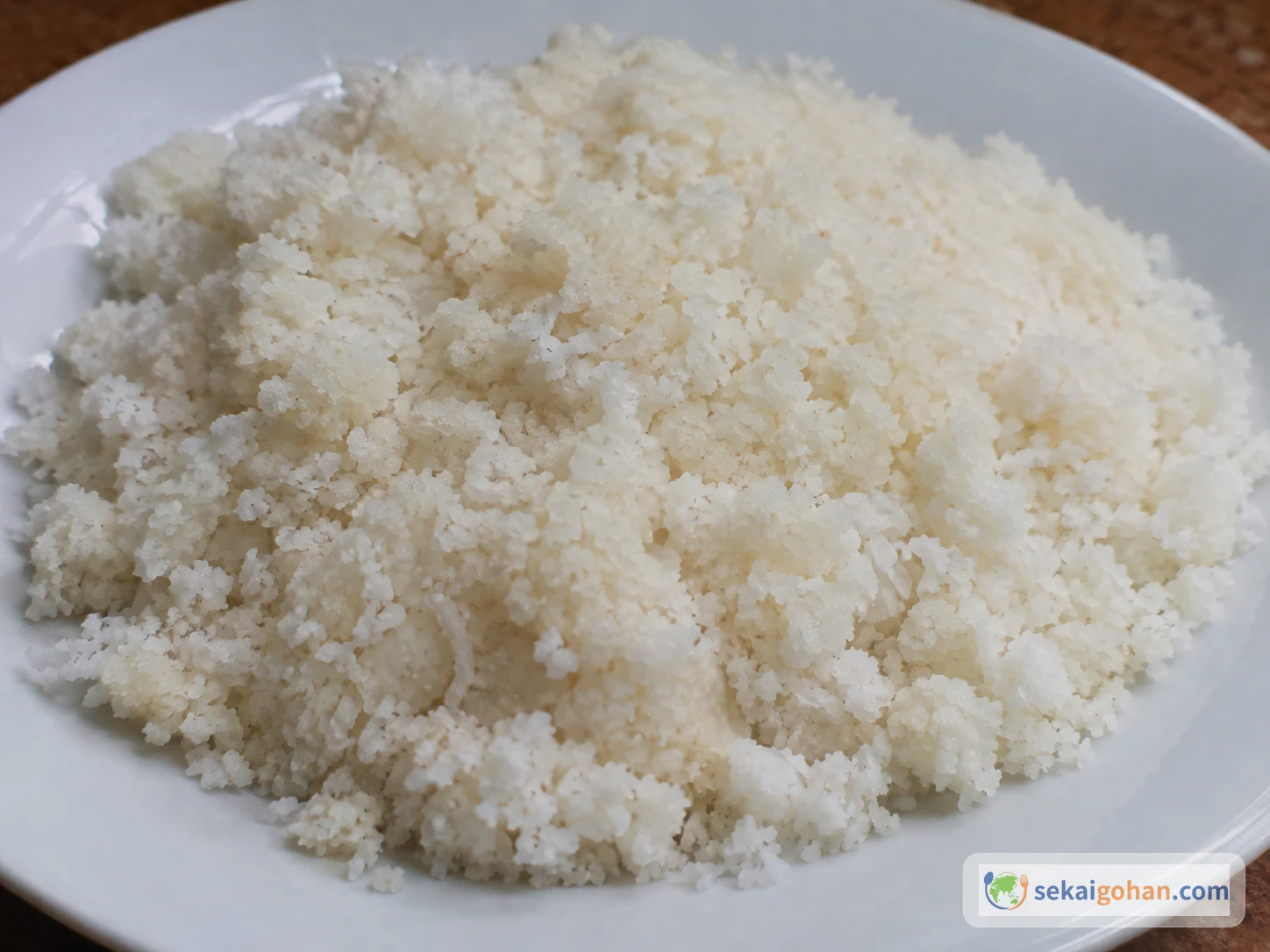
Pittu starts in a dry pan, where rice flour gets a light roast. Fresh grated coconut and salt join it in a bowl, then water, sprinkled in a little at a time and rubbed through with your fingertips until the whole thing turns to small, moist crumbs. Packed into a vertical bamboo tube and steamed, those crumbs come out as a soft, crumbly cylinder. It's a simple Sri Lankan staple, made from four ingredients and one test: squeeze a little of the mixture, and if it holds together, it's ready for the tube.
About Sri Lankan Pittu
Pittu is rice flour and fresh coconut, rubbed into crumbs and steamed. Besides rice flour, it can also be made with kurakkan (finger millet) flour. The traditional mould is a bamboo tube, though metal tubes are used today alongside bamboo ones. For more dishes from the country, visit our Sri Lanka page.
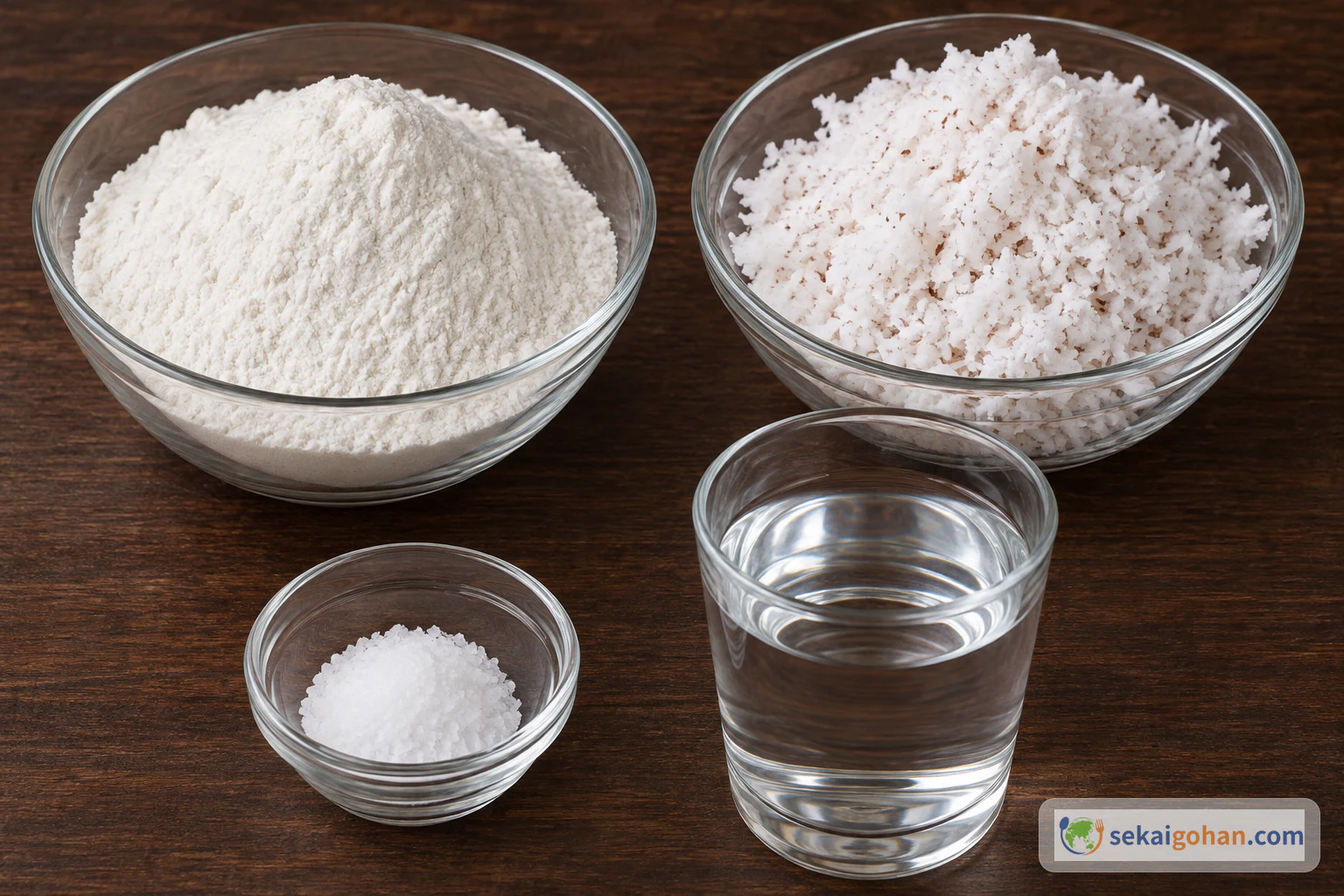
Ingredients: Four Things Only
Equipment
- Dry pan
- Mixing bowl
- Food-use vertical bamboo pittu tube with a fitted perforated base and perforated lid
- Matching pot for boiling water
- Heat-safe cloths
- Serving plate
Choosing Rice Flour and Coconut for Pittu
Rice flour: Use ordinary white rice flour. Very fine rice flour doesn't work for pittu, and neither does glutinous rice flour or flour sold for idiyappam or string hoppers.
Coconut: Use fresh grated coconut. If you buy it ready-grated, look for a fresh, unsweetened, undried product; dried coconut, coconut flour and sweetened coconut won't give the same result.
Mould: Use a vertical bamboo tube made for food. Avoid improvising with a sealed pressure-type mould or a homemade plastic one.
Water goes in as needed, so let the texture of the crumbs guide you rather than a measure.
Method: From Dry Flour to Hot Pittu
The pot, tube and steam are all hot, so use heat-safe cloths whenever you touch them. Rising steam doesn't tell you the pittu is cooked or safe to eat.
Common Pittu Problems and Fixes
| What you notice | What it means | What to do |
|---|---|---|
| The flour starts to take on color | The roast has gone past the light stage | Move it to the bowl before it browns further, and watch it more closely next time |
| The squeezed sample falls apart | The mixture hasn't reached the holding stage | Sprinkle in a little more water, rub again and repeat the test |
| The mixture seems too wet | Too much water went in | There's no fix once it's wet, so add the water slowly from the start |
| Steam is rising, but you aren't sure the pittu is done | Steam and the 15 minutes don't confirm it's cooked | Don't rely on either one alone to judge doneness |
| You get a different number of pittu | The mould size changes the count | Keep steaming batches until the crumbs are used up |
The crumbs are meant to be eaten fully steamed, never raw.
Serving Pittu
In Sri Lanka, pittu is often eaten at breakfast and sometimes at dinner. A plain plate is one way to serve it, but it's just as common alongside curry, the relish lunu miris, coconut milk, jaggery and banana.
Frequently Asked Questions
How much water do I need?
Add water as needed. Sprinkle it in a little at a time and rub it in until you have small moist crumbs and a squeezed sample holds together.
How long does pittu steam?
Steam for about 15 minutes, watching for steam to come through the holes at the top of the tube. Neither one proves the pittu is cooked or safe to eat.