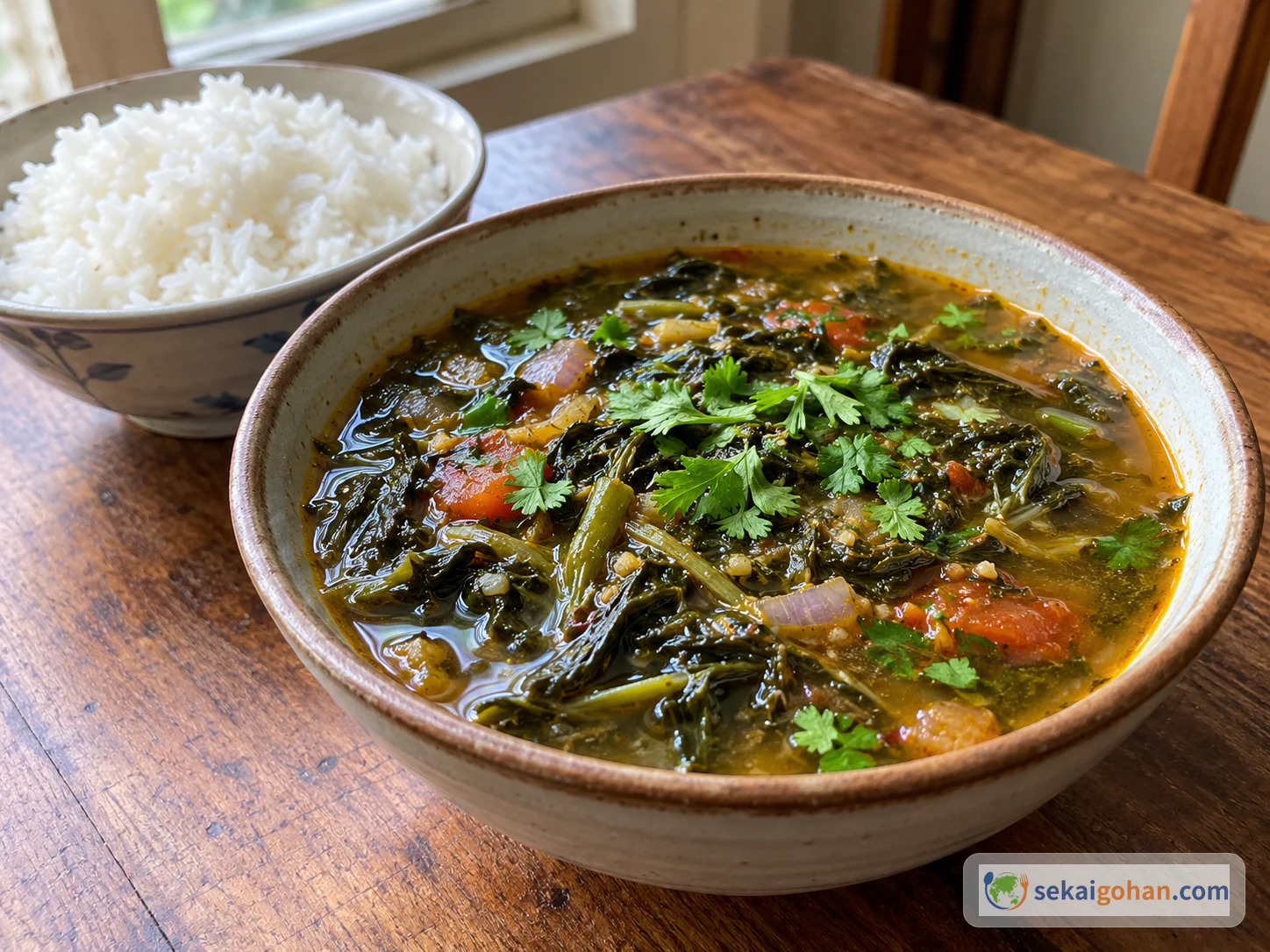
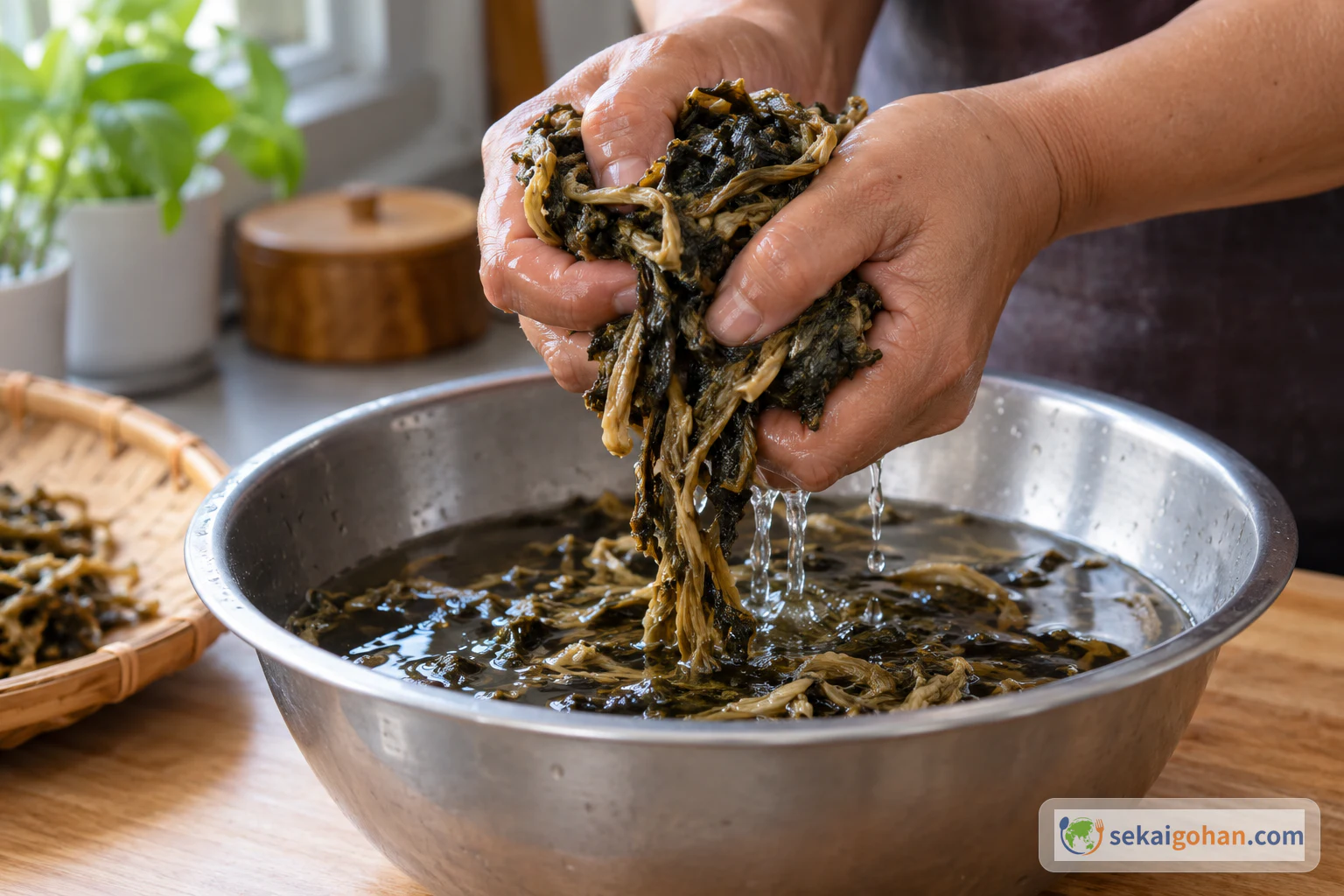
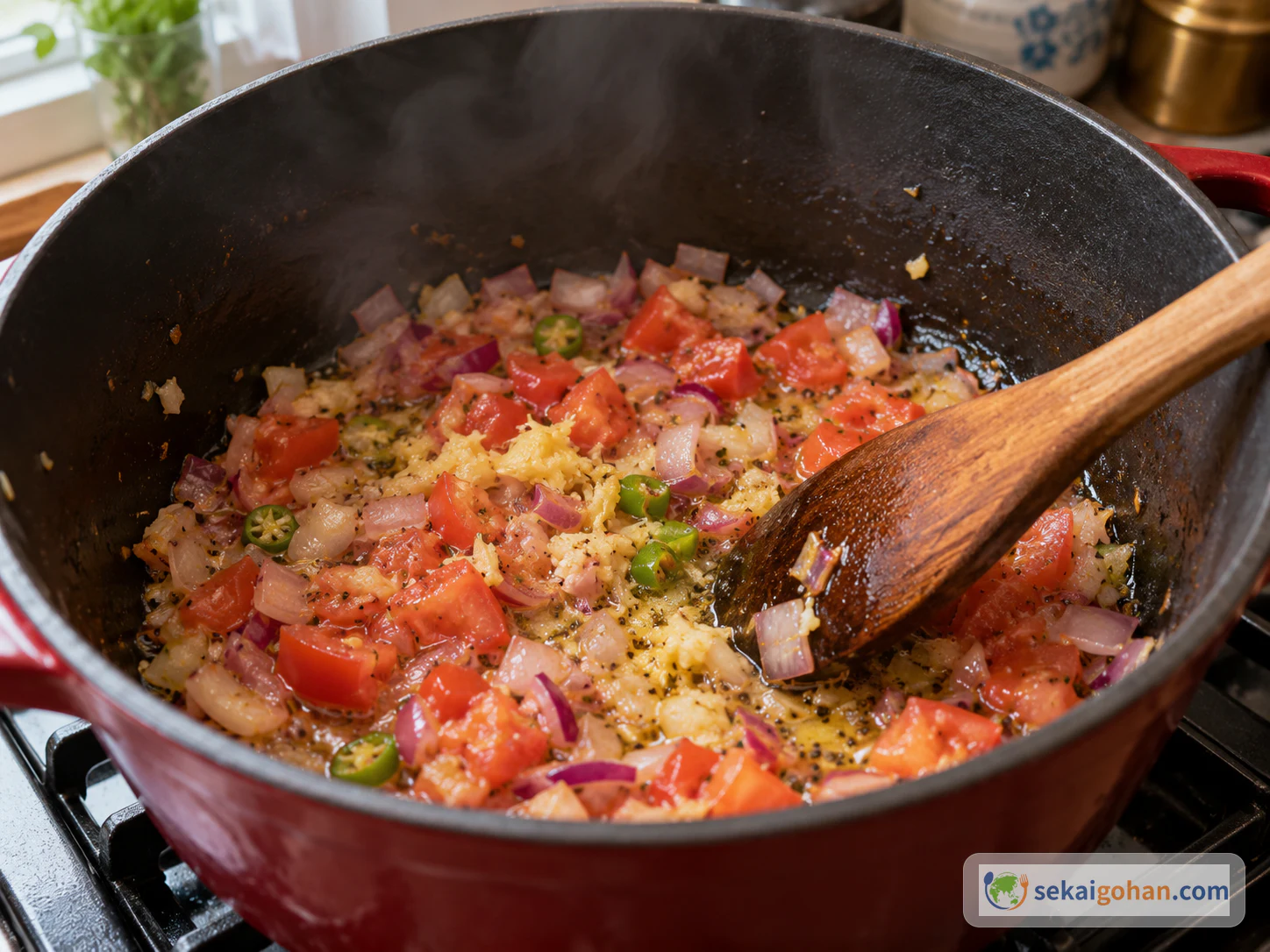
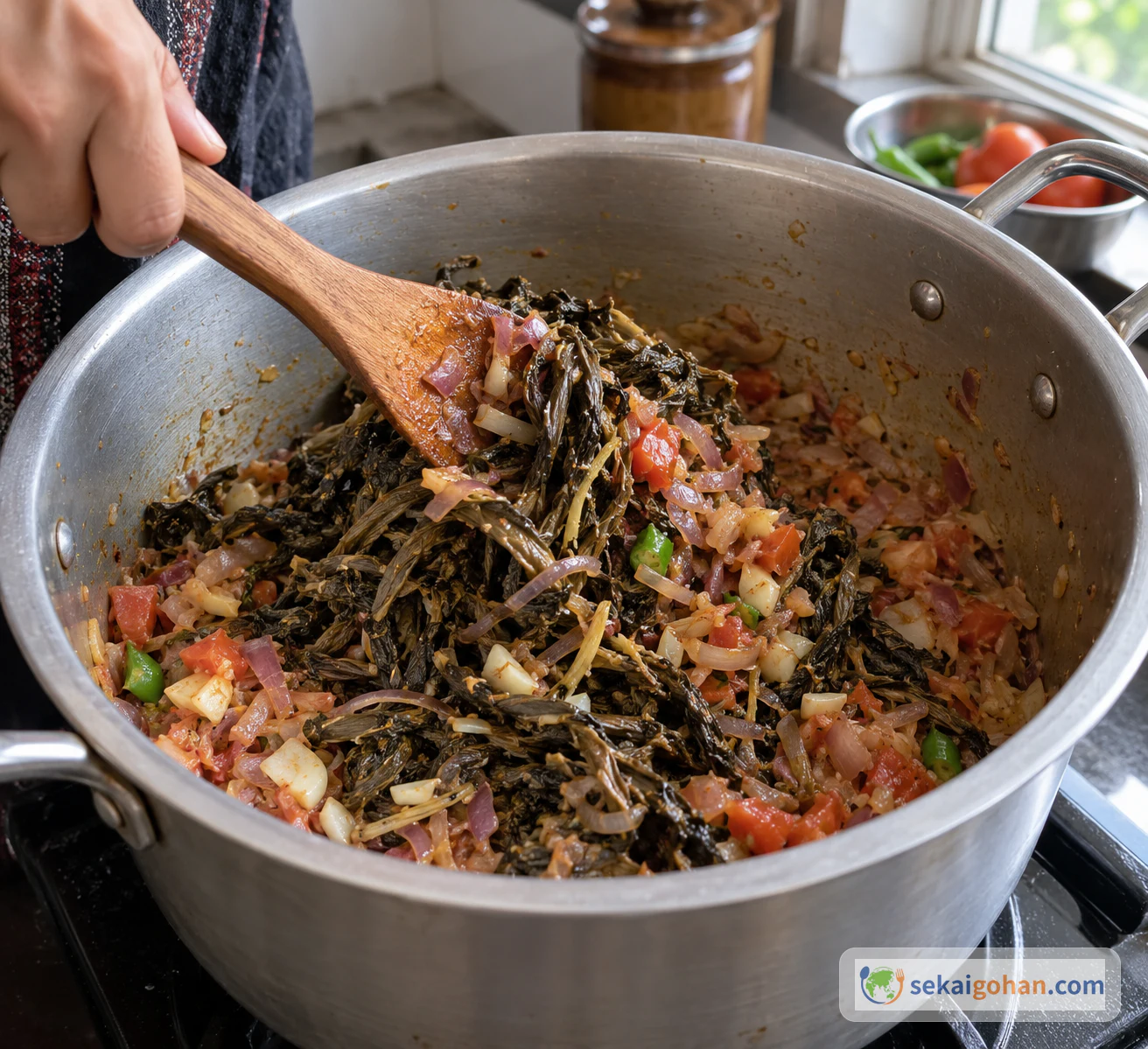
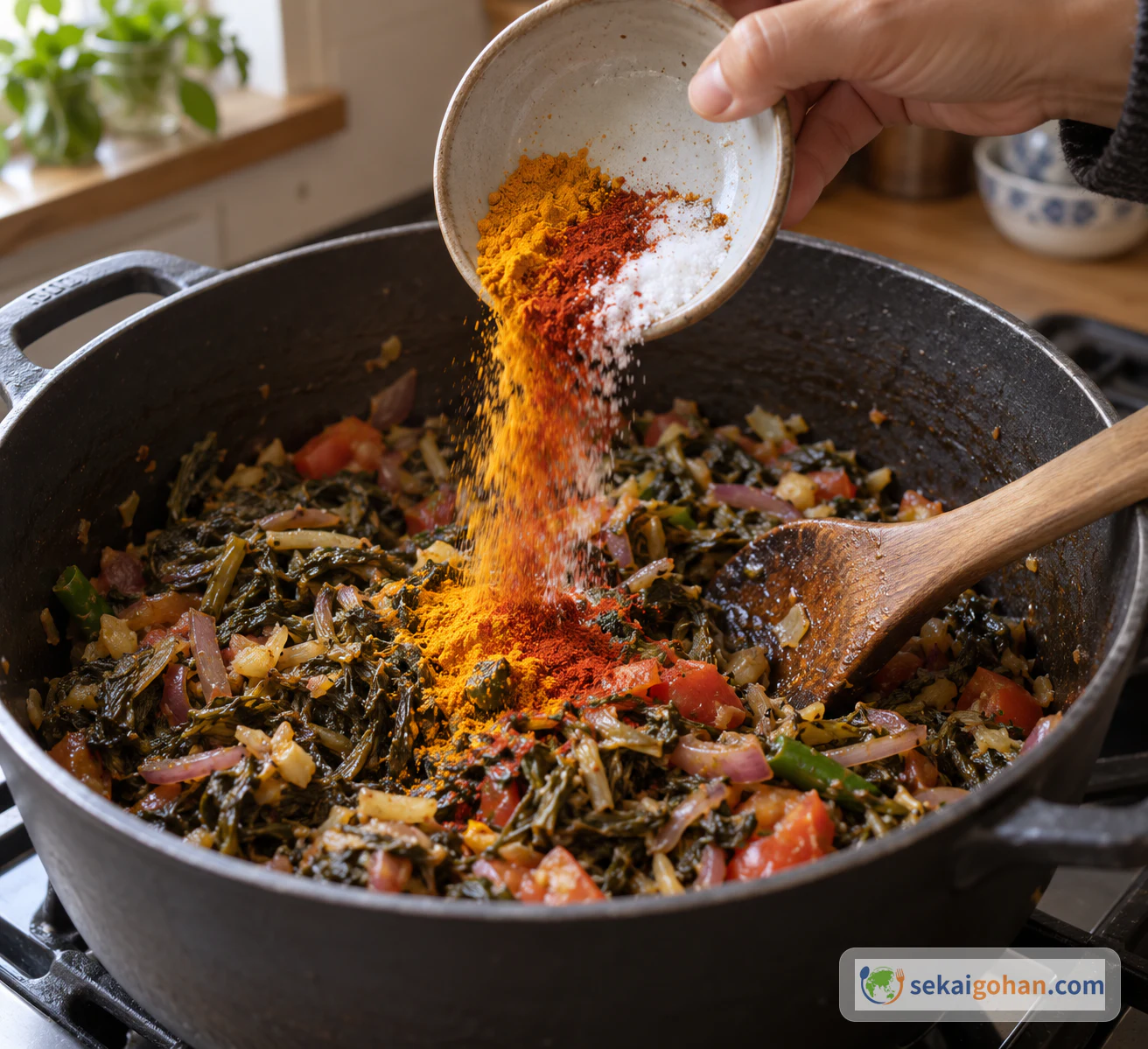
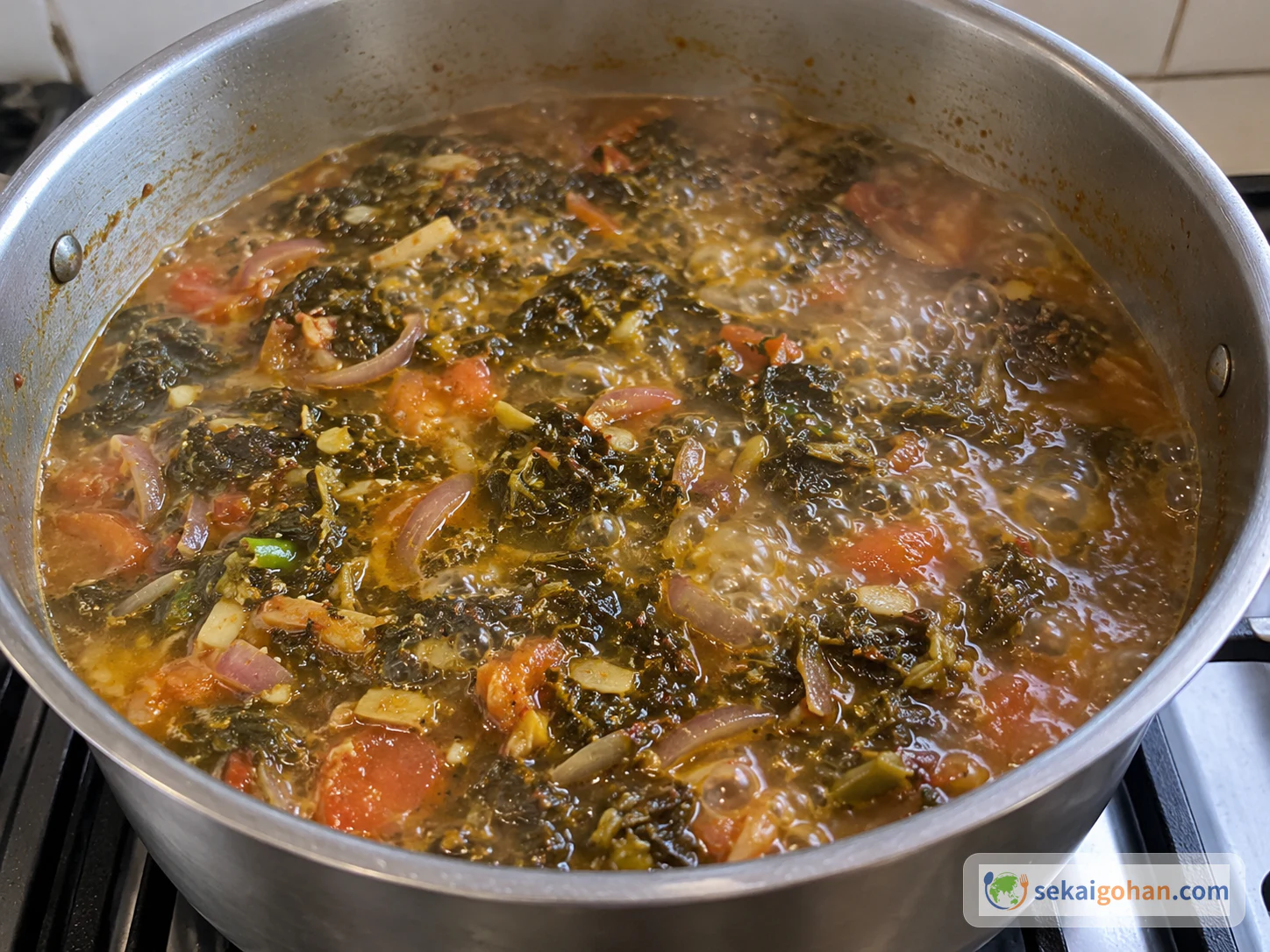
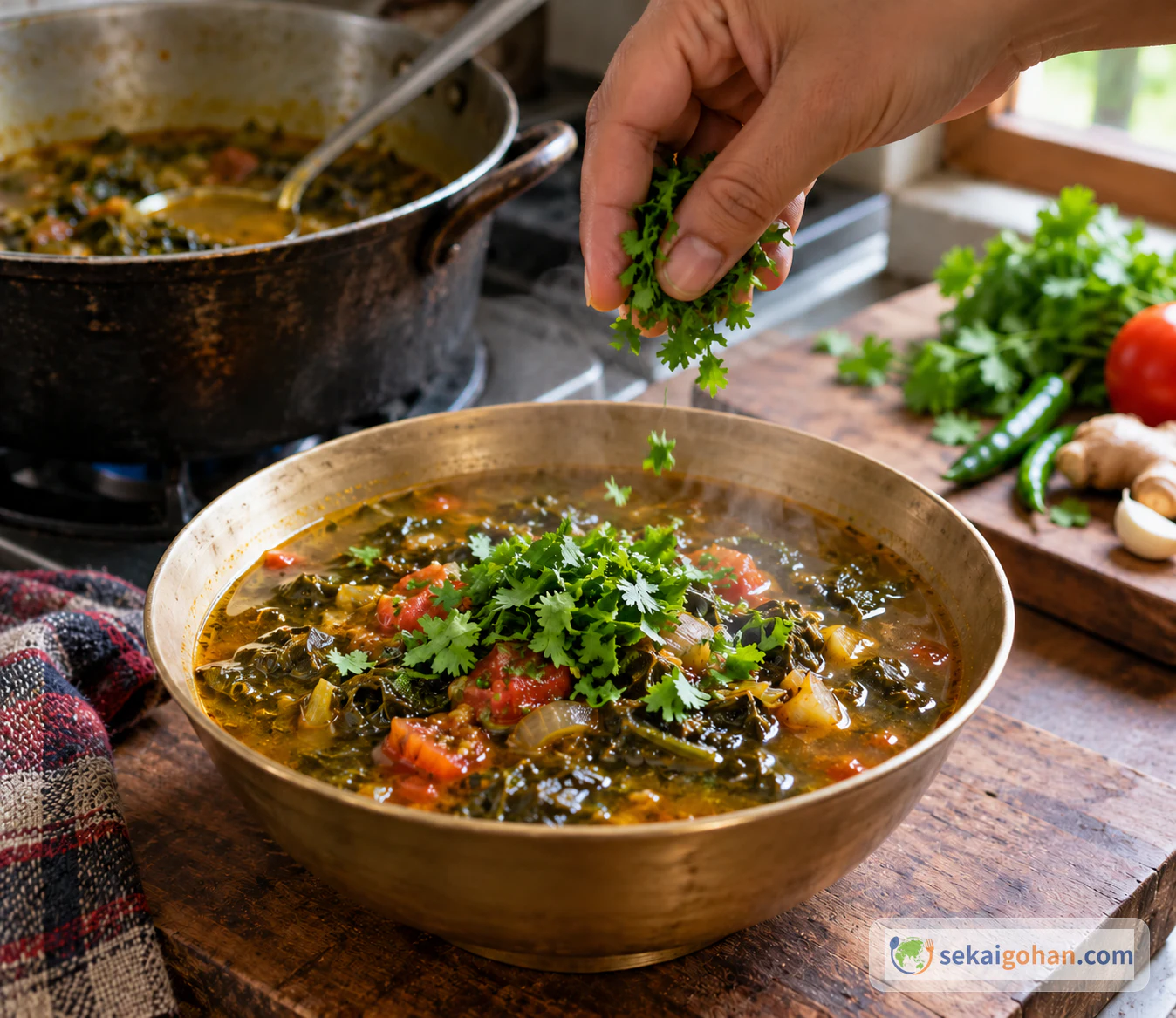
Mustard oil heats in a deep pot until it is smoking hot. Garlic, red onion, ginger, green chilli and tomato go in, then a handful of dark leaves that have been soaked and squeezed dry. Turmeric, red chilli powder and salt follow, then water, and the pot comes to a rolling boil. Chopped coriander goes on top of each bowl.
Gundruk ko Jhol is a thin, clear broth of softened gundruk leaves. It tastes sour and pungent, with a little chilli heat, and the mustard oil and aromatics carry it. This version is a family recipe from Nepali speakers in India and Bhutan, and its roots are in Nepal. Each winter the grandmother prepared greens to make the next year's gundruk, and the family ate it as this jhol.
Gundruk and Gundruk ko Jhol
People often mix up the ingredient and the dish. Gundruk is a fermented, dried leafy food that households make from the leaves or seedlings of Brassica plants, such as mustard, cauliflower and radish leaves. It is different from sinki, a fermented food made from radish. Jhol means a brothy dish, so Gundruk ko Jhol is the soup made with gundruk.
Gundruk also goes into curries and pickles, and each of those is a dish of its own. This family made the jhol to eat at home with rice.
Ingredients for Gundruk ko Jhol
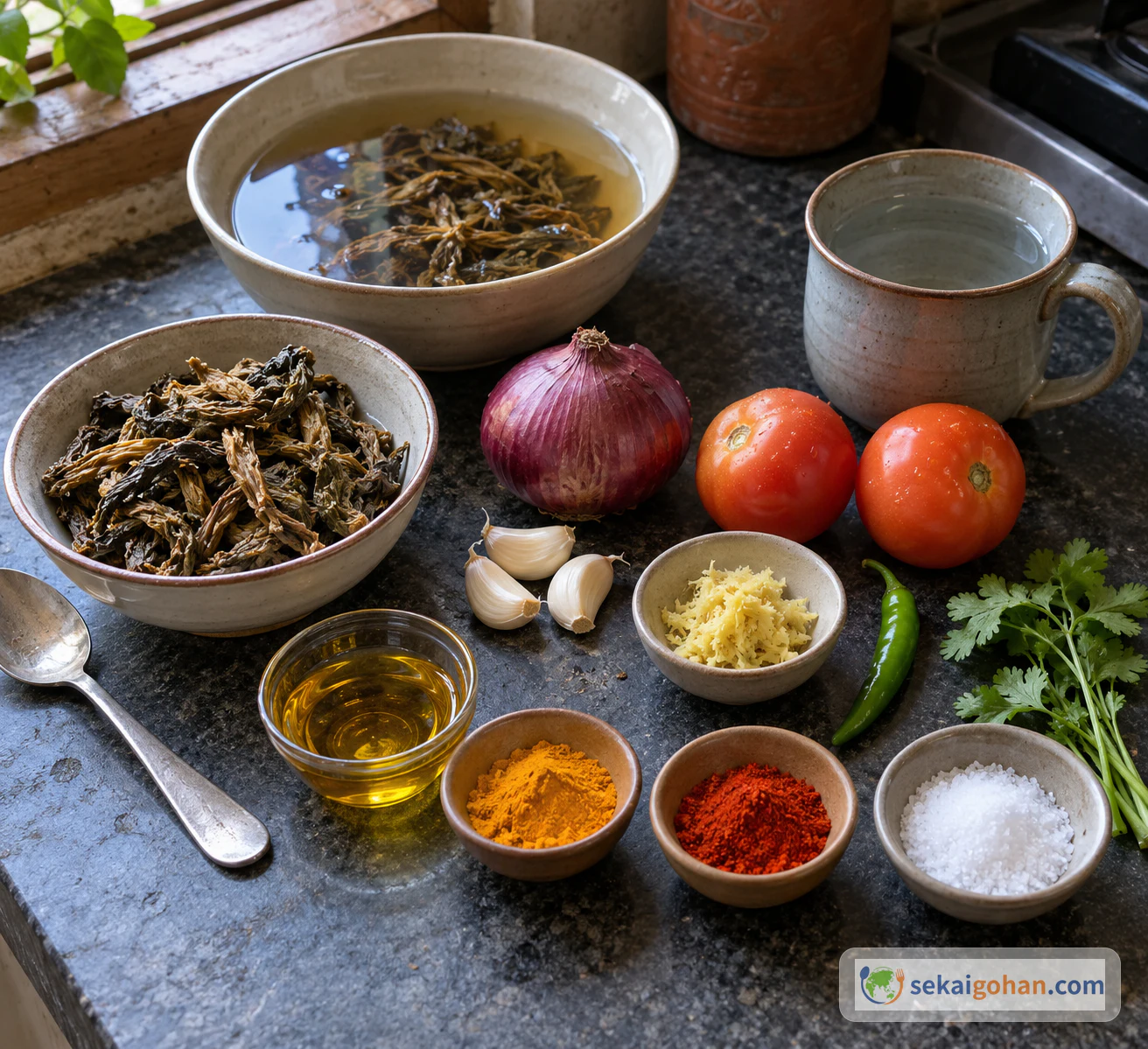
Gundruk and the simmering water are measured per person. Everything else is one fixed amount for the pot.
Steamed white rice is served on the side as an optional accompaniment. It is not part of the soup.
Equipment
- A deep cooking pan or pot
- A bowl for soaking the gundruk
- A spoon for stirring
Choosing Gundruk and Mustard Oil
You may have to look for two ingredients: dried gundruk and mustard oil. For gundruk, ask for "dried gundruk" at South Asian or Nepali grocers. Nothing else can stand in for it, because kimchi, sauerkraut or other pickles make a different soup. Store dried gundruk the way its package labelling says.
Use mustard oil labelled as edible or for cooking, and follow the product's instructions. Use commercially prepared dried gundruk and follow its package labelling for handling and storage. This recipe does not cover home fermentation.
How to Make Gundruk ko Jhol
Cook by the state of the pot: oil smoking hot before the aromatics go in, spices mixed through before the water, and a rolling boil at the end.
Troubleshooting Gundruk ko Jhol
| Situation | What is happening | What to do |
|---|---|---|
| The broth looks thin | That is correct | It is a clear-broth jhol with no potato. For a thicker version, see the variations below |
| The oil starts to smoke heavily | It has gone past the point you need | Add the aromatics as soon as the oil is smoking hot |
| The pot is dry when you add the spices | The spices go in before any water | Stir them through the gundruk and aromatics, then add the water in step 5 |
| You are cooking for a different number of people | Only the gundruk and water are per person | Scale those two; the other amounts are fixed for one pot, so taste and adjust the salt |
Serving Gundruk ko Jhol and Variations
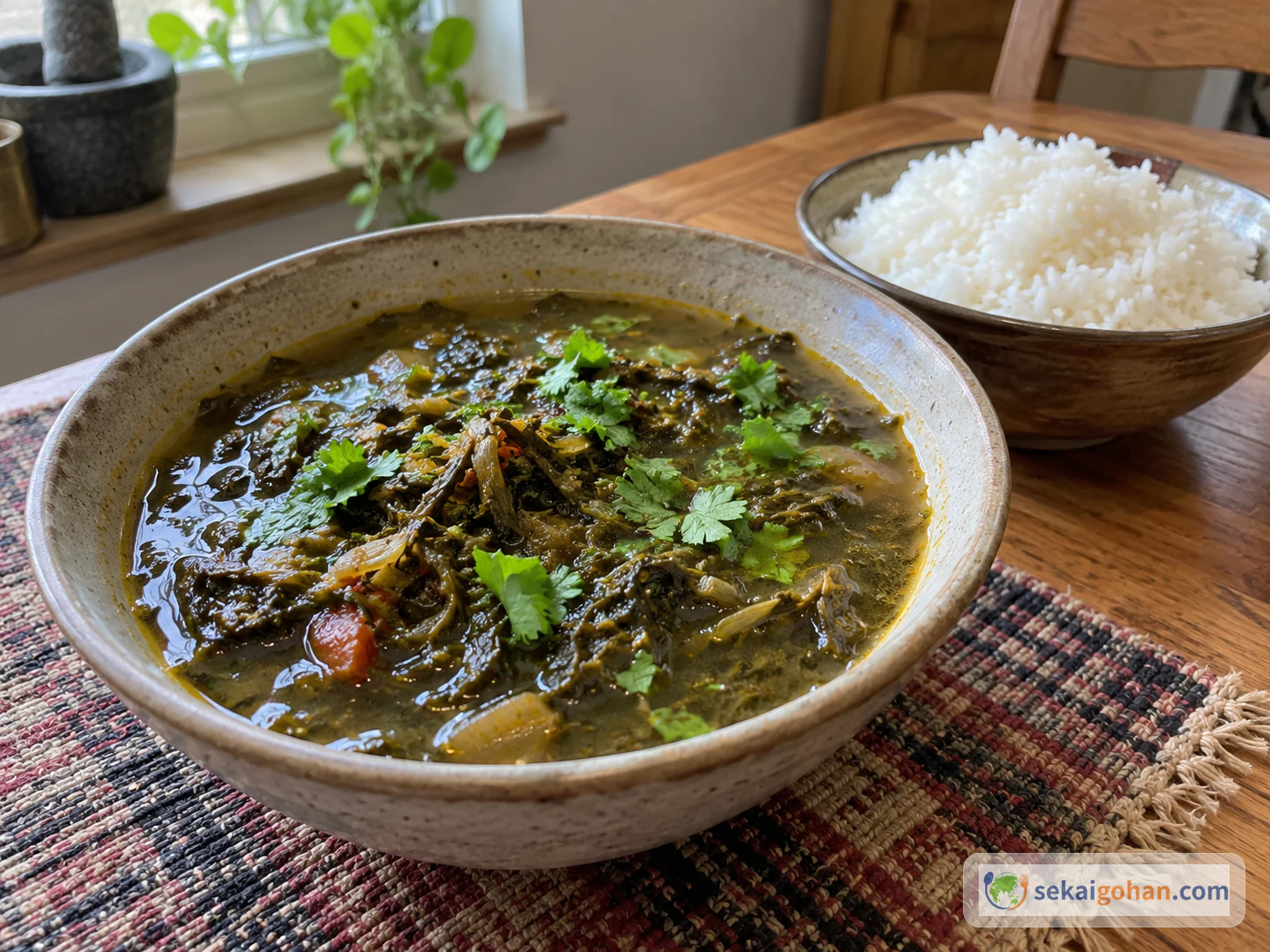
Serve the jhol with plain steamed white rice in a separate bowl, the way the family ate it. That keeps the broth thin and sour.
The family also made the jhol in other ways, and gundruk goes into several other dishes:
| Version | What changes | How it relates to this recipe |
|---|---|---|
| With potato | One large potato, boiled, chopped and mashed in the pot with a ladle | The grandmother's optional addition; it thickens the broth |
| With soybeans and cumin | Gundruk with soybean (bhatmas), salt, garlic, cumin powder, oil, water, turmeric and chilli powder | A separate dish |
| Gundruk curry | Gundruk cooked with ingredients such as potato, tomato, soybean and onion | A different dish |
| Gundruk pickle (achaar) | Rehydrated gundruk mixed with onion, salt, mustard oil and green chilli | A different way of eating gundruk, not a soup |
Frequently Asked Questions
Is Gundruk ko Jhol the same as gundruk achaar?
No. Jhol is a soup. Achaar, or pickle, is a separate dish of gundruk mixed with onion, salt, mustard oil and green chilli.
Can I make gundruk at home?
Households do make it, but the safest choice is commercially prepared dried gundruk. Follow its package labelling.