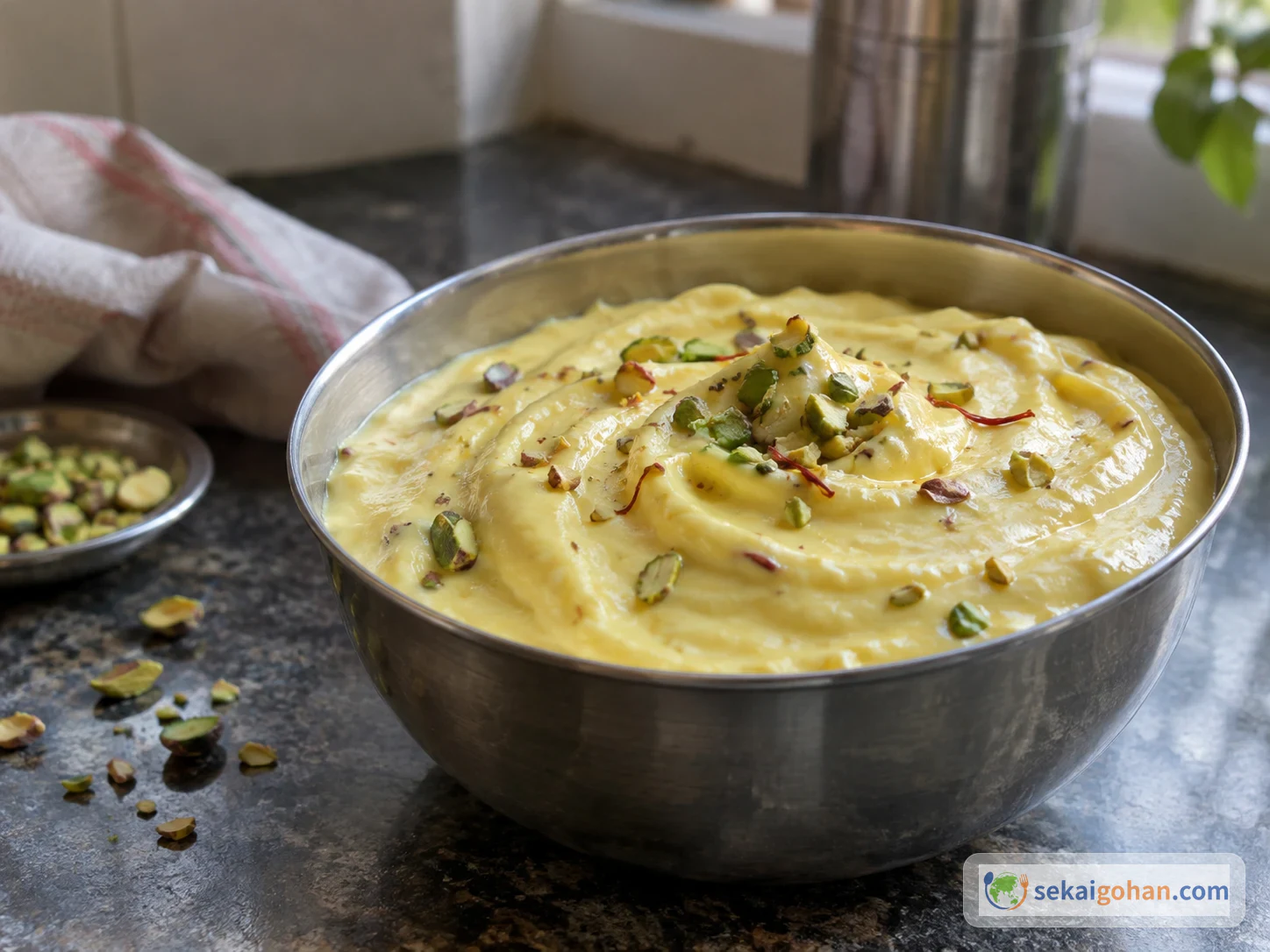
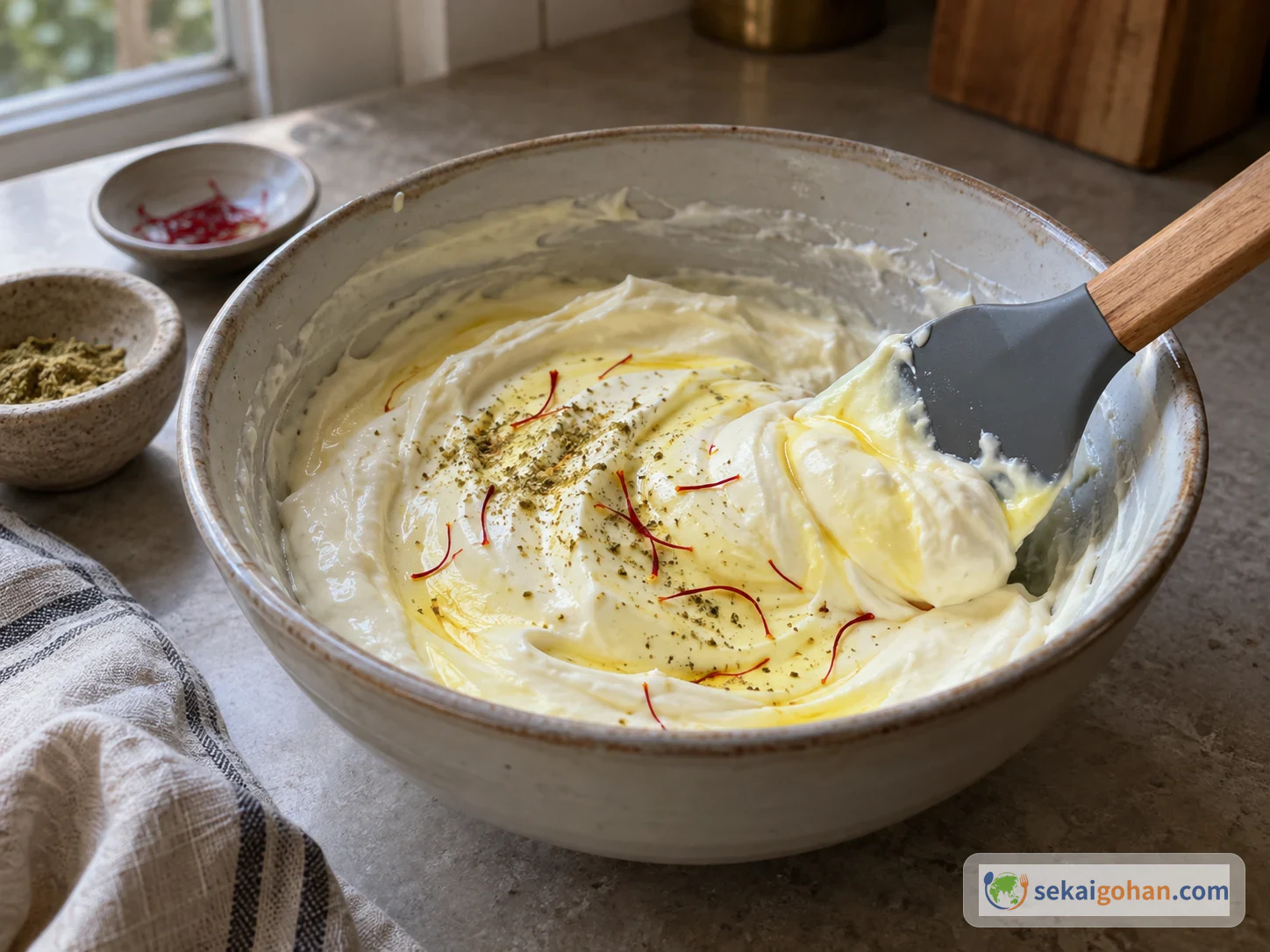
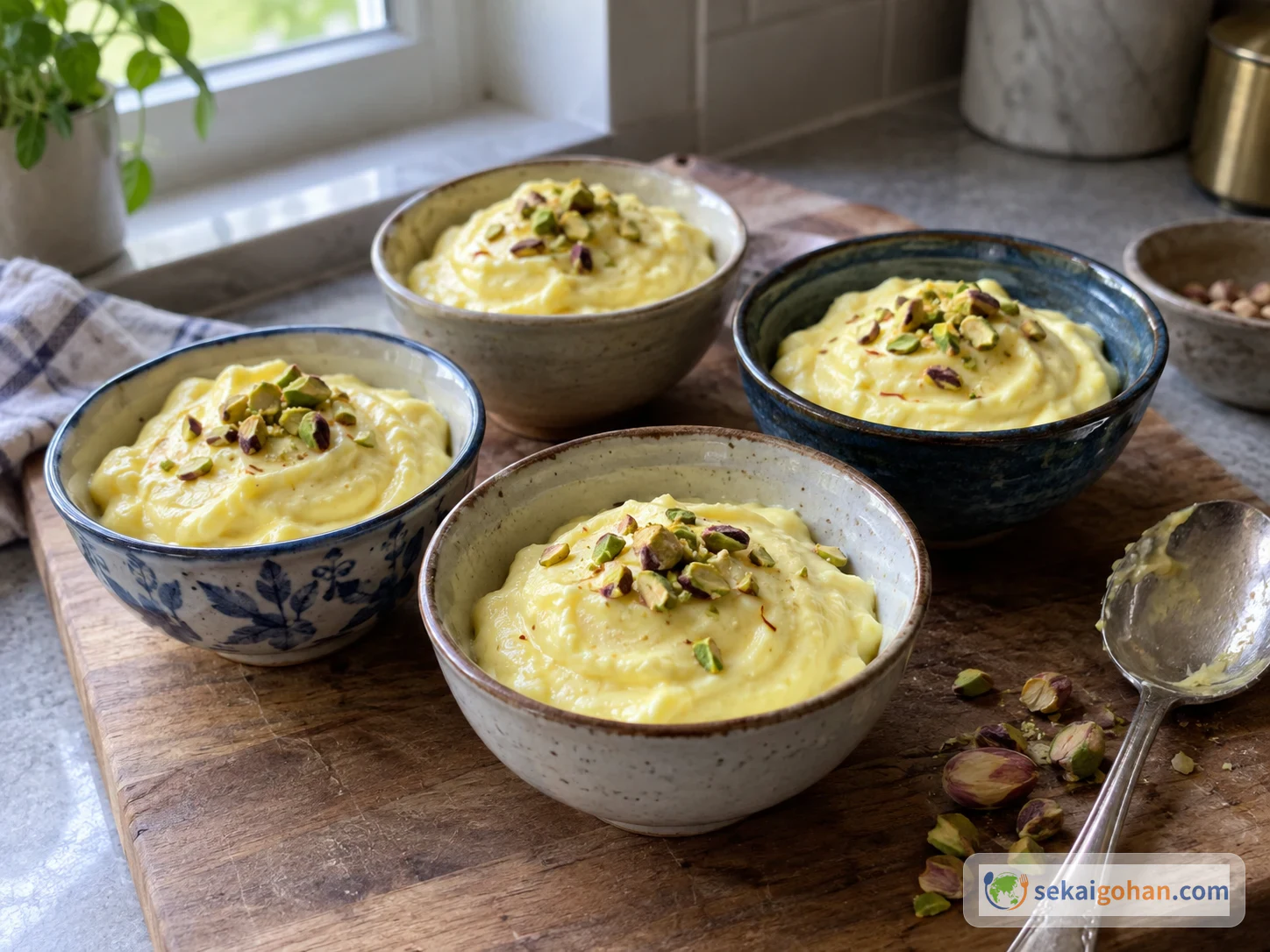
Picture the Gudi Padwa table in Maharashtra. Puffed puris are lifted from the oil, and beside them, in small bowls, sits chilled shrikhand: hot fried bread next to a cold yogurt sweet. Shrikhand comes from Maharashtra and Gujarat, and it is made from strained yogurt, sugar, cardamom, and saffron, finished with nuts. In the mouth, the sugar sits on the tang of the yogurt, and the cardamom rises a moment later.

Shrikhand in Maharashtra and Gujarat
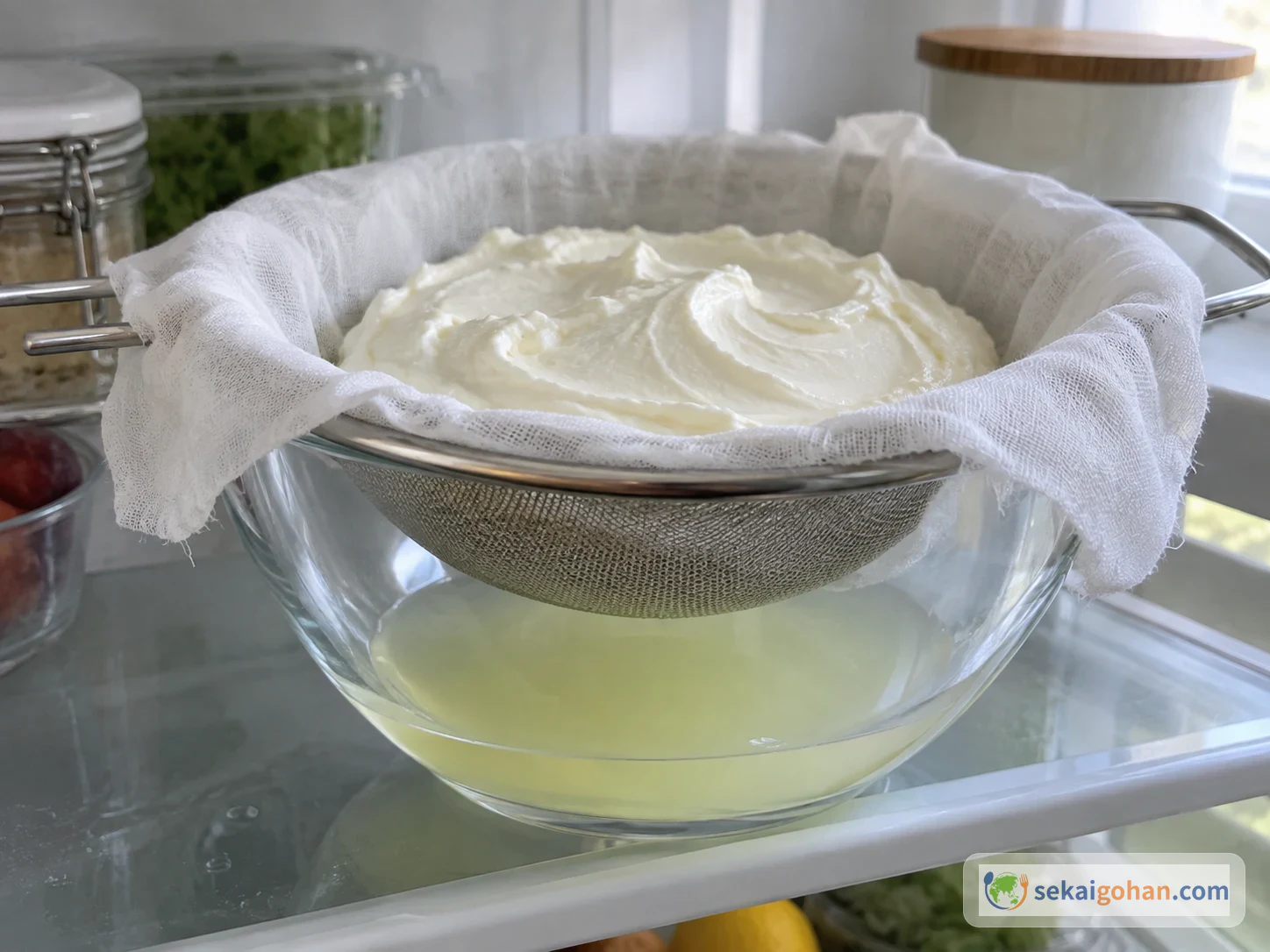
Shrikhand is neither baked nor set with a coagulant. Its thickness comes entirely from draining the whey out of the yogurt, so the richness that comes from straining is what the whole sweet rests on. Since there is almost no cooking, how you handle the water decides the result. Saffron and cardamom carry the aroma, and together they turn everyday yogurt into something worthy of a celebration bowl.
Strained yogurt is called chakka in Marathi. It is closer to cream cheese than to regular yogurt, and it gets that way because the water is removed, not because fermentation goes further.
The sweet turns up at festivals, special days, and wedding meals. It is eaten with puri or on its own as a cold dessert, and with unsweetened yogurt and a few spices you can make it anywhere.
Shrikhand for Gudi Padwa

Gudi Padwa is the Marathi new year, celebrated in Maharashtra on the first day of the waxing moon of the month of Chaitra, in spring. A gudi is raised outside the house, and families gather for a festive meal at the table of the spring new year. Shrikhand and puri are the classic pairing that day, the cold, rich sweet eaten together with puri within the same meal rather than saved for afterward.
Ingredients (serves 4)
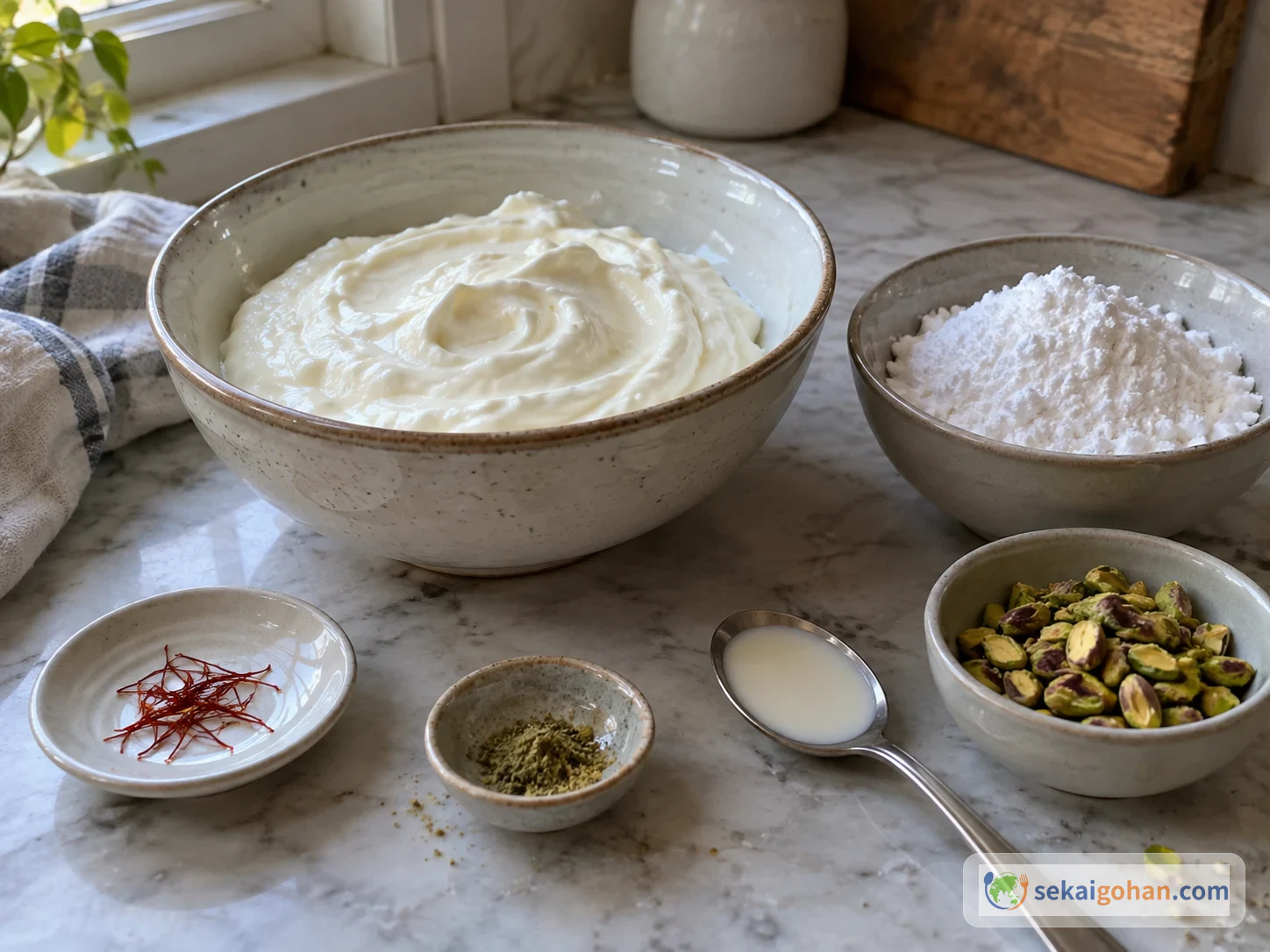
Use 14 oz (400 g) of yogurt after straining. With ordinary unsweetened whole-milk yogurt, strain 2.25 lb (1000 g) in the refrigerator and weigh out 14 oz (400 g). If you cannot get 14 oz (400 g), reduce the other ingredients in the same ratio. With thick unsweetened Greek yogurt you can use 14 oz (400 g) as it is and skip straining. If the yogurt is soft, strain it further.
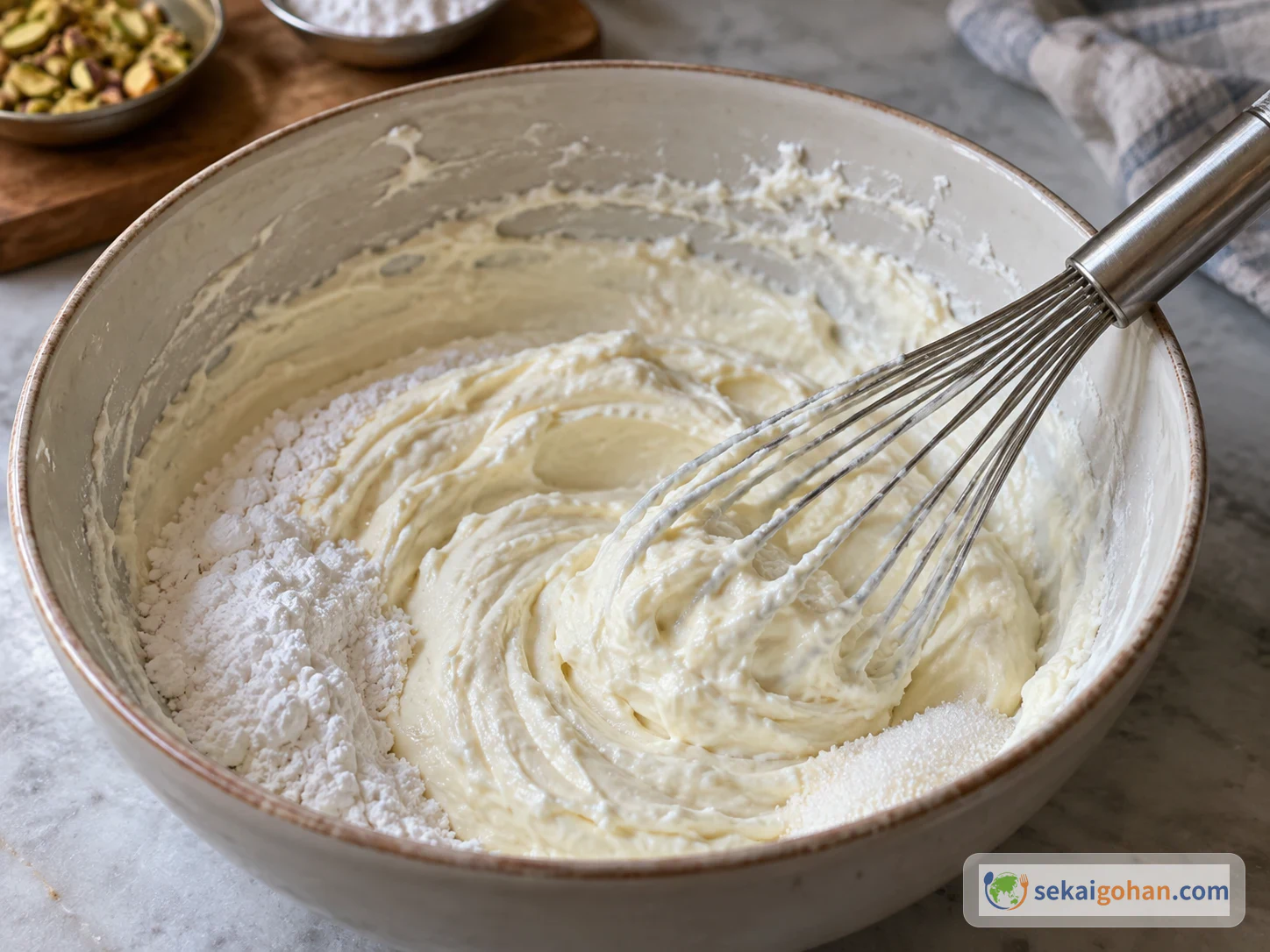
The 2 oz (60 g) of sugar is a starting amount for home cooks. Taste after mixing, and add only 5 g at a time. If you keep adding sugar endlessly to cover the tang, the yogurt character disappears. Choose unsweetened whole-milk yogurt to get closer to the intended flavor. The nuts are a texture accent, so the yogurt sweet works without them.
Look for saffron and green cardamom by those common names at the spice aisle, specialty grocers, or online. Choose green cardamom, not black cardamom. Curry powder cannot substitute. Saffron is there for aroma. Adding another spice for color will not give the same aroma.
Hands-on time is about 15 minutes. Add at least 4 hours for straining and 2 hours for chilling and the total is about 6 hours 15 minutes. Straining overnight makes it longer. With Greek yogurt and no straining, it is about 2 hours 15 minutes. Strain in the refrigerator, and keep the dairy cold until the final 2 hours of chilling.
Choosing yogurt and sugar for shrikhand
Start with fresh yogurt. If it has turned more sour, extra sugar won't hide it, so pick a fresher tub instead. For the sugar, choose powdered sugar without added starch.
For a dairy-free version, use 14 oz (400 g) thick unsweetened Greek-style yogurt and 2 tsp (10 ml) plant milk. It won't taste the same as the dairy version or have the same nutrition, and some products won't thicken with straining; if yours doesn't, accept a softer result. Check labels for soy and nuts.
Shrikhand texture: common problems and fixes
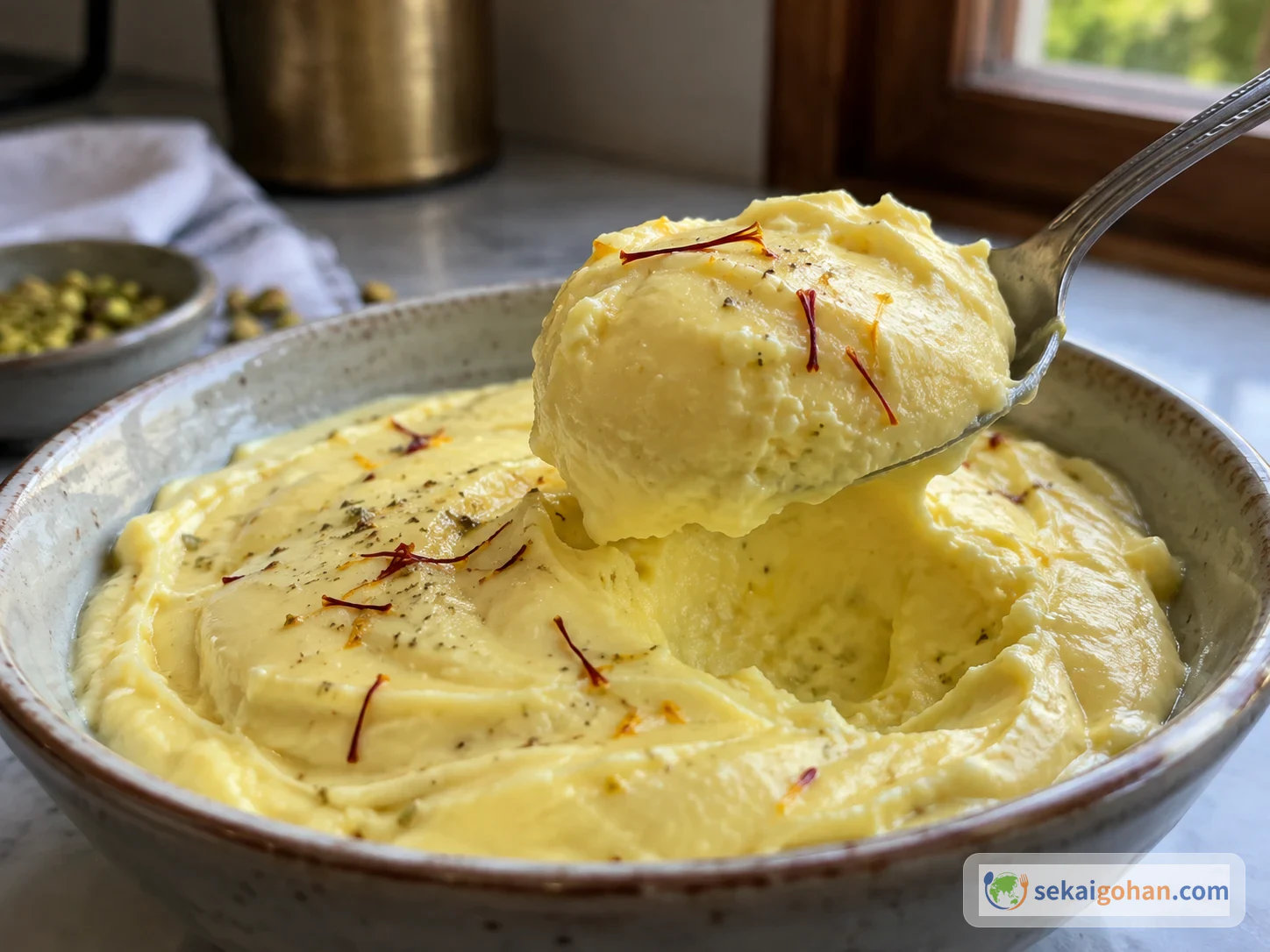
The 4 hours of straining is only a starting point. The weave of the cloth, the thickness of the yogurt, and the shape of the container all change things, so watch for a thickness that keeps the mark of a spoon rather than watching the clock. Straining slows down if the yogurt ends up sitting in its own whey, so use a deep catch bowl and pour off the whey often.
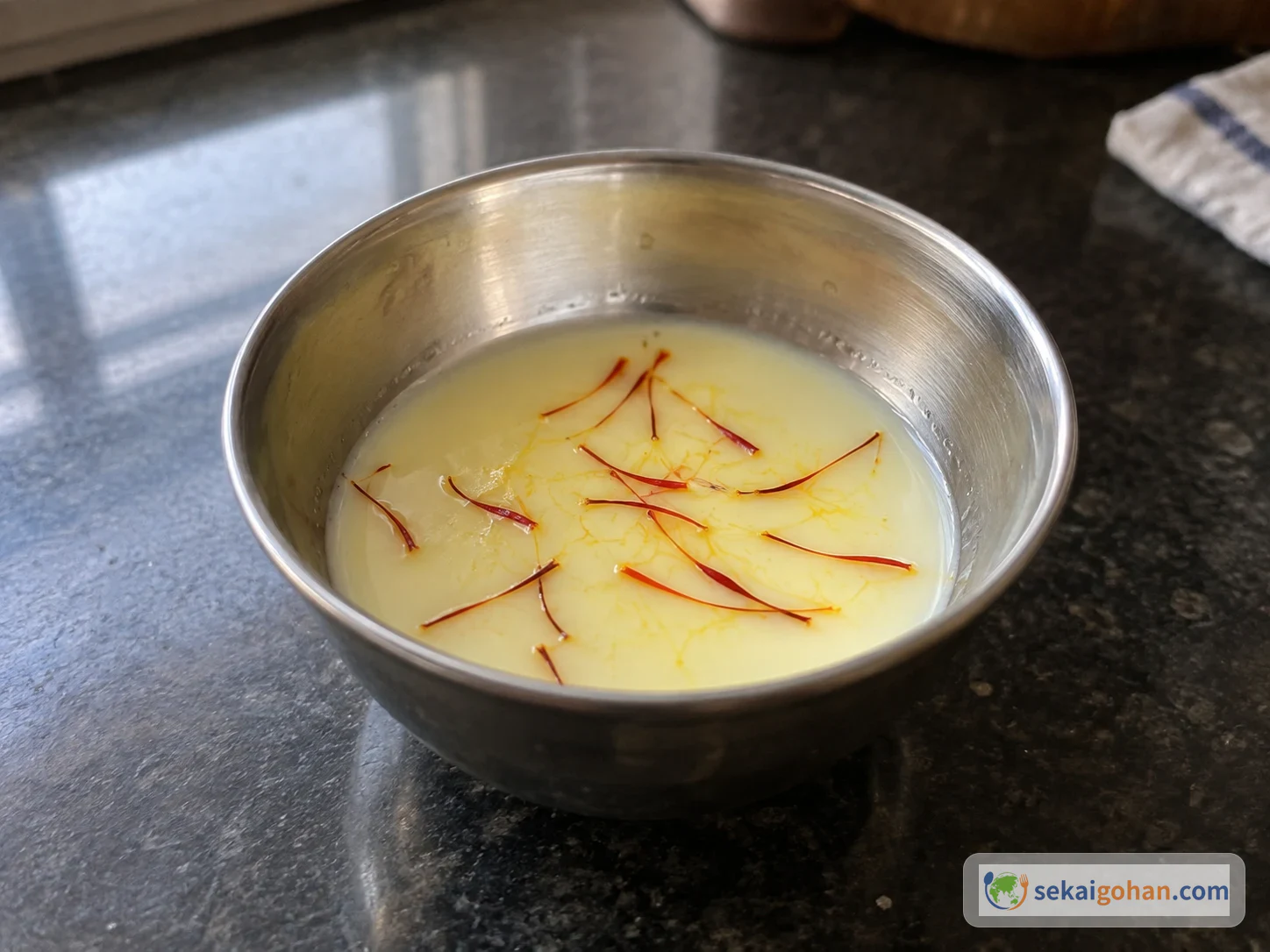
A loose result usually means one of two things: not enough straining, or too much milk. Keep the saffron milk to 2 tsp (10 ml), even if you're tempted to add more for color. Liquid that appears after the sugar goes in isn't only whey, and straining again at that point would pull out sugar and aroma along with it. If you plan to eat it right away, chill it in bowls as a soft yogurt dessert, and next time remove the water before flavoring.
If you use fine-grain sugar, check with your tongue or the spoon that the grains have dissolved. Shrikhand that seems slightly soft before chilling firms up as it cools, so hold off on flour or a setting agent.
If it is too stiff after chilling, loosen it with milk 1 tsp at a time, stopping once it falls from the spoon the way you like.
The traditional route to smoothness is passing strained yogurt through a sieve called a puran yantra. At home, a whisk does the job.
Shrikhand variations and serving
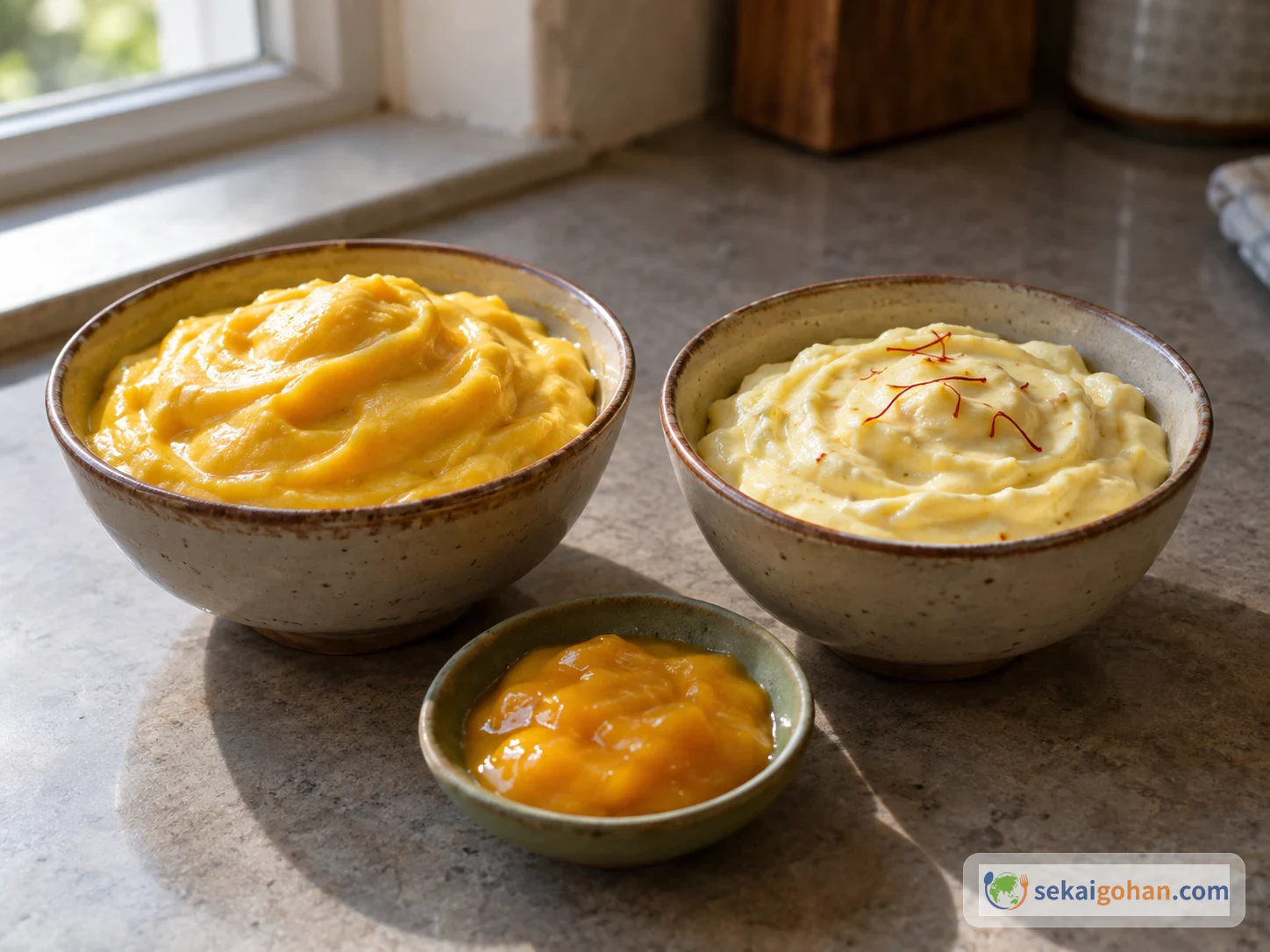
Both Maharashtra and Gujarat love shrikhand, and a fragrance that changes from home to home is part of its charm. Some make the basic saffron-and-cardamom version, some mix in mango, some swap the nuts.
The mango version is also called amrakhand. Stir 2.75 oz (80 g) unsweetened, thick mango puree into the full batch of finished shrikhand, and if it gets too soft, stop there. Fruit adds both sweetness and moisture, so start with 1.5 oz (40 g) of the sugar and adjust after mixing. The trick is to match the moisture of the puree.
Serve shrikhand with hot puri for a festive table, or on its own, well chilled. If you'd like to cook a Gujarati vegetable dish alongside, undhiyu is a winter dish of vegetables and spices; see ingredients and method for undhiyu.
Frequently asked questions
Yogurt and milk contain dairy. If you are allergic to pistachios or almonds, do not use them. When substituting plant-based products, check the ingredient list on the package. If you need to avoid soy or nut-derived ingredients, choose products without them.
The nutrition figures are an estimate based on 14 oz (400 g) of unsweetened plain Greek yogurt (per 3.5 oz (100 g): 99 kcal, protein 10.2 g, fat 4.3 g, carbohydrate 4.9 g); strained regular yogurt loses different components to the whey, so its values will differ. The 2 oz (60 g) sugar is calculated as granulated sugar, the 2 tsp (10 ml) milk as about 10 g, and the 10 g pistachios from a roasted, seasoned entry; trace spices are not included. The total is about 700 kcal, protein 1.5 oz (42.9 g), fat 23.2 g, and carbohydrate 3 oz (82.2 g), or about 175 kcal per serving. Added sugar, fruit, or plant-based products change these numbers.
Can I make it with regular yogurt?
Yes, with unsweetened whole-milk plain yogurt: the basic formula strains 2.25 lb (1000 g) down to 14 oz (400 g). Starting with 14 oz (400 g) Greek yogurt saves time, though some brands still need extra straining. Low-fat yogurt works too, but it won't reach the richness of whole milk. Go by the thickness of the finished product rather than what the label calls it.
Can I make it without saffron or special equipment?
Saffron can be left out, and so can the 2 tsp (10 ml) milk that goes with it. Color and aroma will change, but keeping the cardamom still gives you the basic fragrance. For equipment, a colander, bowl, whisk, and a clean food-safe cloth are enough; avoid cloths that shed fibers or smell of detergent. With unsweetened Greek yogurt, you can skip the straining setup altogether.
How long does it keep?
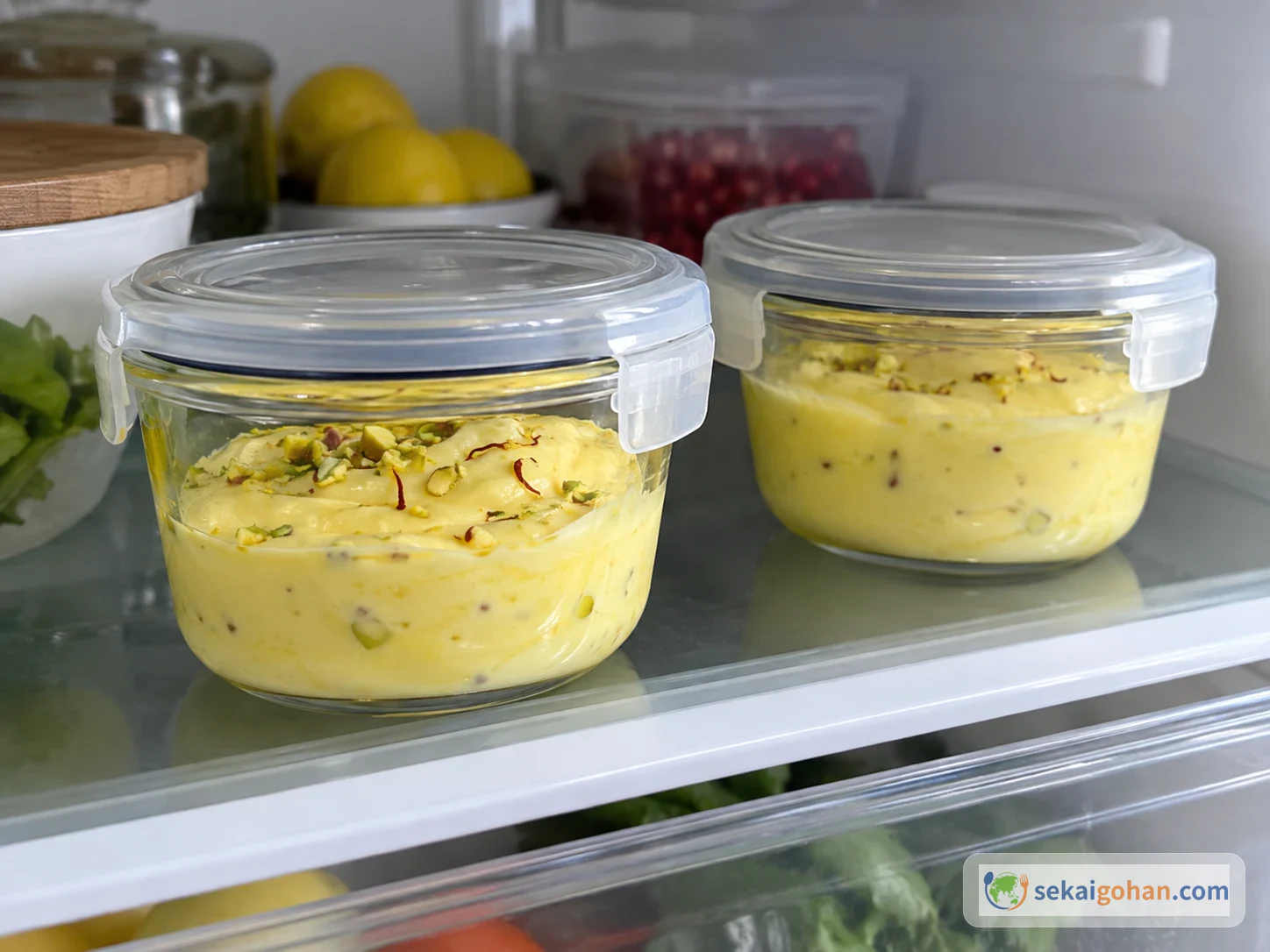
Store it in a clean lidded container and refrigerate at 39°F (4 °C) or below, aiming to finish it the same day or the next. The after-opening instructions on your yogurt and milk come first. Take out only what you'll eat, and throw away anything that hasn't been kept properly cold, even if it smells fine and shows no mold.
Keep straining and storage in the refrigerator. Do not leave refrigerated food at room temperature for more than 2 hours, or more than 1 hour if the temperature is above about 90°F (32 °C). When the work is finished, return it to the refrigerator promptly. If you are allergic to any ingredient, check that substitutes are safe for you.