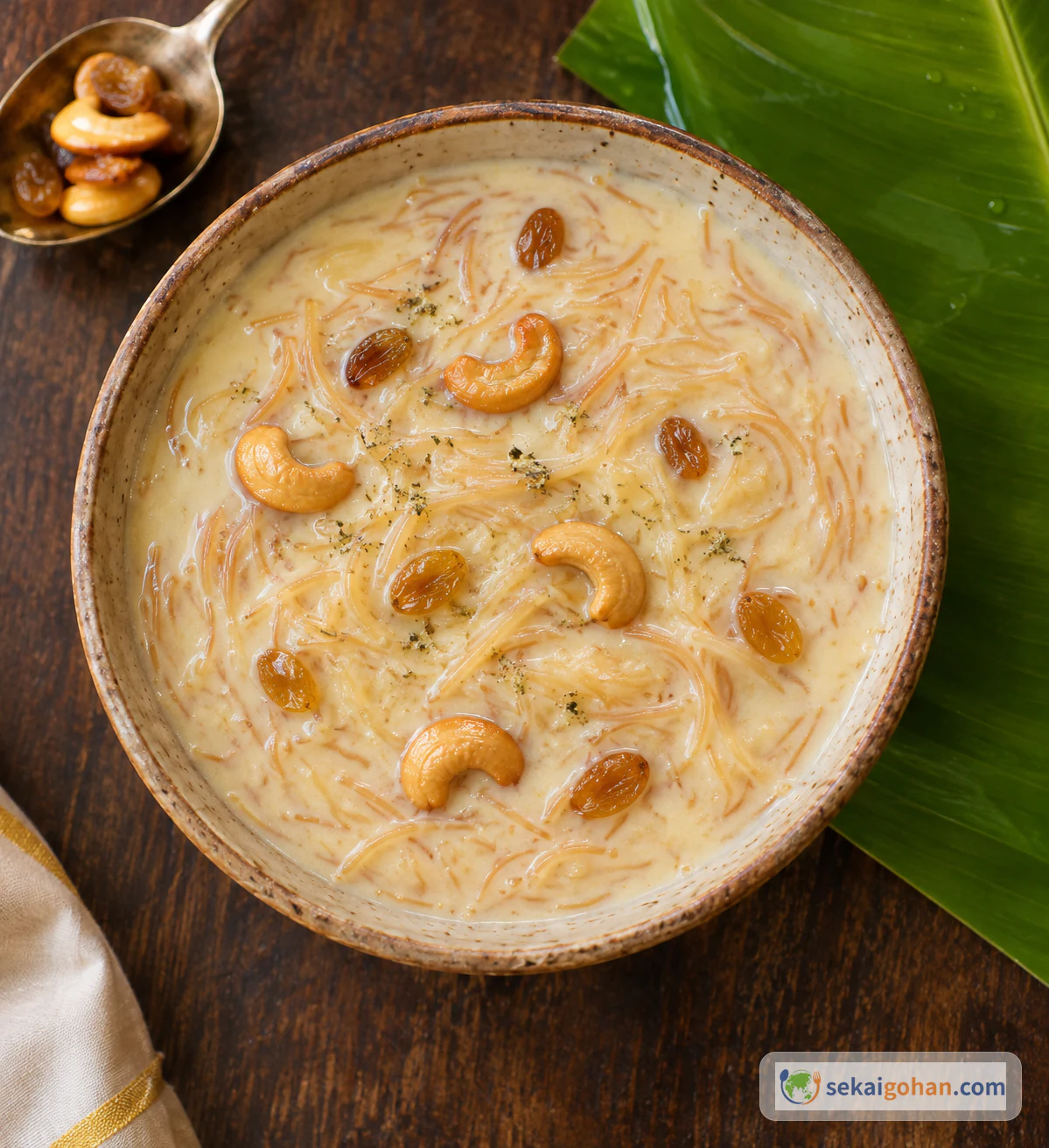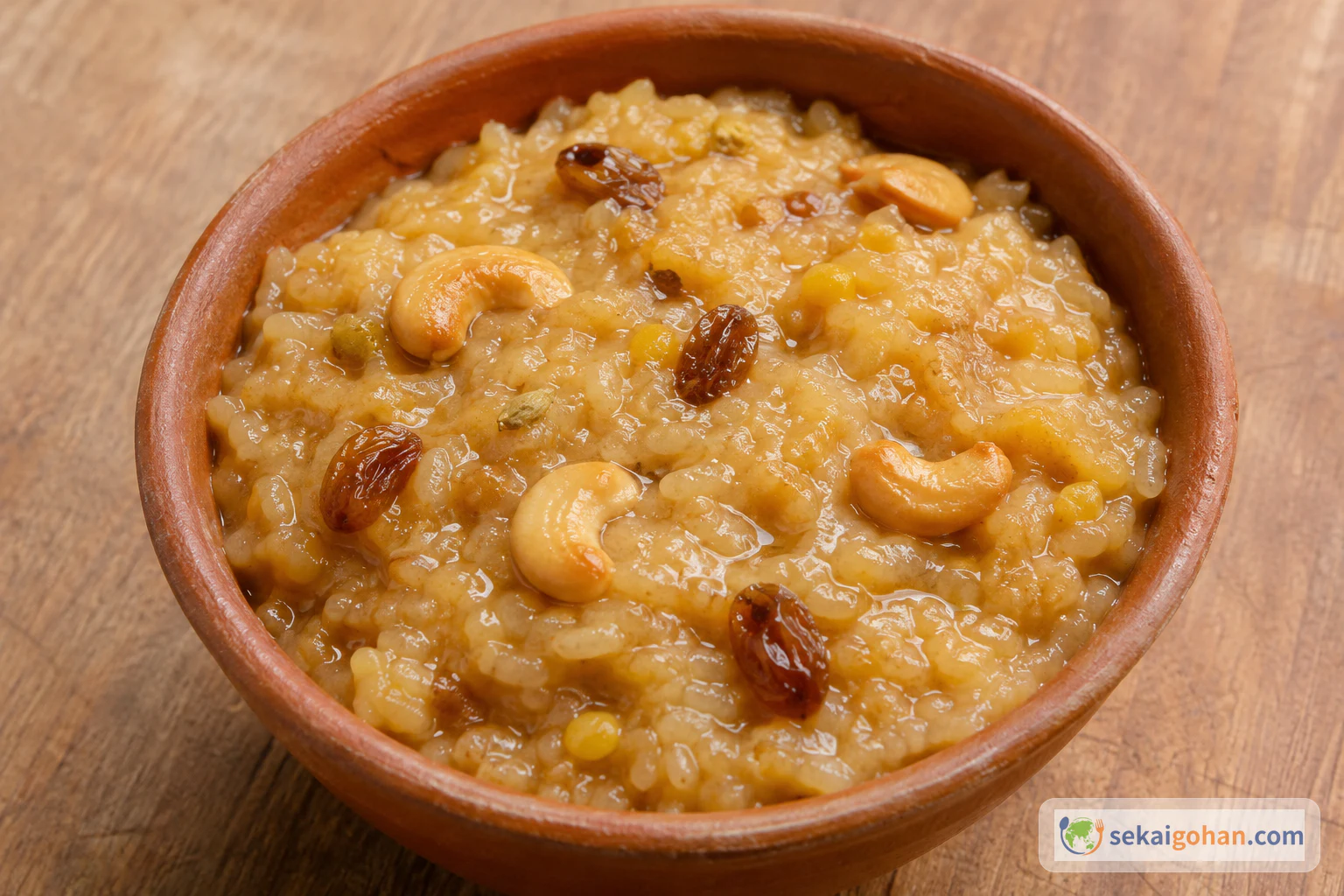
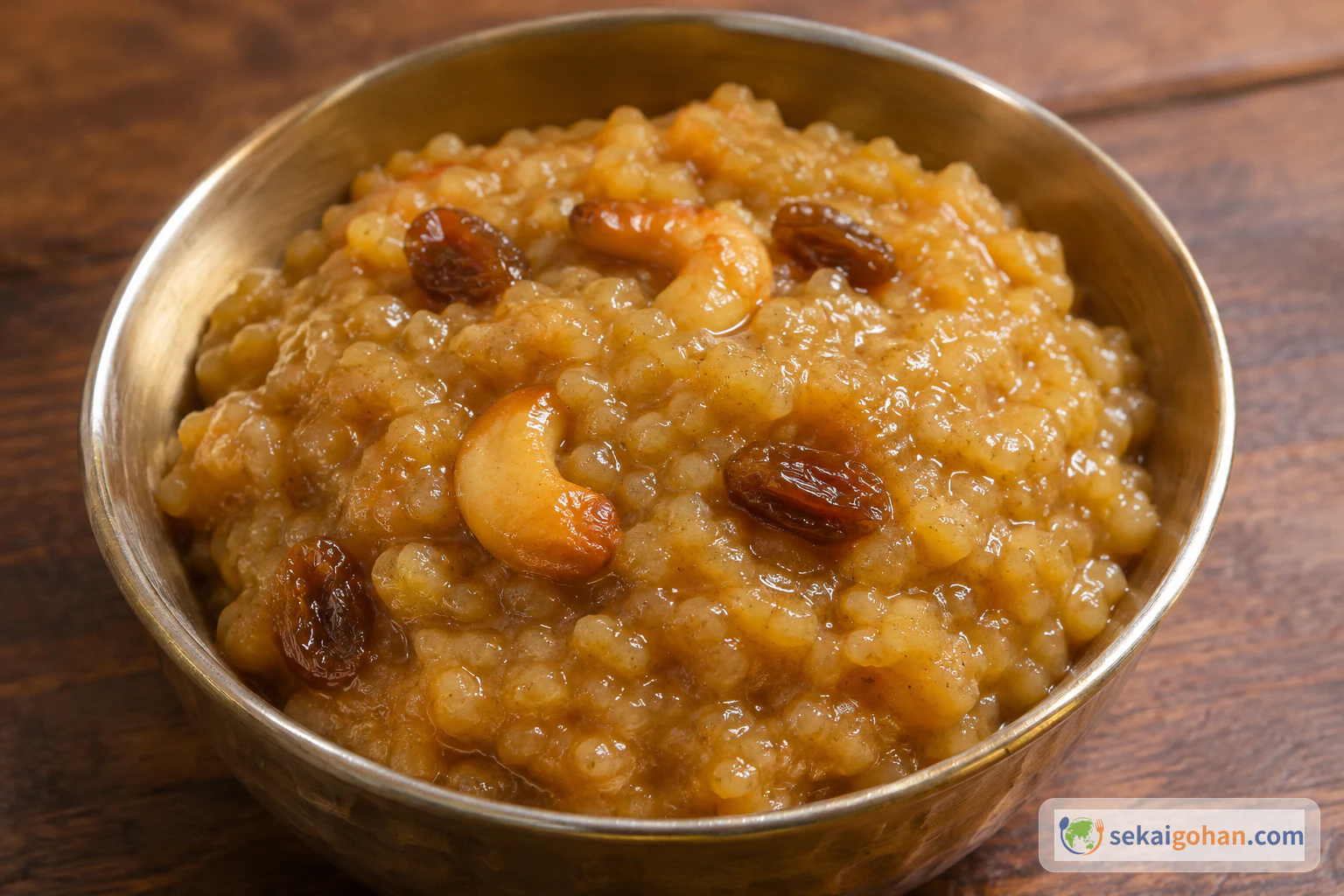
Sakkarai Pongal finished with jaggery and ghee, served in a bowl
CuisineIndian

Sakkarai Pongal: Sweet Indian Rice and Moong Dal with Jaggery and Ghee

How to make Sakkarai Pongal, a sweet Pongal of soft rice and yellow moong dal finished with jaggery syrup, ground cardamom, and cashews and raisins fried in ghee. This household pressure-cooker method covers every stage, safe pressure release, fixing common problems, and how this version differs from savory Ven Pongal.

Cooking flow

Cooking steps

STEP 11 / 12

Grate the jaggery and prepare the cashews

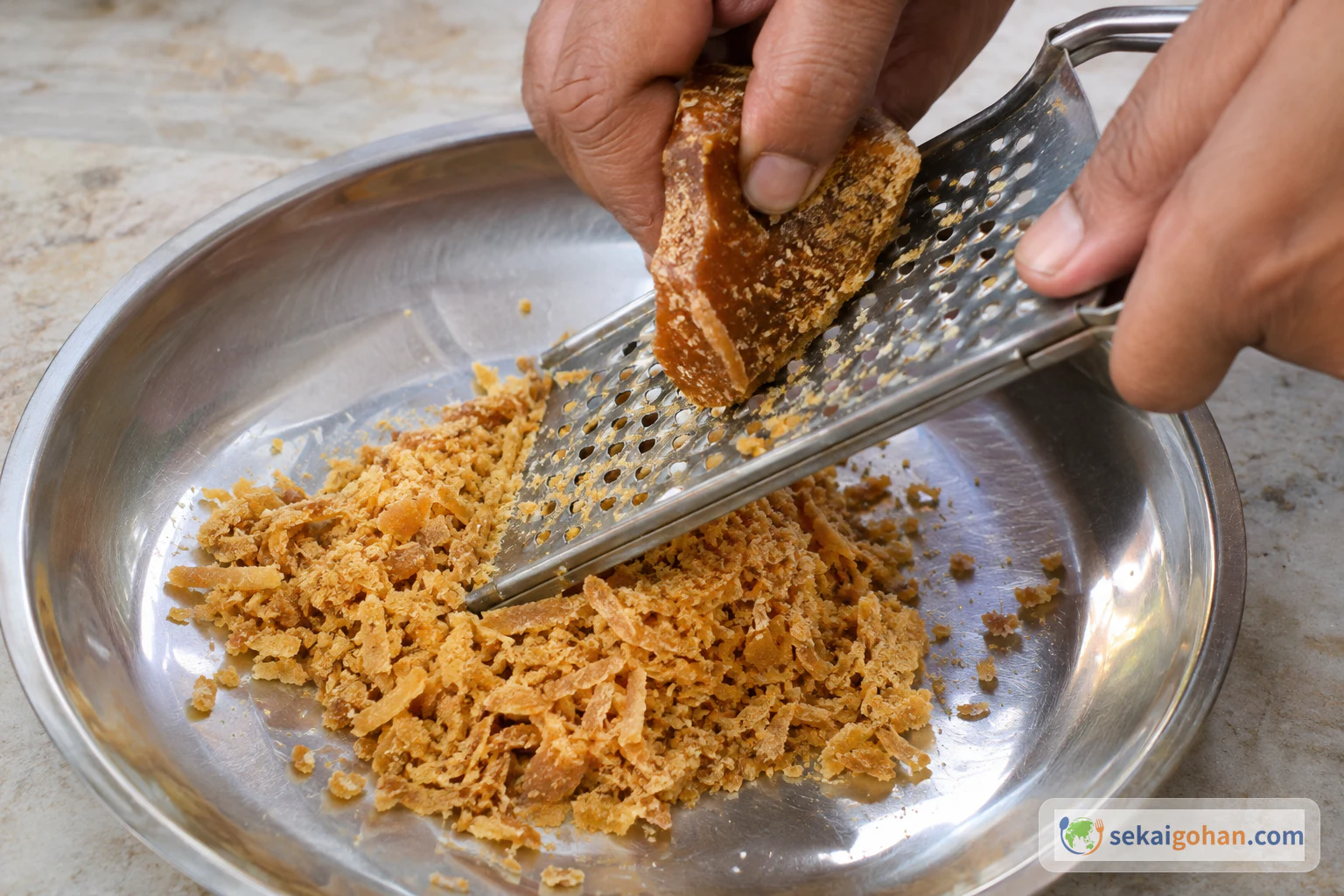
Grating solid jaggery finely
Fine shreds of jaggery, ready for the syrup

Grate the 8 oz (220 g) of jaggery finely. Split the cashews and remove anything you can see that doesn't belong. Set both aside. The jaggery should be in fine shreds and the cashews split and picked over.

STEP 22 / 12

Dry-roast the dal

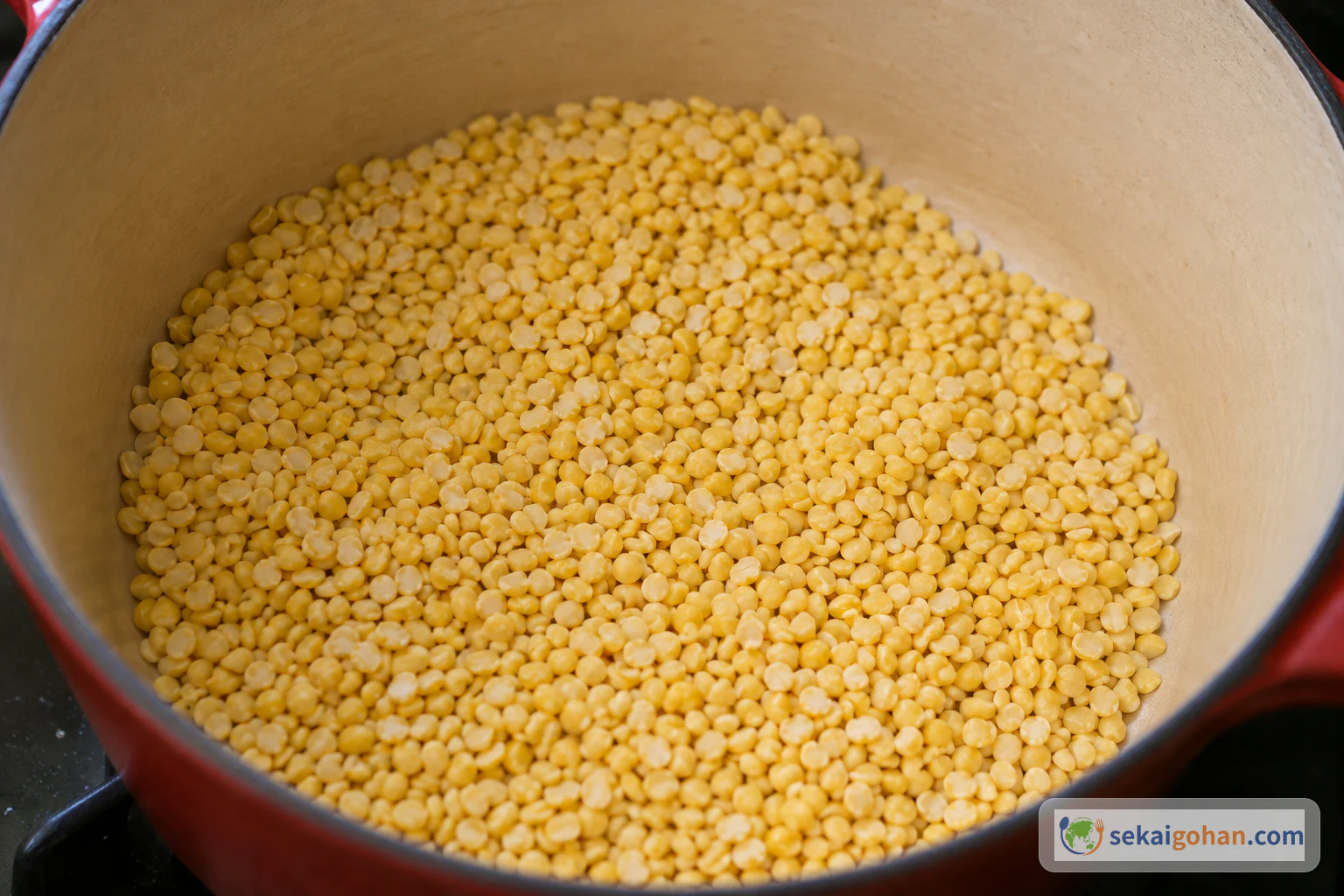
Dry-roasting yellow moong dal in a thick pot
Stop at light gold and aromatic, before it browns

Put the moong dal in the pressure cooker or a heavy pot, with no oil. Roast until it smells aromatic and turns slightly golden. Do not let it brown.

STEP 33 / 12

Rinse the rice and dal

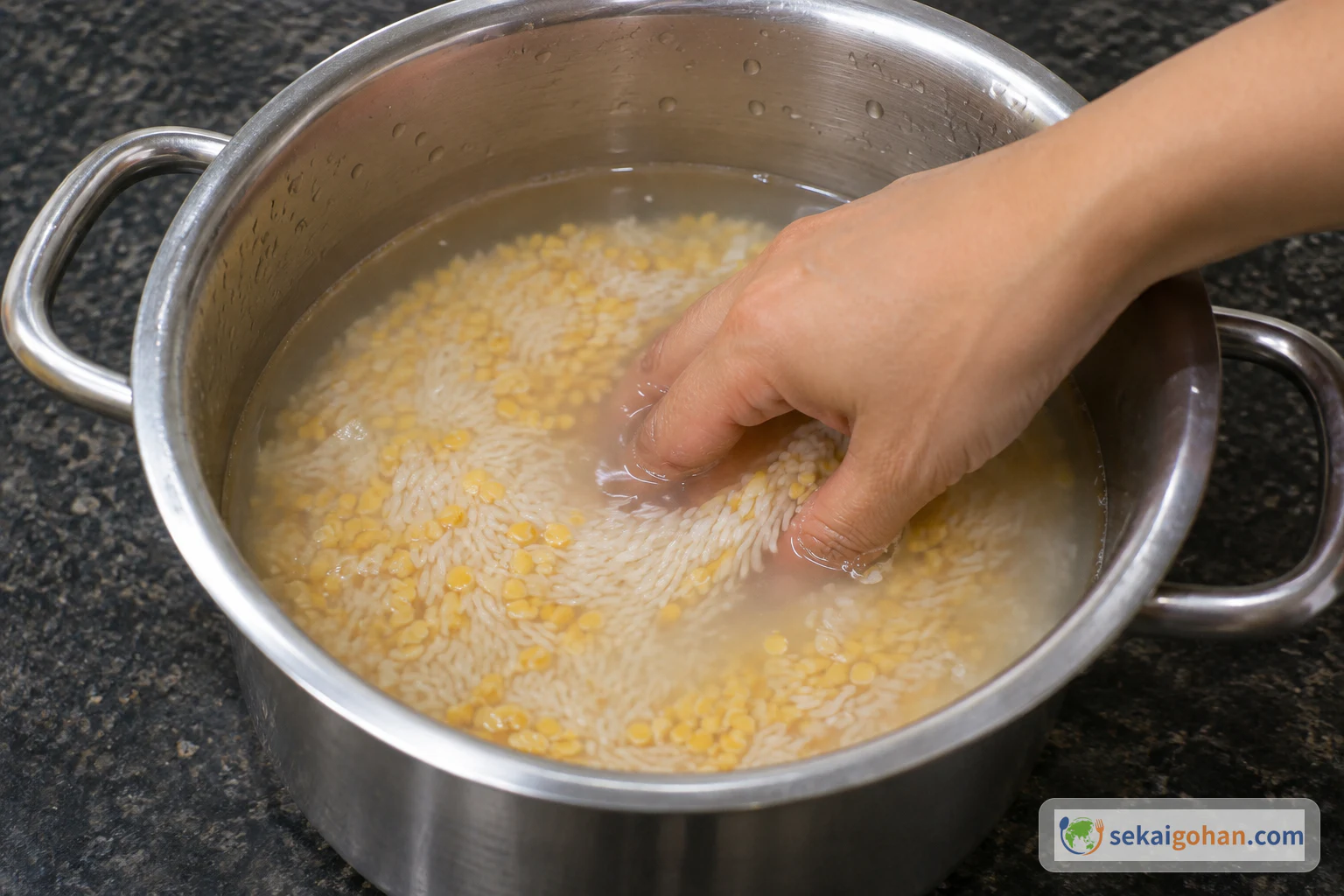
Rinsing the rice and dal in water
Rinse before draining

Add the rice to the roasted dal. Pour in enough water to rinse the rice and dal, and rinse them in the water. Carefully pour off the rinsing water, keeping the rice and dal in the pot. Only the rinsing water should leave the pot.

STEP 44 / 12

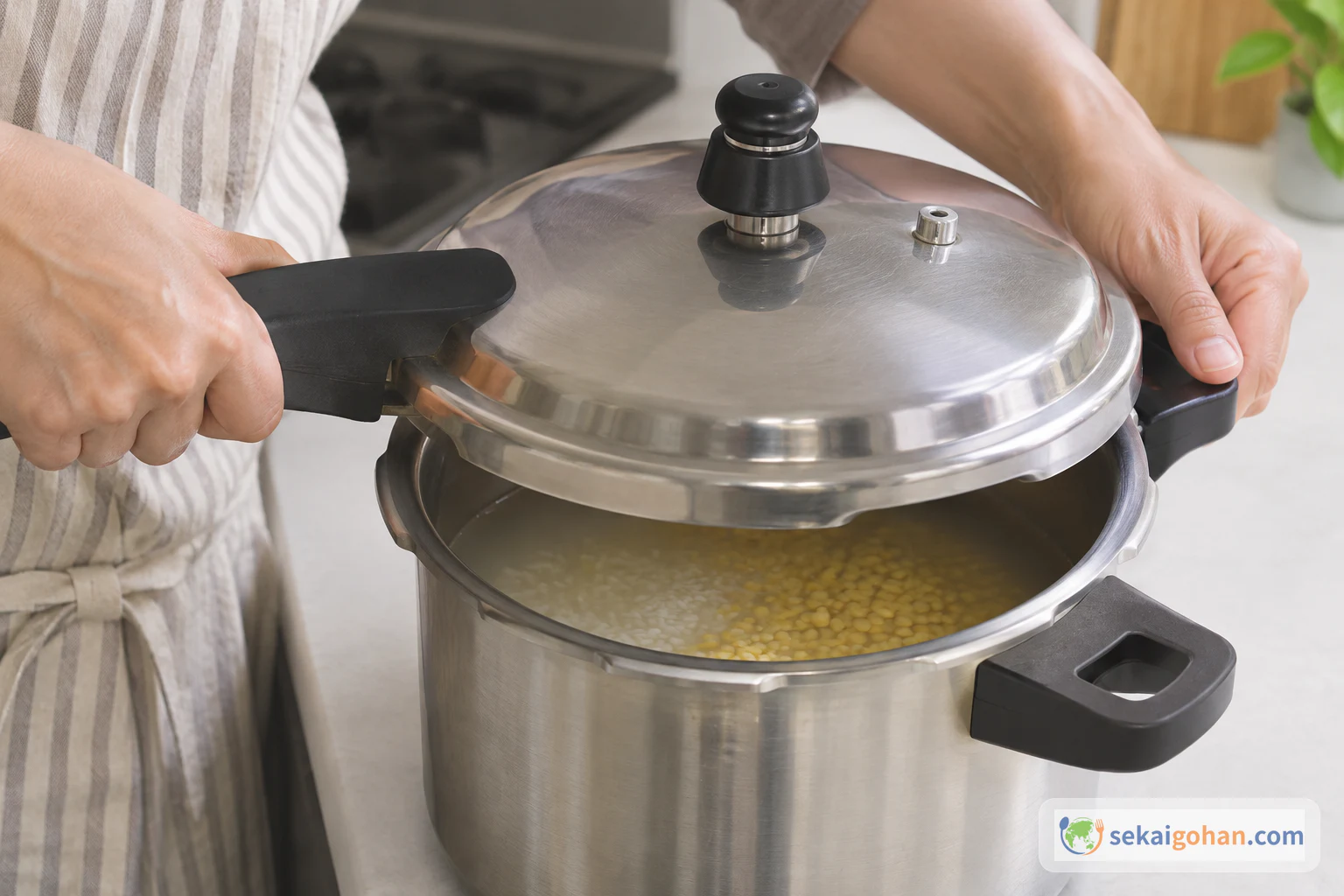
Add the cooking water and close the cooker

Closing the pressure cooker lid correctly
Close the lid as the manufacturer directs

Add the 4 cups of fresh cooking water. Keep the 1/2 cup of syrup water separate. Make sure the rice, dal and cooking water are in the pressure cooker and within its capacity limit. Close the lid according to the manufacturer's instructions, so the lid is closed correctly.

STEP 55 / 12

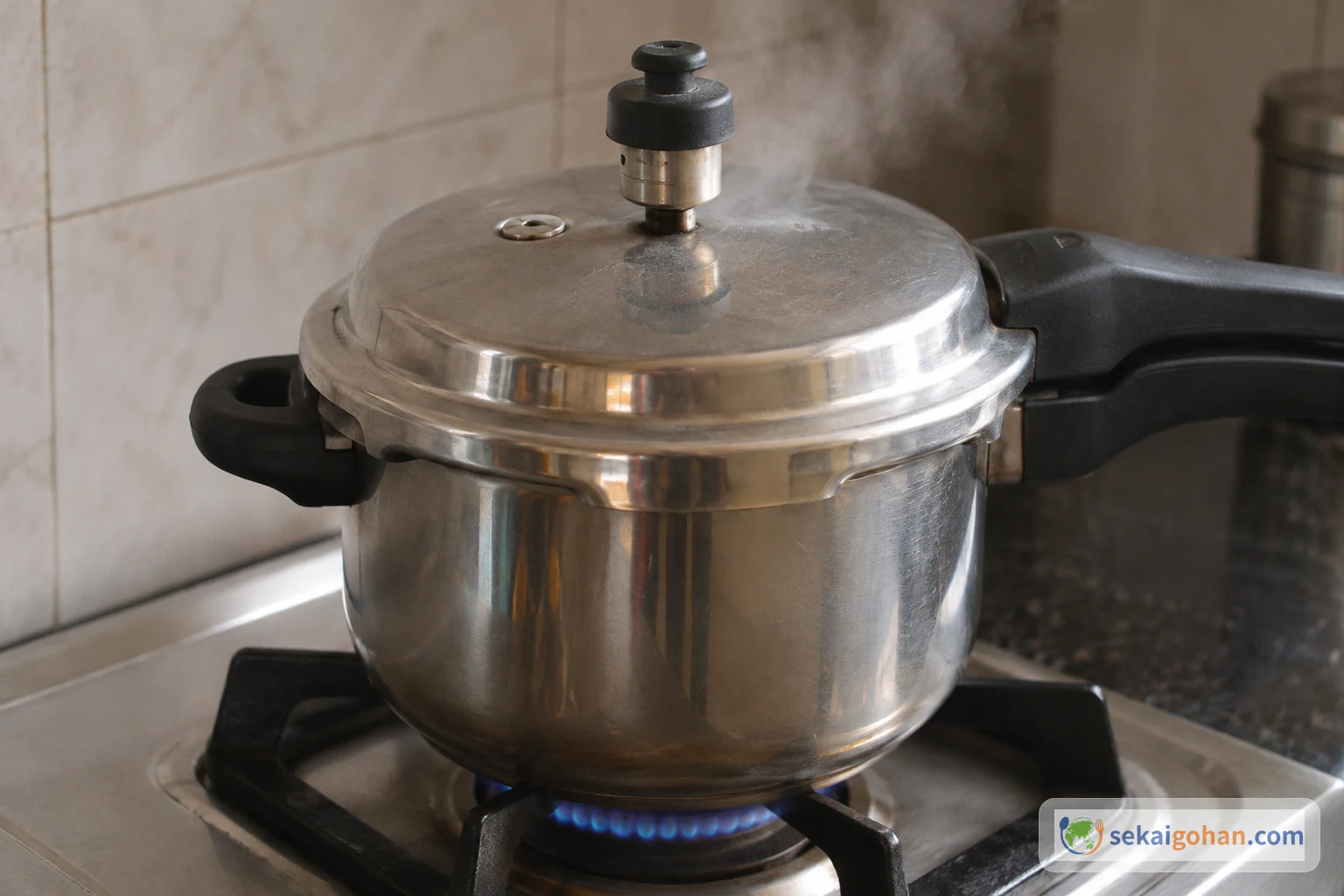
Pressure cook the rice and dal

Pressure cooking the rice and dal
Keep the cooker closed while it cooks

Pressure cook for 3 whistles, following the manufacturer's instructions for pressure pulses and safe use. Three whistles does not mean three pressure cycles, and it does not convert to a fixed number of minutes. Turn off the heat and leave the lid closed. The cooker stays closed throughout.

STEP 66 / 12

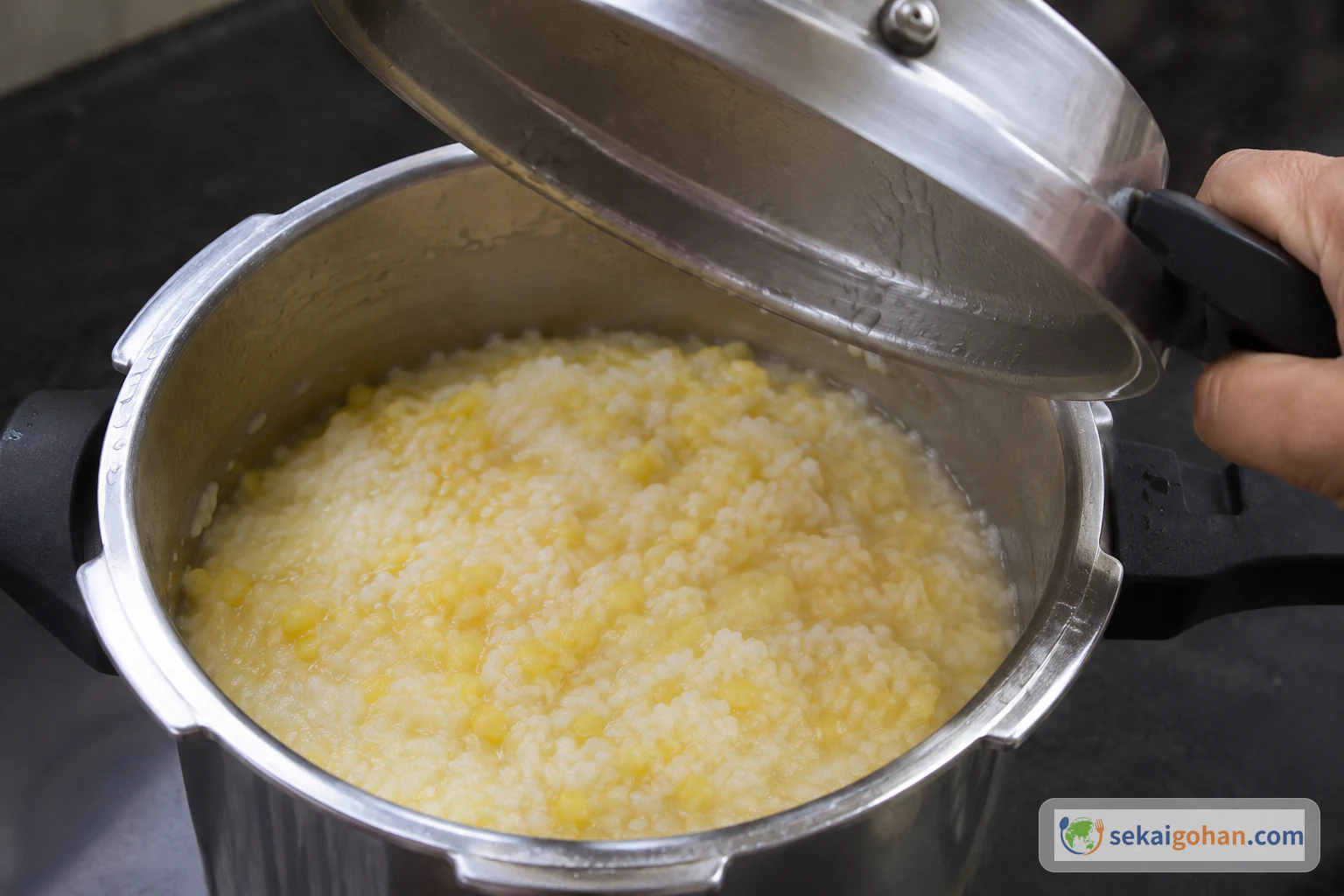
Release the pressure and mash

Opening the pressure cooker after full, safe pressure release
Open only after all pressure has been released

Wait until the pressure has fallen fully and safely. Do not touch the valve or try a rapid release. Confirm that all pressure has been released using the manufacturer's safety procedure, then open the lid, keeping your face and hands out of the path of any steam. Check that the rice and dal are fully soft, then mash them lightly with a spoon.

STEP 77 / 12

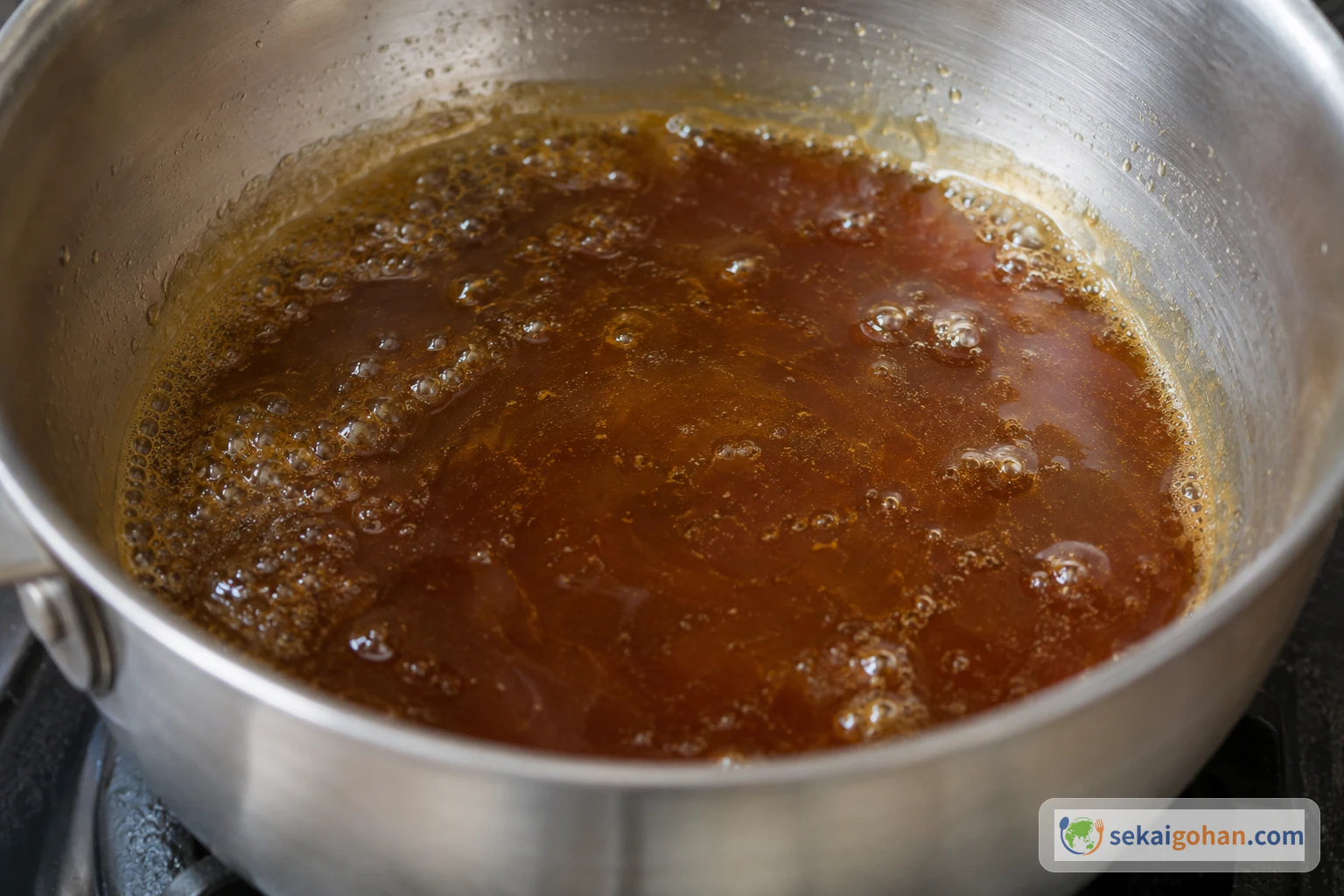
Make the jaggery syrup

Gently boiling the jaggery syrup
Slightly thick and sticky, without forming strings

Pour the 1/2 cup of syrup water into a separate small saucepan and add the grated jaggery. Stir over low heat until the jaggery dissolves. Simmer gently for 3–4 minutes, until slightly thick and sticky. Stop before it reaches string consistency, then take the saucepan off the heat. You can make the syrup while the rice and dal pressure cook, but add it only to rice and dal that are already cooked.

STEP 88 / 12

Add the syrup and cardamom

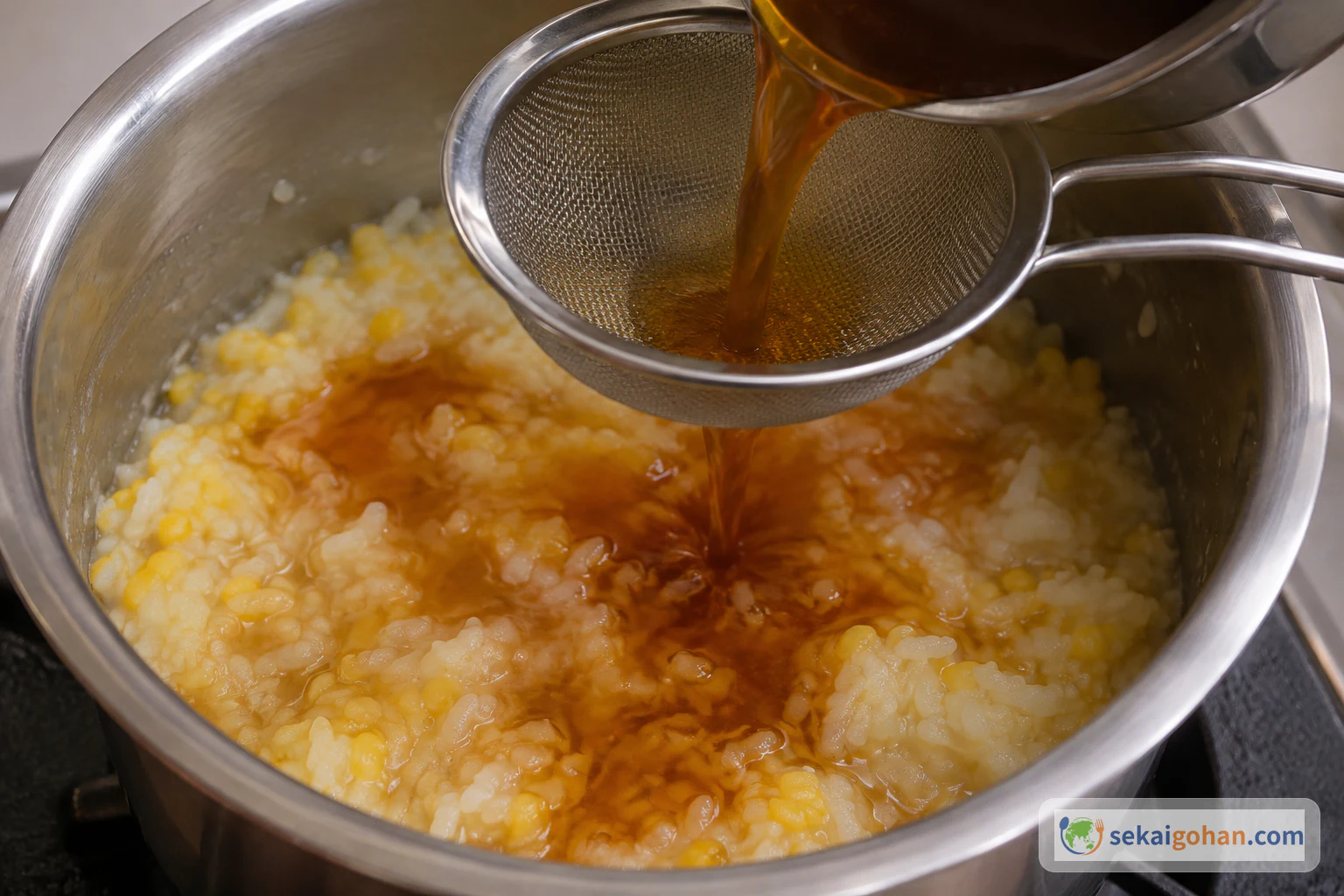
Straining jaggery syrup into the cooked rice and dal
The syrup goes only into rice and dal that are already cooked

Pour the syrup through a strainer into the cooked, mashed rice and dal. Add the 1/2 tsp of ground cardamom and mix everything together. The syrup goes only into rice and dal that are already cooked.

STEP 99 / 12

Simmer until bubbling

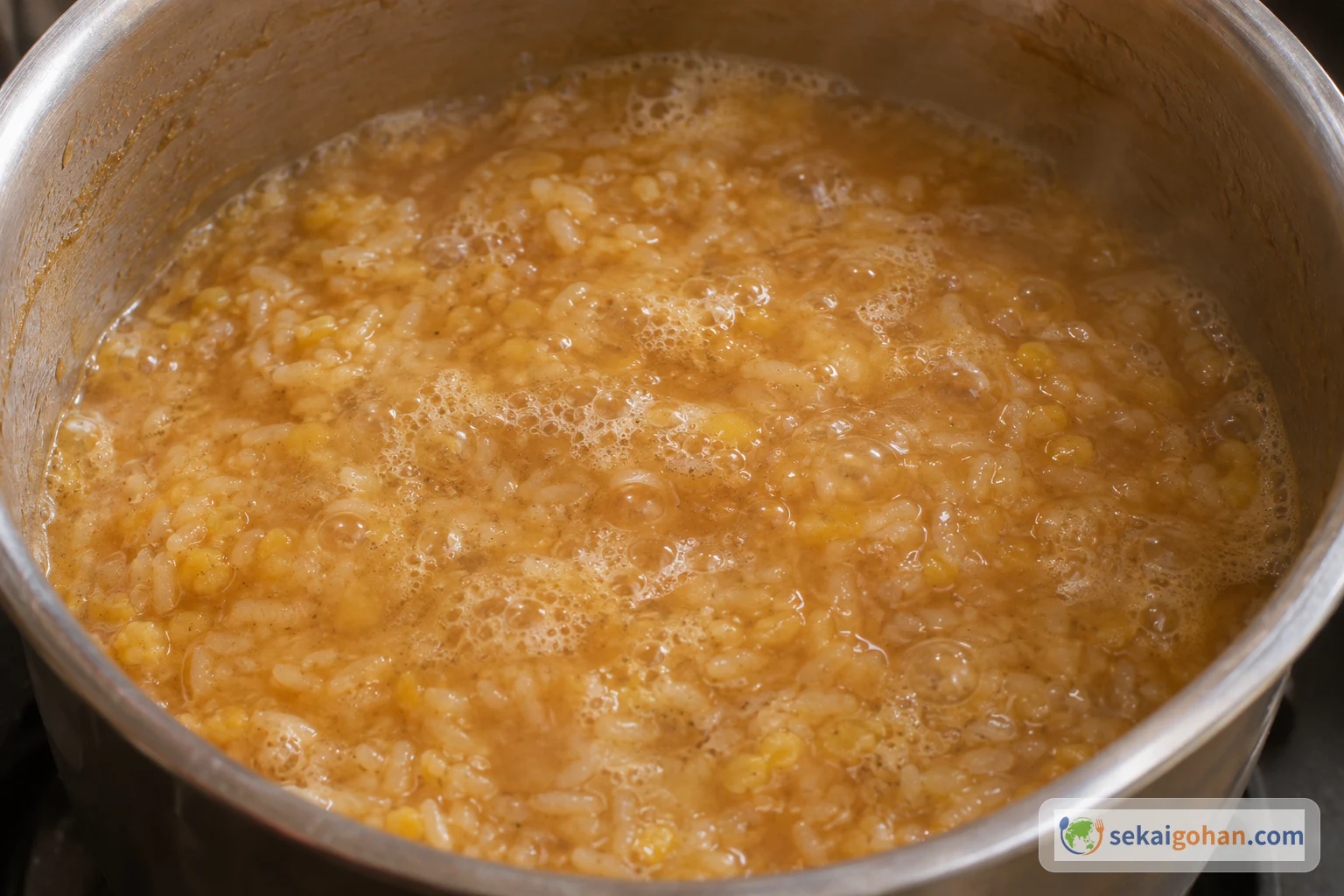
Simmering the rice and dal until bubbling
Bubbles across the pot are the sign to look for

Cook over medium heat for 3–5 minutes, until the whole pot bubbles. Then turn off the heat under the main pot before you start on the ghee.

STEP 1010 / 12

Fry the cashews in ghee

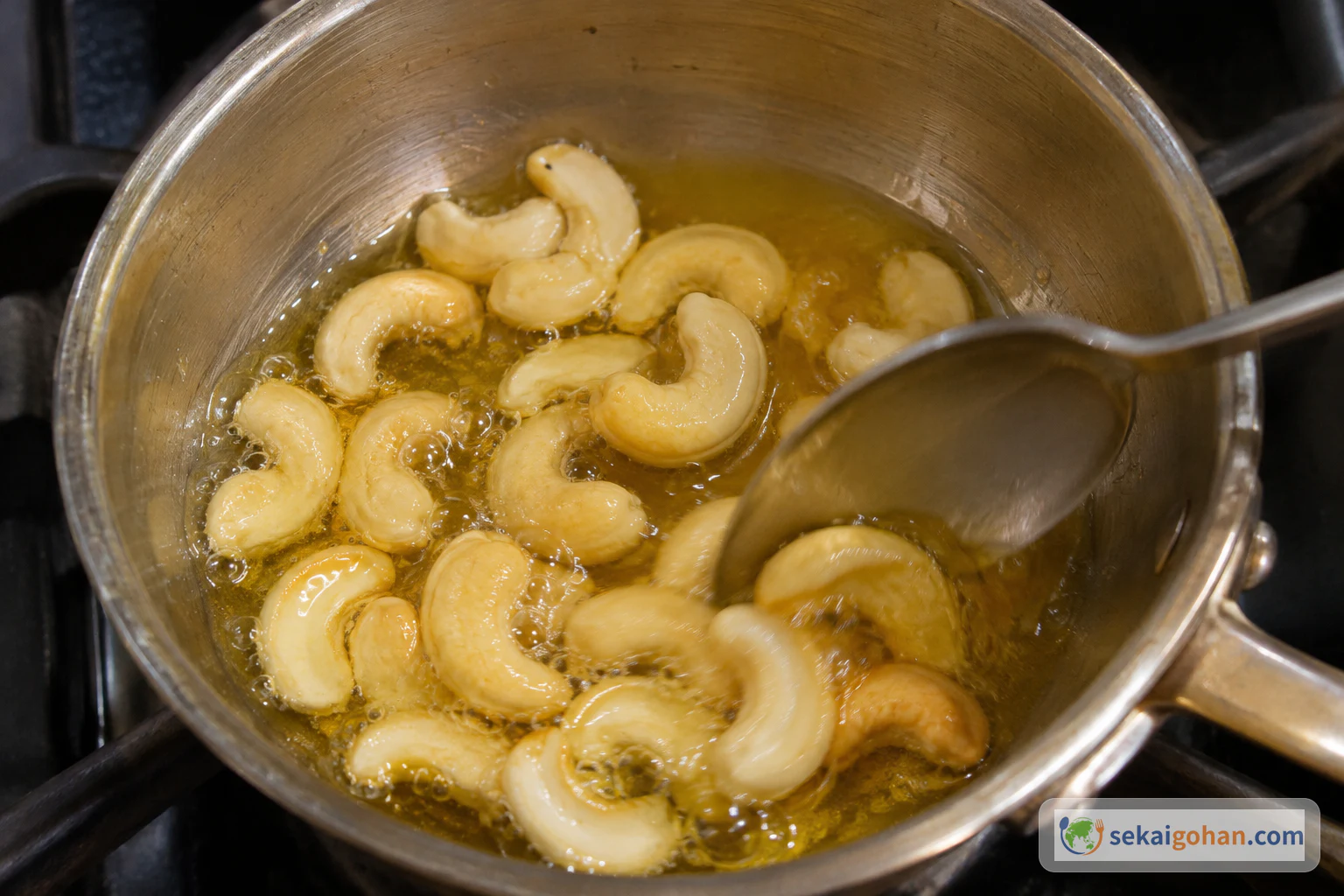
Frying cashews to a pale golden color
Light gold is the target

Put the 2 tbsp of ghee in a separate small pan and warm it over medium heat. Add the split, cleaned cashews to the warm ghee. Fry until the cashews turn light golden.

STEP 1111 / 12

Fry the raisins

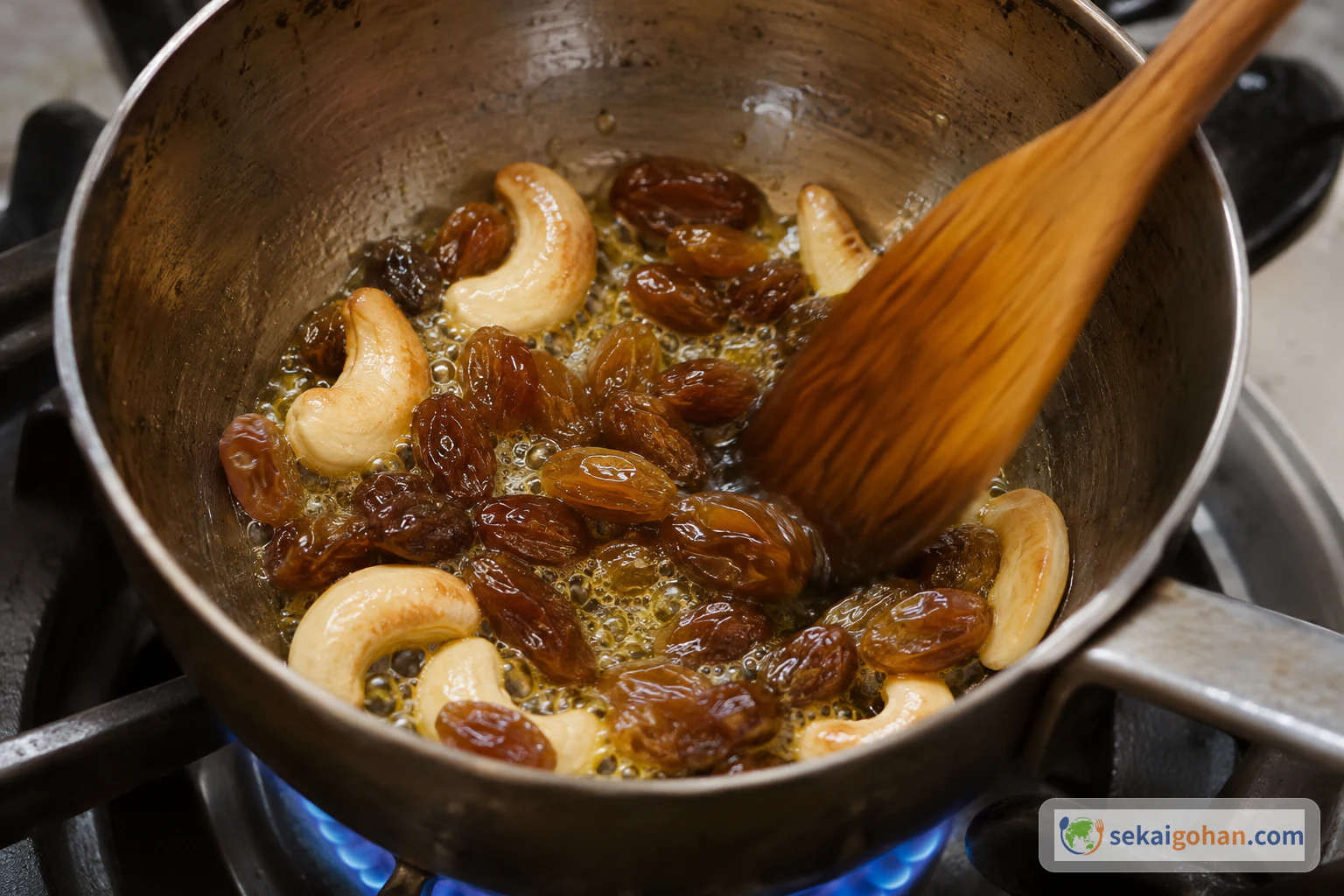
Frying raisins until plump
Keep the heat on until the raisins plump

Add the 2 tbsp of raisins to the pan, keeping the heat on. Keep frying until the raisins turn plump. Then turn off the heat under the ghee pan.

STEP 1212 / 12

Mix and serve

Serving Sakkarai Pongal hot in a bowl
Served plain and hot

Pour the ghee, cashews and raisins into the main pot. Mix them through the sweet rice and dal until the cashews and raisins are spread through the pot. Spoon into bowls and serve hot, with no added garnish.

0 / 0
Ingredients

Ingredients

1 / 1

Ingredients

Ingredient Amount Role
Split skinned yellow moong dal 1/2 cup Dry-roasted, then cooked soft with the rice
Rice 3/4 cup The soft body of the dish
Water for cooking 4 cups Cooks the rice and dal under pressure
Jaggery 220 g The sweetness, grated and made into syrup
Water for syrup 1/2 cup Dissolves the jaggery, kept separate from the cooking water
Ground green cardamom 1/2 tsp Aroma, simmered into the pot
Ghee 2 tbsp Fries the cashews and raisins and goes into the finished pot
Cashews, shelled and unsalted 15 Split, cleaned and fried to pale gold
Raisins 2 tbsp Fried in ghee until plump
0 / 0

Rice and yellow moong dal soften together in a pressure cooker. Dark jaggery syrup runs through a strainer into the pot, and then golden ghee carrying fried cashews and raisins goes in last. This is Sakkarai Pongal, the sweet Pongal of South India, also called Chakkara Pongali or simply sweet Pongal. It's made with the season's new rice, jaggery, cashews and raisins.

Sakkarai Pongal and the Harvest Festival

Pongal shares its name with a South Indian harvest festival, and this sweet dish belongs to it. Its name is close to savory Ven Pongal, but they are different dishes. Sakkarai Pongal is the sweet one, flavored with jaggery, cardamom and ghee and studded with cashews and raisins.

Every version follows the same basic outline, but there is no single fixed formula. What follows is a household version, not a Tamil temple standard. For more dishes from the same country, browse Indian recipes.

Ingredients for 4 Servings
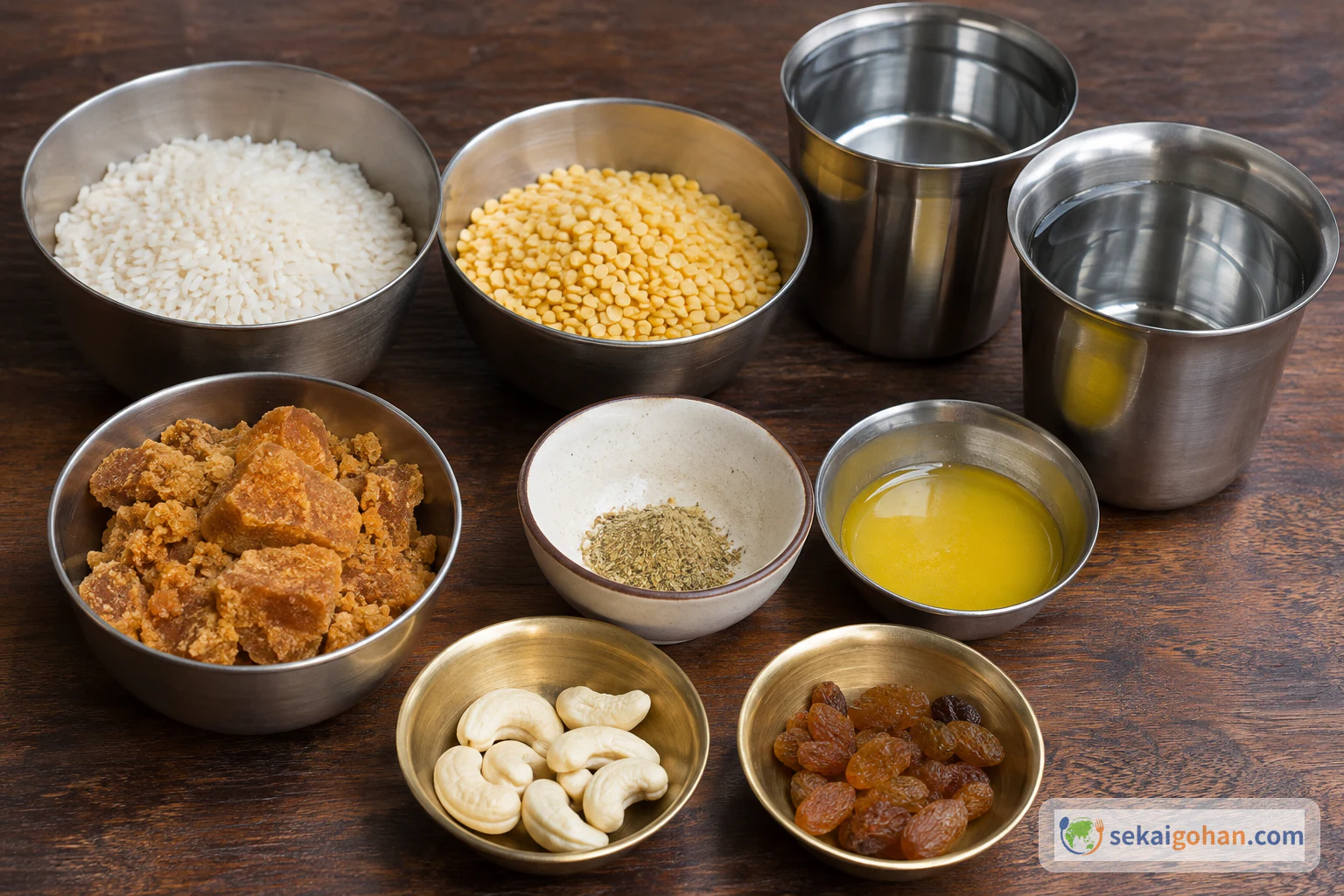
Rice, yellow moong dal, jaggery and the other ingredients for Sakkarai Pongal
The cooking water and the syrup water are kept separate from the start

Equipment

  • Compatible commercial pressure cooker
  • Heavy pot, if you prefer not to roast the dal in the cooker
  • Grater
  • Small saucepan for the syrup
  • Strainer
  • Small pan for the ghee
  • Spoon or flat spatula
  • Serving bowls

Choosing Ingredients for Sakkarai Pongal

Buy food-grade commercial jaggery, split skinned yellow moong dal and ghee. Each one matters, so stick with jaggery rather than brown sugar, moong dal rather than other beans, and ghee rather than butter. For the cashews, pick shelled, unsalted kernels.

Method: From Roasted Dal to a Hot Bowl

Pressure cooker safety

Use a compatible commercial pressure cooker and follow its manufacturer's instructions for pressure pulses, capacity limits and safe operation. Never open the cooker until all pressure has been released safely. Do not improvise a rapid release or operate the valve by hand.

Fixing Sakkarai Pongal Problems

Most problems show up at a particular stage. Here's what to watch for and what to do.

What you notice What to look at What to do
The dal is starting to brown The target is aromatic and slightly golden Stop roasting and move on before it darkens further
Your cooker doesn't behave as "3 whistles" suggests Whistle counts don't convert to cycles or minutes Follow your manufacturer's instructions
The lid won't open easily Pressure is still not fully released Don't force the lid or operate the valve. Keep waiting and follow the manufacturer's safety procedure
The rice and dal aren't fully soft after opening They need to be fully soft before mashing Hold off on the syrup. Check your manual before cooking under pressure again
The syrup is close to forming strings It should be slightly thick and sticky, short of string consistency Take it off the heat and set it aside
The cashews are darkening quickly The target is light golden Add the raisins as soon as the cashews reach light gold
The raisins haven't plumped They plump while frying on the heat Keep the pan on the heat until they do, then turn it off

Serving and Varying Sakkarai Pongal

Sakkarai Pongal is meant to be served hot, right after the ghee, cashews and raisins go in.

Adjusting the Amounts

The recipe uses the low end of three ranges. If you like it sweeter, more fragrant or richer, you can move up within them:

Ingredient Range Used here
Jaggery 1 tightly packed cup (220–240 g) 220 g
Ground green cardamom 1/2–3/4 tsp 1/2 tsp
Ghee 2–3 tbsp 2 tbsp

For a milk version, replace the 4 cups of water with 3 cups of water plus 1 cup of milk.

A Different Formula

Here's a separate formula that shows how much the dish can vary. It works as a complete recipe on its own terms, so read it for comparison and don't swap single amounts between the two.

Element This version Alternative formula
Rice 3/4 cup, variety not named 1 cup, long-grain
Moong dal 1/2 cup 1/4 cup
Liquid 4 cups water, plus 1/2 cup water for syrup 4 1/2 cups cooking water and 3 cups milk
Jaggery 220 g 1 1/4 cups
Ghee 2 tbsp 1/4 cup
Cardamom 1/2 tsp 2 tsp
Cinnamon None 1 stick
Cashews 15 1/2 cup
Raisins 2 tbsp 3 tbsp

Frequently Asked Questions

Is this the same as Ven Pongal?

No. Ven Pongal is savory. Sakkarai Pongal is the sweet form, made with jaggery, cardamom, ghee, cashews and raisins.

What does "3 whistles" mean in minutes?

There's no fixed number of minutes for 3 whistles, and it doesn't mean three pressure cycles. Follow your cooker manufacturer's instructions.

Which rice should I use?

The main recipe doesn't name a rice variety. The alternative formula uses long-grain rice.
Sources