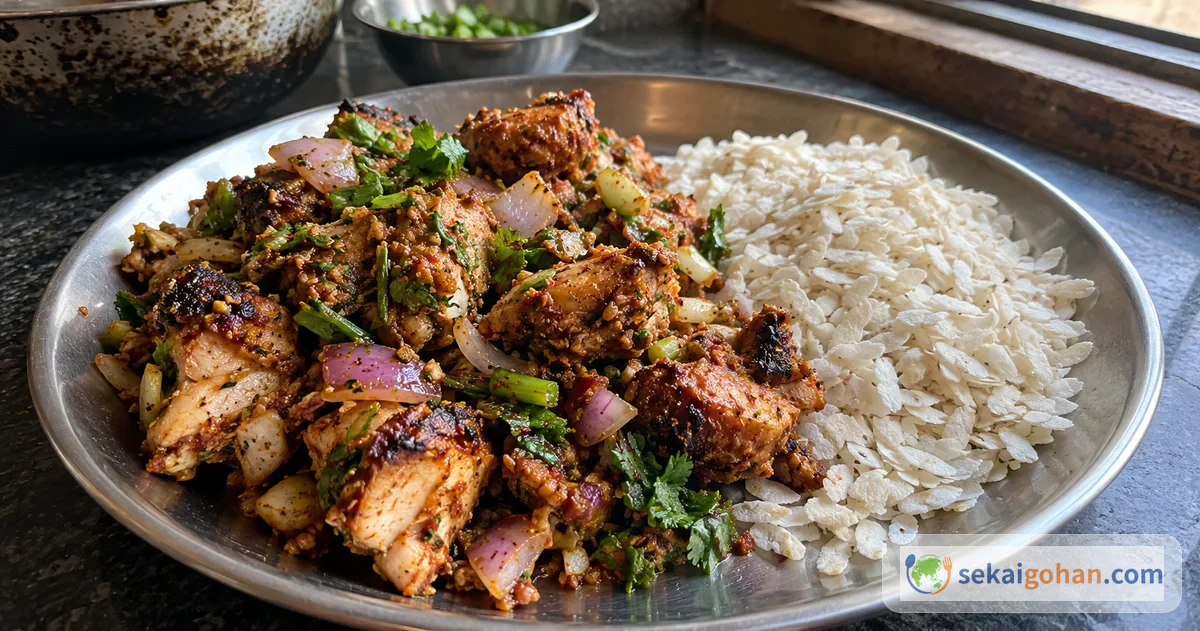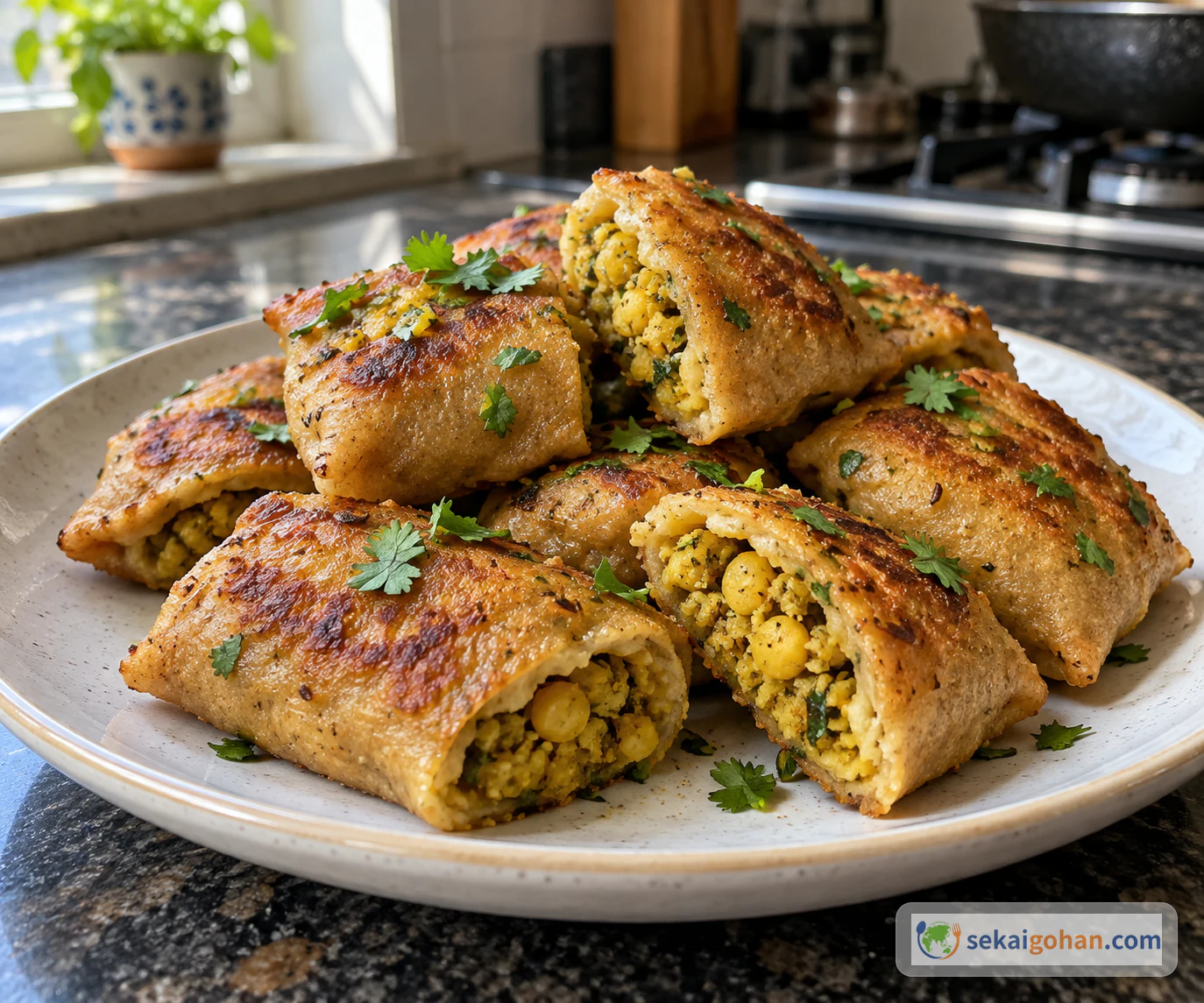
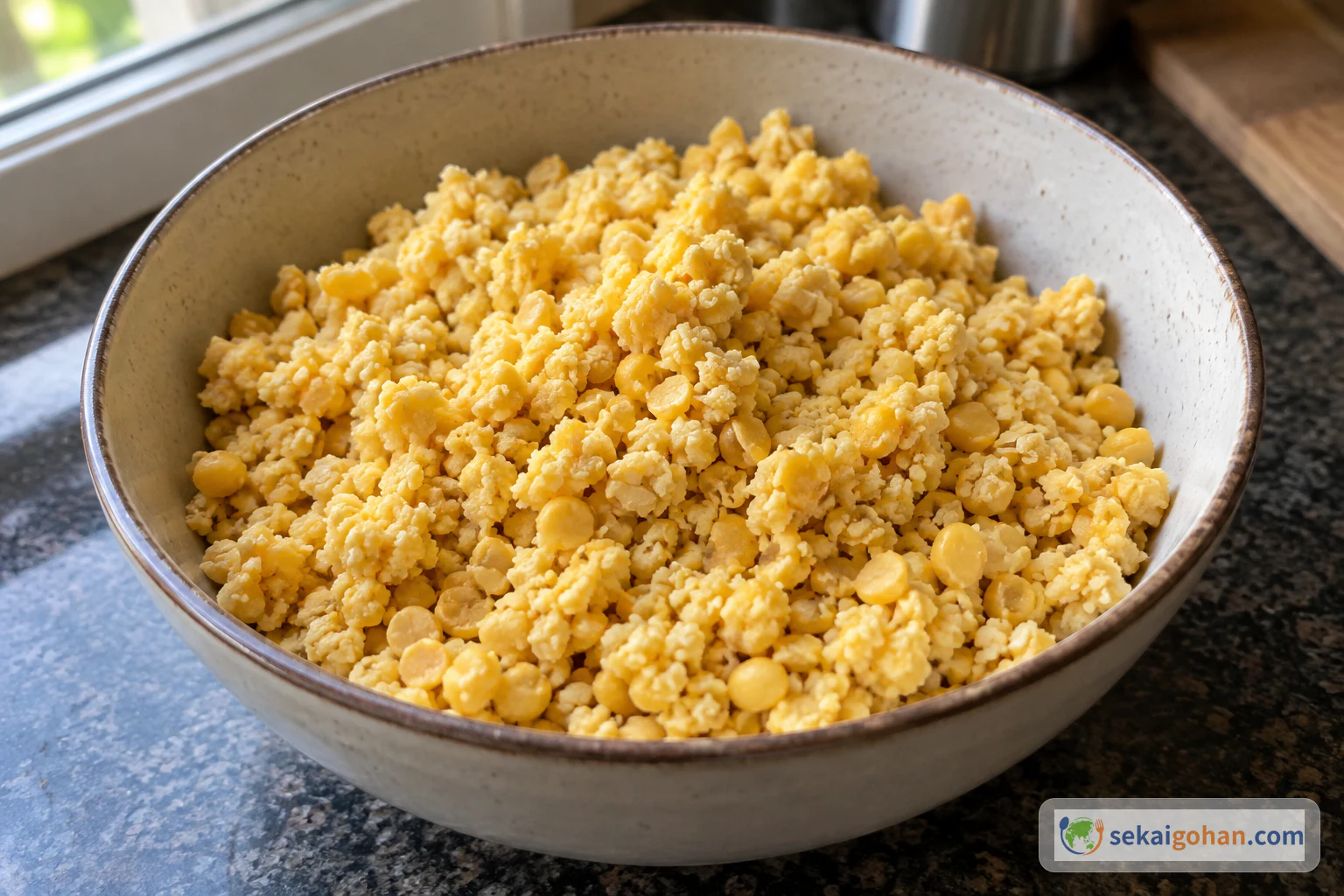
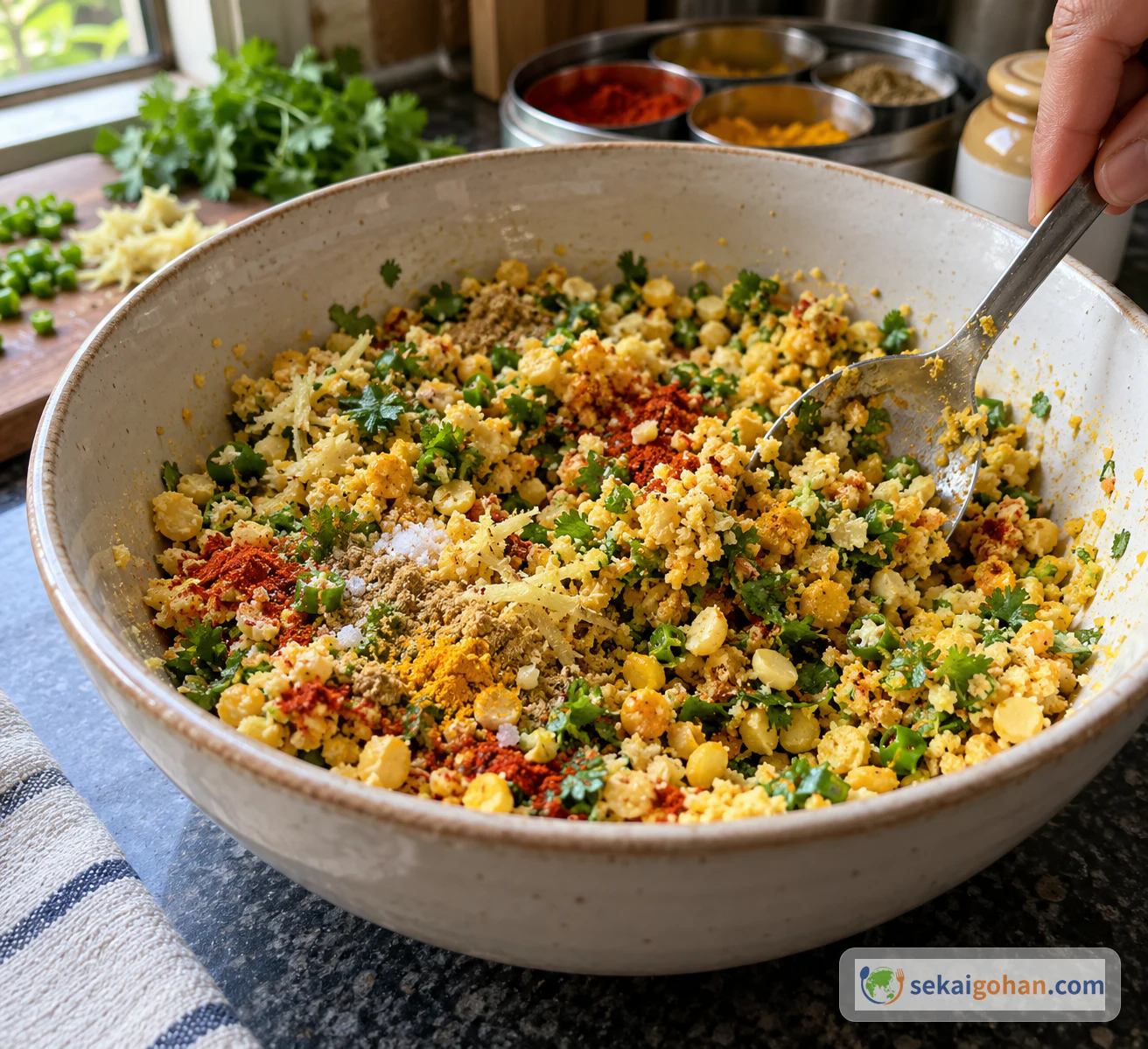
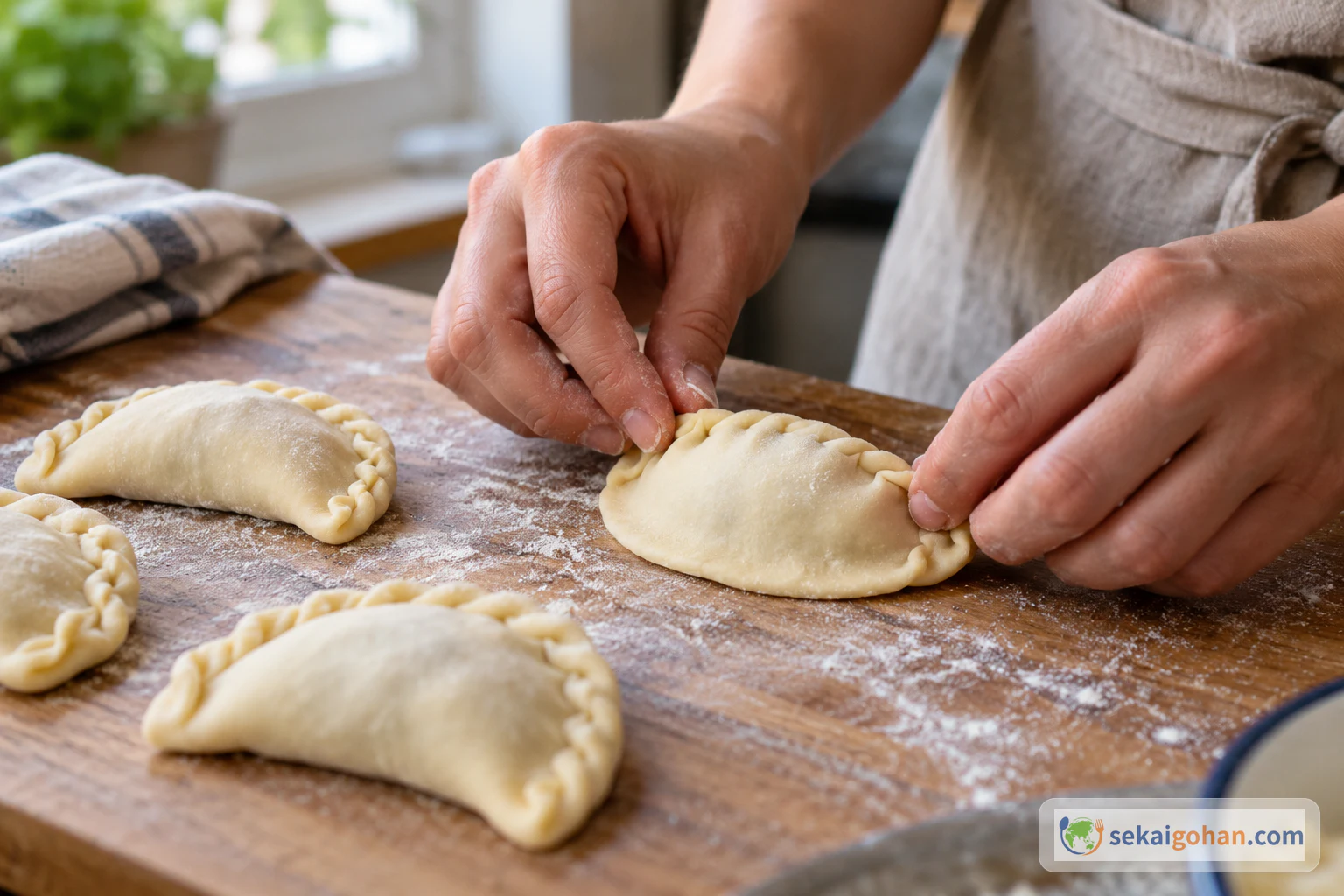
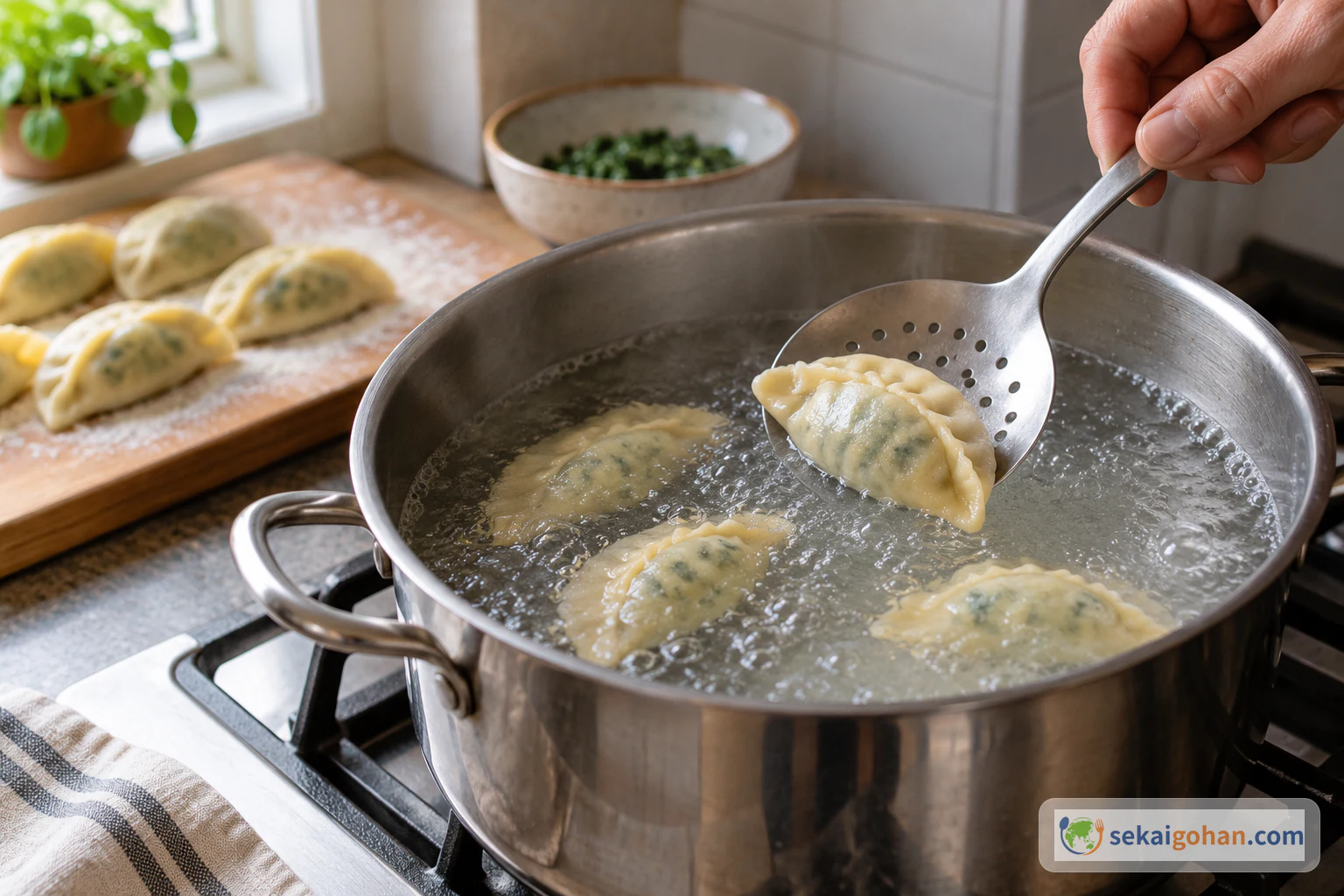
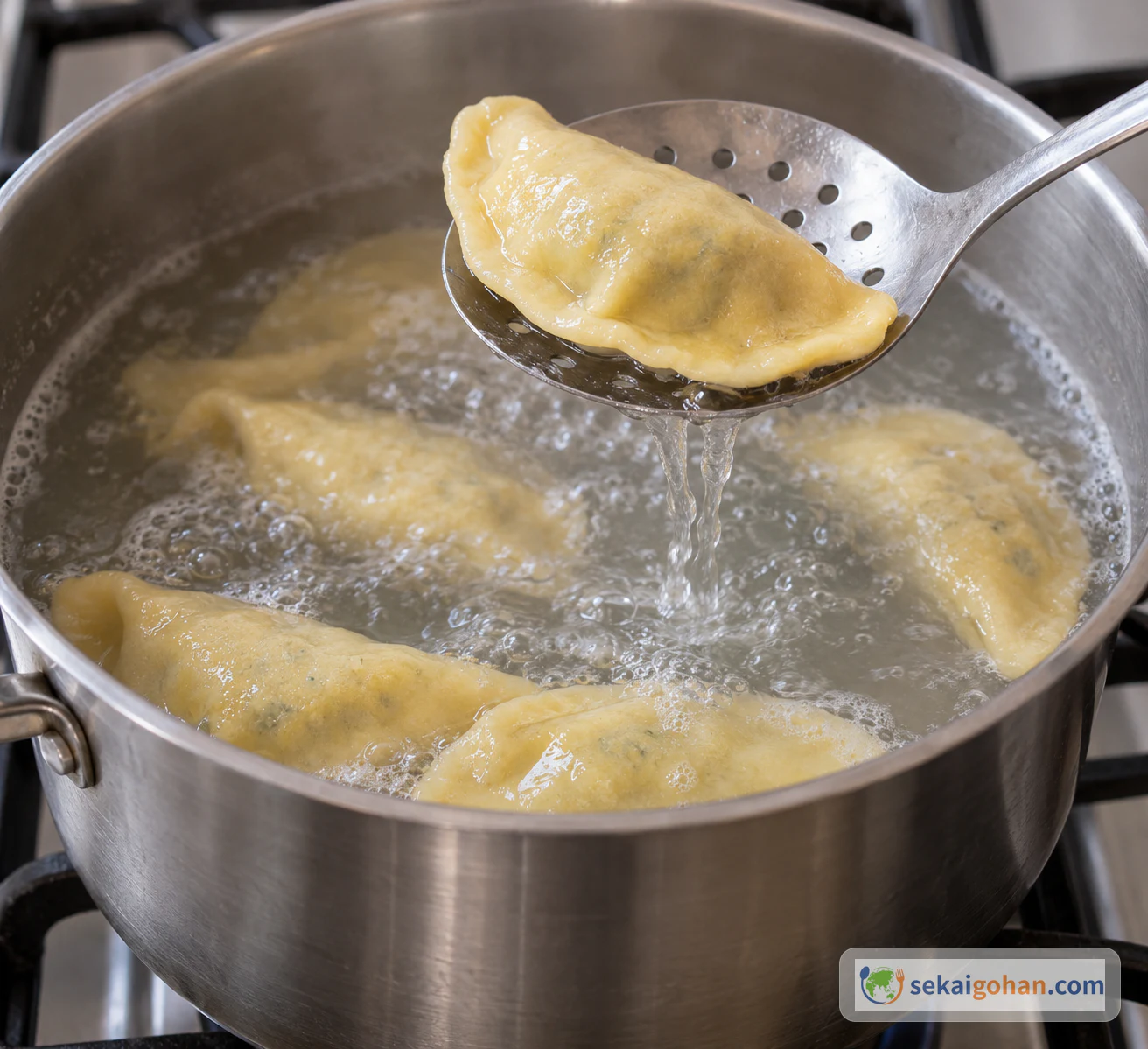
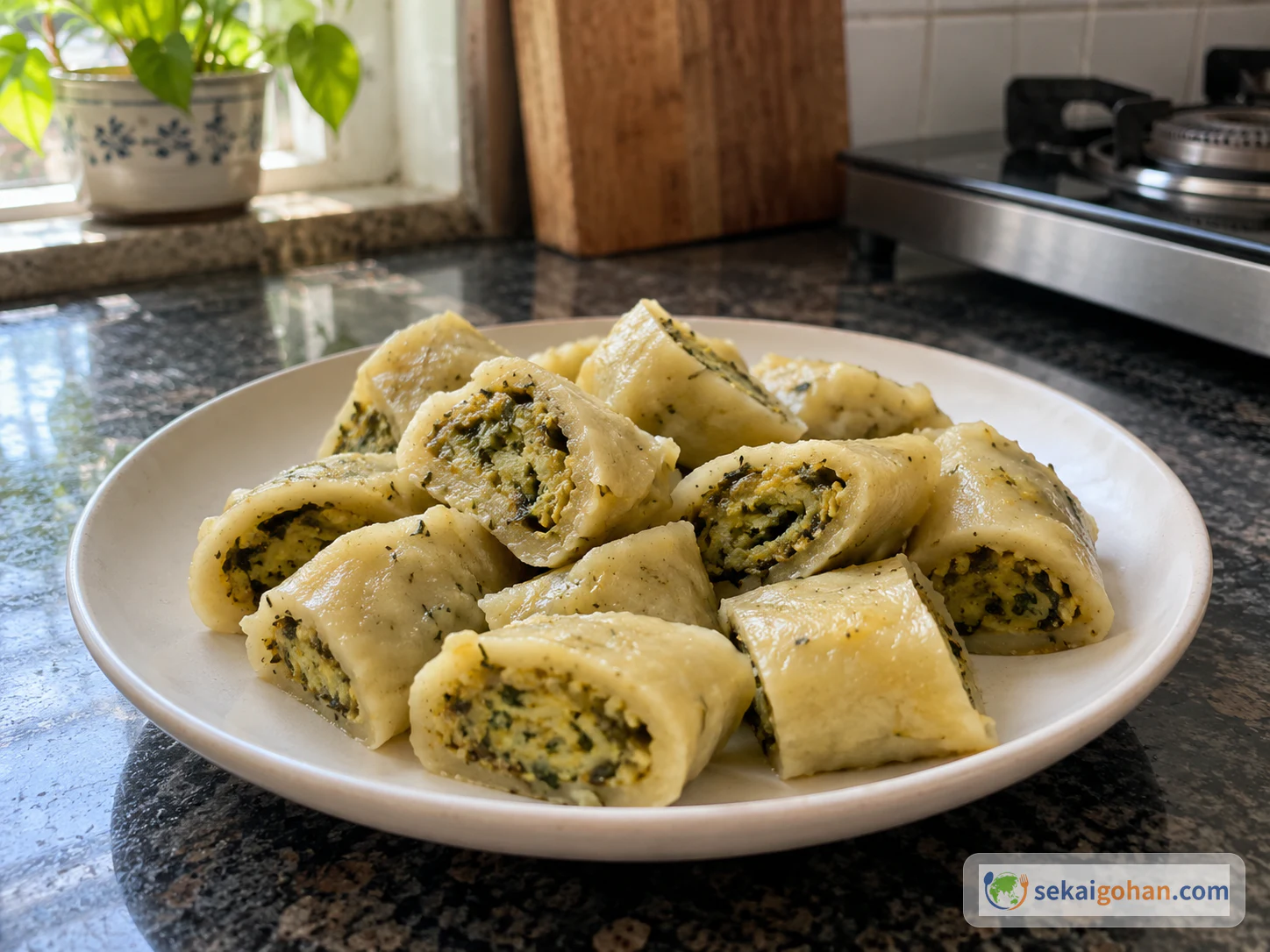
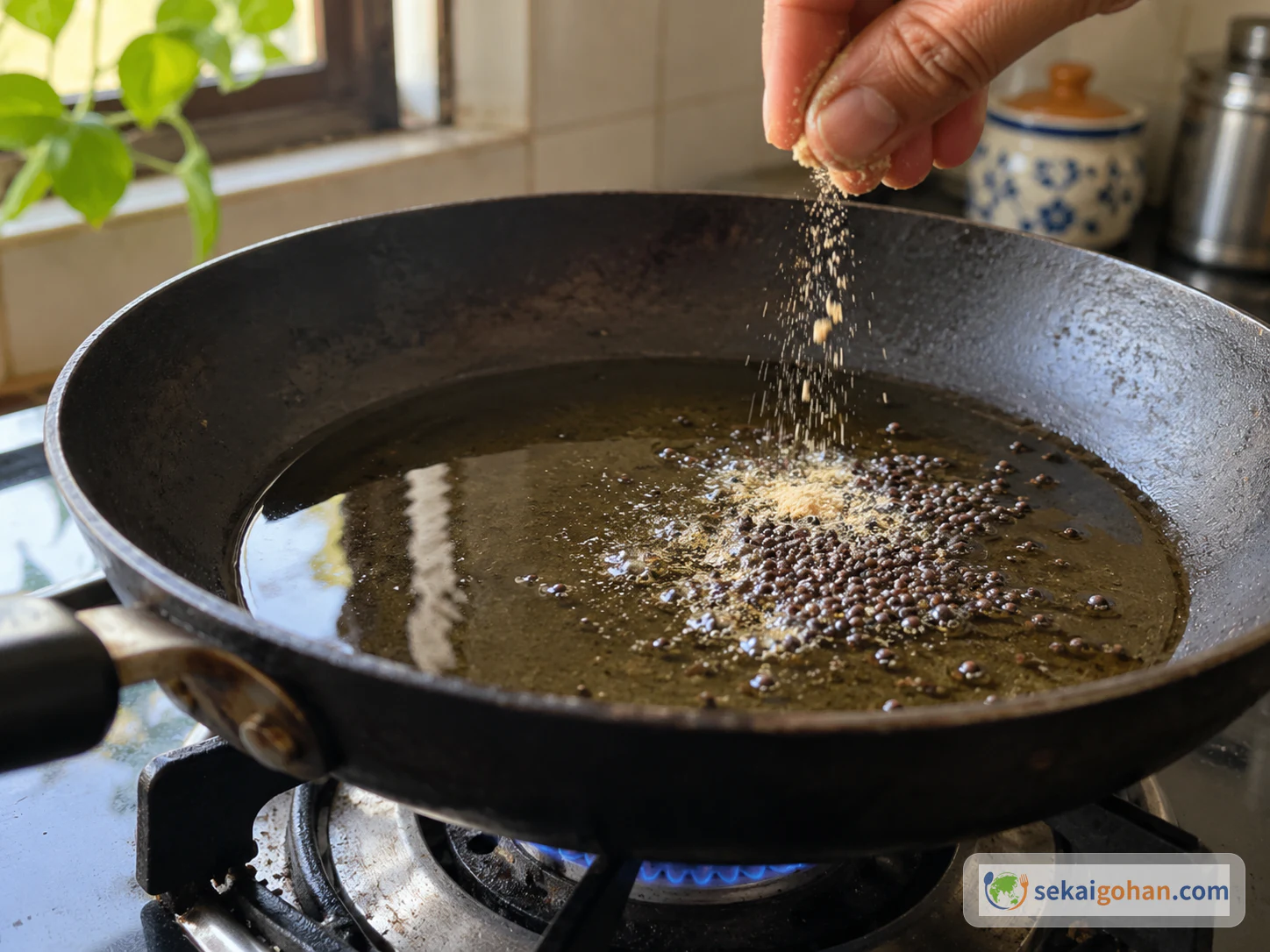
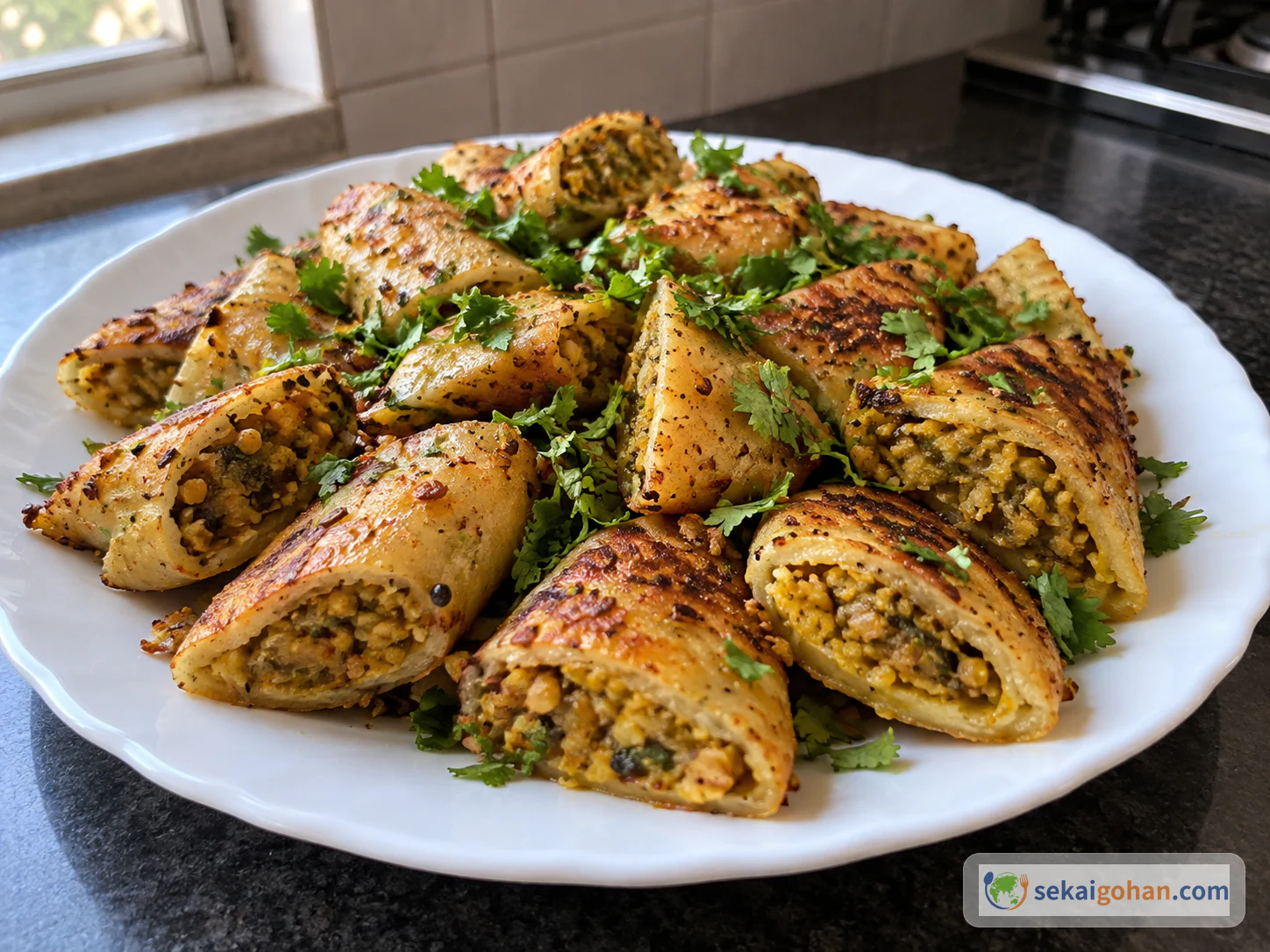
A small half-moon of whole-wheat dough goes into a pot of boiling water. It cooks under a lid, gets turned, and keeps bubbling with the lid set part of the way across the pot until it bobs up to the surface. From there you can go two ways: cut the fara into pieces and eat them as they are, or drop the pieces into hot oil crackling with mustard seeds, hing and Kashmiri red chilli and turn them until they go golden and crispy. Either way, inside is coarsely ground chana dal with green chilli, ginger and fresh coriander, soft and a little grainy against the tender wrapper. For more dishes from the same country, see our India page.
Dal Fara and Its Regional Versions
The name Dal Fara, also spelled Farra, covers more than one preparation, and the dough, the dal and the cooking method all change from place to place. The common thread is a dal filling inside a dough parcel. The wrapper may be rice or wheat, the filling chana, urad or a mix, and the parcels may be steamed or boiled.
A family version from the Terai region of Uttar Pradesh uses an outer dough of rice and a filling usually of urad or chana dal, and it is boiled or steamed around Diwali. A quicker wheat variation exists too. In eastern Uttar Pradesh and Bihar, a rice-and-chana phara is made, and a chana dal fara from Uttar Pradesh and Bihar can be made with wheat or rice and goes by the names gojha and peetha. In parts of Bihar and Jharkhand, some forms go by names such as dal pitha or gojha, with differences in spicing.
Steamed versions turn up elsewhere. One with rice flour and chana, under a Chhattisgarhi label, uses a hot-water dough, a coarse filling and a half-moon seal. A rice-flour version with several dals, labeled UP style, is steamed and then tempered. A shared name doesn't make two recipes identical, and a different name doesn't by itself make them separate dishes; no single formula covers all of India, and no one state owns the name.
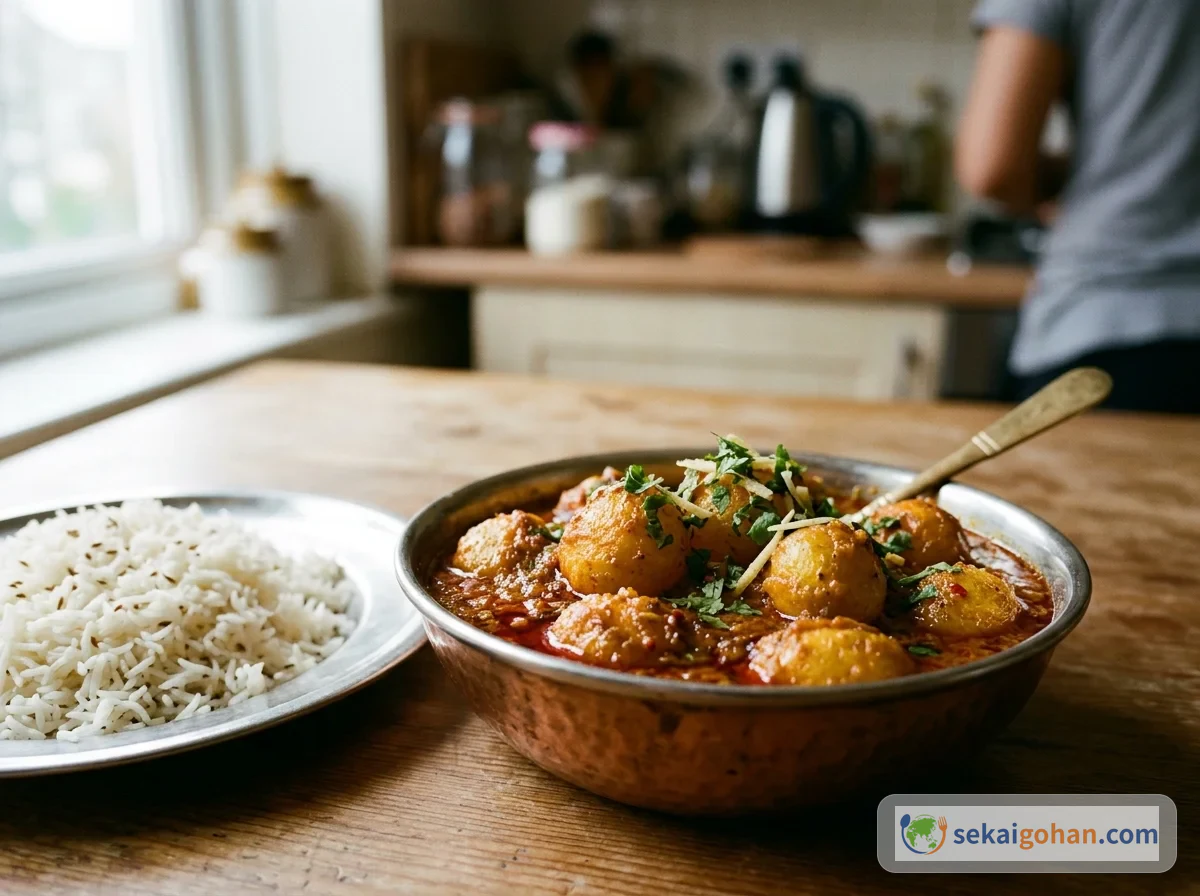
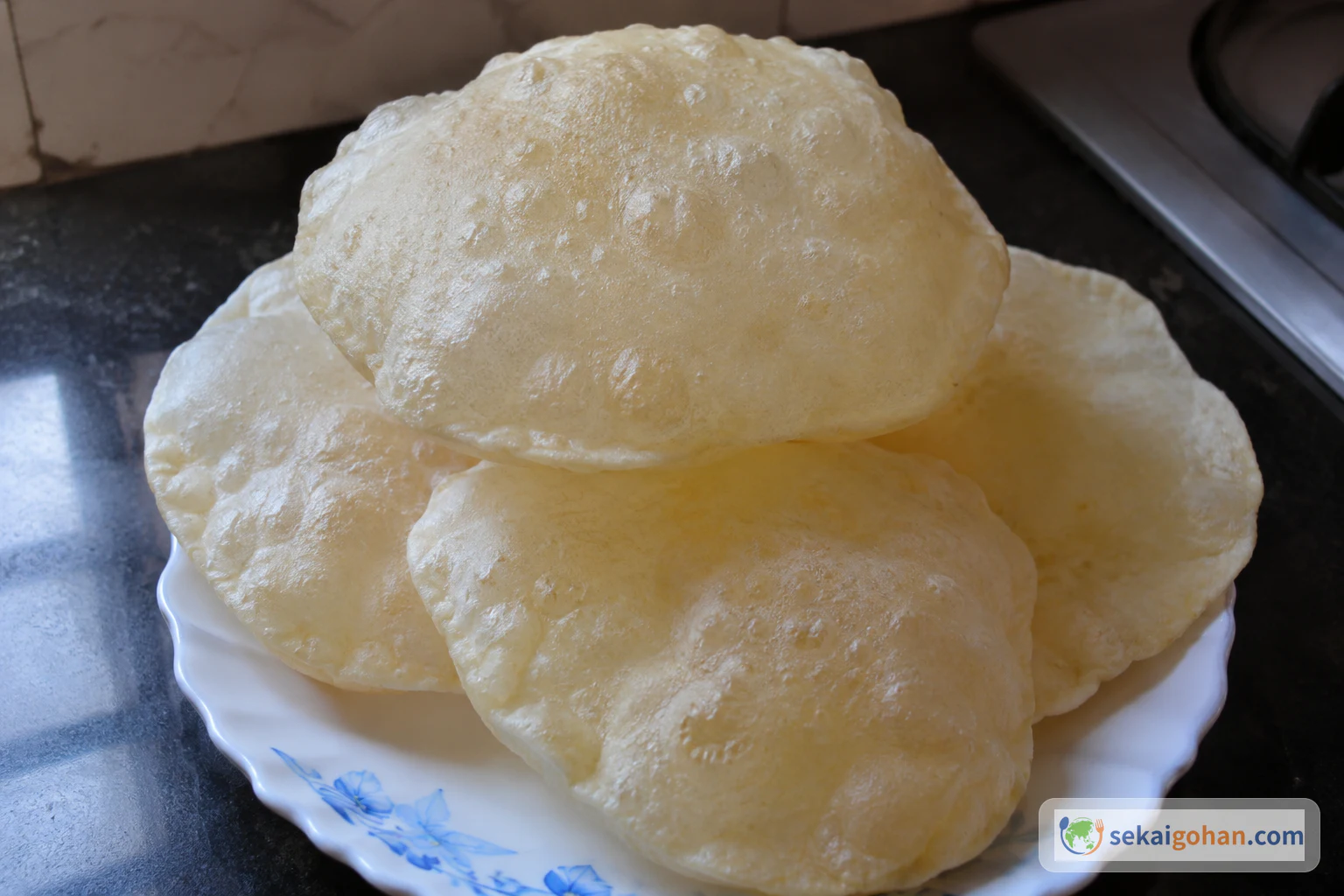
Two other dishes are easy to confuse with it. Dalpuri is a fried bread with a dal filling, and the Bangladeshi bhapa pitha is a sweet steamed rice cake.
Ingredients for 4 Servings: Dough, Filling and Optional Fry
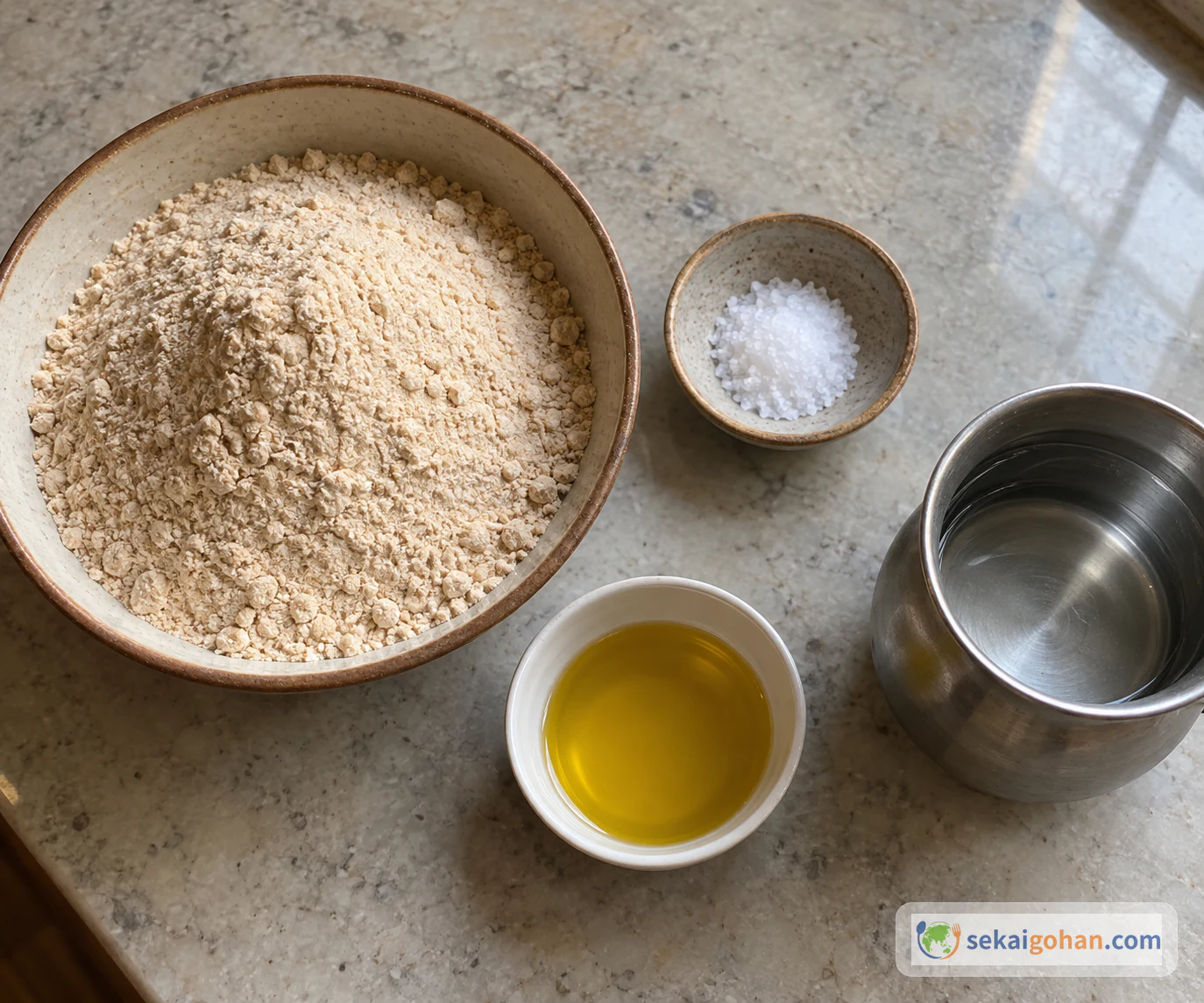
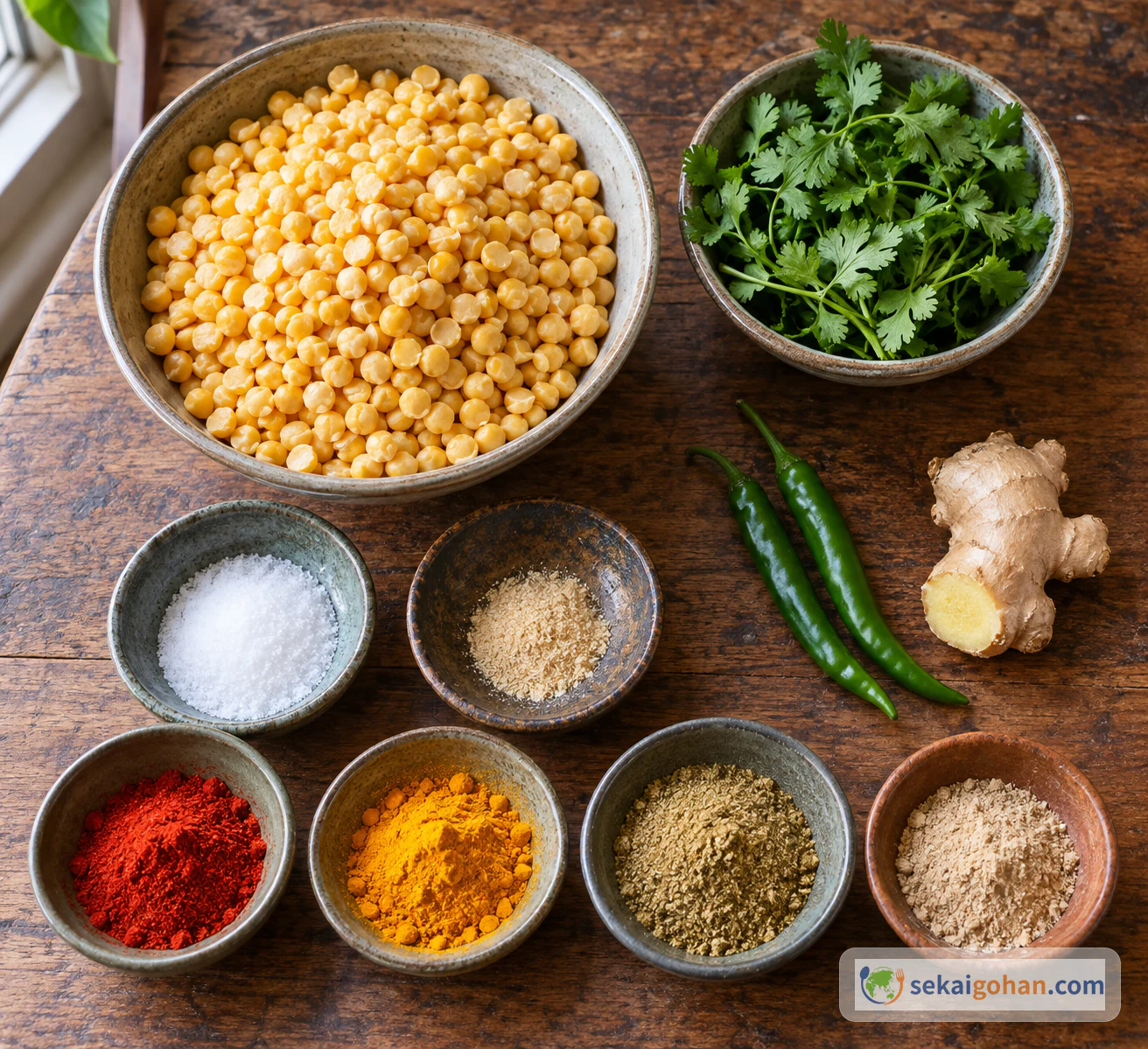
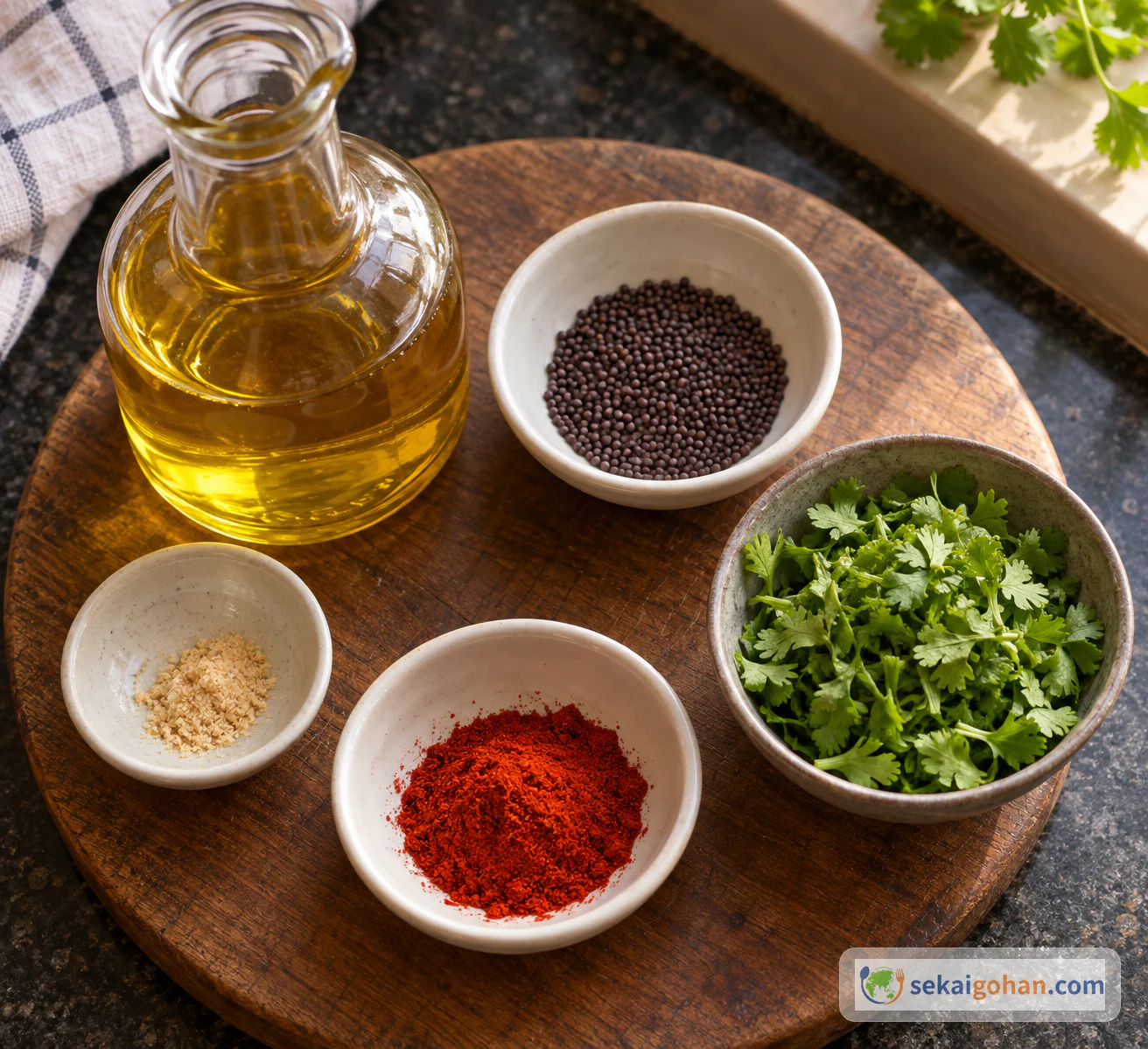
The dough, the filling and the optional fry each have their own salt, oil, hing, chilli powder and coriander. Measure each group separately and keep them apart. Fresh coriander and coriander powder are different ingredients.
This recipe contains wheat (atta) and chana dal. Hing is often sold as a blend, so read the label of the one you buy for other ingredients.
Equipment
- Bowl for soaking the dal
- Mixing bowl
- Damp cloth
- Colander or sieve for draining the dal
- Something to grind the dal coarsely
- Knife and cutting board
- Grater
- Rolling pin
- Pot with a lid, large enough for the fara to be submerged
- Slotted spoon
- Skillet, for the optional fry
Choosing Ingredients for Dal Fara
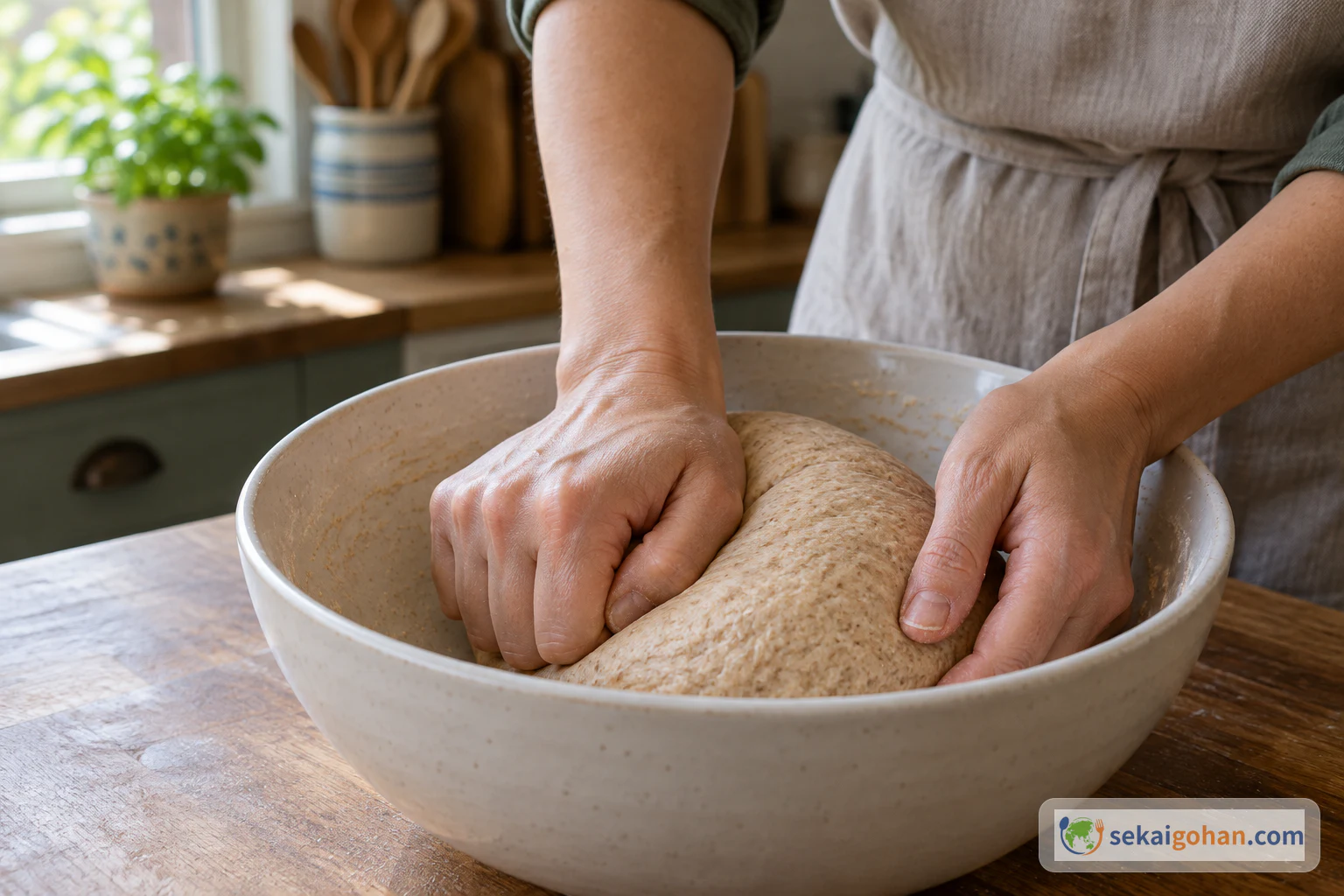
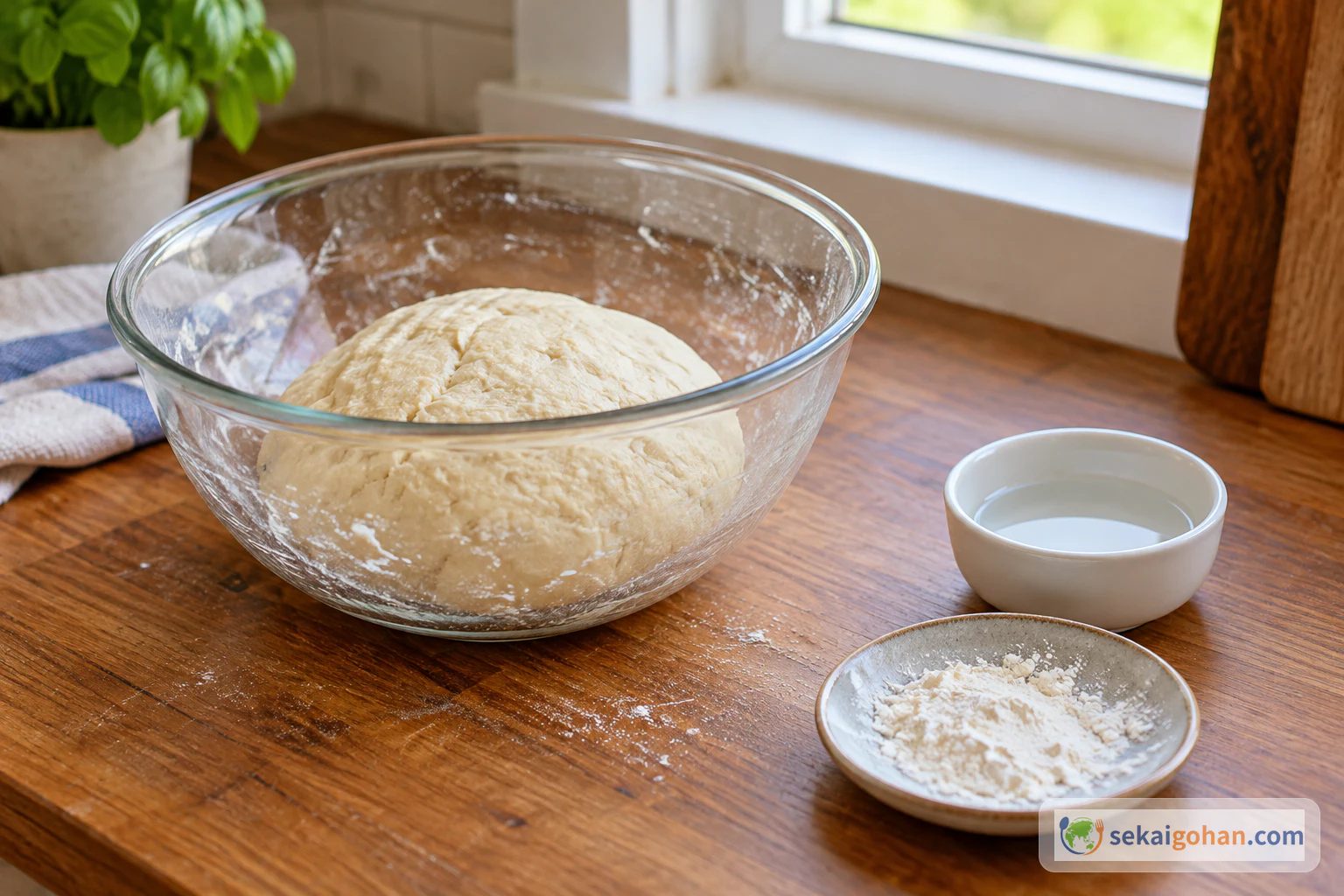
Look for chana dal, hing, amchur powder and Kashmiri red chilli powder by name, since none of them has a substitute here. Whole-wheat flours vary in how much water they drink, so the feel of the dough matters more than the exact volume. Use the same cup for the flour and the water, and add the water little by little.
Method: Soak, Make the Dough, Fill, Boil, and Optionally Fry
The fara are boiled, not steamed. There is no steaming step or steaming time.
The dough rests once, for 20 minutes. Stir the fara gently once or twice while they boil, during the partly covered stage (step 6).
Common Dal Fara Problems and Fixes
What holds a fara together is a soft wrapper, a filling that keeps its grain, and an edge sealed tight enough to survive the boil. Most problems come down to one of those three.
| What to watch | What to do |
|---|---|
| The dough feels sticky | Add the water gradually from the start. Aim for soft and smooth, firm and pliable, not sticky |
| The filling turns pasty | Grind the drained dal without water and stop while it is still coarse |
| The dough sticks while rolling | Dust with a little flour, only as much as needed |
| The edges won't close | Press them firmly. If needed, touch the edge with a little water before sealing |
| The pot looks crowded | Add the fara one at a time and cook in batches if necessary |
| Filling amount per parcel | Use 1–2 tsp per circle, and roll each circle neither very thick nor very thin so it can fold and seal around the filling |
Serving Dal Fara
Boiled fara are a complete dish on their own: a soft whole-wheat wrapper around a spiced, coarse dal filling. The spice-fried finish is optional, and because it brings its own oil, hing, mustard seeds, Kashmiri red chilli powder and fresh coriander, you can use all of the filling in the parcels. Chutney, yogurt or ghee on the side are nice additions if you like.
Frequently Asked Questions
Can I convert the cups to grams?
It's better not to. Use the same cup for the flour and the water, and adjust the water by the feel of the dough.
How many fara does this make?
This recipe makes 4 servings. The piece count depends on how you portion the dough: divide it into small lemon-sized balls and use 1–2 tsp filling in each.
How long does the whole recipe take?
About 50 minutes: 5 minutes of prep, a 20-minute rest for the dough and 25 minutes of cooking. Soak the chana dal for 2 hours before you start.
Is floating a sign that the fara are cooked through?
Floating is the cue for lifting the fara out of the pot, not a reading of the temperature inside.
Can I steam them instead?
These fara are boiled. Steamed versions use different doughs and fillings, so their times don't carry over.