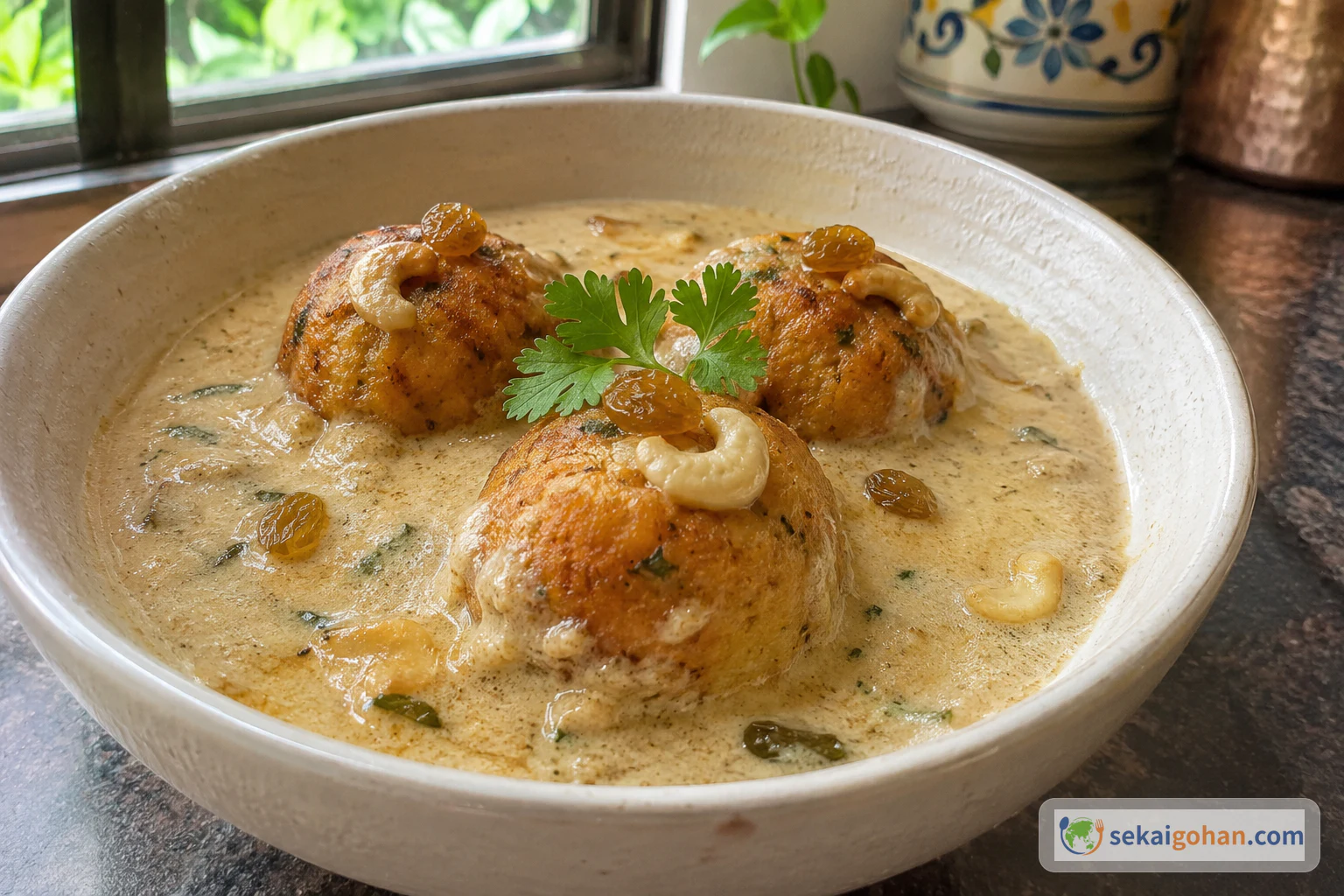
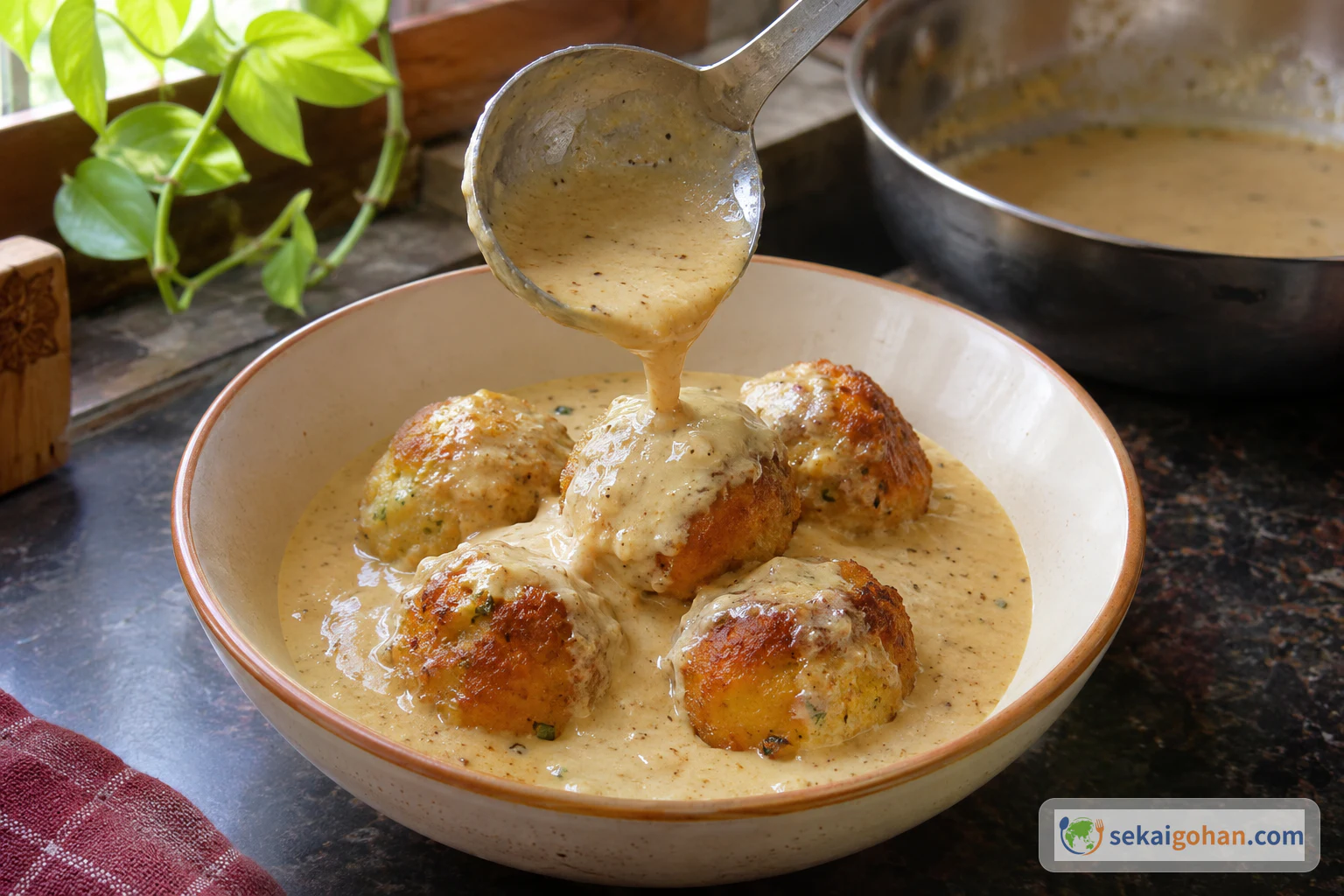
Malai kofta in a pale gravy, finished with coriander, fried raisins and cashews
Serves4 servings
CuisineIndian

Malai Kofta: Stuffed Paneer and Potato Dumplings in a Pale Onion-Nut Gravy

How to make vegetarian malai kofta: paneer and potato dumplings filled with raisins and cashews, deep-fried until golden and crisp, and served in a pale gravy of onion, cashews, melon seeds and poppy seeds. Covers whistling and non-whistling pressure cookers, choosing cornflour, fixes, and food safety.

Level: Intermediate

Cooking flow

Cooking steps

STEP 11 / 9

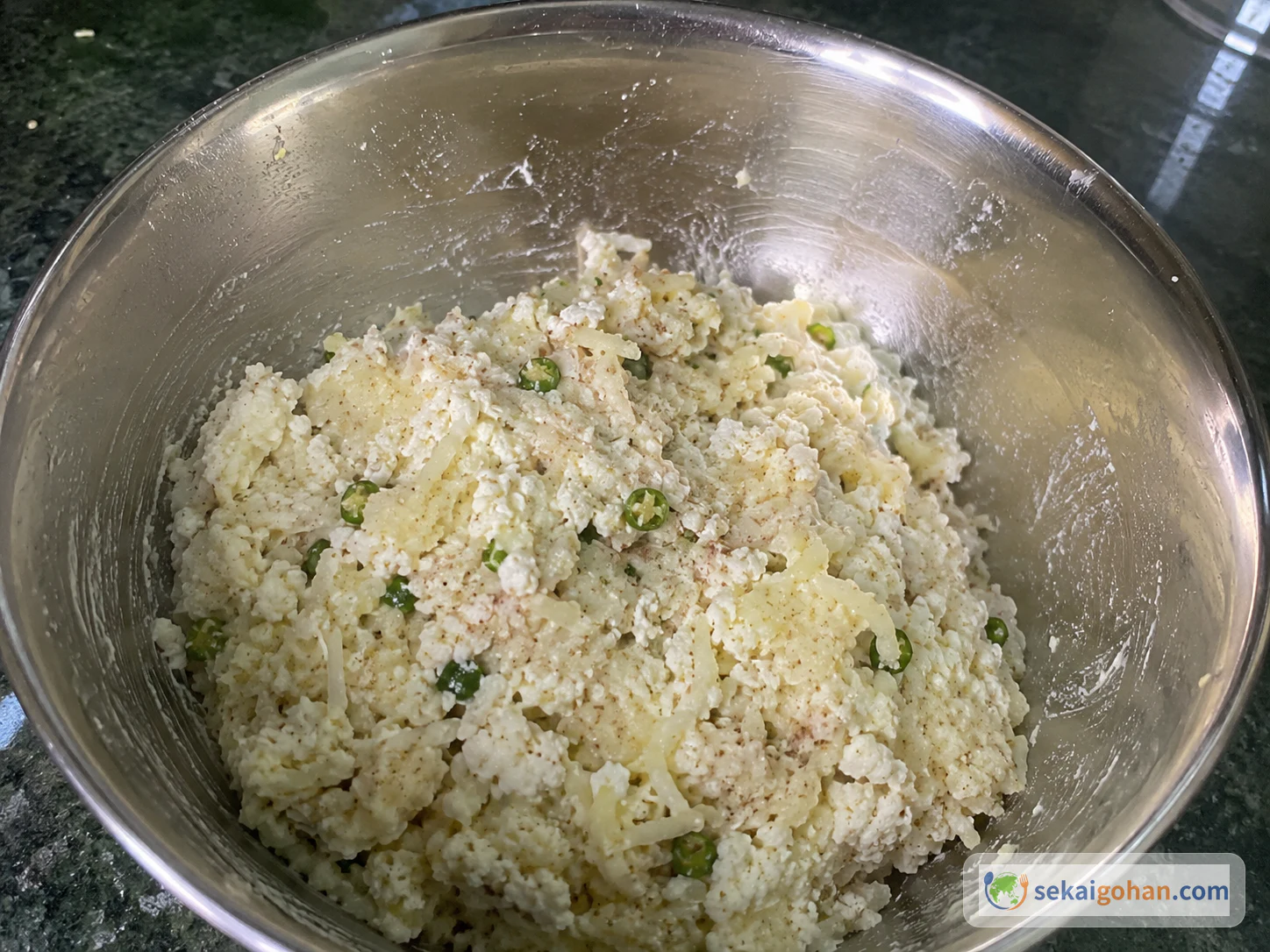
Mix the dumpling dough

Paneer and boiled potato dough mixed in a bowl with green chili
The dough should come together in one mass

In a bowl, combine the grated paneer, grated boiled potato, the 2–3 green chilies, the 1 inch of ginger, salt, the 2–3 tbsp cornflour and a pinch of garam masala. Mix into a cohesive dough.

STEP 22 / 9

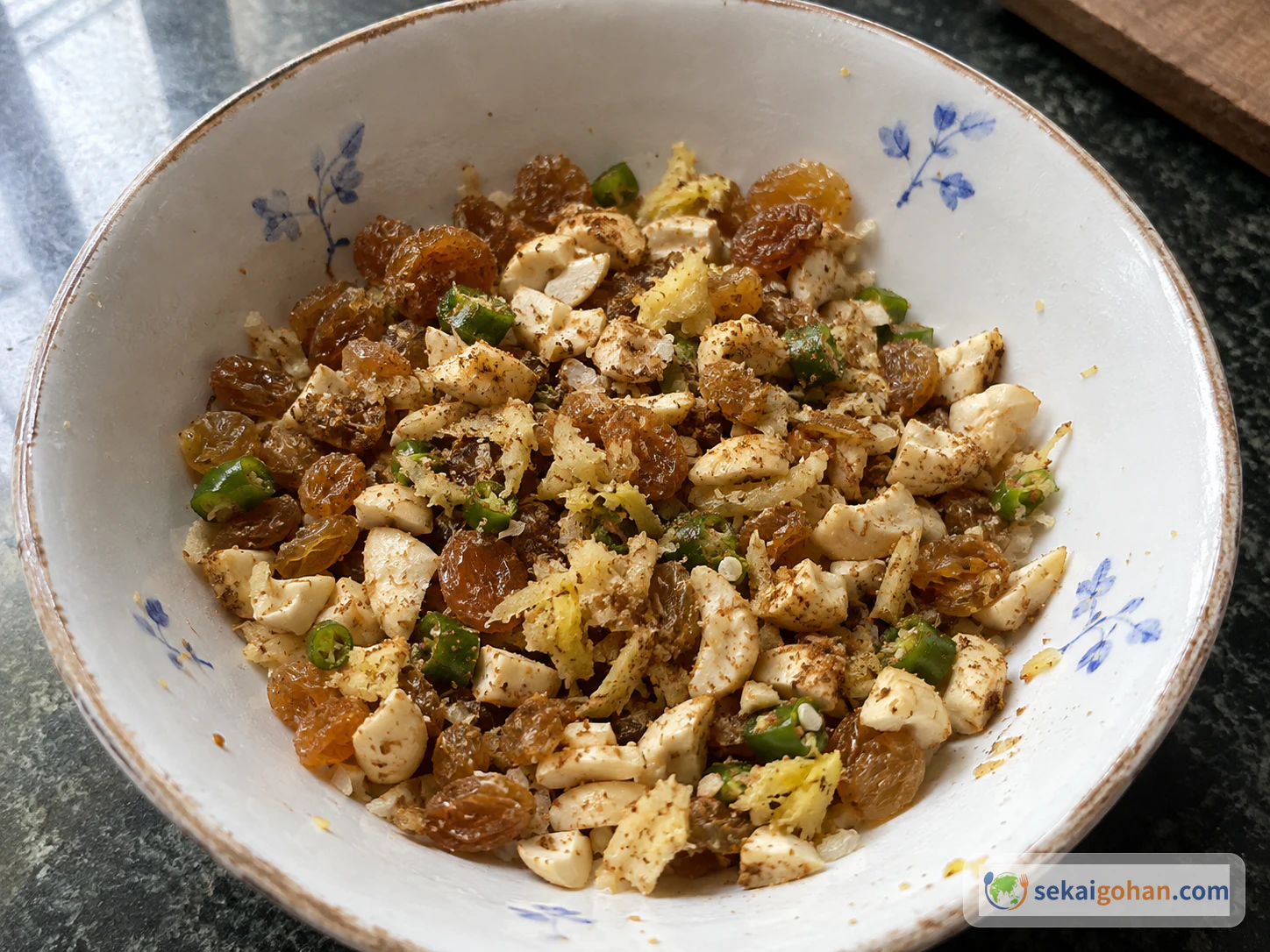
Mix the filling

Raisin and cashew filling mixed in a bowl
Keep the filling coarse and dry

In a separate bowl, combine the chopped raisins and cashews, the 1/2 inch of ginger, the 2 green chilies, salt and a pinch of garam masala. This filling stays coarse and dry, not a paste.

STEP 33 / 9

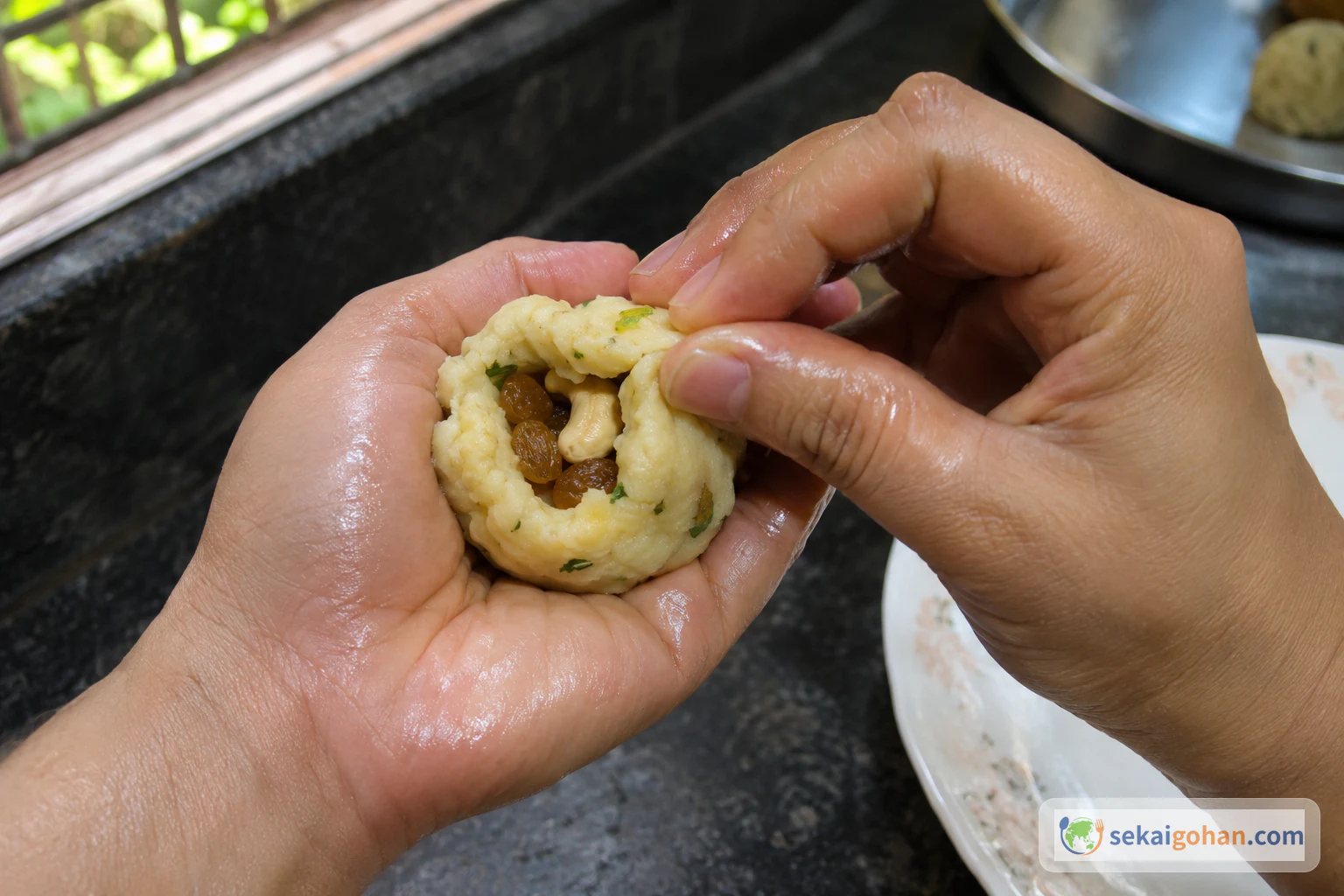
Fill and seal the dumplings

Hands sealing the edges of a dumpling with the filling already inside
Close the edges fully around the filling

Lightly oil your palms. Divide the dough into equal portions and shape each into a ball. Open a space in the center, add some filling, then gather the edges and press them closed.

STEP 44 / 9

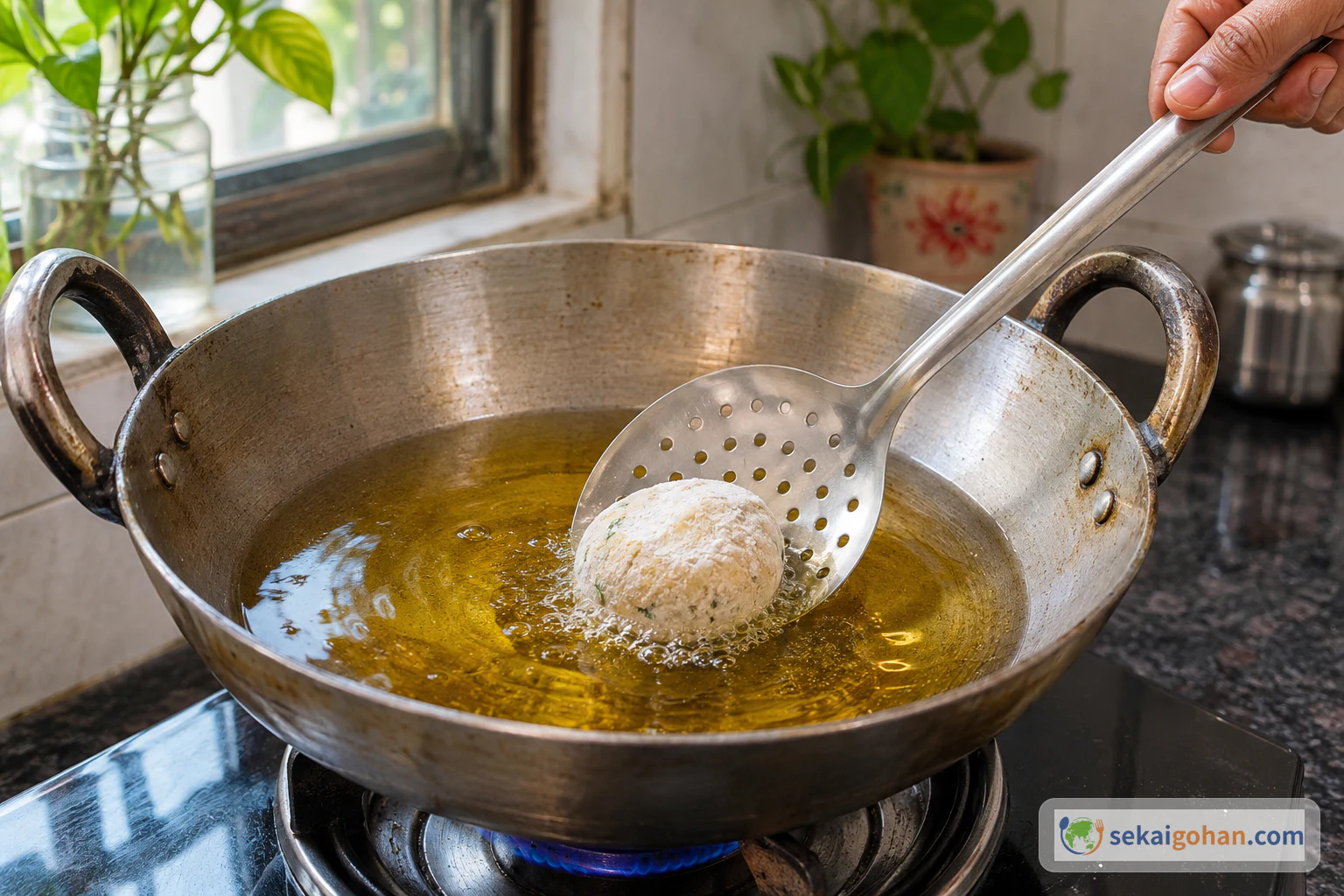
Coat and deep-fry

A starch-coated dumpling being lowered gently into frying oil
Lower each coated dumpling into the oil gently

Roll each dumpling in the coating cornflour. Heat enough oil for deep-frying in a stable, deep pan. Use a long-handled slotted spoon to lower each dumpling in gently, without dropping it, so the hot oil doesn't splatter. Fry until golden brown and crisp, then drain on absorbent paper.

STEP 55 / 9

Cook the gravy base in the pressure cooker

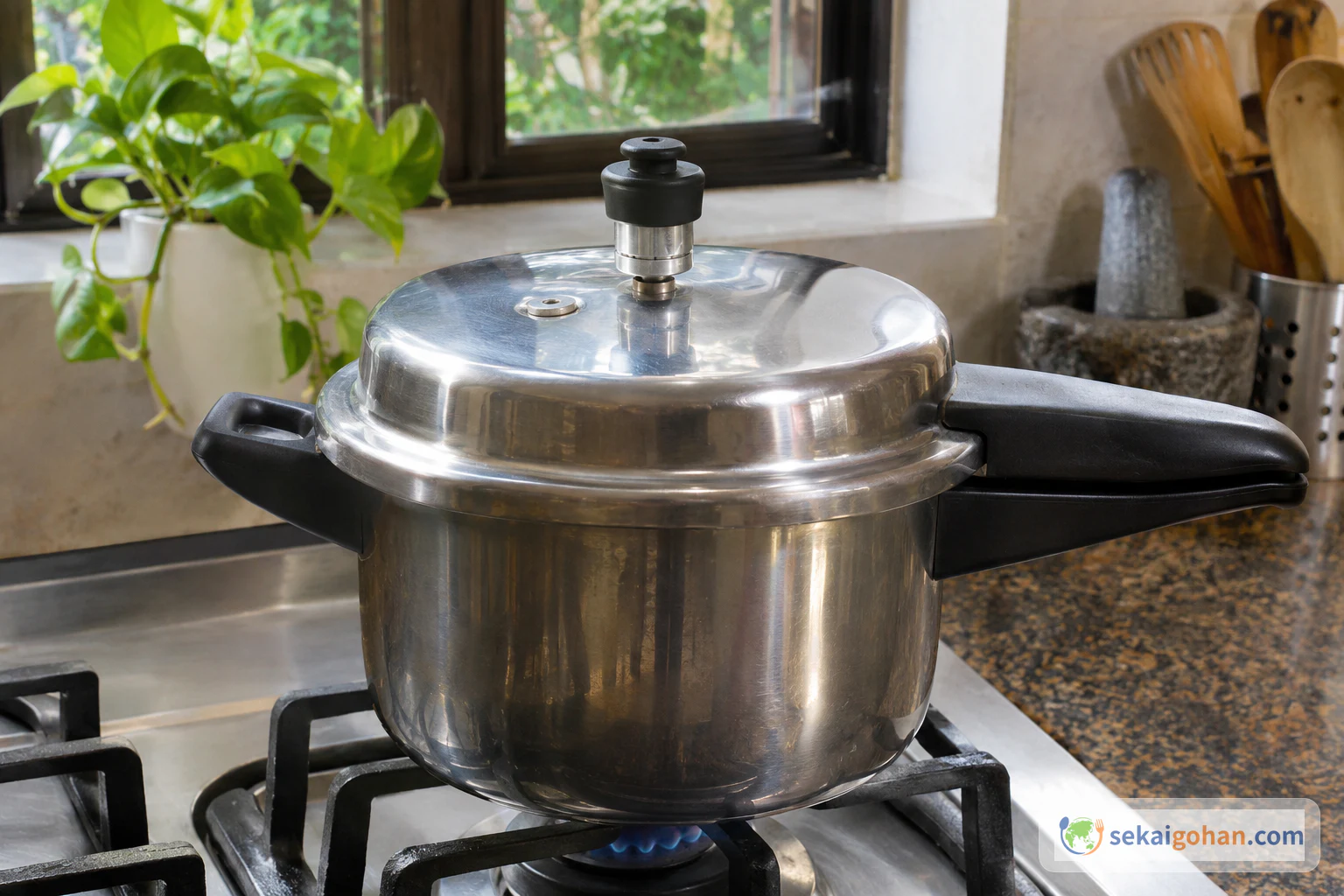
A closed pressure cooker on the stove during the gravy base stage
This shows the closed-lid stage only; your cooker's manual governs how to operate it

Put the onions, the 6–8 cashews, melon seeds, poppy seeds, the 2 cups of water and salt in the pressure cooker. Fill it no more than half full, and follow your manual on capacity, minimum water and pressure release. Bring to a boil, then close the lid.

If your cooker whistles (a weight that lifts and sets off a whistle, as on many Indian cookers): cook on medium heat until it has whistled 3 times, then turn off the heat. If it whistles more than 4 times a minute, lower the heat.

If your cooker doesn't whistle (spring-valve and electric models), or its manual says not to count whistles: use the time your manual gives for onions or vegetables. If it gives none, use 2–3 minutes at full pressure, then let the pressure fall naturally.

For all cookers: Don't lift the weight or vent the steam by hand, because this step is full of liquid. Let the pressure fall on its own and never force the lid. Open it only once the pressure has settled completely.

Check that the onions are soft enough to grind smoothly. If they are still firm, simmer uncovered until they soften. Let the mixture cool.

STEP 66 / 9

Grind the cooled base

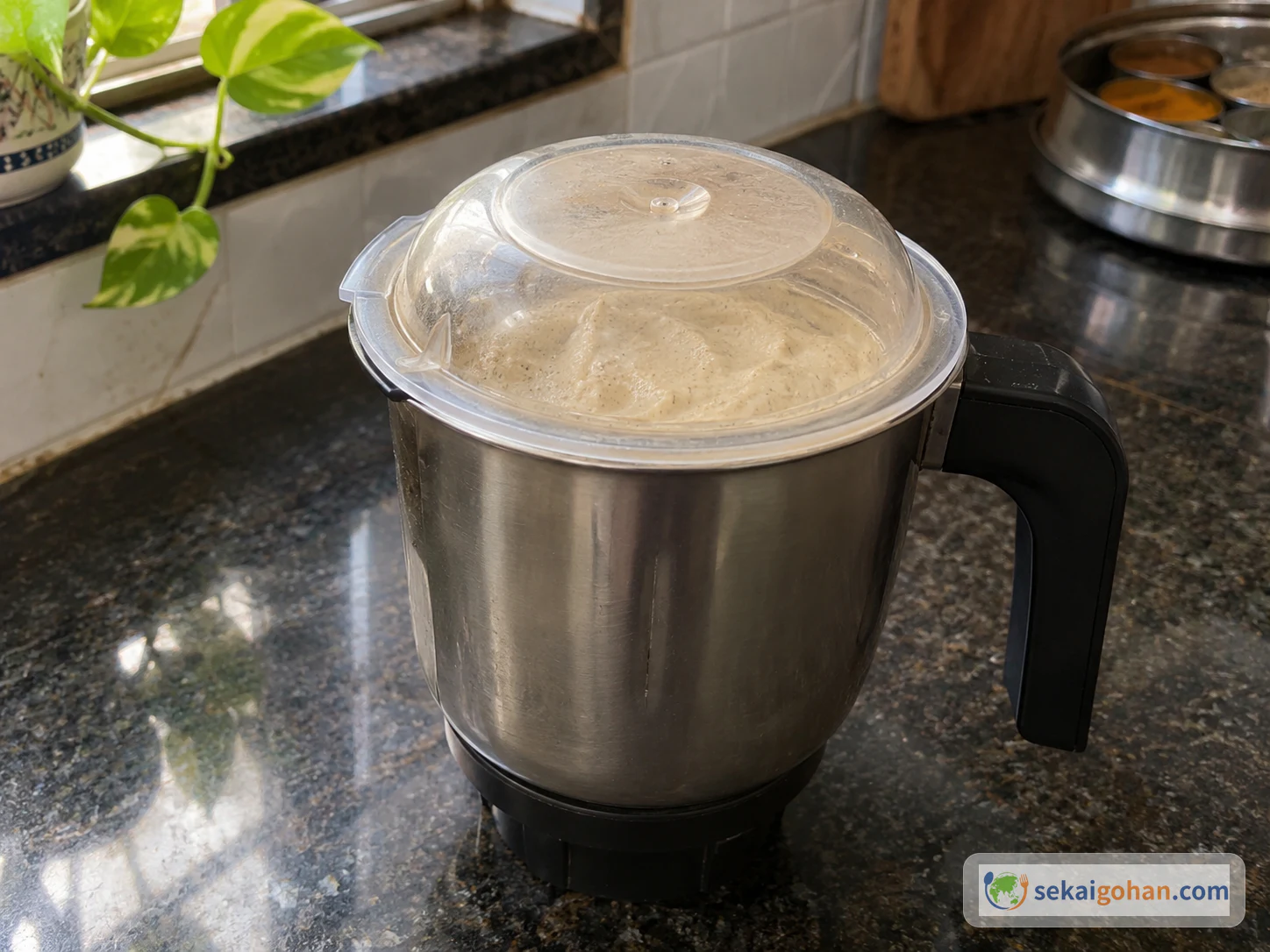
The cooked, cooled onion and seed mixture ground to a smooth paste in a closed grinder jar
Grind only after the mixture has cooled

Once the mixture has cooled, transfer it to a grinder jar, close the lid securely and grind until smooth. Don't return the paste to the pressure cooker.

STEP 77 / 9

Build the gravy in the kadai

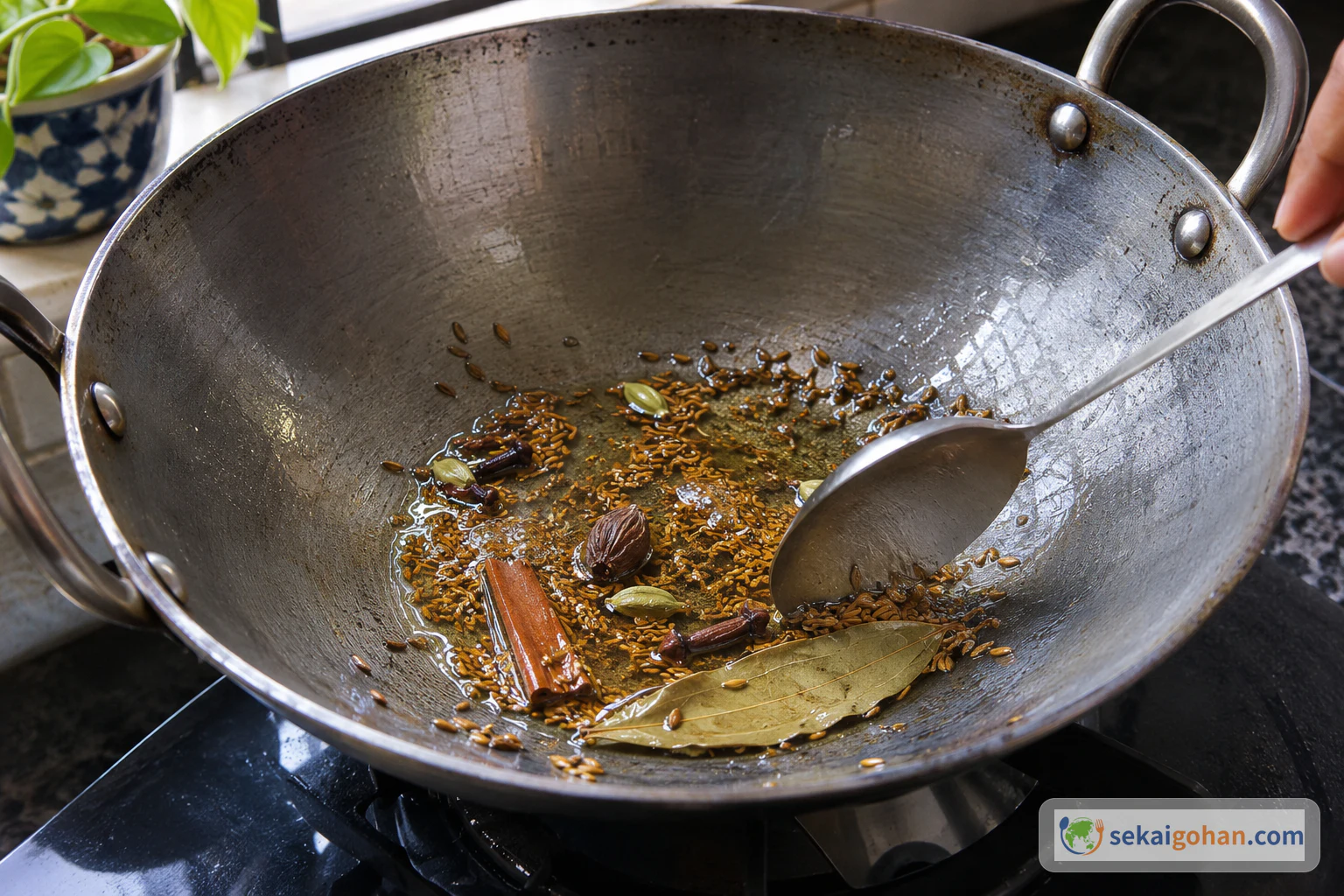
Cumin and whole spices being stirred in oil
The whole spices go in once the cumin begins to change color

Heat the 2–3 tbsp oil in a kadai and add the cumin seeds. When they begin to change color, add the green cardamoms, cloves, black cardamom, cinnamon and bay leaf, and stir until fragrant.

Add the ginger-garlic-green chili paste and sauté for 1 minute. Add the ground base and cook for 4–5 minutes. Add the 1/2 cup of water and salt, then cook for another 5–6 minutes.

STEP 88 / 9

Finish with powders and cream

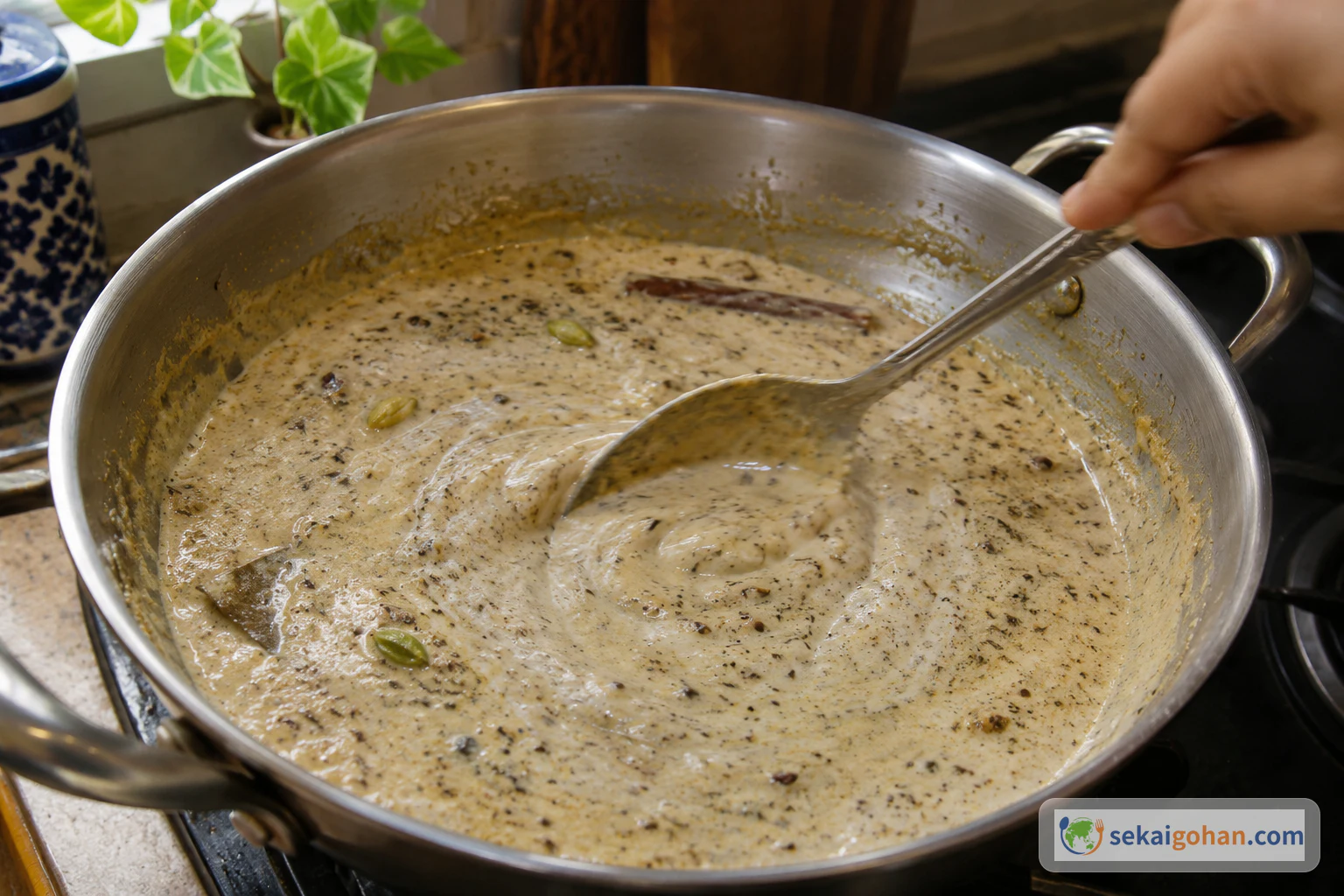
A pale gravy being stirred after the spice powders and cream have gone in
The powders go in first, then the cream

Stir in the green cardamom powder, dried fenugreek leaves powder and garam masala. Add the cream, mix it through, and transfer the gravy to a saucepan.

STEP 99 / 9

Assemble and serve hot

Pale gravy being poured over fried dumplings arranged in a serving bowl
Pour the gravy over the dumplings, then add the garnish

Arrange the fried kofta in a serving dish and pour the gravy over them. Don't simmer them in the saucepan. Add the sprig of coriander, fried raisins and fried cashews, and serve hot.

0 / 0
Ingredients

Ingredients

1 / 1

Ingredients

Ingredient Amount Role
Paneer, grated 1 cup Dumpling dough: the soft, milky base
Large potato, boiled, peeled and grated 1 Dumpling dough: body
Green chilies, chopped 2–3 Dumpling dough: heat
Ginger, chopped 1 inch Dumpling dough: aroma
Salt to taste Dumpling dough: seasoning
Cornflour (food-grade white maize starch) 2–3 tbsp Dumpling dough: binding
Garam masala powder a pinch Dumpling dough: warm spice
Raisins, chopped 1/4 cup Filling: sweet-tart center
Cashews, chopped 1/4 cup Filling: crunch and richness
Ginger, chopped 1/2 inch Filling: aroma
Green chilies, chopped 2 Filling: heat
Salt to taste Filling: seasoning
Garam masala powder a pinch Filling: warm spice
Oil a little Shaping: for your palms
Cornflour (food-grade white maize starch) as needed Frying: outer coating, kept separate from the dough cornflour
Oil as needed Frying: enough to deep-fry
Onions, roughly chopped 2 large Gravy base: body and gentle sweetness
Cashews 6–8 Gravy base: richness
Melon seeds (magaz) 2–3 tbsp Gravy base: body
Poppy seeds (khuskhus) 1 tbsp Gravy base: body
Water 2 cups Gravy base: cooking liquid in the pressure cooker
Salt to taste Gravy: seasoning, added in steps 5 and 7
Oil 2–3 tbsp Finishing the gravy: for the spices
Cumin seeds 1 tsp Finishing the gravy: first spice in the oil
Green cardamoms 3–4 Finishing the gravy: whole spice
Cloves 3–4 Finishing the gravy: whole spice
Black cardamom 1 Finishing the gravy: whole spice
Cinnamon 1 inch Finishing the gravy: whole spice
Bay leaf 1 Finishing the gravy: whole spice
Ginger-garlic-green chili paste 1 1/2 tbsp Finishing the gravy: savory base
Water 1/2 cup Finishing the gravy: loosens the ground base
Green cardamom powder a pinch Finishing the gravy: fragrance
Dried fenugreek leaves powder a pinch Finishing the gravy: fragrance
Garam masala powder a pinch Finishing the gravy: warm spice
Fresh cream 2–3 tbsp Finishing the gravy: creamy finish
Fresh coriander a sprig Serving: garnish
Fried raisins a little Serving: garnish
Fried cashews a little Serving: garnish
0 / 0

A ladle of pale gravy runs over golden dumplings in a serving dish. A sprig of fresh coriander and a few fried raisins and fried cashews go on top, and the dish goes to the table hot. Break a dumpling open and the crisp outside gives way to soft paneer and potato, with sweet-tart raisins and chopped cashews in the middle. This is malai kofta, an Indian vegetarian main course. Its gravy has no tomato at all: onions, cashews, melon seeds and poppy seeds give it body, and cream finishes it.

About Malai Kofta

Kofta is a broad name that covers very different dishes. A Chicken Kofta Curry, for example, is a meat dish. Malai kofta has no meat or egg, and the version here is a stuffed one, with a filling tucked into each paneer and potato dumpling.

Recipes for malai kofta change from cook to cook. Some cooks call their versions North Indian, and some make the gravy with tomato. This one leaves the tomato out and keeps the gravy pale. For more of the country's cooking, explore our recipes from India.

Ingredients for 4 Servings
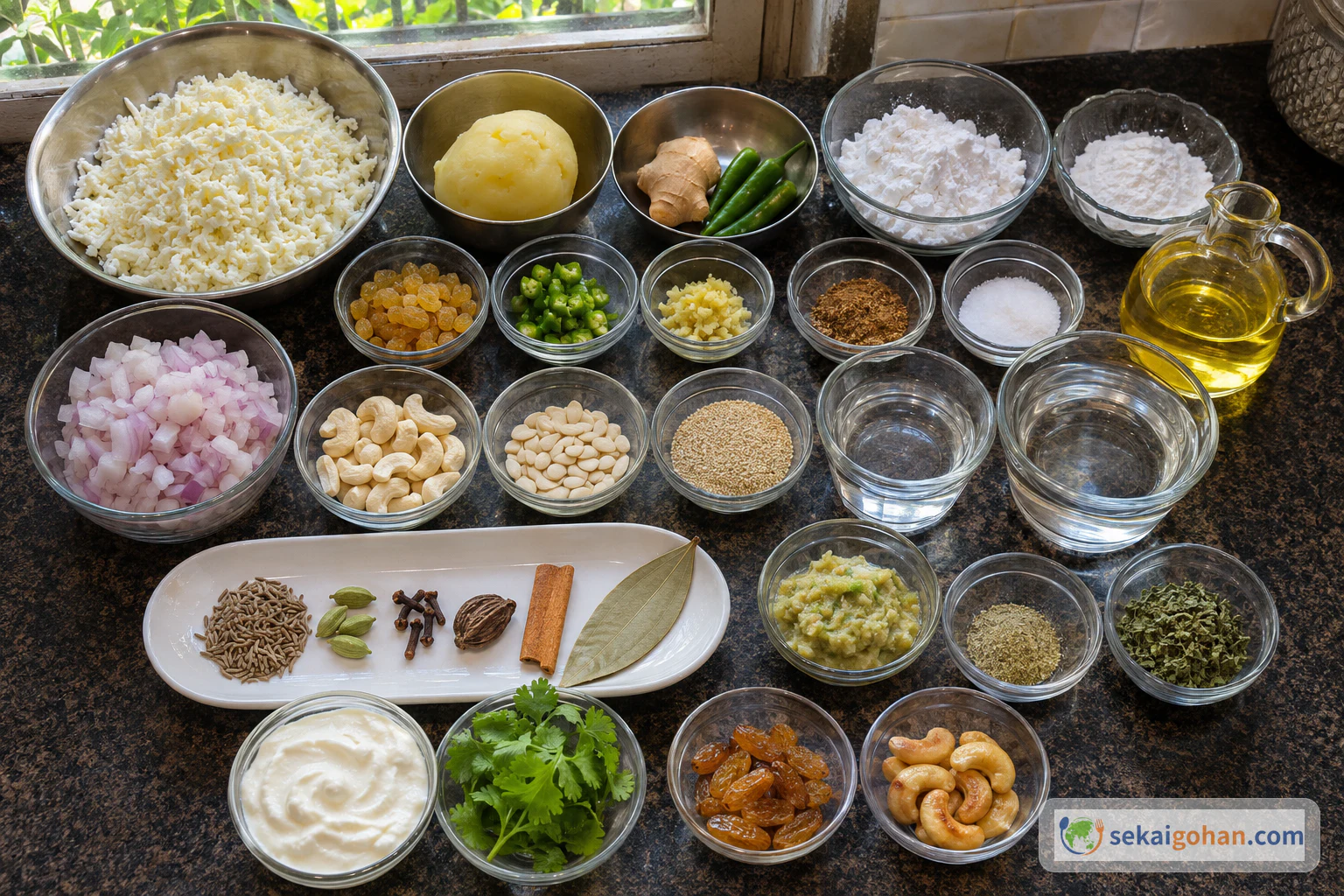
Ingredients for the dumplings, filling and gravy, set out in separate groups
Set out each group separately, because salt, ginger, chilies and nuts appear in more than one part

Each part of the dish is seasoned on its own, so salt, ginger, green chilies and garam masala appear more than once. The rows run in the order you'll use them.

Equipment

  • Pressure cooker
  • Grinder jar
  • Kadai for the gravy
  • Deep pan or kadai for frying
  • Long-handled slotted spoon
  • Absorbent paper
  • Saucepan
  • Mixing bowls
  • Serving dish

Ingredients and Cooker for Malai Kofta

Cornflour: Use food-grade white maize starch (cornstarch). In Indian kitchens, cornflour means maize starch, used for coating and binding. The same name can mean a different product elsewhere, so check the label. Wholegrain maize flour and Japanese katakuriko are not one-for-one swaps.

Paneer: Look in the chilled dairy section or at an import grocer. Buy a commercial, food-grade product, and store and handle it as the label directs.

Nuts and seeds: Use food-grade cashews, melon seeds and poppy seeds.

Pressure cooker: Check its capacity and safety markings before you begin. The gravy base has a lot of liquid, so pick a cooker that holds it at no more than half full.

Allergens

This dish contains milk (paneer and cream) and tree nuts (cashews). Check the labels on packaged ingredients as well.

Malai Kofta Troubleshooting

Most problems come up at two points: frying the dumplings and using the pressure cooker.

What you notice What to do
Dough sticks to your hands Oil your palms lightly again before shaping the next portion
Filling shows through a dumpling Gather the edges again and close the gap before coating
Kofta are still pale Keep frying until golden brown and crisp
Oil spatters as dumplings go in Lower them more gently with the slotted spoon, keeping your hands and face clear
Cooker whistles more than 4 times a minute Lower the heat
Cooker never whistles Use the non-whistling route in step 5
Lid won't open Wait until the pressure has settled completely; never force it
Onions are still firm after opening Simmer uncovered until soft enough to grind, rather than adding more time under pressure
Base is still warm when you're ready to grind Wait until it has cooled

Serving, Storing and Varying Malai Kofta

Assemble at the last moment

Keep the dumplings and the gravy apart until you serve. Put the kofta in the serving dish first, pour the gravy over them, and add the garnish last.

Don't leave the finished dish at room temperature for more than 2 hours, or more than 1 hour if it's above 90°F (32°C). Divide leftovers into shallow containers and refrigerate them promptly.

You can adjust the dish in a few ways:

Change What to expect
Skip the filling A plainer dumpling and a different dish
Adjust the green chilies or garam masala A change in flavor to suit your taste
Serve more or less gravy A lighter or richer plate. The gravy itself stays the same
Tomato gravy Use a complete tomato-based recipe rather than adding tomato to this pale gravy

Frequently Asked Questions

Does this kofta contain meat?

No. These are vegetarian paneer and potato dumplings. Other dishes called kofta, though, can include meat.

How many kofta does this make?

The recipe serves 4 but doesn't set a number of dumplings. Divide the dough into equal portions so they all fry evenly.

What oil temperature and frying time should I use?

The recipe doesn't give either one. Go by how the kofta look and feel: fry until they are golden brown and crisp.

How many whistles does the pressure cooker need?

The recipe says to cook "till the pressure is released 3 times," then open the lid "once the pressure settles completely." We take that to mean 3 whistles from the cooker itself, not venting it by hand three times. Whistles aren't a precise clock, though, and counting them can give you the wrong cooking time. If your cooker doesn't whistle, or its manual says not to count, follow the manual.

Where does the 2–3 minutes for non-whistling cookers come from?

It's our own estimate, and you should use it only if your cooker's manual gives no time. One manufacturer's manual lists 5 minutes for whole small onions with 1 cup of water and an immediate pressure release. It also says to cut 2–3 minutes when you let the cooker cool naturally instead. That timing hasn't been tested with chopped onions, this mixture or other brands of cooker. The onions cook more in the kadai afterward, and if they're still firm when you open the cooker, finish them without pressure.

Why fill the cooker only halfway?

Check your cooker's manual for its limit. As a rule, total contents stay under two-thirds of the cooker, and under one-half for foods that swell. This gravy base has plenty of liquid, so keep it at half full or less. Don't lift the weight to release pressure from liquid or foaming foods.
Sources