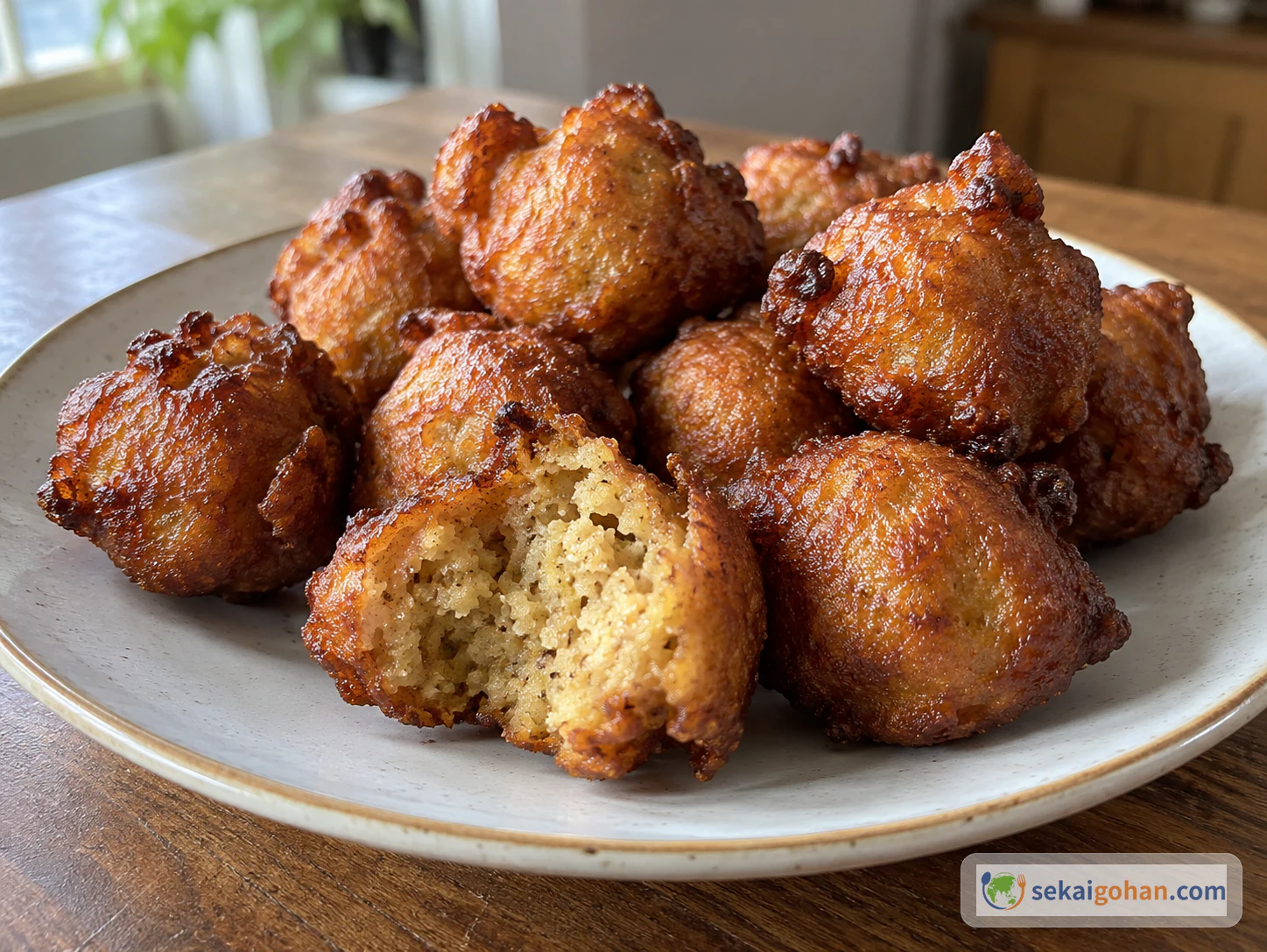
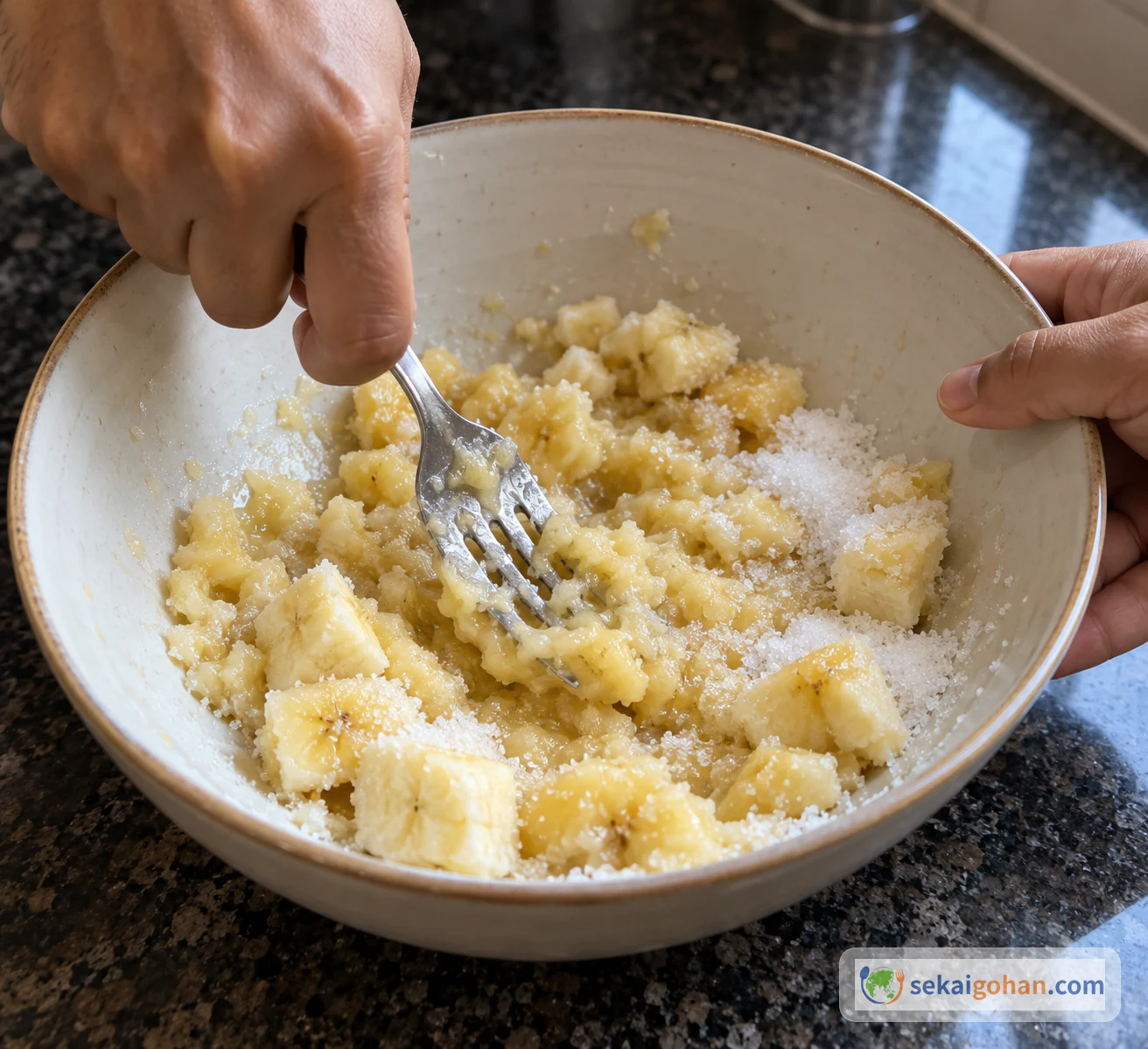
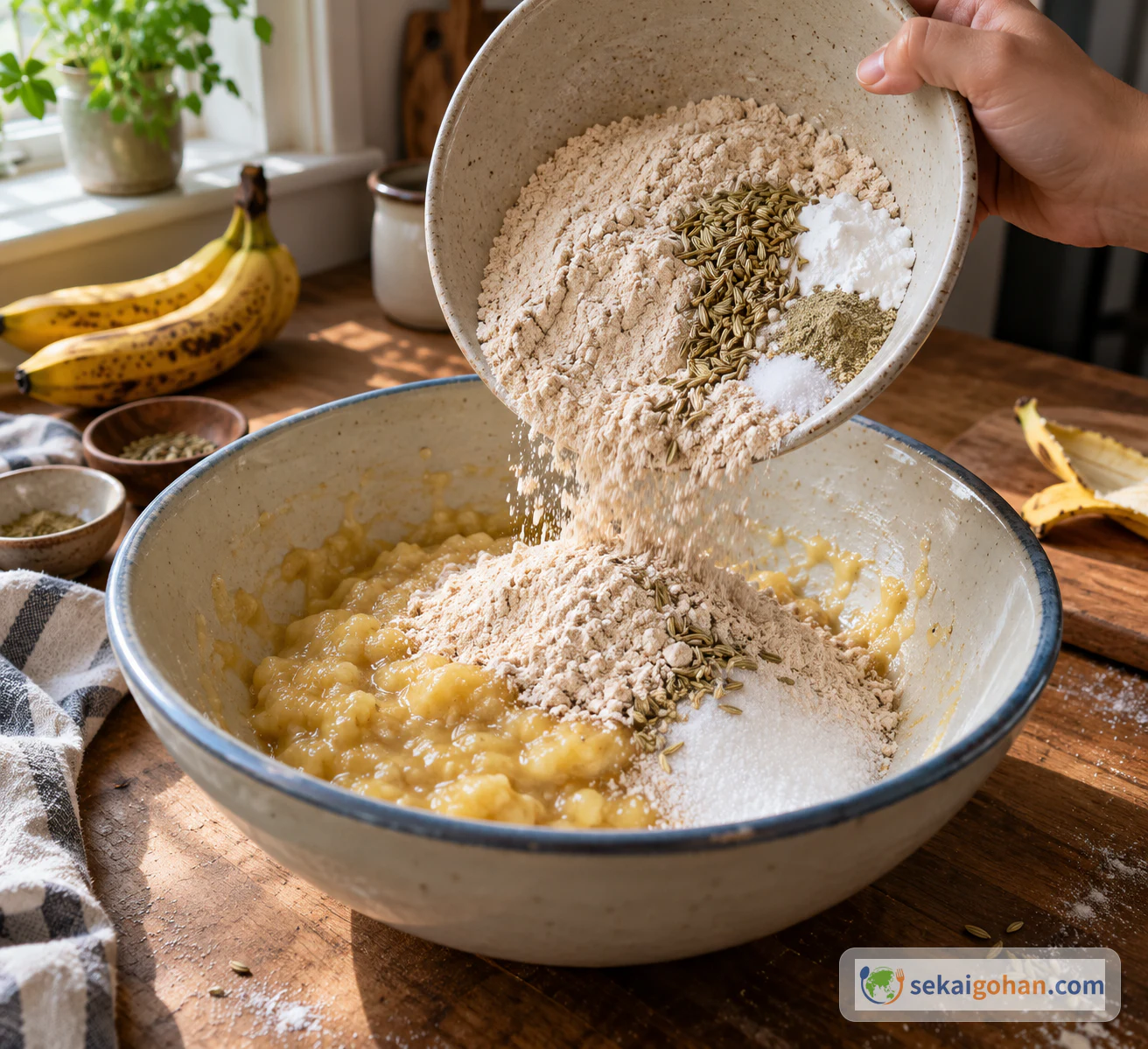
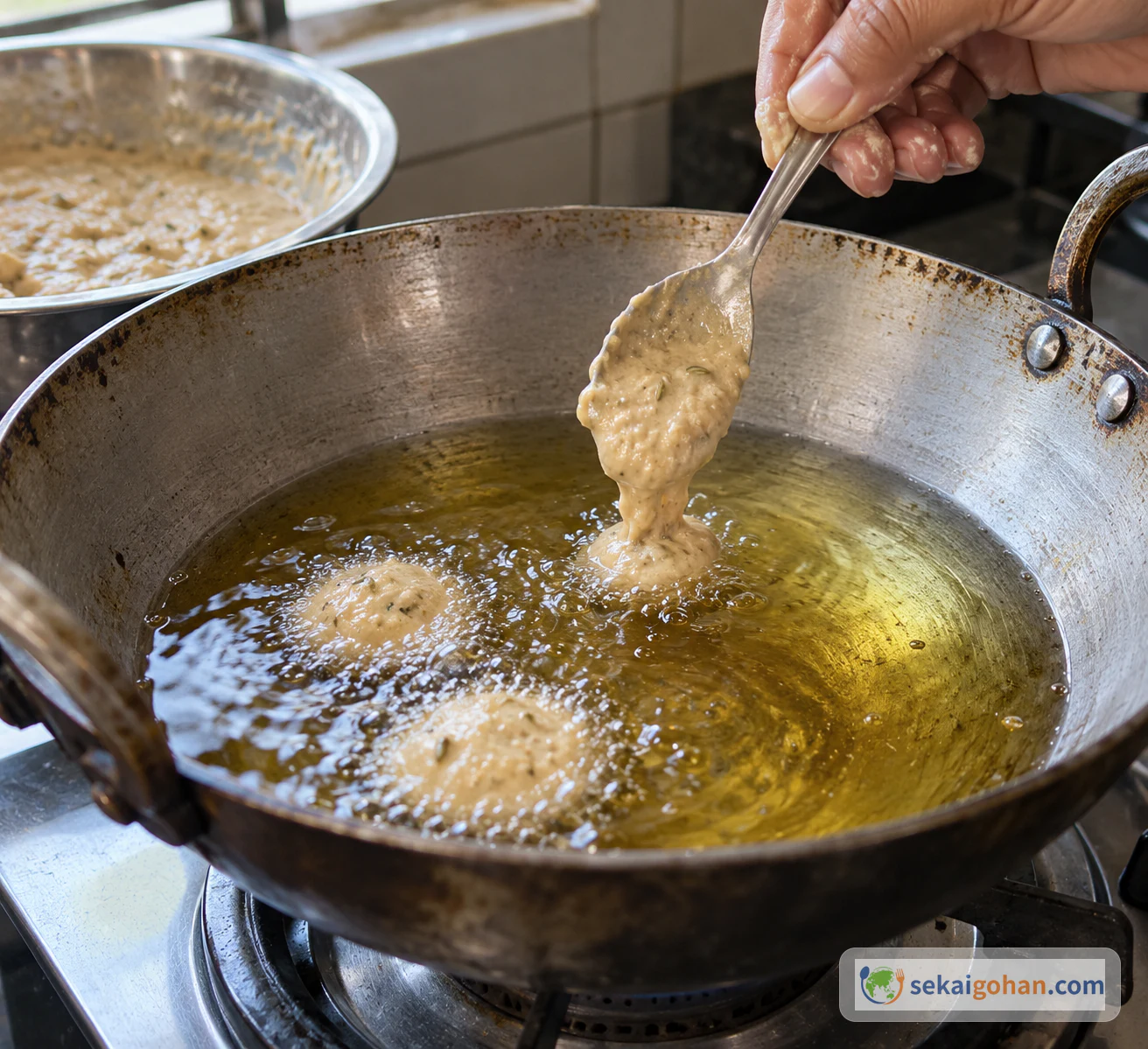
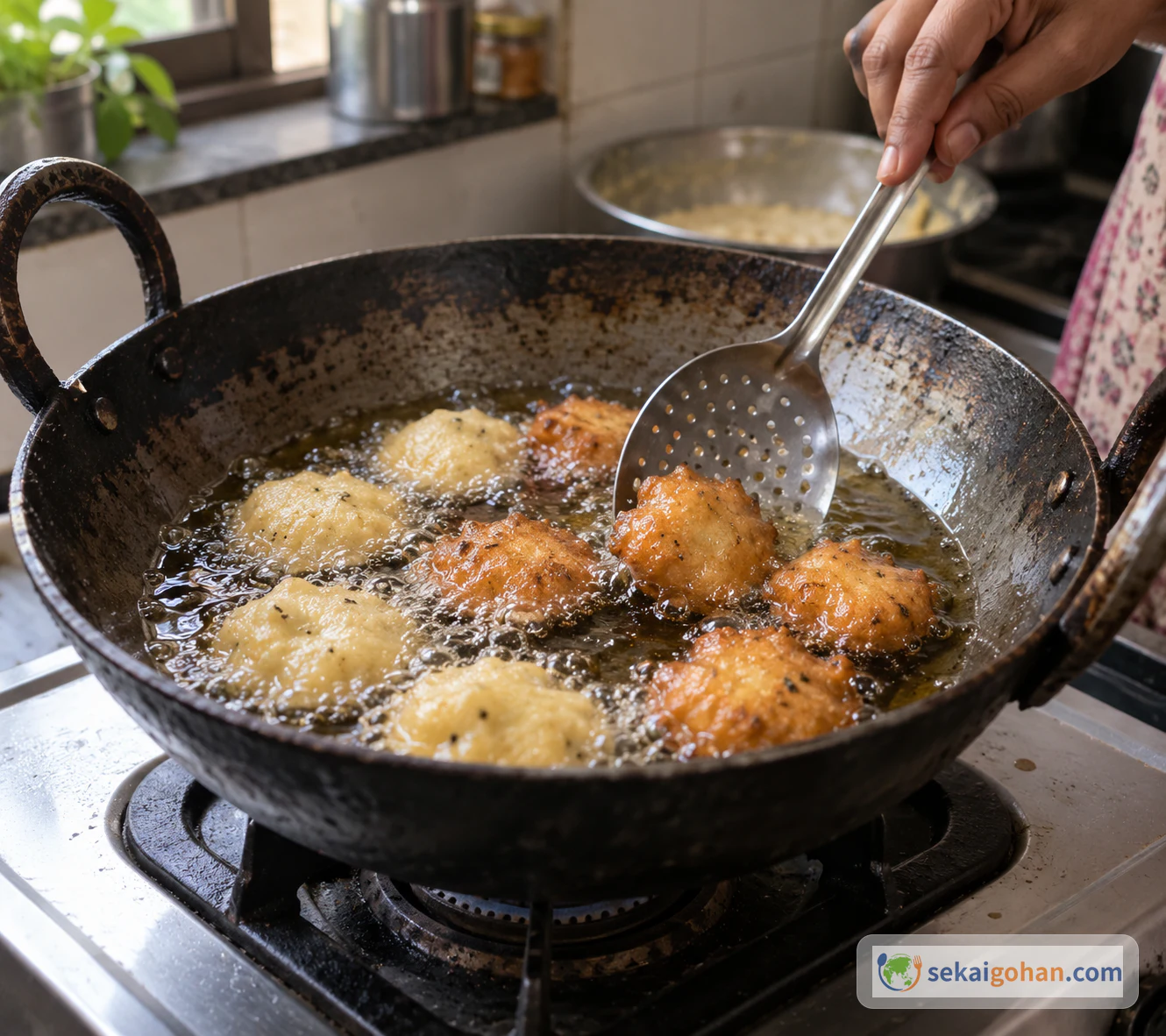
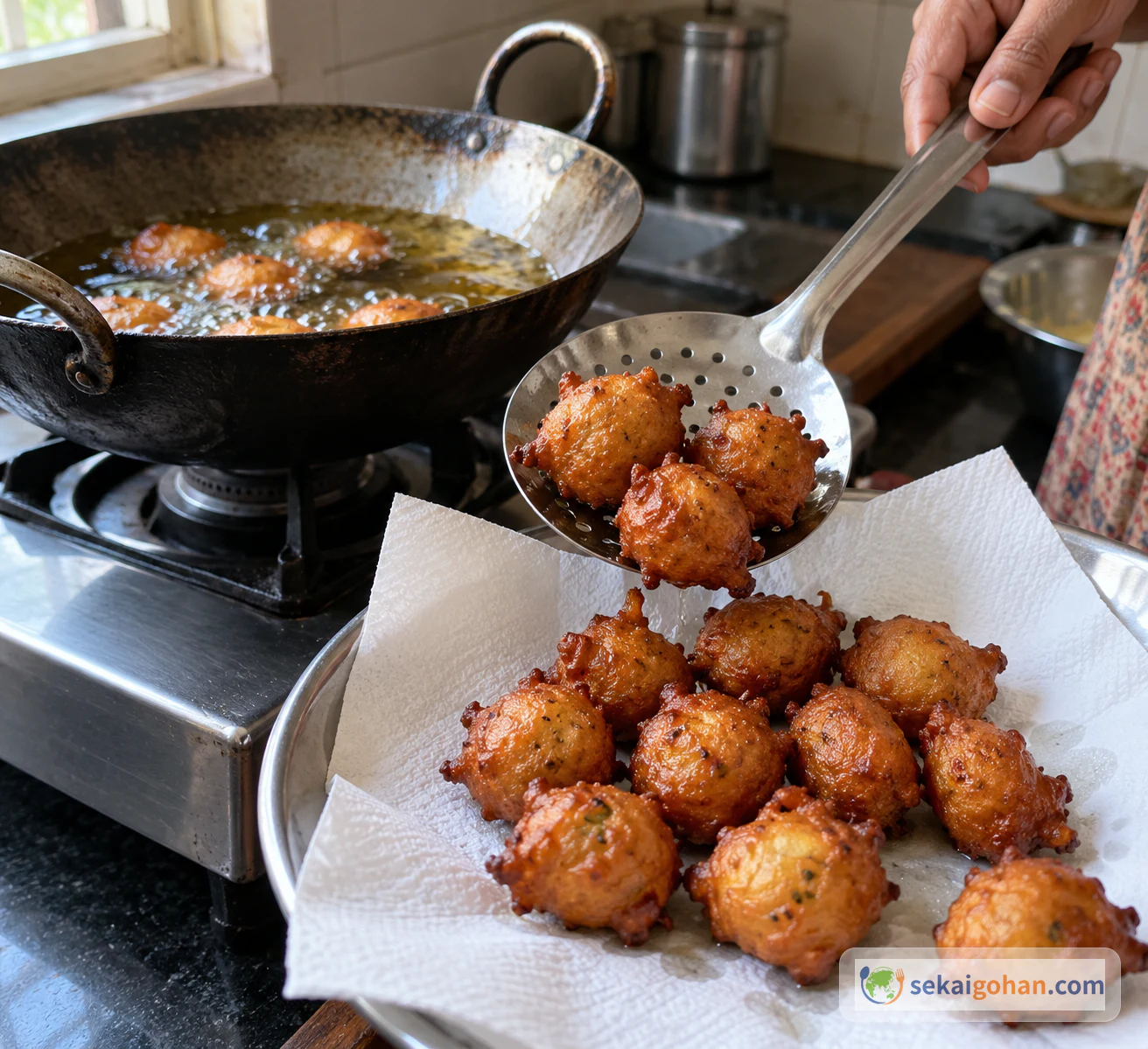
A spoonful of thick, speckled batter slips into a deep pan of oil over medium heat. At first it sits pale among small bubbles. Then it puffs into an uneven little ball and turns light golden underneath, and you turn it until it's golden brown all over. These are gulgule, small sweet fritters from North India. Mashed banana and sugar sweeten them, whole wheat flour gives them body, and whole fennel seeds give them their aroma. In one Delhi home, this is the version the family gets on rainy days.
What Gulgule Are and How They Vary
Gulgule are round fritters, a bit like small doughnut balls. You drop the batter into the oil by the spoonful and fry it until the fritters puff. Don't mix them up with malpua, which is a flat pancake that is shallow-fried and glazed with sugar syrup. Gulgule never get syrup.
Gulgule in Punjab and Uttarakhand
The recipe changes from one kitchen to the next. Some cooks add banana, some use jaggery syrup, and some let the batter ferment overnight. In Punjabi homes, gulgule are made from a dropping-consistency batter of sieved whole wheat flour, strained jaggery syrup and crushed fennel, fried in small portions until golden and crisp. Some cooks there leave out baking powder because they prefer them that way, and banana is optional.
In Uttarakhand, one grandmother's recipe starts with a smooth batter of whole wheat flour, sweetener and water or milk, left to rest overnight. Lightly crushed fennel goes in the next morning, just before frying. Families there make gulgule for special days and eat them with evening chai, with rabri on the side.
For more dishes from the same country, see our India page.
Ingredients: 4 Servings, in Cups and Spoons
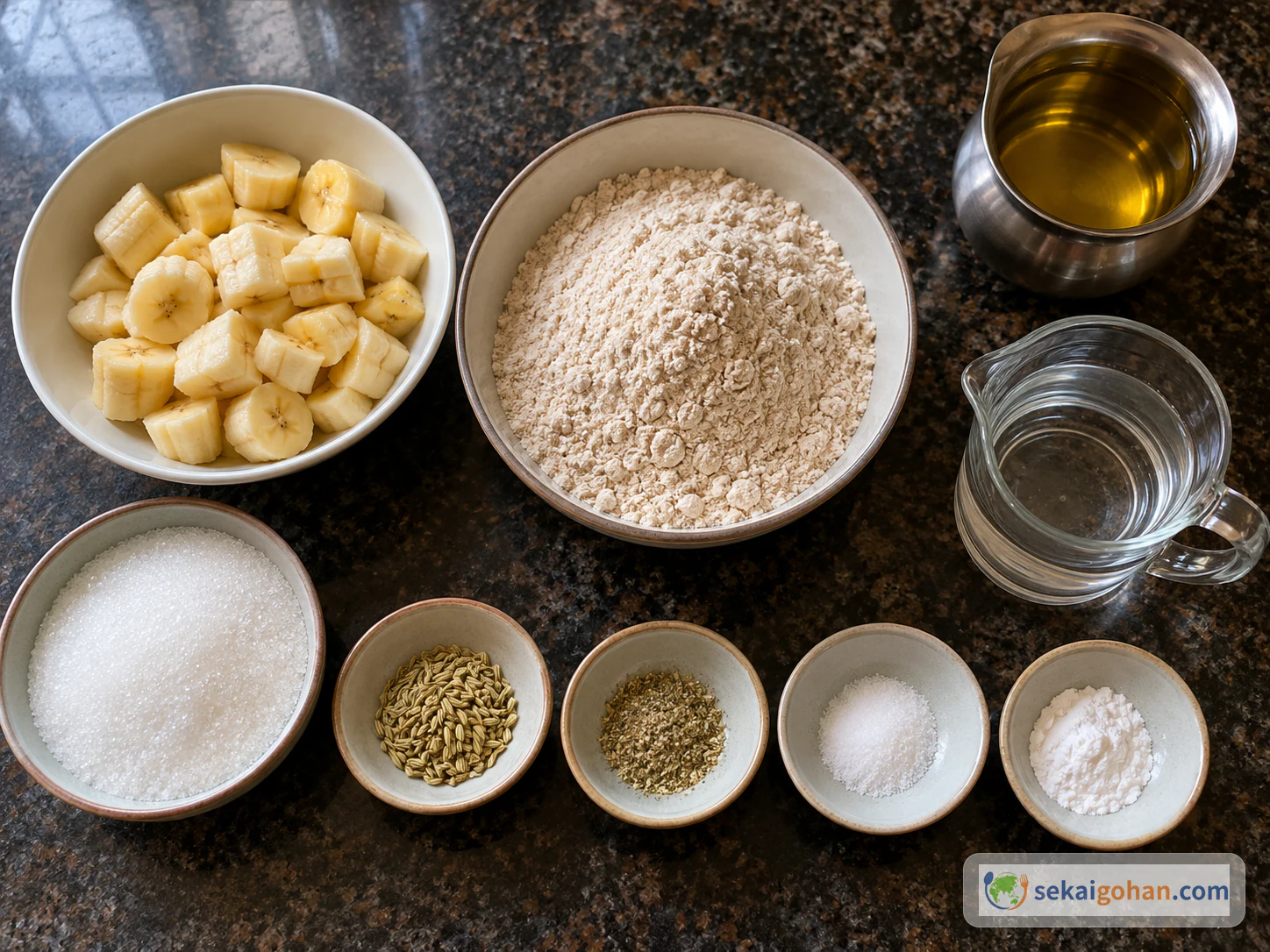
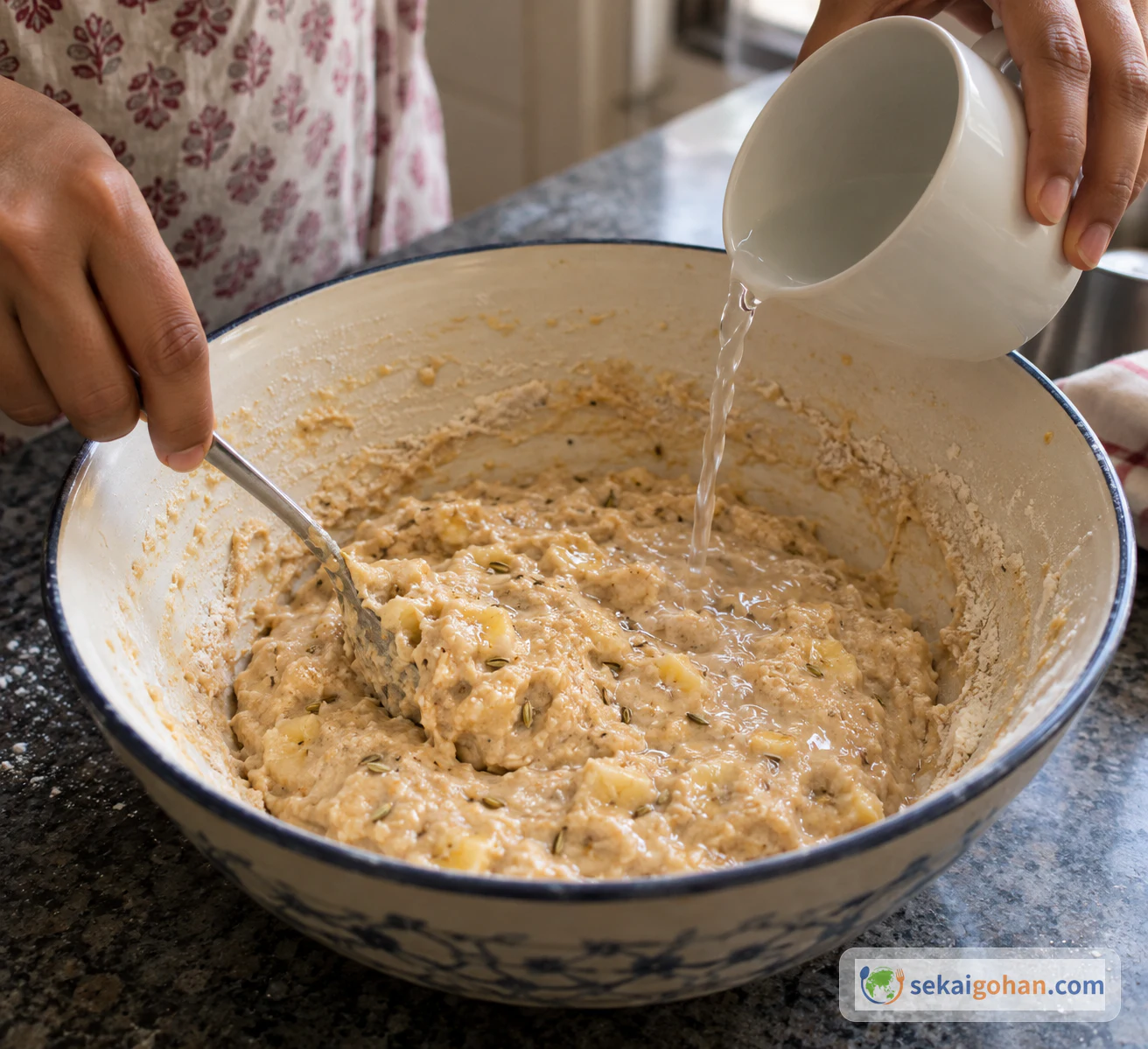
How much water you need depends on how fine or coarse your flour is. Start with ½ cup and add the rest a little at a time.
Equipment
- A mixing bowl
- A fork or potato masher
- A spoon for dropping the batter
- A deep pan, wok or kadai for frying
- A slotted spoon
- Kitchen paper for draining
- A deep-fry thermometer (optional)
Choosing Ingredients for Gulgule
Whole wheat flour. Look for "whole wheat" or "whole grain wheat flour" on the label. Indian atta works well too. Plain white flour is a different ingredient, so it isn't a substitute here. Flours are milled finer or coarser, and that changes how much water the batter takes, so adjust the water to match yours.
Fennel seeds. Use whole fennel seeds, sold as fennel or saunf in Indian groceries. The aroma of these fritters comes from them, so stick with whole fennel rather than cumin, anise or ground fennel.
Sugar and baking powder. This version uses white sugar. Raw sugar or jaggery gives a different flavor (see the variations below). Make sure you use baking powder, not baking soda.
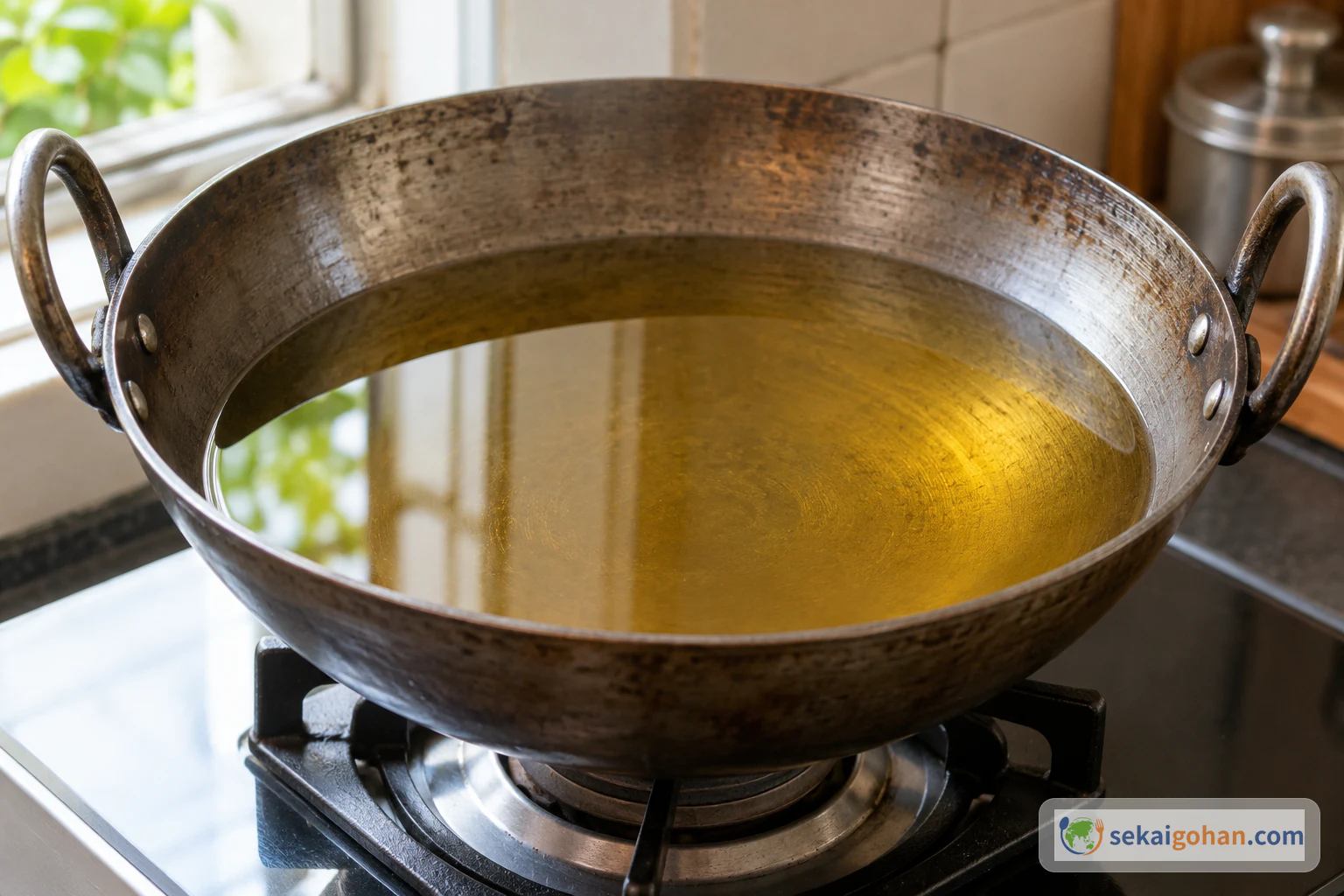
Oil. Choose a neutral-flavored oil with a high smoke point, such as sunflower or avocado oil, and use as much as your pan needs for deep frying.
Wheat. The batter is made with whole wheat flour, so it contains wheat and is not gluten-free.
Method: Mash, Mix, and Fry Over Medium Heat
The batter should be a little thicker than pakoda batter. Keep the oil at medium heat so the fritters brown evenly. Banana batter darkens faster than plain batter, so judge each batch by its color.
Fixing Common Gulgule Problems
| What happens | Likely cause | What to do |
|---|---|---|
| The batter is stiff and hard to drop | Not enough water for your flour | Add water a little at a time until the batter is just thicker than pakoda batter. Coarser or finer flour can need more or less than 11 tablespoons |
| The batter is runny | Too much water added at once | Next time, add the water gradually and stop as soon as it's thick enough |
| The outside is dark but the inside is not cooked | Oil too hot | Lower the heat and bring the oil back to medium, 177–190°C (350–375°F) |
| The fritters stick to the bottom of the pan | Oil not hot enough, or too many in the pan | Let the oil come back up to temperature and fry fewer at a time |
| They brown faster than you expect | The sugars in the banana caramelize | Banana batter browns easily, and browning isn't burning. Lower the heat if the color moves too quickly |
Color is your main guide, but a dark outside doesn't mean the center is cooked. If the fritters color too fast, lower the heat rather than pulling them out early.
Serving Gulgule and Variations
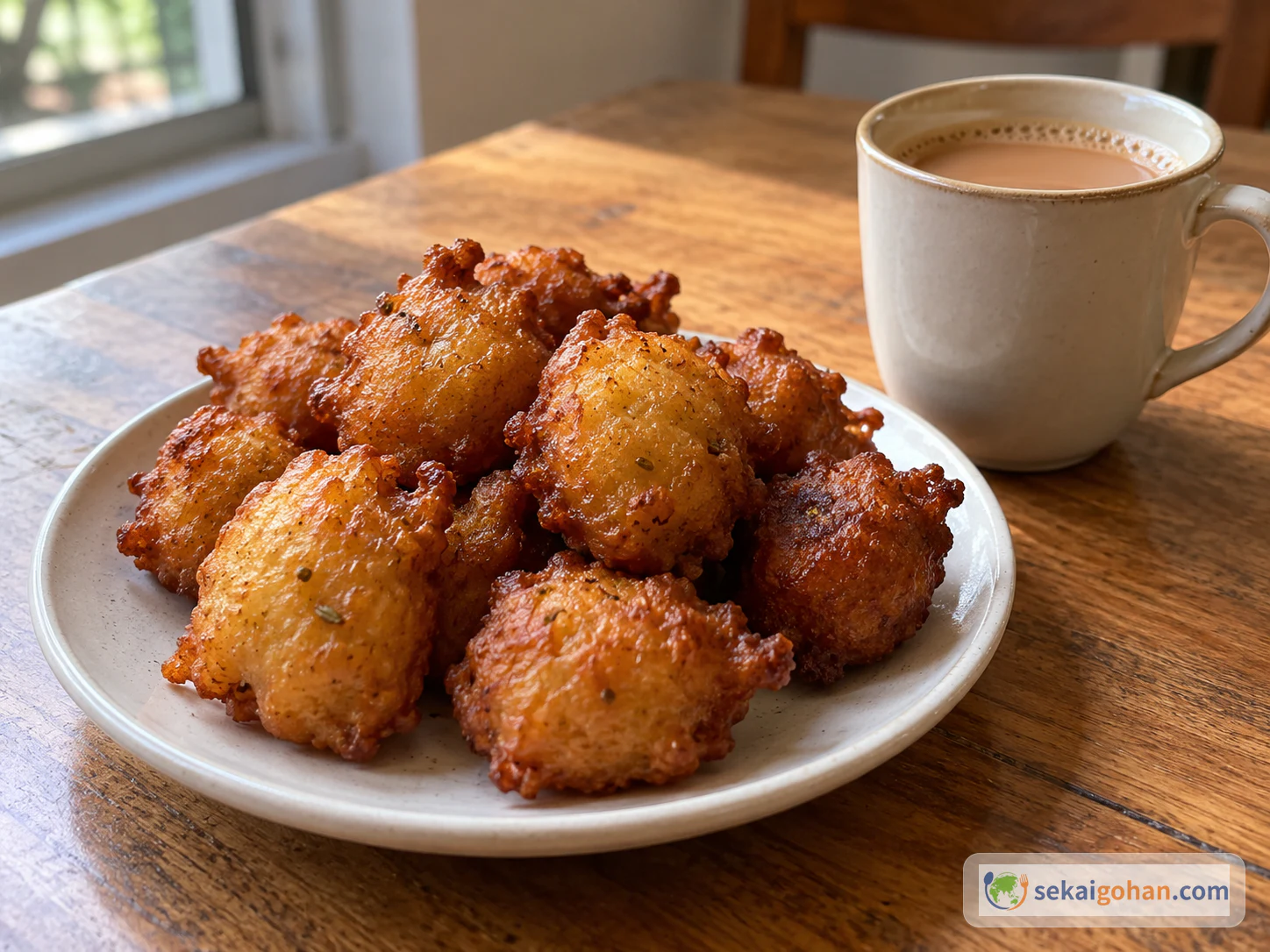
Serve gulgule hot or warm, with a cup of Indian chai alongside.
Each of these changes gives you a slightly different gulgule:
- Sweetener. Use 6 tablespoons of raw sugar, white sugar or jaggery, to taste. Jaggery and raw sugar both bring a deeper flavor.
- Without banana. Use about ½ cup sugar and a little more water, adjusting by eye.
- Without cardamom. It's optional, but the aroma changes without it.
- Baking powder. You can leave it out, though the fritters will be less soft. For fluffier ones, use up to 1 teaspoon instead of ½ teaspoon.
- Ghee, or a paniyaram (appe) pan. Both are options, but there's no separate method for them here.
Frequently Asked Questions
Is it gulgula or gulgule?
Both. Gulgula is the singular and gulgule the plural. Since they're usually made and served in batches, gulgule is the form you'll see most often.
Are pua and gulgule the same thing?
Sometimes the names overlap. Pua, pooda and puda are Punjabi names for gulgule, and in Uttarakhand gulgule are also called pua or pude. Still, not every dish called pua is a round fritter made from dropped batter.
Does the batter need to rest?
No. Mix the batter and fry it straight away. The overnight rest is part of the Uttarakhand family version.