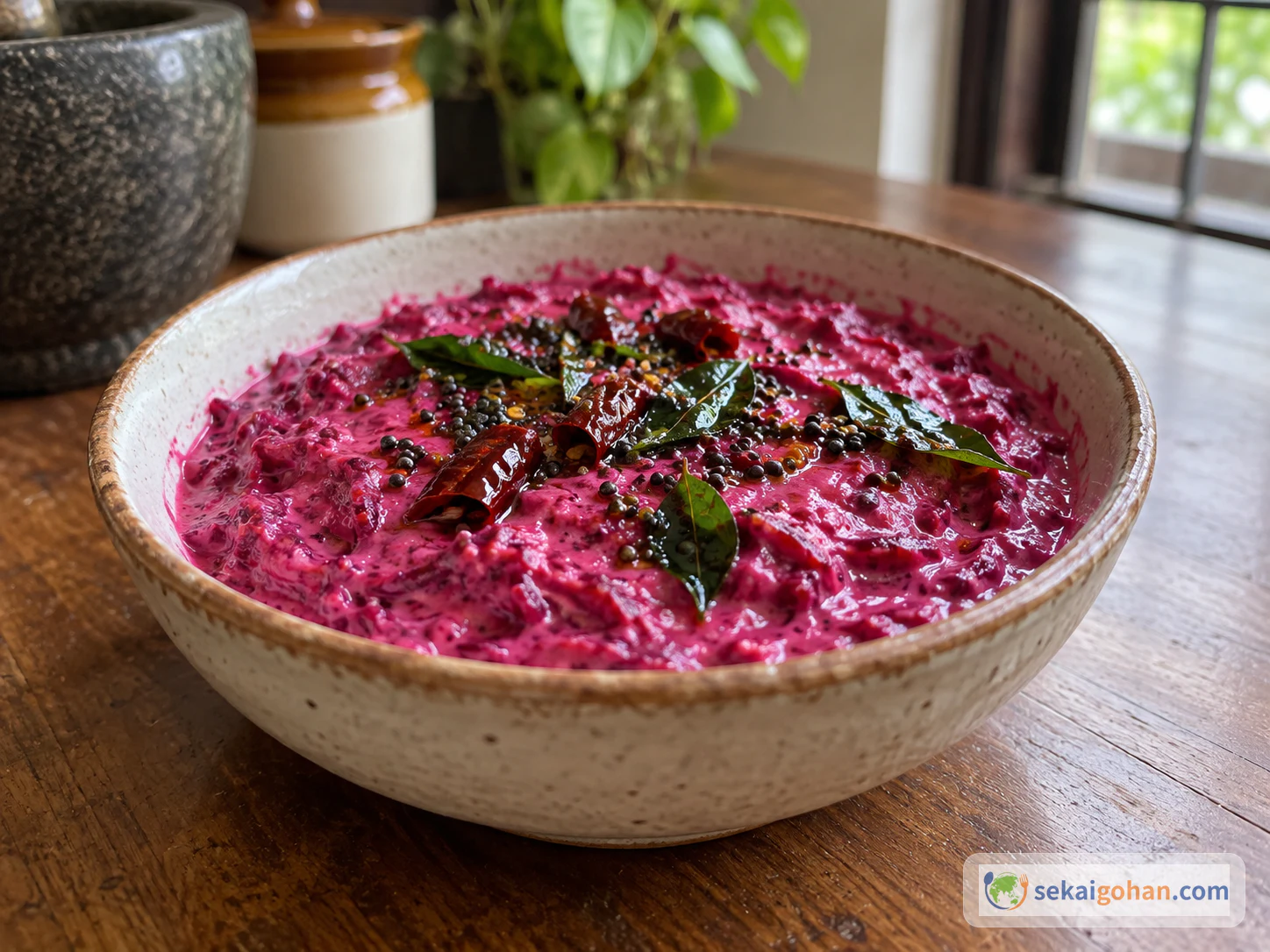
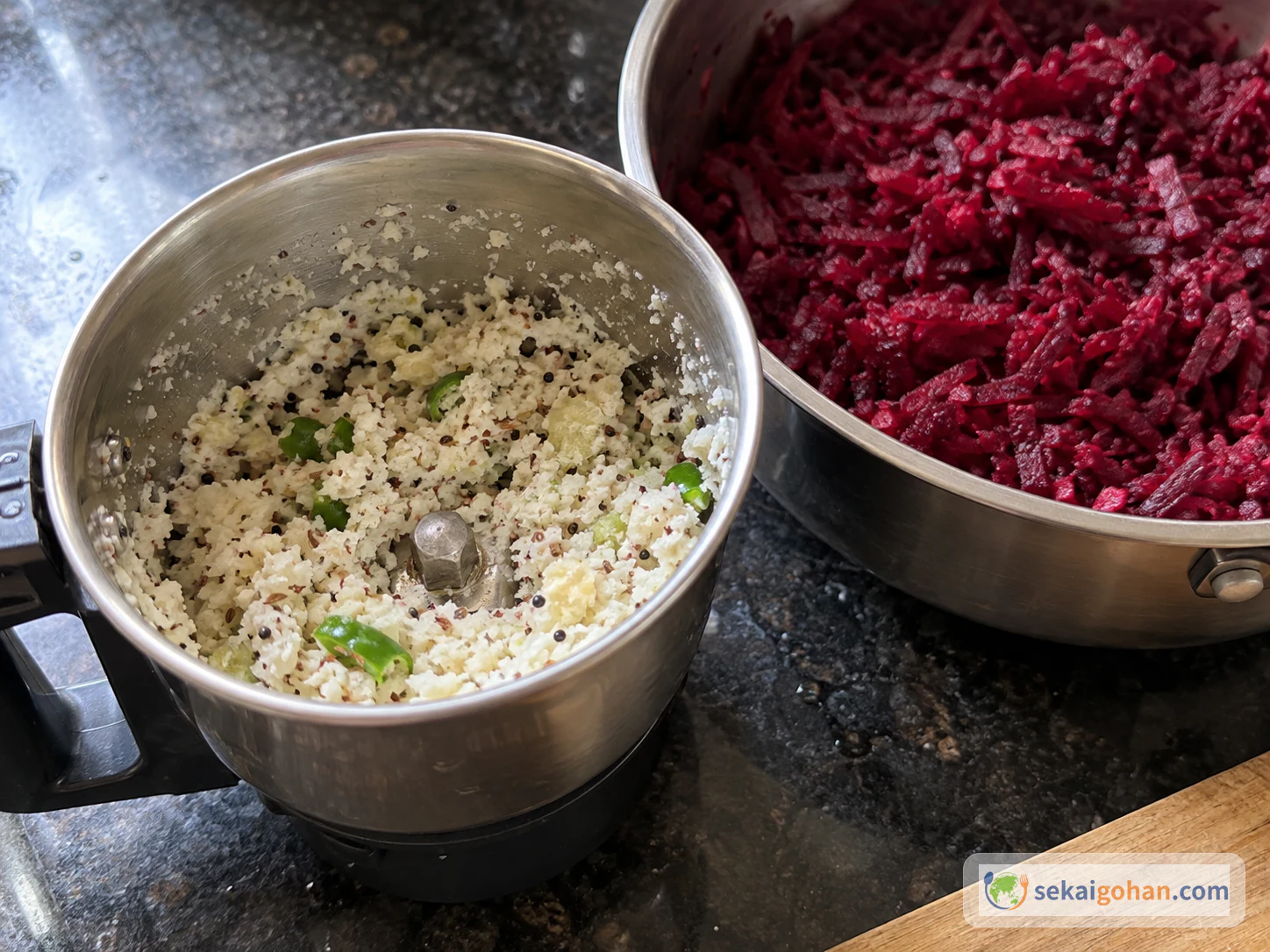
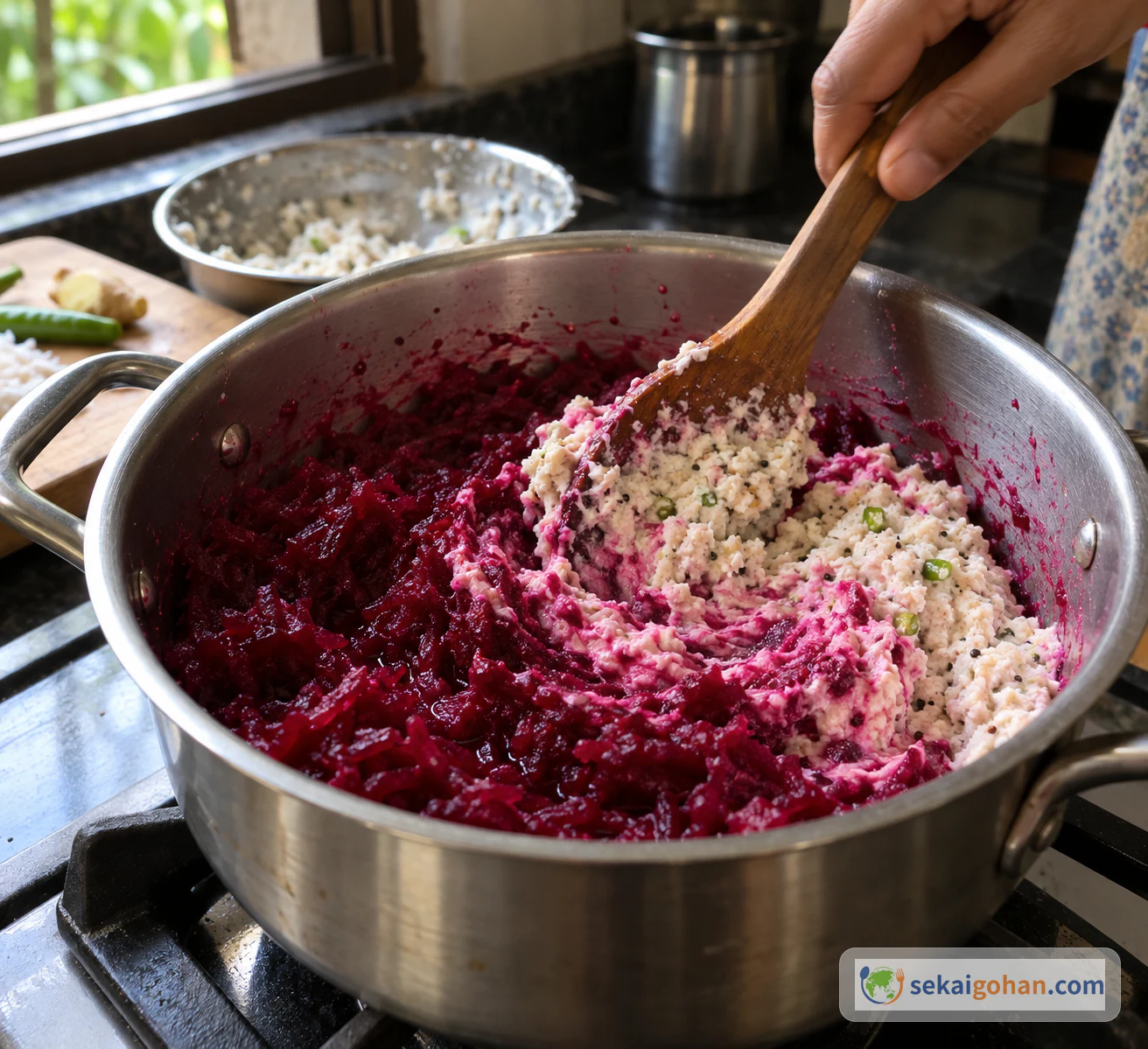
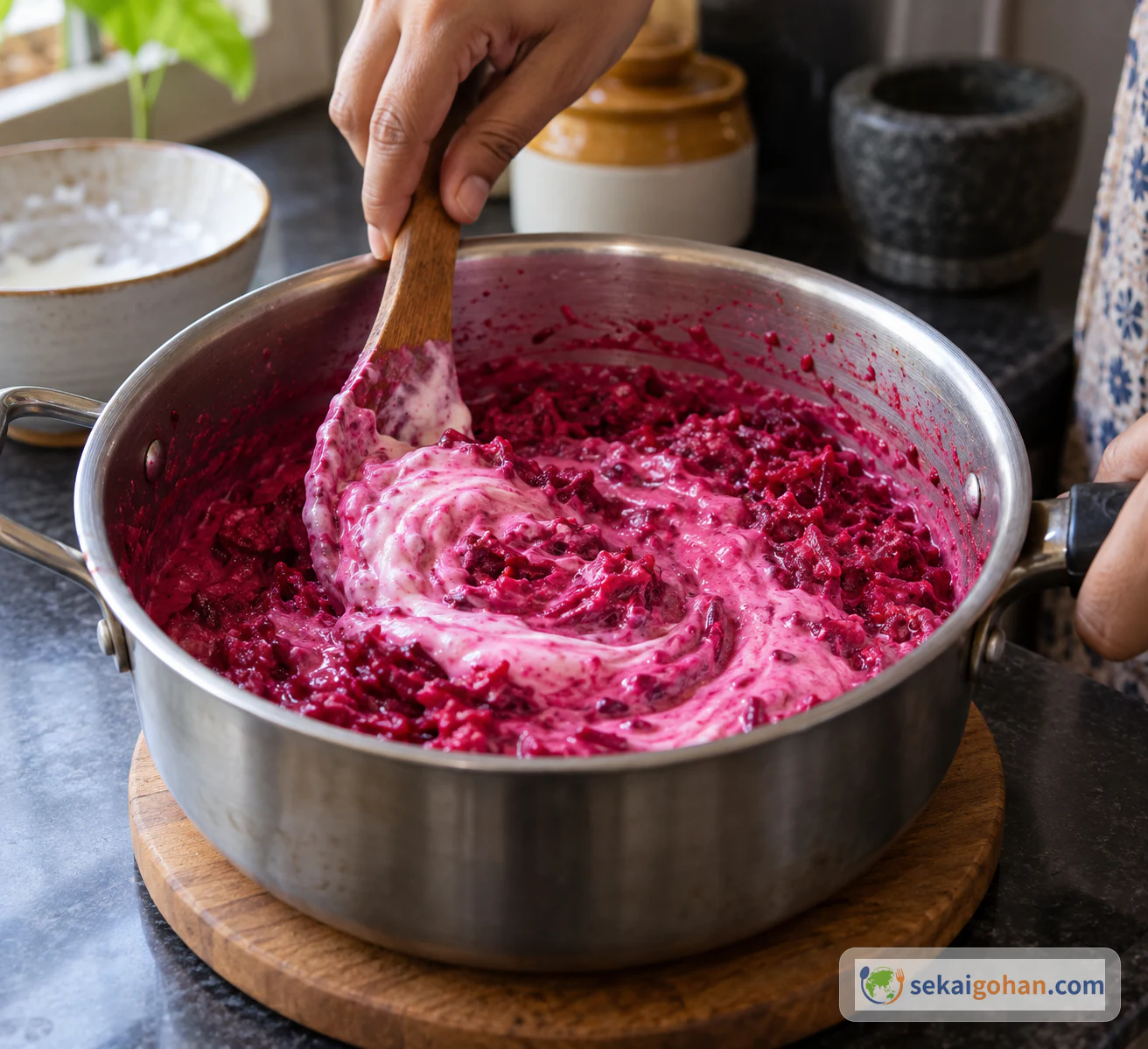
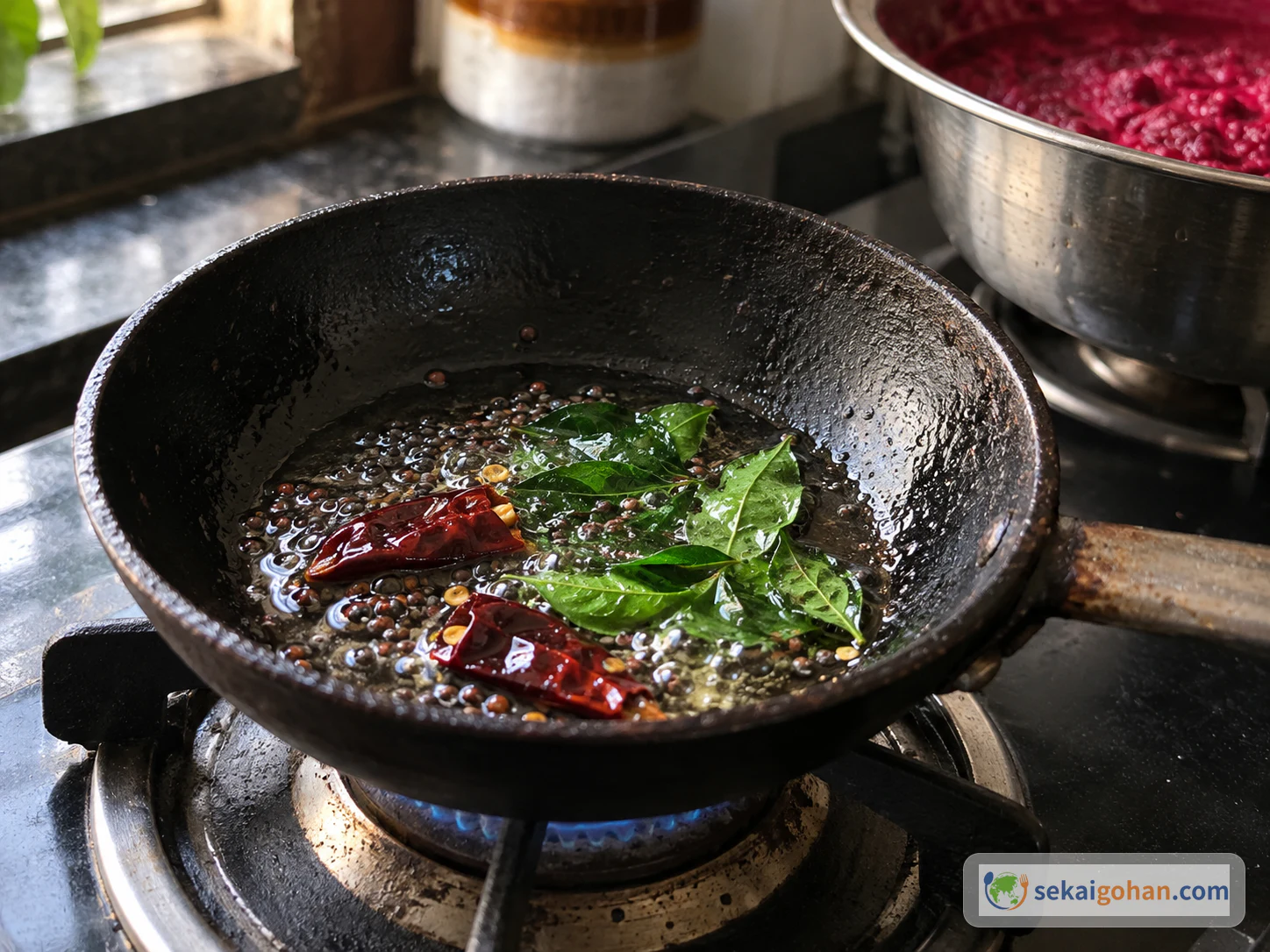
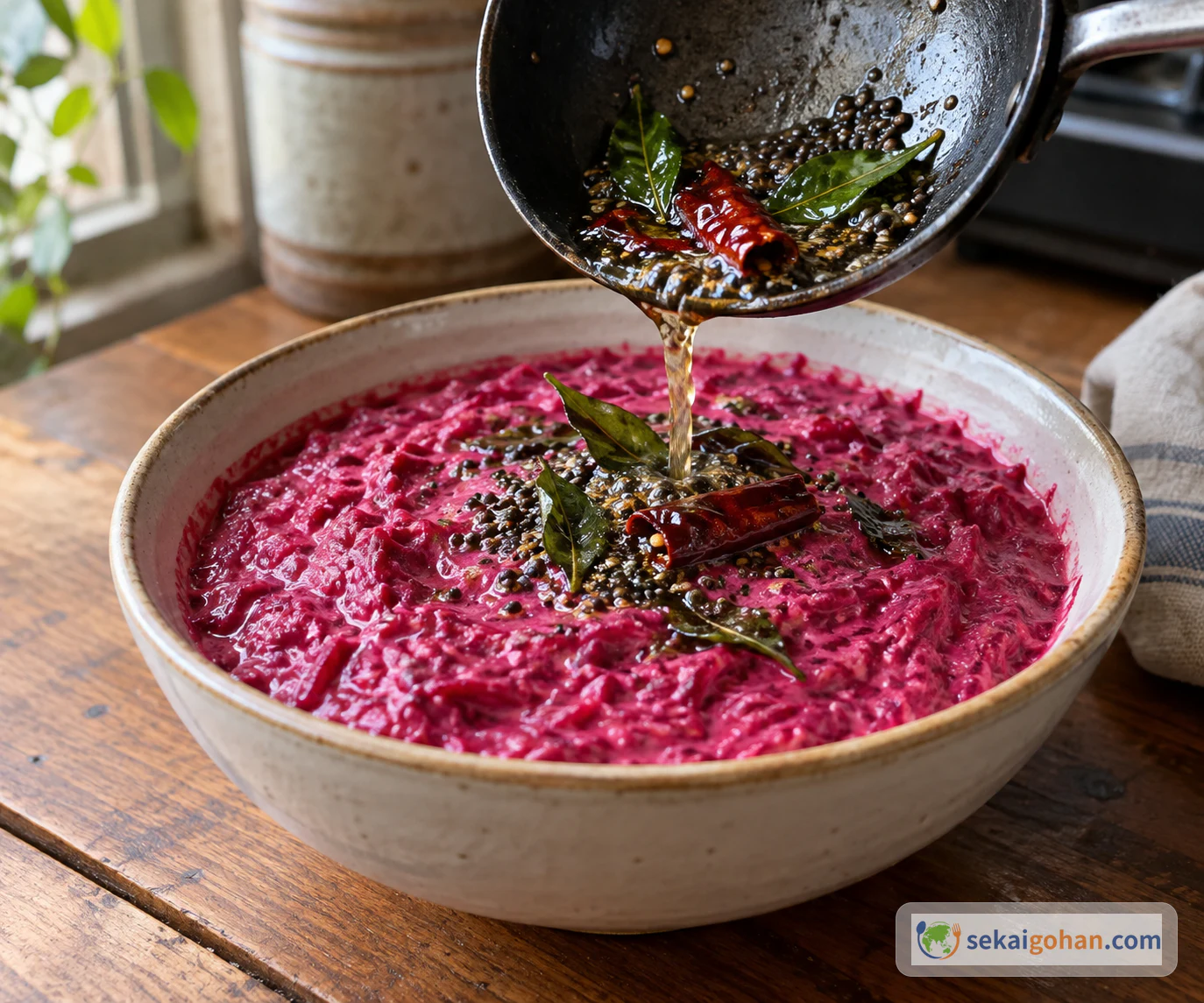
On a Kerala table, among white rice and an array of other dishes, a spoonful of something startlingly pink stands out. That is beetroot pachadi, written ബീറ്റ്റൂട്ട് പച്ചടി in Malayalam. Grated beetroot is cooked soft and bound with a fine paste of coconut, green chili, ginger, mustard and cumin. Yogurt goes in off the heat to mellow it, and a crackling tempering of mustard seeds, dried red chilies and curry leaves sizzled in coconut oil is poured over at the end. The result is sweet, tangy and gently spiced, a side dish you eat by the spoonful. For more dishes from the country, see our India page.
Beetroot Pachadi in the Kerala Sadya
Pachadi is one of the yogurt-based dishes of Kerala's Sadya. Sadya means "banquet" in Malayalam. It is a feast served on banana leaves for occasions such as Onam, Vishu and weddings, and among its many dishes pachadi is the one made with yogurt and vegetables or fruit. Beetroot is one of the vegetables that can fill that role. A close cousin, Beetroot Kichadi, is also an integral part of the Sadya.
The word pachadi means different things in different regions. In Andhra and Telugu cooking, for example, it can refer to a chutney-style preparation. This is the Kerala version, built on beetroot, coconut, yogurt and mustard. It is also different from a North Indian-style beetroot curry and from a dry beetroot stir-fry made without yogurt.
How the flavors stack
| Layer | What goes in | What it brings |
|---|---|---|
| Base | Grated beetroot cooked with water and salt | Deep pink color and the beet's own sweetness |
| Paste | Coconut, green chili, ginger, mustard, cumin | Body from the coconut, heat from the green chili, a warm spice note |
| Yogurt | Whisked yogurt, added off the heat | Tang and a creamy finish that turns the color lighter pink |
| Tempering | Coconut oil, mustard seeds, dried red chilies, curry leaves | A fragrant, toasty top note poured over at the end |
Ingredients: Beetroot, Coconut Paste, Yogurt and Tempering
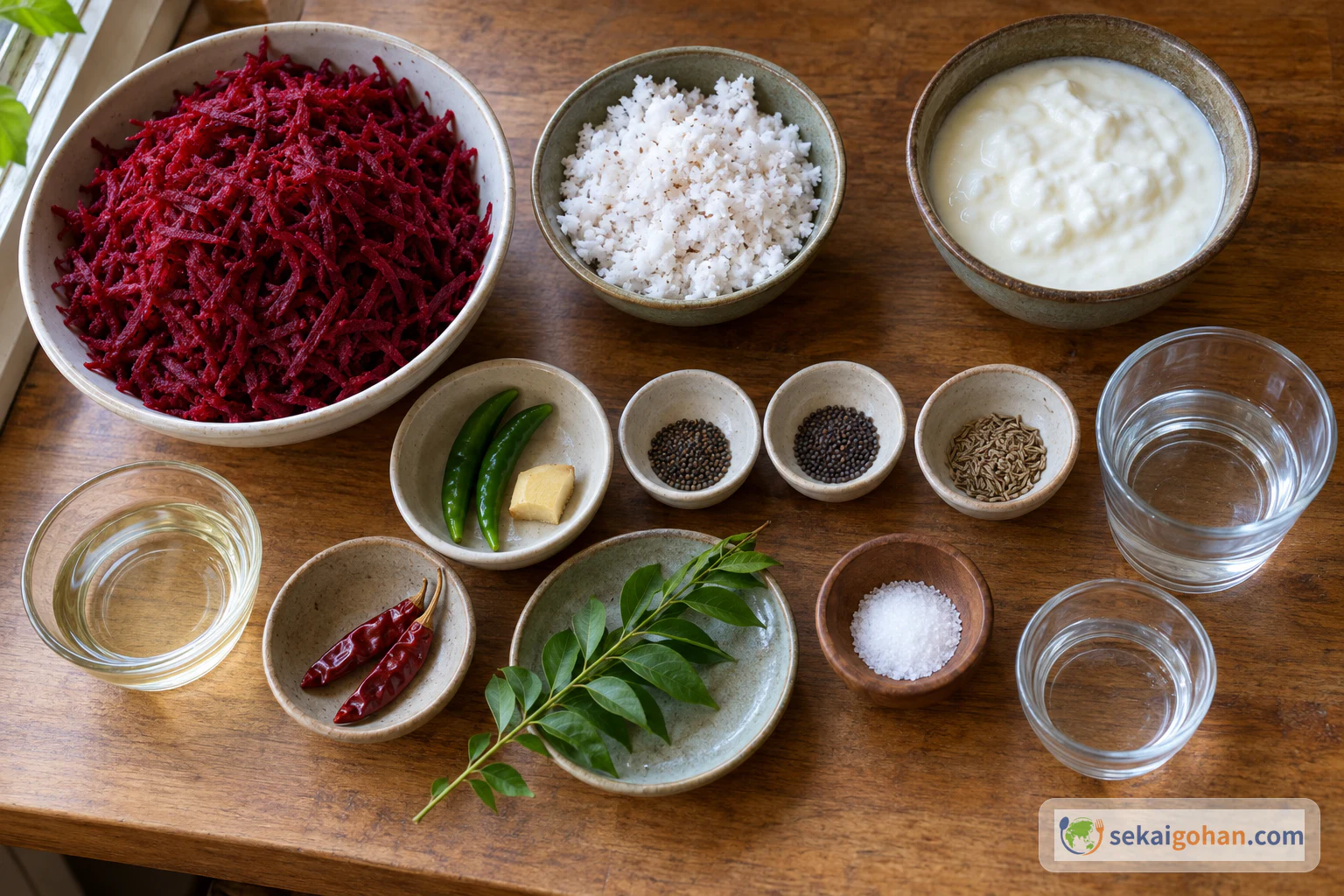
The two water amounts and the two mustard amounts each have their own job. Measure them separately so they don't get mixed up.
Green chilies go into the paste; dried red chilies go into the tempering. They are different ingredients with different jobs.
Yogurt is a dairy product. Also check the labels of every product you use, including coconut, coconut oil and spices, for allergen information.
Equipment
- Grater (a box grater works well)
- Small blender or spice grinder for the paste
- Saucepan with a lid
- Small pan for the tempering
- Whisk or fork for the yogurt
Choosing Ingredients for Beetroot Pachadi
Coconut. Freshly grated coconut is what you want. Ordinary supermarkets don't always stock it, so check Indian and Asian grocers or shop online. Frozen grated coconut is a practical stand-in, though its flavor and moisture can differ a little. Dried (desiccated) coconut is much drier and will change the paste.
Yogurt. Plain unsweetened yogurt works well. A thick strained yogurt or a more sour one will change the texture and tang of the finished dish, so think of it as a variation and not a straight swap.
Curry leaves. Much of the tempering's aroma comes from these, and they're worth hunting down at Indian grocers, fresh or frozen. No other leaf smells quite like them, so if you leave them out, the finish will be different.
Chilies. Heat varies from chili to chili. The green chilies in the paste and the dried red chilies in the tempering both add heat, so milder chilies will give you a gentler pachadi. The tempering still brings its aroma either way.
Method: Cook, Bind, Cool the Heat, Temper
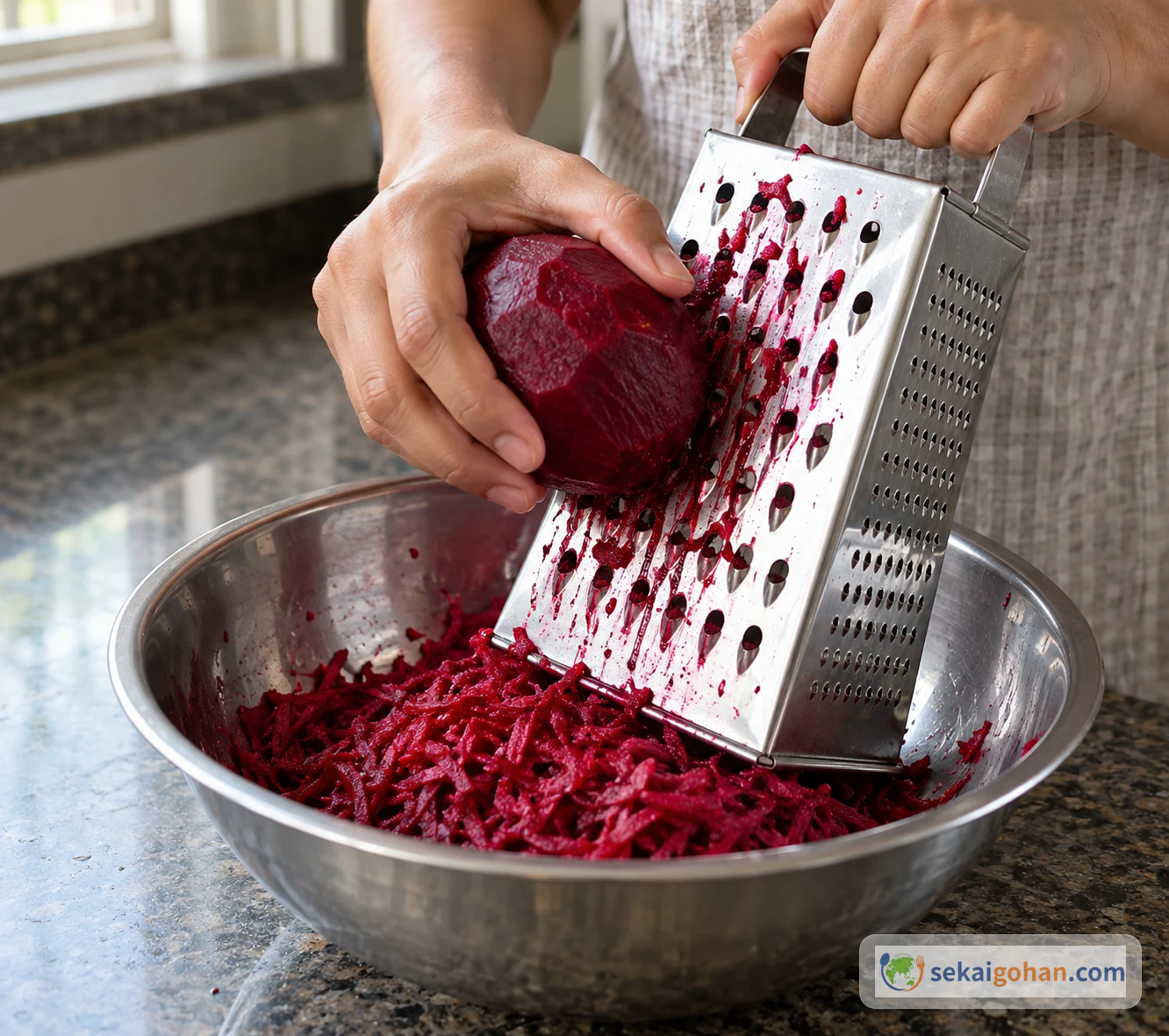
Grate the beetroot and measure the paste ingredients and tempering ingredients into separate groups before you turn on the heat. The tempering goes fast once the oil is hot.
Fixing Common Beetroot Pachadi Problems
| Problem | Likely cause | What to try |
|---|---|---|
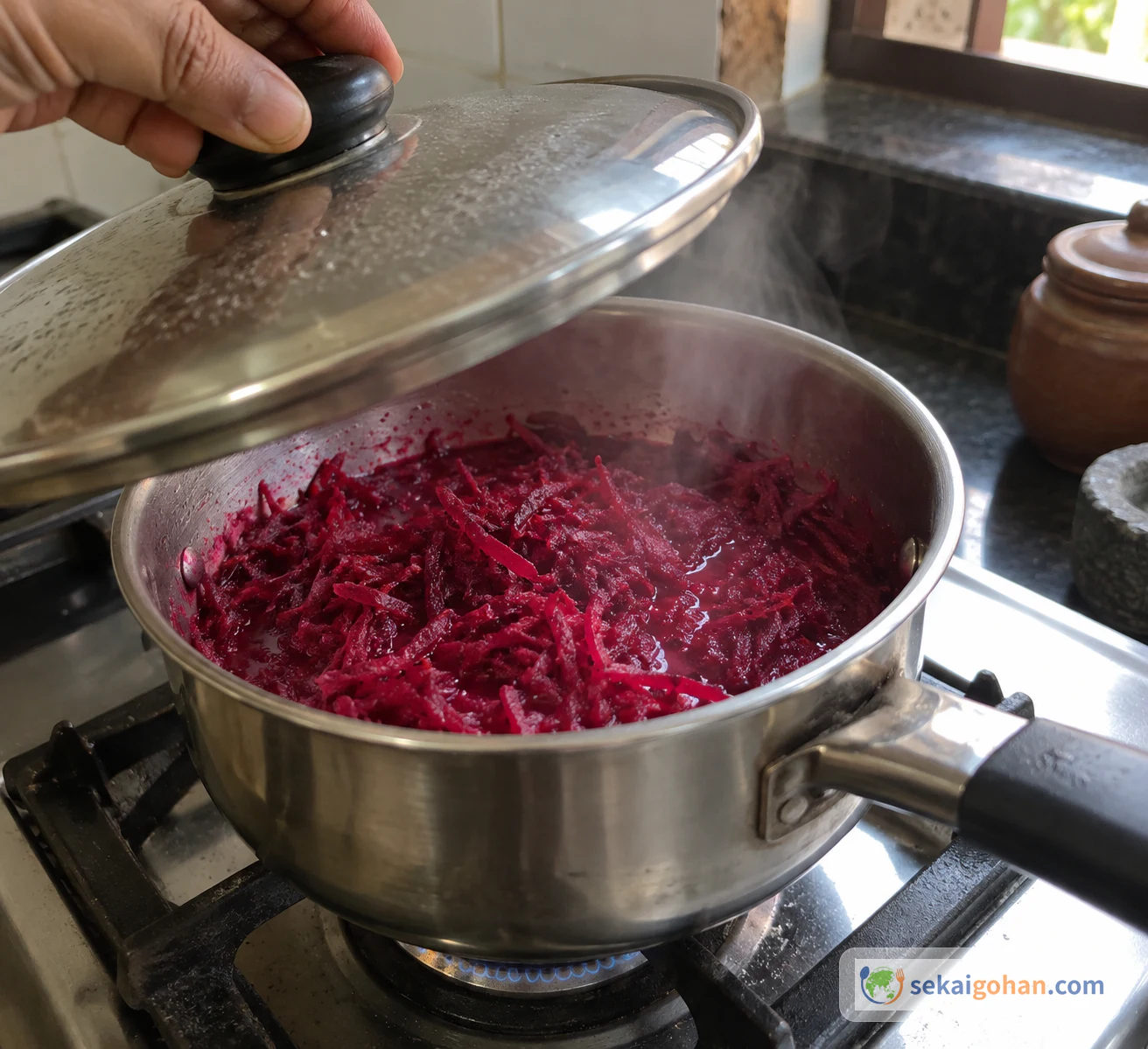
| Beetroot catching on the bottom of the pan | Heat too high, or the water cooked off | Lower the heat and stir more often. Keep the lid on while the beetroot softens |
| Beetroot still firm after about 10 minutes | Coarse grating, a thin pan or low heat | Keep cooking covered and check again; judge by softness, not the clock |
| Paste is gritty | Too little water to grind, or ground too briefly | Grind longer, adding water a little at a time until it moves freely |
| Pachadi is watery | The beetroot released a lot of liquid before the paste went in | Let the beetroot and paste cook uncovered a little longer before turning off the heat and adding the yogurt |
| Yogurt looks curdled or split | Added while the pan was still on the heat, or the mixture boiled | Turn the heat off first and whisk the yogurt smooth beforehand |
| Tempering tastes bitter | Mustard seeds or curry leaves burned | Lower the heat as soon as the mustard pops, and keep the final fry to about 30 seconds |
Beetroot Pachadi Variations
Kerala kitchens make this dish in more than one way, and each version has its own amounts and method.
- Kerala Style Beetroot Pachadi. This version counts beetroot by the piece, not by the cup, and adds turmeric. The grated beetroot is cooked covered, and the curd goes in after it has cooled. (Its ingredient list puts the curd in with the paste, but the method adds it after cooling.)
- Beetroot Kichadi. This Sadya relish uses 1 cup grated beetroot, 1/2 cup slightly sour curd and 3/4 cup grated coconut, among other ingredients. That's more coconut and a sourer curd for the amount of beetroot, which makes a sharper, richer relish.
Frequently Asked Questions
Is beetroot pachadi a curry?
It is often listed as "beetroot curry," but it isn't a thick, gravy-laden curry. It's a yogurt-based side dish or relish, eaten in small amounts with rice and other dishes, the way pachadi is served at a Kerala Sadya.
Why does the yogurt go in after the heat is off?
Direct heat can make yogurt split. Turn off the heat before you add the whisked yogurt, and don't let the mixture boil afterward.
Is beetroot pachadi the same as beetroot kichadi?
They are closely related yogurt-based beetroot dishes from Kerala, and both belong to the Sadya. They go by different names and use different proportions, so each one is its own recipe.