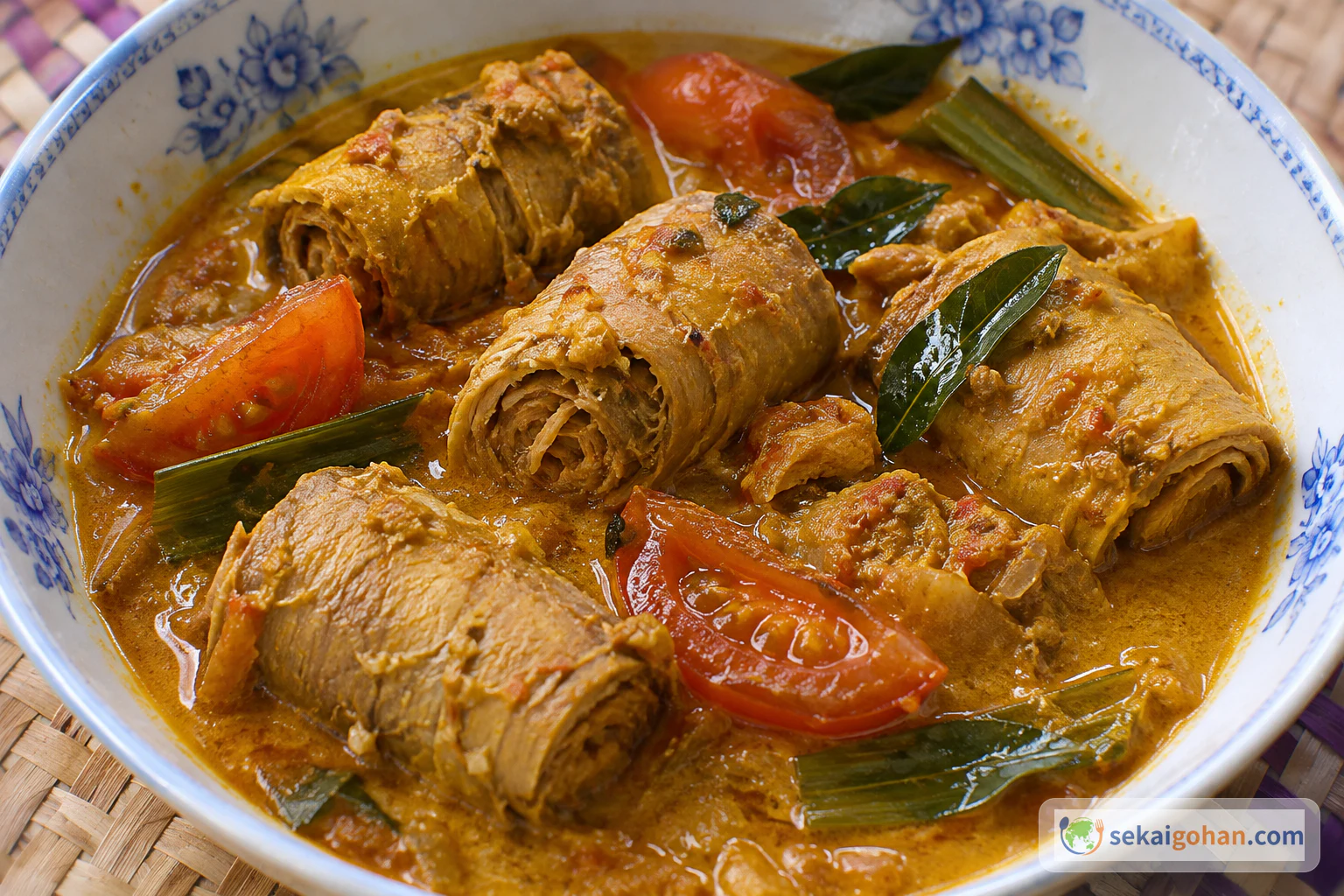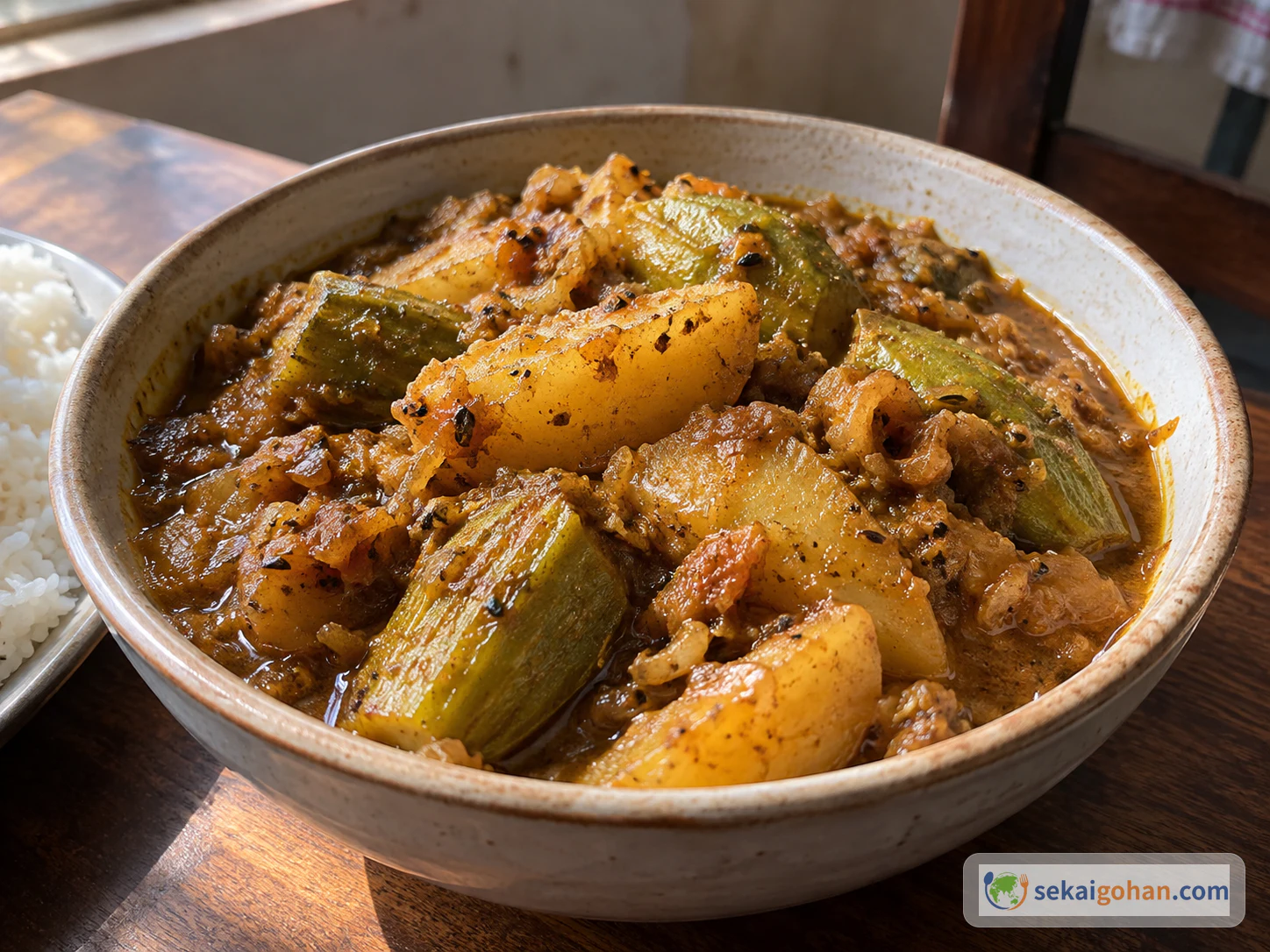
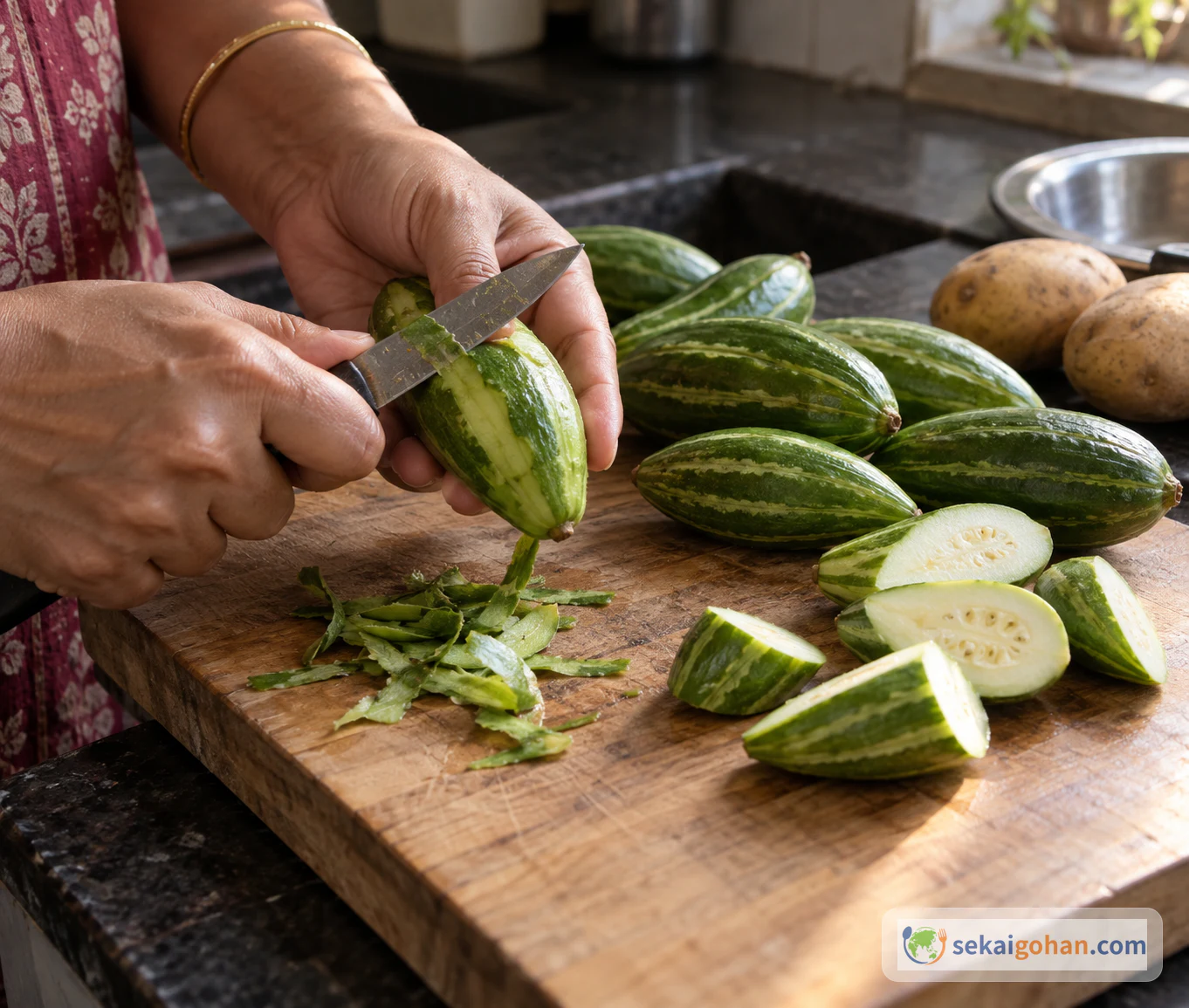
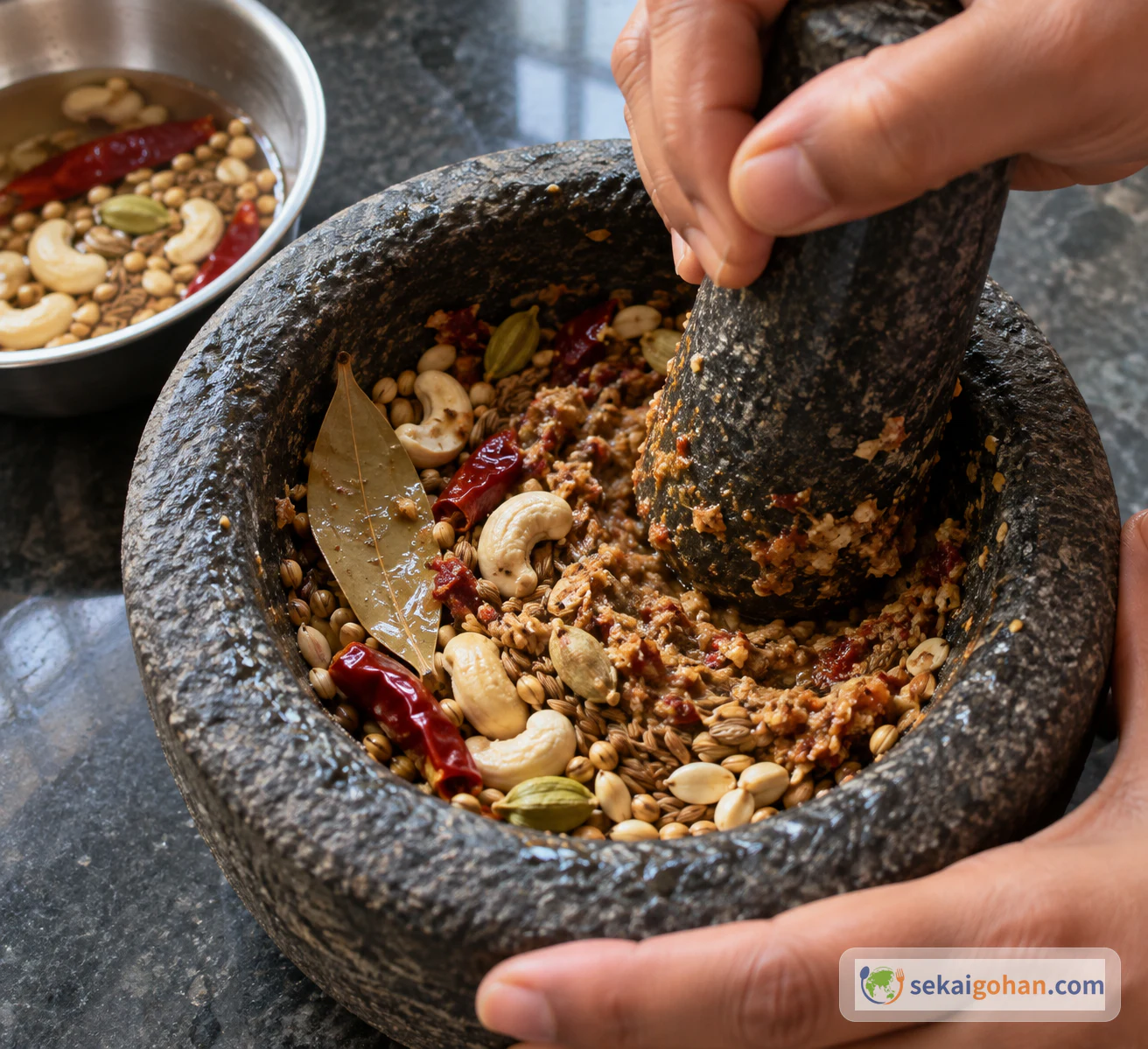
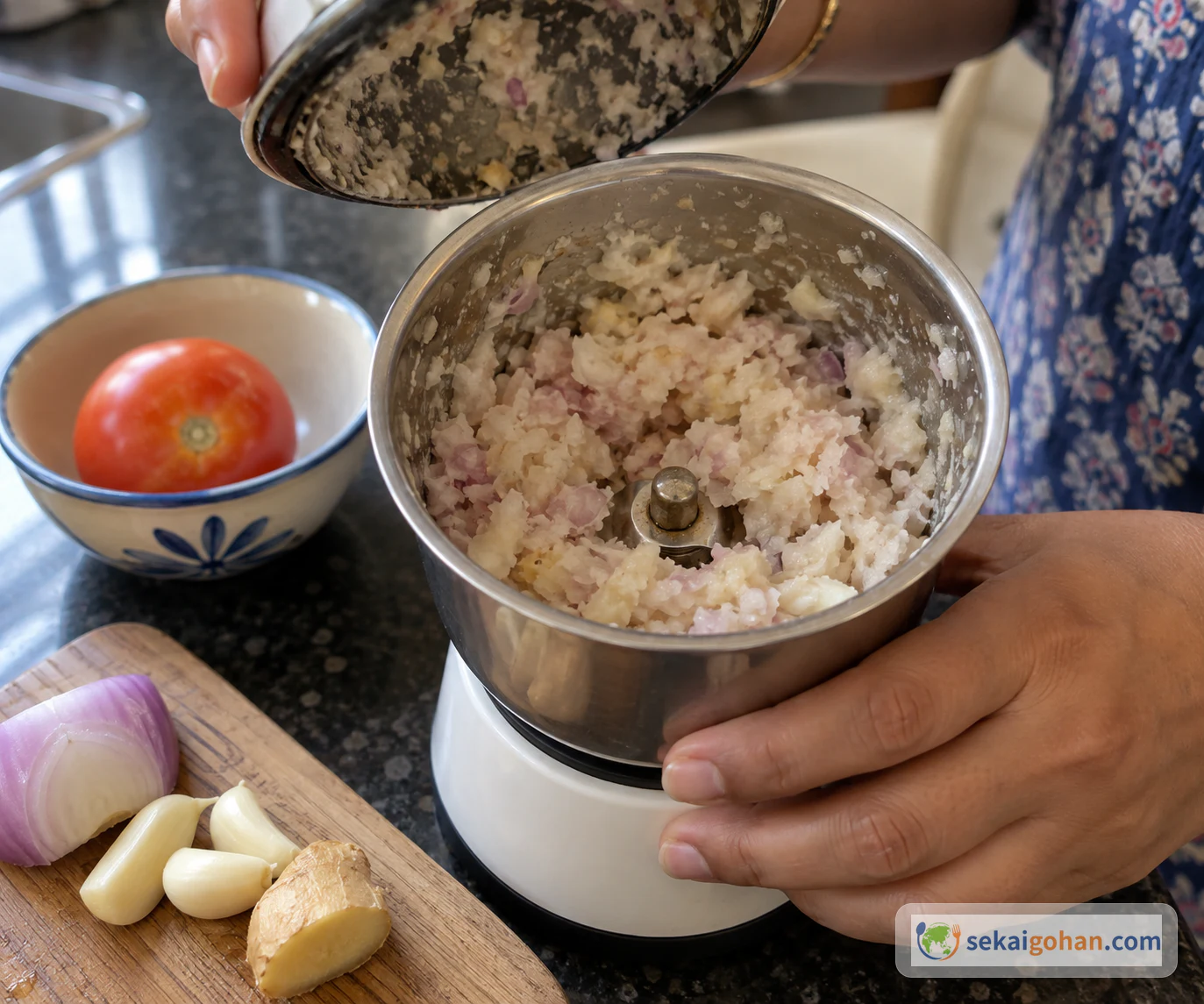
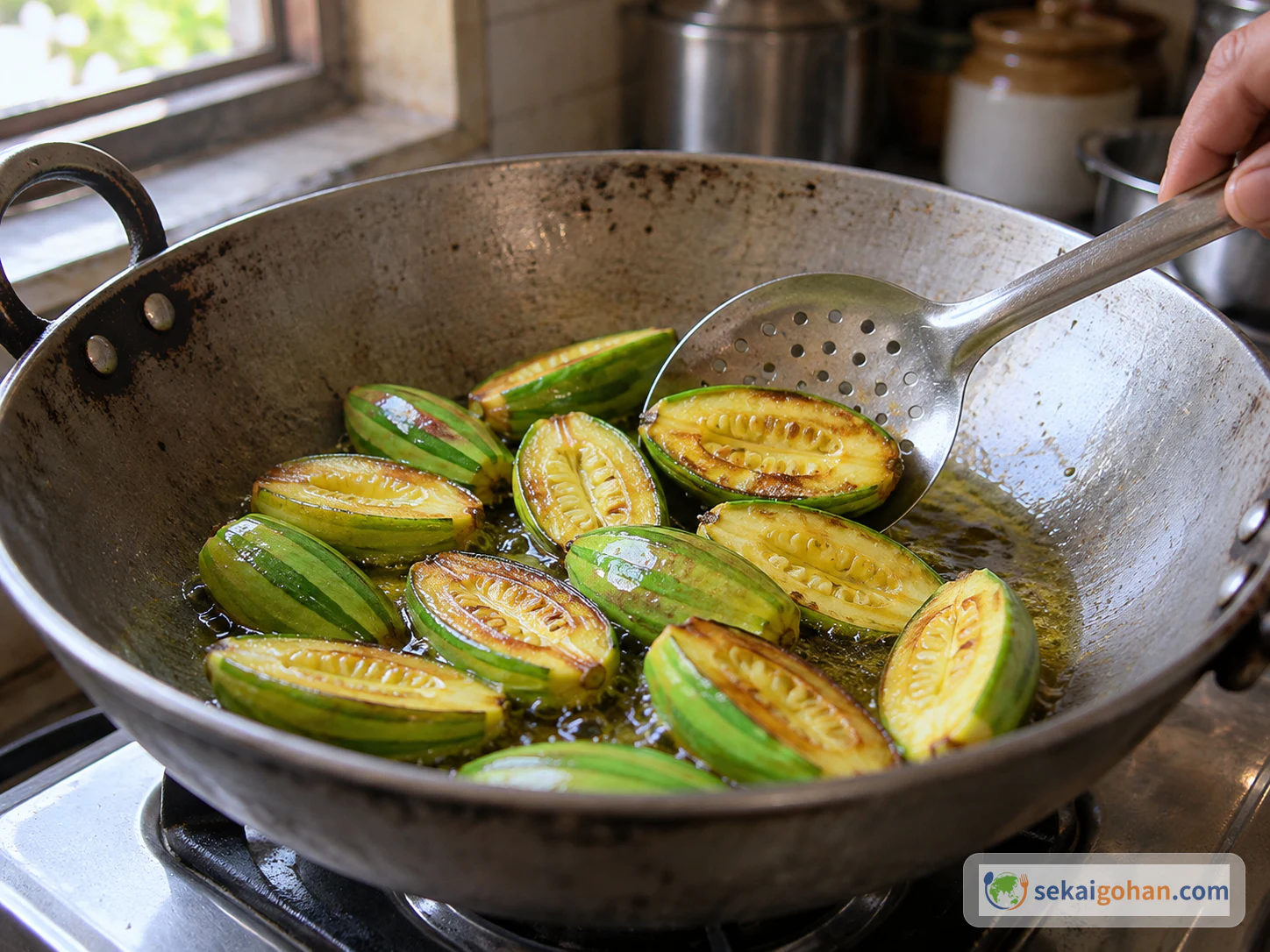
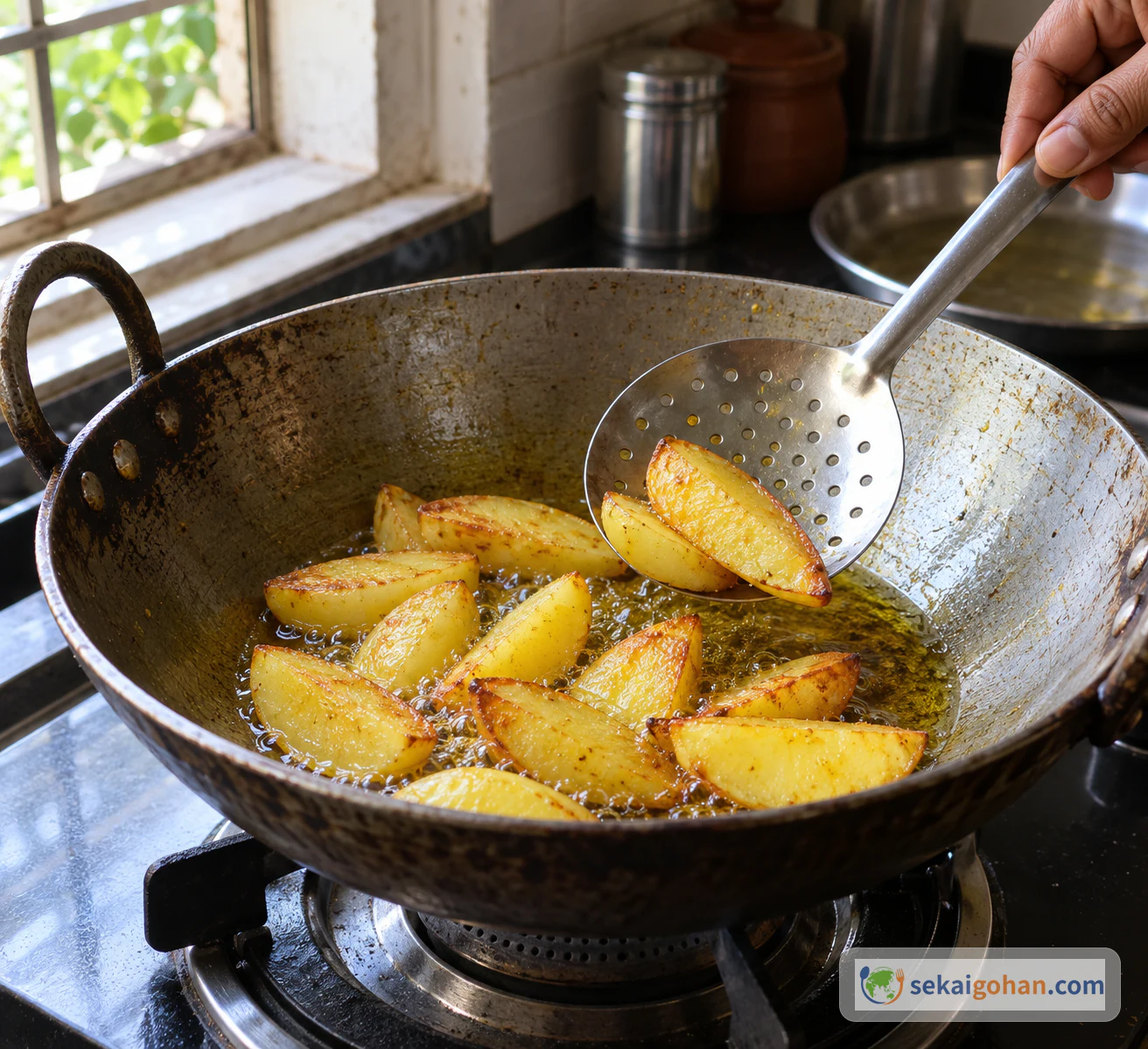
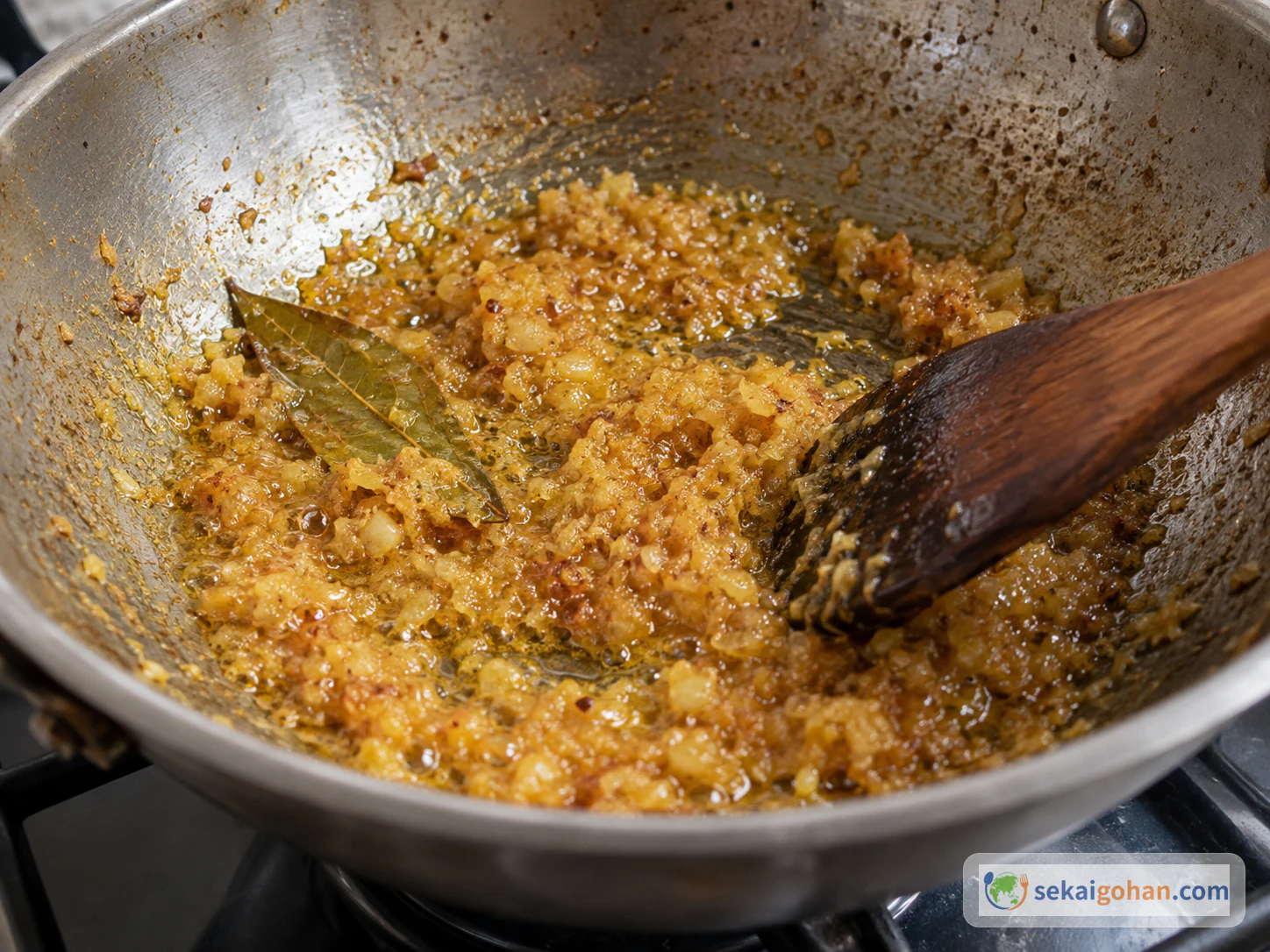
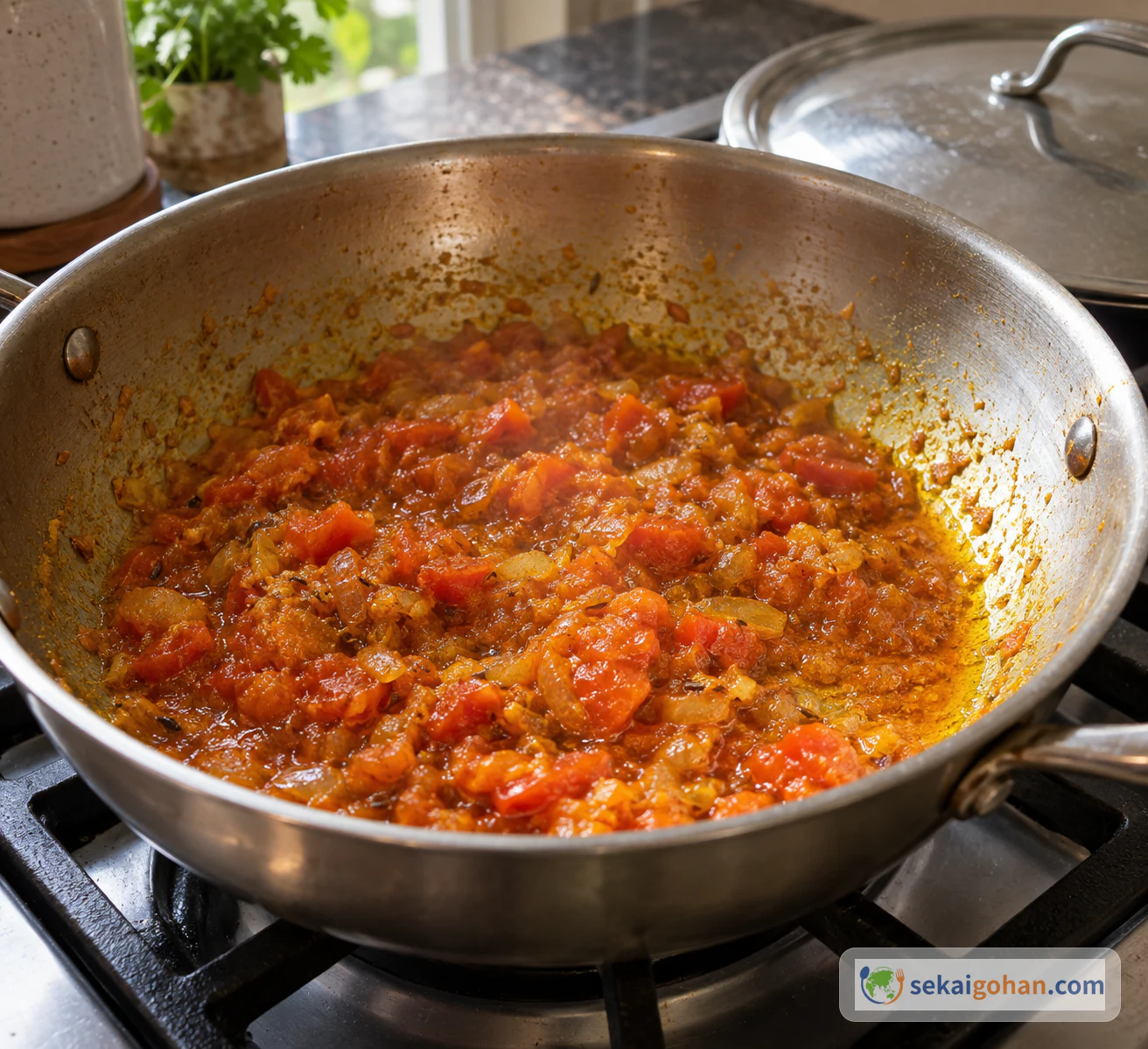
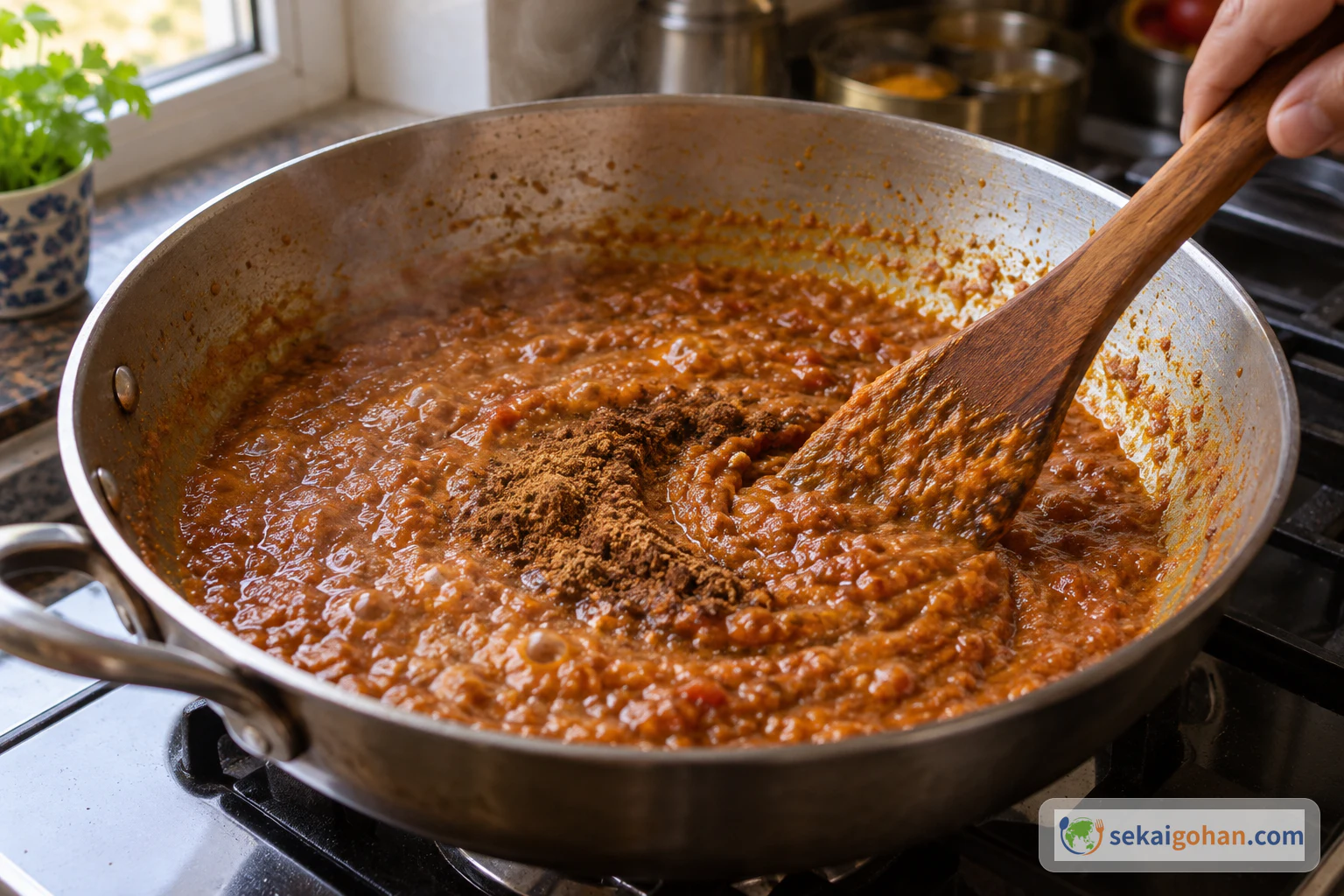
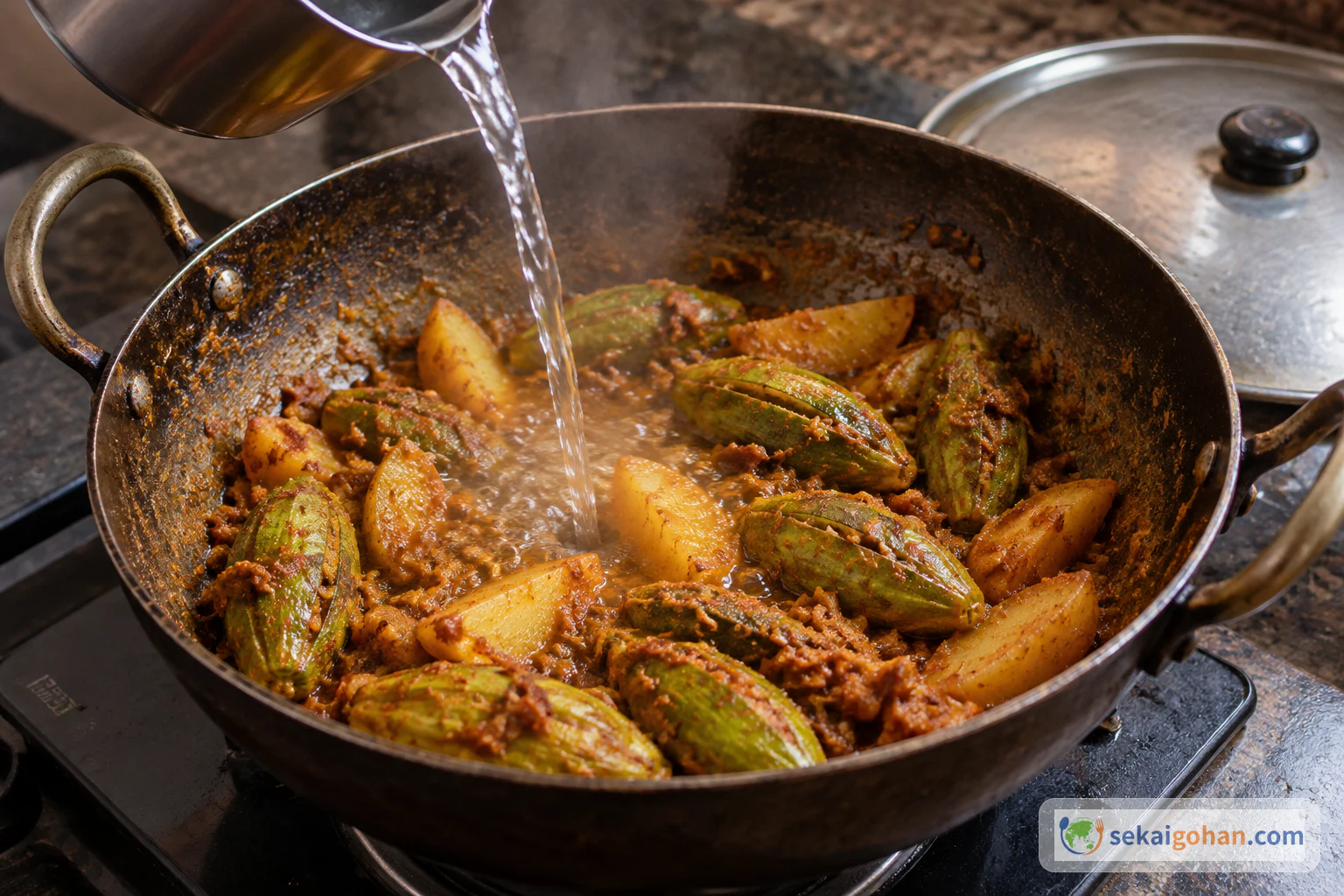
The pot starts with oil and small striped gourds. The potala, lightly scraped and halved on the diagonal, fry until golden, then come out so potato wedges can crisp in the same oil. Only after that does the gravy begin in what's left in the pan. Alu potala rasa (ଆଳୁ ପୋଟଳ ରସା), also written Aloo Potala Rasaa or Potala Rasa, is an Odia curry of pointed gourd and potato. The gravy builds on a sweet, fragrant base of onion, garlic and ginger and is thickened with a paste of soaked chillies, whole spices, melon seeds and cashews.
Potala Rasa in Odia Homes and at the Temple
Potala rasaa is a well-known dish in Odia homes, and it comes in two forms. The satvik version is made with potala alone, without onion or garlic. The non-satvik version adds potato and a richer masala, and that's the one here, with onion, garlic and potato. Taking the onion and garlic out of this recipe won't turn it into the satvik dish; the two are made differently.
Potala rasaa is also served as part of the Mahaprasad at the Puri Jagannath Temple, where it is cooked in earthen pots stacked one on top of another. This onion-and-garlic curry is a home dish and separate from the temple offering. In Odisha, potala is known as a summer vegetable.
Home cooks vary the dish too. Some simmer potato and potala in a gravy of whole garam masala, ginger, garlic, coconut and cumin instead of a ground paste. For more dishes from across the country, see the India country page.
Ingredients: One Batch
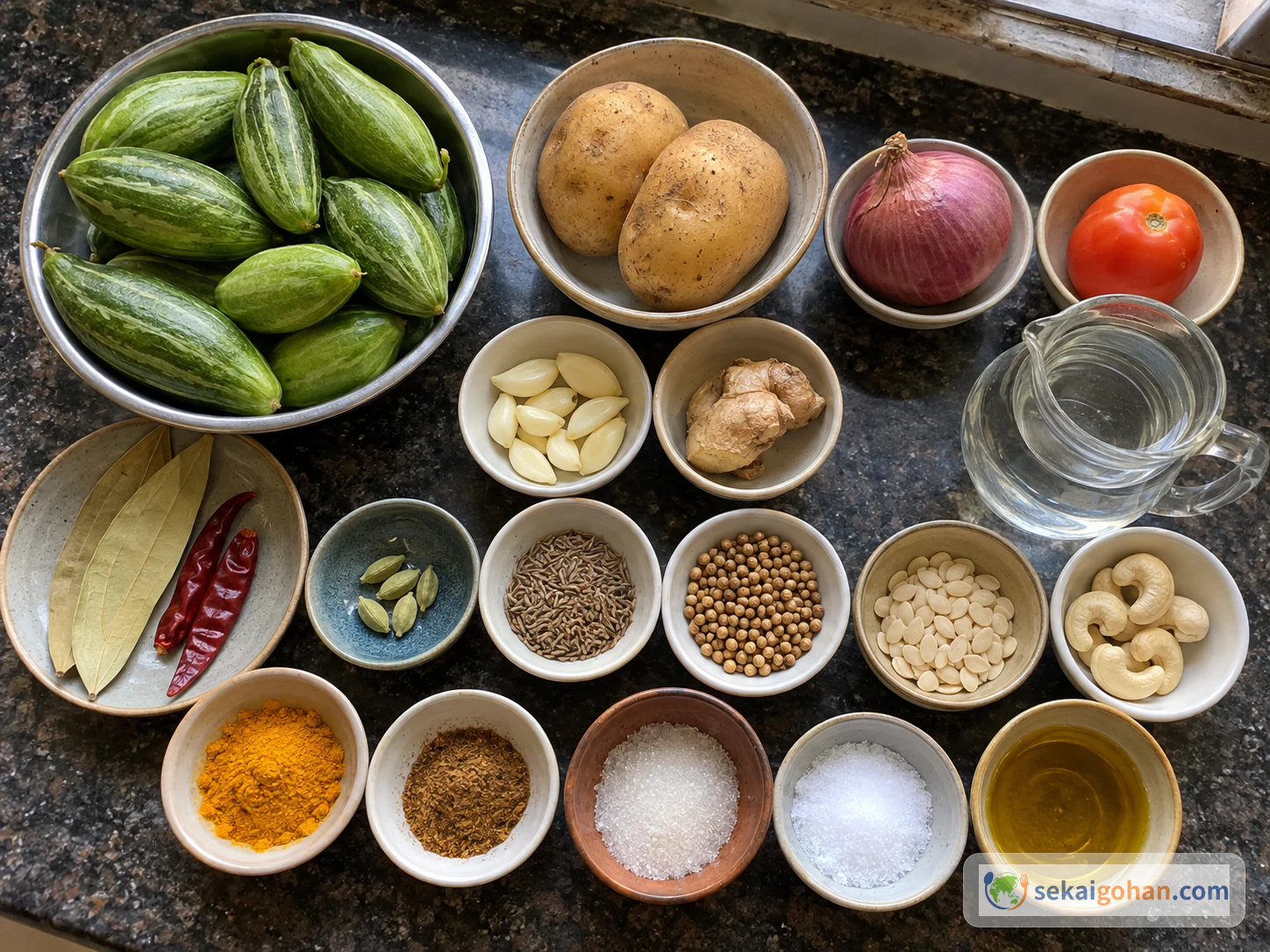
Salt is added to taste. Use ½ cup (100 ml) oil in total: the vegetables fry in turn and the oil that remains is used for the gravy base.
Plain cooked white rice, as much as you like, can be served alongside. It is a separate accompaniment and not part of the curry itself.
This version contains cashews, a tree nut. They are optional. Leaving them out changes the thickness and richness of the gravy (see Variations). Check the labels of garam masala and other packaged spices for allergen information.
Equipment
These are ordinary tools that fit the steps:
- A small knife and cutting board
- A small bowl for soaking the spice-paste ingredients
- A spice grinder, small blender jar, or stone mortar for the two pastes
- A deep frying pan or pot with a lid, deep enough to fry the vegetables and then simmer the gravy
- A slotted spoon
- A plate for the fried vegetables
Choosing Potala, Melon Seeds and Spices for Alu Potala Rasa
Potala. The star of the dish is potala, sold in English as pointed gourd and in many Indian markets as parwal. Many countries don't stock it in ordinary supermarkets, so search under all three names at Indian and South Asian grocers. Other gourds differ in shape, moisture and texture, and using one of them will give you a different dish.
Melon seeds. Check the package description when you buy, because pumpkin seeds and other seeds are not equivalent. Along with the cashews, the melon seeds help thicken the paste.
Whole spices. Dried red chillies, green cardamom, cumin and coriander seeds are widely sold as whole spices. Your chillies set the heat of the dish, so it's worth knowing how hot they are.
Method: Fry the Vegetables, Build the Gravy, Then Simmer
The spice paste needs to soak for 1–2 hours before grinding, so start step 2 first. Judge the vegetable-frying stages by color and texture.
Alu Potala Rasa Troubleshooting
Give the potala and the potatoes their own golden surfaces before they ever meet the gravy. The gravy has two layers: a sweet, fragrant onion, garlic and ginger base and a paste of soaked seeds and whole spices. Then a short simmer in hot water brings everything together.
| What to watch | Why it matters | What to do |
|---|---|---|
| The sugar darkening in step 6 | The sugar should caramelize only lightly. Burnt sugar turns bitter | Watch closely and add the bay leaf and aromatic paste while the sugar is still light |
| Spattering when pastes go into the hot oil | Wet pastes hitting hot oil can spit | Add them carefully, keep your hands and face back, and use the lid as a shield if needed |
| The base catching on the bottom of the pan | The pastes and tomato are thick and can scorch | Keep the heat low where the recipe says so and stir the base as it cooks |
| Vegetables breaking up | Frequent stirring after they return to the gravy can break them | Toss them gently, stir less, and check their condition toward the end of the simmer |
| The gravy seeming too thick | The recipe uses a fixed 1 cup (250 ml) of hot water | Adding more water is your own adjustment to the recipe |
Serving, Storing and Varying Alu Potala Rasa
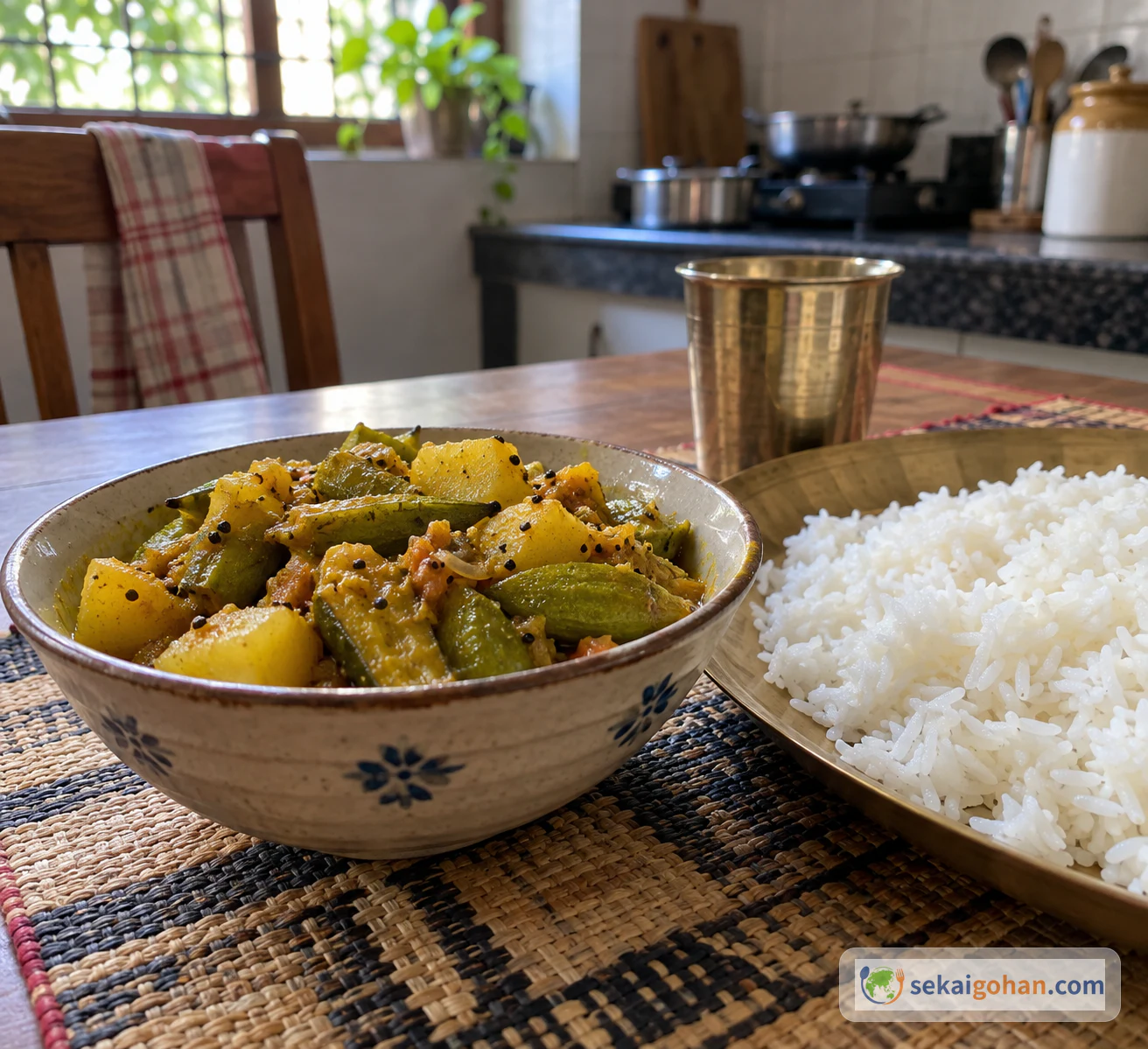
This is a curry for hot rice, and plain cooked white rice is the natural partner. Roti works well on the table too.
For leftovers, divide the curry into clean, shallow containers so it cools quickly, and don't leave it standing at room temperature for long. Reheat it thoroughly before serving.
- Without cashews. Cashews are optional, so leave them out if you avoid tree nuts. The gravy will be less rich and less thick.
- Adjusting the heat. Use more or fewer dried red chillies to make the curry milder or hotter.
Frequently Asked Questions
What is potala?
Potala is the pointed gourd, also sold as parwal. It is a small, striped gourd and the main vegetable in this curry. Look for it under all three names at Indian and South Asian grocers.
Is this the same as the Potala Rasaa served at the Puri Jagannath Temple?
No. Potala rasaa is served as part of the temple's Mahaprasad, and the satvik form is made without onion or garlic. This recipe uses onion, garlic and potato, so it is a home-style, non-satvik dish.