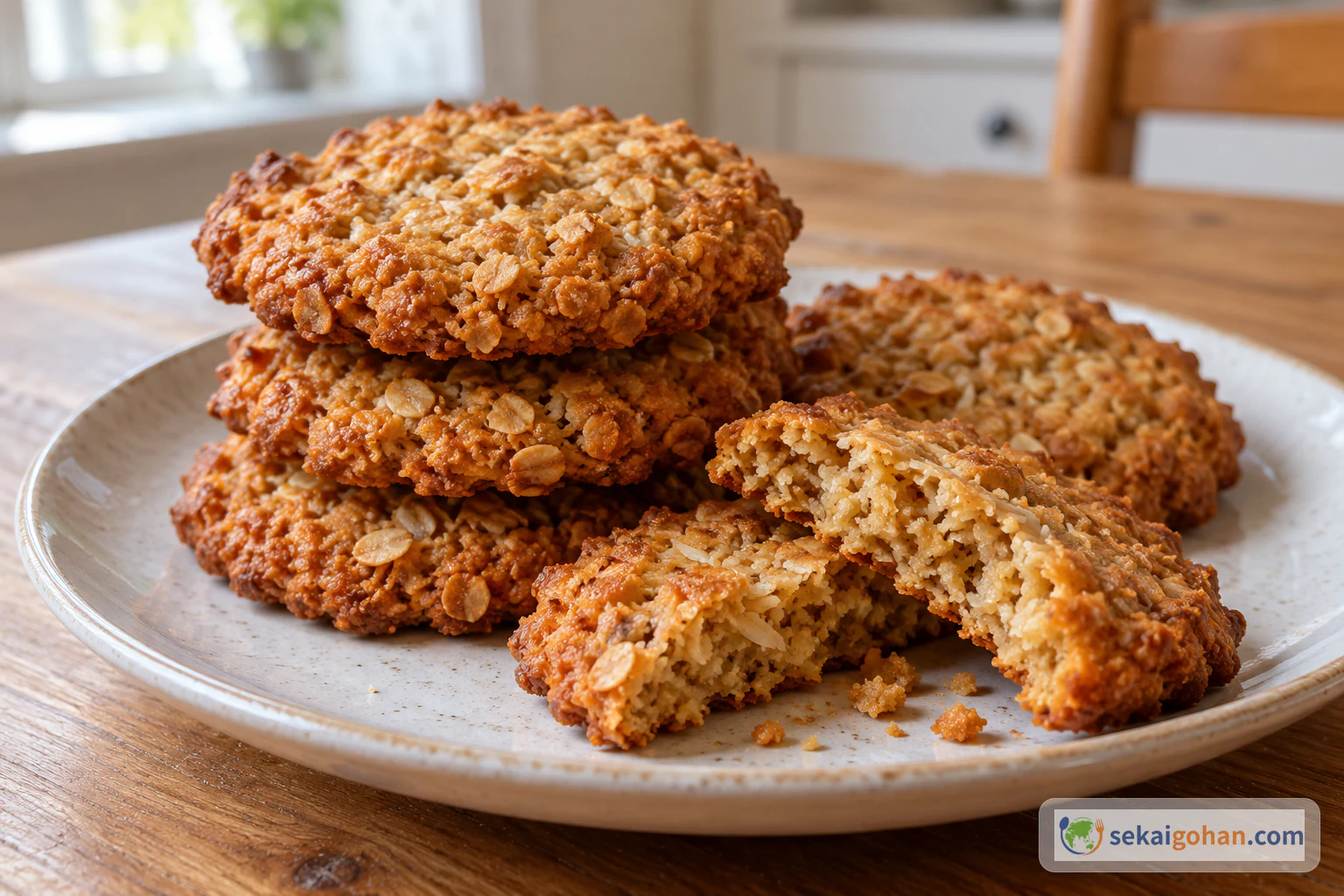
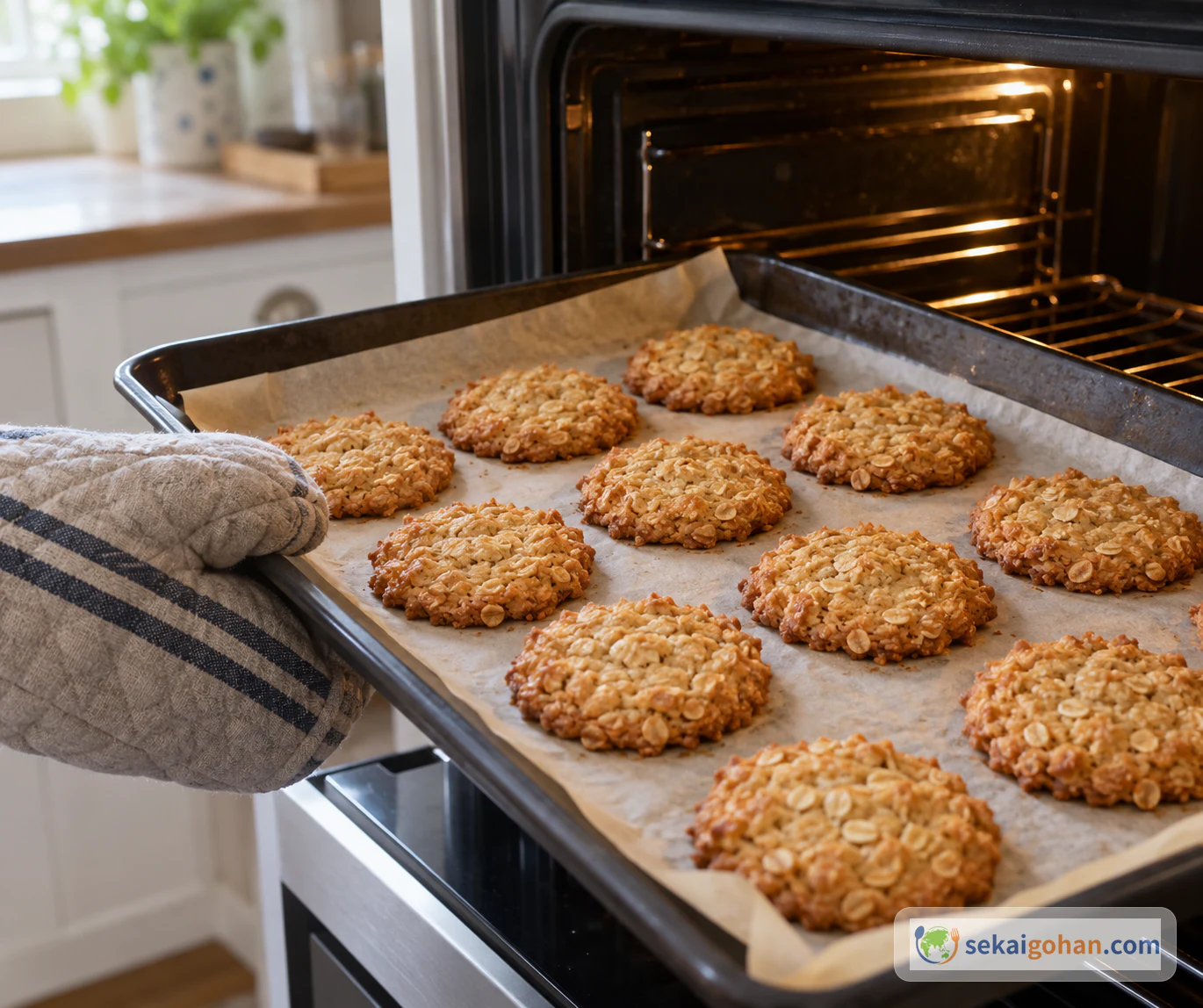
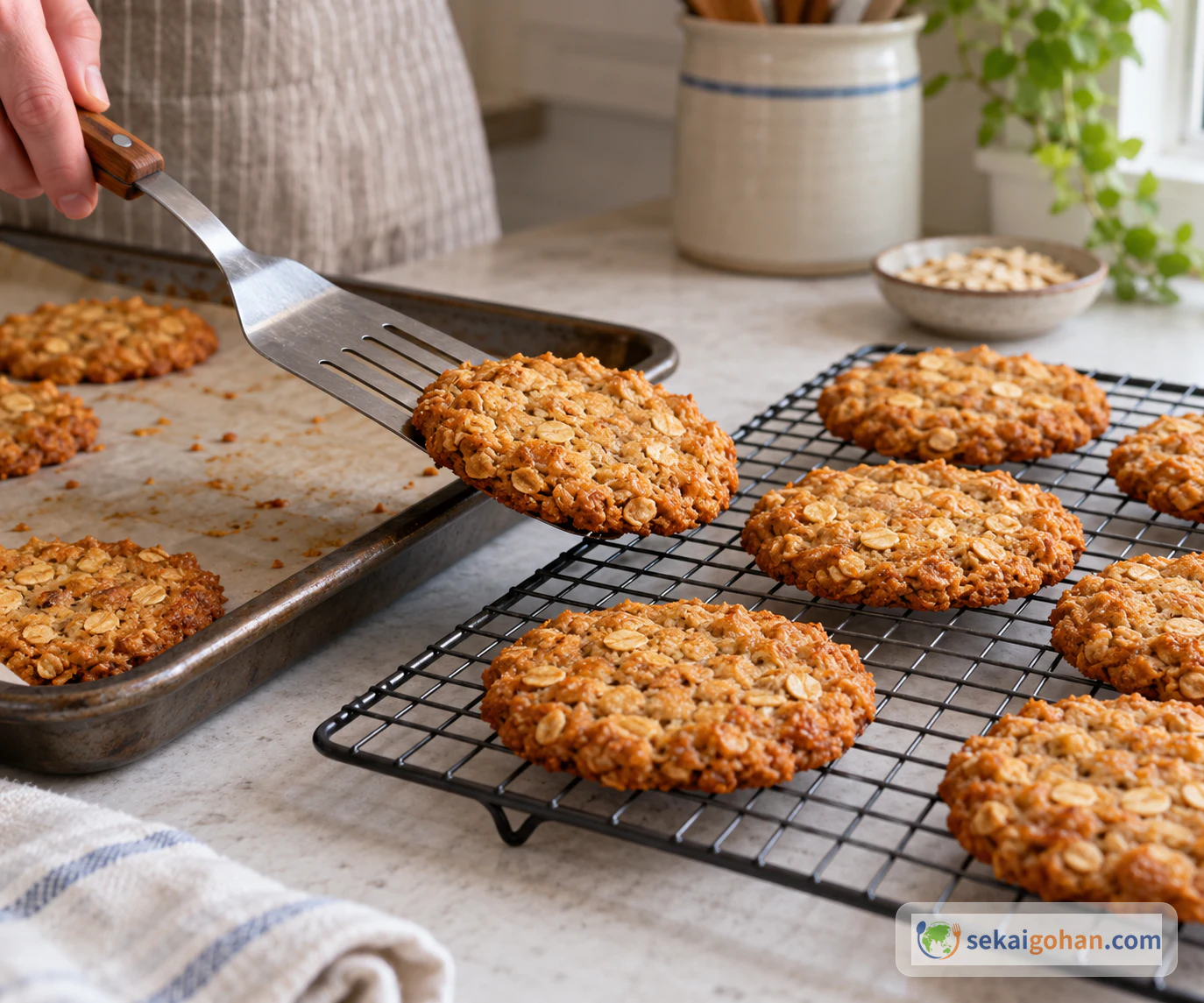
Lift a tray of ANZAC biscuits out of the oven and they feel surprisingly soft, almost too soft to be done. That's normal. They firm up as they cool, so give them time before you decide a batch needs longer in the oven. These sweet biscuits of rolled oats, coconut, butter and golden syrup are baked at home in both Australia and New Zealand, and each country counts them as its own.
ANZAC Biscuits in Australia and New Zealand
The ANZAC biscuit emerged in the twentieth century as a national biscuit of both countries. Today it is part of their shared culture. In Victoria, one branch bakes ANZAC biscuits ahead of Anzac Day and keeps strictly to its own recipe.
Two very different things share the name. The hard army biscuit, known as hardtack or the "Anzac tile," was a ration used as a bread substitute. The sweet oat and syrup biscuit is baked at home. During the war, people at home sent parcels of long-lasting food to those serving overseas, but the origin of the sweet biscuit, and any link to what reached the front, is not settled. Today's home-baking tradition is a present-day practice, separate from those wartime parcels.
The name and the recipe have both changed over time. A 1917 biscuit called "Anzac Biscuits" was quite different: made with egg, rice flour and spices, sandwiched with jam and iced. An oat-based recipe close to today's traditional type appeared in a 1920 newspaper, and the name appeared in a recipe book in 1921. Each of these defines "first" differently, so there is no single starting year.
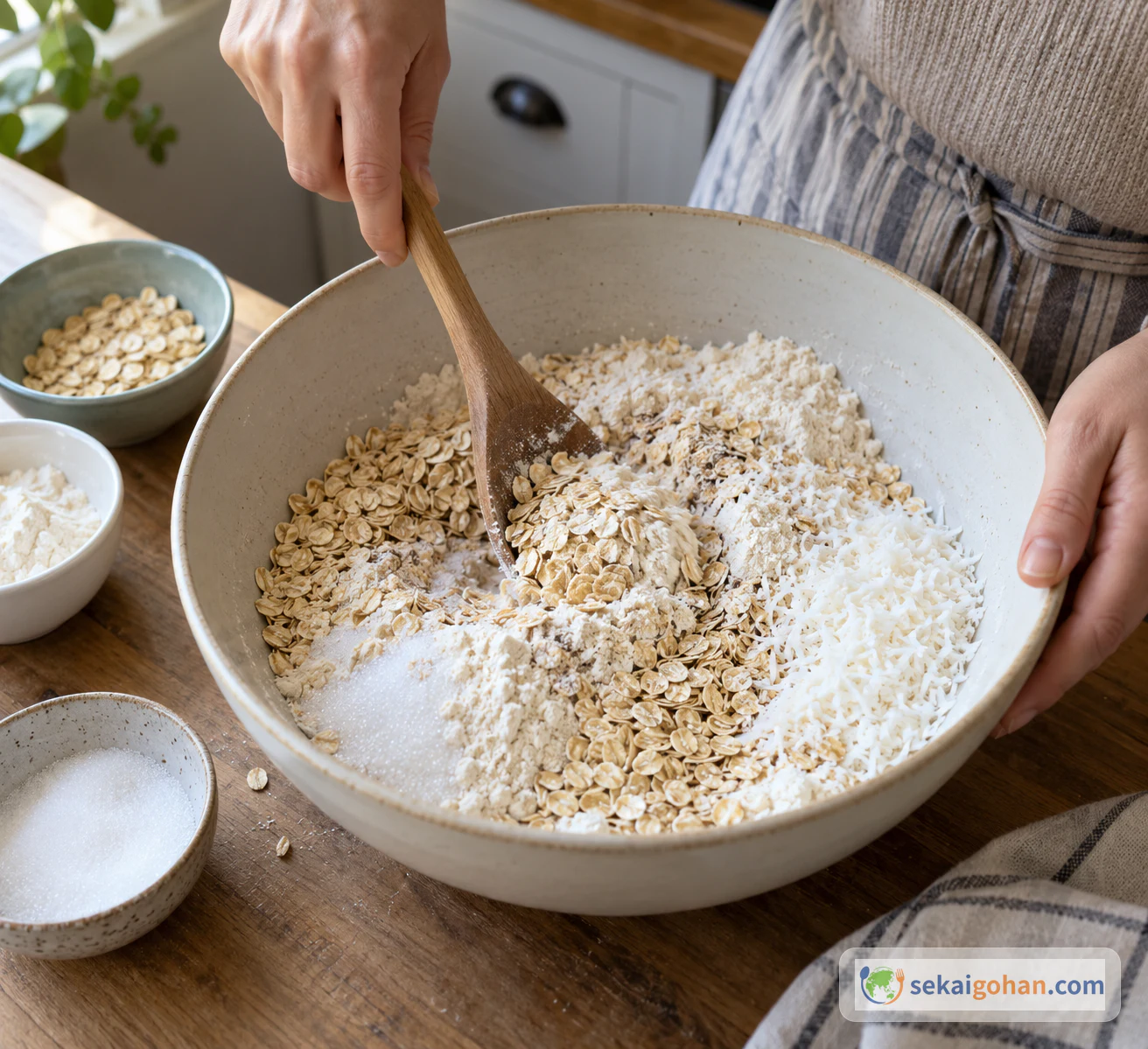
Ingredients (Makes 20 Biscuits)
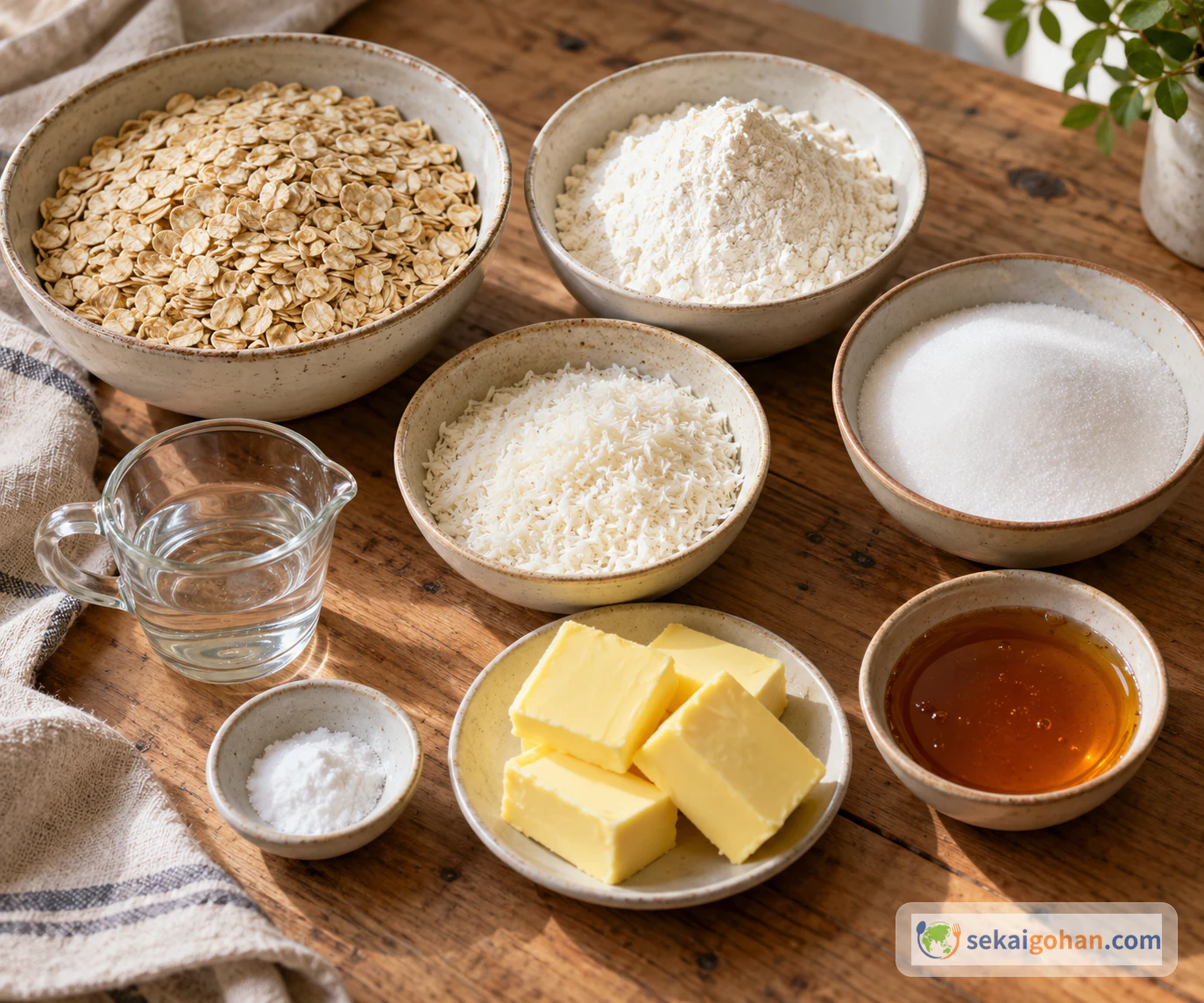
It makes 20 biscuits, not 20 servings.
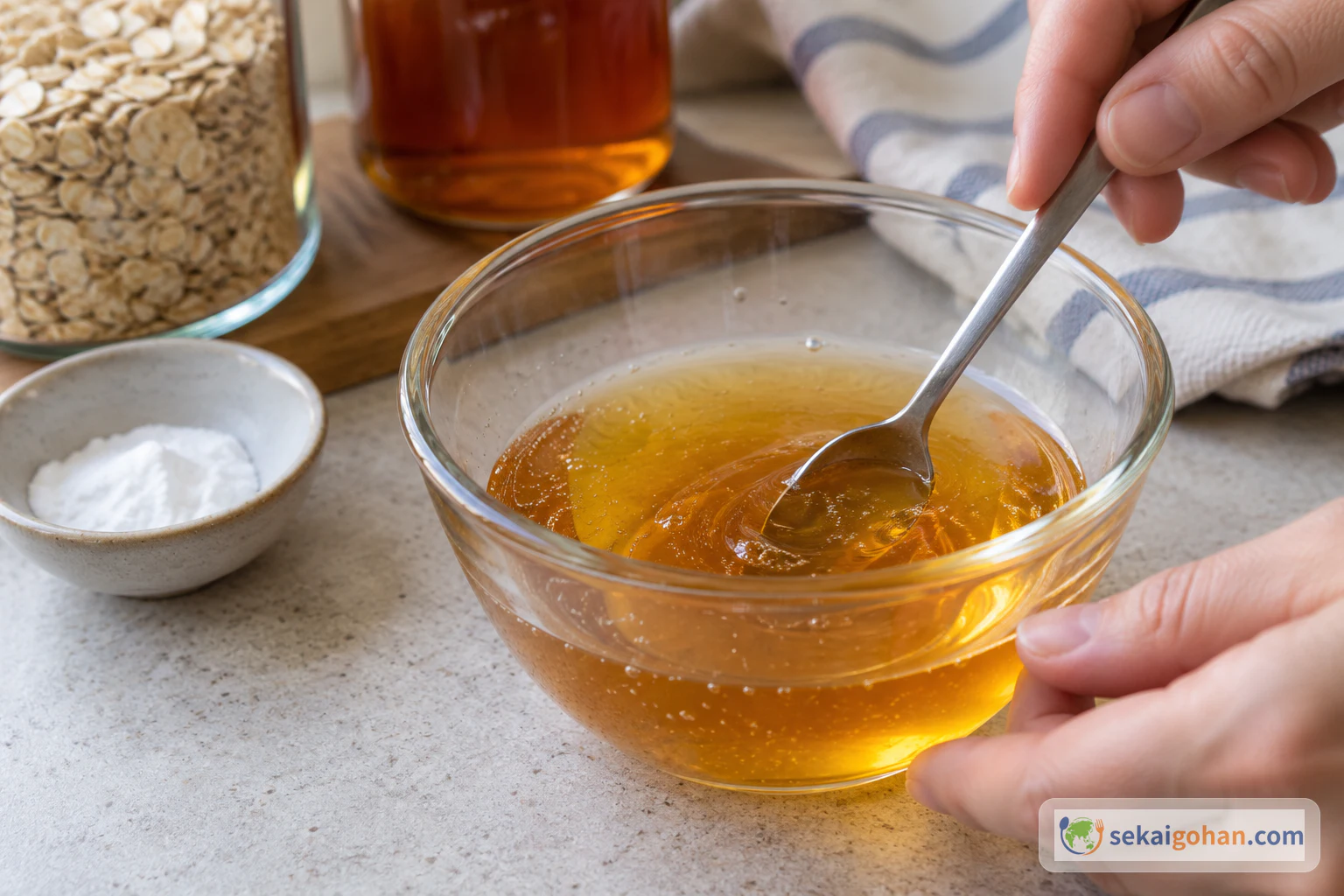
Everything except golden syrup is an ordinary supermarket ingredient, and no special equipment is needed. Look for the general product name “golden syrup”.
This formula contains wheat (flour), milk (butter), oats and coconut. It contains no egg, although the 1917 version of the biscuit did. This is not an allergen-free recipe. Check the labels and any shared-facility statements on every ingredient you buy.
Choosing Ingredients for ANZAC Biscuits
There is no single fixed ANZAC biscuit formula, and home recipes vary. The options below make different biscuits rather than equal swaps for this one.
- Coconut or none: A 1926 recipe has no coconut, while a 1933 recipe includes it, as does this one. Leave it out and you get a different biscuit.
- Caster or brown sugar: Modern recipes use both.
- Butter or margarine: One recipe allows either. Expect a difference in flavor.
- Golden syrup, honey or treacle: Older recipes used honey and treacle. They differ in flavor and moisture from golden syrup, so they won't swap in one-for-one.
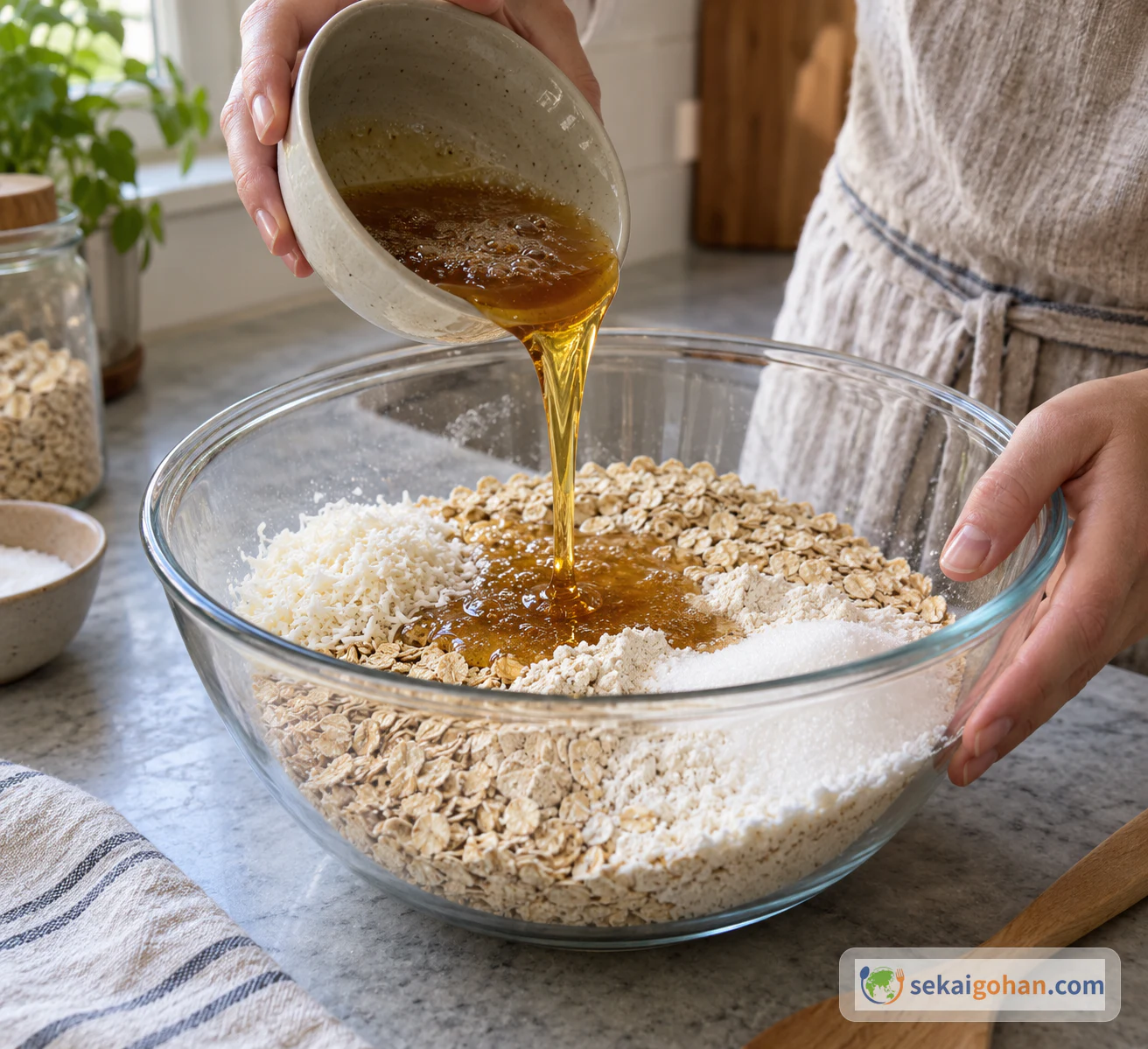
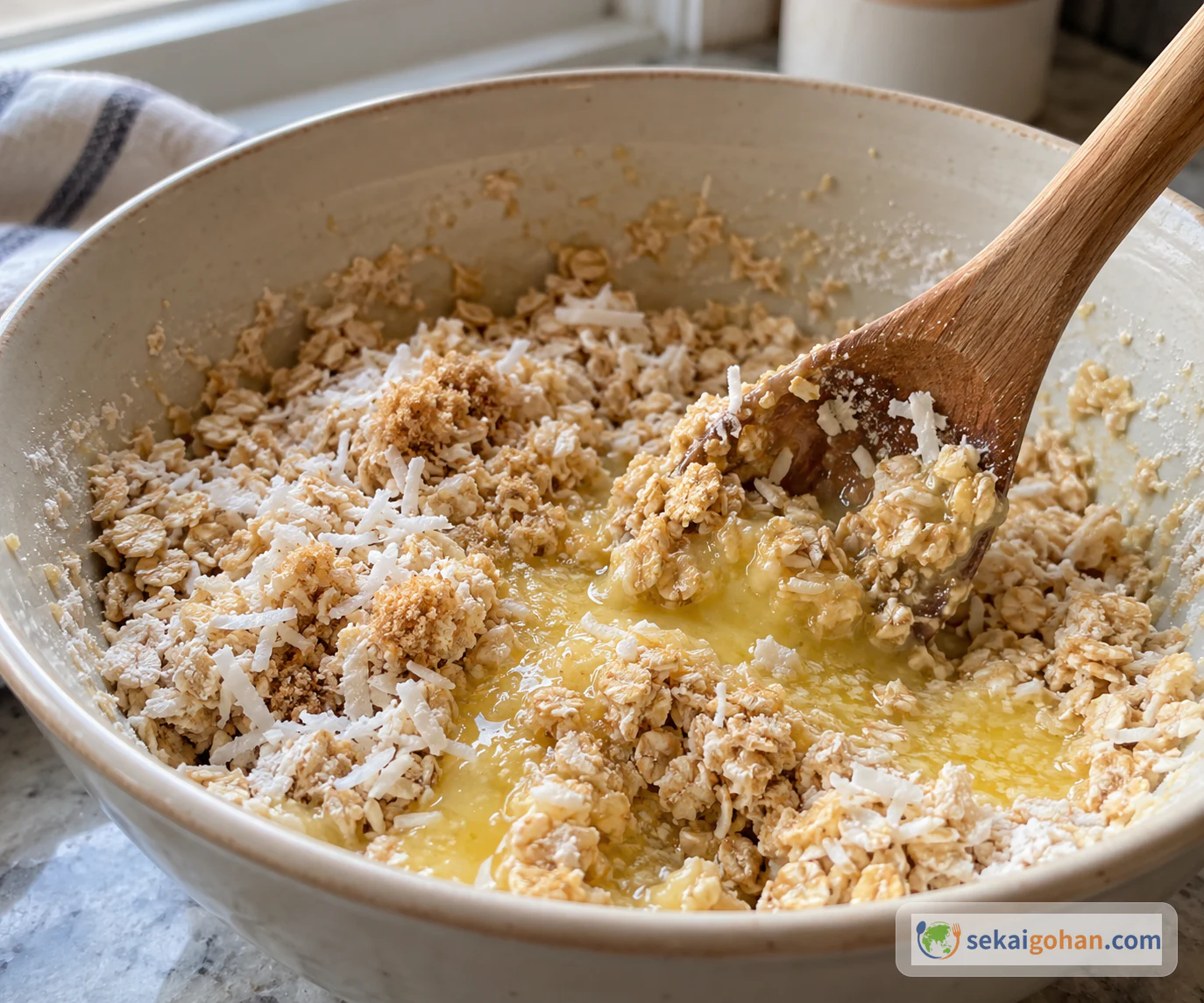
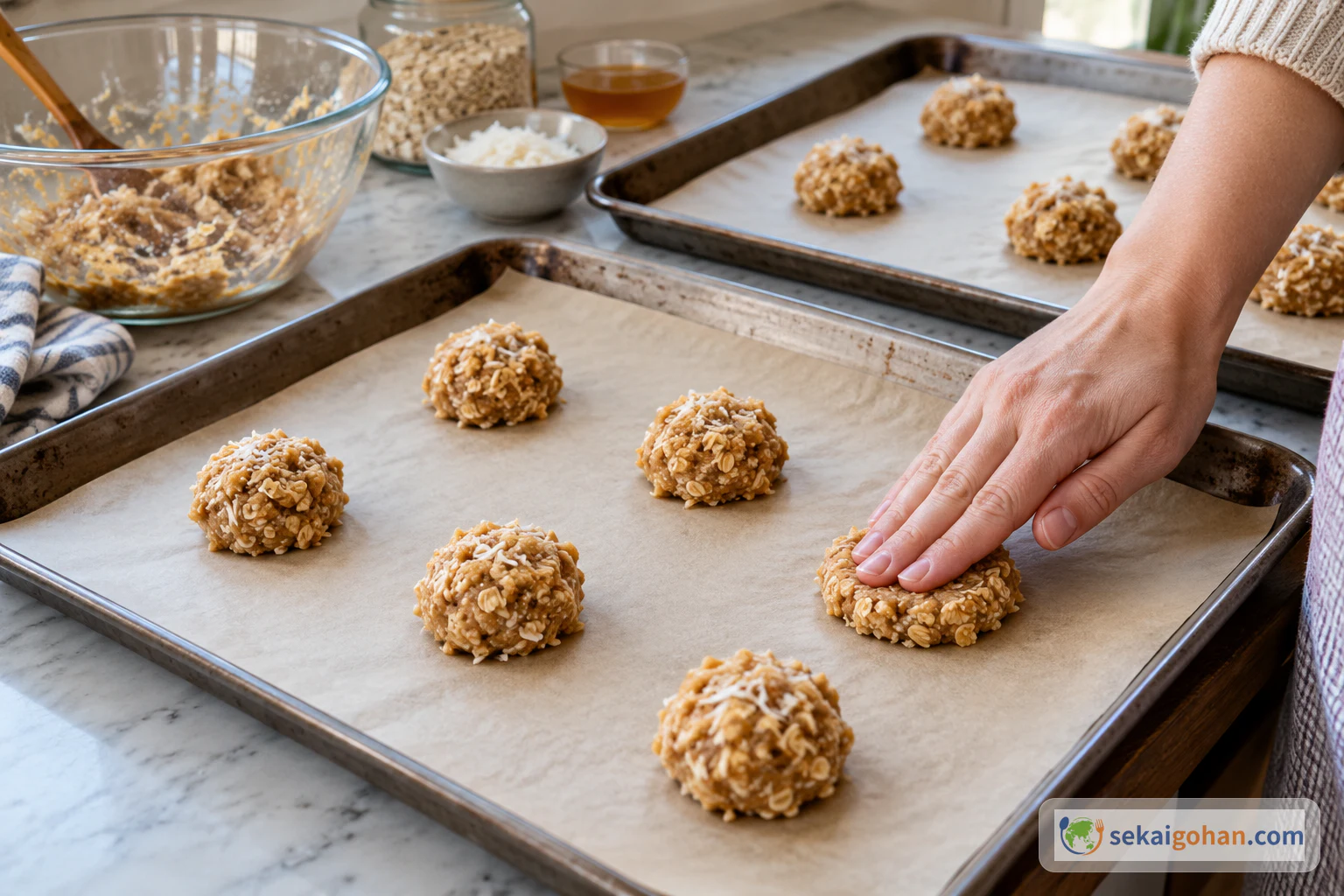
Method: Mix, Shape into 20, Bake at 300°F (150°C)
Bake at 300°F (150°C) for 20 minutes; note how your own oven (fan or conventional) behaves on the first batch.
ANZAC Biscuit Troubleshooting
| Problem | What to check | What to do |
|---|---|---|
| Biscuits spread into each other | Uneven portions or too little space | Divide into 20 even portions and leave more room on the tray. Keep the formula the same on the first batch |
| Dough is crumbly and won't hold | Mixing, measuring | Check your weights and mix thoroughly. Note how the dough behaves rather than adding liquid by guesswork |
| A soapy or soda taste | Soda measurement or uneven mixing | Weigh 5g accurately and mix the soda evenly through the syrup/water mixture |
| Soft straight from the oven | Still hot | Let them cool first; they firm as they cool |
| Too dark or too hard | Oven differences | Start from 20 minutes at 300°F (150°C) and note your oven's color |
Whether you like them soft or crisp is up to you. A 1920 recipe says keeping the dough in rounds gives softer biscuits, while flattening it a little makes them thin and crisp. Baking time works the same way: a little less for softer biscuits, longer for crisper ones.
Storing ANZAC Biscuits
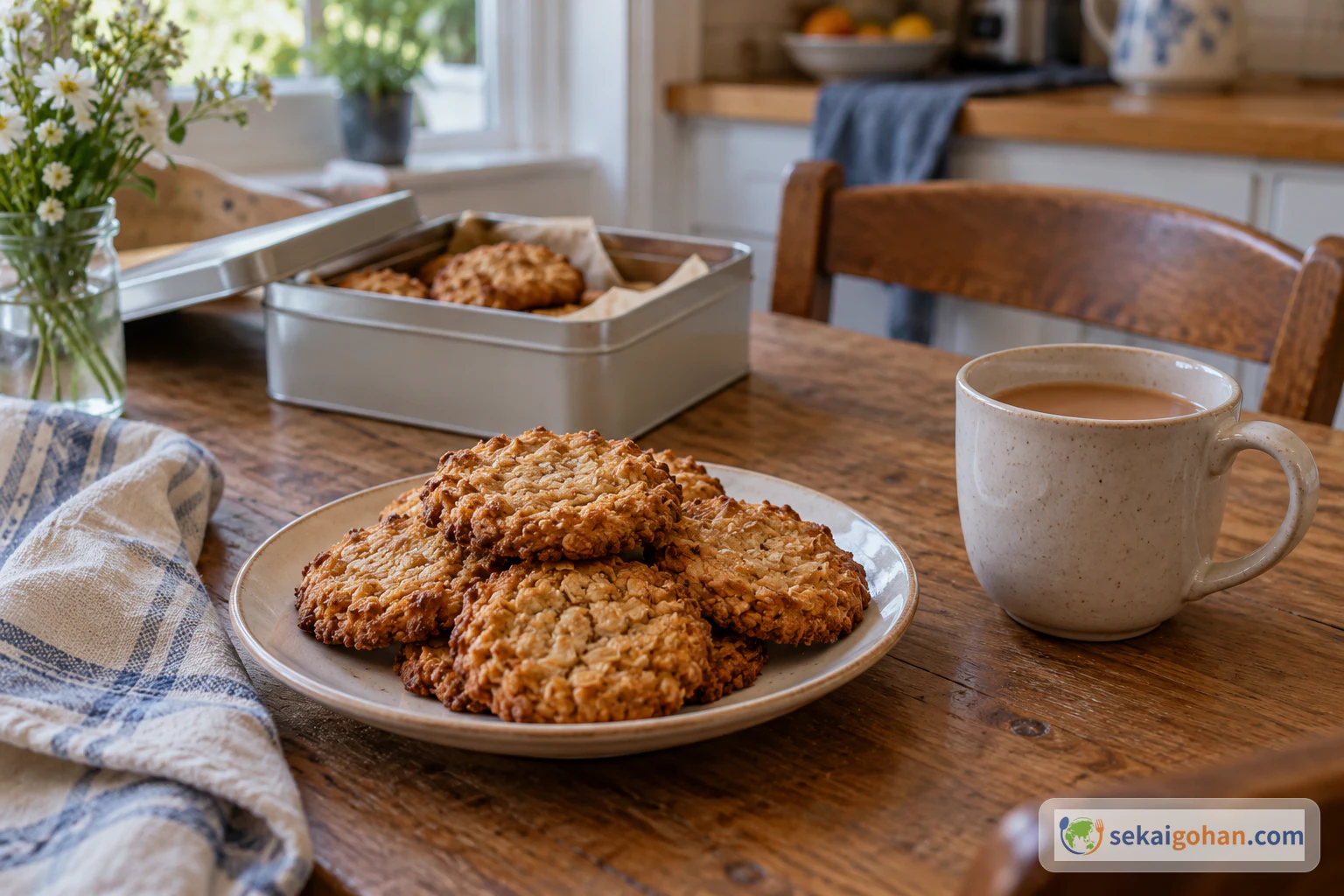
Once the biscuits have cooled completely, keep them in an airtight container for a few days. They also freeze well.
Frequently Asked Questions
Are these the biscuits sent to soldiers in the war?
The link is not settled. The very hard army ration biscuit (hardtack or "Anzac tile") is a different thing from the sweet home-baked biscuit.
What if I can't find golden syrup?
Older recipes used honey or treacle, but they behave differently. For this formula, golden syrup is the one to use.
Is it a failure if they're soft straight from the oven?
No. The biscuits are very soft while hot and firm up as they cool, so let them cool before you judge them.
For more dishes from the same country, see recipes from Australia.