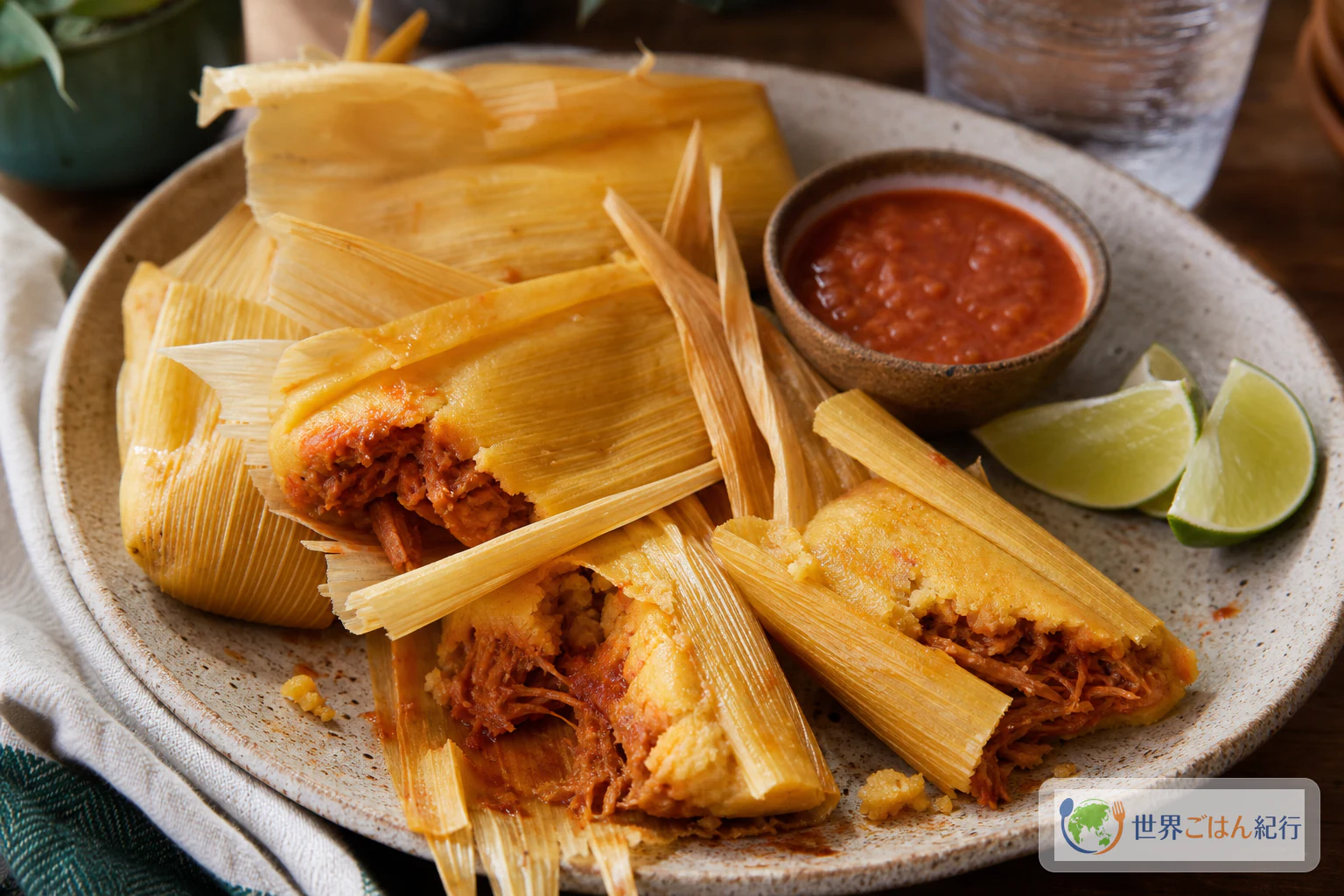
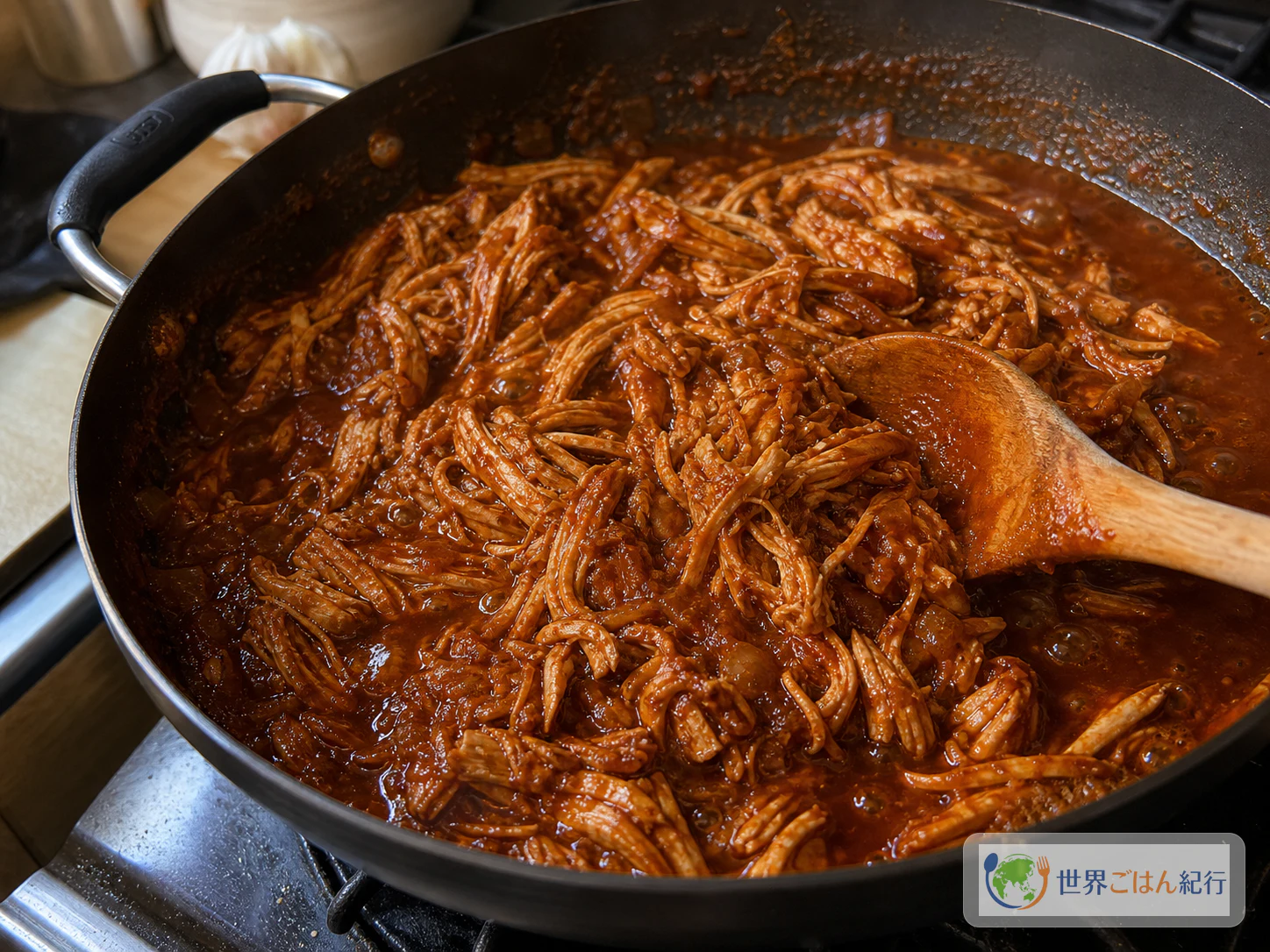
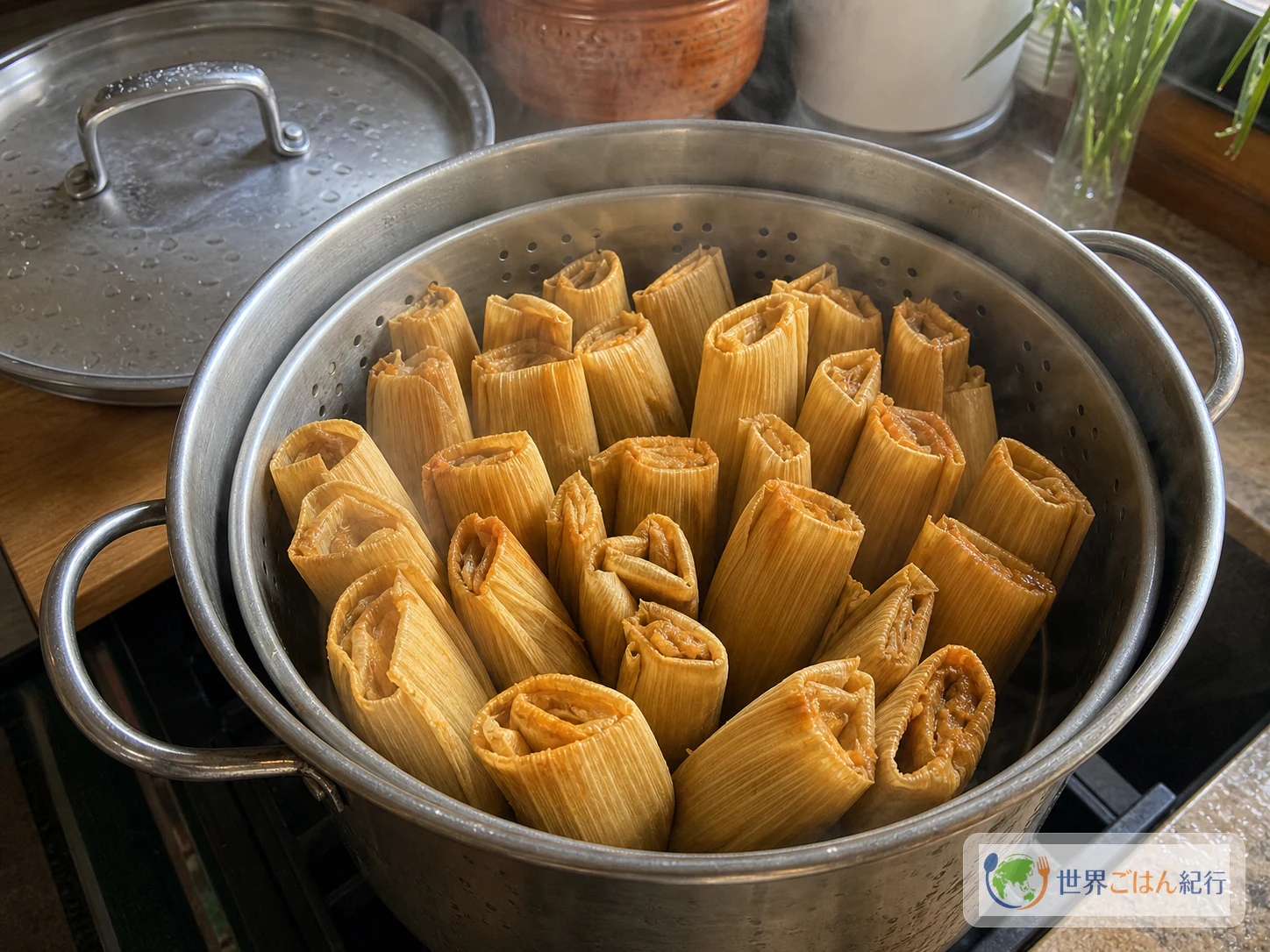
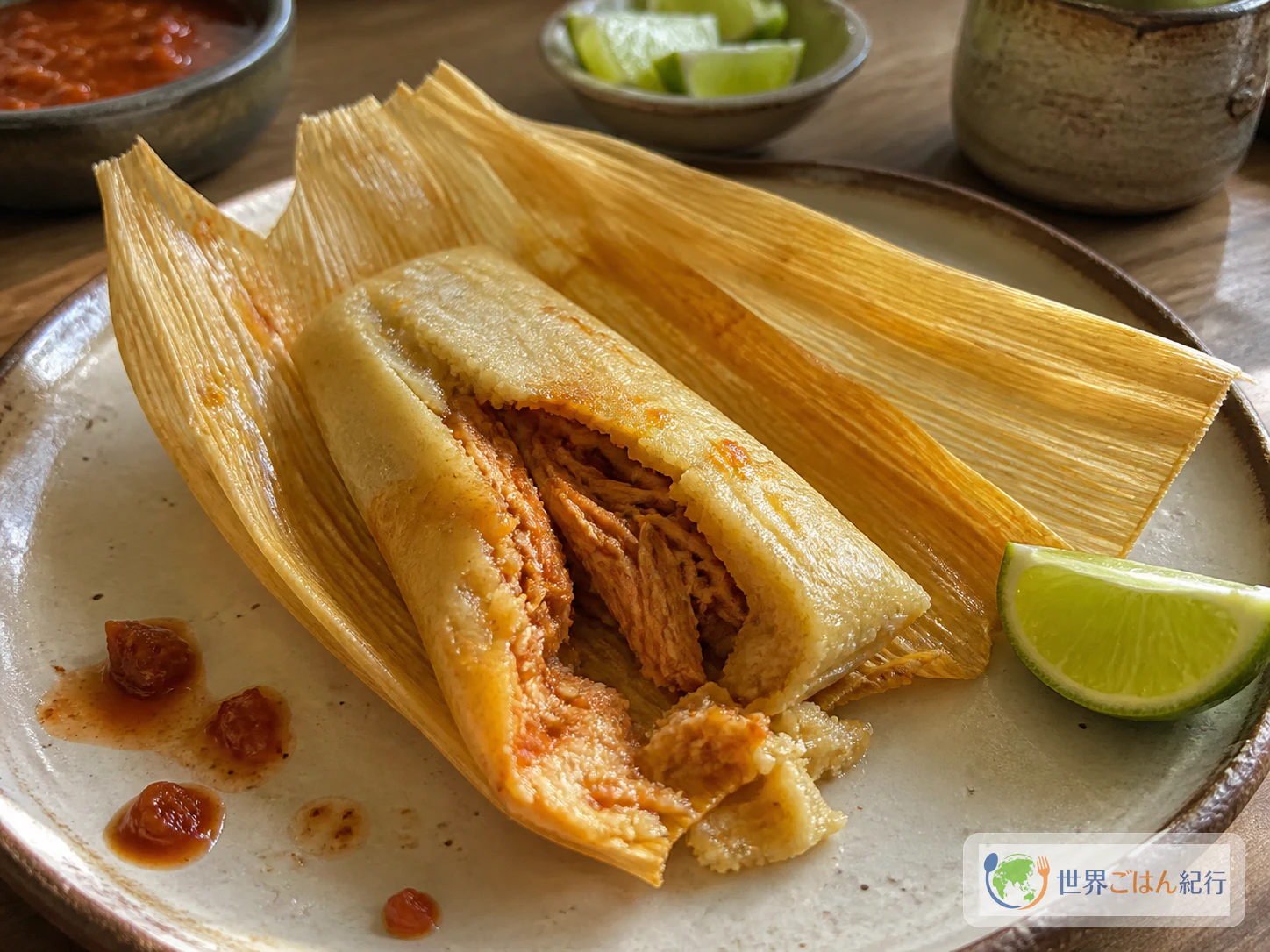
Lift the lid of the steamer and the dried corn husks give off a faint, sweet smell. Inside each one is masa dough, plumper than a tortilla, wrapped around chicken coated in red chile sauce, so you get to unwrap a parcel before it even reaches the plate. Tamales (tamal / tamales) are a Mesoamerican dish: corn dough called masa is topped with a filling, wrapped in corn husks or banana leaves, and steamed. In Mexico they're everyday street food, and they're also the dish of Christmas, Candelaria, and the family gathering called a tamalada.
Tamales in Mexico and Beyond
In Spanish, the singular is tamal and the plural is tamales; in English, tamale / tamales is widely used. Because tamales are a "wrap and steam" dish, they vary a lot by region. In Mexico many are wrapped long and slim in dried corn husks, while in Central America, along the Caribbean coast, and on the Yucatan peninsula some use banana leaves. Large leaf-wrapped feasts follow the same idea: Nicaragua's big vaho and nacatamal, and Venezuela's hallaca.
| What to look at | Traditional | Elsewhere |
|---|---|---|
| Dough | Masa from nixtamal, or masa harina | Look for masa harina, not cornmeal |
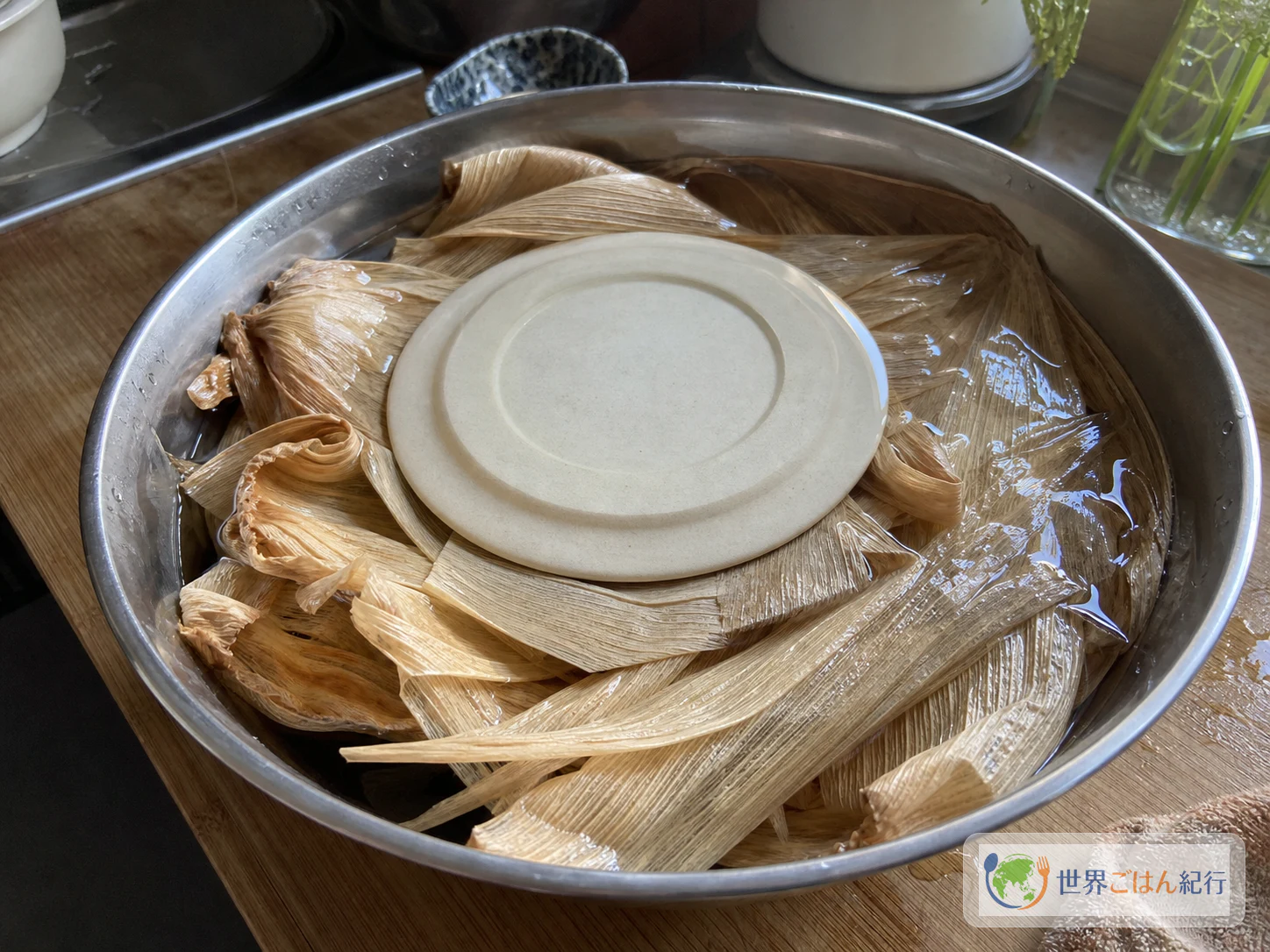
| Wrap | Dried corn husks, banana leaves in some regions | Soften husks in warm water and use torn ones as lining |
| Filling | Wide range: pork, chicken, cheese, beans, sweet fillings | For a first try, use red chicken, which makes doneness easy to check |
| Steaming | Steamed standing up in quantity in a tamalera | Stand them up in a two-tier steamer or a deep pot with a rack |
| How to eat | With atole, salsa, beans, egg dishes | Connect to salsa, lime, bean soup, and chilaquiles-type breakfasts |
Corn dough shows up across the region in other forms too. The Salvadoran pupusas also hold a filling inside corn dough. Within Mexico, tamales steam the masa until it's fluffy, while tlayuda (in Japanese) is a large tortilla crisped on a dry griddle and layered thinly with beans and cheese. From the same corn tradition comes champurrado (in Japanese), a warm drink of masa harina simmered with cacao. Fillings make more sense once you know Mexico's red stews and chile sauces, like tinga de pollo and the deeper mole poblano.
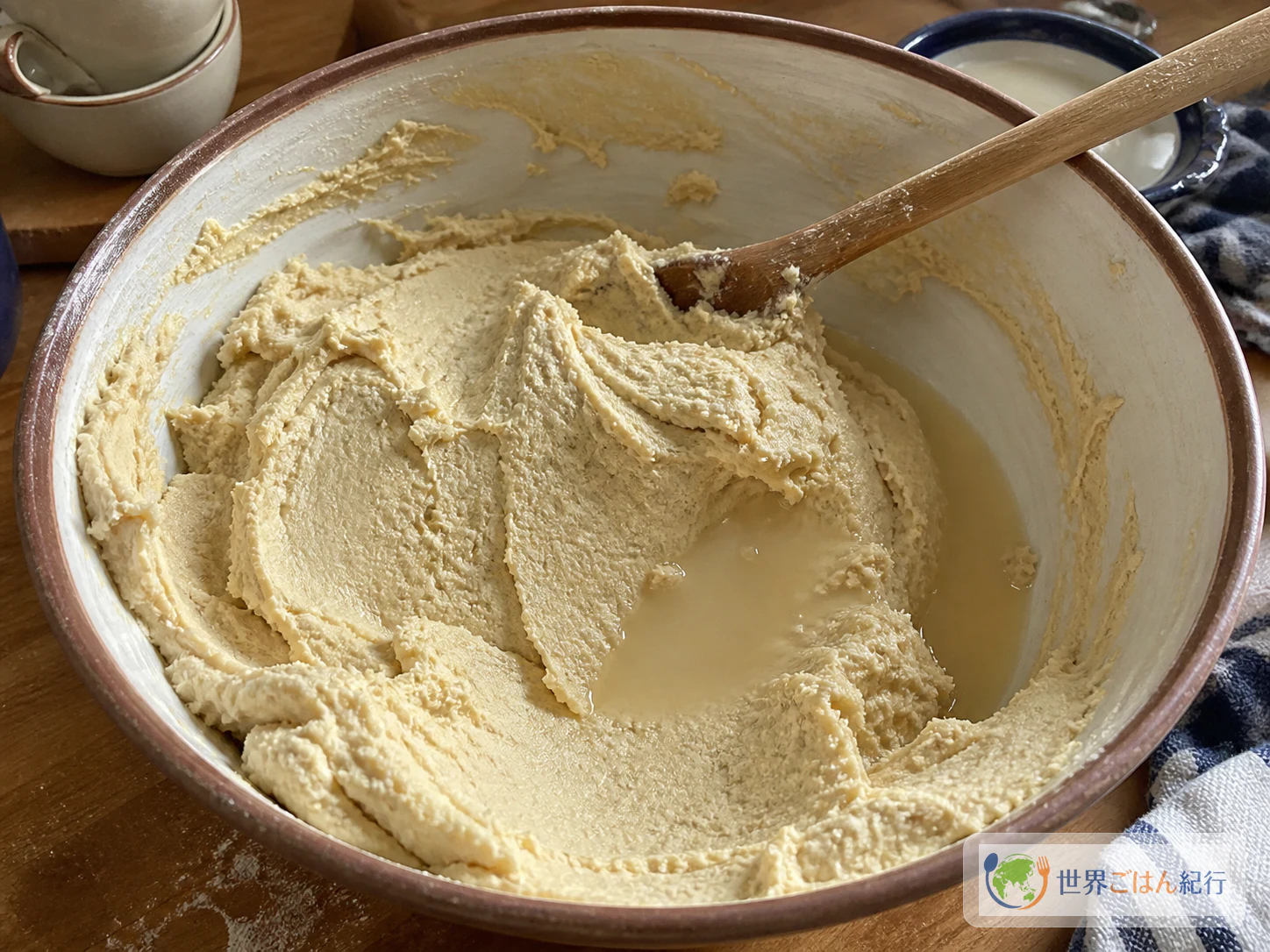
When you make tamales away from Mexico, the hard part is judging the dough, not the seasoning. Masa has no gluten to make it stretch the way wheat dough does. Too soft and it sticks to the husk; too stiff and it stays crumbly even after steaming. The recipe below makes a Mexican-style red chicken tamal with dried corn husks in a home two-tier steamer.
Ingredients (serves 4, about 12 tamales)
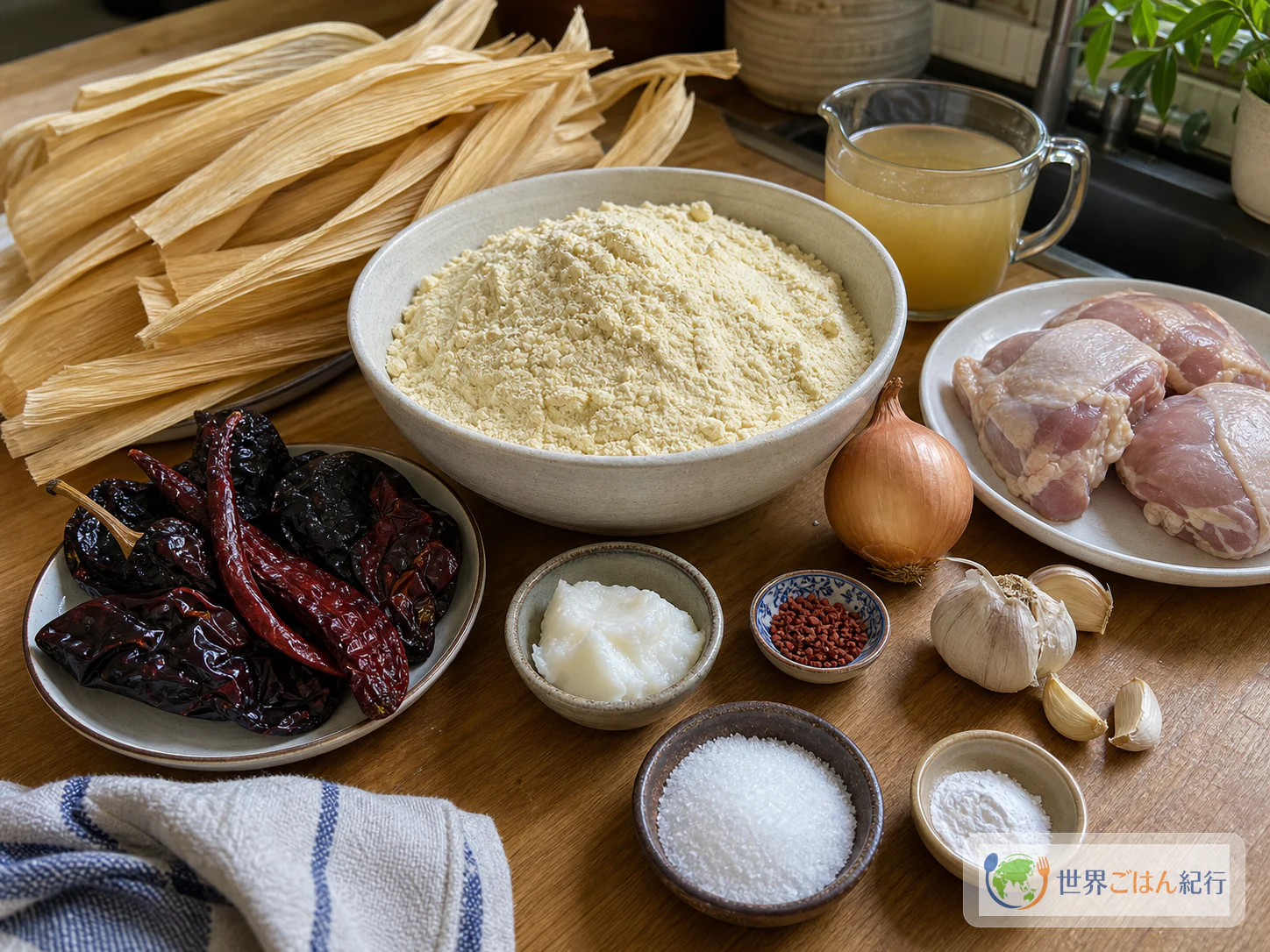
This quantity makes about 12 small tamales, a size that is easy to stand in a steamer. Making them larger lengthens steaming and makes it hard to read doneness at the center and release from the husk.
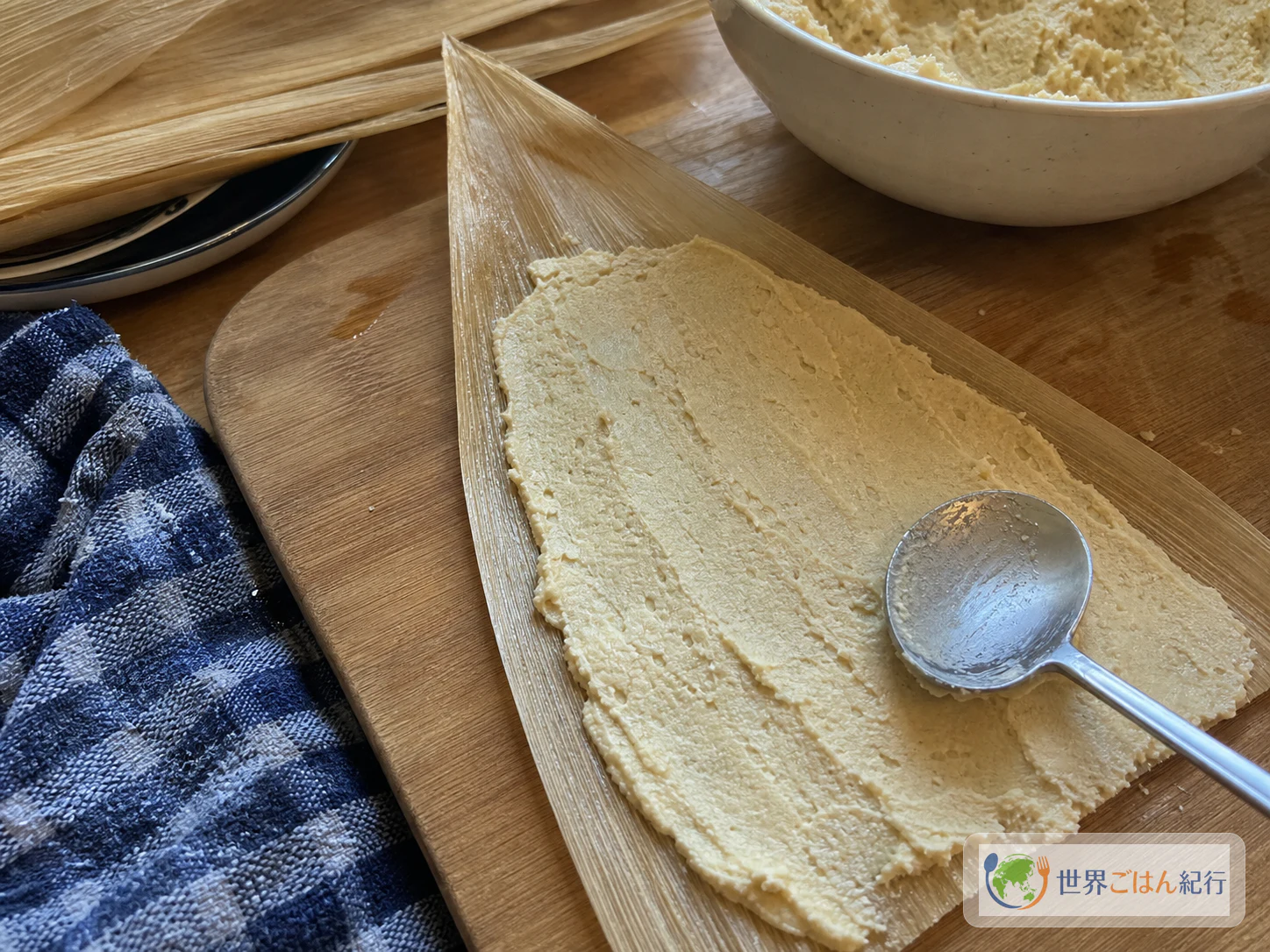
Corn husks and masa dough
Cook chicken to a core temperature of 74 degrees C. The filling is cooked before wrapping, but also check that the center is hot after steaming. Check the labels on masa harina and salsa for wheat, milk, or soy, since products differ.
Ingredients That Are Hard to Choose When Shopping
At a specialty store or online, the things to look for are masa harina and dried corn husks, not the meat or onion. Replace the flour with ordinary corn flour and the dough won't release from the husk after steaming, and the mouthfeel is different.
| What to look for | What to look for on the label | What to do if you cannot find it |
|---|---|---|
| Masa harina | masa harina, instant corn masa flour, "tamales" on the label | Postpone to another day. Do not force it with cornmeal |
| Dried corn husks | corn husks, hojas para tamal | If too small, use two husks overlapped |
| Dried guajillo | chile guajillo, ancho chile | Make a home version with paprika, chili powder, and annatto |
| Annatto | annatto, achiote | Optional, but the red color and aroma are weaker |
| Steamer | Tall enough to stand 12 | A deep pot with a rack, with an empty cup as a prop |
When softened, some corn husks tear. Prepare about 1.5 times the number you will wrap rather than exactly the number you need. Don't throw away torn husks: line the bottom of the steamer with them, or layer them on the outside of a parcel.
Masa flour loses aroma once the bag is opened. Seal the leftover and refrigerate it, and use it within about a month. Making pupusas or tortillas with the same flour is an easy way to use it up.
Annatto is optional. Use it for the red color and earthy aroma when you cannot get dried chiles. It also works in Central American leaf-steamed dishes and red stews.
Tamales lying on their side and touching water make the dough watery. A tall steamer makes it easier to steam about 12 standing up.
The chicken filling is cooked before wrapping. With thick pieces or pork, check with a thermometer rather than judging by sight.
Choosing Masa Harina, Chiles, and Substitutes
Masa harina is the one ingredient you can't replace. Cornmeal, cornstarch, and Harina P.A.N. look like the same yellow flour, but they behave differently. Cornmeal is just ground corn, and its water absorption, aroma, and binding are all different, so after steaming it turns gritty and won't release from the husk. Harina P.A.N. suits arepas, but in tamales it changes both how the masa comes off the husk and how it smells. Look for a package labeled "masa harina" and "tamales."
The chiles are much easier to substitute. Use dried guajillo or ancho if you have them. If not, build the red color and aroma with paprika, a little chili powder, annatto, and tomato. You're not after heat here. You want a red sauce that clings to the chicken and cuts the sweetness of the masa.
| Where you hesitate | Closer to the original | Substitute elsewhere | Direction to avoid |
|---|---|---|---|
| Dough flour | Masa from nixtamal | Look for 'masa harina' labeling | Substituting cornmeal, potato starch, or pancake mix |
| Fat | Whipped light with lard | Lard, or rice bran oil for a lighter version | Adding a lot of butter and moving toward a dairy aroma |
| Chiles | Guajillo, ancho, chile de arbol | Make up the red aroma with paprika, chili powder, annatto | Making it hot with only crushed red pepper |
| Wrap | Wrapping in layered corn husks | Double torn husks, or tie with thin strips of husk | Steaming in plastic wrap and losing all the aroma |
| Steamer | Standing in a tamalera | Stand in a two-tier steamer or a deep pot with a rack | Lying on their side in contact with water |
When it comes to substitutes, protect the flour first, then the husks, then the steaming method. Swap the chiles and you still have a tamal, but without masa harina and husks you lose the texture and aroma that make it one. On your first shopping trip, buy the flour and husks before anything for the red filling.
Method: Soften the Husks, Make the Filling, Wrap the Dough, and Steam
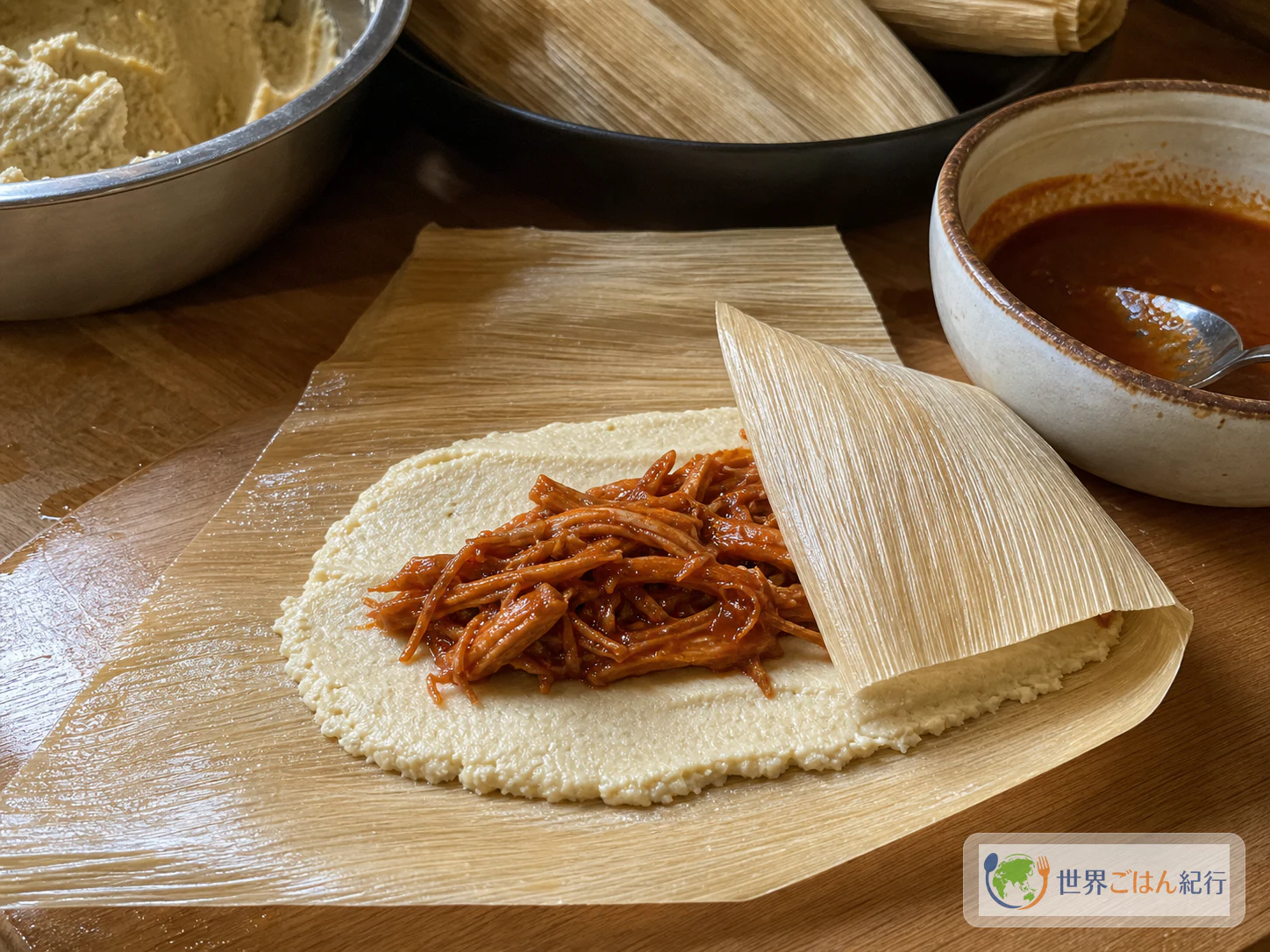
Tamales look like many steps, but there are three things you do: soften the husks, prepare the filling and dough separately, and wrap and steam. Making the filling first and cooling it keeps the dough from sagging when you wrap.
Common Tamale Problems and Fixes
| Symptom | Cause | Fix |
|---|---|---|
| Masa sticks to the husk | Under-steamed, dough too loose | Steam 10–15 minutes more over medium heat. Next time, hold back the cooking liquid |
| Dough is crumbly | Not enough liquid, not enough fat | Before steaming, add 1 tbsp cooking liquid at a time. After, serve with more salsa |
| Filling leaks out the sides | Too much filling, edges not left clear | Reduce to 1 tbsp filling and leave 0.5 inches (1.5 cm) on each side |
| Husks scorch | Steamer ran dry, steamed over high heat | Add boiling water at 30 minutes, and lower to medium once steam comes out |
| Red filling is watery | Sauce not reduced | Cook 5 minutes more over medium-low heat until it clings to the wooden spoon |
| Flavor is vague | Not enough salt in the masa, no acidity | Add lime and salsa at the table. Next time, keep the masa salt at 1 tsp |
Some tamale failures can be fixed with more steaming and some can't. If they're under-steamed, just steam them again. Masa that was too watery from the start is hard to rescue, and so are scorched husks. Stop adding liquid when the masa is "spreadable but not runny," and check the water level in the steamer partway through.
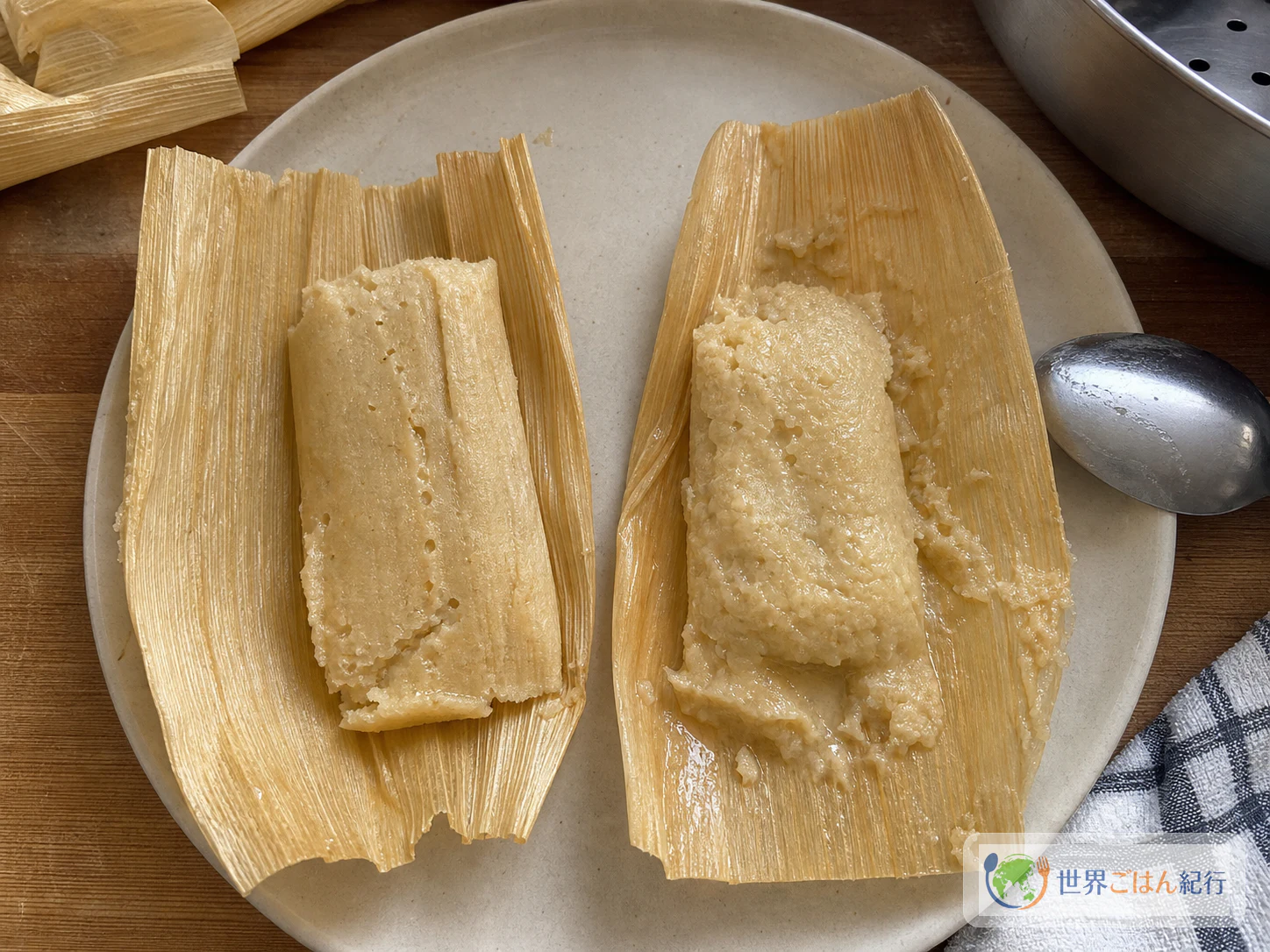
Don't eat them straight out of the steamer. A 10-minute rest after you turn off the heat lets the starch in the masa settle, and the husk peels away more easily. If a tamal still sticks a little when you first open it, wait 2 minutes; it often lets go then.
Serving, Storing, and Reheating Tamales
What to Serve with Tamales
The simplest way to eat a tamal is to open the husk and spoon on salsa. With a red filling, tomato salsa, salsa verde, lime, and cilantro all go well. The masa tastes gentle, so a little sourness on the plate keeps it from feeling heavy.
For breakfast, serve 1 tamal with egg, beans, and salsa. If you have salsa left over from chilaquiles the day before, just warm it and spoon it on. At dinner, a big-pot soup like pozole rojo is too heavy alongside. Bean soup, cabbage dressed with lime, or roasted vegetables work better.
Leftover filling can go into tortillas the next day. If you roll and fry them like taquitos (in Japanese), cook off the liquid in the filling first. Leftover masa on its own won't make tamales, but rolled thin and cooked, it makes a light base for beans and salsa.
Storage and Reheating
Store tamales in their husks. Once they've cooled slightly, put them in a storage container with the husks closed and eat them within about 3 days refrigerated. To freeze, keep the husks on so they don't dry out, wrap each one in plastic wrap, and put them in a freezer bag for up to about 3 weeks.
A steamer is the best way to reheat them: 10 minutes over medium heat from the fridge, or 20–25 minutes over medium heat straight from frozen. In a microwave, dampen the husk slightly, cover loosely with plastic wrap, and heat at 600 W for about 2 minutes for one refrigerated tamal, or 4 minutes for one frozen. The ends dry out easily in the microwave, so add salsa just before eating.
Making Tamales Ahead
The filling is the safe thing to make ahead. If you leave the masa spread on the husks and wrapped overnight, the husks soak up moisture and the tamales can stick after steaming. On a big batch day, make the filling in the morning and start wrapping 2 hours before you plan to eat.
Frequently Asked Questions
Q1. Can I make it without lard?
You can. ¼ cup (60 ml) rice bran oil makes a light dough, though you lose some of the fluffy mouthfeel and aroma you get from beating lard. To make up for it, season the filling a little stronger and put plenty of salsa and lime on the table.
Q2. How do I change it to a pork tamal?
Replace the chicken with 1.25 lb (550 g) pork shoulder cut into 1-inch (3 cm) cubes, and simmer it 40–50 minutes with water, onion, garlic, and salt. Whole pork cuts are safe at 63 degrees C with a rest time, but for a tamale filling, cook past that until the fibers loosen when pressed with chopsticks, then shred the meat and coat it with the red sauce. Large pieces are hard to wrap. The steaming time stays the same.
Q3. Do you eat the corn husk?
No. The husk is a wrapper that adds aroma and holds the shape while steaming. On the plate, open it and eat only the masa and filling inside. If you're serving children or first-timers, tell them before they start.
Q4. How many can I steam at once?
As many as will stand in the steamer while still leaving room for steam to move. Packed too tightly, the ones in the center steam poorly. In a home two-tier steamer, plan on 6–8 per tier and use both tiers if you have more. If you swap the tiers partway, open the lid briefly and be careful not to burn yourself.