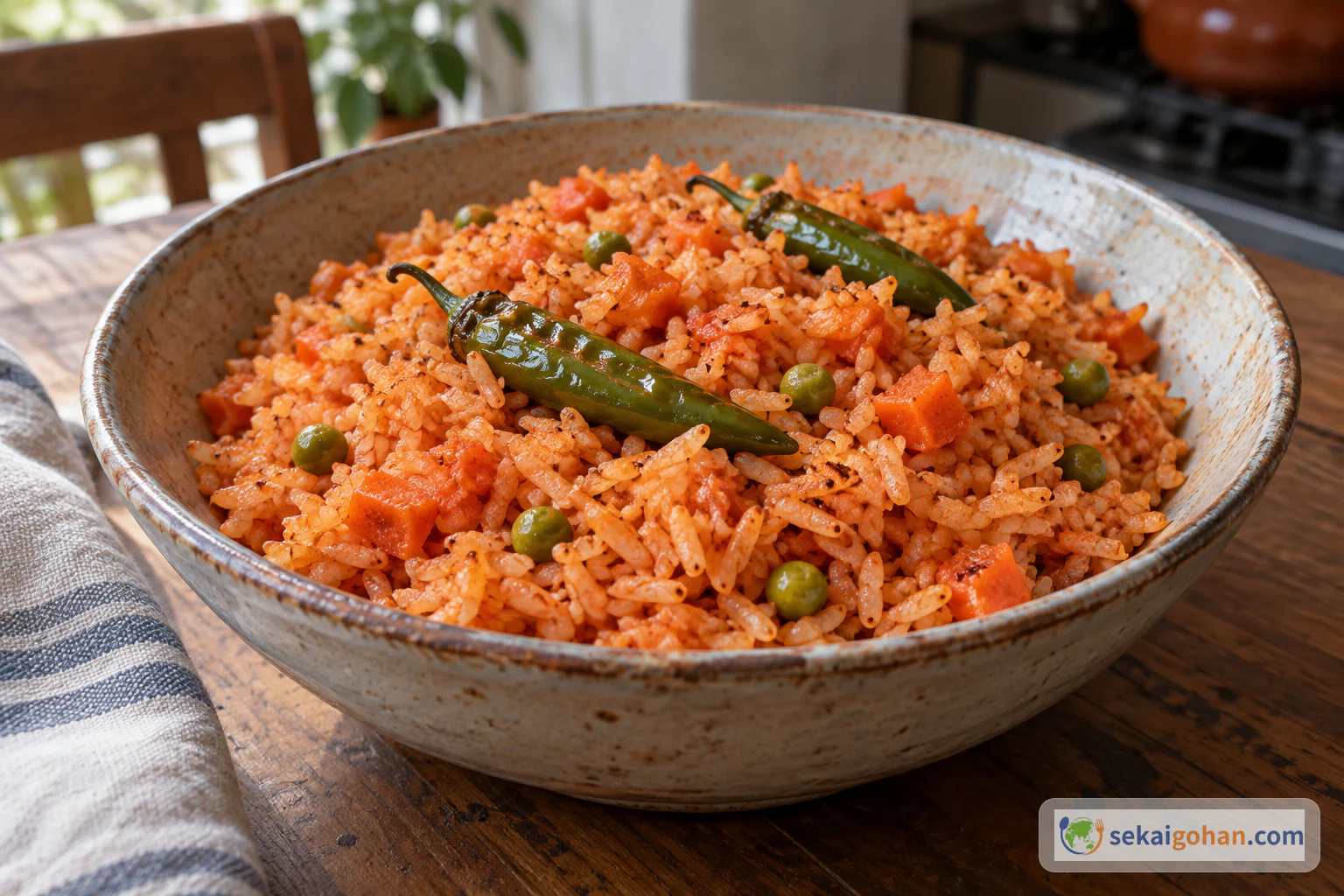
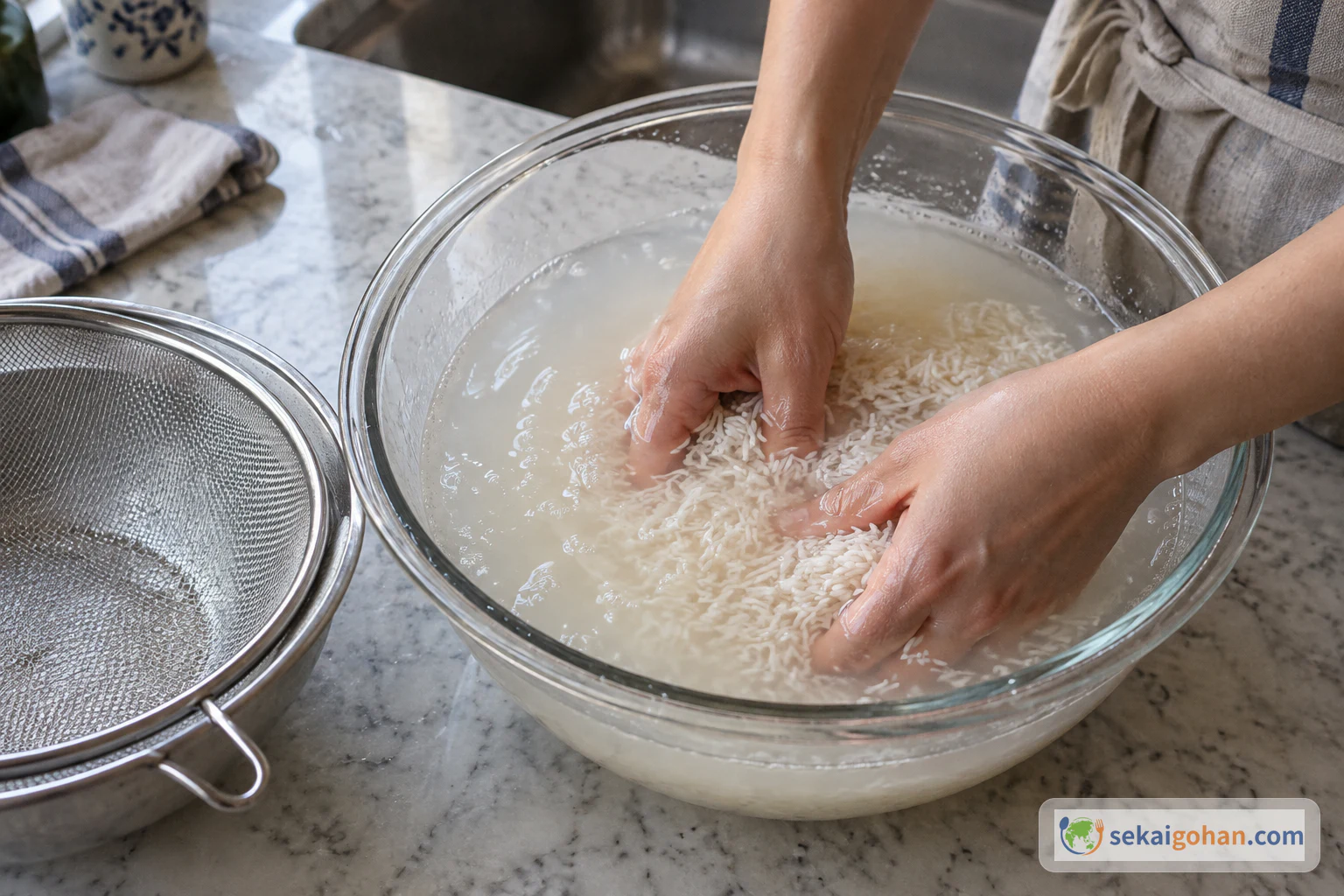
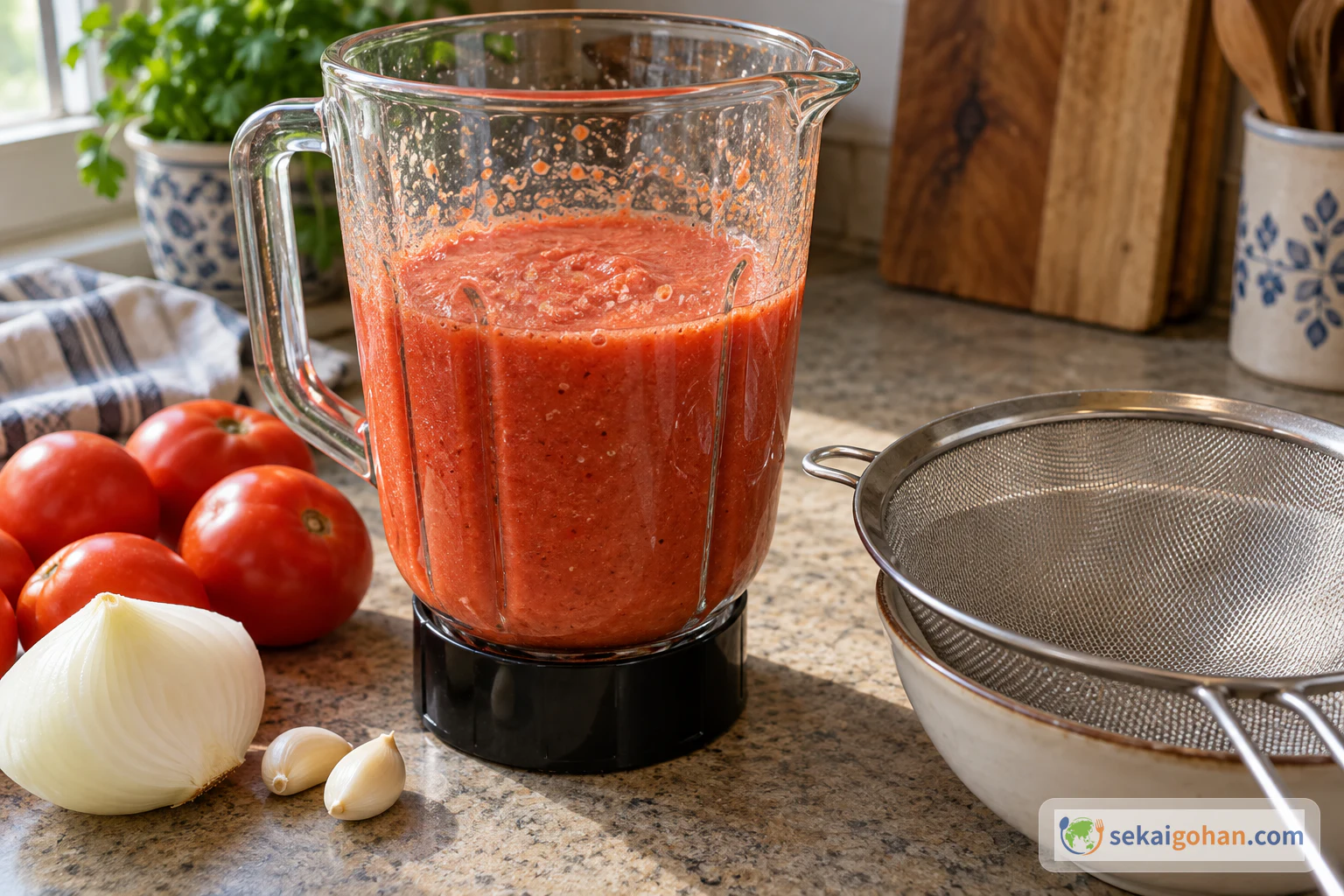
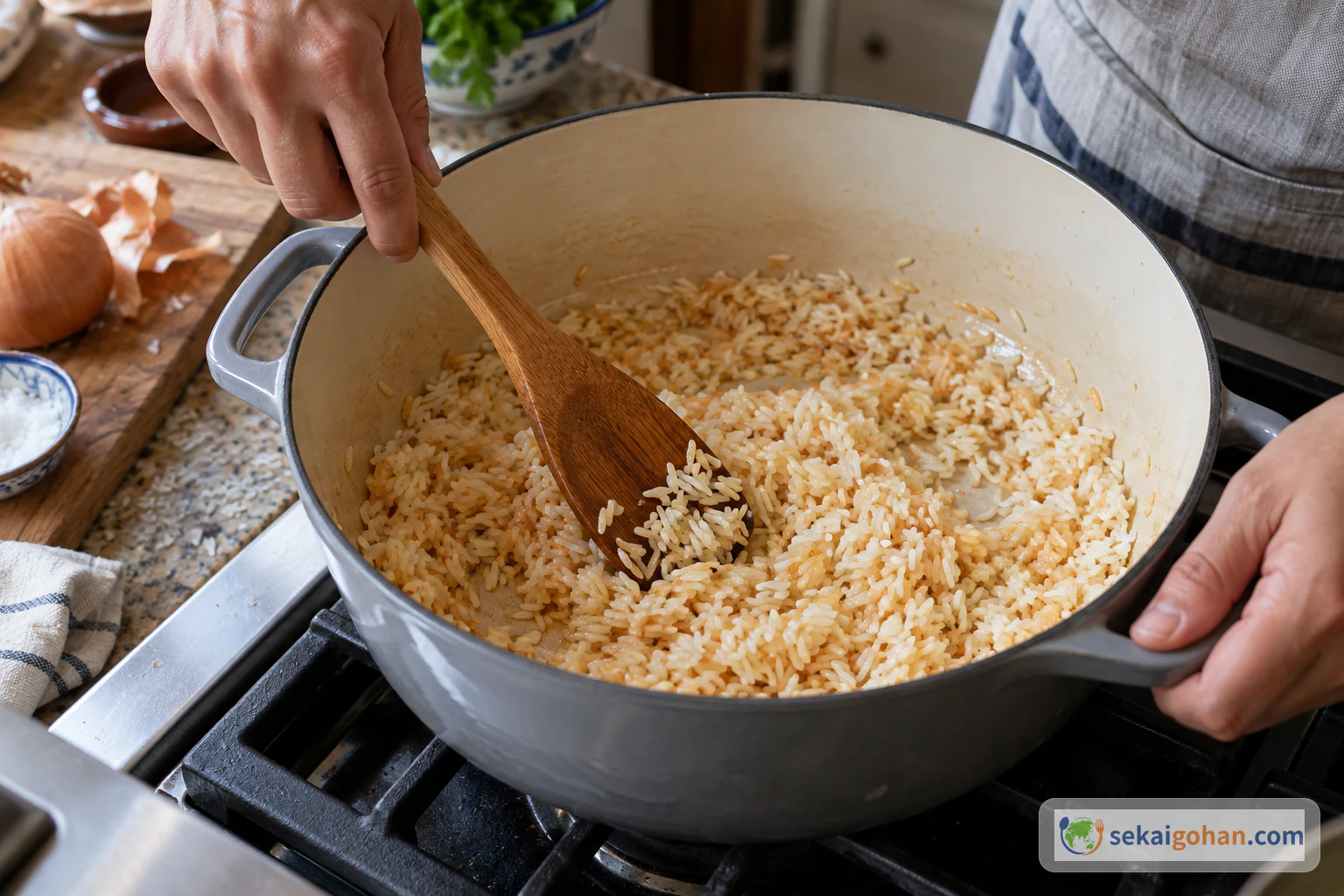
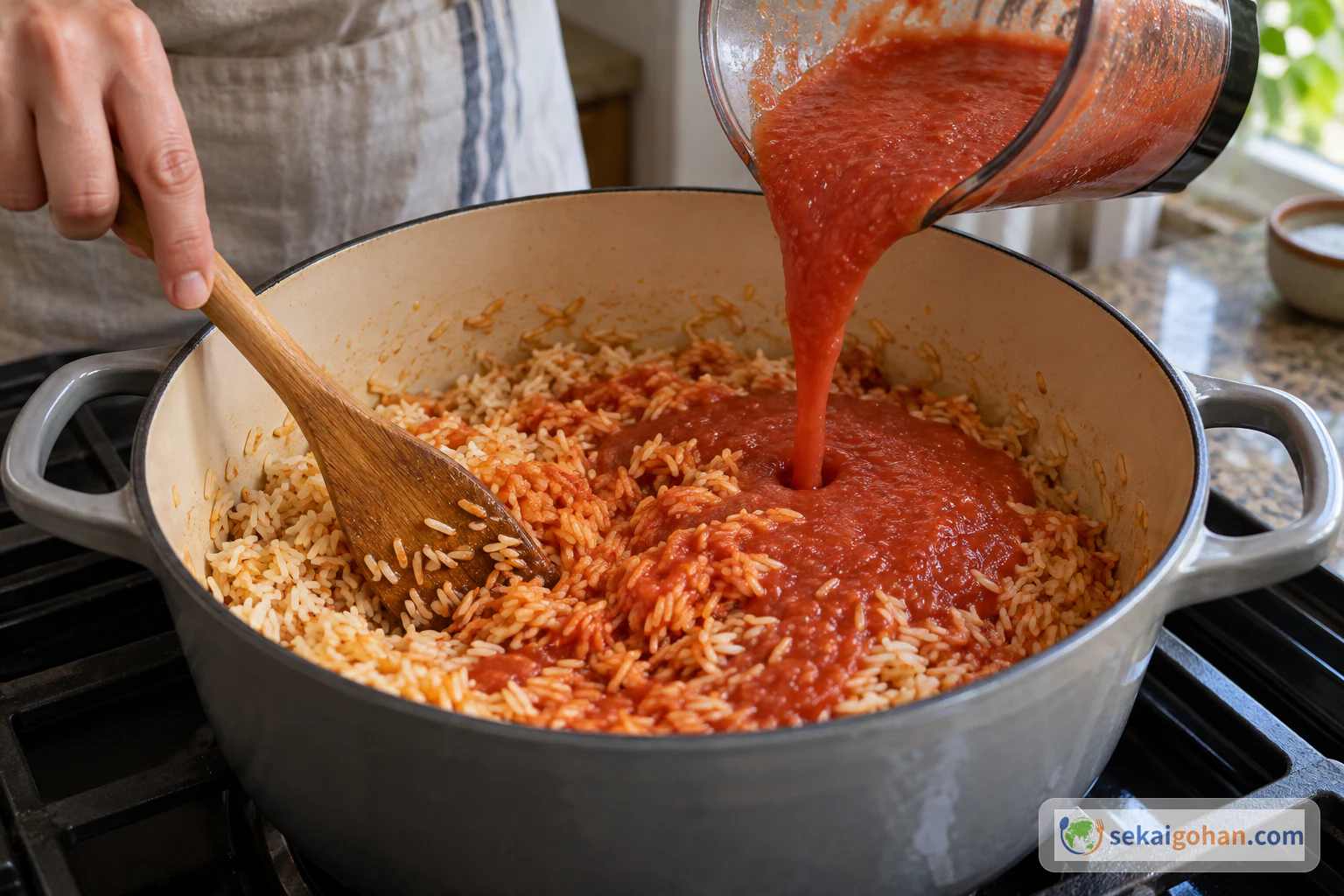
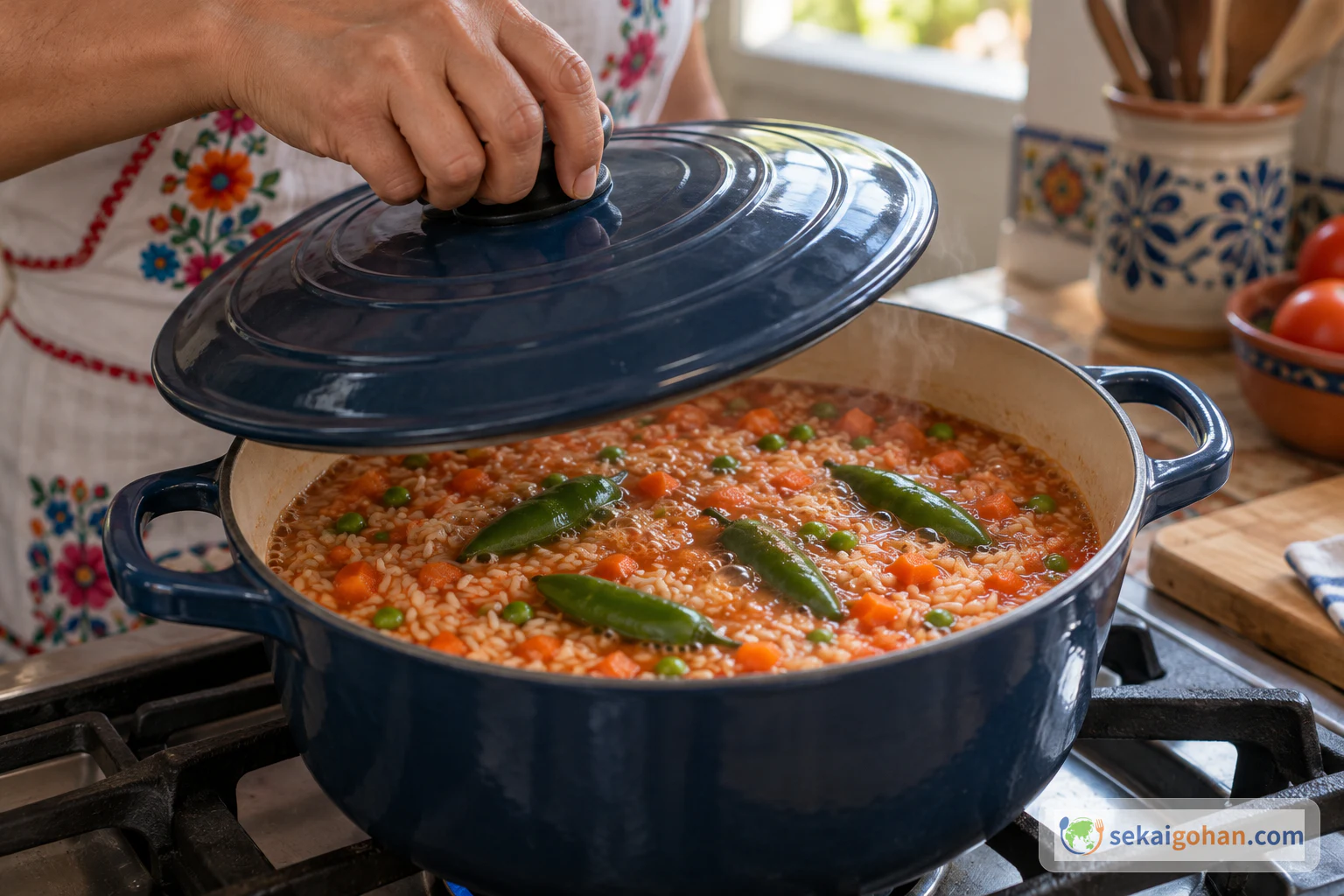
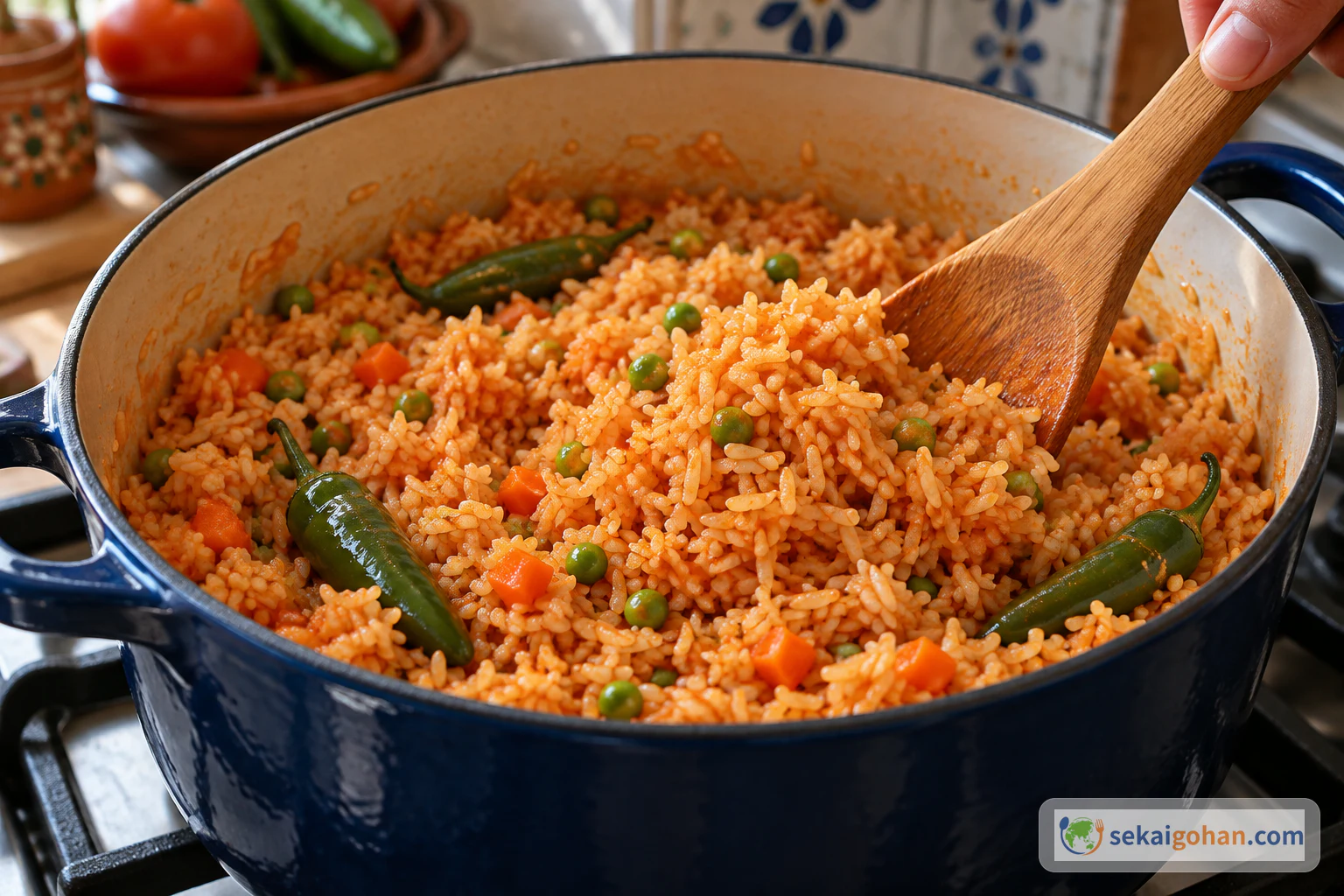
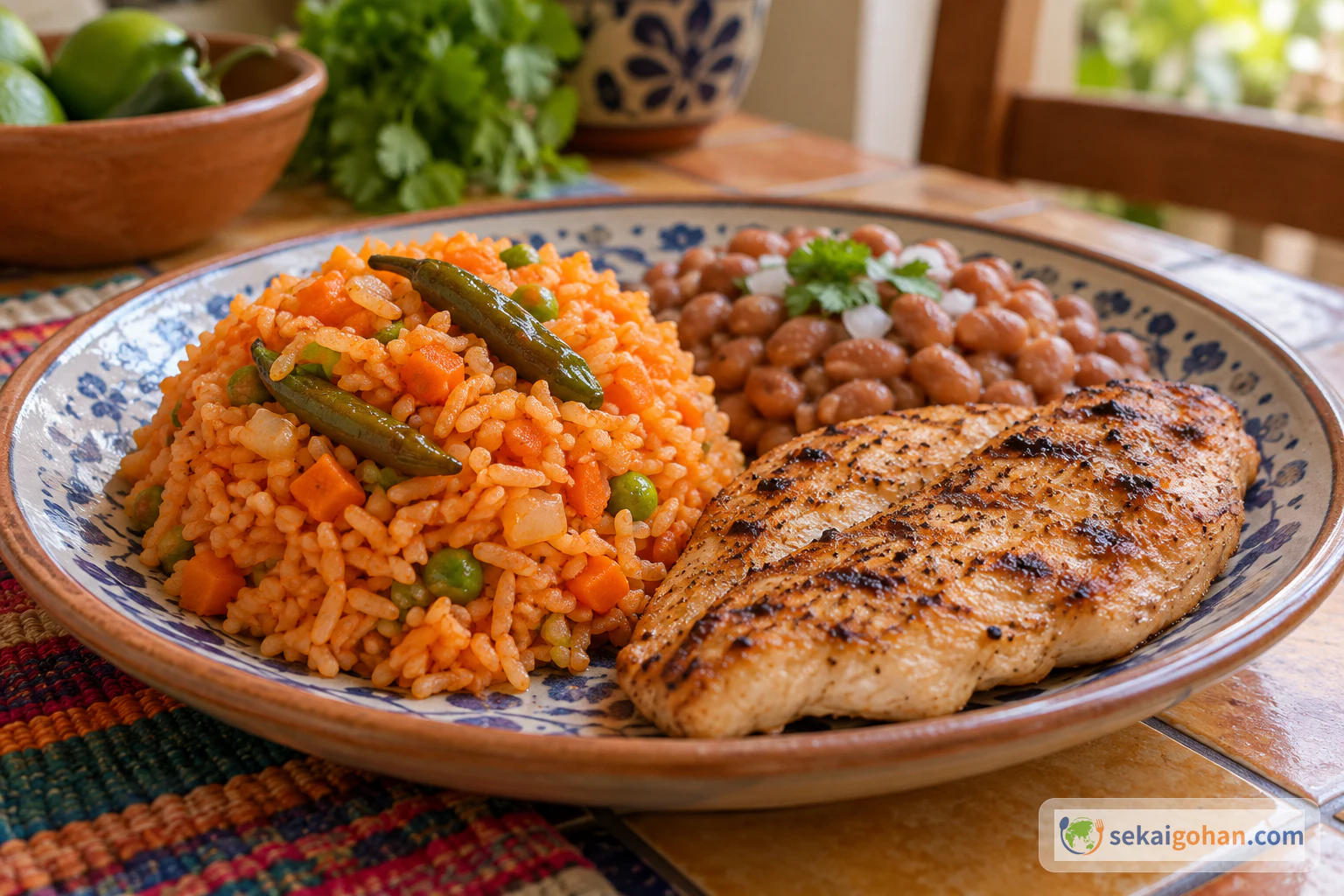
Rinsed rice moves through hot oil until the grains turn lightly golden. A strained purée of ripe tomato, garlic and white onion goes in next, then hot water, diced carrot, peas and three whole green serrano chiles. The lid goes on, the heat goes down, and the pot is left alone. What comes out is arroz rojo, a classic Mexican side dish also known as arroz a la mexicana, with tender, separate grains stained red by the tomato. In English it usually goes by Mexican rice.
Arroz Rojo and Its Names
Arroz rojo is rice fried and seasoned with blended tomato, then cooked in water or chicken broth with garlic, onion and herbs. In Mexico City and the central states, people often call it arroz a la mexicana.
That second name comes from the colors: green from peas and chiles, white from the potato often used, and red from tomato. Potato is common in this style, though this version leaves it out. In Mexico the rice is served as a sopa seca or a side, and you'll find more dishes like it among our Mexican recipes.
Ingredients for 6 Servings
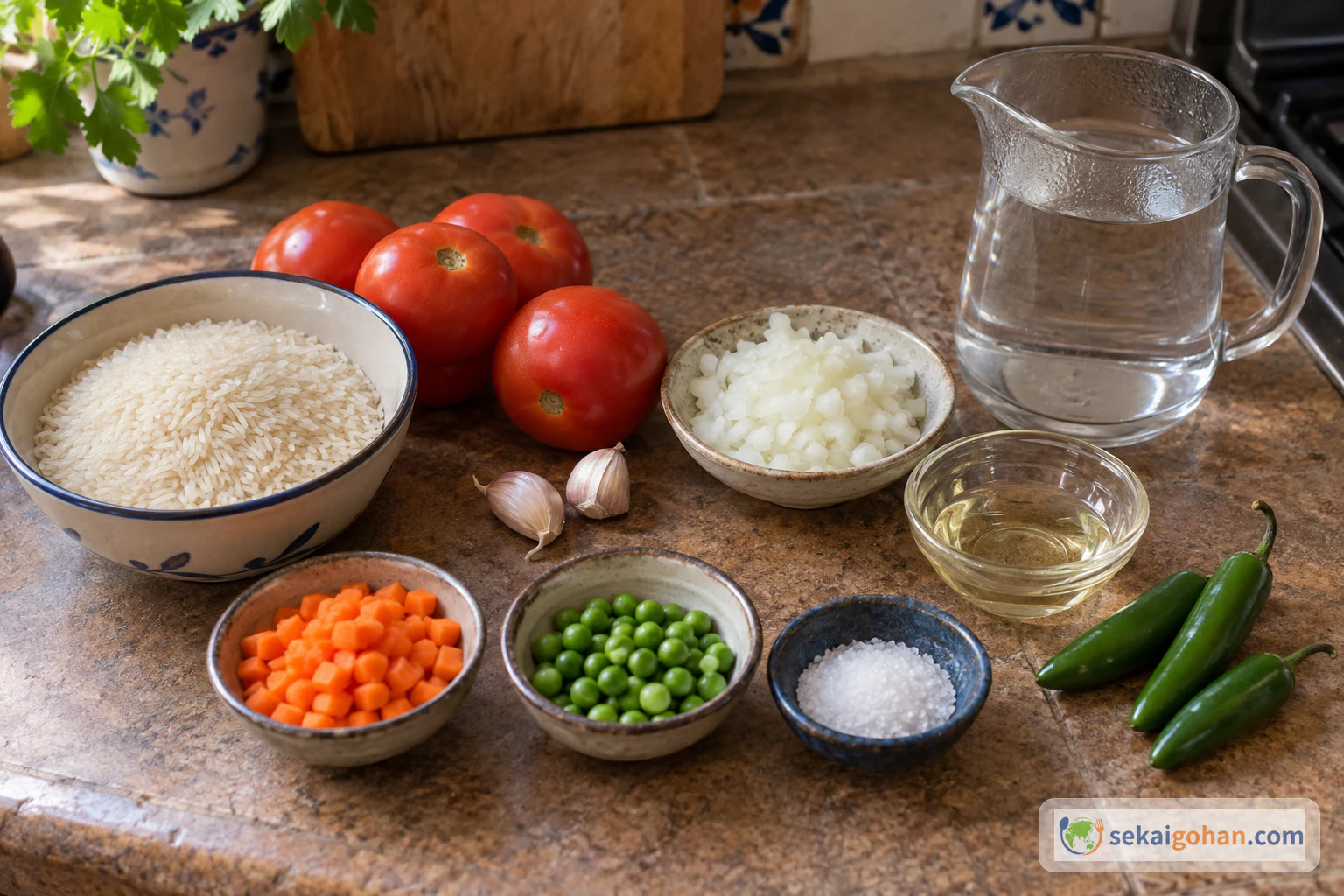
Equipment
- Bowl and strainer for rinsing the rice
- Blender
- Strainer for the sauce
- Pot with a lid
- Spatula or wooden spoon
Choosing Ingredients for Arroz Rojo
- Cups and spoons: Use the same cup for the rice, oil, water, carrot and peas, so they stay in proportion to one another.
- Oil: Any cooking oil you normally reach for will work.
- Salt: Salt grains vary in size, so taste before serving and adjust if needed.
- Serranos: If you can't find them, leave them out or use another green chile. Heat and size differ, so either choice changes the dish.
- Water: This version uses hot water. Chicken broth also works, but it makes a different rice.
Fixing Common Arroz Rojo Problems
Most problems come down to two moments: how far you fry the rice, and how much you move it once the sauce is in. Fry only until lightly golden, then stir once, gently, so the grains stay whole.
| Problem | Likely cause | What to do |
|---|---|---|
| The rice is hard to fry evenly | Too much water left after rinsing | Drain it as thoroughly as you can before it goes into the oil |
| The sauce is thin or has bits in it | Water was added to the blender, or the sauce wasn't strained | Blend without water and always strain |
| The grains turned dark | The rice was fried past the lightly golden stage | Stop earlier next time and keep the rice moving |
| The color is patchy | Tomato sauce has collected at the edges of the pot | Gently move the rice from the edges toward the center |
| The grains are broken | The rice was stirred too hard | Move it carefully, and only as much as needed to even the color |
| The rice is still firm at the end of cooking | Pots and burners differ | Keep it covered on low, then check a grain again before resting |
Regional Variations of Arroz Rojo
Red rice changes from one part of Mexico to another.
| Where or who | What changes |
|---|---|
| Tabasco, parts of Chiapas and Yucatán | Achiote is added |
| Durango | Additions such as peas, potato, chile strips, corn and cheese |
| Another version | The rice and a tomato-vegetable mixture are cooked separately, then combined, with cilantro, parsley, chile cuaresmeño, cooked carrot and peas |
Try these as separate dishes rather than adding them all to the recipe above. The two-part version in particular uses different quantities and its own method.
Frequently Asked Questions
How much is a taza or a cucharada?
The measures are left as taza and cucharada, without conversion. Use one cup for every taza measure, and those ingredients will stay in proportion to one another.
Can I use chicken broth instead of water?
Yes. Arroz rojo is cooked in either water or chicken broth. This recipe uses hot water, and broth gives you a different version.
How hot will the whole serranos make the rice?
The chiles go in whole, so the rice takes on their flavor without being cut through with heat. At the table, each person can eat a chile or set it aside.