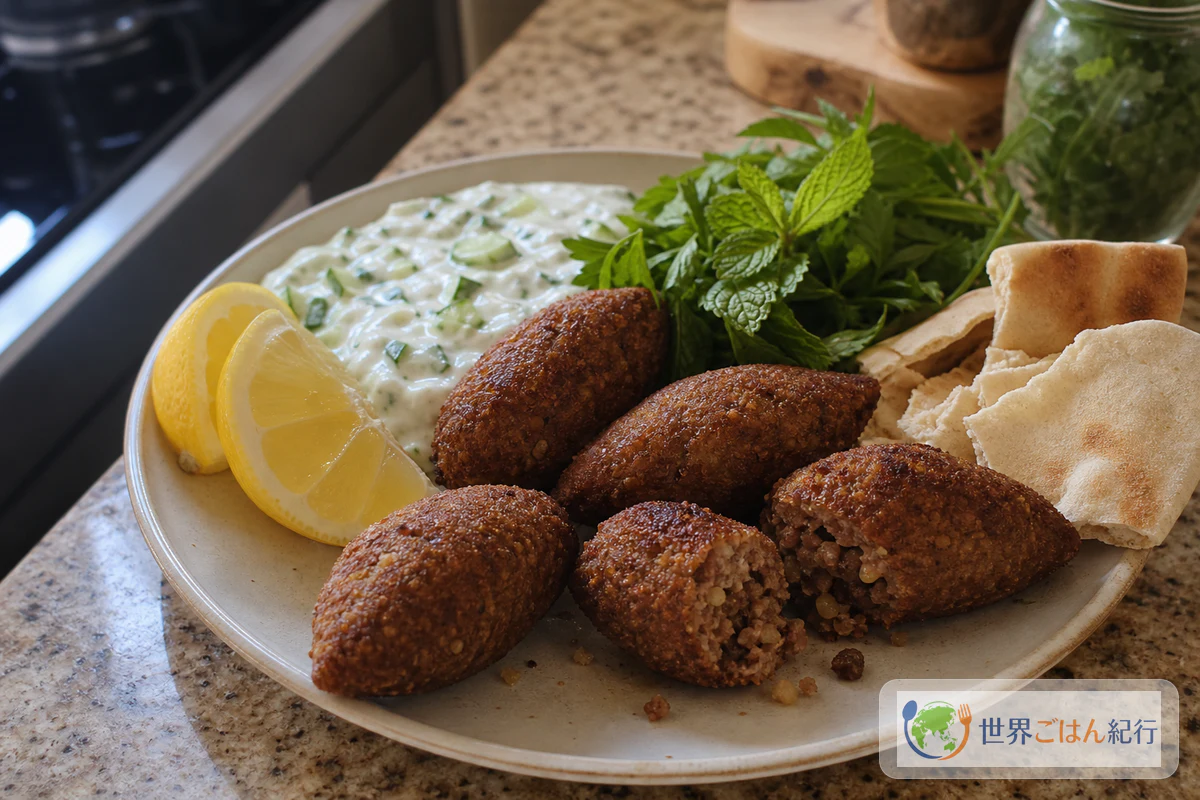
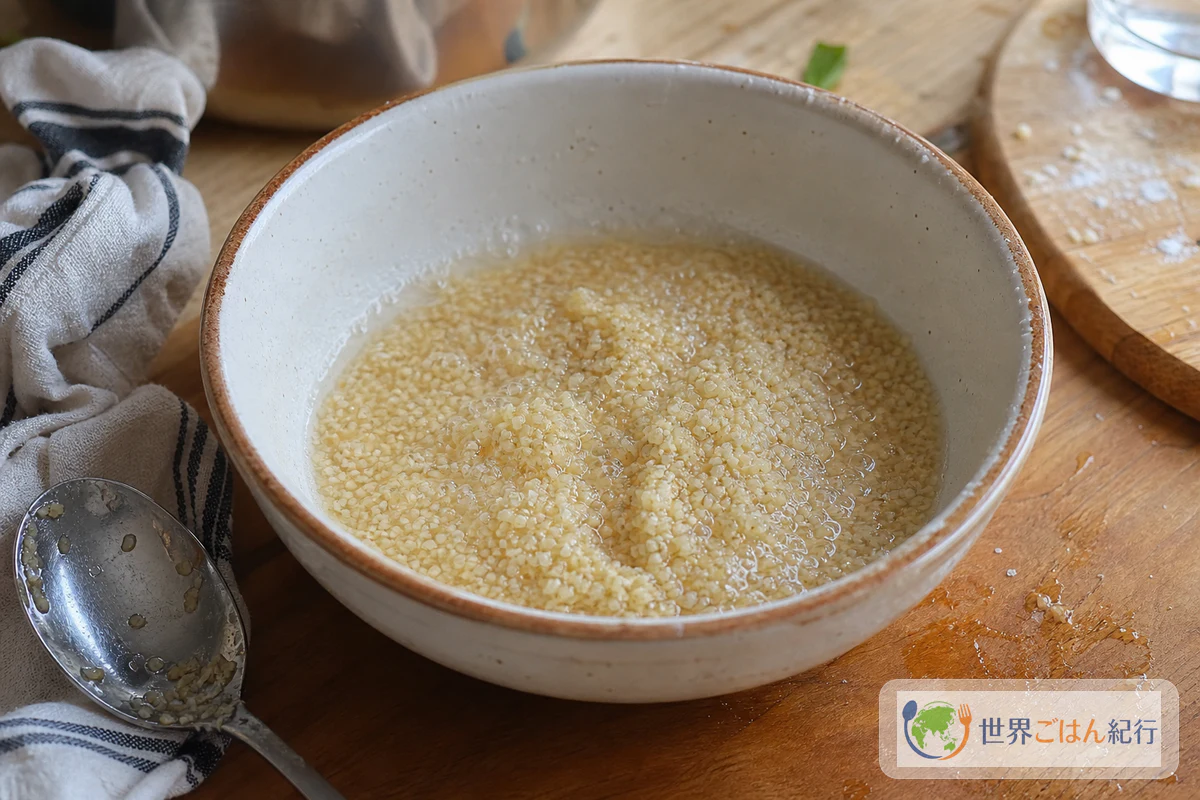
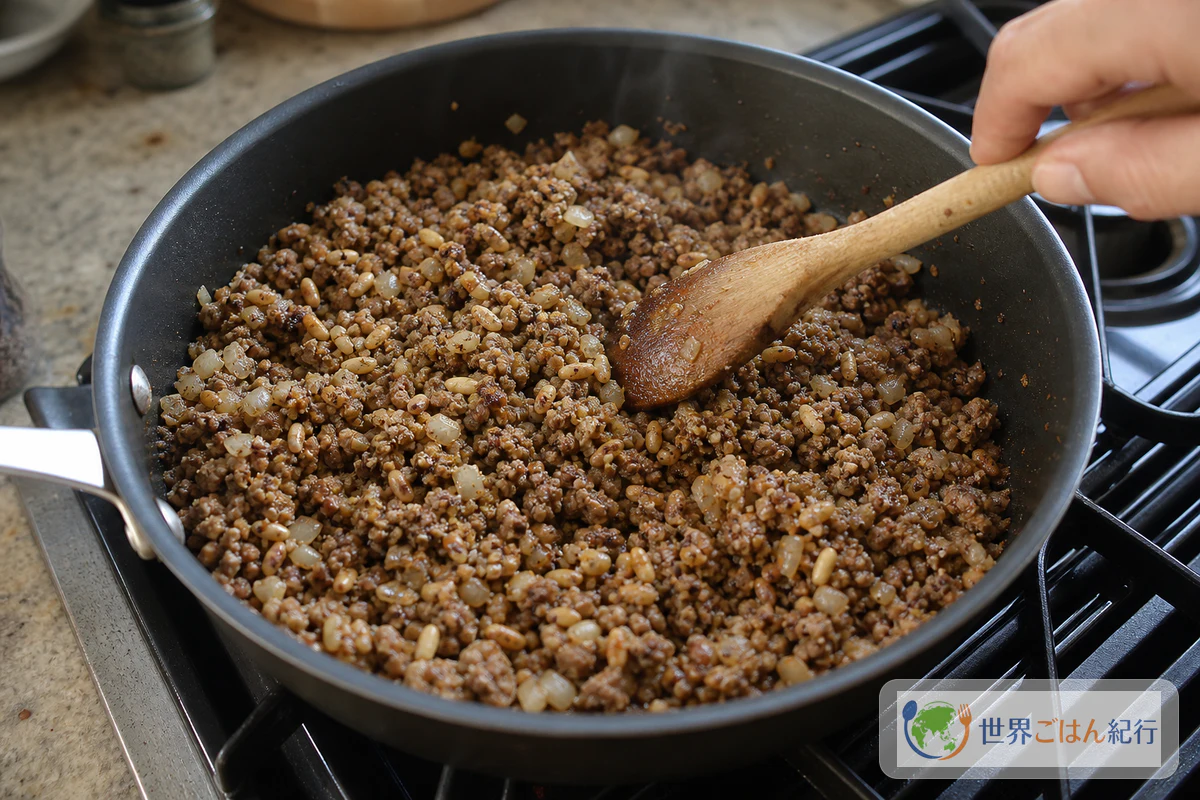
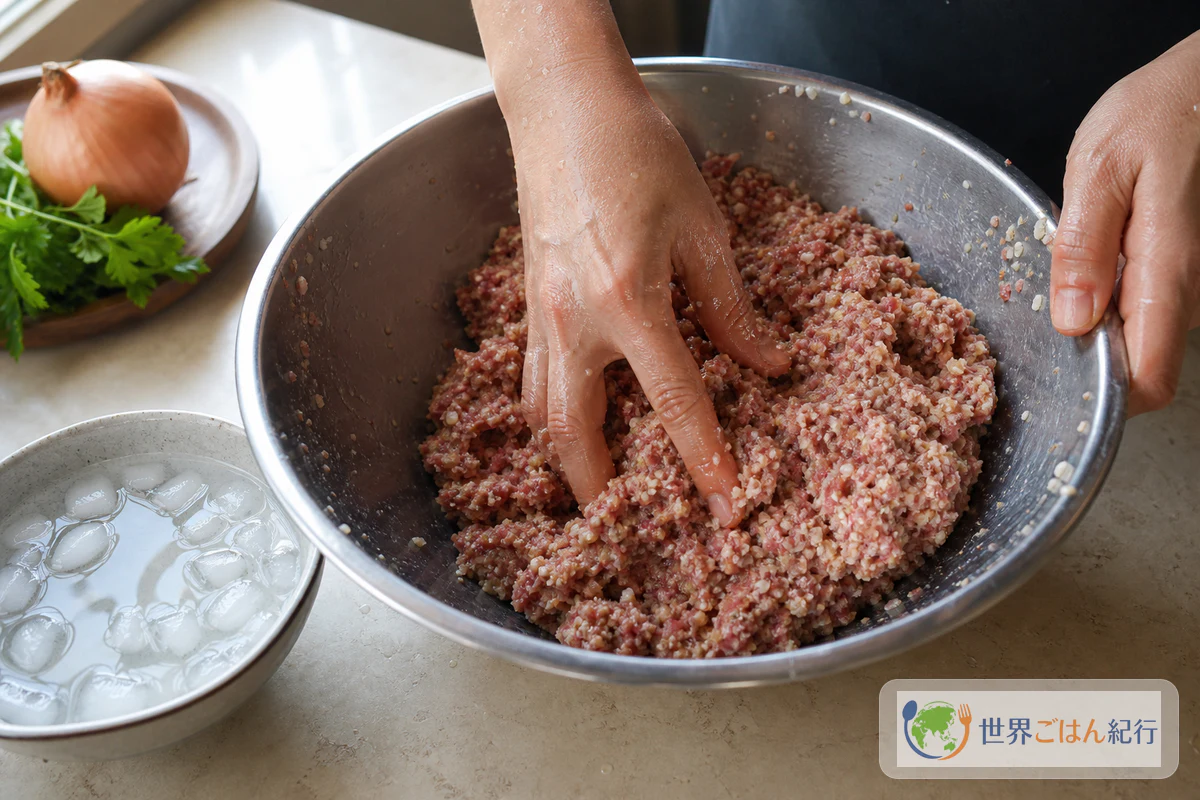
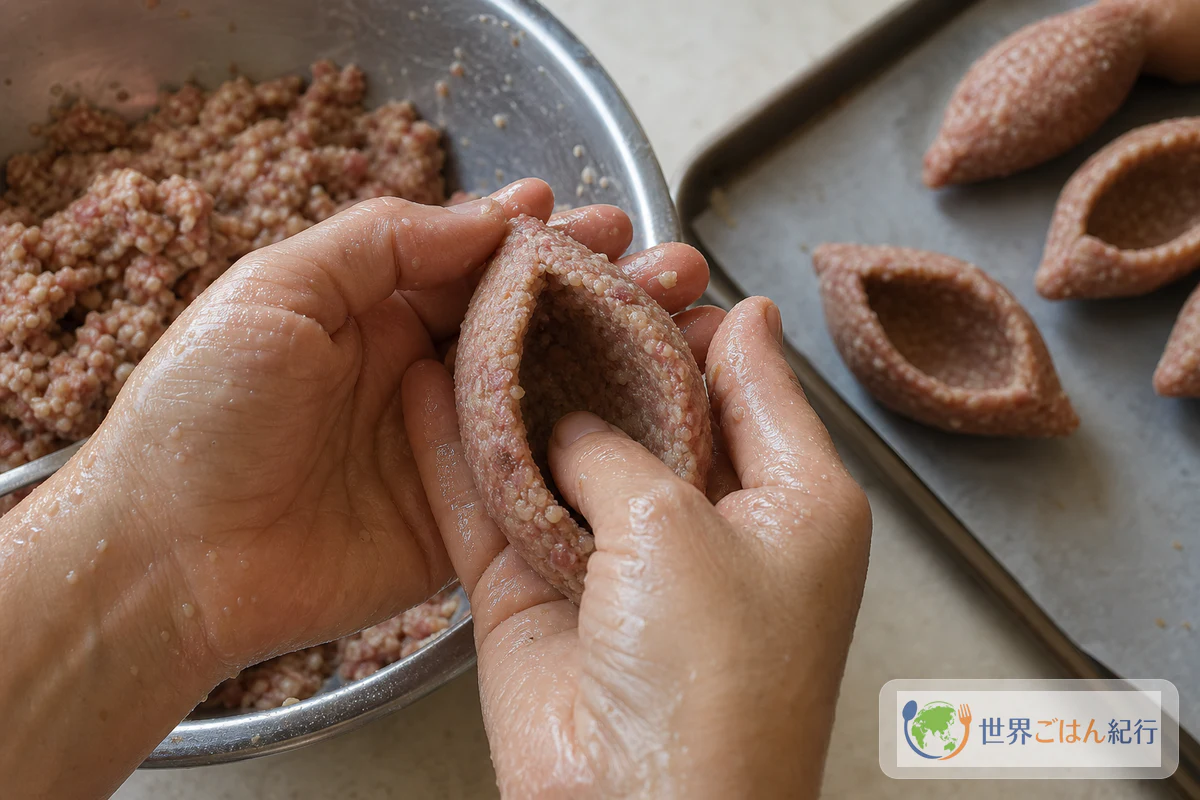
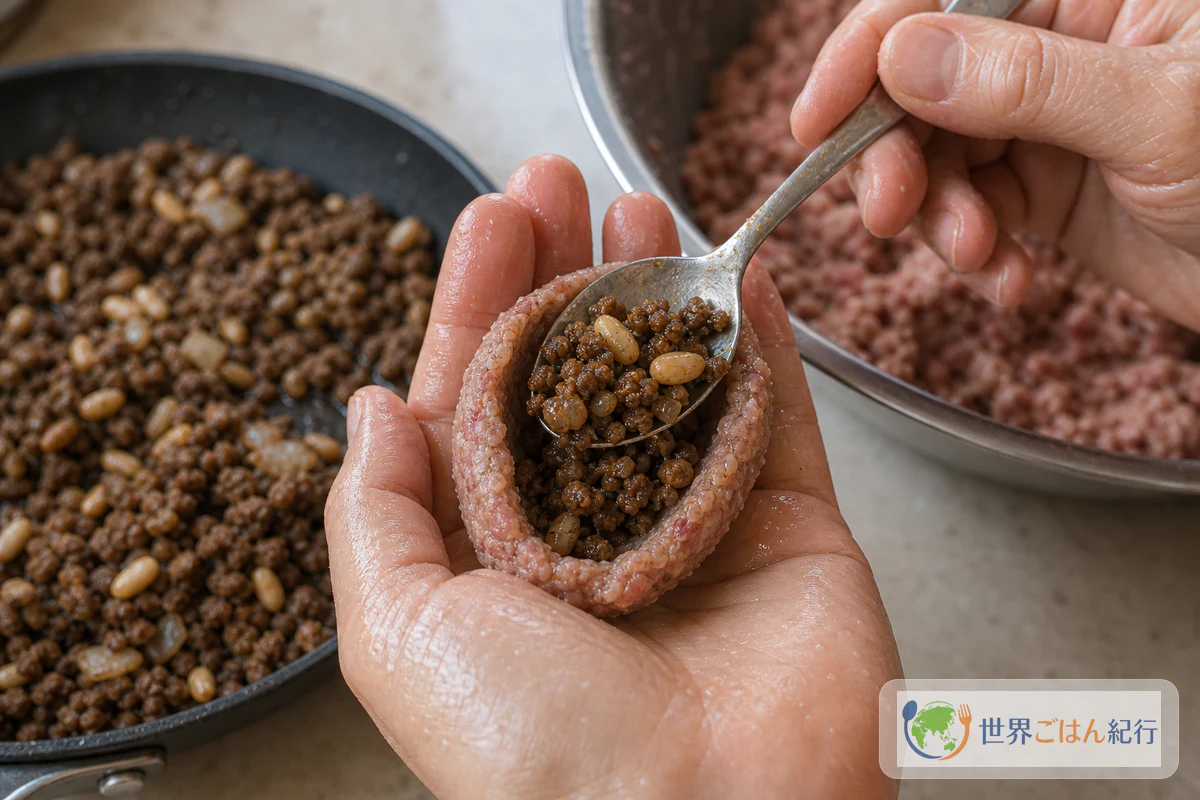
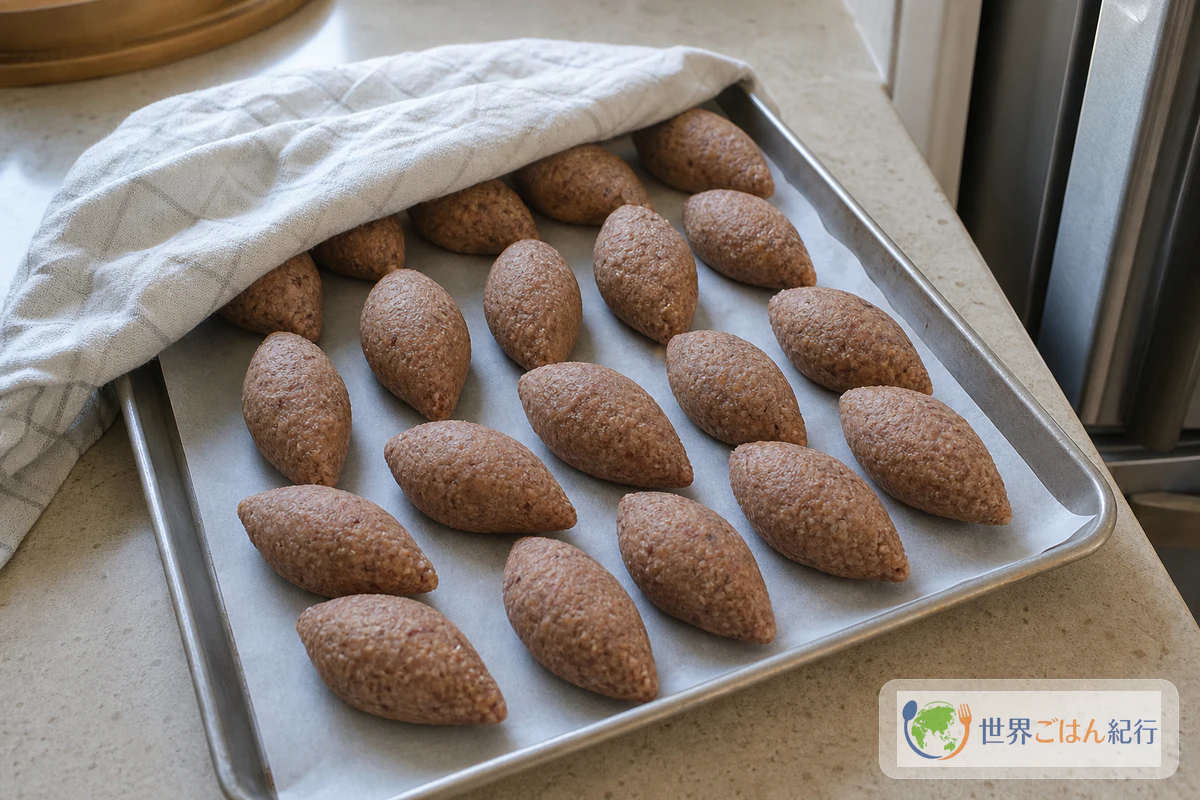
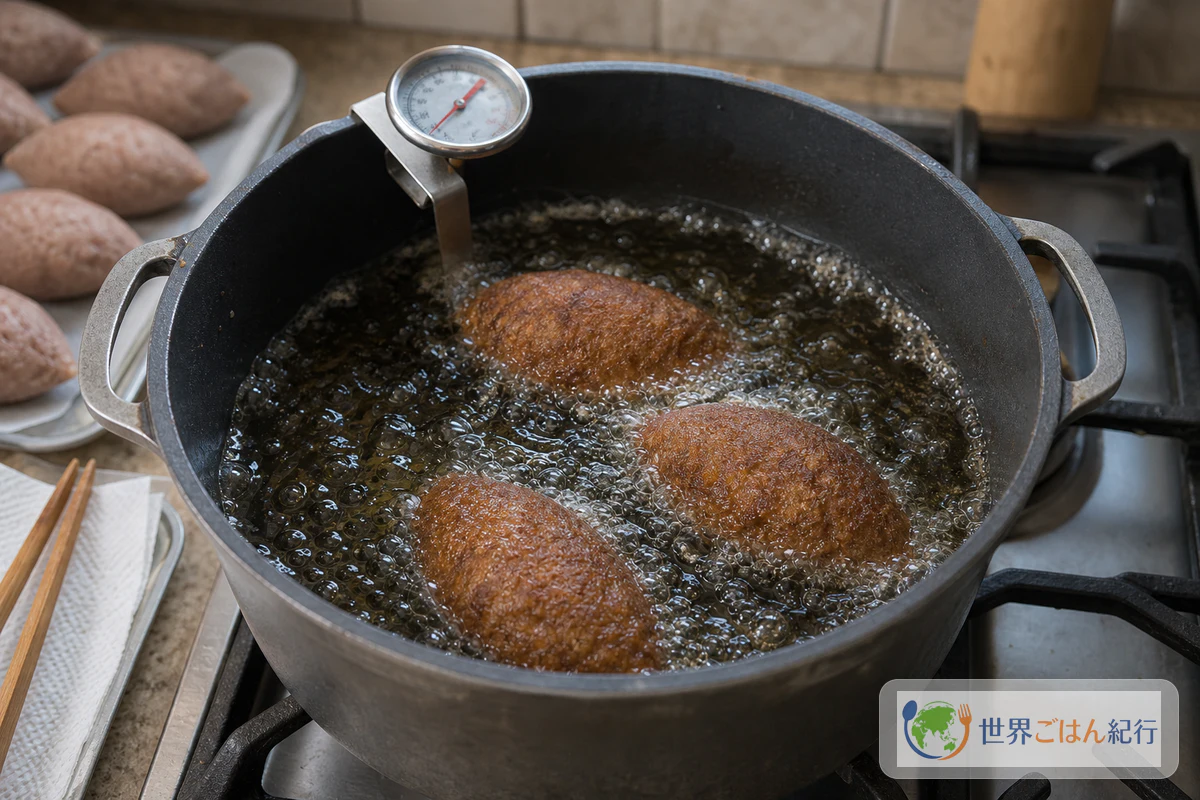
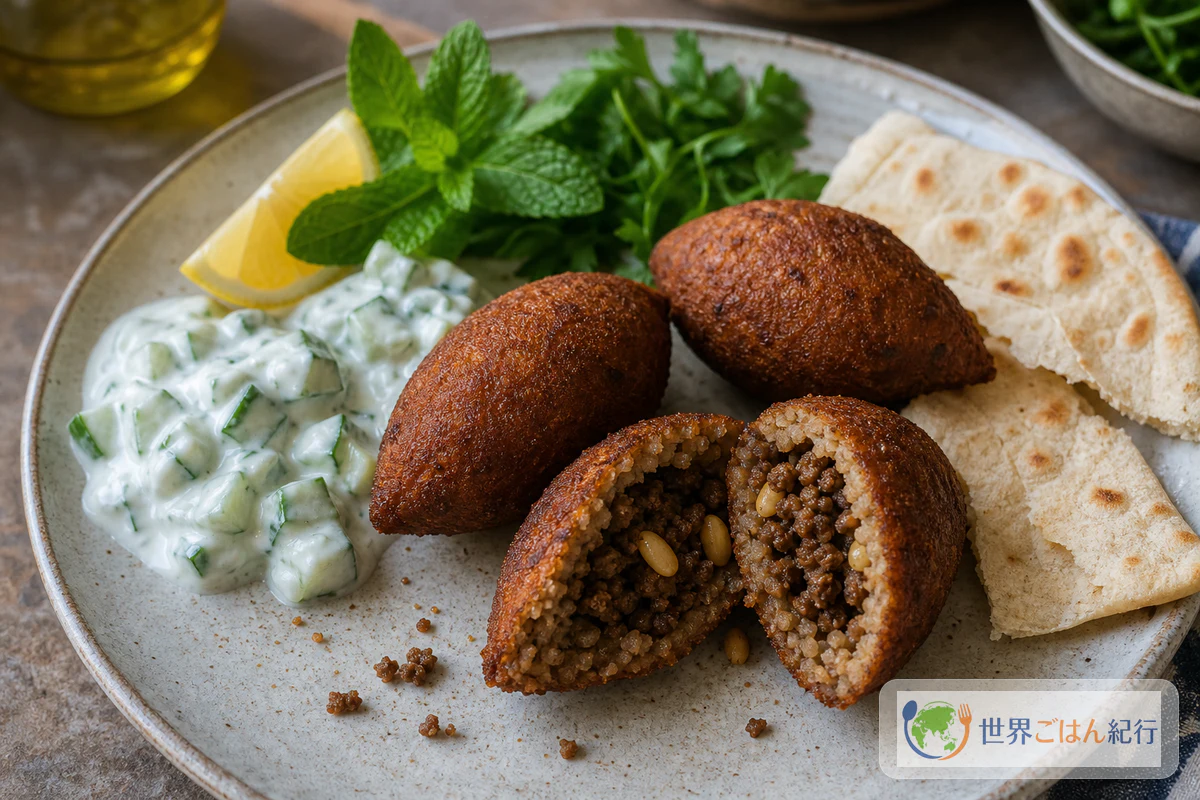
Drop one into hot oil and the bulgur shell sets almost at once, turning toasty as it fries. Getting there takes different handwork from an ordinary meatball day: instead of mixing breadcrumbs into ground meat, you soak fine bulgur and work it into lean meat to make a thin shell, then fill it with fried onion, meat, pine nuts and warm spices. Close the opening with wet fingers, pinch both ends to a point, and little rugby-ball shapes line up on the tray. This is kibbeh, written كبة in Arabic, one of Lebanon's signature dishes. It takes more work than kibbeh bil sanieh, which is pressed into a baking pan, but only this version gives you a thin, freshly fried shell against a moist filling studded with pine nuts.
What Is Kibbeh?
Kibbeh is a Levantine family of dishes built on a dough of bulgur and finely worked meat, and it comes in many shapes. Some are torpedoes wrapped around a filling and fried, some are pressed into a tray and baked, some are eaten raw, and some are simmered in yogurt or a sour broth. Lebanon alone has several regional forms: the southern seasoned-bulgur version, the fish kibbeh of the coast, and versions with pumpkin and sumac from the Bekaa Valley.
This recipe is the fried, torpedo-shaped kind, often called fried kibbeh, kibbeh balls or kibbeh raas in English, and served as an appetizer or made ahead for celebrations. The outside is a meat-and-bulgur dough; the inside is fried meat, onion and pine nuts. With meat both outside and in, it looks heavy, but with lemon, yogurt, herbs and thin bread it goes down surprisingly lightly.
Fried Kibbeh and Other Kinds
| Type | Shape | What is hard at home | Good for |
|---|---|---|---|
| Fried kibbeh | Torpedo shapes around a filling | Shaping, chilling, oil temperature | Mezze, guests, make-ahead |
| Kibbeh bil sanieh | Baked in a pan | Thickness of the layers, oven temperature | A day you make it for the family all at once |
| Kibbeh labaniyeh | Simmered in yogurt | Yogurt separating | A warm, sour main dish |
| Kibbeh nayyeh | Raw meat mezze | Food safety and freshness of the meat | Best avoided in a home kitchen |
Cooked, fried kibbeh already carries the core idea of the dish: bulgur and meat worked into one and wrapped thin.
Ingredients (serves 4)
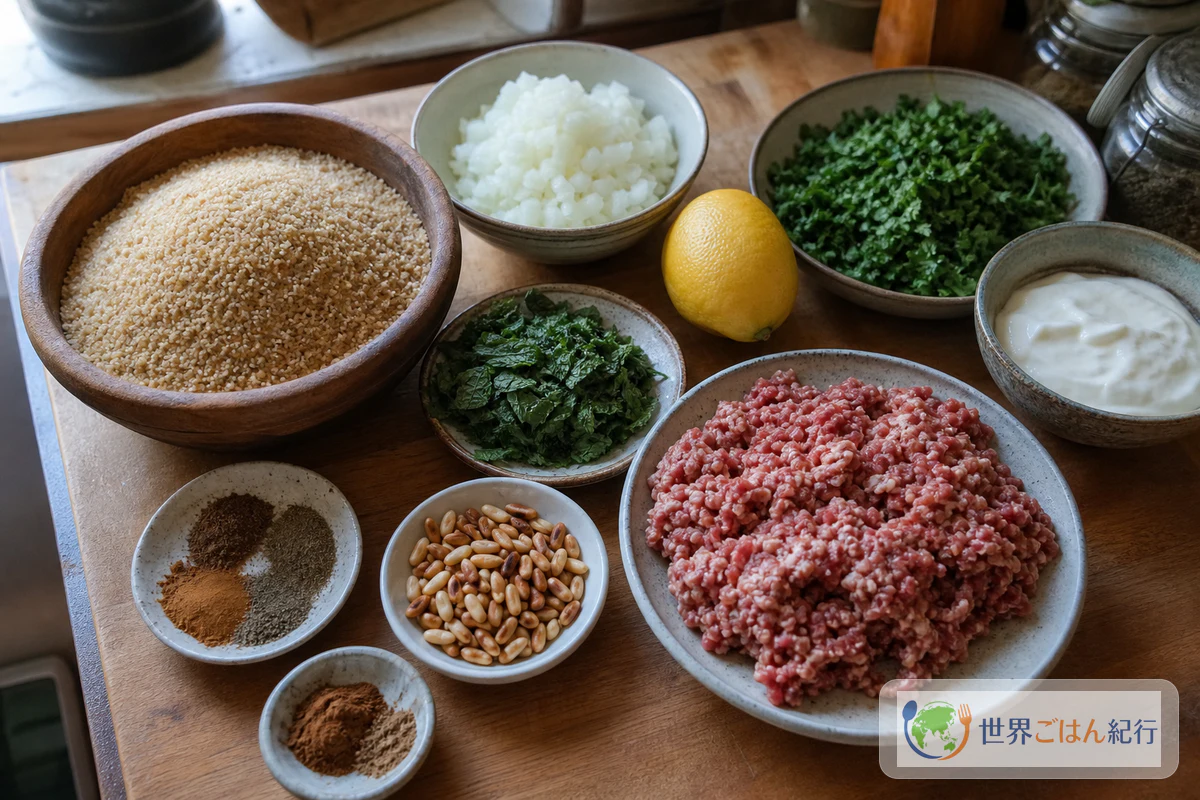
You can make it with beef alone. Mixing in a little lamb brings the aroma closer, but don't force it if you dislike it. Pine nuts can be replaced with walnuts. Stick with fine bulgur if you can. With couscous or breadcrumbs, the way the fried shell sets is different.
What Is Worth Looking For When Shopping
You don't need special sources for the meat, onion and yogurt from an ordinary grocery. What is worth looking for is fine bulgur, allspice that creates the warm Levantine fragrance, and a frying thermometer that reduces cracking and oil absorption on the first attempt.
Choosing Ingredients for Kibbeh
Everything here can be found at ordinary supermarkets and online stores. Fine bulgur and lean meat matter most, because they make a shell you can shape thin without cracking. Coarse bulgur doesn't suit fried kibbeh: the grains stay distinct in the shell and split it when you shape it thin. If coarse is all you have, soak it, then pulse it briefly in a food processor to make the grains finer.
Pine nuts give the filling much of its aroma and texture, so leaving them out changes the dish quite a lot. The most realistic substitute is 1 oz (30 g) coarsely chopped walnuts. Almonds tend to stay hard, so for a first try I recommend walnuts or pine nuts.
If you don't have baharat, mix 1/2 tsp allspice, 1/2 tsp cumin, 1/4 tsp cinnamon and 1/4 tsp black pepper. Cloves or nutmeg can go in, but only a very small amount; too much pushes the aroma toward a sweet dessert.
This dish uses bulgur, which contains wheat, beef or lamb, and pine nuts, which are tree nuts. If you serve yogurt or tahini alongside, watch for dairy and sesame. Commercial spices can be made on lines that also handle wheat, dairy and nuts. Check the labels if you have an allergy.
Instructions
Fried kibbeh is calmer to make if you divide it into soaking, frying the filling, kneading, wrapping, chilling and frying. Hurrying midway makes it crack, so treat the time for cooling the filling and the chilling after shaping as part of the cooking.
Why Kibbeh Cracks, and How to Fix It
At home the hard part is moisture and oil temperature rather than unusual ingredients. Coarse bulgur cracks the shell, watery onion opens the seam in the oil, and oil that is too cool lets the shell collapse before the surface sets. With fine bulgur, lean meat, well-chilled shaping and oil at around 350°F (170°C), even a household pot gets very close.
The shell opens in the frying oil
Either filling got caught in the seam, or the chill after shaping was too short. Reduce the filling to a little under 1 tbsp and run a finger over the seam to erase the line. Keep the full 20-minute rest in the refrigerator.
Only the surface is black and the inside is lukewarm
The oil is too hot. Above 350°F (180°C), the surface of the bulgur darkens before the inside heats through, so bring it back to around 350°F (170°C) and fry fewer pieces at a time. Without a thermometer, drop in a small piece of dough: it should rise at once with fine bubbles. For a first try, though, use a thermometer.
Oily and heavy
The oil is too cool, or the surface of the shaped kibbeh is too damp. Below 325°F (160°C) the shell takes longer to set and soaks up oil. If water droplets have formed on kibbeh straight from the refrigerator, blot them lightly with paper before frying.
The filling is dry
The filling was overcooked before it went into the shell. Stop when the red of the meat is gone and the liquid at the bottom has cooked off, then add the pine nuts and spices and finish briefly. Spread it on a tray to cool rather than leaving it in the hot pan.
Serving and Storing Fried Kibbeh
What to serve with it
Fried kibbeh is easiest to enjoy beside sour, herby dishes rather than piled alone on a big platter as the main. For a Lebanese-style mezze, put hummus, tabbouleh, baba ghanoush, falafel and pita on the same table. When toasty meat, cool yogurt, green parsley and sour lemon take turns, no heaviness lingers, even though it's fried.
For dinner, set out more cucumber, tomato, lemon and yogurt than rice. If you do serve rice, add a low-salt cucumber salad and keep it to 2 to 3 kibbeh per person. If you already make baked kibbeh, a practical split is kibbeh bil sanieh for the family and fried kibbeh for guests; both use bulgur, lean meat and allspice, so the shopping overlaps a lot.
Freezing and reheating
Shaped kibbeh can be frozen before frying. Freeze them in a single layer on a tray for 2 hours, then move them to a storage bag once firm; they keep about 3 to 4 weeks. Fry from frozen without thawing, starting in oil at 325°F (160 to 165°C) and raising it to 350°F (170°C) at the end for color. Straight into very hot oil, they tend to brown on the surface and stay cold in the center.
Fried kibbeh keeps in the refrigerator until the next day. Reheat in a toaster oven or a 350°F (180°C) oven for about 8 minutes. A microwave alone leaves the shell damp, so if you use one, warm briefly and then crisp the surface in the toaster oven.
Making ahead for guests
The easiest order is to fry the filling the night before and refrigerate it, then knead the shell and wrap on the morning of the day. Shells shaped the day before should sit in a single layer, covered loosely with plastic wrap that doesn't touch the surface so they don't dry out. An overnight rest firms the surface and makes frying easier, but dough with a lot of onion moisture tends to crack the next day, so squeeze the onion harder than usual and go easy on the ice water.
Frequently Asked Questions
Can I make it without a food processor?
Yes. Choose lean, finely ground meat and knead the bulgur and meat firmly by hand for about 8 minutes. You won't quite reach the smoothness found locally, but with ice water for shaping and a shell that isn't too thick, it works well as a home version.
Can I bake it instead of frying?
Yes. Brush the surface lightly with oil and bake in a 400°F (200°C) oven for 15 to 18 minutes. You'll lose some of the crisp, set thin shell that makes fried kibbeh special. If you want to bake, kibbeh bil sanieh, pressed into a pan from the start, is more reliable at home.