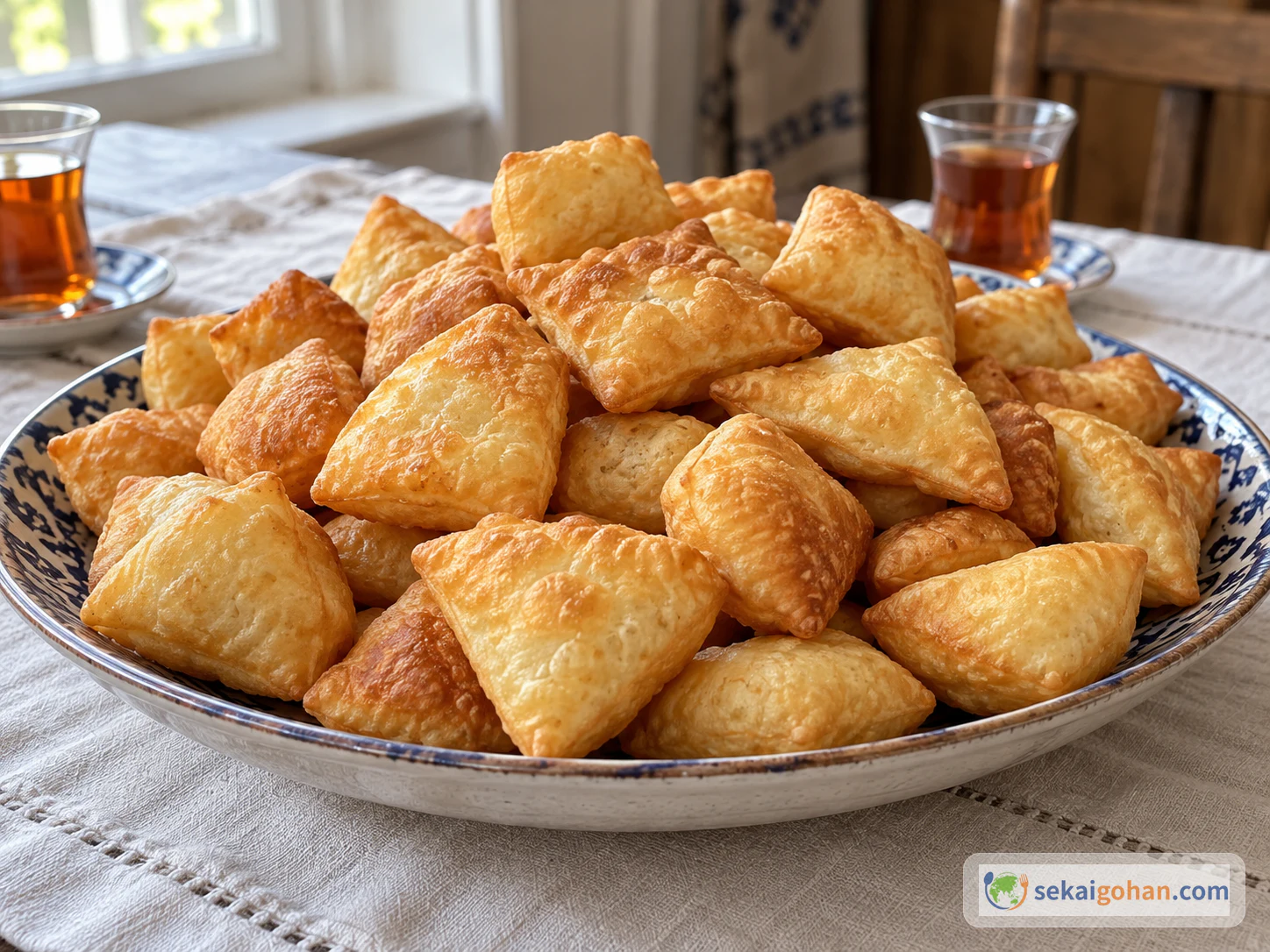
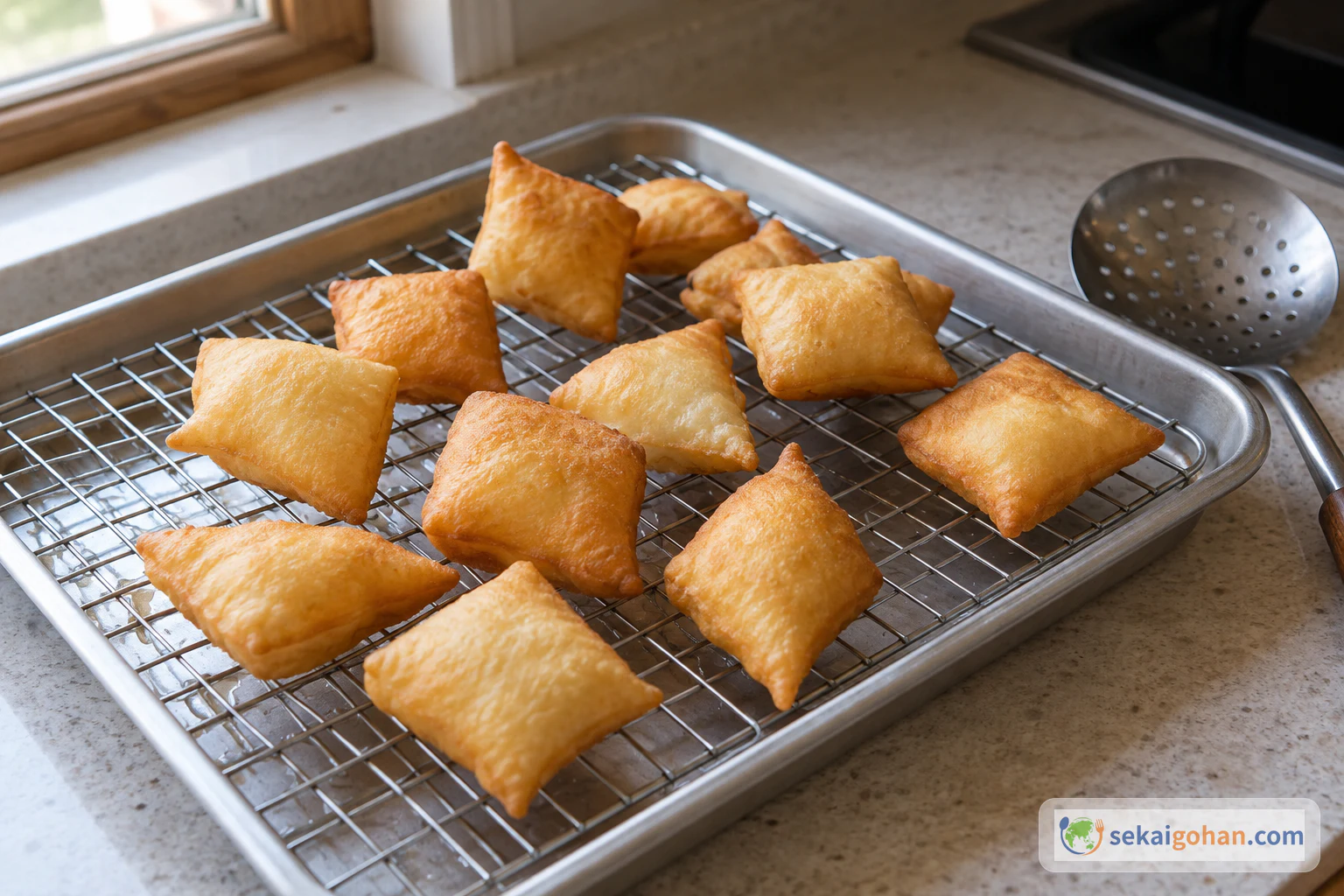
Picture a wide platter in the middle of the table, heaped with little golden pieces of fried dough, some squares, some diamonds, none quite the same size. Everyone reaches in, tears one open, and eats it with tea and jam or alongside the main dish. This is boorsok (боорсок), the small fried bread of Kyrgyzstan. A plain yeast dough is rolled out, cut into small pieces with a knife, and fried until each one puffs, giving you a crust outside and a soft center within.
About Boorsok
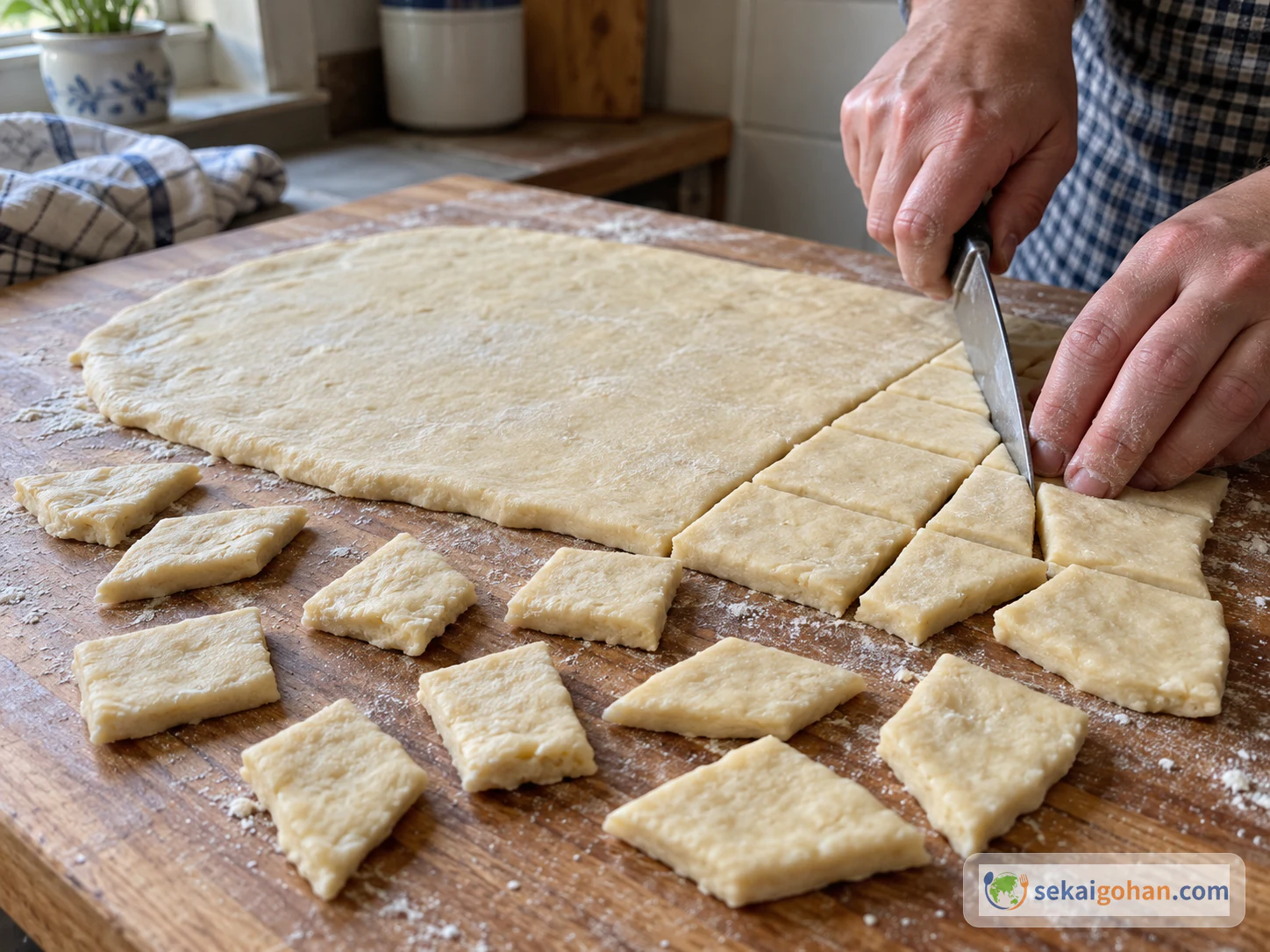
In Kyrgyz the name is written боорсок, and in English usually Boorsok. Similar fried doughs across Central Asia go by names such as baursak and boortsog. Unlike a doughnut, boorsok has no ring and no hole, and the pieces aren't shaped one by one. The knife sets the shape: cut the dough into squares or diamonds, and 1.5 inches (3–4 cm) is a good size to try.
Boorsok is a bread for sharing. It arrives as a heap on a platter rather than in individual portions, and the pieces are small enough to pick up one at a time. Large batches fill festive tables at celebrations, family gatherings and special occasions. Cooking classes and home-based food experiences with local families teach it too, so it's closely tied to home cooking and hospitality. Still, it's easy enough to make on an ordinary day.
To explore more of the country's food, see the Kyrgyzstan country page.
Ingredients (6–8 servings)
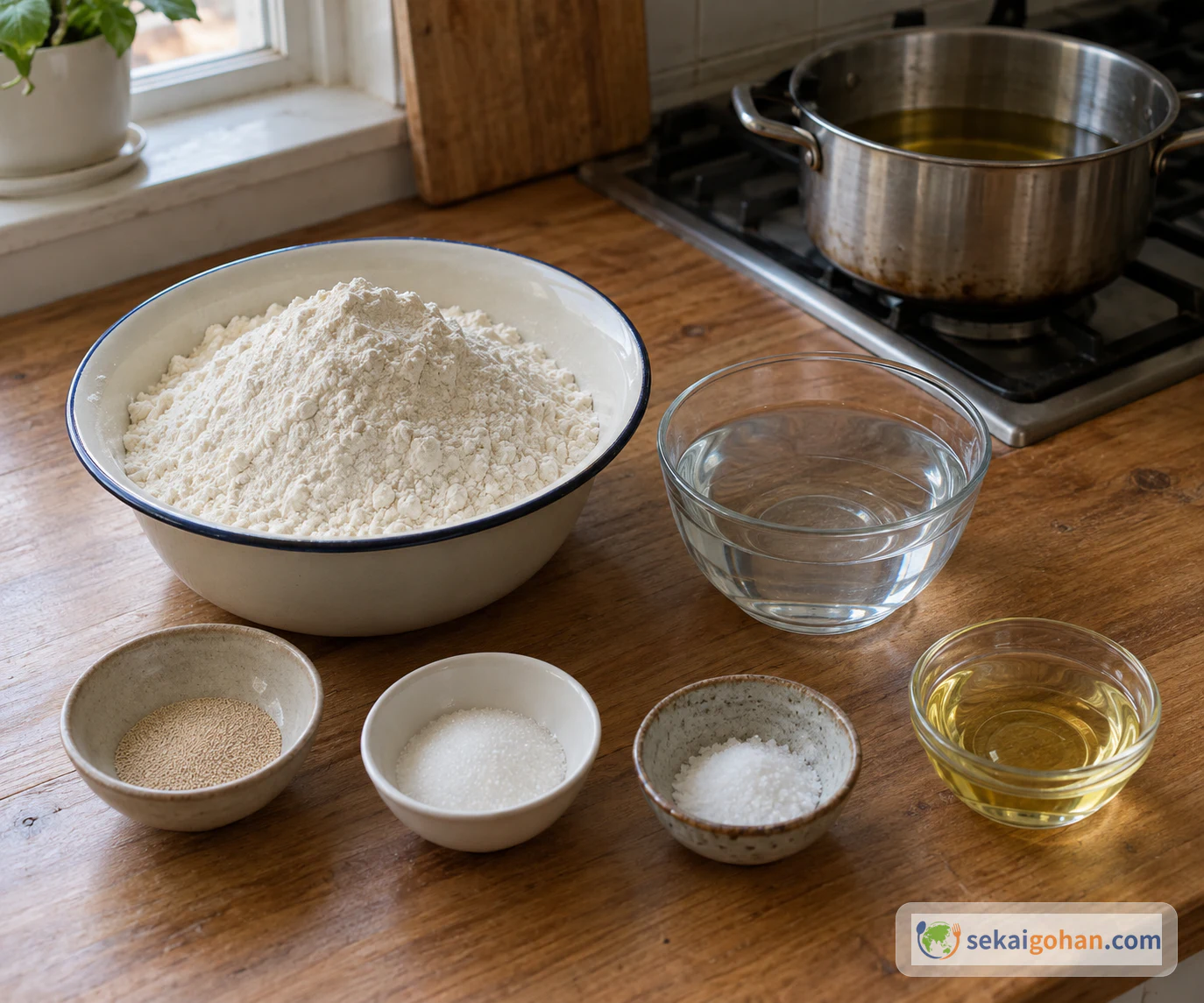
Equipment
- Large mixing bowl
- Small bowl or glass for the yeast
- Measuring spoons
- Clean cloth or lid to cover the dough
- Rolling pin and a sharp knife
- Deep, heavy pot for frying
- Deep-fry thermometer
- Slotted spoon or spider
- Wire rack set over a tray, or paper towels
Choosing Flour and Liquid for Boorsok
Flour. Use wheat flour. Ordinary all-purpose (plain) flour is fine to start with. Flours absorb water differently from brand to brand, so judge the dough by feel, aiming for soft and springy, rather than adding a fixed extra amount of water.
Water or milk. The basic version uses warm water only, but a mix of water and milk works too. Replace part of the water with the same amount of milk, keeping the total at 1¼ cups (280 ml).
Boorsok contains wheat (gluten). The basic version here contains no milk or egg. If you replace part of the water with milk, it contains milk. If you fry in oil shared with other foods, check for cross-contact.
Method: From Foamy Yeast to Puffed Golden Pieces
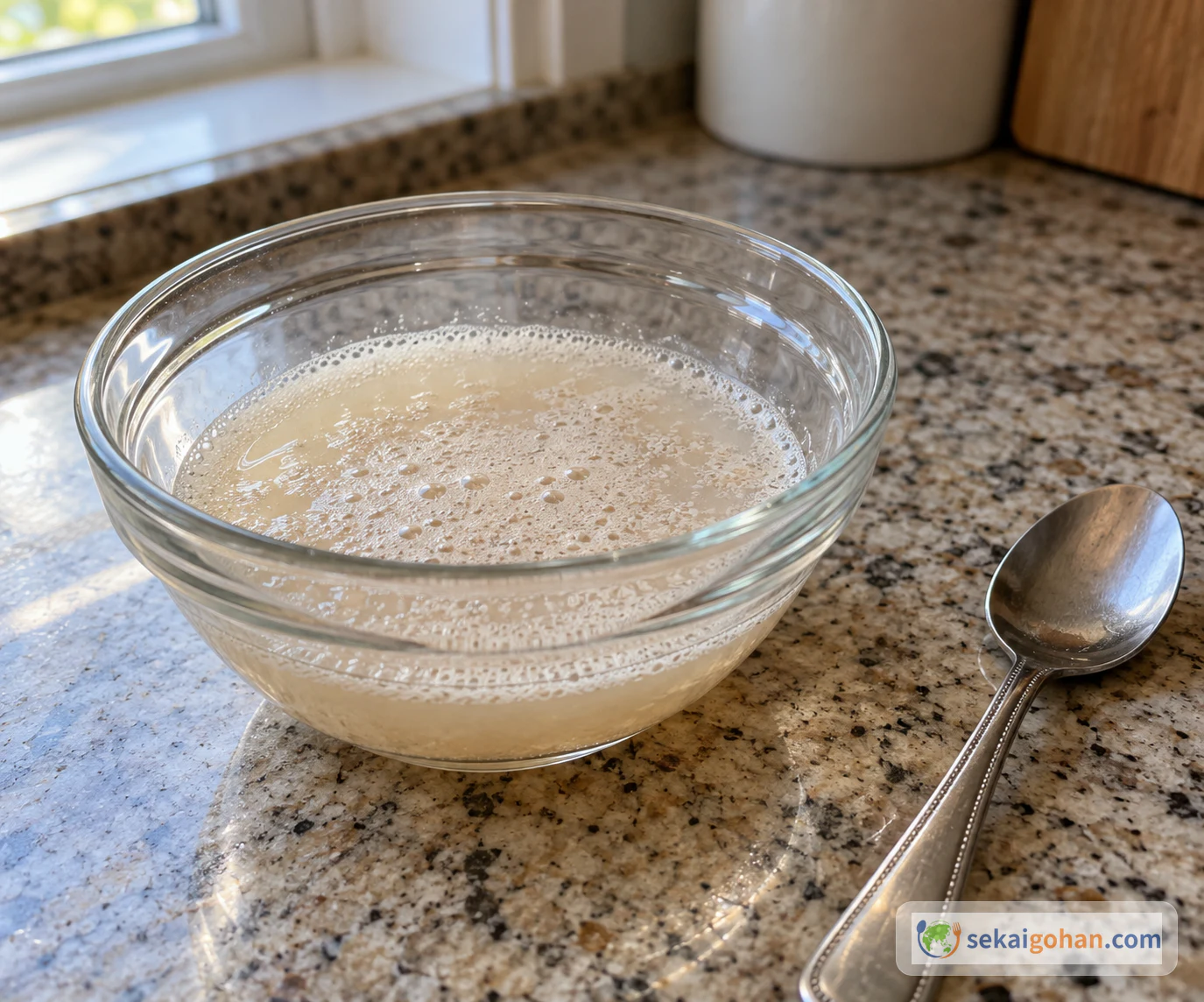
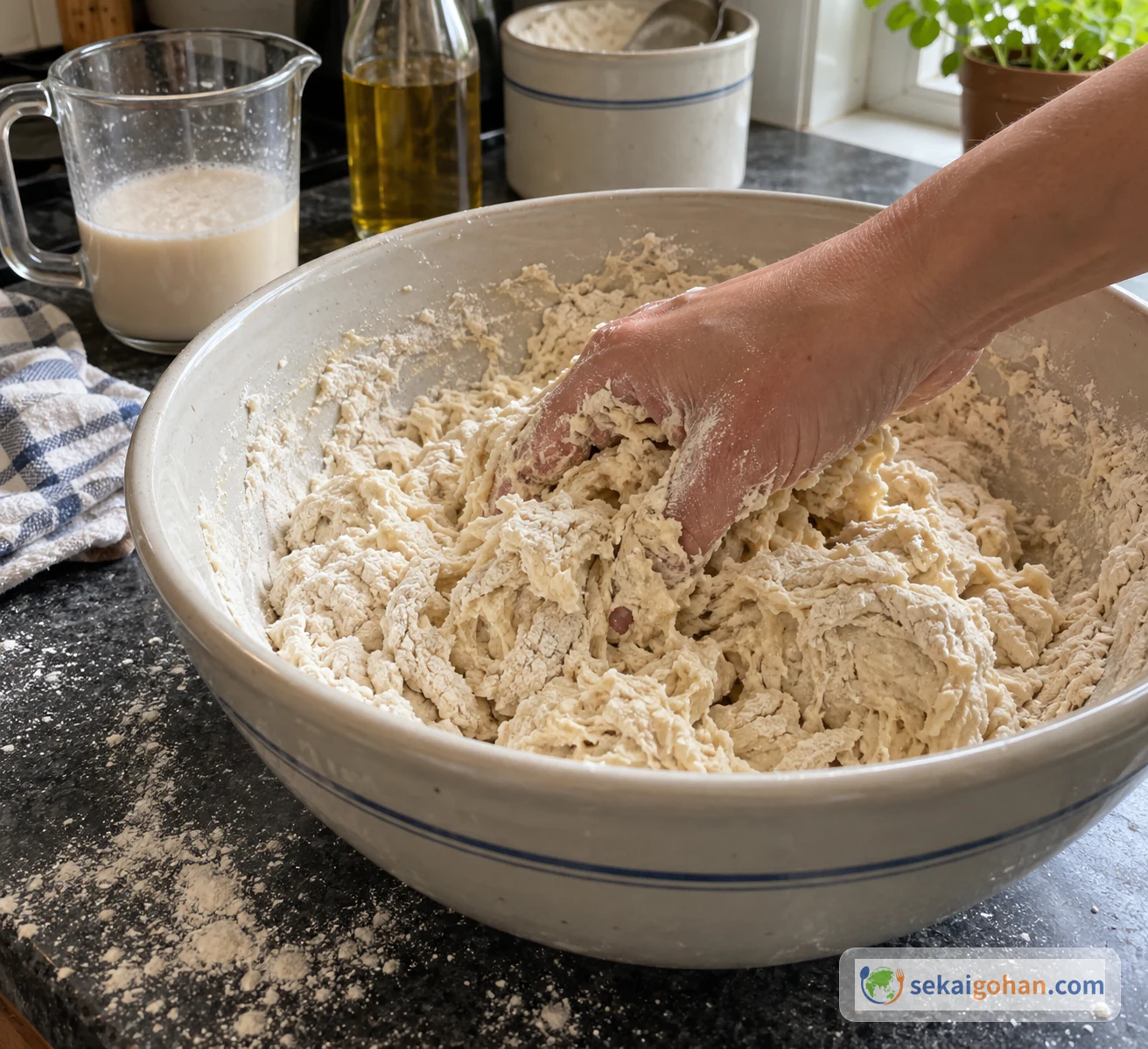
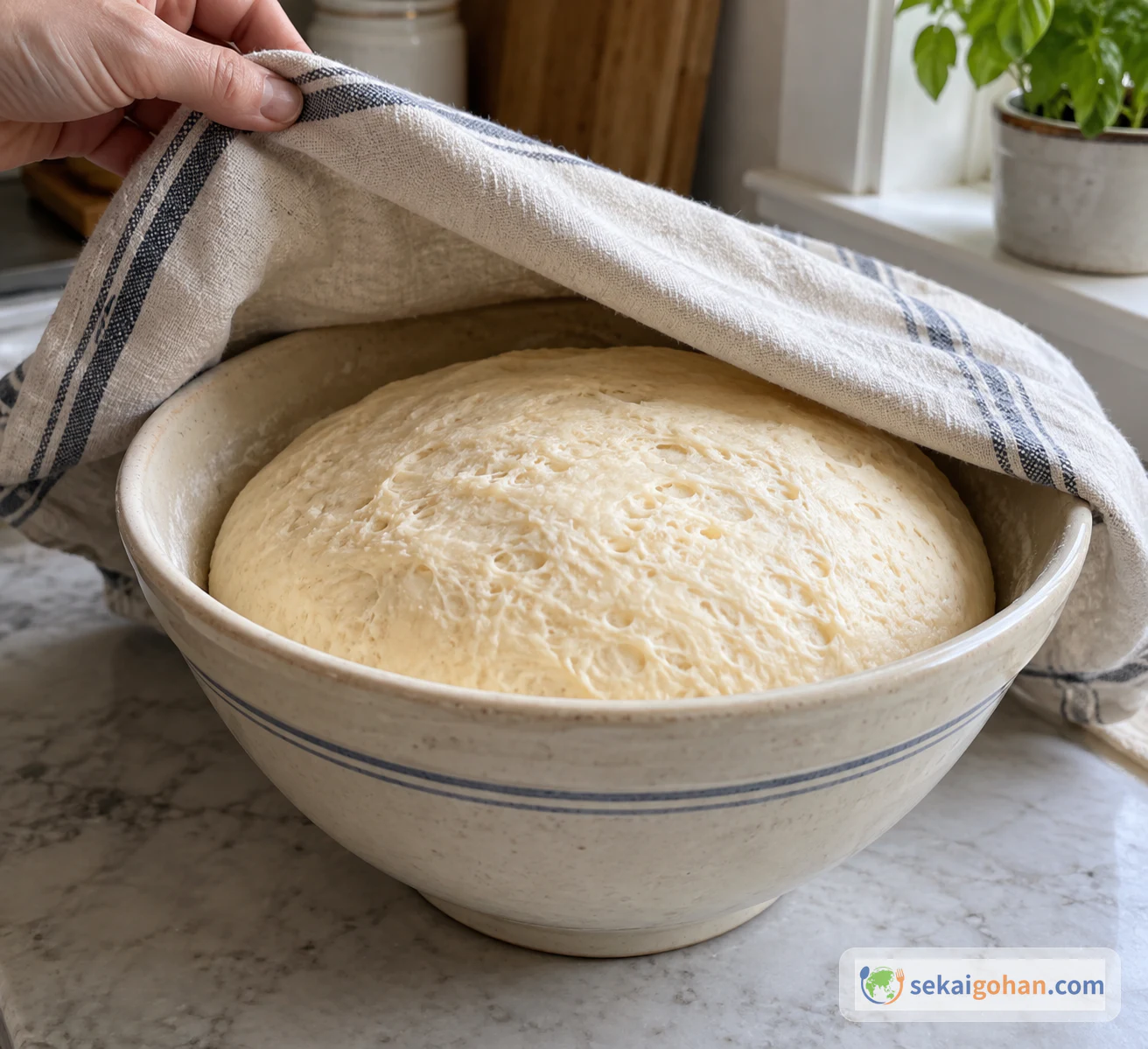
At three points, check what is in front of you before moving on: the yeast foam, the risen dough and the color in the oil. Your kitchen's warmth and your pot change the times.
Boorsok Troubleshooting
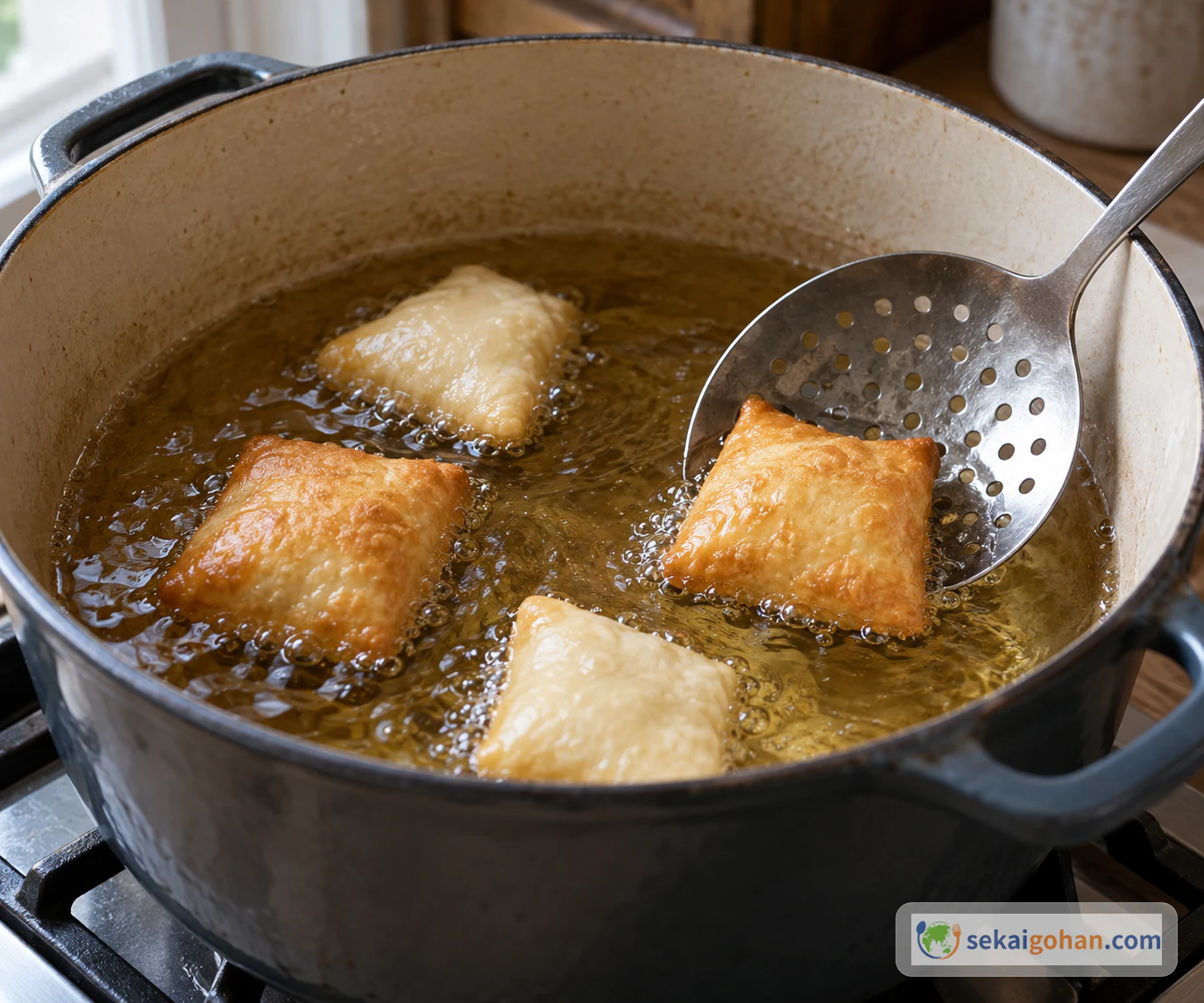
Good boorsok comes down to three checkpoints. The yeast should foam before it meets the flour, the dough should look visibly risen before you roll it, and the oil should be at 350°F (170–175°C) each time a batch goes in. Get those right and the texture follows.
| Problem | Likely cause | What to do |
|---|---|---|
| The yeast did not foam | Yeast past its date, or water too hot or too cold | Start again with fresh yeast and water at the temperature on the yeast package |
| The dough barely rose | Cool room, or weak yeast | Give it more time in a warmer spot and judge by the look of the dough, not the clock |
| Greasy, heavy pieces | Oil too cool, or too many pieces at once | Use a thermometer, fry fewer pieces, and wait for the oil to return to 350°F (170–175°C) |
| Dark outside, doughy inside | Oil too hot, or pieces too large or thick | Lower the heat slightly, cut smaller pieces, and keep to 0.375 inch (8–10 mm) thick |
| Flat pieces that don't puff | Under-risen dough, or rolled too thin | Let the dough rise fully and roll no thinner than 0.375 inch (8 mm) |
If the oil starts smoking, turn off the heat and let it cool to the right range before adding any dough.
Serving Boorsok and Other Versions
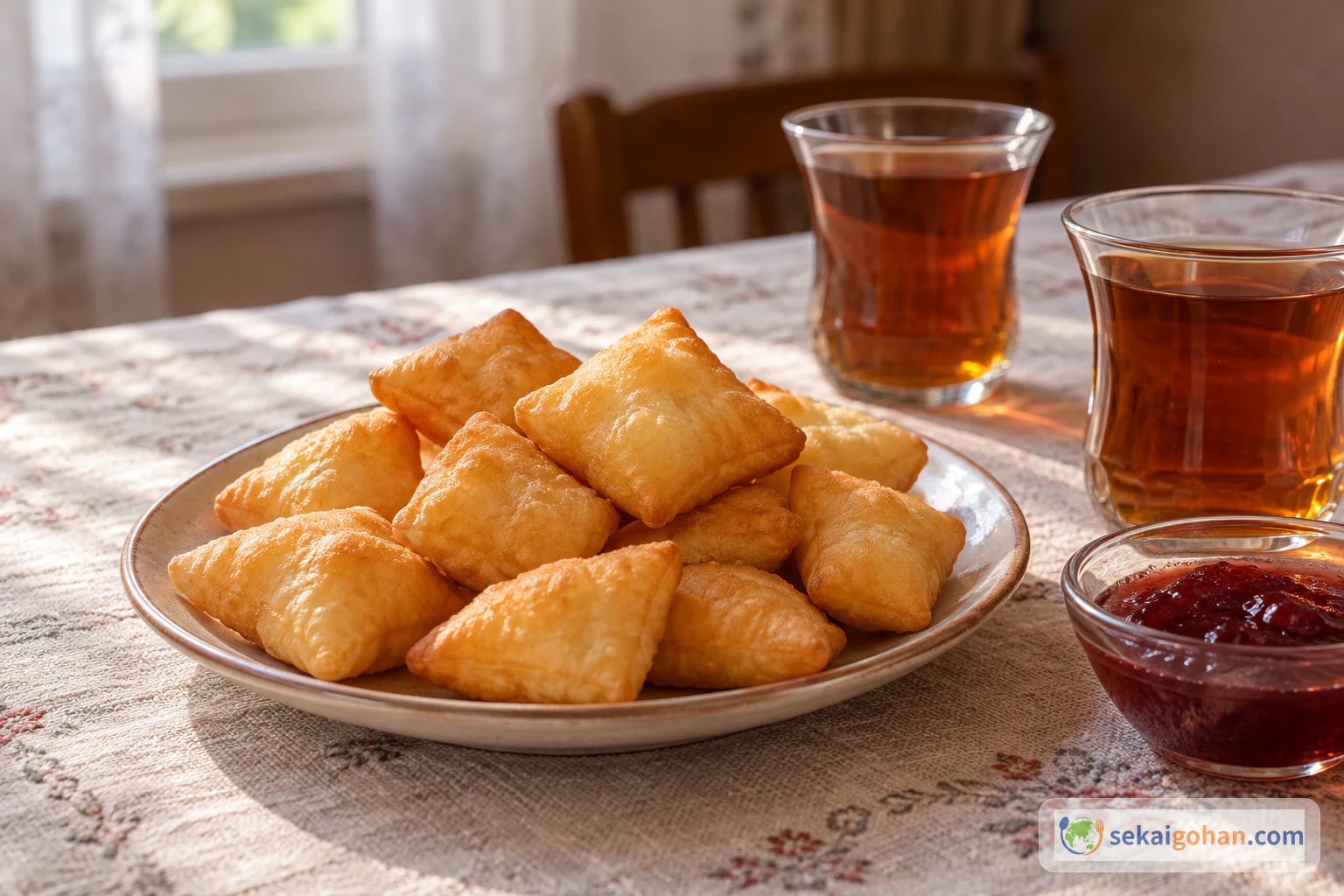
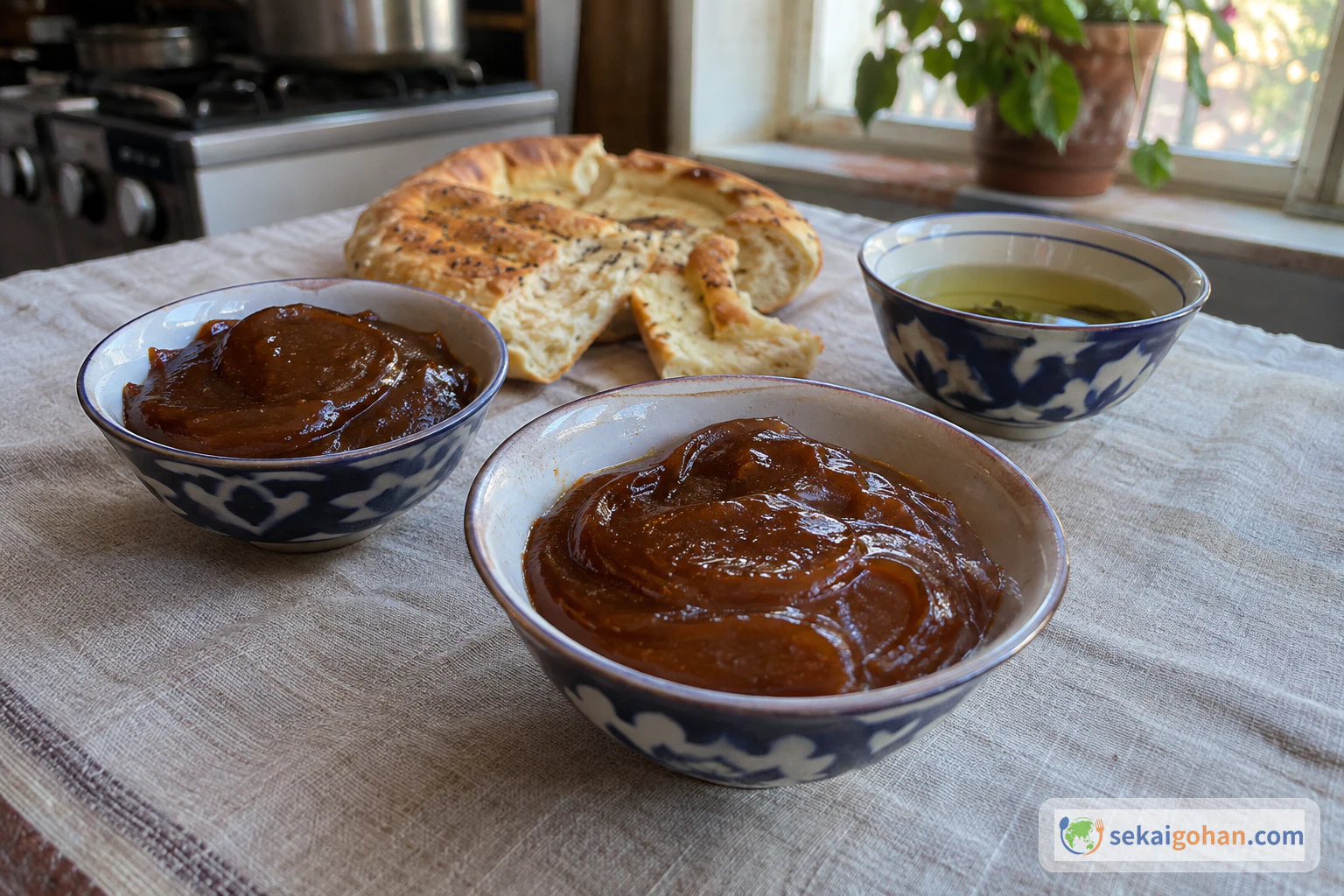
At the tea table, boorsok goes with jam or honey. Served plain, it takes the place of bread next to a main course, and ayran and sour cream go with it too. It's good warm or after it has cooled, so there's no rush to get it to the table.
Other kitchens make richer doughs. One version uses 10.5 oz (300 g) flour, 2.5 oz (70 g) butter, ½ cup (150 ml) milk, 2 eggs, 1 tsp salt, 2 tsp sugar and 1 tsp dried yeast; the dough rests for 30 minutes, is rolled to no more than 0.25 inch (7 mm), cut into 1.5 inches (3–4 cm) squares and fried until golden. Another uses sour cream, butter, fresh yeast and warm milk, is rolled thin, cut into pieces no larger than 1.5 inches (4 cm), and fried in a kazan 8–10 at a time.
Frequently Asked Questions
What shape should I cut boorsok into?
Squares and diamonds are the usual shapes. Cut straight for squares, or angle the knife for diamonds, keeping the pieces small and bite-size.
Is boorsok the same as a doughnut?
Both are fried yeast dough, but boorsok is cut into small pieces with no hole and served on a shared platter, often as bread with tea or a meal.
How many pieces does this make?
The recipe makes 6–8 servings. The number of pieces depends on how small you cut them.