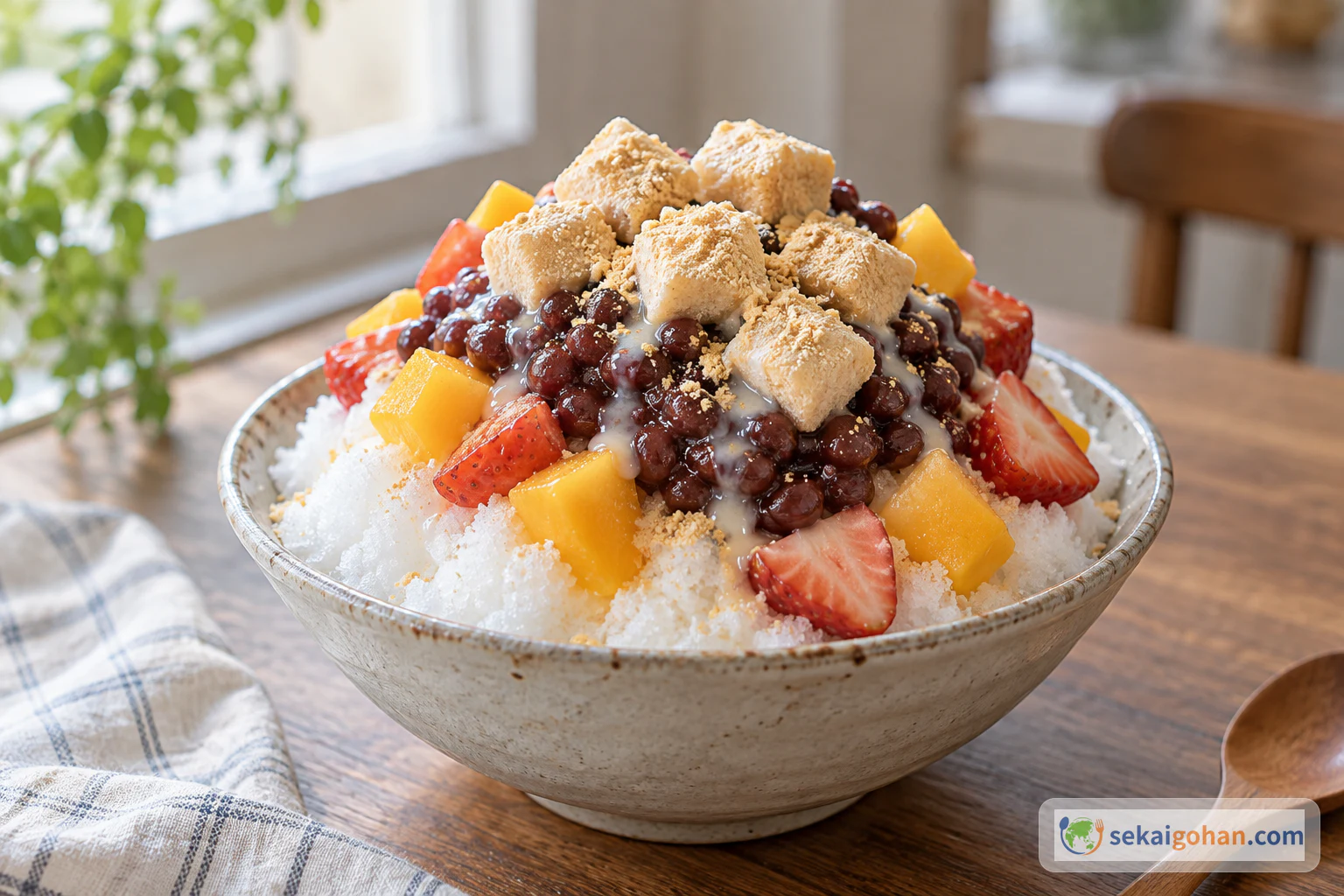
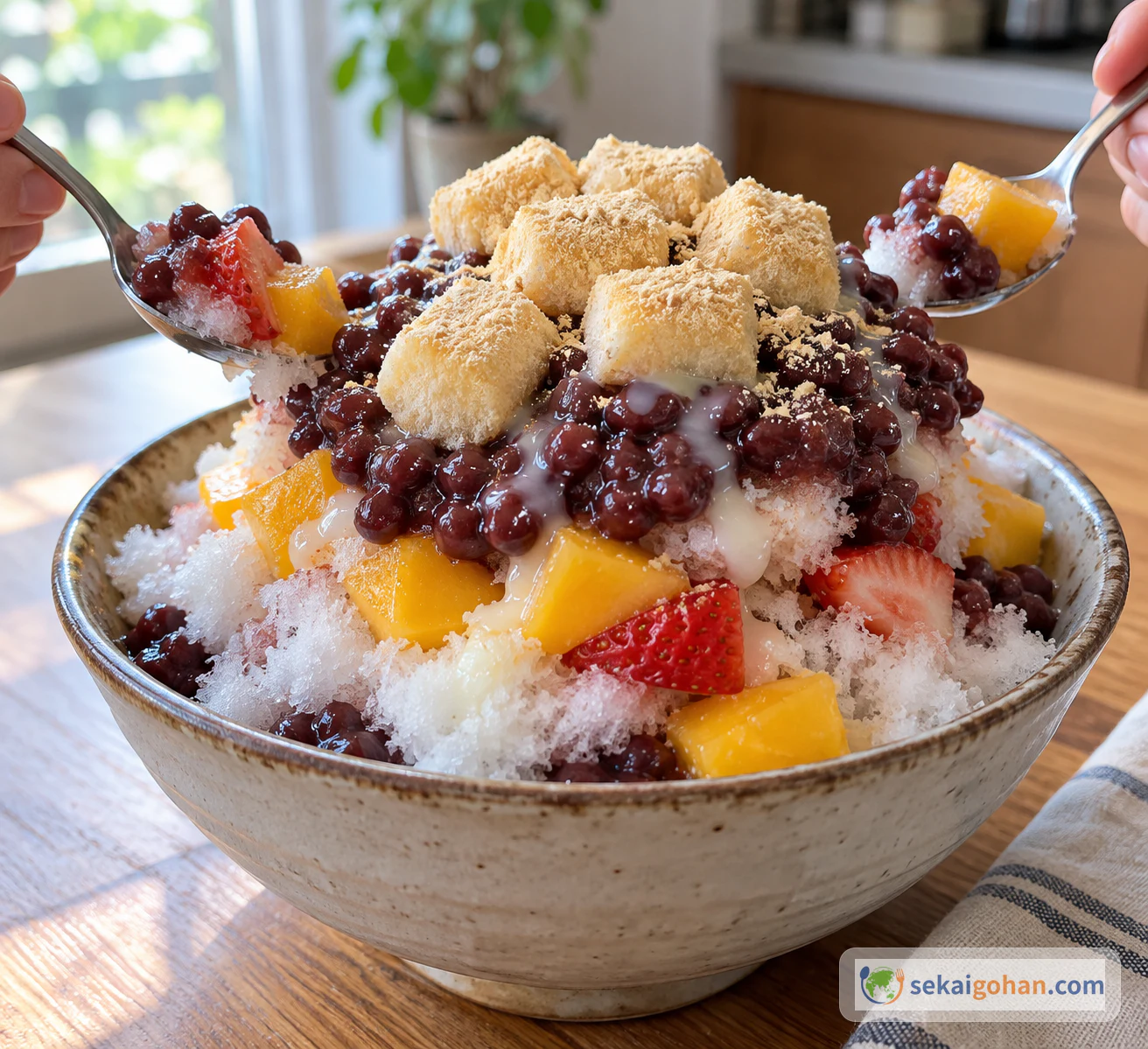
Korean patbingsu layered with sweet red beans, mango, strawberries and injeolmi
Serves1–2 servings
CuisineKorean

Patbingsu: Korean Shaved Ice with Sweet Red Beans, Fruit and Injeolmi (팥빙수)

How to make patbingsu (팥빙수), the Korean shaved-ice dessert built on sweet red beans, at home for one to two people. Covers layering ice, beans, milk, fruit, injeolmi and condensed milk in a chilled bowl, optional homemade red beans and microwave injeolmi, honest substitutions, allergens, and how bingsu has changed in Korea.

Level: Beginner

Cooking flow

Cooking steps

STEP 11 / 8

Rinse the dried red beans (homemade beans only)

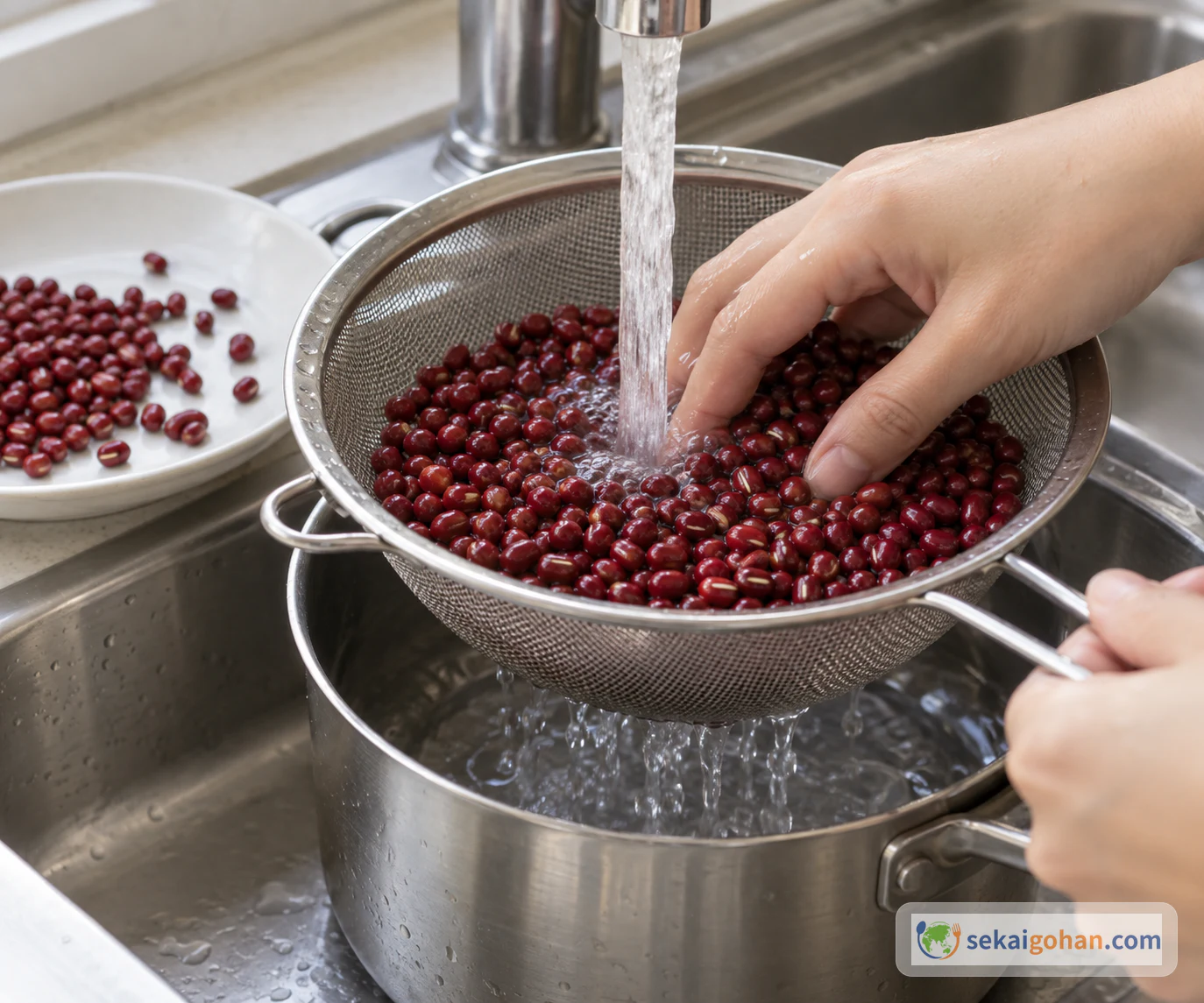
Sorting dried red beans and rinsing them under running water
Rinse the dried beans before they go into the pot

Rinse 1 cup dried azuki beans and put them in a saucepan with 4 1/2 cups water.

STEP 22 / 8

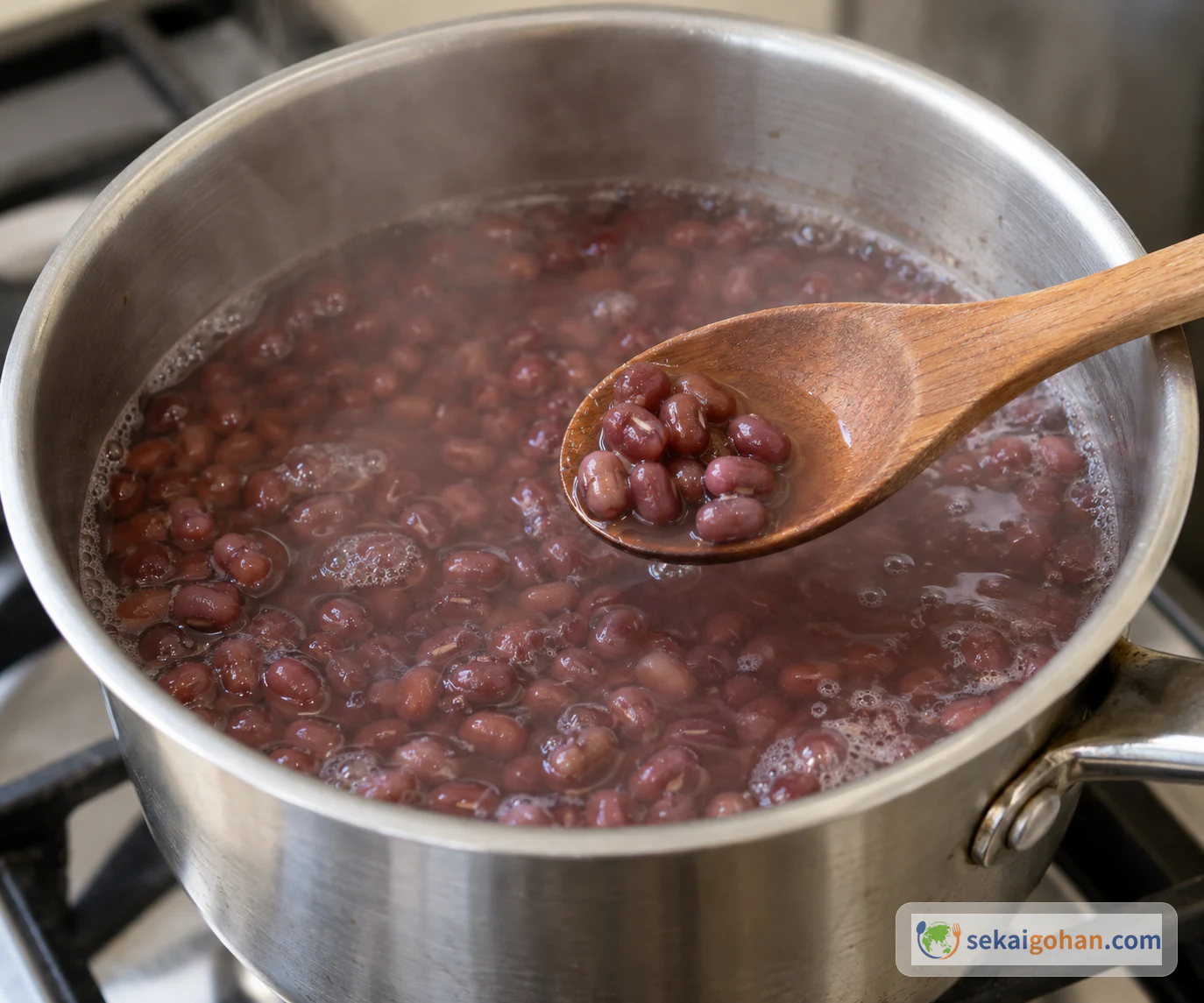
Simmer until tender but not mushy

Red beans simmered until soft while keeping their shape
The beans should be tender all through but still hold their shape

Bring to a boil over medium-high heat and let it boil for 10 minutes. Turn the heat to low and simmer for about 1 hour 30 minutes, until the beans are tender but not mushy: soft when pressed, yet still whole.

STEP 33 / 8

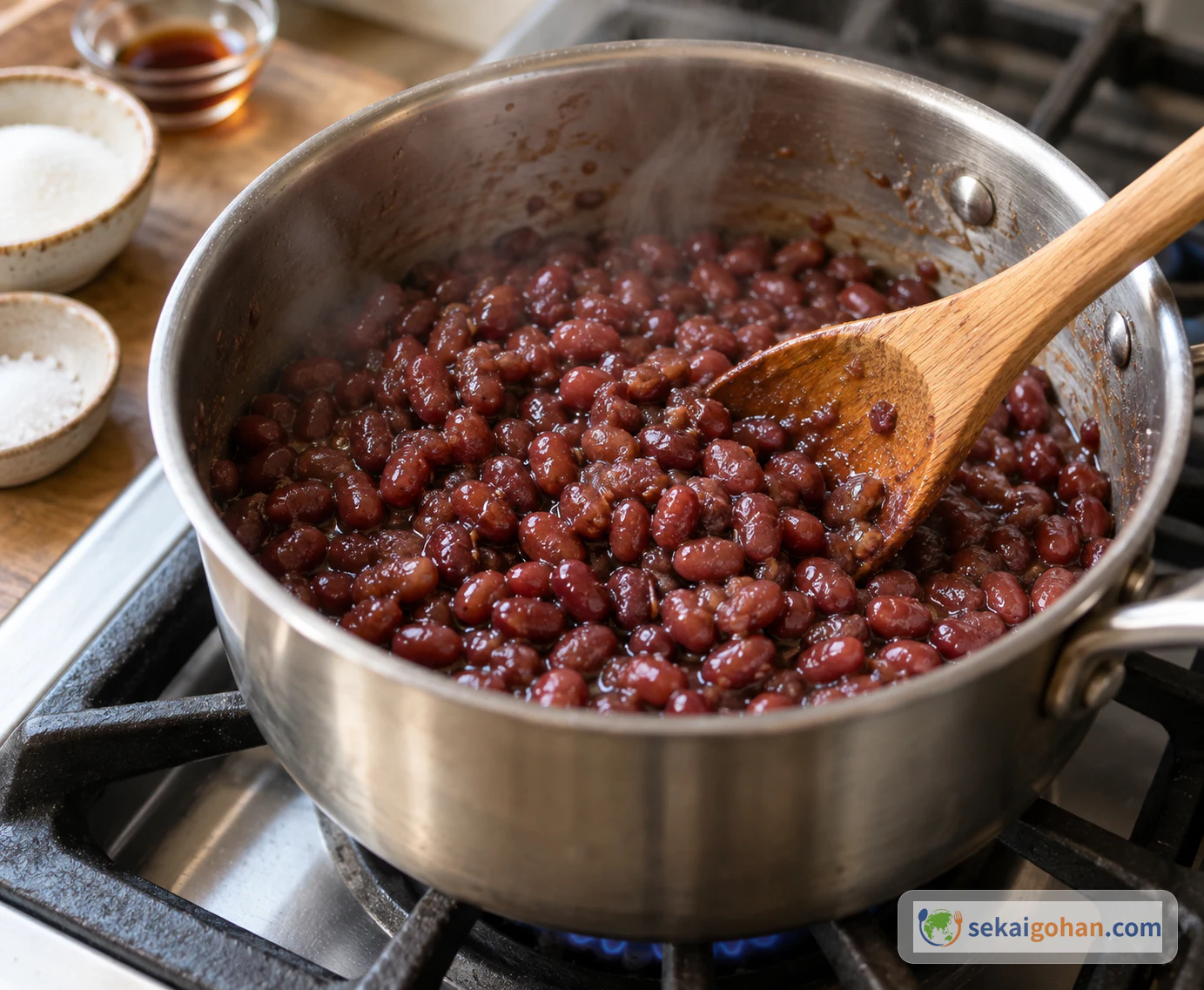
Sweeten the beans

Red beans finished glossy over low heat with sugar and salt
Cook gently until the beans are glossy and the sauce drips loosely

Drain the beans and return them to the saucepan. Add 1 cup white or brown sugar, 1/2 tsp kosher salt and 2 tsp vanilla extract, and stir gently over low heat for 4–5 minutes, until the sauce loosely drips from the spoon. Stir without crushing the beans.

This makes a little more than 2 cups. Use 1 cup for the bowl and move the rest to a separate container. Keep leftover beans in the refrigerator for 2 weeks.

STEP 44 / 8

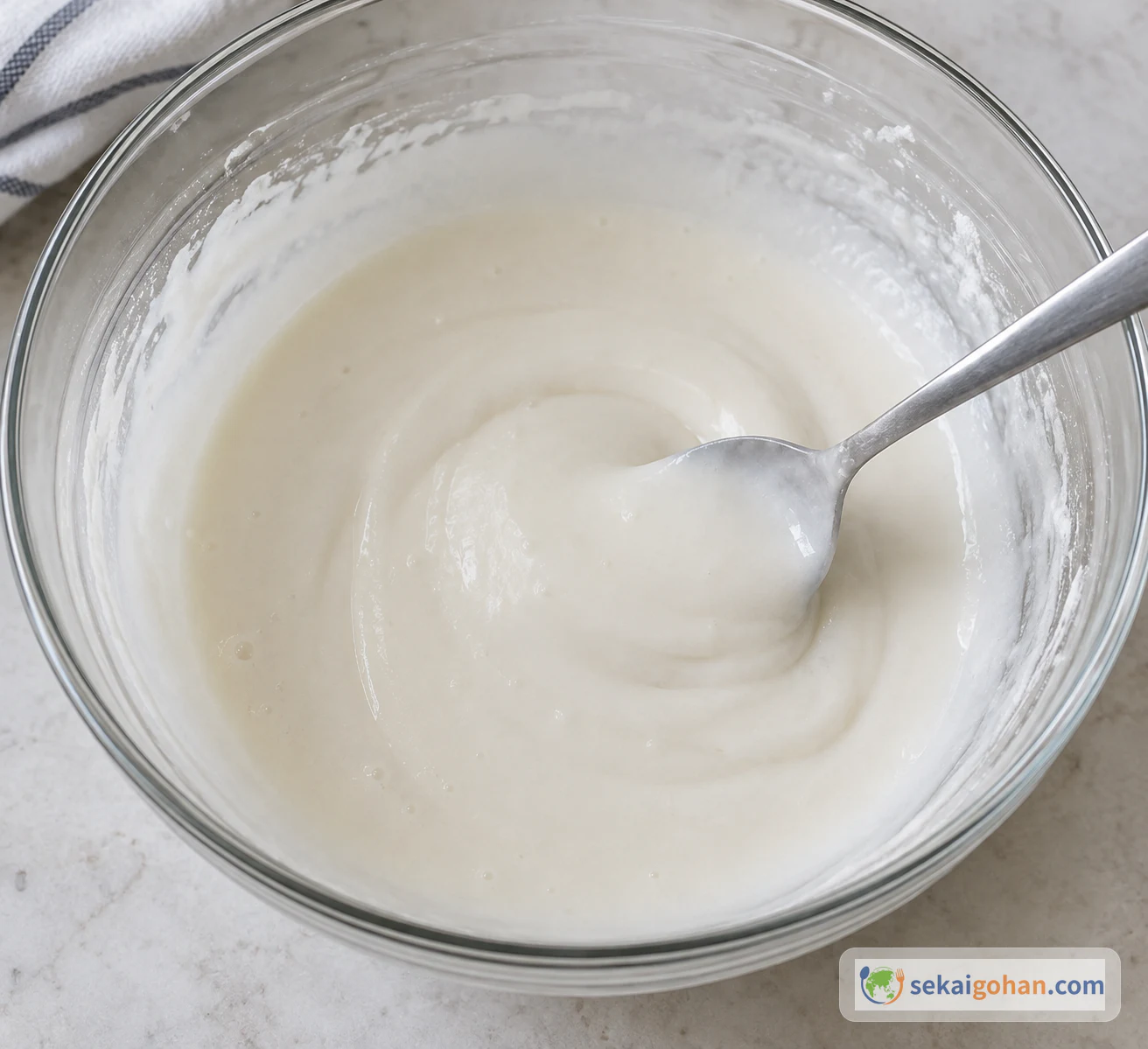
Mix and microwave the injeolmi batter (homemade injeolmi only)

Rice-cake batter of glutinous rice flour, sugar, salt and water mixed in a heatproof bowl
Mix until smooth before microwaving

In a microwave-safe bowl, mix 1/4 cup glutinous rice flour, 1 tsp sugar, a pinch of kosher salt and 3 tbsp water until smooth. Cover with plastic wrap, leaving a gap for steam to escape, and microwave for 1 minute. Microwaves differ, so don't rely on the time alone: the dough should be hot all the way through and turn elastic when worked.

STEP 55 / 8

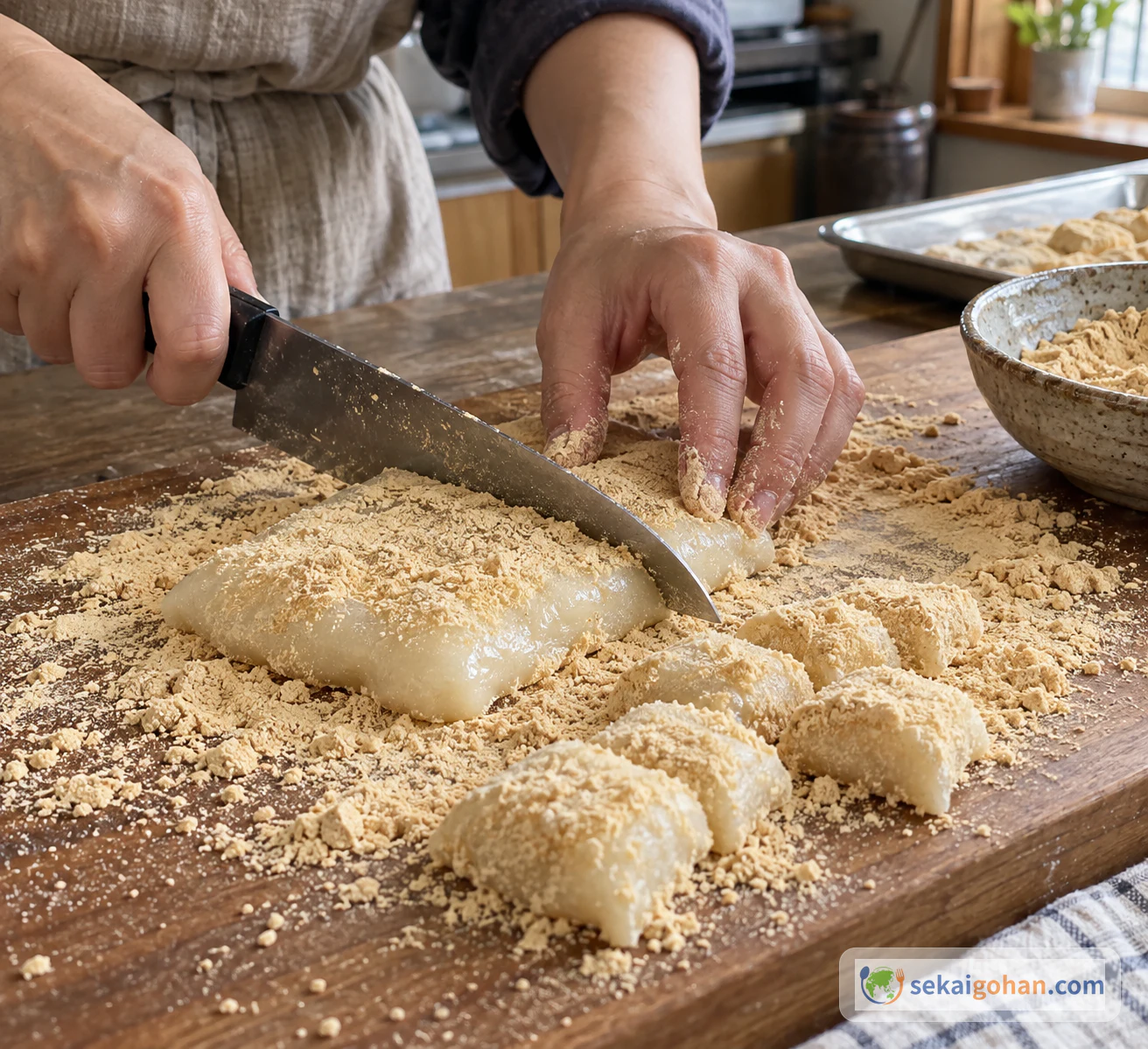
Knead, coat and cut the injeolmi

Cutting elastic rice cake into small pieces on roasted soybean powder
Coat the elastic dough in roasted soybean powder and cut it small

The dough will be very hot, so handle it with care. Knead it vigorously with a wooden spoon until it becomes elastic, then move it onto a board dusted with 2 tbsp roasted soybean powder. Before it has cooled completely, cut it into small pieces that are easy to handle. You need 6–7 small pieces for the bowl.

STEP 66 / 8

Start the layers in a chilled bowl

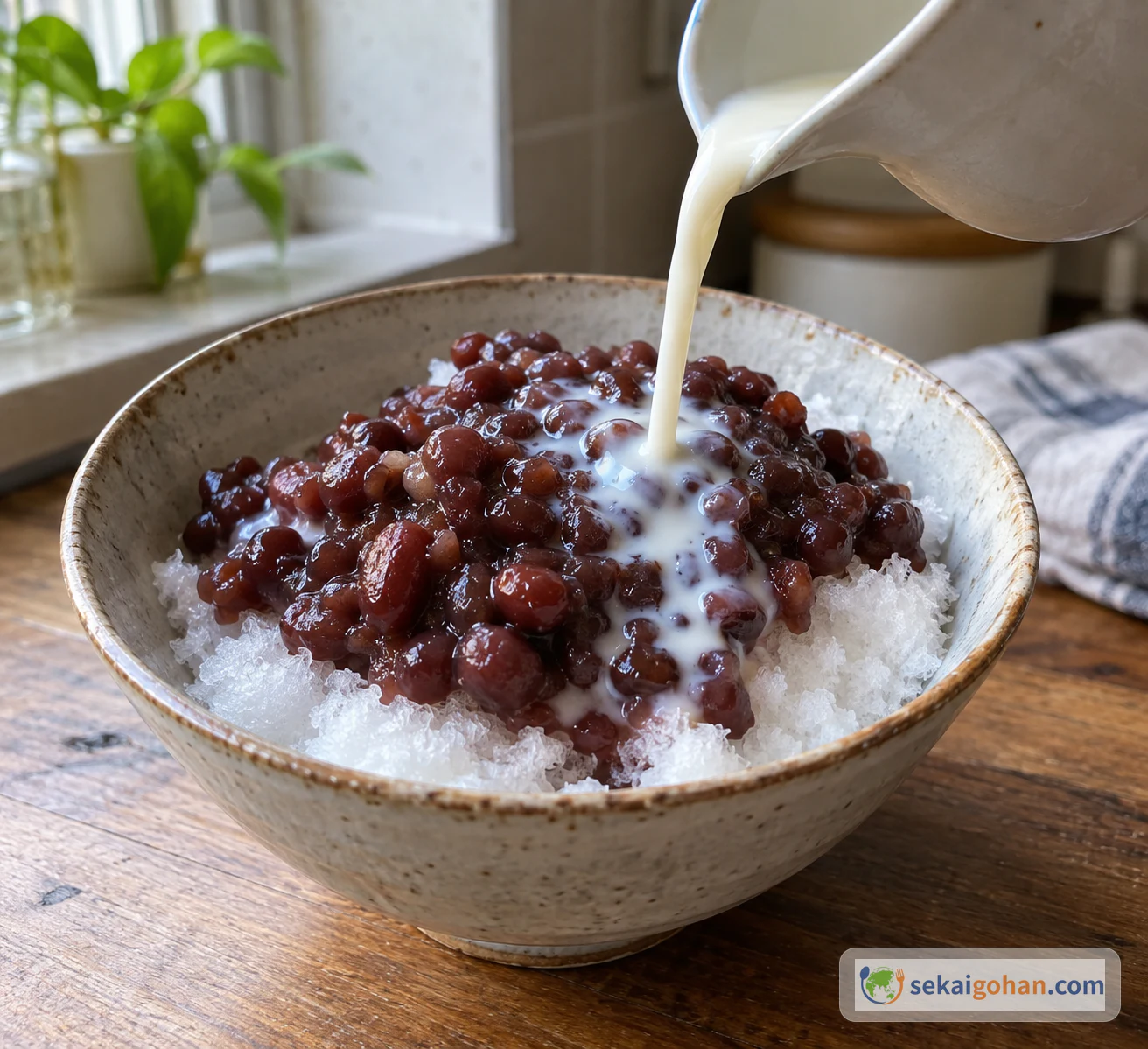
Shaved ice in a chilled bowl, topped with red beans and milk
The first layer: ice, half the beans, and milk poured over the beans

Chill a bowl that holds 2–3 cups in the refrigerator. Shave the ice just before assembling. Put 2 cups shaved ice in the cold bowl, spoon 1/2 cup sweet red beans on top, and pour 1/4 cup milk over the beans.

STEP 77 / 8

Add the fruit and the rest of the ice

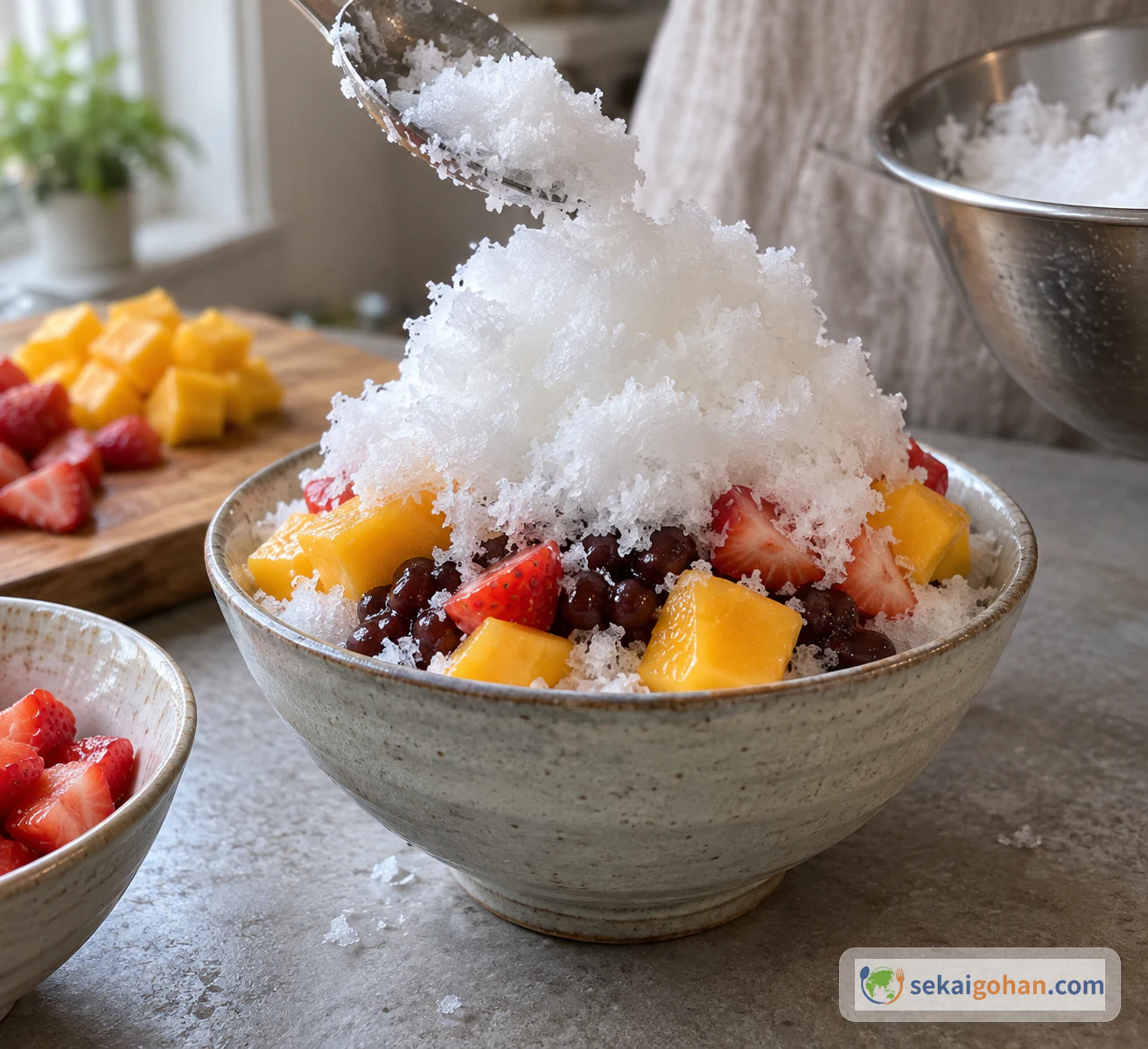
Mango and strawberries on the bean layer, with the remaining ice piled into a mound
Fruit goes in the middle, then the last cup of ice

Scatter the mango and strawberries over the beans, then pile the remaining 1 cup shaved ice on top in a small mound.

STEP 88 / 8

Finish with beans, injeolmi and condensed milk, and serve right away

Patbingsu finished with injeolmi and condensed milk, shared with spoons
Serve it at once and mix the layers as you eat

Top with the remaining 1/2 cup sweet red beans, arrange the injeolmi pieces, and drizzle 3 tbsp cold sweetened condensed milk over everything. Serve immediately, and let everyone mix the layers together as they eat.

0 / 0
Ingredients

Ingredients

1 / 3

For the bowl

Ingredient Amount Role
Shaved ice 3 cups (from about 2 cups water) The body of the dessert. Used as 2 cups, then 1 cup
Sweet red beans (pat) 1 cup The main sweetness and bean texture. Used as 1/2 cup, then 1/2 cup
Whole milk 1/4 cup Poured over the first layer of beans
Small strawberries 4–5 (about 1/2 cup), cut small Tartness and color
Mango 1 small, peeled, pitted and cubed Sweetness and juice
Injeolmi 6–7 small pieces Chewy rice-cake texture
Sweetened condensed milk 3 tbsp, cold Drizzled over the top
2 / 3

Optional: homemade sweet red beans

Ingredient Amount Role
Dried azuki beans 1 cup Cooked until tender but not mushy
Water 4 1/2 cups For simmering the beans
White or brown sugar 1 cup Sweetens the cooked beans
Kosher salt 1/2 tsp Rounds out the sweetness
Vanilla extract 2 tsp Aroma
3 / 3

Optional: homemade injeolmi

Ingredient Amount Role
Glutinous rice flour 1/4 cup The chewy rice-cake base
Sugar 1 tsp A little sweetness
Kosher salt a pinch Seasoning
Water 3 tbsp Makes the batter
Roasted soybean powder 2 tbsp Coating; part of the flavor of injeolmi
0 / 0

On a hot Korean summer day, a big bowl of shaved ice lands in the middle of the table, and several spoons go in at once. The ice starts to soften at the edges almost immediately, so everyone digs in, breaking down the neat layers and mixing beans, milk and fruit into the ice as they eat. This is patbingsu (팥빙수), the shared summer dessert you have to eat fast before it melts. Fine, cold shaved ice comes topped with sweet red beans that still hold their shape, plus mango, strawberries, milk, chewy injeolmi rice cake and sweetened condensed milk.

About Patbingsu

The name tells you what's in the bowl: pat means red beans and bingsu means shaved ice. Bingsu on its own is the broader word. Modern Korean bingsu comes in many forms, including fruit-centered versions, but patbingsu is built around the beans. The fruit can follow the season. If the red beans go, though, it becomes a different kind of bingsu.

The roots go back a long way. In the Joseon era, people crushed ice and enjoyed it as hwachae (화채). In the modern period, bingsu shops (빙수점) appeared, selling a simple treat of ice, sugar and milk, and frozen desserts kept changing with the times. Patbingsu with red beans and rice cake, as we know it now, came later than the Joseon era.

Today bingsu is a fixture of Korean summers, and a bowl is usually shared between several people. Many newer versions have moved away from the traditional red-bean style. This one keeps it.

Ingredients for One to Two Servings
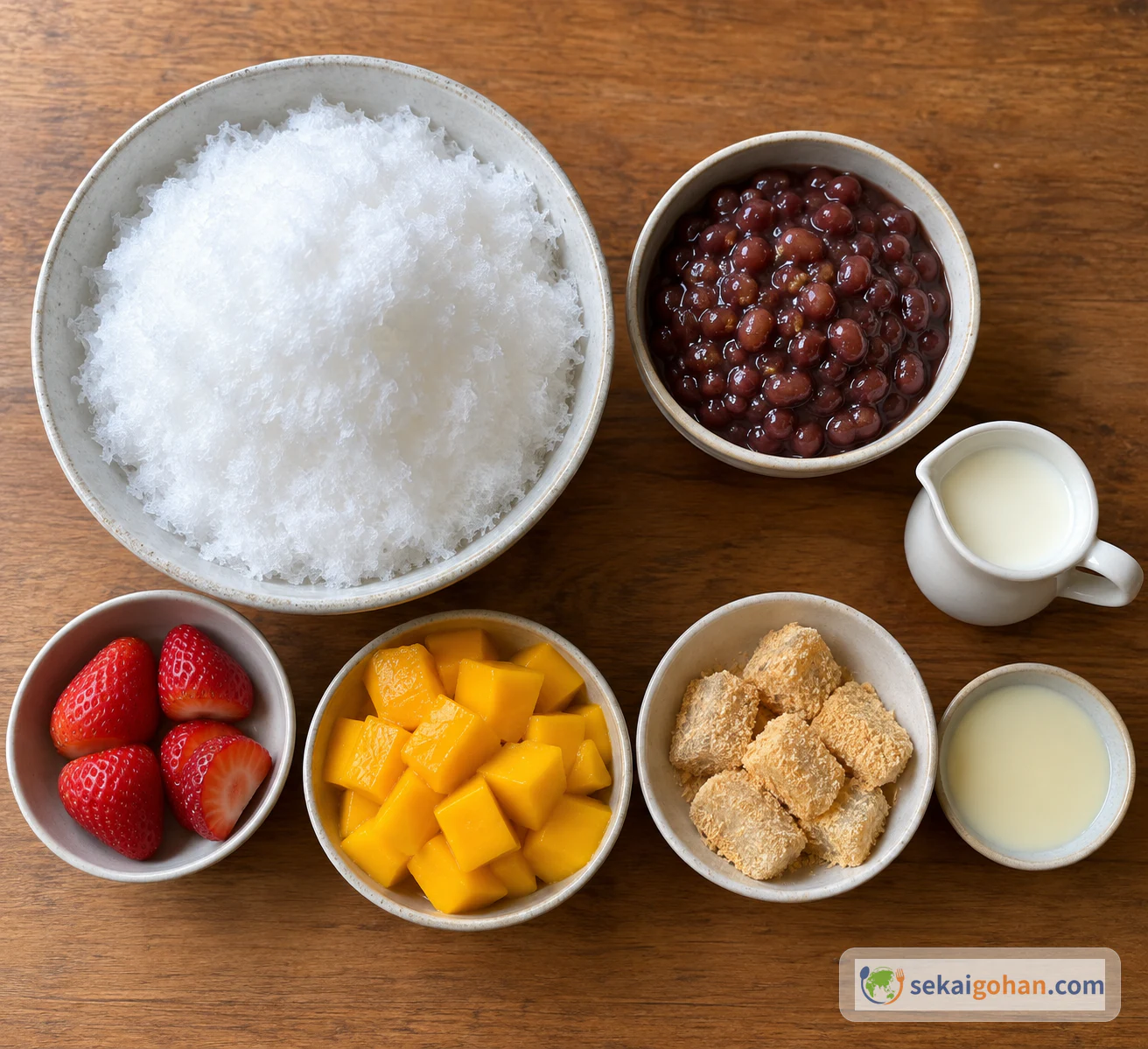
Patbingsu ingredients: shaved ice, sweet red beans, milk, fruit, injeolmi and condensed milk
Everything for one bowl, laid out separately before assembly

The first table is all you need if you buy sweet red beans and injeolmi ready-made. The second and third tables are optional, for making the beans and the rice cake yourself. The homemade beans make a little more than 2 cups, but only 1 cup goes into this bowl.

Allergens

This dessert contains milk (whole milk and sweetened condensed milk), soy (roasted soybean powder) and glutinous rice. If you use store-bought sweet red beans or injeolmi, check the label for allergens and shared-facility statements.

Equipment

  • Ice shaver (if you use a blender's ice-crushing function, follow its manual, as models differ)
  • Serving bowl that holds 2–3 cups
  • Saucepan (for homemade beans)
  • Microwave-safe bowl, plastic wrap and a microwave (for homemade injeolmi)
  • Wooden spoon
  • Cutting board and knife

Choosing Ingredients for Patbingsu

Sweet red beans: buy or make. Canned or pouched sweet red beans save you the long simmer. Check that they are the sweetened kind, and skip the sugar step if they are. Plain boiled red beans with little or no sugar taste less sweet, so balance them with the condensed milk. Homemade beans make a little more than 2 cups; use 1 cup for the bowl and keep the rest in a separate container.

Injeolmi. Store-bought injeolmi lets you skip the rice-cake steps (steps 4–5). For homemade, use glutinous rice flour. Other rice flours such as shiratamako differ in grind and water needs, so they need their own ratio and method.

Fruit and milk. Strawberries and mango can be swapped for fruit in season, which will change the sweetness, tartness and juiciness. Soy milk or another alternative milk changes the flavor.

Method: Beans, Rice Cake, Then the Layers

Which steps you need

Steps 1–3 are only for homemade red beans, and steps 4–5 only for homemade injeolmi. With store-bought beans and injeolmi, go straight to step 6.

Common Patbingsu Problems

Microwaves and ice shavers differ by model, so go by how each stage looks and feels rather than by the clock alone.

Problem Likely cause What to do
The ice melts before it reaches the table Warm bowl, or ice shaved too early Chill the bowl, shave the ice just before assembling, and serve immediately
The beans are mushy Cooked or stirred too hard Judge by "tender but not mushy" and stir gently when sweetening
Too sweet with canned beans Sugar added to beans that were already sweet Skip the sugar step with sweetened store-bought beans, and add condensed milk a little at a time
Not sweet enough with plain boiled beans Unsweetened beans used in place of sweet red beans Adjust with the condensed milk
The rice cake isn't elastic Microwave models vary Make sure the dough is hot through and turns elastic when kneaded; the stated time alone isn't proof
The layers blur together Fruit, beans and rice cake piled in one place Keep each component in its own layer, as in steps 6–8

Patbingsu Variations

There's room to play here, as long as you keep the shaved ice, sweet red beans and chewy rice cake. Leave the beans whole rather than turning them into a smooth paste, since their texture is part of the dish. Condensed milk is a matter of taste: add it a little at a time, up to 3 tbsp.

For a savory Korean recipe, see dakgalbi.

Frequently Asked Questions

What's the difference between bingsu and patbingsu?

Bingsu means shaved ice and covers many styles, including fruit-based ones. Patbingsu is the style built on sweet red beans (pat).

Can I use store-bought sweet red beans?

Yes. Use 1 cup of sweetened red beans, skip steps 1–3, and leave out the extra sugar.

Can I make it for one person?

The recipe already serves one to two. For a smaller bowl, reduce every ingredient by the same ratio and match it to your bowl's size.
Sources

  • Maangchi, "Shaved ice with sweet red beans and fruit (Patbingsu)." The recipe, amounts and assembly order for one to two servings; the homemade sweet red bean and microwave injeolmi methods; the note on refrigerating leftover beans; and the meaning of pat and bingsu. https://www.maangchi.com/recipe/patbingsu
  • Ministry of Culture, Sports and Tourism / Korea Here & Now, "Bingsu: chill out while you can." Bingsu as a widely eaten Korean summer dessert shared from one bowl, and the shift from traditional red-bean bingsu to varied modern styles, based on shop owners and dessert makers. https://www.mcst.go.kr/english/policy/kocis/newsView.jsp?pSeq=174
  • National Folk Museum of Korea webzine, "빙과류 변천사" (A history of frozen desserts). Crushed ice eaten as hwachae in the Joseon era, the appearance of bingsu shops selling simple ice, sugar and milk treats in the modern period, and how frozen desserts changed over time. https://webzine.nfm.go.kr/2021/07/30/%EB%B9%99%EA%B3%BC%EB%A5%98-%EB%B3%80%EC%B2%9C%EC%82%AC/