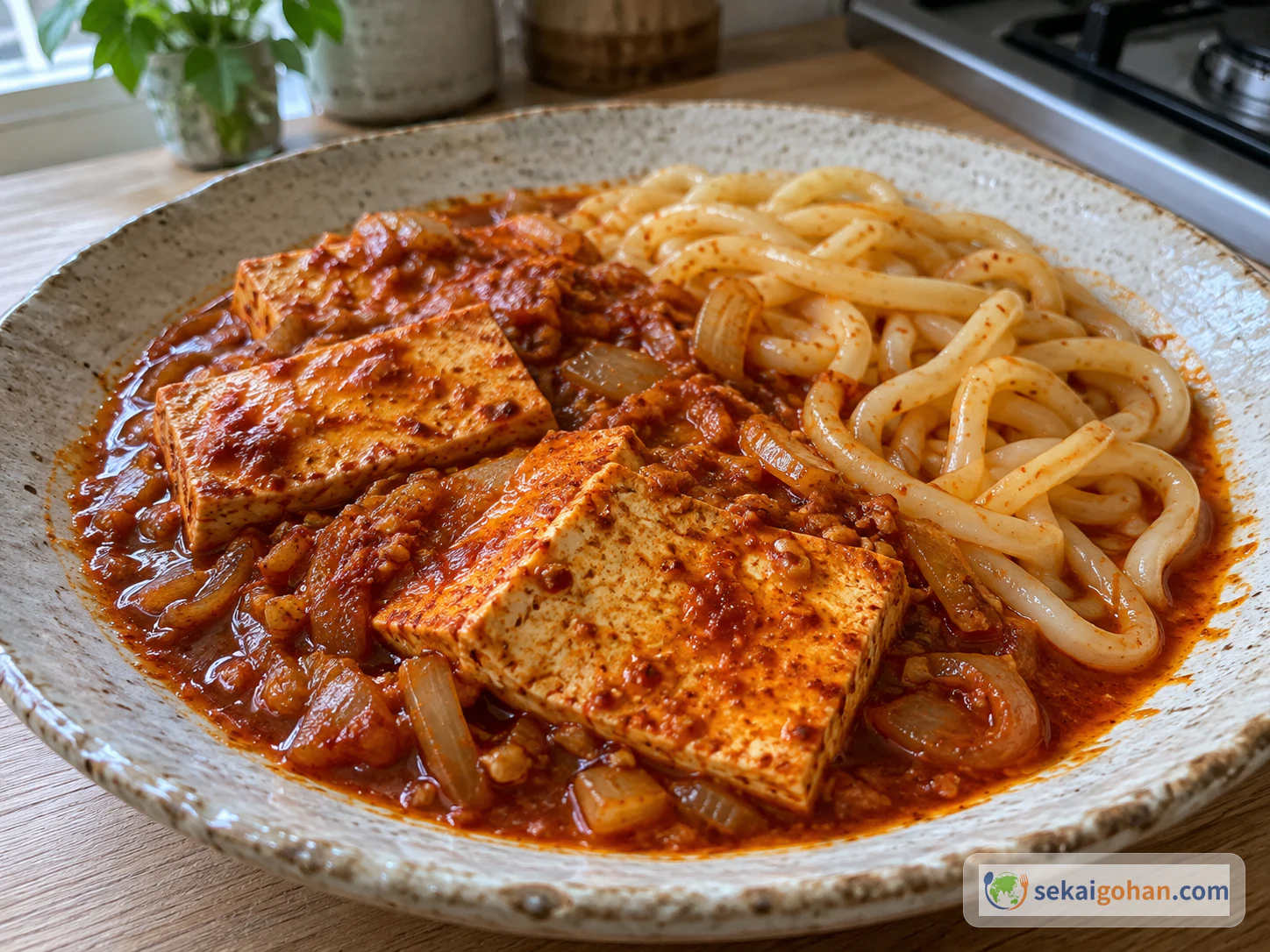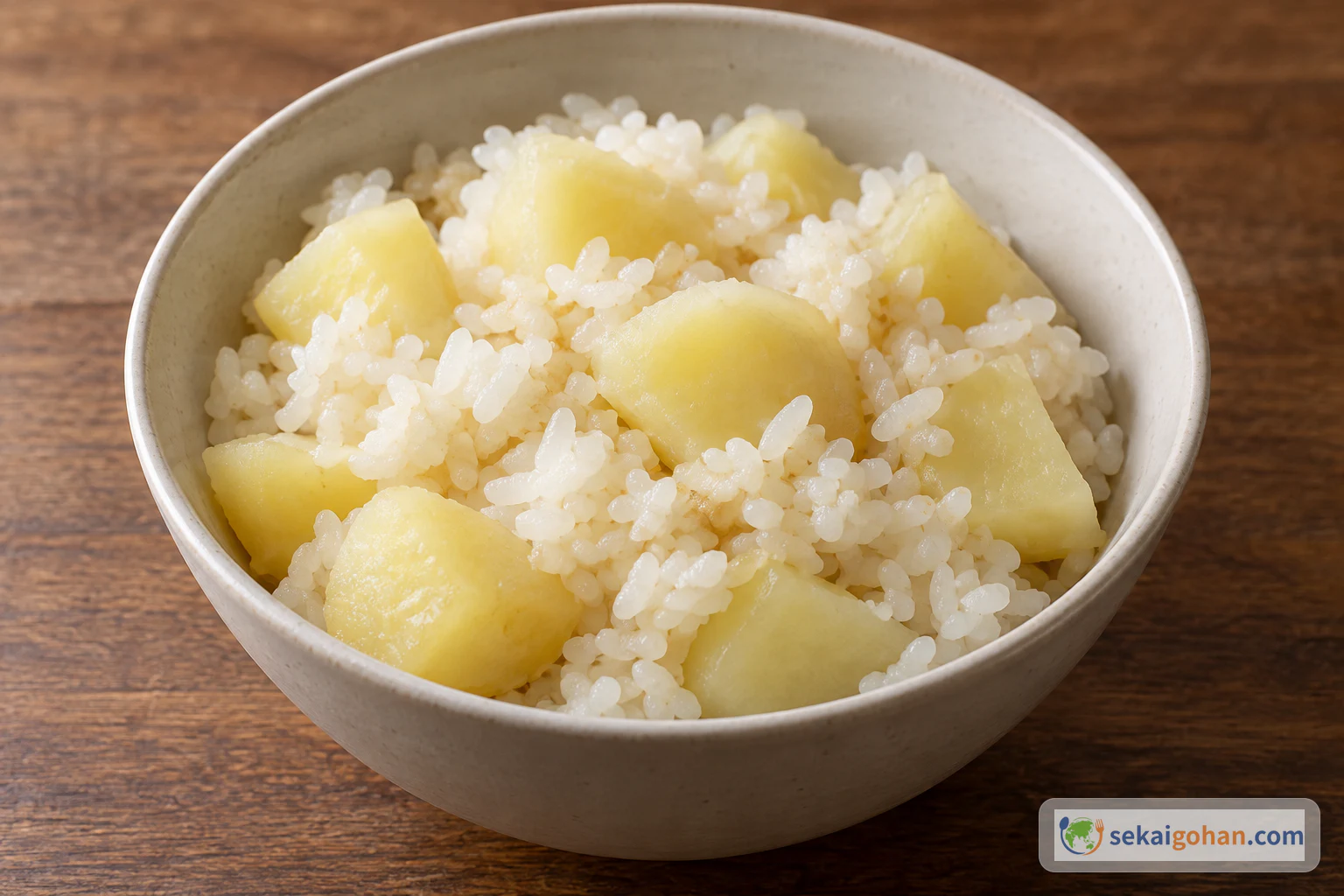
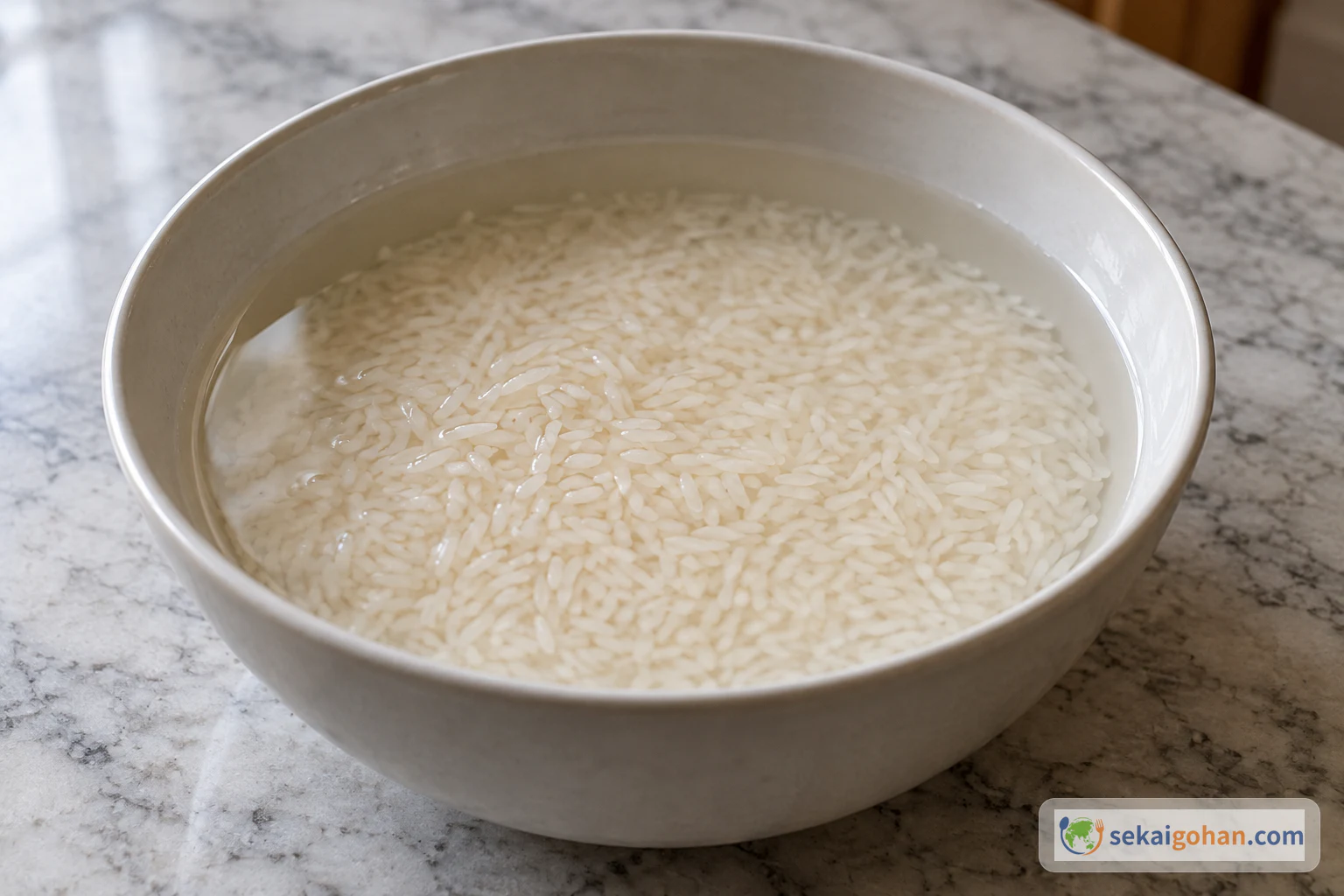
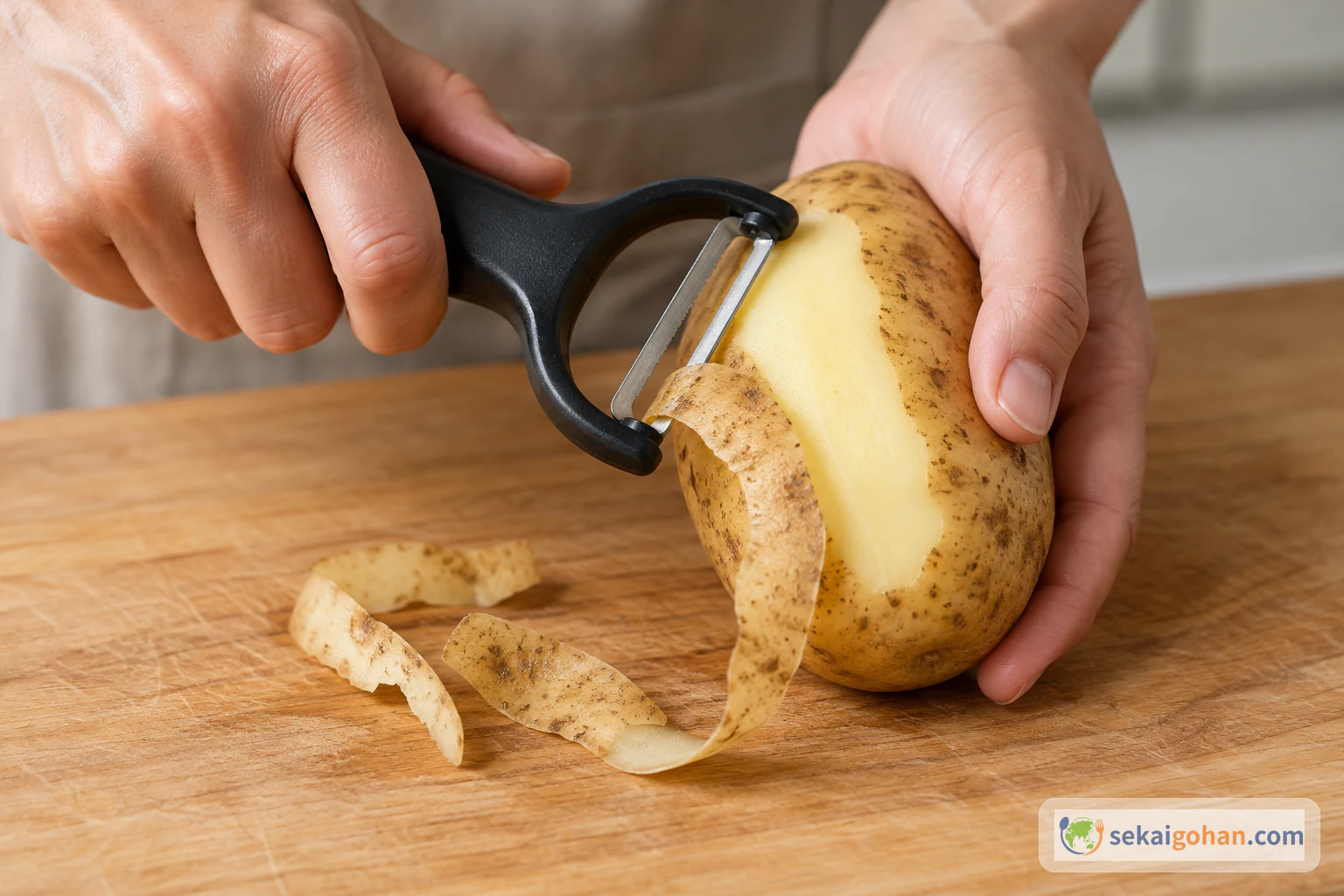
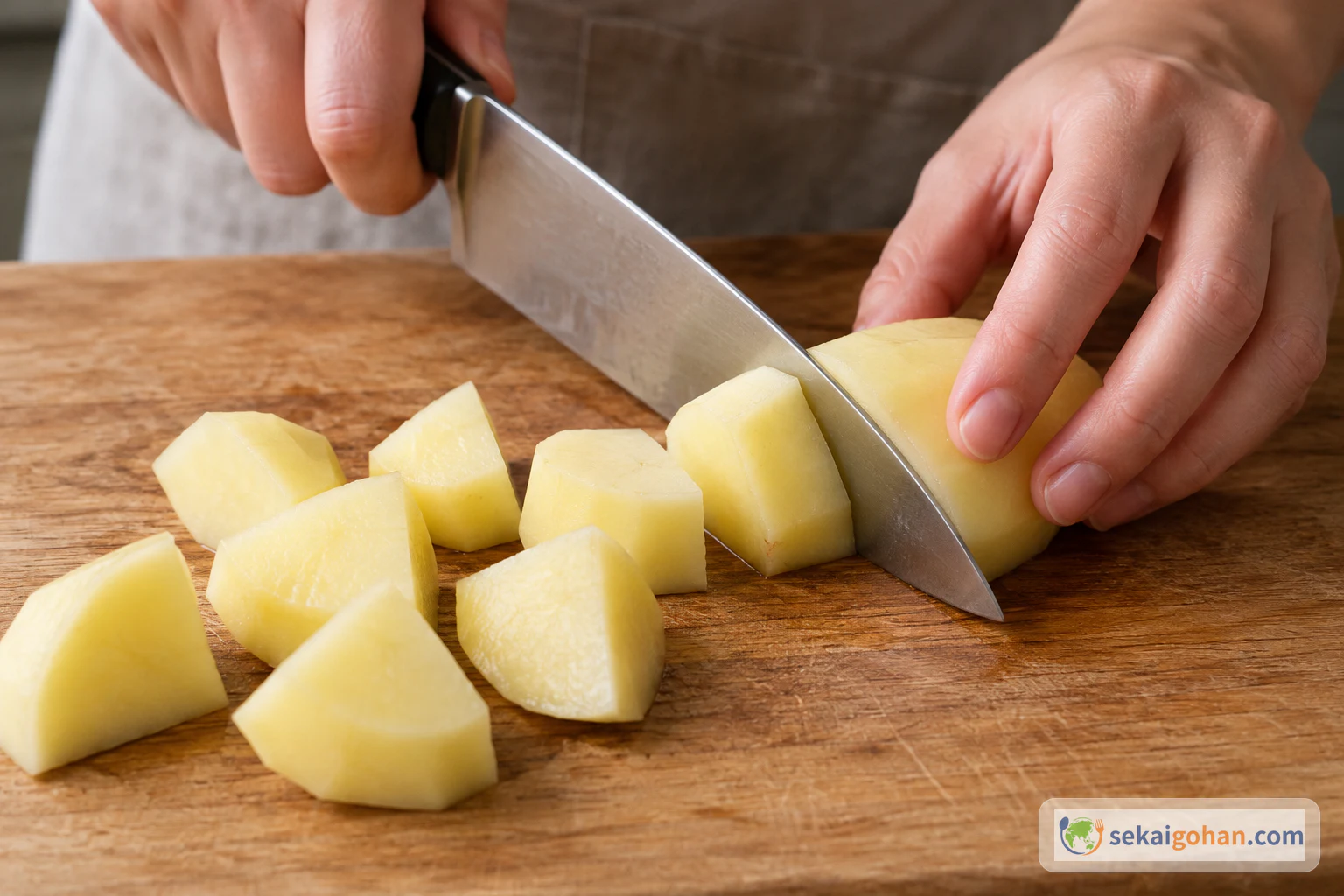
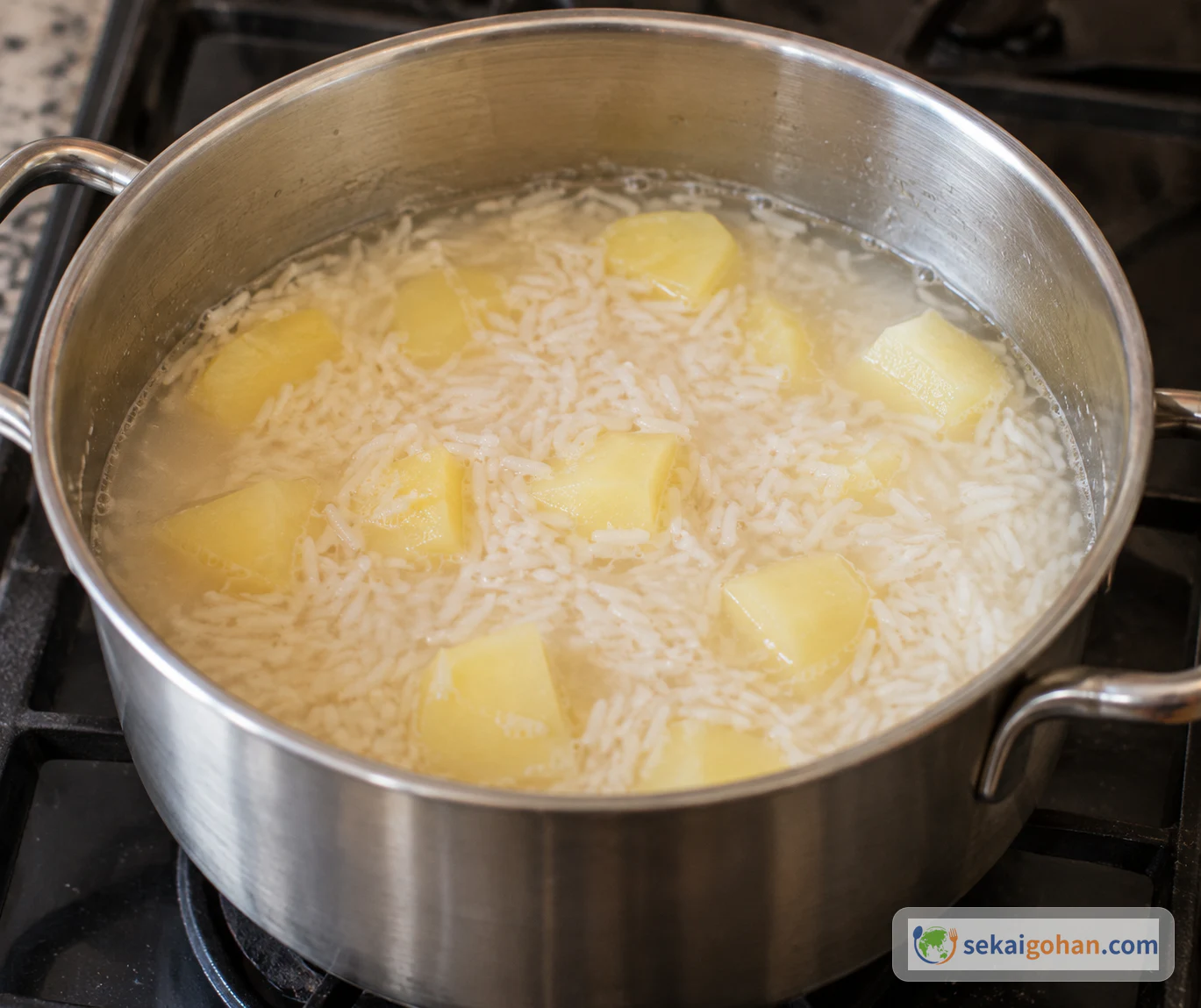
Rinsed rice sits in its measured water for half an hour while you peel a potato and hack it into rough chunks. Then everything goes into one pot together: the rice, the very same water, the potato. That's gamjabap (감자밥), Korean potato rice, and it's about as simple as home cooking gets. The potato turns soft and mild in the rice, and a little bowl of seasoning on the side lets each person add as much savory depth as they like.
About Gamjabap
At its core, gamjabap is potato cut into bite-size pieces and cooked with rice. Every version starts from that. The dish is listed among the traditional local foods of Gangwon-do, and records from that region also soak the rice for 30 minutes before cooking. That listing doesn't mean it's made the same way everywhere today. Cooks vary the amounts, the seasoning and how it's served at the table.
For more dishes from the same country, browse our Korean recipes.
Ingredients for 2 Servings
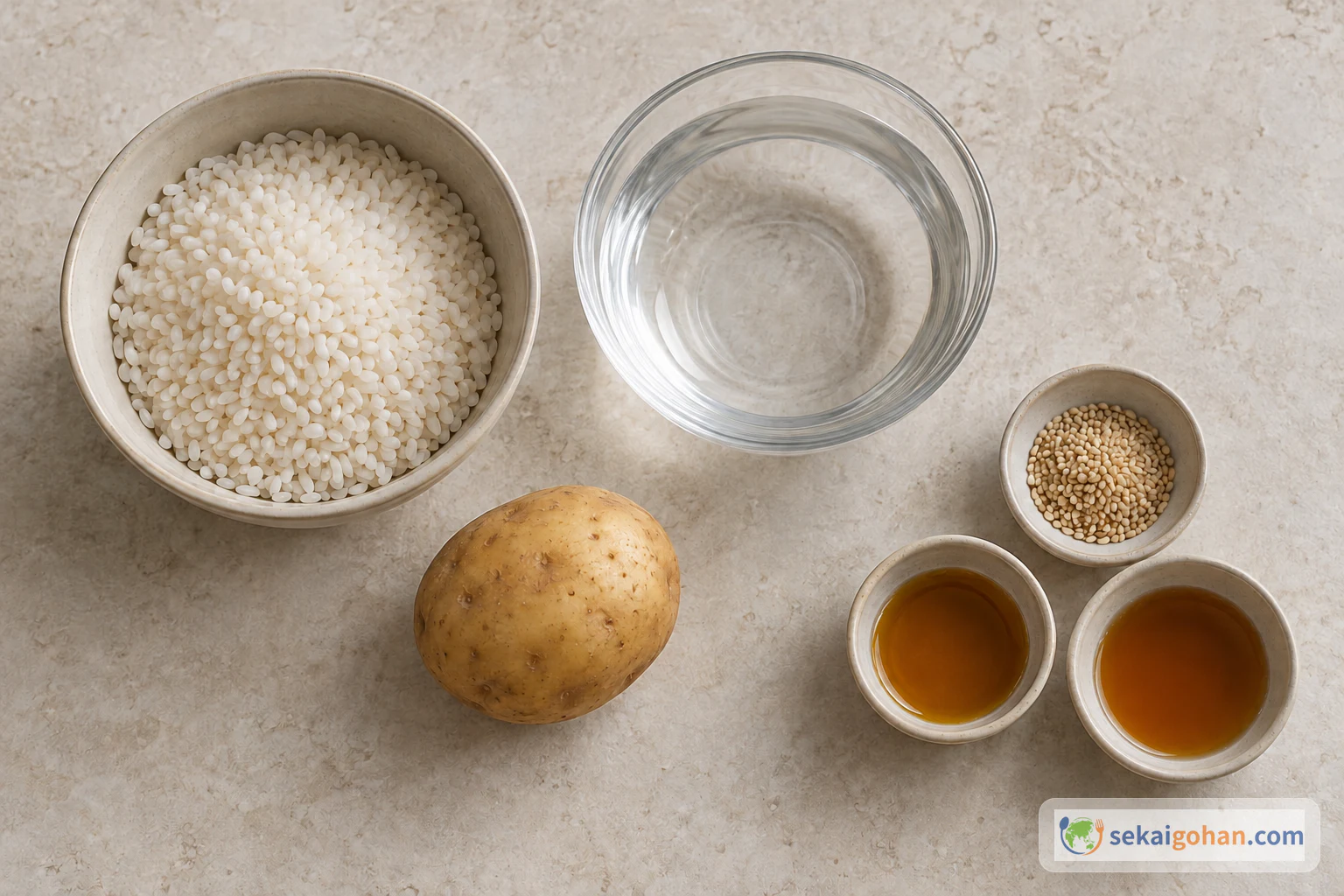
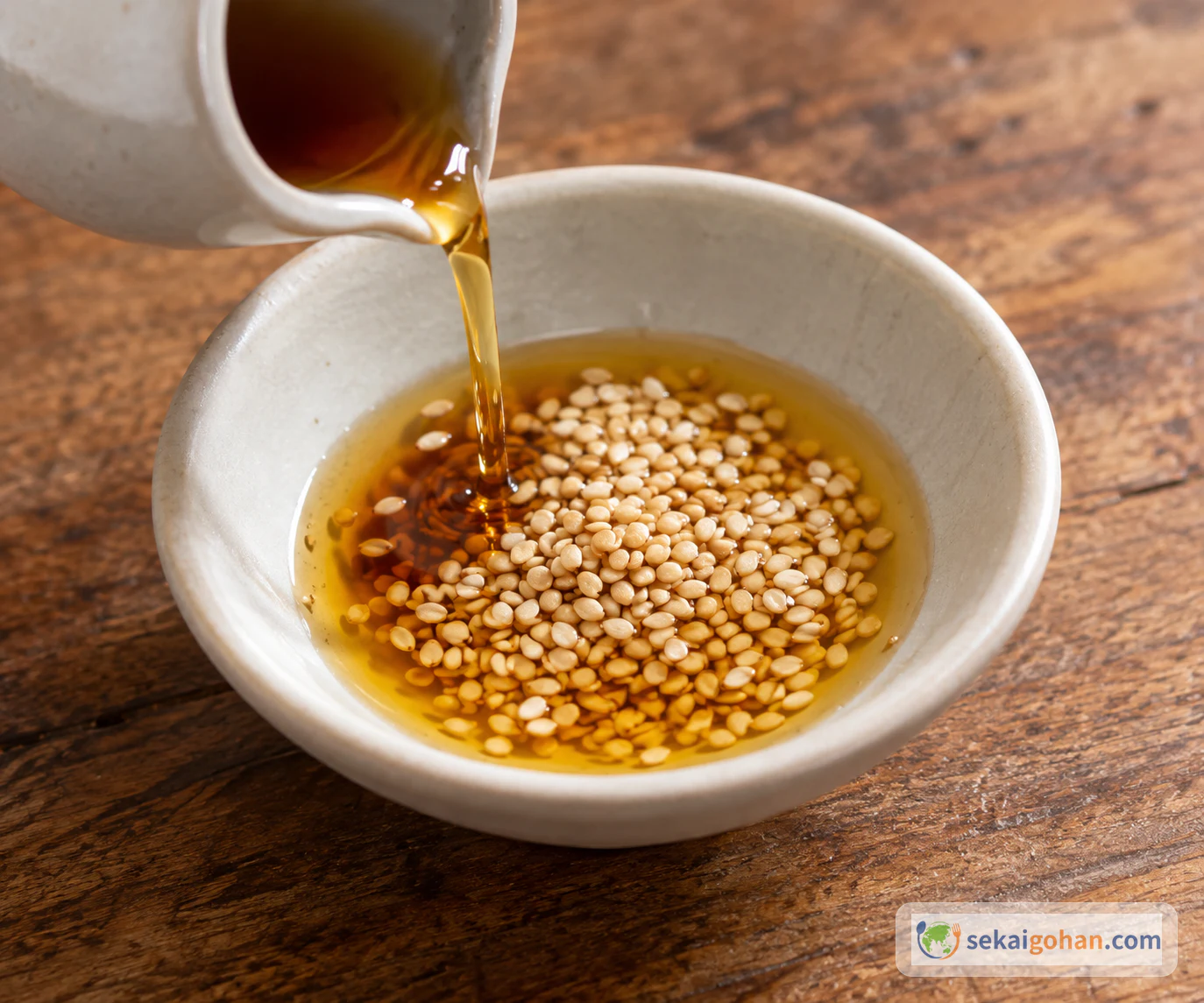
The last three ingredients are mixed together and served alongside the rice. They never go into the pot.
Gamjabap Seasoning and Swaps
Yeondu Soon is a fermented-soy liquid mixed with vegetable-infused water, closer to a sauce than a paste. Here it's an optional seasoning, mixed in its own small bowl. If you can't find it, leave it out. The rice and potato are good on their own.
The optional seasoning contains sesame seeds, sesame oil and a fermented-soy product. If anyone at the table avoids these, leave it off.
Equipment
- Bowl for rinsing and soaking the rice
- Vegetable peeler
- Knife and cutting board
- Pot
- Small bowl for the optional seasoning
Getting Gamjabap Right
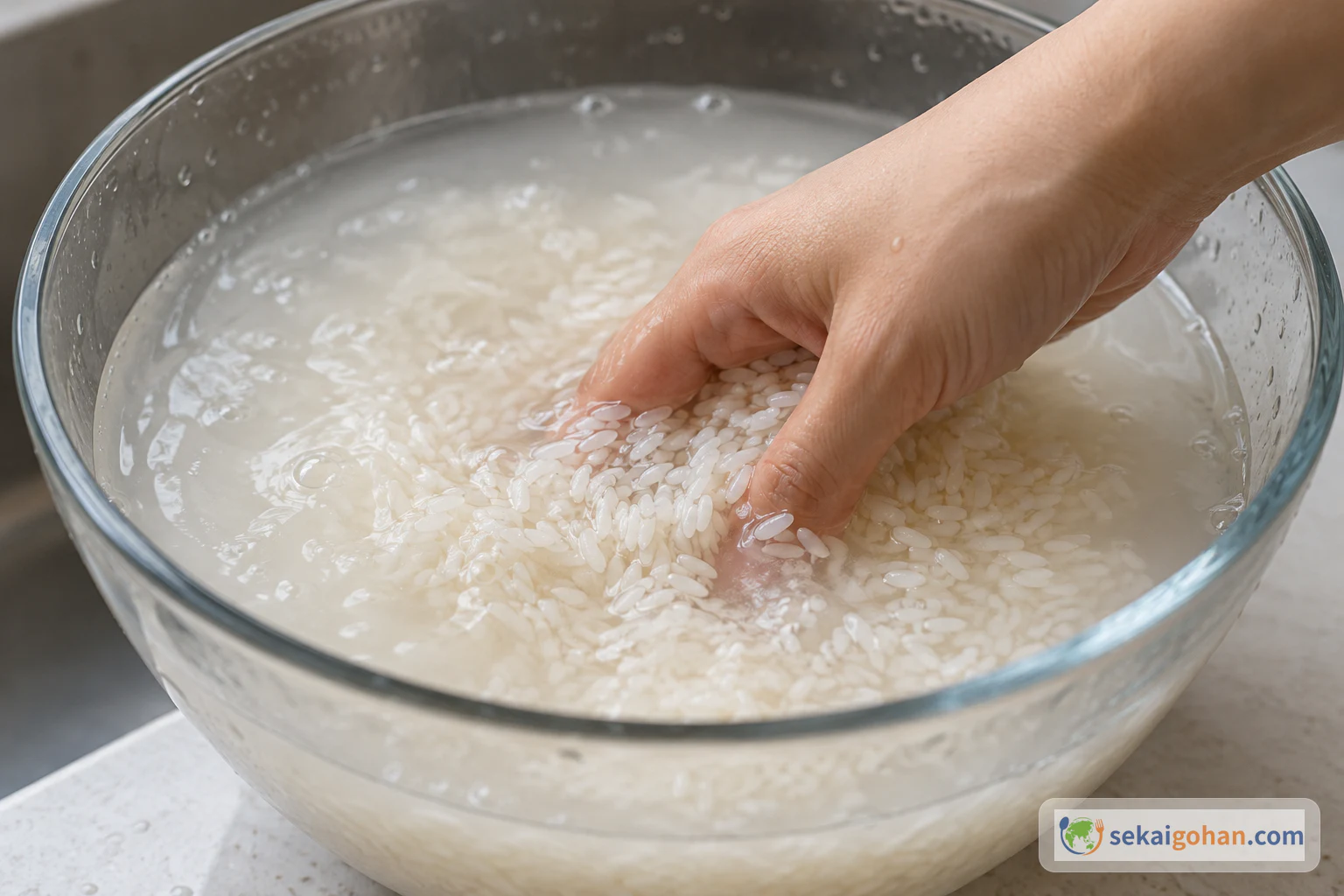
Two habits matter most. First, wash the rice lightly, about three rinses with no hard scrubbing. Second, keep the soaking water: the rice and its water go into the pot together, so don't drain it after soaking.
Cut the potato into rough, bite-size pieces about 2–3 cm across so they cook through in the same time as the rice. Keep the seasoning out of the pot and serve it alongside.
Serving Gamjabap and Other Versions
Bring the pot to the table with the seasoning in a small bowl on the side, so everyone can spoon on as much as they want. Another way to eat it is to crush the potato pieces into the rice and mix them with soy sauce, seasoned sauce or seasoned soybean paste.
Other recipes use different amounts. One salted version uses rice 1.5 lb (720 g), potatoes 10.5 oz (300 g), water 3½ cups (870 ml) and salt 1 tsp, with the potato cut at 1 inch (2 cm). That's a separate recipe in its own right, so cook it as written rather than mixing its amounts into this one.
Frequently Asked Questions
Should I drain the rice after soaking?
No. The soaked rice and its water go into the pot together. That water is the cooking water.
Can I convert the cup measures?
The ingredients list gives grams and milliliters alongside the cups, so use those for the most accurate result.
Can I use soy sauce or doenjang instead of Yeondu Soon?
Soy sauce, seasoned sauce and seasoned soybean paste are ways to serve gamjabap, mixed with crushed potato and rice. They aren't direct replacements for Yeondu Soon in this recipe's side seasoning.