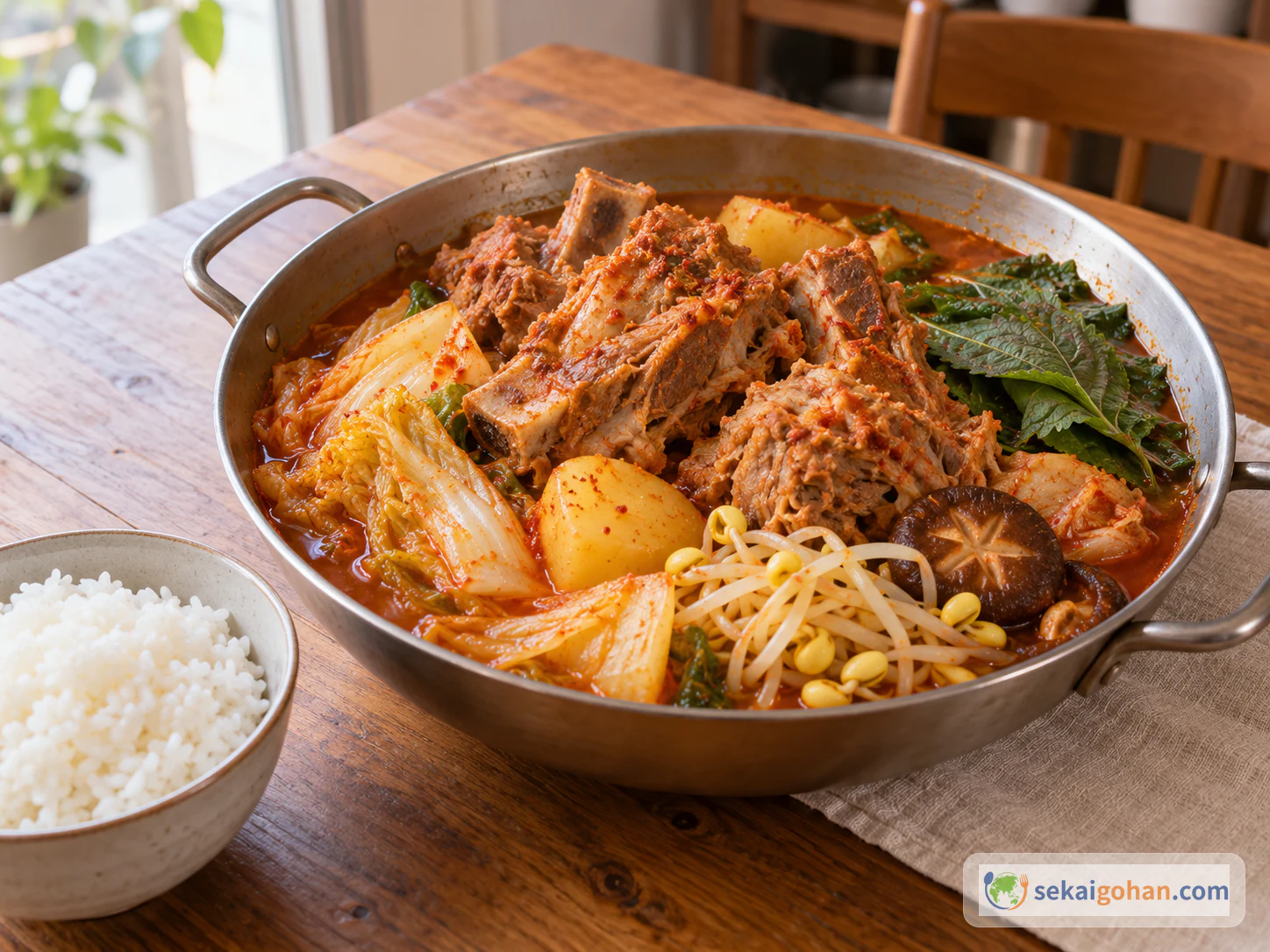
Gamjatang with pork neck bones, napa cabbage, potatoes, soybean sprouts and perilla leaves, with rice served separately
Serves2 to 3 servings
CuisineKorean

Gamjatang: Korean Pork Bone Soup with Potatoes and Perilla (감자탕)

How to make gamjatang, Korean pork bone soup, following Maangchi's current written recipe for 2 to 3 servings. Covers preparing the bones and napa cabbage, the 90-minute broth, the perilla seasoning paste, the order for adding vegetables, food safety, the recipe's limited substitutions, and its unresolved details.

Cooking flow

Cooking steps

STEP 11 / 11

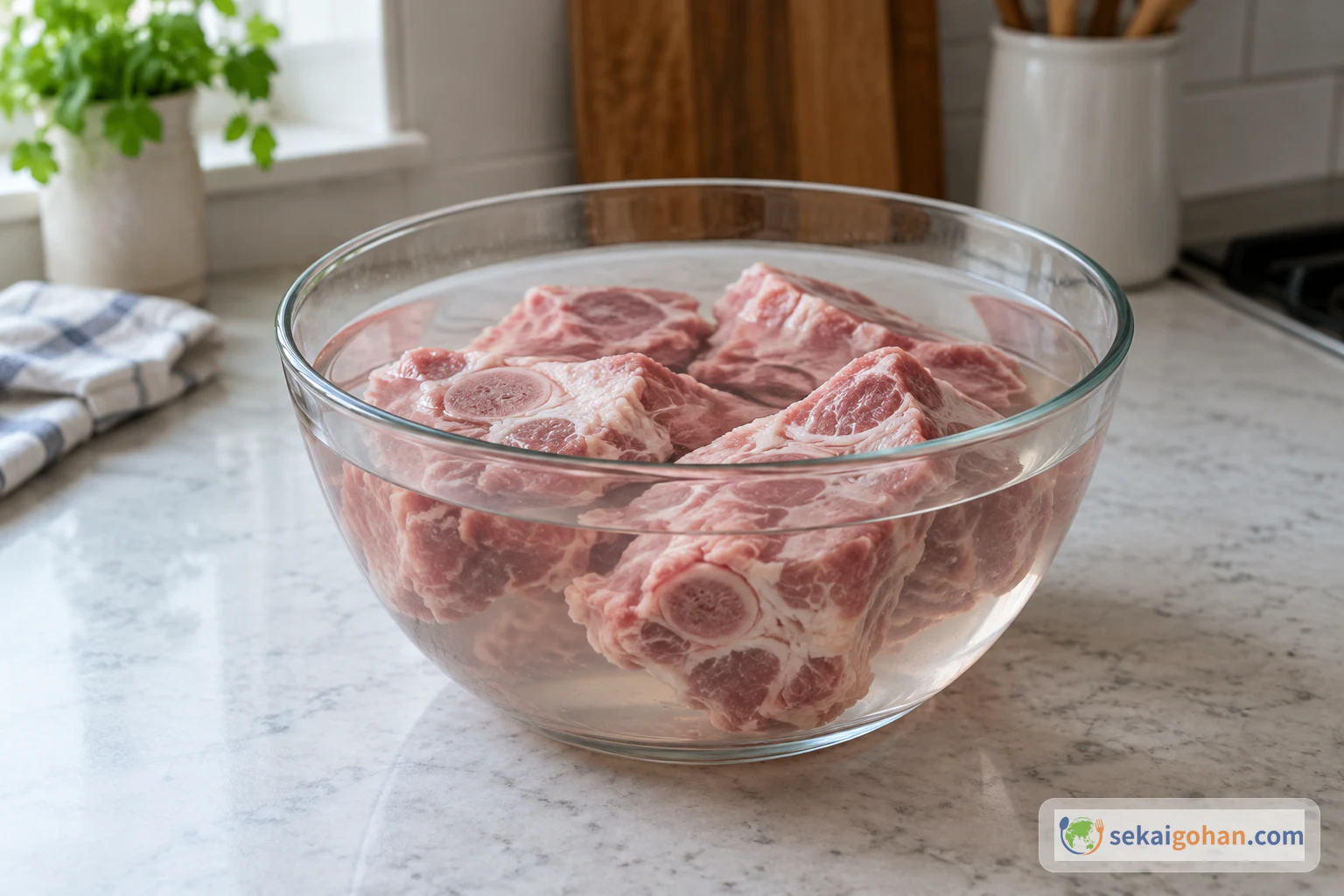
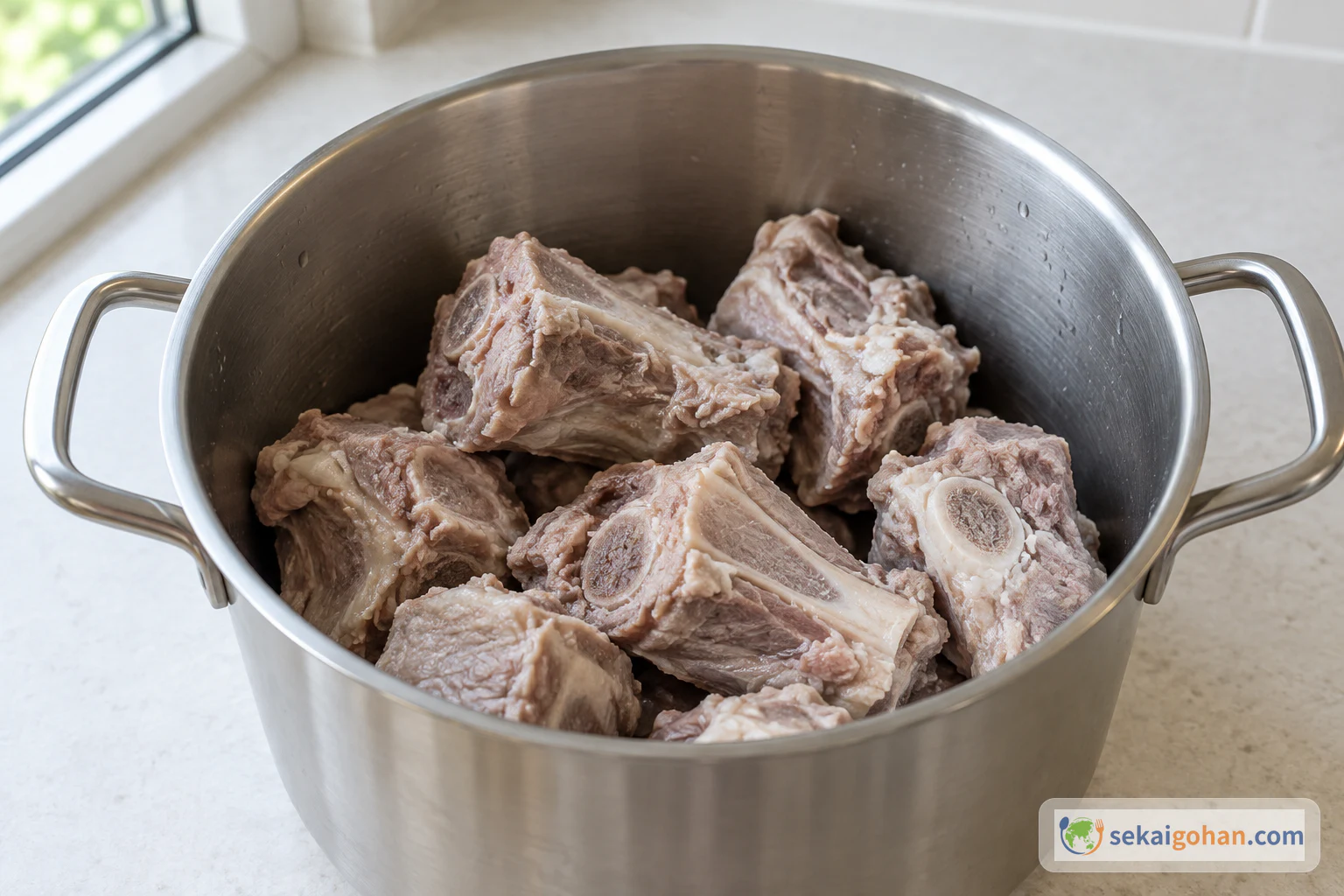
Rinse and soak the bones

Pork neck bones soaking in cold water
The bones soak in cold water for at least 30 minutes

Rinse the pork neck bones a couple of times, then soak them in cold water for at least 30 minutes. Keep them away from the vegetables, using separate tools and boards for each. Afterward, wash your hands, then wash the sink and the area around it with hot, soapy water.

STEP 22 / 11

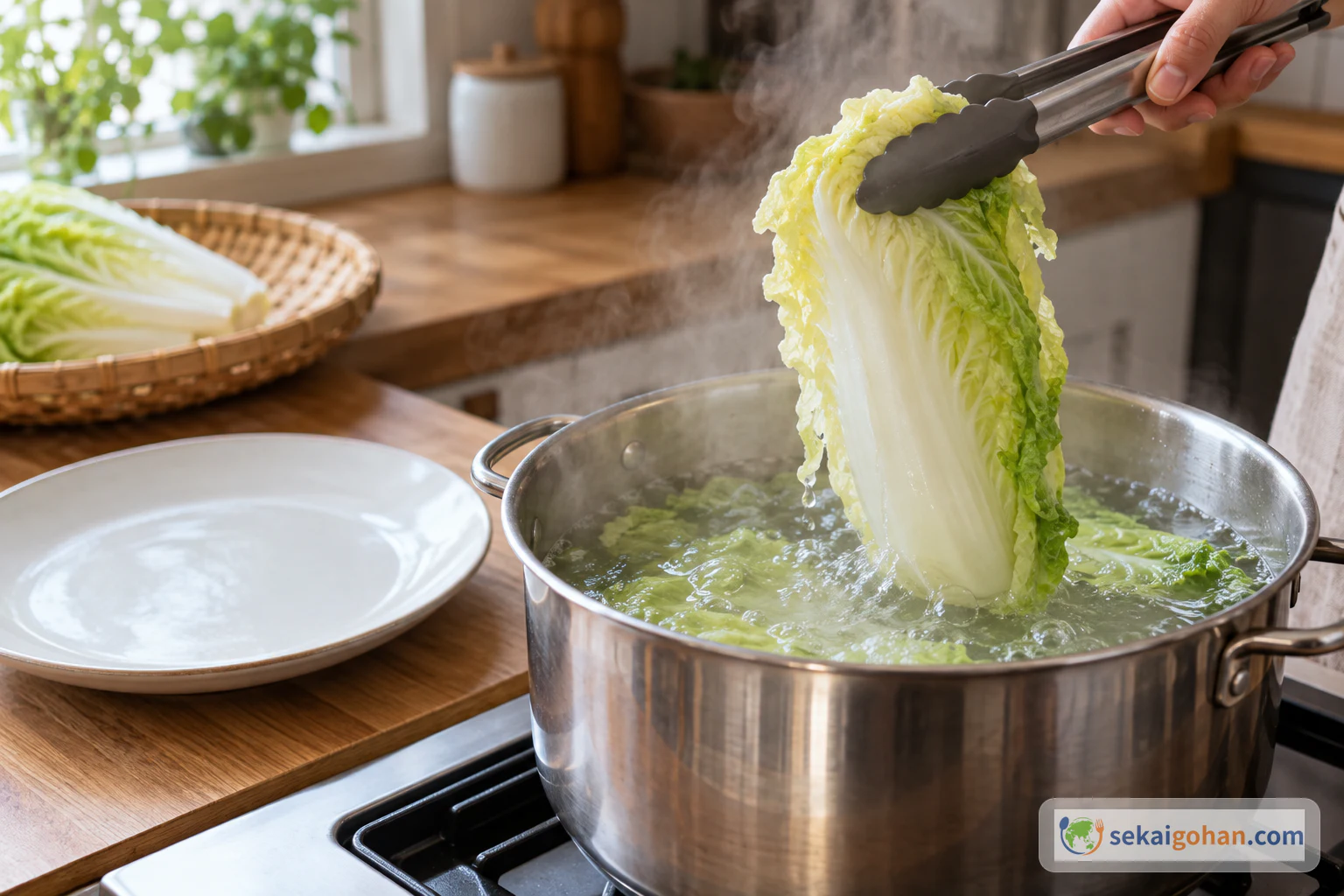
Blanch the cabbage

Napa cabbage being blanched in boiling water
One minute in boiling water, before any bones go in

Bring a large pot of water to a boil. Blanch the cabbage for 1 minute, then lift it out with tongs. Keep the water boiling for the bones.

STEP 33 / 11

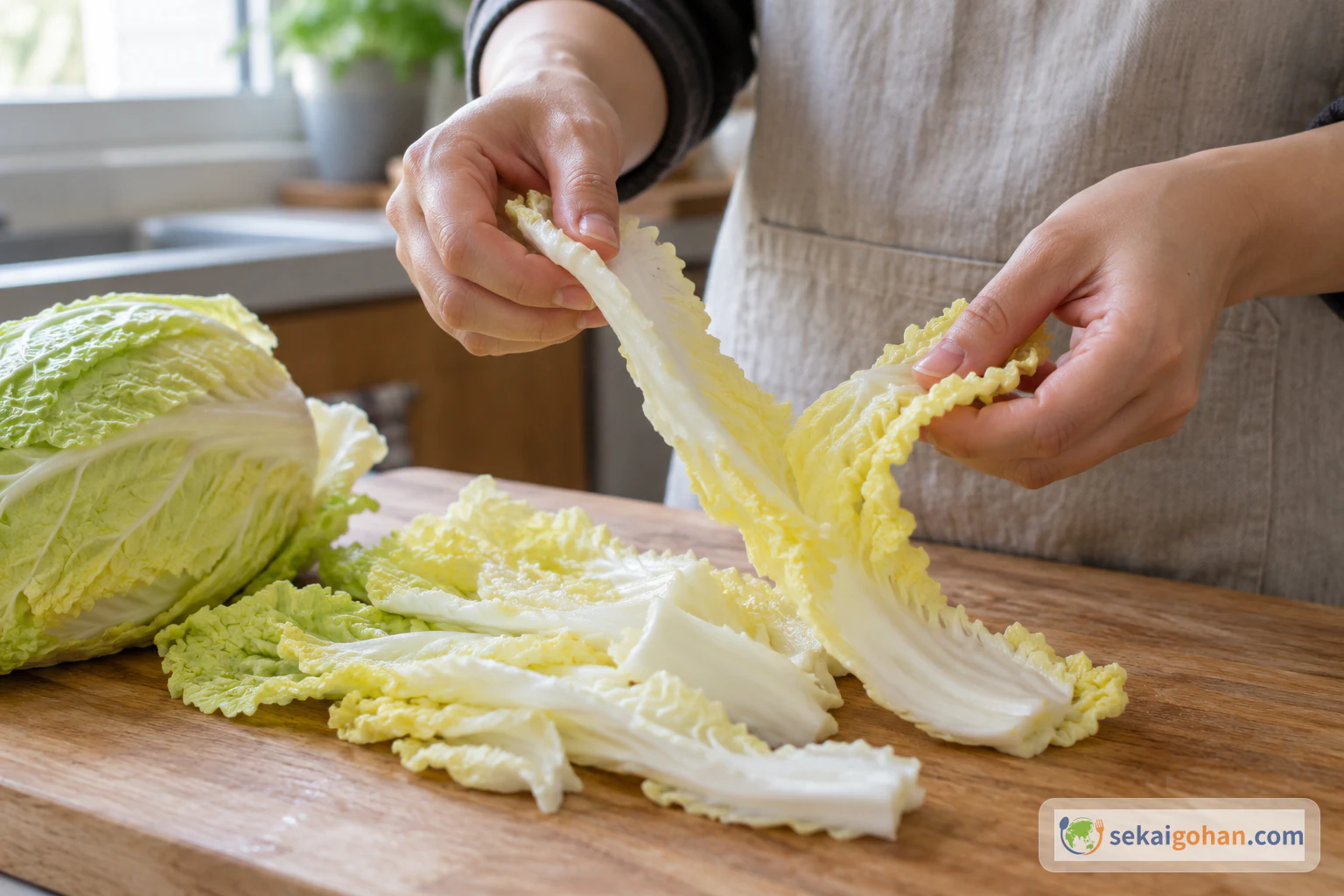
Rinse and tear the cabbage

Blanched and cooled napa cabbage being torn into long pieces
Tear lengthwise to get long, bite-sized pieces

Rinse the cabbage in cold water and drain it. Tear the leaves lengthwise once or twice into long, bite-sized pieces, then set them aside.

STEP 44 / 11

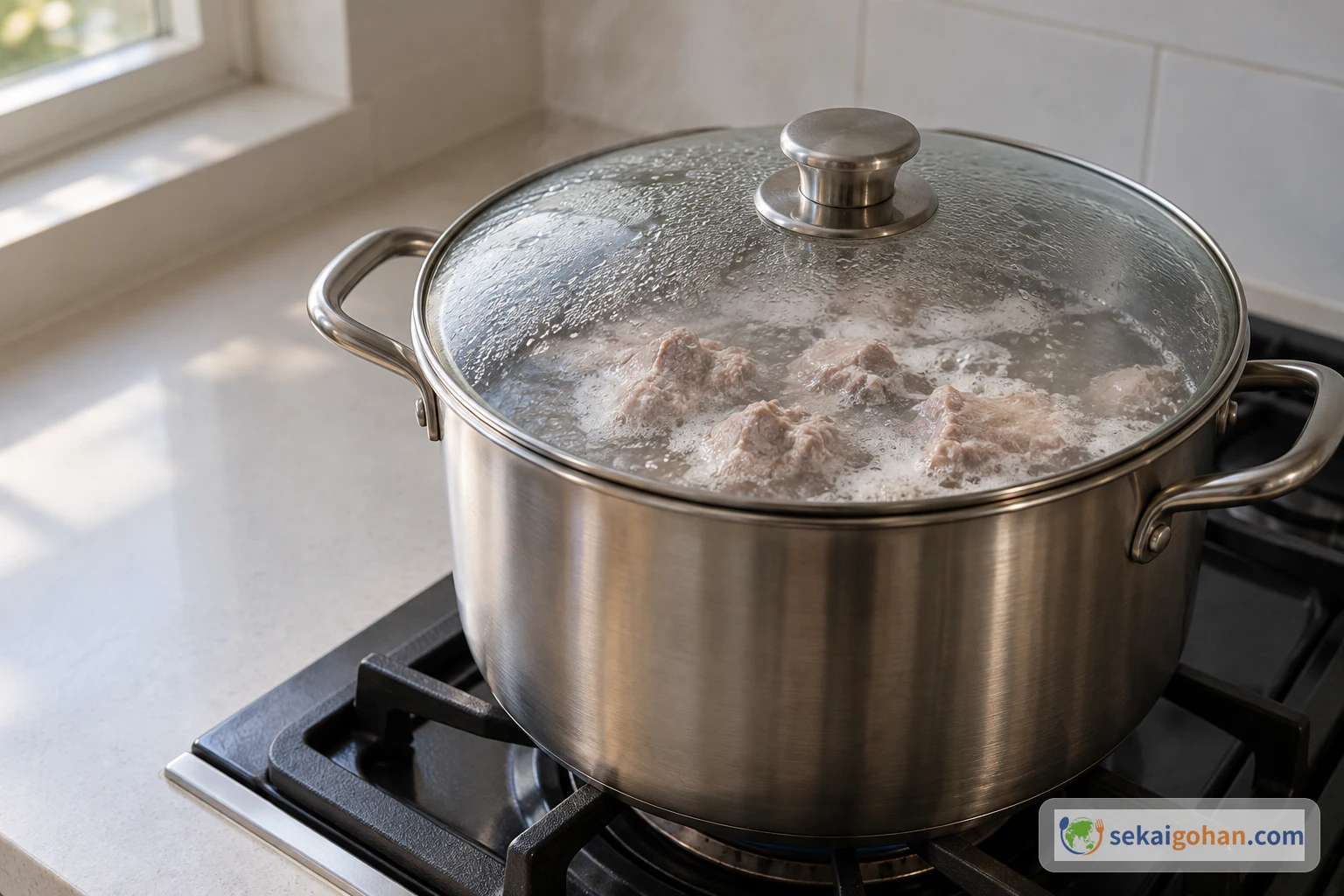
Blanch the bones

Pork neck bones blanching in boiling water in a covered pot
The bones blanch, covered, in the water used for the cabbage

Add the soaked bones to the boiling water. Cover and cook over medium-high heat for 7 minutes. The water will turn dark and foamy.

STEP 55 / 11

Wash each bone

Blanched pork neck bones, washed and moved to a pot
The cleaned bones wait in a large pot for the broth ingredients

Strain the bones and wash each one under cold running water, removing extra fat, dark foam and bone fragments. Put the cleaned bones in a large pot. Wash your hands, then wash the sink and the area around it with hot, soapy water.

STEP 66 / 11

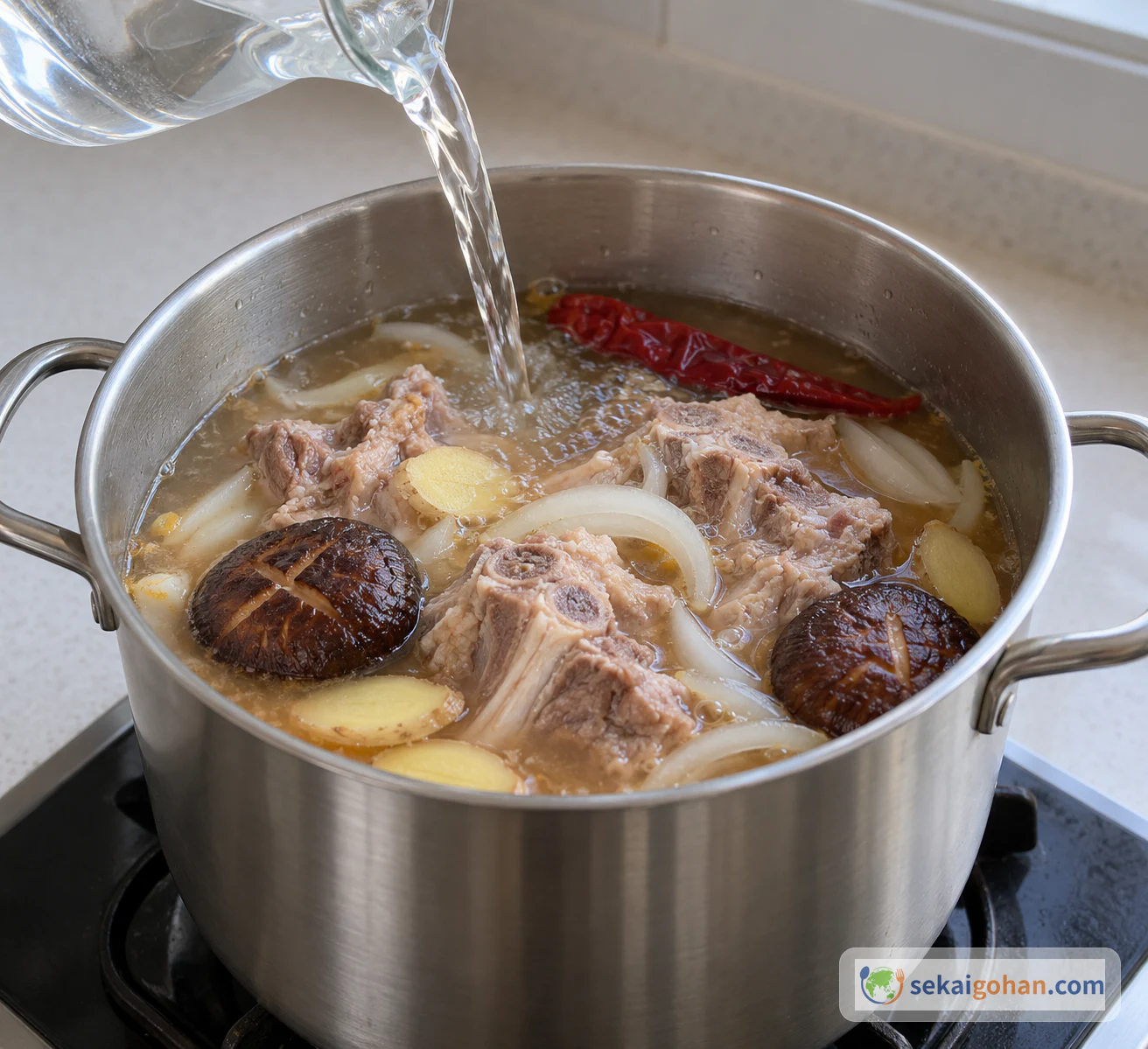
Cook the broth

Ginger, doenjang, dried shiitake and other aromatics added to the pork bones as water is poured in
All the aromatics go in with the 11 cups of water

Add the ginger, doenjang, dried shiitake mushrooms, onion, dried red chili pepper and 11 cups water to the bones. Cover and cook over medium-high heat for 90 minutes.

STEP 77 / 11

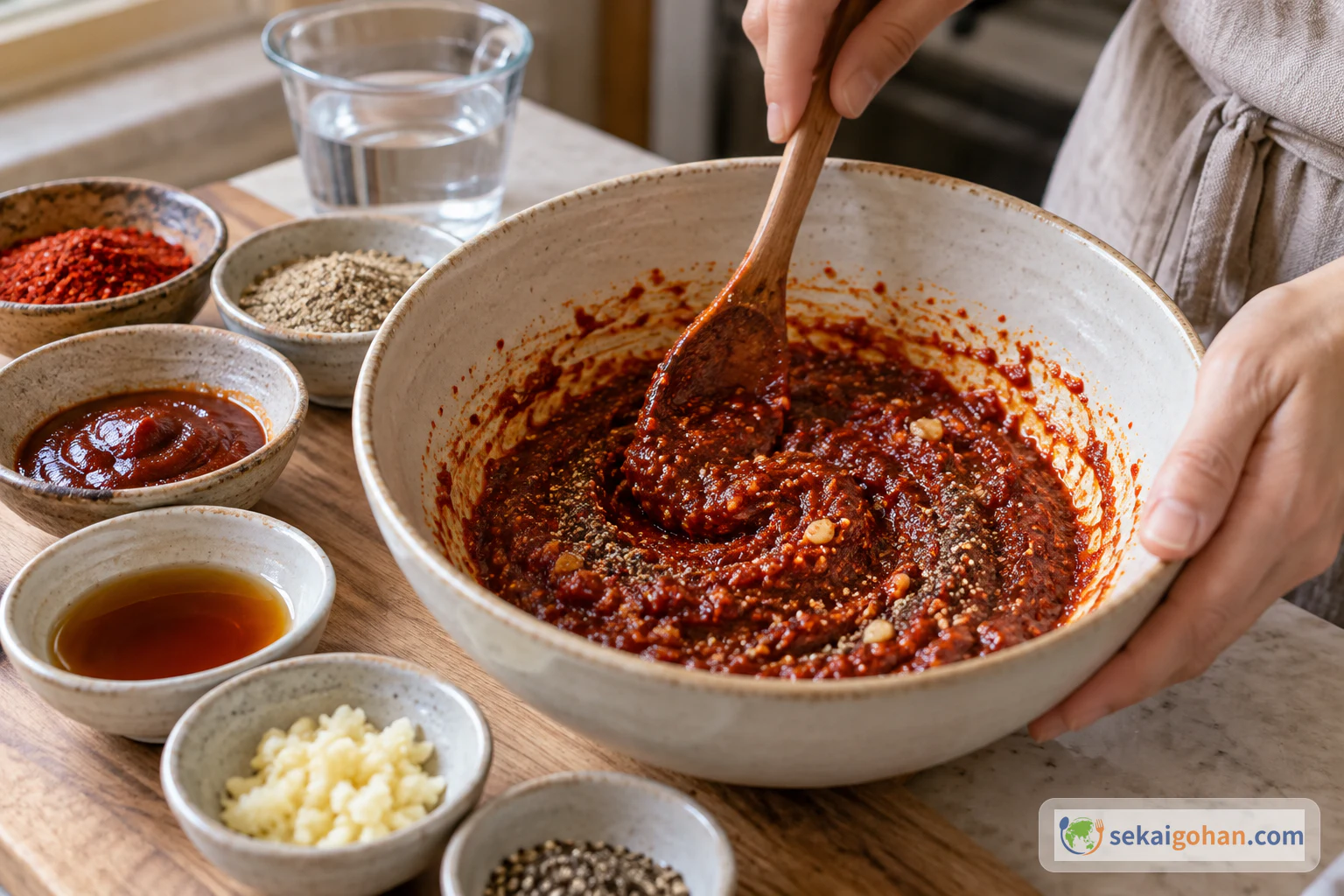
Mix the seasoning paste

Perilla seed powder and chili seasonings being mixed smooth with water
Only the first ¼ cup of water goes into the paste

While the broth cooks, combine the garlic, gochugaru, gochujang, fish sauce, perilla seed powder, black pepper and ¼ cup water in a bowl. Mix until creamy. Keep the other ¼ cup water separate for step 8.

STEP 88 / 11

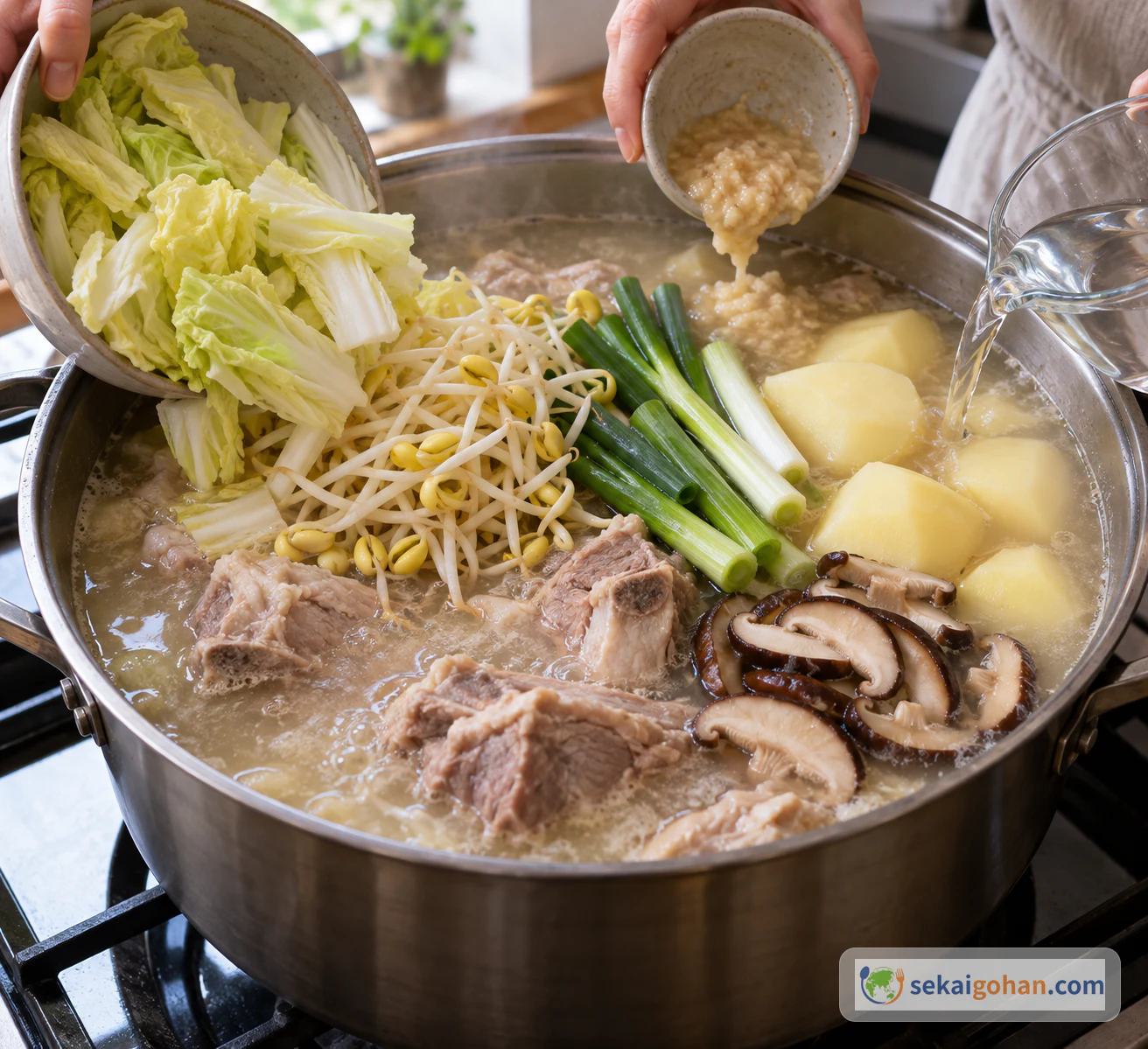
Add the vegetables and paste

Napa cabbage, soybean sprouts, green onions, potatoes and seasoning paste added to the pork bone pot after 90 minutes
The vegetables, sliced mushrooms, paste and remaining water all go in now

After 90 minutes, take out the 2 mushrooms. Add the cabbage, soybean sprouts, 3 green onions and the peeled potatoes. Slice the mushrooms and return them to the pot. Add the seasoning paste and the other ¼ cup water, then cover.

STEP 99 / 11

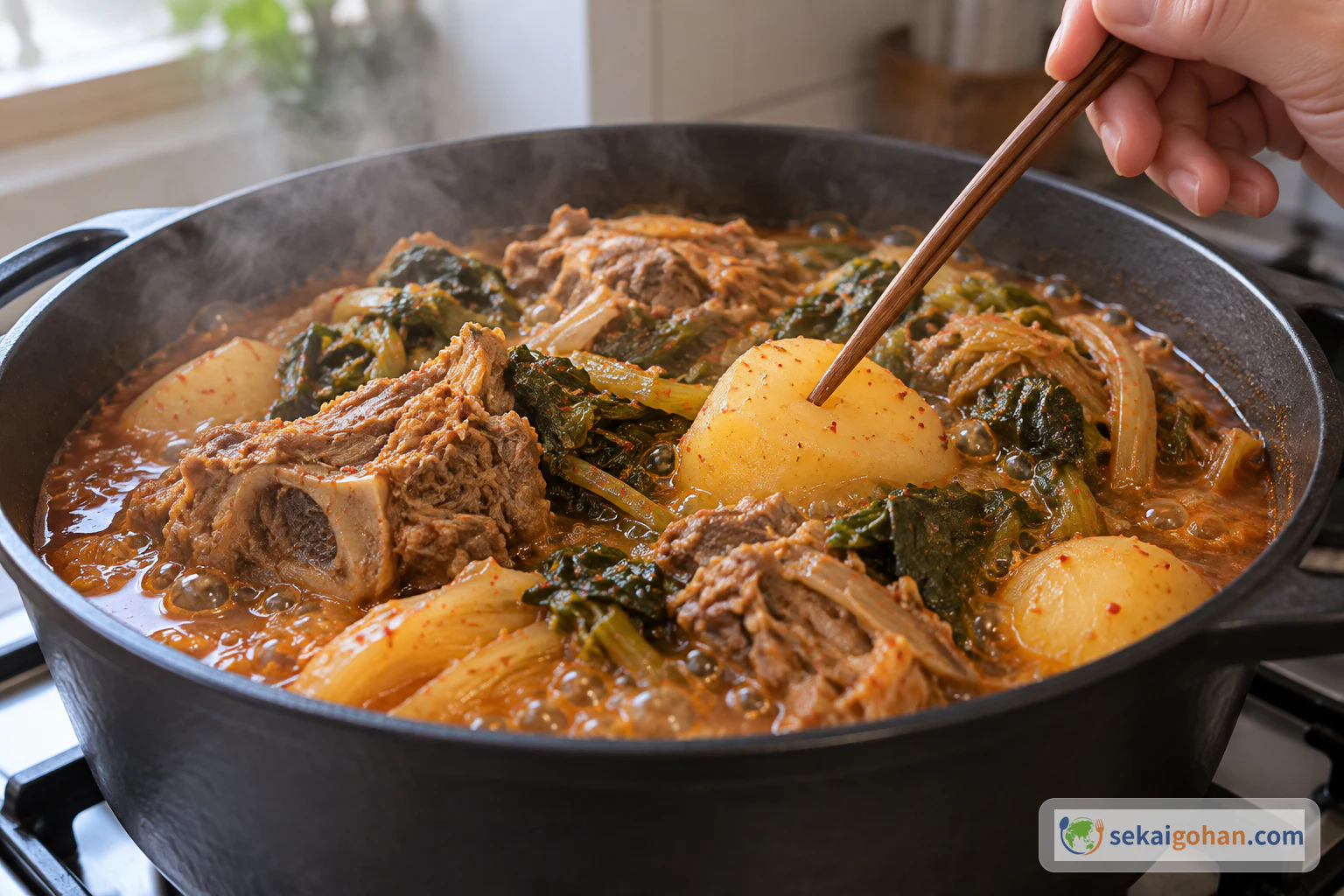
Cook until the potatoes are done

Soup simmering while a chopstick tests a potato
The chopstick test is for the potato, not the pork

Cook, covered, over medium-high heat for 30 to 40 minutes, until the potatoes are fully cooked. A chopstick or bamboo skewer should go into a potato easily.

This test only tells you about the potatoes. Check the pork with a food thermometer in the thickest part of the meat, without touching the bone. It should reach 145°F, then rest for 3 minutes.

STEP 1010 / 11

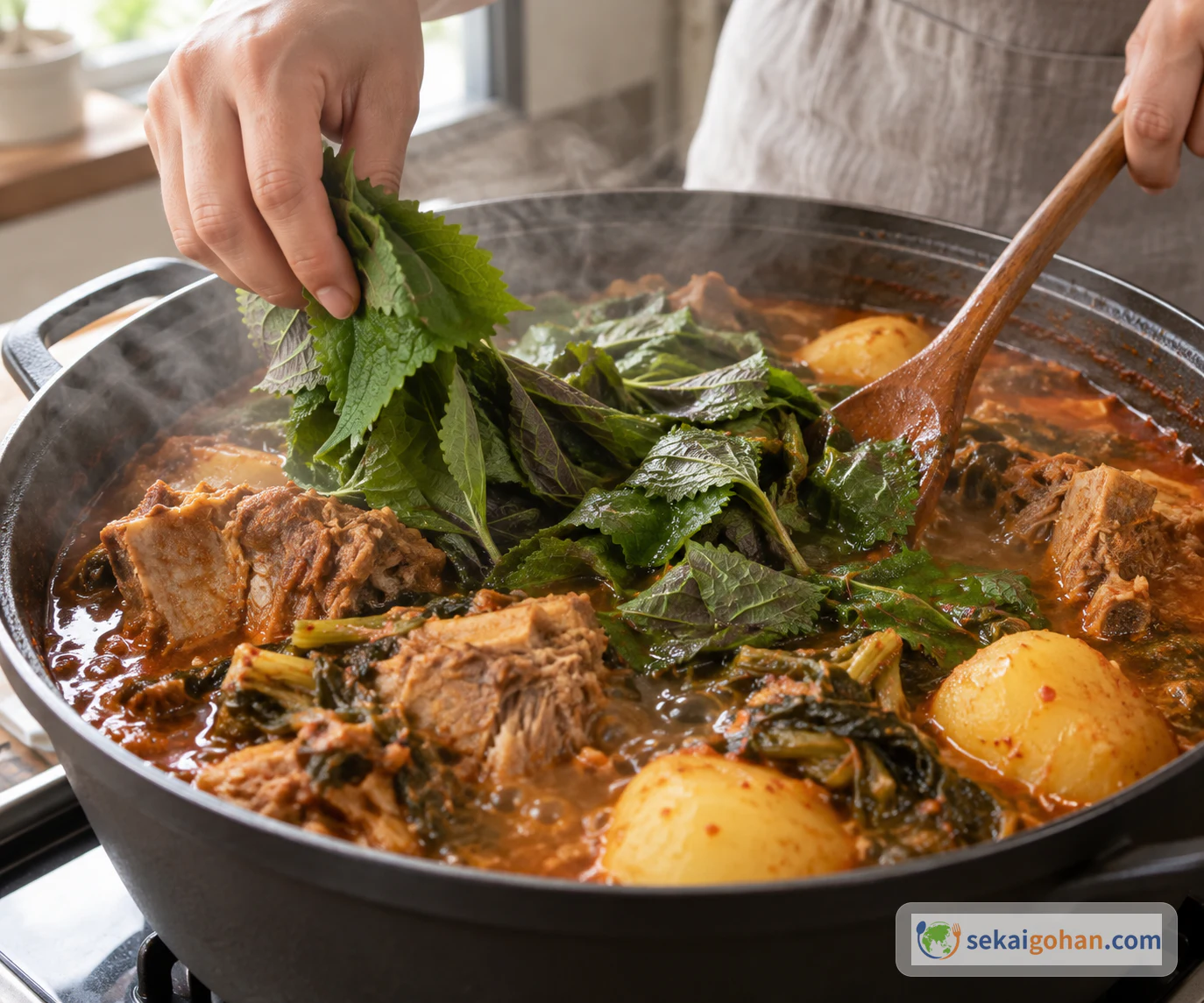
Stir in the perilla leaves

Perilla leaves being stirred into the soup to finish
The perilla leaves go in last

Add the perilla leaves and stir them into the soup.

STEP 1111 / 11

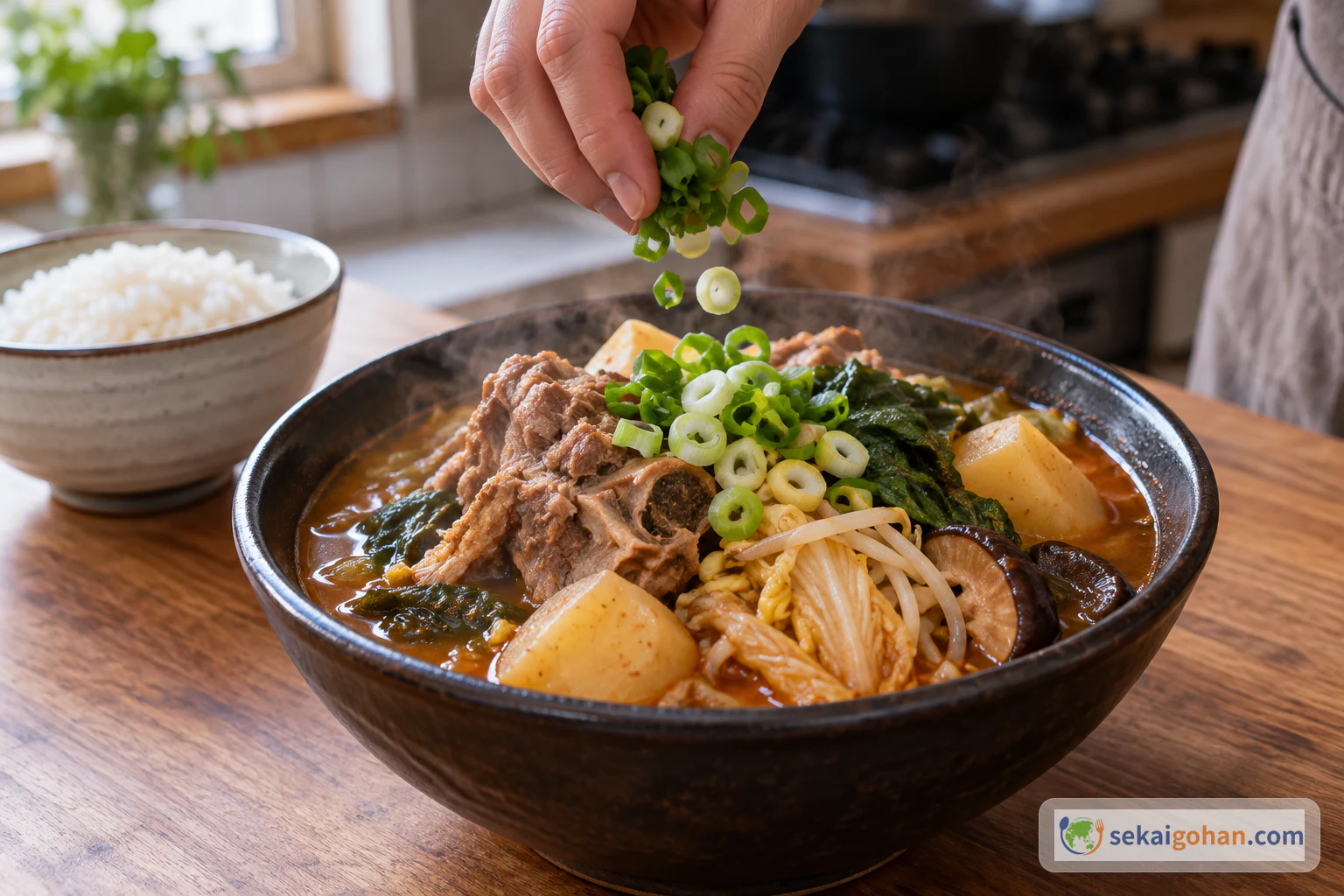
Serve

Gamjatang ladled into a bowl and topped with chopped green onion
Chopped green onion goes on each bowl, with rice on the side

Ladle the soup into bowls and sprinkle with the chopped green onion. Serve with rice and a few side dishes.

0 / 0
Ingredients

Ingredients

1 / 1

Ingredients

Ingredient Amount Role
Pork neck bones 2½–3 pounds Broth pot: the base of the soup
Ginger 1 ounce Broth pot: sliced
Doenjang (Korean fermented soybean paste) 2 tablespoons Broth pot: seasoning
Dried shiitake mushrooms 2 Broth pot: removed after 90 minutes, sliced and returned
Onion 1 medium Broth pot: sliced
Dried red chili pepper 1 large Broth pot: separate from the gochugaru
Water 11 cups Broth pot: the broth liquid
Napa cabbage 1 pound Finishing vegetable: core removed, blanched and torn first, added in step 8
Potatoes 3 medium Finishing vegetable: peeled
Soybean sprouts 8 ounces Finishing vegetable: washed under running water and strained
Green onions 4 Finishing vegetable: washed under running water and cut into 2-inch lengths; 3 go in at step 8
Perilla leaves 8 Finishing vegetable: washed under running water, stirred in last
Garlic 6 cloves Seasoning paste: minced
Gochugaru (Korean chili flakes) 3 tablespoons Seasoning paste: heat and color
Gochujang (Korean chili paste) 1 tablespoon Seasoning paste
Fish sauce 3 tablespoons Seasoning paste
Perilla seed powder (deulkkae-garu) ¼ cup Seasoning paste
Ground black pepper ½ teaspoon Seasoning paste
Water ½ cup Seasoning paste and finish: ¼ cup goes into the paste, the other ¼ cup into the pot
Green onion 1 Garnish: washed under running water and chopped; separate from the 4 above
0 / 0

Gamjatang (감자탕) arrives at the table as a red, savory broth full of pork backbone, kimchi cabbage and potatoes, thickened with perilla powder. The fun is in picking the meat from between the bones as you eat. It's spicy, rich and deeply porky, and it's a popular hangover stew in Korea. For more from this country's table, see our Korea page.

About Gamjatang

The soup is built on four things: pork backbone, cabbage, potatoes and perilla powder. This version uses neck bones, though spine bones work just as well.

Where the name comes from is unclear. "Gamja" means potato in Korean, but one explanation ties the name to the meat around the pork backbone instead.

Ingredients for 2 to 3 Servings
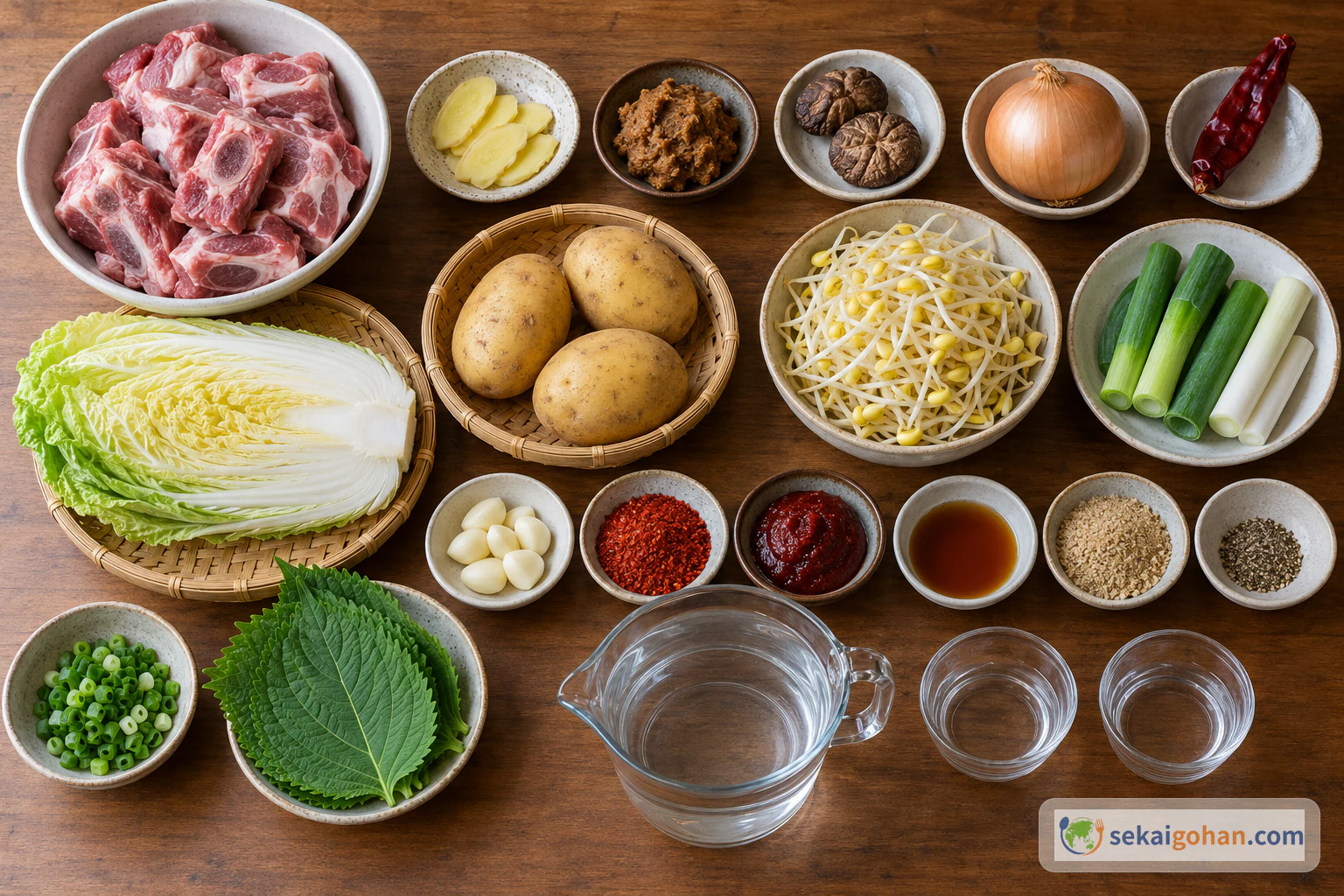
Pork neck bones, napa cabbage, potatoes, soybean sprouts, Korean seasonings and perilla seed powder laid out for gamjatang
Everything for the broth, the vegetables, the seasoning paste and the garnish

The two water amounts have separate jobs. The 11 cups make the broth, and the ½ cup is split between the seasoning paste and the finishing pot.

Equipment

  • Large pot with a lid, for blanching
  • Large pot with a lid, for the soup
  • Strainer
  • Tongs
  • Bowl for soaking the bones
  • Bowl for the seasoning paste
  • Separate cutting boards and utensils for raw bones and for vegetables
  • Food thermometer
  • Chopstick or bamboo skewer
  • Individual serving bowls

Choosing Ingredients for Gamjatang

Bones: Spine bones can replace the neck bones. Stick to pork bones; other pork cuts, boneless meat, beef or chicken won't give you the same soup.

Perilla seed powder: Look for hulled, finely ground, creamy-colored powder. Coarser toasted powder can be gritty, and there's a fix for that in the table below.

If perilla is hard to find: Basil leaves can stand in for the perilla leaves, and sesame seed powder for the perilla seed powder. Use them as replacements, not as extras.

Other ranges: You can use 2 potatoes rather than 3, a few red chili peppers rather than 1 large one, or up to 12 perilla leaves.

Sprouts: Use soybean sprouts rather than mung bean sprouts.

Method: Cabbage First, Then Bones, Then Broth

The order matters here. The cabbage blanches before the bones go into the same boiling water, and the seasoning paste comes together while the broth cooks.

Gamjatang Troubleshooting and Food Safety

Raw bones, doneness and leftovers

Washing: Rinsing, soaking and washing the bones reduce odor and give a clearer broth. They are not a safety measure. Washing raw foods can spread germs to other foods, the sink and the counter. Clean the sink and the surrounding area with hot, soapy water afterward.

Separation: Keep raw meat apart from other food. Keep raw-bone tools and boards away from the cabbage, sprouts, green onions and perilla leaves. Wash your hands after touching raw bones, and clean tools and boards with hot, soapy water right after use.

Doneness: Cook whole cuts of pork to 145°F, then let them rest for 3 minutes. Cook ground pork to 160°F. Check the temperature with a food thermometer. Cooking times, medium-high heat and a tender potato don't tell you the pork is safe.

Leftovers: Refrigerate cooked leftovers within 2 hours, or within 1 hour if it is above 90°F. Keep the refrigerator at 40°F or below. Reheat leftovers to 165°F, checked with a food thermometer.

What you see What it means What to do
The blanching water turns dark and foamy This is part of the blanch Strain the bones and wash each one, as in step 5
Your perilla powder is coarse or toasted It can feel gritty Mix it with water, strain, squeeze, and use the liquid
A potato still resists after 40 minutes The cue for this stage is tenderness Keep cooking until a chopstick goes in easily
The potatoes are tender, but the pork reads below 145°F The potato test says nothing about the pork Keep cooking and check again with the thermometer

Serving Gamjatang and Variations

You can ladle the soup into individual bowls, as this recipe does, or set a shallow pot in the middle of the table to share, with rice and a few side dishes. Once the meat is gone, diners often drop ramen, kalguksu or sujebi into the broth, or make fried rice with what's left in the pot.

The soup itself changes from place to place, too:

Variation Context How it differs
Dried radish leaves or aged kimchi instead of kimchi cabbage Some restaurants A different vegetable base
2.25 lb (1 kg) pork backbones with radish greens or blanched outer cabbage leaves Other versions Different ingredients, soak and pot sequence

Frequently Asked Questions

Should I use 4 green onions or 3?

The ingredient list calls for 4 green onions, cut into 2-inch lengths, but the finishing step adds only 3. Nothing says where the fourth goes. The chopped garnish onion is a separate ingredient.

Where does the ½ cup of water go?

Split it: ¼ cup goes into the seasoning paste, and the other ¼ cup goes into the pot at the finishing stage. Both are separate from the 11 cups of broth water.

How long does gamjatang take?

Each stage has its own time: at least 30 minutes of soaking, 1 minute for the cabbage, 7 minutes for the bones, 90 minutes for the broth, and 30 to 40 minutes to finish. The recipe card says "Cooking time: 2 hours," but the timed heating stages already exceed that, so go by the stage times.

Does cooking for the full time make the pork safe?

The cooking times and the potato test don't tell you the pork is done. Cook whole cuts of pork to 145°F, then rest for 3 minutes. Check the thickest part of the meat with a food thermometer, away from the bone.

How should I store and reheat leftovers?

Refrigerate cooked leftovers within 2 hours, or within 1 hour if it is above 90°F. Keep the refrigerator at 40°F or below. Reheat them to 165°F, checked with a food thermometer.
Sources

  • Maangchi, "Pork bone soup (Gamjatang)," Maangchi.com. The recipe followed here for ingredients, amounts, step order, the potato test, serving suggestions and substitutions; also the source of the green-onion and cooking-time discrepancies and the unresolved name origin. https://www.maangchi.com/recipe/gamjatang
  • Korea Tourism Organization, VISITKOREA, "Pork Backbone Stew (뼈다귀 감자탕 / Ppyeodagwigamjatang)." Used for the general dish profile, the use of dried radish leaves or aged kimchi at some restaurants, and its popularity as a hangover stew. https://english.visitkorea.or.kr/svc/contents/contentsView.do?vcontsId=180164
  • Sung Ji Yeon, "A Quintessentially Korean Dish: Gamjatang," Magazine KOREA, Korean Culture and Information Service, March 2026. Used for picking meat from the bones, noodle and fried-rice additions, the comparison with its separate recipe, and its statement that the etymology is unclear. https://www.korean-culture.org/eng/webzine/202603/sub04.html
  • U.S. Centers for Disease Control and Prevention, "Food Safety Prevention (Clean, Separate, Cook, Chill)." Used for guidance on washing raw foods, cross-contamination, internal temperatures, refrigeration and reheating. https://www.cdc.gov/food-safety/prevention/index.html
  • Ministry of Agriculture, Forestry and Fisheries of Japan, "カンピロバクター食中毒の予防" (Preventing Campylobacter food poisoning). Used for keeping raw-meat juices away from other foods, washing knives and boards right after use, and heating meat through to the center. https://www.maff.go.jp/j/syouan/seisaku/foodpoisoning/f_encyclopedia/campylobacter.html