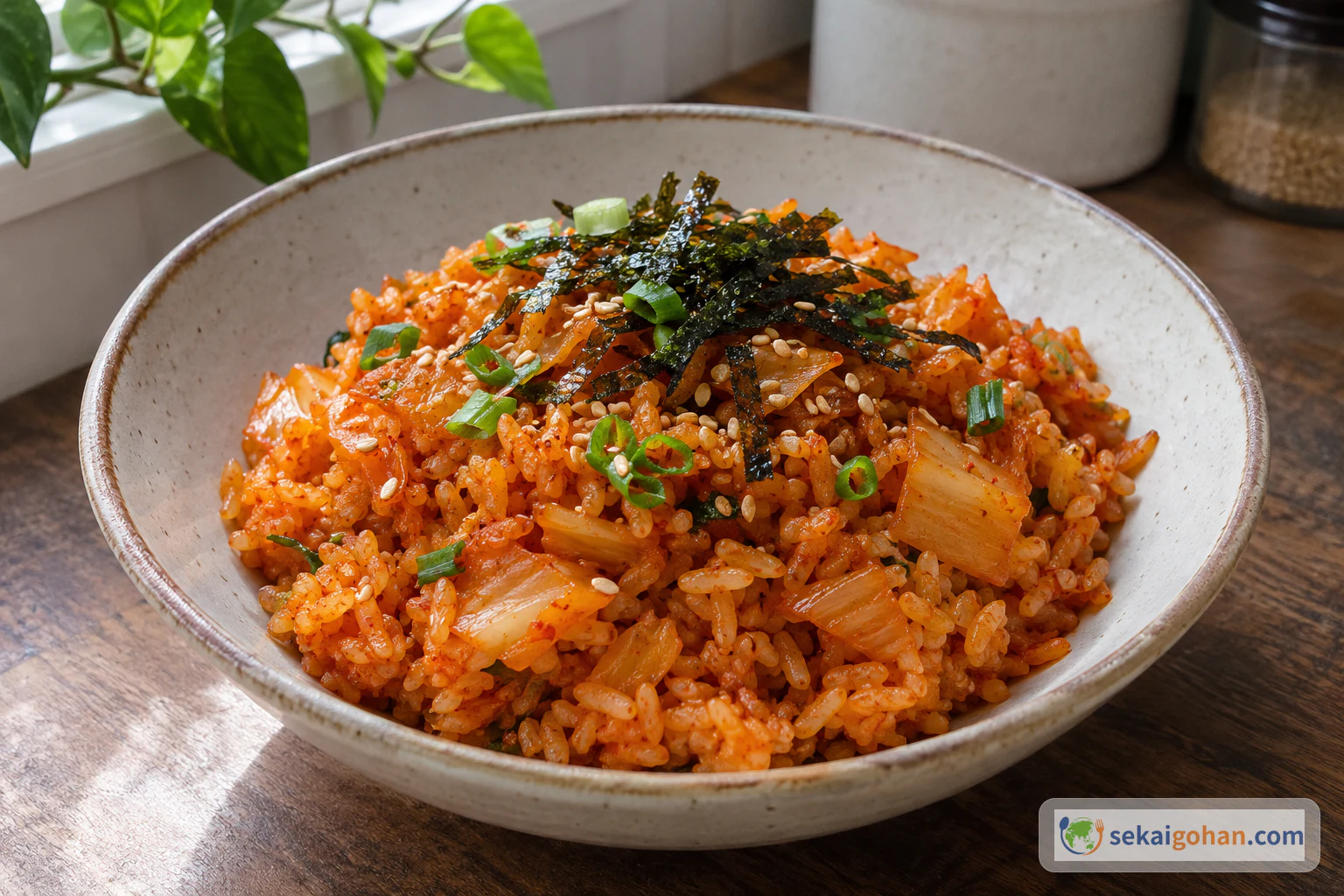
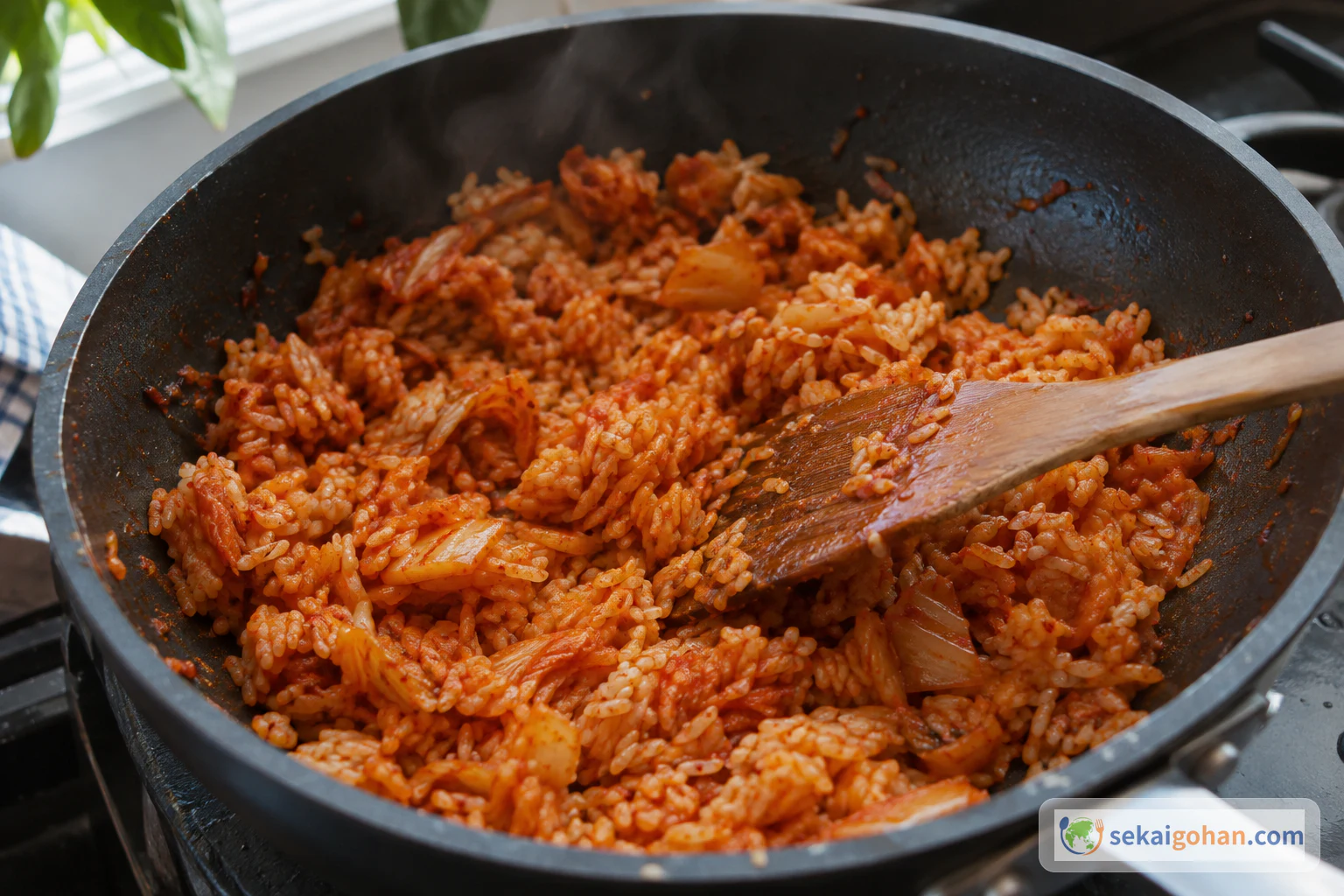
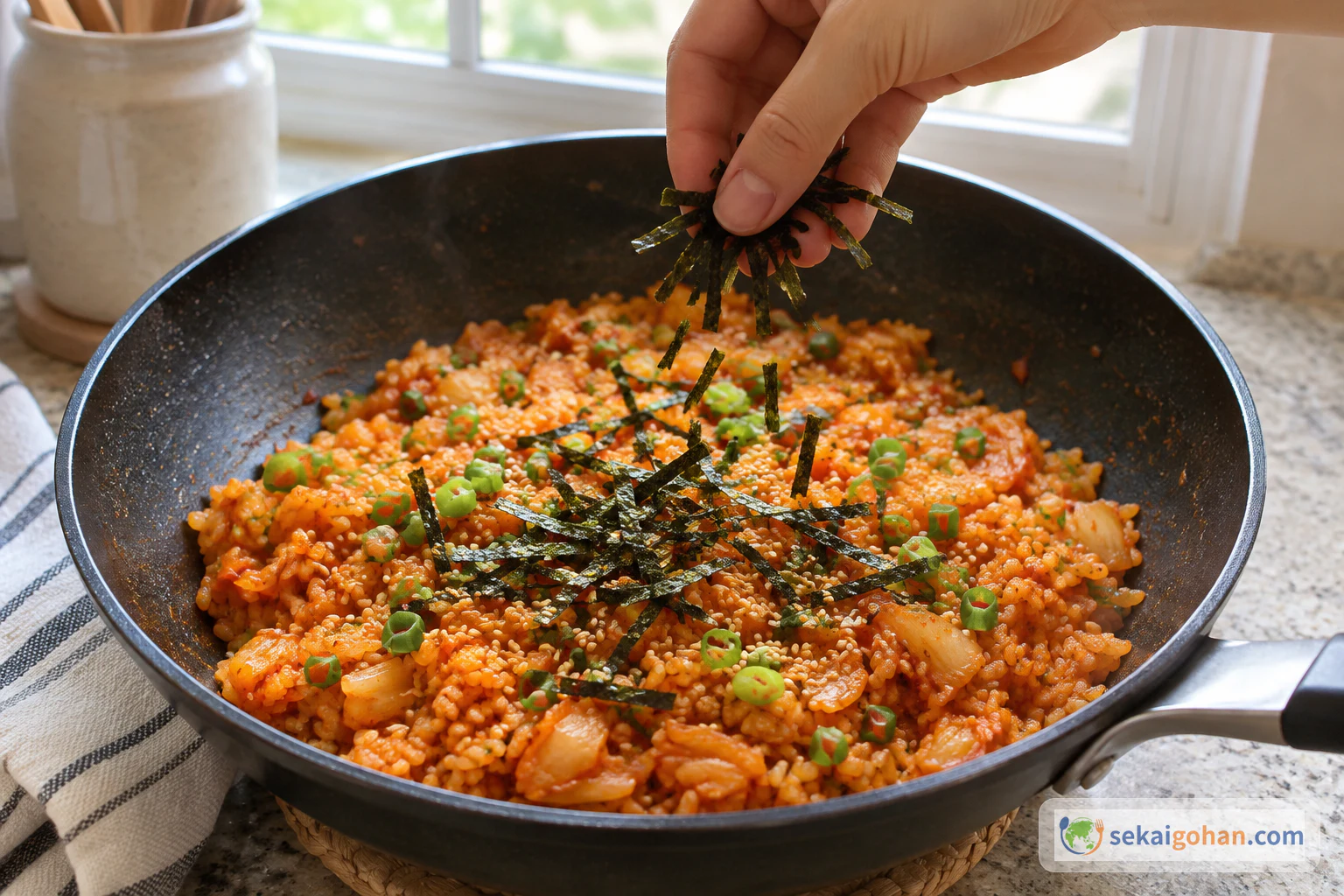
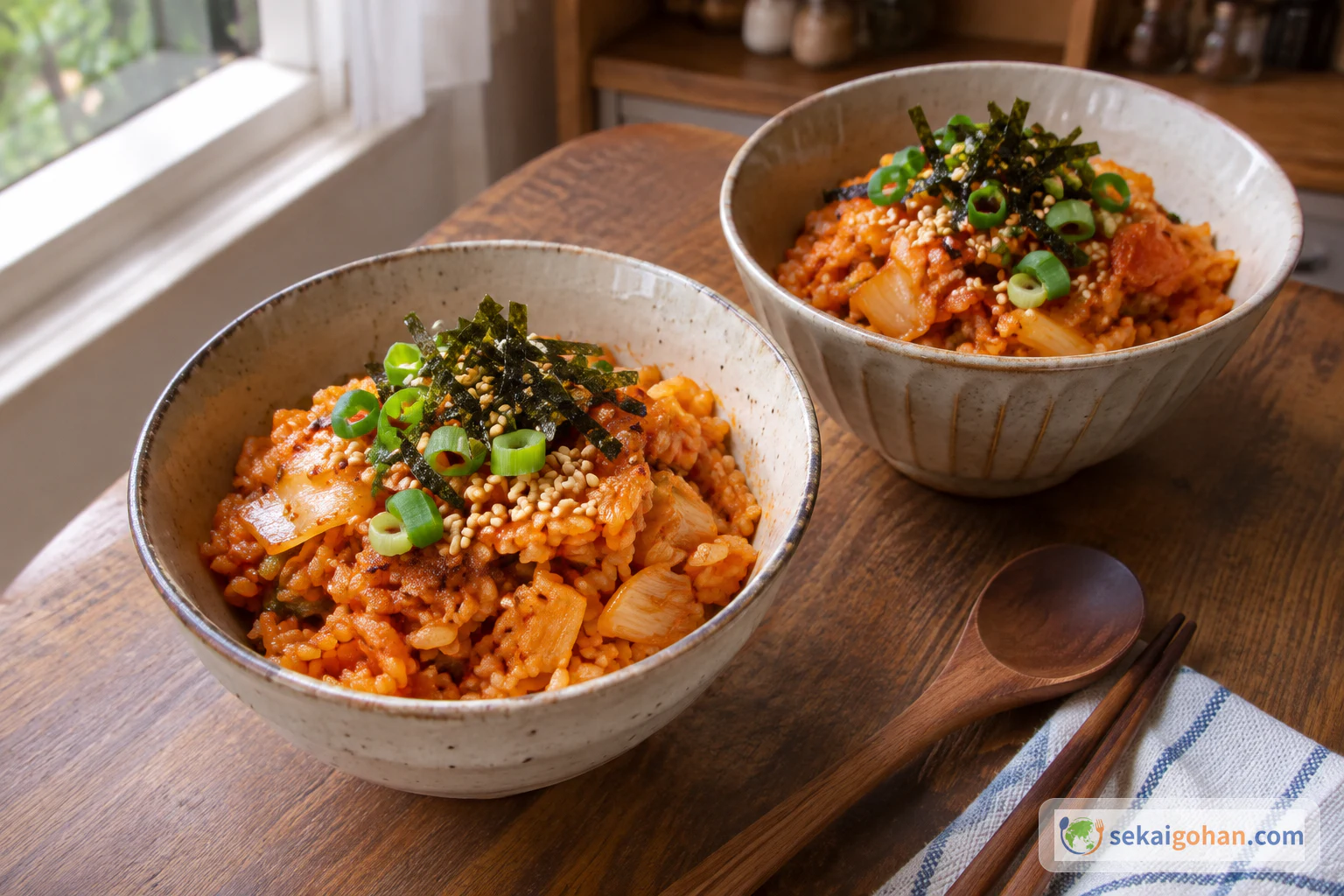
Every grain of rice in the pan ends up stained red-orange, and the last thing to go on is a scattering of green onion, sesame seeds and strips of roasted gim. Kimchi bokkeumbap is a quick Korean home dish built on two things a Korean kitchen usually has on hand: kimchi and cooked rice. Sour, well-fermented kimchi gives it its flavor, gochujang adds heat, and a little sesame oil rounds it out at the end. Once the rice is cooked, the whole thing takes about 10 minutes.
What Kimchi Bokkeumbap Is
In Korean the dish is written 김치볶음밥, romanized as Kimchibokkeumbap or Kimchi-bokkeumbap, and in English it is usually called Kimchi Fried Rice. Bokkeumbap means fried rice. A general bokkeumbap can be built on meat and assorted vegetables with only a little kimchi. Here, chopped sour kimchi and its juice are the center of the dish, and nothing else competes with them.
It also stands out among Korean rice dishes for how little it asks of you: a jar of sour kimchi, a few spoonfuls of gochujang and rice that's already cooked. Many cooks add pork, ham, tuna or more vegetables. This version keeps to kimchi and rice, with no meat, egg or cheese. For more dishes from the same country, see Korean recipes on Sekai Gohan.
Ingredients for 2–3 Servings
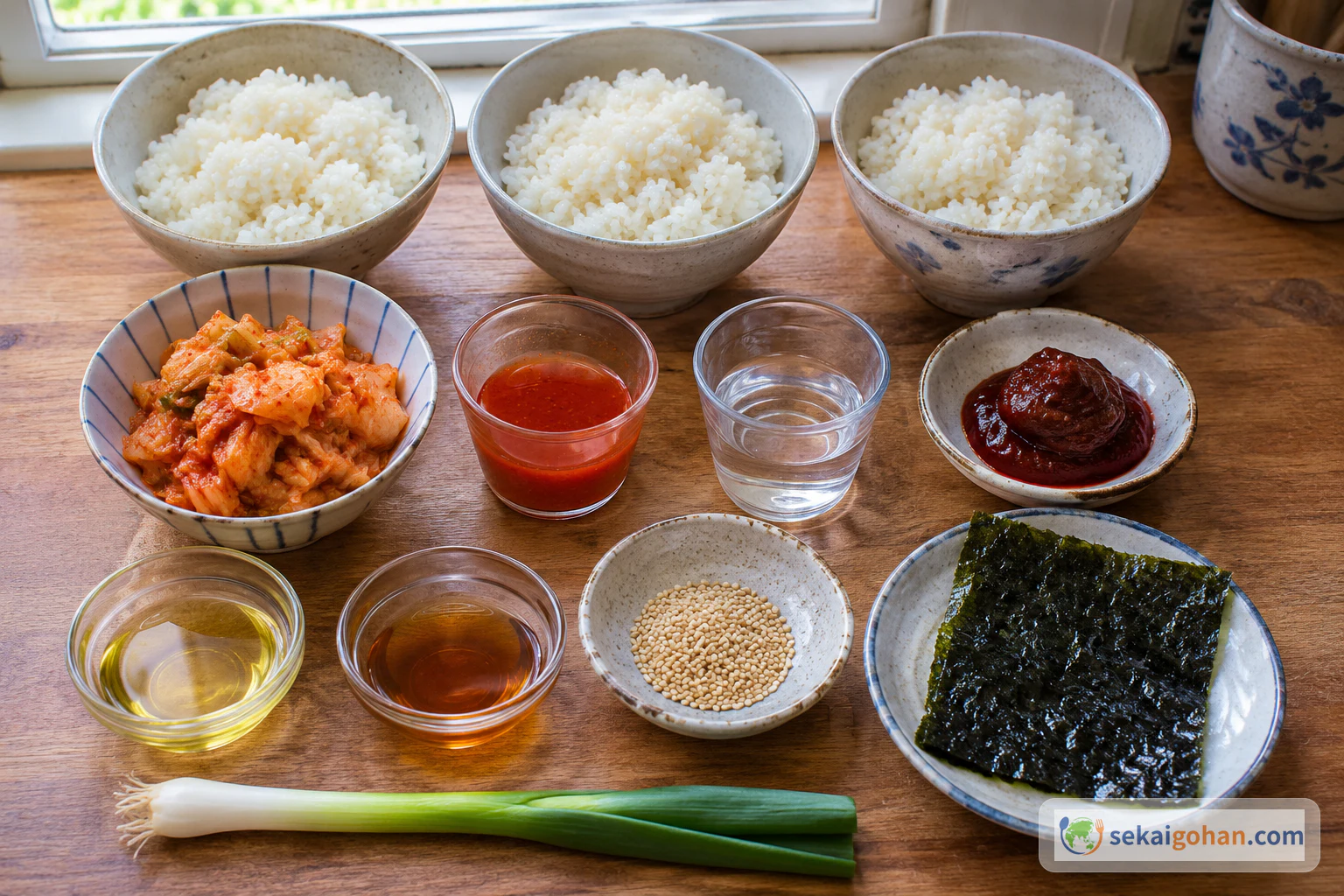
Have the rice cooked before you start. Chop the kimchi, green onion and gim before the pan goes on the heat, because the cooking moves quickly.
Equipment
- A wide, flat skillet or pan
- A wooden spoon
- Measuring cups and spoons
- A knife and cutting board
- Serving bowls
Choosing Kimchi, Rice and Gochujang for Kimchi Bokkeumbap
Kimchi. Use commercially prepared napa cabbage kimchi that is mature and sour. Keep the juice, too: it carries the kimchi's flavor, heat and color through the rice. Store the kimchi and gochujang as their labels direct.
Gochujang. Kimchi and gochujang vary in spiciness and saltiness from brand to brand, so if you want more heat, go up to 3 tablespoons.
Allergens and diet. There's no meat or egg here, but commercial kimchi and sauces can contain fish or other allergens. Check the ingredient and allergen labels on the kimchi, gochujang and gim you buy.
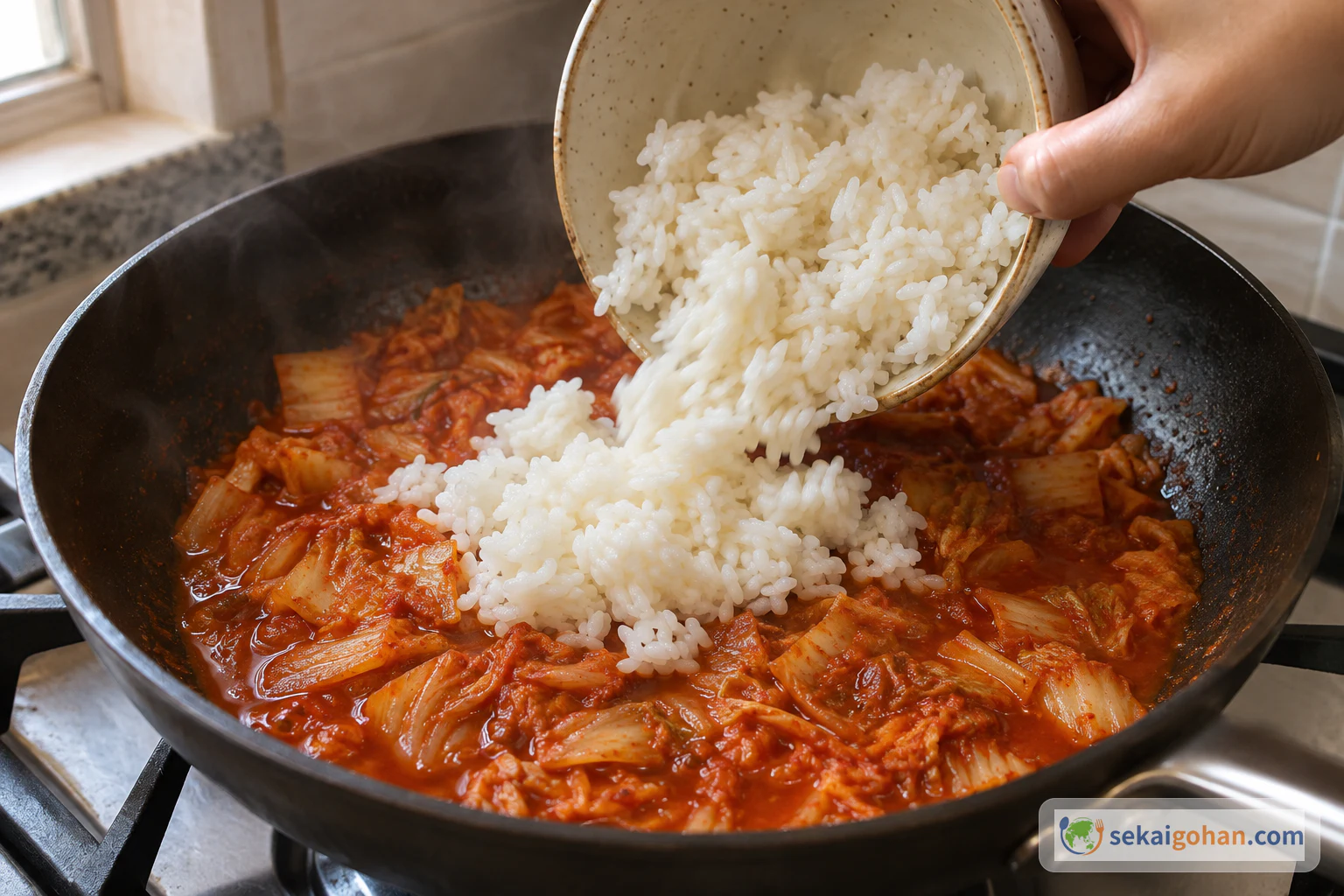
Rice. Use either freshly cooked rice, cooled a little and fried right away, or rice that was chilled quickly and kept in the refrigerator. Break up the clumps in chilled rice before it goes into the pan.
Spores in rice can survive cooking. If cooked rice sits at room temperature for a long time, a toxin risk can build up. Cool cooked rice as quickly as possible, ideally within an hour; dividing it into smaller portions helps it cool faster. Eat refrigerated rice within 24 hours. Reheat it only once, until it is steaming hot throughout.
Rice that has sat at room temperature for a long or unknown time shouldn't be used at all; frying does not make it safe. And if you fry rice that was previously chilled, the frying counts as that rice's one reheat. It doesn't start a new 24-hour period, so plan to eat the fried rice straight away.
Method: Kimchi First, Then Rice, Then Sesame Oil
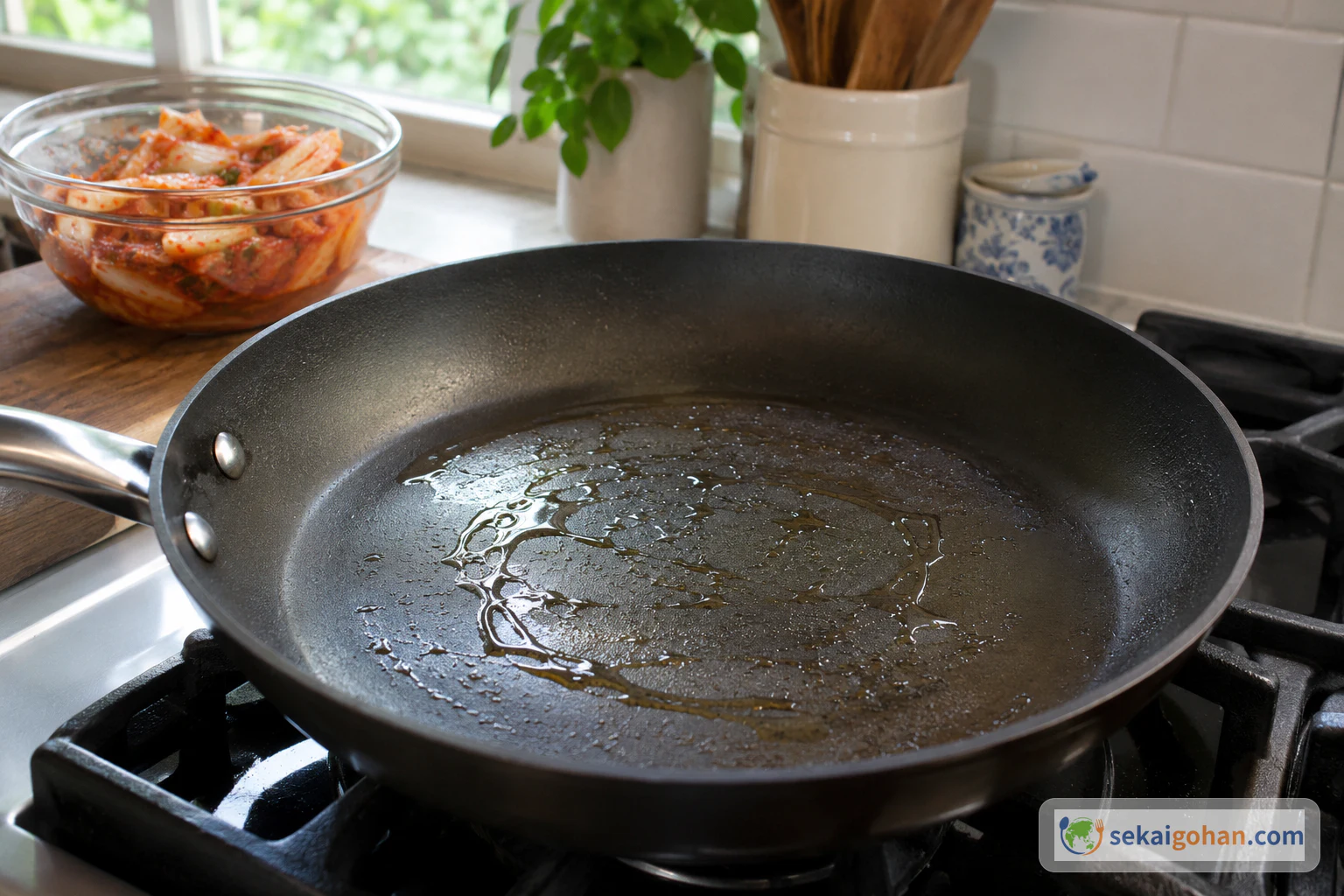
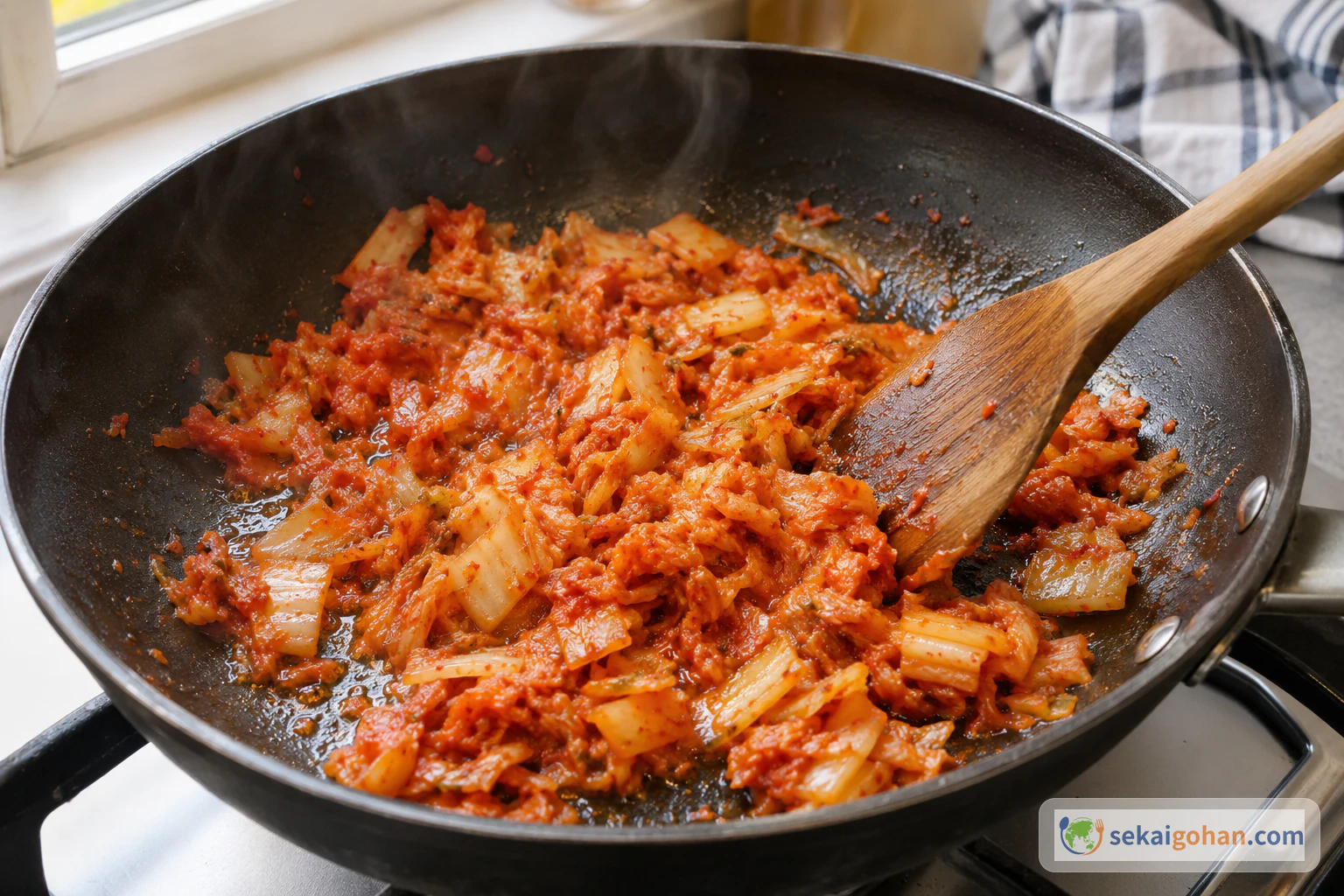
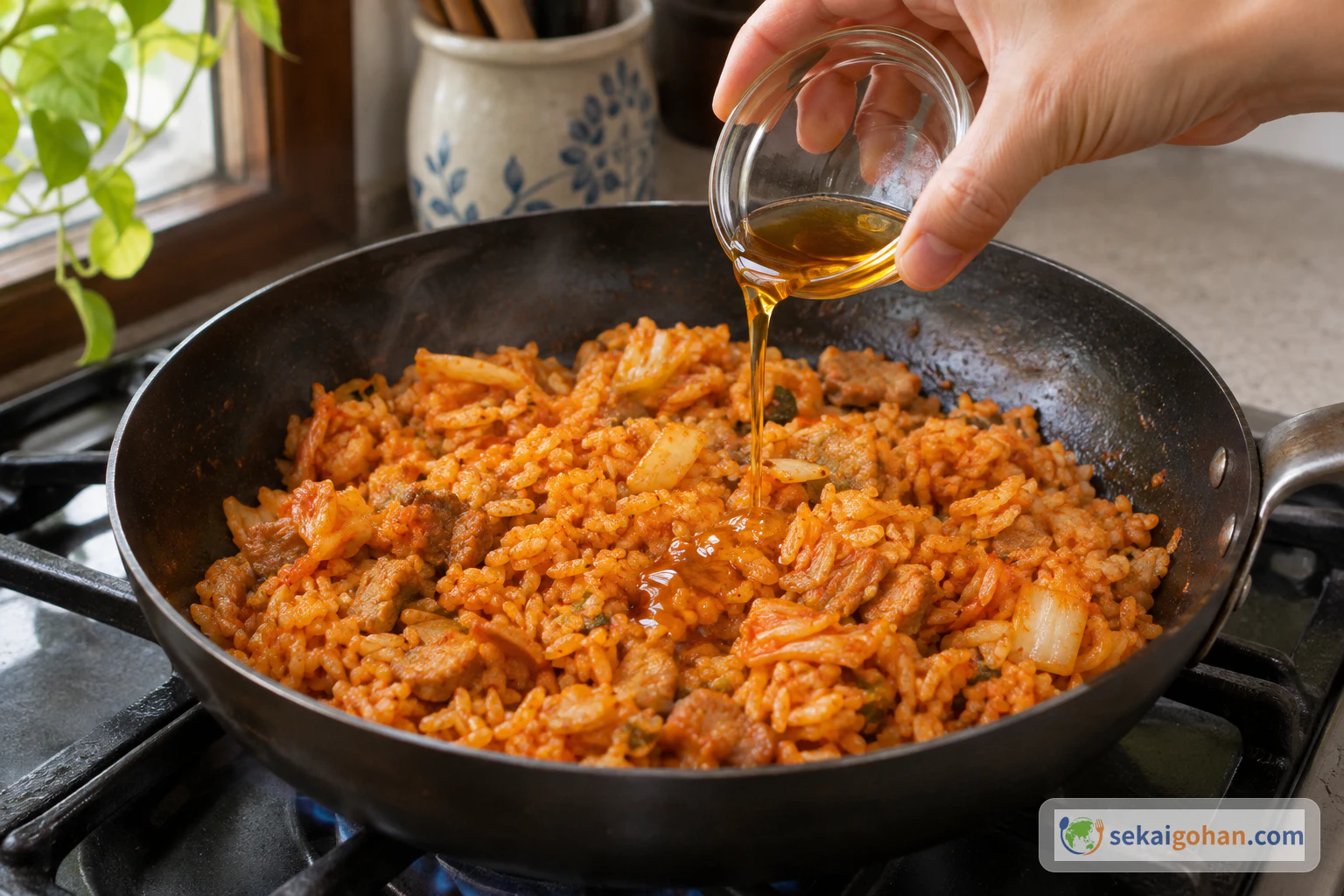
The kimchi fries alone for 1 minute before anything else goes in. The rice and seasonings then cook together for about 7 minutes. The sesame oil goes in while the pan is still on the heat.
Kimchi Bokkeumbap Troubleshooting
Most problems come from the order of the method.
| Problem | Likely cause | What to do |
|---|---|---|
| The rice stays in lumps and colors unevenly | Chilled rice went into the pan in clumps | Break up cold rice before adding it, and keep breaking it apart as you stir |
| The kimchi was not fried separately | The liquids and rice were added with the kimchi | Fry the kimchi alone for 1 minute over medium-high heat before adding anything else |
| The sesame oil was added after removing the pan from the heat | The order of the last two actions was reversed | Add the sesame oil while the pan is still on the heat, then remove it |
| You are unsure how long the rice was left out | Rice was not cooled and refrigerated promptly | Don't use it. Frying does not make rice that has sat out safe |
| The heat level isn't what you wanted | Kimchi and gochujang vary in spiciness and saltiness by product | Use 2–3 tablespoons gochujang; the base amount is 2. Choose within that range rather than changing other amounts |
Serving Kimchi Bokkeumbap
Serve it hot, straight from the pan. If you like, top each plate with a fried egg; it's optional, and the dish is complete without it. Leftovers aren't worth keeping, since rice that was chilled before frying has already had its one reheat.
Frequently Asked Questions
How long can cooked rice be kept before making this?
Cool cooked rice as quickly as possible, ideally within an hour. Eat refrigerated rice within 24 hours, and reheat it only once, until steaming hot throughout. Don't use rice that has been at room temperature for a long or unknown time.
Can I leave out the kimchi juice?
Keep it in. The juice carries the kimchi's flavor and color into the rice.
Is this recipe vegan?
Only if the labels allow it. Commercial kimchi and sauces can contain fish or other allergens, so read the labels of the products you use.