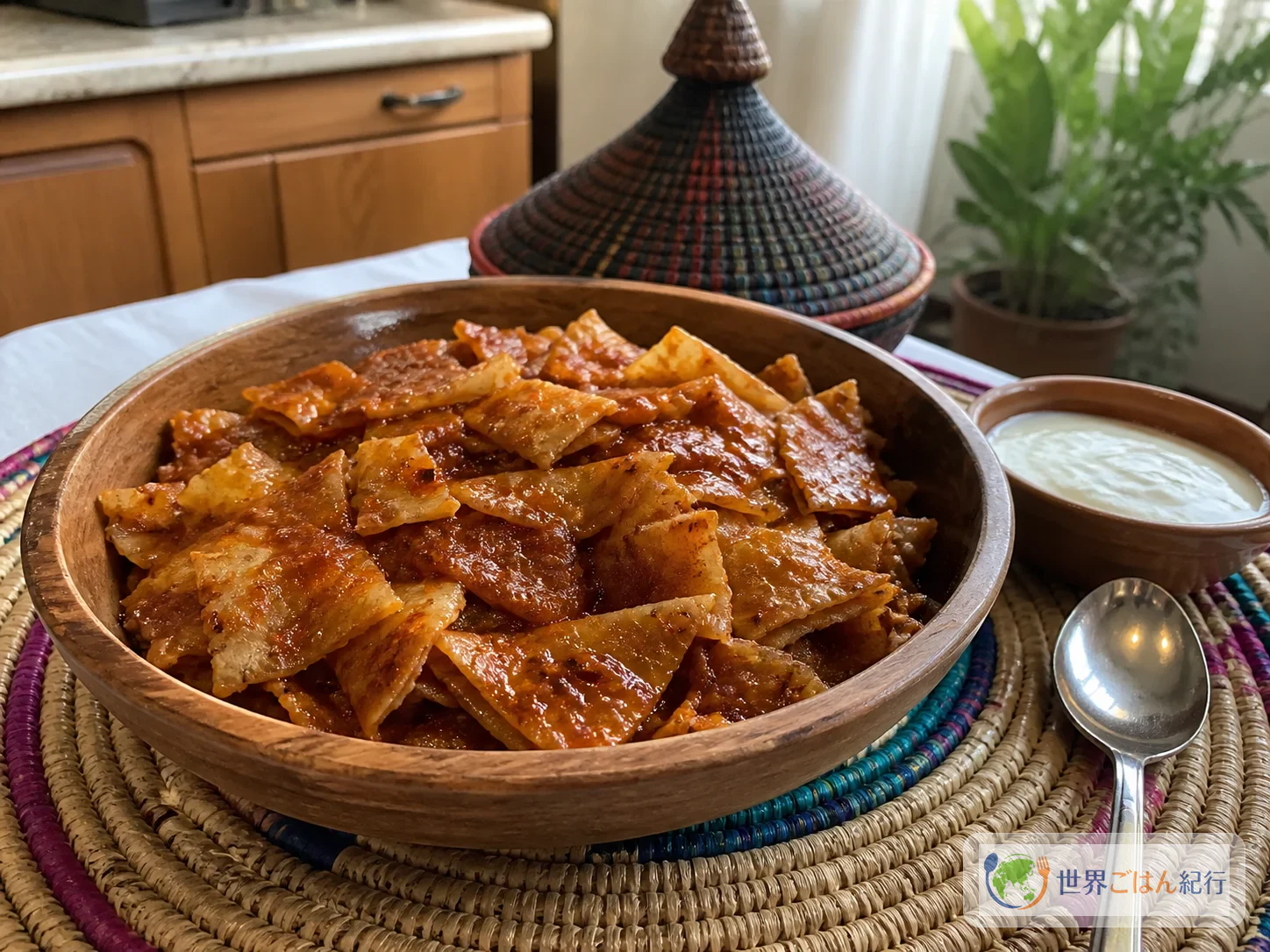
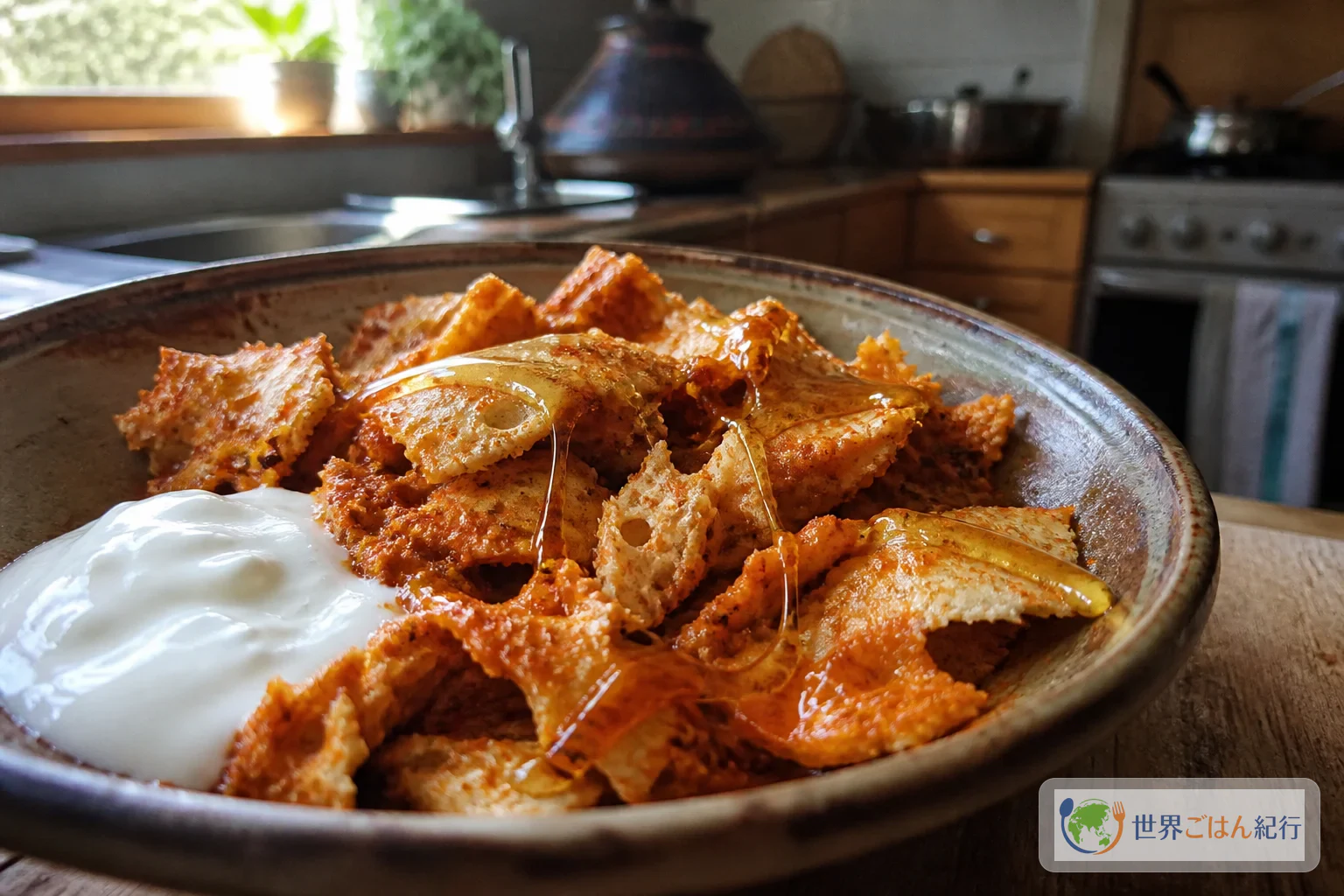
Chechebsa starts with a thin round of dough on a hot pan, small brown spots rising across its surface. You tear it by hand and drop the pieces into butter where berbere has melted, and the dry bread crackles as it soaks up the red oil. A thin stream of honey goes on last, laying a sweet aroma over the heat of the chili. This is an Ethiopian breakfast of torn flatbread, spiced butter and chili, and the best bites have both: soft and soaked in one corner, dry and toasty in the next.
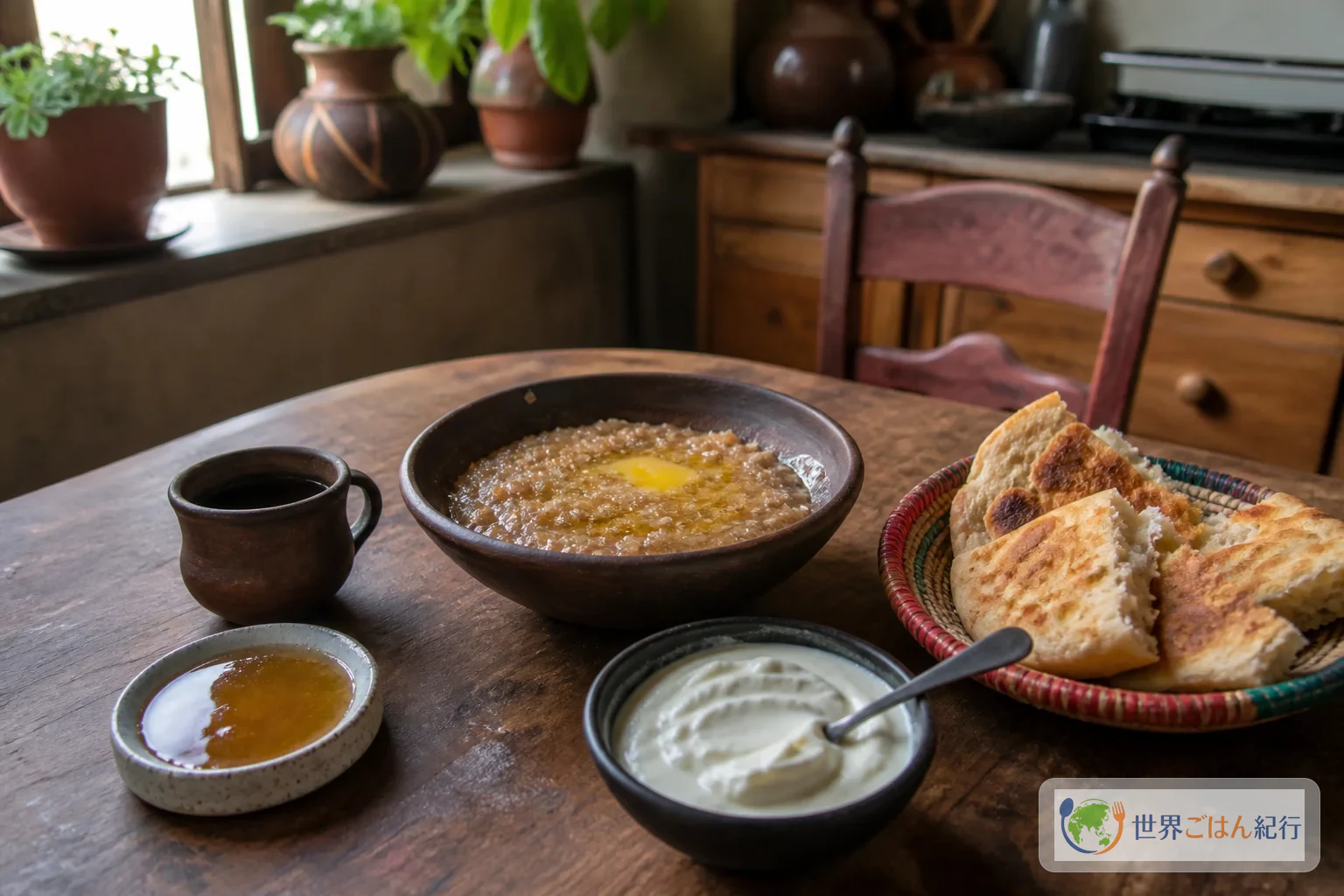
Chechebsa and kita firfir in Ethiopia
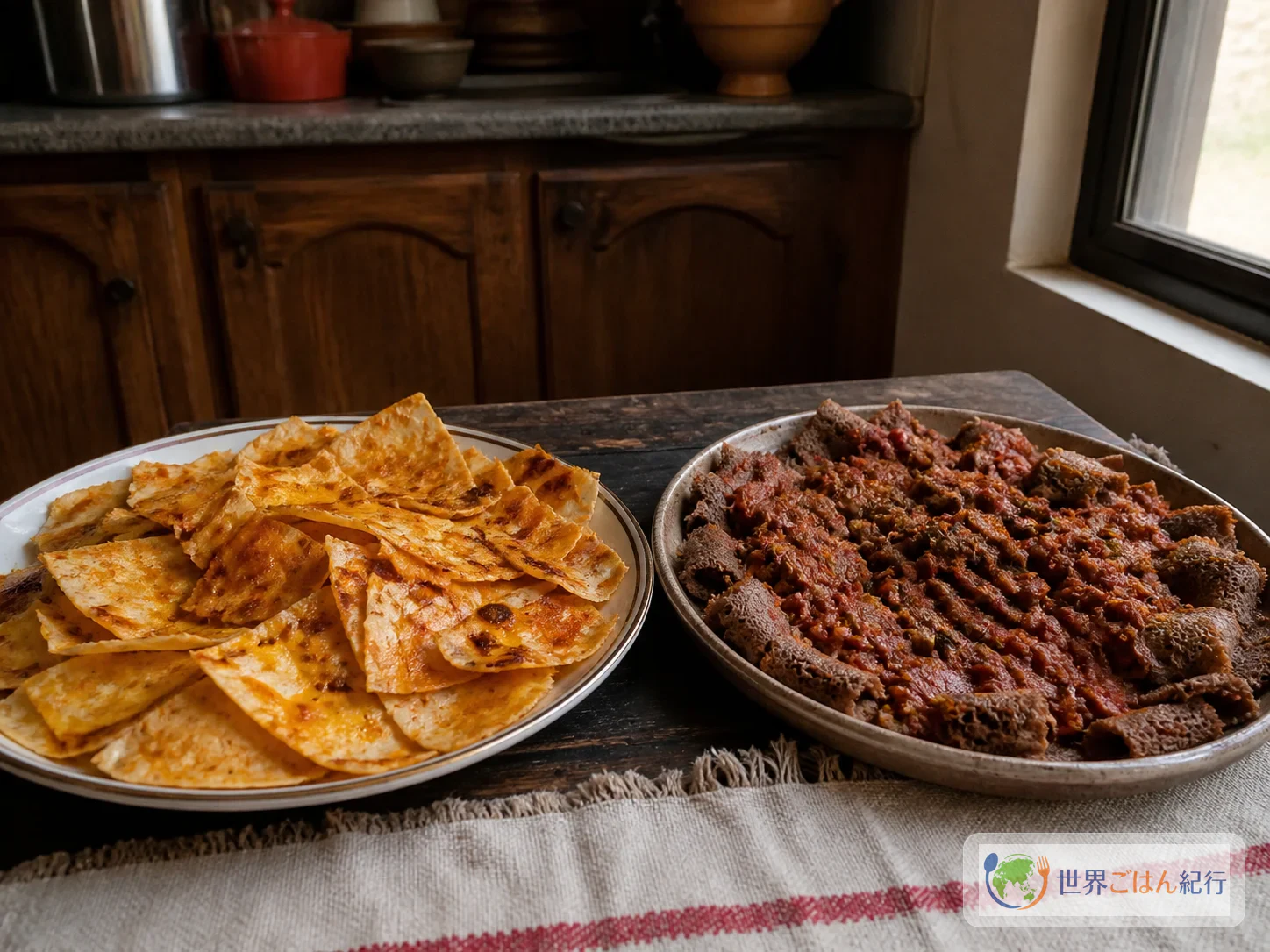
Chechebsa, also written kita firfir or kita fitfit, is made by tearing a flatbread called kita and combining it with niter kibbeh and berbere. Kita is an unfermented bread of flour, water and salt, baked on both sides and eaten warm. It is also served with berbere sauce and honey alongside. At home you bake each one like a pancake, then tear it. You're not after a fluffy, sweet bread here. The goal is thin dough with color on it, a butter aroma, spice soaked in, and a dry bite here and there.
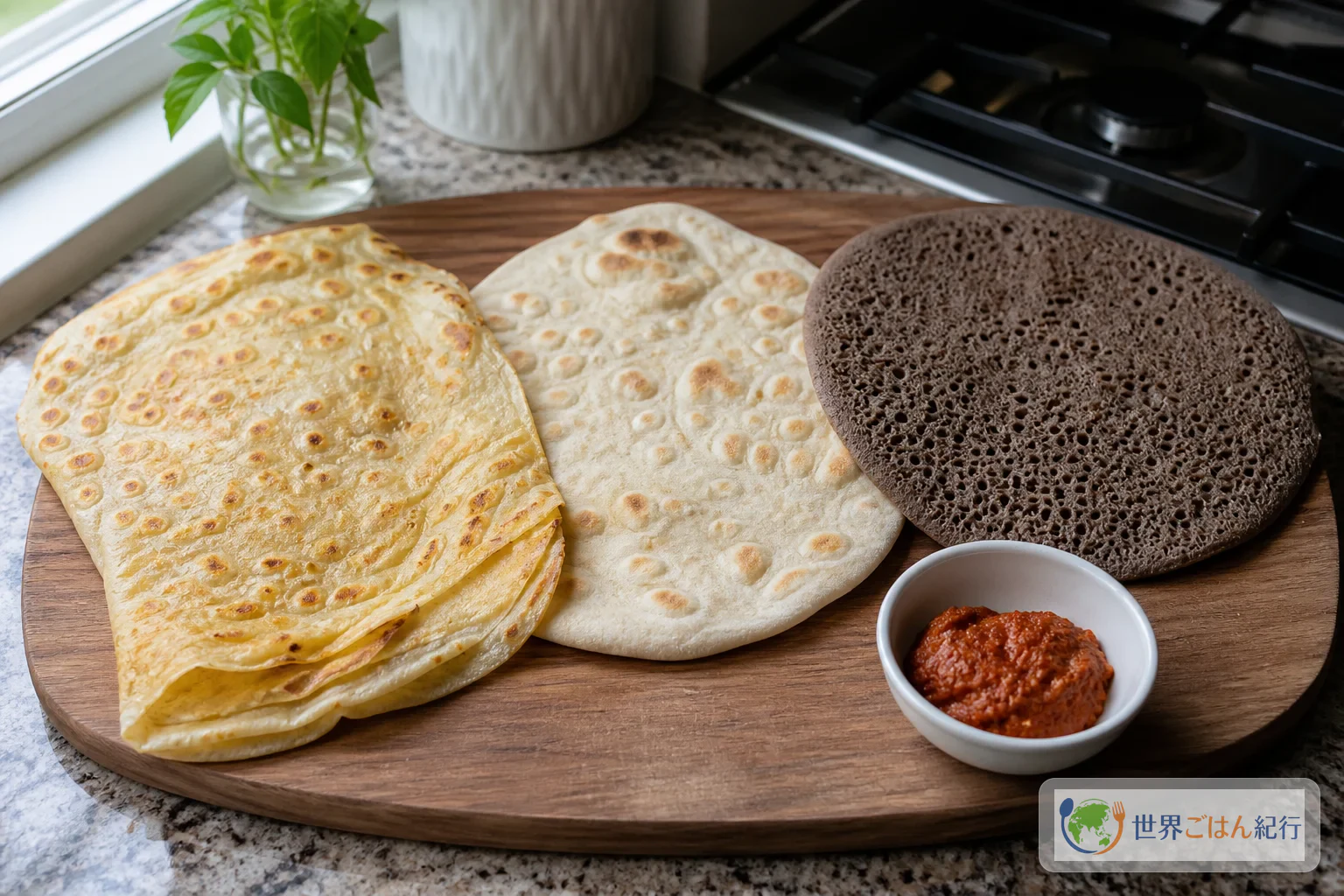
Firfir made with injera is a close relative: both are breakfasts of a torn staple combined with fat and spice, but they are different dishes. Kita is baked right after the flour is kneaded, so it keeps a baked surface and springiness. Injera is baked from a fermented batter, so it has sourness and fine bubbles, and it turns moist when it takes up tomato sauce. Firfir with injera shows how to add the bread last to a red tomato sauce.
Names and ingredients vary by language area, household and the grains on hand. In the central Ethiopian highlands, teff, maize, sorghum, barley and wheat are used differently by altitude and season. A staple there is never eaten on its own; it shares the table with stewed beans and vegetables, fermented foods and drinks. Chechebsa works the same way: the morning's bread and fat brought together with spice, rather than one fixed recipe, which makes it easier to judge substitutes.
Ingredients (serves 4): the thinness of the bread decides how the aroma gets in
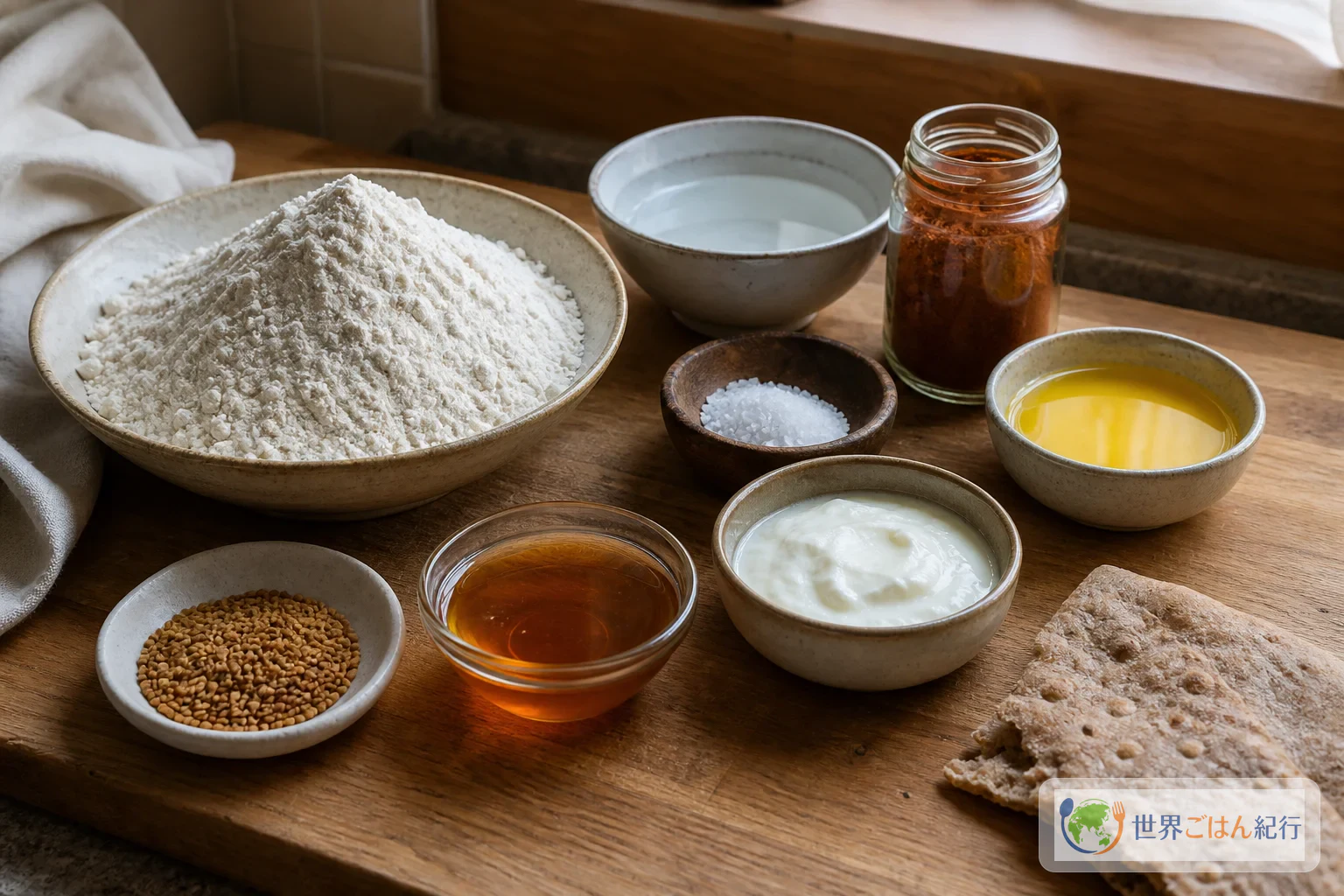
Don't make every piece the same thickness. Bake each one to about 8 inches (20 cm) across. The thin parts are fragrant, and the slightly thicker parts take up fat and keep their springiness, so the texture after tearing has range. The amounts below serve 4 people for breakfast.
Substitutes when you have no kita
Instead of kita, use thin pita, unsweetened flatbread or thin sourdough-style flatbread. Injera gives a sour firfir and changes the direction of the dish. Thick naan or sweet sandwich bread takes up oil only at the surface and gets heavy in the center, so avoid them as a first substitute.
Berbere is used not just for heat but to carry sweet spice and earthy aroma into the oil. If you buy a ready mix, check the ingredients, the heat level and the contents, not just the product name. If you try it for the first time, use only a small amount from a small packet. You can judge the difference in aroma better than with curry powder from your pantry.
If you have a wheat allergy, rice flour alone makes it hard to get the same springiness. A store-bought rice flour flatbread needs fewer dough adjustments, but check the label for wheat and dairy. Niter kibbeh contains dairy, so if you avoid dairy, use vegetable oil instead. Some berbere is labeled for possible contamination with wheat, sesame and tree nuts. Check the label, and do not judge from the spice alone.
Choosing ingredients and substitutes for chechebsa
Berbere and fenugreek
Berbere has no single right blend. It is built on red chili, with fenugreek, cardamom, cloves and other spices layered in, and the combination differs by household and region. If you reproduce only the heat with ordinary chili powder, the aroma of chechebsa goes flat. For a single plate, the aroma in a ready berbere mix is enough. When you buy one, check the seed ingredients, the contents and the storage method.
Fenugreek is a seed with a sweet, maple-like aroma and a slightly bitter finish. Even 1 g carries its flavor into the fat, so keep to that amount and limit the heating to 30 seconds. You can leave it out if you can't find it, but curry powder alone makes the dish smell different from berbere. If you cook Ethiopian dishes often, it's worth keeping a little on hand.
If you buy whole spices and grind them yourself, you can add small amounts of coriander and cumin along with the fenugreek. Changing the blend every time makes the heat hard to reproduce, though, so start with a store-bought mix as your baseline and add one aroma at a time. A small spice mill helps if you grind for only a few dishes; check the grinding mechanism and how much it handles at once.
Niter kibbeh and oil
Niter kibbeh is clarified butter infused with spices. Without it, add a little fenugreek to unsalted butter to get closer to the aroma. On fasting days, when dairy is avoided, some households use vegetable oil; fasting practice differs by church, household and person. Choose one with little aroma, such as rice bran or canola oil, and take care not to scorch the berbere. Olive oil pushes a strong green aroma to the front, which Ethiopian food doesn't use.
Flatbread and injera
On days you have no time to bake kita, use an unsweetened flatbread. If the bread already has salt, skip the finishing salt. Store-bought bread has little color, so tear it into 1 inches (2 cm) pieces and toast them for 1 minute in a dry frying pan to bring back the toastiness.
Injera makes a different dish. It is sour from fermentation, so reduce the honey and serve stewed tomato or beans alongside for balance. Tear it into 1 to 1.5 inches (3 to 4 cm) pieces, mix the berbere into the fat, and add the injera after you turn off the heat. Cook it long and you lose its sourness and bubbles.
Method: build the color first, then let it take up the red oil
Rest the dough so the flour absorbs water and stretches easily. Do not mix fat into the dough before baking, or it turns slippery and hard to roll thin. Bake the kita first, let it cool, tear it, and combine it last with warm niter kibbeh and berbere.
Getting chechebsa right: berbere, bread size and honey
When to add the berbere
Add the berbere right after the niter kibbeh melts; there's no need to heat it until it smokes. Stir over low heat until the powder sinks into the oil and the red color spreads, and the sweet aroma of the spice stays along with the sting of the chili. If it scorches, wash the pan, melt fresh fat in another pan and leave the scorched powder behind.
The size of the bread
Pieces of 1 inches (2 to 3 cm) take up fat easily and are easy to scoop with a spoon at breakfast. Mixing in a few pieces of about 2 inches (5 cm) leaves something to tear with your teeth. Keep the baked edges and centers a little uneven rather than cutting everything to one size.
When to drizzle the honey
Drizzle the honey after plating, never in the pan. Mixed in from the start, the sweetness spreads through everything and the berbere aroma gets hard to notice. For anyone sensitive to heat, make it with 4 g berbere and serve yogurt separately, which is easier to adjust than adding more honey.
Serving, variations and storing chechebsa
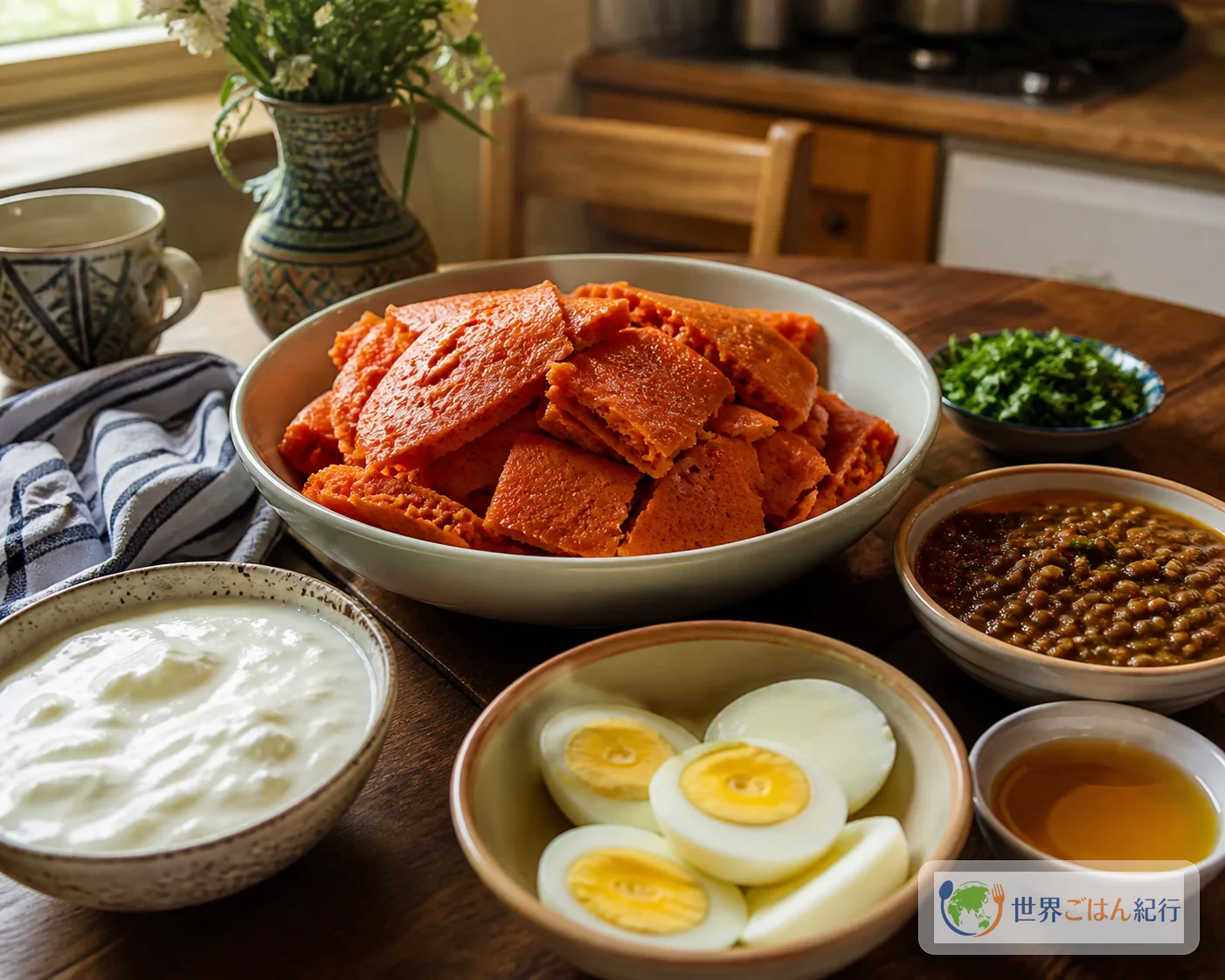
The method stays the same whatever you serve with it: let the bread take up the aroma. Bake the basic version with 7 g berbere first, then change just one thing the next morning, so the difference in bread and spice is clear.
With egg
Hard-boil 4 eggs, cut them in half and serve 1 per person. Keep them out of the pan so the whites don't take on berbere color; they give you a cool place to escape the heat.
With yogurt
Put 1 oz (30 g) unsweetened yogurt per person on the side. With honey it rounds off the heat, but stirred into hot bread it releases water, so combine a little at a time just before eating. If you avoid dairy, skip it.
With a bean stew
Serving 2.75 oz (80 g) per person of a lentil or chickpea stew makes the breakfast more substantial. If the stew is salted, reduce the salt in the dough and the finish. Serve the beans alongside to keep the texture of the kita.
Less honey, with cilantro
Halve the honey and serve about 2 g chopped cilantro per person, a good choice for anyone who doesn't want a sweet breakfast. Cilantro's strong green scent can cover the complexity of berbere, so start small.
A vegetable oil version for fasting
Replace the niter kibbeh with 3 tbsp (45 ml) vegetable oil, and serve without egg or yogurt. During fasts animal foods are avoided, and there are ways of eating built on oil and beans, though practice differs by denomination, day and household.
Storing and reheating
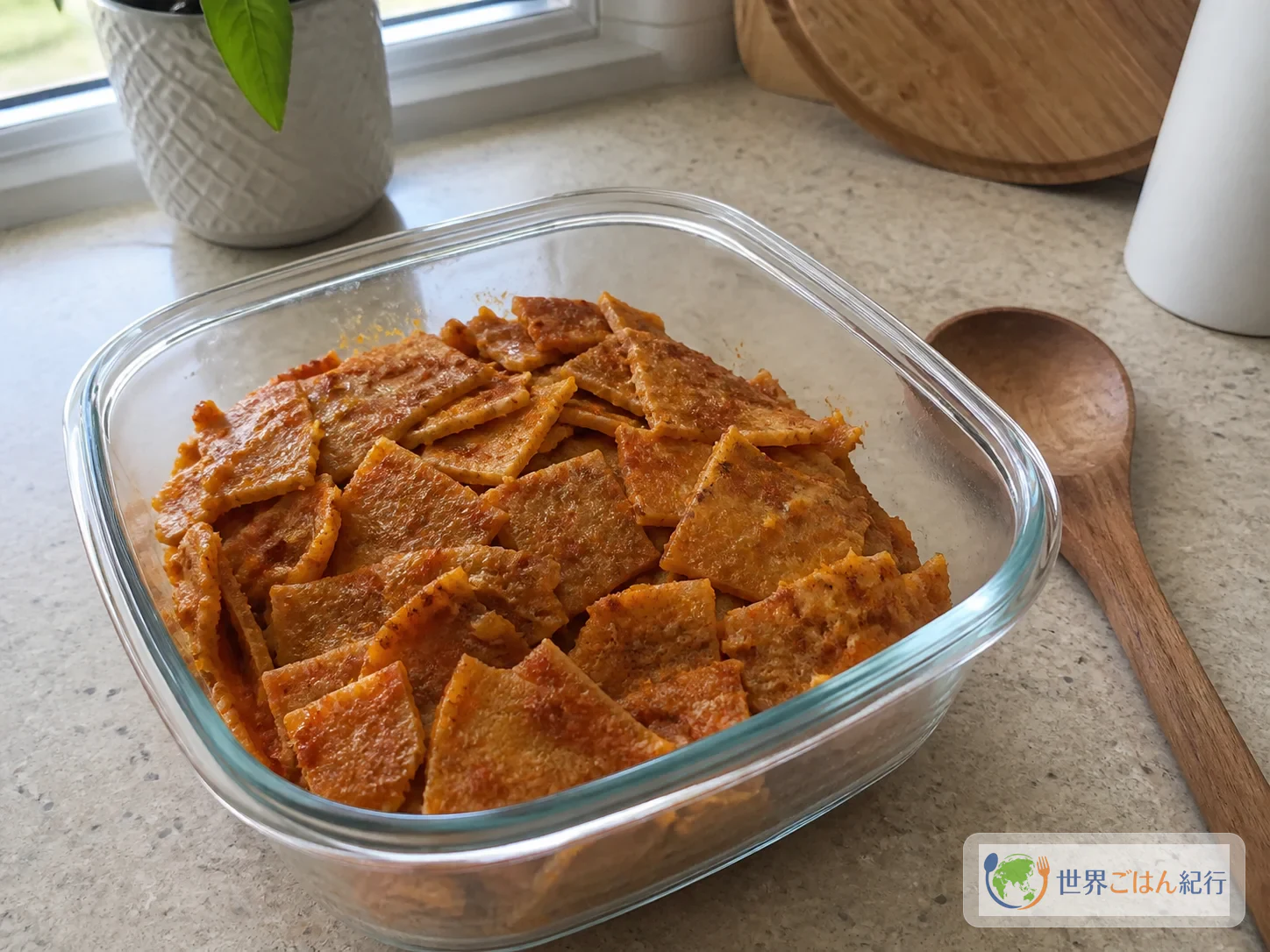
Chechebsa is best eaten while the corners of the freshly baked kita are still crisp, so set aside any leftovers before adding honey or yogurt. Spread them in a shallow container and refrigerate within 2 hours, sooner in a hot place, then eat within 3 to 4 days. Because kita breaks easily, make it ahead only up to the next day.
To reheat, put 1 tbsp (15 ml) water in a frying pan, cover and warm for 2 to 3 minutes over low heat. When it's hot through to the center, remove the lid and let the moisture cook off for 30 seconds. Refrigerated chechebsa firms up and won't regain the bite of a fresh batch. To freeze, wrap one portion at a time, flat, without honey or yogurt; after thawing, add a little water and warm over low heat.
FAQ
Is chechebsa spicy?
It depends on the blend and amount of berbere. Start with 4 g and check the aroma once it has melted into the niter kibbeh. To lower only the chili heat, reduce the berbere and add paprika. Starting small and adding more at the table keeps the spice aroma better than hiding the heat with extra honey.
I can't bake the kita thin. What should I do?
Rest the dough 30 minutes, divide it into 4, and roll one at a time. If it shrinks back, rest it another 10 minutes rather than pulling it. Keep the rounds smaller than 8 inches (20 cm), sized to your frying pan, and even the thickness at 0.125 inch (2 to 3 mm) so the heat reaches the center.
Can I replace berbere with curry powder?
You can, but the fenugreek and cardamom aroma will be weaker. As a stopgap, mix 4 g paprika, 2 g curry powder and 0.5 g cayenne, and use only 4 g of the mix at first. Next time, try a ready berbere and compare.
Is honey a must?
Honey is optional; some households center the dish on salt and spice instead. The first time, put the 1.5 oz (40 g) honey for 4 servings in a separate bowl and let each person add their own, so heat and sweetness stay separate.
How is it different from firfir made with injera?
Chechebsa made with kita keeps the baked spots and springiness of wheat, while the injera version is sour from fermentation and turns moist in the sauce. Neither is more correct; the staple changes the texture. Make firfir next and you'll notice how differently the two breads take up sauce.