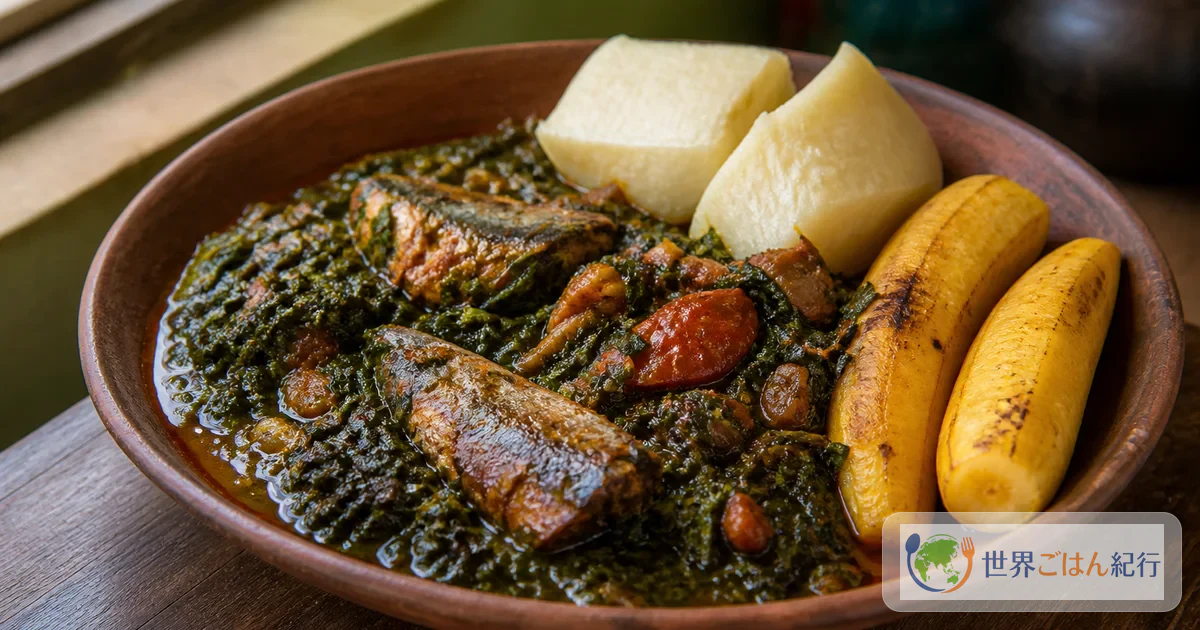
The morning after you put the dried corn and beans to soak, look into the bowl: the kernels have swelled a size larger. Then the pot fills with the smell of pork, bacon, onion and garlic frying together, and you know this will be more than a simple bean stew. Cachupa (Cachupa / Katchupa) is the signature dish of Cape Verde, a slow-simmered pot of corn and beans with vegetables and meat or fish. The kernels stay whole and chewy, the beans melt into the broth, and sausage added late brings a smoky note. The longer it simmers, the closer it gets to an island table.
Cachupa in Cape Verde
A stew of corn and beans widely known as Cape Verde's national dish. Dried hominy and beans are cooked for a long time, with meat, fish, cabbage, root vegetables and green bananas added. In Cape Verdean Creole it is also written Katxupa, and in Cape Verdean households abroad it is sometimes called Munchupa.

Cape Verde is an island nation in the Atlantic, where corn, beans, root vegetables, seafood and a Portuguese sausage culture overlap, and all of it ends up in this pot. The name stays the same, but each pot has its own expression. Cachupa rica is the feast version, with meat and sausage and sometimes fish. Cachupa pobre is the plain one, built on beans, corn and vegetables with little meat. There is also cachupa de atum, made with tuna, and cachupa guisada, the leftovers refried the next morning.

The islands differ mostly in what they put first. Versions with fish come naturally near the sea, while areas with plentiful produce load the pot with more vegetables. Don't save the rica for holidays, though: make it in quantity and eat it several times with the family.

Like Senegalese thieboudienne, cachupa brings the whole table together in one dish, and like Brazilian feijoada, it draws the savor out of beans and meat over a long cook.
Ingredients (serves 6)
Cooking green bananas and plantains are starchy like potatoes, not sweet fruit. If you can't find them, don't force in yellow bananas; make up the difference with sweet potato, potato or squash so the flavor doesn't break down.

Choosing hominy, beans and substitutes for cachupa
At home, the hard part is the kernels, not the seasoning. Made with sweet canned corn alone, it easily turns into "bean soup with corn." Use hominy, corn for pozole, or canned hominy so the kernels keep their chew. White beans, red beans and chickpeas are easy to find and give the broth a natural body.
This version is rica-style, made with pork, bacon and a linguiça-style sausage, all easy to find. Chorizo is fine if you have no linguiça, and sweet potato is fine in place of green bananas. Just avoid yellow bananas, which make the pot too sweet.
For a first attempt, focus on four things rather than chasing every island's style: whole corn kernels, body from the beans, a long gentle simmer, and a thickness that can be pan-fried the next morning.
Where cachupa goes wrong
| Symptom | Cause | Fix |
|---|---|---|
| Beans are hard | Not soaked enough, old beans, or heat too low | Add 1¼ cups (300 ml) hot water and cook 20 more minutes on low. In a pressure cooker, 5 more minutes |
| Watery | Too much water at the start | Remove the lid and reduce over low heat for 15 minutes, mashing a few beans |
| Scorched bottom | Heat too high or stirring too infrequent | Move to another pot without scraping the scorch, add hot water and return to low heat |
| Flat aroma | Sausage's smokiness is weak | Brown the sausage separately and add 1/2 tsp smoked paprika |
| Too sweet | Yellow bananas went in | Next time substitute green bananas, sweet potato or potato |
Cachupa depends on patience more than spice: the beans and corn soften without hurry, and the thickness of the broth is set at the very end. Salt it too early and it turns salty as it reduces. The safest approach is to start light and adjust in 1/4 tsp steps at the end.
Cachupa variations, storage and serving
Cachupa pobre
If you leave out the meat, increase the olive oil by 1 tbsp, cook the onion well, and brown 3.5 oz (100 g) mushrooms or 7 oz (200 g) squash before adding them to make up for the savor and sweetness. The flavor of the beans comes forward, so keep the salt light and add chili sauce at the table. A little olive oil drizzled over at the end brings the bean aroma together.
Cachupa guisada
Guisada is the best thing that can happen to leftovers. The next morning, spread the cachupa, with a little of the broth drained off, in a skillet and sear it over medium heat for 10 to 15 minutes. When the edges brown and the bottom forms a fragrant crust, slide it onto a plate and top with a fried egg. The corn kernels turn toasty, and it eats like a different dish from the stew.
The key is leaving some broth. Fried completely dry, it crumbles; with too much, it won't brown. When you store the pot, stop when the ingredients hold together moistly with a thin layer of broth at the bottom. In the skillet, it's just right when it holds together a little under a wooden spoon but leaves no puddle.
Storage and reheating
Cachupa only gets better the more you make. Keep it 3 to 4 days in the refrigerator or about 3 weeks in the freezer. Let it cool before putting it in containers, and portion it so the meat and beans are evenly distributed. Overnight the corn and beans absorb the broth, so it will be somewhat firmer the next day.
To reheat, return it to a pot with about ½ cup (100 ml) water or hot water and warm over low heat for 10 minutes. The microwave alone can leave the beans hot but the center of the hominy cold, so use a pot if you have time, and a skillet if you are refrying.
What to cook alongside
- Githeri - A humble Kenyan dish with hominy and beans. A way to use leftover cachupa beans.
- Thieboudienne - West Africa's national dish of rice and fish, another big pot that feeds the whole table.
- Feijoada - A bean and meat stew from the Portuguese-speaking world. The black beans and the savor of meat come more forward than in cachupa.
- Red beans and rice - A New Orleans dish with kidney beans and smoked meat. Good practice for adjusting bean thickness.
FAQ
What if I can't get dried hominy?
Use canned hominy. Added at the start of simmering it breaks down easily, so add it for the last 40 minutes, after the beans have softened. Sweet canned corn is light in texture and weakens the heart of cachupa. If you must use it, treat the result as a different dish, using low-sweetness frozen corn and more white beans.
Can I make it in a pressure cooker?
Yes. Do through step 2 in a regular pot, then put the soaked hominy, beans, 1.25 quarts (1.2 L) water and bay leaves in the pressure cooker and cook at high pressure for 25 to 30 minutes with a 10-minute natural release. Return it to a regular pot, add the vegetables and sausage, and simmer over low heat for 20 minutes. If you finish everything in the pressure cooker, the cabbage and sweet potato tend to fall apart.
How spicy is it?
Many households keep the pot itself mild. Smoked paprika is there for aroma and color, and each person adjusts the heat with chili sauce at the table. The first time, it's easier for a family to eat if you leave the heat out of the pot and add a little piri-piri or hot sauce after plating.
Sources consulted
- Visit Cabo Verde, "Gastronomy in Cabo Verde" - Checked the place of cachupa and the breakdown of rica, pobre, de atum and guisada.
- Crumb-Snatched, "Cachupa: Traditional Dish of Cape Verde" - Checked a Cape Verdean household's ingredient makeup, dried hominy, beans, meat and the long-simmer method.
- Crumb-Snatched, "How to make Cachupa Guisada" - Checked how to refry leftover cachupa the next morning and the heat level.
- Wikipedia, "Cachupa" - Checked the overview as a national dish, the main ingredients and the names guisada/refogada.