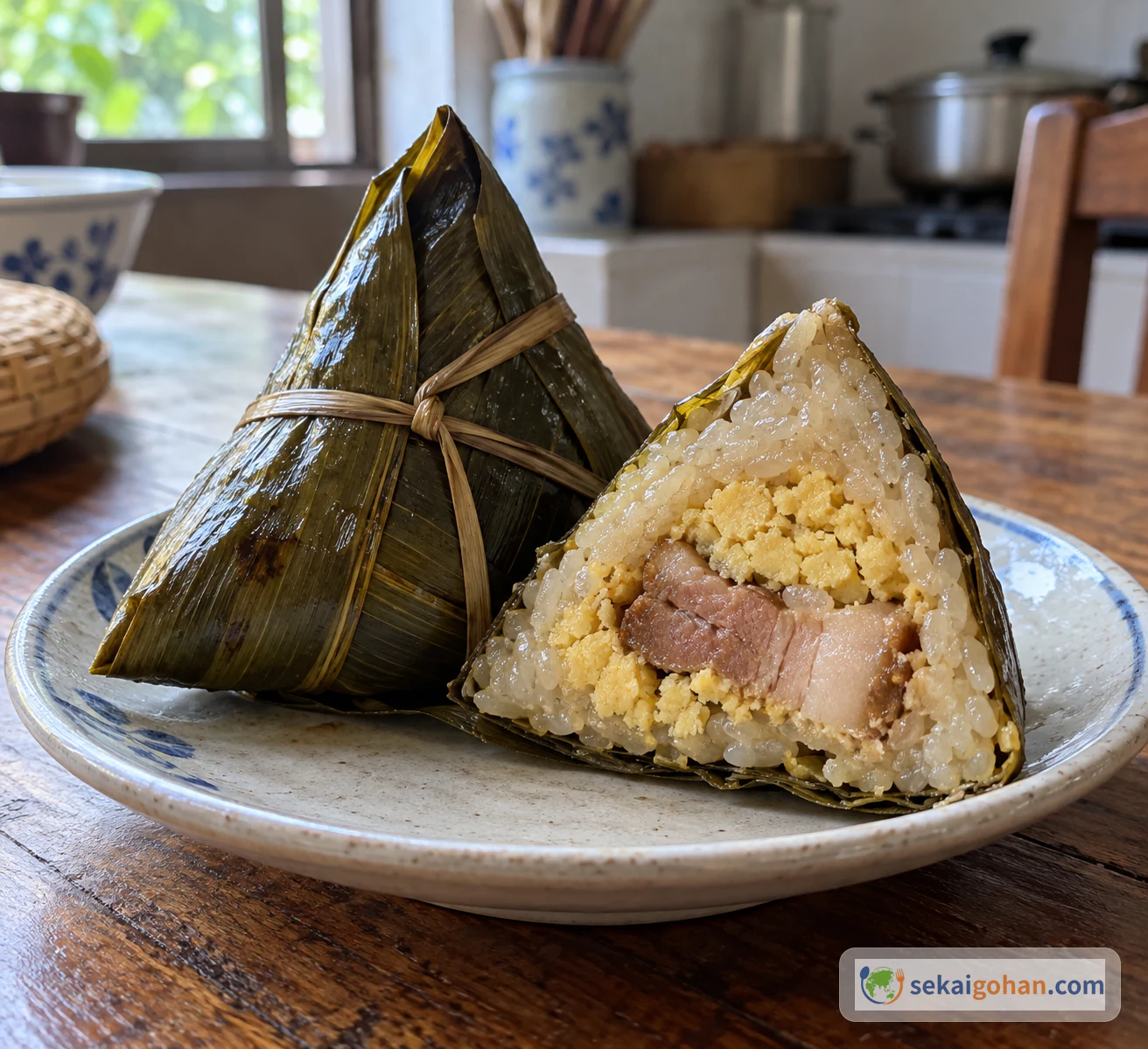
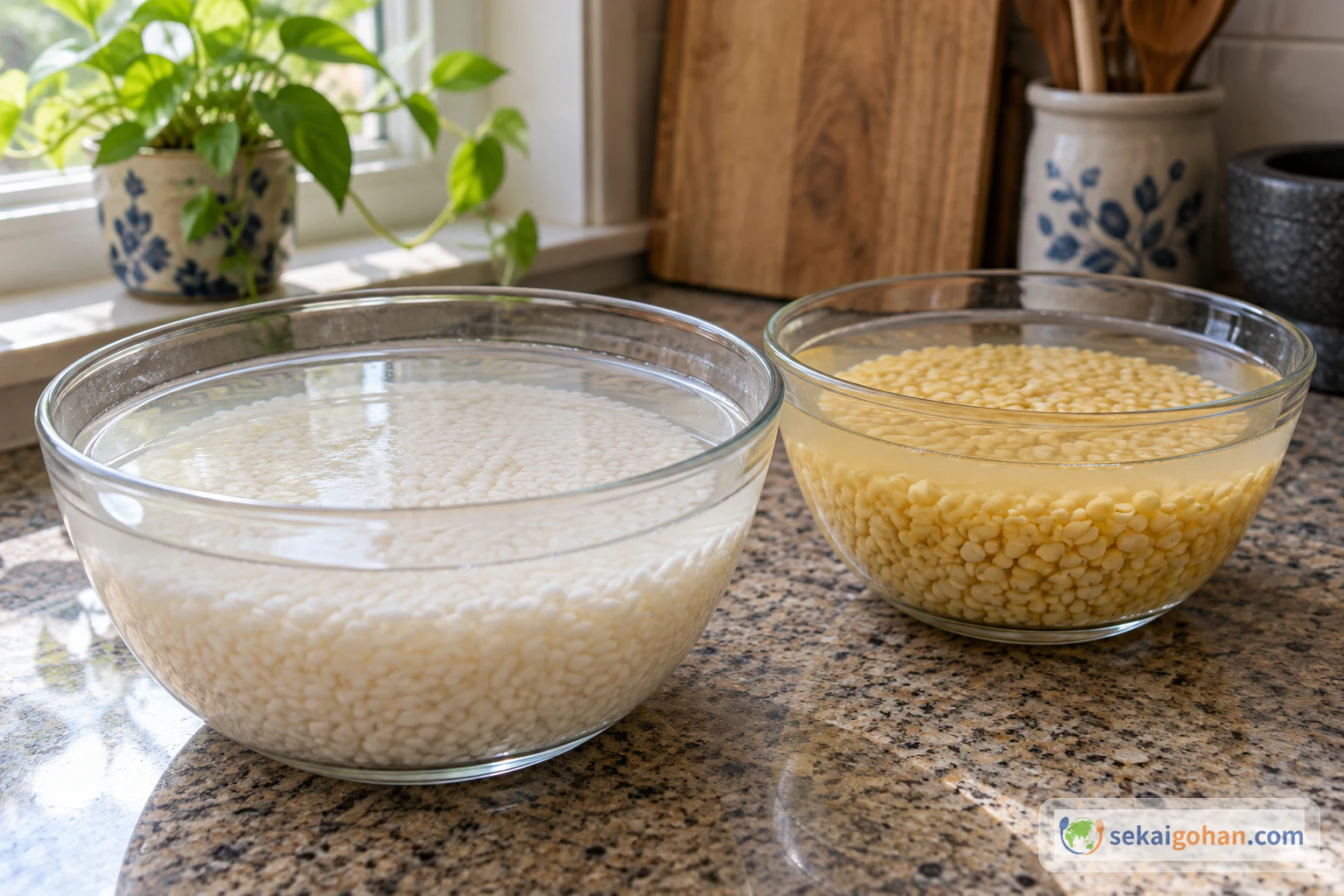
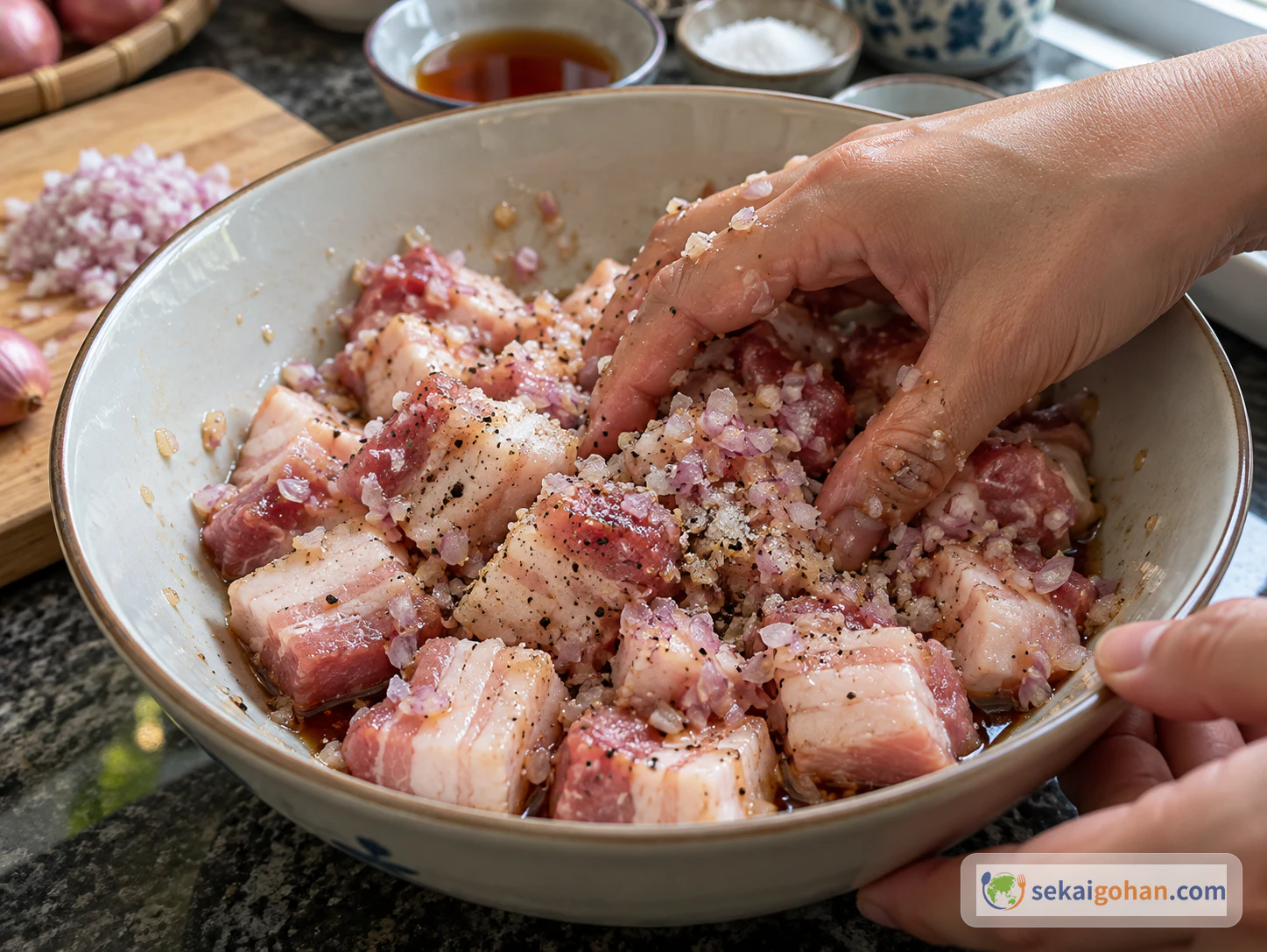
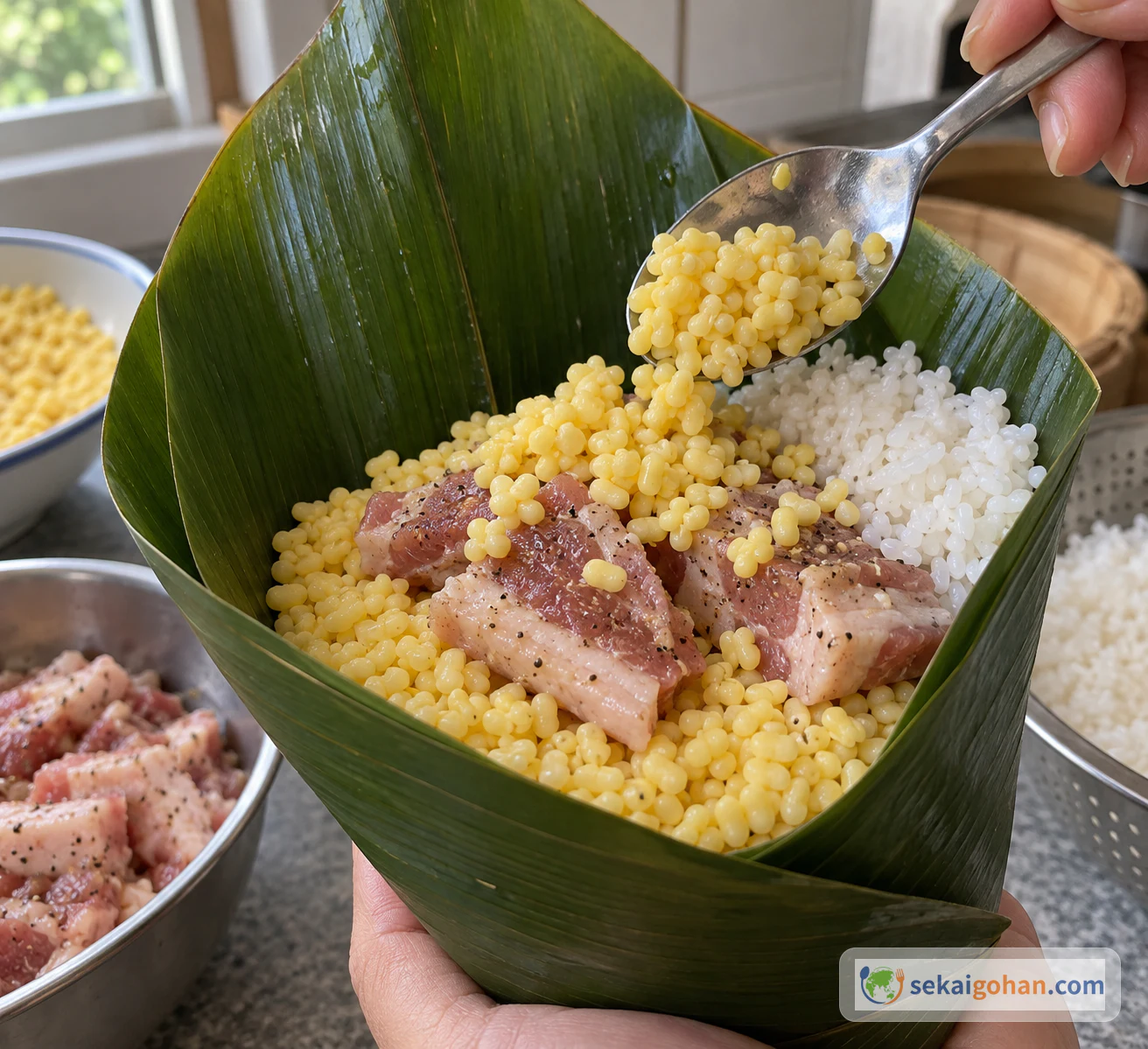
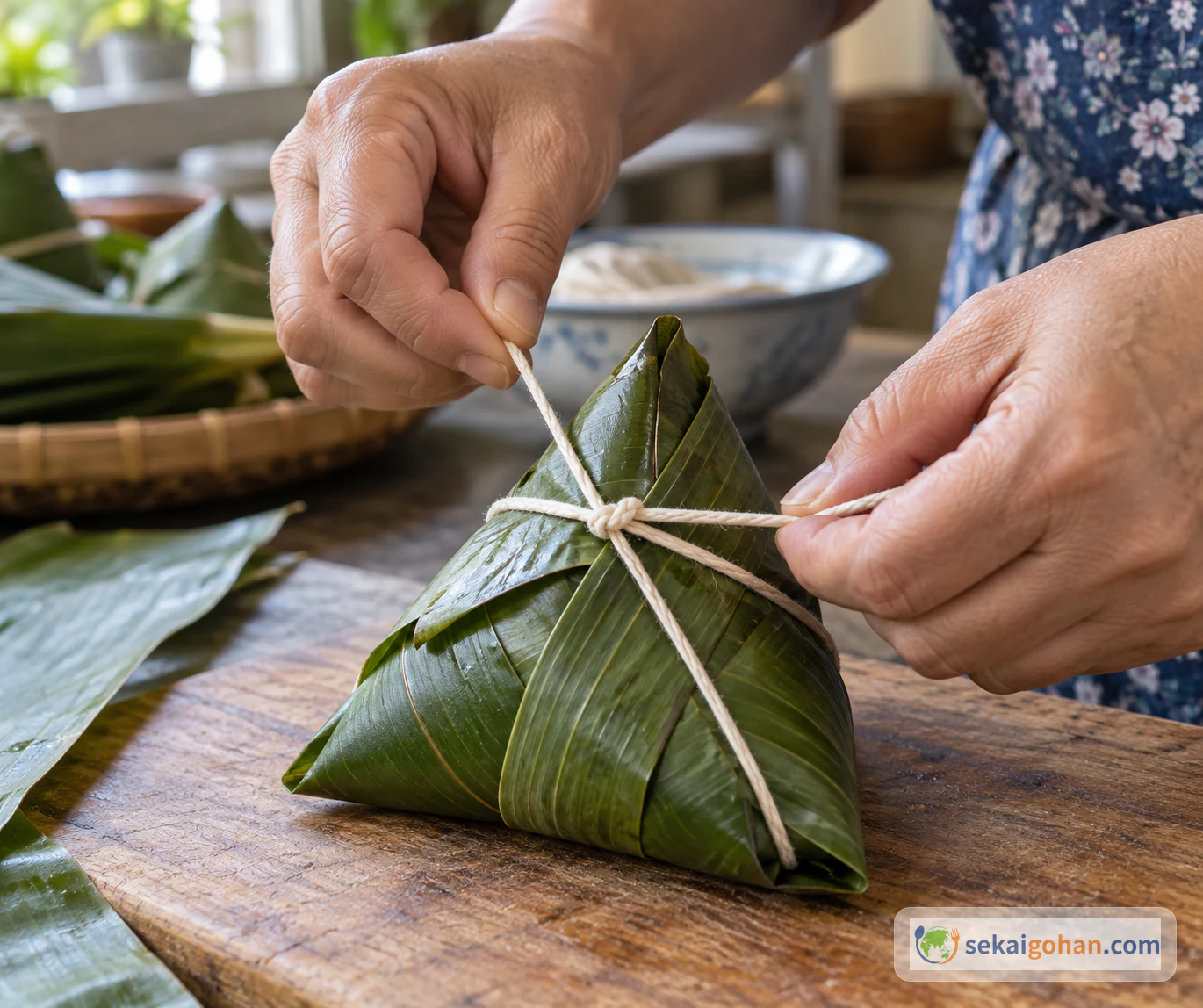
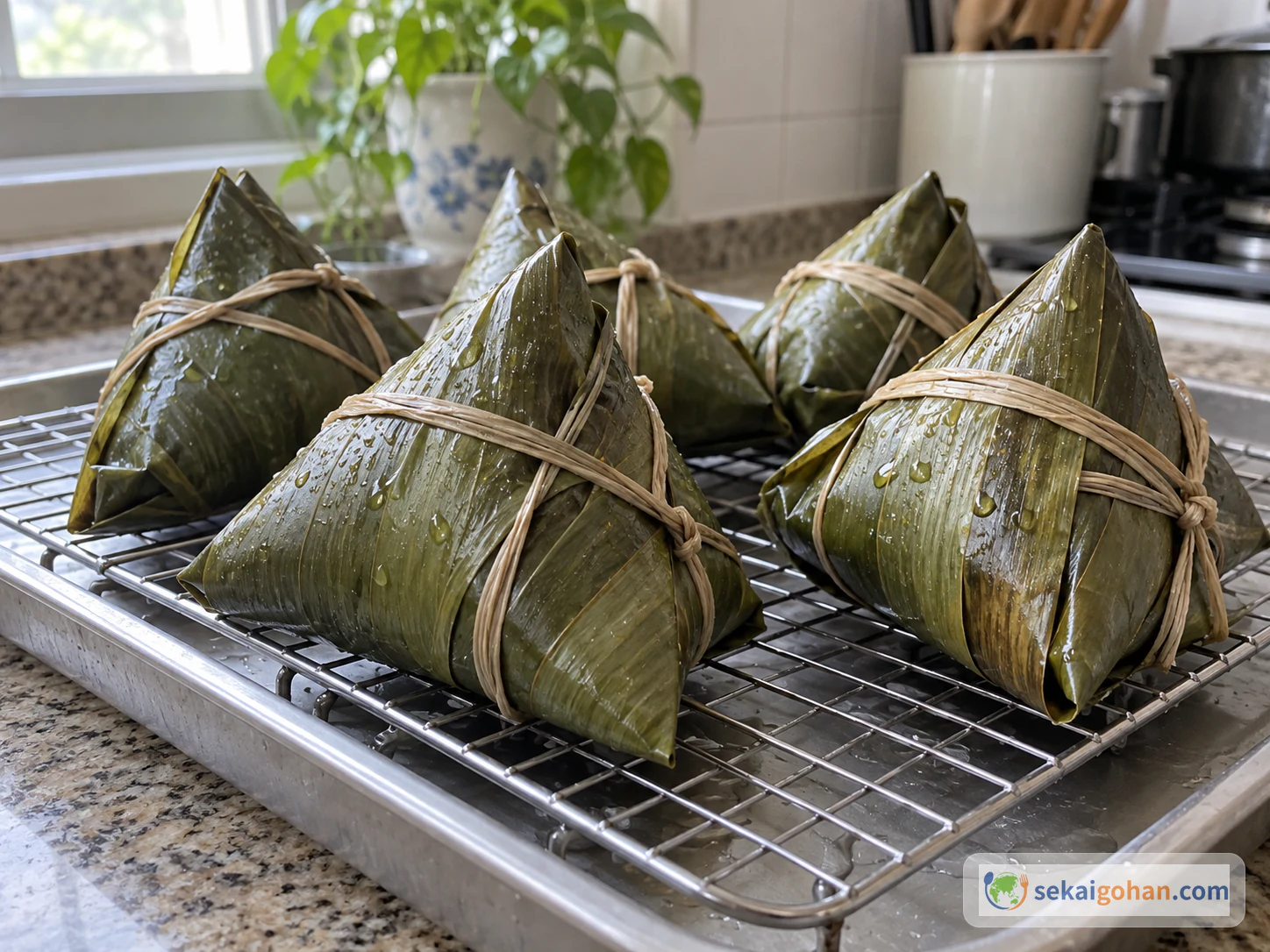
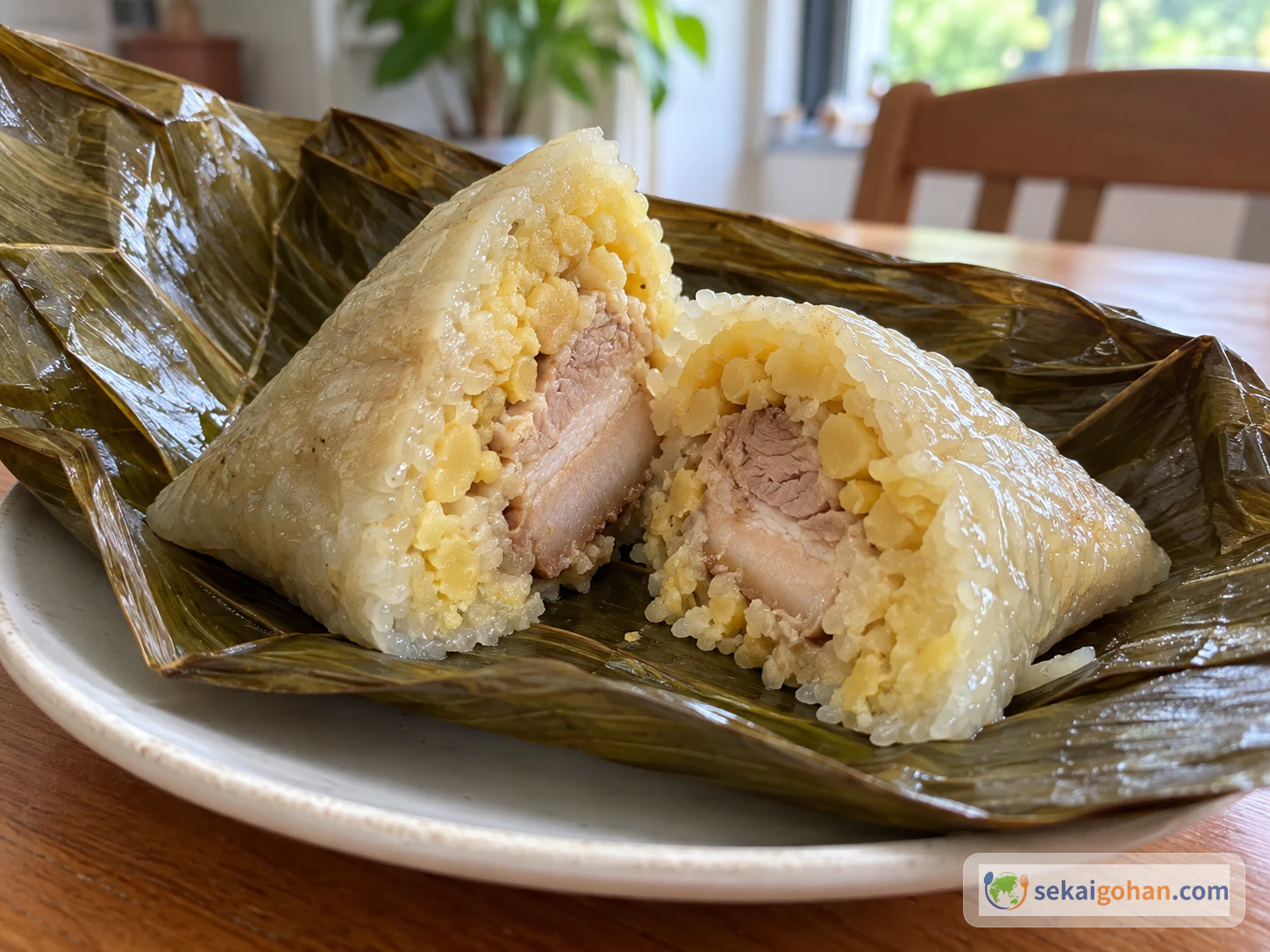
Untie the string and open the banana leaf, and a small pyramid of sticky rice appears. Cut into it and you find a layer of yellow mung beans, with pieces of pork belly at the center. Everything goes into the leaf raw: soaked rice, soaked beans and seasoned pork. The long cooking is what turns each parcel into a single cake. Bánh ú is a Vietnamese leaf-wrapped rice cake, and this version makes 12 small ones.
Bánh Ú and Its Relatives
Bánh ú covers more than one recipe, and this is the pork and mung bean version. It's a different cake from bánh ú tro, which is made with ash water, and from bánh tro or bánh gio, which are soaked in ash and have no filling. Vietnam has three leaf-wrapped rice cakes that are easy to tell apart by shape: bánh chưng is square, bánh tét is cylindrical and bánh ú is a triangle or pyramid.
Bánh Ú at Tết Đoan Ngọ
Bánh ú belongs to Tết Đoan Ngọ, and the name stretches a long way. The examples below each describe a particular kitchen rather than one national custom.
A family in Hóc Môn has made bánh ú for Tết Đoan Ngọ for more than 50 years, turning out over 30,000 for the occasion. They prepare the leaves and filling, then boil large pots for nearly five hours. Their cakes include ash-water soaking and sweet fillings, so their method is its own thing rather than this recipe scaled up, and its timings don't carry over to a home batch.
In Quảng Nam, bánh ú tro appears on the Tết Đoan Ngọ table. It's made with sticky rice soaked with plant ash, wrapped in different leaves and boiled for about six hours. Its ash, leaves and timing all belong to that cake alone.
For more dishes from the country, see our Vietnam recipes.
Ingredients for 12 Small Cakes
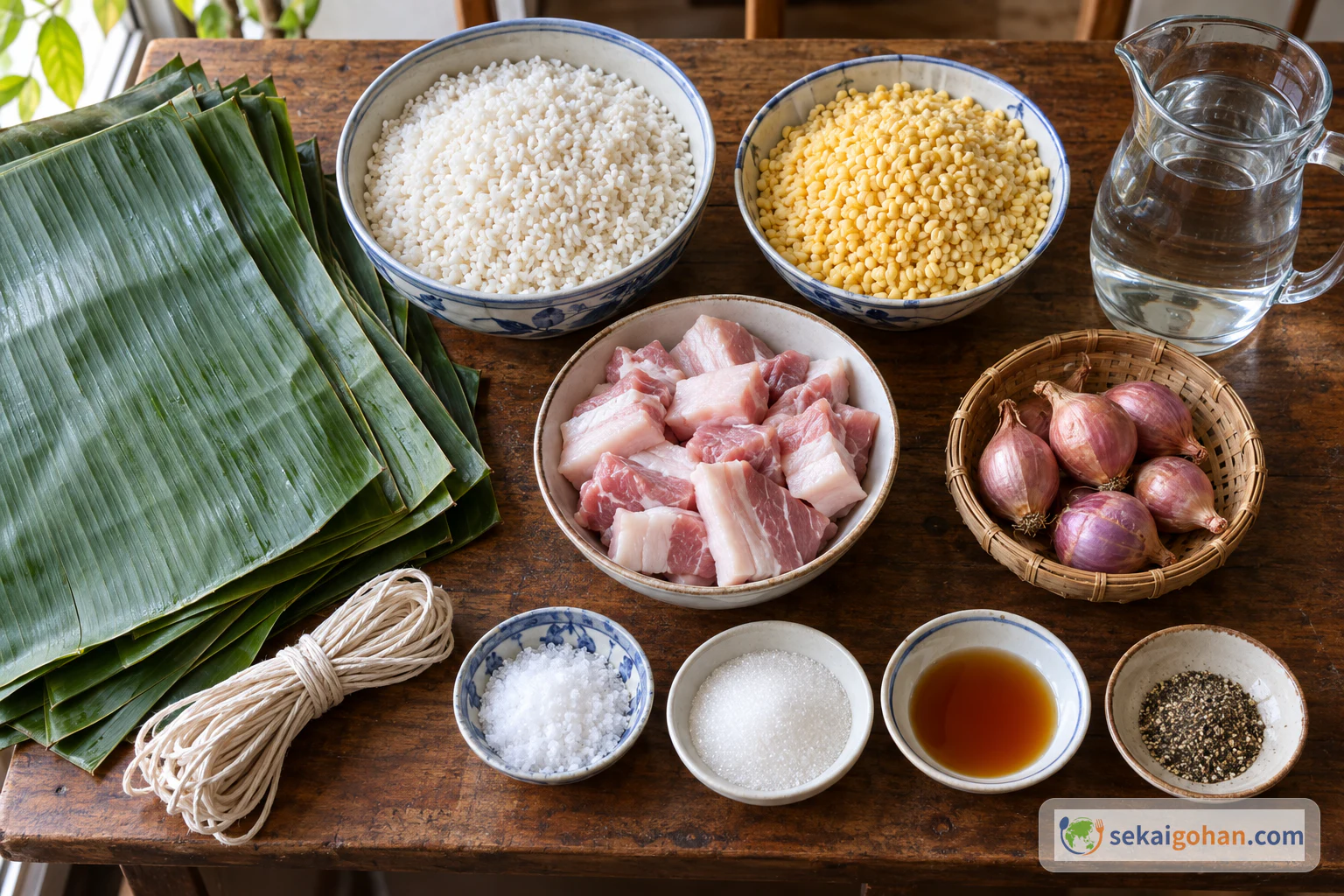
This makes 12 small cakes.
Fish sauce contains fish. Check the labels on your fish sauce and other seasonings for anything else you need to avoid.
Equipment
- Pressure cooker (8-quart, 7.6 liters), or a large stockpot with a lid
- 2 containers for soaking
- Strainer
- Knife
- Food-safe string that can withstand cooking
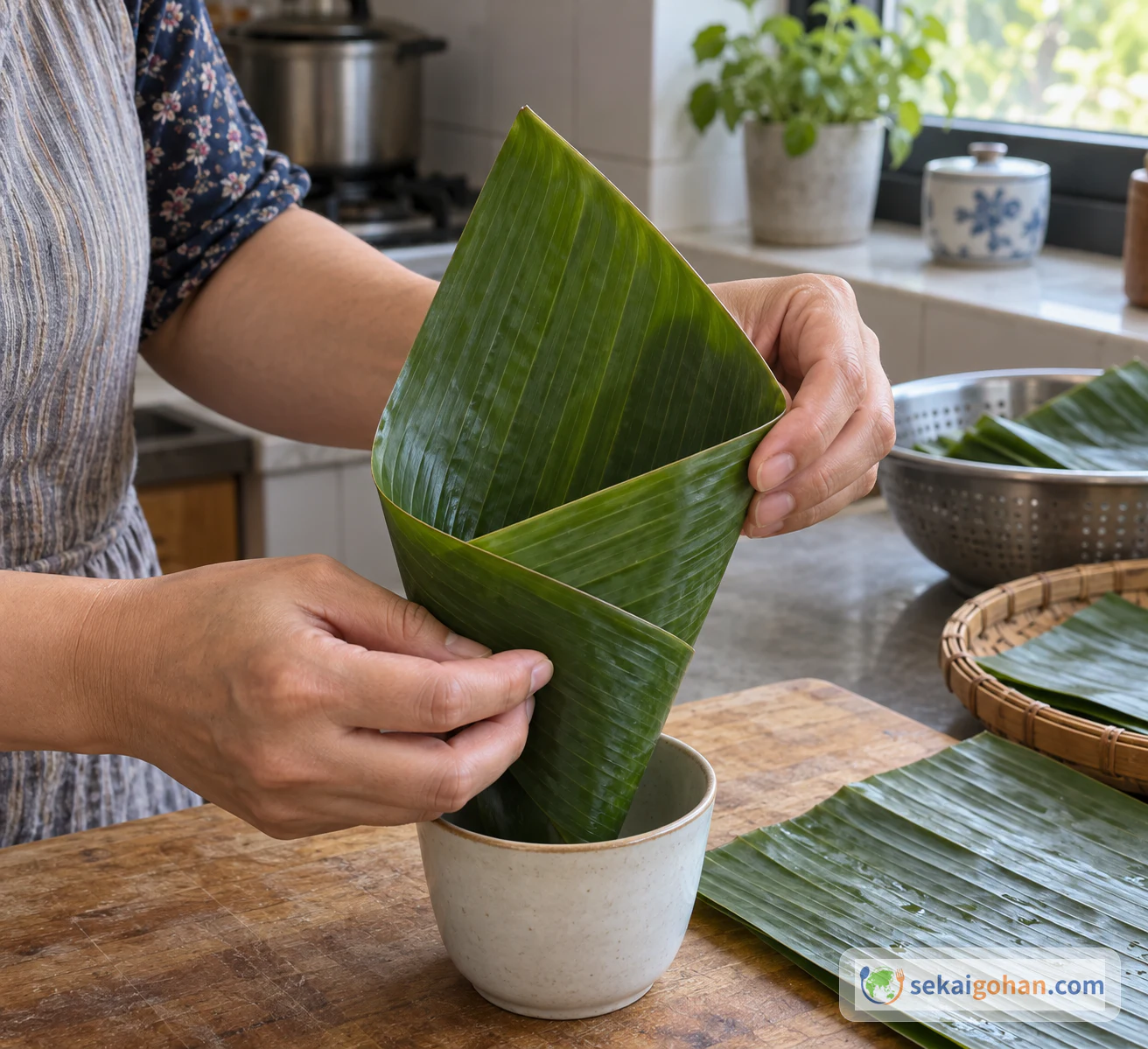
- A cup to support the leaf cone (optional)
- Foil (optional)
- Heavy ceramic plate to keep the parcels from floating (optional; check your pressure cooker's manual first)
- Wire rack
- Paper towels
Choosing the Rice, Beans and Banana Leaves
Rice: Look for packages labeled sweet rice or glutinous rice.
Mung beans: Choose thin, peeled, split dried beans. Whole round mung beans and mung bean sprouts are different ingredients and won't work here.
Banana leaves: Frozen leaves work once thawed. Buy enough to have some spare after cutting your 24 squares, because leaves can tear. Stick with banana leaves; another leaf would change the aroma and how the parcel folds.
Cooking Times and Fixing Bánh Ú Problems
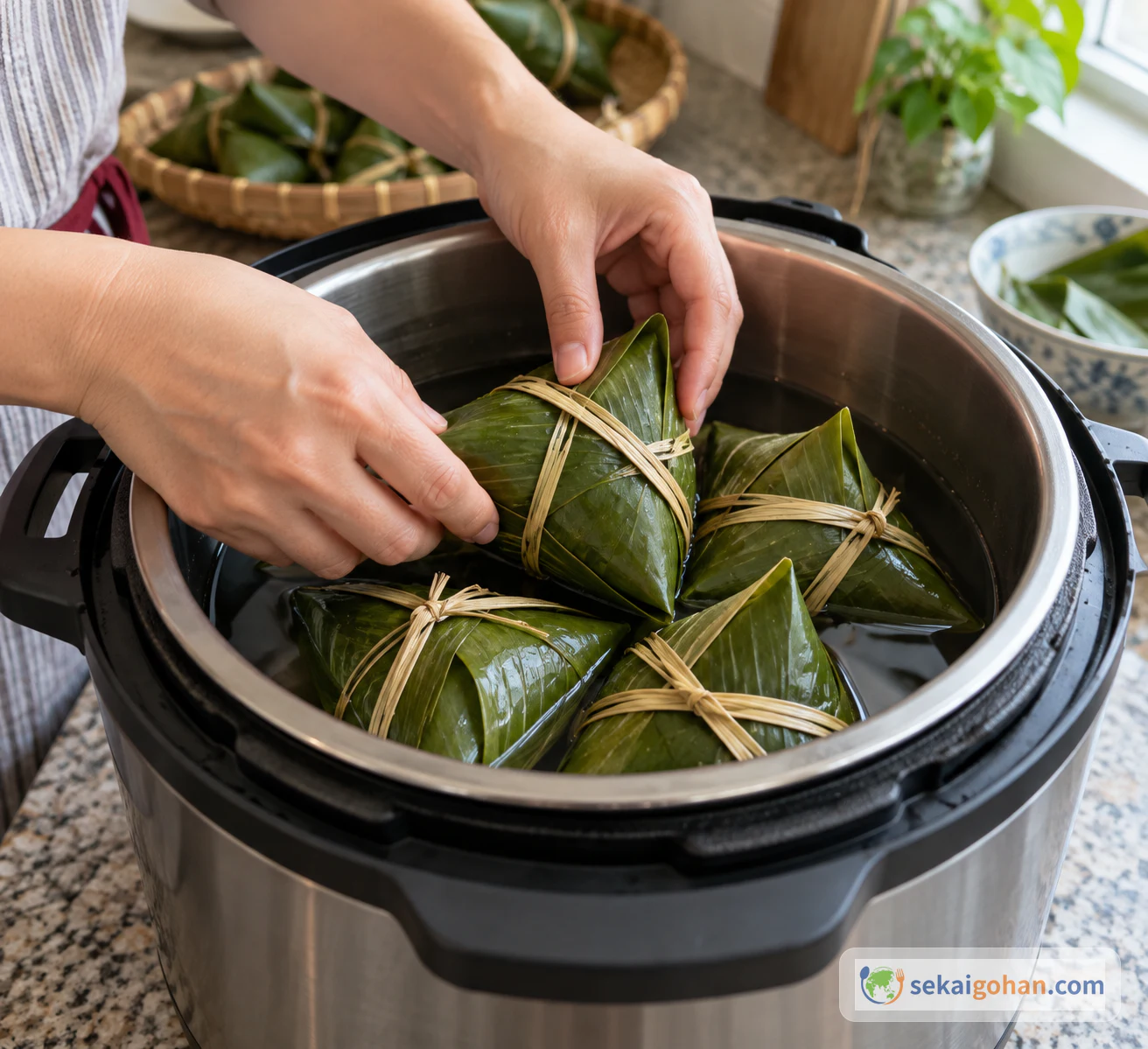
The pressure cooker and the stockpot each have their own timing, so follow one route from start to finish. With a pressure cooker, plan for the time it takes to reach pressure and for the natural release as separate waits on top of the cooking time.
| Problem | What to check | What to do |
|---|---|---|
| Leaves crack or tear when folded | Leaves are not soft enough | Wash with boiling water, wipe dry and use 2 squares with crossing veins. Patch the outside with a spare piece of leaf |
| Filling gets caught in the folds | The rice base or lid is too thin | Keep rice at the bottom and on top, with the beans and pork between |
| The leaf splits at the string | The string is too tight | Tie firmly, but stop before the leaf tears |
| Parcels float in the pot | They are rising above the water | A heavy ceramic plate can hold them down. In a pressure cooker, check that your manual allows this and stay within its fill limit |
| Stockpot water runs low | The long boil reduces the water | Add more water and keep to the 8 hours |
| The seasoning seems off | The three salts were mixed up | Next time, measure the rice, bean and pork salt separately, and keep any rubbing salt out of the count |
| The rice is hard or the pork looks uncooked when opened | The parcel is undercooked | Don't eat it |
A cut cake shows you what the finished dish should look like, but its appearance alone won't tell you it's safe to eat.
Serving Bánh Ú and Variations
Daikon pickled in fish sauce, dưa món, makes a good optional side. Serve it alongside the cakes rather than inside them.
- Pork shoulder: Use it for a leaner filling. The amount of fat and the texture will change.
- No MSG: It's optional, though leaving it out softens the flavor.
- Three or four folds: Closing the parcel with 3 or 4 sides changes its base and appearance.
Frequently Asked Questions
How many does this make?
This recipe makes 12 small rice cakes. The count is for cakes, not servings.
When does the 1 tsp of bean salt go in?
The ingredient list includes 1 tsp of salt for the mung beans, but the method leaves the timing to you. Whenever you add it, keep this salt separate from the rice and pork.
Should I cook the mung beans first?
Not for this recipe. The beans are soaked, drained and layered raw with the raw rice and pork, and they cook through inside the parcel.