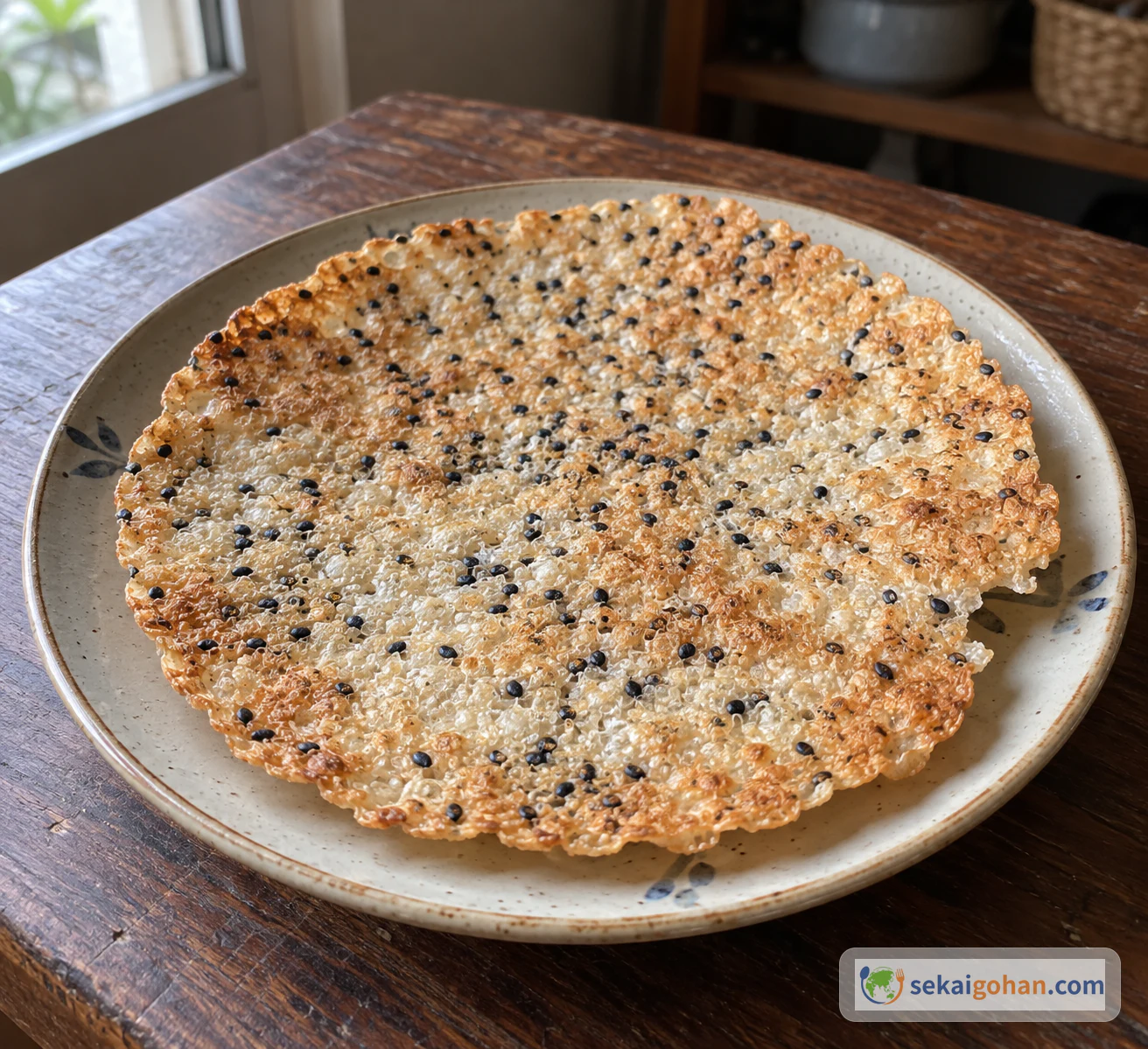
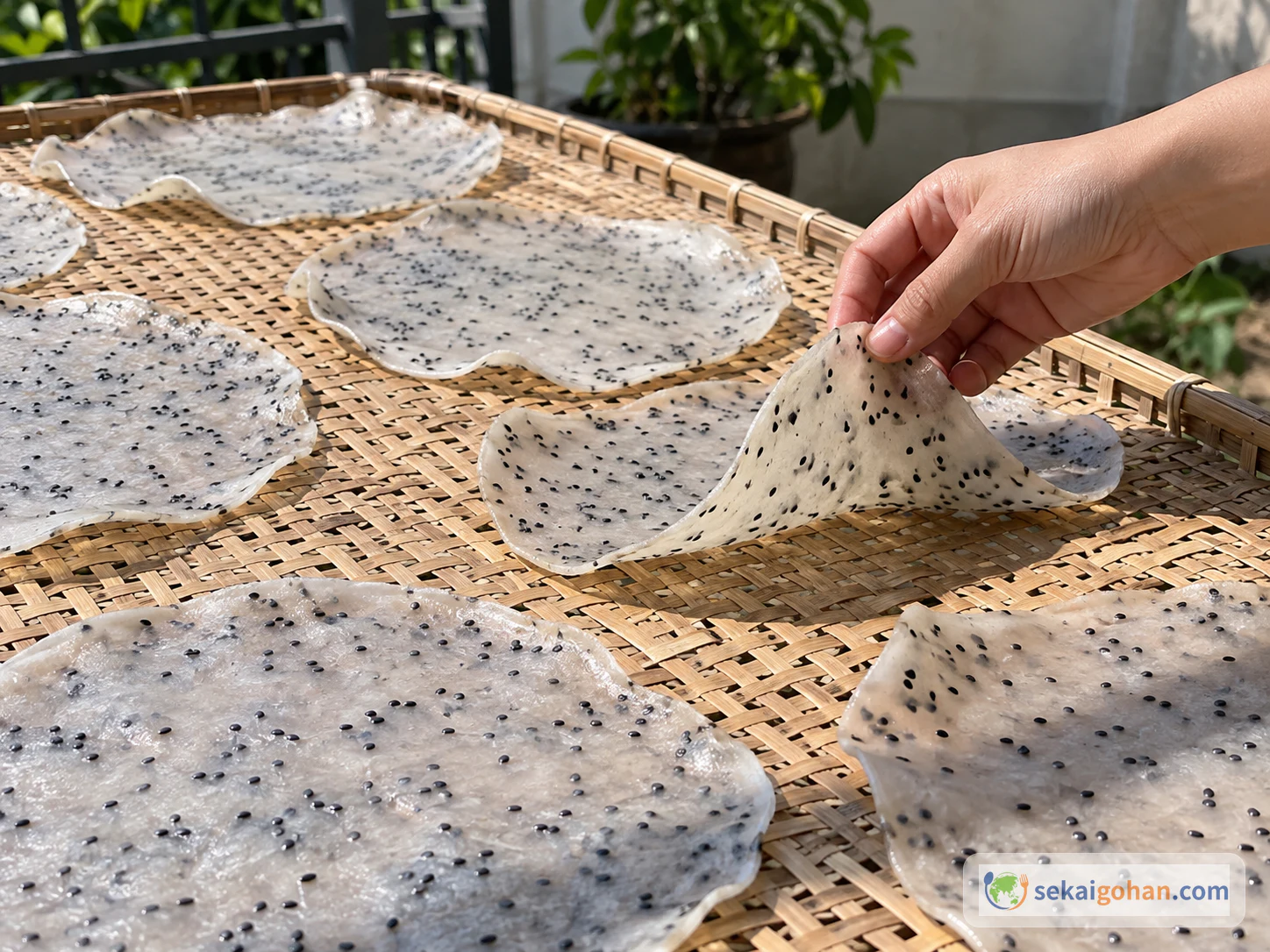
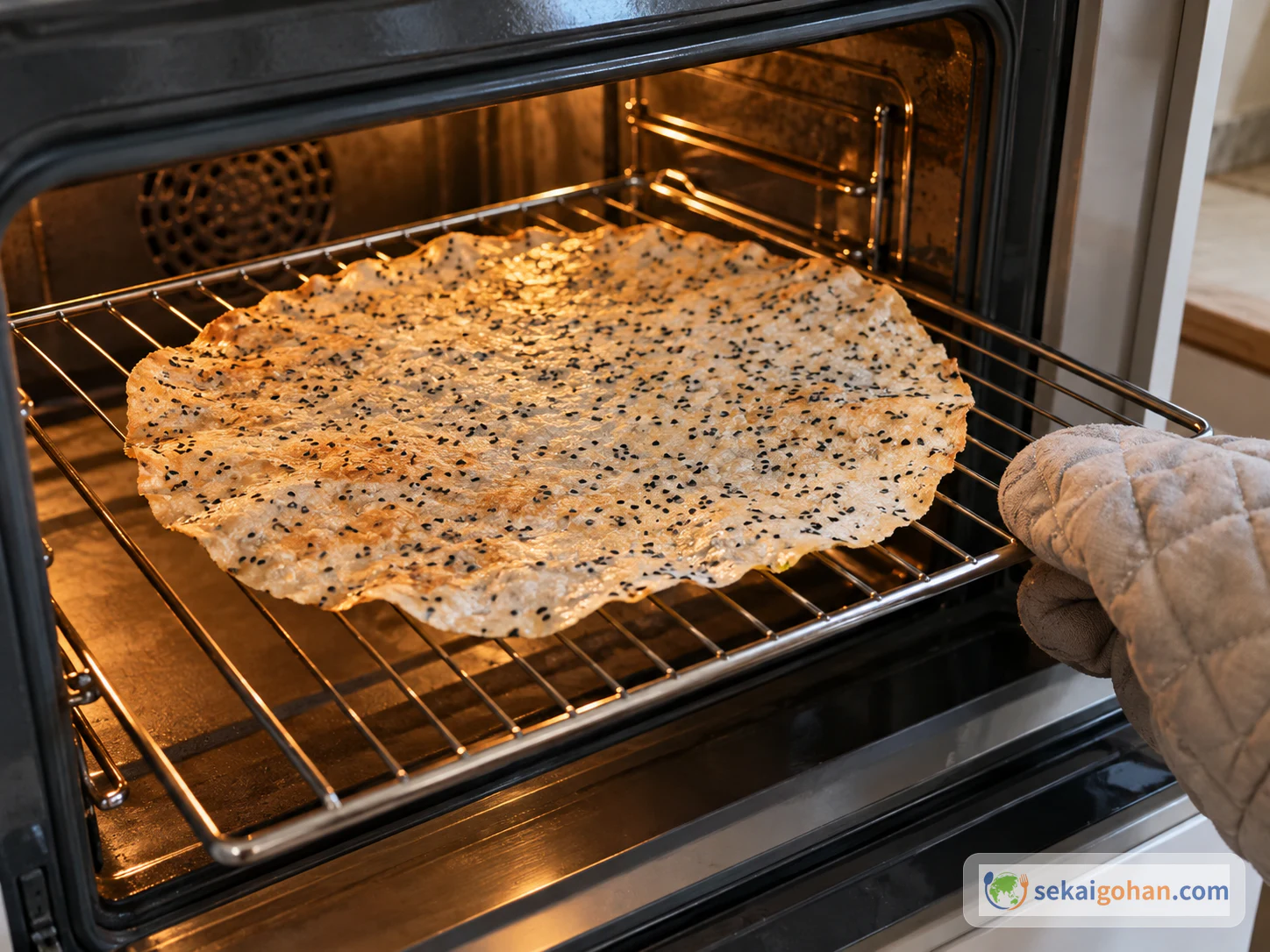
In Kẻ Sặt, villagers remember market sellers who toasted raw rice sheets to order, right in front of the customer. Bánh đa nướng is that snack: a round Vietnamese rice cracker that you make in three stages. First you cook a thin sheet of batter, then you dry it, and later you toast it into something you can snap. The crispness comes from the drying and that second heating. This home version uses rice flour, tapioca starch and coconut milk, and the finished cracker smells of black sesame and coconut. For more dishes from the same country, see our Vietnamese recipes.
Bánh Đa Nướng and Its Regional Versions
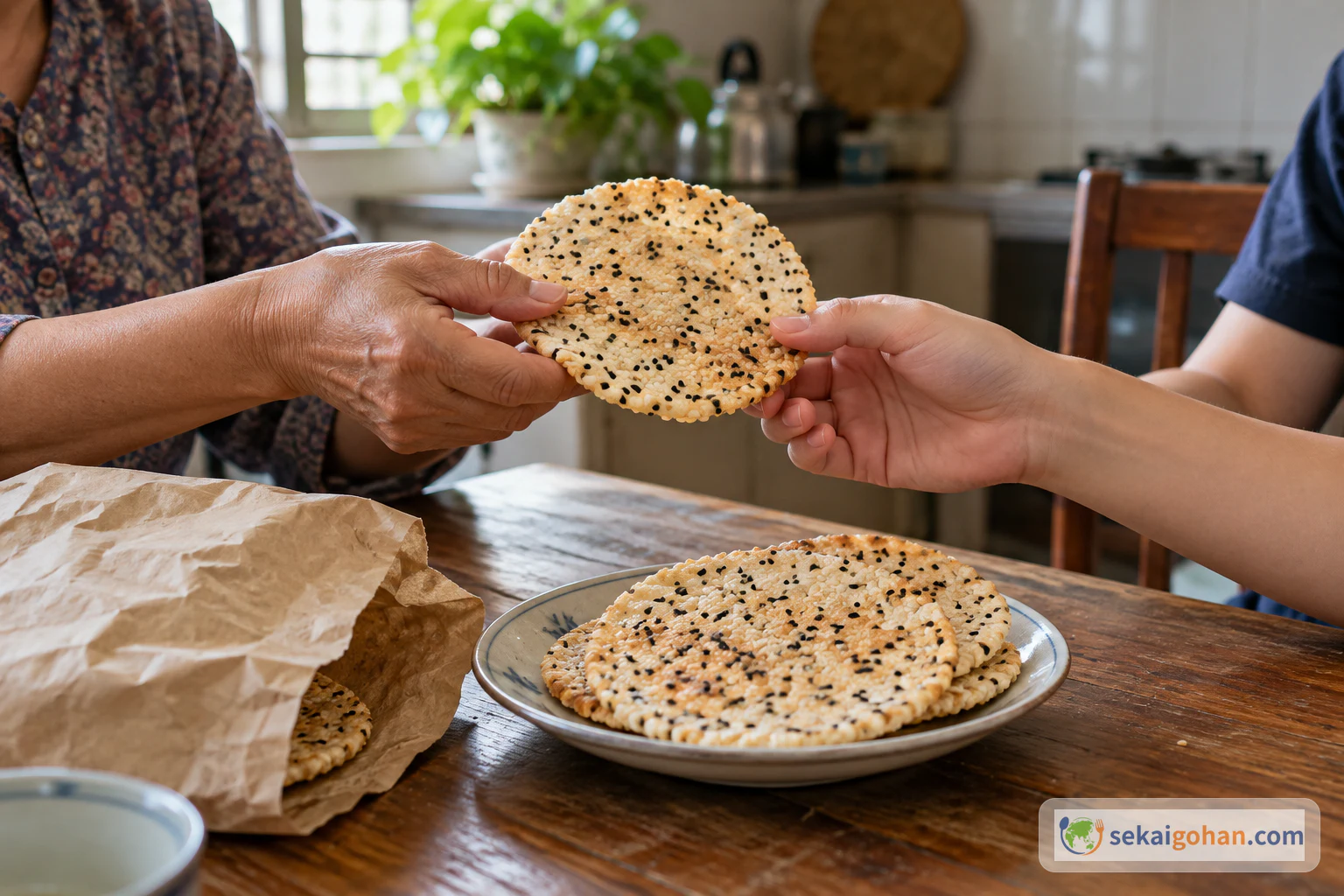
Bánh đa nướng is a simple, familiar snack. It's also a modest gift for festivals, for someone who is ill, or for people living far away. There is no single national formula for bánh đa nướng. Villages and producers use different grains, seasonings and add-ins, but they all follow the same sequence: spread thin, dry, toast.
Kẻ Sặt
Kẻ Sặt makes two kinds. The sweet dough uses sugar, gac, peanuts and sesame, and the savory dough uses a little salt in place of the sugar. The rice is rinsed, soaked for about an hour, drained and ground. The sheets are spread by hand and scattered with peanuts, then dried in the sun and toasted over charcoal.
Quảng Lộc
In Quảng Lộc, Quảng Bình, one family producer builds its crackers on rice and sesame. The rice should be dry and fluffy, and the sesame is picked over and cleaned. Salt and pepper go into the batter, and the sheets are sun-dried in a clean, airy space. The family has moved from mostly manual work to semi-automatic equipment and a newer machine oven.
Vĩnh Đức
Vĩnh Đức's sesame rice cracker craft has been preserved for more than 300 years. Finely ground rice is mixed with garlic, pepper and black sesame, sun-dried, and grilled until crisp. The crackers are made by hand and sent to overseas Vietnamese communities.
Dalat's Bánh Tráng Nướng
Dalat's bánh tráng nướng looks similar in photos, but it's a different dish, nicknamed "Vietnamese pizza." It starts with thin rice paper brushed with butter or cooking oil and cooked on a charcoal brazier. It's topped with quail egg, green onion and optional meats, sausage, cheese or chicken, then cut like pizza or rolled. Bánh đa nướng, by contrast, starts as your own batter, and the dried sheets are toasted plain with nothing on top.
Ingredients: Serves 4
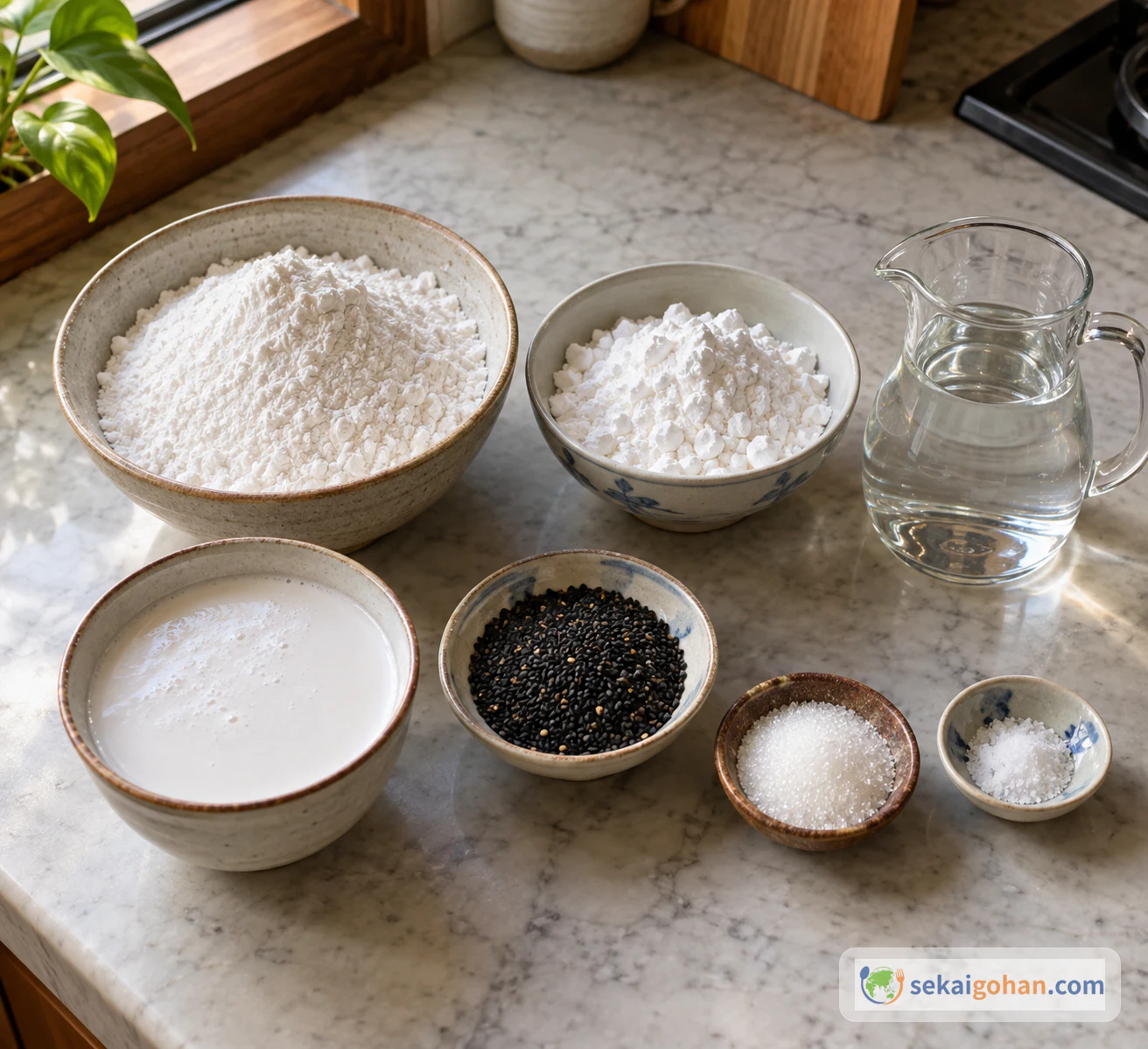
All seven ingredients go into one batter.
Equipment
- Mixing bowl with a lid or cover
- Whisk
- Ladle
- Nonstick skillet
- Clean drying rack
- Oven, or a food dehydrator for drying; an air fryer can be used for the final toast
Choosing the Starch and Coconut Milk
You'll find rice flour, black sesame and coconut milk at any supermarket. The one ingredient to look for by name is bột năng, which is tapioca starch made from cassava. Packages are labeled tapioca starch or tapioca flour. Potato starch and cornstarch are different starches, so stick with tapioca.
Use plain rice flour on its own. Leave the peanuts, garlic, pepper and toppings to the regional crackers they come from.
Method: Choose Your Drying Route Before You Start
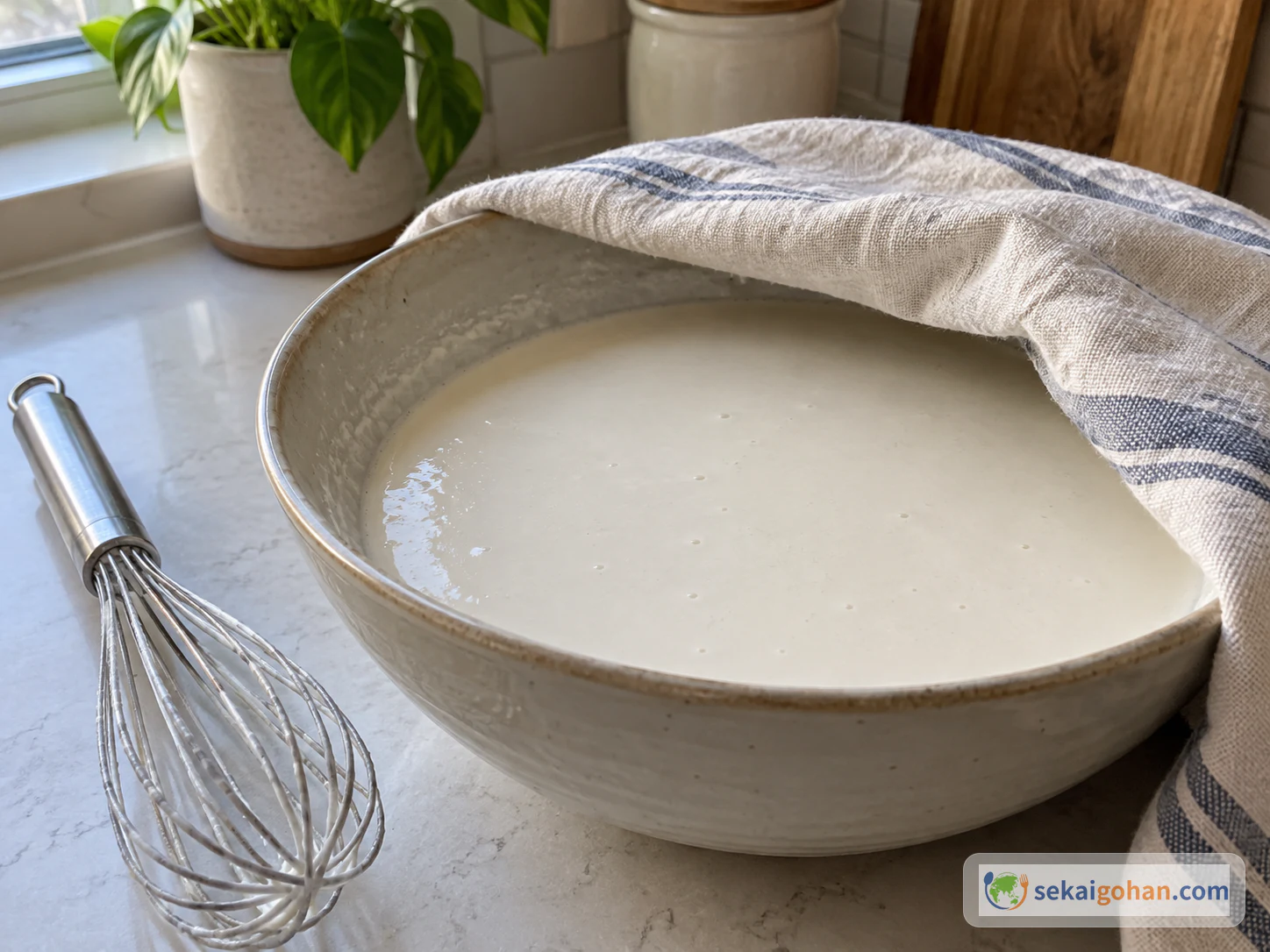
- Batter rest: 2 hours, covered.
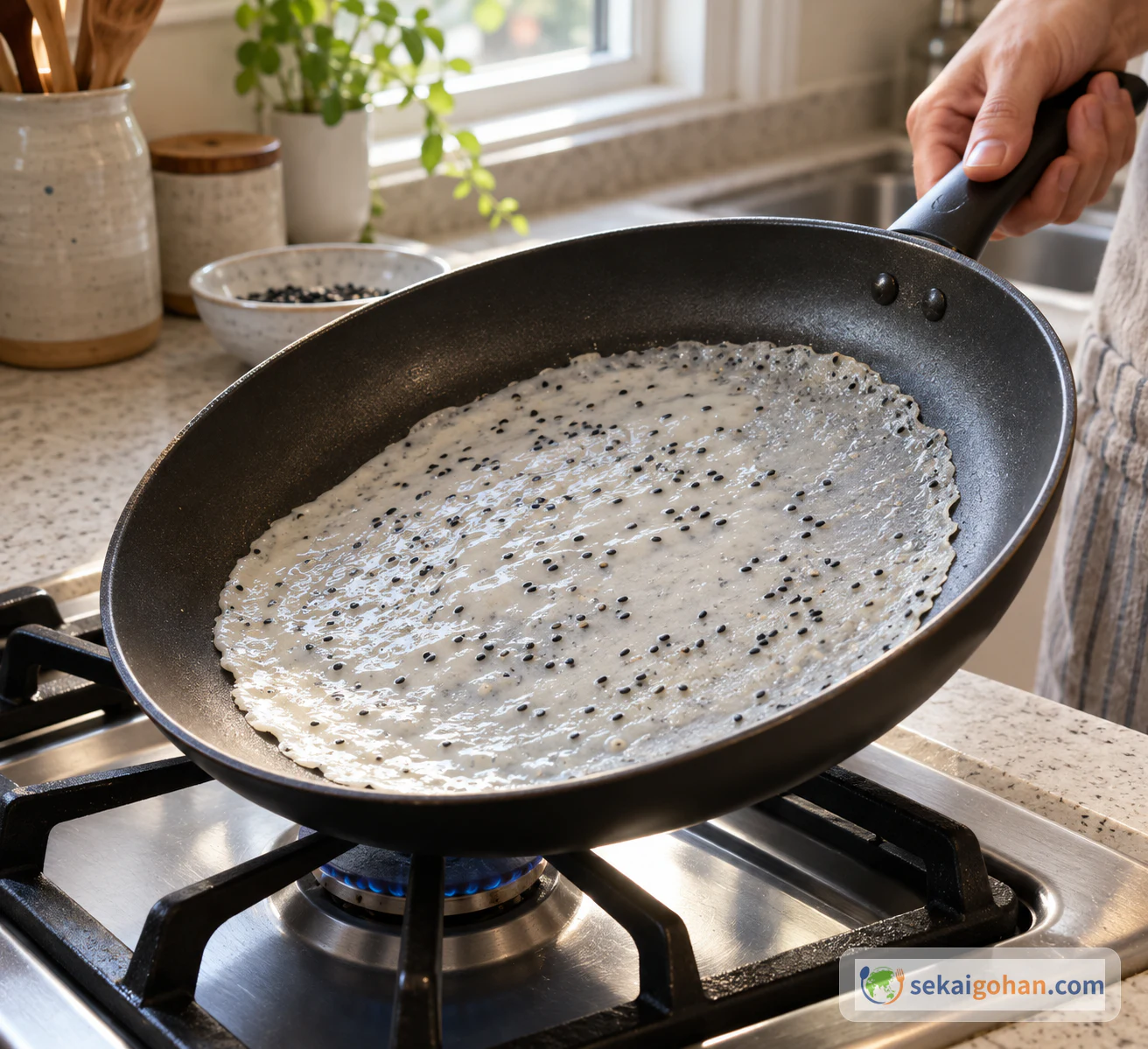
- Each sheet in the pan: about 1–2 minutes.
- Drying: 1–2 days in the sun, or 131°F (55°C) for 4 hours followed by 149°F (65°C) for 2 hours.
- Final toast: 350°F (180°C) for 7 minutes.
The number of sheets depends on how much batter goes into each ladleful, so there is no single total time. Decide on sun or low-heat drying before you mix the batter.
Fixing Bánh Đa Nướng Problems
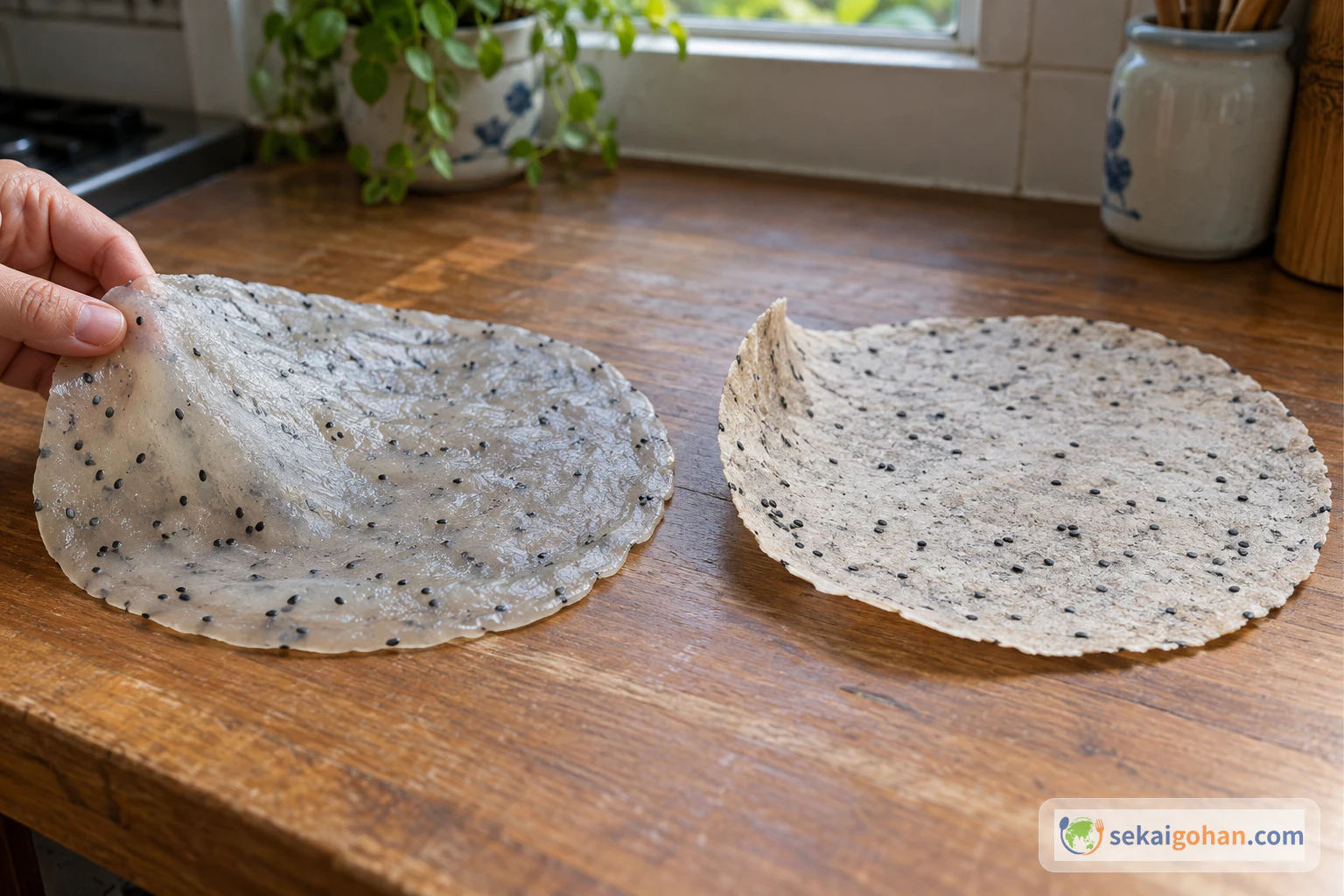
The most important check comes between steps 4 and 5. A sheet straight from the pan is pale and bends easily, while a dried sheet is stiff and curls at the edge. Wait until a sheet no longer flexes before you give it the final toast. In that toast, judge doneness by a light color and the smell of sesame.
| Condition | What to look at | What to do |
|---|---|---|
| Lumps of flour in the batter | Mixing in step 1 or the re-stir in step 2 | Keep whisking until the flours dissolve, and always whisk again after the rest |
| The sheet stays white and opaque | Heat level and thickness | Keep the heat at its lowest and wait for the batter to turn translucent, which takes 1–2 minutes, rather than turning up the heat |
| Some patches burn while others stay pale | Uneven thickness | Tilt the pan so the batter spreads to an even thickness |
| The dried sheet is still soft and won't curl | Drying is not finished | Keep drying until stiff and curling. For a dehydrator, follow its manual |
| The cracker darkens too much in the final toast | Oven differences | Watch the color near the end of the 7 minutes, and check earlier next time |
| A finished cracker has gone soft | Moisture from the air | Keep crackers dry and sealed |
Serving and Storing Bánh Đa Nướng
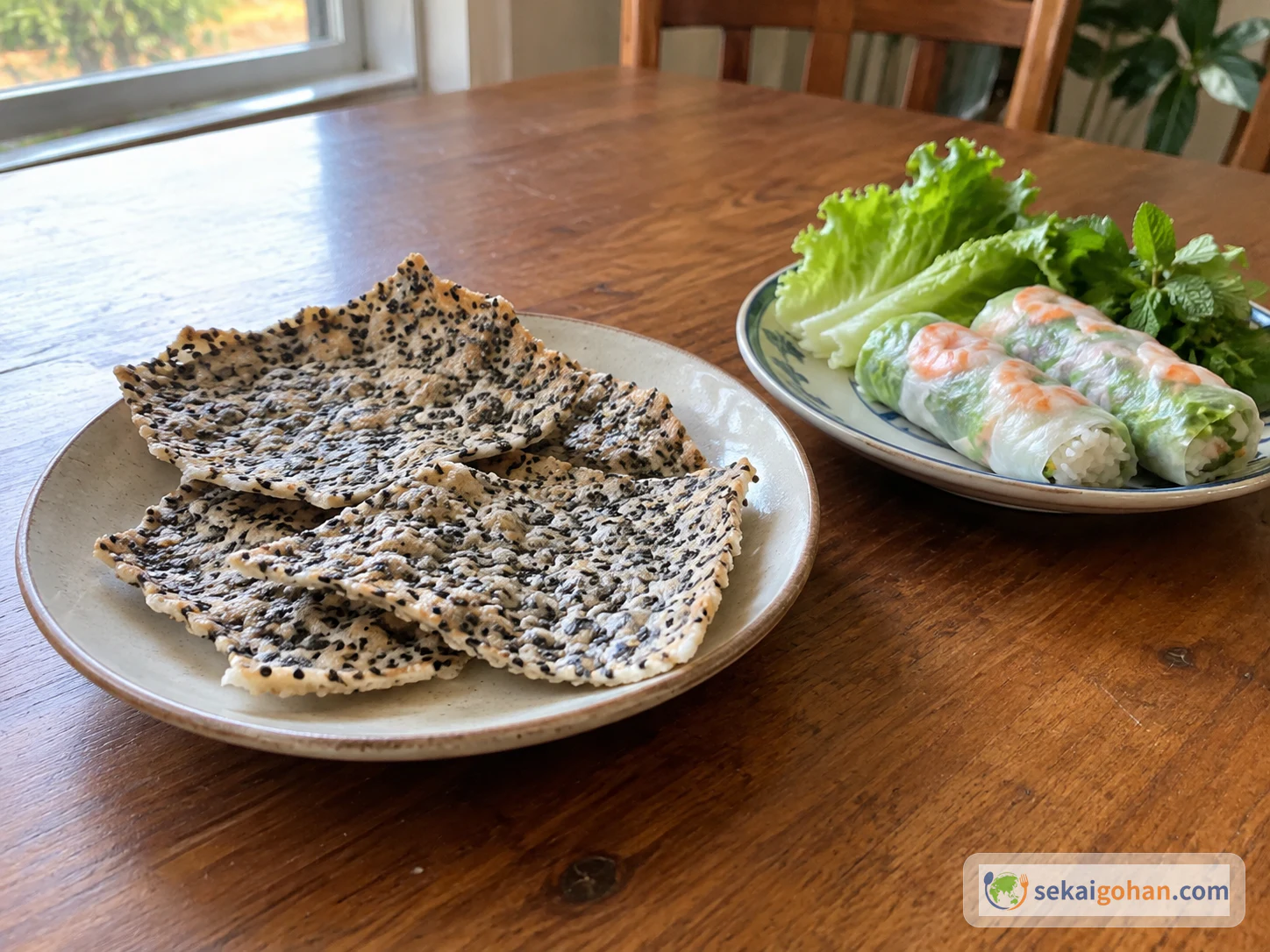
Bánh đa nướng is eaten as it is, broken into pieces as a snack. It also goes alongside rolls and salads. Keep the cracker plain and put anything you serve with it on its own plate.
To store the finished crackers, keep them sealed in a dry place. This is general advice, not a guarantee of how long they stay safe.
Frequently Asked Questions
What if I have no sun for drying?
Use an oven or food dehydrator at 131°F (55°C) for 4 hours, then 149°F (65°C) for 2 hours, until the sheets are dry and curling. Keep the two stages separate and run each for its full time.
How many crackers does this make?
The recipe makes 4 servings. The number of crackers depends on how much batter goes into each ladleful and on the size of your pan.
How long does the whole recipe take?
The listed time is 20 minutes of preparation and 20 minutes of cooking, but that leaves out the 2-hour rest and the drying. Plan around each stage: 2 hours resting, about 1–2 minutes per sheet in the pan, 1–2 days of sun drying or 131°F (55°C) for 4 hours followed by 149°F (65°C) for 2 hours, and 7 minutes at 350°F (180°C) to finish.
Should I toast the black sesame first?
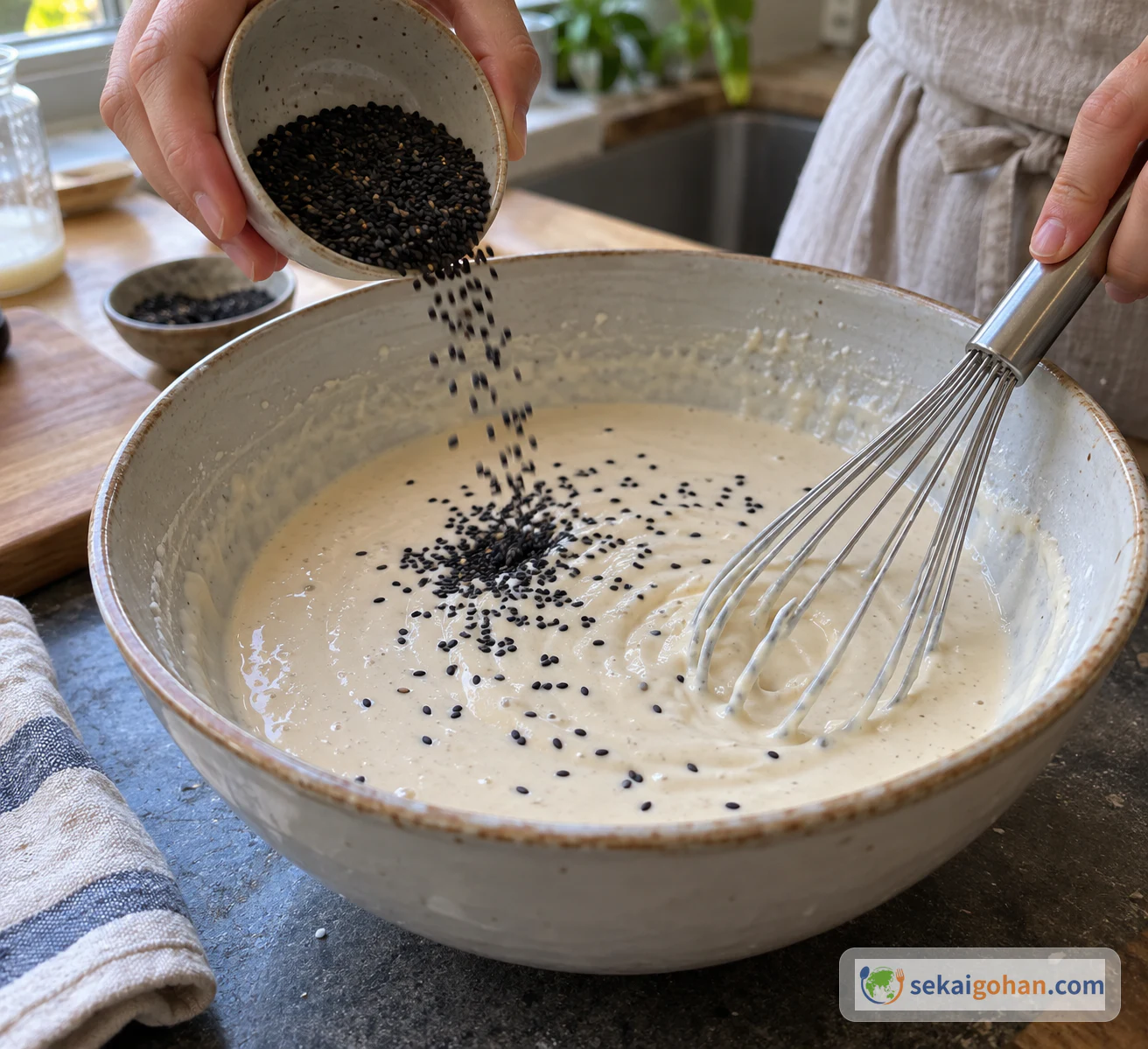
No. Stir the sesame into the rested batter untoasted, because toasting it beforehand would change the flavor.
Can I use an air fryer for the final toast?
Yes. An air fryer can use the same 350°F (180°C) and 7 minutes as the oven. Watch the color closely the first time.
What about allergens?
The batter contains sesame and coconut milk. Check product labels for allergen and shared-facility information.