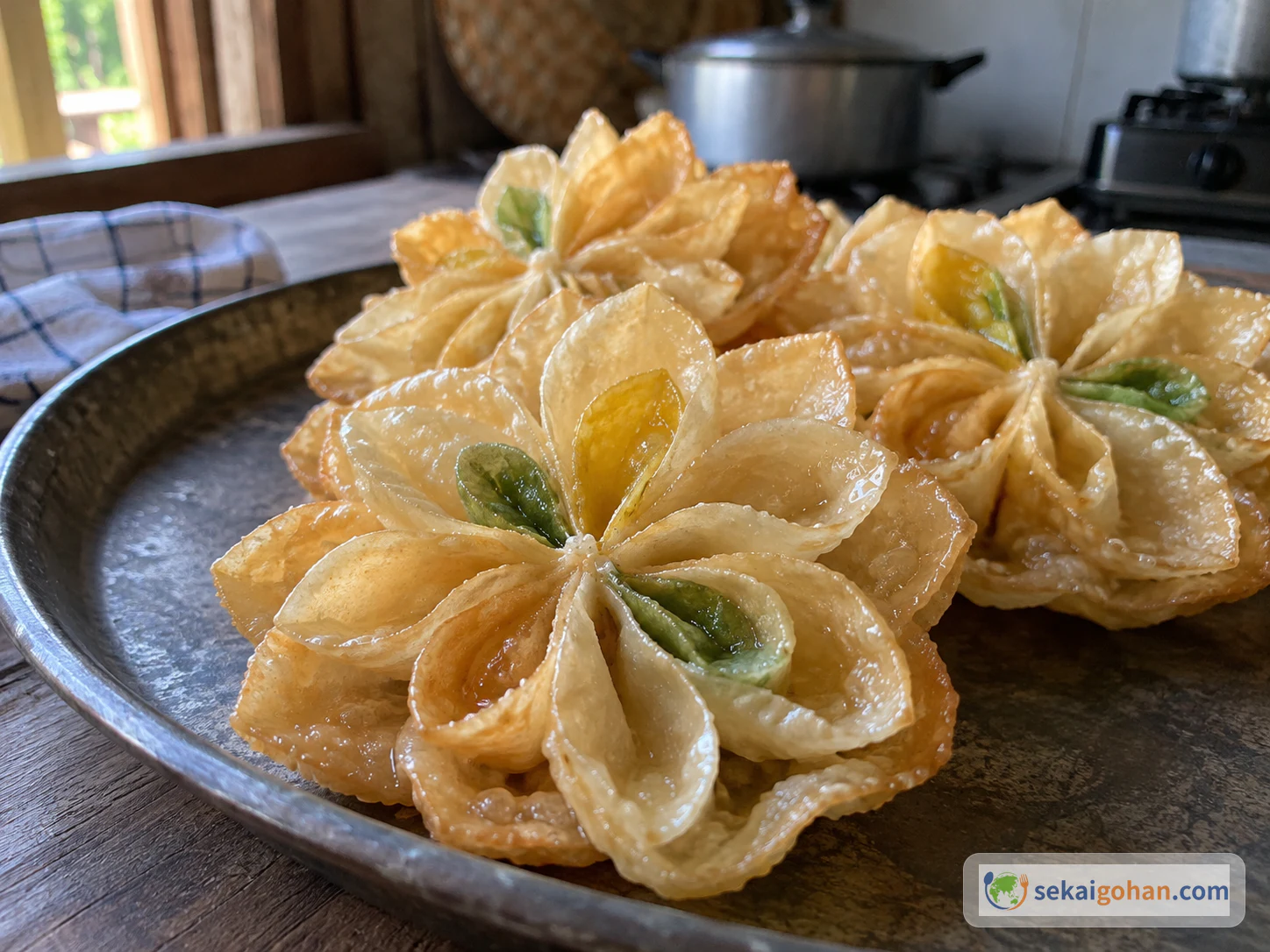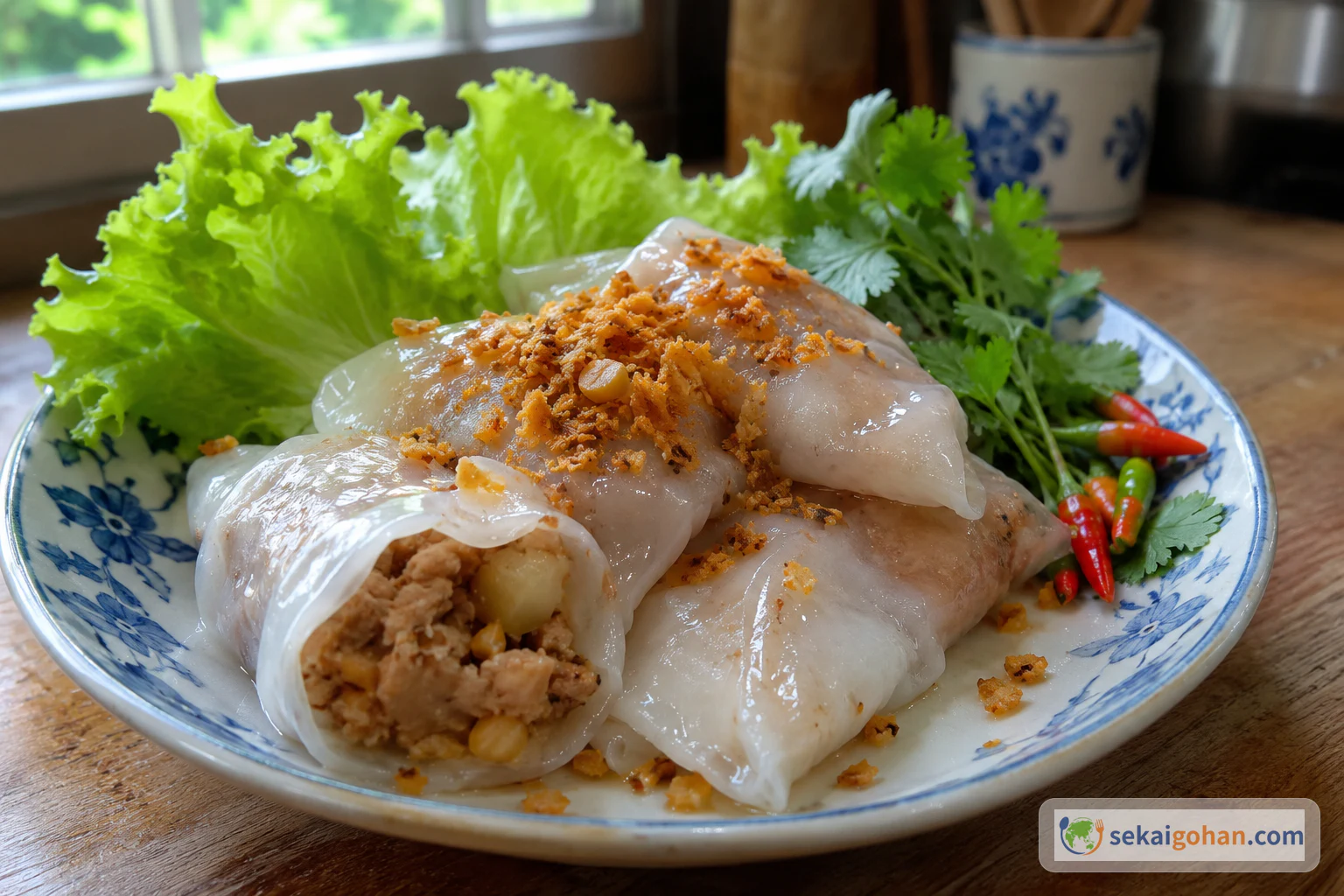
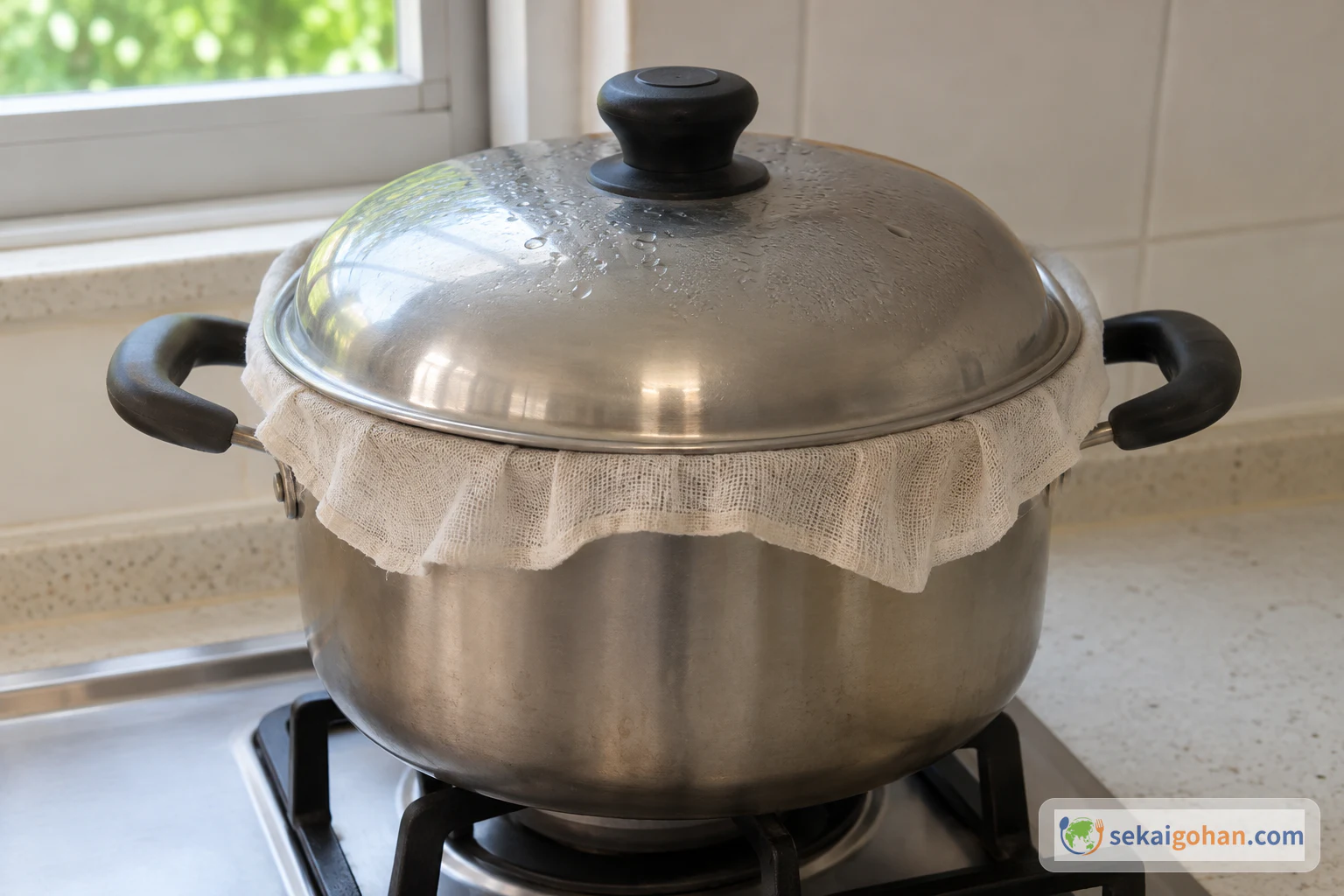
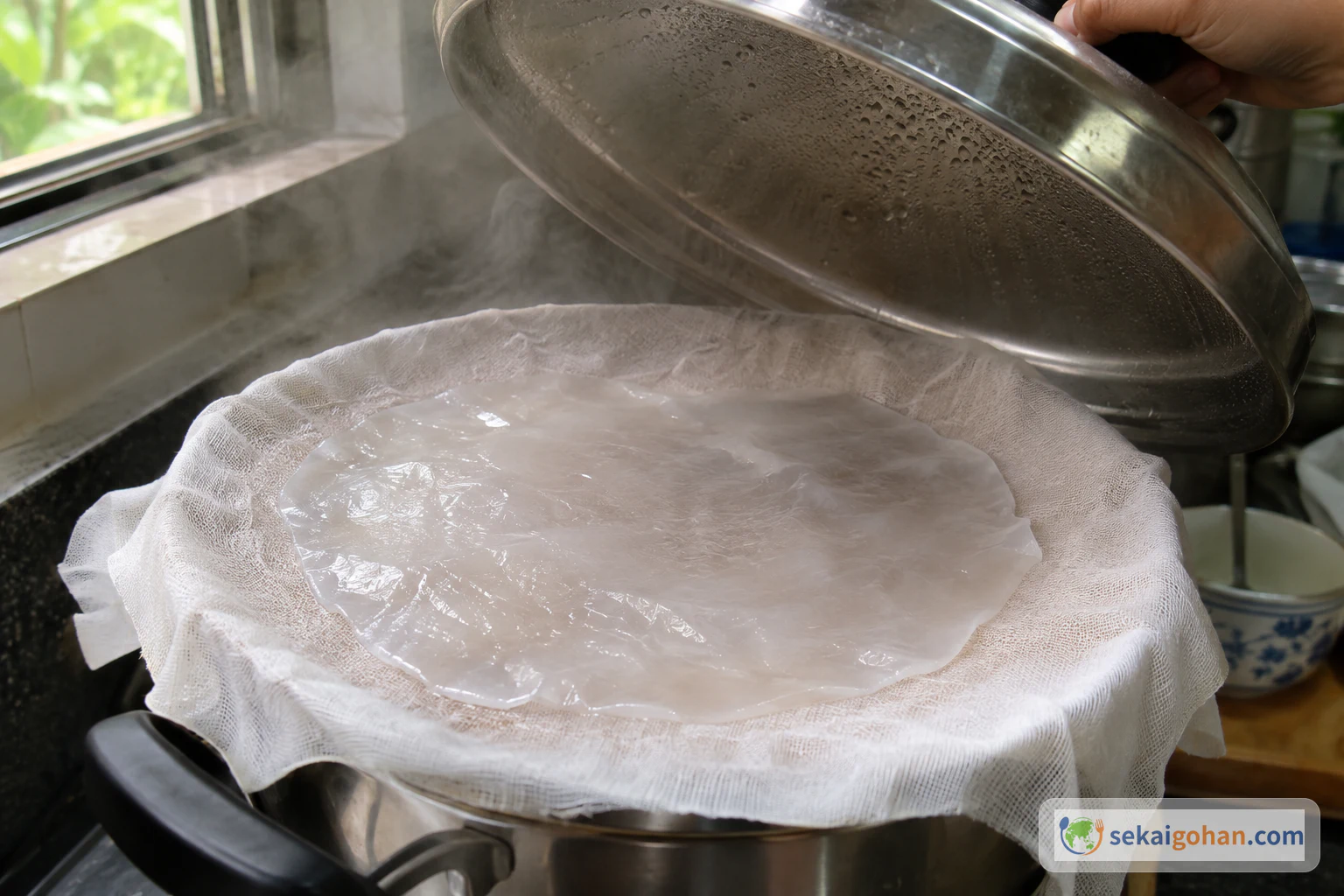
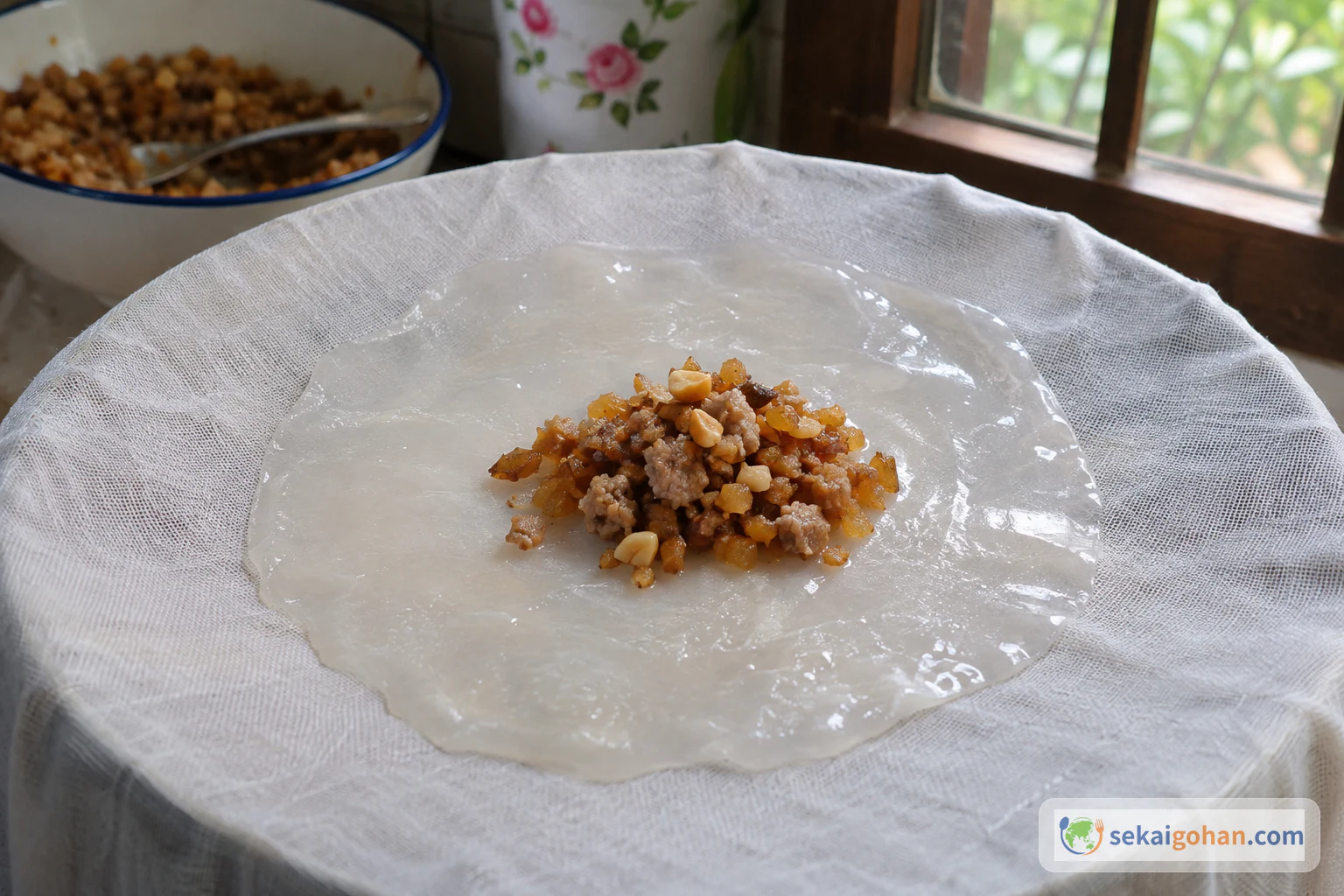
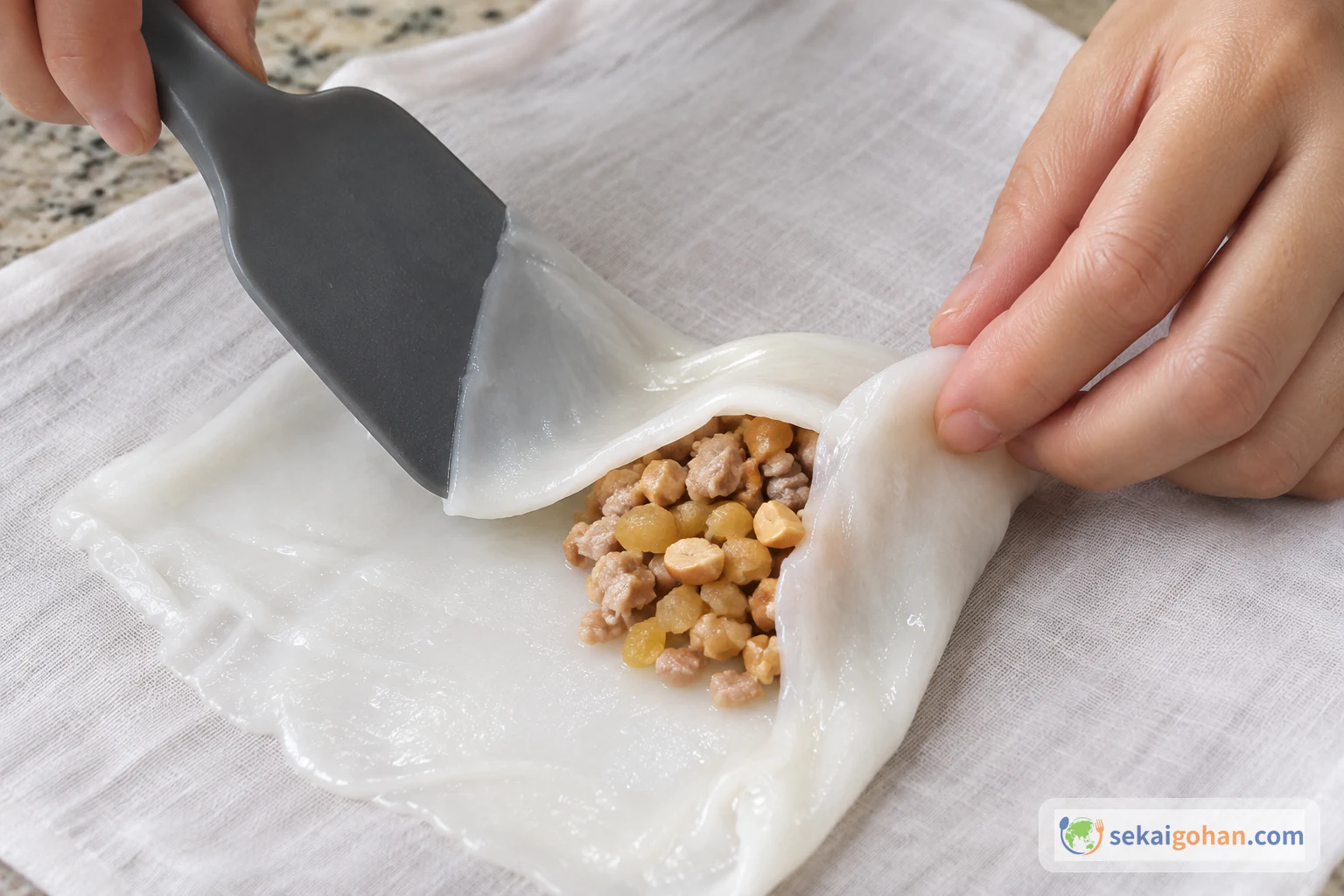
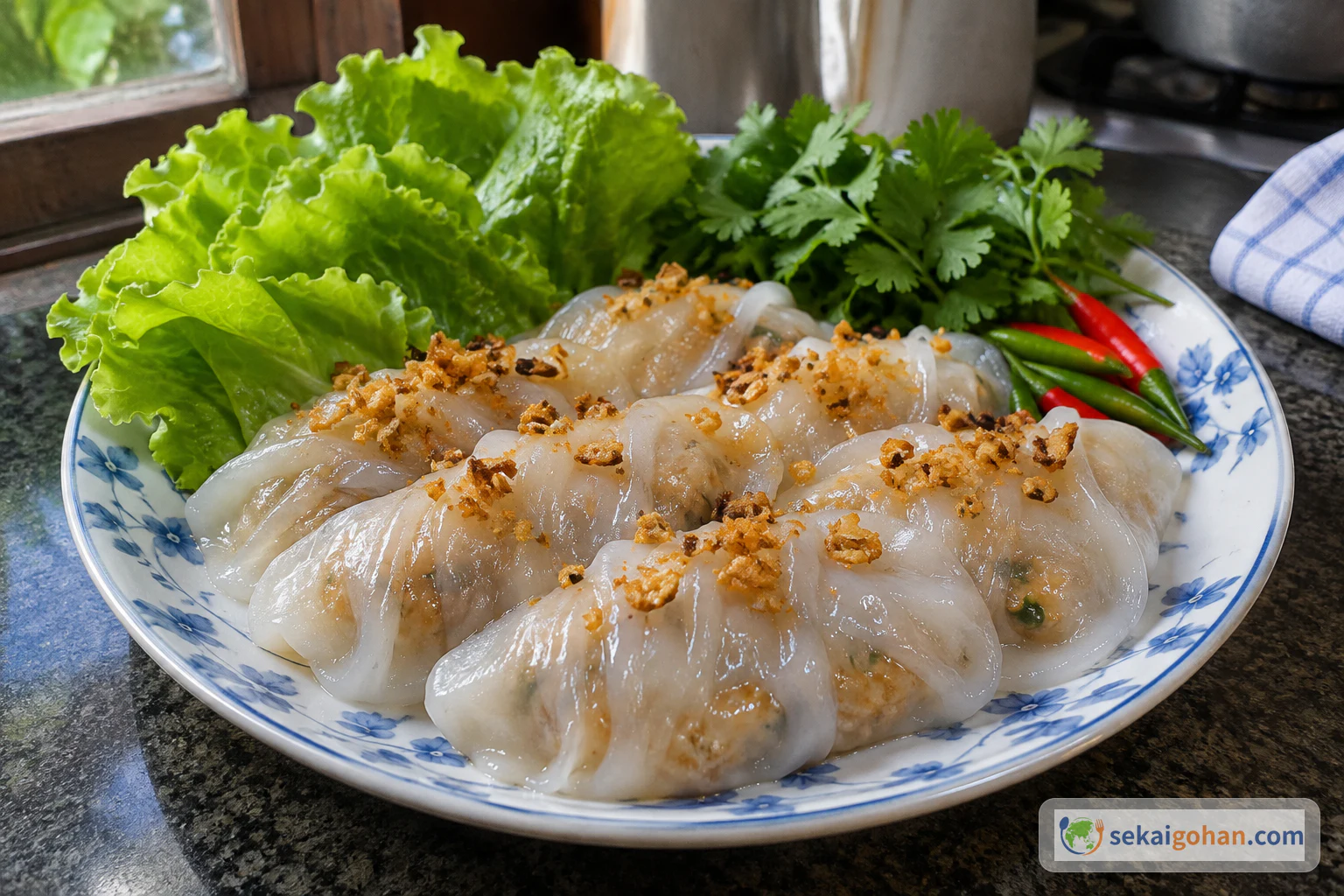
Khao kriap pak mo: translucent rice-flour wrappers steamed on a cloth-covered pot and folded around minced pork and salted radish filling
CuisineThai

Khao Kriap Pak Mo: Thai Steamed Rice Wrappers with Pork, Salted Radish and Peanuts (ข้าวเกรียบปากหม้อ)

How to make khao kriap pak mo (ข้าวเกรียบปากหม้อ), the Thai snack of thin rice-flour wrappers steamed on a cloth stretched over a pot and folded around a sweet-salty filling of minced pork, salted radish and roasted peanuts. Covers the cloth pot setup, safe handling, ingredient choices, common problems, and how the dish differs from similar steamed rice sheets.

Level: Intermediate

Cooking flow

Cooking steps

STEP 11 / 16

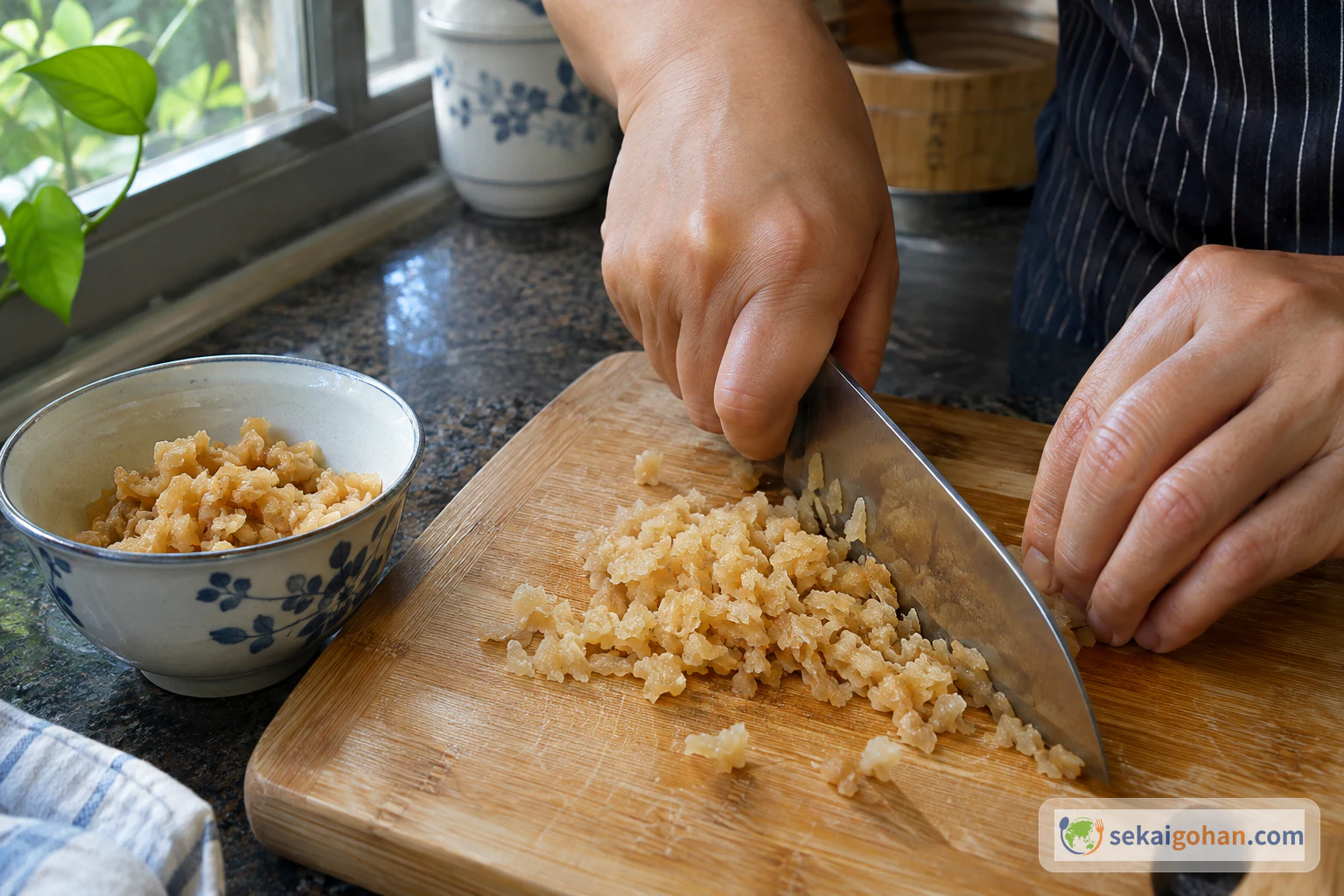
Finely chop the salted radish

Hands finely chopping salted preserved radish on a cutting board
Chopped salted radish, ready before any pan work begins

Finely chop 1.75 oz (50 g) salted preserved radish. Chop it small rather than cutting strips.

STEP 22 / 16

Prepare the aromatics and pound the paste

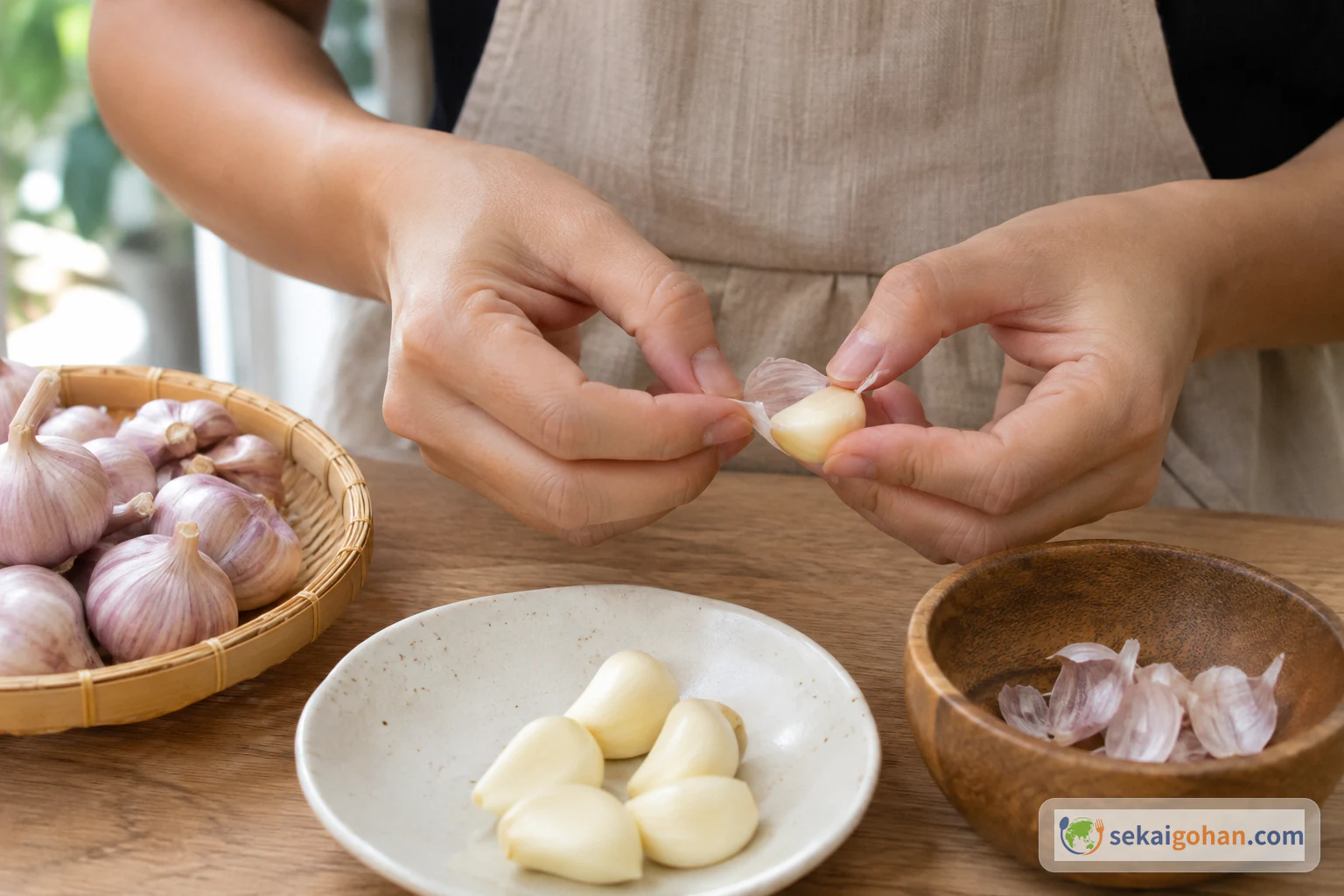
Peeling Thai garlic cloves by hand
Peel the garlic before pounding

Peel the Thai garlic.

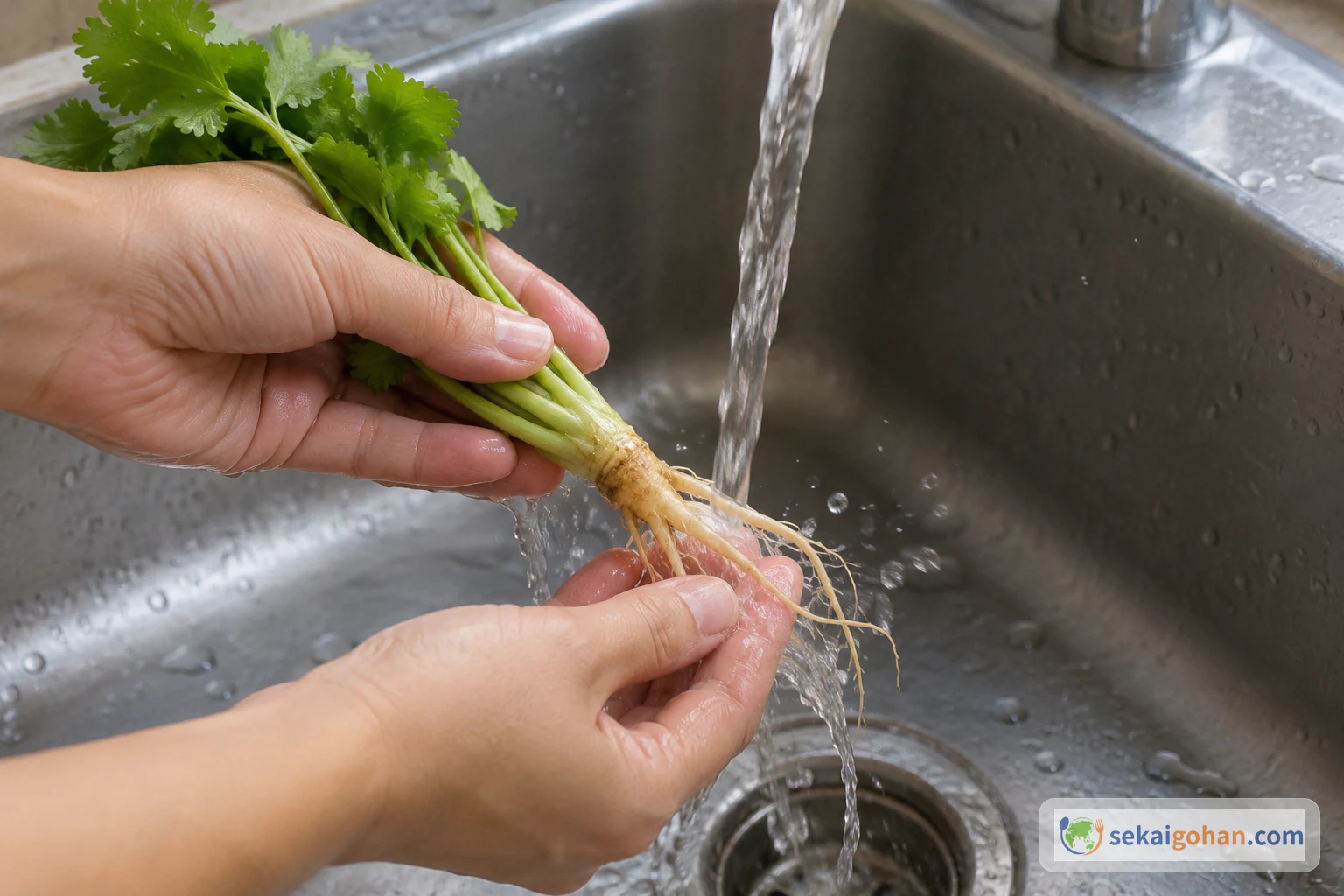
Rinse the coriander root clean.

Rinsing an edible coriander root under running water
Clean the root well before it goes in the mortar

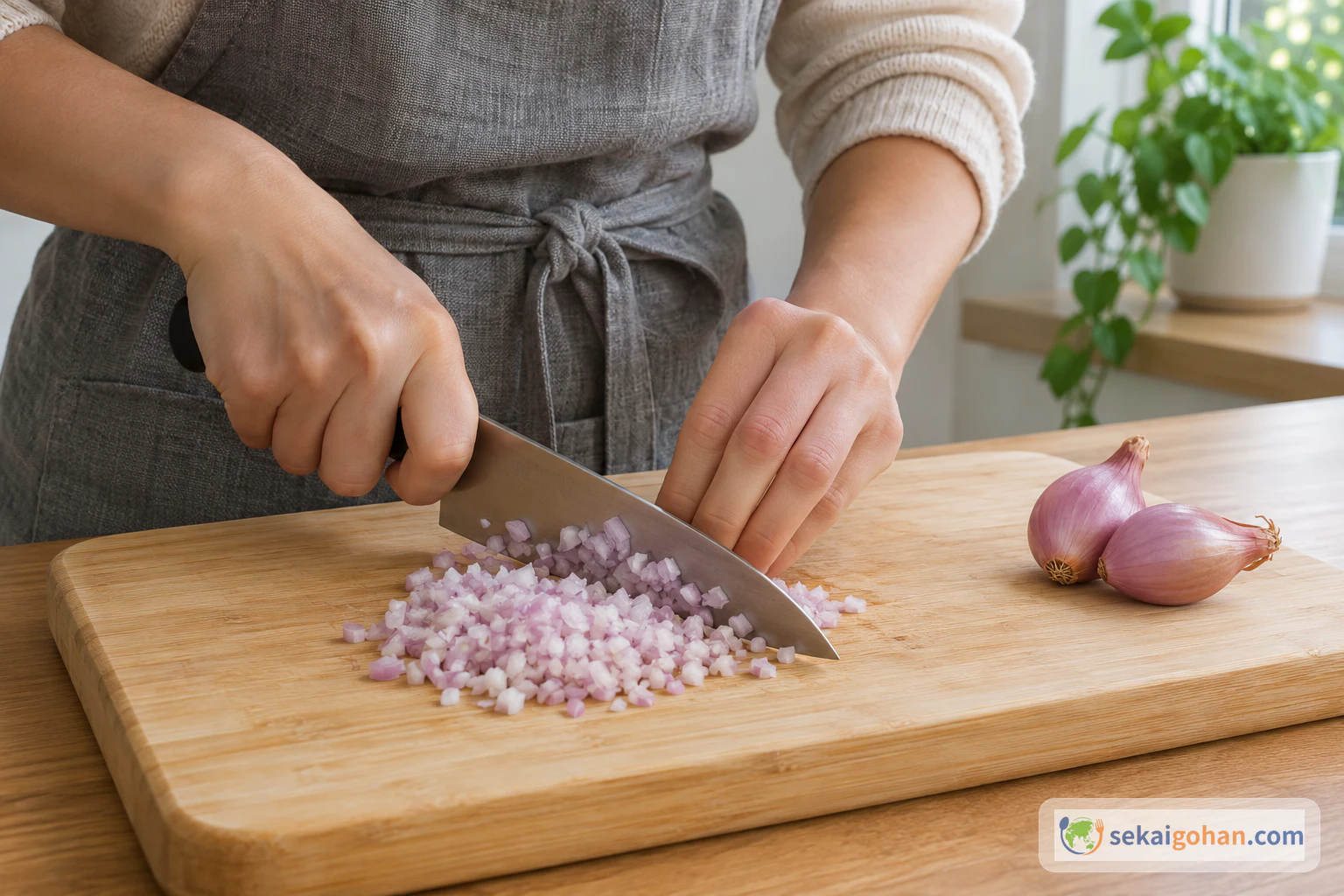
Finely chop the shallots on a clean board and set them aside for step 4.

Finely chopping shallots on a clean cutting board
The shallots wait until the paste has been fried

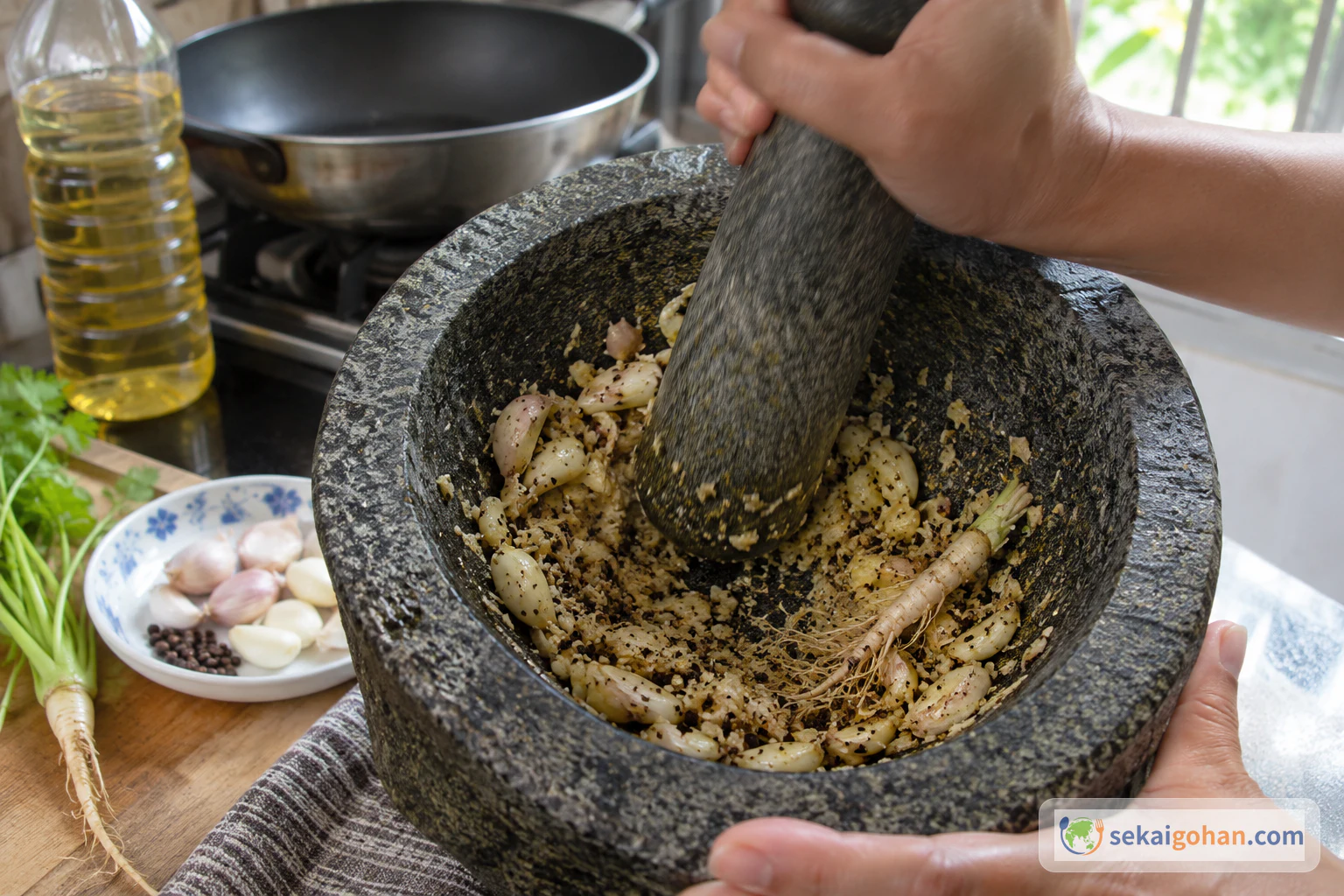
Pound 2 tbsp Thai garlic, 1 coriander root and 2 tbsp ground pepper in a mortar until they form a paste.

Pounding garlic, coriander root and ground pepper into a paste in a mortar
Pound the garlic, root and pepper together
STEP 33 / 16

Fry the aromatic paste

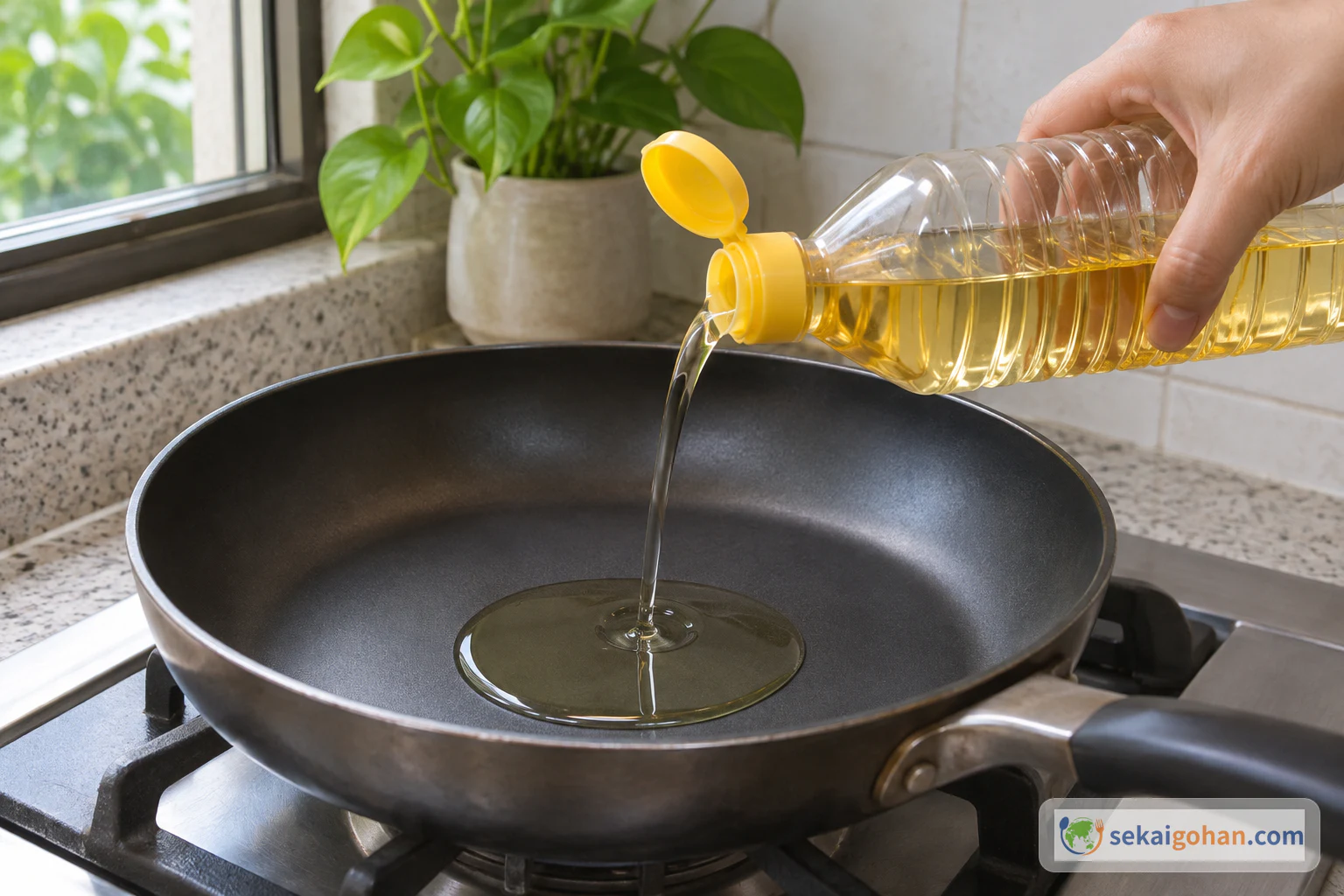
Pouring soybean oil into a skillet for the filling
Start with oil alone in the pan

Pour 3 tbsp soybean oil into a skillet.

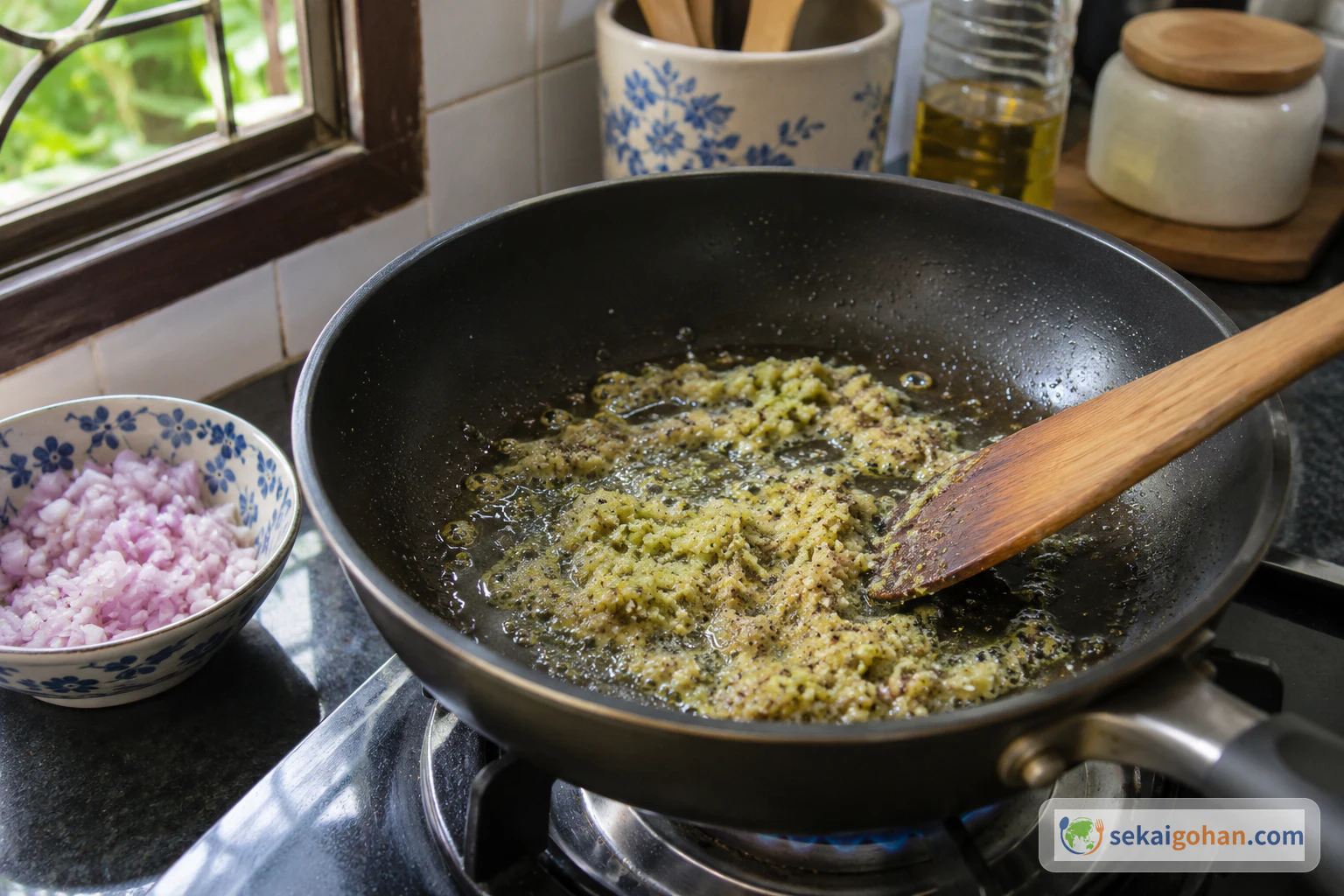
Add the pounded paste to the oil.

Adding pounded garlic, coriander root and pepper to soybean oil
The paste goes in before the shallots

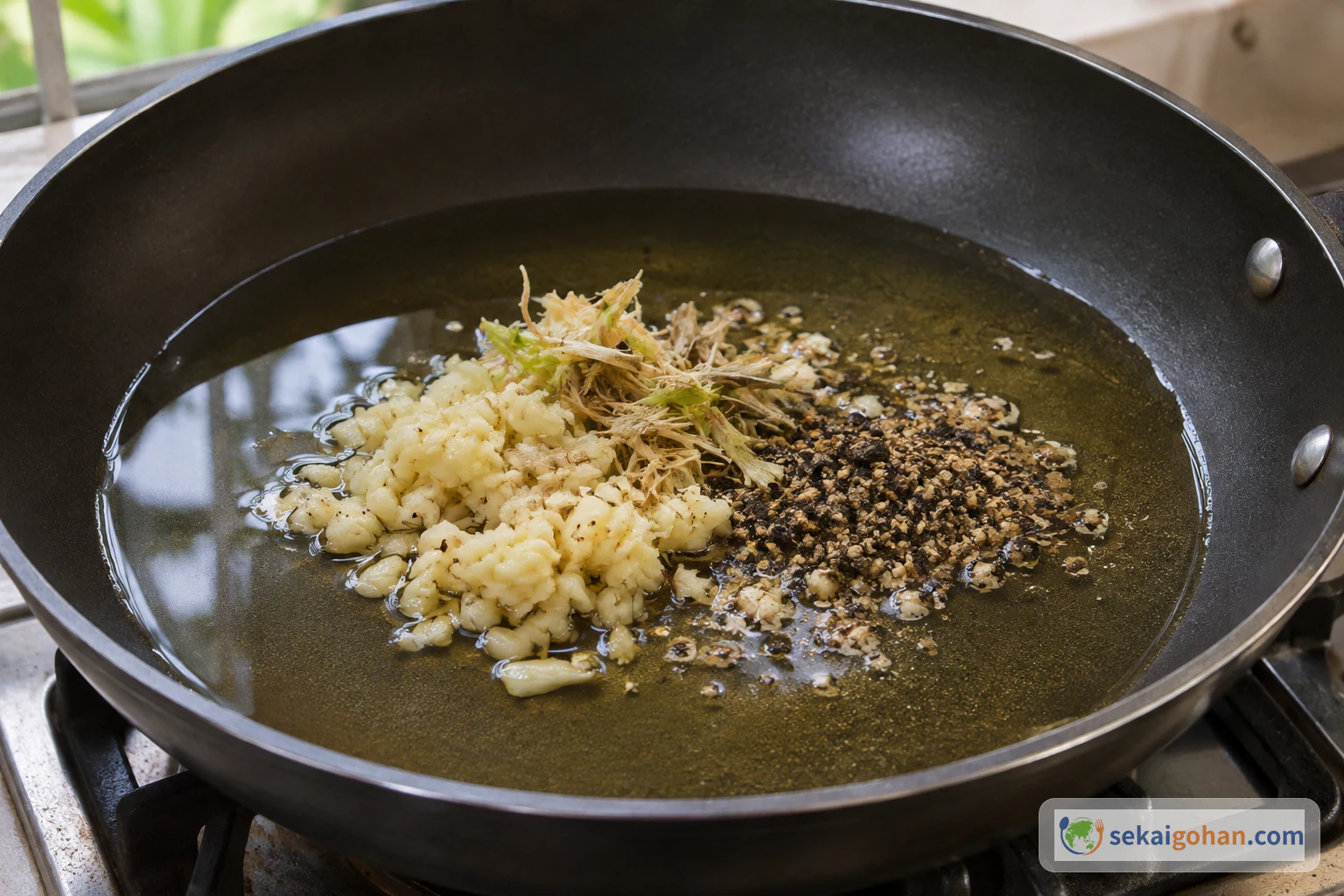
Fry until fragrant.

Frying the pounded garlic, coriander root and pepper in soybean oil
Fry the paste until it smells fragrant
STEP 44 / 16

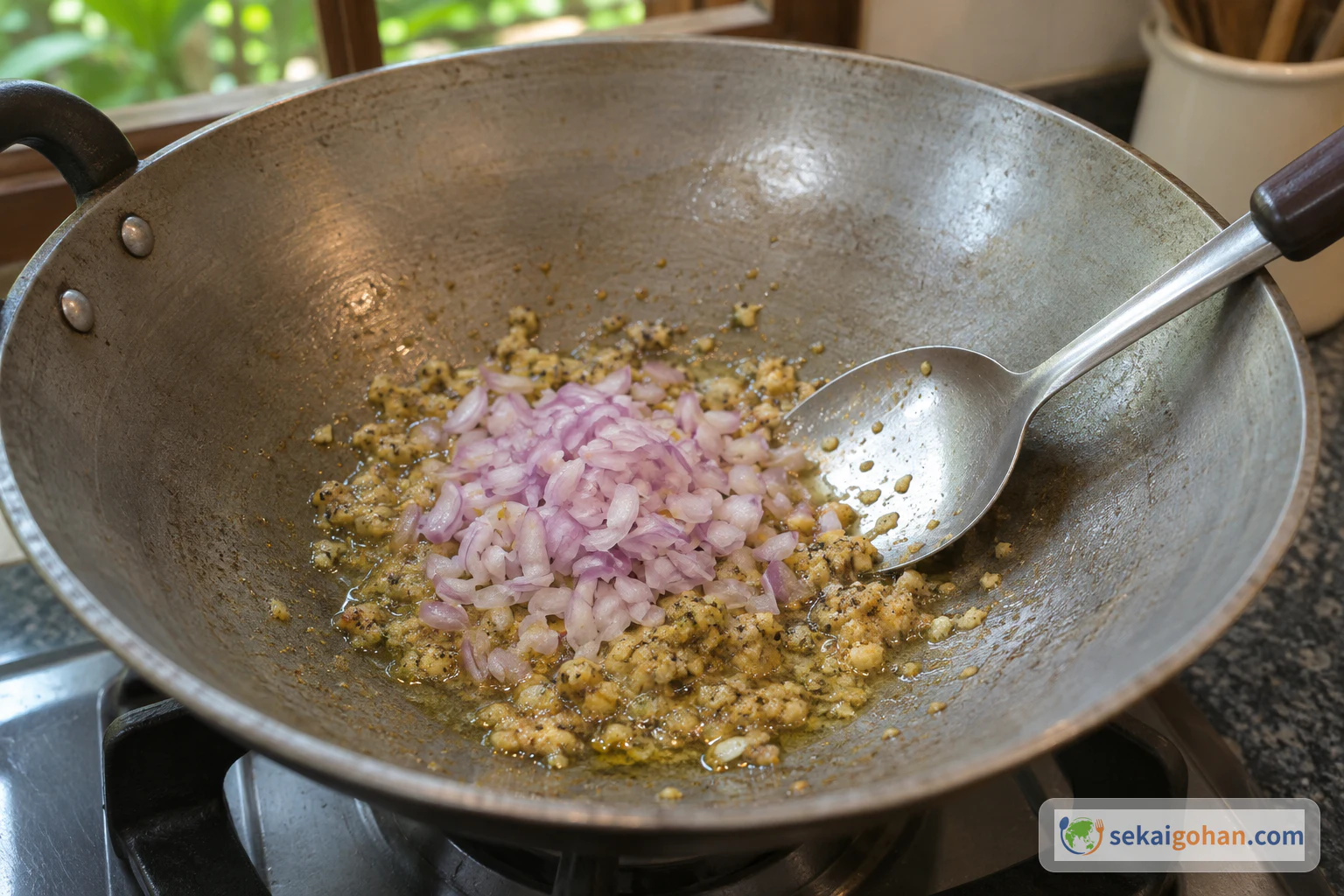
Add the shallots

Adding chopped shallots to the fried aromatic paste
The shallots go in before the pork

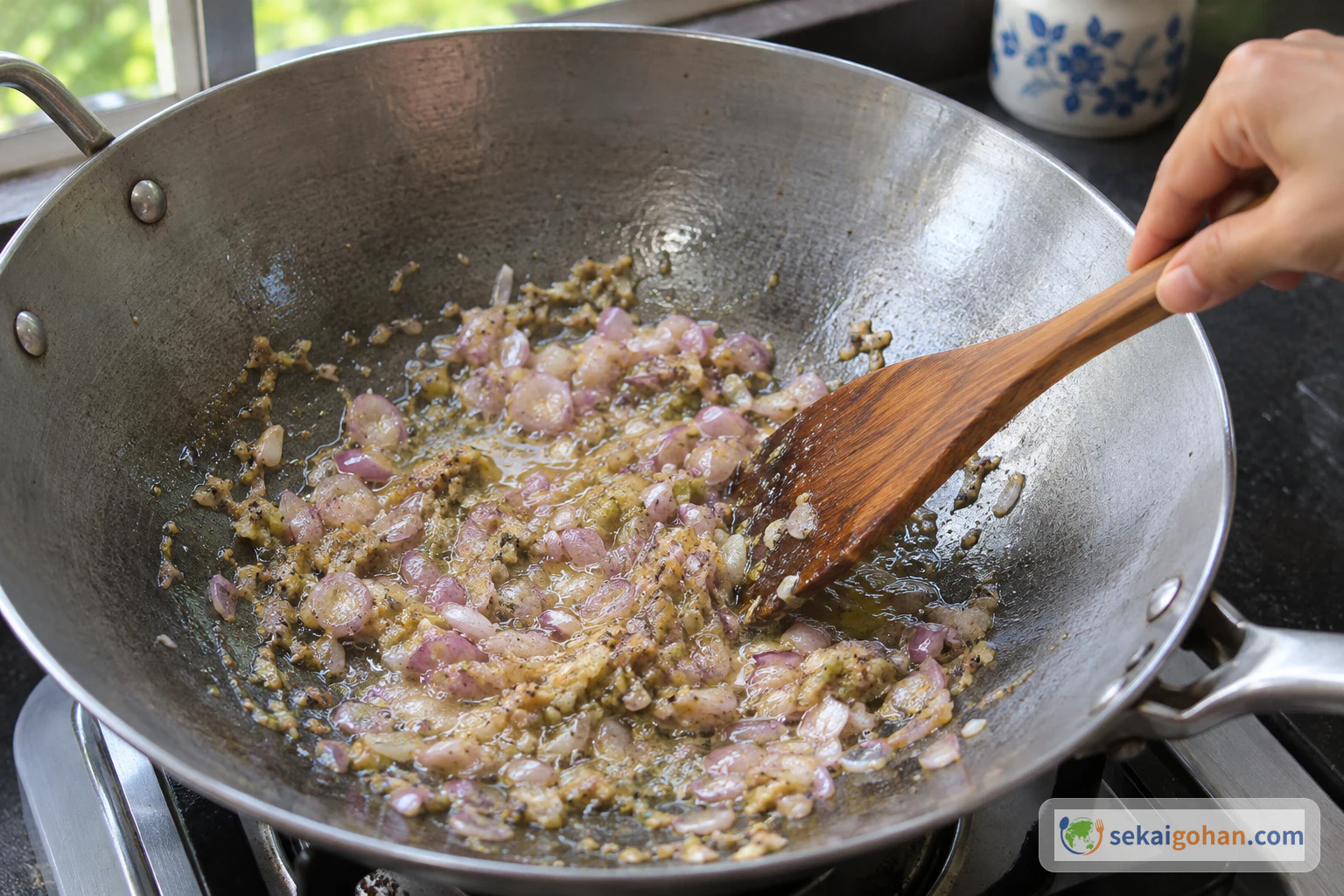
Add 2 tbsp finely chopped shallots to the fried paste.

Stir and fry until fragrant.

Stir-frying the aromatic paste and shallots
Stir the shallots through the paste
STEP 55 / 16

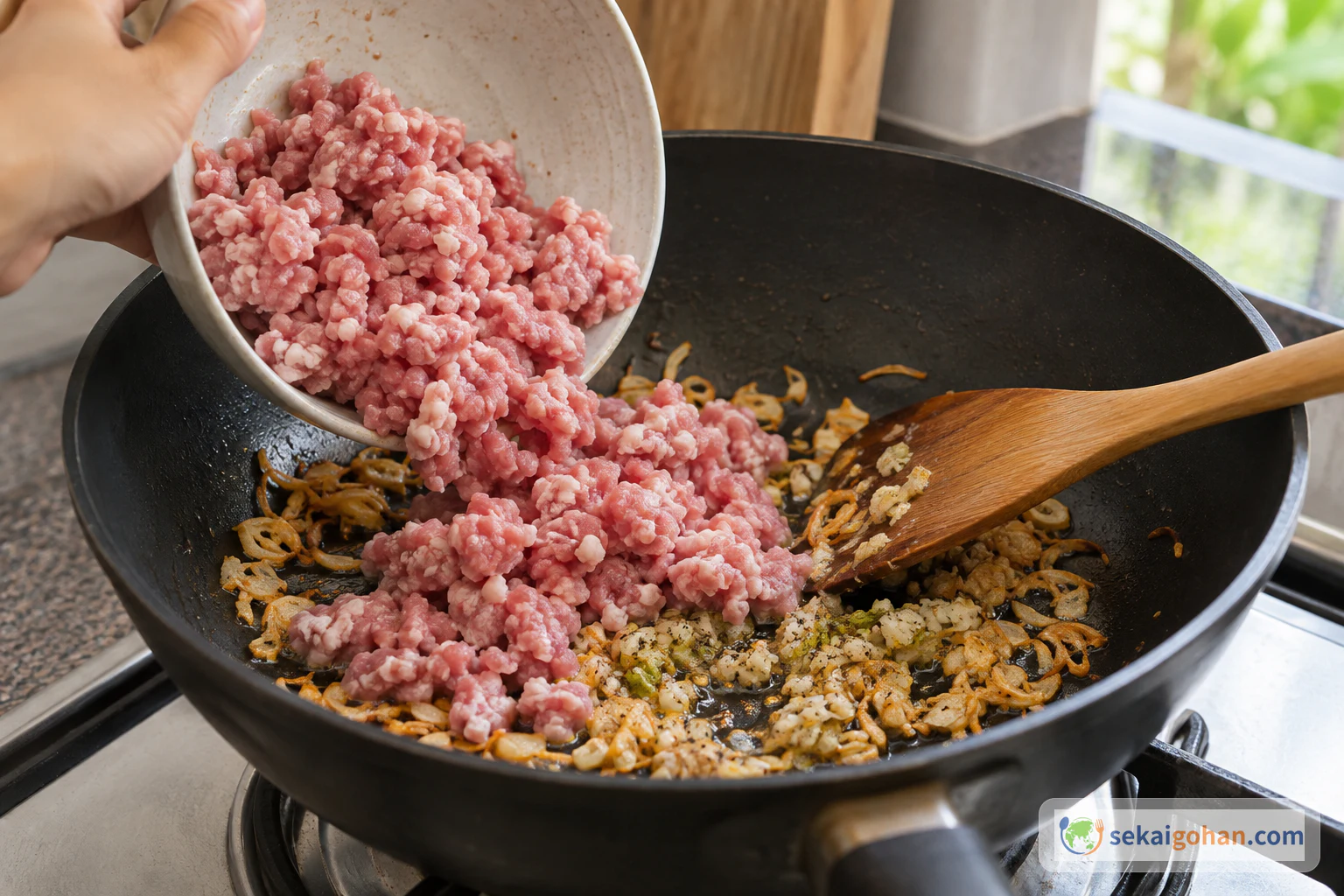
Cook the pork through

Adding minced pork to the fried aromatics
Add the pork to the shallots and paste

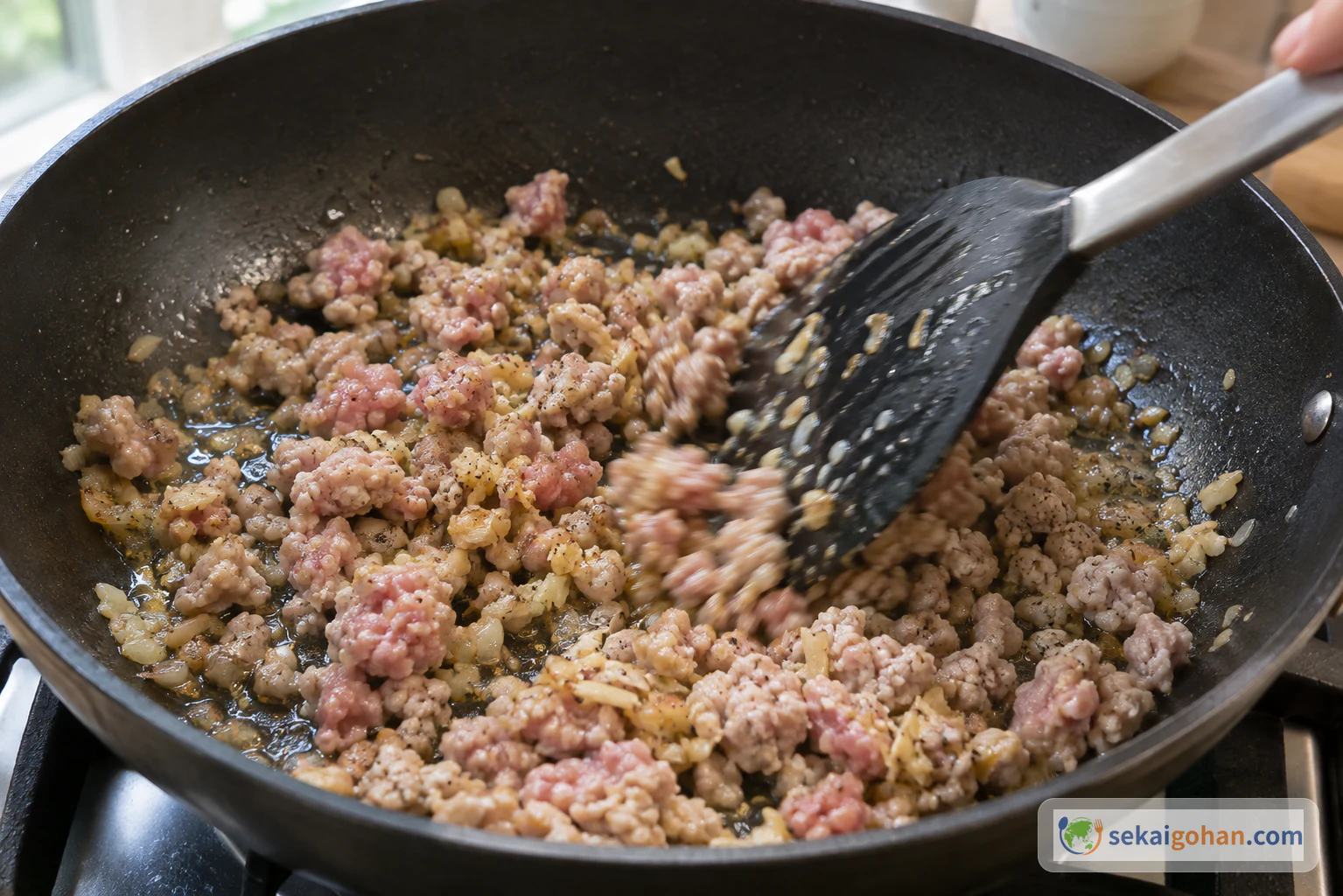
Add 1.75 oz (50 g) minced pork to the pan. Keep raw pork, and any tools that touched it, away from food that will be eaten raw.

Stir and break up the pork until no pink remains.

Stir-frying minced pork until no pink remains
Some pink is normal partway through cooking; keep going

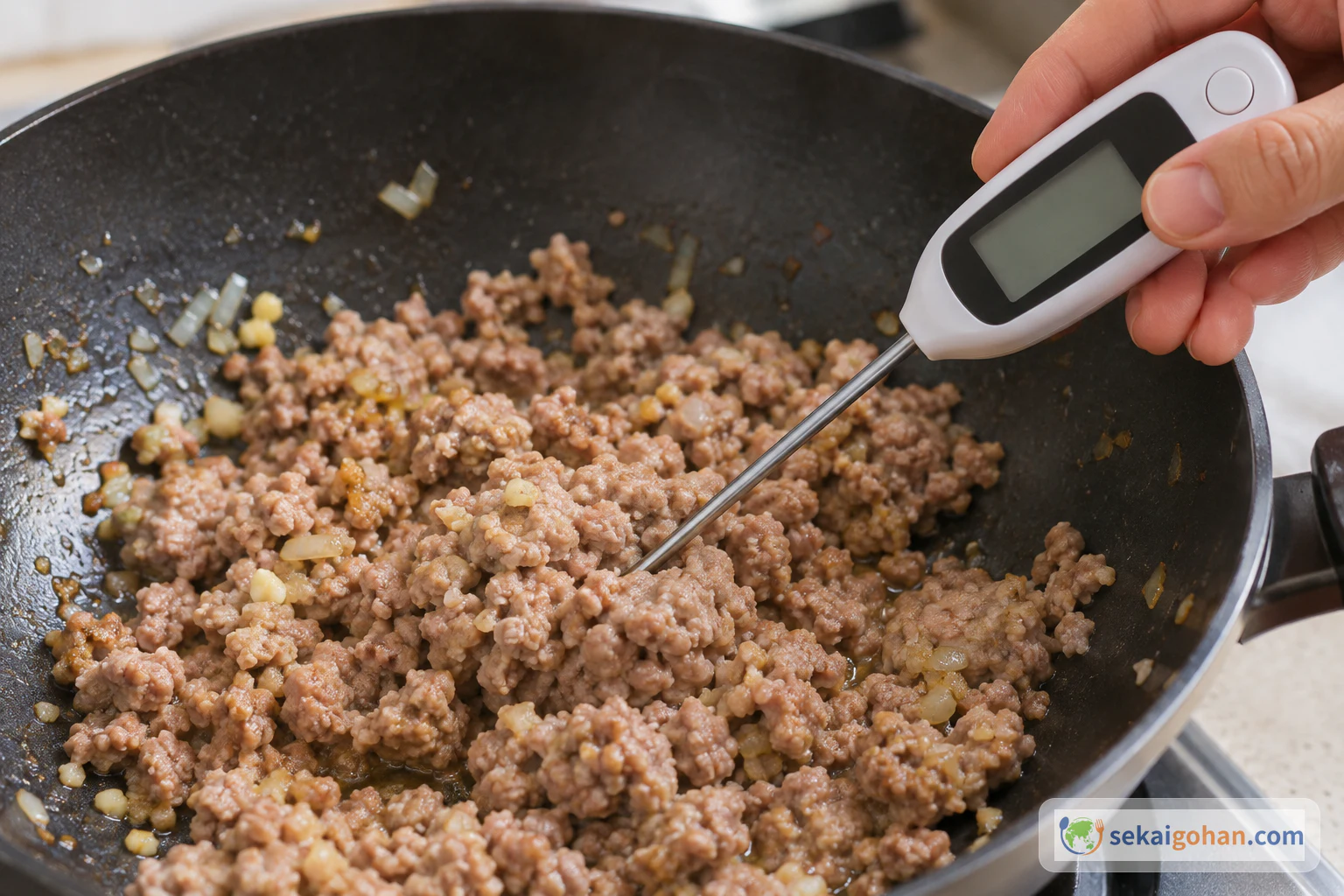
Use a clean food thermometer to check a thick cluster of pork. It should stay at 167°F (75°C) at the center for 1 minute. Do not judge it by color alone.

Checking the cooked minced pork with a food thermometer
This picture shows where to probe, not a temperature reading
STEP 66 / 16

Season and cook until the filling begins to dry

Adding chopped salted radish to the cooked pork
Add the radish once the pork is cooked

Add the 1.75 oz (50 g) chopped salted radish to the cooked pork.

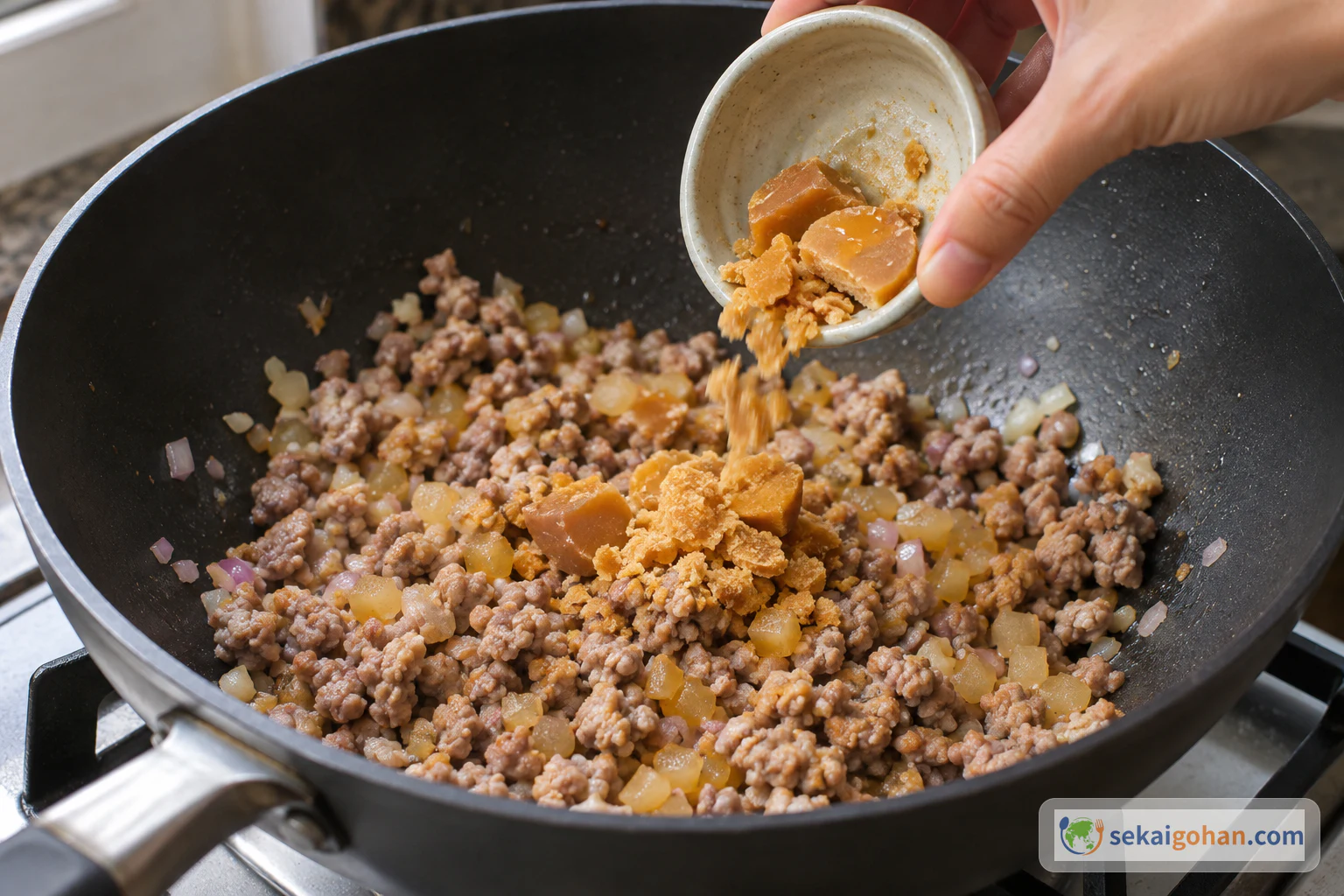
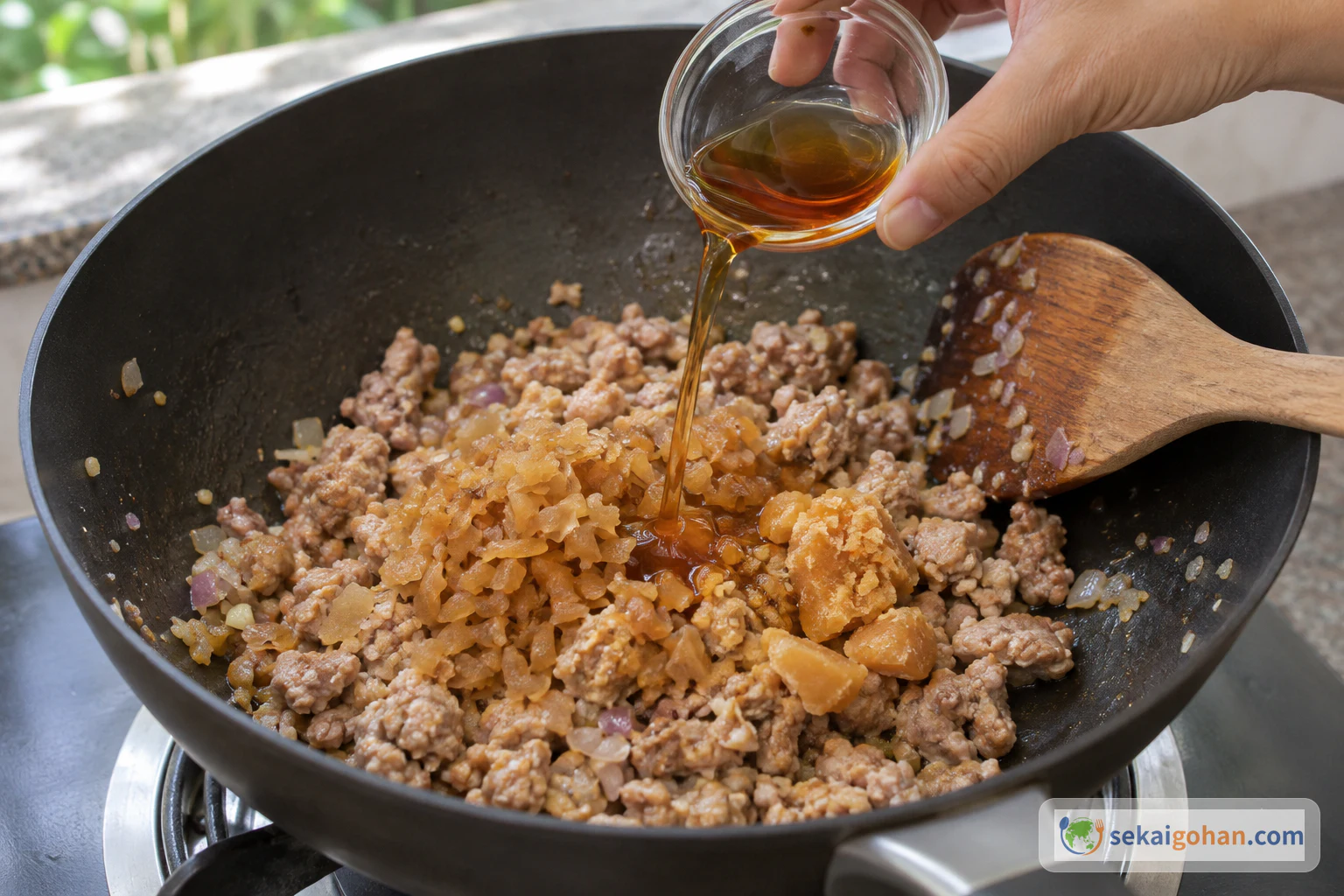
Add 2 tbsp palm sugar.

Adding palm sugar to the pork and salted radish
Palm sugar brings the sweet side of the filling

Add 1/2 tbsp fish sauce.

Adding fish sauce to the pork, radish and palm sugar
Fish sauce seasons the filling

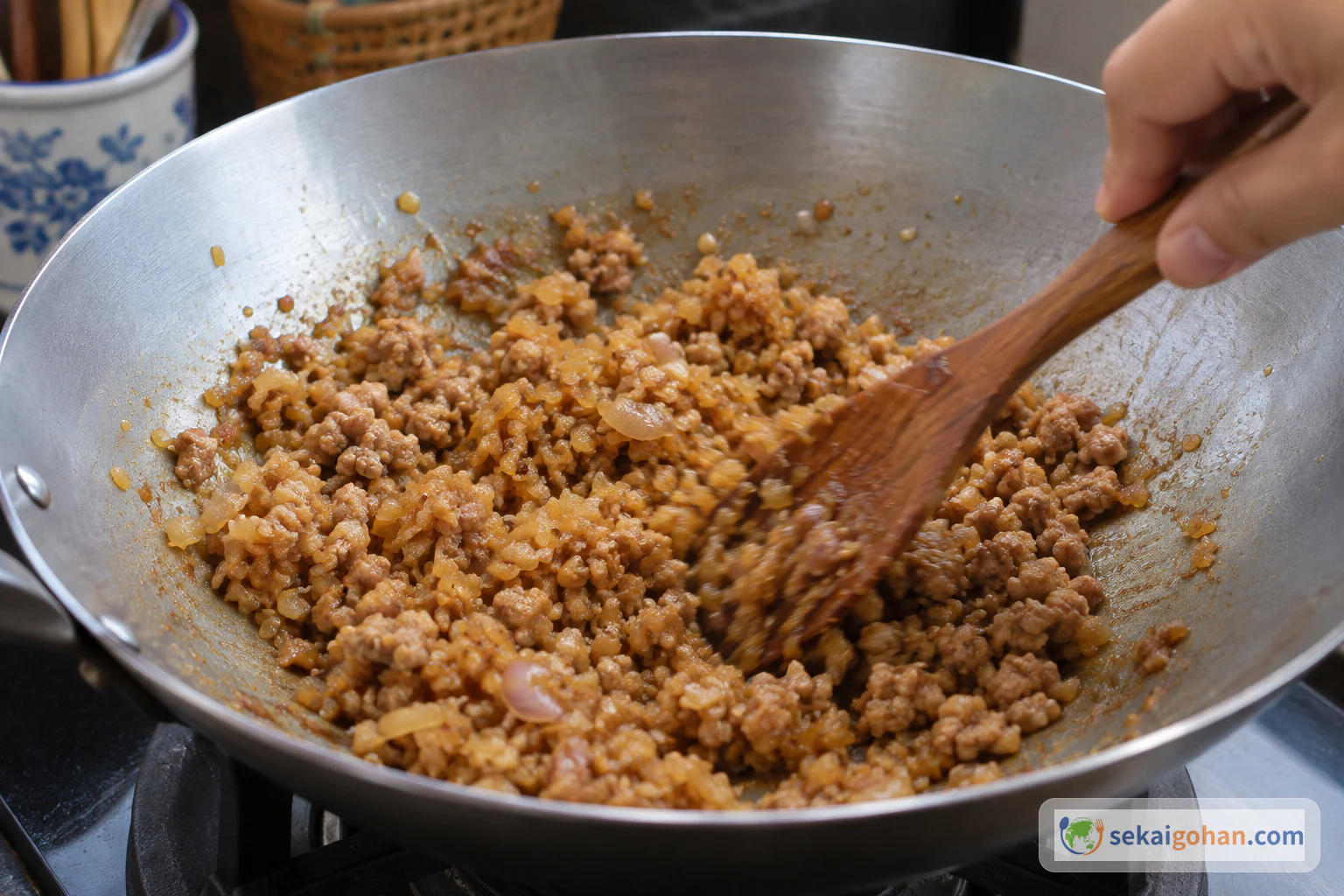
Cook over low heat for about 10 minutes, stirring, until the filling begins to dry. Stoves differ, so go by how the filling looks as well as the clock.

Stir-frying the seasoned filling over low heat to cook off moisture
Keep stirring until the filling begins to dry
STEP 77 / 16

Mix in the peanuts

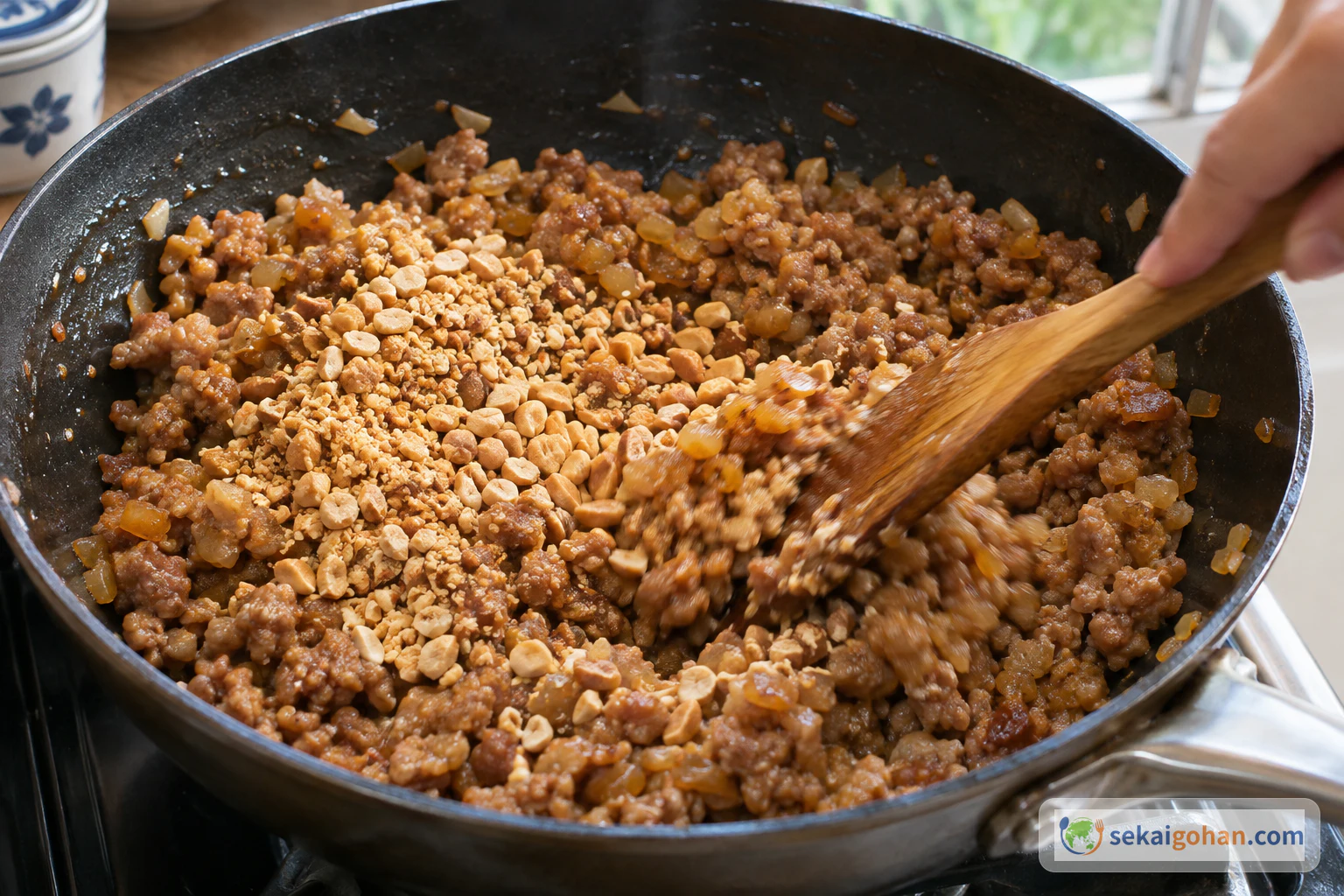
Adding ground roasted peanuts to the reduced filling
The peanuts go in after the filling begins to dry

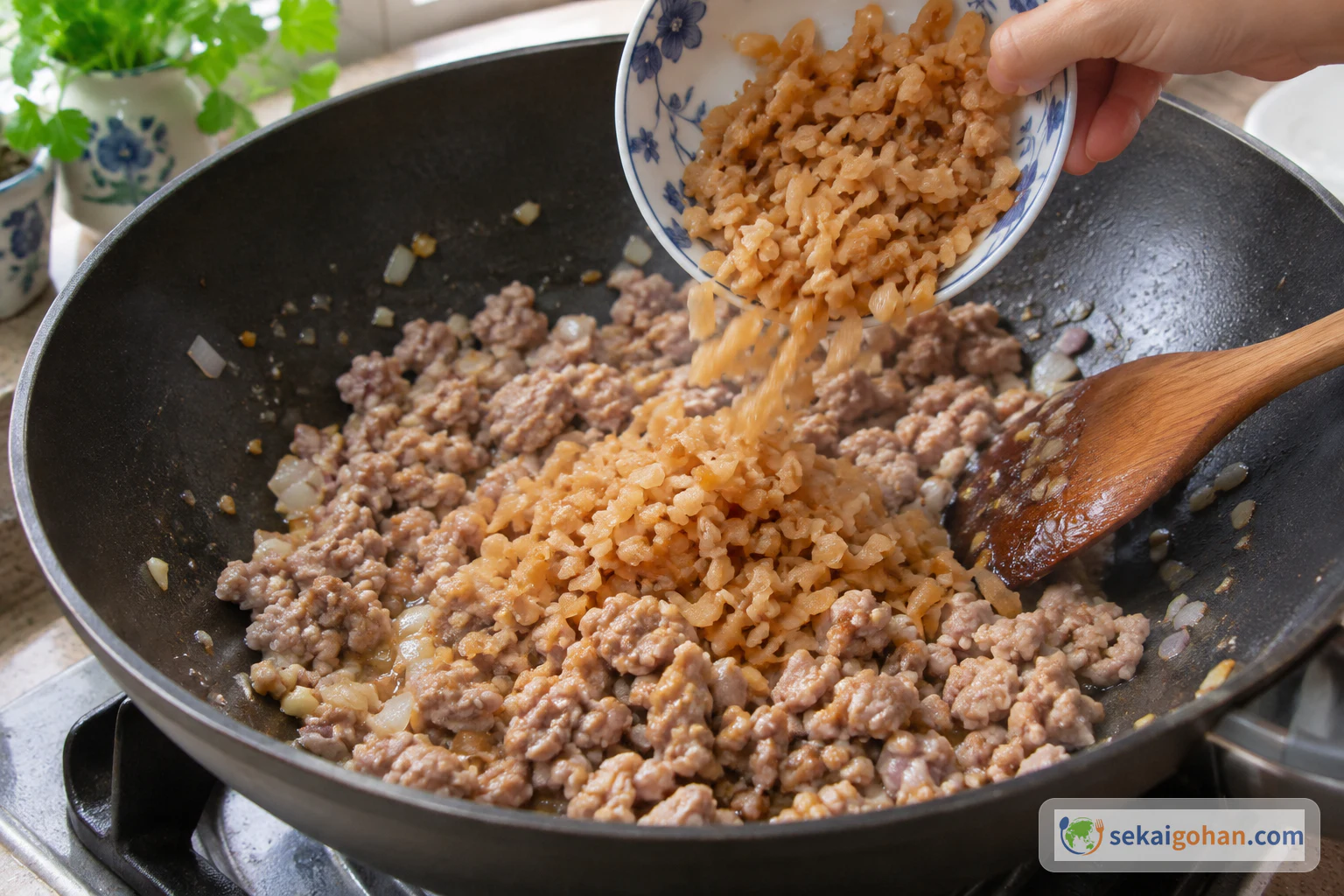
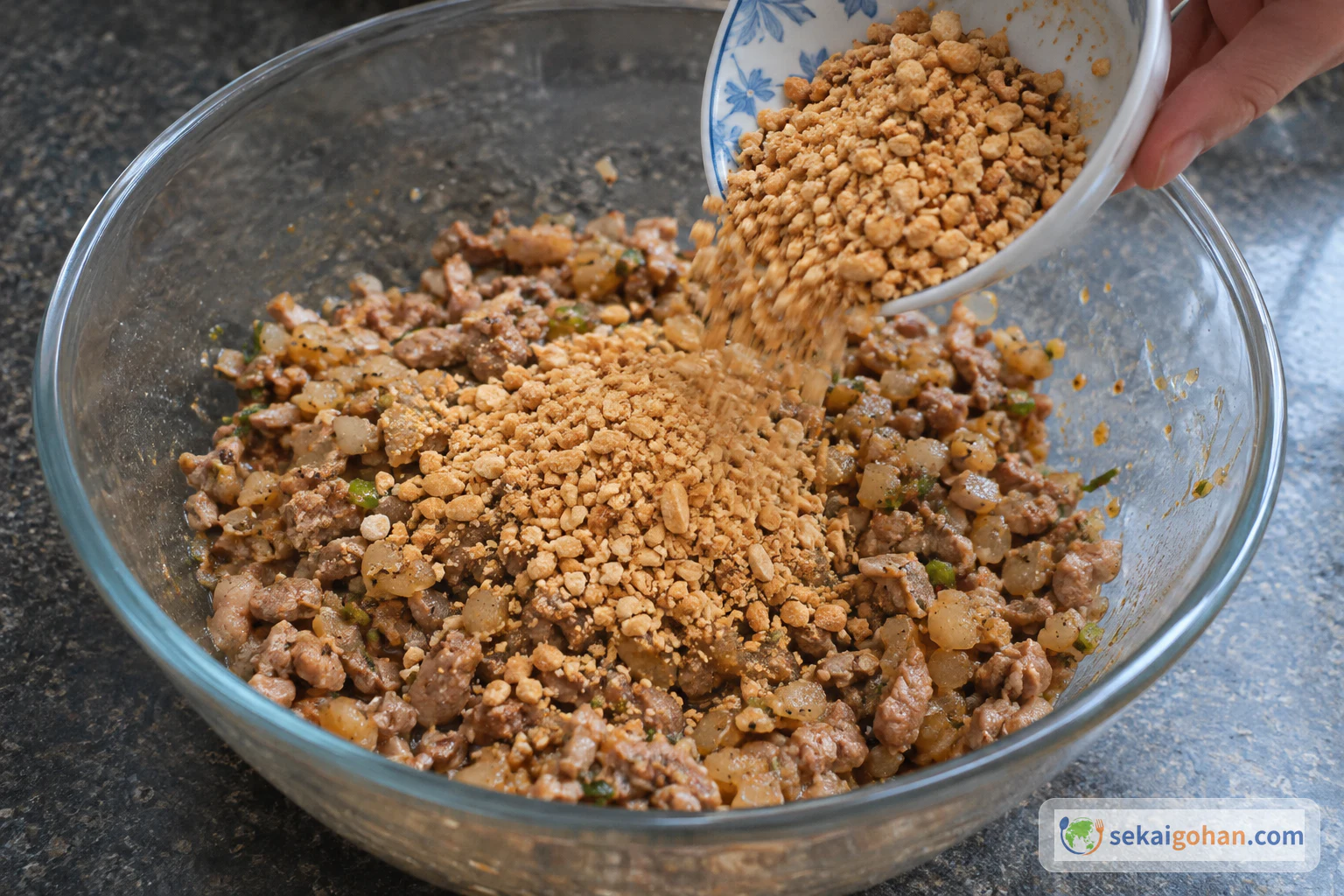
Add 2.5 oz (70 g) ground roasted peanuts to the filling.

Mix them through.

Mixing roasted peanuts into the pork and salted radish filling
Fold the peanuts through the filling
STEP 88 / 16

Cool the filling

Moving the cooked peanut filling onto a plate to cool
A shallow plate spreads the filling out

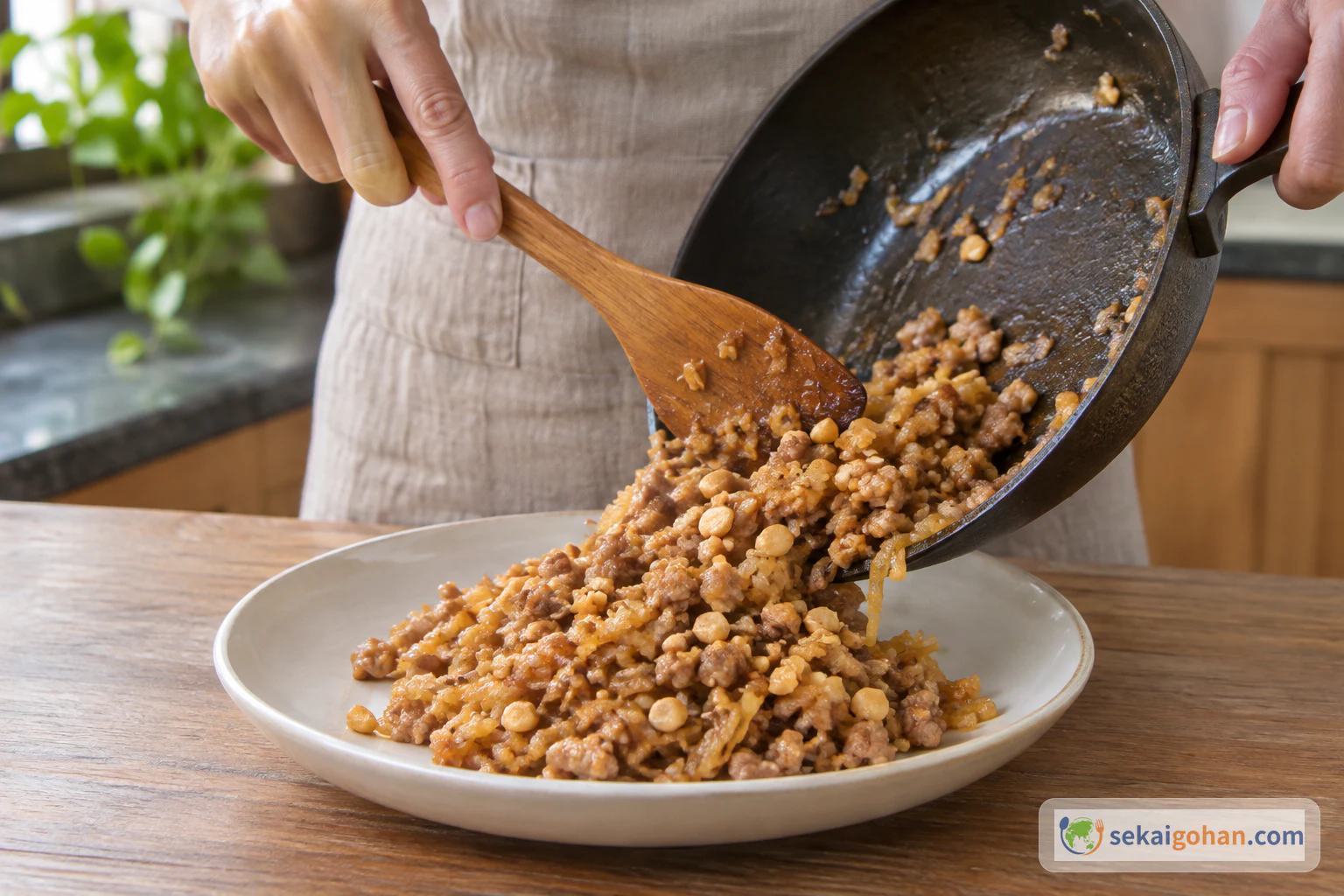
Take the pan off the heat and move the filling to a clean, shallow plate.

Let it cool before wrapping.

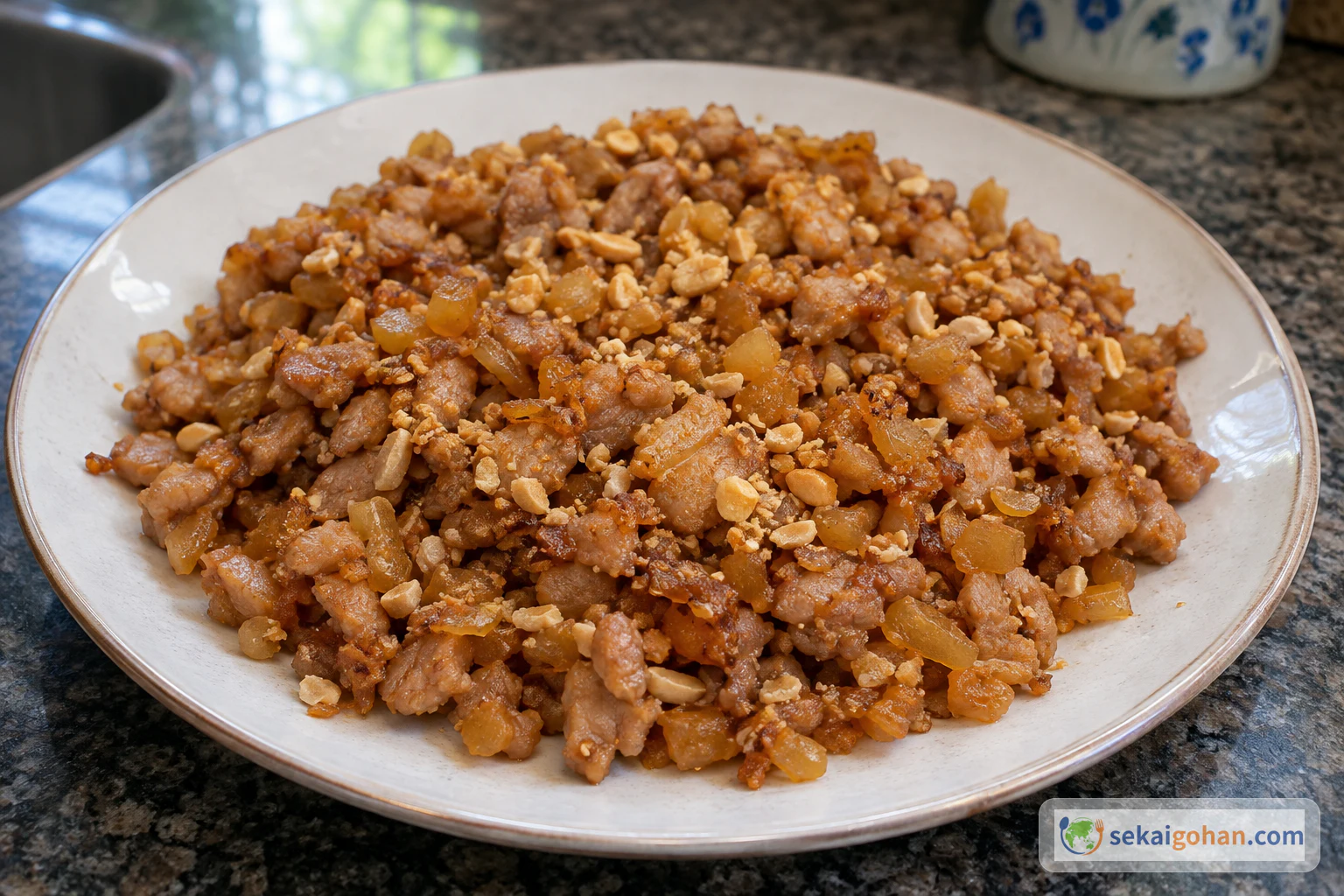
Cooked pork, chopped salted radish and peanut filling cooling on a shallow plate
Wrap only after the filling has cooled
STEP 99 / 16

Set up the cloth pot

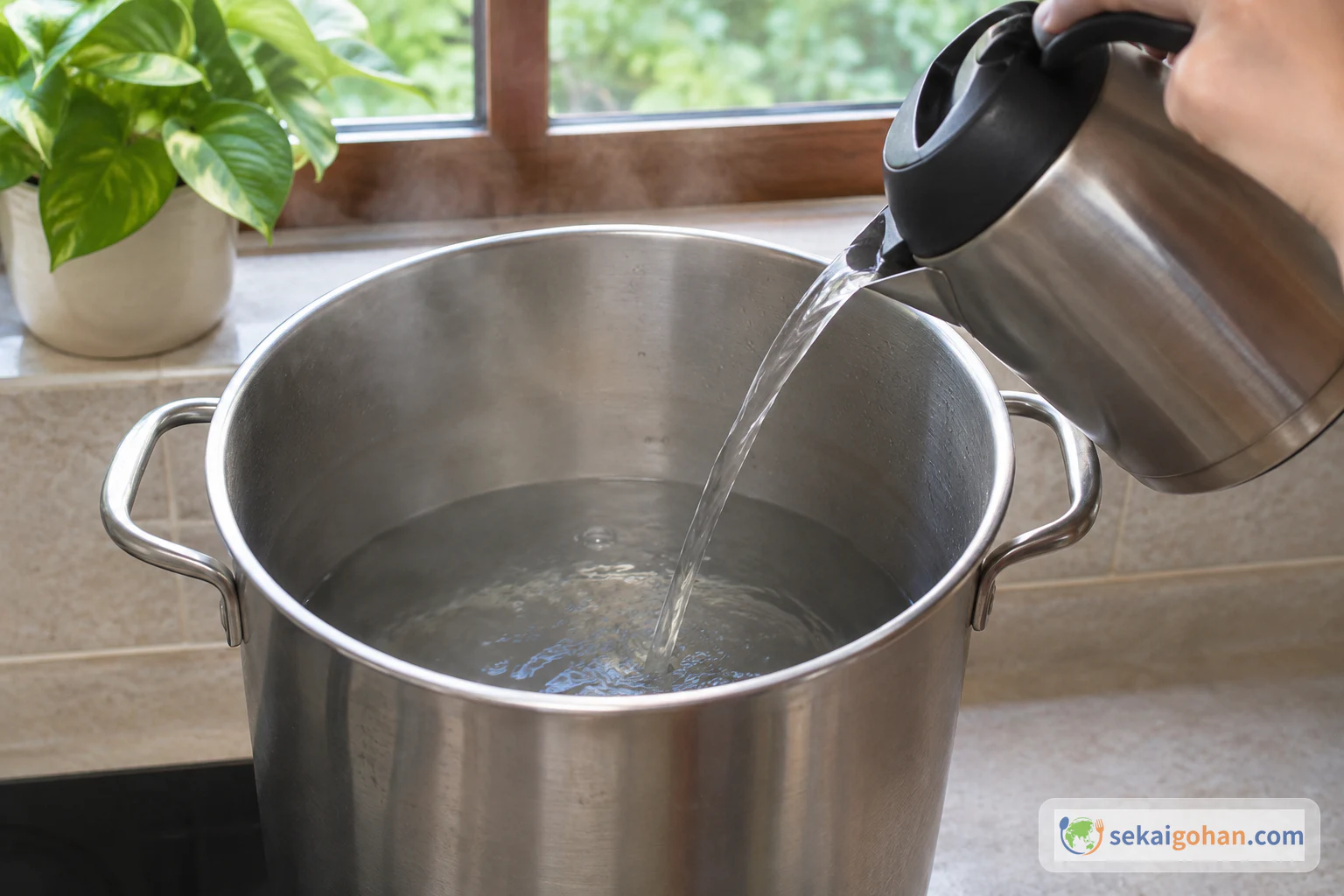
Pouring water into a wide pot before heating
Add the water while the pot is cold

With the pot cold and off the heat, fill it about 1/3 full of water.

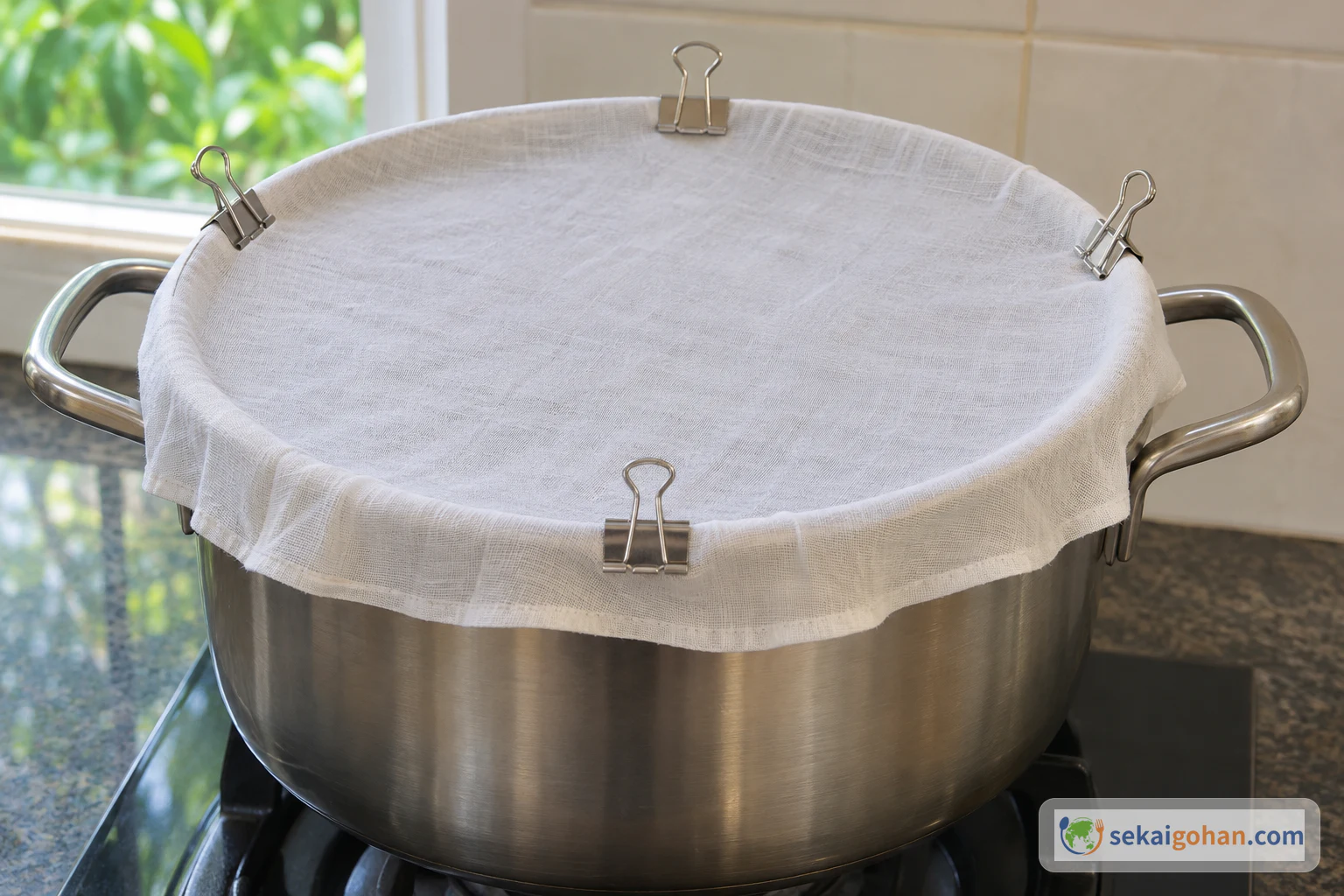
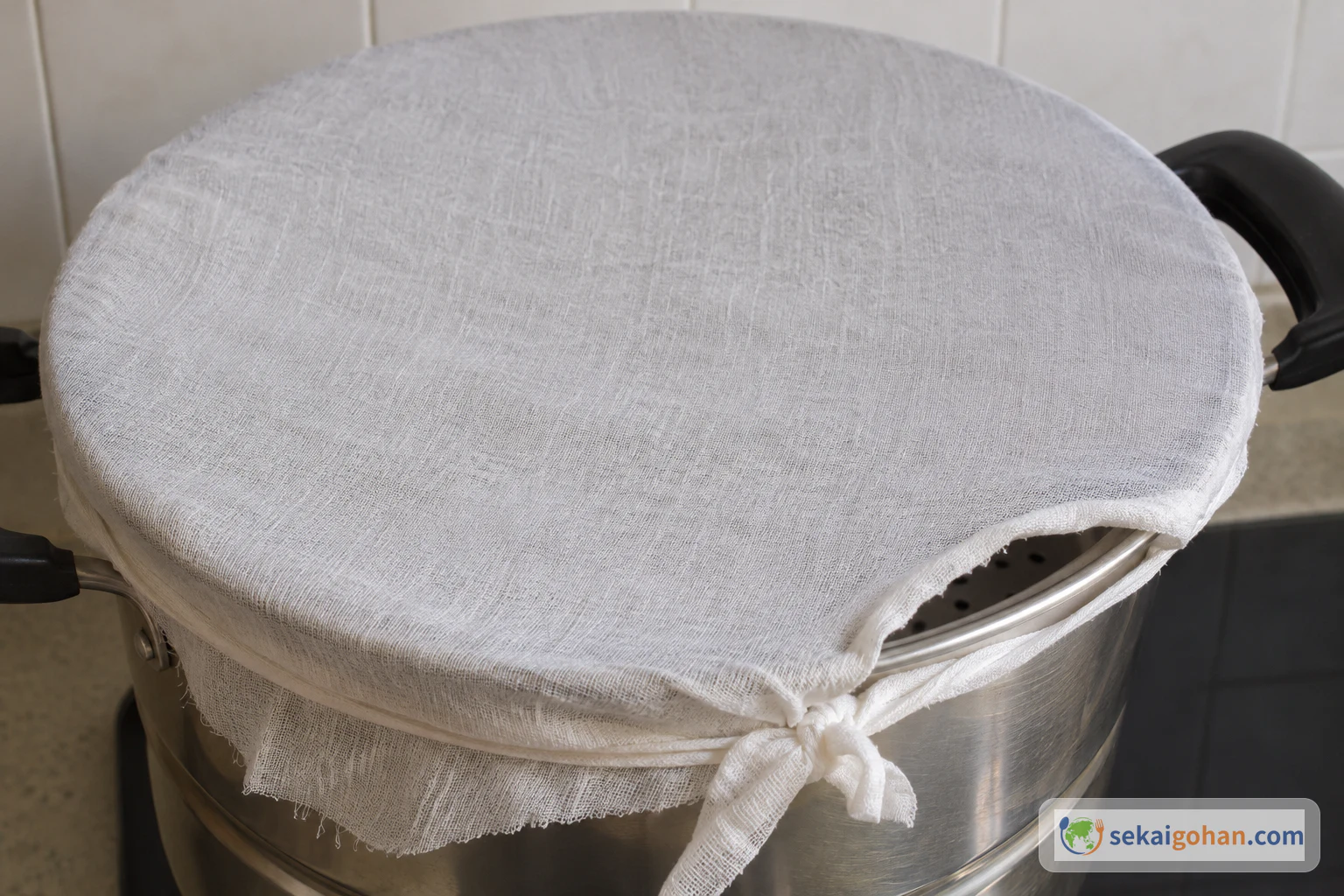
Stretch the clean food-use cloth tightly over the mouth of the pot and secure it. Keep it clear of the water.

Stretching a food-use steaming cloth tightly over the mouth of a cold pot
Secure the cloth before turning on the heat

Leave a gap of about 1 inches (2 cm) at the edge so steam can escape. Do not seal the pot.

A gap left at the edge of the cloth for steam to escape
The edge gap lets steam out

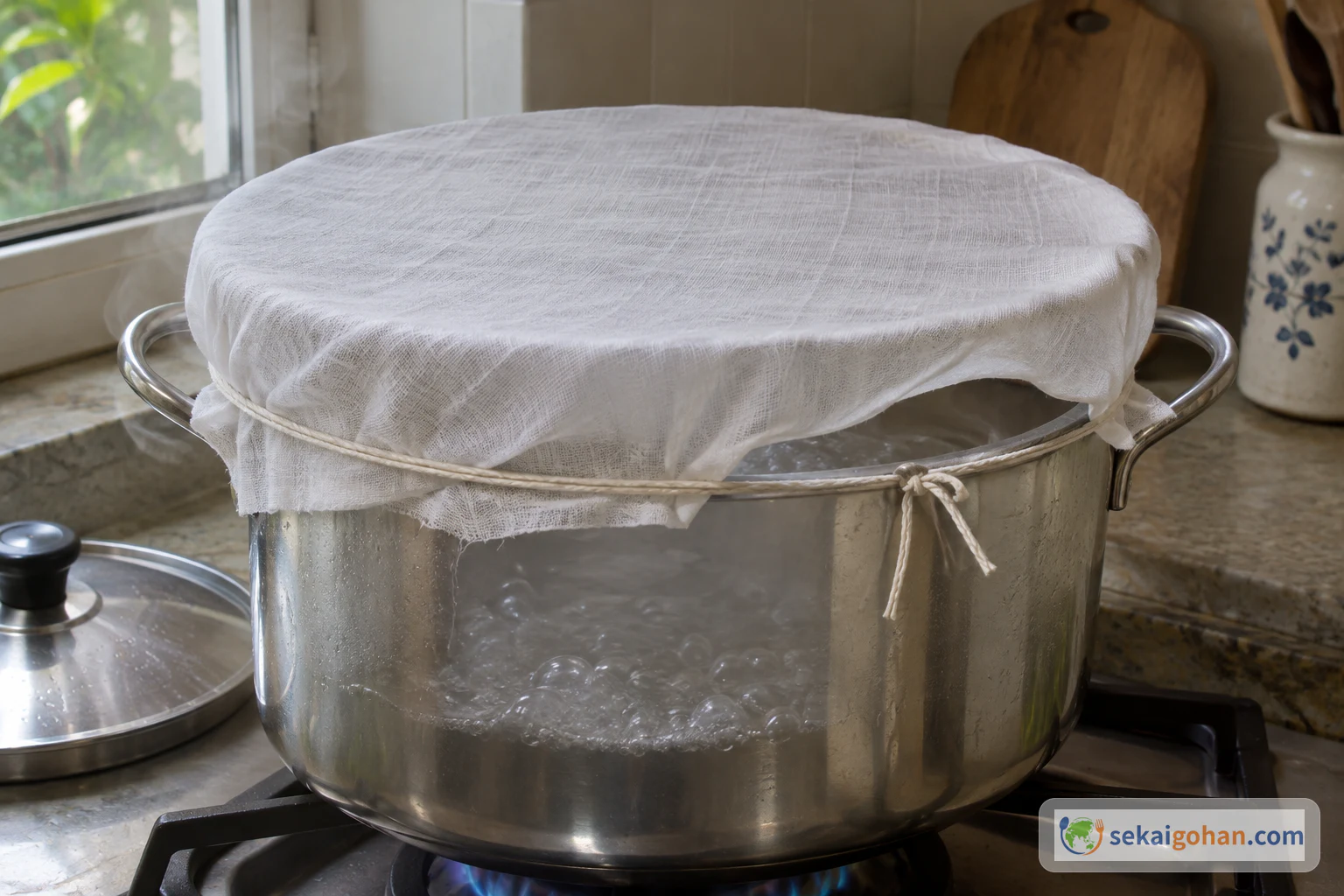
Bring the water to a boil.

Boiling water in the pot with the cloth already secured
Heat the pot only after the cloth is in place
STEP 1010 / 16

Mix the batter

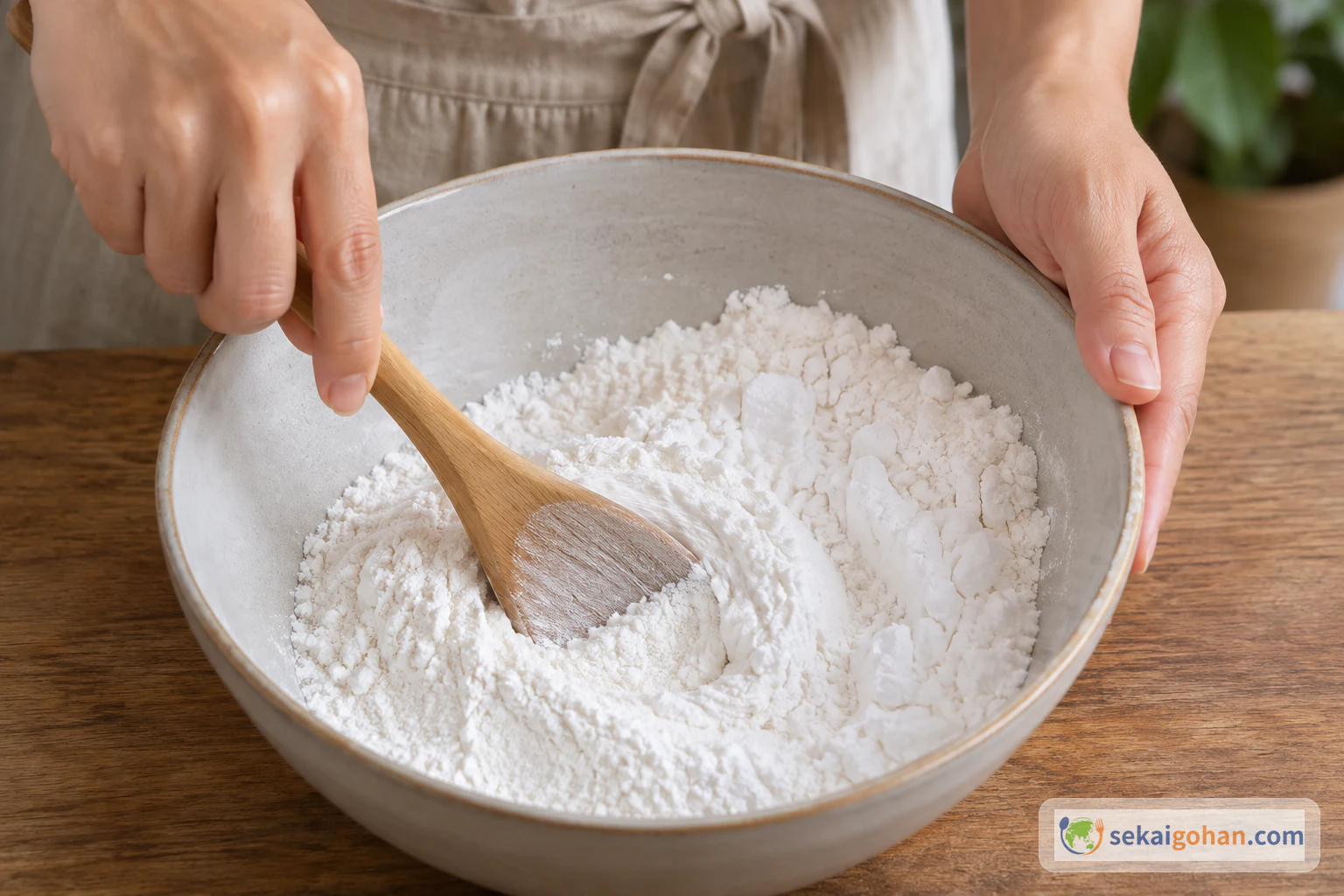
Combining dry rice flour and tapioca starch in a bowl
Combine the two dry ingredients first

Combine 3.5 oz (100 g) rice flour and 1.5 oz (40 g) tapioca starch in a dry bowl.

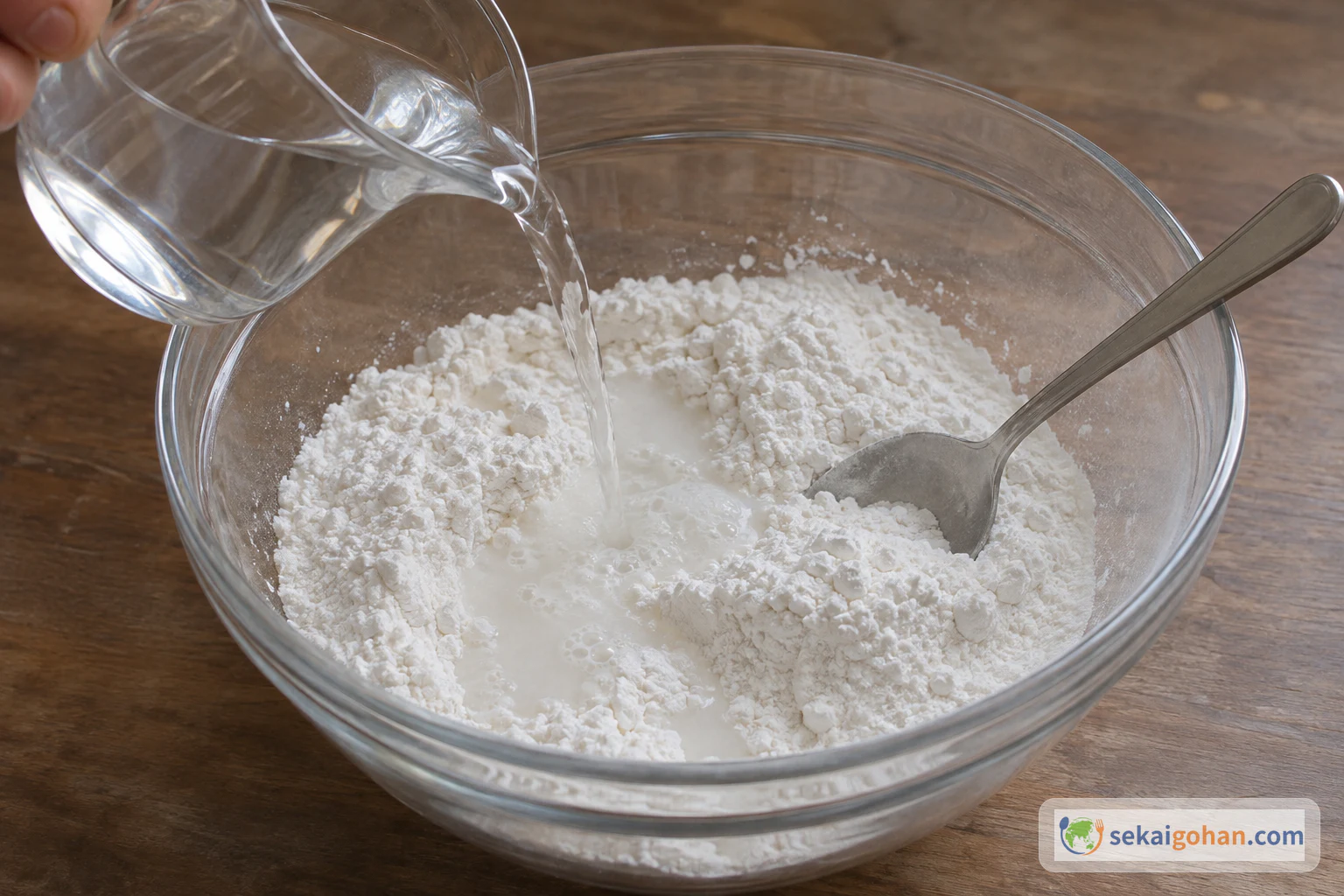
Pour in 1 cup (220 ml) water.

Pouring water into the combined rice flour and tapioca starch
Add the water to the flours

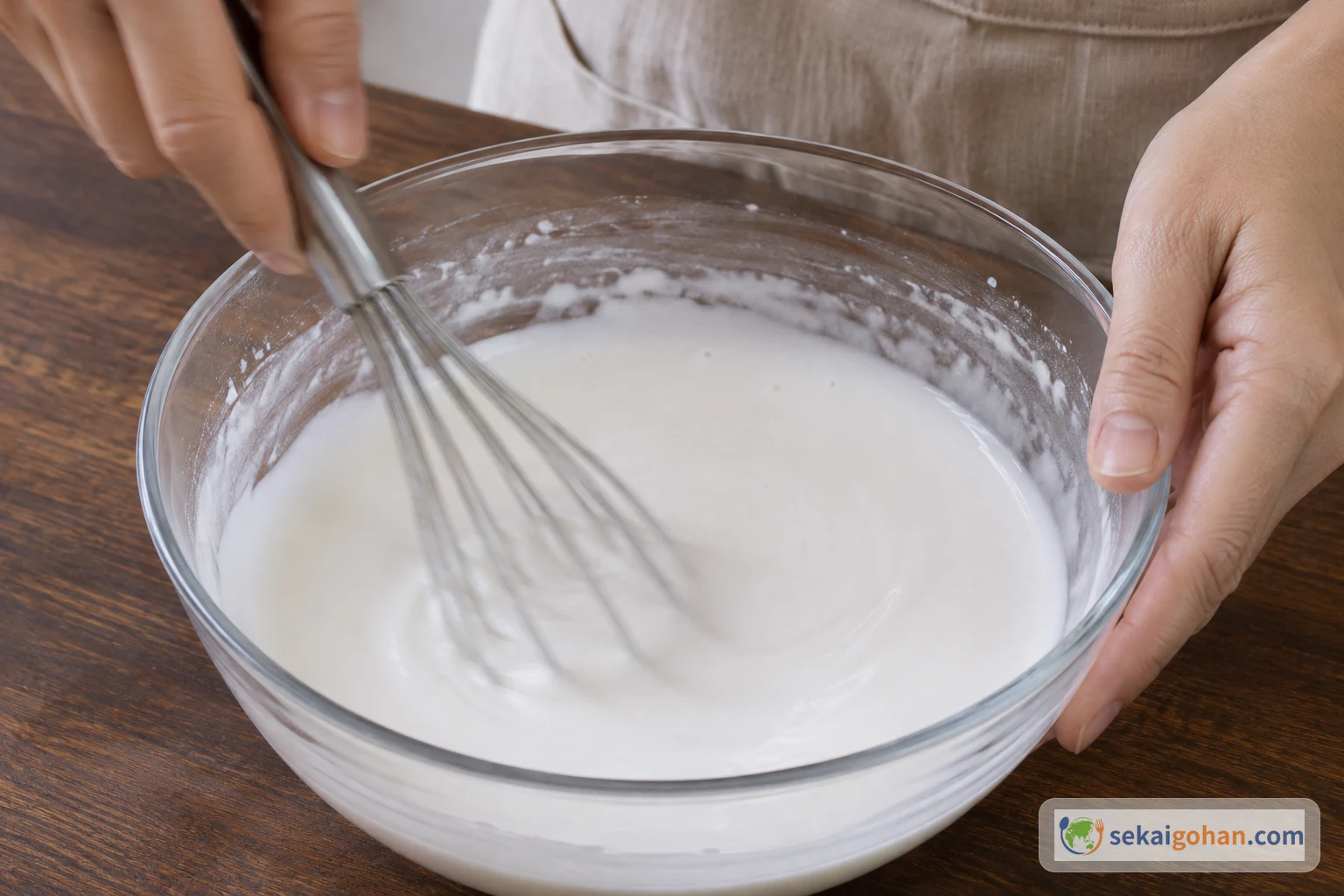
Mix until you have an even, thin batter.

Mixing rice flour, tapioca starch and water into an even thin batter
Mix until no dry flour remains
STEP 1111 / 16

Pour and spread one sheet

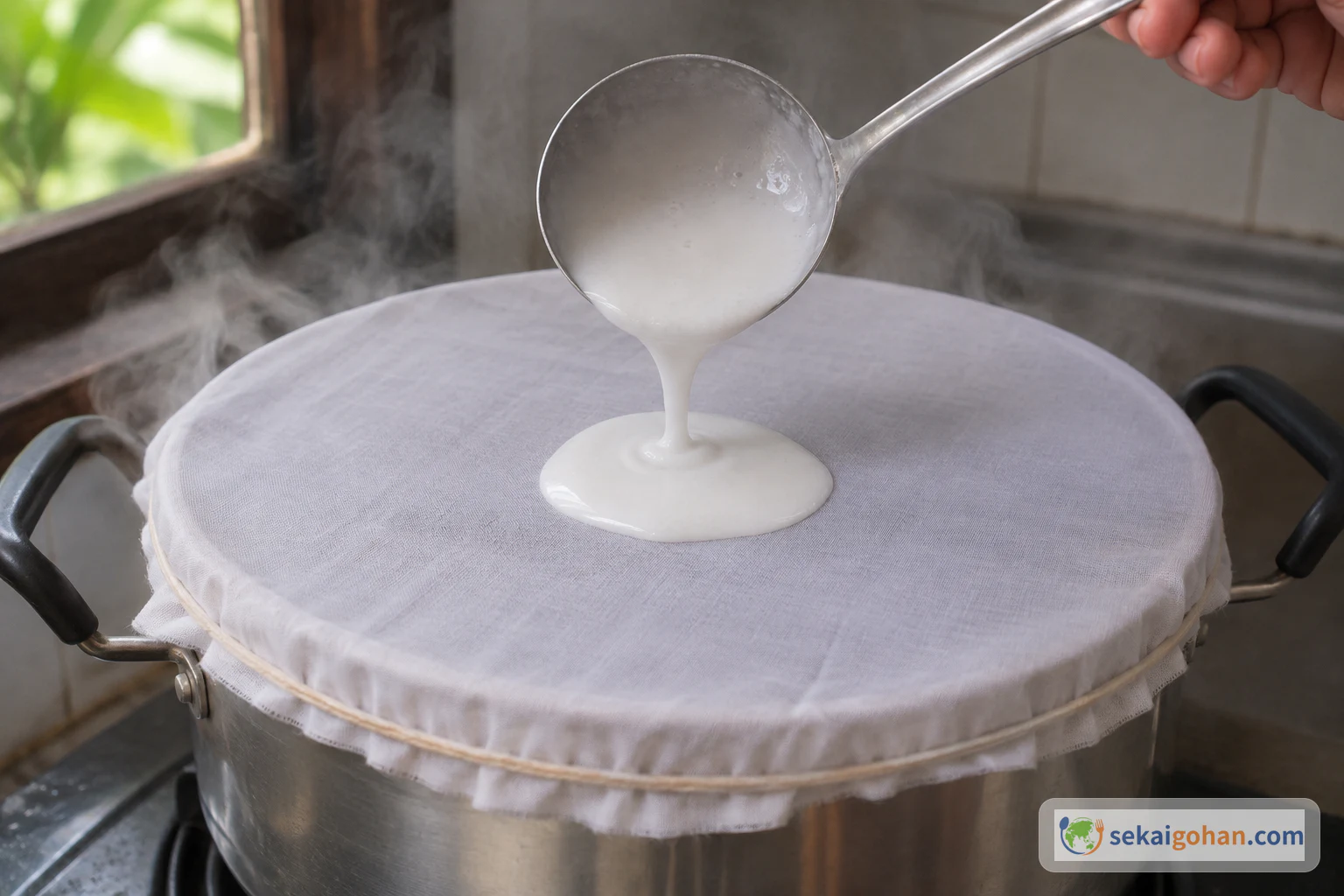
Pouring batter onto the cloth over the boiling pot
Use about half a ladle for each sheet

Pour about half a ladle of batter onto the cloth over the boiling pot.

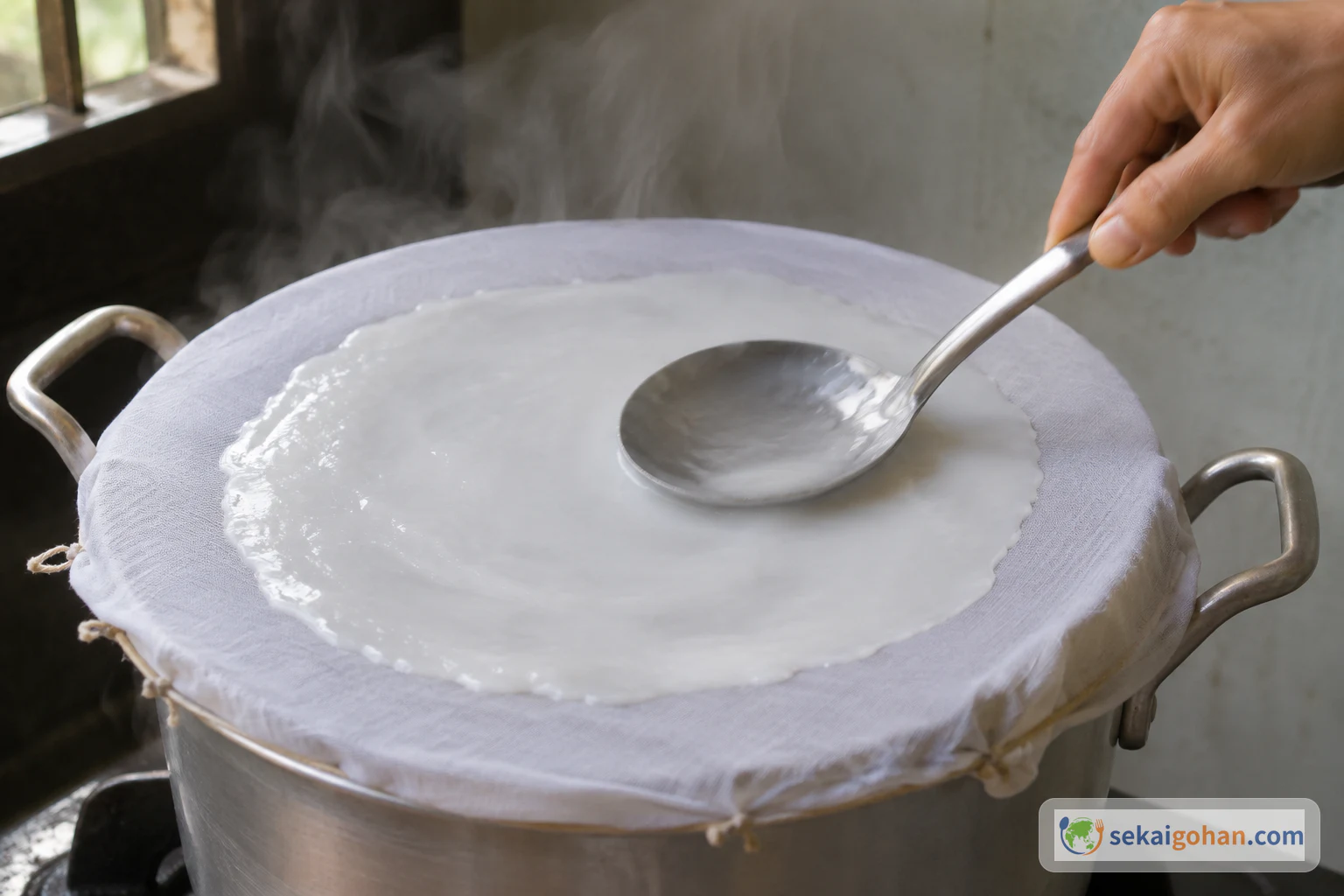
Use the back of the ladle to spread it into a thin round.

Spreading the batter into a thin round with the back of a ladle
Spread the batter thinly with the back of the ladle
STEP 1212 / 16

Cover and steam

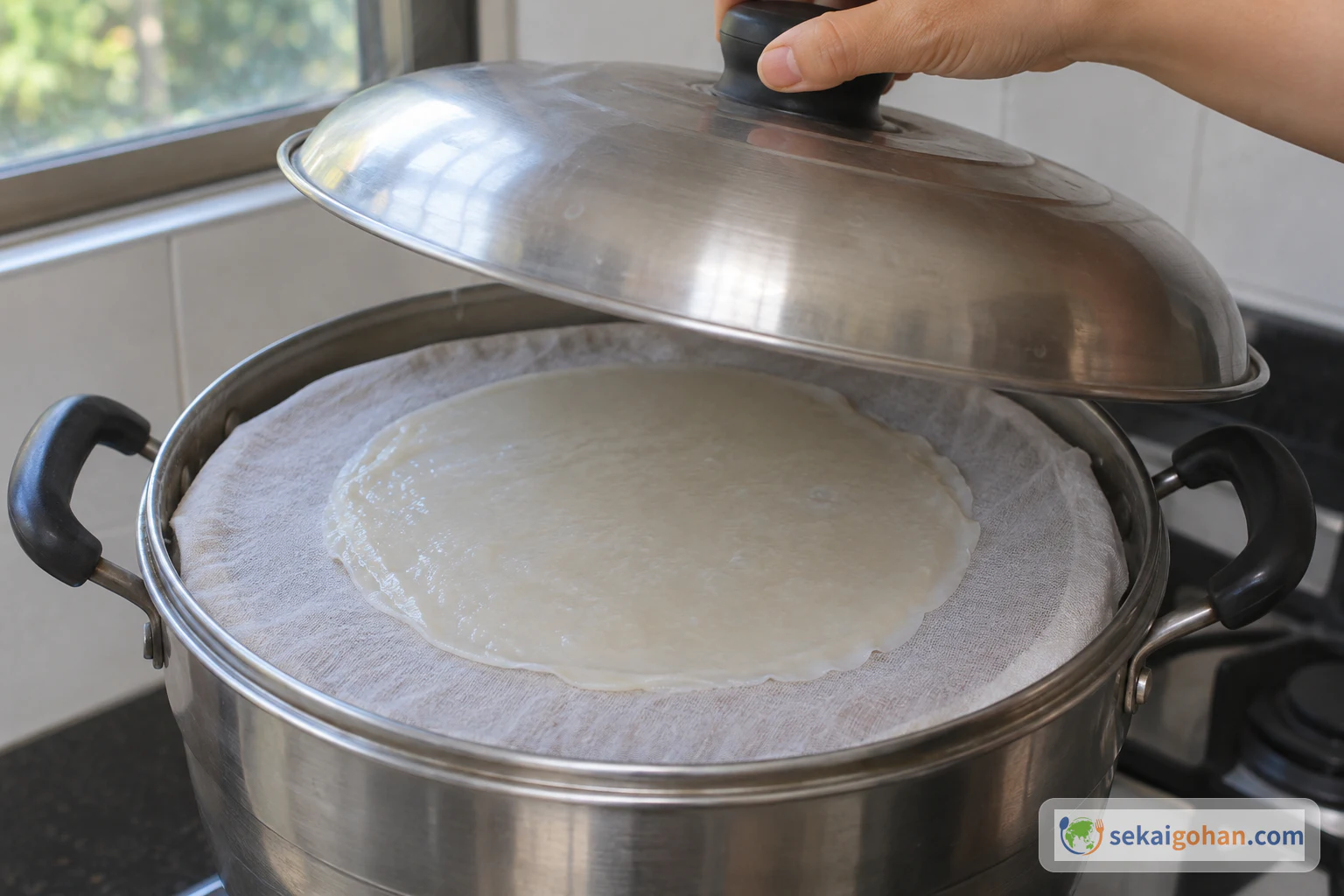
Lowering a pot lid over the thin batter round
Rest the lid in place without sealing the pot

Cover the sheet with the lid.

Steam for about 20 seconds.

The covered pot steaming the thin wrapper
Steam for about 20 seconds

Lift the lid, keeping your face and hands clear of the steam. Check that the sheet looks cooked through before adding any filling.

Lifting the lid to check the thin wrapper before adding filling
Check the wrapper before adding the filling
STEP 1313 / 16

Add the cooled filling

About a teaspoon of cooled pork and radish filling in the center of the steamed wrapper
A small amount of filling is enough

Place about 1 tsp cooled filling in the center of the cooked sheet.

STEP 1414 / 16

Wrap the filling

Lifting the edge of the thin wrapper on the cloth to enclose the cooled filling
Lift and fold the soft sheet with a spatula

Use the spatula to lift the edge of the sheet and fold it around the filling. Fold as many times as it takes to enclose it.

STEP 1515 / 16

Move the parcel to the oiled tray

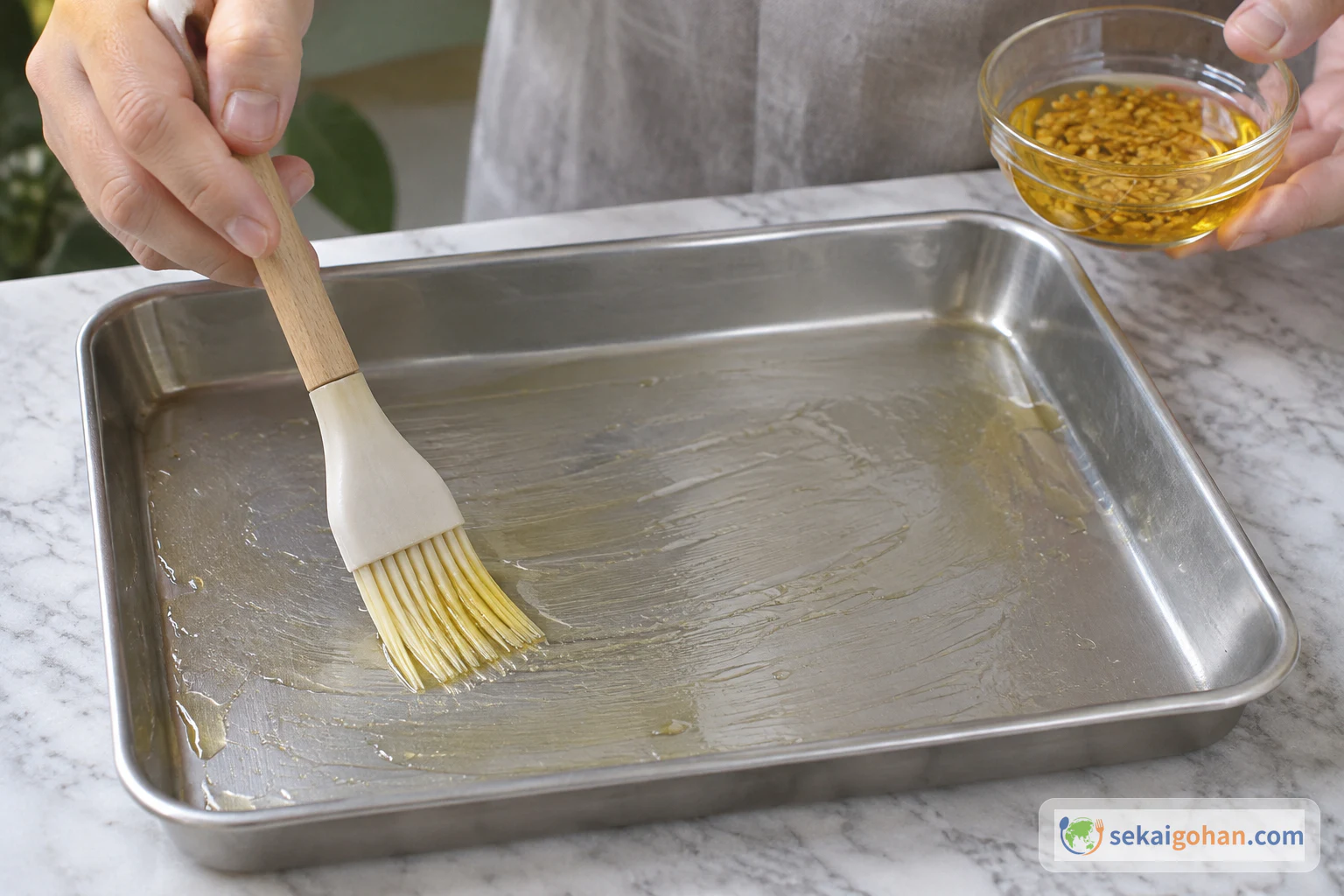
Coating a receiving tray with garlic oil
Oil the tray before the parcels arrive

Coat a clean tray with garlic oil so the parcels do not stick. Do not add the garlic oil to the filling.

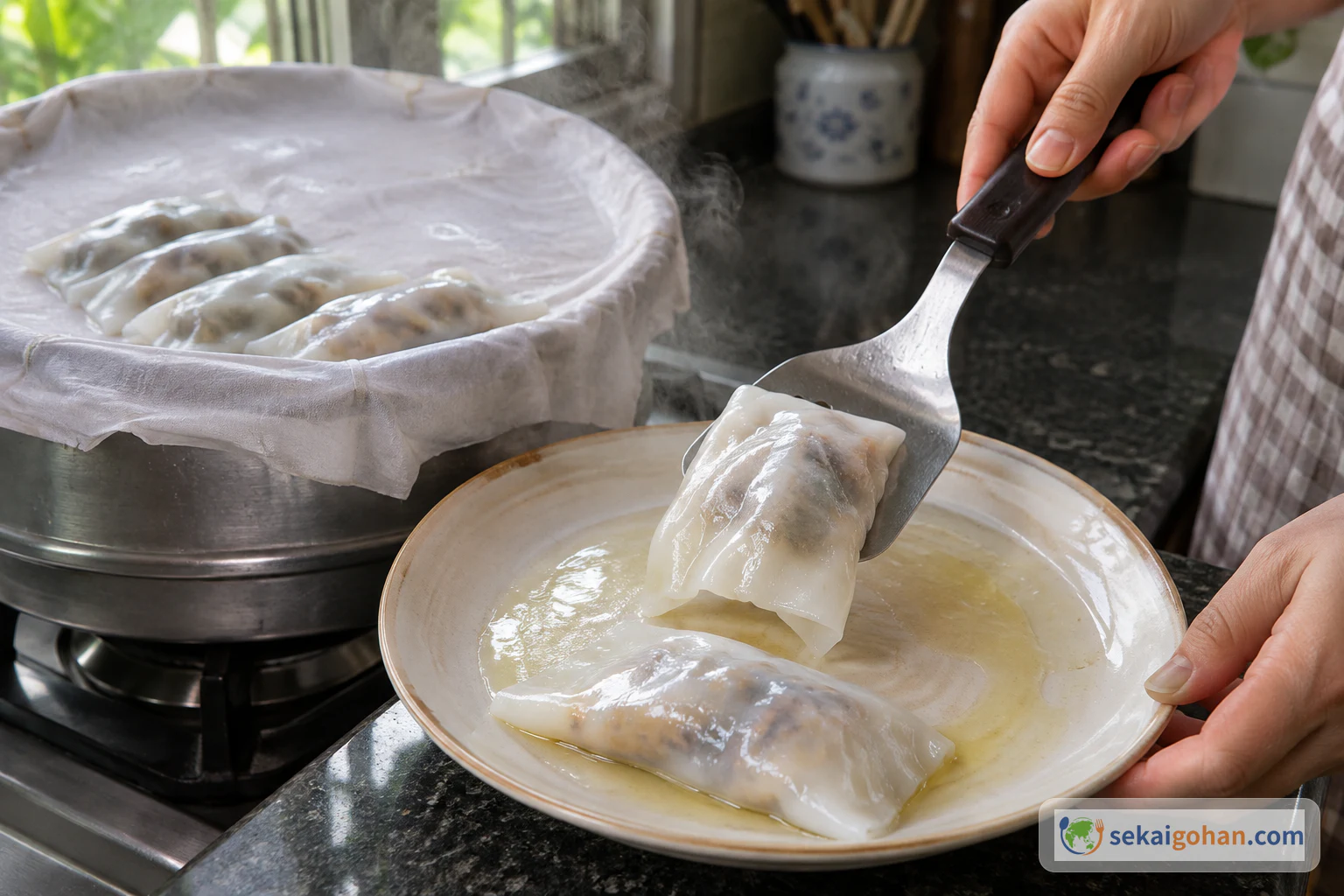
Lift the parcel onto the tray with the spatula. Repeat steps 11 to 15 with the remaining batter and filling.

Moving a cooked soft parcel onto a plate coated with garlic oil
Move each parcel carefully; it is soft
STEP 1616 / 16

Finish and serve

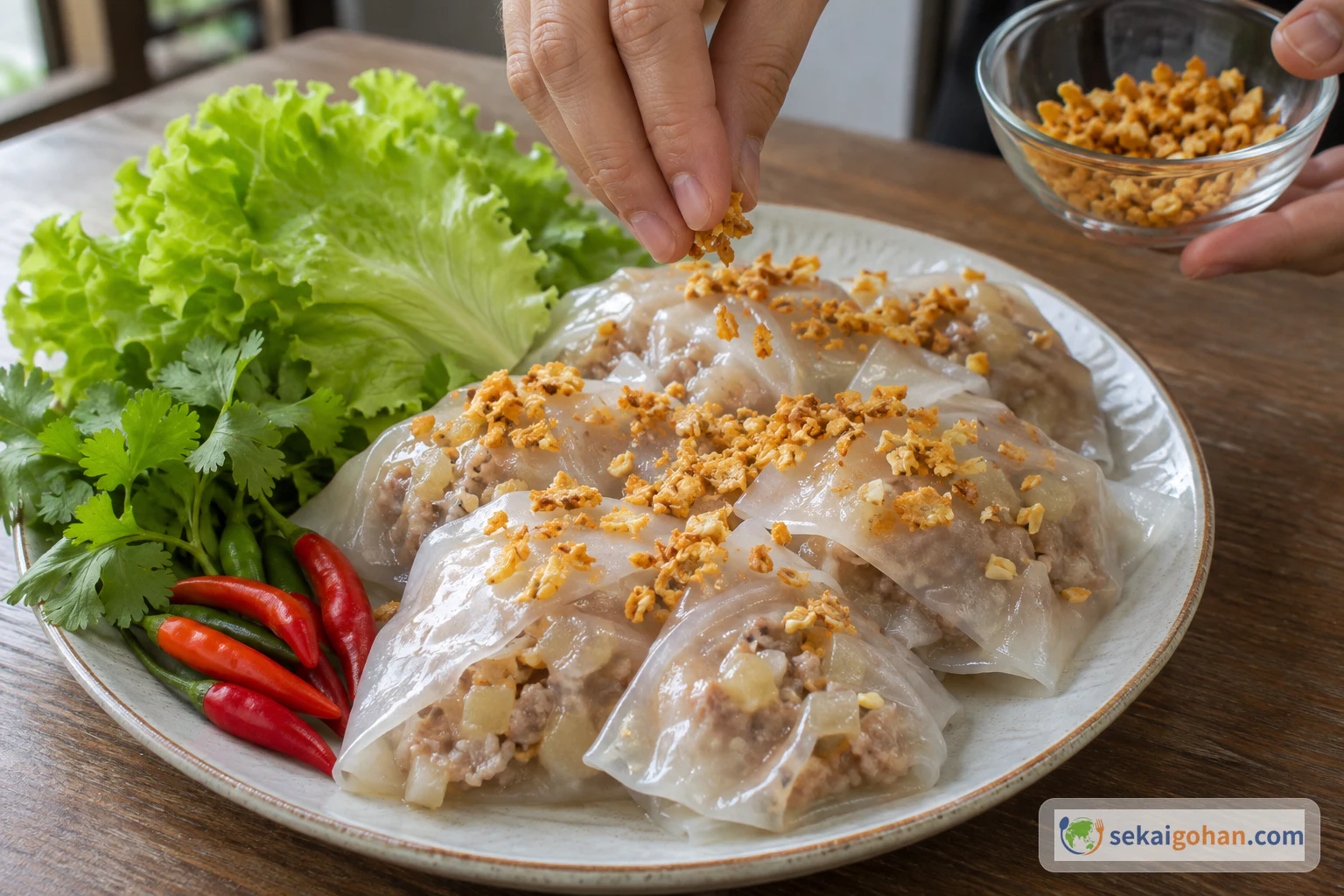
Sprinkling fried garlic over the plated parcels
Fried garlic goes on at the end

Sprinkle 2 tbsp fried garlic over the plated parcels.

Wash your hands with soap before touching the raw garnishes. Wash the lettuce, coriander leaves and bird's-eye chilies well under running drinkable water. Prepare them with a clean knife and board, not tools that touched raw pork. Serve them alongside the parcels, to taste.

Khao kriap pak mo on a plate with fried garlic, with lettuce, coriander leaves and chilies alongside
Lettuce, coriander leaves and chilies are optional
0 / 0
Ingredients

Ingredients

1 / 1

Ingredients

Ingredient Amount Role
Rice flour (แป้งข้าวจ้าว) 3.5 oz (100 g) Wrapper: the main body of the sheet
Tapioca starch (แป้งมัน) 1.5 oz (40 g) Wrapper: mixed with the rice flour
Water (น้ำเปล่า) 1 cup (220 ml) Wrapper: makes the thin batter
Minced pork (หมูสับ) 1.75 oz (50 g) Filling: cooked through before the seasonings go in
Salted preserved radish, finely chopped (ไชโป้วเค็มสับละเอียด) 1.75 oz (50 g) Filling: salty base and texture
Roasted peanuts, ground (ถั่วลิสงคั่วบด) 2.5 oz (70 g) Filling: mixed in at the end
Thai garlic (กระเทียมไทย) 2 tbsp Filling: pounded into the aromatic paste
Shallots, finely chopped (หอมแดงสับละเอียด) 2 tbsp Filling: fried after the paste, before the pork
Coriander root (รากผักชี) 1 Filling: pounded into the aromatic paste
Ground pepper (พริกไทยบด) 2 tbsp Filling: pounded into the aromatic paste
Fish sauce (น้ำปลาอย่างดี) 1/2 tbsp Filling: seasoning
Palm sugar (น้ำตาลปี๊ป) 2 tbsp Filling: sweetness
Soybean oil (น้ำมันถั่วเหลือง) 3 tbsp Filling: frying oil
Fried garlic (กระเทียมเจียว) 2 tbsp Finishing: goes on the plated parcels
Garlic oil (น้ำมันกระเทียมเจียว) 3 tbsp Finishing: keeps parcels from sticking to the tray
Lettuce to taste Served alongside, raw
Coriander leaves to taste Served alongside, raw
Bird's-eye chilies (พริกขี้หนู) to taste Served alongside, raw

Use store-bought salted radish, fried garlic and garlic oil sold for eating or cooking. Soybean oil and garlic oil are separate ingredients, so do not combine them. Wash the lettuce, coriander leaves and chilies well under running water before use.

0 / 0

Water boils in a wide pot, and steam rises through a cloth pulled tight across the rim. A little thin white batter goes onto the cloth and is spread into a round with the back of a ladle. The lid comes down for about 20 seconds, and when it lifts, the batter has become a translucent sheet, ready for a small spoonful of cooled filling and a quick fold with a spatula.

That is khao kriap pak mo (ข้าวเกรียบปากหม้อ), a Thai snack named for the mouth of the pot where it cooks. What you get is a soft, white, translucent wrapper around a sweet-salty filling of pork, salted radish and peanuts, with a good kick of pepper. For more of the country's dishes, see our Thailand page.

About Khao Kriap Pak Mo

The steaming method shapes the dish. Each sheet steams directly on the cloth stretched across the pot, one at a time, rather than in a steamer basket, and the filling goes in only after the wrapper has cooked. The result is soft and pliable, a different thing from a sticky-rice dumpling or a fried cracker.

The traditional filling is stir-fried radish with a sweet-salty flavor. This version keeps that idea and adds pork, salted radish and roasted peanuts, balanced by palm sugar and fish sauce.

Steamed cloth-pot sheets come in several forms across the region. Kuay tiao pak mo (ก๋วยเตี๋ยวปากหม้อ) has a similar name but is eaten with soup, and Vietnamese banh cuon-style sheets and Cantonese cheung fun differ in their fillings and how they are served. The cloth method alone doesn't identify the dish, so the filling and the way it's served matter just as much.

Ingredients: Wrapper, Filling and Finishing
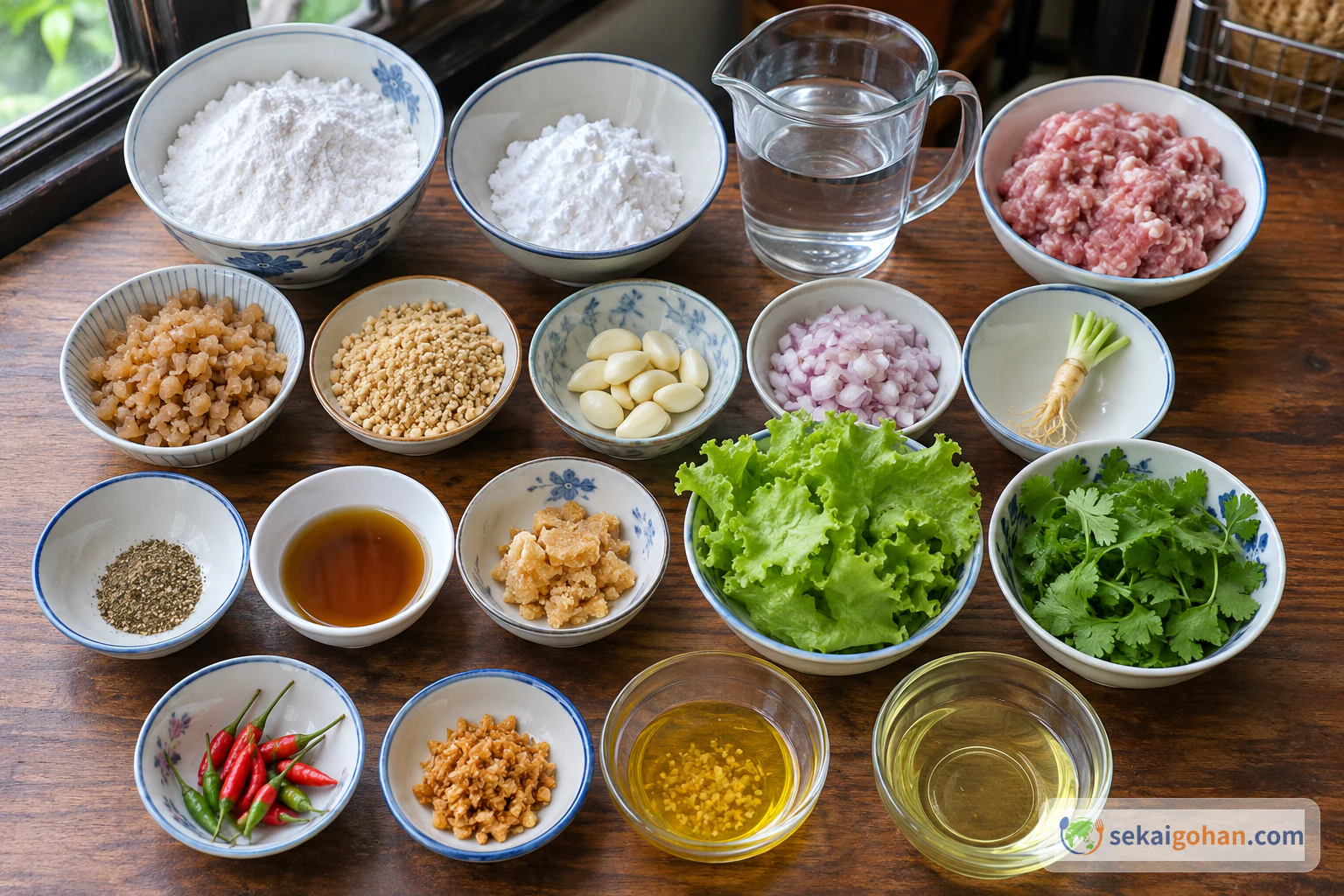
All the ingredients in separate small bowls, with the filling, wrapper and finishing items kept visually apart
Weigh and measure everything before you start cooking

Equipment

  • Wide-mouth pot with a lid
  • Clean food-use cloth, such as light unbleached cotton muslin, washed before its first use
  • Cooking fasteners labeled as resistant to steam and the heat of a boiling pot
  • Mortar and pestle
  • Skillet and spatula
  • Food thermometer
  • Mixing bowl and whisk or spoon
  • Ladle
  • Food-use spatula for lifting the wrappers
  • Shallow plate for cooling the filling
  • Receiving tray or plate for the finished parcels
  • Clean knives and cutting boards, with separate tools for raw meat and for food eaten raw
Cloth, fasteners and steam

Check the product label of any fastener, and do not use fasteners without a heat and steam statement. Never seal the pot: leave the edge gap in step 9 open, and rest the lid loosely. Keep the cloth out of the water and tuck loose ends away from the burner. Steam can burn, so keep your hands and face clear when you lift the lid.

Choosing Ingredients for Khao Kriap Pak Mo

Each ingredient here affects the result, so it pays to shop with care. Use store-bought salted radish and garlic oil.

Item How to choose What to watch
Rice flour Look for plain rice flour at Asian grocers or baking suppliers. A fine grind is a reasonable choice Check that the batter is thin and even before you steam
Tapioca starch Ask for it by name, as tapioca starch or flour Potato starch is not a substitute
Salted radish Look for ไชโป๊เค็ม at Thai grocers Sweet pickled radish makes a different filling. Japanese takuan has a different flavor, so check its salt and sweetness. Keep the amount at 1.75 oz (50 g)
Thai garlic Ordinary garlic is an alternative It will not smell the same
Coriander root Buy coriander with the roots attached Leaves and stems smell different. If you cannot find roots, leaving them out is safer than treating leaves as an equal swap
Fish sauce Use a bottle sold as fish sauce or nam pla Brands differ in salt and aroma. Soy sauce is not a swap
Peanuts Unsalted peanuts make the seasoning easier to judge Salted peanuts will add salt to the filling

The pepper is ground, and 2 tbsp is a lot, so expect a strongly peppery filling. The garlic oil goes on the receiving plate to keep the parcels from sticking; it stays out of the filling.

Allergens

This dish contains peanuts, fish sauce and soybean oil. Check the labels on ready-made items such as fried garlic and garlic oil as well.

Method: Cook and Cool the Filling, Then Steam One Sheet at a Time

Before the first wrapper

Coat the tray in step 15 before you steam the first sheet so each finished parcel has somewhere to go. The filling must be cool before wrapping, so make it first.

Troubleshooting Khao Kriap Pak Mo

Set the water and cloth on a cold pot before you turn on the heat; adjusting a cloth over a hot pot is how burns happen. The pork in the filling is checked with a thermometer in step 5: hold the center at 167°F (75°C) for 1 minute. For ground pork, 160°F (71°C) on a food thermometer is also a safe finish. Wash any raw vegetables for garnish and keep them away from tools used on raw meat.

What you notice What to check What to do
The filling tastes too salty Brands of salted radish differ in salt Check the label and taste a small piece before you cook next time. Stick with salted radish rather than sweet pickled radish
The filling is still wet after about 10 minutes Stoves differ Keep cooking over low heat until it begins to dry
The filling is still warm when you are ready to wrap It has not cooled long enough Spread it out on the shallow plate and wait
The cloth sags or touches the water The cloth is loose, or the water is too high Turn off the heat and let the pot cool before adjusting. Never re-tie the cloth over a hot pot
No steam comes out at the edge The gap may be closed Turn off the heat and let the pot cool, then reopen a gap of about 1 inches (2 cm). Never seal the pot
The sheet is thick Too much batter or not enough spreading Use about half a ladle and spread it thinly with the back of the ladle
The sheet does not look cooked after about 20 seconds The sheet needs more steam Cover it again and recheck before adding filling
Parcels stick to the tray The tray needs more oil Coat it again with garlic oil before adding more parcels

Variations on Khao Kriap Pak Mo

Cooks make this snack in different ways, and the wrapper is where most of the variation shows up. Whatever you change, the pork check in step 5 still applies, because steaming the wrapper doesn't make the filling safe.

What changes How cooks vary it What it means
Starch blend Some cooks mix tapioca, tao yai mom or mung bean flour into a mostly rice-flour wrapper These blends adjust softness and elasticity
Steaming time Some steam the sheet for about 40 seconds Timing depends on the batter
Folding Some fold the left and right sides over the filling One way to shape the parcel; there is no required fold count
Radish preparation Some wash and squeeze the salted radish This changes the seasoning

Frequently Asked Questions

Is this a crispy snack?

No. Khao kriap pak mo is a soft, white, translucent steamed wrapper around a savory filling.

Is 2 tbsp of pepper a mistake?

No, that's the listed amount of ground pepper. Expect a strongly peppery filling.

Does the 20-second steam cook the pork?

No. The 20 seconds is for the wrapper; the filling is cooked beforehand and checked with a food thermometer in step 5. Don't rely on the 10-minute cook time or the look of the filling to tell you it's safe.

Do I need a special pot?

You need a wide-mouth pot, a lid, a clean food-use cloth and fasteners labeled for steam and heat. Check your fasteners' labels, and make sure the setup leaves the edge gap open.

Sources

  • Muthita Kaboundee, Wongnai Cooking, "สูตร ข้าวเกรียบปากหม้อ พร้อมวิธีทำโดย Muthita Kaboundee." The main recipe: all ingredients, amounts, method and serving. A personal post with no sign of editorial verification. https://www.wongnai.com/recipes/ugc/393933a45067459bb37fe05540010a84
  • KRUA.CO / Saengdad Publishing, "ปากหม้อแป้งสด เนื้อนุ่ม อร่อยได้หลายแบบ." The traditional sweet-salty filling, wrapper starch blends, and differences from similar steamed rice dishes. Not used for this recipe's amounts or steps. https://krua.co/cooking_post/pak-mo
  • BlackPiano, Pantip, "ข้าวเกรียบปากหม้อ." Another cook's cloth-pot handwork, steam gap, about 40 seconds of steaming and folding. Not used for this recipe's amounts or timing. https://pantip.com/topic/32985459
  • Kapook Cooking, "ข้าวเกรียบปากหม้อ ของว่างแป้งนุ่มไส้ล้นกินอร่อยทำสนุก." A credited repost of BlackPiano's post, including washing and squeezing the salted radish. Not an independent recipe. https://cooking.kapook.com/view162044.html
  • Ministry of Health, Labour and Welfare (Japan), "家庭でできる食中毒予防の6つのポイント." Household guidance of 75°C at the center for 1 minute, and separating raw and cooked equipment. Editorial safety addition. https://www.mhlw.go.jp/stf/seisakunitsuite/bunya/kenkou_iryou/shokuhin/syokuchu/01_00006.html
  • FoodSafety.gov, "Cook to a Safe Minimum Internal Temperature." The 71°C figure for ground pork and the use of a food thermometer, given here for comparison. https://www.foodsafety.gov/food-safety-charts/safe-minimum-internal-temperatures
  • Ministry of Agriculture, Forestry and Fisheries (Japan), "生野菜を安全でおいしく食べるために." Washing vegetables under running drinkable water, washing hands with soap, and using a clean knife and board. Editorial safety addition. https://www.maff.go.jp/j/syouan/seisaku/foodpoisoning/fresh_vege.html
  • Viet World Kitchen, banh cuon cloth guidance. The recommendation of light unbleached cotton muslin as a steaming cloth. It does not cover fastening the cloth to a pot. https://www.vietworldkitchen.com/?p=467