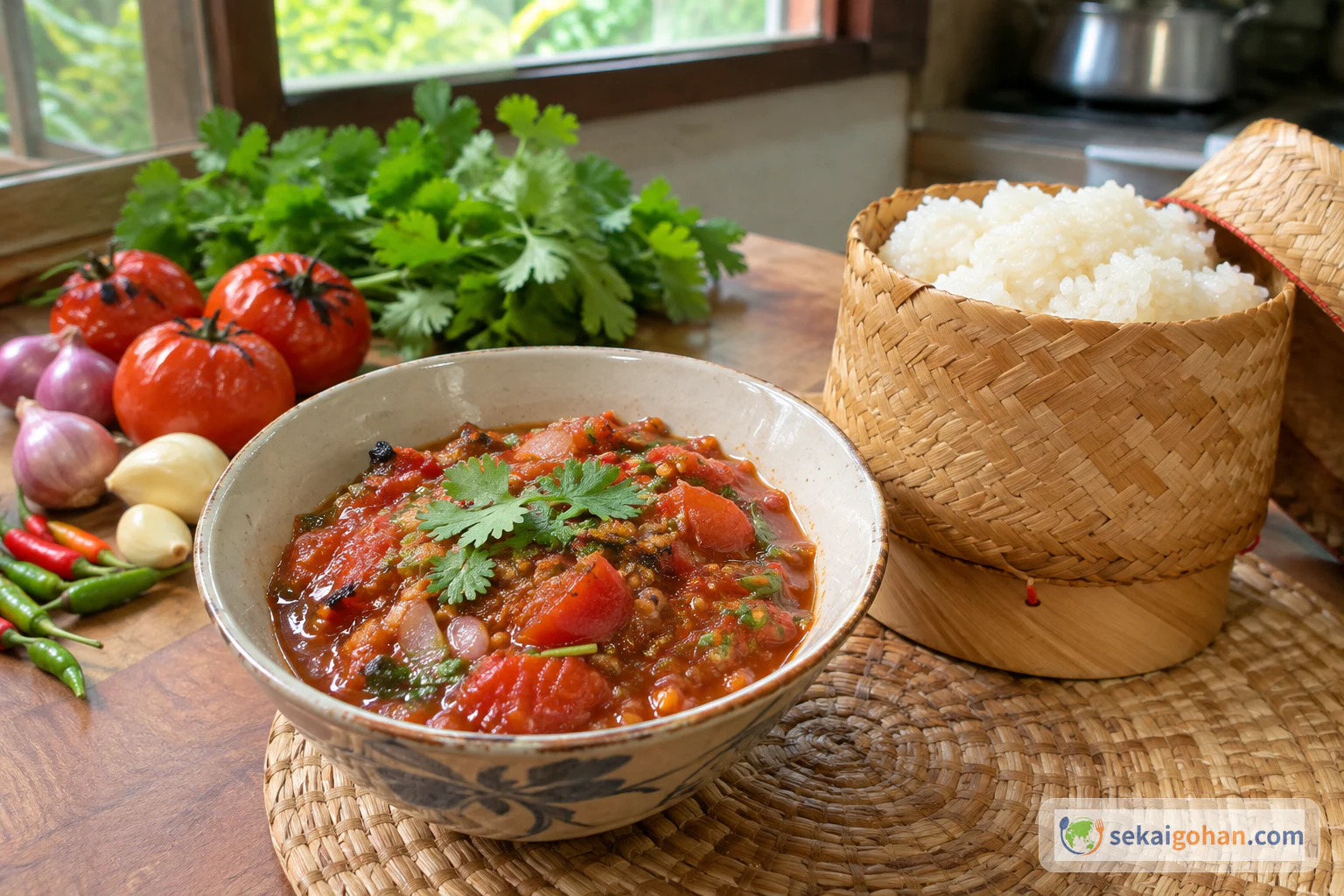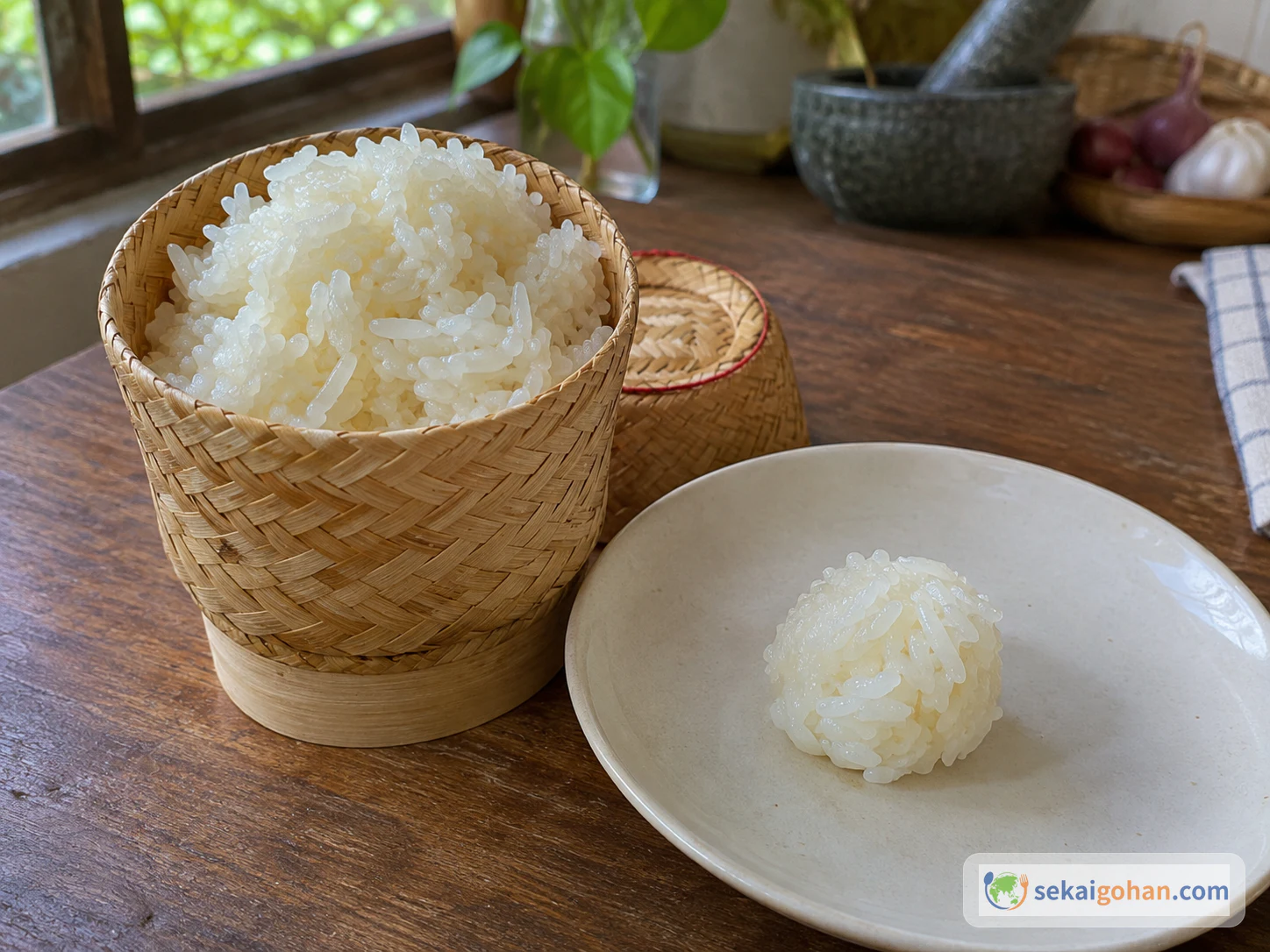
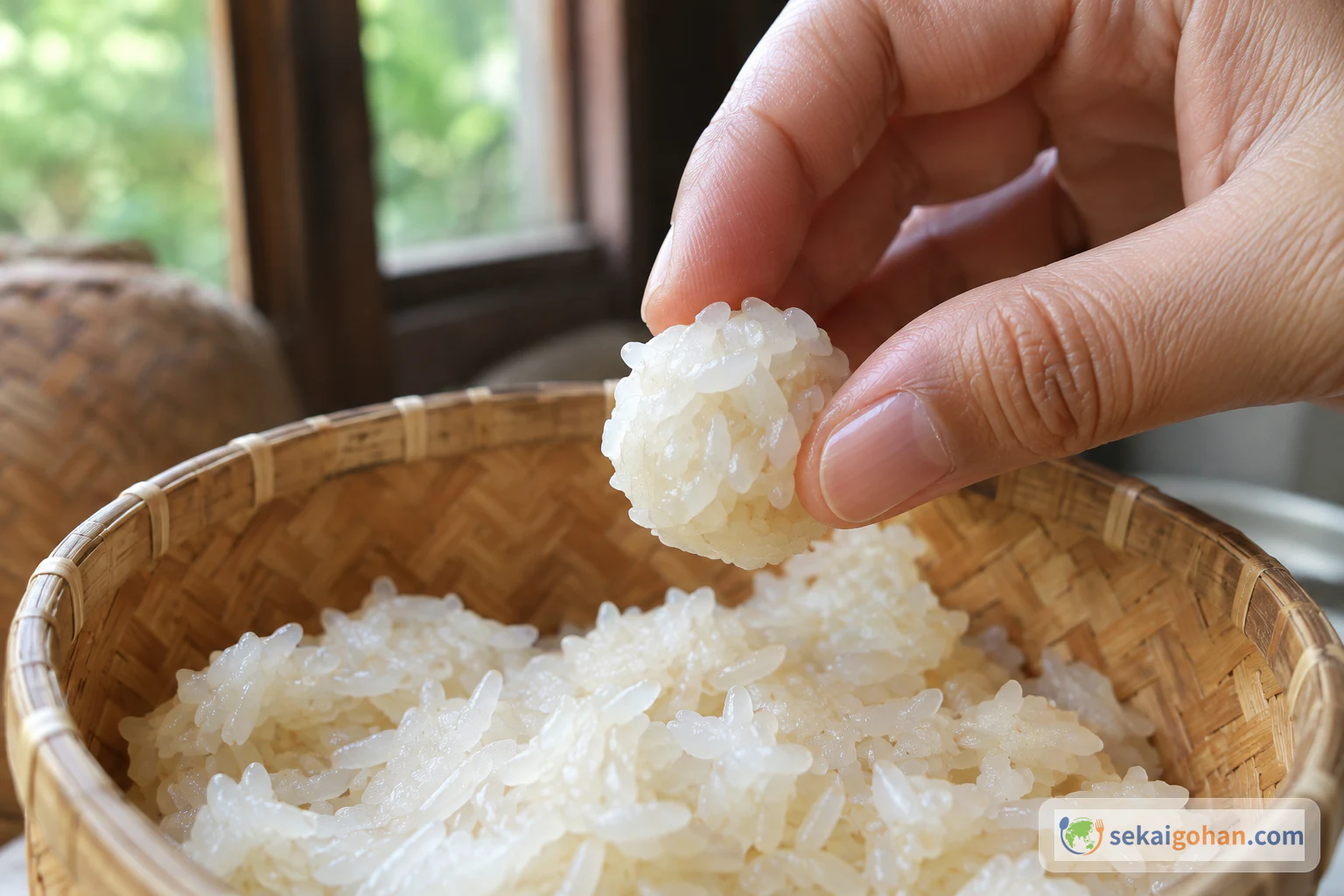
Pinch off a little steamed sticky rice, roll it between your fingers into a bite-sized ball, and use it to pick up a sauce or a bite of another dish. That's how khao niao (ເຂົ້າໜຽວ) is eaten in Laos, often with an eggplant dip on the side. The rice itself is plain and unseasoned: white sticky rice, soaked and then steamed. The grains end up soft all the way through and cling together without turning into paste.
Khao Niao at the Lao Table
In this rice, the cooking and the eating are linked. It is steamed in a basket, loosened so the steam can escape, and then shaped by hand at the table. Think of it as the bread of a Lao meal, the thing you tear off to carry the rest of the food.
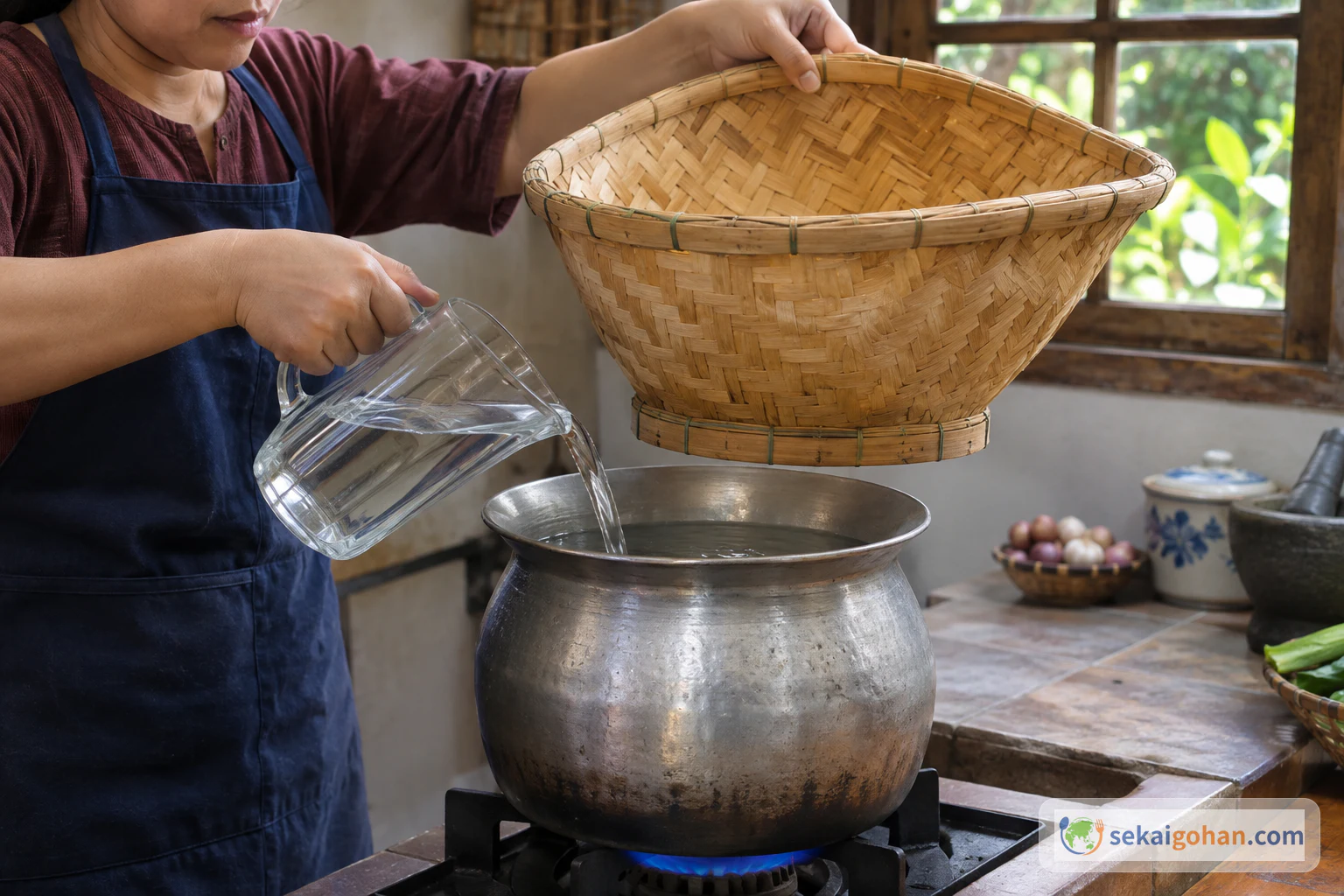
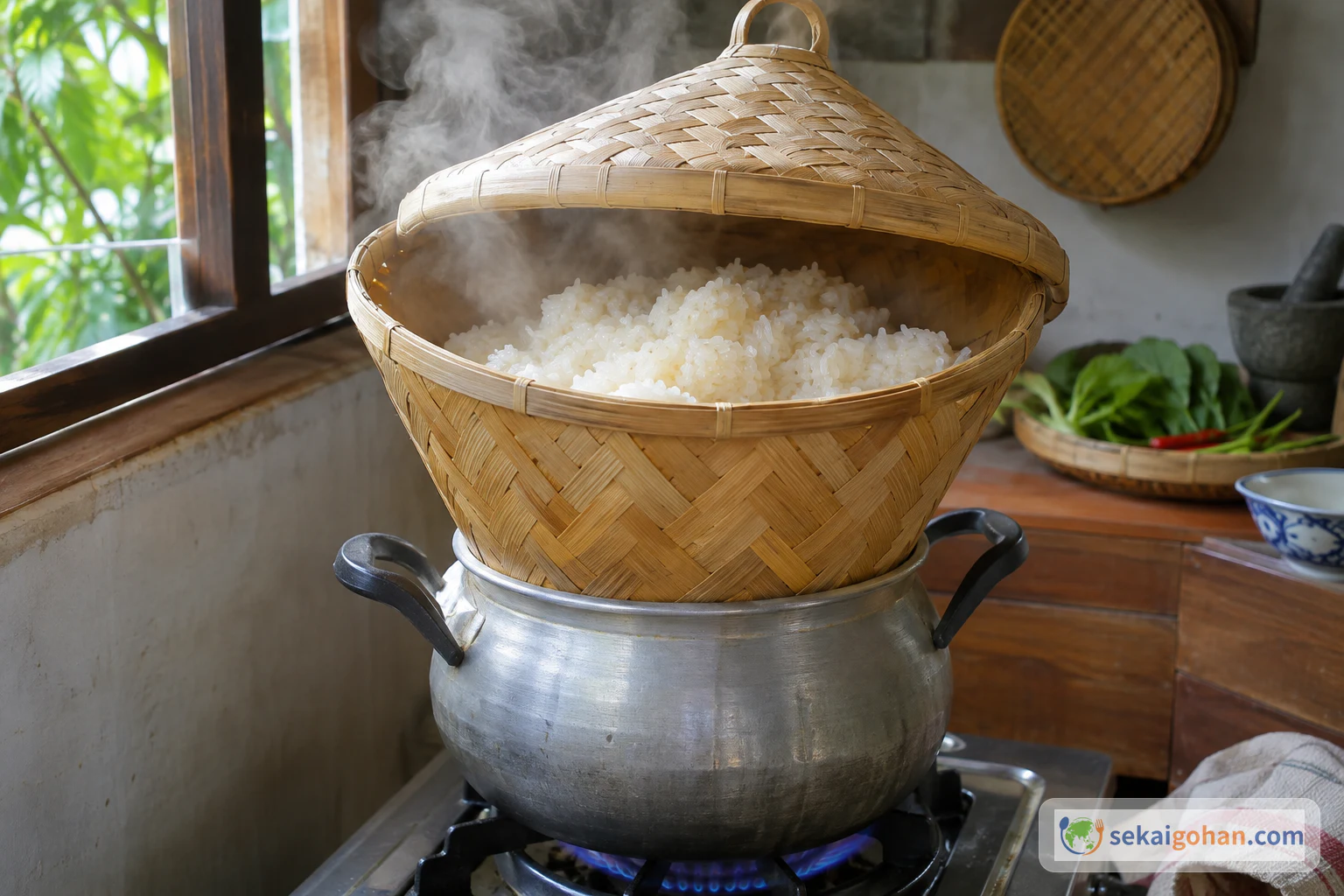
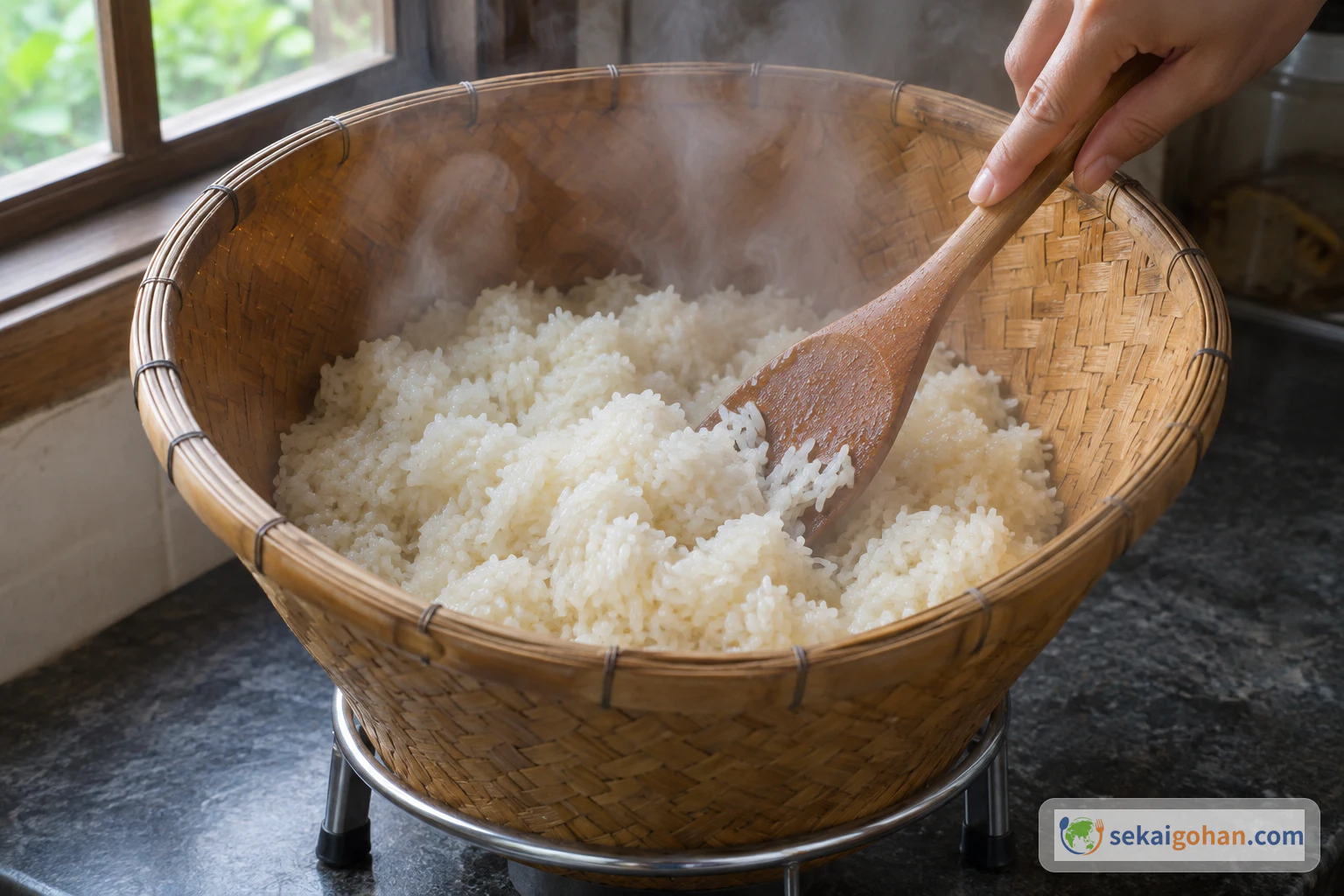
In northern Laos, sticky rice comes in several varieties. Cooks steam it in a traditional conical basket and serve it in a second basket. They turn or spread the rice to let the steam out, and everyone at the table shapes their own balls to scoop up food. You can do all of this at home. Steam the rice so it never sits in water, let the steam out so the grains don't turn heavy, and form one bite at a time. For other Lao dishes and how they fit on the table, see Laos.
You may also see "khao niao" in the name of Thai mango sticky rice. That is a sweet dessert made with coconut and mango, and it's a different dish from this plain rice.
In Lao script it is ເຂົ້າໜຽວ, usually romanized khao niao; Kao Neo is another spelling. In English it is called sticky rice, sweet rice or glutinous rice. "Glutinous" describes the sticky texture of the cooked rice.
Ingredients: Sticky Rice and Water, for 2 Servings
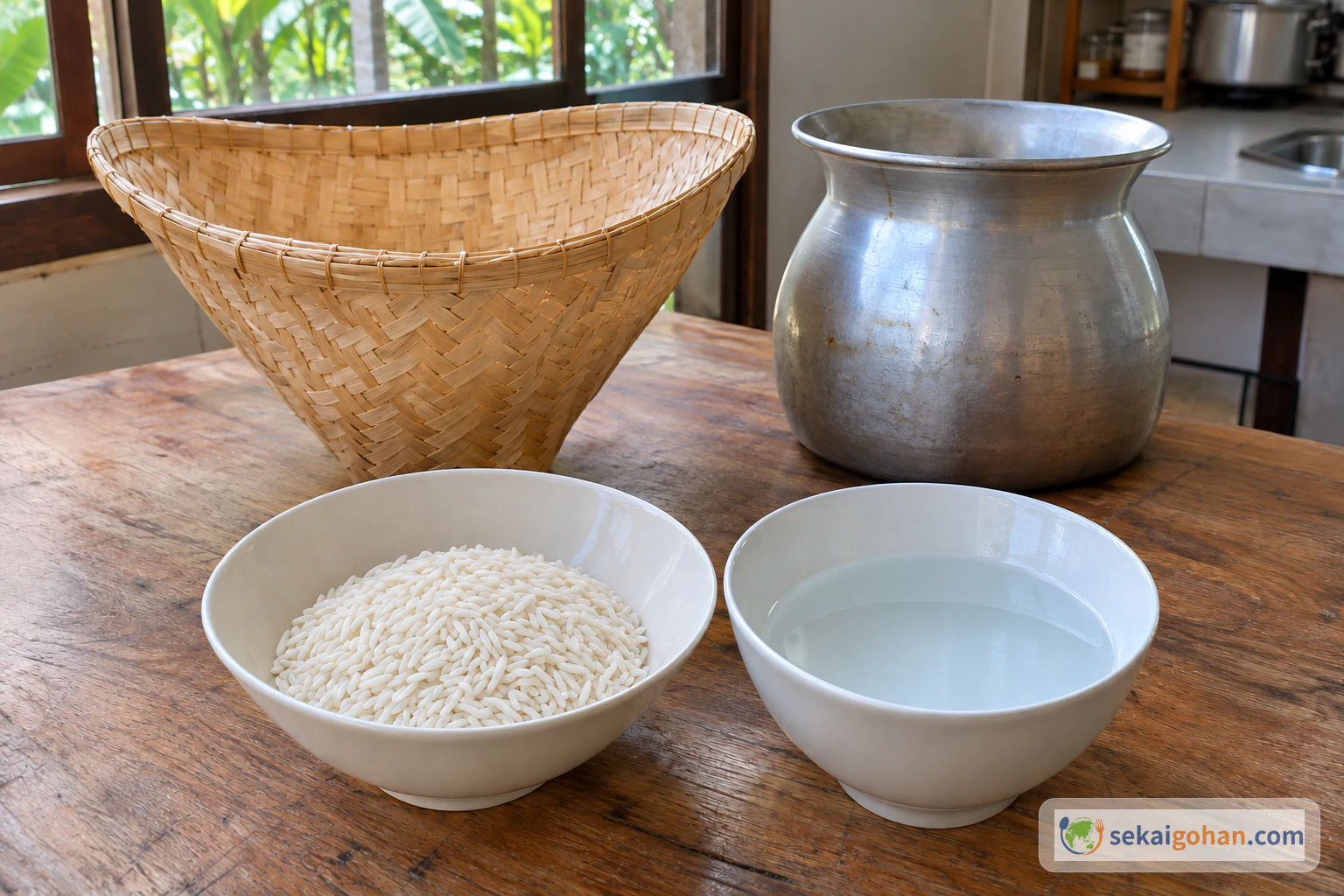
Nothing else goes in: no salt, sugar, oil or coconut milk.
Equipment
- Conical bamboo sticky-rice steaming basket and a matching pot, with a lid
- A bowl for soaking
- A wooden spoon, dampened before use (a damp ordinary spoon also works)
- A clean heatproof stand or surface to rest the hot basket on
- A small clean plate for checking a grain
- A bamboo rice container for serving (optional)
Choosing Sticky Rice and a Steamer
Rice. Look for bags labeled Thai sticky rice, sweet rice or glutinous rice, and check the ingredients and the bag size. Thai glutinous rice can have long, slender grains, so go by the label rather than the look of the grain. If Thai sticky rice is hard to find or only comes in large bags, short-grain glutinous rice such as Japanese mochigome will work. Its aroma and grain shape are different, so the result won't be identical.
Steamer. The conical bamboo basket (sometimes sold as huad or huat) sits in the mouth of its pot, so the rice hangs in the steam above the water. If you buy one, make sure its diameter and height fit your pot. A deep pot with a steamer insert lined with a steaming cloth or cheesecloth also works. The cloth should be loose-woven enough to let steam through and tight enough to hold the grains, and it should stay clear of the lid. Check the label on any cloth for washing and reuse.
Serving container. A bamboo rice container keeps the rice covered without sealing in all the moisture, and a bowl with a loosely set lid does the same job. Neither one keeps rice at a safe temperature for long, so read the storage notes below.
The only ingredients are rice and water. "Glutinous" refers to the sticky texture, not to wheat gluten. Still, check each product's label and any manufacturing-facility statements for allergens.
Method: Soak, Steam, Let the Steam Out
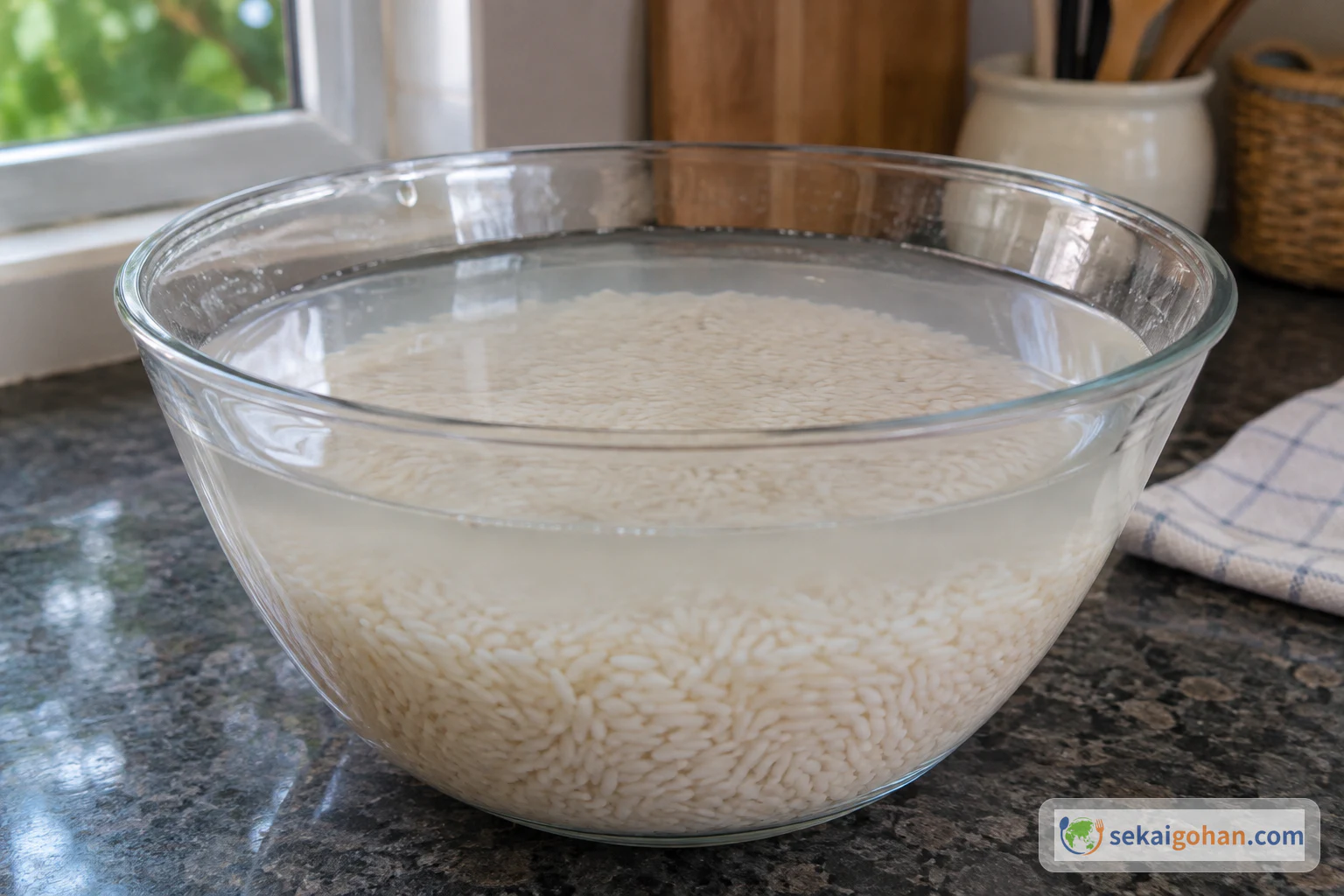
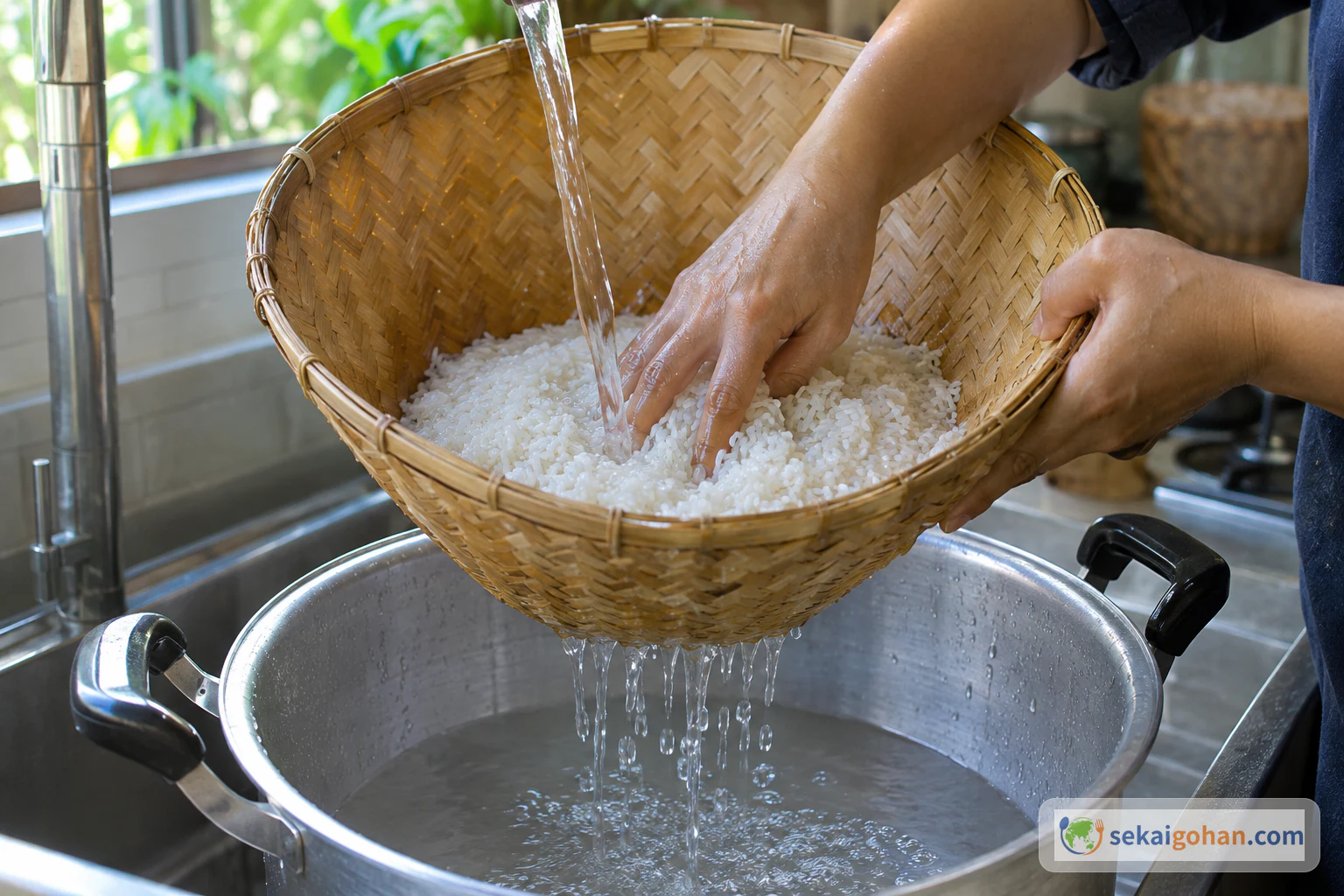
Two hours of soaking is the standard; 45 minutes in very warm water works when you are in a hurry. Do not rely on the clock alone at the end: check that no hard core remains in the grains.
Fixing Hard, Watery or Gummy Sticky Rice
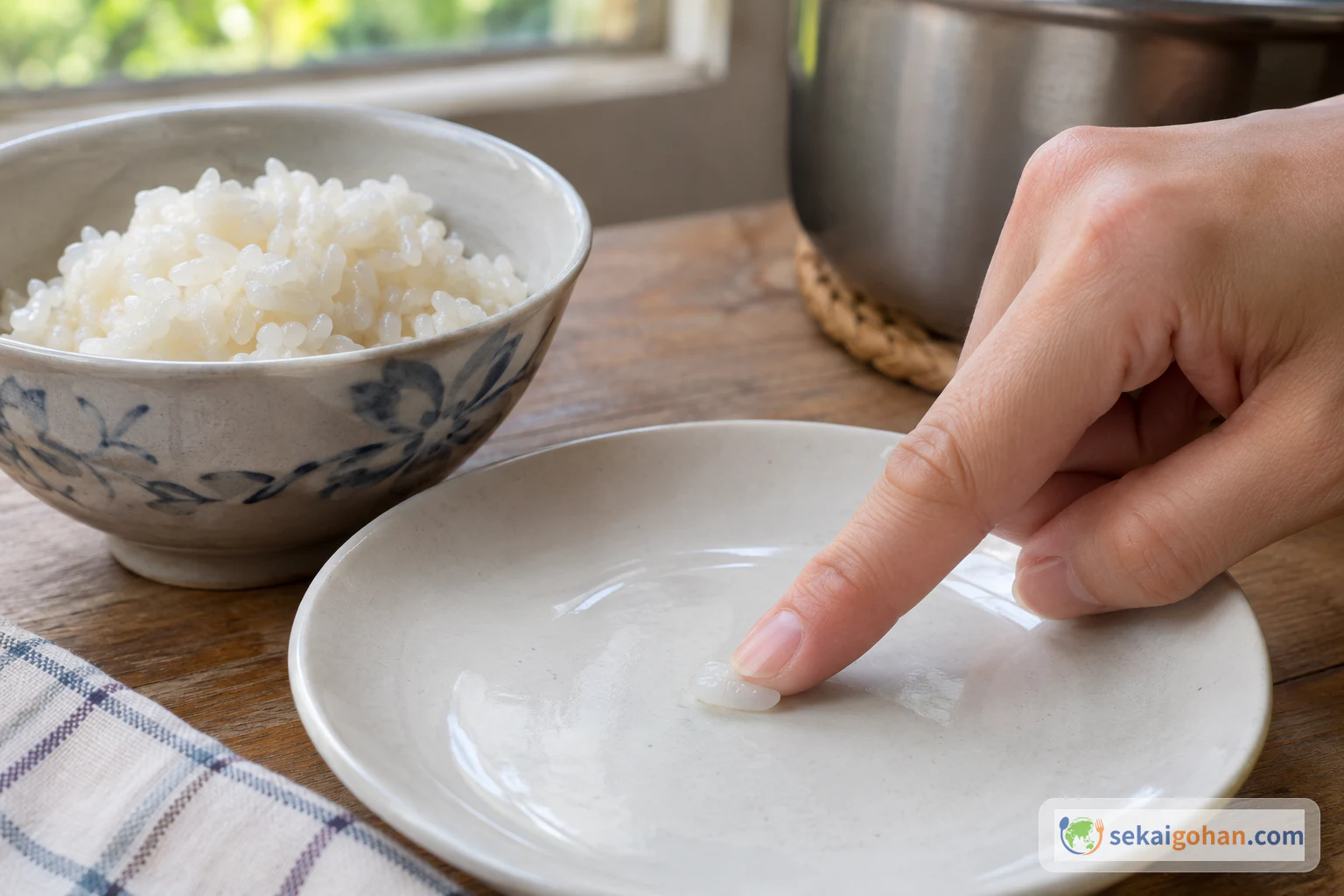
To check doneness, put a grain on a separate plate and look for a hard core. Trust the grain more than the timer.
| Condition | Likely cause | What to do |
|---|---|---|
| Hard core in the grains | Not enough soaking or not enough steam; differences in rice or equipment | Cover again and steam a little longer with the steam going, then check another grain. Next time, try the full 2-hour soak |
| Wet, watery rice | The basket or rice touched the water in the pot | Next time, keep the water level below the bottom of the basket |
| One heavy, gummy mass | The steam was not let out after cooking, or the rice was pressed down | Do not skip the minute of stirring with a damp spoon. Loosen, don't knead |
| Surface drying out before the meal | Rice left uncovered | Keep it in a clean, covered container until you eat |
Serving, Variations and Storage
What to eat with khao niao
Khao niao goes with other dishes and isn't seasoned itself. Roll it into balls to scoop up sauces and dips like an eggplant dip. On Sekai Gohan it also shows up next to laab (a minced-meat salad with toasted rice powder and herbs) and mok pa (fish steamed in leaves). Those are separate recipes, and nothing from them goes into the rice.
Variations to try
The recipe is always just rice and water, but you can change one thing at a time and see what happens:
- Thai sticky rice or short-grain glutinous rice. Notice how aroma and grain shape differ.
- 45-minute soak or 2-hour soak. Use one next time and compare the texture after steaming.
- Conical basket or cloth-lined steamer. Compare how the steam passes through and how well the rice drains.
- Bamboo container or lidded bowl. Choose whichever you prefer for bringing the rice to the table.
- Bite size. Make the balls larger or smaller depending on whether you are scooping a dip, a minced-meat salad or steamed fish.
Leftovers and food safety
Rice can cause food poisoning by Bacillus cereus, so serve khao niao freshly steamed and don't leave it at room temperature for long. A bamboo rice container keeps rice covered at the table, but it doesn't keep it hot and shouldn't be used for storage.
For leftovers, divide the rice into small portions in clean, shallow containers and cool it quickly. Then refrigerate it promptly at 46°F (8°C) or below, or hold it hot at 131°F (55°C) or above. When you reheat it, heat it thoroughly.
Frequently Asked Questions
Can I make it with ordinary rice?
No. Ordinary non-glutinous rice, such as jasmine or sushi rice, won't give you the sticky texture that lets you roll a bite by hand. Use rice labeled sticky, sweet or glutinous.
How long should I soak it?
The standard is 2 hours. If you're in a hurry, soak it for 45 minutes in very warm water.
How many minutes does it steam?
About 10–15 minutes, covered, over high heat. If a grain still has a hard core, keep steaming a little longer.