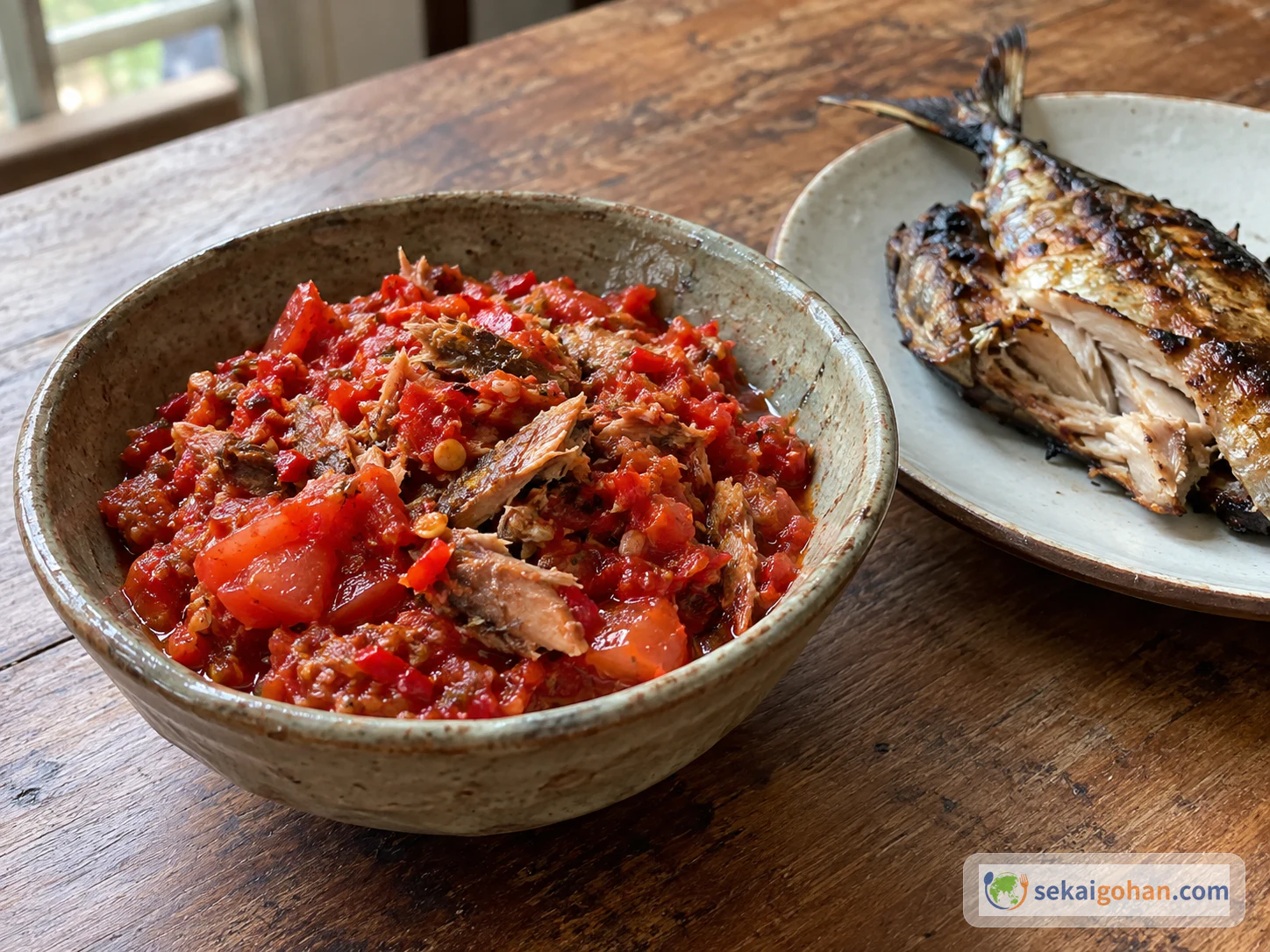
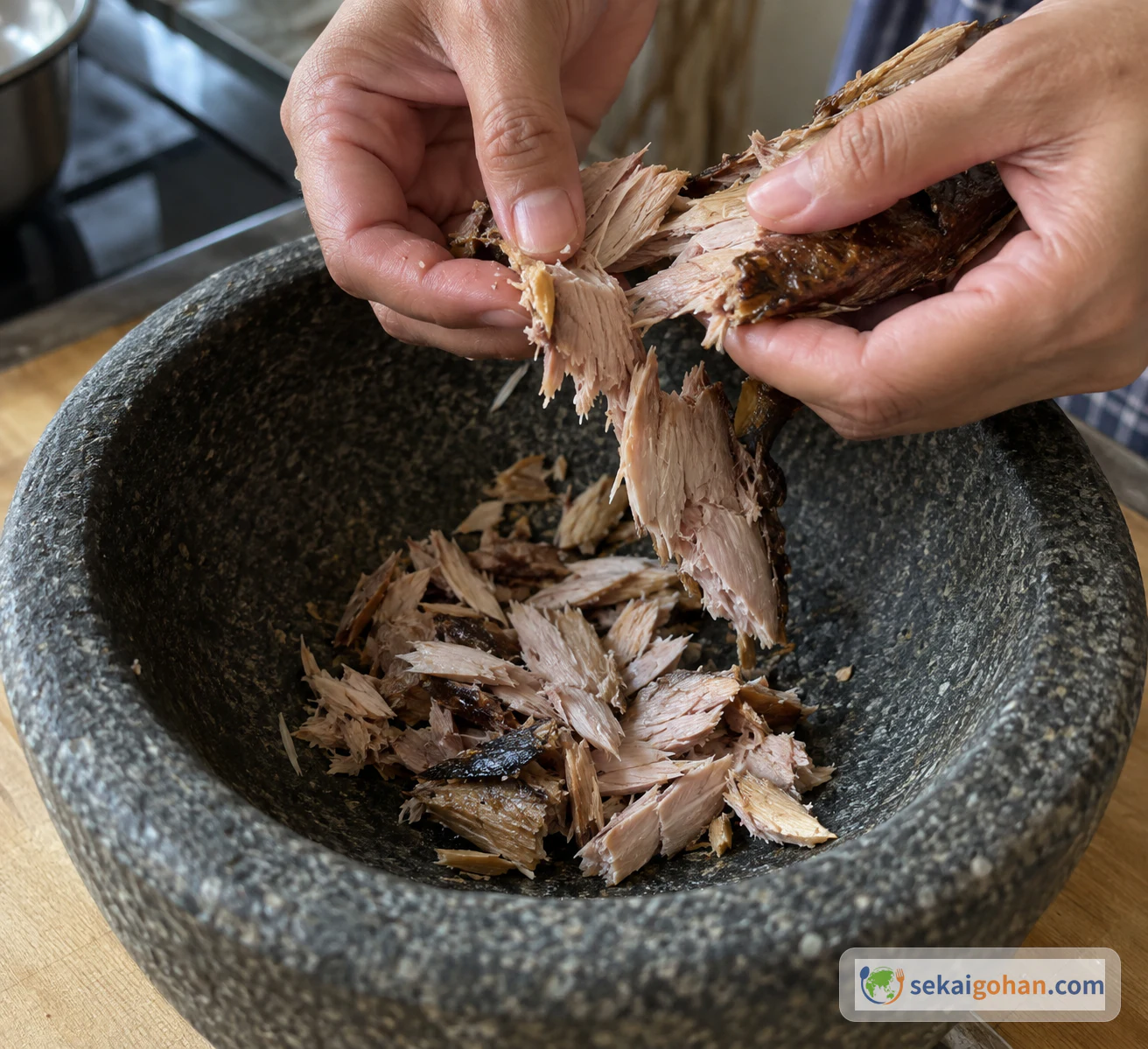
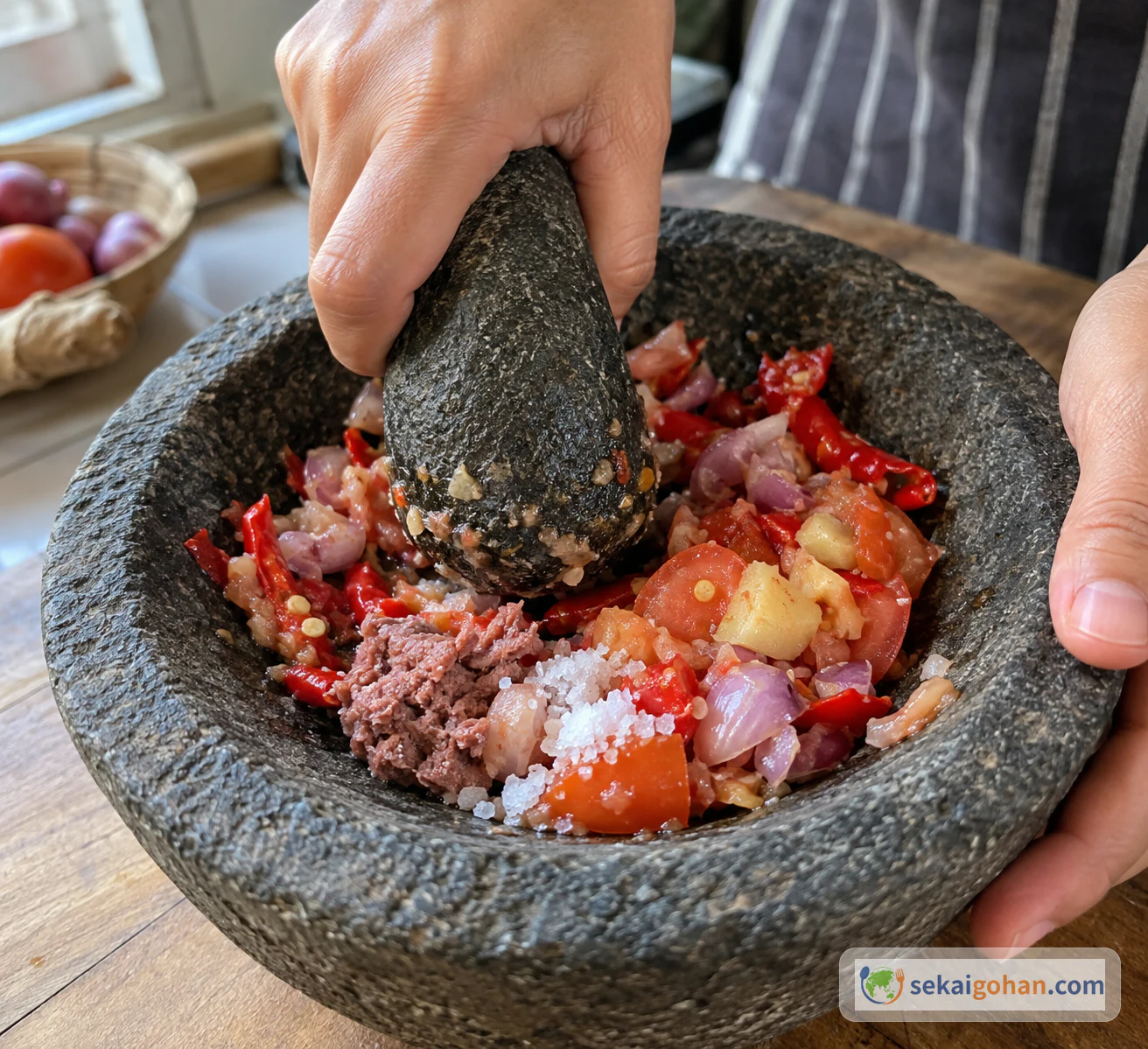
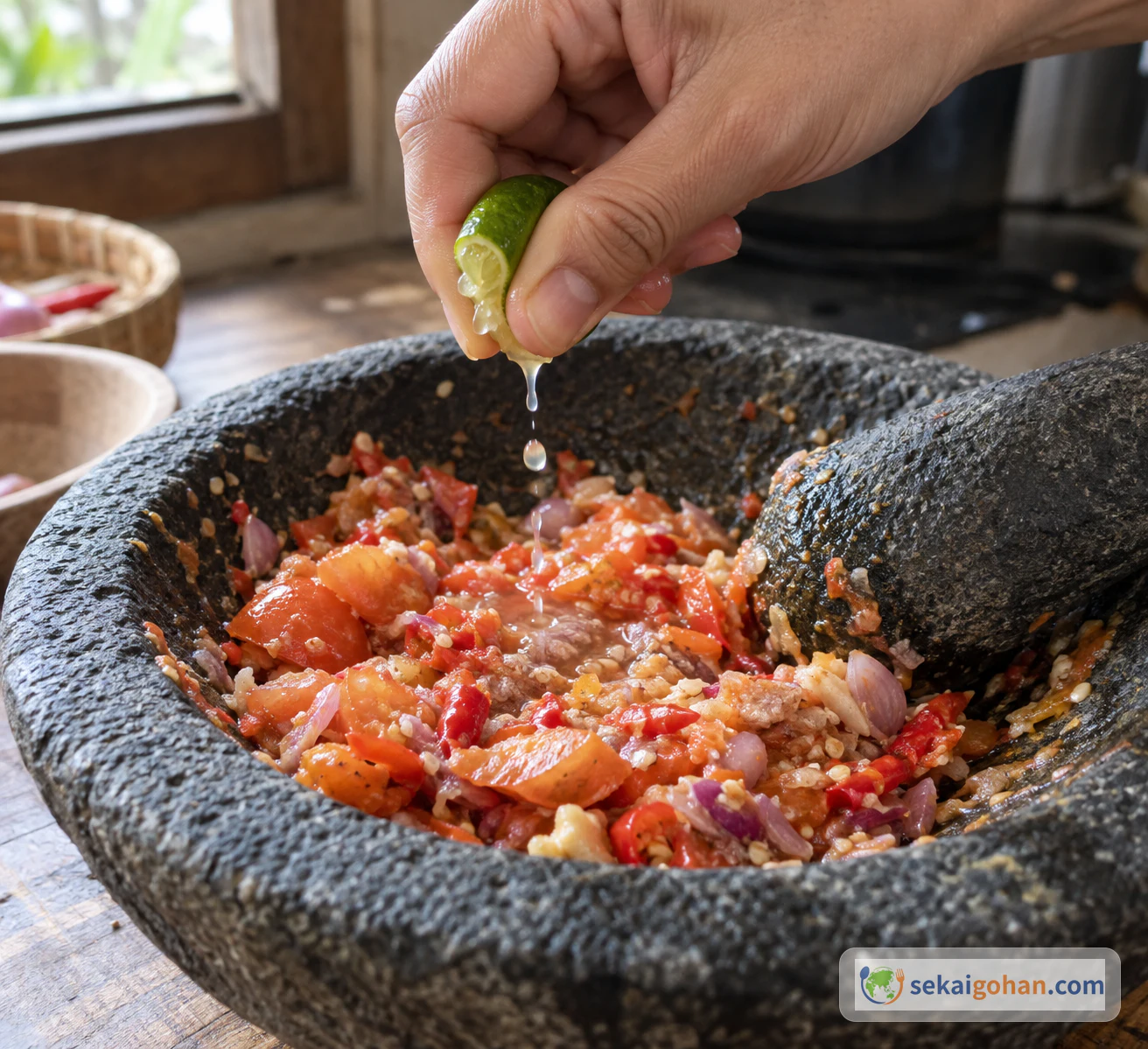
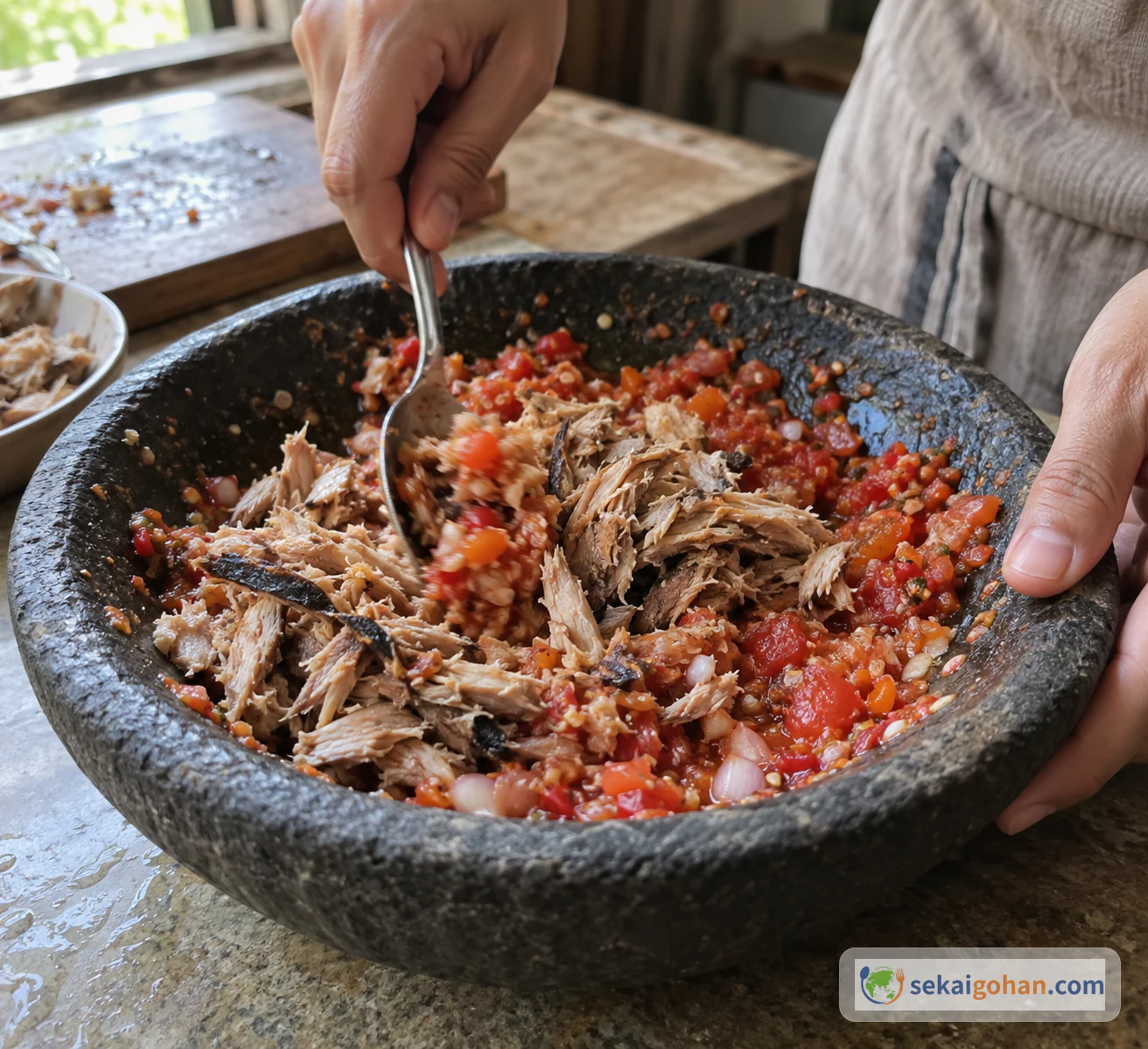
On a Manado table, a small bowl of red, coarsely pounded sambal sits next to grilled fish or a bowl of tinutuan, the local porridge. This is dabu-dabu bakasang, a fiery relish that tastes like home to people from the region. A spoonful of bakasang gives it deep, salty savor. Red chilies and shallots add bite, tomato makes it juicy, jeruk limo brightens it, and flakes of smoked skipjack go in at the end. Nothing is cooked, and a little goes a long way.
Sambal Bakasang and Its Fermented Fish
What gives this sambal its character is bakasang (also written bekasang), a traditional fermented fish seasoning from North Sulawesi and North Maluku. It is made from small fish or from the viscera of larger fish, which are salted before fermentation. Depending on the maker, the base can be skipjack viscera, fish roe or small fish. There is no single standard bakasang, and two jars can taste quite different.
For the sambal, ready-made bakasang is pounded with shallots, red chilies, tomato, ginger and salt, brightened with jeruk limo juice, and finished with smoked skipjack. Some cooks heat the bakasang before mixing it in, but here everything stays raw. For more dishes from across the archipelago, see our Indonesia page.
Histamine can build up in fish such as tuna and mackerel when they are mishandled. Once it has formed, cooking, freezing, smoking, curing or canning will not remove it. Fermentation conditions for bakasang also differ widely: one study used 25% salt and sampled over 0, 2, 4, 6 and 8 days, which are research conditions, not a home method. So do not ferment fish viscera at home. Use a finished commercial product, read its label, and follow the handling and storage directions printed on it. Do not judge whether it is safe by smell or appearance alone.
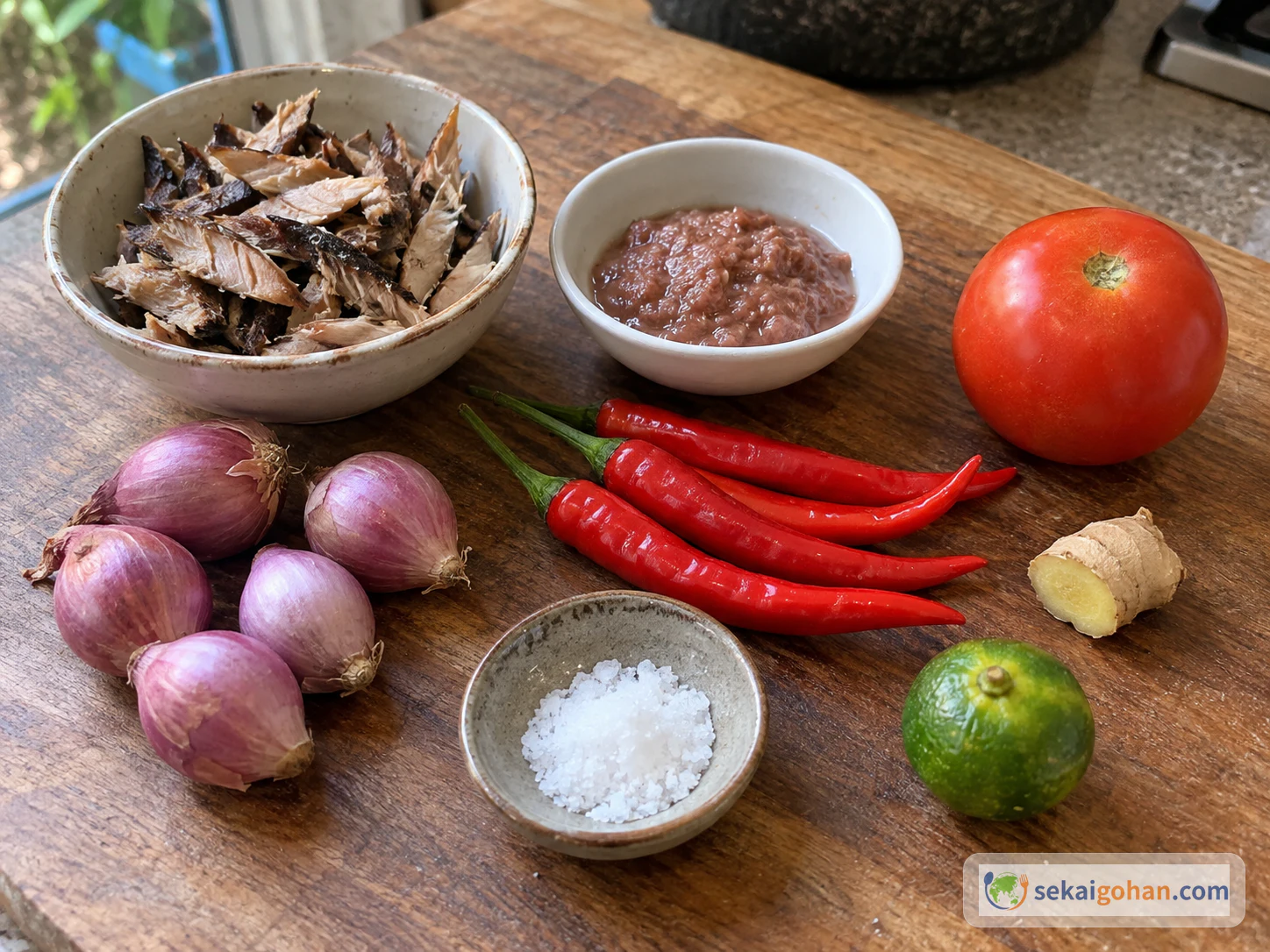
Ingredients
Equipment
- A clean bowl for flaking the fish
- A mortar and pestle (a stone mortar works well)
- A spoon for mixing
- A serving bowl
Choosing Ingredients for Sambal Bakasang
Bakasang. Buy a finished commercial product and read the ingredient list and handling directions on the label. Salt levels differ from product to product, and that shows up in the finished sambal. If you can't find bakasang, fish sauce or an ordinary bottled sambal can supply part of the flavor, but you'll end up with a different sambal.
Smoked skipjack. Smoked skipjack or bonito sold elsewhere can work. Dryness and smokiness vary a lot, so expect a different texture and aroma.
Shallots and chilies. Red onion can stand in for shallots, though it carries more water and a different kind of sharpness. Red chilies vary in size, and the heat varies with them.
Jeruk limo. This small Indonesian citrus has a fragrance all its own. Lime, or sudachi if you can get it, will work, but the aroma won't be the same.
Method
This is a raw sambal: there is no stove step. Work with clean hands, clean tools and a clean mortar from start to finish.
Fixing Salt, Aroma and Texture
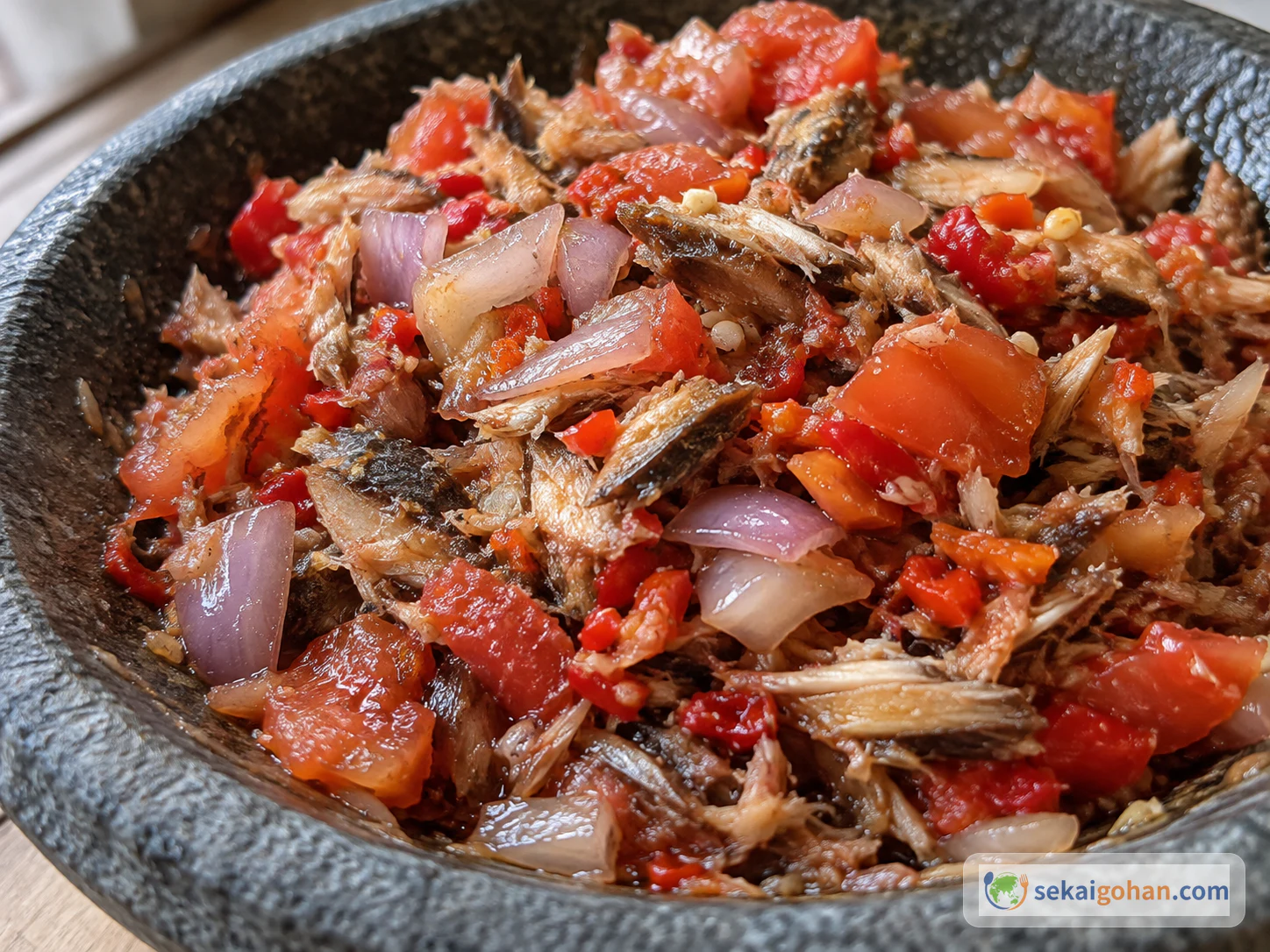
The finished sambal should be coarse and glossy with citrus juice, and you should still be able to pick out the tomato, shallot, chili and fish fibers.
| What you notice | Likely reason | What to try |
|---|---|---|
| Too salty | Your bakasang or smoked fish is saltier than expected | Next time, hold back some of the salt and add it at the end to taste |
| Fermented aroma is overpowering | Products vary in strength | Serve a smaller amount alongside the food rather than changing the recipe |
| Paste-like and wet | Pounded too long | Pound more briefly so the pieces stay visible |
| Citrus aroma is weak or different | Lime or another citrus was used instead of jeruk limo | Accept it as a different aroma; the substitutes are a different fruit |
Serving, Storing and Varying Sambal Bakasang
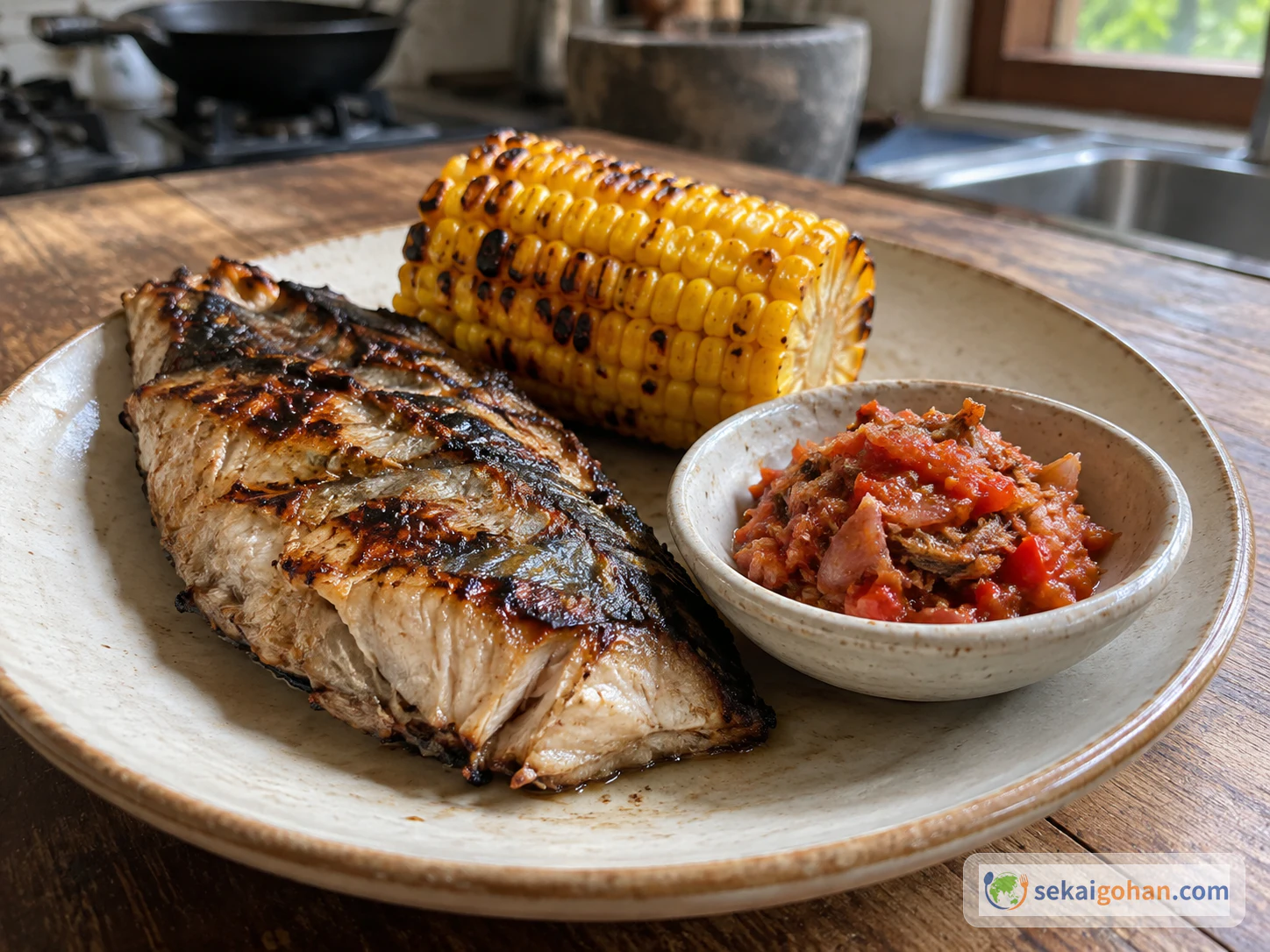
In Manado, dabu-dabu bakasang is eaten with grilled fish, tinutuan, corn and fried bananas. Put a small dish on the table and let everyone take a little. The flavor is strong, and it's easier to add more than to take it back.
Make it shortly before you eat. Keep leftovers covered, handle them hygienically and eat them soon. Store the opened bakasang exactly as its label directs.
For a milder sambal, use fewer red chilies; the fish and citrus come forward as the heat drops. Leave out the smoked skipjack and you have a simpler bakasang sambal.
Frequently Asked Questions
Is bakasang the same as terasi?
No. Bakasang is a fermented fish product of North Maluku and North Sulawesi, and terasi is a separate product. One can't simply replace the other.
Can I make bakasang at home?
Don't make bakasang at home. Fermentation conditions vary widely, and once histamine has formed in fish such as tuna and mackerel, cooking, freezing, smoking, curing or canning won't remove it. Use a finished commercial bakasang and follow its label.
Who should avoid this sambal?
The sambal is built on fish, both bakasang and smoked skipjack, so anyone with a fish allergy should not eat it. Check the labels of commercial products for other allergens as well.