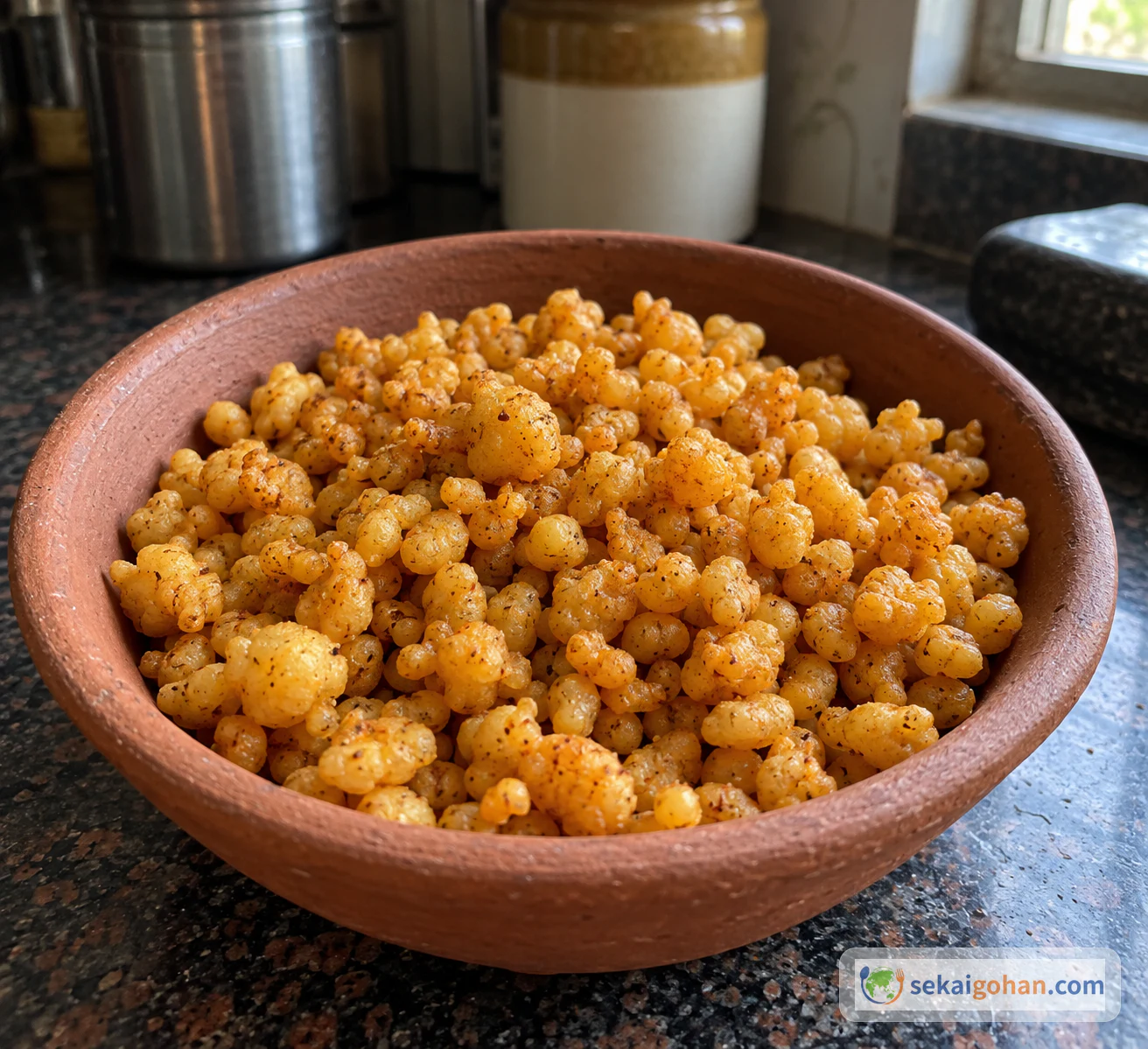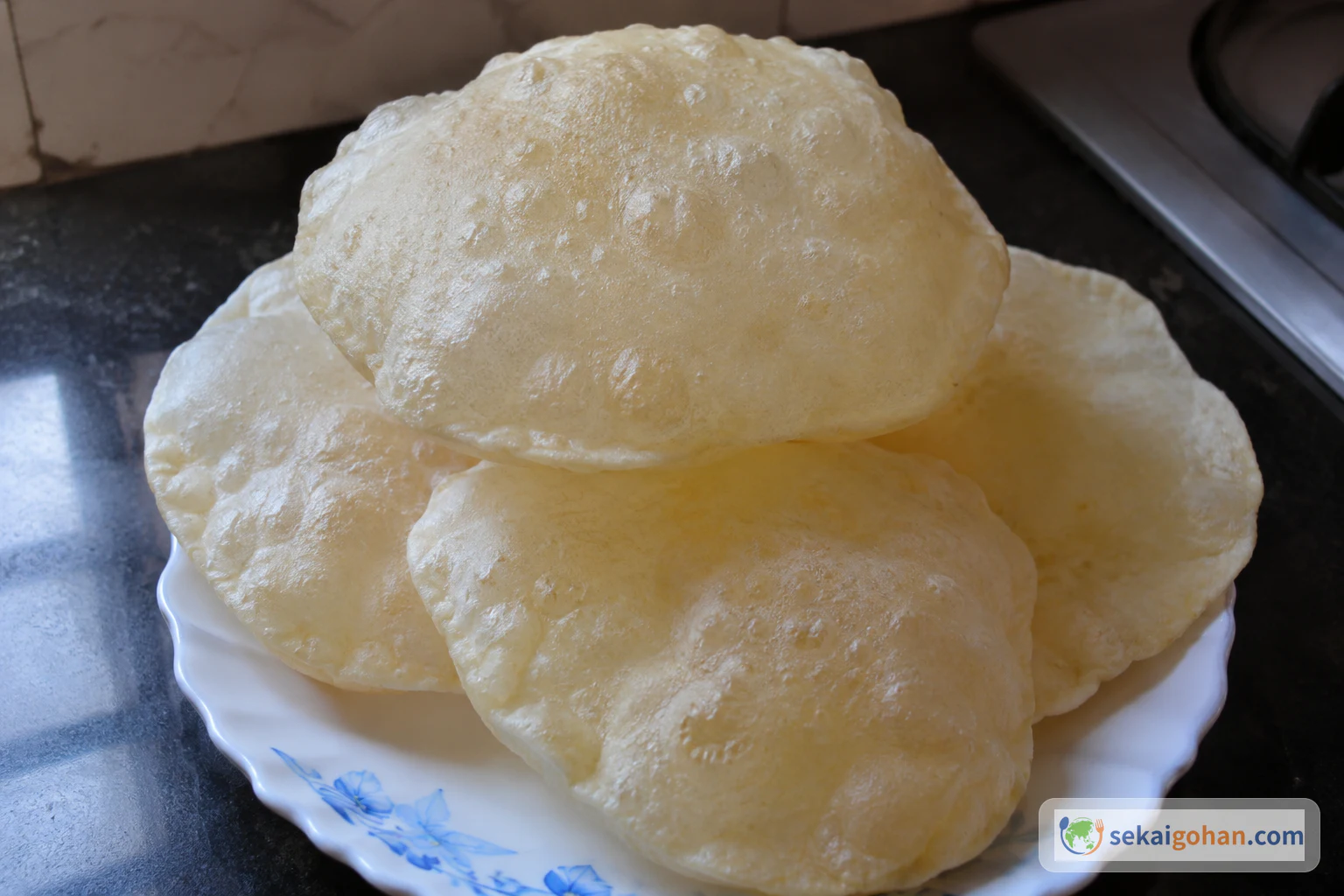
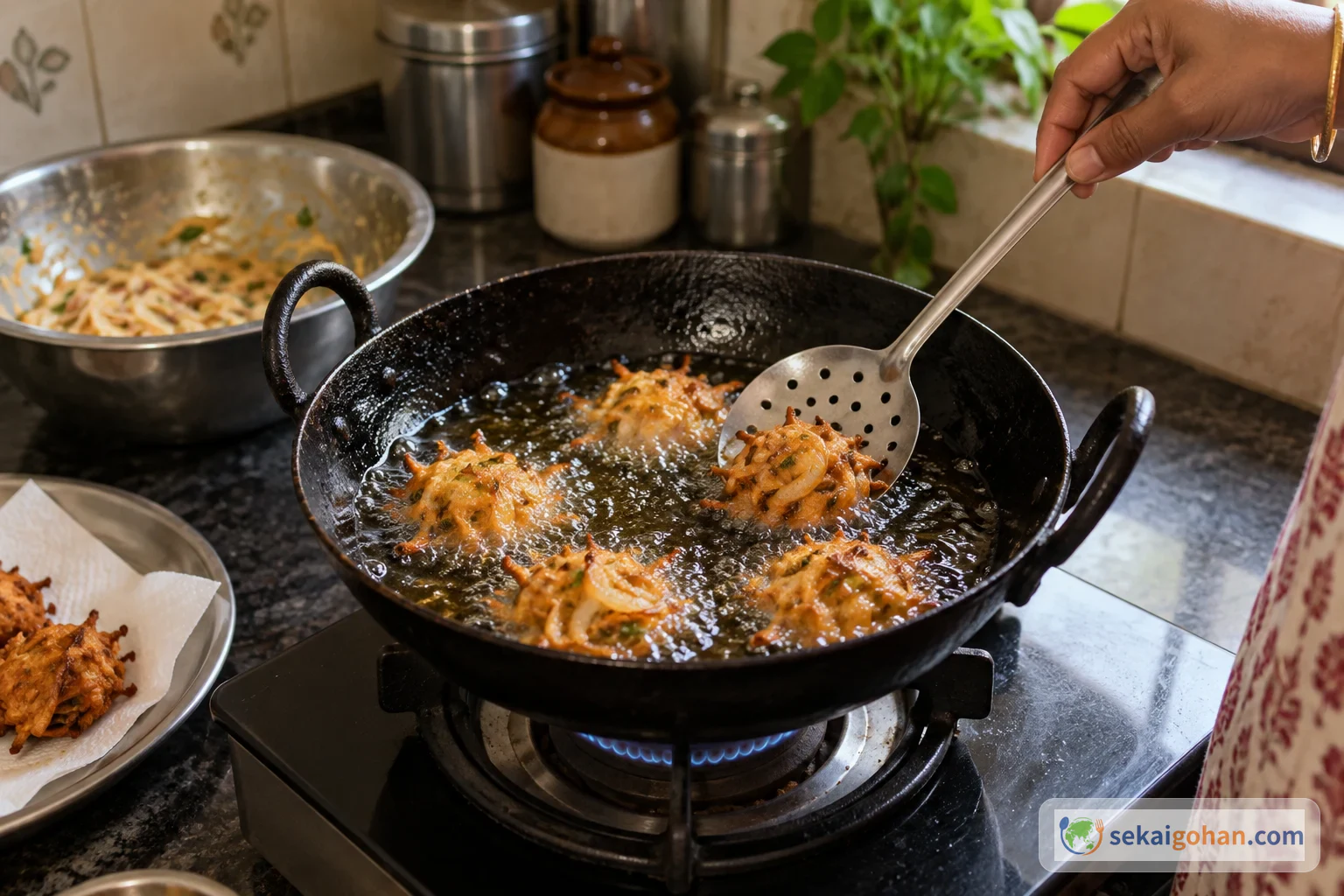
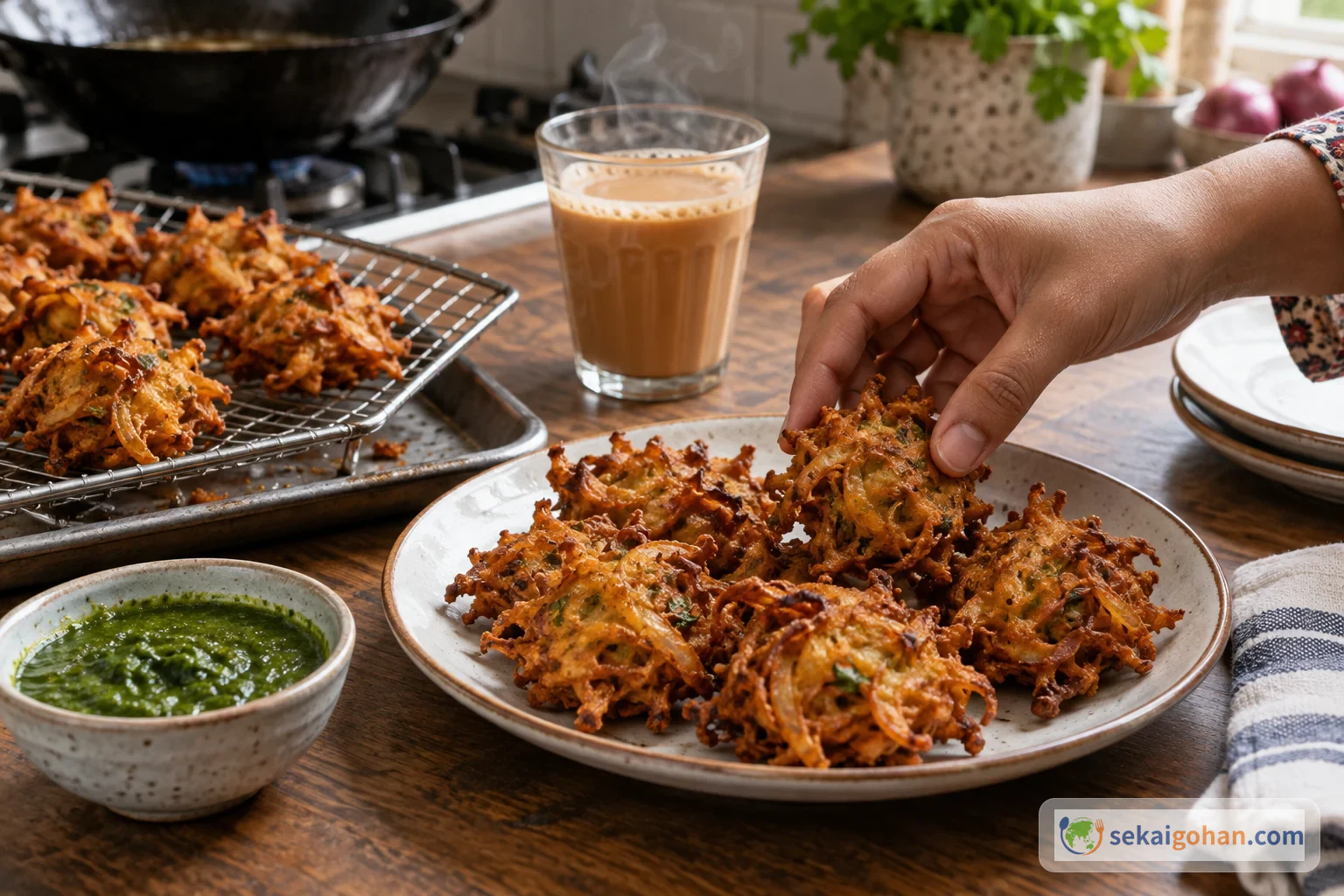
When raindrops start tapping on the roof, the oil in the kitchen gets a little louder too. The edges of the sliced onion fan out, the besan batter clings to the thin folds, and the brown edges are the first to color in the fryer. Break open a hot pakora and the onion inside has gone sweet and soft.
Pyaaz pakora (Pyaaz Pakora / Pyaz Pakoda) is an Indian snack of thinly sliced onion bound with besan (chickpea flour) and spices, then deep-fried. The trick is the water. Rather than making the batter with water, you bind the flour with the liquid that comes out of the salted onions. The coating stays thin and the gaps between the onion slices stay light. Too much water gives you a thick batter that soaks up oil.
It makes 12–16 small clumps of onion, for 4 servings. About 25 minutes from cutting to frying, and about 20 minutes of frying.
Onion pakora and chai on a rainy day
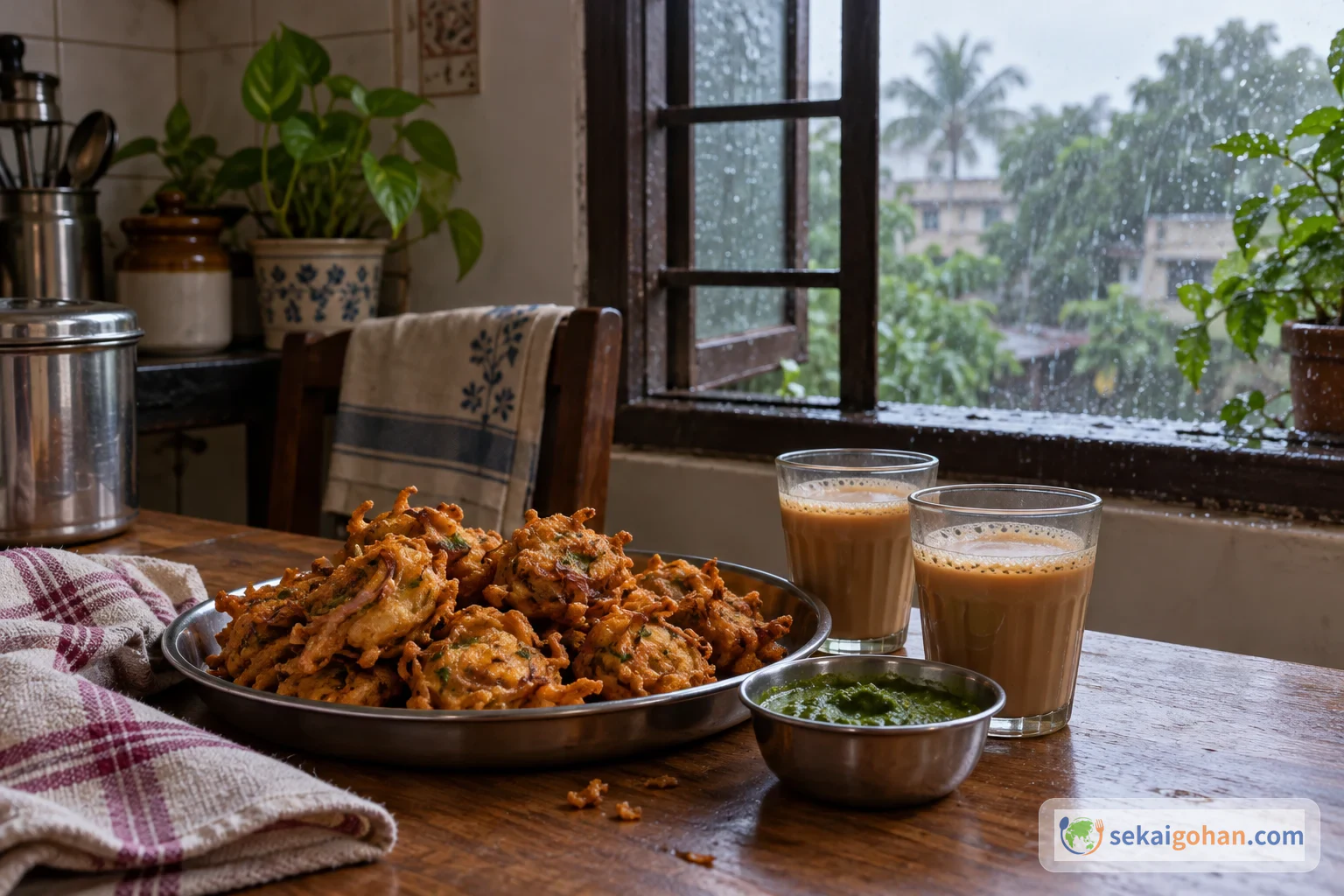
Pakora are fried snacks made all over India, and the filling changes from place to place: potato, spinach and green chiles go into the batter as well as onion. Across much of the north and west, hot pakora with masala chai is what people eat in the rainy season. Damp air outside, frying oil crackling, the smell of spices and the crunch of hot batter all belong to the same scene.
In Maharashtra, onion pakora is called kanda bhajji, and people eat it with ginger chai when it rains. The name changes from region to region, and the names give you clues: how the onion is cut, how thick the batter is, and which chutney and herbs go with it.
| Name / region | Shape and how it is eaten | Tips for cooking at home |
|---|---|---|
| Pyaaz Pakora / Pyaz Pakoda | Loosened thin-sliced onion bound with besan and fried as small clumps | Use the moisture from the onion and keep the batter thin. This is the method here |
| Kanda Bhajji (Maharashtra) | One of the names for onion fritters. Paired with chai and chutney | If you add curry leaves or green chile, keep the clumps small so they cook evenly |
| Vengaya Pakoda (Tamil Nadu) | A regional name for onion pakora; the spices and herbs change | Whatever the name, get the balance of thin-sliced onion and besan right first |
| Vengaya Bajji (South India) | A different type, with onion rings coated in a smooth batter | For rings, use a separate, thicker batter instead of the moisture-based one here |
| Bhajia (Chhattisgarh) | A regional street snack using onion, chile, potato and more | Whatever the filling, use the same standard for batter thickness and spacing in the pan |
Vengaya bajji uses onion cut into 0.2–0.3 cm rings and coated in a smooth batter, so it eats differently from pakora made with loose slices. Bhajia from Chhattisgarh comes in onion, chile and potato versions, made with besan and spices and eaten with tea or green chutney. At home, decide first whether you want rings or loosened slices. That one choice prevents most failures.
Ingredients: making a batter without too much water
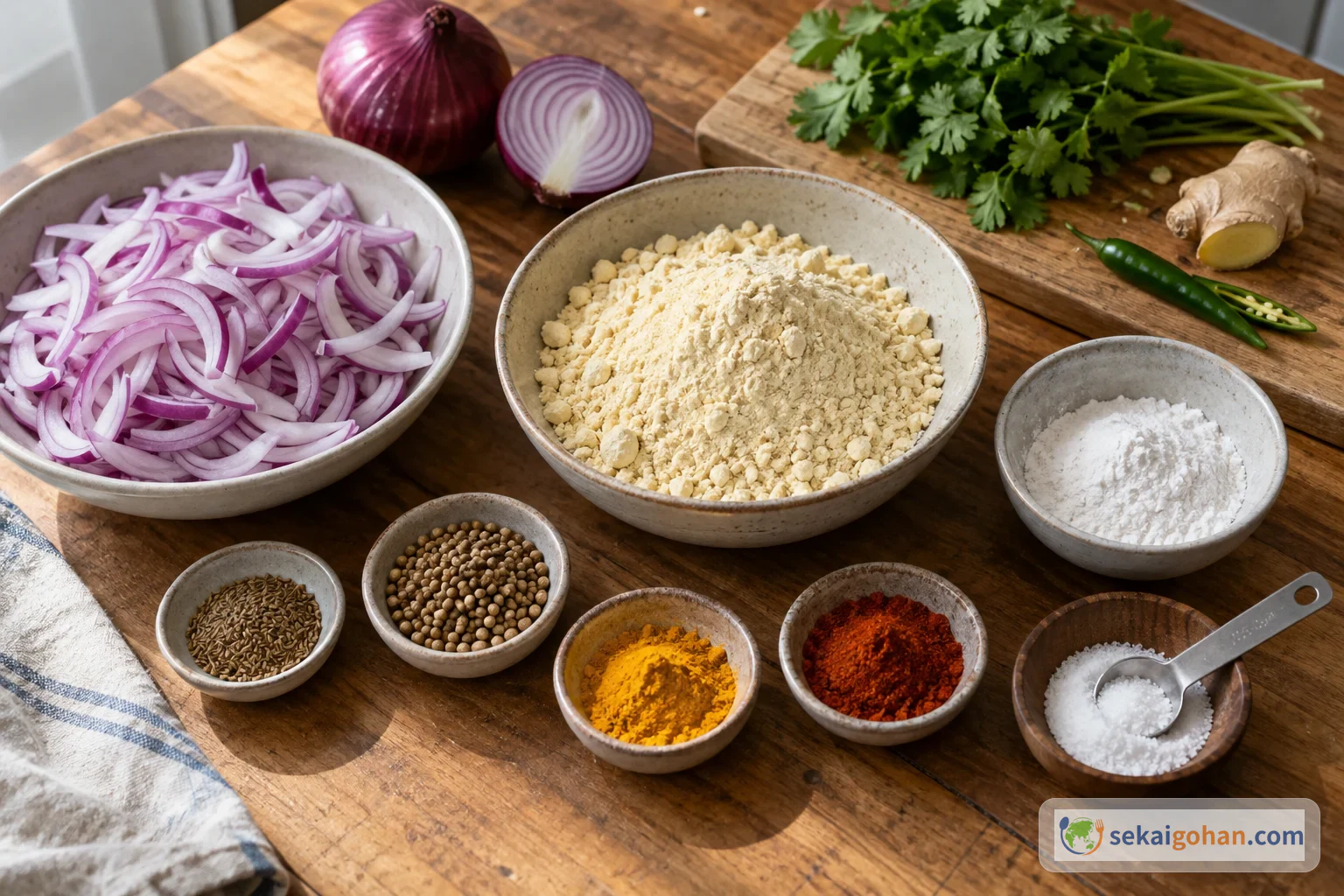
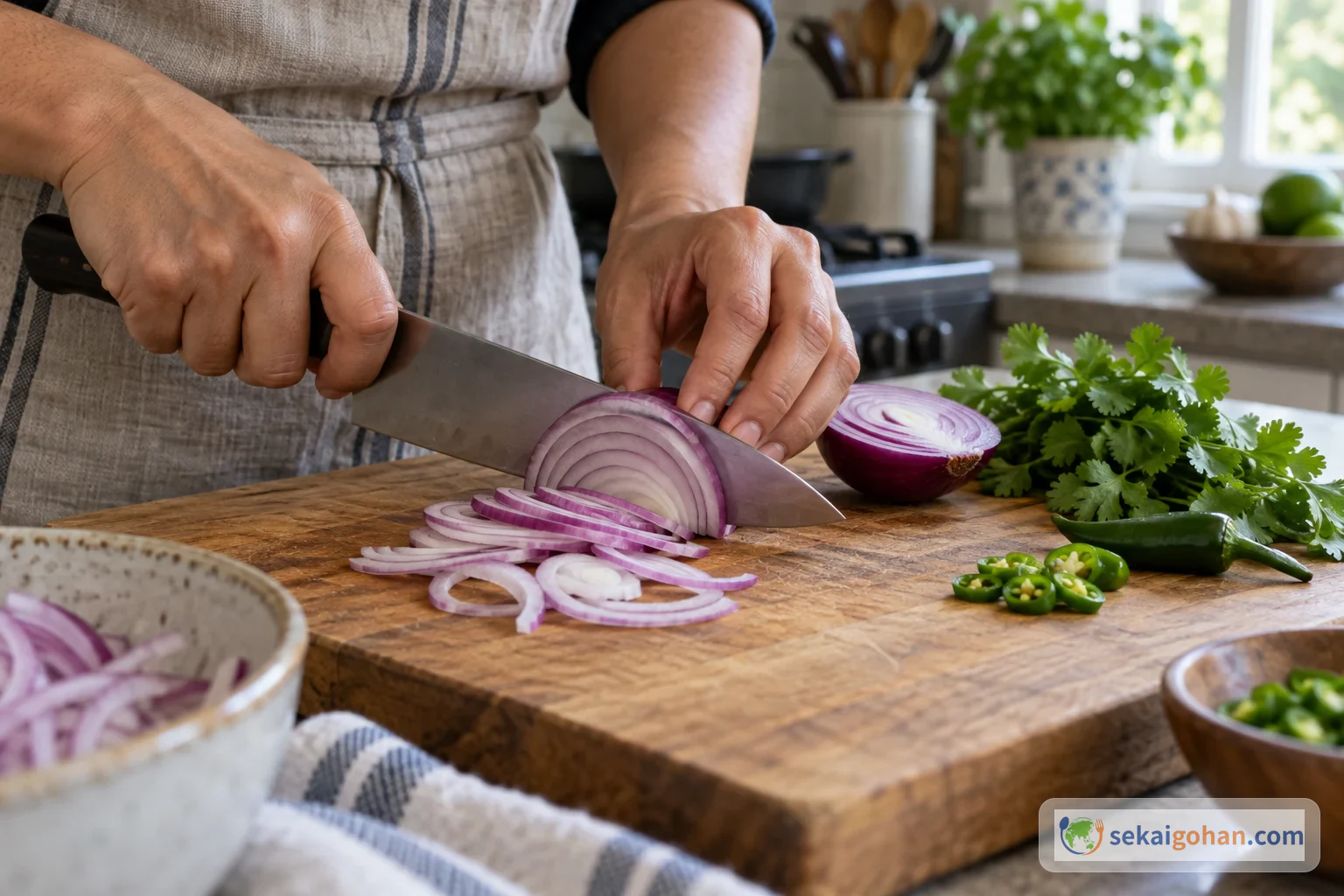
Choose onions whose layers come apart when sliced thin. Red onions bring more color and heat, and yellow onions give a gentler sweetness after frying. Rather than using several small onions, medium onions that can be sliced to the same thickness make it easier to match the salting time and the doneness.
Pakora ingredients
Besan is flour ground from dried chickpeas. This recipe also combines besan with rice flour, and uses the water released from the salted onions to bind the batter. When buying chickpea flour, check that the label says one of "besan," "chickpea flour" or "gram flour." The more finely the pulses are ground, the more easily the flour clings in the gaps between the onions.
If you are making besan only once, a small pack from a specialty grocery is enough, or use the chickpea flour you already have. If you will make samosa, pakora and besan chilla in a row, buy a 2.25 lb (1 kg) bag. When buying, check that the ingredient is chickpea, the size and the storage method. If you already have the flour, don't buy it again.
Mint chutney ingredients
Choosing besan and spices for pyaaz pakora
Besan, rice flour and ajwain are the three things to look for at an Indian grocery or online. Ajwain and coriander seeds can be coarsely crushed with the flat of a knife or in a mortar. If you cook with whole spices outside of pakora too, a small table mill lets you grind them right before frying, when the aroma is strongest. If you mostly use powdered spices, you can skip the extra tool.
Method: use the onion's moisture in the batter
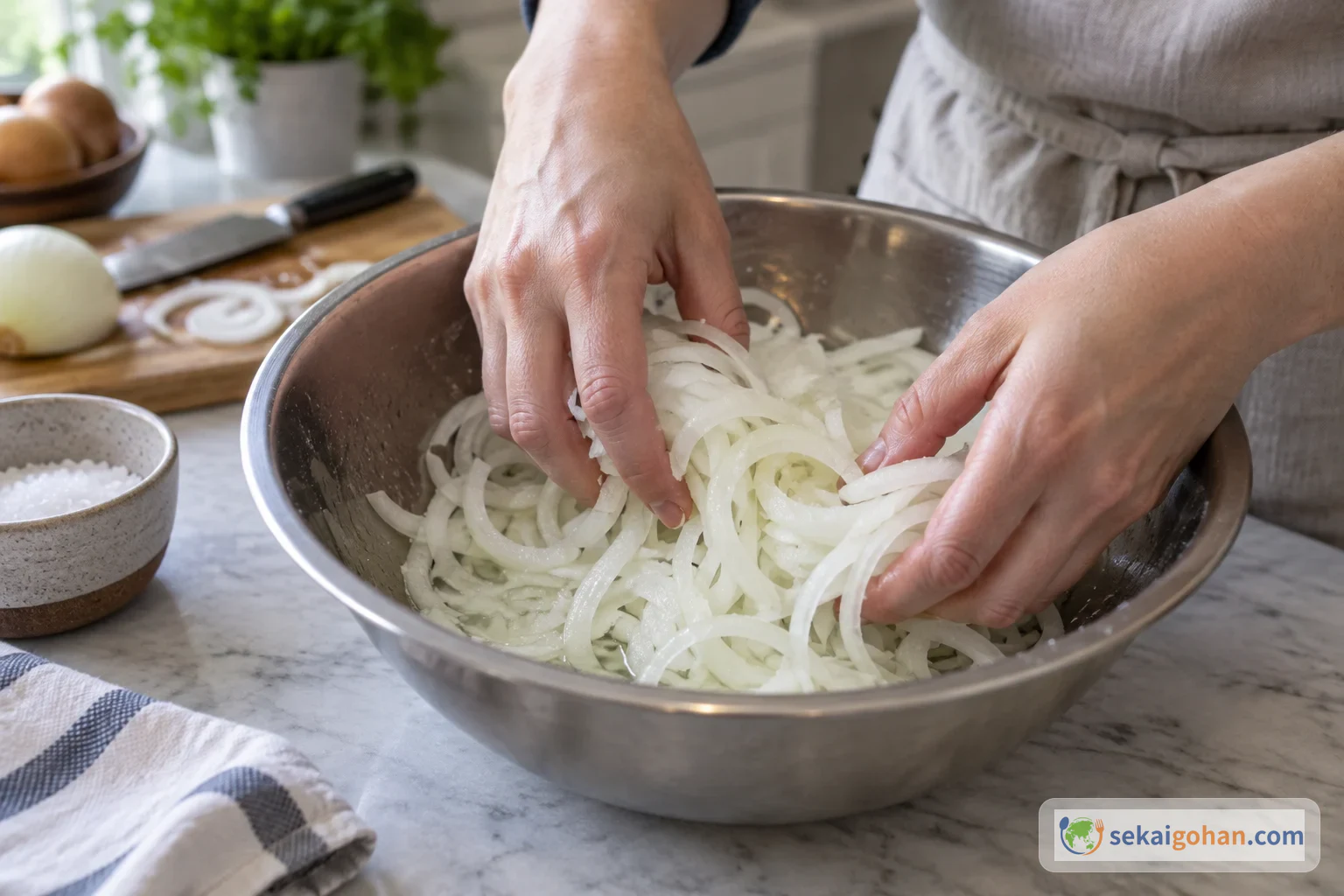
Rather than sinking the cut onion into flour first, draw out the moisture with salt and then coat with flour. The point is to combine the flour before water collects at the bottom of the bowl. Watching the "states" below, you can adjust even when the size of the onion or the season changes the amount of moisture.
How to tell when pyaaz pakora are done
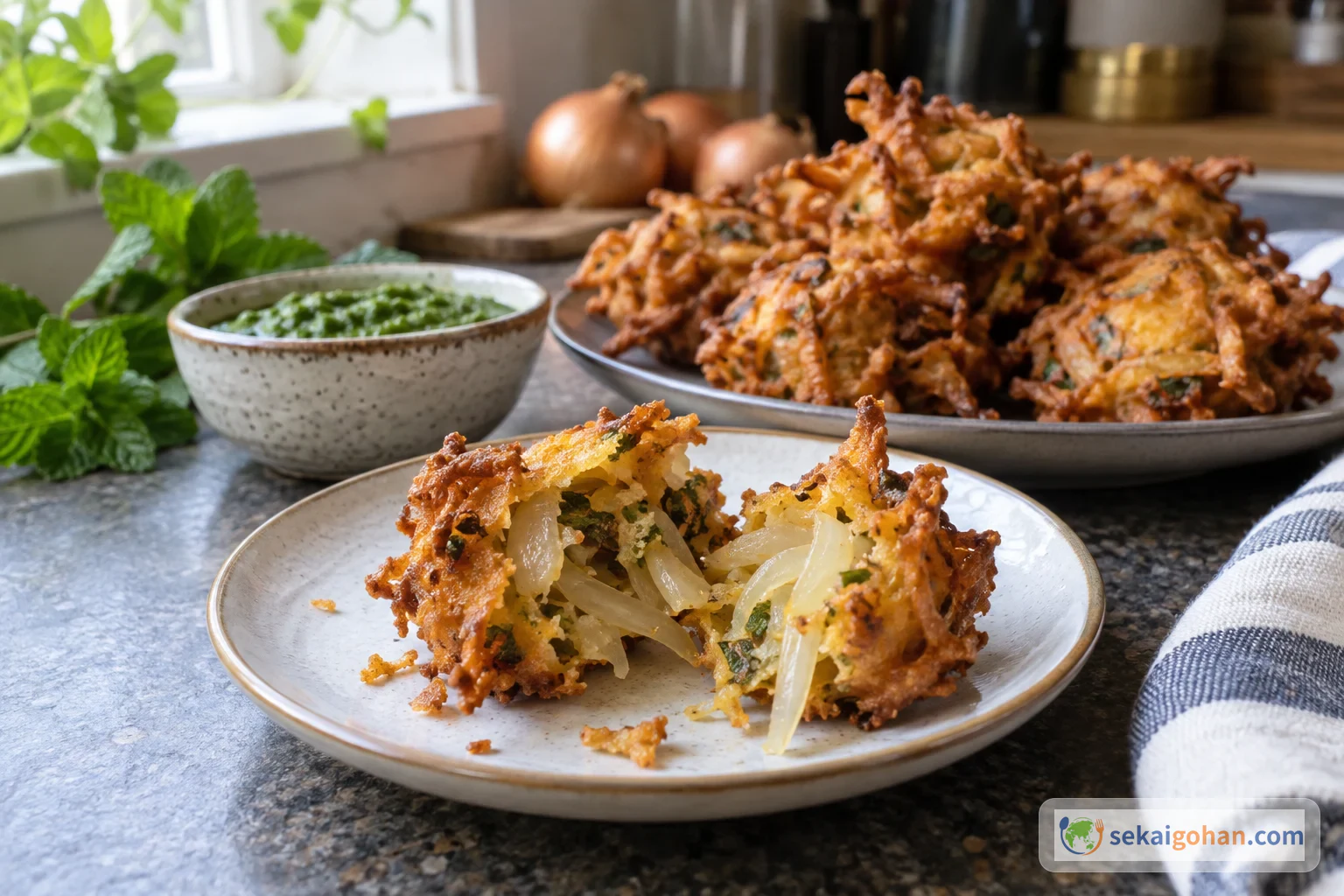
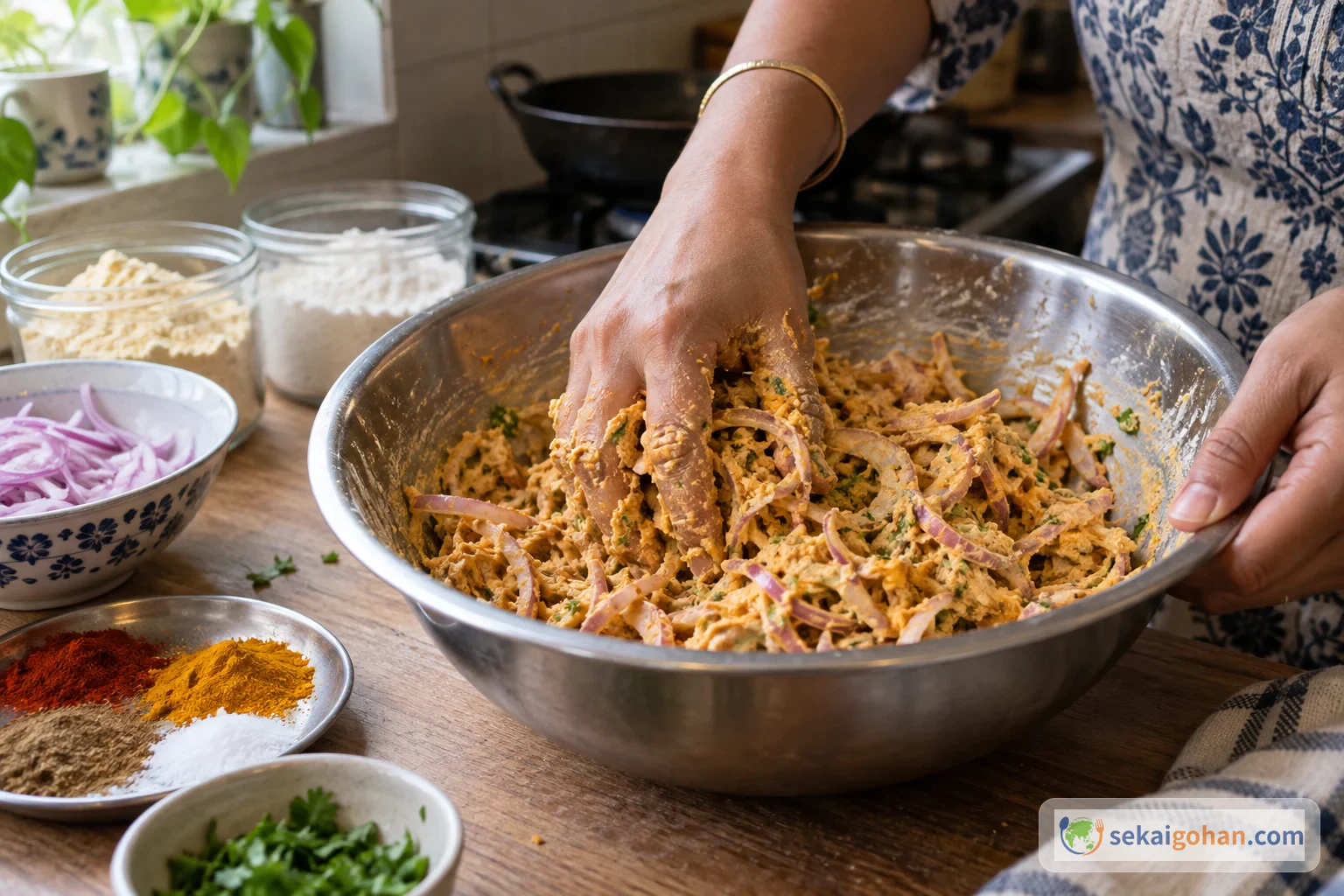
The batter should be pinchable
If the batter runs off a spoon, there is too much water. When you lift the onion slices, you should see a film of flour on them, and the clump should come apart slowly when you open your fingers. A thick batter makes the outside hard and traps the onion's steam, so the center turns heavy.
Keep the oil from crowding
Bubbles surge right after the cold mixture goes in. Too many pieces at once drop the oil temperature, and pakora that touch each other lose their batter. Don't time later rounds by the first one. Instead, listen for the same sound in the second round, and skim out burnt bits of batter before they stick to the next batch.
No raw onion in the center
A large clump can have good color outside and still be raw in the middle. Break open the first one. If the onion is translucent and soft and there's no raw white flour, carry on. If it's raw, lower the heat, make the clumps 20–30% smaller and fry them longer.
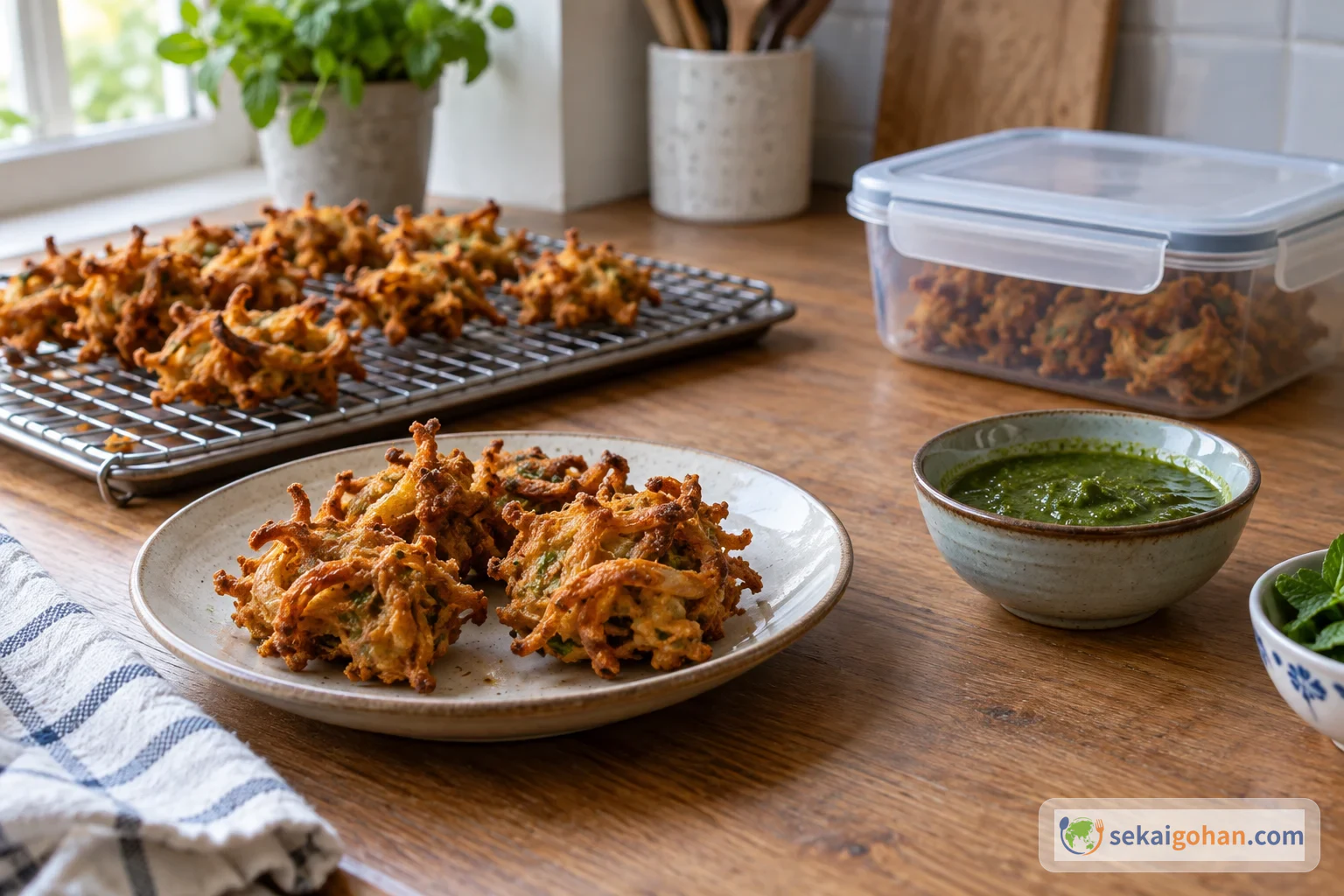
If the batter is watery, add 5 g besan and 1 g rice flour and let it rest 1 minute. If it has absorbed oil, halve the next batch and add it after the oil temperature comes back. If only the surface is dark, lower the heat and make the clumps smaller. For pakora that have softened after frying, spread them on a rack to cool a little and reheat in a toaster oven just before eating. Reheating does not bring back the lightness of fresh-fried, so fry the portion you serve guests last.
Don't keep frying oil hot for a long time, and don't reheat or reuse it. A smaller pot cuts down on the oil you need. Let the oil cool completely before you throw it out. The recipe uses chickpea flour, spices and cilantro, so if you have allergies or avoid any of these, check labels and choose substitutes.
Serving pyaaz pakora and regional variations
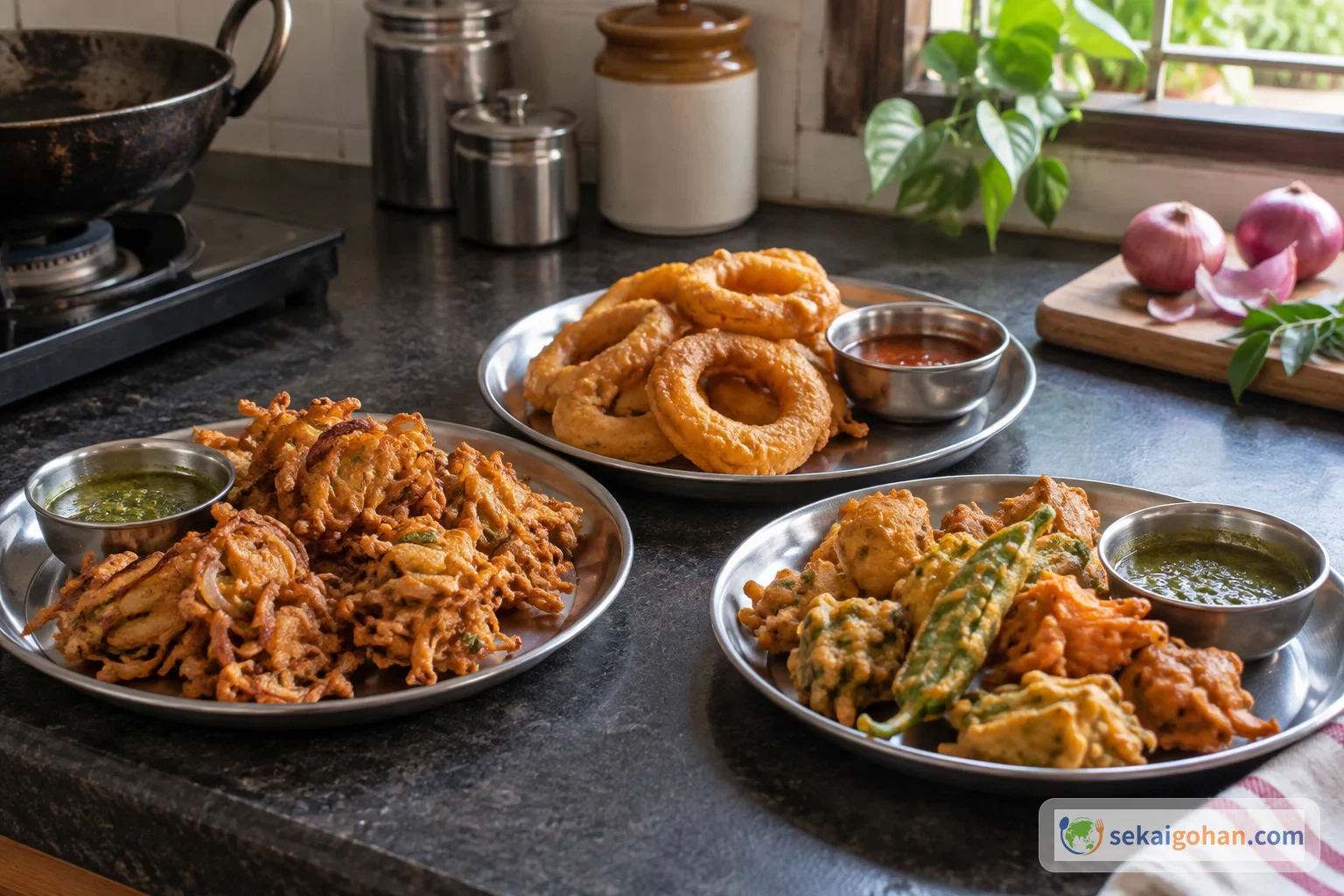
Pakora takes all kinds of fillings and batters, so at home it makes more sense to pick a style for the occasion than to hunt for one authentic version.
With chai and chutney
In this pyaaz pakora, the onion ends poke out of small clumps. The thin batter crisps up and the center stays sweet. Go back and forth between the fresh green taste of mint chutney, a squeeze of lemon and sweet milk tea, and the plate never feels heavy.
Onion rings, bajji style
Slice the onion into rings and dip them one by one in batter, and you get close to South India's vengaya bajji. Rings have more surface to coat, and they tend to slip out of a mix bound only by onion juice, so switch to a separate, thicker batter. Once you change the cut, change the liquid too.
Other fillings
For potato, green chile or spinach, adjust the batter to the moisture and thickness of the filling. Some dishes, like Chhattisgarh's bhajia, are named for their filling, so onion isn't the only option. More filling makes bigger clumps, though, so start by adding just one kind to the 12.5 oz (350 g) onion formula. If you want green chile to be the star, don't jump to 7 oz (200 g) onion and 4 chiles. Use 1 first and see how the batter holds.
For more Indian snacks, compare the crisp shell of samosa, or the vegetable stew and bread of pav bhaji (in Japanese). For a breakfast spread, share the chutney with idli, the steamed fermented batter.
Frequently asked questions
If I add almost no water, won't it be floury?
Salting the onion draws out moisture that dampens the flour. Start with 1 tbsp (15 ml) of water and add 1 tsp (5 ml) at a time where it's dry, and you'll find the point between floury and watery. If you mix in the flour right after salting, no water has come out yet and the batter won't bind.
Can I replace besan with wheat flour?
Wheat flour alone still gives you a fritter, but you lose the chickpea aroma and the crumbly coating. Potato starch alone makes the batter hard. Use besan the first time. If you have no rice flour, use 20 g more besan. If you can't eat legumes, think of it as a different fried dish and work out substitutes from there.
Can I make it without ajwain?
Yes. Swap the 2 g of ajwain for 2 g of cumin seeds, which trades the earthy aroma for a warm cumin one. If you have neither, leave it out (0 g) and keep the ginger, green chile and cilantro. Piling in powdered spices to make up for it only buries the sweetness of the onion.
Can I make the batter ahead and fry it the next day?
The onion keeps releasing water, so batter left to sit turns heavy. Keep the cut onion and flour separate, and salt and mix 10–15 minutes before frying. Leftover fried pakora should cool on a rack to let the steam out, go into the fridge promptly and be eaten by the next day. Reheated, the batter firms up a little and won't taste quite like fresh-fried.
Will it turn out the same in an air fryer or oven?
You'll use less oil, but you won't get the thin crisp folds and savory flavor of deep frying. Treat the oven and air fryer as different methods that give a different texture, and fry one batch in a small pot first so you know the original. With any method, thick clumps leave the center heavy.