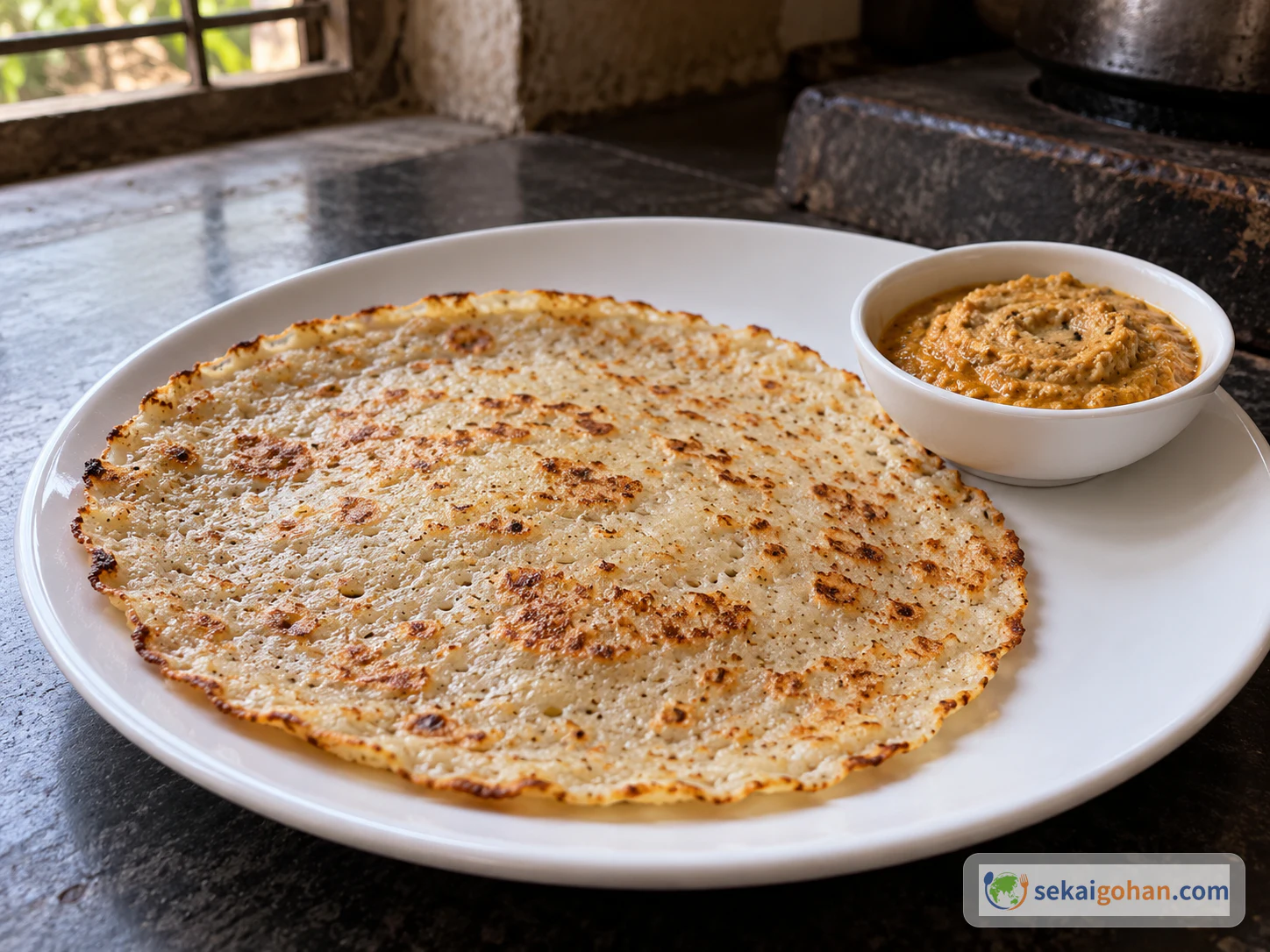
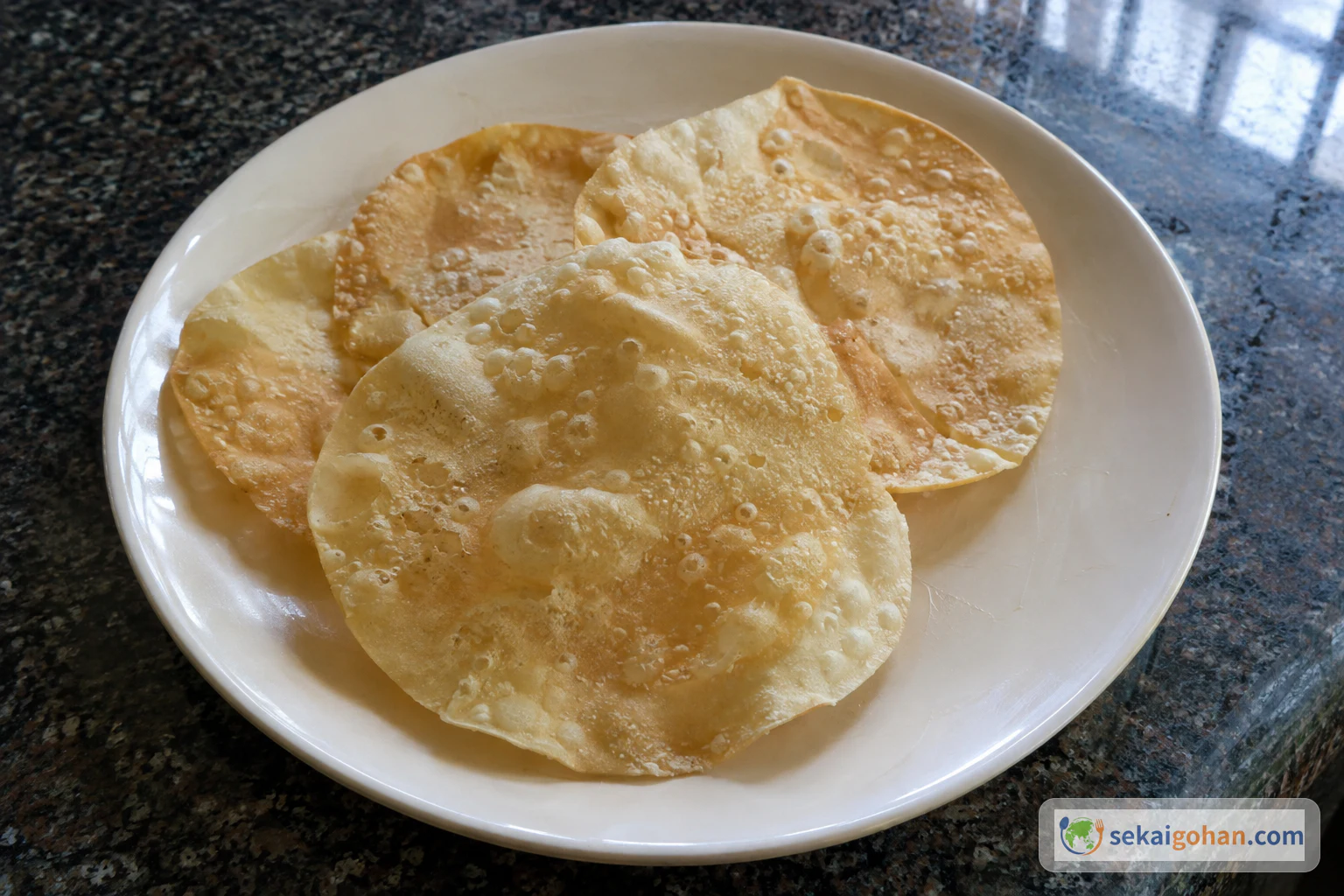
Plain Kerala pappadam on a plate
CuisineIndian (Kerala)

Papadum: Kerala Pappadam Made from Whole Urad Dal

How to make Kerala pappadam (papadum) at home from whole urad dal, salt, baking soda, sesame oil and water. Covers grinding the dal, kneading with sesame oil, pressing with a pestle, shaping logs into thin discs, a brief fan-dry and frying in the same cooking session, with clear notes on what this recipe does and does not specify.

Cooking flow

Cooking steps

STEP 11 / 14

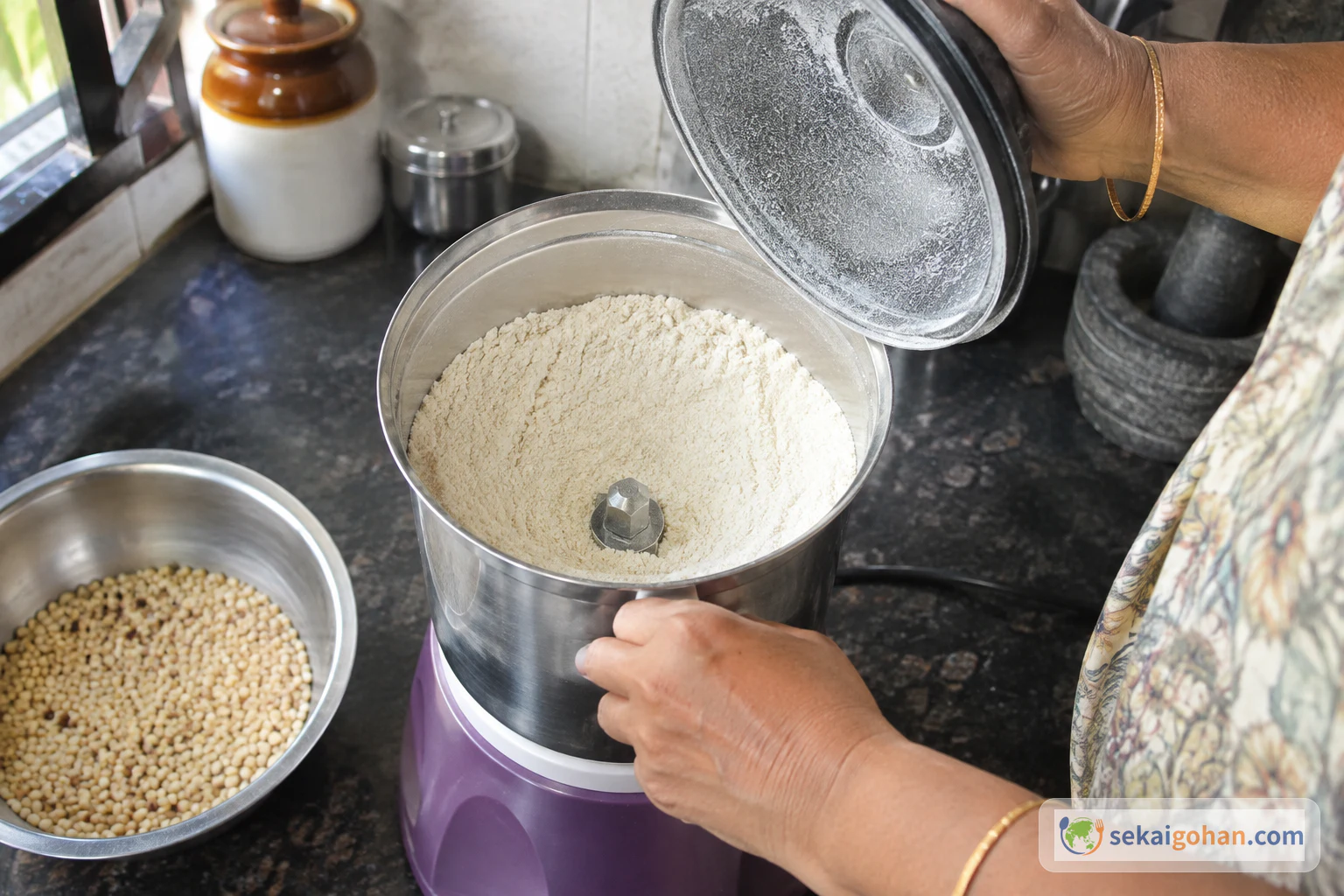
Grind the dal into fine flour

Grinding peeled whole urad dal into fine flour
Grind the whole dal dry, with nothing else in the grinder

Measure 1 cup of peeled whole urad dal. Grind it dry into a fine powder. Don't roast it, and don't add water, oil or seasoning yet.

STEP 22 / 14

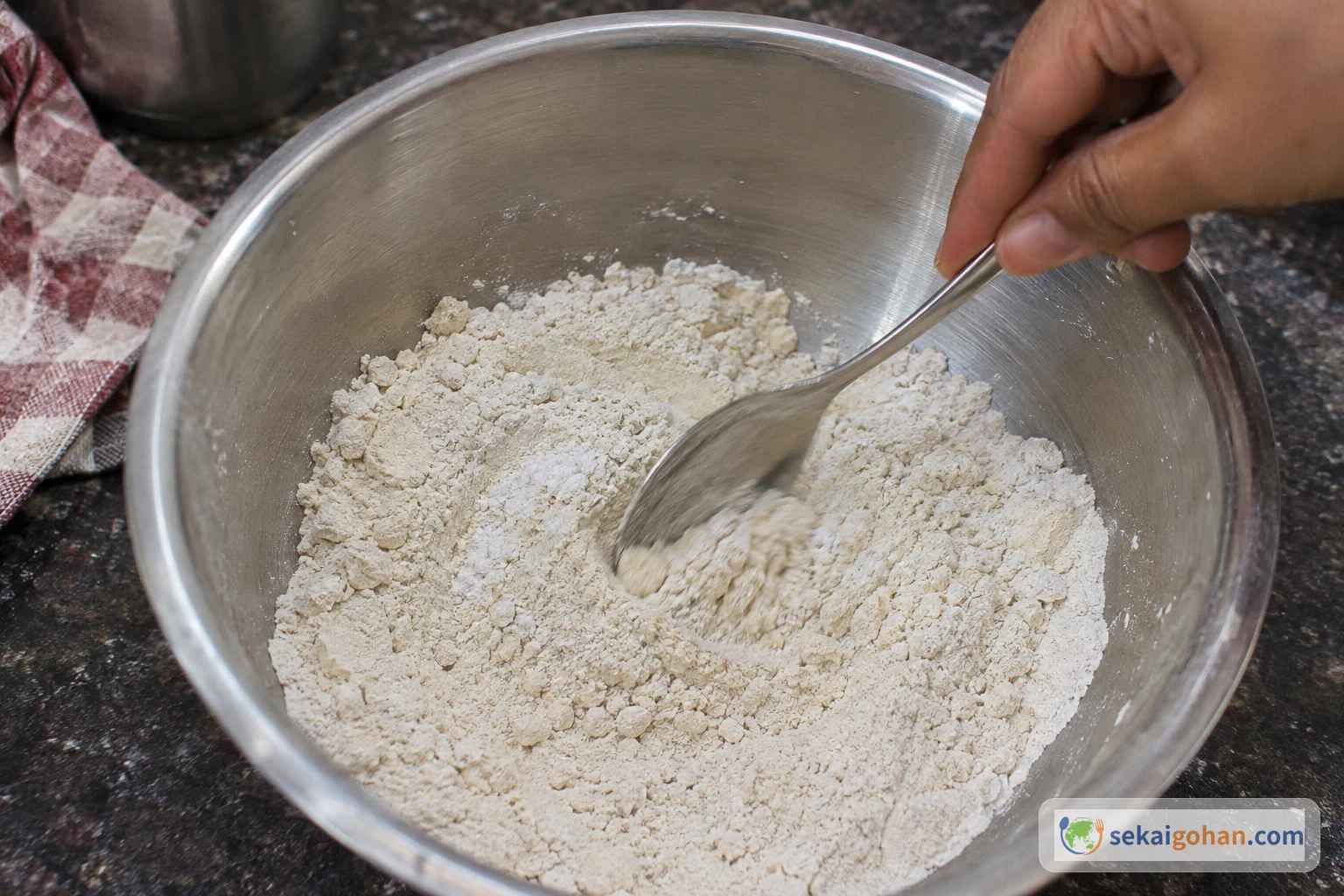
Mix the flour with salt and baking soda

Mixing urad flour with salt and food-grade baking soda
Mix the salt and baking soda through the flour while it is still dry

Put the urad flour in a bowl. Add 1 tsp salt and 1/2 tsp food-grade baking soda and mix them evenly through the dry flour.

STEP 33 / 14

Add water gradually and form a firm dough

Adding water gradually and gathering a firm dough
Add the water bit by bit and gather the flour into a firm dough

Add the 1/2 cup of water a little at a time, gathering the flour as you go. Don't pour it all in at once. Bring it together into a dough slightly stiffer than chapati dough.

STEP 44 / 14

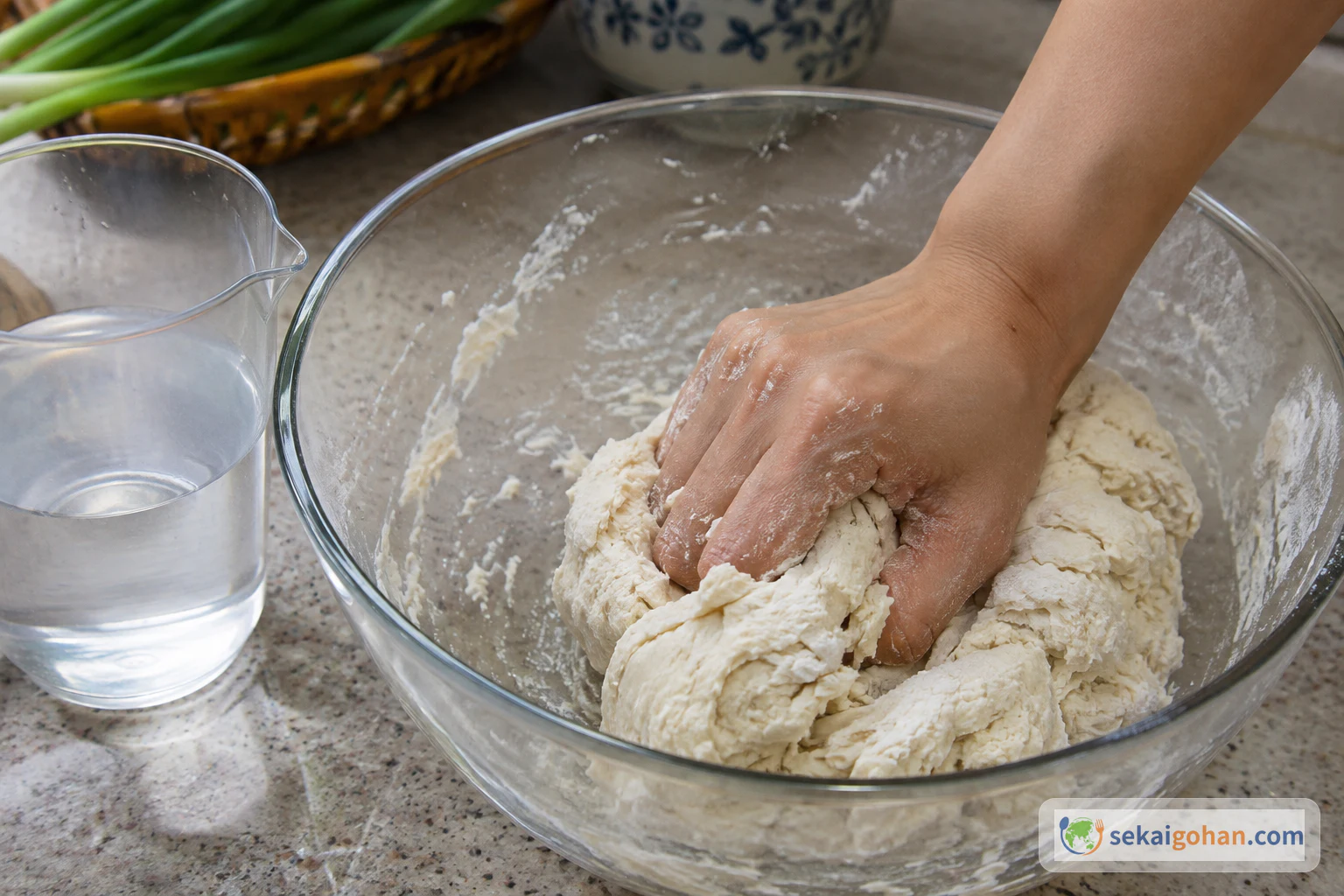
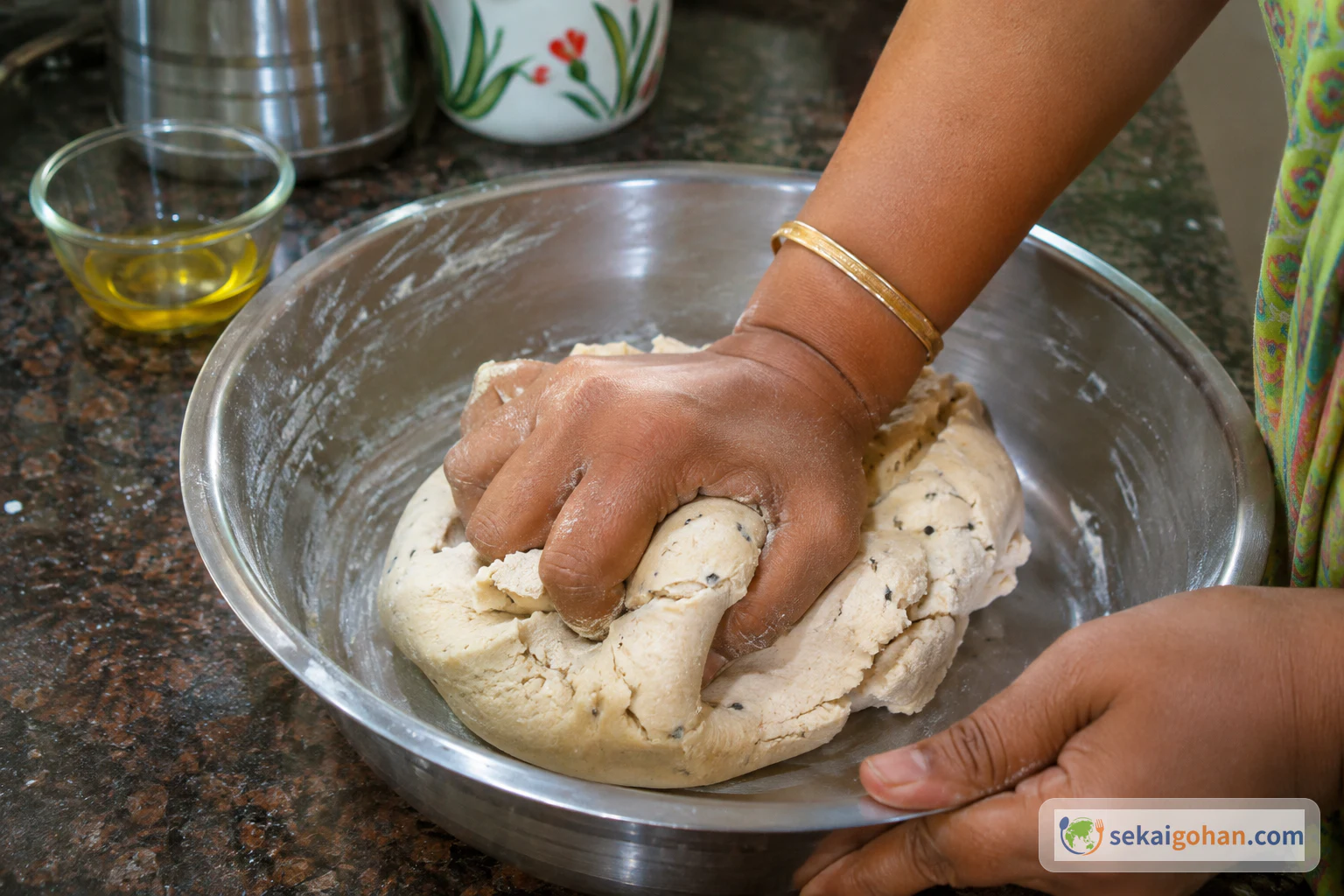
Knead in the sesame oil

Kneading the dough after adding sesame oil
Knead the sesame oil into the dough

Add 2 tsp sesame oil to the dough and knead well until it is worked in.

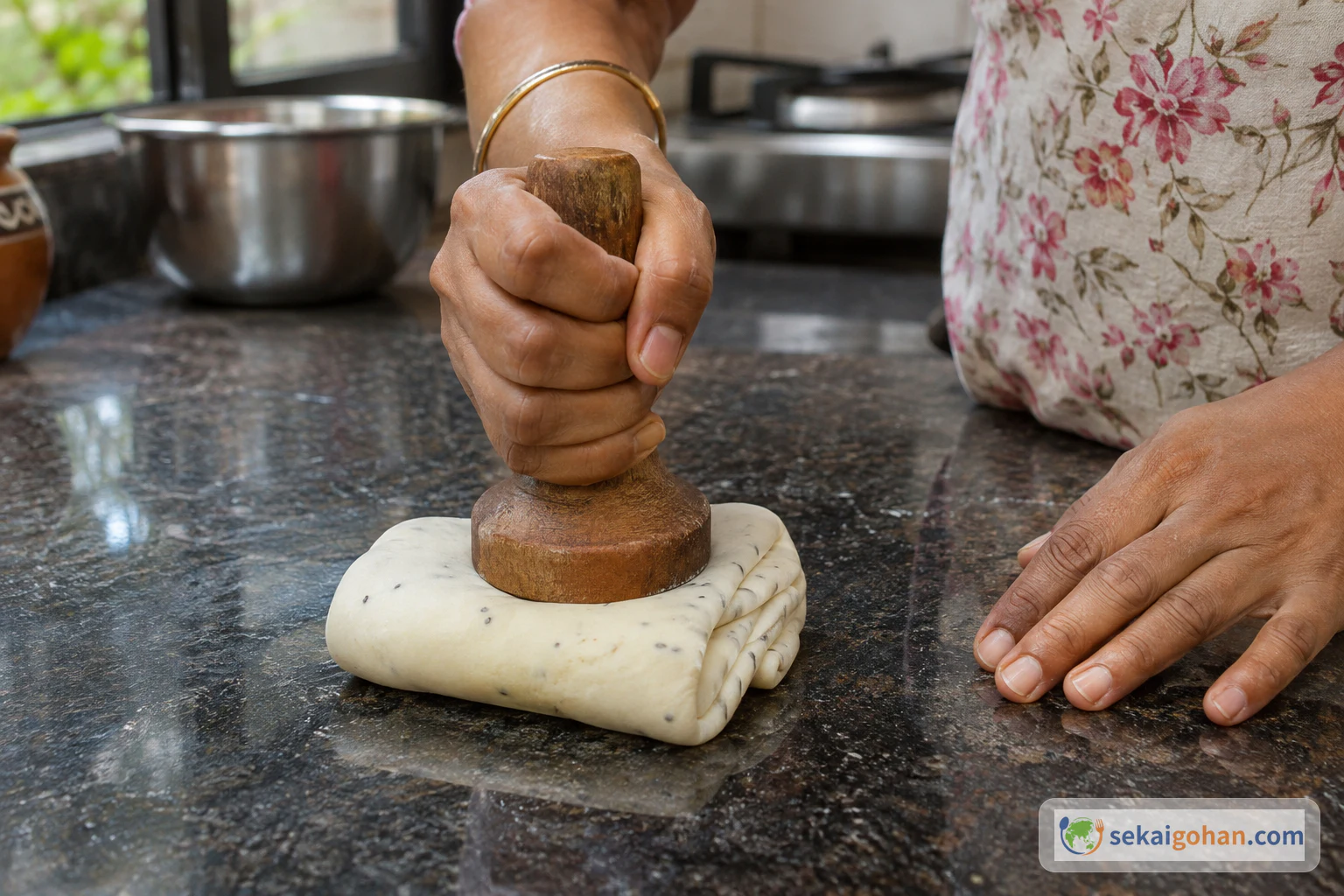
STEP 55 / 14

Press and fold with a pestle

Pressing folded dough with a pestle
Press, fold and press again, 10 to 12 times

Place the dough on a clean work surface. Press it with a wooden pestle, fold it over and press again. Repeat 10–12 times, until the dough is soft. Keep your fingers clear of the pestle.

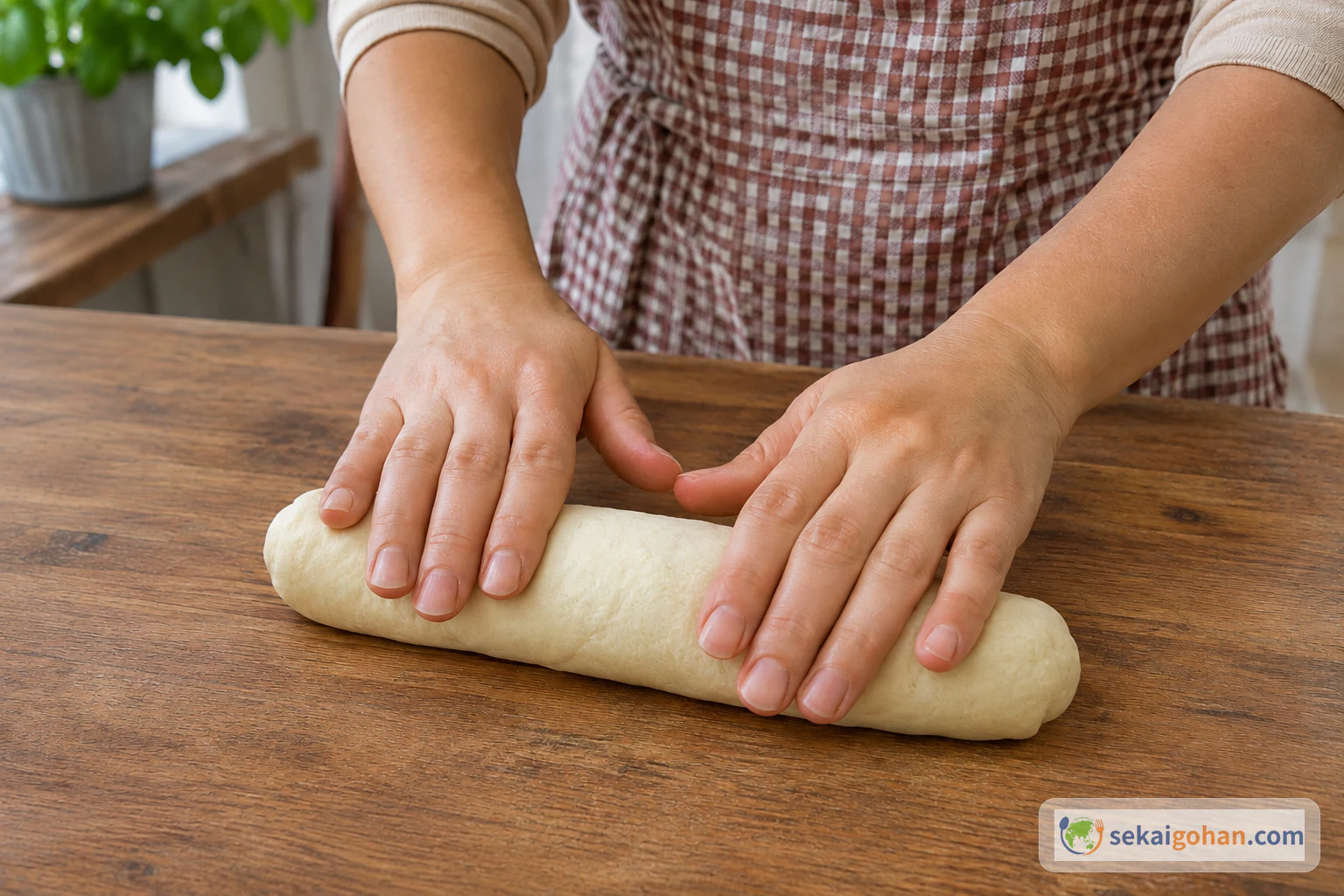
STEP 66 / 14

Shape the whole dough into a short log

Rolling the whole dough into a short log
Shape the whole batch into a single short log first

Roll all of the dough into one short log.

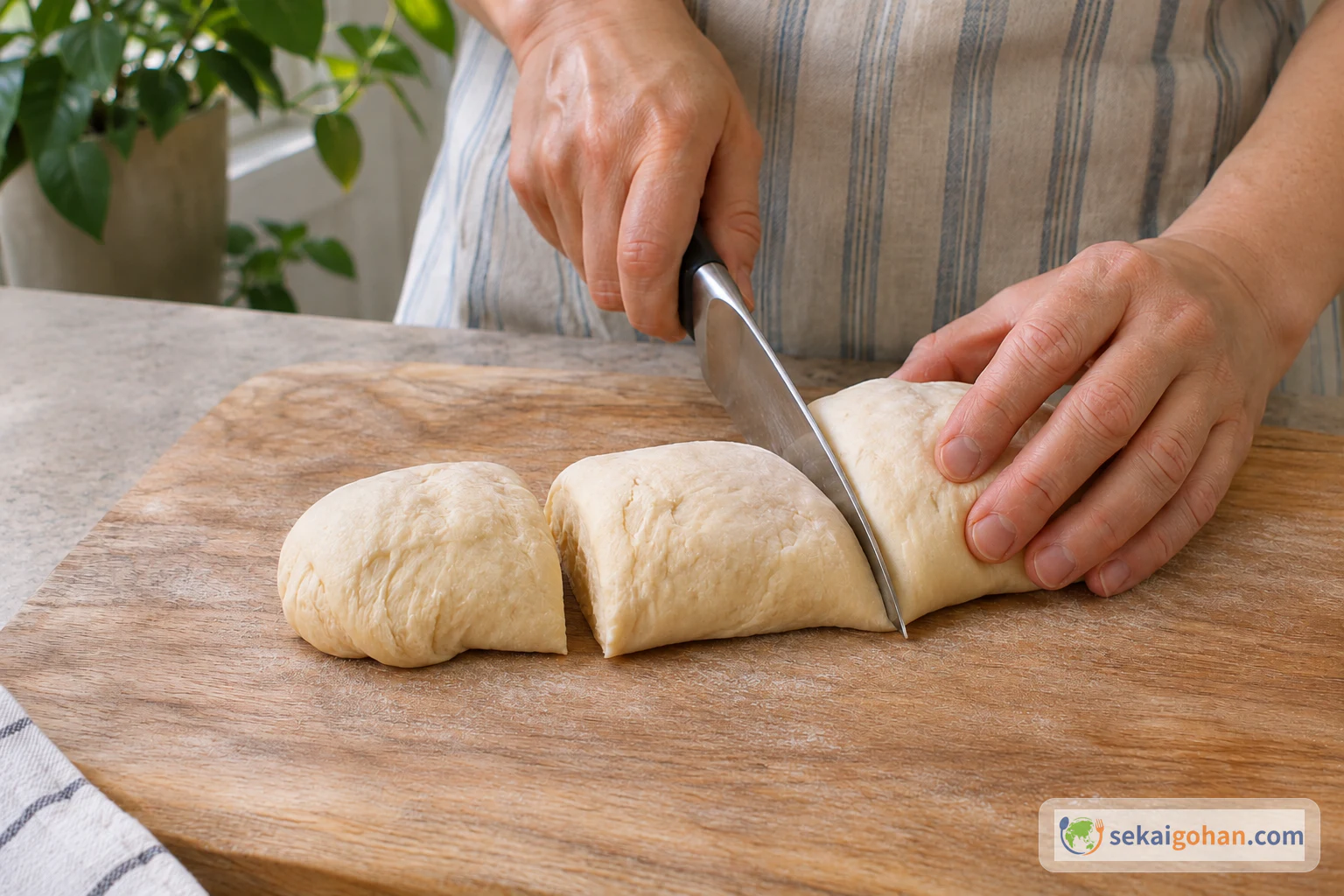
STEP 77 / 14

Divide the log into three

Dividing the short log into three portions
Three portions from the short log

Cut the short log into three portions.

STEP 88 / 14

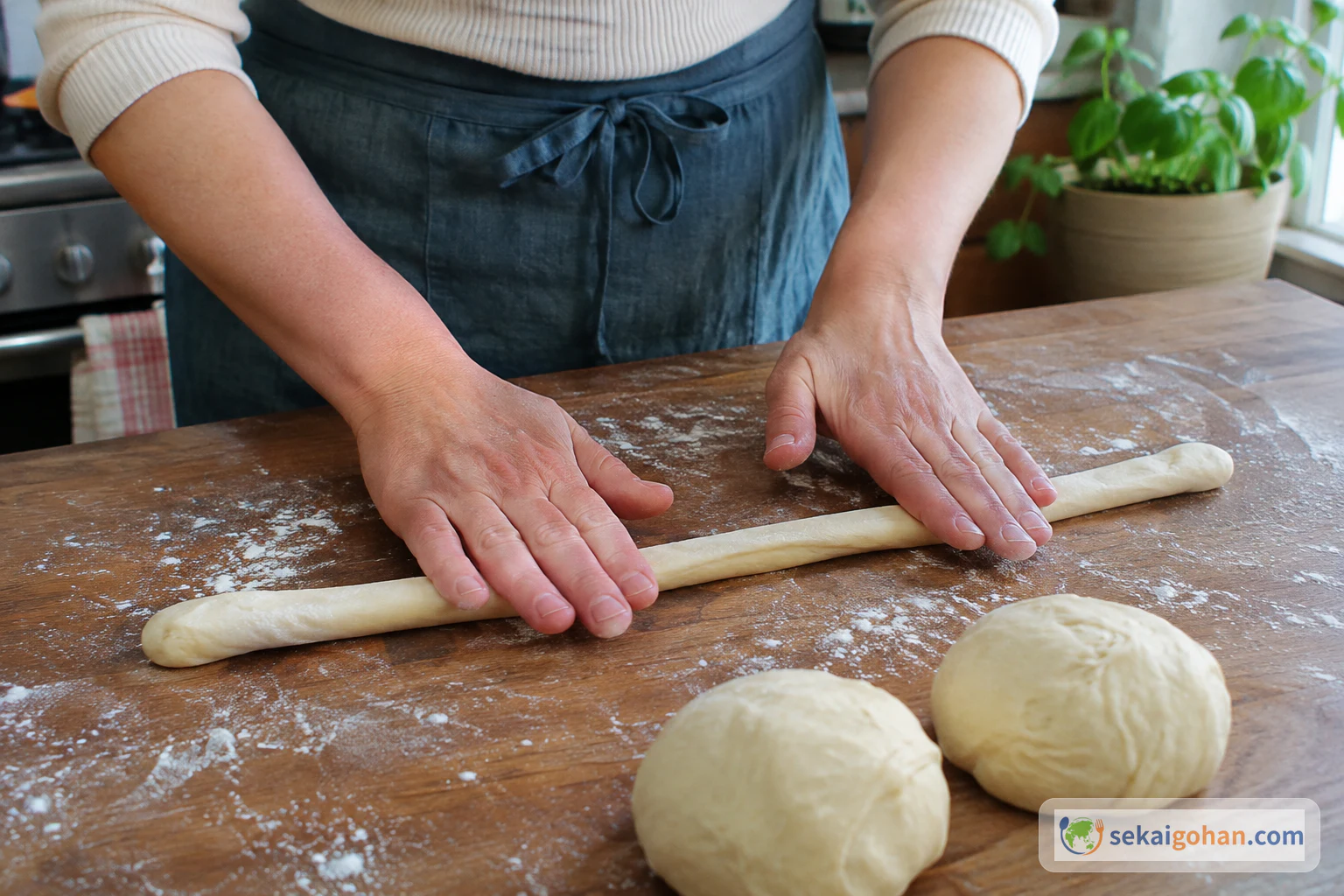
Roll each portion into a long log

Rolling one of the three portions into a long log
Roll each portion out into a long log

Roll each of the three portions into a long, narrow log.

STEP 99 / 14

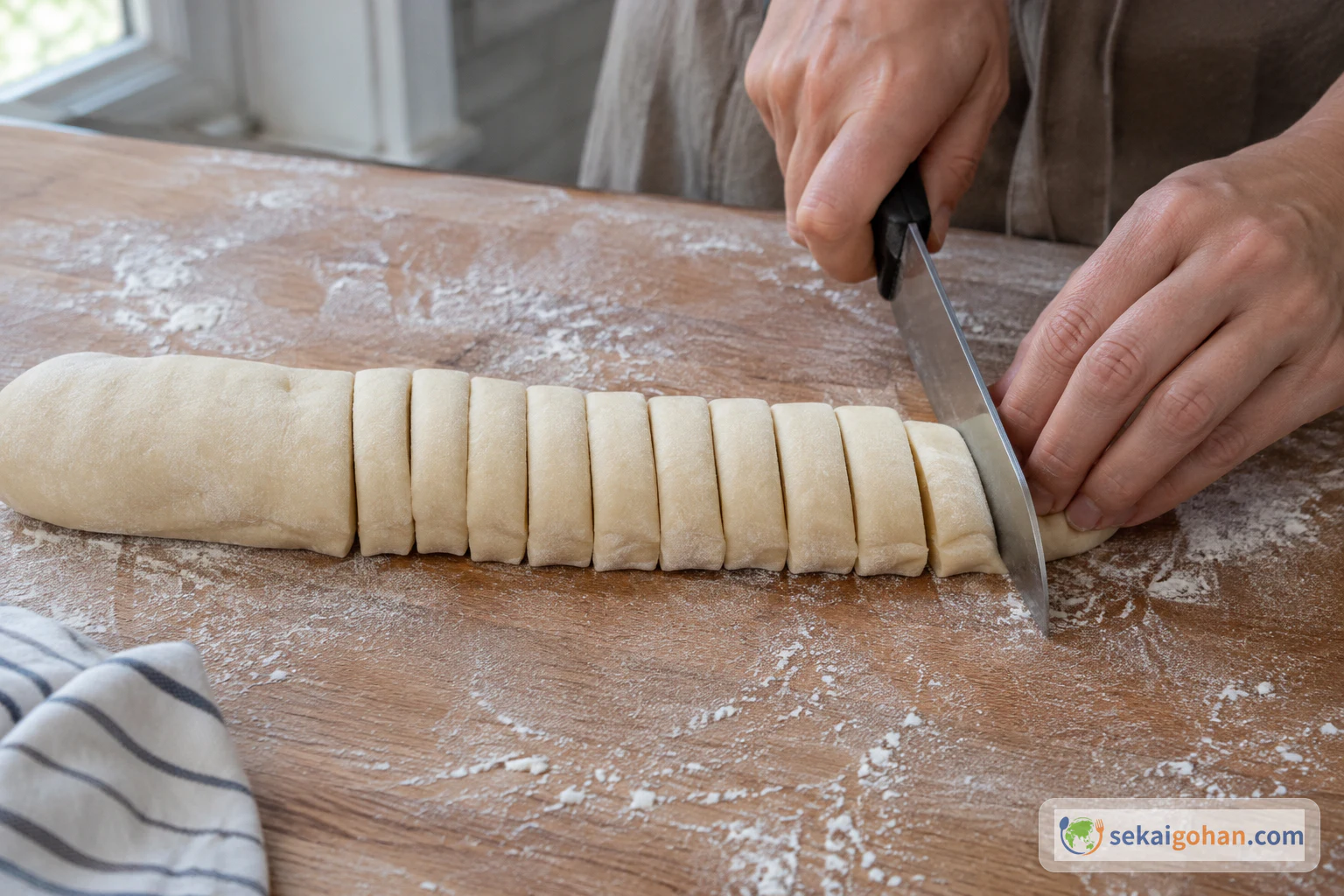
Cut the logs into 1/2-inch pieces

Cutting a long log into half-inch pieces
Cut the log into 1/2-inch-wide pieces

Cut each long log crosswise into pieces 1/2 inch wide. This is the width of each cut piece, not the size of the finished disc.

STEP 1010 / 14

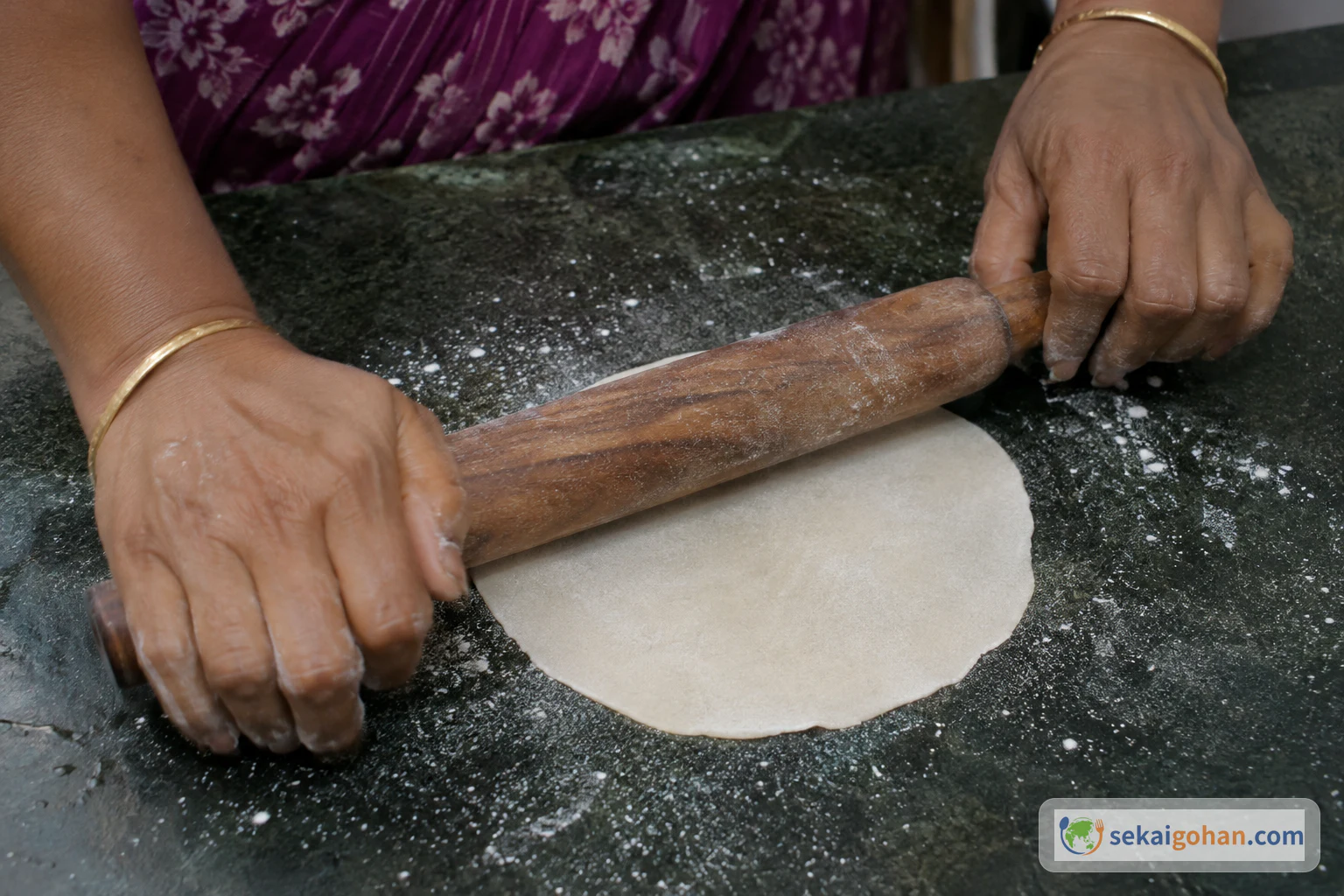
Roll each piece into a thin disc

Rolling a small piece of dough into a thin disc
Roll each piece thin on a lightly dusted surface

Dust the work surface with a little extra urad flour. Roll each piece into a thin round disc.

STEP 1111 / 14

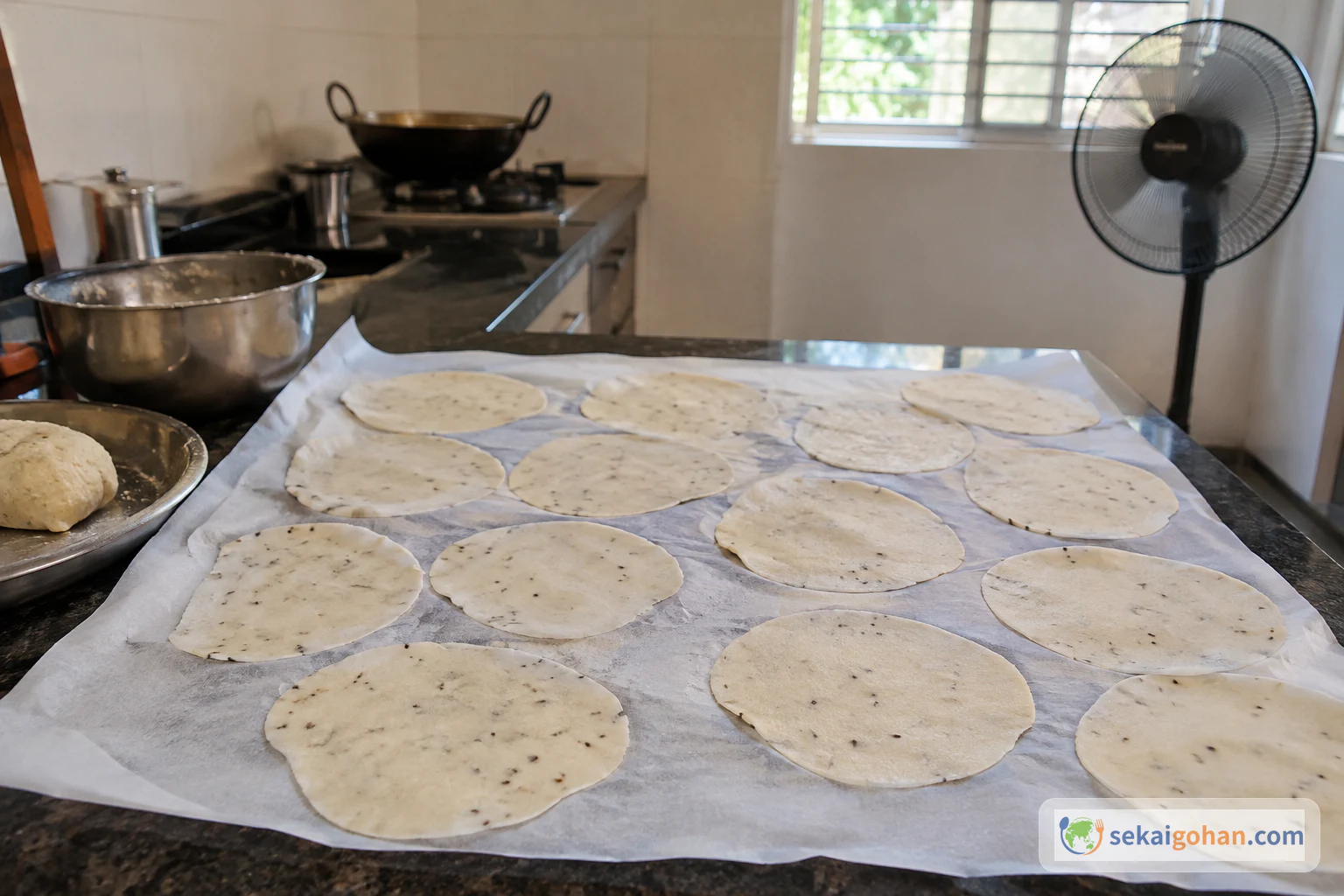
Fan-dry the discs on parchment

Fanning raw discs laid out on parchment
A single layer on parchment, with a fan blowing from a distance

Lay the discs in a single layer on parchment paper. Set a guarded fan at a distance, away from the frying area, and let it blow over them for 10–15 minutes. Then go straight on to frying; don't set the discs aside for storage.

STEP 1212 / 14

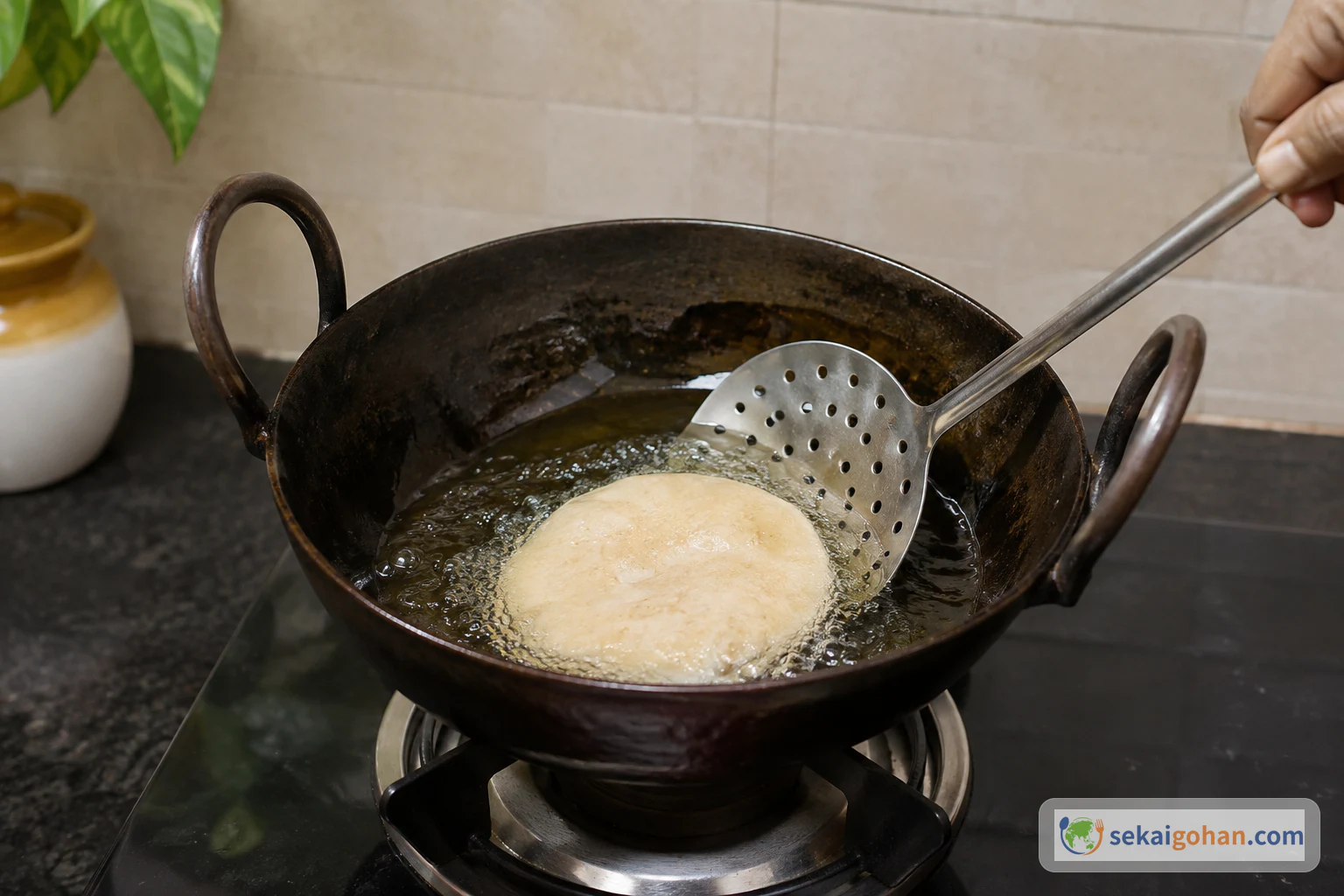
Fry in hot oil

Frying a disc in oil
Handle each disc with a long slotted utensil, hands clear of the oil

Use a stable pan suited to deep-frying, the amount of oil its instructions call for and, for an appliance, its frying setting. Heat food-grade frying oil until hot. Slide in a disc and handle it with a long slotted utensil, keeping your hands away from the oil. Lift each disc out once it has fried. Color alone doesn't prove a disc is done, and the raw dough is not for eating.

Stay with the pan the whole time it is on the heat. If you need to step away, turn the heat off first, and don't let the oil overheat.

STEP 1313 / 14

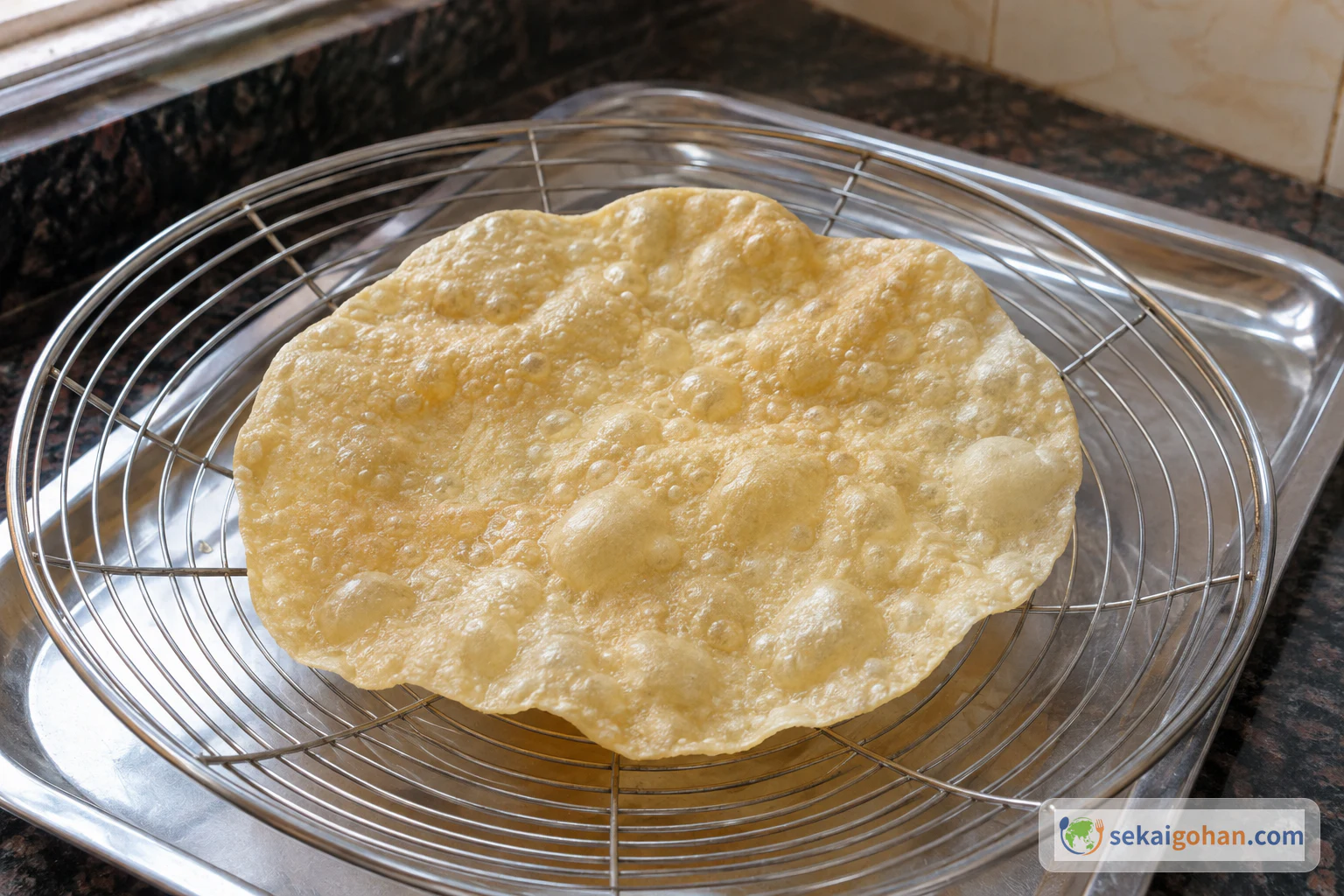
Drain on a rack

Draining a fried pappadam on a wire rack
Let the excess oil drip off on a rack

Set the fried pappadam on a wire rack over a tray to let the excess oil drip off.

STEP 1414 / 14

Serve

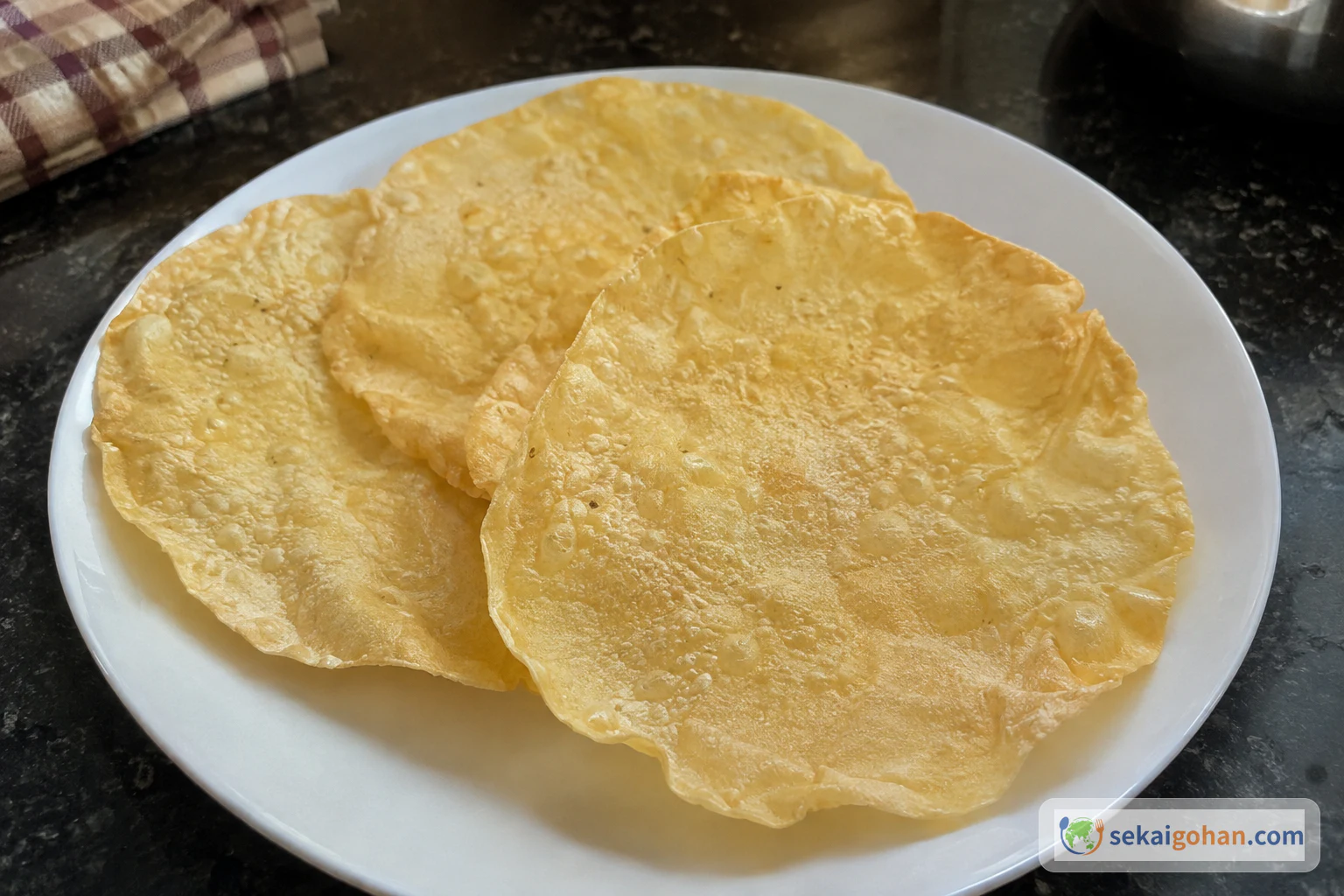
Fried pappadams on a plate, ready for the table
Plain fried pappadams, ready to serve

Arrange the fried pappadams on a plate and serve them.

0 / 0
Ingredients

Ingredients

1 / 1

Ingredients

Ingredient Amount Role
Peeled whole urad dal (uzhunnu) 1 cup, measured whole before grinding Ground into the flour that forms the whole dough
Food-grade baking soda 1/2 tsp Mixed into the dry flour
Salt 1 tsp Seasons the dough
Sesame oil 2 tsp Kneaded into the dough after it comes together
Water 1/2 cup Added gradually to bring the flour into a firm dough
Extra urad flour a little Light dusting for rolling the discs
Food-grade frying oil as needed For frying the discs
0 / 0

Pappadam is a thin, plain wafer made from urad dal. In Kerala it comes to the table as part of the meal, set beside everything else on the plate. This home version starts with whole urad dal (uzhunnu) instead of a pack of ready-made wafers. You grind the dal into flour yourself, then work it into a firm dough with salt, baking soda and sesame oil. The discs are rolled, dried briefly and fried the same day.

Pappadam at the Kerala Table

In a Kerala meal, pappadam is served alongside the rest of the food. Across India, papad is eaten as a side or an appetizer, and cooks make it from different flours and formulations. It's often a seasoned dough of peeled black gram (urad) flour. For more dishes from the country, see the India page.

The wafer goes by several names: papad, appalam, papadam and pappadam. Here, "papadum" is the general name and "pappadam" means the Kerala version made in this recipe.

Ingredients: Five Items, Measured in Cups and Teaspoons
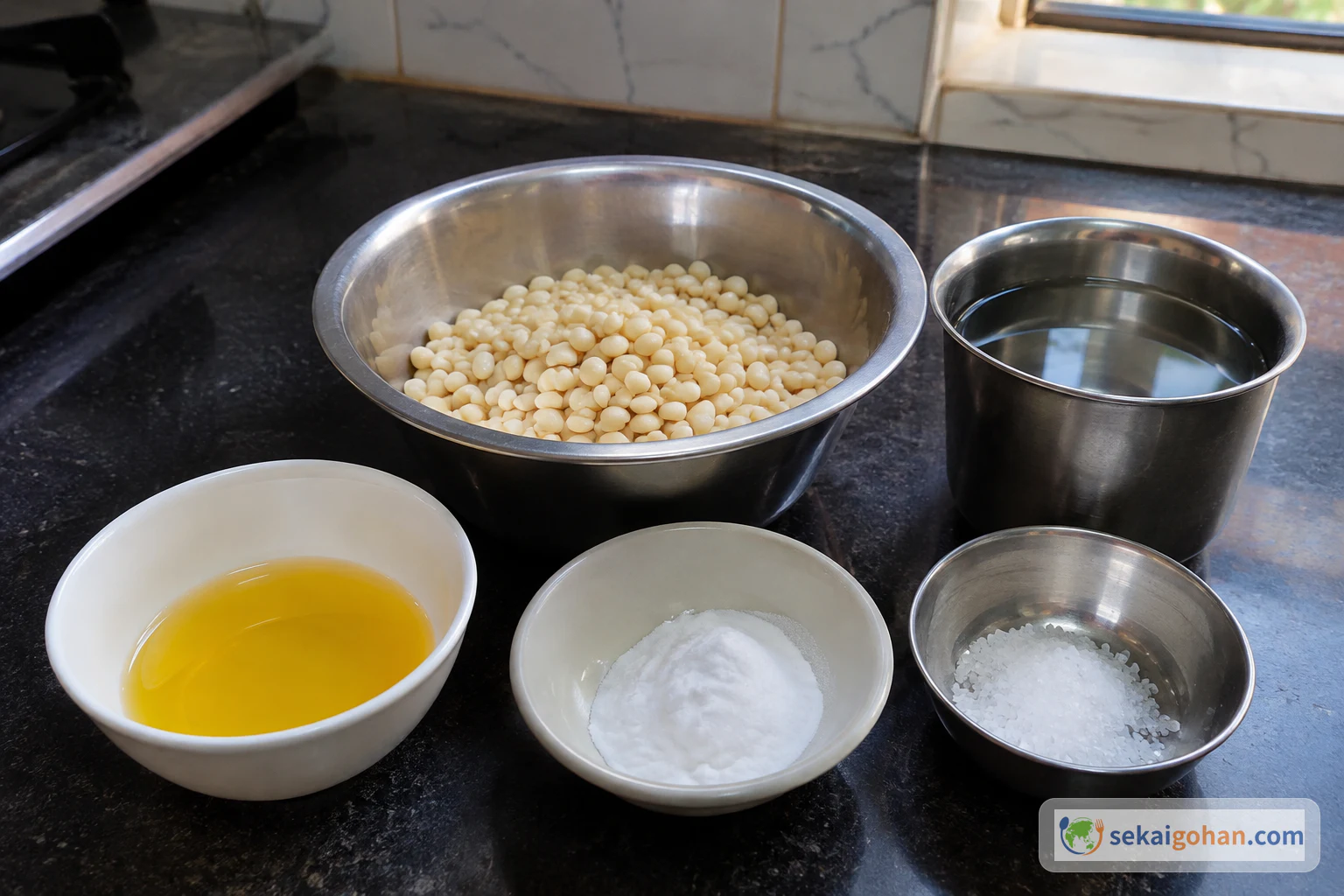
Peeled whole urad dal, salt, food-grade baking soda, sesame oil and water
The five dough ingredients, with the dal still whole before grinding

Equipment

  • Grinder that can mill dry dal to a fine powder
  • Mixing bowl and spoon
  • Measuring cup and measuring spoons
  • Wooden pestle and a clean, sturdy work surface
  • Knife
  • Rolling pin
  • Parchment paper
  • Household fan with a guard
  • Stable deep pan suited to deep-frying (or a fryer)
  • Long slotted utensil
  • Wire draining rack set over a tray
  • Serving plate

Choosing Ingredients for Pappadam

  • Measure the dal whole. The one cup is whole beans before grinding. It is not one cup of flour, and a cup of ready-ground flour is a different amount.
  • Use peeled whole urad dal. Choose the white, skinless form of the whole bean and grind it as it is, without roasting.
  • Stay with urad. The dough depends on urad dal. Chickpea flour and other flours make a different papadum.
  • Use food-grade baking soda. Don't swap in sodium carbonate or papadkhar.
  • Dust with urad flour. Keep a little extra urad flour for rolling, separate from the cup in the dough, so the dusting matches the dough.
  • Fry in ordinary food-grade frying oil.
  • Check labels. For allergens and production statements, read the labels of the products you actually buy.

Method: From Whole Dal to Fried Pappadam

How the method runs

Make the dough, shape it, fan-dry the discs for 10–15 minutes, then fry them straight away. Plan to finish the whole batch in one cooking session.

Pappadam Troubleshooting

The recipe is short, so a few points are easy to misread. Dry the discs under a fan rather than in the sun, fry them straight away, and drain them on a wire rack.

Question What to do
How firm should the dough be? Add the water gradually until the dough is slightly stiffer than chapati dough. After pounding, judge the softness by feel.
What does "1/2 inch" refer to? It's the width of the pieces cut from each long log, not the diameter of the finished disc.
How big and thin should the discs be? Roll them thin and round.
Can the drying make them keep? No. The short fan-dry readies them for the oil, so fry them in the same session.
How hot should the oil be? Fry in hot oil. Follow your pan's or appliance's instructions for the amount of oil and the setting, and stay at the stove.

Other Ways to Make Papadum

Papadum varies a great deal from kitchen to kitchen. Some cooks start from ready urad flour, roll with all-purpose flour, add water as needed and sun-dry the discs briefly before deep-frying. Their proportions and yields are different from this recipe's. Others make a smaller batch from whole urad dal or fine urad flour, treat the water as approximate and knead by stretching, folding and pounding. They work in batches because a dough with baking soda shouldn't sit long.

Papad, appalam and papadam can be toasted or fried. This recipe fries them.

Frequently Asked Questions

Can I dry the discs and store them to fry later?

No. Fry the discs right after their 10–15 minute fan-dry. That short drying doesn't preserve them, so don't store uncooked discs.

What oil temperature and frying time should I use?

Fry in hot oil. For safety, use a pan suited to your appliance, the amount of oil its instructions call for and the correct frying setting if it has one. Never leave hot cooking equipment unattended, and turn off the heat before you walk away.

Can I taste the dough, or eat a disc that isn't fully fried?

No. The dough and the dried discs are raw. Eat pappadam only after frying.

How many pappadams does this make?

That depends on how thin you roll each piece. Count the discs as you fry them.
Sources