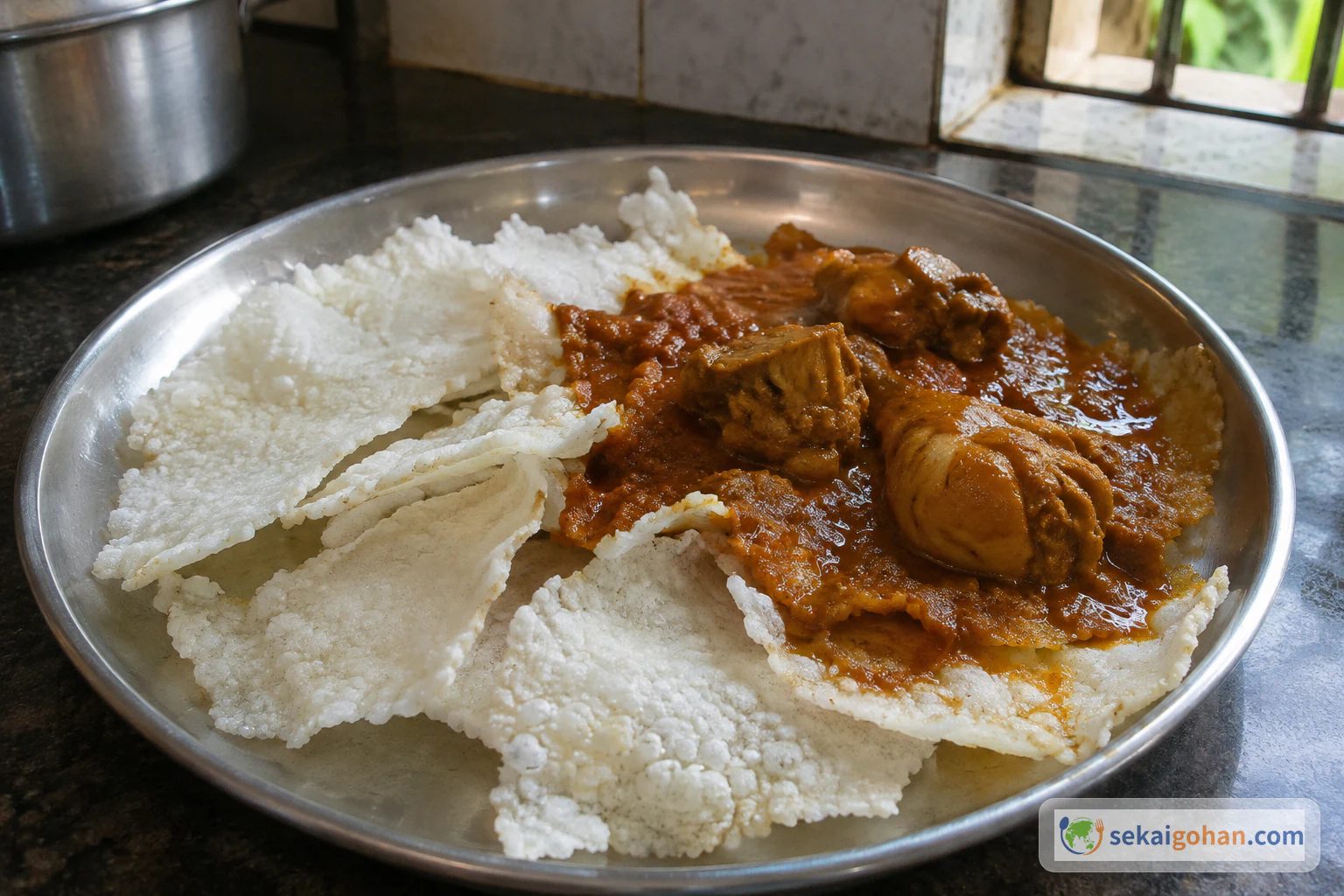
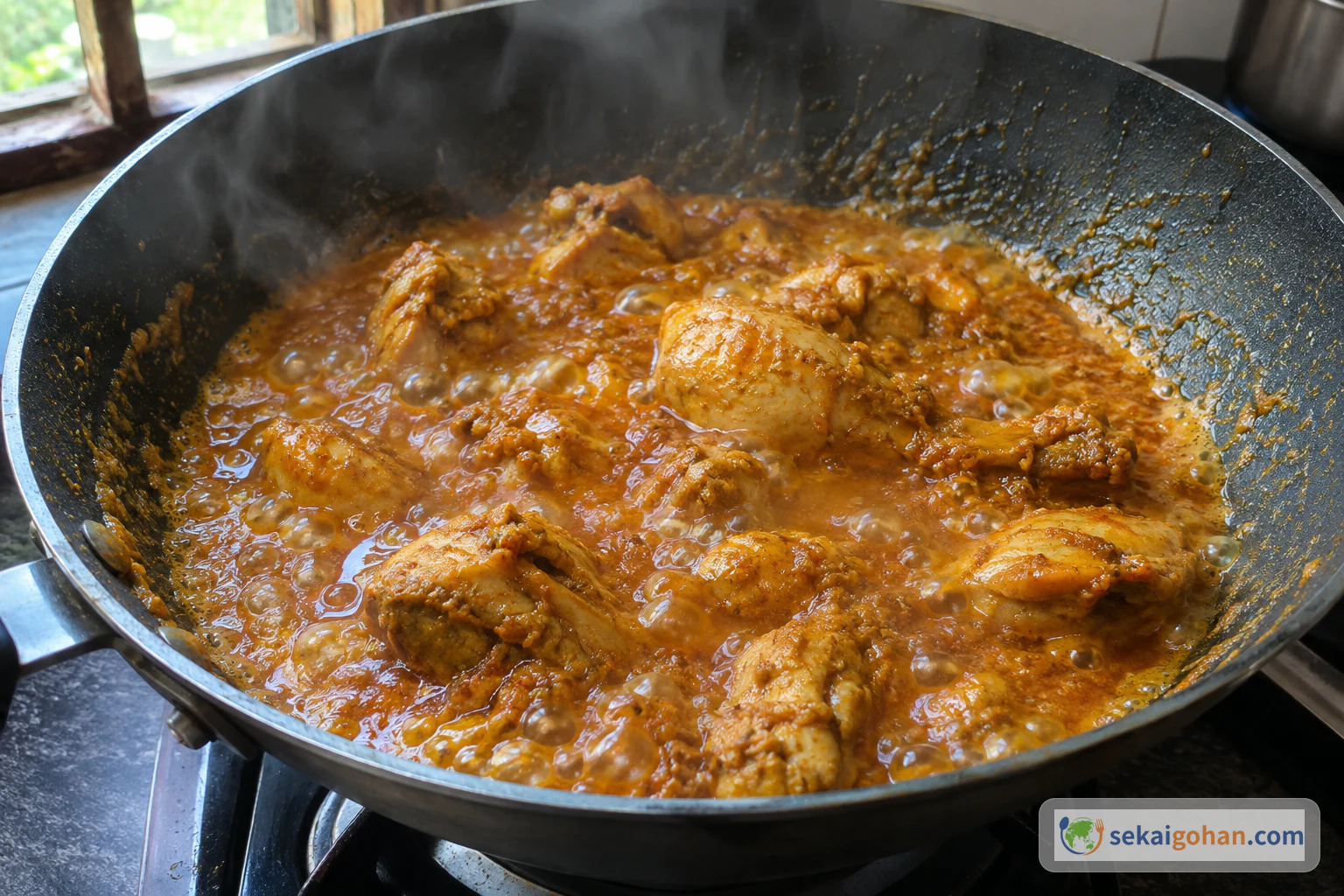
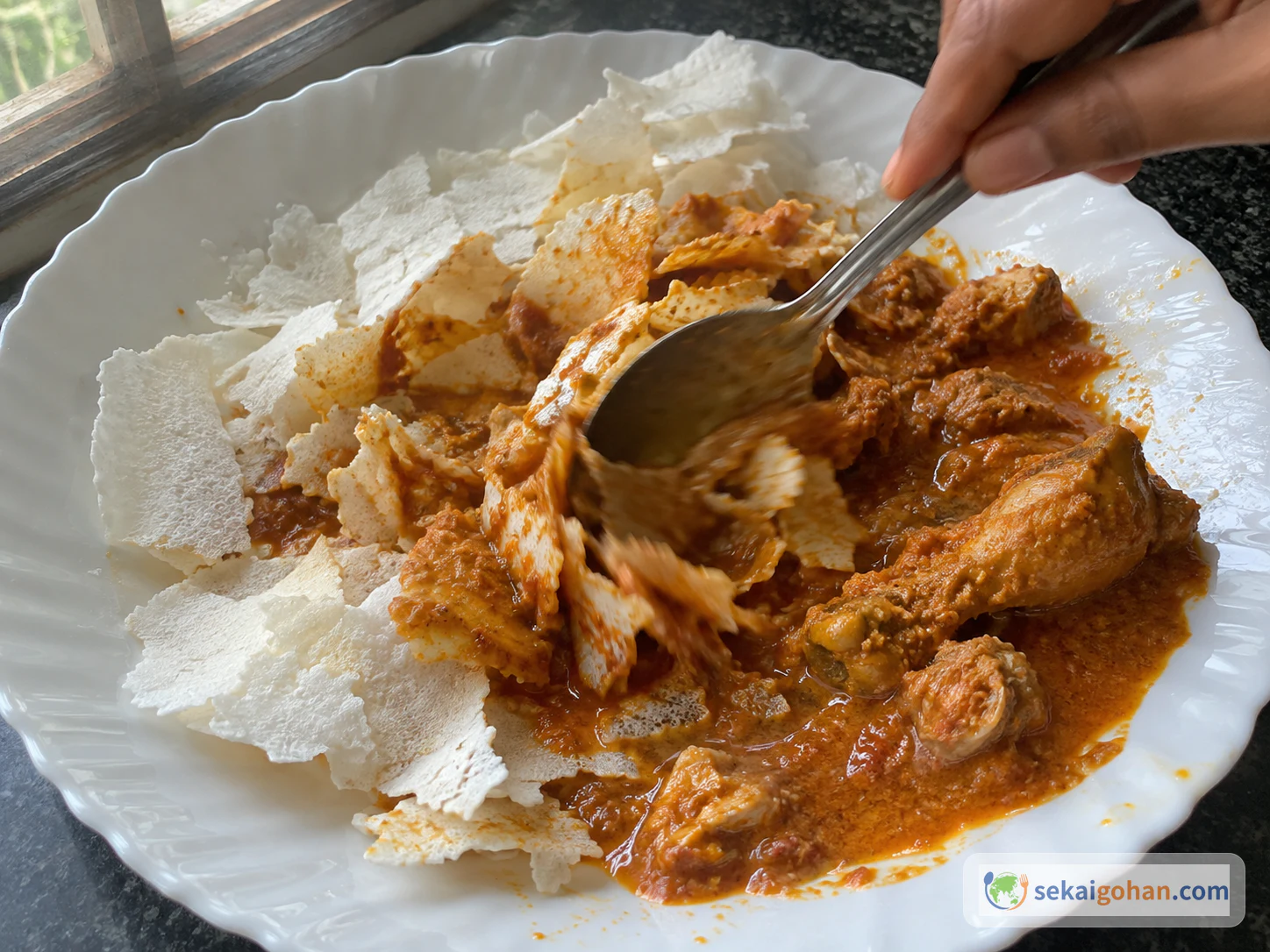
Thin, pale rice wafers, dry as paper, are broken by hand onto a plate. A ladle of hot, reddish-brown chicken curry goes over them, and you turn everything together with a spoon. Some pieces soften into the sauce and others keep their snap, and that contrast is the whole point. This is kori rotti, from the coast of Karnataka around Mangalore. The curry gets its depth from roasted chillies, coconut and tamarind.
Kori Rotti on the Tulu Coast
Kori rotti comes from the Tulu-speaking region around Mangalore, often called Tulunadu, and it is the most popular dish of Mangalore cuisine. In Tulu, kori means chicken and rotti is the rice wafer. The curry on its own is often called kori gassi. Families and restaurants across the region all make it a little differently.
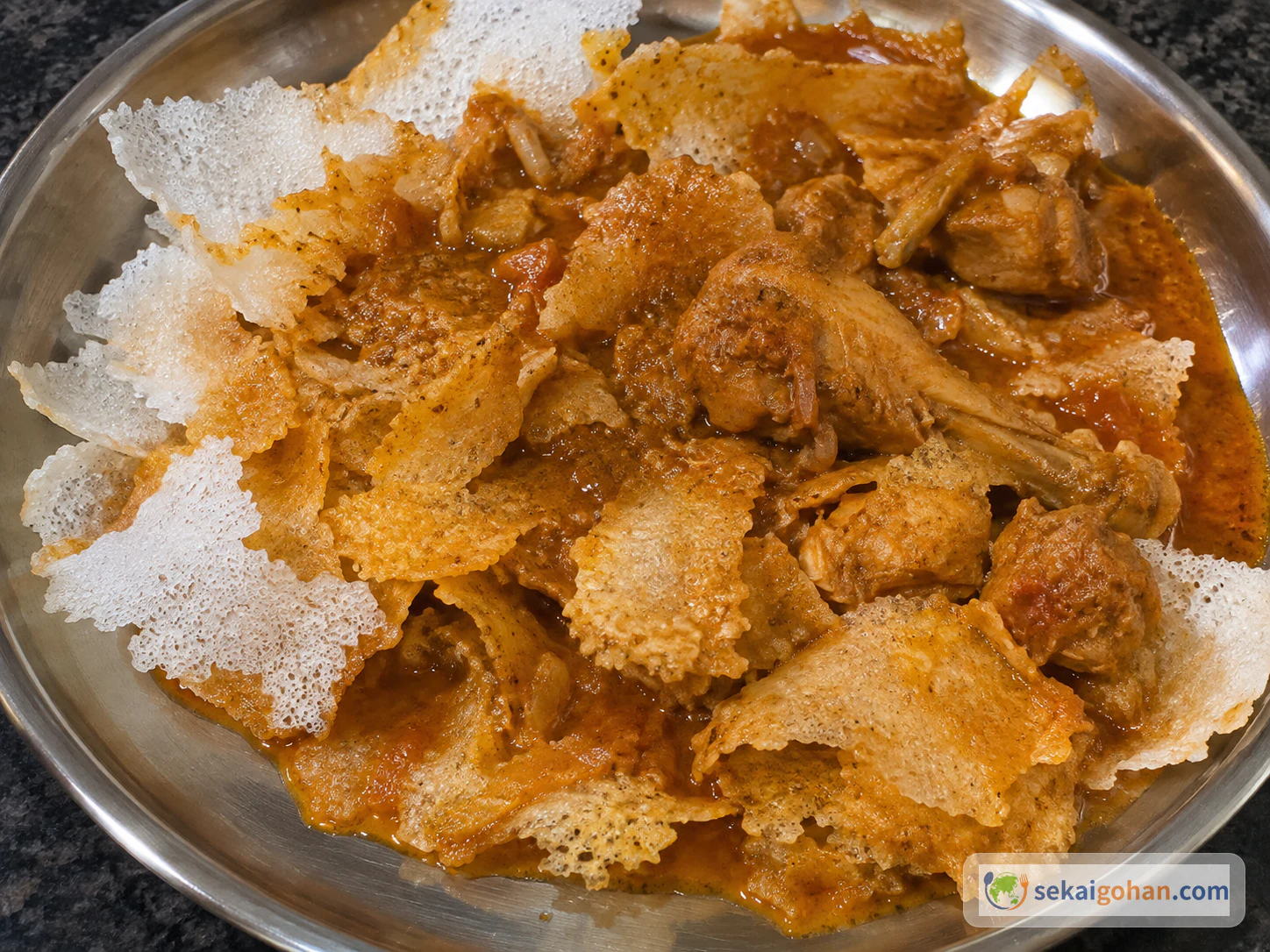
The wafers are never cooked with the curry. They are made separately, kept dry, and meet the curry only on the plate. Some restaurants serve Kori Roti with the dry rice roti on the side, so diners put the two together at the table.
You will see Kori Rotti, Kori Roti, Kori Gassi and Kori Ghassi. Add "Mangalore" or "Mangalorean" to the name when you search and you will find recipes and descriptions from the region.
For more dishes from across the country, see our India page.
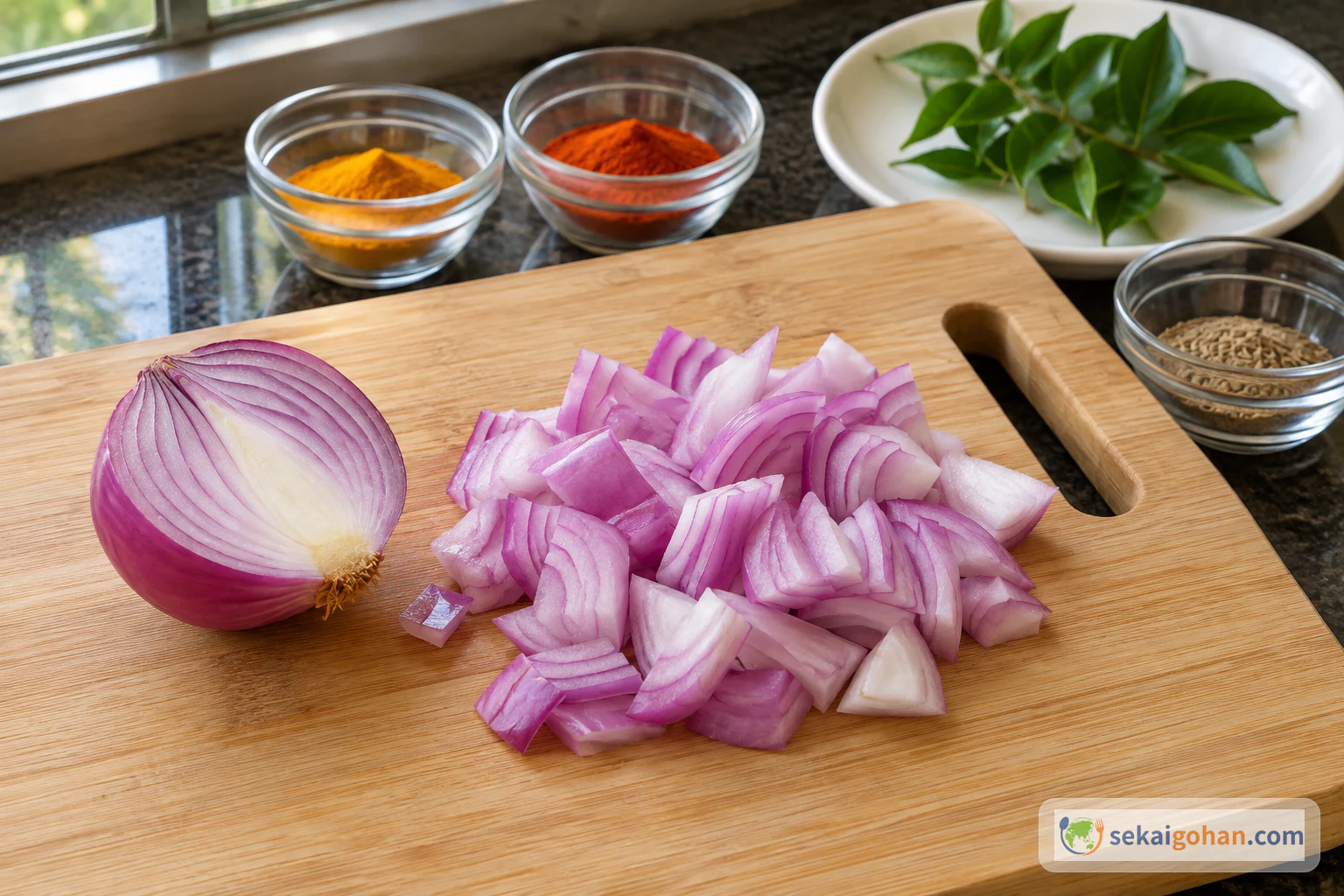
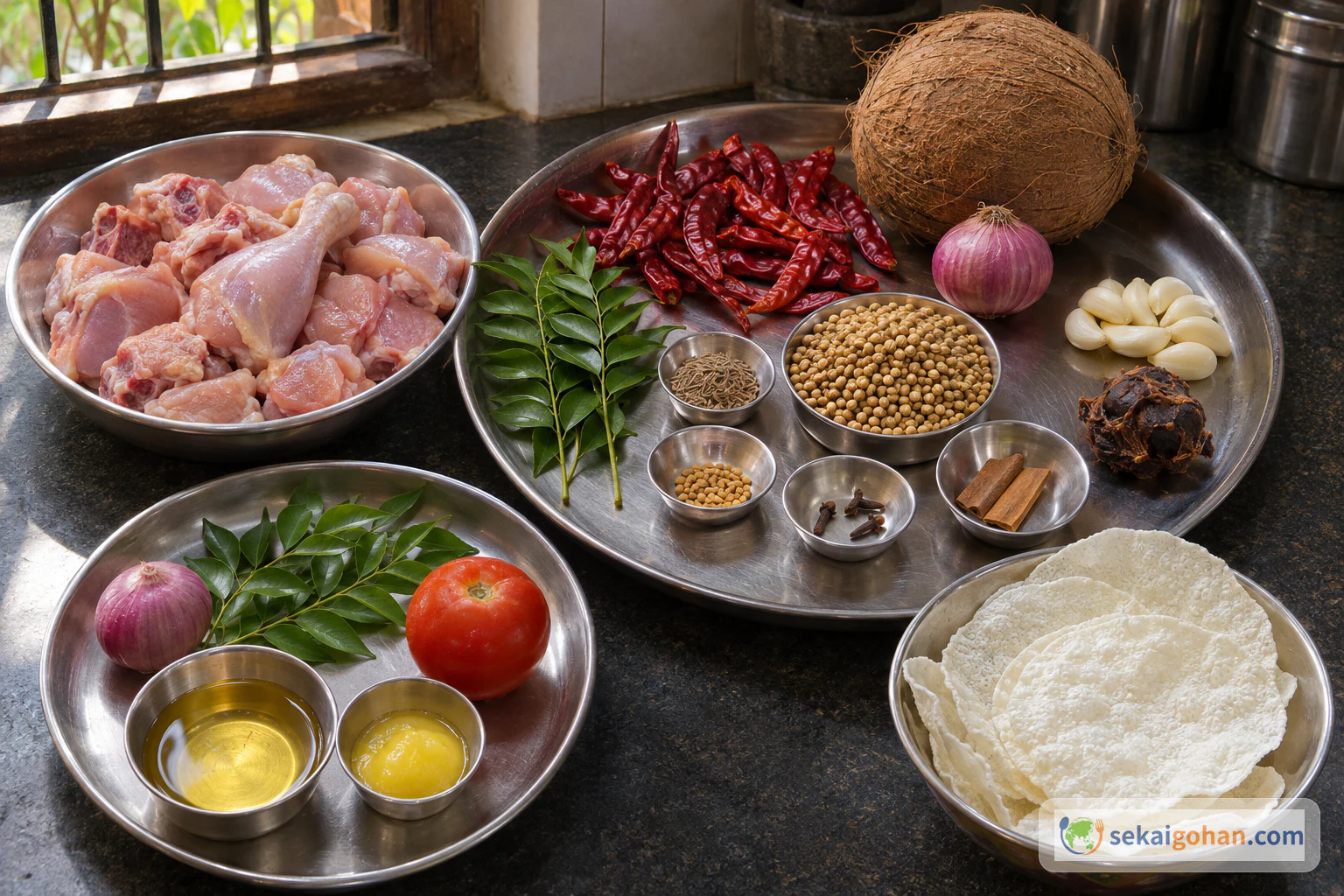
Ingredients for 2.25 lb (1 kg) of Chicken
Equipment
- A heavy pan for dry-roasting
- A wide cooking pan with a lid
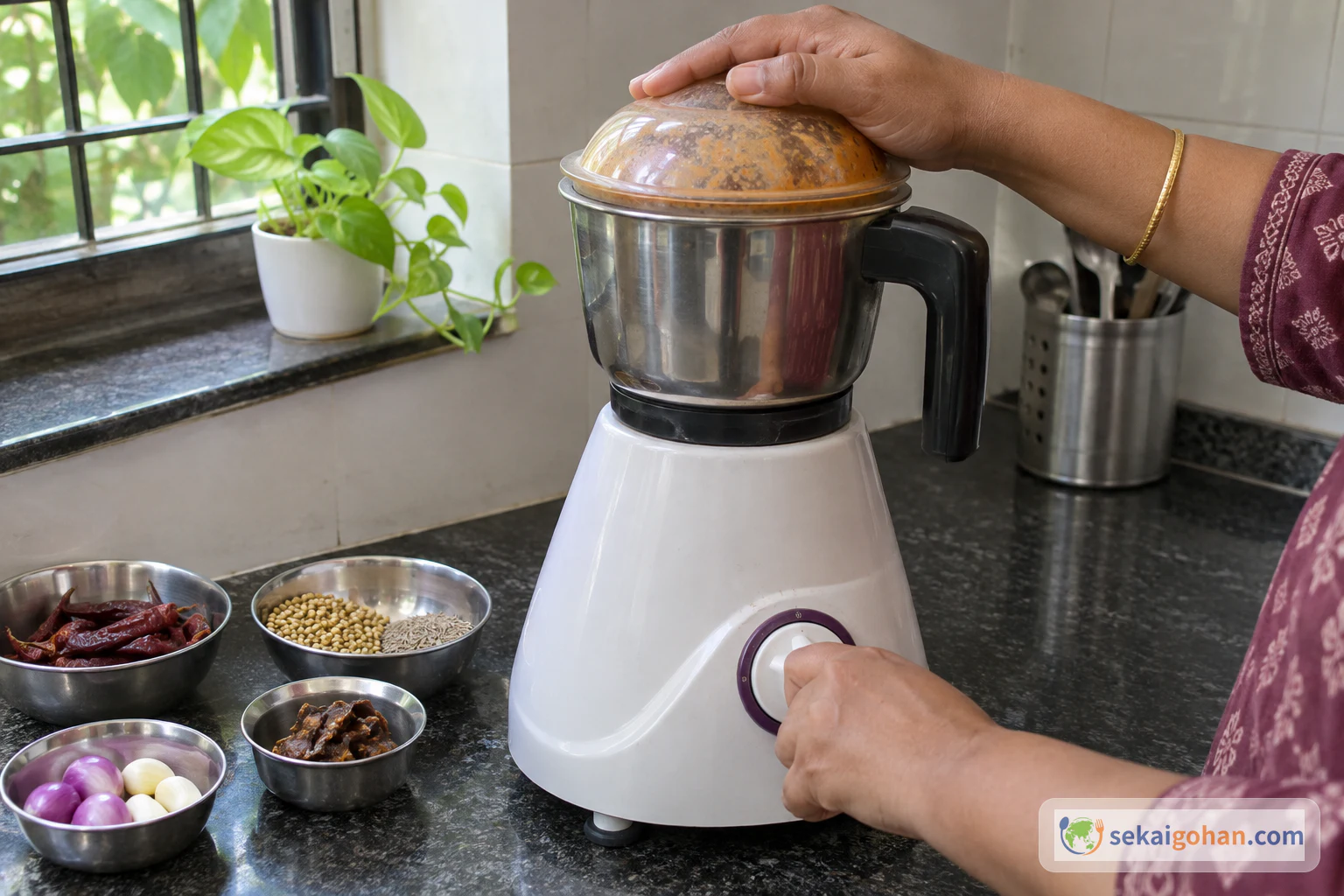
- A mixer-grinder (spice grinder or blender) suitable for wet pastes
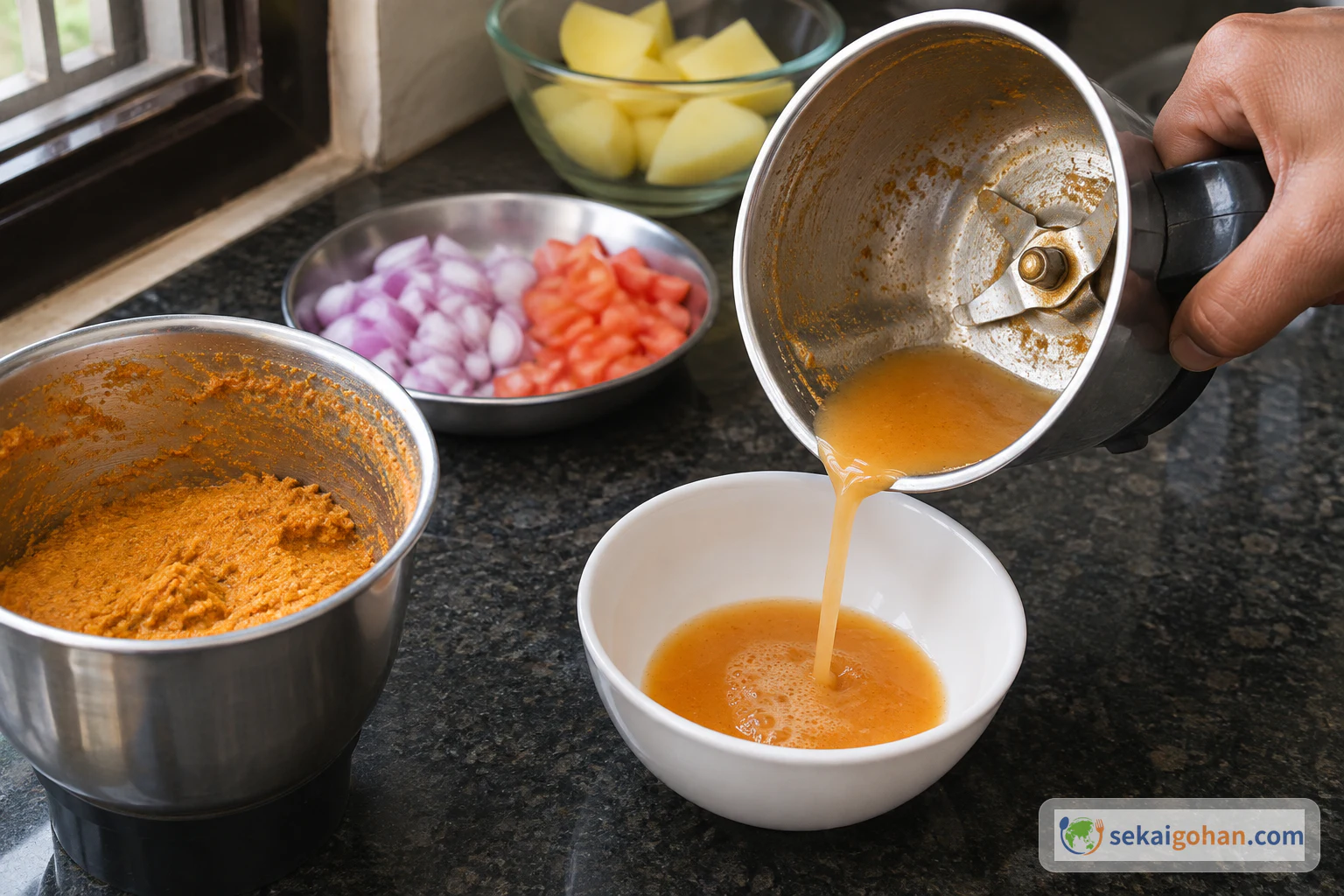
- Heat-safe bowls for the roasted spices, the paste and the masala water
- A separate cutting board, tray and tongs used only for raw chicken
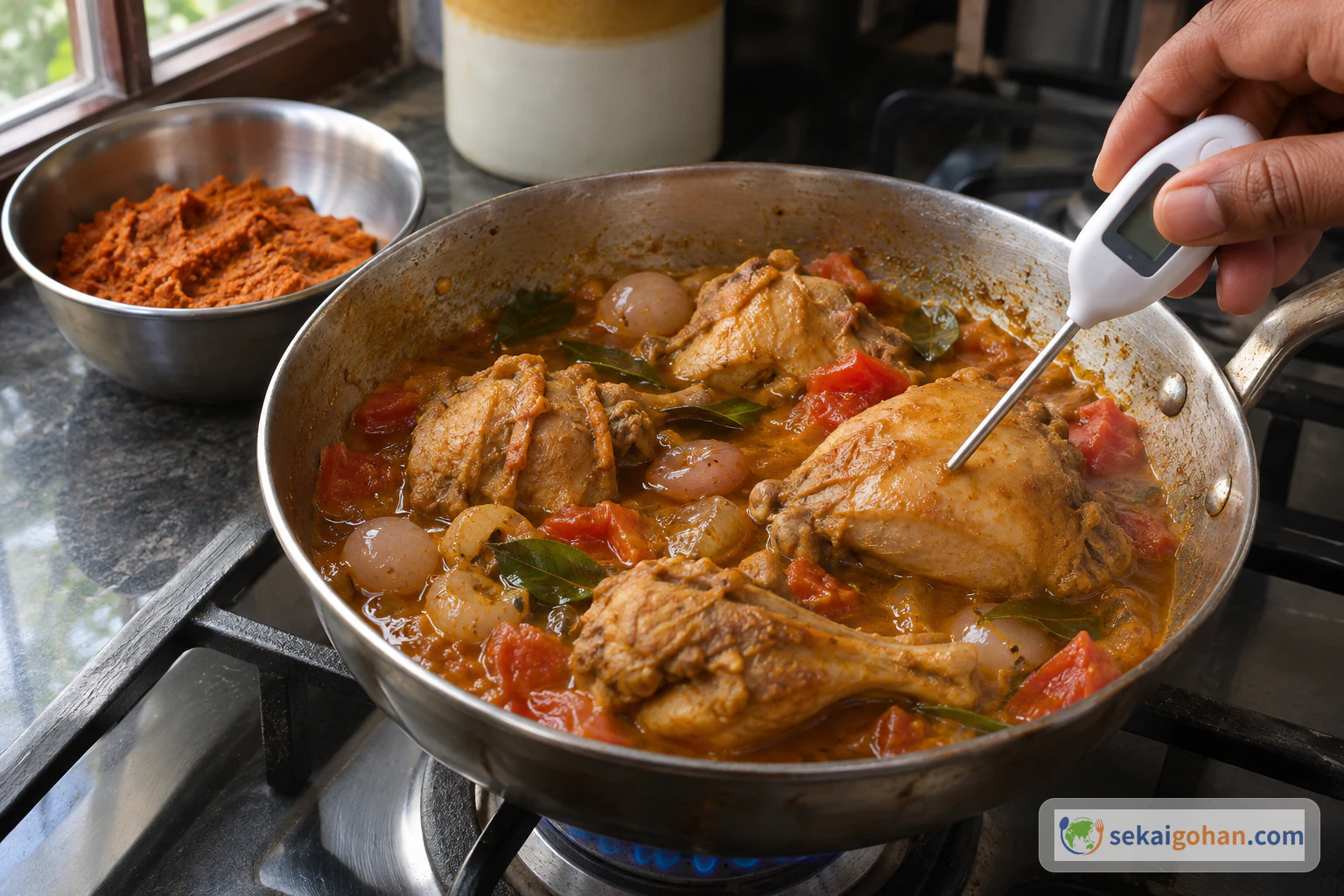
- A clean food thermometer
- A ladle, spoons and serving plates
- An oven mitt or pot holder for hot lids
Choosing Ingredients for Kori Rotti
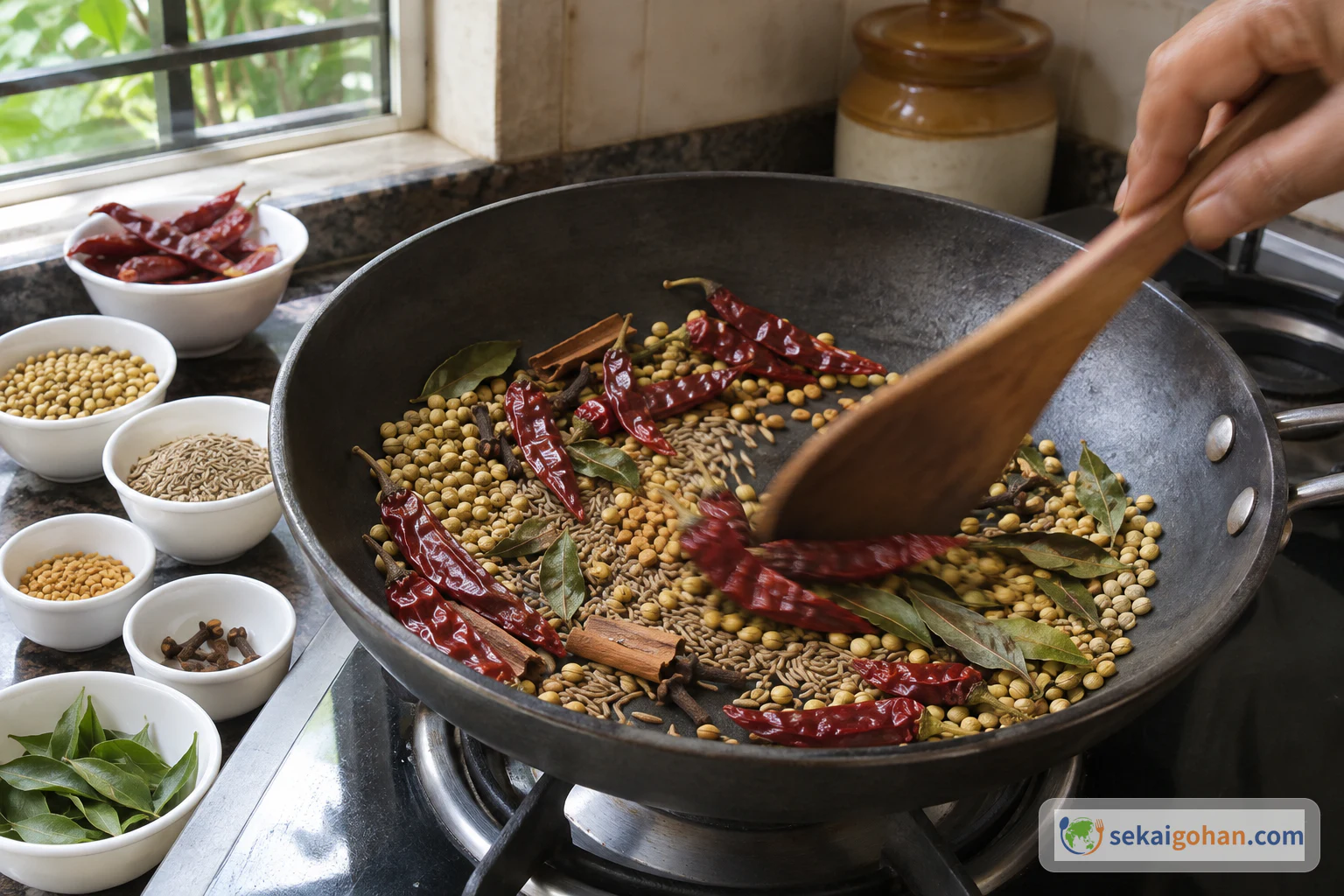
Red chillies. Varieties of dried red chilli differ widely in heat, and that difference shows up directly in the curry. Choose them with care.
Coconut. You want the grated flesh of 1 large, mature eating coconut. Coriander seeds go in for dry-roasting, along with 2 pieces of cinnamon. The masala can take 4 peppercorns as an option, but this version leaves them out. It also uses no salt and no coconut milk.
Chicken and rotti. It's easiest to have the butcher cut the chicken into pieces. Bone-in pieces work well. For the rotti, buy dry rice wafers that are ready to eat.
Do not wash raw chicken. Keep it, and the board, tray and tongs it touches, away from the rice wafers and from cooked food. Wash hands, surfaces and utensils after handling raw poultry.
Method: Masala First, Then the Chicken, Then the Plate
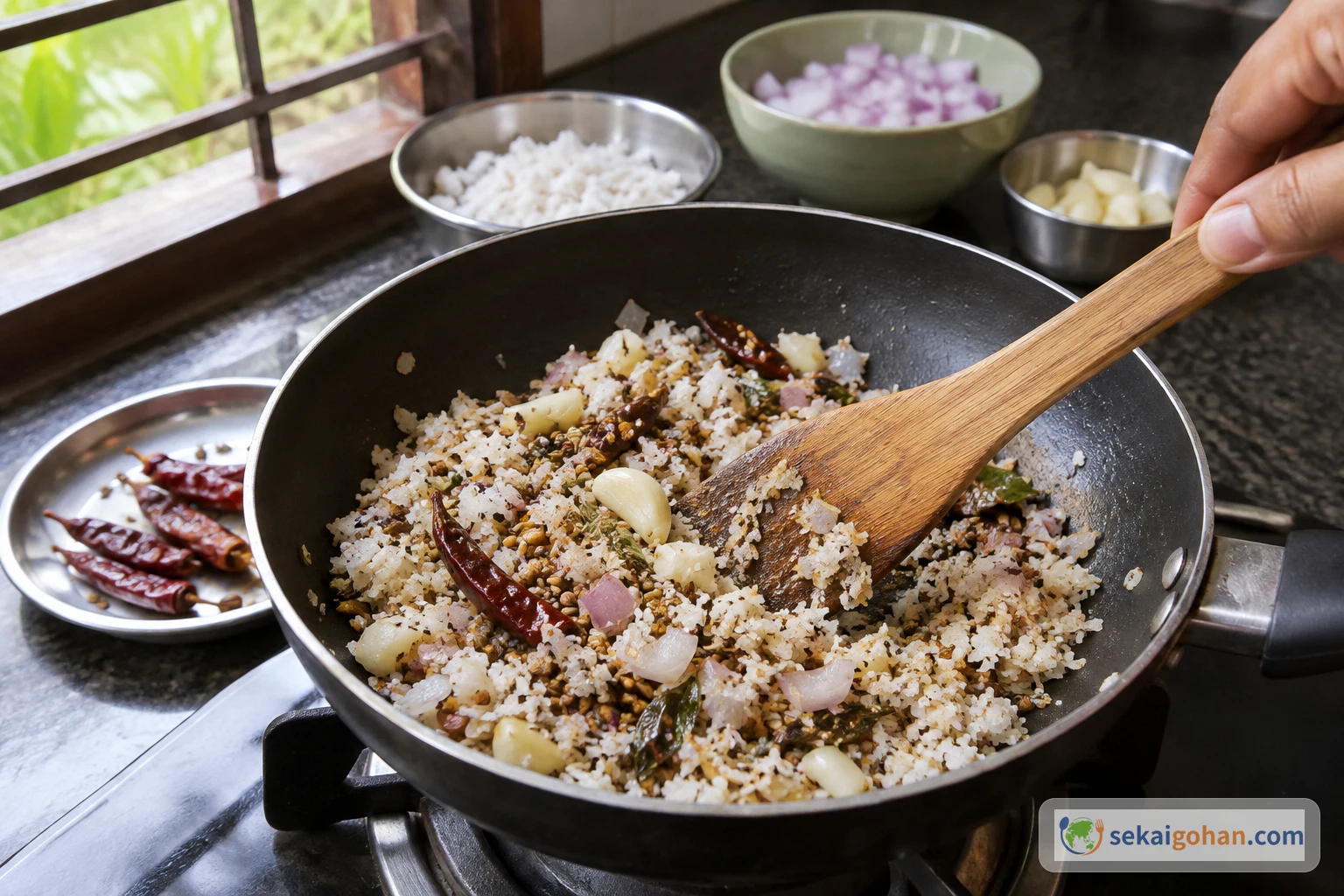
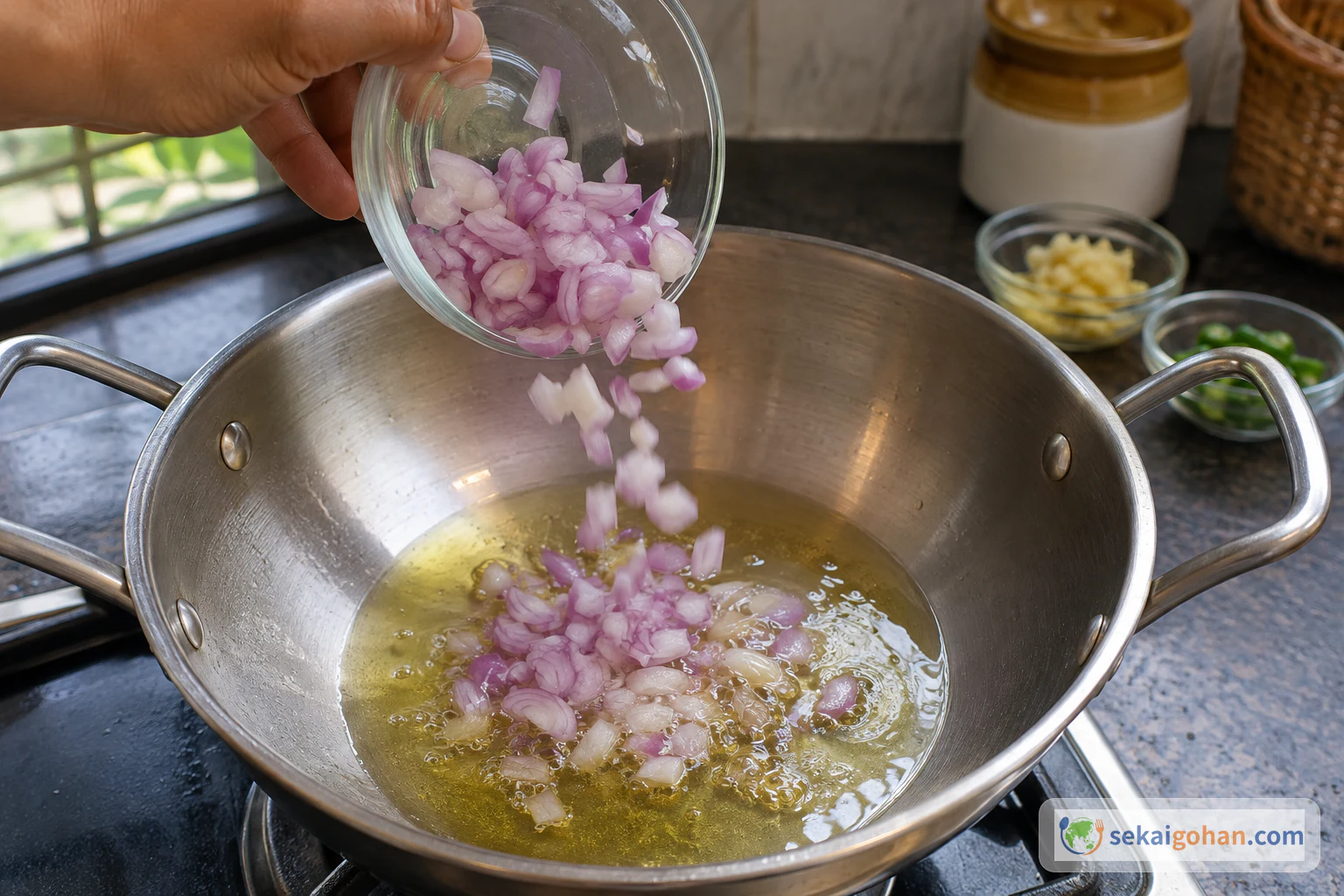
The masala is roasted and ground before any chicken is cooked. The grinder-rinse water goes into the chicken pan first, and the thick paste goes in only after the chicken is cooked through. Paste and rinse water are two different things; keep them in separate bowls.
Common Kori Rotti Problems and Fixes
| What happens | Likely reason | What to do |
|---|---|---|
| The wafers turned completely soft | Curry was poured too far ahead, or the wafers were mixed into the pan | Break and pour one plate at a time, right before eating. Never add wafers to the pot |
| The thermometer reads below 74°C (165°F) | The chicken needs more time | Keep cooking and check again before adding the paste. The 10-minute covered stage is not a doneness test |
| The paste went in before the chicken was done | Order of steps swapped | Make sure the chicken reaches 74°C (165°F) before serving. Next time, keep the paste aside until after the check |
| Paste and masala water ended up in the same bowl | Rinsing straight into the paste bowl | Use two bowls. The thin rinse water cooks the chicken; the thick paste goes in last |
| The grinder strains or warns on a hot load | The mixture is too hot for the appliance | Stop, and follow the maker's instructions on loading and heat |
| The curry is hotter than expected | Chilli varieties differ in heat | Choose your chillies with care next time |
Serving Kori Rotti and Other Versions
Keep the wafers dry and away from the curry until the moment you serve. Then pour the hot curry over them, mix, and eat right away while some of the edges still crunch. It's best to do this one plate at a time.
Other versions of the curry add coconut milk and salt, and divide the onion, ghee and garlic differently. You can also add the optional peppercorns to the masala.
Frequently Asked Questions
How long does it take?
Plan for 30 minutes of preparation and 30 minutes of cooking. Time alone won't tell you the chicken is done, though. The thickest part of the meat should read 74°C (165°F) on a thermometer.
How spicy will it be?
That depends on your chillies, because varieties vary a lot in heat. The spice level of this version also assumes you use a big coconut.
Can I make the rotti myself?
This recipe uses ready-made dry rice wafers that are ready to eat.
Can I keep leftovers?
Kori rotti is mixed and eaten fresh, one plate at a time. Keep the wafers dry and separate from the curry until you serve.