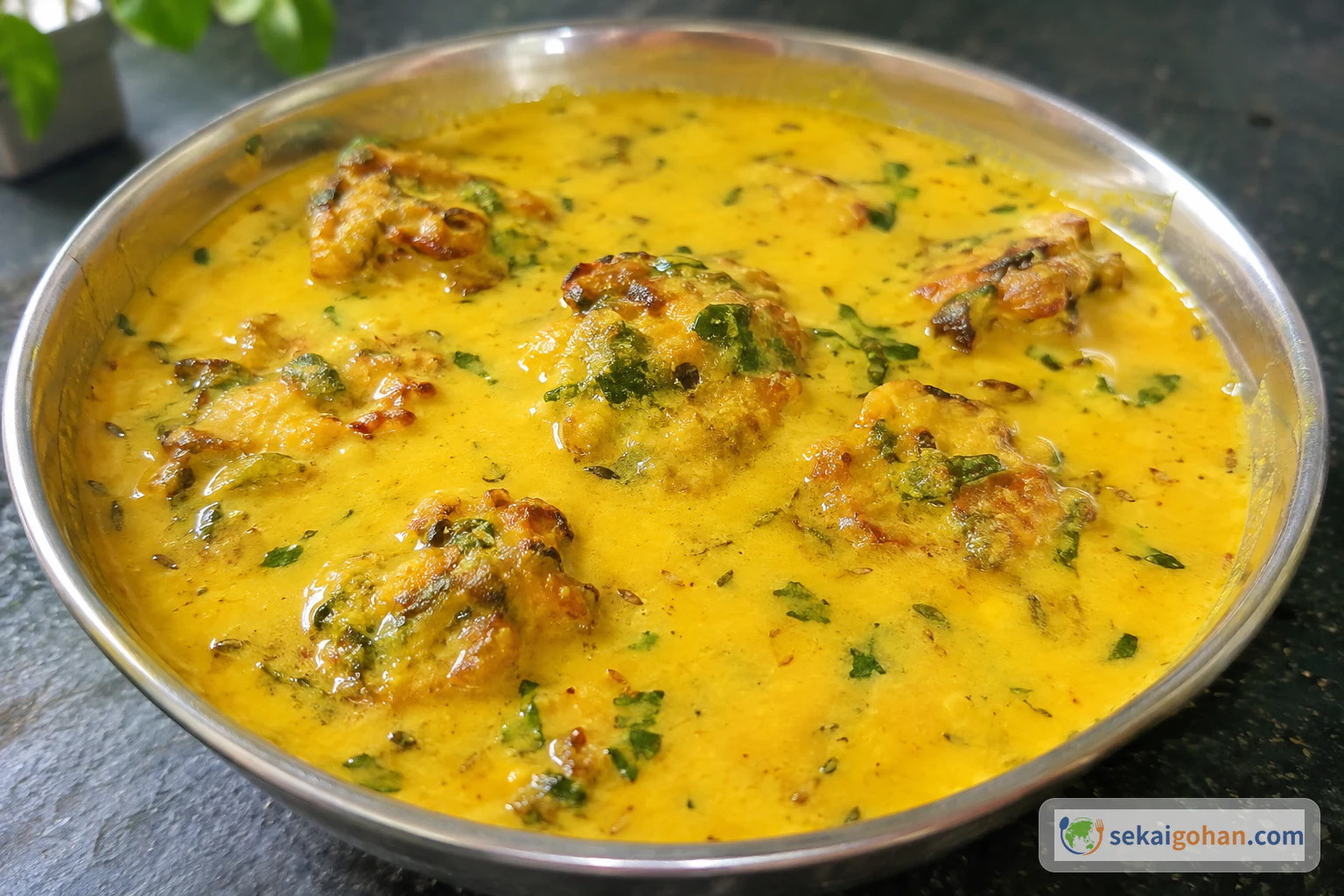
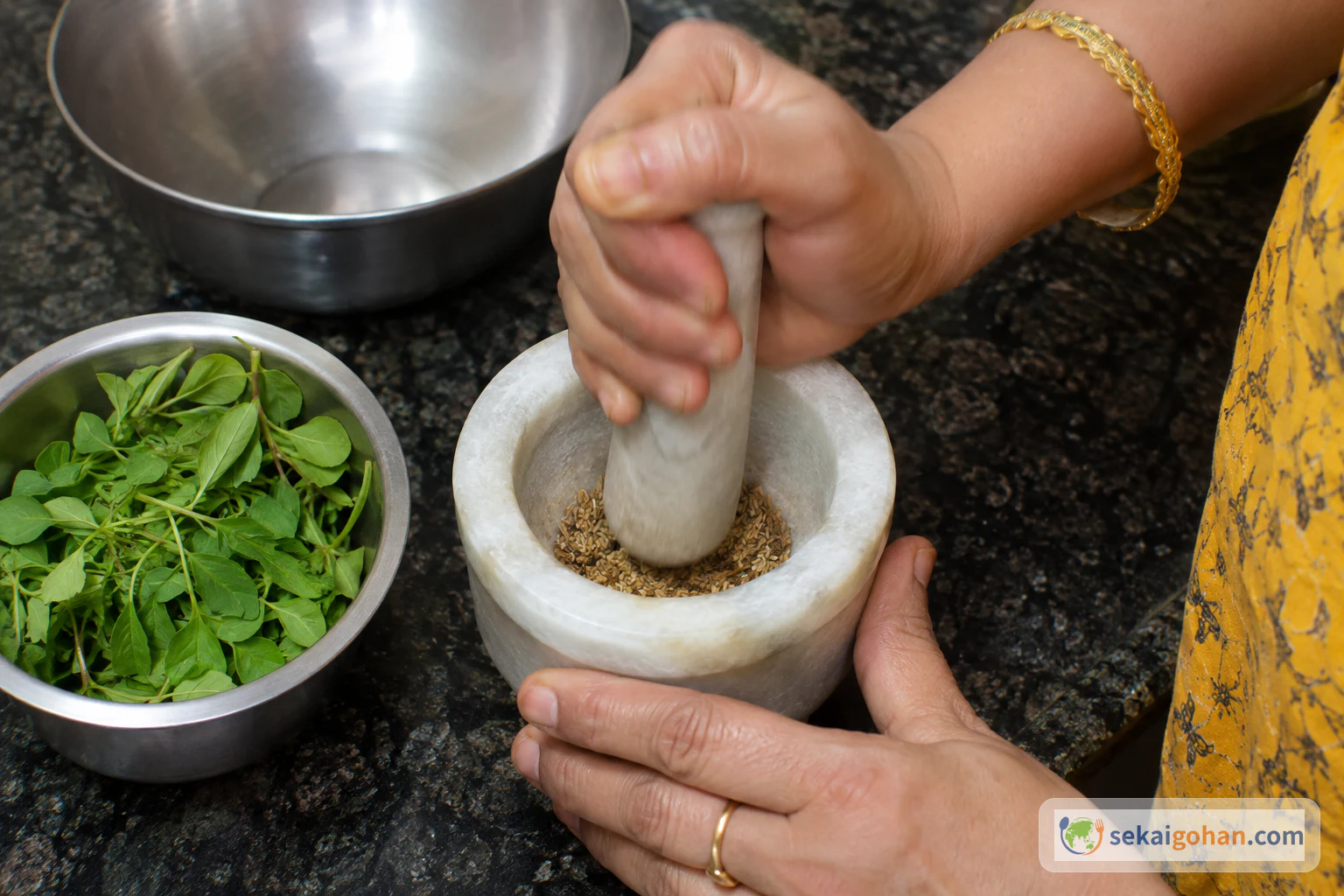
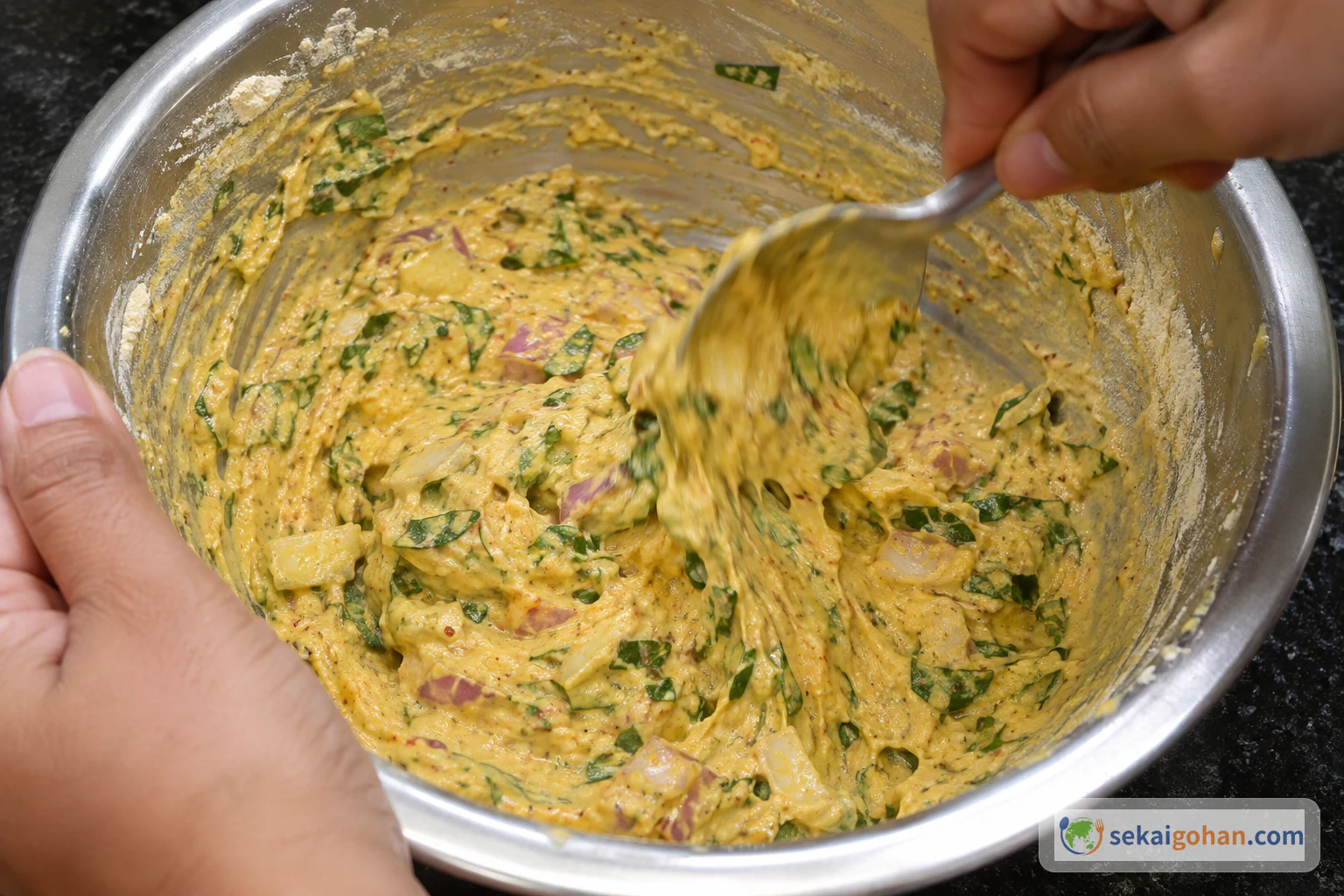
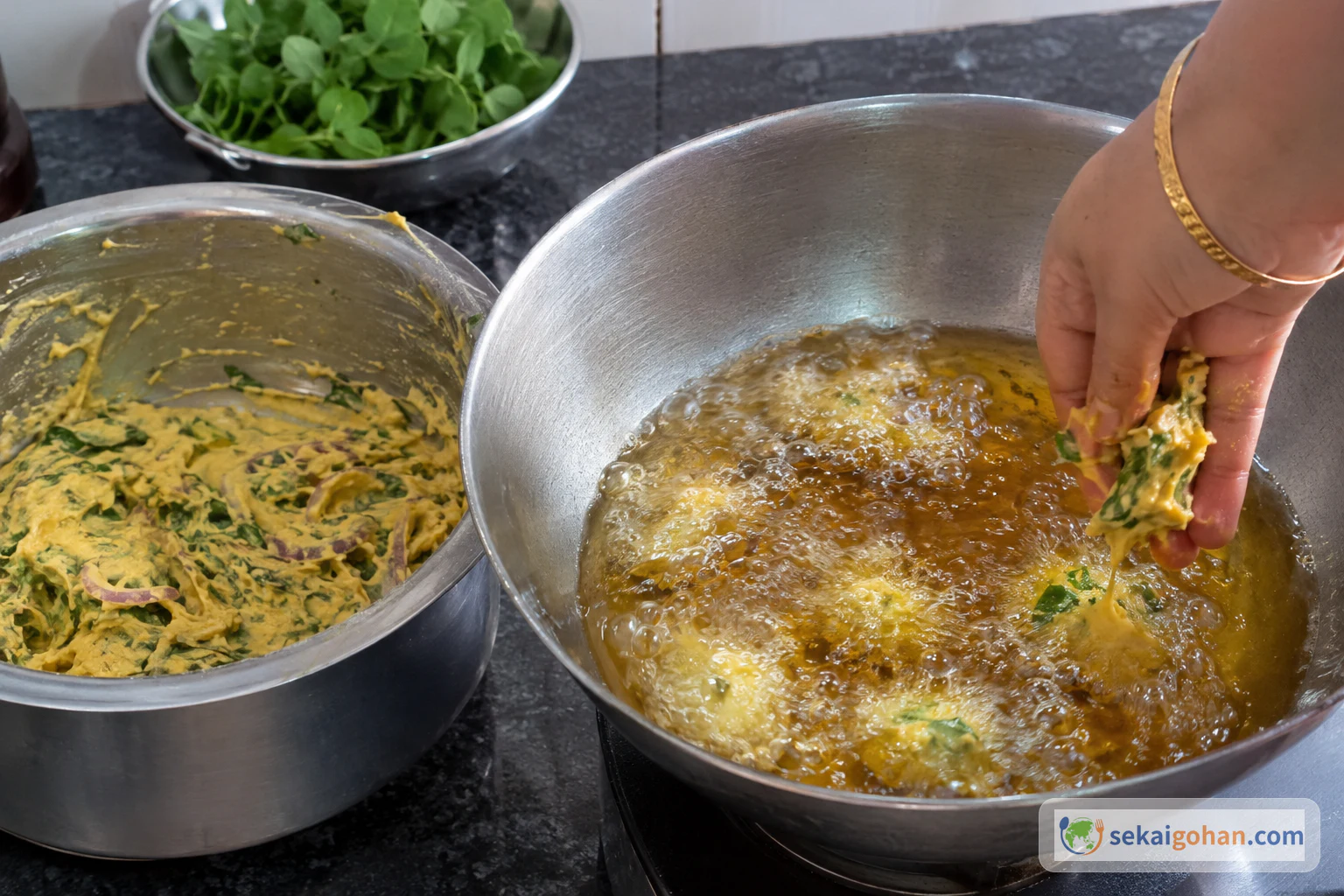
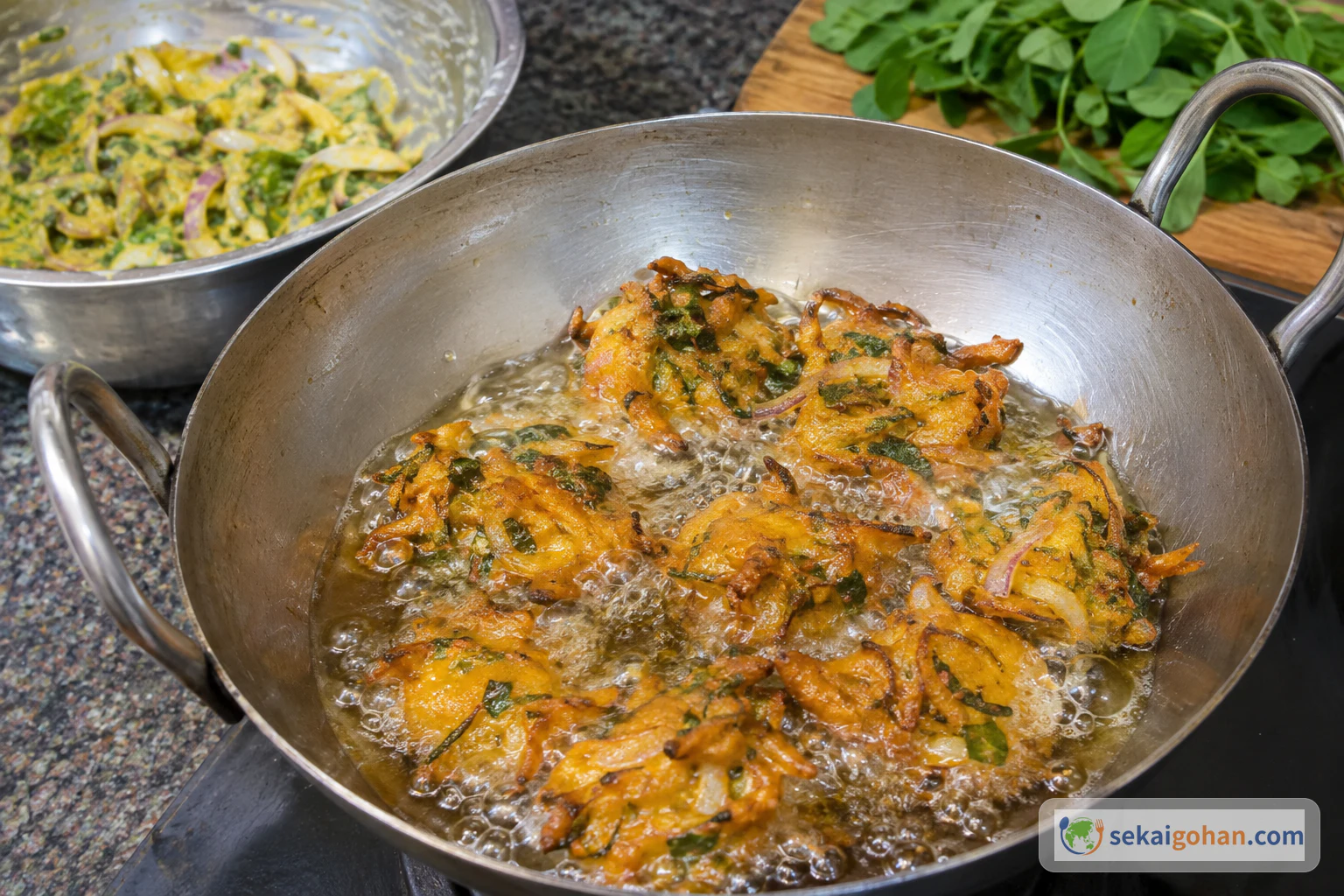
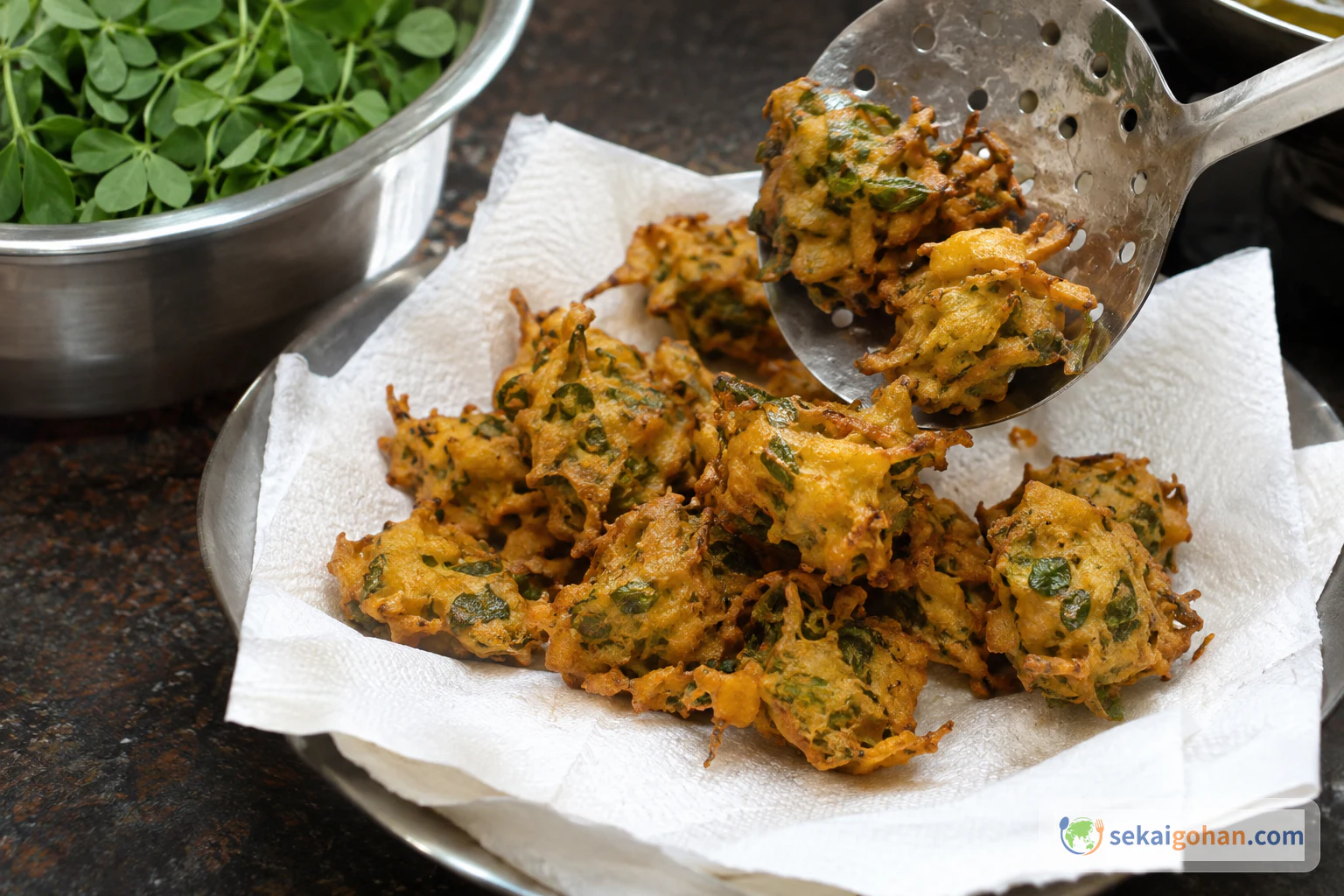
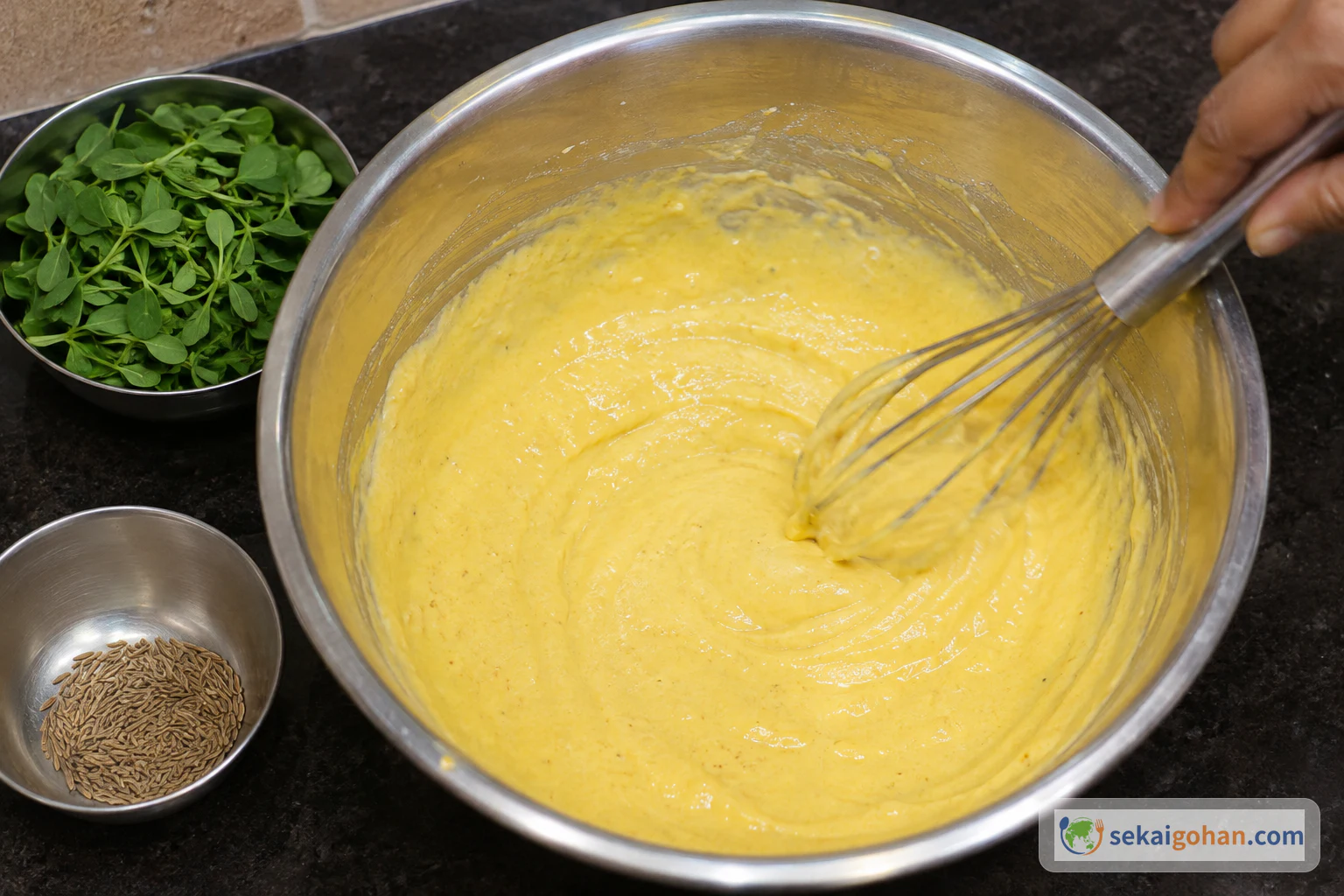
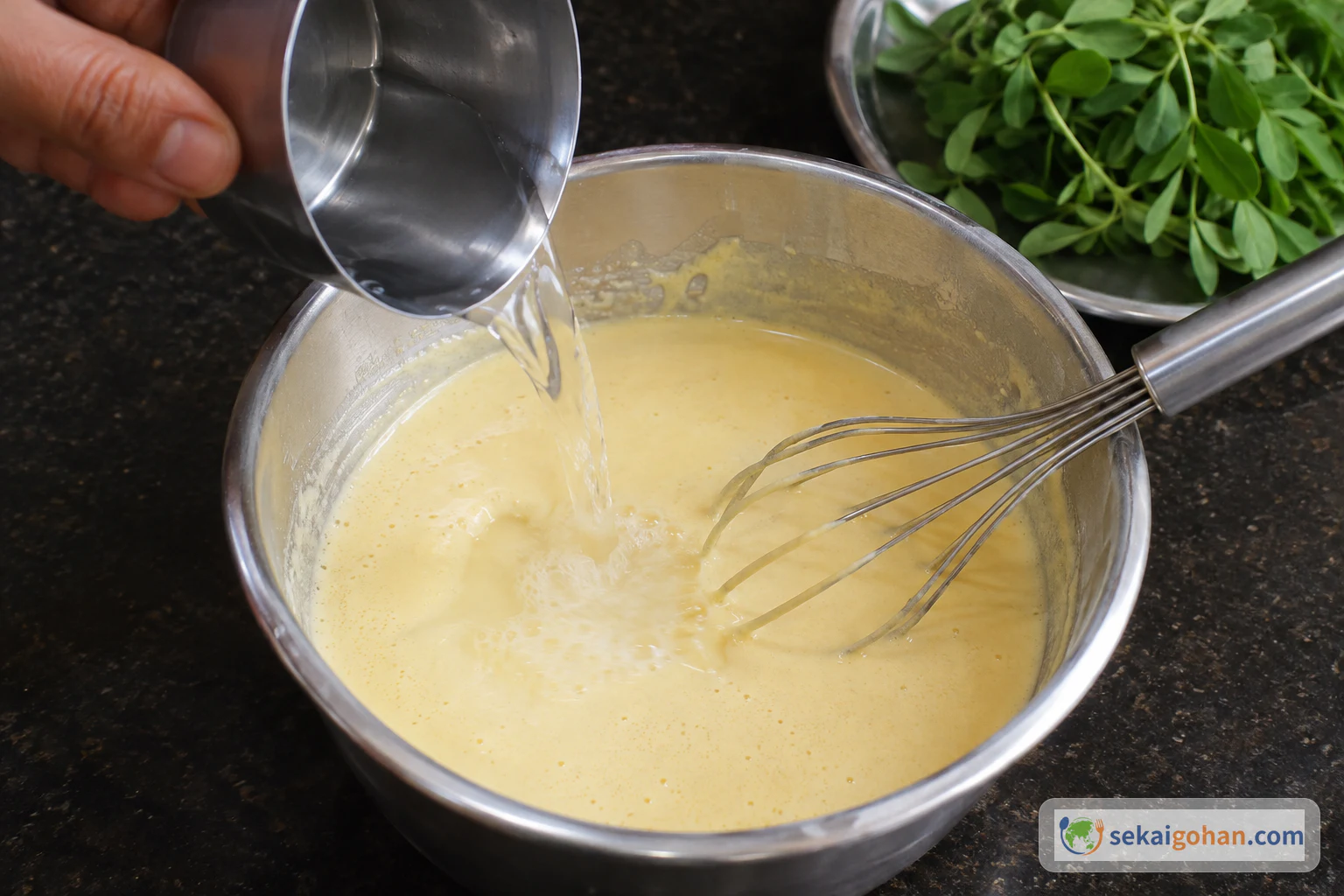
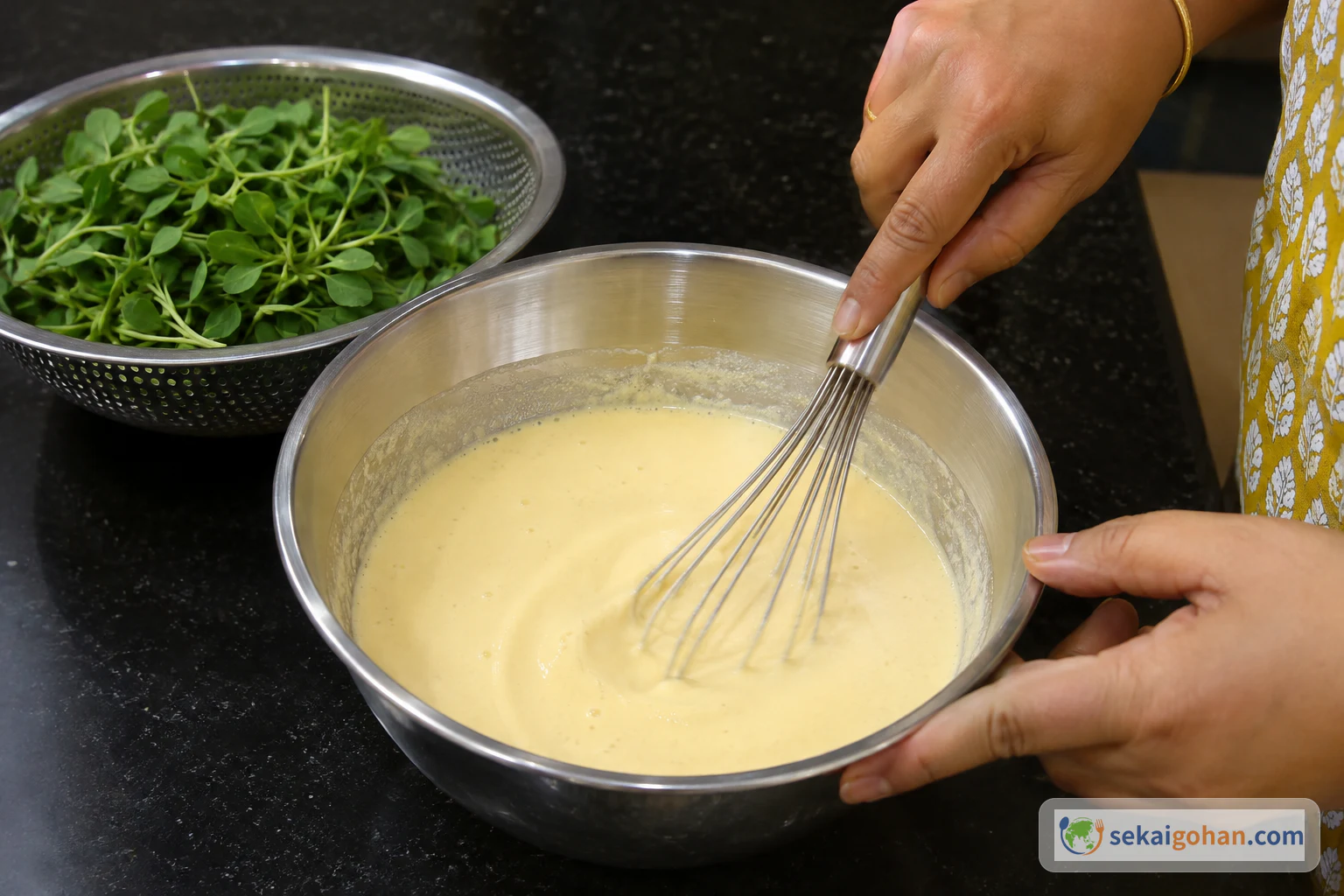
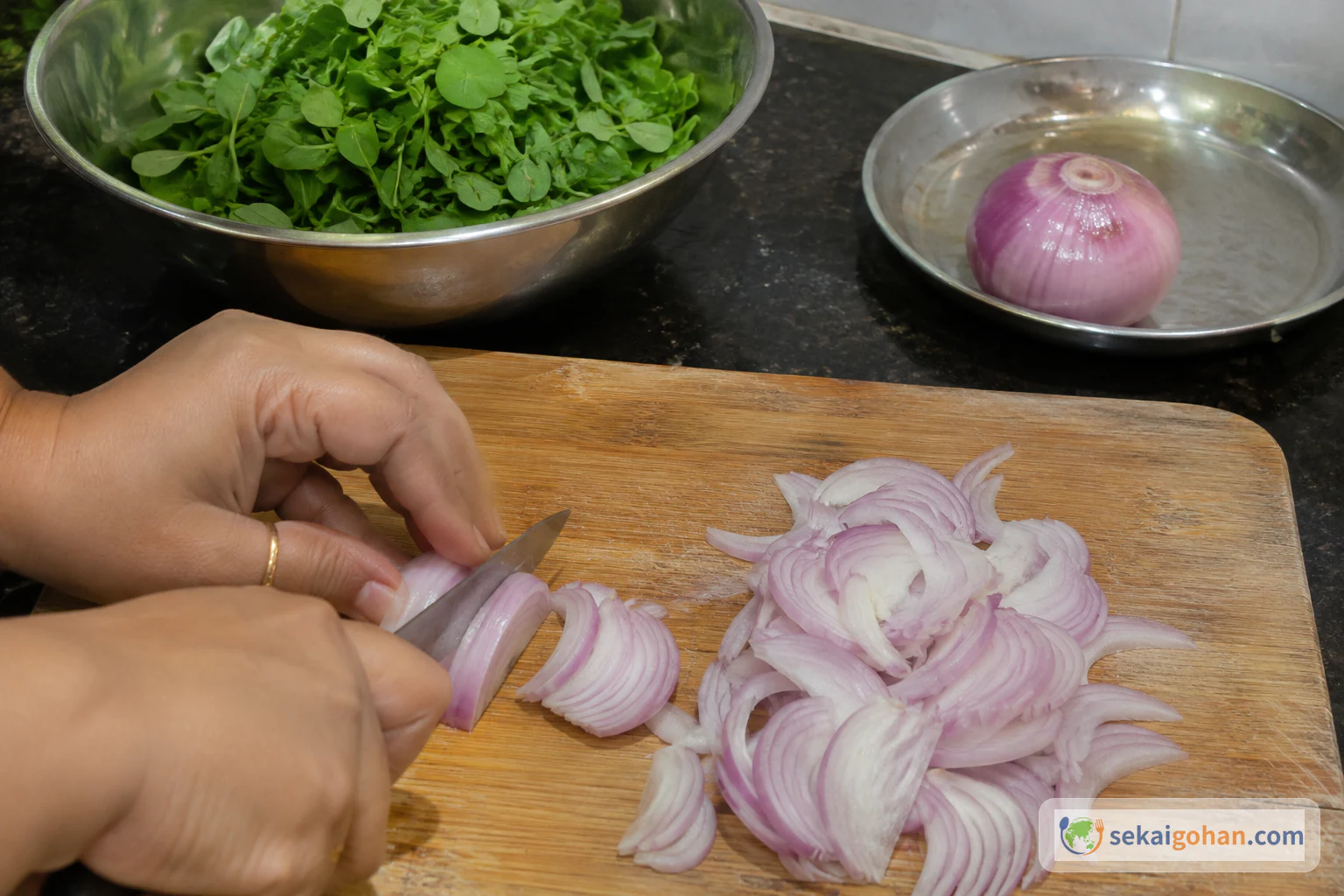
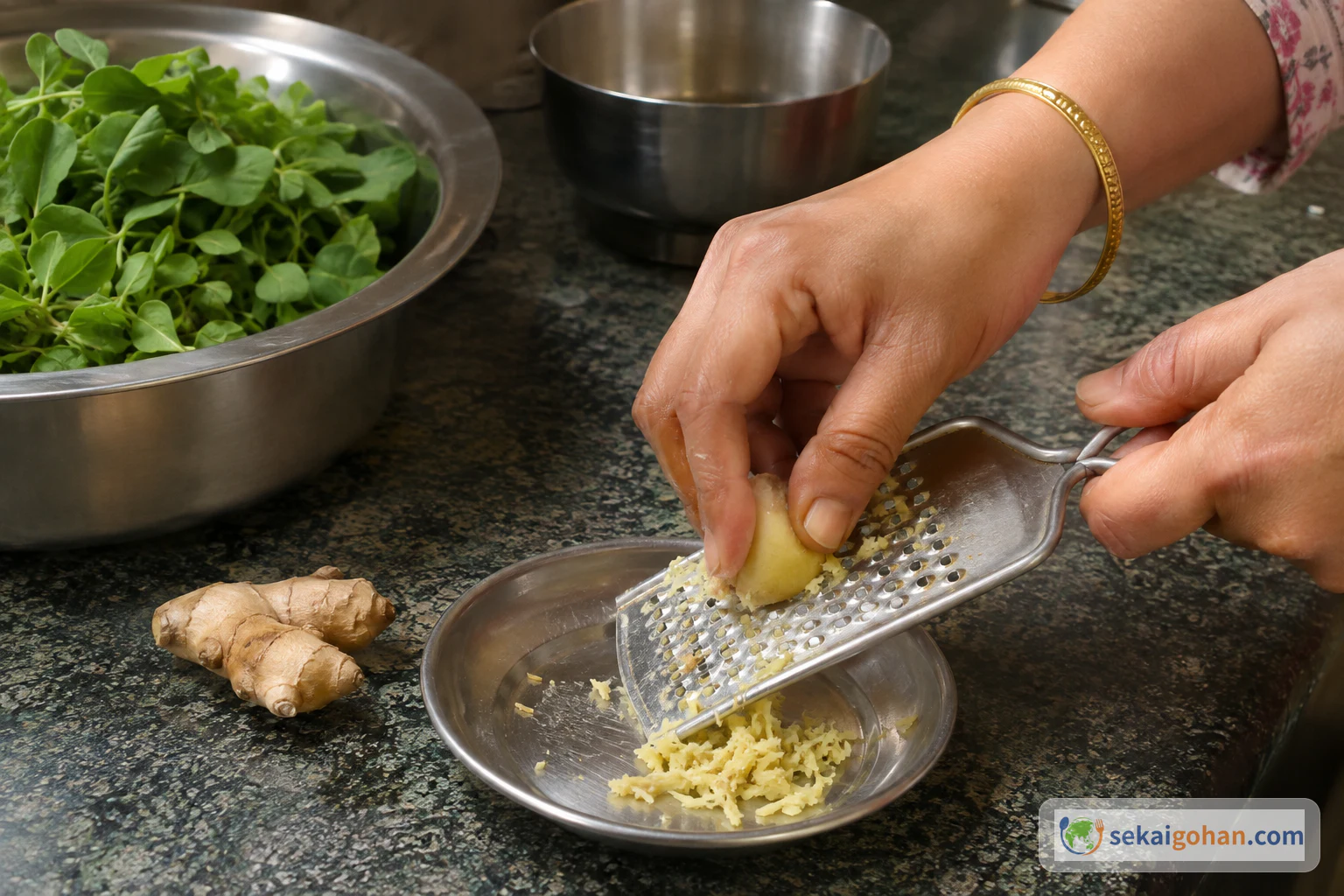
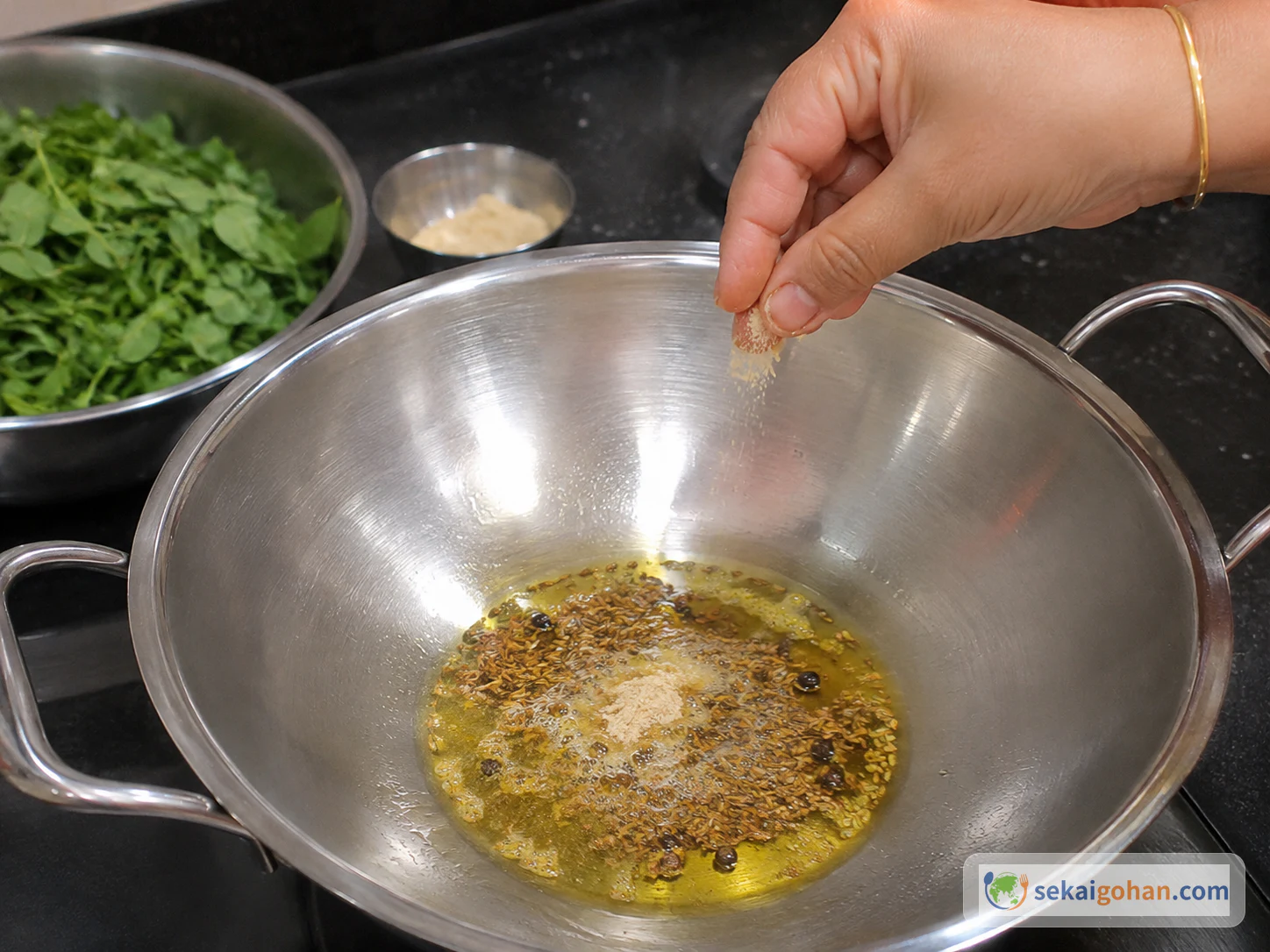
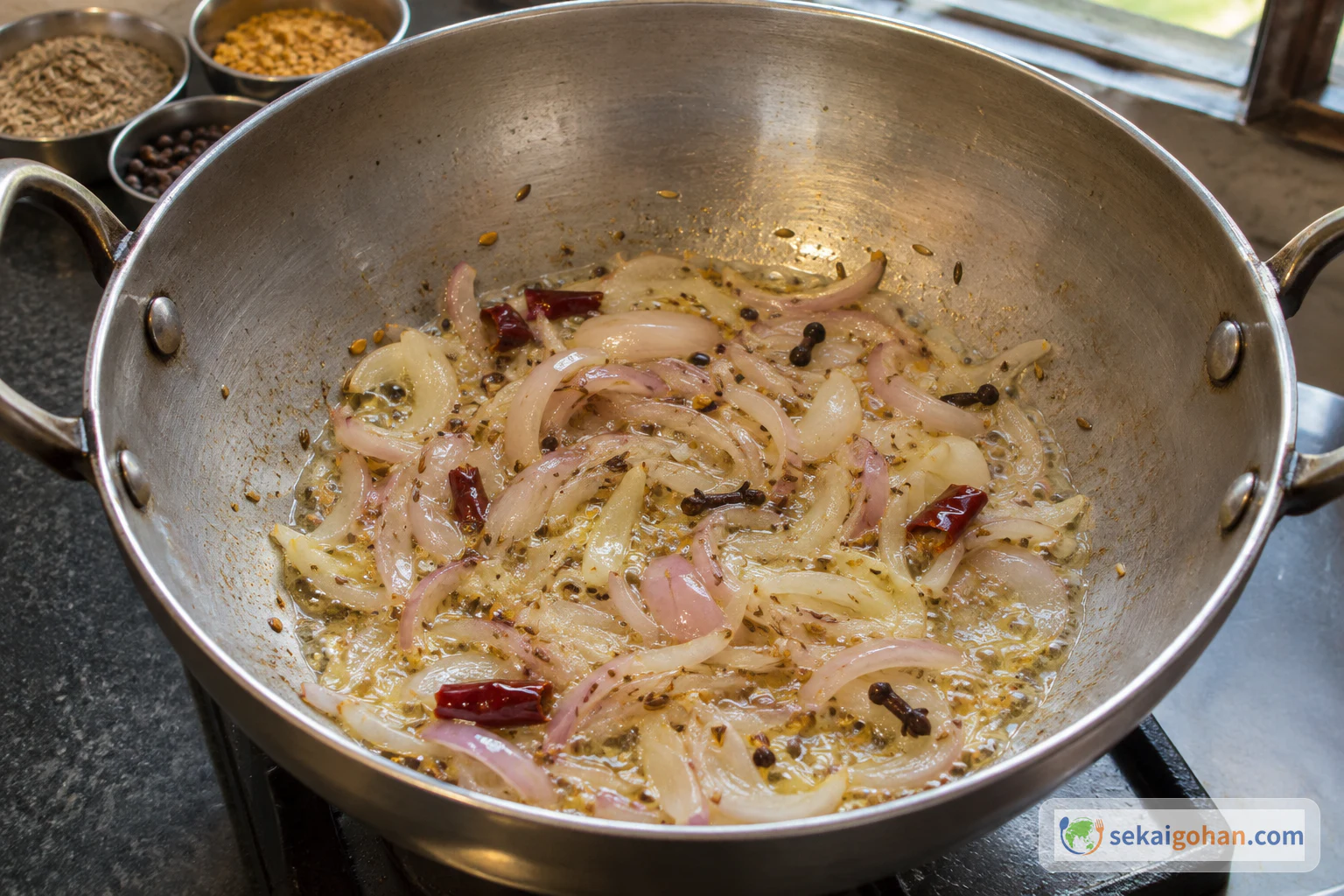
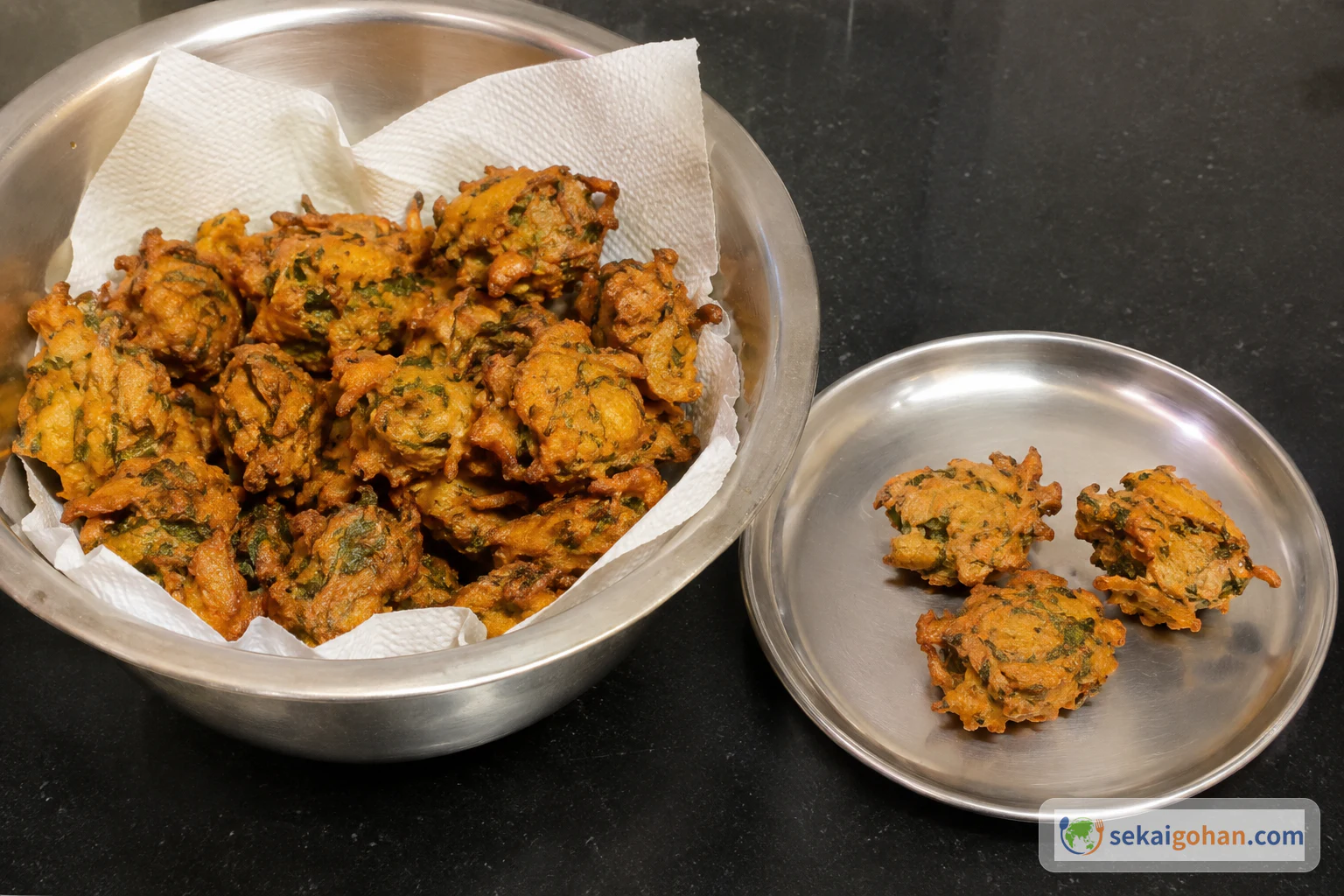
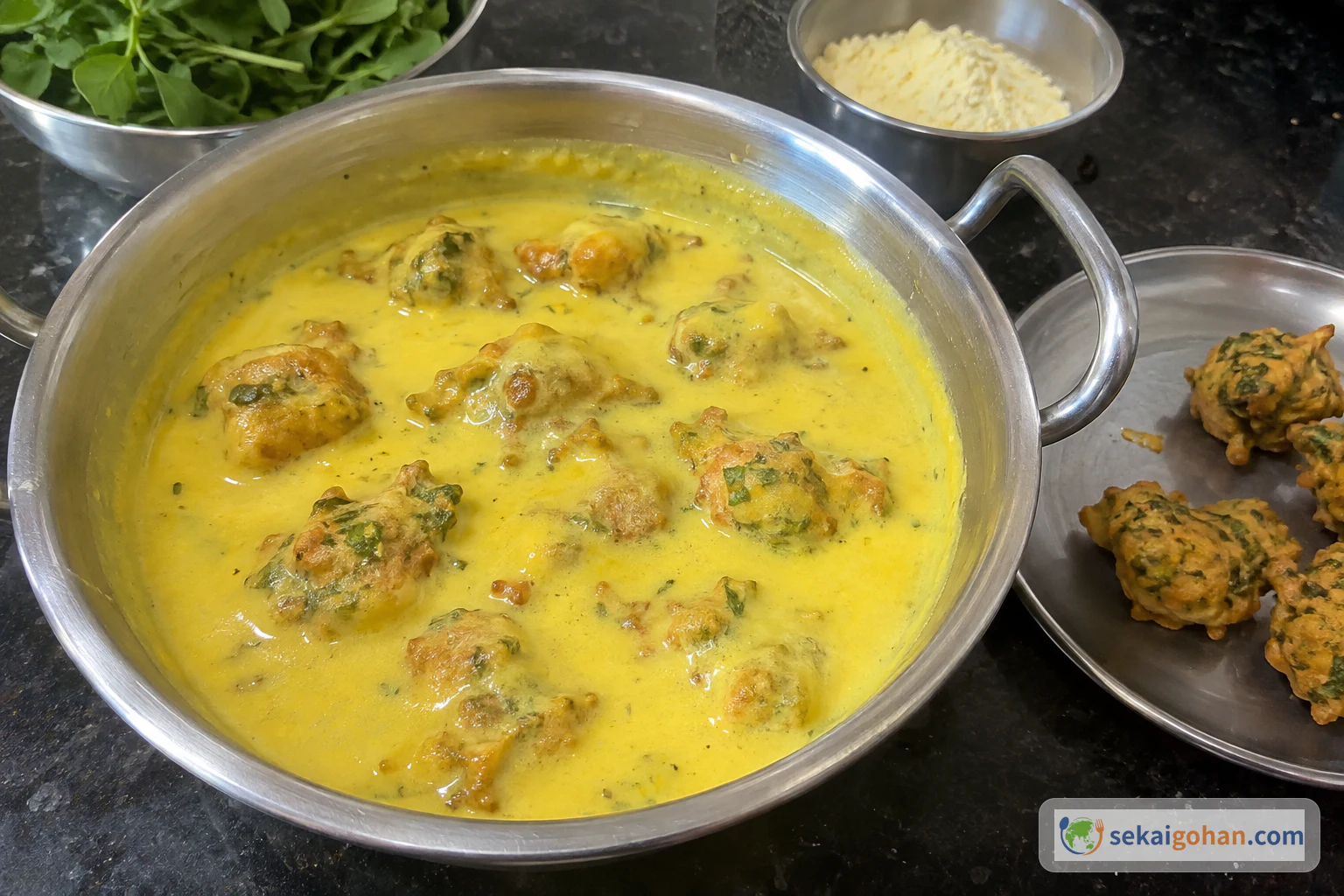
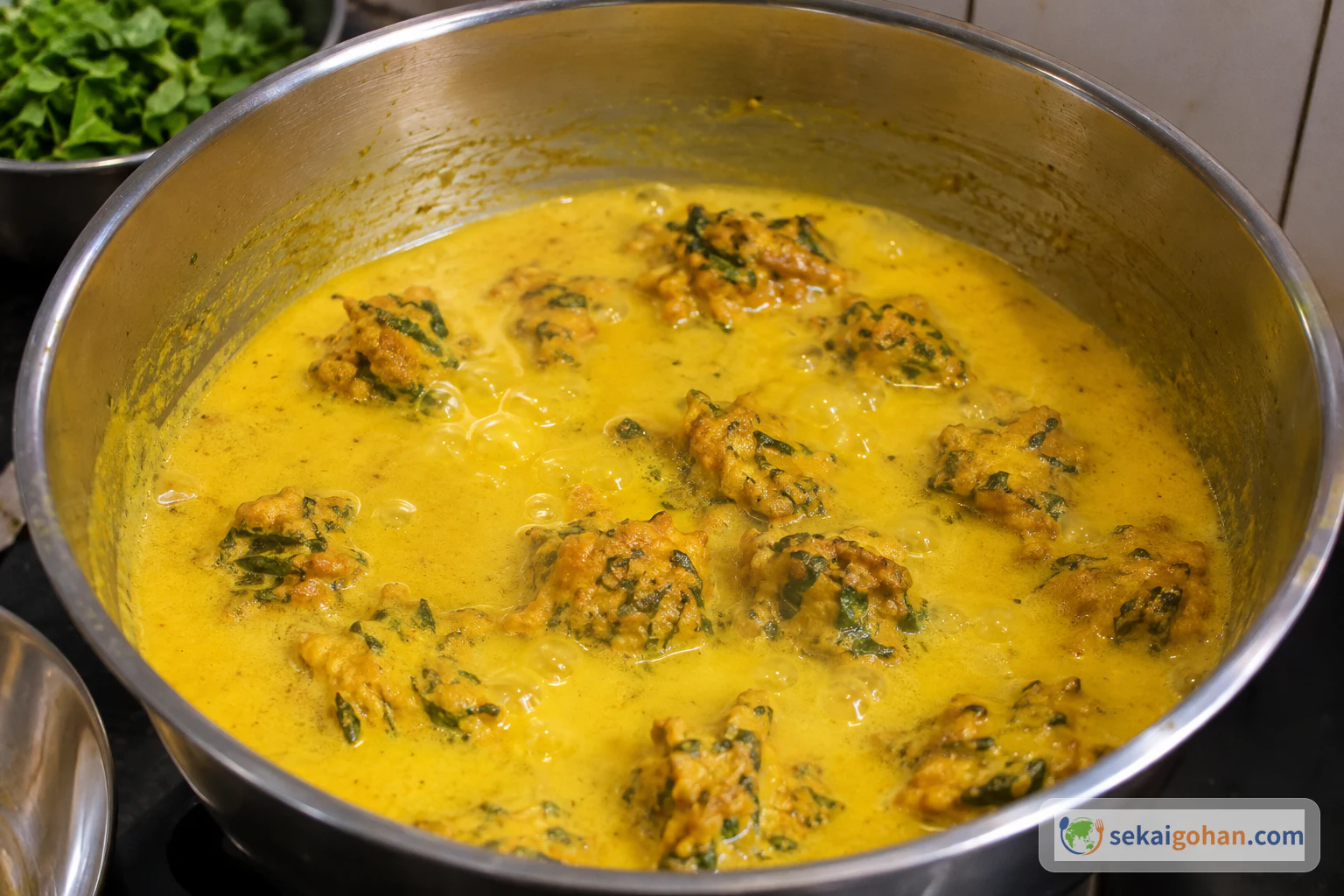
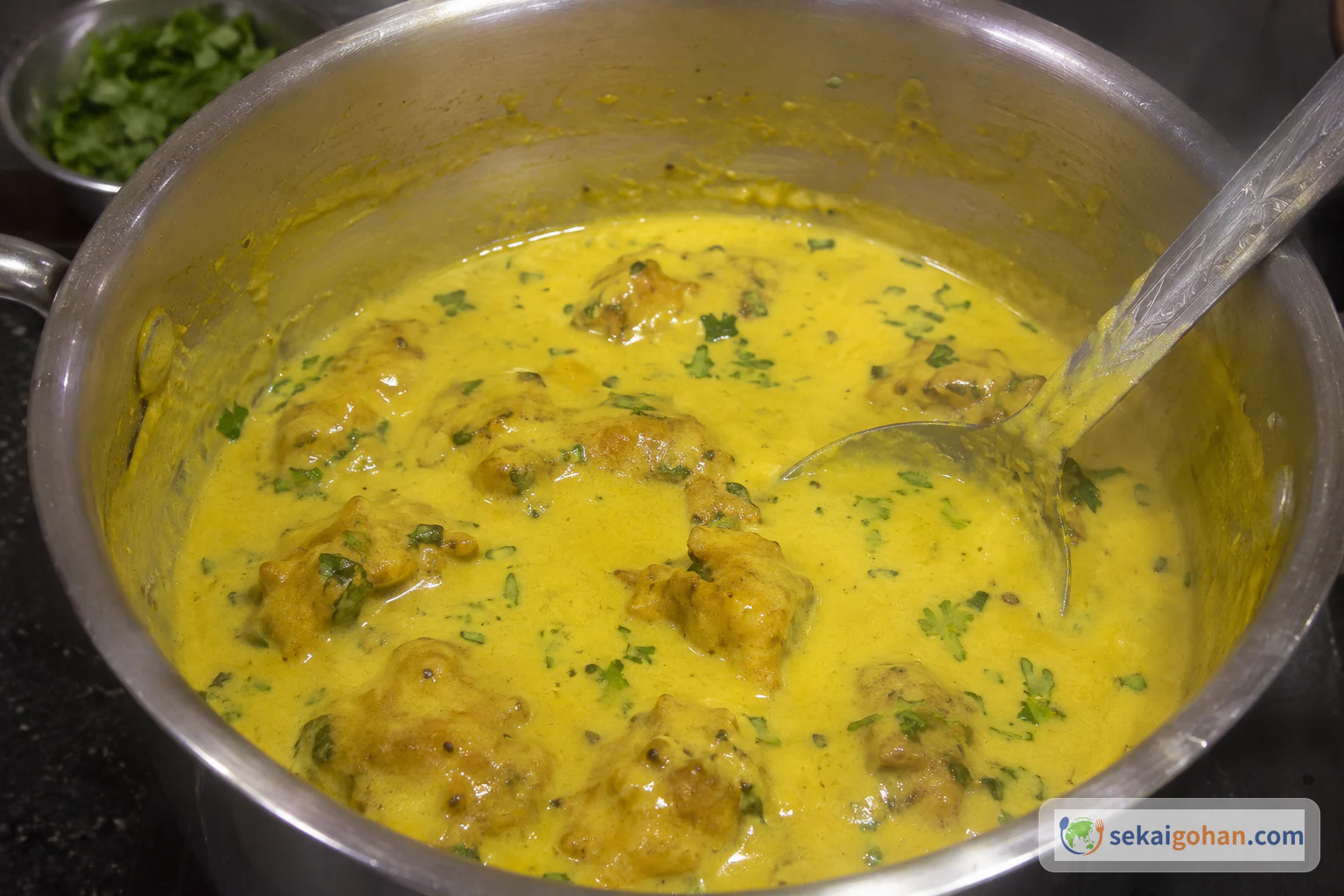
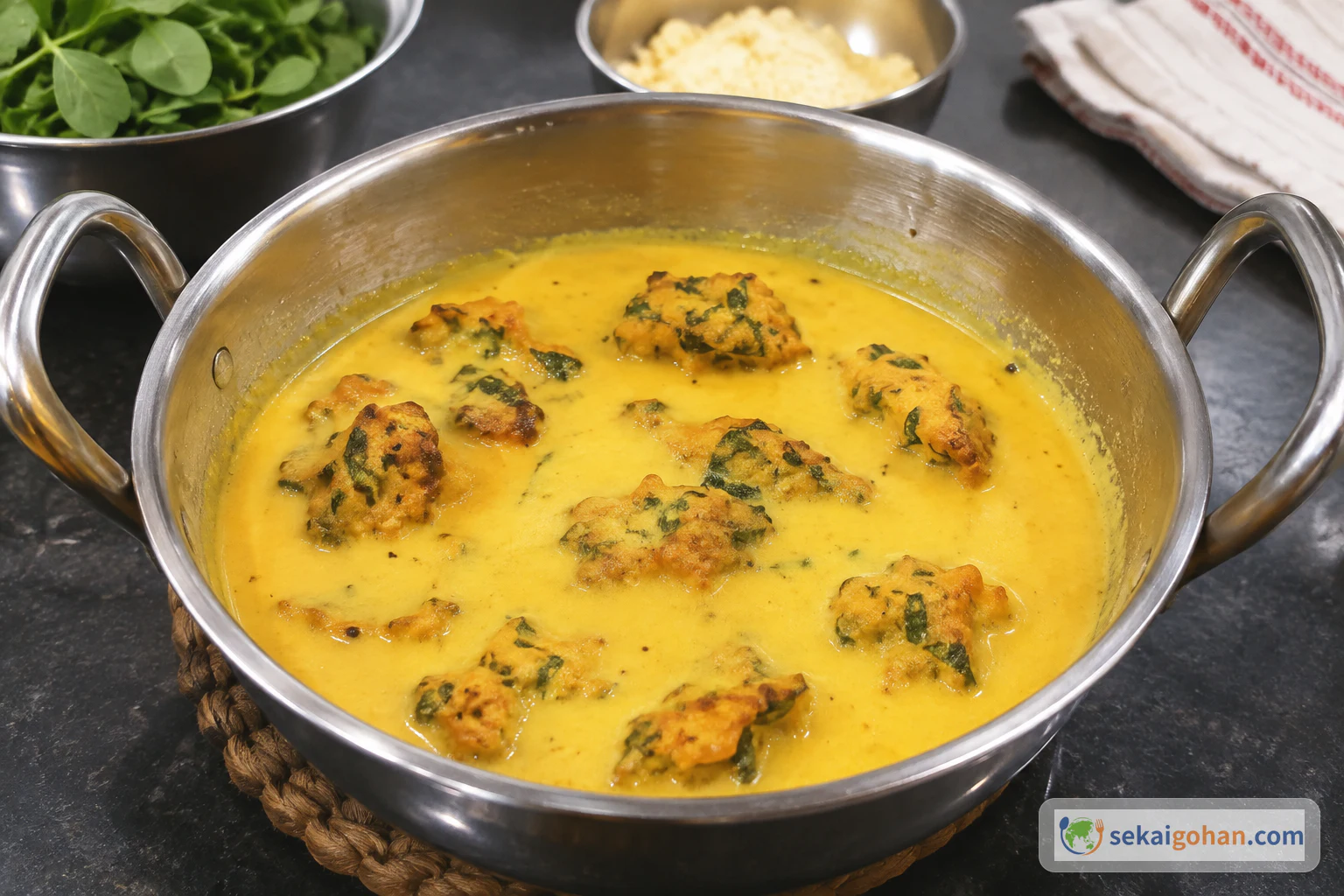
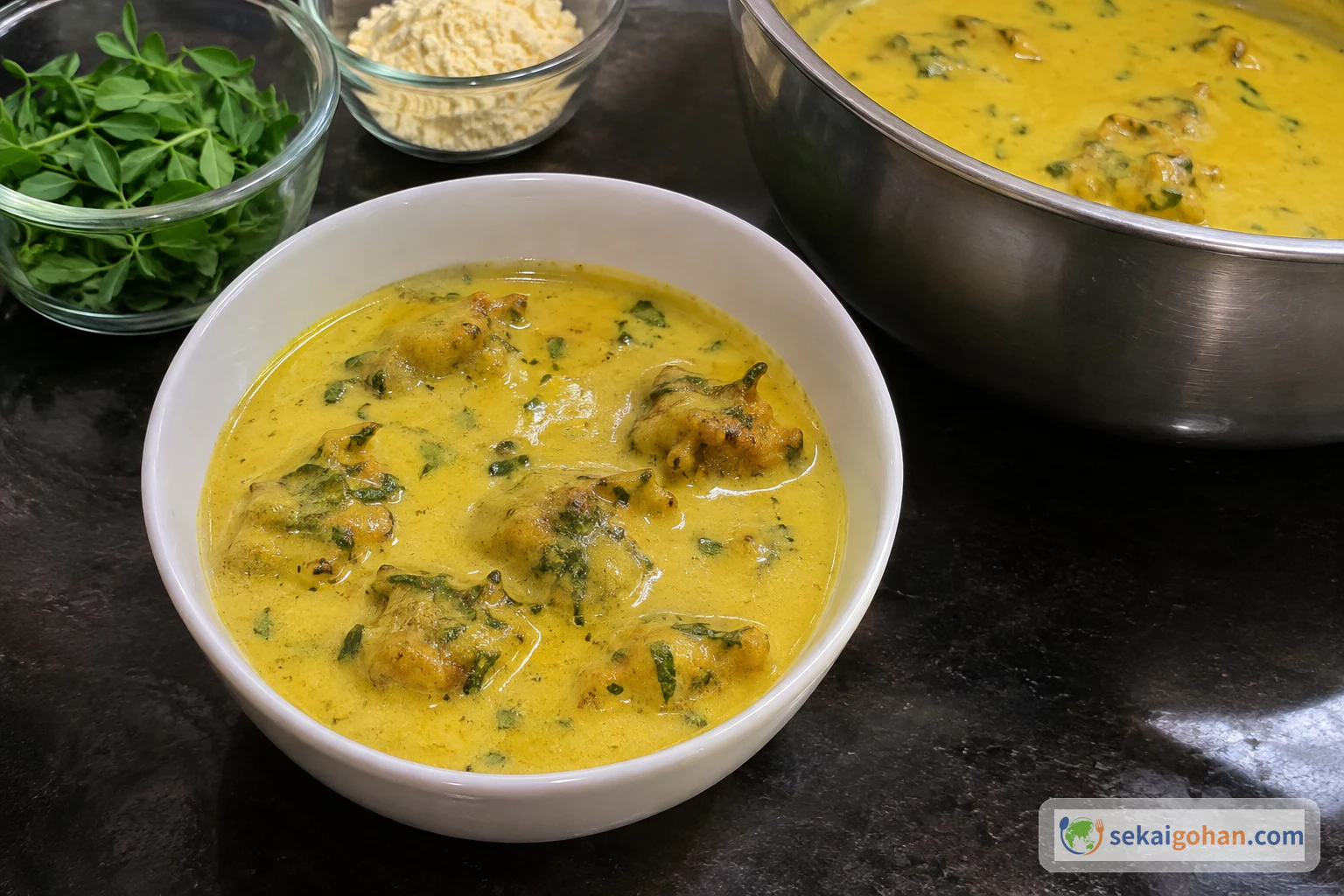
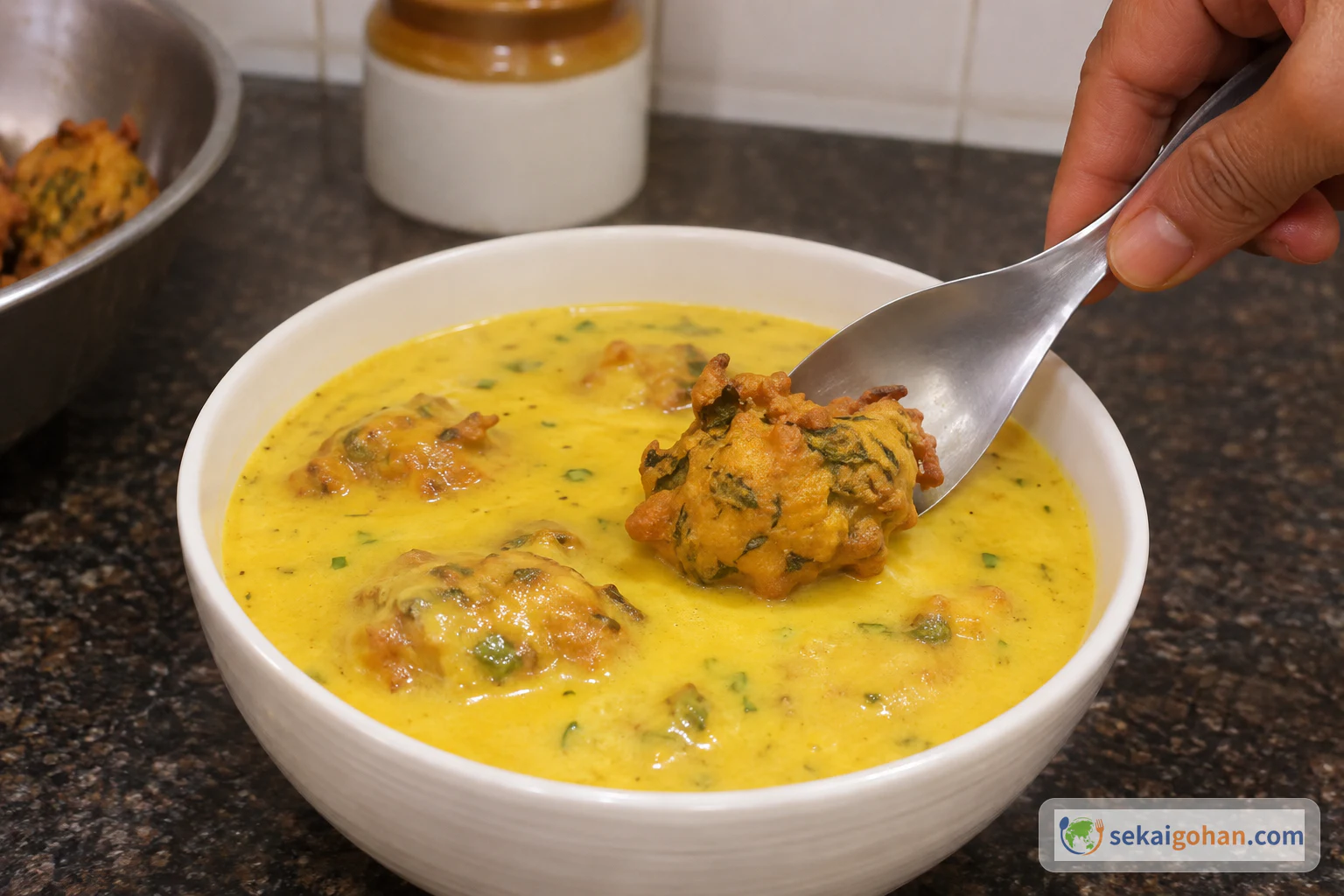
Yogurt and gram flour are whisked smooth, thinned with water, and poured over onion and whole spices in a deep pot. Once the gravy has boiled and thickened a little on low heat, golden fritters flecked with fresh fenugreek leaves go in. That pairing is the whole appeal: a smooth, tangy gravy and a fritter that still has some bite. This is Punjabi Pakoda Kadhi, made here with fritters built on fresh methi leaves.
Punjabi Kadhi and Its Regional Cousins
Kadhi is a family of dishes. Regional kadhis across India differ in leaves, spices and amounts, and the Punjabi style is thicker, creamier and tangy. In Punjab it is made with onion pakora. This version swaps those for methi pakodi, so treat the onion version as its own recipe.
Punjabi kadhi chawal is kadhi paired with steamed rice or cumin rice. For more dishes from the same country, see our India page.
Two bowls and two pans do the work here: one for the methi pakodi, one for the yogurt and gram flour gravy. They only meet near the end, and a few fried pakodi are saved to go on top.
Ingredients for 4 Servings
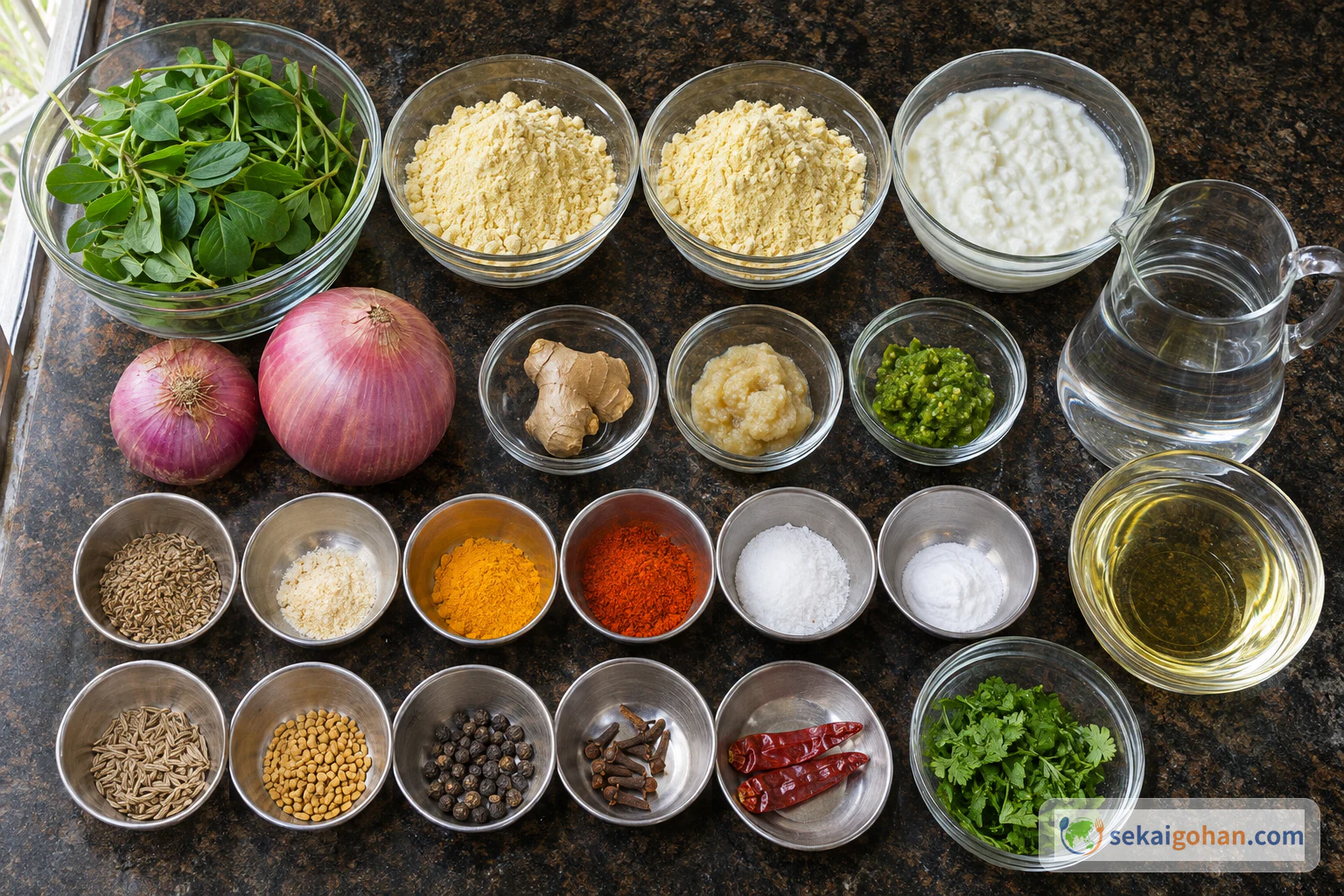
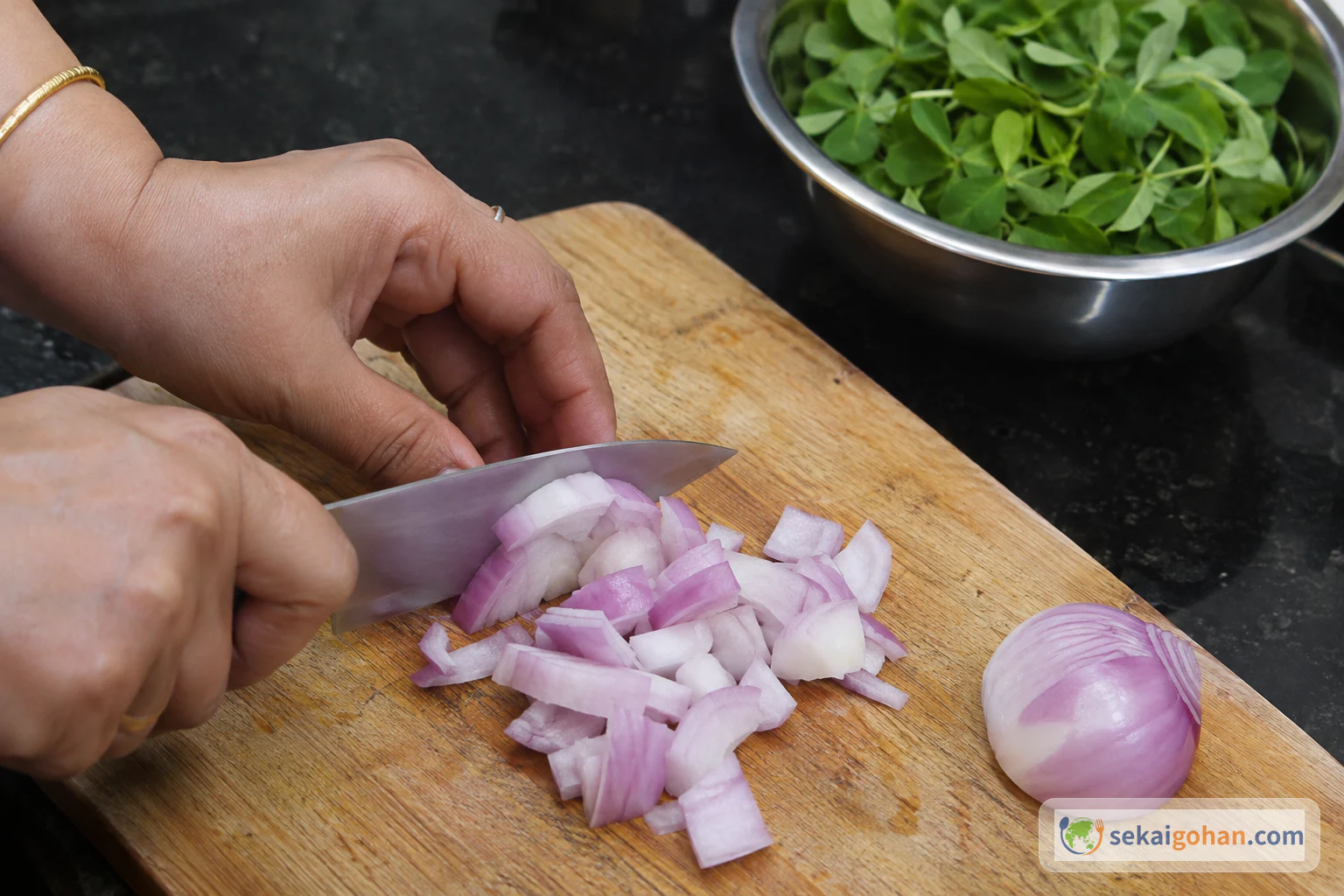
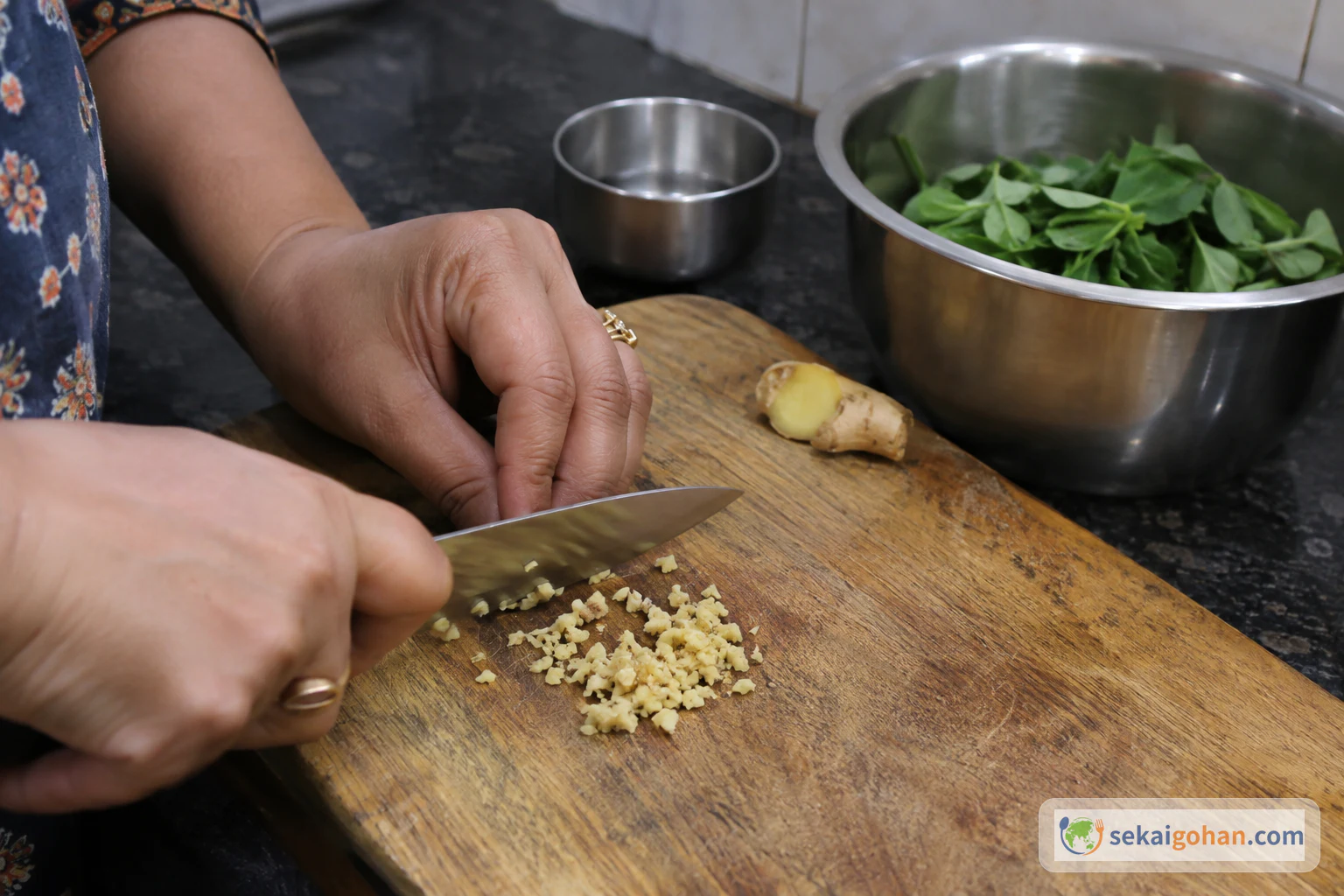
Measure each group separately. The medium onion and chopped ginger go into the batter, while the large onion and grated ginger go into the gravy. Fenugreek leaves and fenugreek seeds are different ingredients and are not interchangeable.
This dish contains yogurt (milk) and besan (chickpea, a legume). Check the ingredient and allergen labels on store-bought ginger-garlic and green chilli pastes, and consider cross-contact in frying oil.
Equipment
- Deep, heavy-bottomed pot for the kadhi
- Deep pan or kadai for frying
- Two mixing bowls, one for the batter and one for the yogurt mixture
- Whisk
- Slotted spoon
- Absorbent paper
- Small mortar and pestle
- Knife, cutting board and grater
- Small plate for the reserved pakodi
- Ladle and serving bowls
- Cooking thermometer, if you like to use one to keep an eye on frying oil
Choosing Ingredients for Kadhi
- Besan: This is chickpea flour. Look for it at Indian grocers or online. Wheat flour won't stand in for it in the same amount.
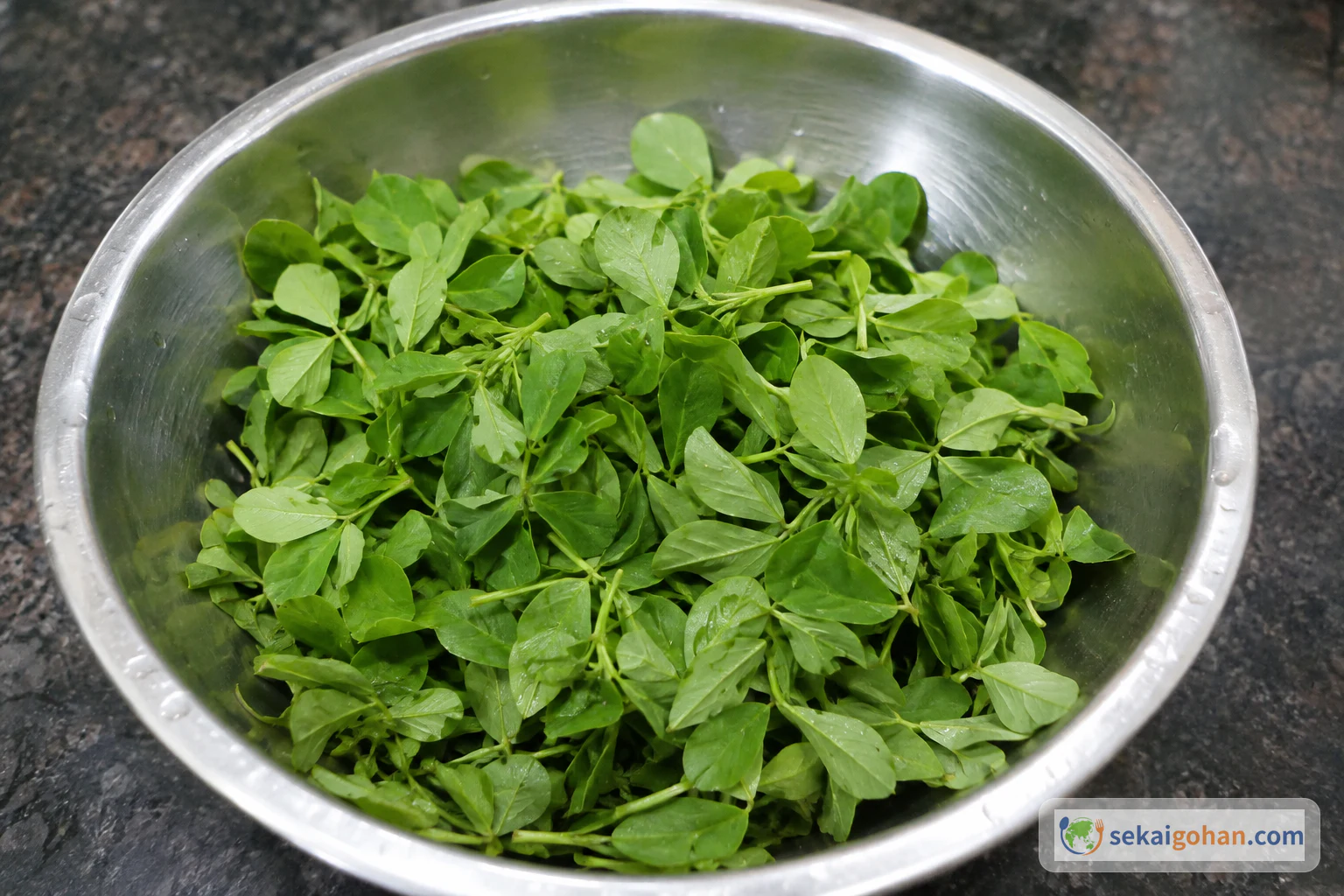
- Fresh methi: Indian grocers carry it fresh or frozen. Dried kasuri methi is a different ingredient with a different strength of aroma, so it doesn't swap in equal measure. Leaving the leaves out or using dried ones changes both the aroma and the moisture of the batter.
- Ajwain: You can leave it out if you can't find it, though the flavor will change.
- Red chilli powder: Cayenne and similar powders vary in heat, and so do dried chillies, so your kadhi may come out hotter or milder.
- Yogurt: Use plain unsweetened store-bought yogurt, since its sourness sets the tang of the finished dish. Use it straight from the store rather than souring it at room temperature.
- Pastes: Ginger-garlic paste can be store-bought or made separately. For green chilli paste, grind green chillies finely.
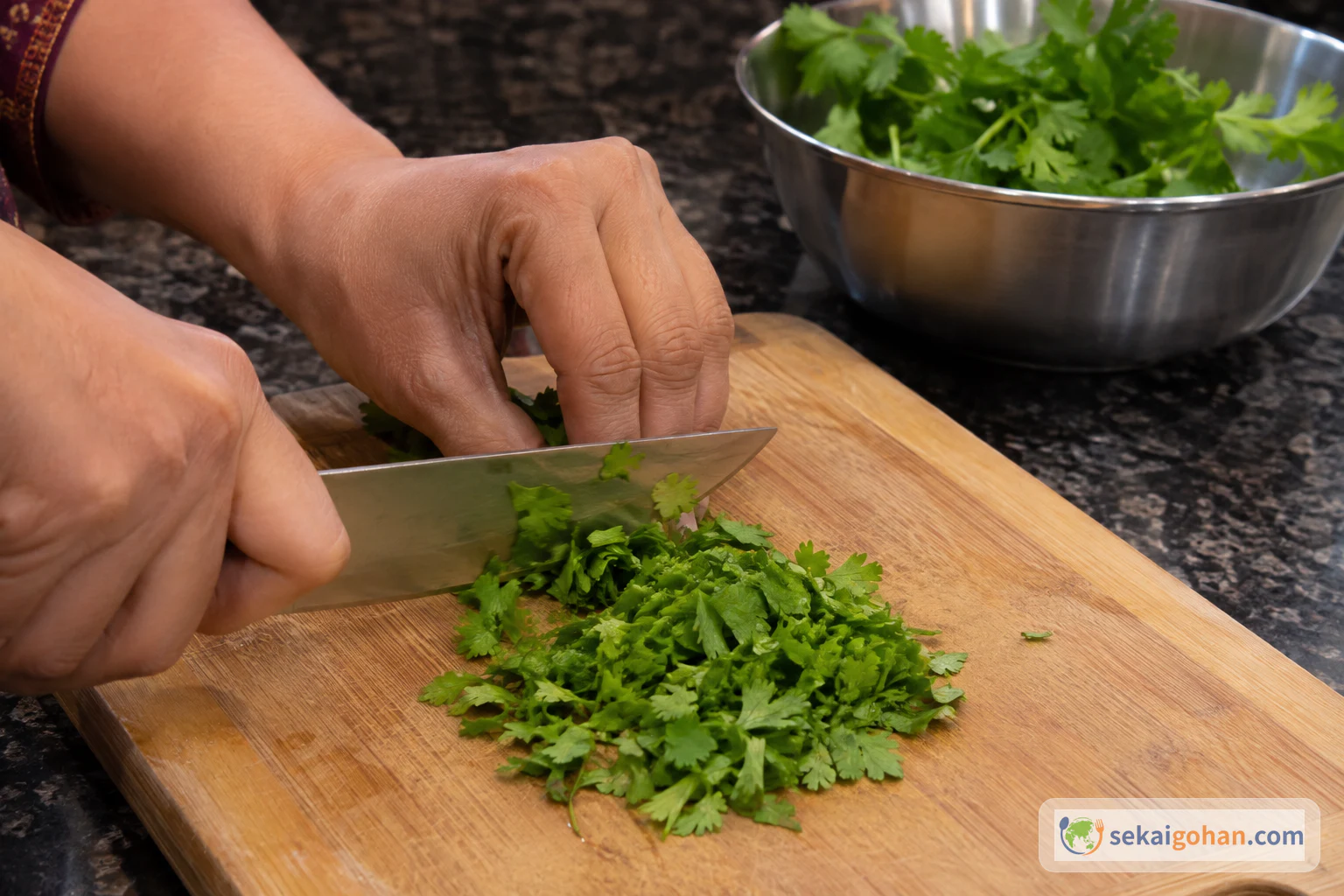
- Coriander: If you dislike it or can't find it, leave it out; the dish will simply have less aroma.
Method: Fry First, Then Build the Gravy
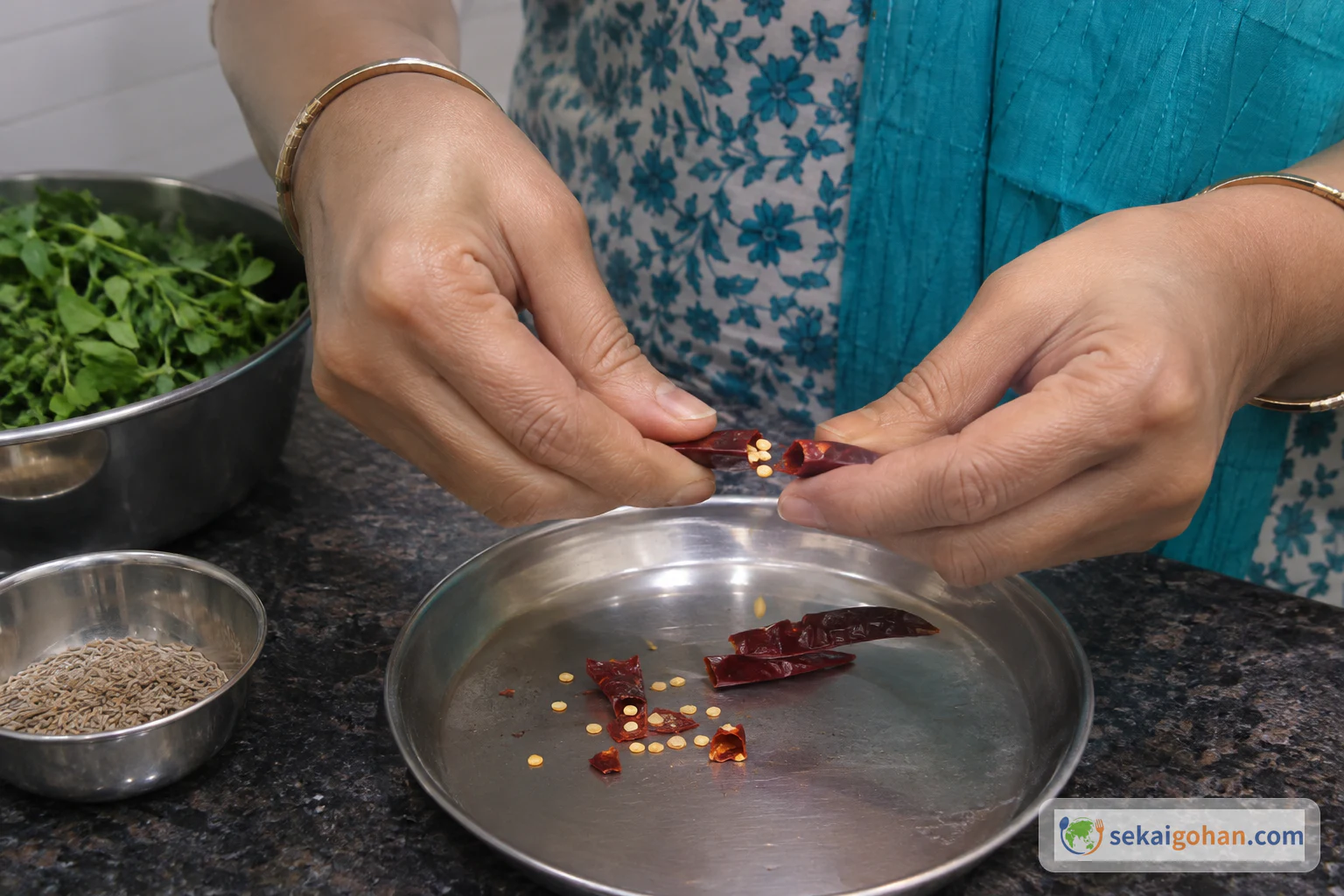
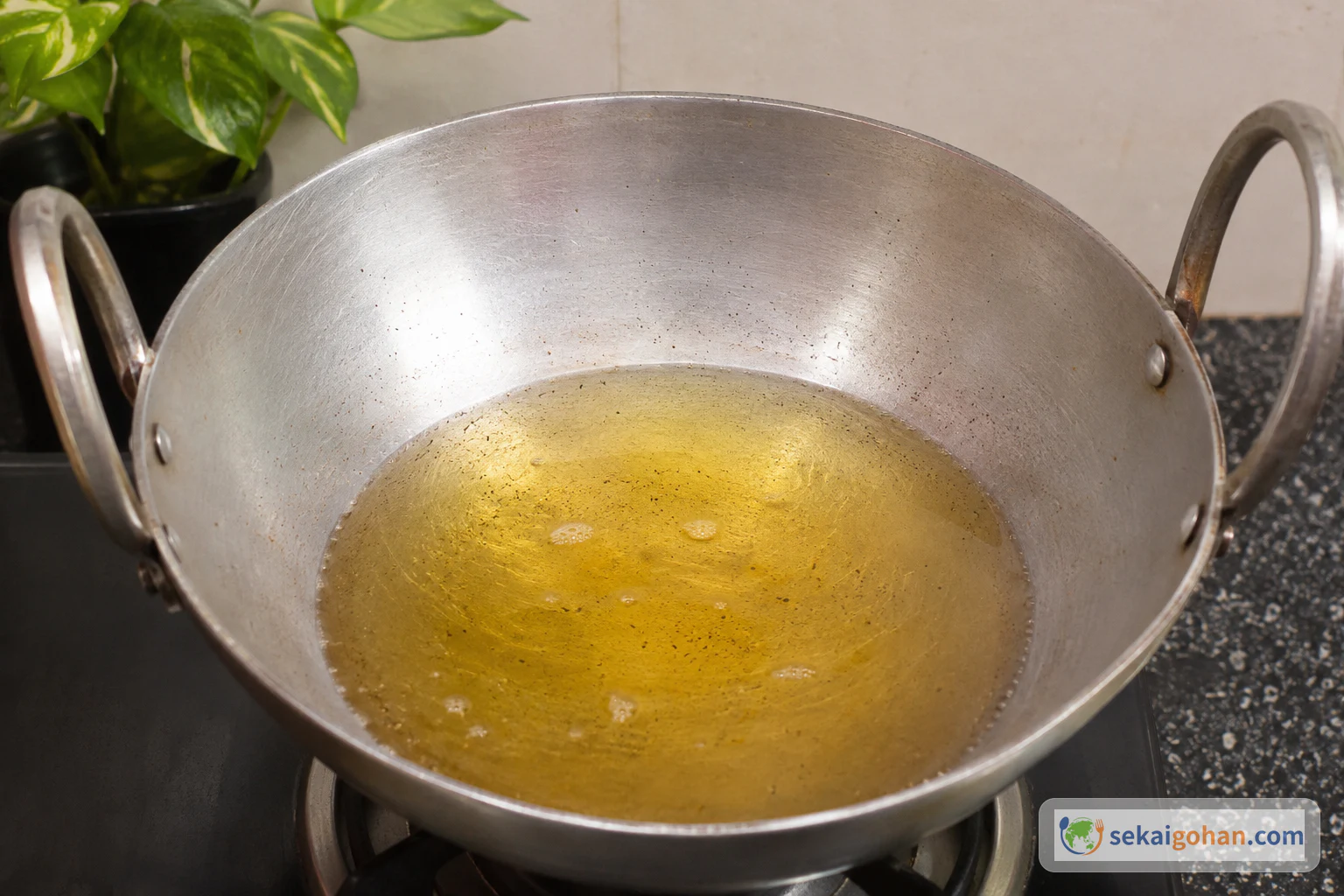
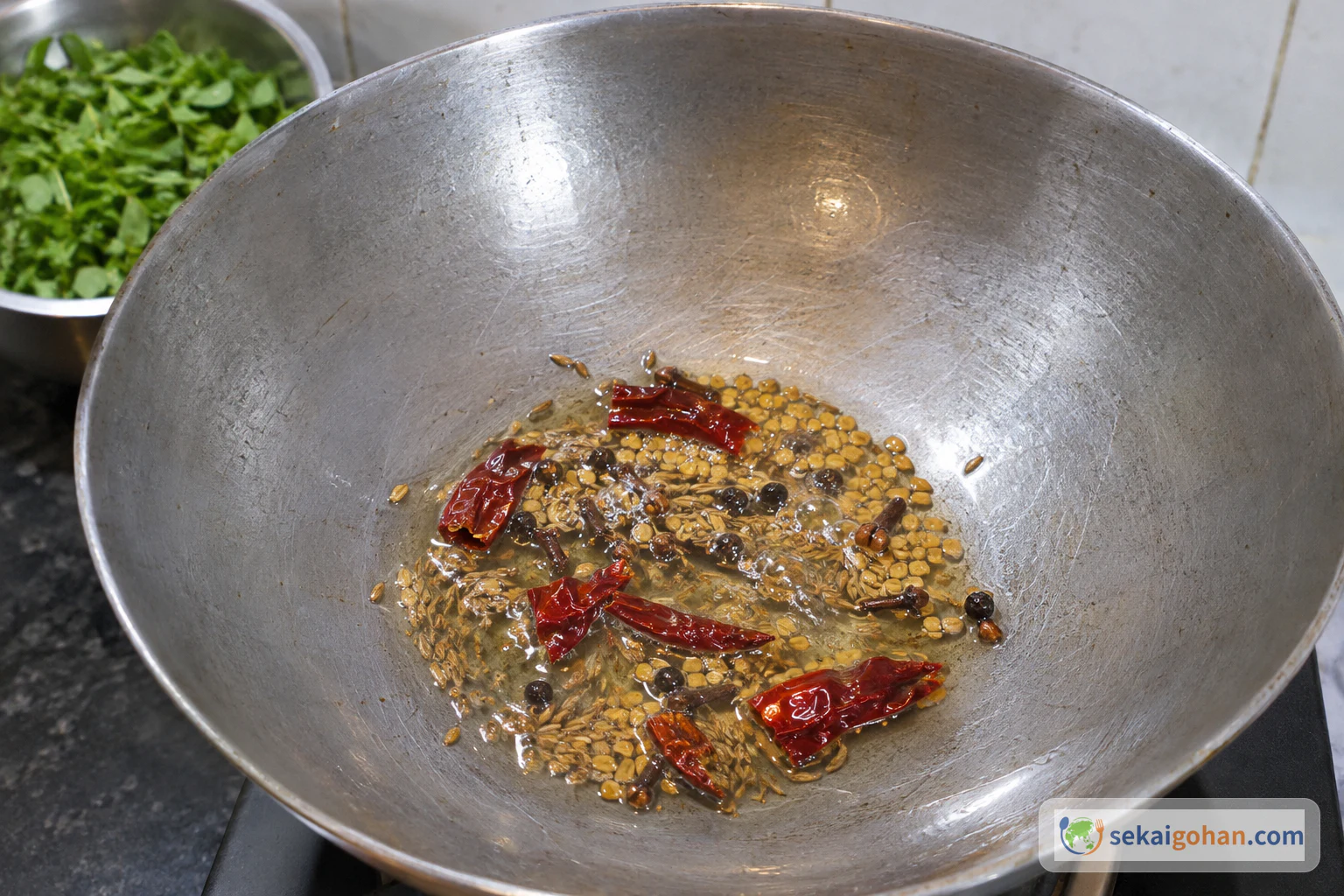
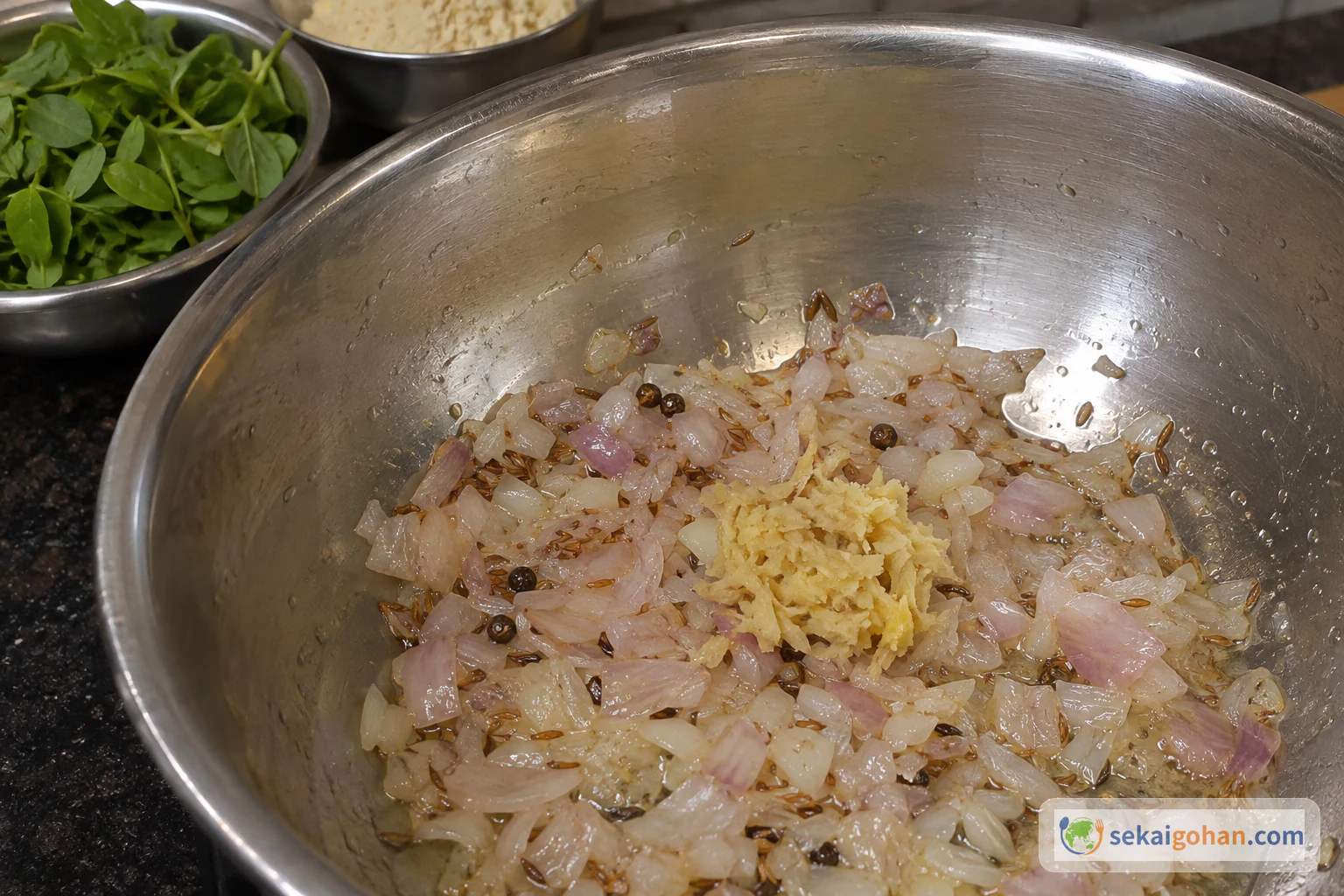
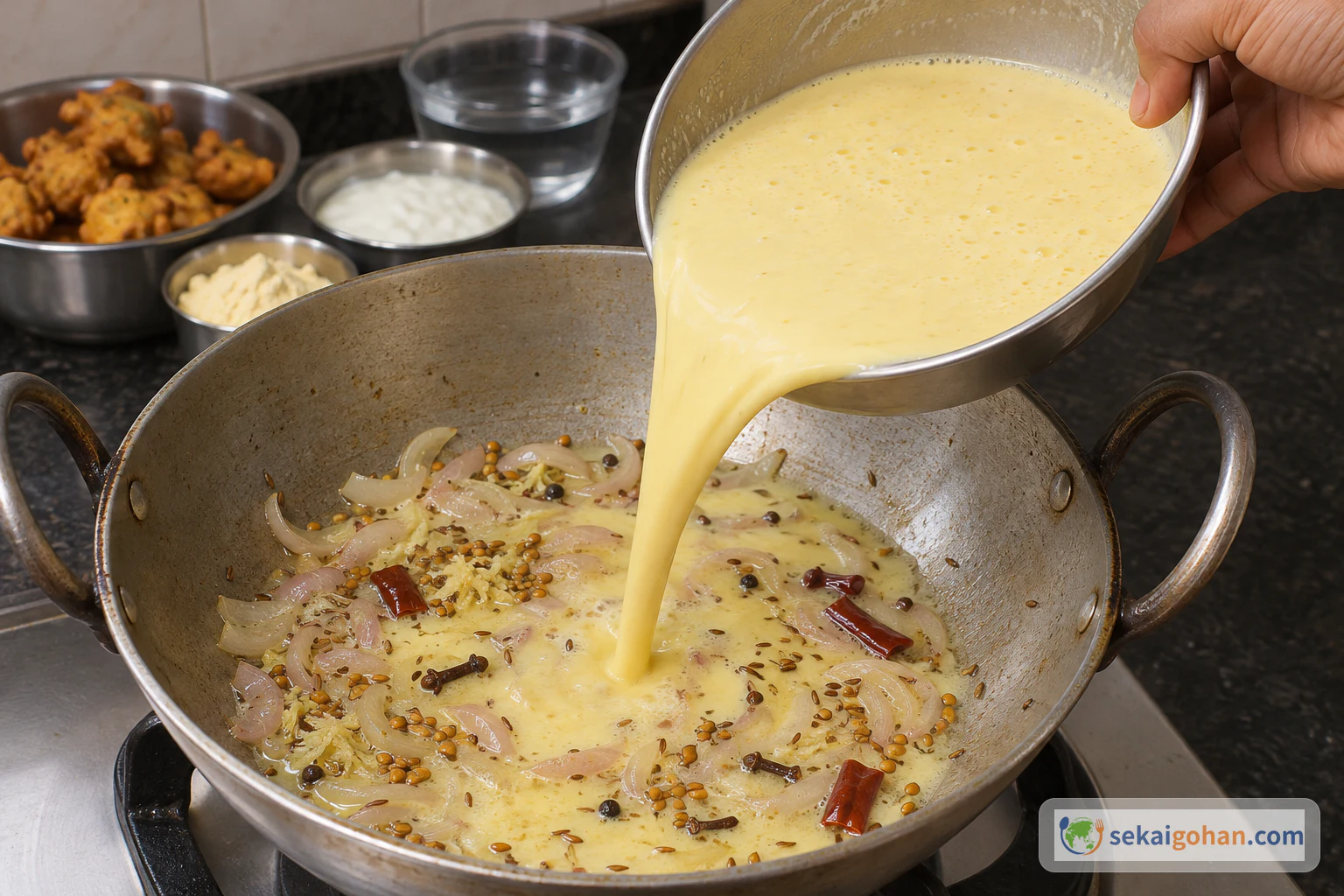
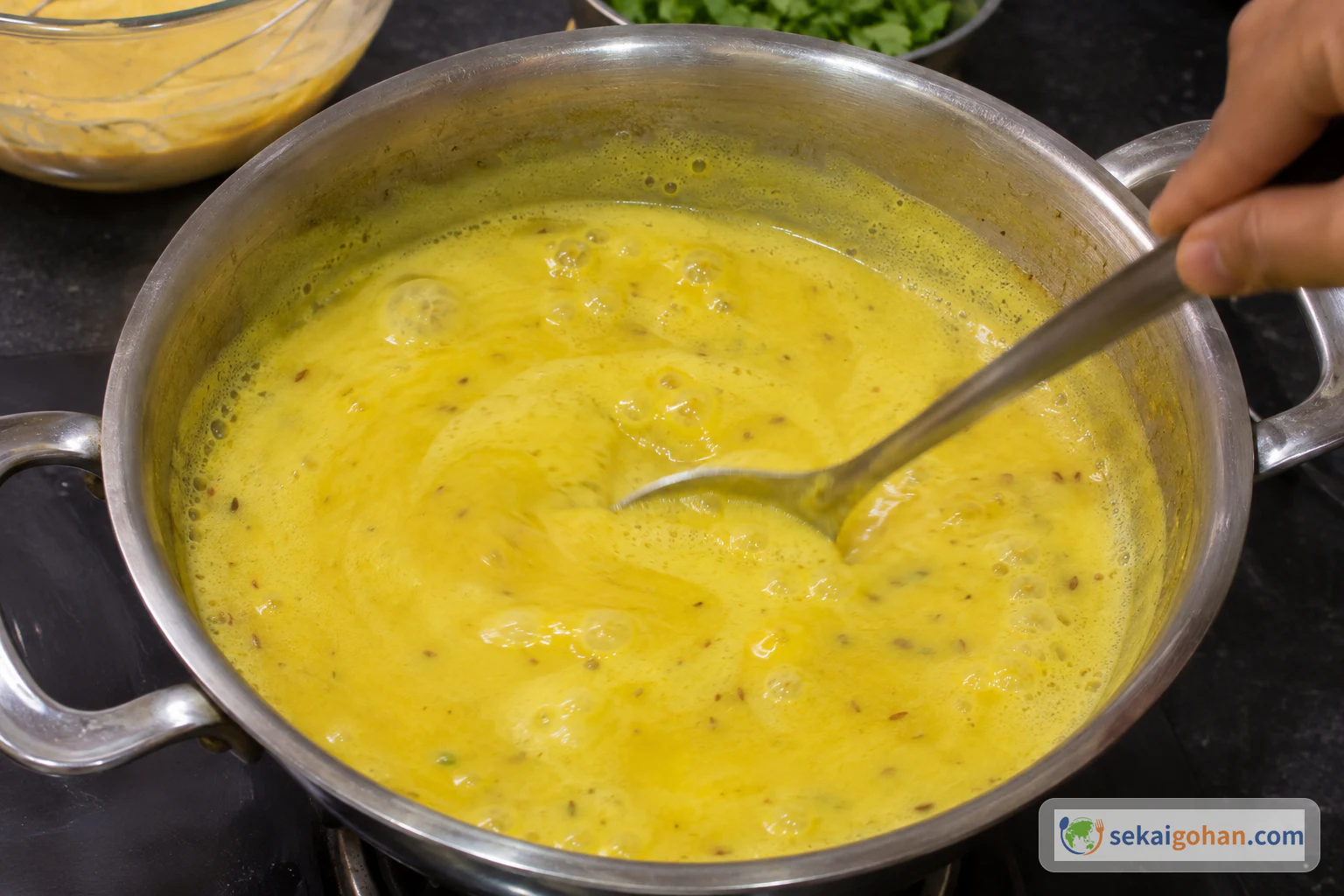
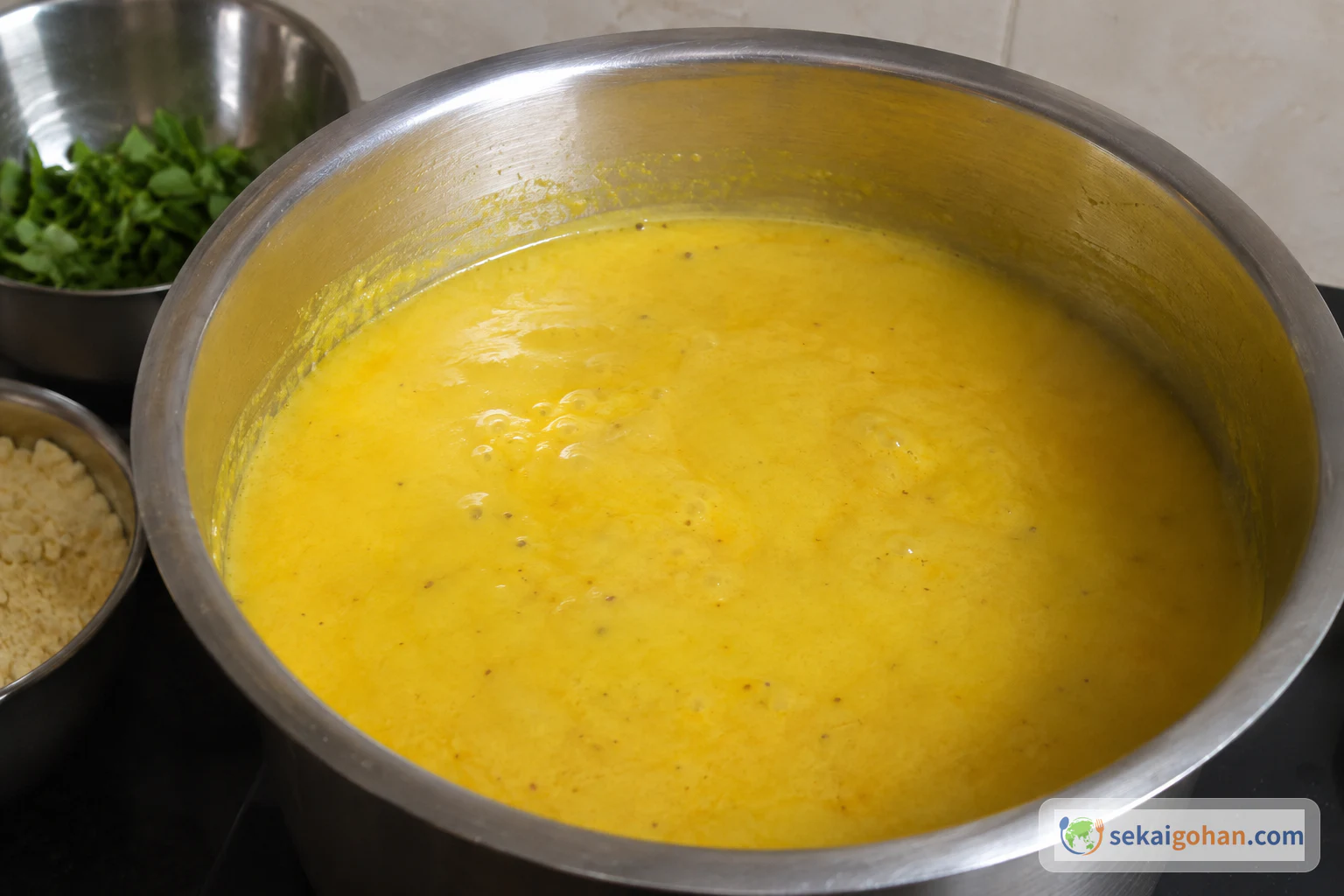
The photos show what each stage looks like. They are not a guide to exact quantities, temperatures or elapsed time.
The only timed moments are the minute for the grated ginger and the 2–3 minutes after the pakodi go in. Everywhere else, cook by what you see in the pot.
Kadhi Troubleshooting
| What you see | Likely reason | What to do |
|---|---|---|
| Lumps in the yogurt mixture | Water went in before the besan was smooth | Whisk the yogurt and besan smooth first, then add the water |
| Sediment or scorching on the bottom | Besan settling while the pot heats | Stir across the bottom until it boils, and stir now and then on low heat |
| Foam climbing the pot | The gravy can foam as it heats | Use a large pot and keep stirring as it heats |
| Bitter-tasting spices | The whole spices burned | Start on gentler heat and stop once they smell fragrant |
| Pakodi fall apart or seem oily | The batter or frying setup | Fry small portions until golden and crisp, and drain them well on paper |
| Gravy thicker or thinner than you hoped | Pots and burners differ; the 5 cups of water is the set amount | Stop the low simmer at "slightly thicker" and judge again next time |
Serving Kadhi and Variations
Kadhi is best served hot, soon after it's cooked. Wash your hands, keep raw and cooked foods apart, use clean utensils, and heat the gravy thoroughly.
A few changes will shift the dish in predictable ways:
| Change | What shifts |
|---|---|
| A tangier or milder store-bought yogurt | The sourness of the gravy |
| Leaving out the fresh methi, or using dried | The aroma and moisture of the pakodi |
| Leaving the pakodi in the gravy longer than 2–3 minutes | They soften as they absorb gravy, giving a different dish |
| A different frying oil | The aroma. Mustard oil is one option |
| Steamed rice, cumin rice or chapati alongside | How rich each mouthful feels and how the meal comes together. All are optional |
Frequently Asked Questions
What is the difference between kadhi and kadhi pakoda?
Kadhi is the broader name for a yogurt and besan gravy, and regions have their own versions. Kadhi pakoda, like this Punjabi one, has fried pakodi in that gravy.
What goes in these pakodi?
Besan, fresh methi leaves, onion, ginger and spices. Other versions use onion pakora.
Why are there no curry leaves, garam masala or cream?
Some other kadhi recipes use curry leaves or garam masala, but they belong to different formulas. This one also leaves out bay leaf and extra ghee.
Can I sprinkle fresh coriander on top at the end?
The chopped coriander is stirred into the hot kadhi before you turn off the heat. The only topping is the reserved fried pakodi, so skip raw coriander afterward.
Do I have to serve it with rice?
No, rice is a side. Serve it with steamed rice or cumin rice if you want it as kadhi chawal.