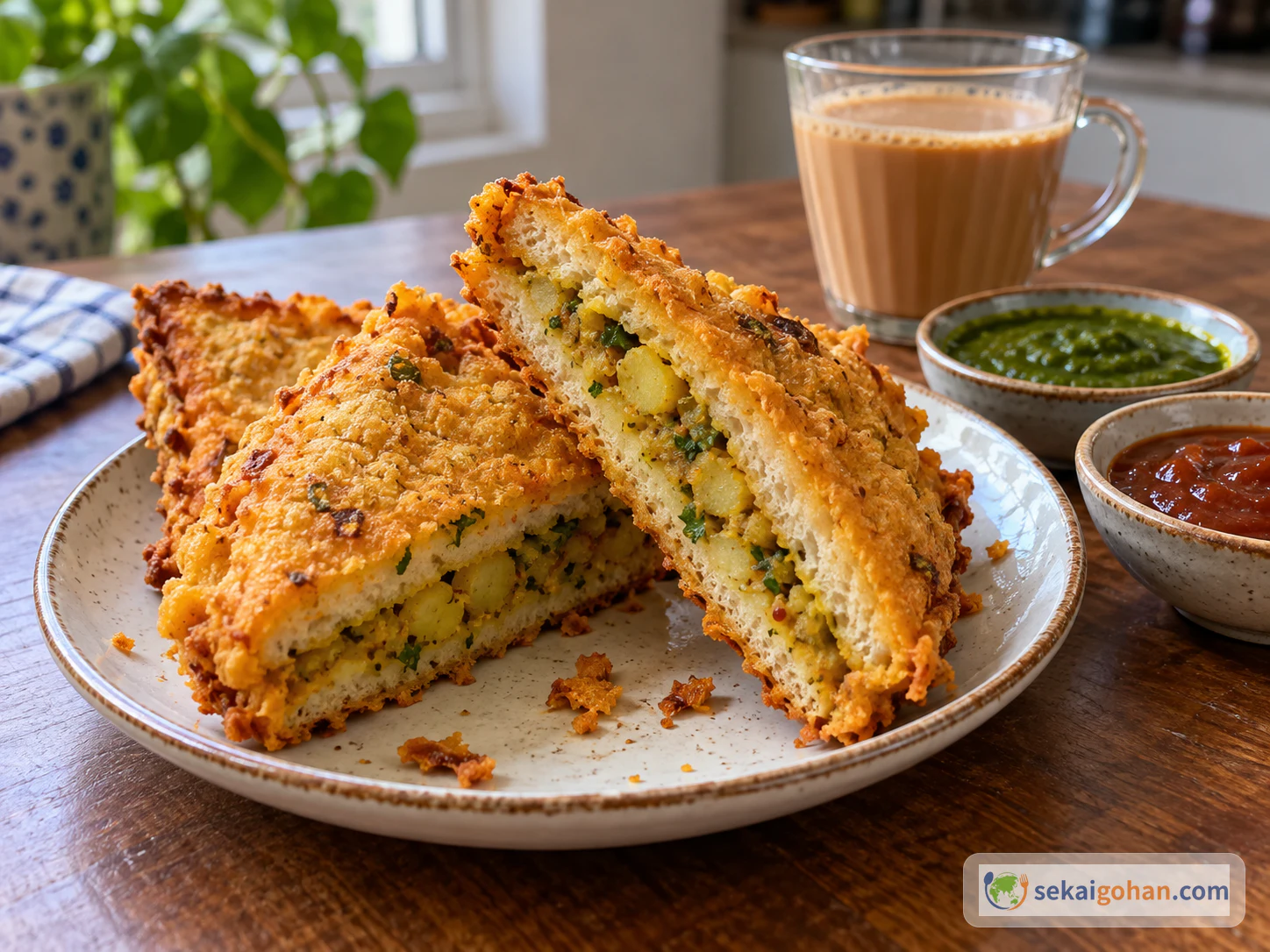
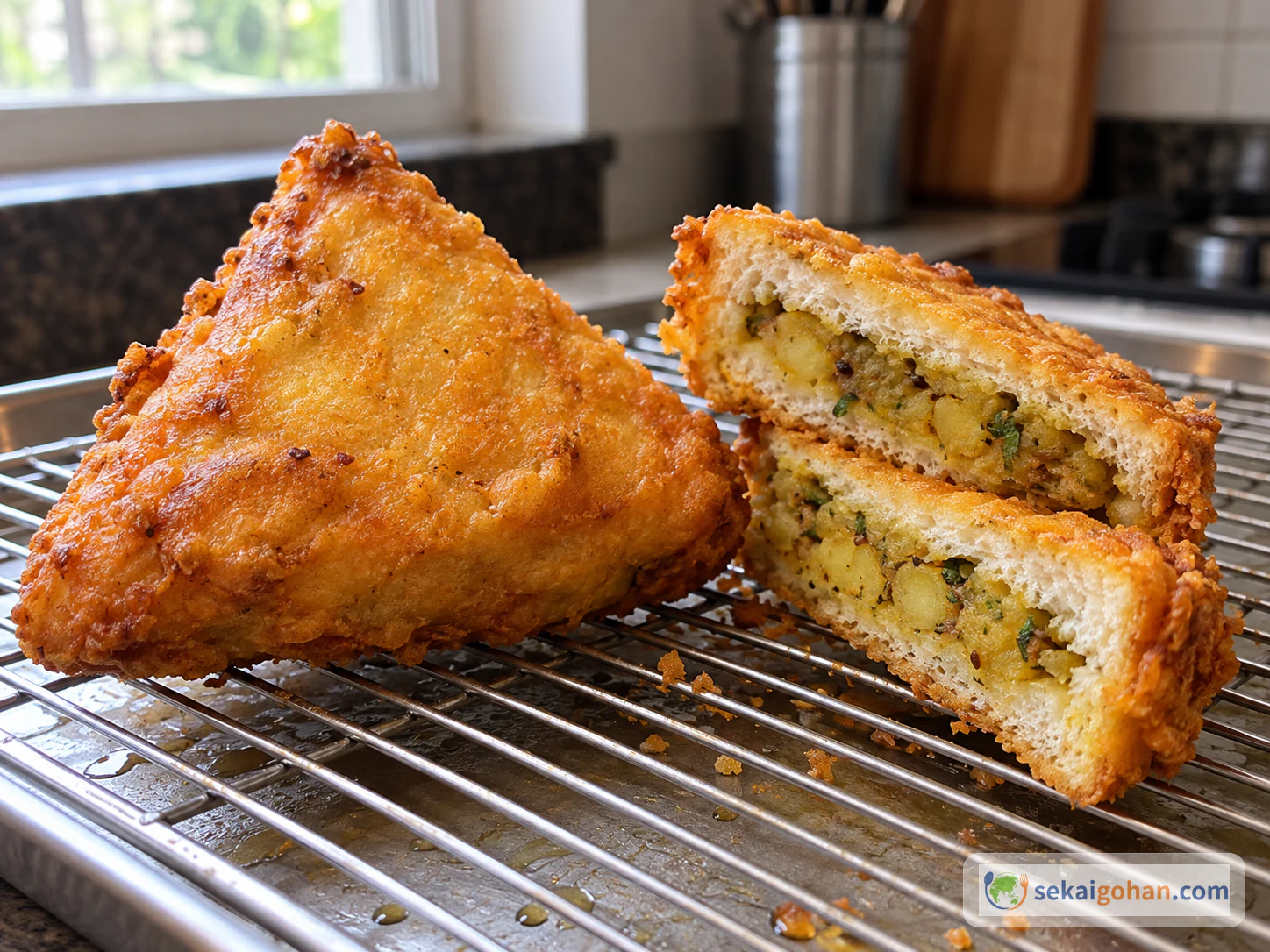
Golden squares come out of the oil with a crackle, the gram-flour crust puffed and craggy, and when you bite in you find a layer of soft, spiced potato pressed between two slices of white bread. Bread pakora is a Delhi street-style snack, eaten at breakfast or with a cup of evening tea. The coating is savory and gently fragrant, and the potato inside stays tender and tart.
About Bread Pakora
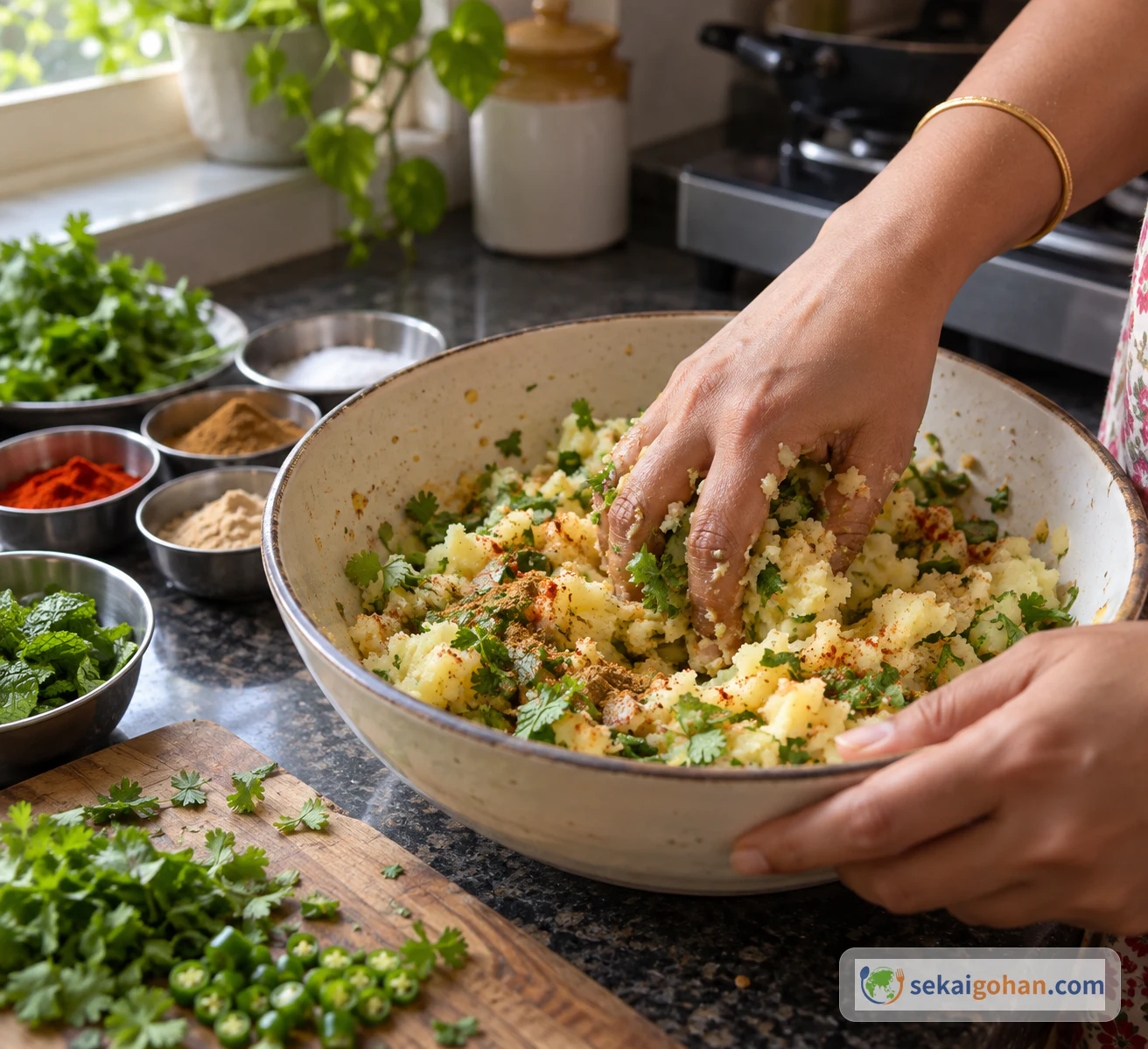
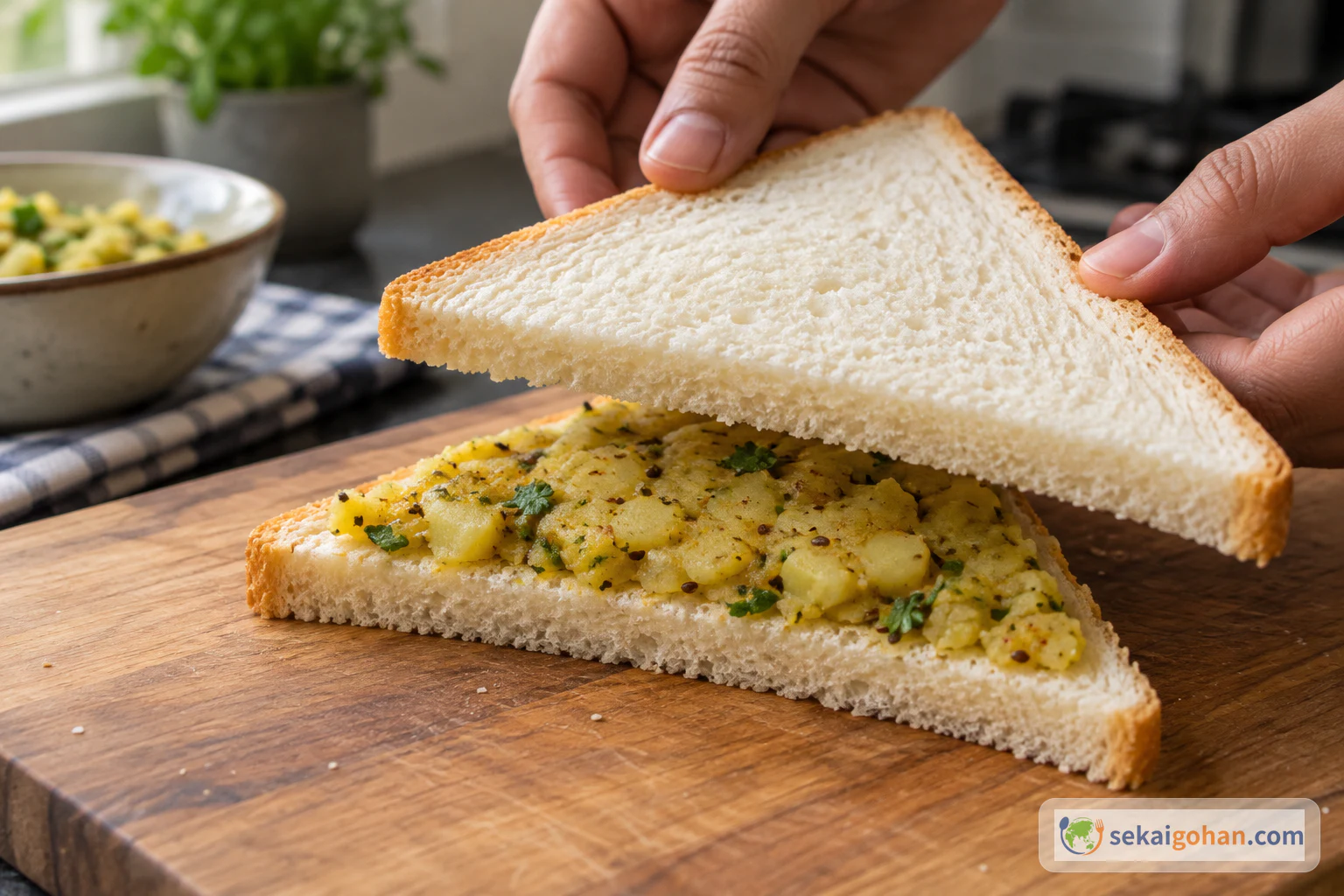
Bread pakora (also written bread pakoda; in Hindi, ब्रेड पकोड़ा) covers any bread coated in a spiced besan batter and fried. The structure is simple: bread, batter and hot oil. What changes from cook to cook is what goes inside or around the bread. Some cooks fry plain bread. Others fold onion, green chili and coriander into the batter. Halwai-style versions spread the bread with green chutney before filling it with potato seasoned with amchur and other spices. This is the North Indian stuffed version, with spiced potato between two slices of bread.
The snack is a good example of how store-bought sliced white bread found its way into Indian street food. It is a different dish from onion-based pyaaz pakora, where clusters of onion are bound in batter rather than bread being stuffed and coated. For more dishes from the same country, see India.
Ingredients: Amounts for 3 Servings
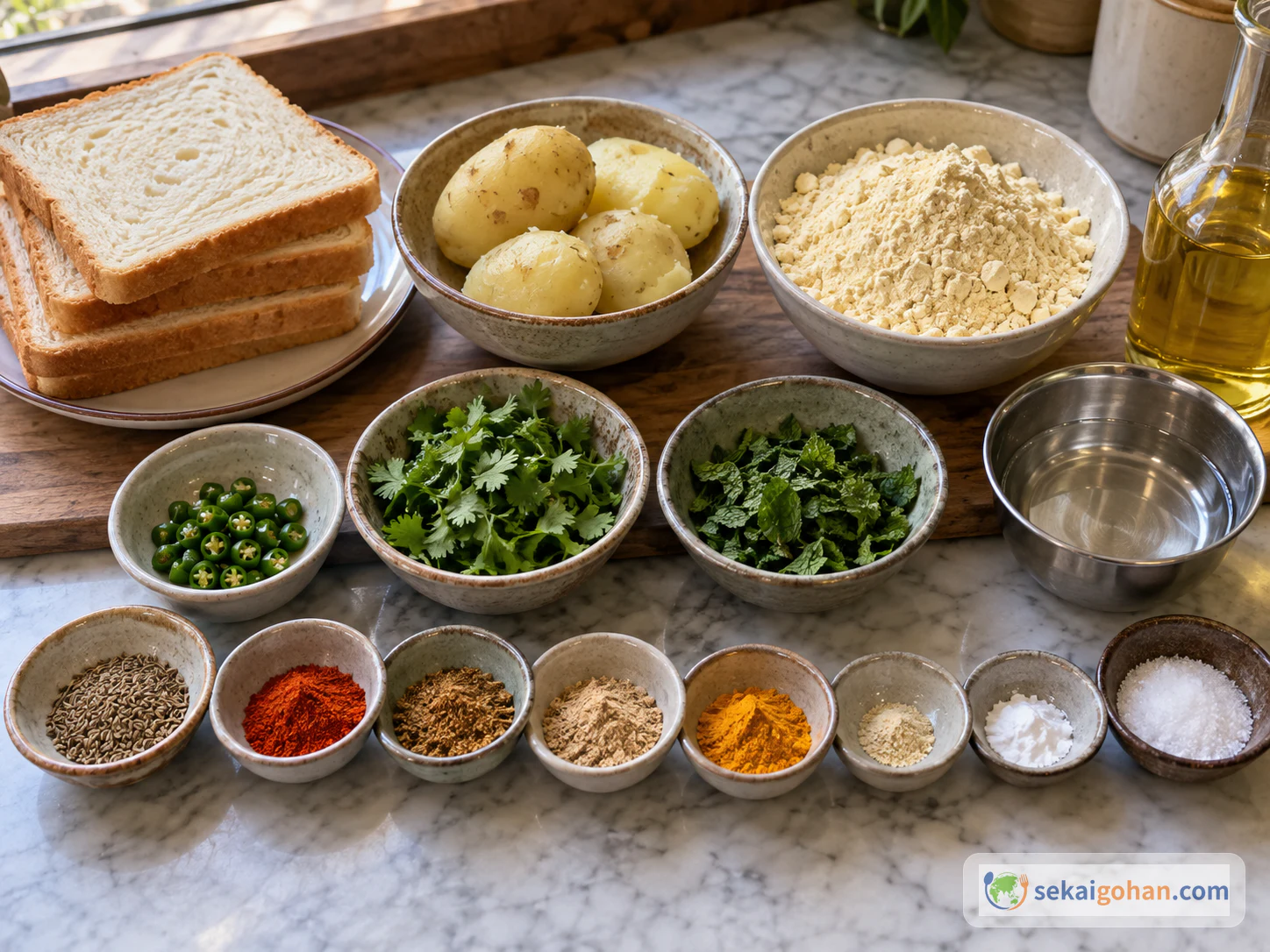
This makes 3 servings, using 4–5 slices of bread, with two slices making one sandwich.
The frying oil is listed once. In step 3, 1–2 tsp of that same oil goes into the batter, so it is not a separate ingredient.
Equipment
- Pressure cooker, steamer or a pot for cooking the potatoes
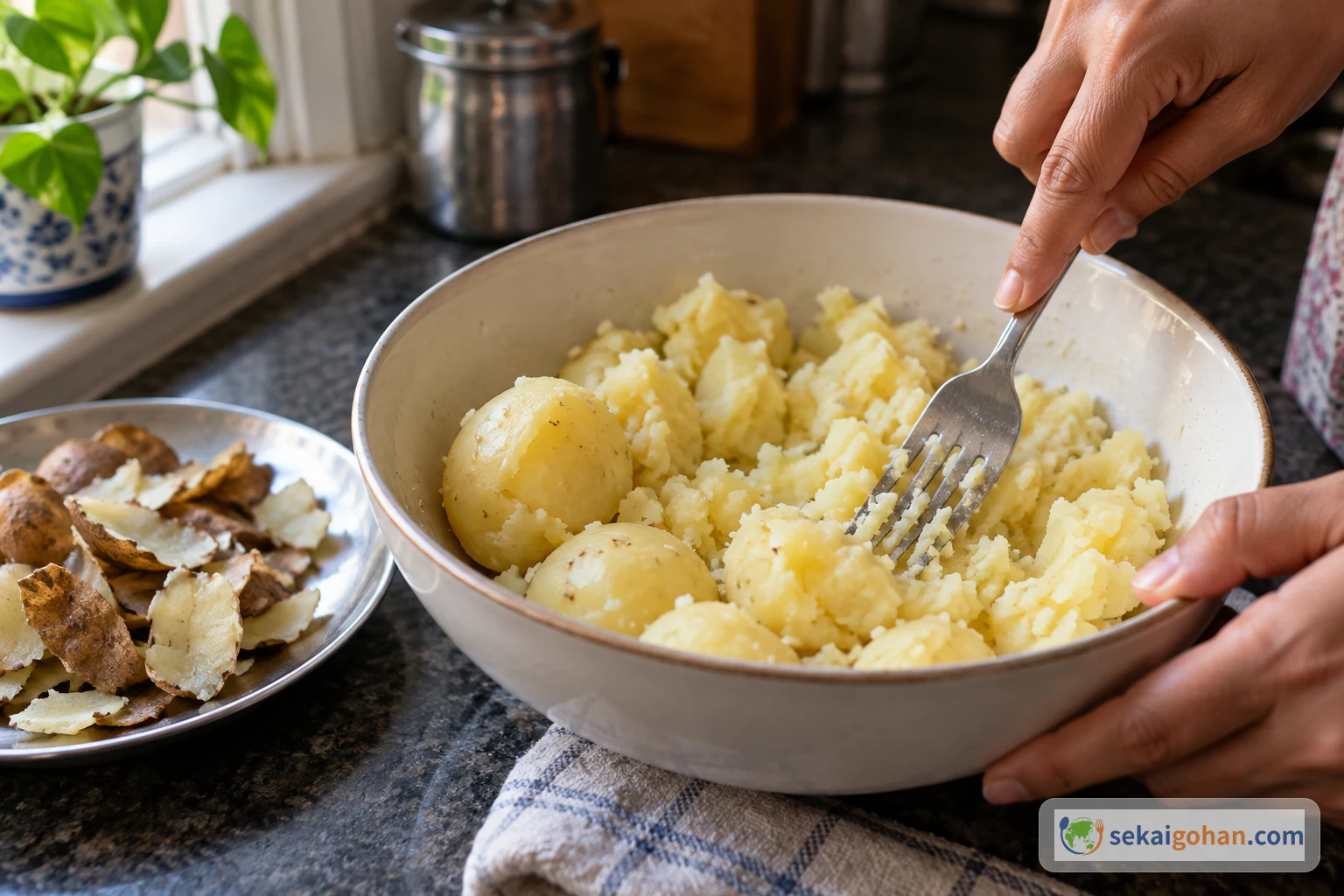
- Potato masher or fork
- Two mixing bowls (one for the filling, one for the batter)
- Whisk
- Knife and cutting board
- Deep pan or kadai for frying
- Slotted spoon
- Deep-frying thermometer (optional)
- Wire rack or paper for draining
Choosing Ingredients for Bread Pakora
Gram flour (besan). Besan is flour made from chana dal, so look for packages labeled "besan" or "gram flour." Flour from white chickpeas also works, though the aroma and color will differ. Wheat flour and potato or corn starch won't give the same coating.
Dried mango powder (amchur). It gives the filling a dry tartness. You can use 1/2 tsp lemon juice instead; the filling comes out a little wetter and the sourness reads differently.
Carom seeds (ajwain) and asafoetida (hing). Ajwain smells somewhat like caraway, and hing adds a sharp savory accent. Both are optional, but the batter's aroma changes without them. Hing is often sold blended with a carrier flour, so check the label.
Potatoes and bread. Use starchy potatoes; waxy new potatoes bind differently and change the feel of the filling. White sandwich bread holds a neat shape. Whole wheat or brown bread also works, though the flavor, the amount of batter it soaks up and the look of the finished pakora will change.
Salt. Season the cooked potato filling to taste. Taste only the filling, not the uncooked besan batter.
Besan is made from a legume, and ordinary sandwich bread contains wheat. Depending on the product, bread can also contain milk, egg or soy, and hing can contain wheat flour as a carrier. Check the labels, and keep in mind cross-contact from shared frying oil.
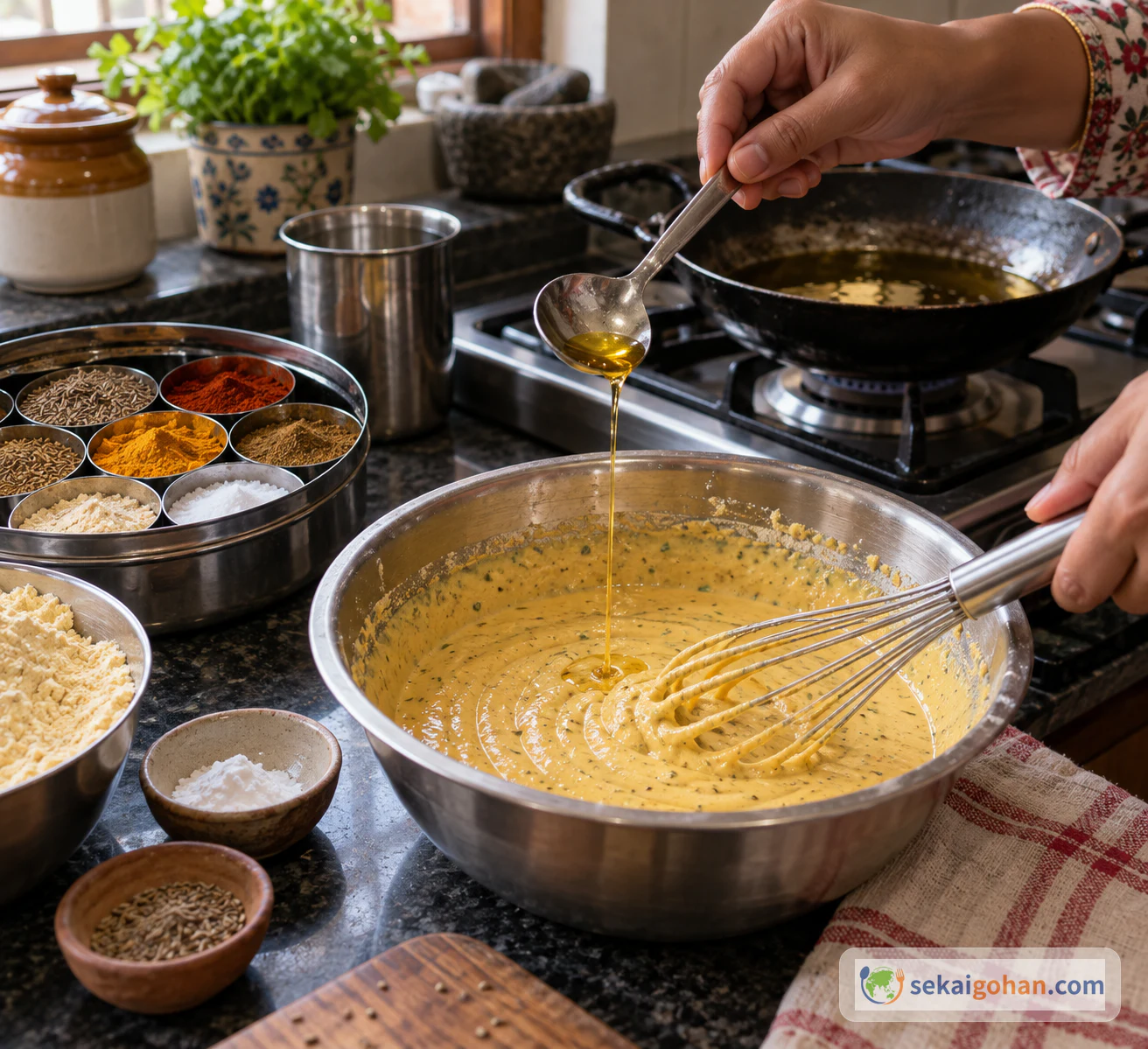
Method: Filling, Batter, Assembly, Frying
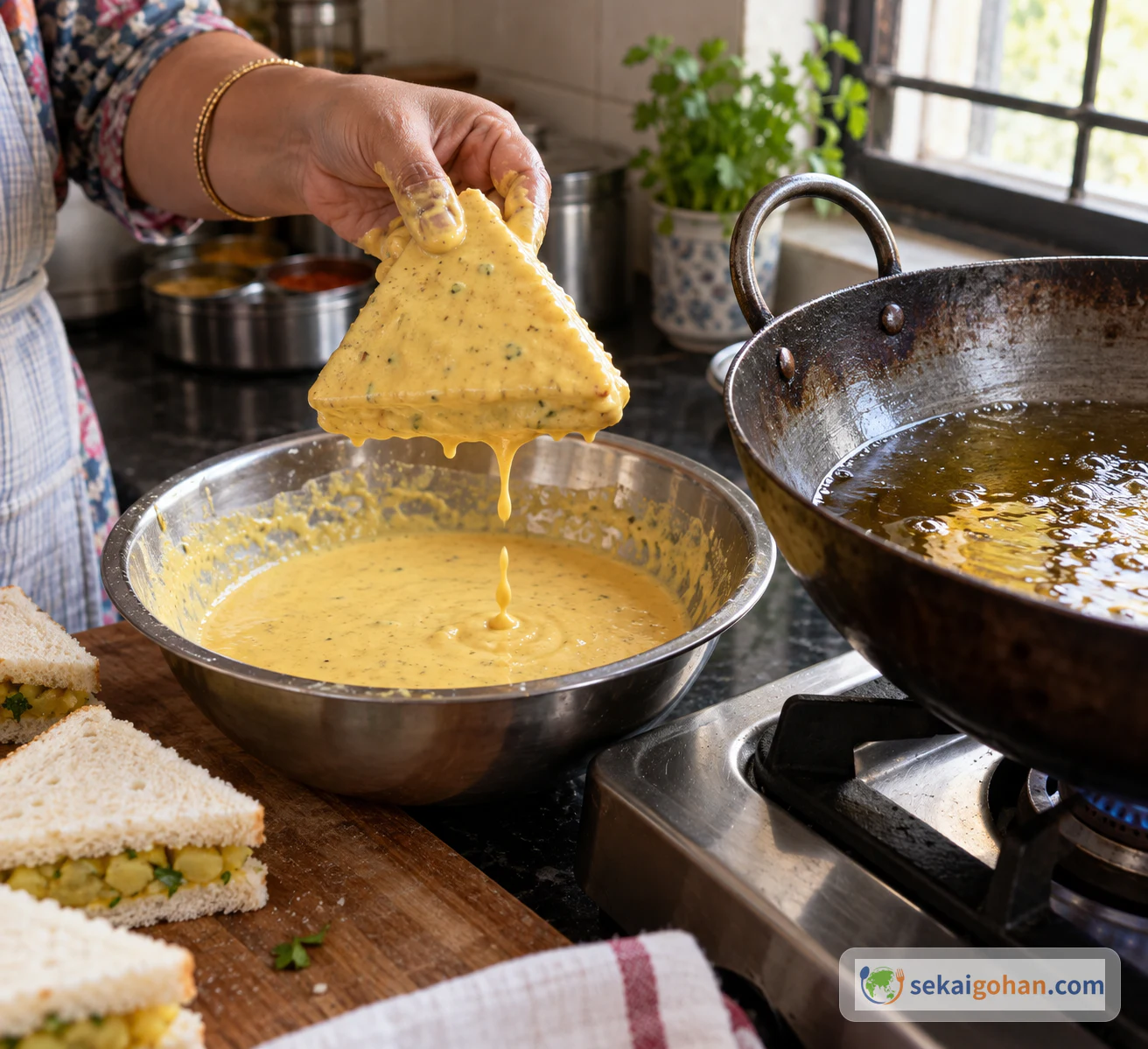
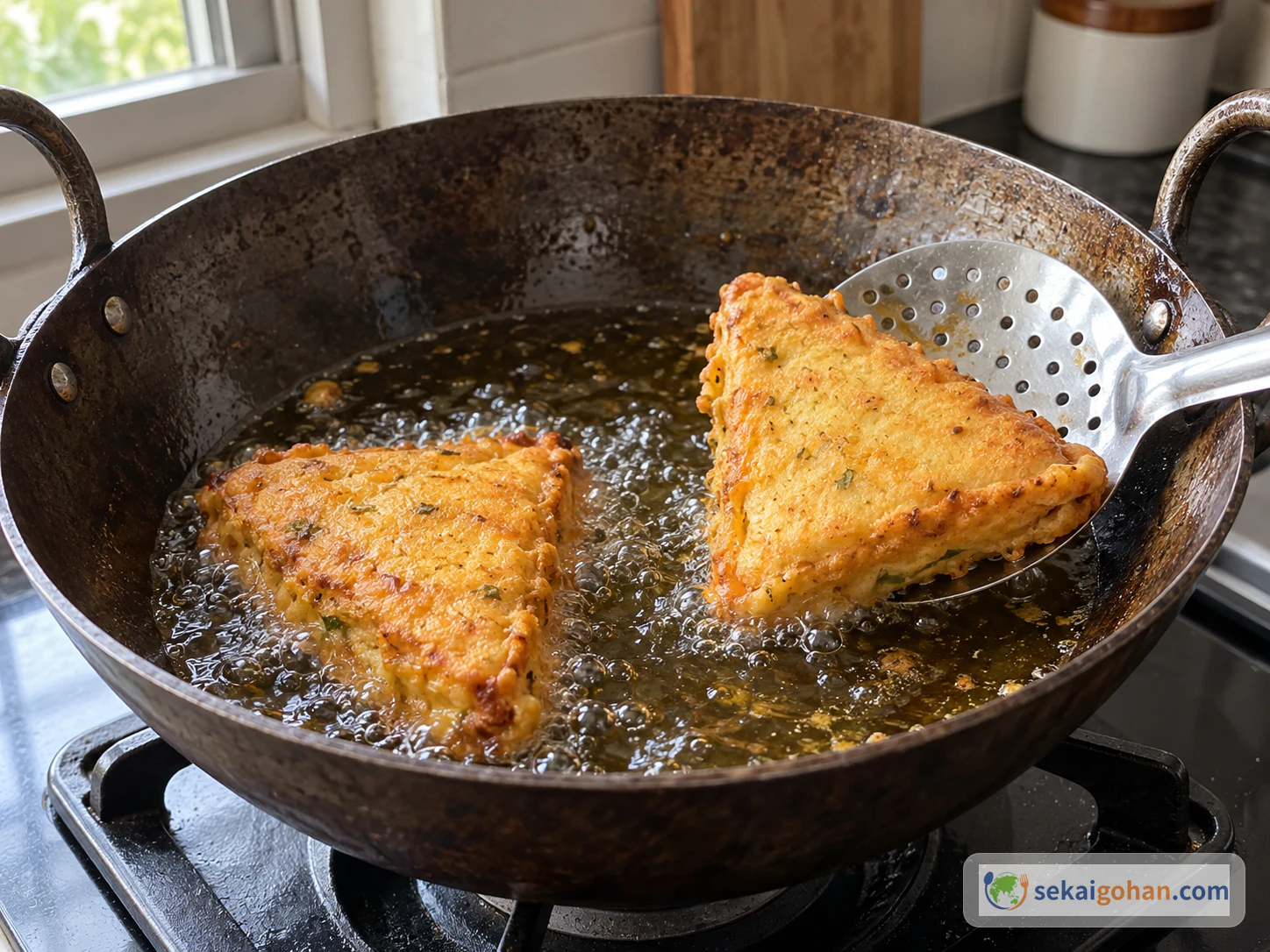
The two decisions that matter most are the batter's thickness (medium, not thick and heavy) and how long the sandwich sits in it (briefly). Fry by heat level rather than a set time. Color and crispness describe the outside; they do not show that the coating has cooked through and the filling is hot throughout.
Stay with the pan while the oil is on the heat. Don't let water or wet ingredients drop into the hot oil.
Bread Pakora Troubleshooting
Three things hold a bread pakora together: a thin, even layer of potato, a medium-thick batter, and a short dip right before the sandwich goes into the oil. Most problems trace back to one of them.
| Condition | Likely cause | What to do |
|---|---|---|
| The filling is watery | The potatoes weren't drained well | Drain the cooked potatoes thoroughly before mashing |
| The filling is stiff and hard to spread | It cooled down too much | Spread it by hand, a little at a time |
| The batter is thick and heavy | Not enough water for that flour | Add water in small amounts until medium-thick; flours absorb water differently |
| The batter is too thin | Too much water went in | Mix in a little more besan at a time |
| The bread goes soggy or breaks apart | It sat in the batter too long | Dip briefly, let the excess drip off and fry right away |
| The pakora is greasy | Too many pieces at once, so the oil cooled | Fry fewer pieces at a time; oil that isn't hot enough soaks in more easily |
| The outside browns before the inside warms | The heat is too high | Lower the heat a little |
Serving, Storage and Variations
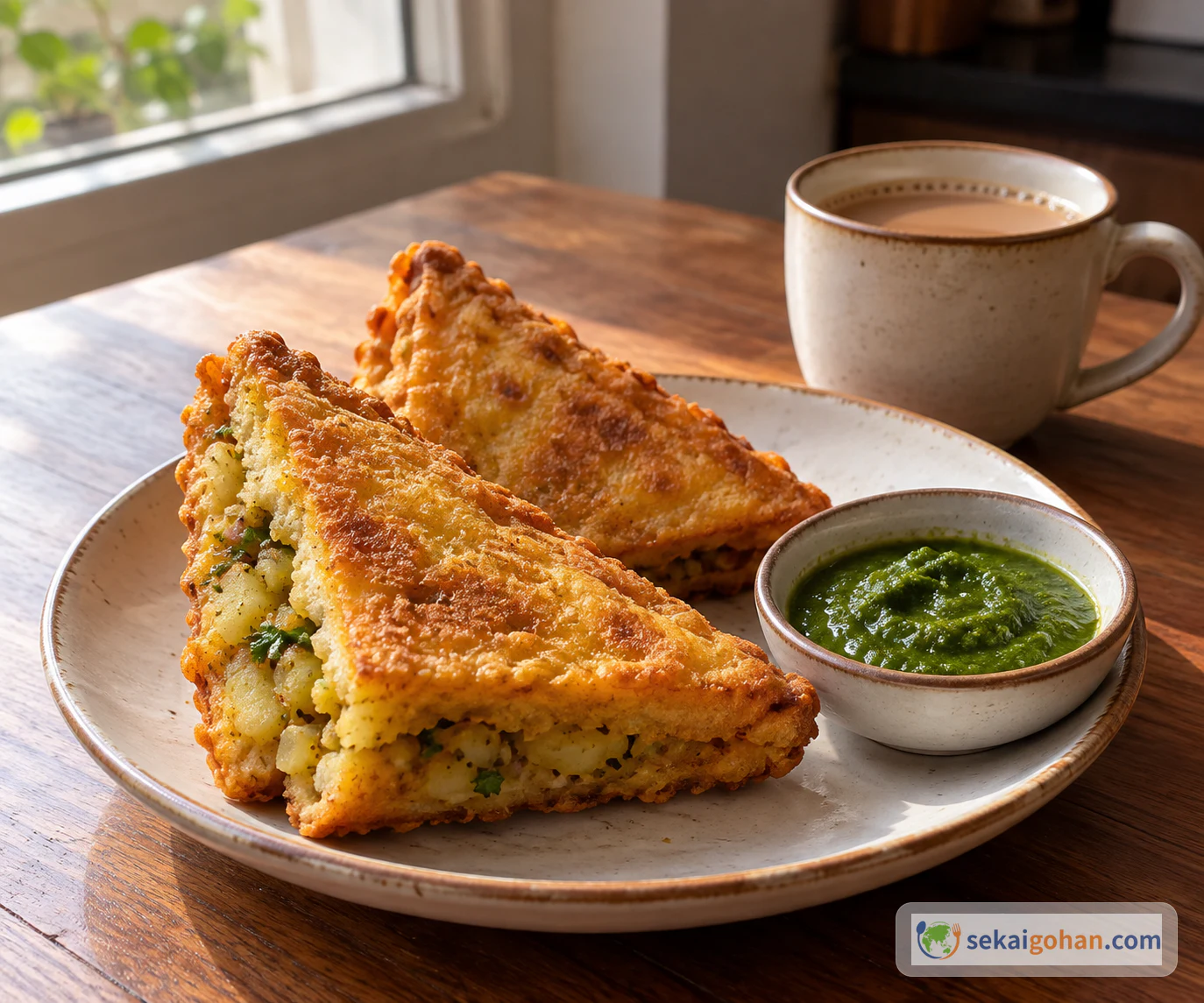
Serve bread pakora with chai and a green chutney made with coriander or mint, a sweet-sour tamarind chutney, or ketchup. Keep the chutney on the side for dipping.
The potato filling can be made up to a day ahead and refrigerated. Fry the pakora just before serving, since the crust is at its best straight from the oil. Leftovers can be reheated in an oven or toaster oven, but they won't match freshly fried pakora.
- Milder: use less green chili and let each person add heat with chutney.
- Coriander only: leave out the optional mint.
Frequently Asked Questions
Can I bake it or use an air fryer?
Yes, though the texture will differ from deep-fried pakora.
How many pieces does this make?
This makes 3 servings, using 4–5 slices of bread with two slices per sandwich. The number of pieces depends on how you cut and fill the bread.