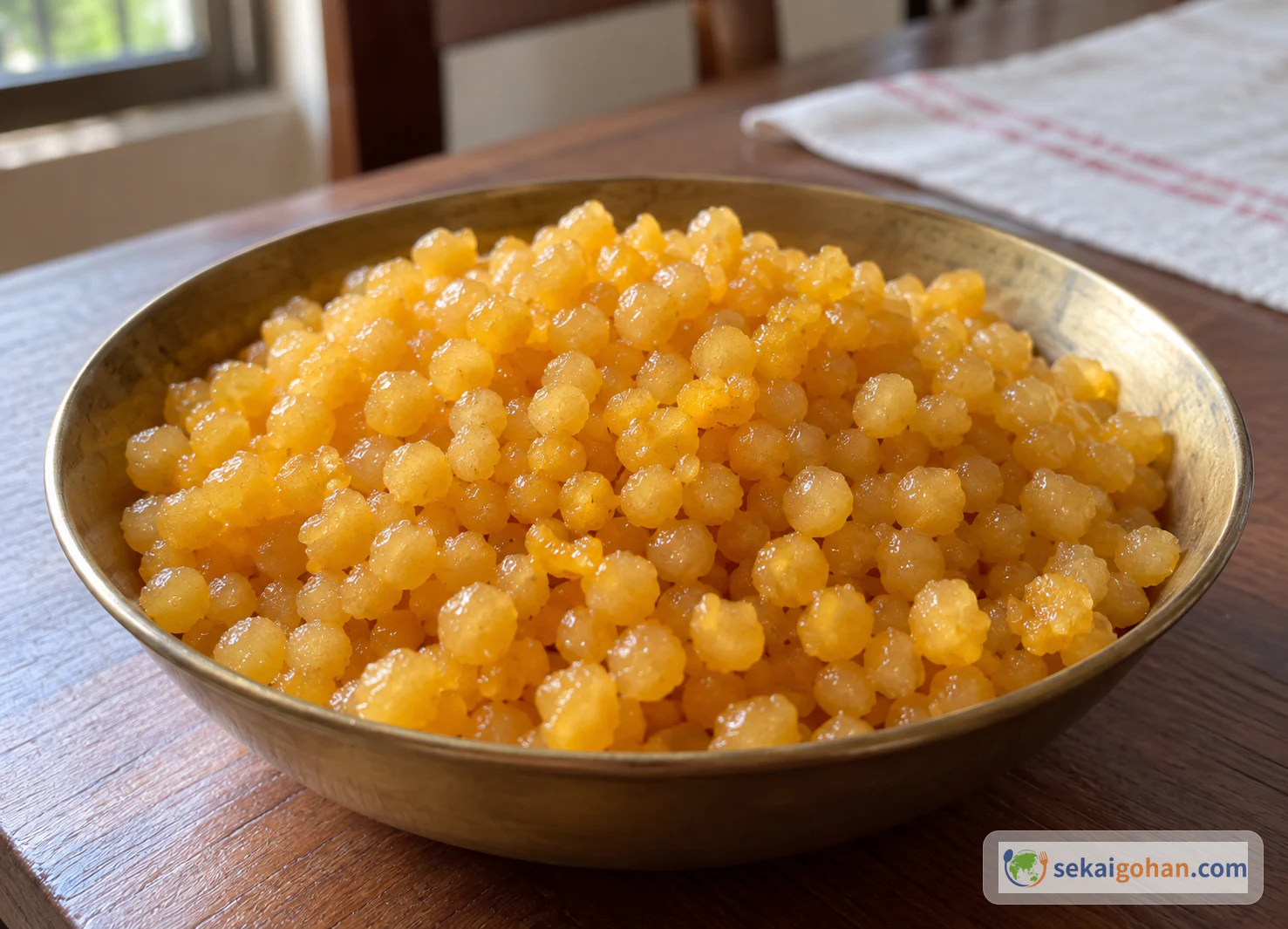
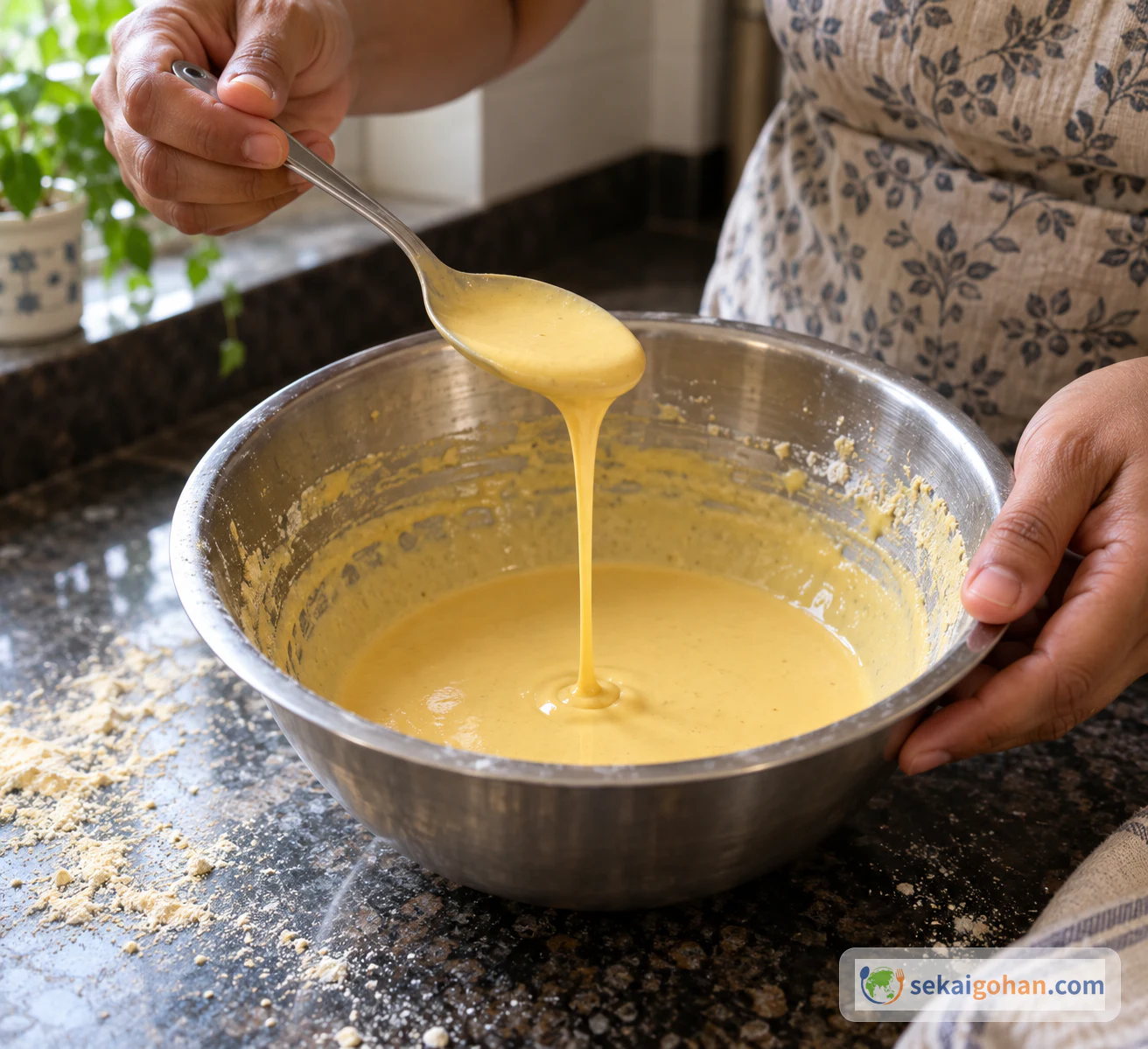
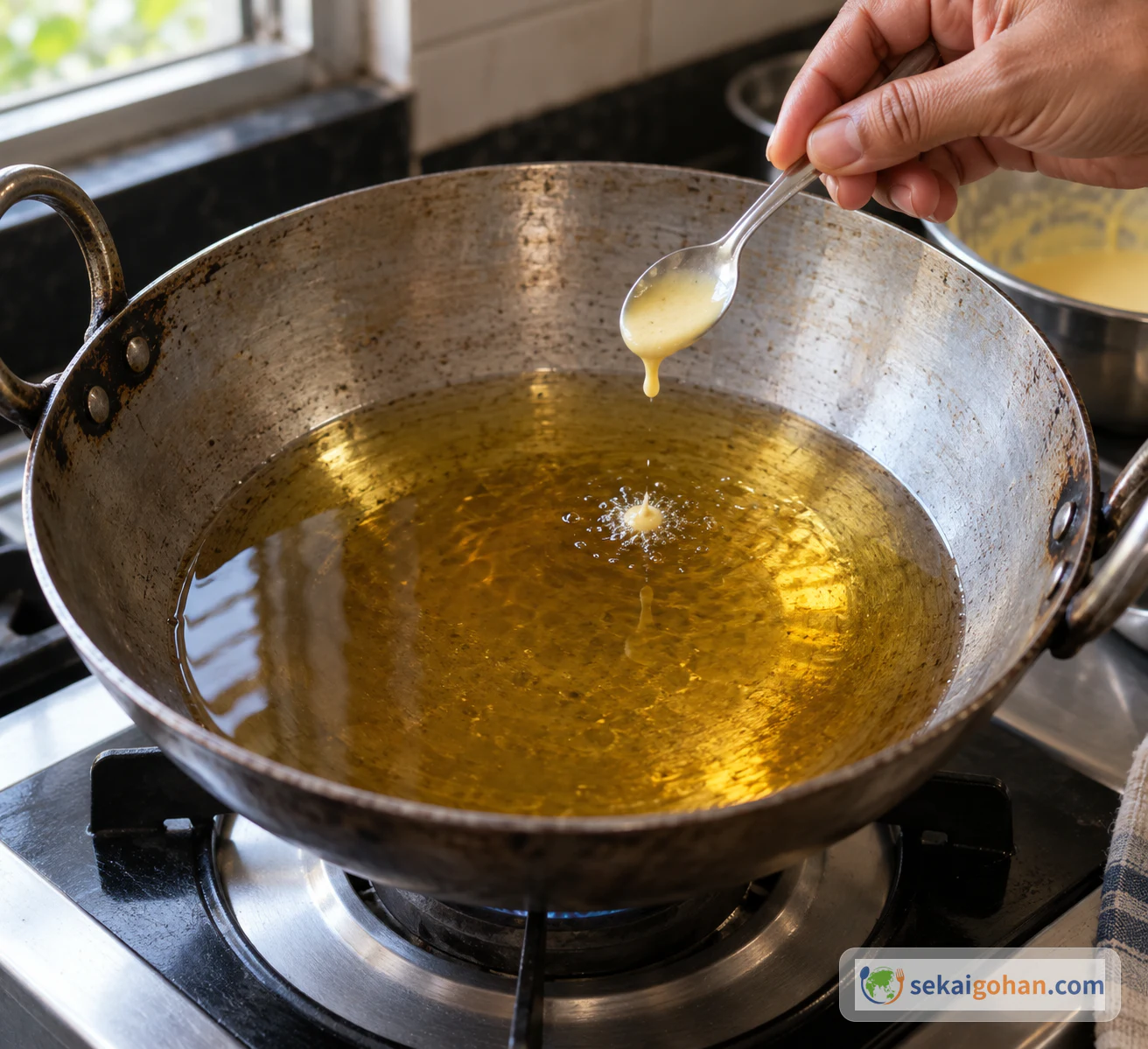
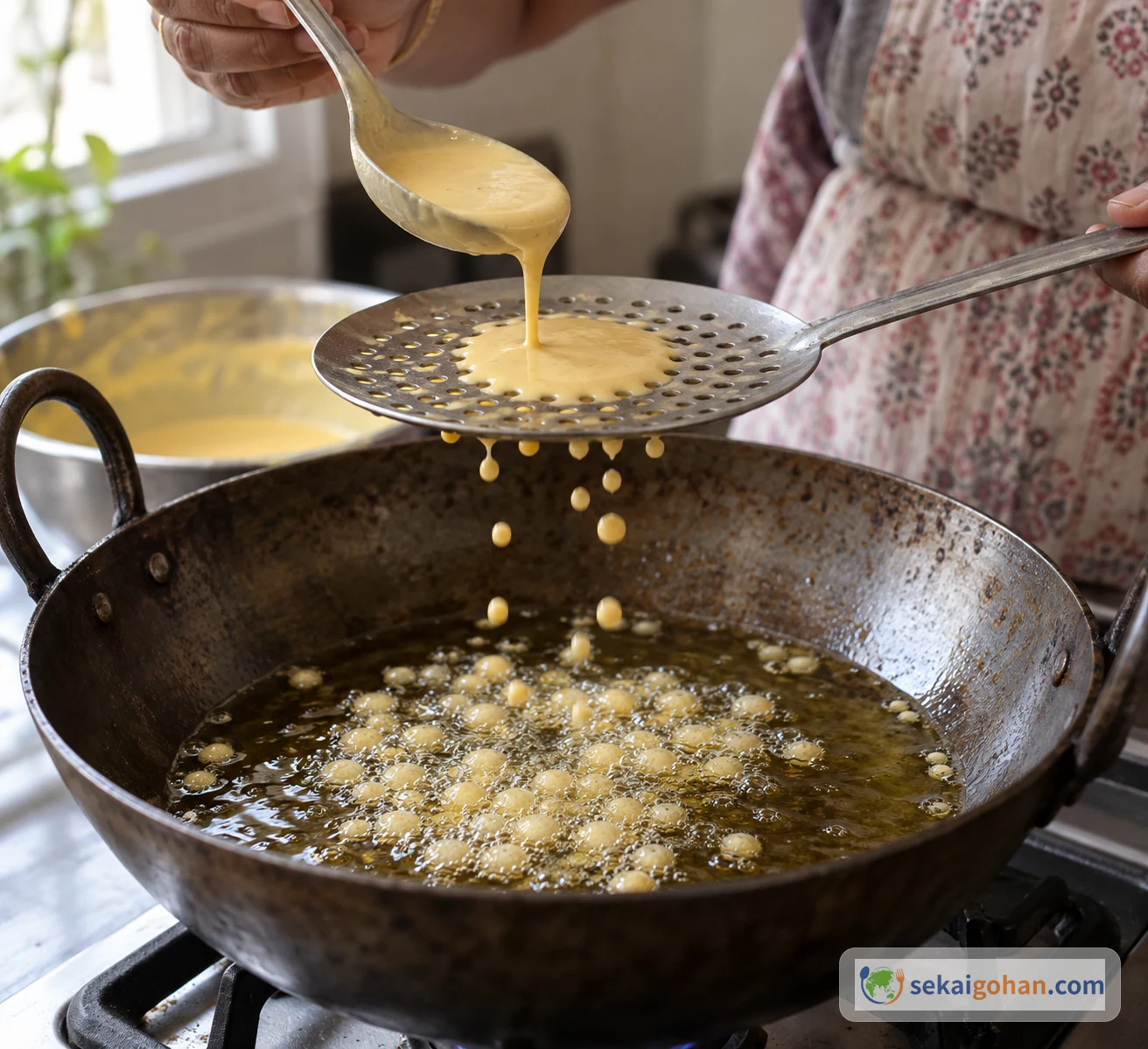
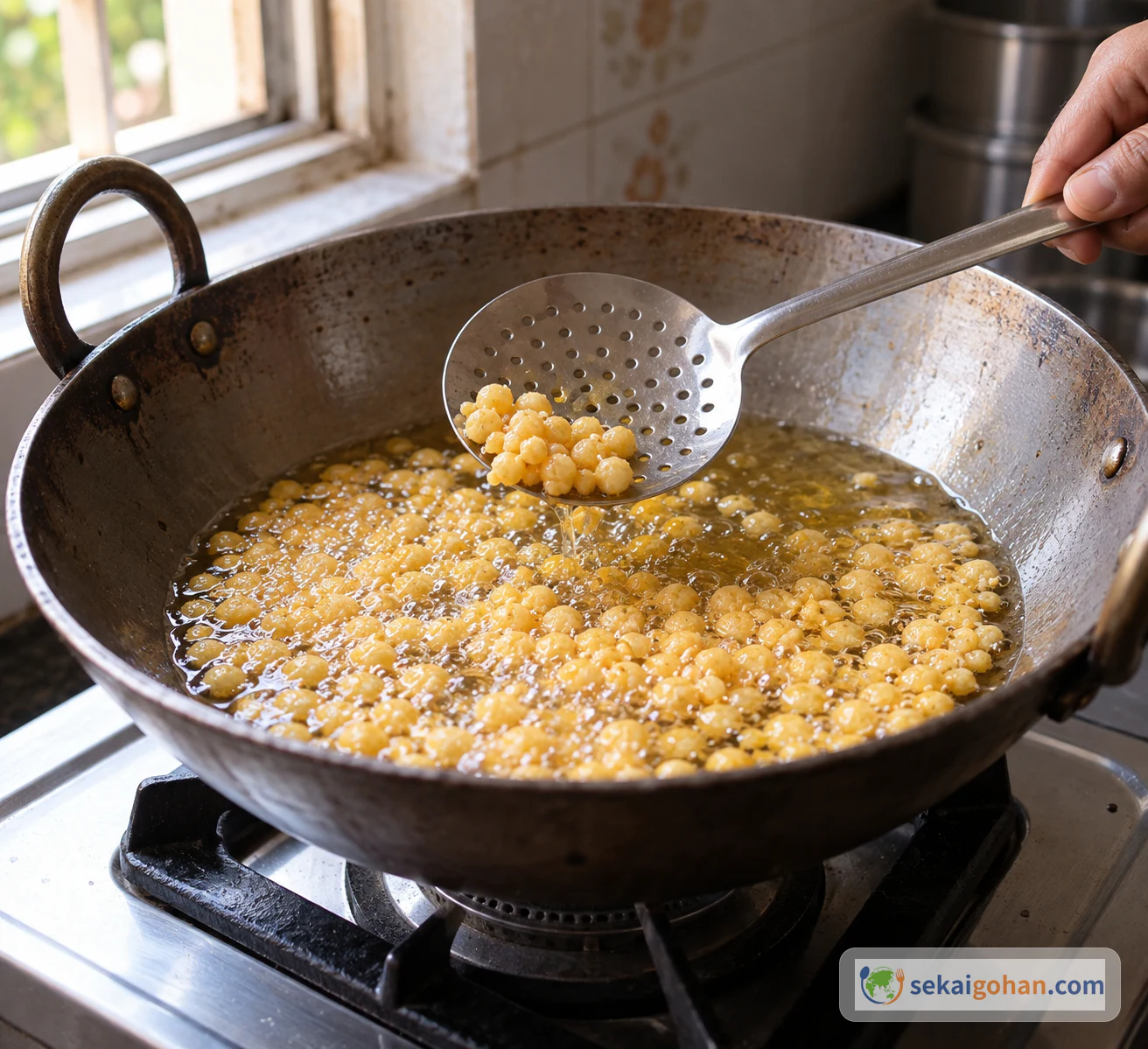
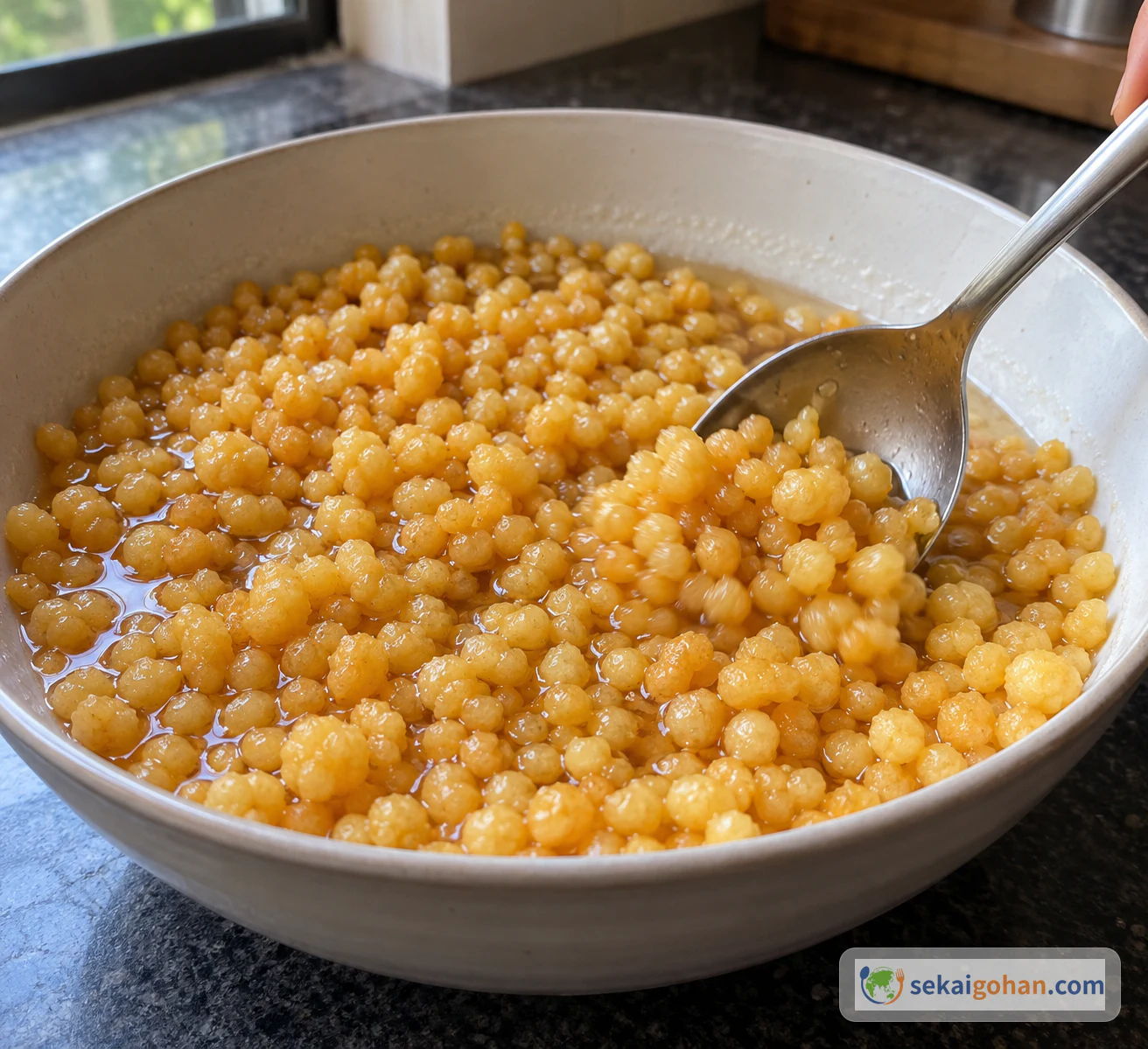
A thin, pale-yellow batter of chickpea flour is poured over a ladle full of small holes. It slips through in drops, and each drop falls into the hot oil below, puffs, and floats up as a tiny round pearl. That's boondi, named for the Hindi word boond, meaning "drop." For the sweet version, the pearls are fried only to a light golden color so they stay fairly soft, then soaked briefly in a simple sugar syrup until they shine. There are very few ingredients, so the batter's consistency, the ladle and how far you fry decide everything. For more dishes from the same country, see the India country page.
What Is Boondi? Sweet Pearls and Savory Snacks
Boondi is a besan (chickpea flour) batter dropped through a perforated ladle into hot oil, where it fries into small droplets. It is traditionally linked to Rajasthan, where it developed as a way to keep food well, and today it is eaten as a street sweet and offered at temples and on auspicious occasions. The same drops become quite different things depending on how long they fry and what happens afterward.
| Form | How it is finished | What it is used for |
|---|---|---|
| Sweet boondi (this recipe) | Fried relatively briefly to a semi-soft texture, then soaked in sugar syrup | Eaten loose as a sweet |
| Savory boondi (kara / khara boondi) | Fried until crisp, seasoned rather than sweetened | A crunchy snack. Plain or salted pearls go into raita, chaat and jaljeera |
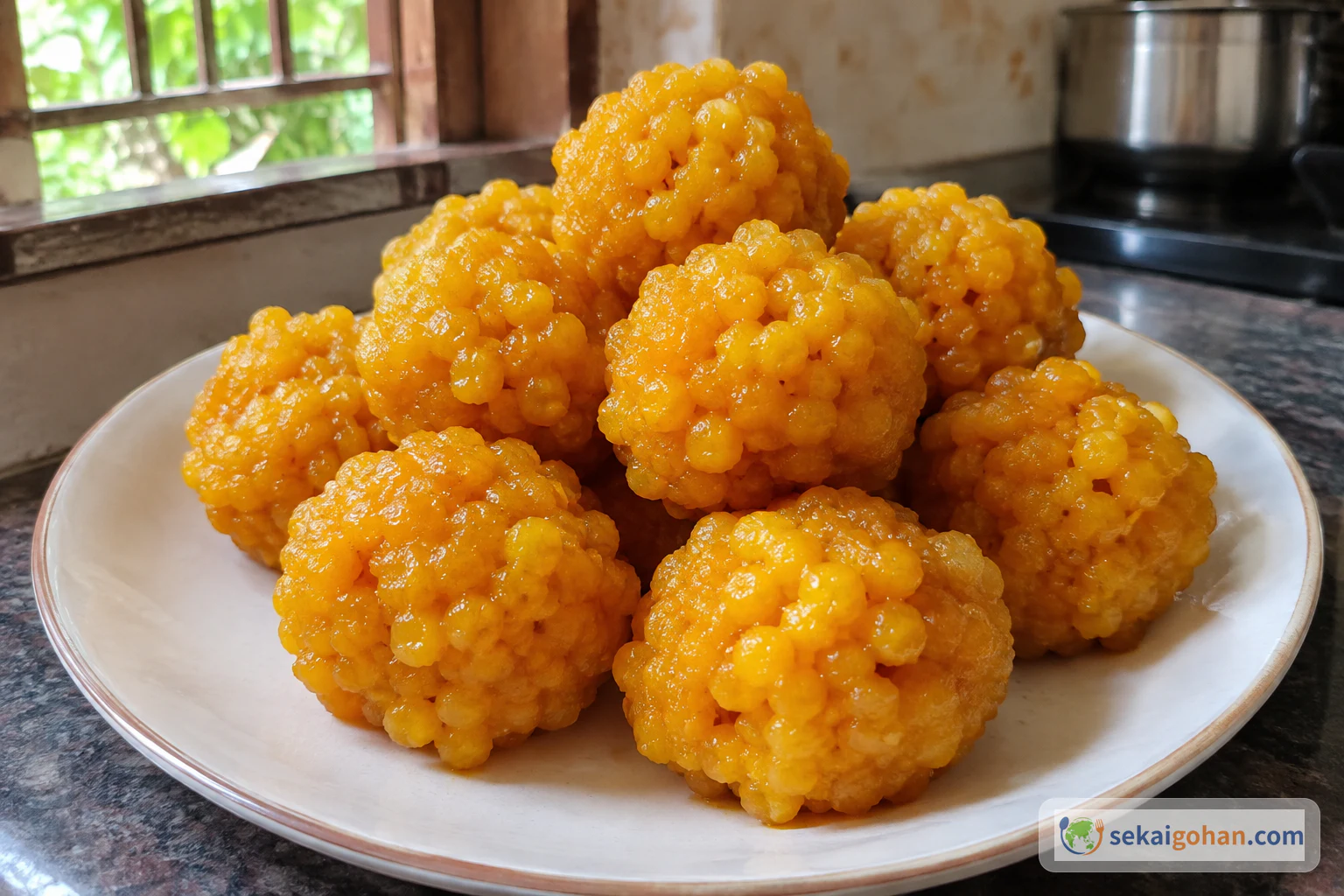
| Boondi laddu | Sweet pearls brought together with syrup and formed into balls | A round sweet |
Laddu, Motichoor and Mihidana
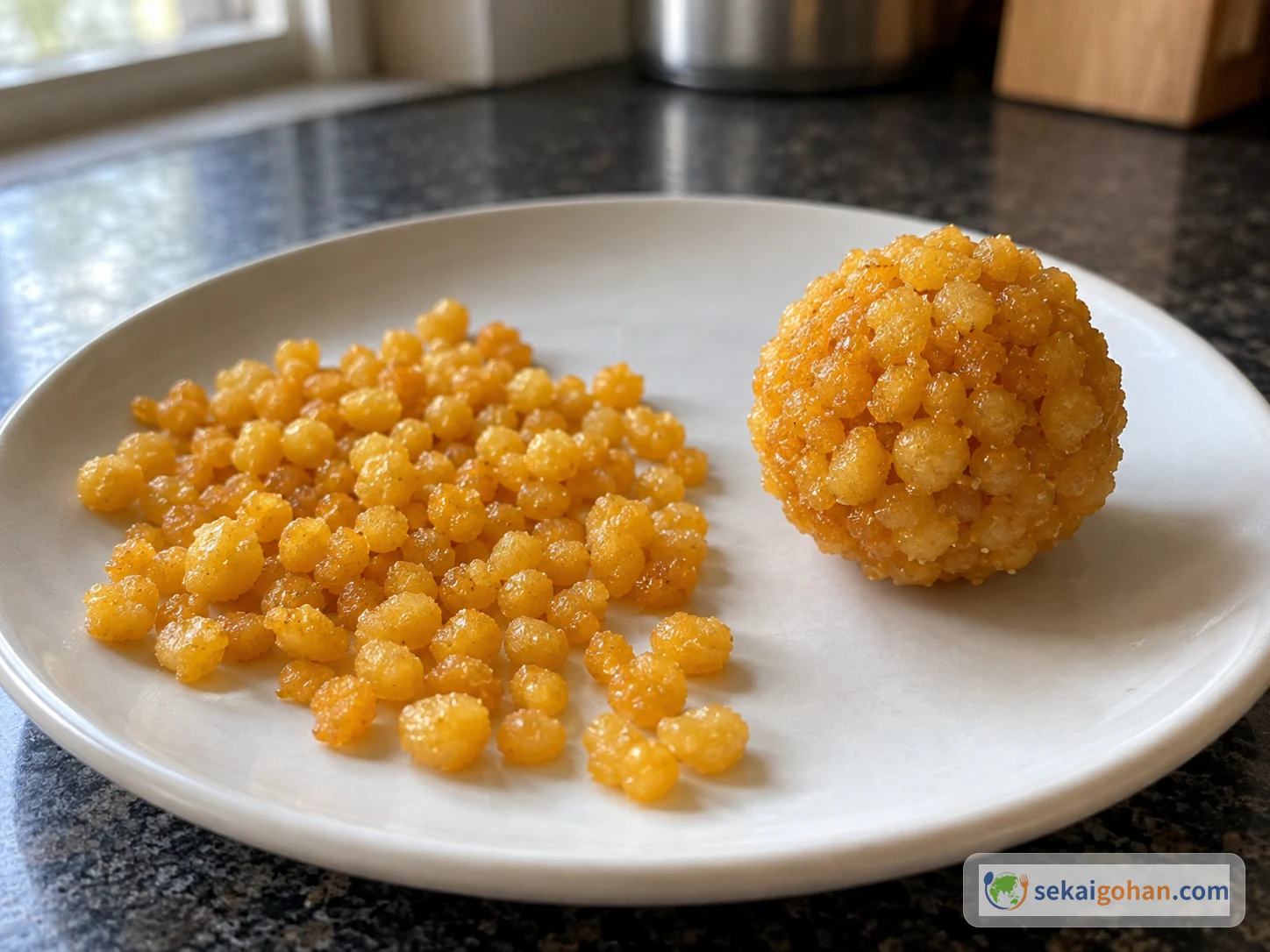
Loose sweet boondi and boondi laddu are not the same thing. Laddu is made by bringing the pearls together with syrup and shaping them into balls, while this recipe ends with loose pearls. In North India, motichoor laddu is made from very small sweet boondi pearls. In Bardhaman district, West Bengal, mihidana is a sweet made from tiny boondi pearls, 1–2 mm (0.125 inch) across; pearls that fine need a ladle with holes to match.
Boondi in Raita, Chaat and Jaljeera
Plain or salted boondi turns up well beyond sweets, in raita, chaat and jaljeera. For raita, soak the pearls in warm water first so they soften in the yogurt, or add them unsoaked to keep a bite. Either way, use unsweetened pearls; the syrup-soaked boondi here belongs on the sweet side of the table.
Ingredients for Sweet Boondi
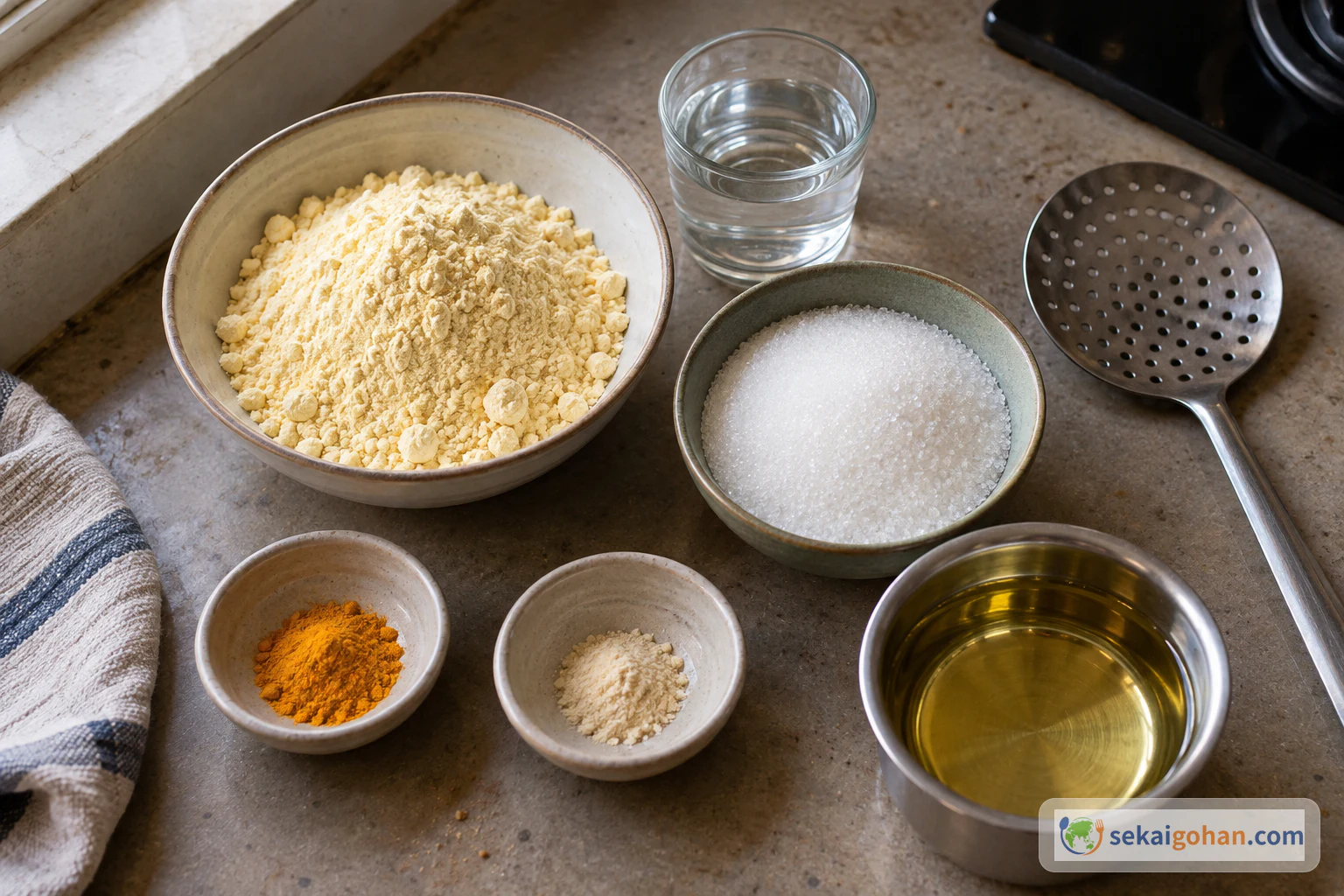
Use the same cup for everything. Judge the batter by its texture more than by the exact water amount. The number of pearls depends on your ladle and how many batches you fry.
The recipe does not contain salt, chili, rice flour, nuts, raisins, ghee, cardamom, saffron or yogurt. Those ingredients belong to other versions or other dishes.
Equipment
- A deep, heavy pan or kadai for frying
- A boondi ladle (a perforated spoon or ladle with small round holes)
- A second spoon or small ladle for pouring the batter onto the boondi ladle
- A slotted spoon for lifting the pearls out of the oil
- A mixing bowl for the batter
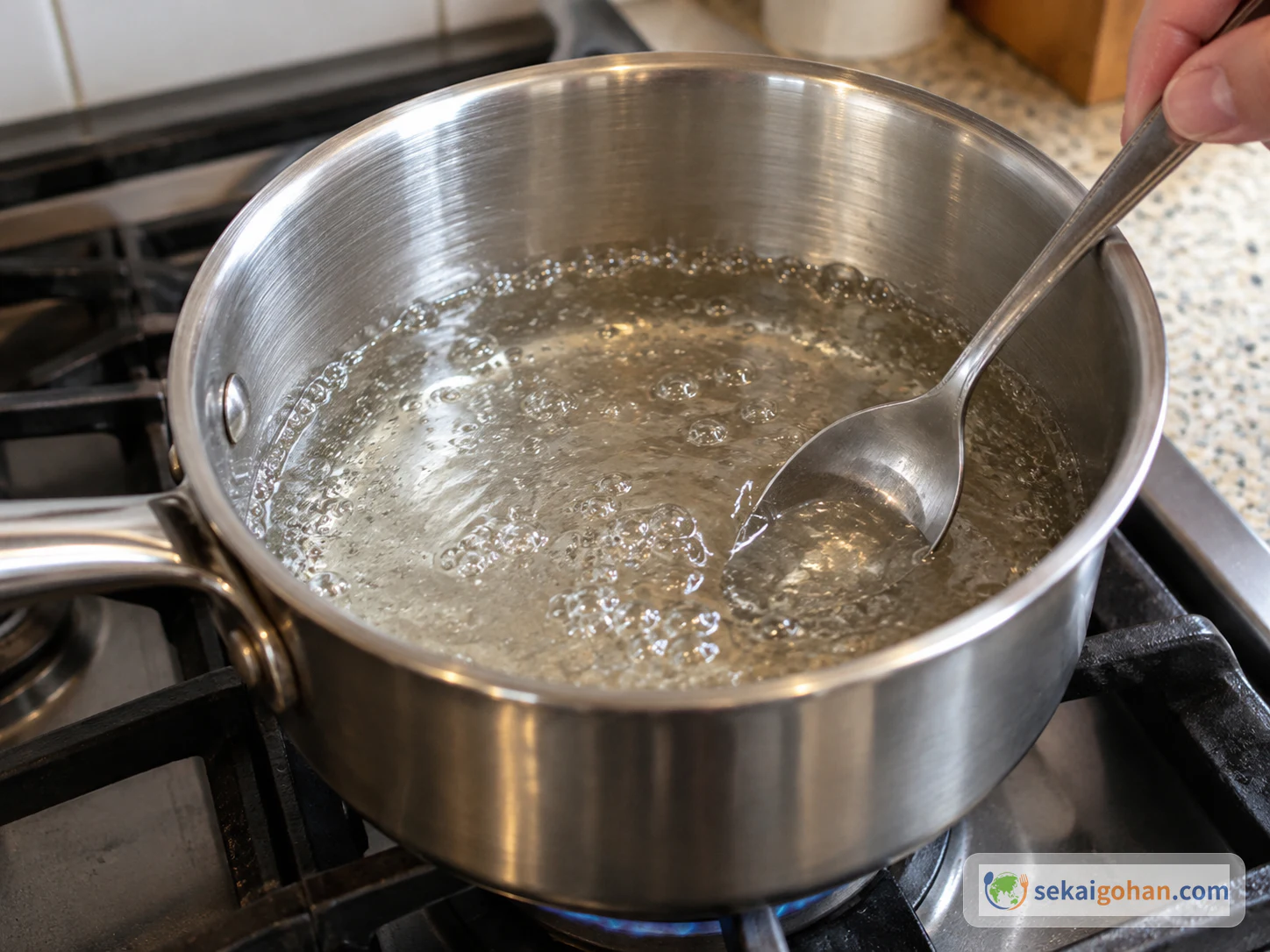
- A small saucepan for the syrup
- A shallow bowl for soaking the fried pearls in syrup
Choosing Besan, Color and the Ladle for Boondi
Besan. Besan is a flour made from chickpeas, also sold as gram flour. Look for it at an Indian grocery or online under "besan" or "gram flour." Other chickpea flours can grind and absorb water differently, so if you use one, add the water especially gradually and judge by the batter's consistency.
Turmeric or yellow food color. A pinch of either gives the pearls their color. This recipe uses turmeric, which brings a little aroma along with the yellow; food coloring gives color alone, and you can leave the coloring out entirely.
Hing. A pinch of hing is part of the basic batter. If you can't find it, leave it out.
The ladle. A boondi ladle with small, even holes does more for round pearls than anything else in the kitchen. Without one, use a fine, heat-proof skimmer or perforated spoon with small holes.
How to Make Sweet Boondi
Clear space around the stove and have everything within reach before you heat the oil. Fill the pan no more than halfway with oil, never put wet tools into hot oil, and do not leave the pan unattended.
When Boondi Pearls Don't Come Out Round
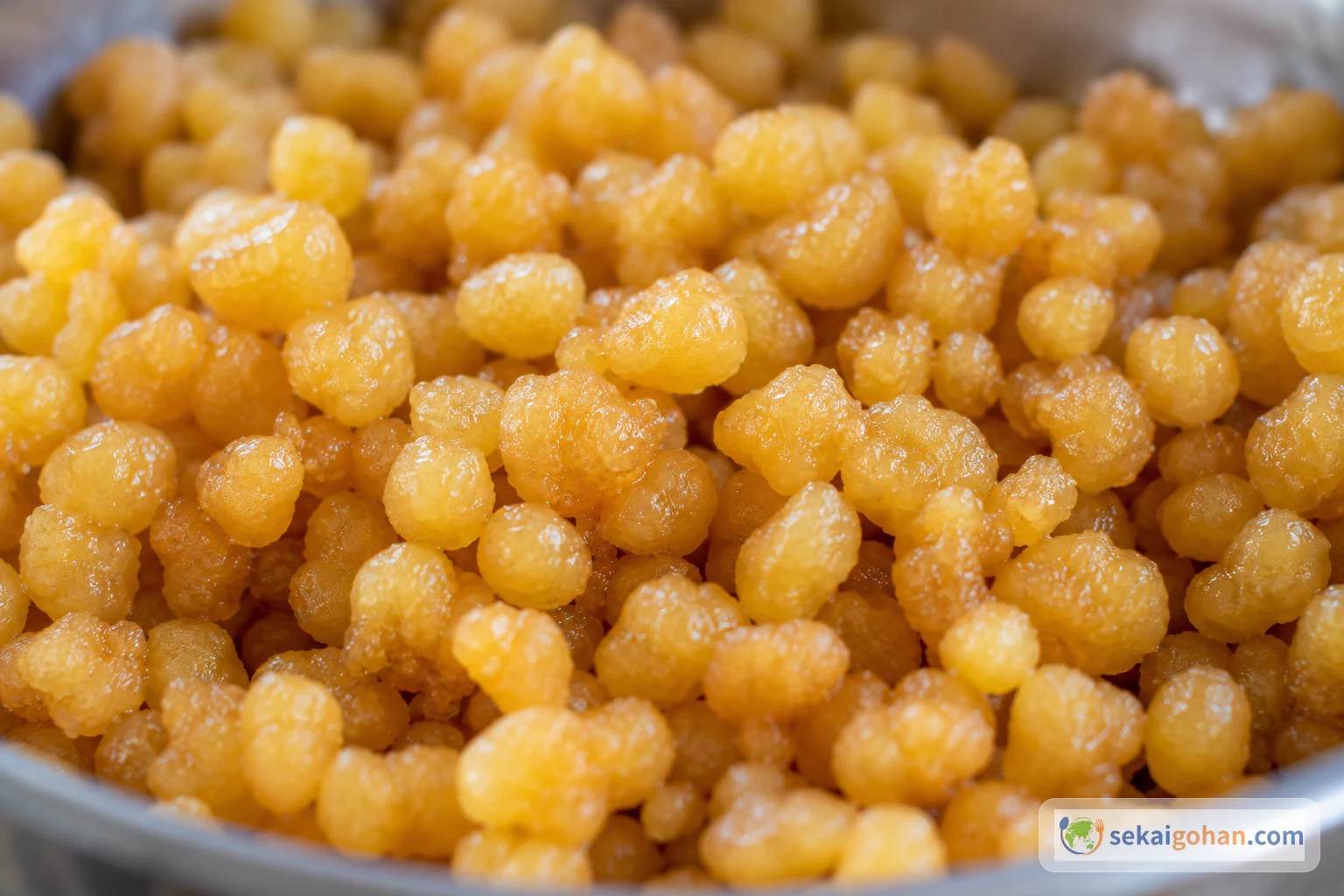
A good batch has pearls that stay separate: lightly golden, semi-soft rather than crisp, and glossy with syrup without melting into a ball. Small, slightly uneven rounds are exactly right. Since boondi takes its shape from batter passing through the holes and falling into the oil, most problems trace back to the batter, the ladle or the frying.
| Problem | What to check | What to try |
|---|---|---|
| Pearls have tails or aren't round | Batter consistency, clogged holes in the ladle, oil heat | Make the batter smooth again, clean the holes, and drop a small test amount to see how it falls |
| Sizes are very uneven | Ladle height, amount poured at once | Keep the ladle at a steady height, pour less each time, and wipe the holes between batches. Don't tap the ladle against the oil |
| Pearls are hard or don't take in syrup | Fried too long | Lift the next batch earlier, while it is lightly golden |
| Pearls are sticky | Too much syrup left on them | Drain off the excess rather than adding more |
Serving, Variations and Storage
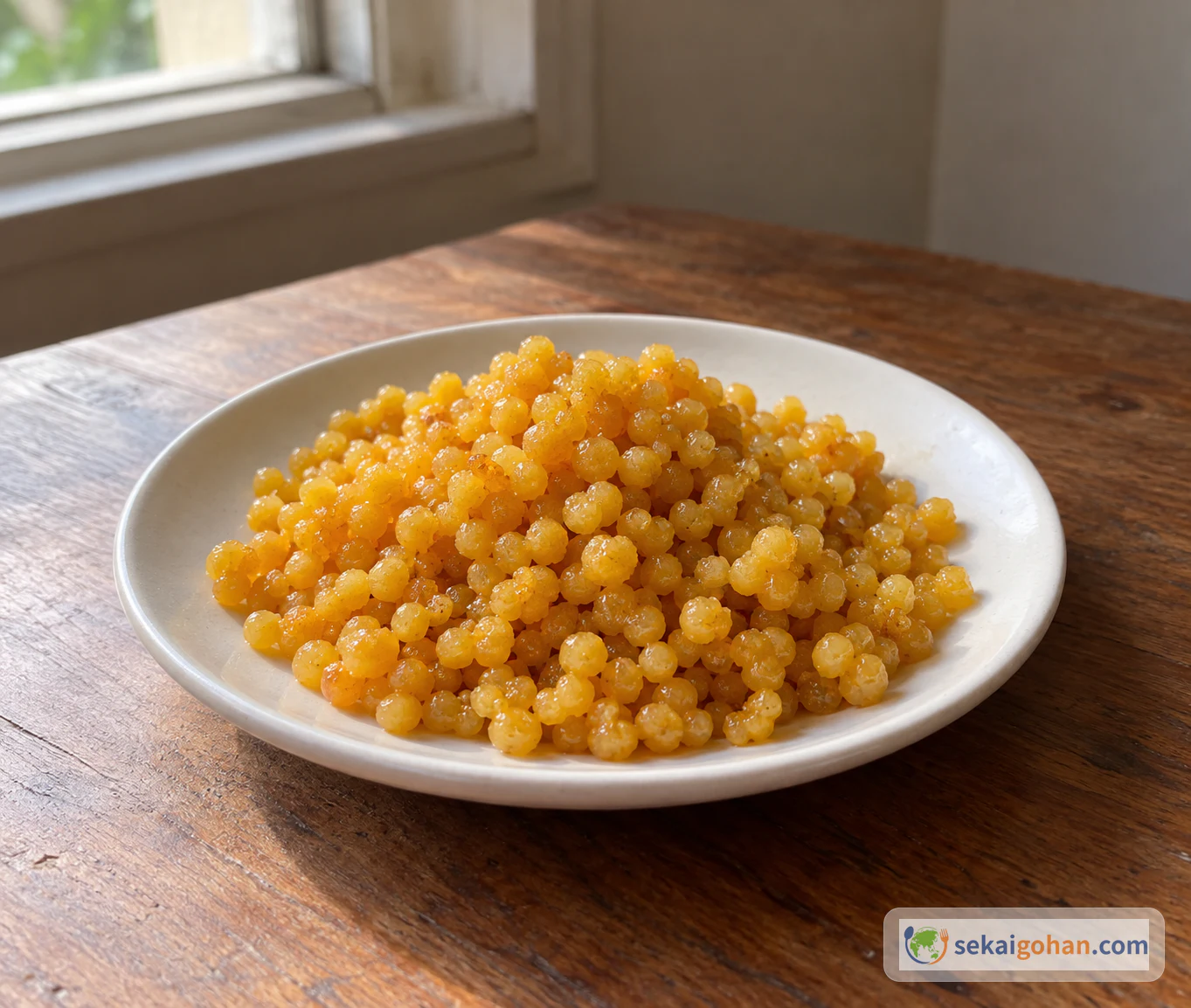
Serve sweet boondi just as it is, a small plate of loose golden pearls for a quiet snack. A hint of cardamom, one of the spices used with sweet boondi, suits it well; keep the amount small. For a crunchy savory snack instead, skip the syrup entirely and treat it as a different recipe, fried until crisp.
Do not seal the pearls in a container while they are still hot. Once cooled, keep them in a clean, airtight container, away from drying out and away from heat. Check their condition and eat them soon. If you notice an off smell, mold, or unusual wetness, do not eat them.
Frequently Asked Questions
Can I make it without a boondi ladle?
A dedicated boondi ladle gives the most reliable results. A fine, heat-proof perforated spoon or skimmer can work if its holes are small, so check the shape of your first batch before frying the rest.
How many minutes should I fry the pearls?
Go by sight rather than the clock: the test drop should rise quickly, and the pearls come out at a light golden color, before they turn crisp, since sweet boondi should stay semi-soft.
Can I make it ahead?
Yes. Let the pearls cool, store them in a clean, airtight container away from heat and drying out, and eat them soon, checking their condition first.