Bagara Baingan Recipe: Hyderabad's Nutty, Tangy Baby Eggplant Curry
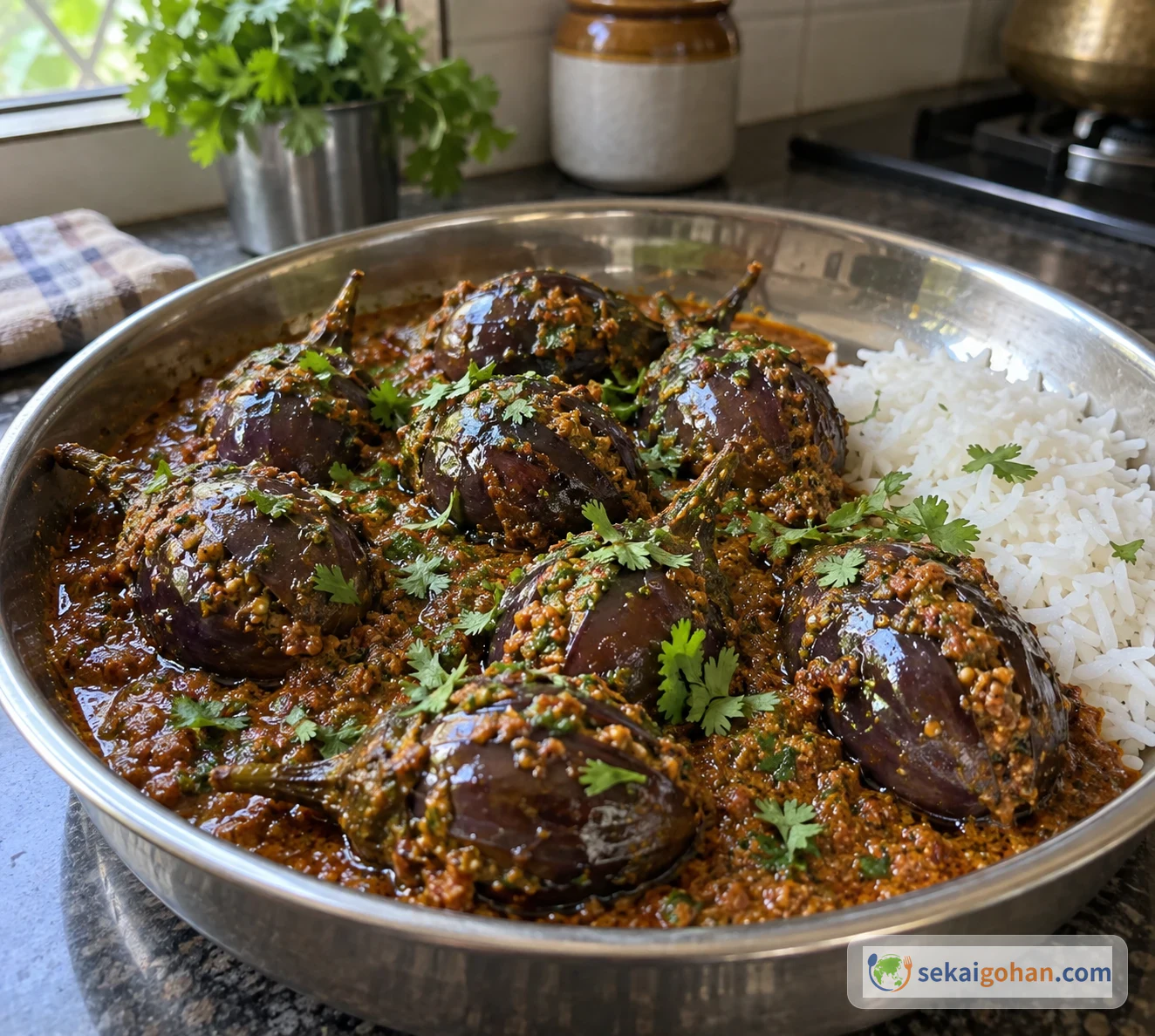
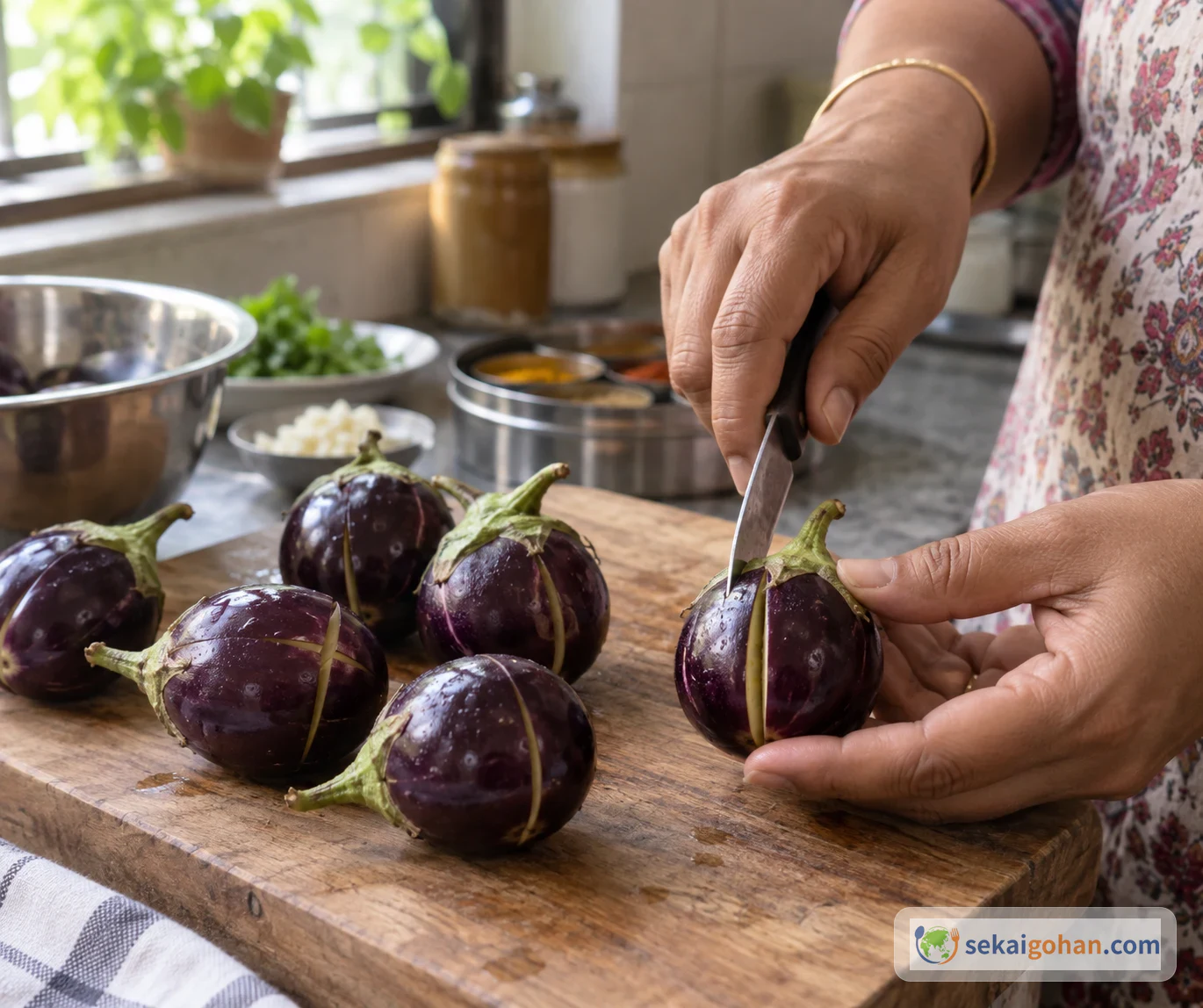
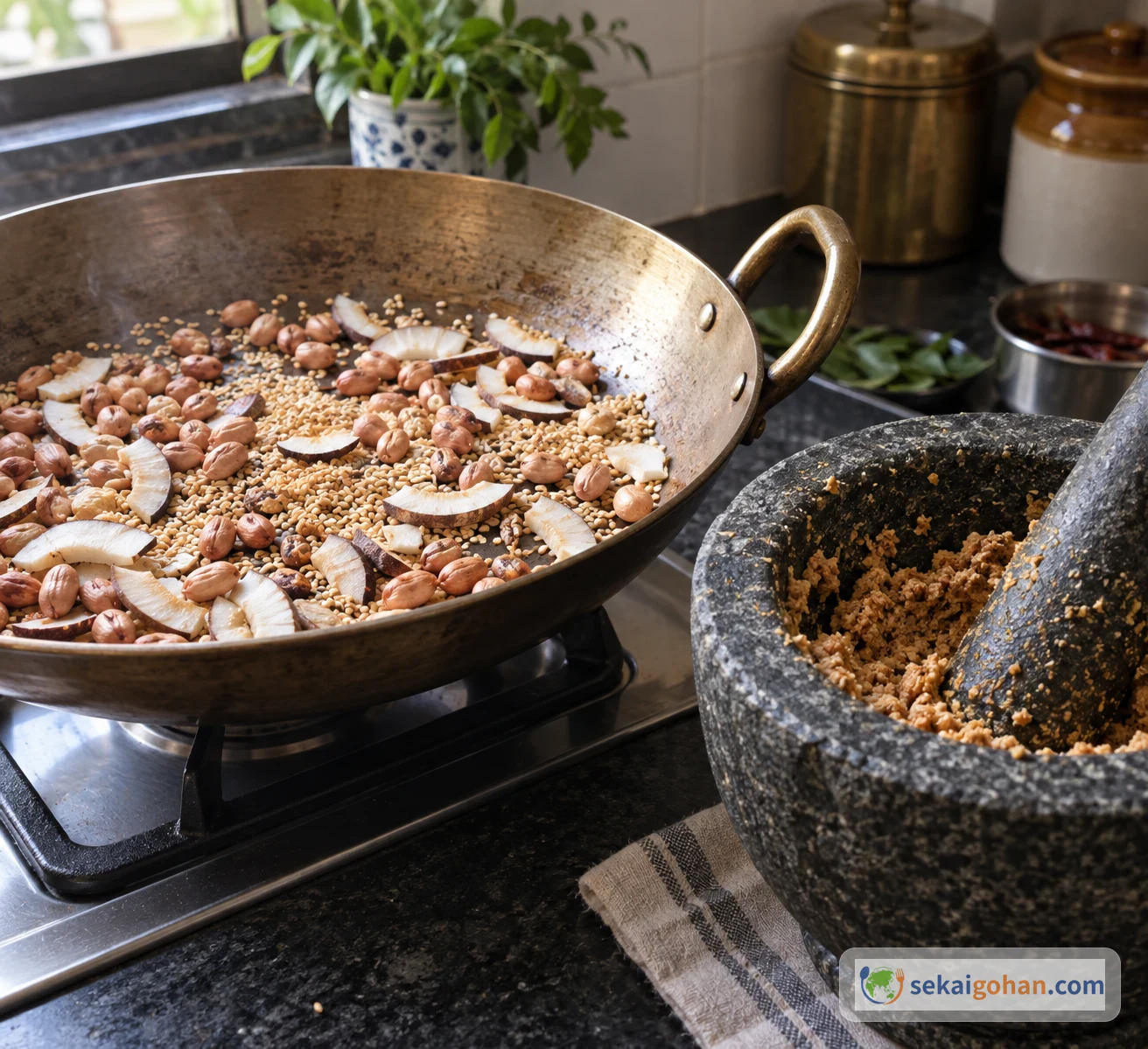
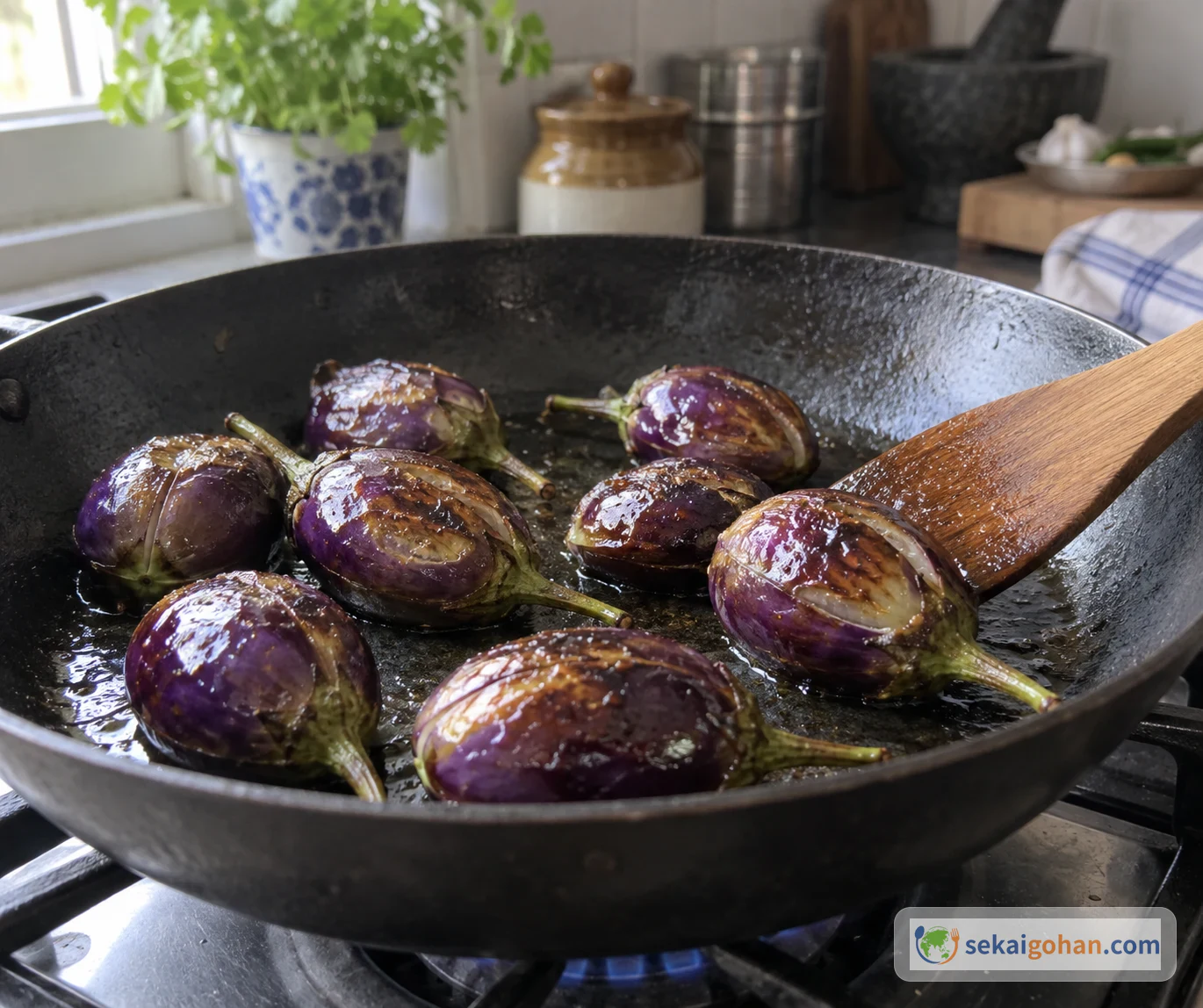
Small purple eggplants, slit lengthwise and still whole at the stem, go into hot oil. Their skins tighten, the paste thickens around them, and the smell of tamarind rises from the pot. This is bagara baingan, a Hyderabad curry of baby eggplants in a sauce of dry-roasted peanuts, white sesame and coconut, sharpened with sweet-sour tamarind. Its character comes less from chile heat than from that thick, toasty paste and a layer of fruity acidity on top, and it is usually served with biryani or steamed rice.
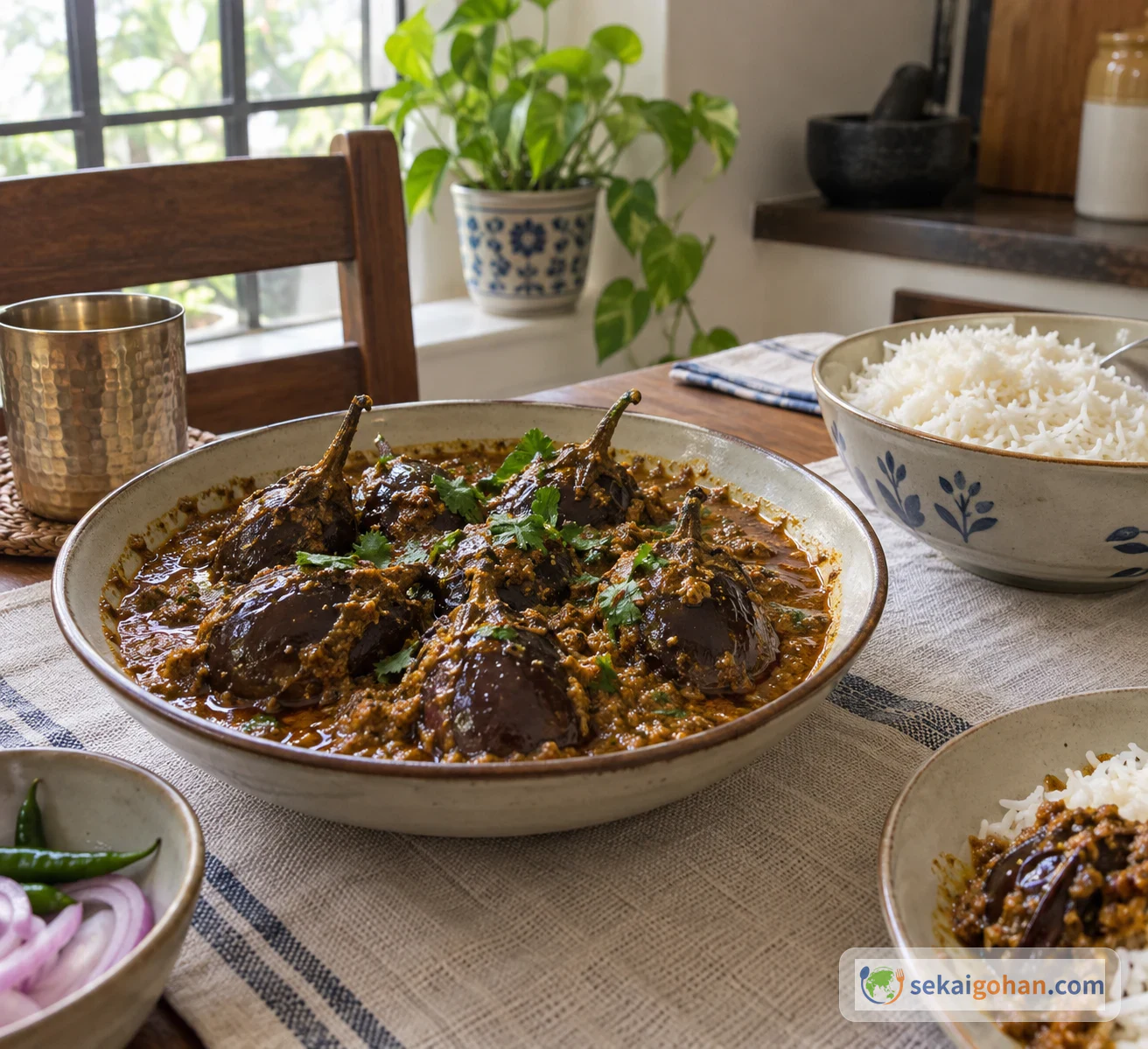
About Bagara Baingan
The name can be read as "tempered eggplant," meaning eggplant given aroma by tempering in oil. Once you see the dish as a toasted paste plus tamarind, rather than simply a spicy curry, the ingredients and steps make sense together.
Bagare Baigan and Baghare Baingan are spellings of the same dish. Baingan and Baigan are both romanizations of the word for eggplant in South Asian cooking, so search both when looking for recipes.
Hyderabad's Layered Food Culture
Hyderabad was founded in 1591 by Muhammad Quli Qutb Shah, and its cooking can't be traced to a single origin. Mughal, French, Arab, Turkish, Iranian, Telugu and Marathwada streams built up over time, and baghara baingan is one of the regional dishes that came out of that mix.
You can see the layering in the pot itself. Northern and Persian-influenced uses of ghee and spices meet the tamarind, curry leaves and red chiles of the Andhra side. Dry-roasted peanuts and sesame give the sauce body and toastiness, while tamarind's sourness and the green aroma of curry leaves sit on top of it.
Ingredients: The Toasty Paste That Supports the Eggplant
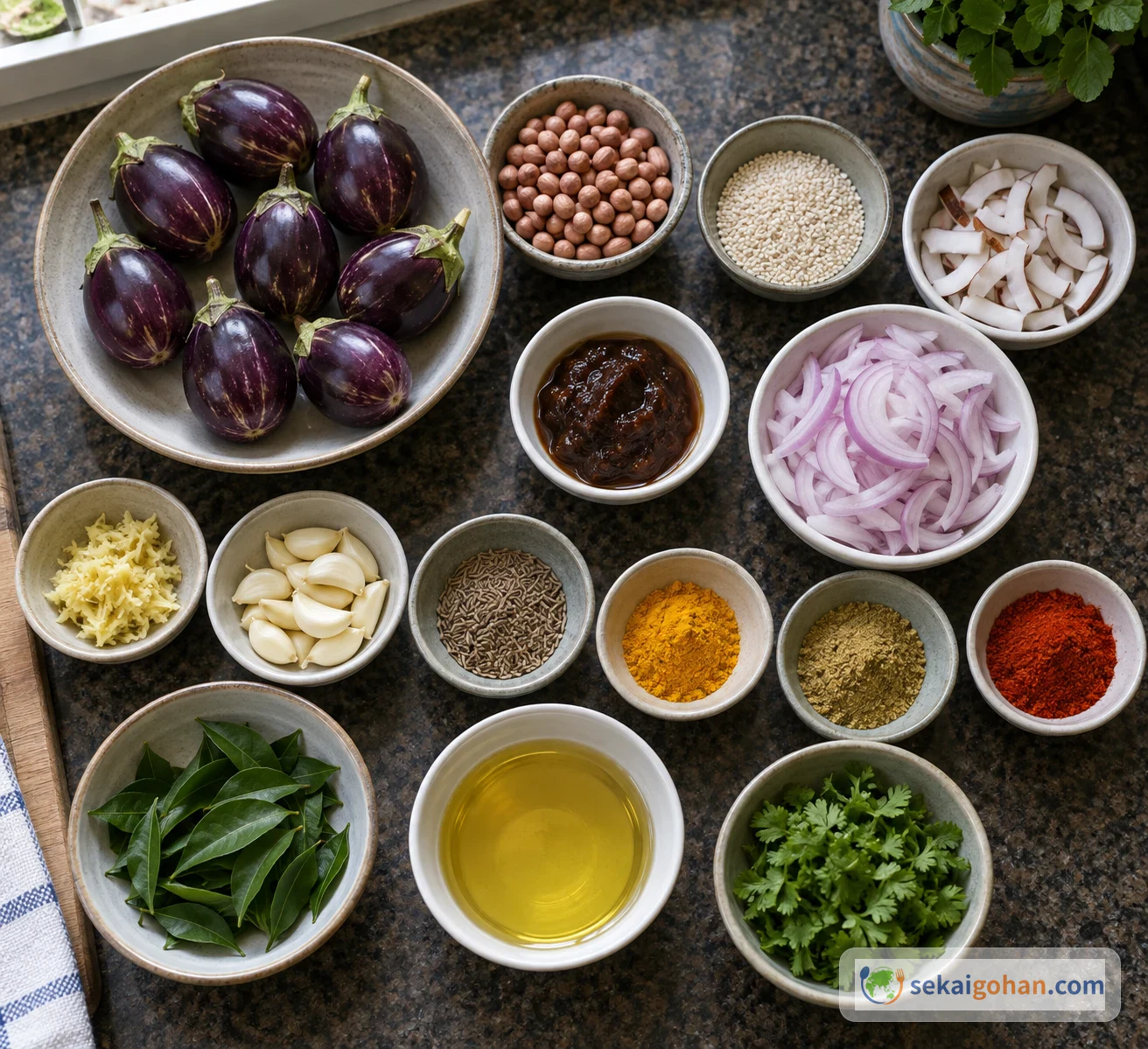
This makes 4 servings with 8 baby eggplants, about 1.25 lb (600 g) in total. Small eggplants are easy to match in size and cook evenly. If you use large eggplants, don't match by count alone; aim for 1.25 lb (600 g) in total weight and check firmness by touch. Don't salt the eggplants or soak them in water for long, since that lets the aroma escape.
This dish contains peanuts, sesame and coconut, which are common allergens. Don't force a substitute on anyone with an allergy. If a mortar, cutting board, knife or food processor is shared, wash it thoroughly with detergent after cooking to remove residual powder and oil. Check the labels of the products you use.
Tamarind carries the sweet-sour note in this sauce that lemon or vinegar cannot supply. The rounded, fruit-derived acidity connects the toasty nut paste and the oil and forms the center of the dish. If you already have a block or paste of tamarind at home, there is no need to buy more. Choose with an eye to what you can do with the rest after using 1.5 oz (45 g) this time; for example, pani puri also uses tamarind's sourness, so leftovers can go into another South Asian dish.
Where to Draw the Line in a Home Kitchen
| The dilemma | The local-leaning choice | A realistic choice at home | Effect on the result |
|---|---|---|---|
| Eggplant size | Small, round or egg-shaped | 8 baby eggplants, about 1.25 lb (600 g) in total | Cooks evenly and keeps its shape. Large ones need a longer simmer |
| Tamarind | Block soaked in hot water and strained | 1.5 oz (45 g) paste dissolved in hot water | Paste gives a more stable sourness; block adds the work of straining fibers |
| Curry leaves | 10–15 fresh or frozen leaves | Omit | The green note of the aroma weakens, but the nut and tang backbone remains |
| Making the paste | Crush in a stone mortar while checking the coarseness | Pulse briefly in a food processor | The machine is even and fast. Over-processing releases oil and makes it heavy |
| Heat | Standard amount of red chile | Start with 1/2 the amount and add on the side | Color and heat are gentler, but it is easier to judge the tang and toastiness |
| Staple to serve | Biryani, steamed rice, roti | Hot white rice or basmati | A staple that can take the thick sauce lets you taste the eggplant's shape and tang |
Decide what to buy by its role in the flavor. Get tamarind first, since lemon can't replace it. A mortar is next: it lets you build a thick paste while watching its coarseness, and with either one you can make the core of toastiness and tang. Curry leaves add a layer of aroma if you can find them, but if you can't, keep cooking. Large eggplants stretch the cooking, block tamarind adds the work of straining seeds and fibers, and a food processor makes the paste even but releases oil and turns heavy if over-processed. For the staple, biryani is the closest match, but steamed rice, roti or hot white rice are enough, as long as they can take the thick sauce, so you can taste the eggplant's shape and tang.
Choosing Ingredients for Bagara Baingan
Small eggplants are the easiest choice, especially for a first attempt, because they cook evenly. Large eggplants take longer, and moisture seeping from the cut surface makes them collapse easily, so cut the slits shallower and check often in the second half of the simmer.
Tamarind is the one ingredient not to swap out. Lemon or vinegar alone gives sourness without tamarind's fruity sweet-sour depth, and you end up with a different dish. Curry leaves are worth finding if you can; a spoonful adds a green aroma. Without them the dish still works, just with a less deep fragrance.
Method: Move the Toastiness into the Oil, and Keep the Eggplants Whole
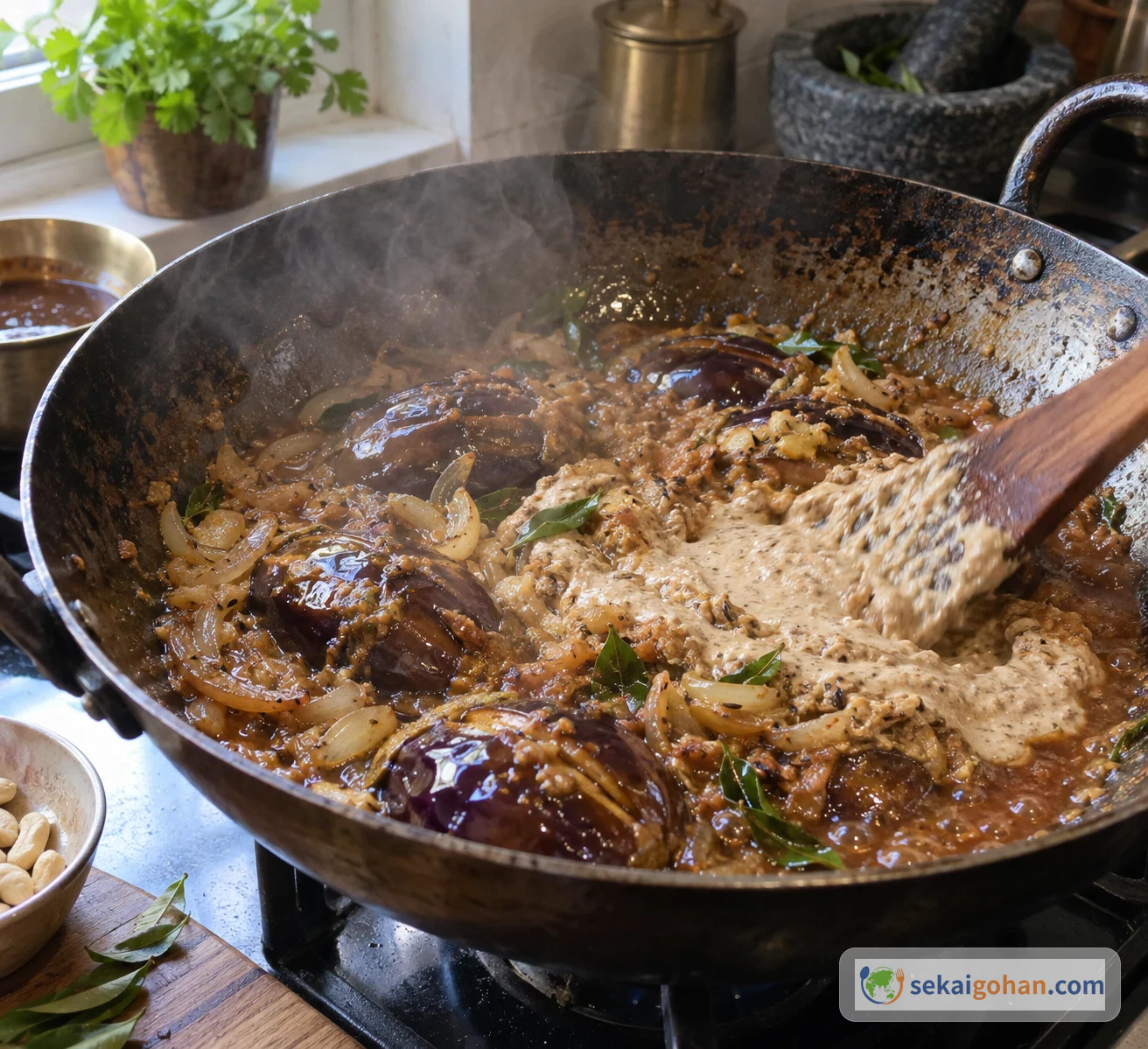
There are four steps: cut the eggplants and dry the surface; dry-roast the nuts and sesame into a paste; sear the eggplants in oil; then simmer them in the aromatic sauce over low heat. For 4 servings, expect about 30 minutes of preparation and 35–40 minutes of cooking, about 70 minutes in total. The eggplants get their shape in the first step and are cooked through in the final simmer. Beyond the numbers for heat, go by the sound of the oil, the color, the aroma that rises and how the fork goes in, so you can catch scorching or collapse early.
Wipe the moisture off the eggplants before searing, and lower the heat before adding the liquid with the dissolved tamarind. If spattering gets large, keep your face and hands away from the pot, turn off the heat, tilt the lid slightly to release steam, and return to low heat once it settles. If you have already scorched the sauce, don't stir up the bottom; move only the eggplants and sauce on top to another pot and bring back the thickness with 2–3.5 tbsp (30–50 ml) boiling water. Not spreading the bitter part through the whole dish comes first.
Turn off the heat, let it rest for 5 minutes, and scatter 10 g chopped cilantro. The sauce tightens a little in this time. When you can see the toasty liquid peeking from the slits in the eggplants, it is time to plate. Serve with a staple that can take a thick sauce. Rather than pouring a lot over the rice and crushing the eggplants, serve 1–2 eggplants per person with the sauce around them, so you can taste the tang and toastiness separately. For the staple, look at how Hyderabadi-style biryani combines rice and a simmered dish for a sense of serving quantity.
Common Bagara Baingan Problems and Fixes
Three things go wrong most often: eggplants cooked so soft they collapse, peanuts and sesame roasted until black, and a sauce that is too thick, too thin or too sour. The dish is done when a fork slides quietly to the center of an eggplant but it still keeps its outline, and the trail of a wooden spoon through the sauce holds for about 1 second.
Sauce Too Thick, Too Thin or Scorching
If the sauce is too thick, add boiling water 2–3.5 tbsp (30–50 ml) at a time and stir over low heat for 2 minutes. If it has turned watery, take the lid off and simmer over low heat for 3–5 minutes, until oil floats on the surface and the sauce clings to the eggplants.
A scorched, bitter smell from the bottom means it's time to stop stirring, since stirring only spreads it. Move the eggplants and sauce on top to another pot and discard the scorched layer. If the eggplants have collapsed, don't try to rescue their shape; serve them over rice as part of the sauce. Next time, cut the slits a little shallower and shorten the final simmer by about 5 minutes.
Too Sour or Not Sour Enough
Tamarind products vary, so adjust little by little. Add 2 g of jaggery or dark brown sugar and 2 tbsp (30 ml) of boiling water at a time, let it meld over low heat for 2 minutes, then taste. Aim for the point where the nutty toastiness and saltiness come back and the sharp edge of the acid softens. Piling in sugar turns it into a sweet curry and erases the tamarind.
If it isn't sour enough, dissolve 5–10 g tamarind paste in hot water and add a little at a time. Dropped into the pot in lumps, it makes the sourness uneven.
Serving and Storing Bagara Baingan
In Hyderabad, food is often served on a dastarkhan, a shared table spread with a white cloth. Bagara baingan sits naturally next to biryani, the city's signature dish, or plain steamed rice. For another side of tamarind's sourness, try pani puri.
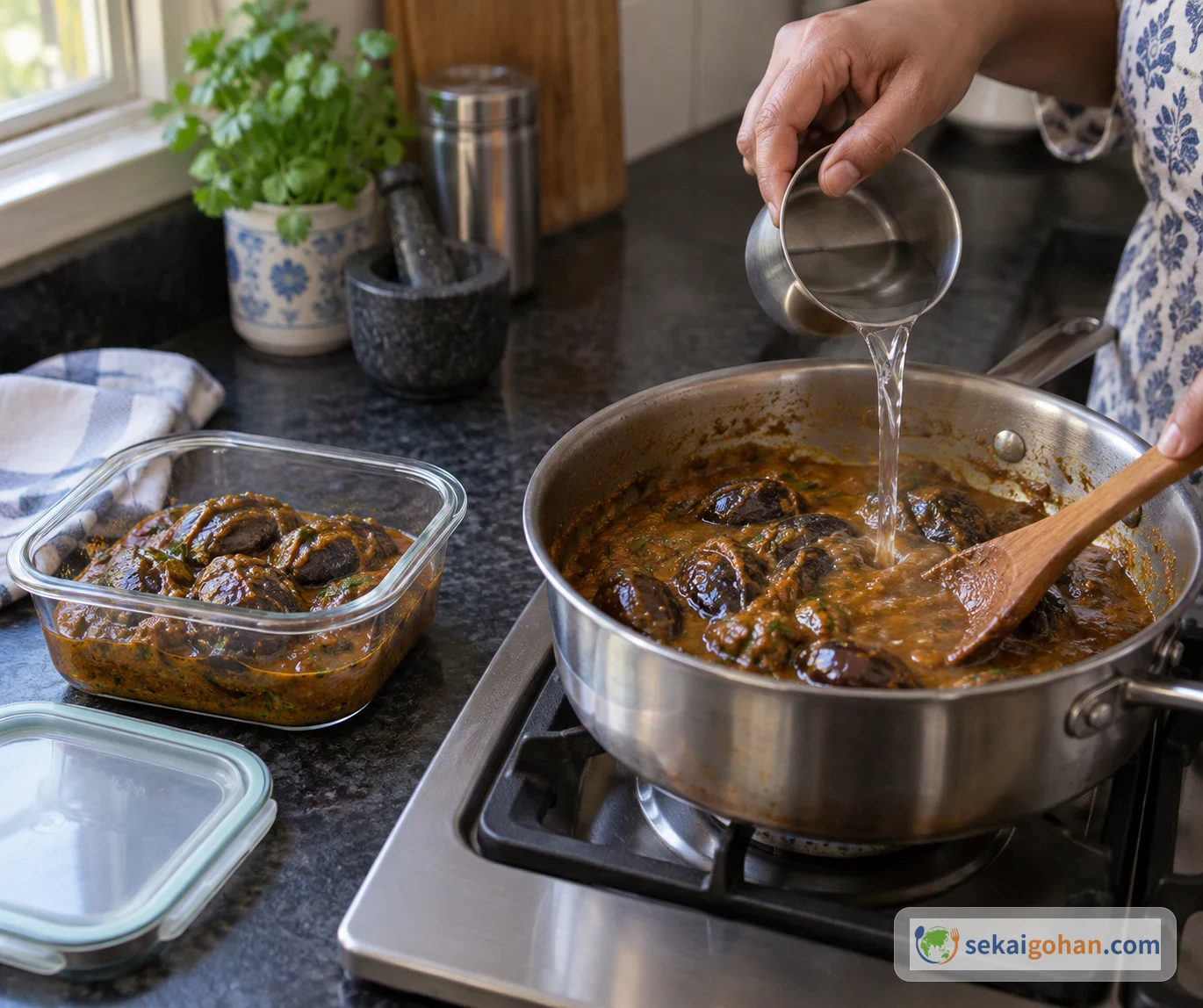
For leftovers, divide the curry into shallow containers with clean utensils, cool it quickly, then move it to a clean airtight container and refrigerate. Don't refrigerate again a dish that has sat at room temperature for long, and finish it by the next day. Reheat only what you will eat, over low heat, until it reaches 167°F (75 °C) at the center for at least 1 minute.
If you notice an off odor other than a sour smell, foaming, sliminess or discoloration, discard it without tasting. The dish contains peanuts, sesame and coconut, so watch for residue when sharing storage containers and serving utensils.
FAQ: When You're Unsure About Tang, Storage and Tools
Should I buy a mortar?
A food processor makes an even paste quickly, and a sturdy suribachi-style grinding bowl also works. For a one-time job, put the nuts in a freezer bag and crush them with a rolling pin until you have a thick paste with some grains left. A mortar lets you watch the peanut and sesame grains and stop at a texture that keeps the toastiness, so it's worth buying if you plan to make spice pastes and chutneys often.
Can I use block tamarind the same way as paste?
You can, but the handling differs. For block, put 2.75 oz (75 g) into ¾ cup (180 ml) boiling water, leave it for 15–20 minutes, loosen it with your fingers or a spoon, then strain out the seeds and fibers through a sieve and add it to the simmering liquid. Pastes vary in sourness by product, so check the label and don't add all 1.5 oz (45 g) at once: dissolve most of it in hot water, add it, taste, and add more in 10 g steps.
How much nutrition is in one serving?
The calories, protein, fat, carbohydrate, fiber and sodium are calculated by dividing the ingredient table by 4. Actual values change with the concentration and salt of your tamarind, how much oil the eggplants absorb, their size, and whether you eat rice with it. If you need to manage your diet, use the labels of the products you bought and your actual amounts.