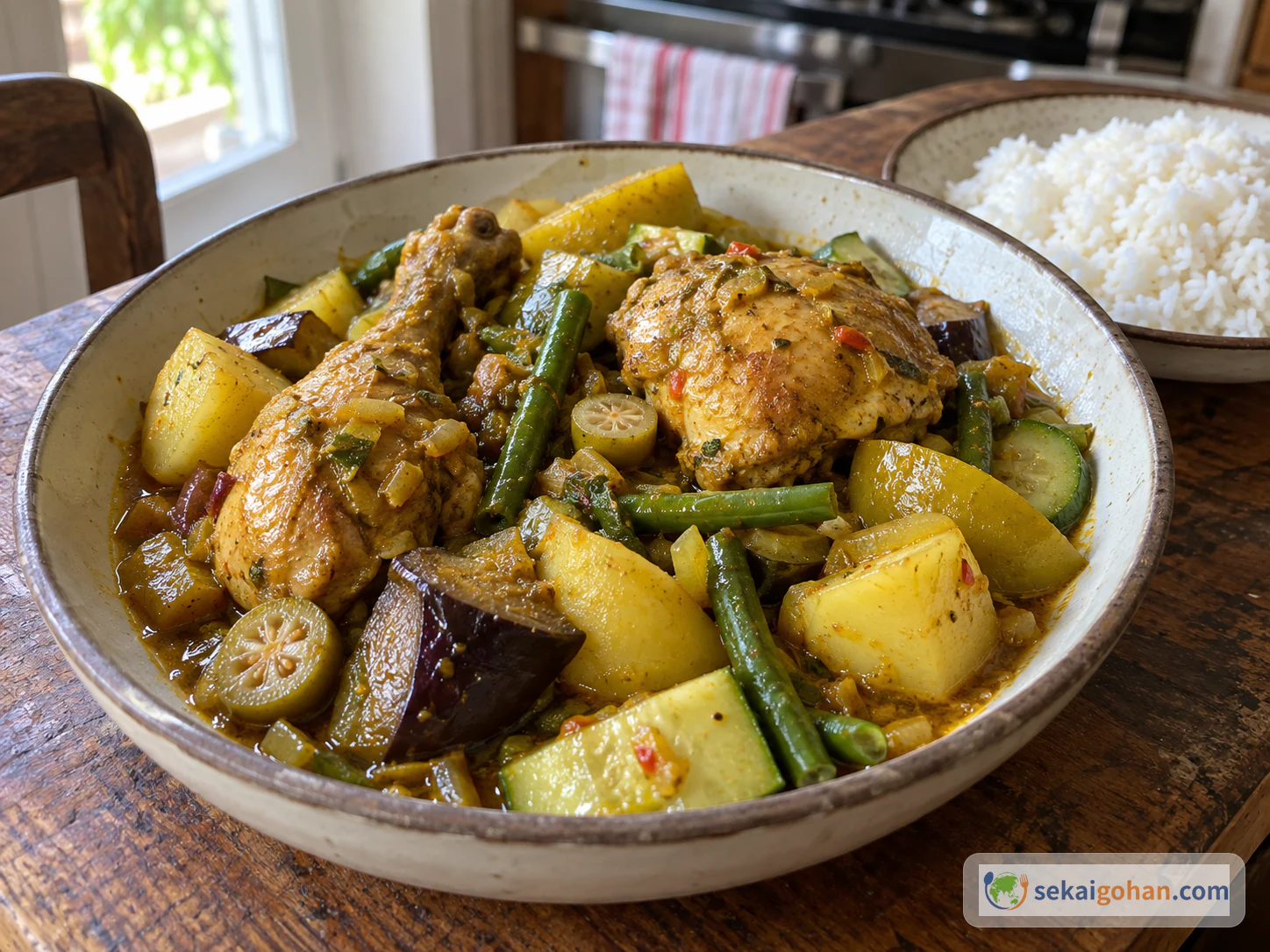
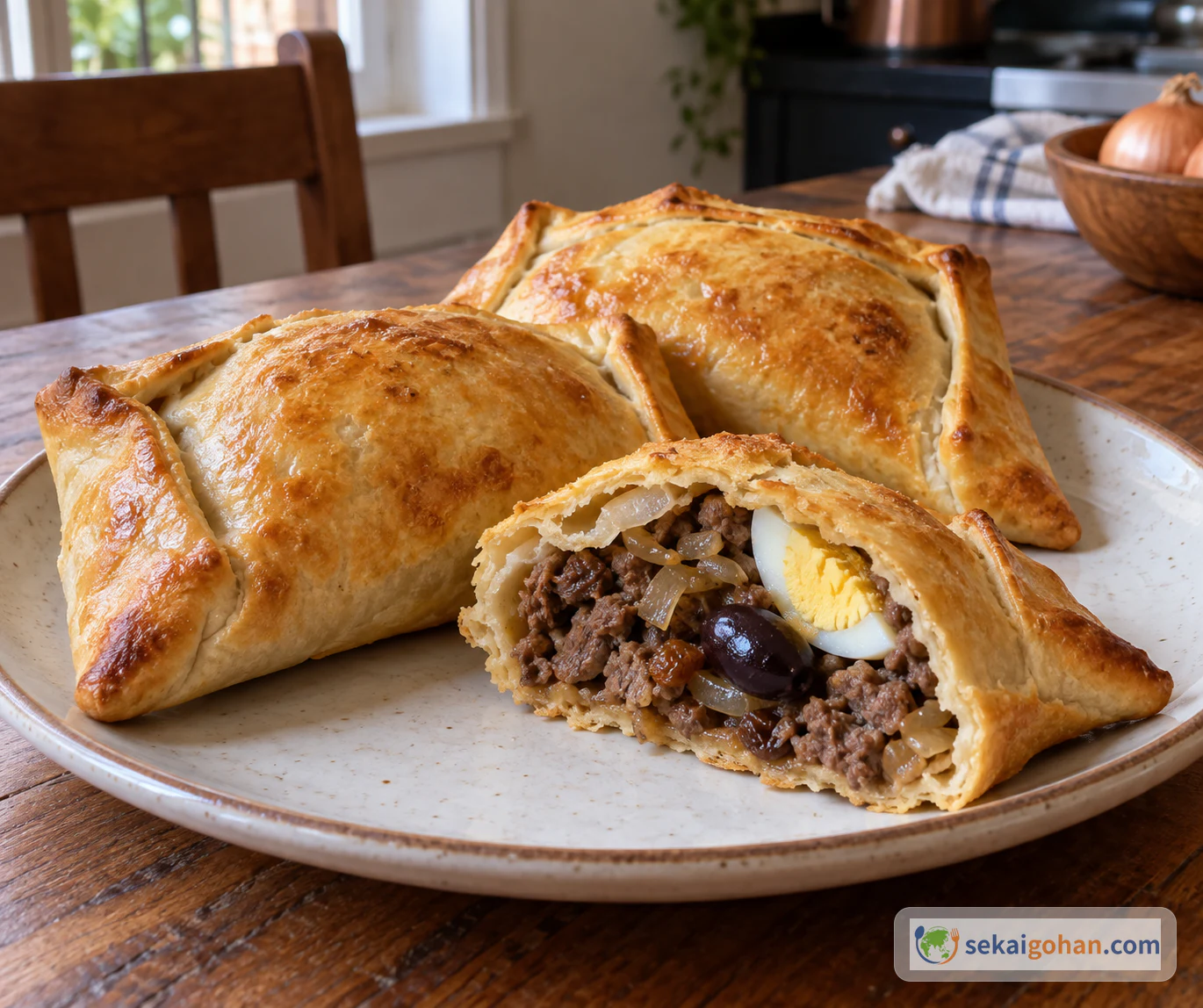
Sauté onions in the evening kitchen and the smell reaches your stomach first. In go coarsely mashed corn, eggs, milk, and white cheese, and before the bowl has even seen the oven it already smells like a South American table. As it bakes, the edges slowly set and the top puffs up golden, and you'll want to sneak a taste of just the burnt bits of cheese. That is chipa guasu, Paraguay's much-loved savory corn and cheese cake: sweet kernels of corn throughout, with the saltiness of cheese hitting here and there.

Chipa Guasu in Paraguay
Chipa guasu (chipa guasu / chipa guazu) gets its name from Guaraní, where guasu means "big." Small round chipa are rolled by hand, but this one is baked large in a baking dish and cut into pieces at the table. It is less a bread than something between cornbread and a gratin.

Guaraní corn and cattle-country dairy
Corn and cassava come up again and again in Paraguayan cooking: chipa, mbejú, sopa paraguaya, bori bori. In each, flour and starch sit at the center of the meal. Chipa guasu belongs to this family. With corn, eggs, milk, and cheese in one dish, the Indigenous grain culture and the dairy that spread after colonial times meet in the same baking dish.
Common formulas use 2.25 lb (1 kg) corn kernels, onion, around 4 eggs, milk, oil or lard, and Queso Py (queso Paraguay). The corn is mixed with milk, then sautéed onion, cheese, and eggs go in, and the batter bakes at 350–400°F (180–200 °C) for 45–60 minutes. Simple, but it all depends on balancing three things: the water in the corn, the support of the eggs, and the saltiness of the cheese.

In Paraguay it is often placed beside asado, where it acts as a side that catches the meat juices. Eaten in the morning with coffee or mate it is a light meal, and set beside a hearty soup it can be a staple. It is a savory baked corn dish that supports the table.
How it differs from sopa paraguaya and cachapa
The names of these dishes sound alike, which trips up home cooks. Sopa paraguaya is a moist cheese bread made with corn flour, while chipa guasu is made from mashed fresh, frozen, or canned corn kernels. Venezuelan cachapa also uses kernels, but it is a thin skillet pancake with cheese folded in.
| Dish | Main ingredients | Texture | Ease of making outside Paraguay |
|---|---|---|---|
| Chipa guasu | Corn kernels, cheese, eggs, milk, onion | Grainy and moist-sweet | Can be made with frozen corn but needs water management |
| Sopa paraguaya | Corn flour, cheese, eggs, milk, onion | Closer to cornbread, easy to cut | Stable if you have fine-ground cornmeal |
| Cachapa | Corn kernels, eggs, a little flour, cheese | Skillet-cooked pancake | Easy if made small, but hard to flip |
| Arepa | Masarepa, water, salt | Crisp-outside, soft-inside staple bread | Needs a special flour but the formula is simple |
Knowing the differences makes shopping easier. For chipa guasu, head to the frozen corn aisle rather than the flour aisle; for sopa paraguaya, look for cornmeal; for arepas, order masarepa. These dishes look alike, but each starts from a different ingredient.
Ingredients: a home version of chipa guasu with frozen corn

For a first attempt, use frozen corn. Fresh corn has good aroma but varies by season and ear. Canned corn is easy to buy but holds a lot of water, and its sugar and salt differ by product. Thaw and drain frozen corn before use so the sweetness and water are easier to predict.
This recipe uses eggs and dairy. Corn itself is not wheat, but the production lines of frozen corn and cheese and the labeling of baking powder differ by product. If you have restrictions on wheat, dairy, or eggs, be sure to check the allergen label on the package.
Choosing the corn
| Type | Who it suits | Prep | Result |
|---|---|---|---|
| Frozen corn | First-timers | Thaw and pat dry | Sweetness is stable and the grains are easy to keep |
| Fresh corn | Those who want aroma in summer | Cut off the kernels with a knife and use the juice left on the cob too | Strong aroma and a bake a notch deeper |
| Canned corn | Those who want to make it from the pantry | Rest in a colander 10 minutes and cut the milk | Soft and leaning moist |
Cheese substitution guide
| Local ingredient | Substitute | How to use |
|---|---|---|
| Queso Paraguay | Mozzarella + a little feta | Supply stretch and saltiness separately |
| Queso fresco | Cottage cheese + grated hard cheese | Keep crumbly lumps |
| Criollo-type cheese | String cheese + cream cheese | Gives stretch and dairy richness |
Made with mozzarella alone, it looks good but the flavor blurs a little. Queso Paraguay is hard to find, so mixing a well-stretching cheese with a salty cheese is more realistic. When using feta the salt is strong, so reduce the overall salt a little.
Corn and cheese decide the flavor. Having frozen corn, feta, and a baking dish ready lets you bake on the day the mood strikes.
Buy frozen corn, eggs, milk, mozzarella, and onion at the supermarket and add only feta or grated hard cheese. In fresh corn season, replacing half the frozen corn with fresh strengthens the aroma.
Choosing Corn and Cheese for Chipa Guasu
This home version uses supermarket ingredients in place of queso Paraguay and choclo (young corn). Frozen corn is the easiest to handle, but it releases more water on thawing than you'd expect. Drain it in a colander, then press it lightly with paper towels. Canned corn works too, but it is sweeter and wetter, so start with ¼ cup (80 ml) of milk.
For the cheese, combining mozzarella with a salty cheese gets you closer than hunting for queso Paraguay. Mozzarella alone has less saltiness and dairy strength, so mozzarella brings stretch and richness while a little feta, grated hard cheese, string cheese, or cottage cheese makes up the salt. Don't melt the cheese in completely. Small lumps give you something to bite into.
Oil or lard does more than add richness: it binds the corn and eggs smoothly, and cutting it back a lot leaves the cake dry once cold. If you want it lighter, swap part of the cheese for cottage cheese instead of cutting the oil.
Method: bake it set and fluffy without making it watery
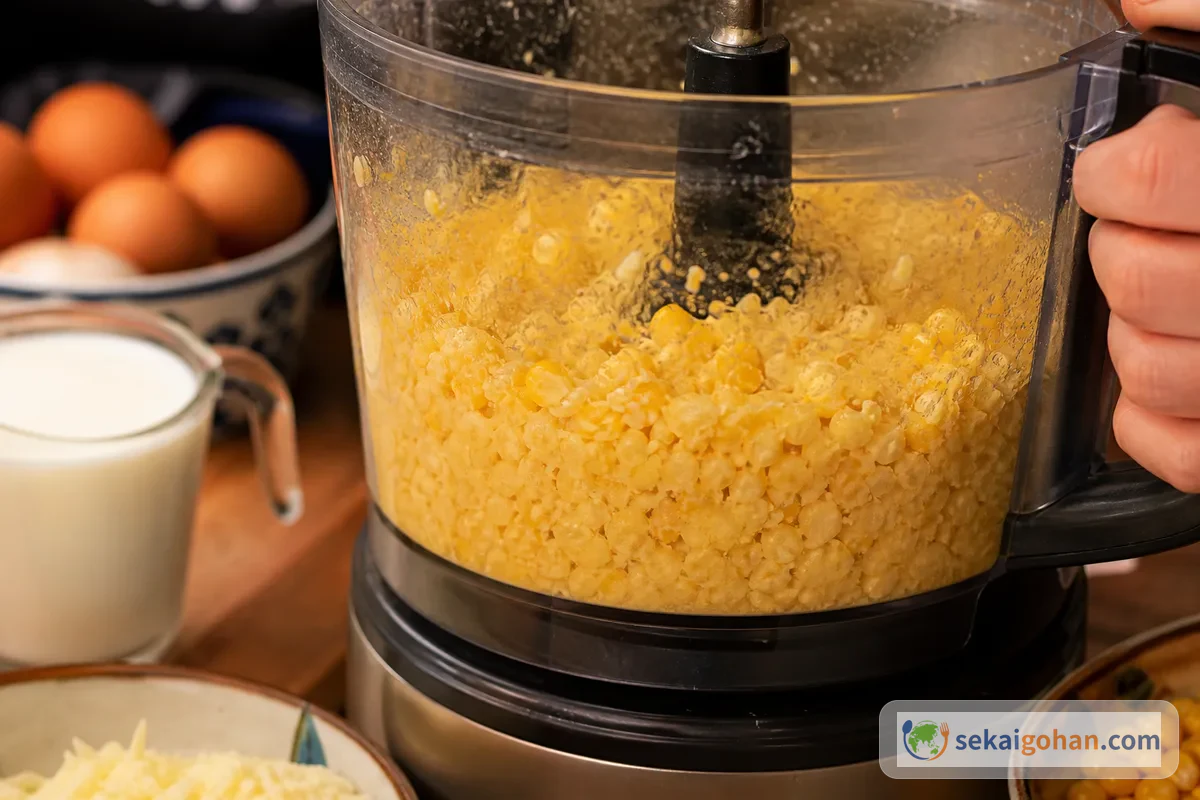
Chipa guasu looks like just mix and bake. But the water in frozen corn, how far the onion is cooked, and how the cheese is mixed change the texture. Do not make the batter too smooth, do not burn the onion, and rest it a little after baking. With these three, it cuts neatly.
If the center still jiggles a lot after 45 minutes, there is too much water from the corn or canned corn. Lower the temperature to 350°F (170 °C), cover with aluminum foil, and add 10 minutes. If only the surface burns and the center is liquid, reduce the milk by 30–40 ml next time.
Common Chipa Guasu Problems and Fixes

Chipa guasu usually goes wrong in one of three ways: watery, crumbly, or bland. Each has a different cause, so work out which one you have before reaching for flour to cover it up.
When it is watery
Water from frozen or canned corn, or too much milk, is the usual culprit. If you add milk by feel, the way you would with fresh local corn, the batter turns loose. If water seeps out when you cut it, next time mash only part of the corn coarsely and stir the rest in as whole kernels. A full puree spreads the water through everything and loosens the center. Letting the cake rest a little after baking before you cut it also helps.

When it is crumbly
Overbaking, too little oil, or too little cheese makes it crumbly. Chipa guasu is a moister batter than cornbread, so once the surface is well browned, leave the center alone. It should still be a little moist when you cut it.
When it is bland
Before adding more salt, add one of the salty cheeses above. Salt alone makes the whole batter salty and takes away those bursts of cheese.
Chipa guasu is sweet from the corn, not from sugar. Make the first batch without sugar. If the corn is not sweet, add up to 1 tsp; more burns easily and pushes it from a meal toward a sweet. Served with meat, favor saltiness and toasty flavor over sweetness so you do not tire of it.
Serving and Storing Chipa Guasu

Try your first piece fresh from the oven, with nothing on it. The top is toasty, the center moist, and the sweet corn, salty cheese, and onion all come through. Add meat or a salad and you have a full table.
With grilled meat
On days you grill meat, rice or bread alone can feel a little thin. Chipa guasu softens the fat with the sweetness of corn, and the cheese's saltiness stands up to the smoky meat. In Paraguay and northeastern Argentina it sits beside grilled meat, sausages, salad, and mate, a warm side you pick up by hand.
For an asado-style table, grill beef or sausages and set out a tomato and onion salad, chipa guasu, and mate or beer. When the meat is fatty, a tangy salad helps. To lean Brazilian, add churrasco, vinagrete, and farofa, so meat, acidity, flour, and corn each have their role. To lean Argentine, go with chimichurri.
With soup
Beside a hearty chicken soup, bean soup, or tomato stew, it is more satisfying than bread, and it soaks up the liquid right to the end of the plate. It is a little heavy beside a tangy soup like Ecuadorian encebollado, but goes well with beef or bean stews.
Storage and reheating

Chipa guasu makes ahead well, but with all that moisture and dairy it shouldn't sit out long. Cool it slightly after baking and refrigerate within 2 hours.
| Storage | Guide | Reheating |
|---|---|---|
| Refrigerated | 3 days | 5–7 minutes in a toaster oven. Aluminum foil if it threatens to burn |
| Frozen | 3 weeks | Wrap each piece in plastic, thaw naturally, then toaster oven |
| Lunchbox | Same day | Cool completely before packing and use an ice pack |
A microwave warms it but won't bring back the toasty surface. Give it 20–30 seconds, then finish in a toaster oven so the outside crisps slightly while the center stays soft. To freeze, wrap each piece in plastic and put them in a freezer bag. A large block takes long to thaw and the center tends to go watery. For a lunchbox, move a piece to the refrigerator the night before so morning reheating goes faster. Cooled chipa guasu also firms up at the cut and is easier to hold. Since it is full of cheese, use an ice pack in summer.
The next day
The next morning, warm a piece in a toaster and spread on a little butter to bring the aroma back. Or cut it smaller, brown it in a skillet, and serve it with a fried egg and tomato for breakfast. It is also good warmed with leftover grilled meat, and small cubes in a salad make a moister stand-in for croutons.
More South American corn dishes
With the same ingredients you can move on to sopa paraguaya, which is about the moistness of flour and cheese where chipa guasu is about the sweetness of the kernels. Compare arepas as a staple bread, cachapa for its sweet-salty skillet flavor, and Chile's pastel de choclo. It's the same corn, but each country gives it a different role at the table.
Frequently asked questions
Is chipa guasu gluten-free?
The basic ingredients are corn, eggs, dairy, and onion, so no wheat flour is used. But the production lines of baking powder, frozen corn, and cheese differ by product. If you avoid gluten, check the ingredient labels, and if you need fully gluten-free handling, choose a gluten-free baking powder too.
Which should I make first, this or sopa paraguaya?
If you have frozen corn, chipa guasu; if you have cornmeal, sopa paraguaya. Chipa guasu shows off the sweetness of the corn kernels, and sopa paraguaya is reliable as a flour-based dish. Both go beside meat, so together they make a good introduction to Paraguayan cooking.
Can I make it without an oven?
You can make something close with a heavy skillet and a lid. Halve the batter, pour it into a lightly oiled skillet, cook over low heat 15–18 minutes, flip, and cook another 8–10 minutes. It won't get as thick, and it browns differently than in an oven. For your first time, a baking dish in an oven or toaster oven is more reliable.
Sources
The recipe formula was checked against what Paraguayan local recipes and English-language recipes have in common, and replaced with frozen corn, mozzarella, feta, and a baking dish that are easy to get. The cultural background is not overstated and is organized as a combination of Guaraní corn culture and dairy.
Amounts take the common points of local recipes as the axis, adjusting only the water of frozen corn for the home cook. Rather than product names, the reproduction conditions of corn kernels, salty white cheese, and an unburnt onion were prioritized.
- Recetas Nestle Paraguay, Chipa Guazu, accessed 12 May 2026.
- Cocina Rica Paraguay, Chipa guasu tradicional, accessed 12 May 2026.
- Gusto TV, Paraguayan Corn and Cheese Cake (Chipa Guasu), accessed 12 May 2026.
- Comer Beber, Chipa guazu, accessed 12 May 2026.