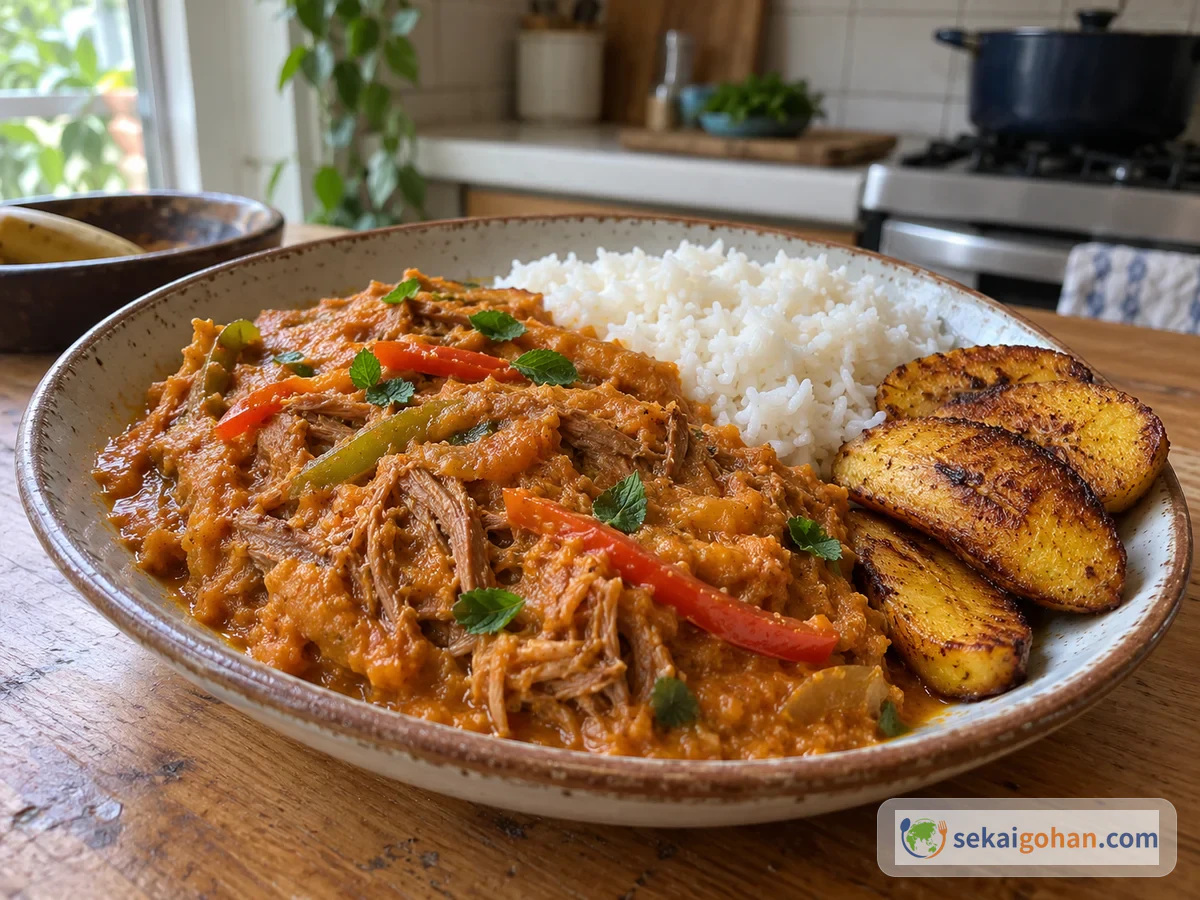
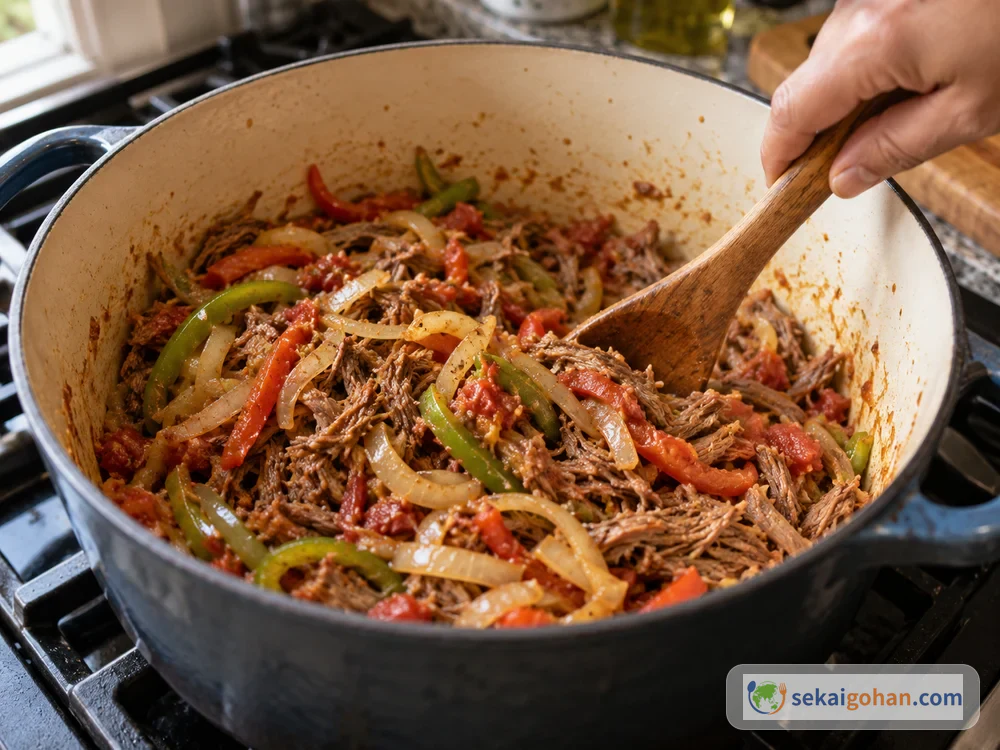
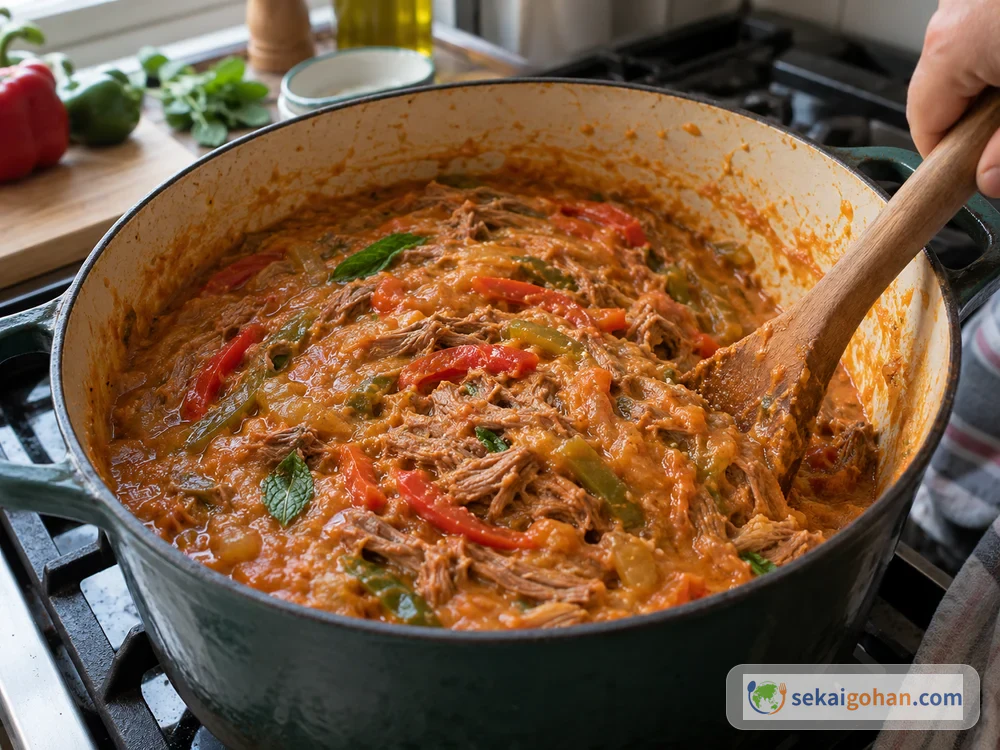
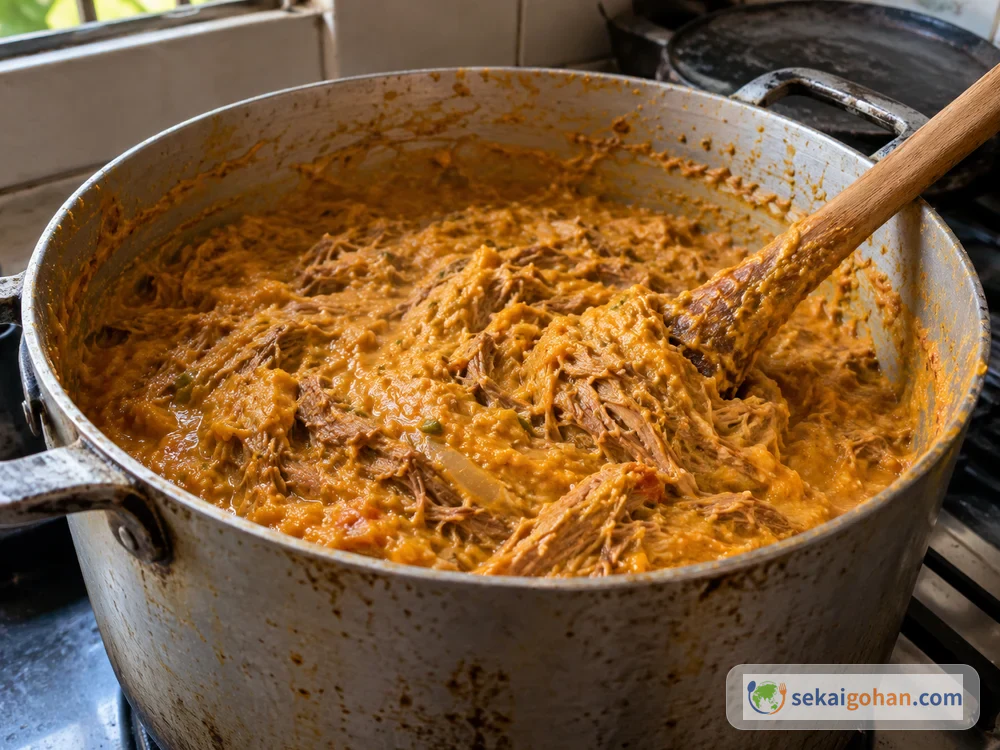
In a big pot, a thick orange stew bubbles with slow pops. Scoop from the bottom with a wooden spoon and finely shredded beef comes up clinging to corn dough, along with the green scent of mint and the sour scent of citrus. This is indio viejo, a dish as well known as gallo pinto in Nicaragua. It sits somewhere between a thick soup and a risotto: a beef broth thickened with tortilla dough, bright with citrus and mint.
Indio Viejo in Nicaraguan Cooking
In Spanish the name means "old Indian," which can give you a small start. The people of this land organized their lives around corn long before the Spanish came, and they ate it mainly as tortillas, tamales, and the stew of the "old man," indio viejo. The method of thickening with corn dough comes from those indigenous kitchens.
The filling has changed over time. The dish was originally made with goat meat, while today's indio viejo is mainly made with beef or pork, both brought to the New World by Europeans. So the pot holds both Maya and Spanish cooking.
There is a legend about the name from Ometepe Island. Two Spaniards passing through an island settlement asked what the people were eating, and one answered, "An old Indian." It was a lie told because he didn't want to share the food, and the Spaniards, put off, didn't eat it. It is a tradition, not a recorded event.
Today you'll find indio viejo at Sunday family lunches and in the big pots of festivals and weddings. On a patron saint's day, a pot like this simmers a long time over the kitchen fire.
Ingredients (serves 4)
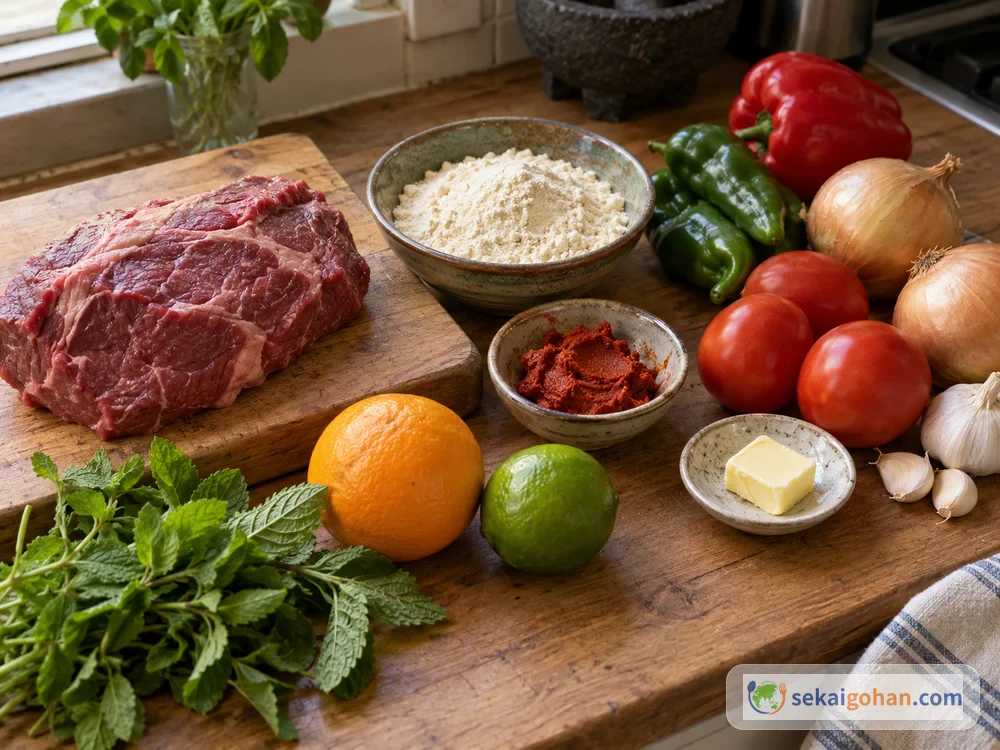
This is based on the Nicaraguan home recipe presented by the American women's support organization Together Women Rise and the recipe from Prensa Mercosur, with amounts adjusted for a home kitchen.
Naranja agria is a strongly sour orange that is hard to find in many places. Combine orange juice and lime juice in a 3 to 2 ratio to get close to the local taste, where sour comes before sweet. This is a home substitute.
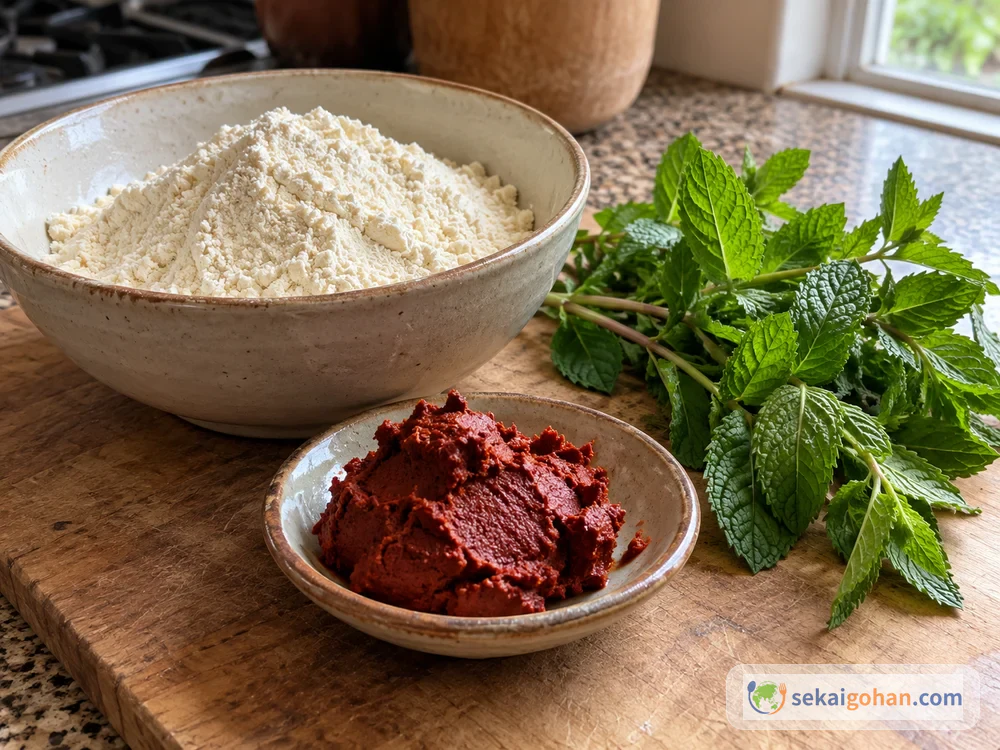
Achiote paste is a Central American seasoning made by working annatto (seeds of the achiote tree) together with spices, available at Latin American groceries and online. The orange color of the stew and its faint earthy aroma come from this paste.
Choosing the Masa and Meat for Indio Viejo
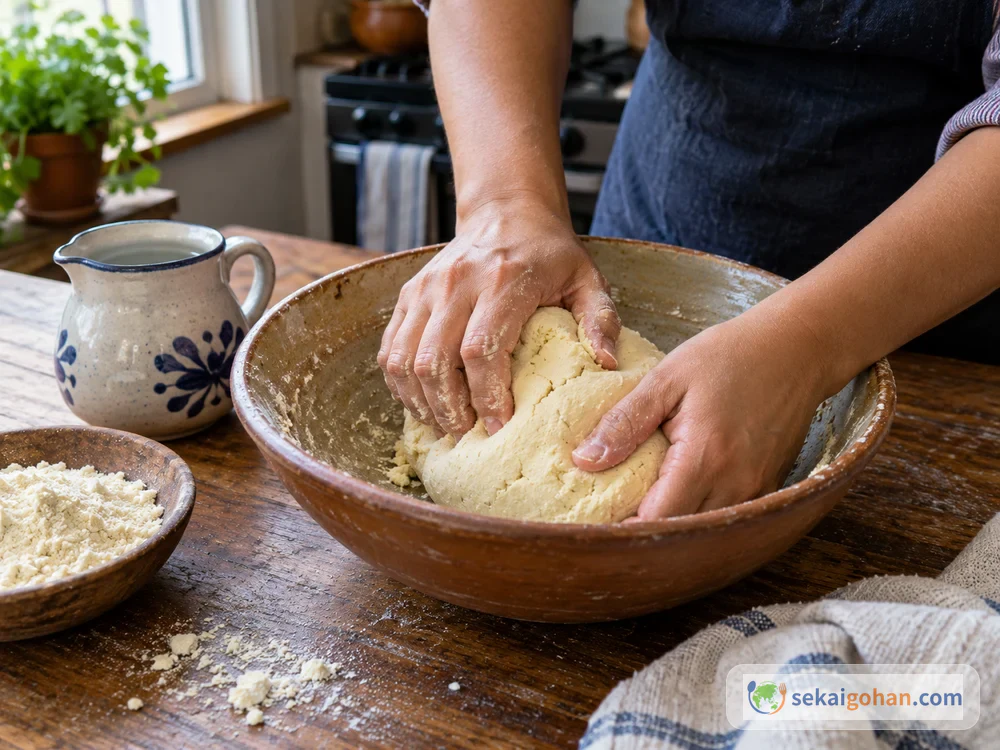
Fresh corn dough is hard to find in many places, so masa harina, familiar from Mexican cooking, mixed with water stands in for it.
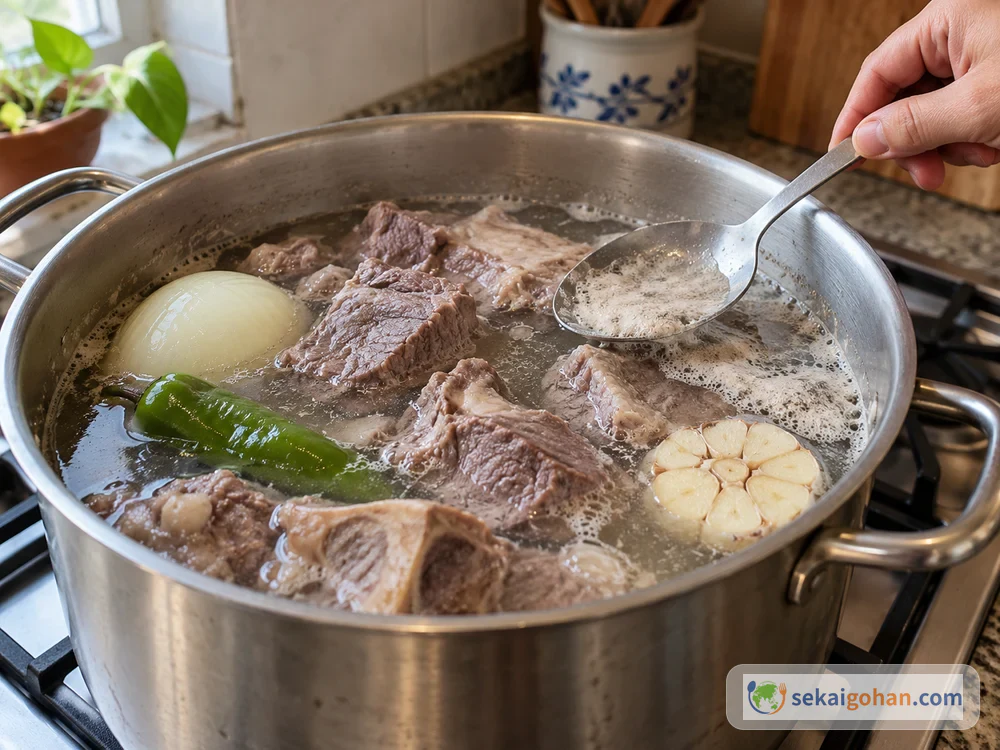
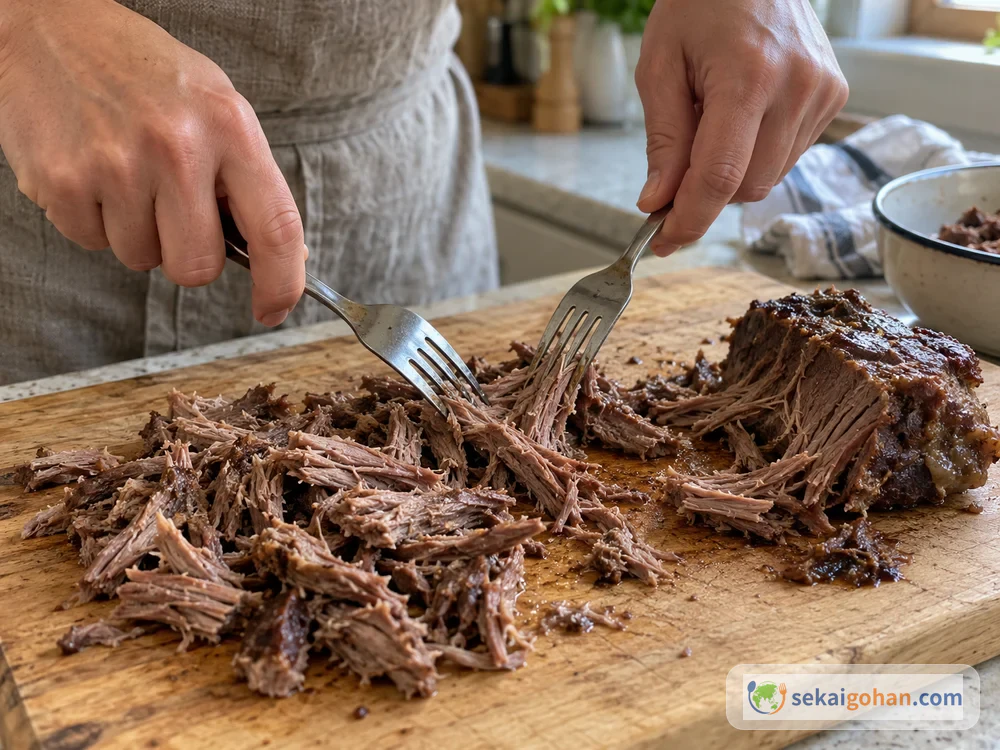
The meat doesn't need to be an expensive cut. A cheaper cut with plenty of sinew shreds finely along the grain and blends well with the corn dough. For beef, chuck or shank suits it; for pork, shoulder.
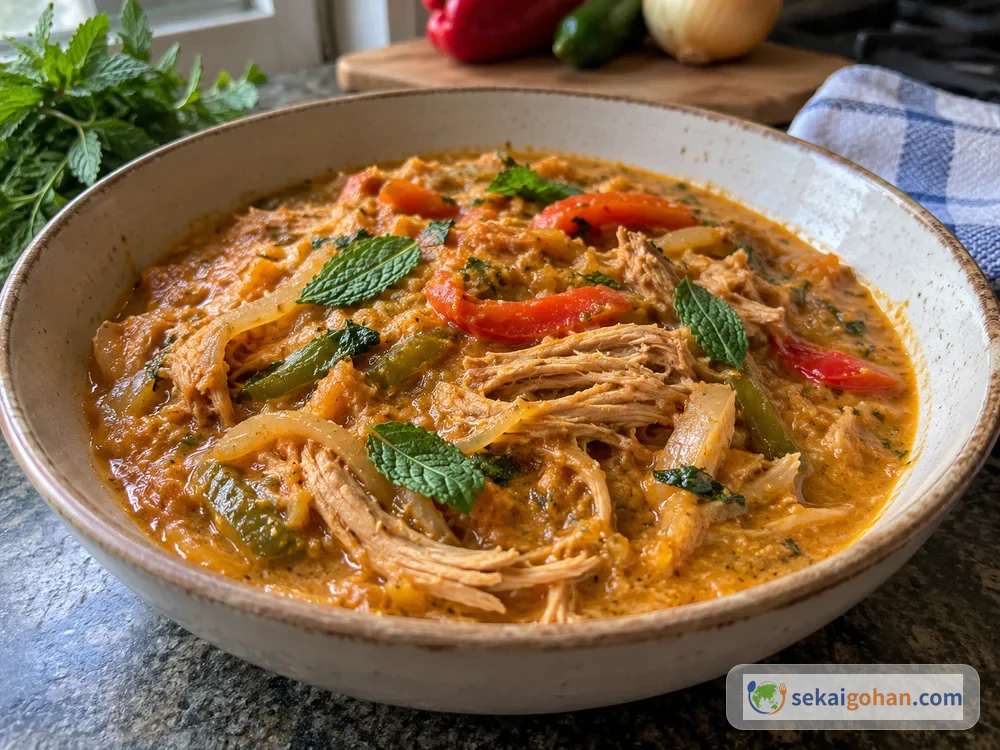
Pork shoulder or chicken also works. Simmer pork shoulder about 1 hour and chicken thighs about 30 minutes, with the aromatics as in the first step, then shred the meat.
How to Make Indio Viejo
Allow about 1 hour 30 minutes to simmer the beef until tender, and about 30 minutes to add the dough and simmer. If you cook and shred the beef the day before, the day-of work takes about 30 minutes.
A stew thickened with corn dough pops with big bubbles when it boils and spatters hot liquid. Use a long-handled wooden spoon when stirring and don't bring your face too close to the pot.
Getting the Thickness and Acidity Right
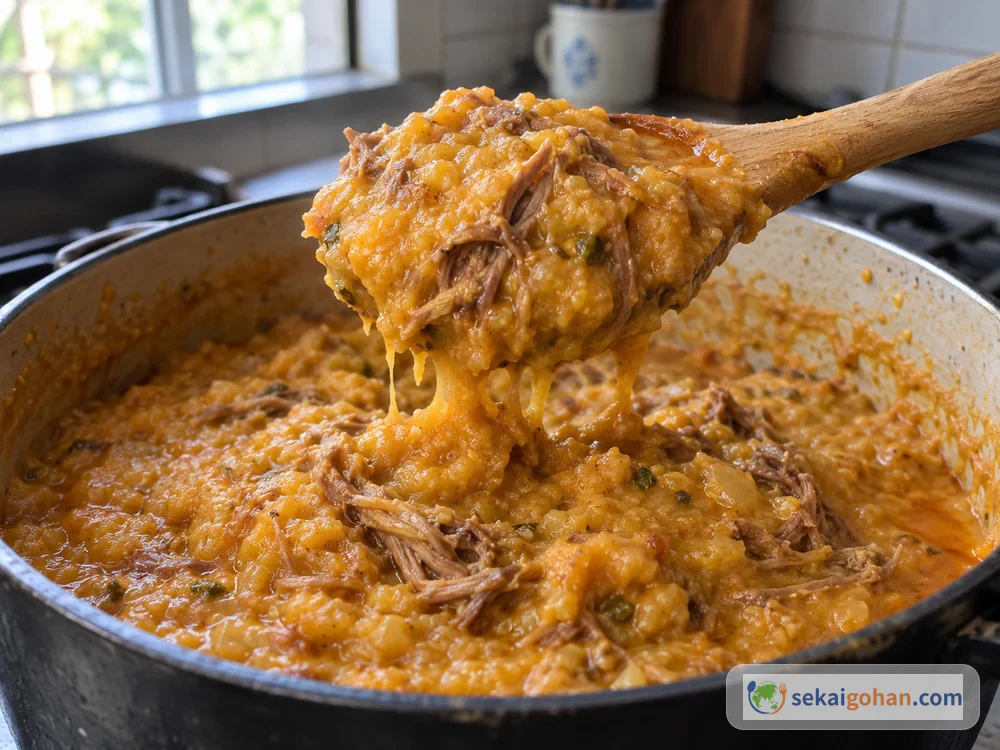
Some cooks make indio viejo so it falls thickly from a spoon, others closer to a soup. To check, draw a line across the bottom of the pot with a wooden spoon: the bottom shows for an instant. The stew firms up as it cools, so finish it a little loose when you turn off the heat.
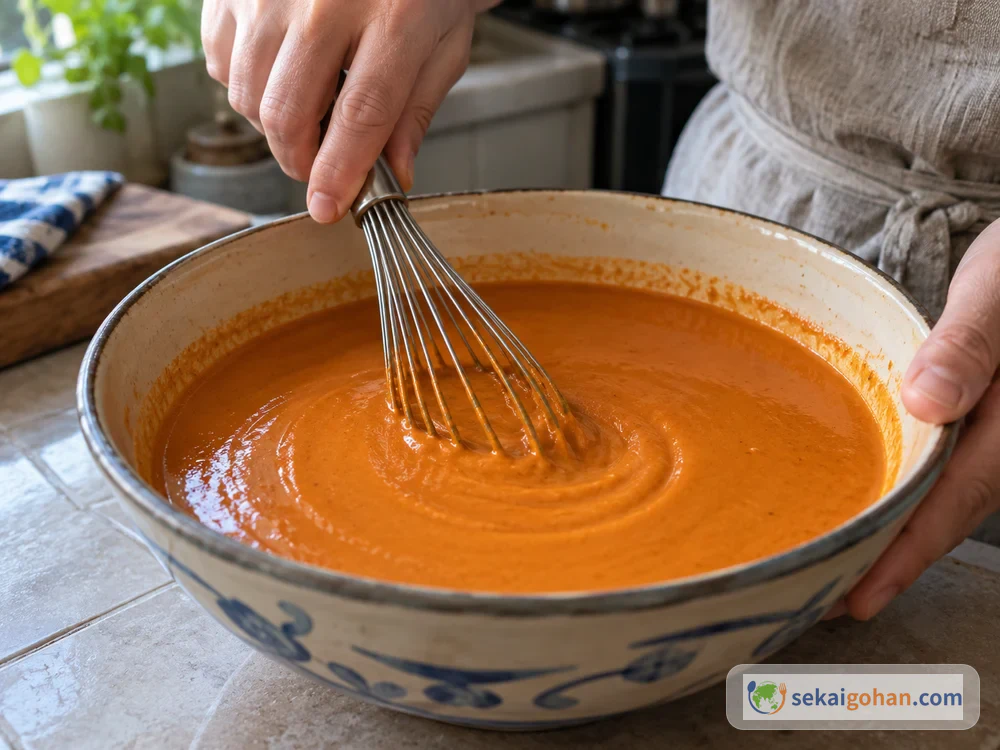
If you tear the corn dough straight into the stew, it makes lumps. Always dissolve it first in the broth to a smooth liquid before adding. If lumps do form, scoop out just those, thin them with broth, blend lightly with an immersion blender, and return them.
Mint and citrus juice lose their aroma if cooked long. Adding half to the stew and the rest just before serving keeps the green scent of mint clear.
Adjust the acidity last. If it tastes flat, add lime juice 1 tsp at a time; if it's too sour, thin it with broth.
Serving Indio Viejo
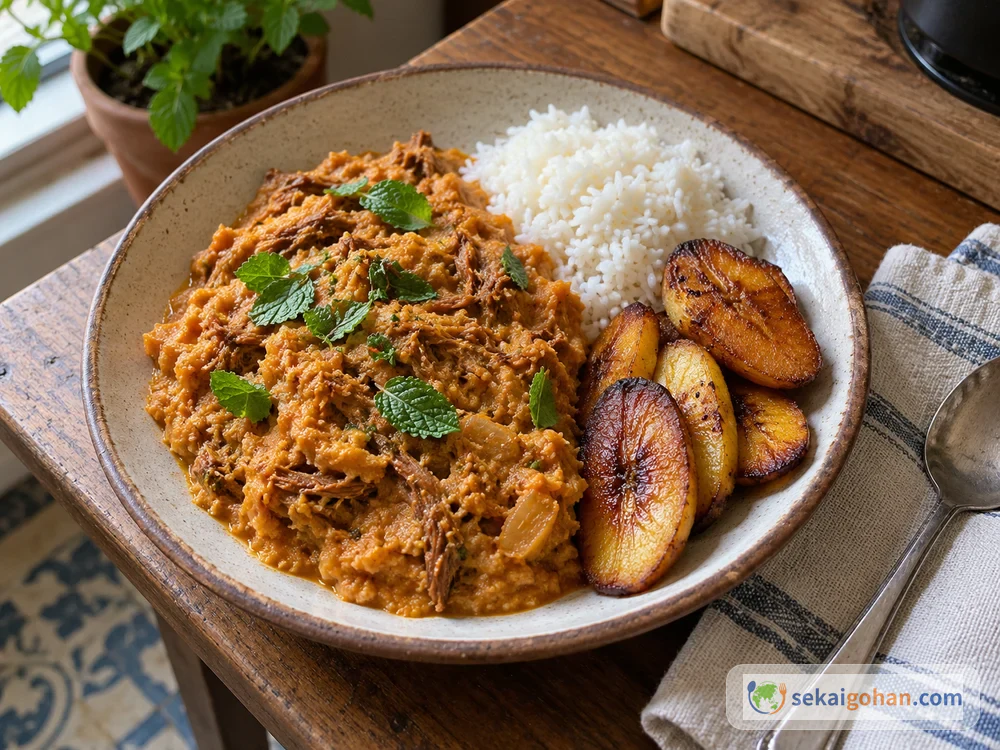
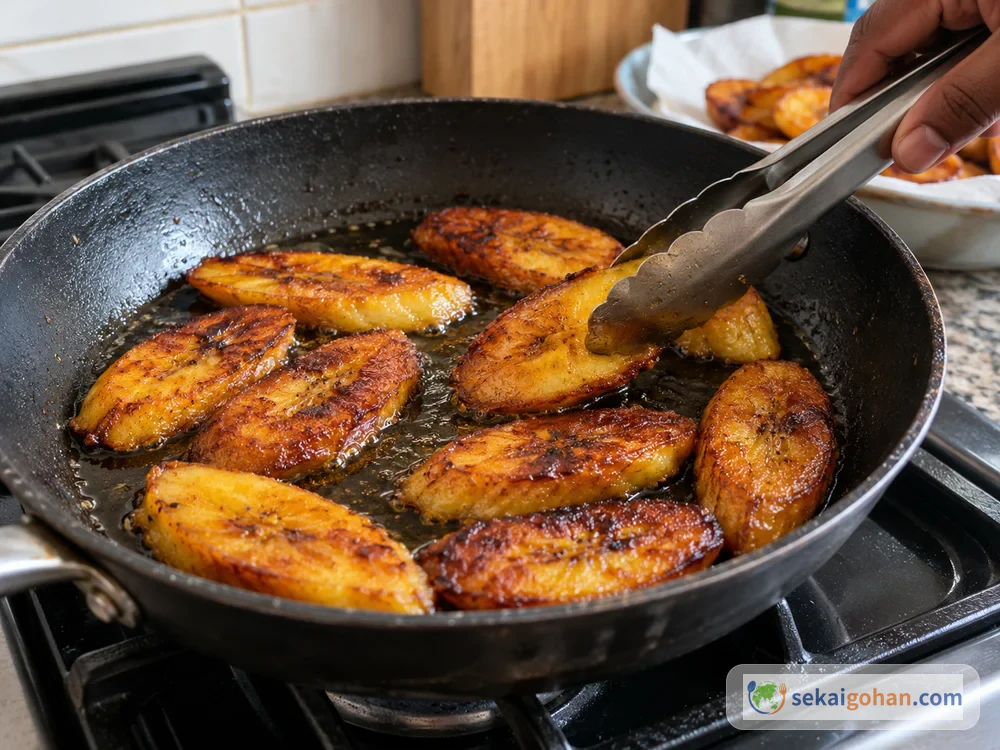
Ladle the indio viejo into a deep plate with white rice alongside, plus sweet ripe plantain, fried, or thin slices of green plantain. The local way is to coat the rice with the stew and rest your mouth with the plantain, whose sweetness goes very well with the acidity and mint. For garnish, roll a tomato peel into the shape of a rose. Some cooks also mix dry cheese or beaten egg into the dough for richness.
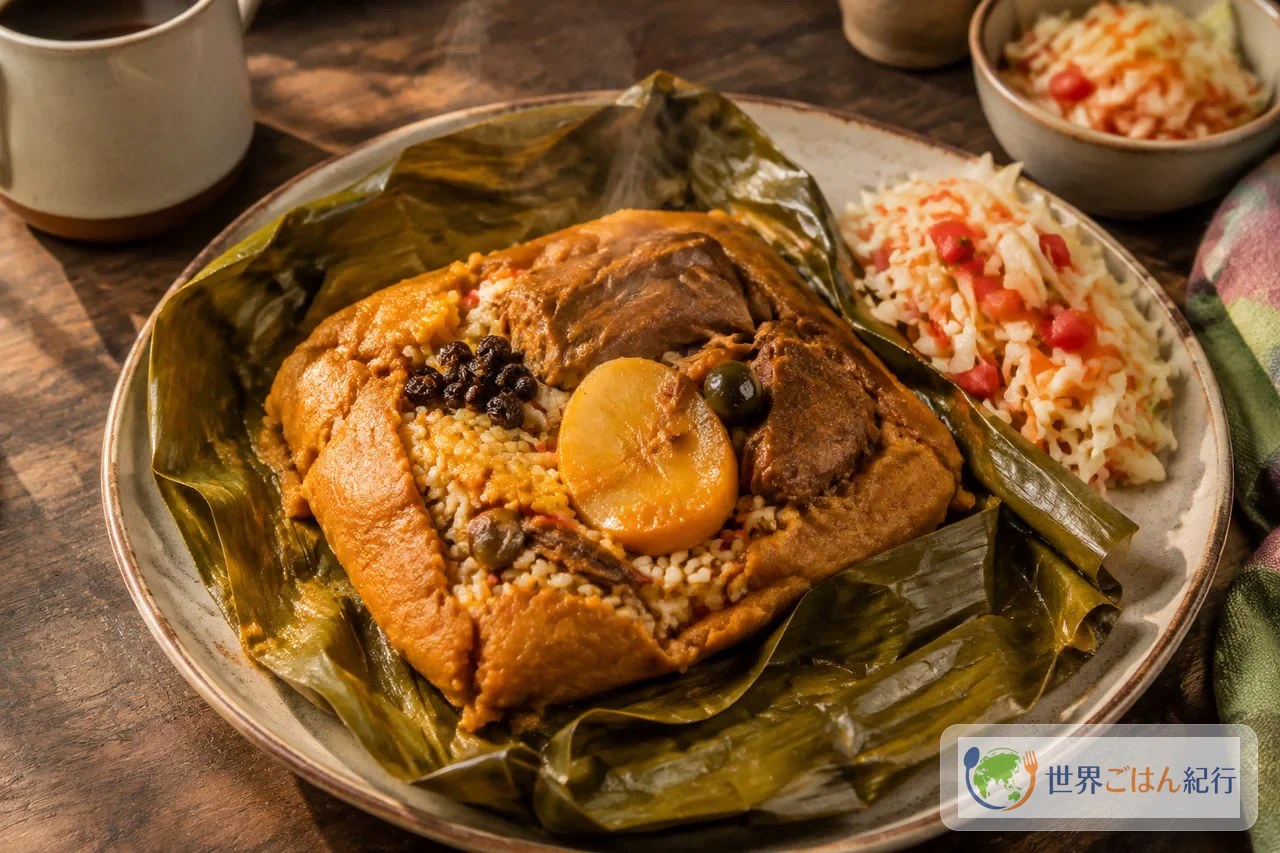
If you'd like to cook more from Nicaragua, try nacatamal (in Japanese), a celebration dish that wraps meat in corn dough and steams it in banana leaves; the dough is handled much the same way. Vaho, meat and vegetables steamed in leaves, is another fixture of the Nicaraguan weekend table.
Frequently Asked Questions
What if I don't have masa harina?
Use store-bought corn tortillas. Tear about 12 oz (340 g) into pieces, soak them in water for 1 hour, and blend smooth before use. Cornmeal or cornstarch won't give the flavor and body of corn dough.
Can I leave out the achiote paste?
Without achiote, the stew turns ocher and the aroma is subdued. Use 1 tsp annatto powder instead. Paprika adds only color, not the aroma of achiote.
Can I make it ahead?
Yes. Refrigerate it and finish it soon. When reheating, add a little broth or water and warm over low heat, stirring from the bottom, until hot in the center. A little fresh mint afterward brings back the aroma.
Is it spicy?
No. There is no chile; the acidity and the aroma of mint are the stars. If you want heat, add pickled chile or hot sauce at the table.
What allergens should I watch for?
Butter (dairy) is used for sautéing; use vegetable oil only to leave out dairy. Mixing egg or cheese into the dough adds egg and dairy.