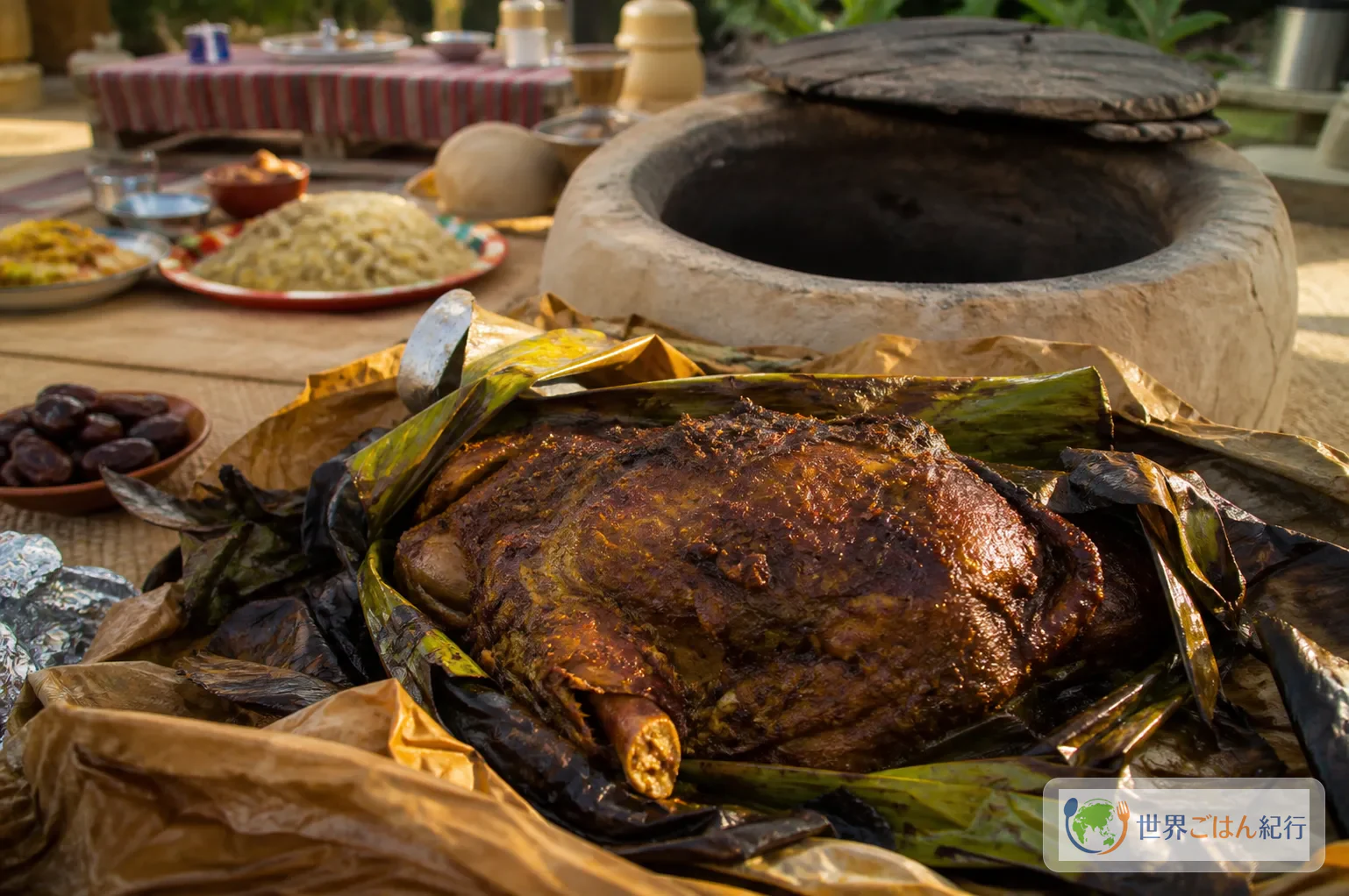
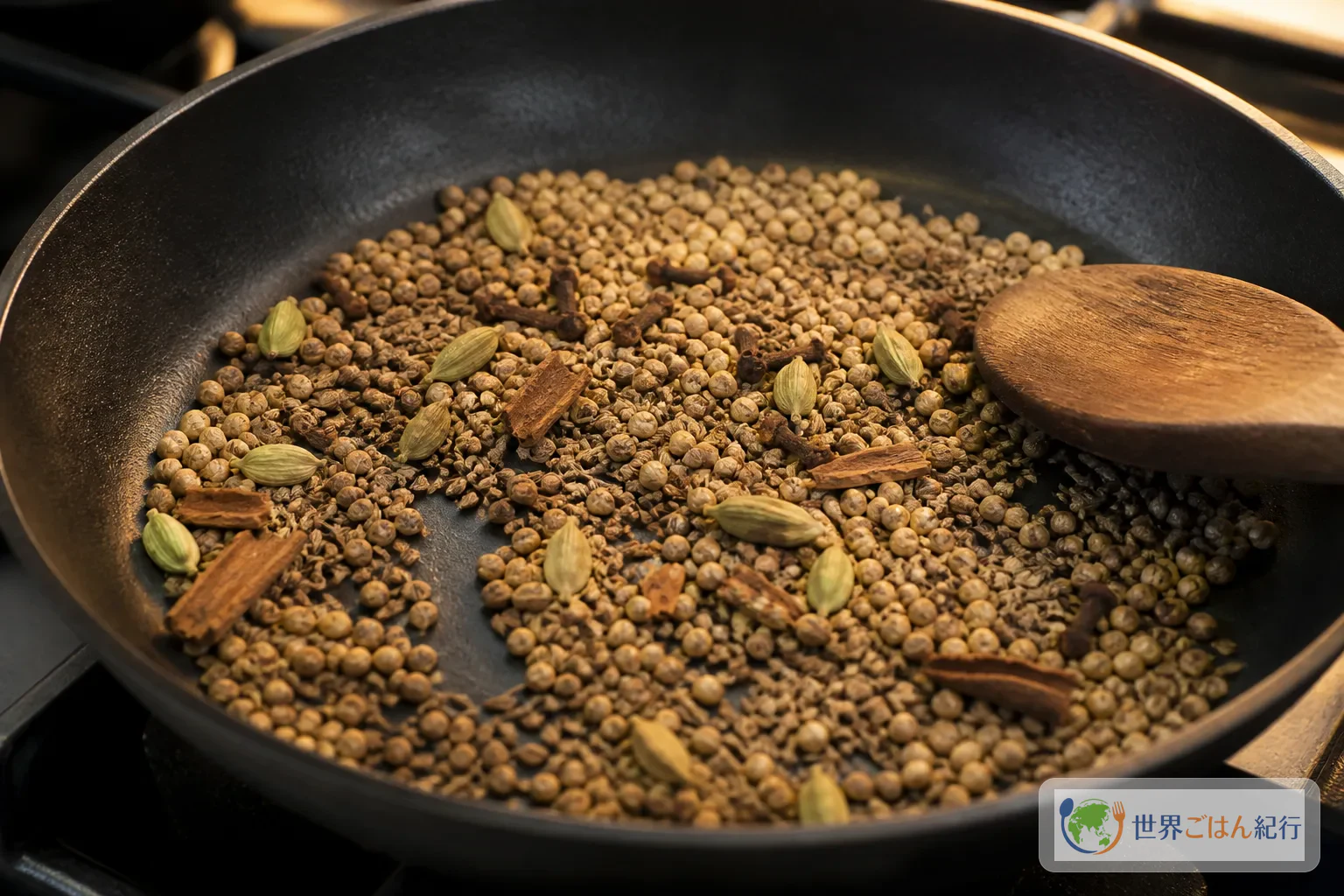
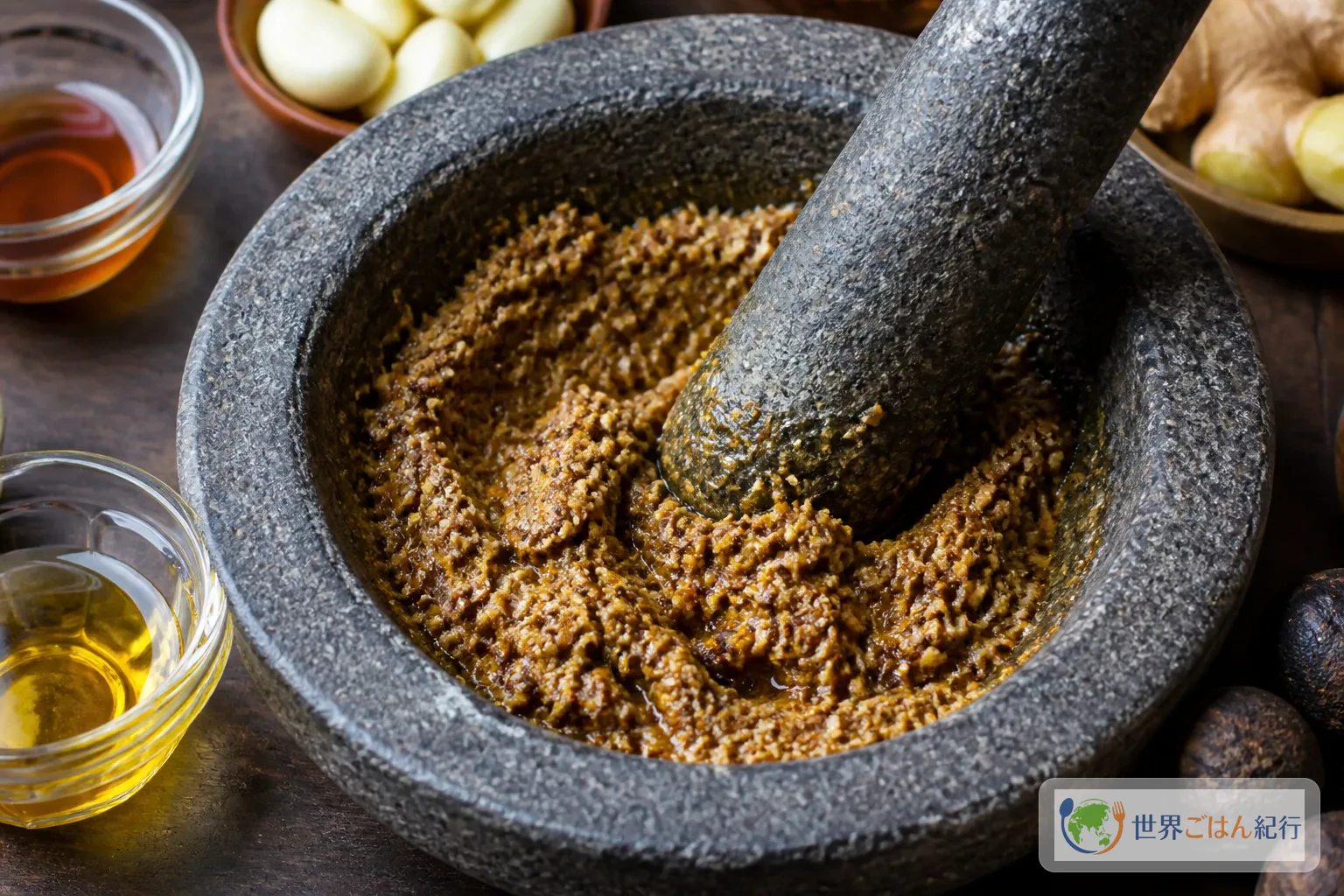
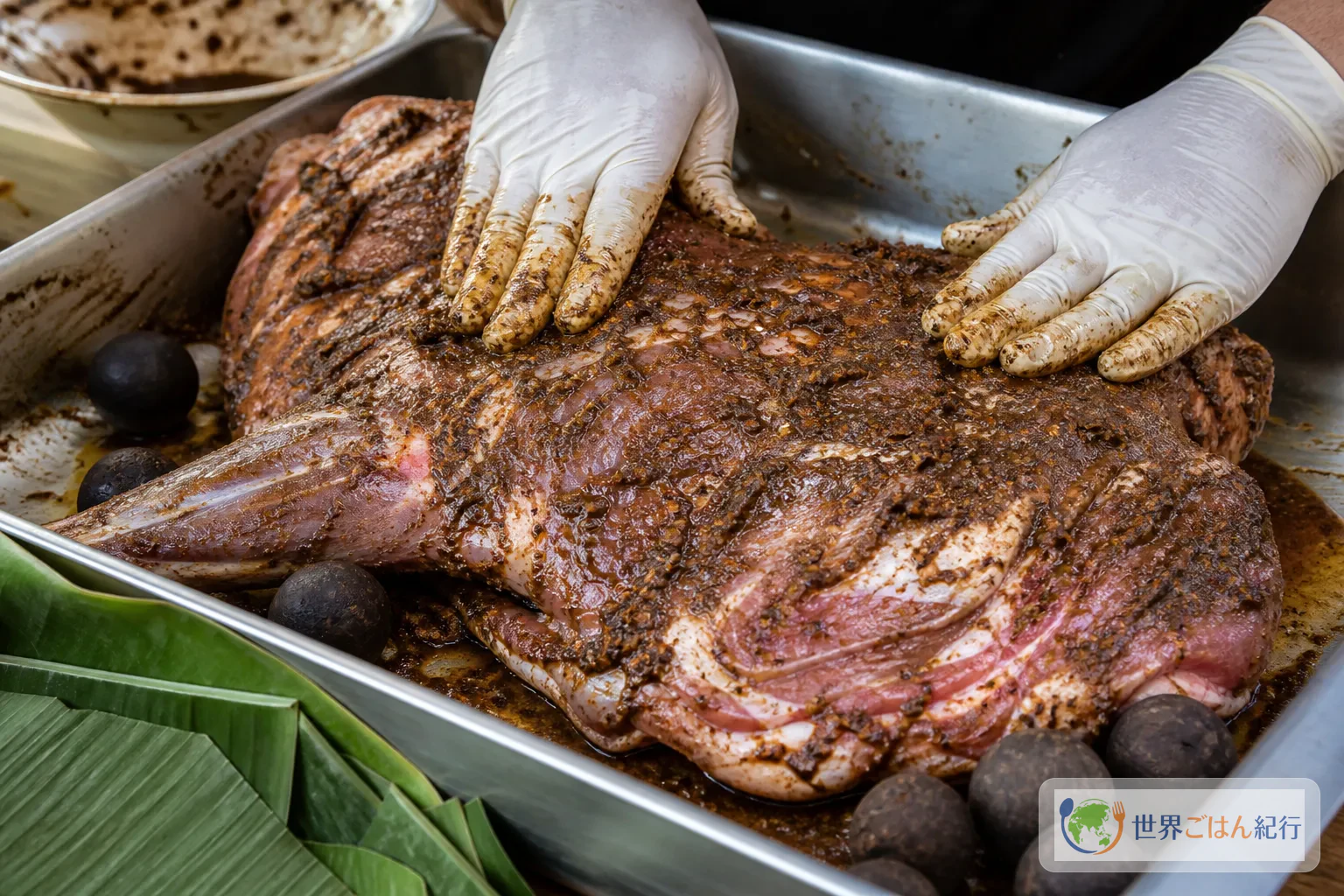
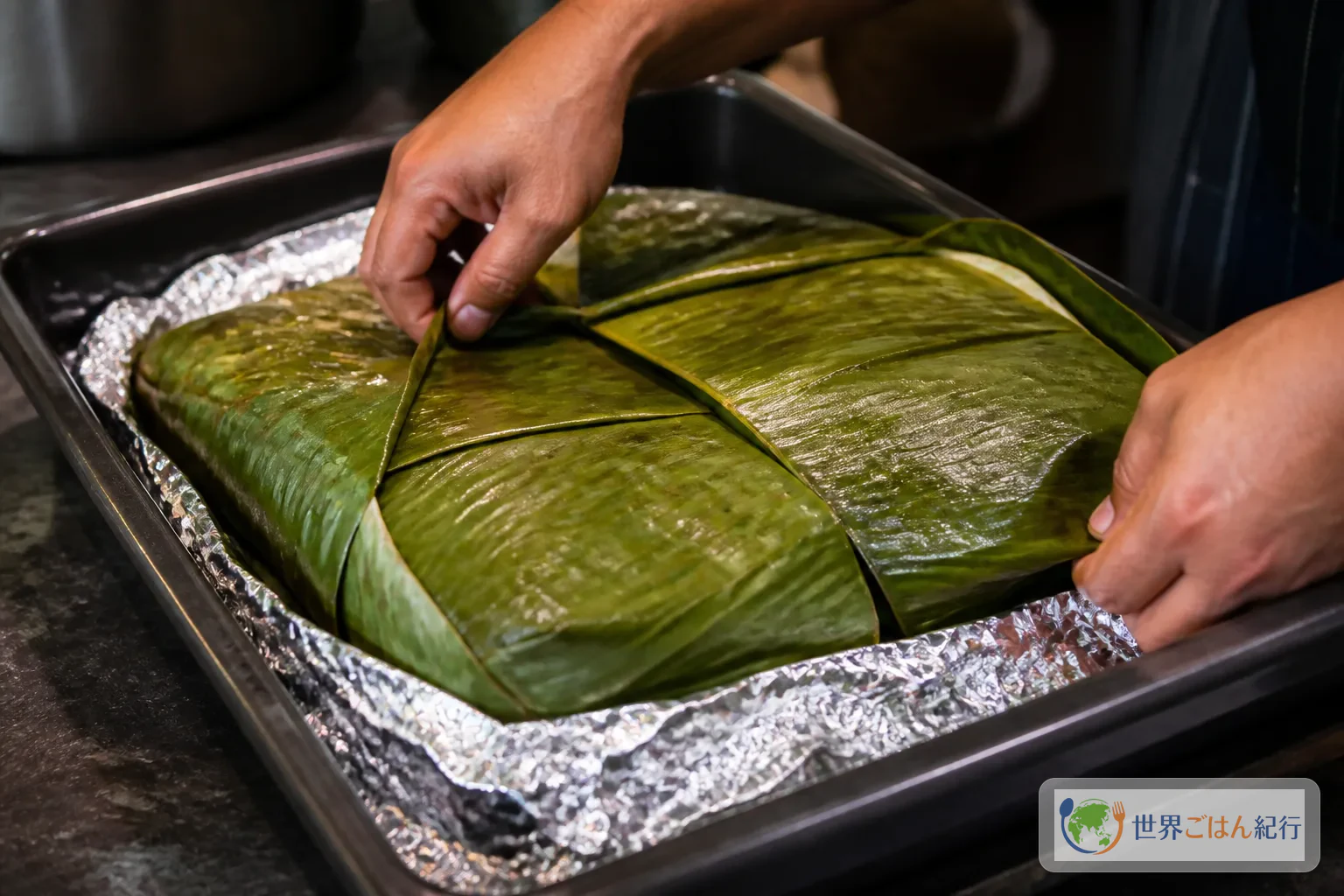
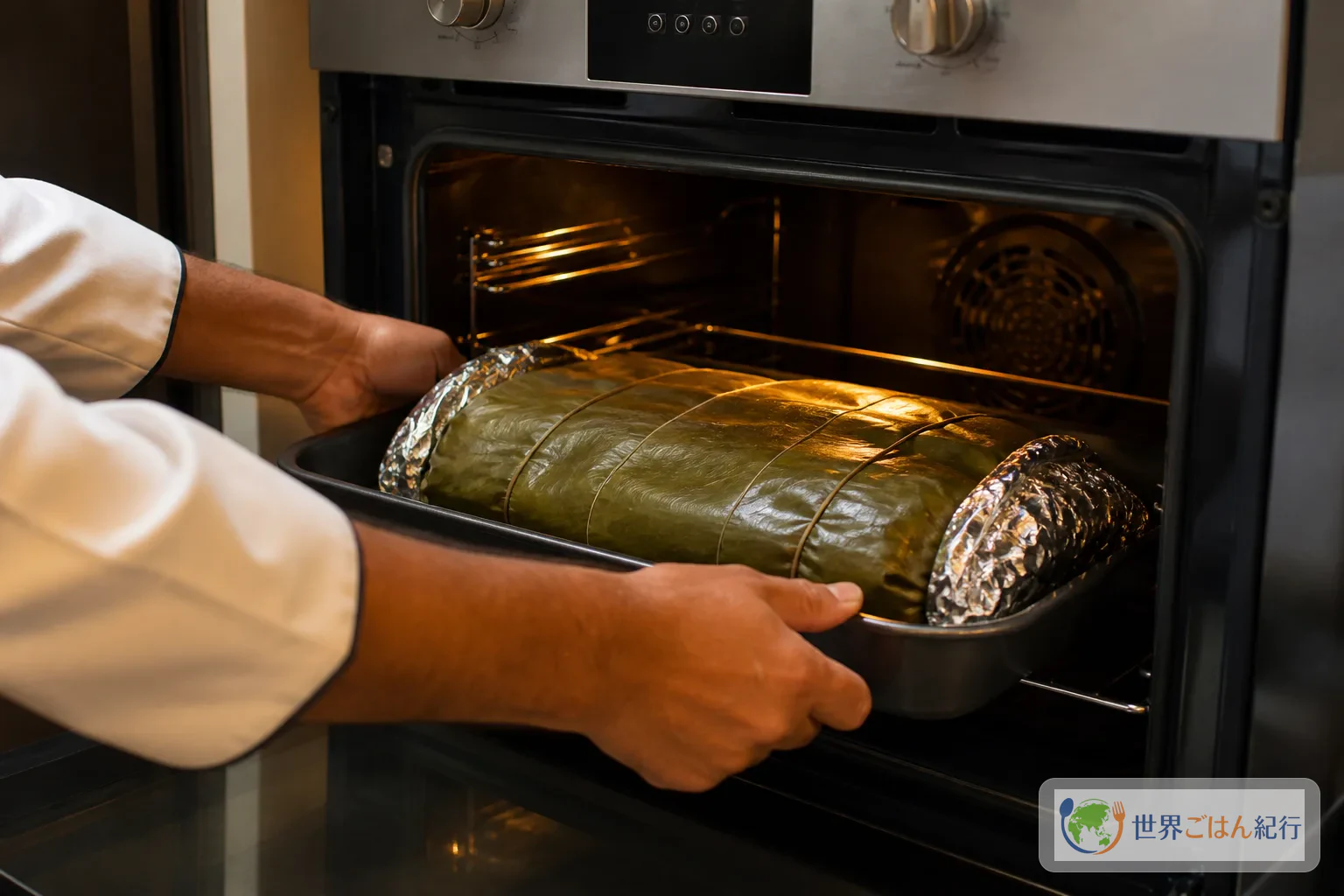
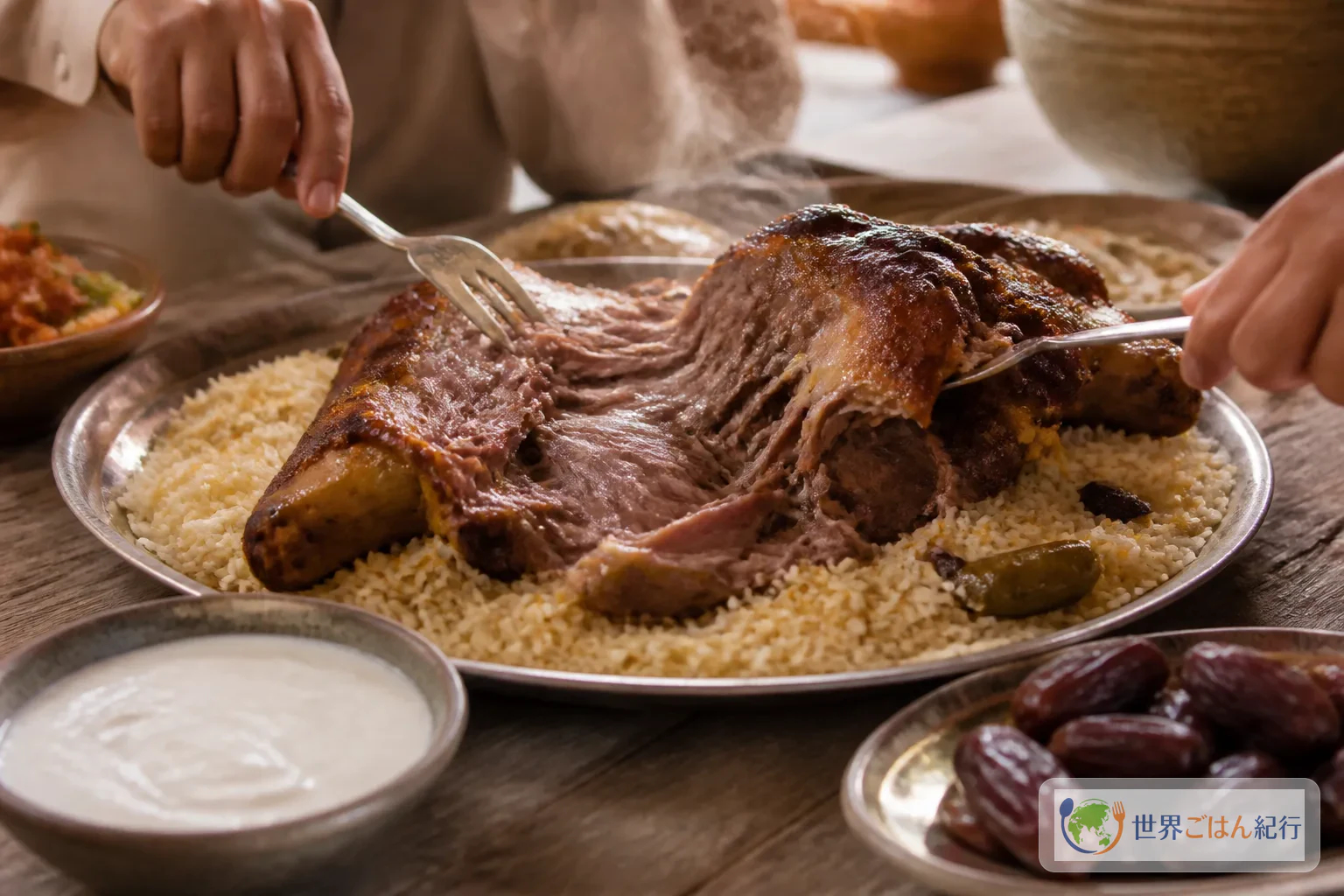
Open a parcel of shuwa and the first thing you smell isn't the lamb. It's black pepper, cardamom, cinnamon, and dried lime, rising with the steam. The meat is too tender for a knife, so you pull the fibers loose from around the bone and let a little of the juices drip over basmati rice, which soaks up that deep aroma. In Oman, shuwa is lamb, goat, or other meat marinated in spices and acid, wrapped in leaves and palm fiber, and cooked for a long time underground or in charcoal. This version is made in a regular oven: toast the spices without scorching them, go easy on the dried lime, and wrap the meat tightly to hold in moisture.
Shuwa in Oman
Shuwa is festival food, eaten with family and community on days such as Eid. A large quantity of meat is rubbed with spices, wrapped in leaves, and put in the oven, and the long cooking time goes to preparing other dishes and food for guests. At the end, the parcel is opened and the meat moved to a big platter. That use of time is part of the dish.
The underground oven
In the local method, seasoned meat is wrapped in banana leaves or leaves called shoa, then put into a bag woven from date palm leaves and sewn shut with palm fiber. The bag goes into the hot coals of a tanour, an underground oven, which is covered with a metal lid or mud to shut out air. It cooks for 12–24 hours, or 24–48 hours. Rather than browning on the surface, the meat steams inside its parcel until it falls apart.
Regional names and styles
Households across Oman don't all make the same shuwa. In the north, many people see it as a national dish, while inland and southern regions don't all eat it as often. In parts of North and South Al Batinah it's called mashwi, and along with the name come each family's own spices, kind of meat, and time in the oven.
The heat source changes from place to place, too. Muthbe from southern Dhofar cooks meat over hot stones, which gives a different result from the underground oven. The shuwa here follows the northern and inland style: wrapped meat, cooked for a long time underground.
Oman's food also carries traces of exchange across the sea. Meat and preserved foods are central in the north and inland, while fish and coconut dishes are common along the coast. Spices arrived through Indian Ocean trade, and some dishes have links to East Africa, which is why the black pepper, clove, cardamom, cinnamon, chili, and lime in shuwa are too varied to file under a single "Middle Eastern spice."
Shuwa and other platter dishes
Omani cooking also includes machboos, where the rice carries the aroma, and coastal fish dishes. Compared with Saudi kabsa (in Japanese), shuwa puts less weight on the rice and more on giving the meat time in its parcel, then sharing its juices with the rice. Yemeni mandi also cooks meat and rice for a long time, but the heat source and the way it's served differ. Add Iraqi masgouf (in Japanese), fish cooked over heated stones or charcoal, and you can see how the use of fire shifts between meat and fish dishes even in the same region. Calling them all "Arab-style rice pilaf" misses that.
Shuwa at the table
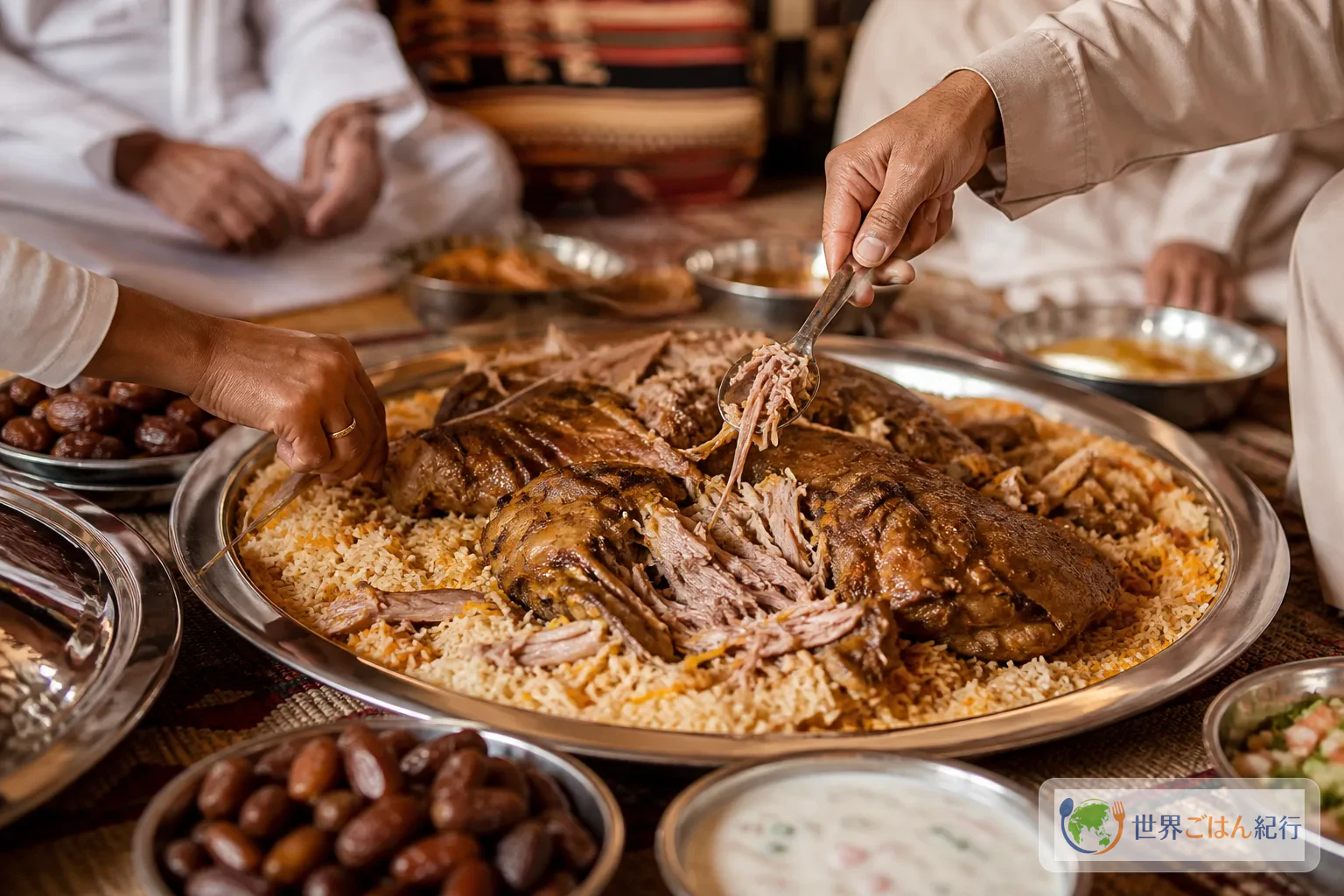
The family gathers around a big platter of meat and rice and takes a little at a time with the right hand. Coffee, fruit, and sweets are served before or after the meal, so shuwa isn't the whole festival table. Dates and coffee at the start and sweets afterward are a way of not rushing guests, much like the long roast of the meat.
Ingredients (serves 6)
1.2 kg of bone-in lamb shoulder makes 6 servings with rice and side dishes. If you can't get bone-in shoulder, use 1.5 kg of bone-in leg of lamb. Leg has less fat and connective tissue than shoulder. Check it on the same schedule as the shoulder. If it looks dry, extend 30 minutes at a time without opening the parcel.
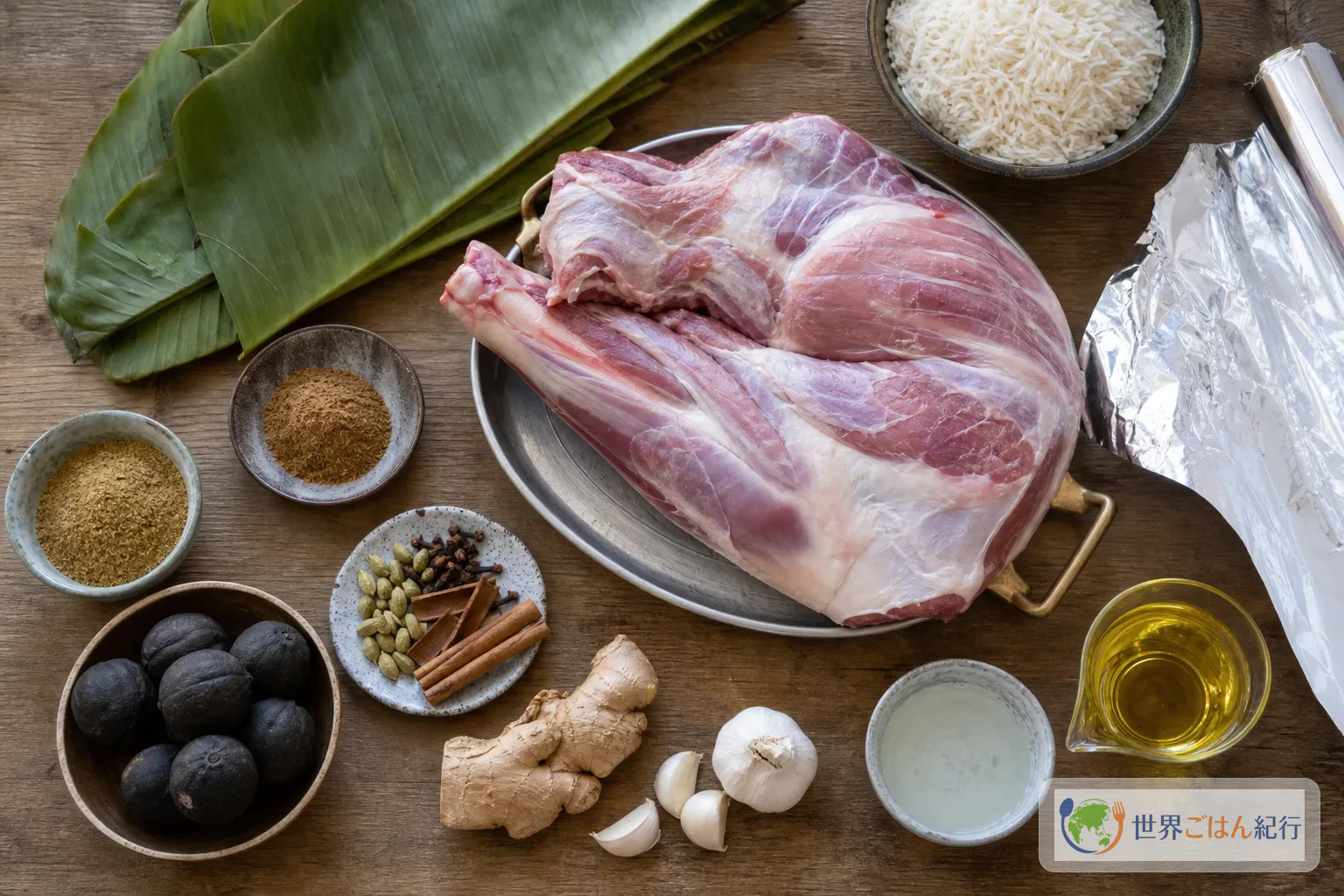
Marinate raw lamb in the refrigerator and do not leave it at room temperature for long. Because the marinade has touched raw meat, if you use what is left as a sauce, bring it to a boil first, and never serve it unheated. Do not eat the banana leaves; remove the wrapping before plating.
What is worth sourcing
Dried lime adds a dry citrus aroma and gentle bitterness that lemon juice alone cannot. Whole and powdered release their aroma differently, so with whole, pierce the surface in several places, and with powder, start at 2 tsp. If you can't find it, increase the lime juice for acidity, but the aroma of the dried peel will be lost. If you already have ground cumin, there's no need to buy more. If you buy cumin, choose one with cumin as the only ingredient, and check whether the label says ground or whole.
Toasting and grinding cumin seeds makes the aroma build more noticeably than adding ground cumin straight. For your first time, ground cumin in a stated amount keeps the teaspoon conversions in the ingredient list from drifting. If you do not plan to use cumin in other dishes and already have a tool for grinding whole spices, you do not have to buy anything; use what you have.
You don't need a mortar. Crush the spices in a bag with a rolling pin. If you often crack black pepper and cardamom pods and bring them into a paste with vinegar and oil, a heavy granite mortar helps. If you buy one, check the storage space, the inner diameter, and the pestle length first. If you already have a sturdy mortar, use it.
Shuwa ingredients and home-oven substitutes
A home oven can't fully copy an underground-oven shuwa. The coals, the mud lid, the aroma of palm leaves, and hours outdoors won't fit inside, and you won't get that smoke and earth. Skip ingredients that fake smoke. Aim instead for a parcel where the meat stays moist and falls apart, and where the spices stand out.
| Axis that decides flavor and texture | Meaning in an underground oven | Substitute in a home kitchen |
|---|---|---|
| Sourness and spices | Carry flavor into a large mass of meat and balance the weight of fat | White vinegar, red vinegar, lime, dried lime, spice paste |
| Wrapping | Keeps the meat off direct contact with coals and earth and holds moisture | Banana leaf + parchment + aluminum foil |
| Long cooking | Sends heat to the center of thick meat and loosens the fibers | Heat the oven to 400°F (200°C), then 300°F (150°C) for about 5 hours 30 minutes |
| Eating from a platter | Festival meat shared with family and guests | Serve basmati rice, yogurt, and salad separately |
Banana leaves add a green aroma, but if you can't find them, skip the hunt. Double parchment and double foil handle the real work of steaming and tenderizing the meat; press the parchment tight against it so the steam-roasting keeps going. If you wrap in foil alone, add one more sheet of parchment inside so corners and bone tips don't poke holes. And if you do have leaves, a layer or two is plenty, since stacking many only makes the parcel hard to open.
Keep charcoal out of the oven unless the manual allows it, and leave smoked salt off the table, where it pulls the flavor away from shuwa's own aroma. What you're after is the moment you open the parcel and the spices and the sweet smell of the meat rise.
Method: don't scorch the spices, steam in the parcel
With shuwa, the flavor depends on more than baking time. A few minutes of toasting the spices and the way you close the parcel matter too. Don't rely only on the oven display. Check the aroma, the surface of the meat, and the seal of the parcel, in that order.
Fixing tough, dry, or bitter shuwa
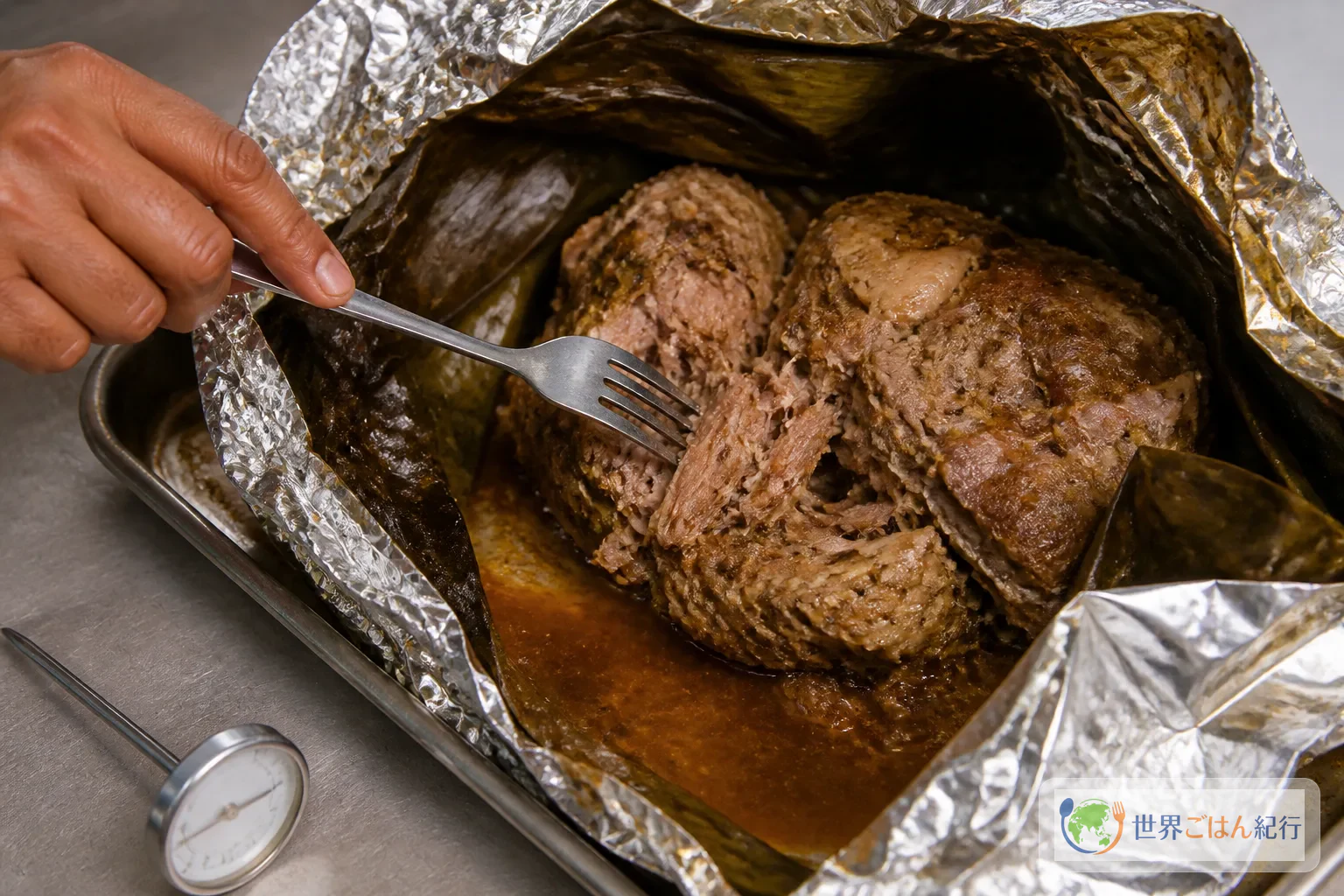
The meat is tough and the skewer stops partway
The connective tissue of the shoulder hasn't loosened yet. If juices remain, close the parcel again and extend at 300°F (150°C) by 30–60 minutes. Only if there are few juices and the pan is dry, add 3.5 tbsp (50 ml) boiling water inside the parcel and close it; cold water drops the oven temperature and tightens only the surface of the meat.
The meat is dry
Steam escaped through a seam of the parcel, or leg was baked for the same time as shoulder. If you catch it partway through, add a little boiling water to the bottom of the parcel rather than pouring it over the meat, and reseal. Once it's baked, the dryness can't be fully undone, but mixing the pulled meat gradually with the remaining juices and yogurt and serving it with lightly seasoned rice adds fat and acid to balance it in the mouth.
The spices are bitter
Either the spices were toasted too hot, or too much cracked dried lime went in. Bitterness can't be removed after baking, and sugar won't hide it. Serve with unsalted rice, plain yogurt, and cucumber, mixing in a little at a time. Next time, turn off the heat before the spices smoke, and limit dried lime to one whole pierced lime or no more than 2 tsp powder.
Juices leak from the parcel
Check whether a bone tip tore the foil, or whether the parcel was set seam-down. Before baking, add foil over any torn spot and turn the seam up. If you notice juice leaking during baking, pull out the pan and repair it. Let the juices in the pan cool before handling them, and keep them away from the bottom of the oven while they're hot.
Serving and storing shuwa
Serving shuwa on a platter
Slice the meat thin and plate it individually, and shuwa turns into an ordinary home roast. It's far more interesting served the local way, with the meat as one part of the meal: lightly seasoned rice, tangy yogurt, fresh vegetables, and dates on the same large platter, so each person chooses how much meat to take with their rice. At home, a little coffee and dates after the meal is enough. When one person pulls the meat apart, another serves the rice, and another stirs the yogurt, you see that shuwa is a dish for a table, not for one person.
Storage and reheating
Leftover lamb shouldn't sit at room temperature in its parcel. When the heat has mostly gone, divide the meat and juices into shallow containers and refrigerate within 2 hours of cooking. Eat refrigerated meat within 3–4 days, taking out only what you'll eat. To freeze, toss the pulled meat with a little of the juices and portion by serving.
To reheat, put the juices and a little boiling water in a pot or skillet, cover, and heat over low heat. Confirm that the center has reached 165°F (74°C) before putting it on rice. Long microwaving hardens the surface, so heat in short bursts, stirring, and finish with yogurt or cucumber to catch the fat. If you turn marinade that touched raw meat into a sauce for storage, always bring it to a boil before using it.
Frequently asked questions
Can I use goat instead of lamb?
Oman also uses goat and camel, but toughness varies a lot with the cut and age. Make it with lamb shoulder the first time. When you switch to goat, ask the seller for a cut suited to stewing, and judge doneness by the skewer and the center temperature rather than by the lamb baking time.
Is there a substitute for dried lime?
Lime juice and a little lemon zest can cover the sourness and aroma, but you lose the dry citrus aroma and bitterness of dried lime. The first time, use one whole dried lime and see whether the bitterness suits you. If using powder, keep to 2 tsp at most, and decide on additions after tasting.
When is it ready to eat?
For lamb safety, the center must reach 145°F (63°C) or more and rest for 3 minutes. Shuwa falls apart only after longer baking, though, so temperature alone can leave it tough. Check the center temperature, how the skewer goes in, and whether the meat comes away from the bone easily.
Can I make shuwa that is not spicy?
Even with the chili flakes cut from 1 tbsp to 1 tsp, the aroma of black pepper, clove, cardamom, and dried lime stays. Rather than adding sweetness to cool the heat, serve yogurt and lightly seasoned rice to dilute the spice.
How many days ahead can I prepare it?
Marinate the meat in the refrigerator for 12–24 hours and bake the next day. Marinating for more than 2 days brings the acidity to the surface of the meat. If you're preparing early, toast the spices and keep them sealed until needed, and marinate the meat the day before baking.